



TRANSTEC 35 MICROGRAMS/H Трансдермальный пластырь

Рассмотрение рецепта онлайн
Врач рассмотрит ваш случай и примет решение о назначении рецепта, если это медицински оправдано.

Поговорите с врачом об этом лекарстве
Обсудите симптомы и возможные дальнейшие шаги на онлайн-консультации.



Инструкция по применению TRANSTEK
Содержание инструкции
TRANSTEC 35 micrograms/hour / 52.5 micrograms/hour / 70 micrograms/hour
Transdermal patch
Buprenorphine
Read this leaflet carefully before you start to use this medicine as it contains
important information for you.
- Keep this leaflet. You may need to read it again.
- If you have any questions, ask your doctor or pharmacist.
- This medicine has been prescribed for you only. Do not pass it on to others even if they have the same symptoms as you, as it may be harmful.
- If you get any side effects, even those not listed in this leaflet, tell your doctor or pharmacist. See section 4.
Contents of this leaflet
- 1. What TRANSTEC is and what it is used for.
- 2. What you need to know before you use TRANSTEC
- 3. How to use TRANSTEC
- 4. Possible side effects
- 5. How to store TRANSTEC
- 6. Contents of the pack and other information
1. What is TRANSTEC and what is it used for
TRANSTEC is an analgesic medicine (for pain relief), indicated for the treatment of oncological pain of moderate to severe intensity and severe pain that does not respond to other types of painkillers. TRANSTEC works by crossing the skin. When the transdermal patch is applied to the skin, the active ingredient buprenorphine passes into the blood through the skin. Buprenorphine is an opioid (powerful analgesic) that reduces pain by acting on the central nervous system (specific nerve cells of the spinal cord and brain). The effect of the transdermal patch lasts up to four days. TRANSTEC is not indicated in the treatment of acute pain (short-lasting pain).
2. What you need to know before using TRANSTEC
Do not use TRANSTEC
- If you are allergic to buprenorphine or any of the other ingredients of this medicine (listed in section 6);
- if you are dependent on potent painkillers (opioids);
- if you suffer from conditions that compromise, or can severely compromise, respiratory function;
- if you are taking MAO inhibitors (medicines for the treatment of depression), or have taken them in the last 2 weeks (see “Other medicines and TRANSTEC”);
- if you suffer from myasthenia gravis (a severe form of muscle weakness);
- if you suffer from delirium tremens (confusion and tremor caused by alcohol withdrawal, after excessive alcohol use or occasional and exaggerated alcohol consumption).
- if you are pregnant.
TRANSTEC should not be used to treat withdrawal symptoms in individuals with dependence on
drugs.
Warnings and precautions
Talk to your doctor or pharmacist before using TRANSTEC
- if you have recently drunk a lot of alcohol;
- if you suffer from seizures;
- if you suffer from disorders of consciousness (feeling lightheaded or fainting) due to unknown causes;
- if you are in shock (cold sweating may be a symptom);
- when the pressure inside the skull increases (e.g. following head injuries or brain disorders), without the possibility of artificial respiration;
- if you have breathing problems or are taking medicines that can slow down or weaken your breathing (see “Other medicines and TRANSTEC”);
- if you have depression or other conditions that are being treated with antidepressants.
The use of these medicines together with TRANSTEC may lead to serotonin syndrome, a
condition that can be fatal (see “Other medicines and TRANSTEC”).
- if your liver is not functioning properly;
- if you tend to abuse drugs or narcotics;
Also, follow these precautions:
- some people may experience dependence on potent painkillers, such as TRANSTEC, after prolonged treatments. In these people, withdrawal symptoms may occur when treatment is stopped (see “when you stop treatment with TRANSTEC”);
- fever and exposure to external sources of heat can increase buprenorphine concentrations in the blood above normal. In addition, excessive heat on the skin surface can prevent proper adhesion of the transdermal patch. Ask your doctor for advice if you have a fever and do not expose yourself to external sources of heat (e.g. sauna, infrared lamps, electric blankets, hot water bottles).
For those who play sports: the use of the medicine without a therapeutic need constitutes doping and may
still result in a positive doping test.
Sleep-related breathing disorders
TRANSTEC contains an active ingredient that belongs to the group of opioids. Opioids can
cause sleep-related breathing disorders, such as central sleep apnea (shallow/pauses in breathing during sleep) and sleep-related hypoxemia (low oxygen levels in the blood).
The risk of central sleep apnea occurring depends on the dose of opioids. The doctor may
consider reducing the total opioid dosage in case of central sleep apnea.
in sleep.
Children and adolescents
- TRANSTEC should not be used in patients under 18 years of age, as clinical data are not currently available in this age group.
Other medicines and TRANSTEC
Tell your doctor or pharmacist if you are taking, have recently taken or might take
any other medicine.
- TRANSTEC should not be used if you are taking MAO inhibitors (medicines for the treatment of depression) or if you have used them in the two weeks prior.
- TRANSTEC, in some patients, can cause drowsiness, nausea, weakness, or make your breathing shorter or weaker. These side effects may be more intense if you are also taking other medicines that can cause the same side effects. These other medicines include other potent painkillers for the treatment of pain (opioids), some medicines for the treatment of insomnia, anesthetics and medicines used to treat some psychological illnesses, such as tranquilizers, antidepressants and antipsychotics.
- the concomitant use of TRANSTEC and sedative medicines such as benzodiazepines or related drugs, increases the risk of drowsiness, respiratory depression, coma and can be life-threatening. For this reason, concomitant use should only be considered when other treatment options are not possible. However, if your doctor prescribes TRANSTEC together with sedative medicines, the dose and duration of concomitant treatment must be limited by the doctor. Tell your doctor about all the sedative medicines you are taking and carefully follow the dosage recommendations provided by the doctor. It may be helpful to inform friends or family members about the signs and symptoms above. Contact your doctor when these symptoms occur.
- If TRANSTEC is used together with certain medicines, the effect of the transdermal patch may be increased. These medicines include, for example, some anti-infectives/antifungals (e.g. erythromycin or ketoconazole), or anti-HIV medicines (e.g. those based on ritonavir).
- If TRANSTEC is used together with other medicines, the effect of the transdermal patch may be reduced. These medicines include some products, for example, dexamethasone, medicines for treating epilepsy (e.g. containing carbamazepine or phenytoin) or medicines for tuberculosis (e.g. rifampicin).
- Some medicines may exacerbate the side effects of TRANSTEC and sometimes cause very serious reactions. Do not take other medicines during treatment with TRANSTEC without first consulting your doctor, especially antidepressants such as citalopram, escitalopram, fluoxetine, fluvoxamine, paroxetine, sertraline, duloxetine, venlafaxine, amitriptyline, doxepin or trimipramine. These medicines may interact with TRANSTEC and symptoms such as involuntary and rhythmic muscle contractions, including the muscles that control eye movement, agitation, hallucinations, coma, excessive sweating, tremor, increased muscle contraction, fever above 38 °C may occur. Contact your doctor if you experience these symptoms.
TRANSTEC with food and drink and alcohol
You should not drink alcohol while using TRANSTEC. Alcohol can intensify some side effects
of the transdermal patch and cause discomfort. Drinking grapefruit juice can increase the effect of
TRANSTEC.
Pregnancy, breastfeeding and fertility
If you are pregnant, suspect you are pregnant, are planning to become pregnant or are breastfeeding
ask your doctor or pharmacist for advice before taking this medicine.
There is insufficient experience regarding the use of TRANSTEC during pregnancy. For this
reason, TRANSTEC should not be used during pregnancy.
Buprenorphine, the active ingredient contained in the transdermal patch, inhibits milk production and
passes into breast milk. Therefore, TRANSTEC should not be used during breastfeeding.
Driving and operating machinery
TRANSTEC can cause dizziness, drowsiness, blurred vision or double vision and impair your
ability to react in such a way that you cannot react adequately or quickly enough in
unexpected or sudden situations.
This is especially true:
- at the beginning of treatment;
- when changing the dosage
- when you start using TRANSTEC in place of another painkiller;
- if you are also taking other medicines that affect the brain;
- if you drink alcohol. If you experience these effects, you should not drive or operate machinery while using TRANSTEC. This recommendation also applies at the end of treatment with TRANSTEC. Do not drive or operate machinery for at least 24 hours after removing the patch. Talk to your doctor or pharmacist if you have any doubts.
3. How to use TRANSTEC
Use this medicine following the instructions of your doctor or pharmacist exactly. If you have
any doubts, consult your doctor or pharmacist.
TRANSTEC is available in three dosages: TRANSTEC 35 micrograms/h transdermal patches,
TRANSTEC 52.5 micrograms/h transdermal patches TRANSTEC 70 micrograms/h transdermal
patches.
The choice of which TRANSTEC dosage is most suitable for you must be made by your doctor. During the
treatment, your doctor may decide to change the transdermal patch with a larger or smaller one,
if necessary.
The recommended dosage is:
Adults
Unless otherwise prescribed by your doctor, apply one TRANSTEC transdermal patch (following the
instructions described below) and replace it after a maximum of 4 days. For convenience, you can change the
transdermal patch twice a week, at regular intervals, for example always on Monday morning
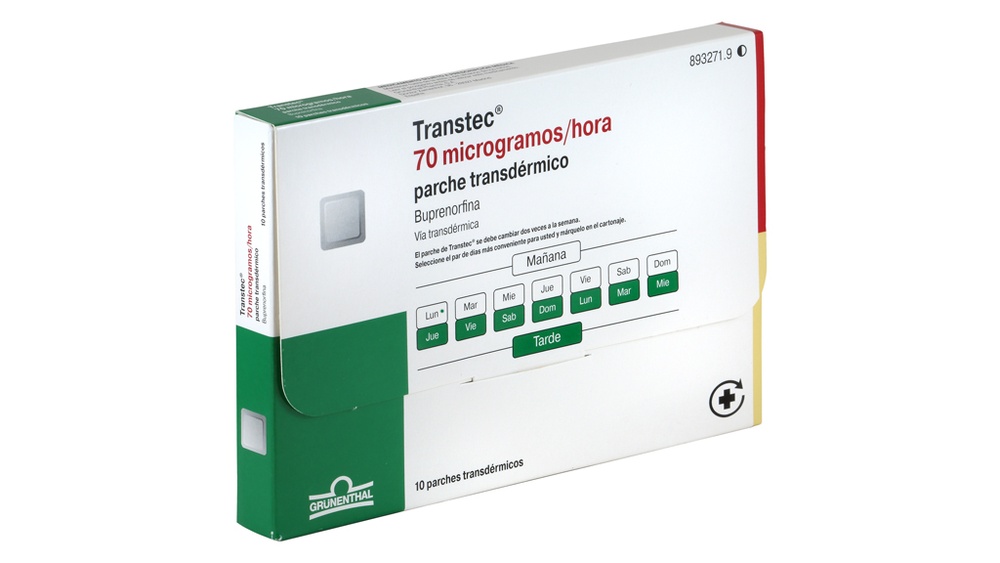
and Thursday evening. To avoid forgetting when to change the transdermal patch, mark the patch replacement days on
the calendar on the package. If your doctor prescribes other
analgesics in addition to the transdermal patch, follow their instructions strictly, otherwise you may
not benefit from the use of TRANSTEC.
Use in children and adolescents
TRANSTEC should not be used by people under 18 years of age, as there is no experience
with the use of the medicine in this age group.
Elderly patients
It is not necessary to adjust the dose for elderly patients.
Patients with kidney disease and patients on dialysis
In patients with kidney disease and on dialysis, no dosage adjustment is required.
Patients with liver disease
In patients with liver disease, the intensity and duration of the effect of TRANSTEC may
be affected. In this case, the doctor will perform more frequent checks
Method of application
Before applying the patch
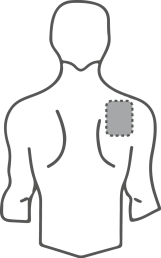
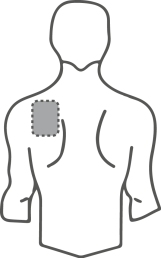
- Choose an area of skin that is flat, clean and hair-free, on the
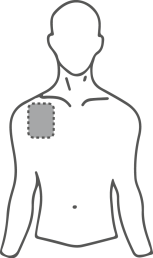
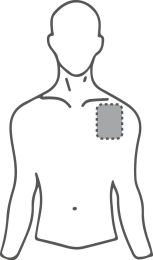
upper part of the body, preferably on the chest
in the supraclavicular area or on the upper back
(see illustrations alongside). Ask for help if you
cannot apply the patch yourself.
- If the chosen area is not hair-free, any hair should be trimmed with scissors, and not shaved.
Chest
or
Back
- Do not apply the patch to reddened, irritated or altered skin, for example
extensive scars.
- The skin area chosen for application must be dry and clean. If necessary, wash the area with cold or lukewarm water. Do not use soaps or other detergents. After a hot bath or shower, before applying the patch, wait for the skin to be completely dry and cool. Do not use lotions, creams or ointments. This may prevent the correct adhesion of the transdermal patch in the chosen area.
Applying the transdermal patch
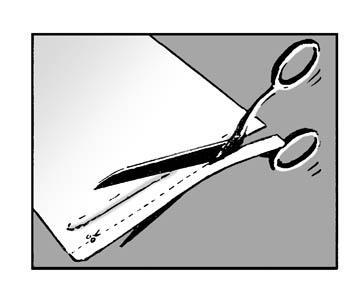
Step 1:
Each transdermal patch is individually sealed in a child-resistant pouch.
Cut the child-resistant pouch by cutting with scissors along the line of
incision. Be careful not to damage the transdermal patch.
Remove the transdermal patch.
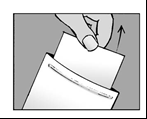
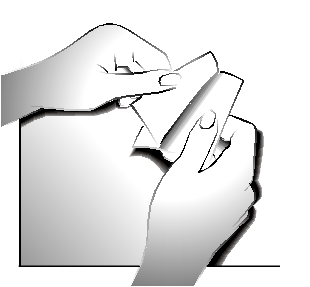
Step 2:
The adhesive side of the transdermal patch is covered with a silver protective film.
Carefully peel off the film at half, avoiding touching the
adhesive layer of the transdermal patch.
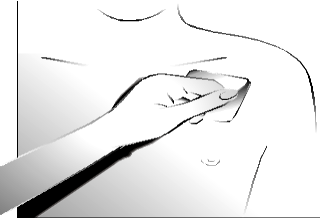
Step 3
Attach the transdermal patch to the chosen skin area for
application and remove the rest of the protective film.
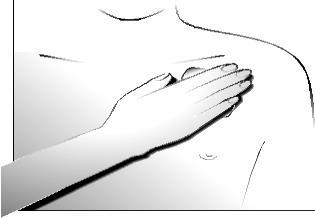
Step 4
Press the transdermal patch onto the skin with the palm of your hand, for
about 30 seconds.
Make sure that the entire transdermal patch adheres to the skin,
especially along the edges.
Wearing the transdermal patch
The transdermal patch should be worn for a maximum of 4 days. Make sure it has been applied
correctly; there is a minimal risk that it may detach. You can shower, bathe or swim
while wearing it. However, do not expose the transdermal patch to excessive heat sources (e.g. sauna, infrared lamps, electric blankets and hot water bottles).
In the unlikely event that the transdermal patch detaches before the next change, you cannot
reuse the same transdermal patch; you must immediately attach a new patch (see
“Replacing the transdermal patch”).
Replacing the transdermal patch
- Remove the old transdermal patch
- Fold it in half, adhering the adhesive surfaces.
- Throw away the transdermal patch, out of sight and reach of children.
- Apply a new transdermal patch to a different area of skin following the methods described above. Do not apply another one to the same area of skin before a week.
Duration of treatment
Your doctor will tell you how long you should use TRANSTEC. Do not stop the
treatment on your own initiative, as the pain may return, causing you discomfort (see “If you stop treatment with TRANSTEC”).
If you feel that the analgesic effect of TRANSTEC transdermal patches is
too weak or too strong, consult your doctor or pharmacist.
If you use more TRANSTEC than you should
In this case, symptoms of buprenorphine overdose may occur.
An overdose can worsen the undesirable effects of buprenorphine, such as: drowsiness, nausea and
vomiting. You may have pinpoint pupils and your breathing may become slow and shallow. You may have cardiovascular collapse. When you realize you have used more patches than necessary, remove the
excess patches and consult your doctor or pharmacist immediately.
If you forget to apply TRANSTEC
If you have forgotten a transdermal patch, apply a new one as soon as possible. In this case
you will need to change your habits, for example if you usually apply the transdermal patch on Monday and
Thursday, but forgot and therefore change the transdermal patch on Wednesday, remember that from
that moment on you will have to change it on Wednesday and Saturday.
Note the two new days on the calendar on the package.
If you were to change the patch with a long delay, the pain may return. In this case contact
your doctor.
Do not double the number of patches to apply to make up for the missed application!
If you stop treatment with TRANSTEC
If you stop or end treatment with TRANSTEC prematurely, the pain may return.
If you want to stop treatment due to side effects, consult your doctor, who will
inform you about what can be done and whether you can be treated with other medicines.
Some people may experience withdrawal symptoms when they have used potent analgesics for
a long time and then stop them. The risk of having these effects after stopping treatment with
TRANSTEC is very low. However, in case of agitation, anxiety, nervousness, tremors, hyperactivity,
insomnia and digestive disorders, consult your doctor.
For any questions about the use of this medicine, ask your doctor or pharmacist.
4. Possible side effects
Like all medicines, this medicine can cause side effects, although not everybody gets them.
Side effects are classified as follows:
The following side effects have been reported:
Immune system disorders
Very rare: serious allergic reactions (see below).
Metabolism and nutrition disorders
Rare: loss of appetite.
Psychiatric disorders
Uncommon: confusion, sleep disturbances, restlessness.
Rare: false sensations such as hallucinations, anxiety, nightmares, decreased libido.
Very rare: dependence, mood swings.
| l a Very common: more than 1 in 10 people | Common: more than 1 in 100 less than 1 in 10 people |
| t I Uncommon More than 1 in 1,000 Less than 1 in 100 | Rare: more than 1 in 10,000 less than 1 in 1,000 |
| a Very rare: less than 1 in 10,000 | |
Nervous system disorders
Common: dizziness, headache.
Uncommon: sedation of varying severity (calmness), from fatigue to drowsiness.
Rare: difficulty concentrating, speech disorders, numbness, impaired balance,
abnormal skin sensations (sensation of numbness, tingling or burning).
Very rare: muscle spasms, altered taste.
Eye disorders
Rare: visual disturbances, blurred vision, swollen eyelids.
Very rare: pinpoint pupils.
Ear disorders
Very rare: ear pain.
Cardiovascular disorders
Uncommon: circulatory disorders (such as hypotension or, rarely, even circulatory collapse).
Rare: hot flushes.
Respiratory and thoracic disorders
Common: shortness of breath
Rare: difficulty breathing (respiratory depression).
Very rare: rapid breathing, hiccups.
Gastrointestinal disorders
Very common: nausea.
Common: vomiting, constipation.
Uncommon: dry mouth.
Rare: heartburn.
Very rare: urge to vomit.
Skin disorders (generally at the application site)
Very common: redness, itching.
Common: skin changes (rash, usually after prolonged treatments), sweating.
Uncommon: skin rash.
Rare: urticaria
Very rare: pustules and small blisters.
Urinary disorders
Uncommon: urination disorders, urinary retention (less urine than usual).
Reproductive system disorders
Rare: difficulty getting an erection.
Systemic disorders
Common: edema (for example, swelling of the legs), fatigue.
Uncommon: weakness.
Rare: withdrawal symptoms (see below), reactions at the site of administration.
Very rare: chest pain.
If you notice any of the side effects listed, tell your doctor as soon as possible.
In some cases, delayed allergic reactions may occur, with evident signs of inflammation.
In this case, stop treatment with TRANSTEC after talking to your doctor.
If you should experience swelling of the hands, feet, ankles, face, lips, mouth or throat
causing difficulty swallowing or breathing, urticaria, fainting, yellowish discoloration of the skin or eyes (also called jaundice), remove the transdermal patch and
call your doctor immediately or go to the nearest hospital emergency room.
These could be symptoms of a very rare, serious allergic reaction.
Some people may experience withdrawal symptoms when using potent pain relievers for a
long period and then stopping their use. The risk of having such withdrawal effects after stopping
treatment with TRANSTEC is low. However, if you experience agitation, anxiety, nervousness, tremors,
hyperactivity, insomnia, and digestive disorders, consult your doctor.
Reporting of side effects
If you get any side effect, talk to your doctor or pharmacist. You can also report side effects directly through the national reporting system at
http://www.aifa.gov.it/content/segnalazioni-reazioni-avverse.
By reporting side effects you can help provide more information on the safety of
this medicine.
5. How to store TRANSTEC
Keep this medicine out of the sight and reach of children.
Do not use this medicine after the expiry date which is stated on the package and on the sachet after the
writing: “Exp. “(month/year). The expiry date refers to the last day of that month
This medicine does not require any particular storage conditions.
Do not dispose of any medicine in the drain or household waste. Ask your pharmacist how to
dispose of medicines you no longer use. This will help protect the environment.
6. Package contents and other information
What TRANSTEC contains
The active ingredient is buprenorphine.
The other ingredients are:
adhesive matrix: [(Z)–octadec–9–en–1–yl] oleate, povidone K90, 4–oxopentanoic acid, poly[acrylic
acid–co–butyl acrylate–co–(2–ethylhexyl) acrylate–co–vinyl acetate](5:15:75:5) crosslinked
(area containing buprenorphine) or non-crosslinked (area without buprenorphine); layer of
separation between the two matrices: poly(ethylene terephthalate) – support layer: fabric of
poly(ethylene terephthalate). The protective coating(to be removed before applying the patch
| TRANSTEC 35 micrograms /h transdermal patch | I Each transdermal patch contains 20 mg of buprenorphine and releases approximately a 35 micrograms of buprenorphine per hour. The surface area of the transdermal patch containing the active ingredient is 25 cm2. |
| i z TRANSTEC 52.5 micrograms /h transdermal patch | Each transdermal patch contains 30 mg of buprenorphine and releases approximately 52.5 micrograms of buprenorphine per hour. The surface area of the transdermal patch containing the active ingredient is 37.5 cm2. |
| n e TRANSTEC 70 micrograms /h transdermal patch | Each transdermal patch contains 40 mg of buprenorphine and releases approximately 70 micrograms of buprenorphine per hour. The surface area of the transdermal patch containing the active ingredient is 50 cm2. |
transdermal) consists of a layer of poly(ethylene terephthalate), siliconized and coated with aluminum on one
side.
What TRANSTEC looks like and contents of the pack
TRANSTEC transdermal patches are flesh-colored with rounded corners and printed with:
TRANSTEC 35 micrograms/h, buprenorphinum 20 mg.
TRANSTEC 52.5 micrograms/h, buprenorphinum 30 mg.
TRANSTEC 70 micrograms/h, buprenorphinum 40 mg.
TRANSTEC is contained in packs of: 3, 5, 10, 30 transdermal patches contained in single, child-resistant
sachets.
Not all pack sizes may be marketed.
Marketing Authorisation Holder and Manufacturer
Marketing Authorisation Holder
GRŰNENTHAL ITALIA S.r.l. – Via Carlo Bo, 11 – 20143 Milan
Manufacturer
LTS Lohmann Therapie–Systeme GmbH – Andernach (Germany)
Batch release: Grünenthal GmbH – Aachen (Germany)
This medicinal product is authorised in the following Member States of the European Union, with the following names
Austria Transtec
Belgium Transtec
Denmark Transtec
Germany Transtec PRO
Ireland Transtec
Italy Transtec
Luxembourg Transtec
Portugal Transtec
United Kingdom Transtec
Slovenia Transtec
Spain Transtec
Date of last approval:

Не уверены, подходит ли вам это лекарство?
Обсудите симптомы и варианты лечения с врачом онлайн.

Уже начали прием и появились вопросы?
Обсудите свое состояние и дальнейшие шаги с врачом онлайн.
- Страна регистрации
- Форма выпускаTransdermal patch, 35 MICROGRAMS/H
- Код АТХN02AE01
- Действующее вещество
- Отпускается по рецептуДа
- Производитель
- Информация на этой странице носит справочный характер и не является медицинской консультацией. Перед началом приема лекарства обязательно проконсультируйтесь с врачом.
- Аналоги TRANSTEKФорма выпуска: Transdermal patch, 25 MICROGRAMMI/HДействующее вещество: БупренорфинПроизводитель: SANDOZ S.P.A.Отпускается по рецептуФорма выпуска: Transdermal patch, 35 MICROGRAMS/HOURДействующее вещество: БупренорфинПроизводитель: SANDOZ S.P.A.Отпускается по рецептуФорма выпуска: Transdermal patch, 5 MICROGRAMS/HOURДействующее вещество: БупренорфинПроизводитель: ISTITUTO GENTILI S.R.L.Отпускается по рецепту
Аналоги TRANSTEK в других странах
Лекарства с тем же действующим веществом, доступные в других странах.
Аналог TRANSTEK в Испания
Аналог TRANSTEK в Польша
Аналог TRANSTEK в Украина
Врачи онлайн по TRANSTEK
Обсудите применение TRANSTEK и возможные следующие шаги — по оценке врача.









Получите рецепт на TRANSTEK онлайн
Заполните форму за 2 минуты
Расскажите о симптомах, истории болезни и нужном препарате.
Выберите врача или мы назначим
Выберите специалиста или мы подберём ближайшего доступного врача.
Врач рассматривает ваш случай
Обычно в течение 30 минут. Может задать уточняющие вопросы в чате.
Получите в любой аптеке
Электронный рецепт отправляется на вашу почту — действителен по всей Польше.
Часто задаваемые вопросы
TRANSTEK требует рецепта в Италия. Вы можете уточнить у врача онлайн, подходит ли это лекарство для вашей ситуации.
Действующее вещество TRANSTEK — Бупренорфин. Эта информация помогает определить лекарства с тем же составом под другими торговыми названиями.
TRANSTEK производится компанией GRUNENTHAL ITALIA S.R.L.. Упаковка и торговое название могут отличаться в зависимости от дистрибьютора.
Врачи, включая Семейные врачи, Психиатры, Дерматологи, Кардиологи, Эндокринологи, Гастроэнтерологи, Пульмонологи, Нефрологи, Ревматологи, Гематологи, Инфекционисты, Аллергологи, Гериатры, Педиатры, Онкологи, могут оценить целесообразность применения TRANSTEK с учетом вашей ситуации и местных правил. Вы можете записаться на онлайн-консультацию, чтобы обсудить возможные варианты.
Польша имеет хорошо развитую систему здравоохранения в крупных городах, таких как Варшава, Краков, Вроцлав и Гданьск. Аптеки широко доступны и работают в соответствии с действующим законодательством, обеспечивая доступ к рецептурным препаратам.
Вы можете купить TRANSTEK в Варшаве, Кракове, Вроцлаве или Гданьске в любой аптеке при наличии действующего рецепта.
Чтобы получить рецепт, вы можете воспользоваться Oladoctor:
Другие лекарства с тем же действующим веществом (Бупренорфин) включают BUSETALT, DURLEVATEK, JENTTS. Они могут отличаться торговым названием или формой выпуска, но содержат одинаковый терапевтический компонент. Перед изменением лечения рекомендуется проконсультироваться с врачом.
