



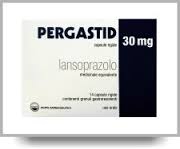
PERGASTID 15 мг Капсулы

Рассмотрение рецепта онлайн
Врач рассмотрит ваш случай и примет решение о назначении рецепта, если это медицински оправдано.

Поговорите с врачом об этом лекарстве
Обсудите симптомы и возможные дальнейшие шаги на онлайн-консультации.



Инструкция по применению PERGASTID
Содержание инструкции
Pergastid 15 mg hard capsules
Pergastid 30 mg hard capsules
Lansoprazole
“Generic medicine”
Read this leaflet carefully before taking this medicine as it contains
important information for you.
- Keep this leaflet. You may need to read it again.
- If you have any questions, ask your doctor or pharmacist.
- This medicine has been prescribed for you only. Do not pass it on to others, even if they have the same symptoms as you, as it may be harmful.
- If you get any side effects, even those not listed in this leaflet, tell your doctor or pharmacist. See section 4.
Contents of this leaflet:
- 1. What Pergastid is and what it is used for
- 2. What you need to know before you take Pergastid
- 3. How to take Pergastid
- 4. Possible side effects
- 5. How to store Pergastid
- 6. Contents of the pack and other information
1. What is Pergastid and what is it used for
Pergastid contains the active substance lansoprazole, which is a proton pump inhibitor.
Proton pump inhibitors reduce the amount of acid that your stomach produces.
Your doctor may prescribe Pergastid for the following indications:
- Treatment of duodenal and stomach ulcers
- Treatment of inflammation of the esophagus (reflux esophagitis)
- Prevention of reflux esophagitis
- Treatment of heartburn and acid regurgitation (gastroesophageal reflux disease)
- Treatment of infections caused by the bacterium Helycobacter pyloriwhen administered in combination with antibiotic therapy
- Treatment or prevention of duodenal or stomach ulcers in patients who require continuous treatment with non-steroidal anti-inflammatory drugs (NSAIDs, used against pain or inflammation)
- Treatment of Zollinger-Ellison syndrome
Contact your doctor if you do not feel better or if you feel worse.
2. What you need to know before taking Pergastid
Do not take Pergastid
- if you are allergic to lansoprazole or any of the other ingredients of this medicine (listed in section 6).
- if you are taking a medicine containing the active substance atazanavir (used in the treatment of HIV).
Warnings and precautions
Talk to your doctor or pharmacist before taking Pergastid.
- Tell your doctor if you have a liver disease. Your doctor may need to adjust the dosage. Your doctor may have performed or will perform a further examination called an endoscopy to diagnose your condition and/or exclude a malignant disease.
- If you experience diarrhoea during treatment with Pergastid, contact your doctor immediately, as Pergastid has been associated with a small increase in infectious diarrhoea.
- If your doctor has prescribed Pergastid in addition to other medicines for the treatment of Helycobacter pyloriinfection (antibiotics) or together with anti-inflammatory medicines
of these medicines.
- If you take Pergastid for a long time (for more than 1 year) your doctor will probably keep you under regular observation. You should report any new and exceptional symptom and circumstance whenever you see your doctor.
- If you have ever had a skin reaction after treatment with a medicine similar to Pergastid that reduces stomach acid.
- If you notice the appearance of a skin rash, especially in areas exposed to sunlight, contact your doctor as soon as possible, as you may need to stop treatment with Pergastid. Remember to also report any other undesirable effects such as joint pain.
- If you are to undergo a specific blood test (Chromogranin A)
If you take Pergastid for more than three months, blood levels of magnesium may decrease. Low levels of magnesium can manifest with fatigue, involuntary muscle contractions, disorientation, convulsions, dizziness and increased heart rate. Low levels of magnesium can also lead to a reduction in blood levels of potassium or calcium. Your doctor should decide whether to regularly check magnesium levels in the blood.
Children and adolescents
Pergastid should not be taken by children.
Other medicines and Pergastid
Tell your doctor or pharmacist if you are taking, have recently taken or might take any other medicines.
In particular, tell your doctor if you are taking medicines containing any of the following active substances, as Pergastid can affect their mechanism of action:
- ketoconazole, itraconazole, rifampicin (used to treat infections)
- digoxin (used to treat heart problems)
- theophylline (used to treat asthma)
- tacrolimus (used to prevent transplant rejection)
- fluvoxamine (used to treat depression and other psychiatric illnesses)
- antacids (used to treat heartburn or acid reflux)
- sucralfate (used to heal ulcers)
- St John's wort (hypericum perforatum) (used to treat mild depression)
Pergastid with food and drink
You should take Pergastid at least 30 minutes before taking food.
Pregnancy and breastfeeding
If you are pregnant, suspect you may be pregnant or are planning to become pregnant, or if you are breastfeeding, ask your doctor or pharmacist for advice before taking this medicine.
Driving and using machines
If you experience side effects such as dizziness, vertigo, drowsiness and visual disturbances following taking Pergastid
you must be careful because your ability to concentrate may decrease.
You should assess whether you are able to drive vehicles or use machines, as
taking medicines is one of the factors that can reduce the ability to perform
these actions safely, due to their effects or side effects (see section 4
“Possible side effects”)
If you have any doubts about using this medicine, ask your doctor, pharmacist or
nurse.
Pergastid contains sucrose.If your doctor has diagnosed you with intolerance to some
sugars, contact him before taking this medicine.
3. How to take Pergastid
Take this medicine following exactly the instructions of your doctor or pharmacist. If you have any doubts, ask your doctor or pharmacist.
Swallow the capsule whole with a glass of water, at least 30 minutes before taking food.
If you find it difficult to swallow the capsules, your doctor may advise you on an alternative way to take the medicine.
Do not crush or chew the capsules or the contents of the emptied capsules, because the medicine would not work correctly. If you take Pergastid once a day, try to take it at the same time each day.
You may get better results if you take Pergastid first thing in the morning.
If you take Pergastid twice a day, you must take the first dose in the morning and the second dose in the evening.
The dose of Pergastid depends on your condition.
The recommended doses of Pergastid for adults are given below.
Your doctor may prescribe a different dose and will tell you how long the treatment should last.
Treatment of heartburn and acid reflux(gastroesophageal reflux disease) :
The recommended dose is one 15 mg or 30 mg capsule every day for 4 weeks. If your symptoms persist, you should inform your doctor. If your symptoms do not improve within 4 weeks, contact your doctor.
Treatment of duodenal ulcer:
The recommended dose is one 30 mg capsule every day for 2 weeks.
Treatment of stomach ulcer:
The recommended dose is one 30 mg capsule every day for 4 weeks.
Treatment of esophageal inflammation (reflux esophagitis):
The recommended dose is one 30 mg capsule every day for 4 weeks.
Prevention of reflux esophagitis:
The recommended dose is one 15 mg capsule every day, your doctor may adjust the dose up to one 30 mg capsule every day.
Treatment ofHelicobacter pyloriinfection:
The recommended dose is one 30 mg capsule in combination with two different antibiotics in the morning and one 30 mg capsule in combination with two different antibiotics in the evening. The treatment will be every day for 7 days.
The recommended antibiotic combinations are:
- 30 mg of Pergastid together with 250-500 mg of clarithromycin and 1,000 mg of amoxicillin
- 30 mg of Pergastid together with 250 mg of clarithromycin and 400-500 mg of metronidazole
If you are treating your infection because you have an ulcer, it is likely that the ulcer will no longer occur if the infection is successfully treated. To get the best results from this therapy, take the medicine at the scheduled times and never miss a dose.
Treatment of duodenal or stomach ulcer in patients requiring continuous treatment with NSAIDs:
The recommended dose is one 30 mg capsule every day for 4 weeks.
Prevention of duodenal or stomach ulcer in patients requiring continuous treatment with NSAIDs (age > 65 or history of stomach or duodenal ulcer):
The recommended dose is one 15 mg capsule every day, your doctor may adjust the dosage up to one 30 mg capsule every day.
Zollinger-Ellison syndrome:
The recommended initial dose is two 30 mg capsules every day, then based on your response to Pergastid, your doctor will decide the most appropriate dose for you.
Hepatic insufficiency
Patients with moderate or severe liver disease should be monitored regularly and your doctor will recommend a reduction in the daily dose.
Elderly
In the elderly, the doctor will adjust the dose based on individual needs.
Take the medicine exactly as your doctor has told you. If you have any doubts about how to take the medicine, you should consult your doctor.
If you take more Pergastid than you should
If you take more Pergastid than you have been told, ask your doctor for advice immediately.
In case of accidental ingestion/intake of an excessive dose of Pergastid, immediately notify your doctor or go to the nearest hospital.
If you forget to take Pergastid.
If you forget to take a dose, take it as soon as you remember unless it is too close to the next dose. If this happens, do not take the forgotten dose and take the rest of the capsules normally. Do not take a double dose to make up for the missed capsule.
If you stop the treatment with Pergastid.
Do not stop the treatment prematurely if your symptoms have improved. Your condition may not be completely healed and may recur if you do not complete the treatment period.
If you have any doubts about the use of this medicine, consult your doctor or pharmacist.
4. Possible side effects
Like all medicines, this medicine can cause side effects, although not everyone gets them.
Common (affects more than 1 in 100 patients)
- headache, dizziness
- diarrhoea, constipation, stomach pain, nausea, vomiting, flatulence, dry or inflamed mouth or throat
- skin rash, itching, hives
- changes in liver function tests
- fatigue
- benign polyps in the stomach
Uncommon (affects less than 1 in 100 patients)
- depression
- joint and muscle pain
- fluid retention or swelling
- reduction in the number of platelets and white blood cells in the blood
- fractures of the hip, wrist or spine. If you take a proton pump inhibitor such as Pergastid, especially for a period longer than one year, there may be a slight increase in the risk of fractures
of the hip, wrist or spine. If you suffer from osteoporosis or are taking corticosteroids (which can increase the risk of osteoporosis) consult your doctor.
Rare (affects less than 1 in 1,000 patients)
- fever
- restlessness, drowsiness, confusion, hallucination, insomnia, vision disturbances, vertigo
- taste disturbances, loss of appetite, inflammation of the tongue (glossitis)
- skin reactions such as red spots (petechiae and purpura), erythema multiforme and excessive sweating
- sensitivity to light
- hair loss
- tingling sensation on the skin (paresthesia), tremor
- anemia
- kidney problems
- pancreatitis
- liver inflammation and jaundice (may cause yellow skin or yellow eyes)
- breast enlargement in men, impotence
- candidiasis of the esophagus (fungal infection, can affect the skin or mucous membranes)
- angioedema; you should immediately go to the doctor if you experience symptoms of angioedema such as swelling of the face, tongue or pharynx, difficulty swallowing, hives and difficulty breathing.
Very rare (affects less than 1 in 10,000 patients)
- severe hypersensitivity reactions including shock. Symptoms of hypersensitivity reactions may include fever, rash, swelling and sometimes a drop in blood pressure
- inflammation of the mouth (stomatitis)
- colitis (inflammation of the colon)
- changes in laboratory values such as sodium, cholesterol and triglyceride levels
- very severe skin reactions with redness, blisters, severe inflammation and skin loss (Stevens-Johnson syndrome and toxic epidermal necrolysis)
- decrease in the number of all blood cells (red blood cells, white blood cells and platelets)
- very rarely Pergastid may cause a reduction in the number of white blood cells and resistance to infections may therefore decrease. If you develop an infection with symptoms such as fever and severe worsening of your general condition, or fever with symptoms of a local infection such as an inflamed throat/pharynx/mouth or urinary problems, go to your doctor immediately. You will be given a blood test to check for a possible reduction in white blood cells (agranulocytosis).
Not known (frequency cannot be estimated from available data)
- hypomagnesemia
If you take Pergastid for more than three months, it is possible that blood levels of magnesium may decrease. Low levels of magnesium can manifest with fatigue, involuntary muscle contractions, disorientation, seizures, dizziness and increased heart rate. Low levels of magnesium can also lead to a decrease in blood levels of potassium or calcium. The doctor should decide whether to regularly check magnesium levels in the blood.
- cutaneous lupus erythematosus
- erythema, possible joint pain
Reporting of side effects
If you get any side effects, even those not listed in this leaflet, tell your doctor, pharmacist or nurse. You can also report side effects directly through the national reporting system at http://www.aifa.gov.it/content/segnalazioni-reazioni-avverse.
By reporting side effects you can help provide more information on the safety of this medicine.
5. How to store Pergastid
Keep this medicine out of the sight and reach of children.
Do not use this medicine after the expiry date which is stated on the label.
The expiry date refers to the last day of that month.
Do not store at a temperature above 30°C.
Do not dispose of any medicine in waste water or household waste.
Ask your pharmacist how to dispose of medicines you no longer use.
This will help protect the environment.
6. Contents of the pack and other information
What Pergastid contains
- The active ingredient is lansoprazole
- The other ingredients are: sucrose and corn starch spheres, heavy magnesium carbonate, hypromellose, polysorbate 80, macrogol 6000, triethyl citrate, talc, titanium dioxide (E171), acrylic acid-ethyl acrylate copolymer (1:1) dispersion 30% (Eudragit L30 D-55), sodium hydroxide; capsule components: gelatin, titanium dioxide (E171), erythrosine (E127), red iron oxide (E172)
Description of the appearance of Pergastid and contents of the pack.
Hard capsules containing gastro-resistant granules
Pergastid 15 mg hard capsules: packs of 14 capsules
Pergastid 30 mg hard capsules: packs of 14 capsules
Marketing Authorisation Holder
AGIPS FARMACEUTICI S.r.l. – Via Amendola, 4 – 16035 Rapallo (GE)
Manufacturer:
Laboratorios Salvat, S.A. – C/Gall 30-36 – Esplugues del Llobregat - Barcelona (Spain)

Не уверены, подходит ли вам это лекарство?
Обсудите симптомы и варианты лечения с врачом онлайн.

Уже начали прием и появились вопросы?
Обсудите свое состояние и дальнейшие шаги с врачом онлайн.
- Страна регистрации
- Форма выпускаHard capsule, 15 MG
- Код АТХA02BC03
- Действующее вещество
- Отпускается по рецептуНет
- Производитель
- Информация на этой странице носит справочный характер и не является медицинской консультацией. Перед началом приема лекарства обязательно проконсультируйтесь с врачом.
- Аналоги PERGASTIDФорма выпуска: Hard capsule, 15 MGДействующее вещество: ЛансопразолПроизводитель: LANOVA FARMACEUTICI S.R.L.Отпускается без рецептаФорма выпуска: Enteric-coated hard capsule, 15 MGДействующее вещество: ЛансопразолПроизводитель: LABORATORIO FARMACEUTICO C.T. S.R.L.Отпускается без рецептаФорма выпуска: Hard capsule, 15 MGДействующее вещество: ЛансопразолПроизводитель: ITALCHIMICI S.P.A.Отпускается без рецепта
Аналоги PERGASTID в других странах
Лекарства с тем же действующим веществом, доступные в других странах.
Аналог PERGASTID в Испания
Аналог PERGASTID в Польша
Аналог PERGASTID в Украина
Врачи онлайн по PERGASTID
Обсудите применение PERGASTID и возможные следующие шаги — по оценке врача.









Получите рецепт на PERGASTID онлайн
Заполните форму за 2 минуты
Расскажите о симптомах, истории болезни и нужном препарате.
Выберите врача или мы назначим
Выберите специалиста или мы подберём ближайшего доступного врача.
Врач рассматривает ваш случай
Обычно в течение 30 минут. Может задать уточняющие вопросы в чате.
Получите в любой аптеке
Электронный рецепт отправляется на вашу почту — действителен по всей Польше.
Часто задаваемые вопросы
PERGASTID не требует рецепта в Италия. Вы можете уточнить у врача онлайн, подходит ли это лекарство для вашей ситуации.
Действующее вещество PERGASTID — Лансопразол. Эта информация помогает определить лекарства с тем же составом под другими торговыми названиями.
PERGASTID производится компанией A.G.I.P.S. FARMACEUTICI SRL. Упаковка и торговое название могут отличаться в зависимости от дистрибьютора.
Врачи, включая Семейные врачи, Психиатры, Дерматологи, Кардиологи, Эндокринологи, Гастроэнтерологи, Пульмонологи, Нефрологи, Ревматологи, Гематологи, Инфекционисты, Аллергологи, Гериатры, Педиатры, Онкологи, могут оценить целесообразность применения PERGASTID с учетом вашей ситуации и местных правил. Вы можете записаться на онлайн-консультацию, чтобы обсудить возможные варианты.
Польша имеет хорошо развитую систему здравоохранения в крупных городах, таких как Варшава, Краков, Вроцлав и Гданьск. Аптеки широко доступны и работают в соответствии с действующим законодательством, обеспечивая доступ к рецептурным препаратам.
Вы можете купить PERGASTID в Варшаве, Кракове, Вроцлаве или Гданьске в любой аптеке при наличии действующего рецепта.
Чтобы получить рецепт, вы можете воспользоваться Oladoctor:
Другие лекарства с тем же действующим веществом (Лансопразол) включают ERMES, FRILANS, KROVANEG. Они могут отличаться торговым названием или формой выпуска, но содержат одинаковый терапевтический компонент. Перед изменением лечения рекомендуется проконсультироваться с врачом.
