



BETOPTIC <5 MG/ML Капли глазные, раствор

Рассмотрение рецепта онлайн
Врач рассмотрит ваш случай и примет решение о назначении рецепта, если это медицински оправдано.

Поговорите с врачом об этом лекарстве
Обсудите симптомы и возможные дальнейшие шаги на онлайн-консультации.



Инструкция по применению BETOPTIK
Содержание инструкции
BETOPTIC 5 mg/ml Eye drops, solution
betaxolol
Read this leaflet carefully before you start taking this medicine.
- Keep this leaflet. You may need to read it again.
- If you have any questions, ask your doctor or pharmacist.
- This medicine has been prescribed for you. Do not pass it on to others, even if they have the same symptoms as you, as it may be harmful.
- If any of the side effects gets worse, or if you notice any side effects not listed in this leaflet, tell your doctor or pharmacist.
Contents of this leaflet:
- 1. What BETOPTIC is and what it is used for
- 2. What you need to know before you take BETOPTIC
- 3. How to take BETOPTIC
- 4. Possible side effects
- 5. How to store BETOPTIC
- 6. Further information
1. WHAT IS BETOPTIC AND WHAT IS IT USED FOR
BETOPTIC belongs to a group of medicines known as beta-blockers with properties to reduce the
pressure inside the eye, with or without glaucoma.
It is used to treat intraocular hypertension, chronic open-angle glaucoma.
BETOPTIC is indicated in patients with glaucoma or intraocular hypertension undergoing therapy
concurrently with more than one antiglaucoma medication.
2. WHAT YOU NEED TO KNOW BEFORE YOU USE BETOPTIC
Do not use BETOPTIC, eye drops solution
- if you are allergicto betaxolol, beta-blockers or any of the excipients.
- if you have or have had in the past respiratory problems such as severe asthma, severe chronic obstructive bronchitis (a serious lung condition that can cause wheezing, difficulty breathing and/or long-lasting cough) or other types of respiratory problems.
- If you have a slowed heartbeat, heart failure, or heart rhythm disorders (irregular heartbeat).
Take special care with BETOPTIC.
Use BETOPTIC only for instillation into the eye(s), do not use for injection or ingestion.
Before using this medicine, tell your doctor if you suffer from, or have suffered in the past from:
- poor blood circulation to the brain
- untreated pheochromocytoma (endocrine system tumor)
- diabetes because betaxolol may mask the signs and symptoms of low blood sugar
- excessive acidity in the blood (also called metabolic acidosis)
- myasthenia gravis (chronic muscle weakness)
- severe allergic reaction. If you have a history of local or severe allergic reactions, you may be more reactive to allergens. If you experience any allergic reaction (skin rash, redness and itching of the eyes, fever, swelling of the throat, tongue or face) while using Betoptic, whatever the cause, stop treatment immediately and contact your doctor. This medicine may reduce your response to usual doses of adrenaline, and adrenaline treatment may no longer be as effective. Therefore, when you are taking any other treatment, inform your doctor that you are using BETOPTIC
- coronary heart disease (symptoms may include chest pain or a feeling of tightness, shortness of breath or cough), heart failure, low blood pressure
- heart rate disorders such as slowed heartbeat
- respiratory problems, asthma or chronic obstructive broncho-pulmonary disease
- circulatory problems (such as Raynaud's disease or Raynaud's syndrome)
- hyperthyroidism (overactivity of the thyroid gland), as betaxolol may mask its signs and symptoms.
Before undergoing surgery, inform your doctor that you are using BETOPTIC, as the
betaxolol may alter the effects of some medicines used during anesthesia.
If you have corneal disorders, tell your doctor, because BETOPTIC may cause dry eye.
If you have undergone surgery for glaucoma, inform your doctor before using BETOPTIC.
Do not use this product when wearing contact lenses, wait 15 minutes after using the
eye drops before putting the contact lenses back in. A preservative contained in BETOPTIC (benzalkonium
chloride) may have effects on soft contact lenses.
Tell your doctor if you are taking other medicines. Also read the paragraph “Use with other
medicines”.
Use with other medicines
Betoptic can influence or be influenced by other medicines, including any other
eye drops for the treatment of glaucoma. Tell your doctor if you are using or intend to use
medicines to lower blood pressure, for the treatment of heart disease or
for diabetes. Tell your doctor or pharmacist if you are taking or have recently
taken any medicine, including those without a prescription.
Also inform your doctor if you are taking medicines against anxiety or depression (such as
phenothiazine).
Pregnancy and breastfeeding
Do not use Betoptic in case of pregnancy unless your doctor considers it necessary.
Do not use Betoptic during breastfeeding. Betaxolol may be excreted in breast milk.
Ask your doctor for advice before using any medicine during breastfeeding.
Use in children:
Clinical studies with BETOPTIC have not been conducted to establish safety and efficacy in
children.
Driving and using machines
You may have blurred vision for a short period immediately after using BETOPTIC. Do not
drive vehicles and do not use machines until this sensation has ceased.
BETOPTIC contains benzalkonium chloride
A preservative contained in BETOPTIC (benzalkonium chloride) may cause eye irritation and
is known to be able to discolor soft contact lenses. If you wear contact lenses, remove them before using BETOPTIC and wait at least 15 minutes after using the eye drops before
replacing them.
Doping warning
For athletes: the use of the drug without therapeutic necessity constitutes doping and
may still result in positive doping tests.
3. HOW TO USE BETOPTIC
Always use Betoptic eye drops solution exactly as your doctor has instructed. If you have any doubts
consult your doctor or pharmacist.
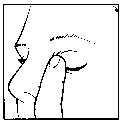
After using Betoptic, press with your finger on the corner of the eye near the nose for 2 minutes, as
shown in the figure. This helps to prevent Betoptic from spreading throughout the body.
The usual dose is:
one drop twice a day, as prescribed by your doctor.
When switching therapy in a patient already treated with a glaucoma medication, it is necessary to
continue the treatment with the previous medication for the first day, adding one drop of
BETOPTIC to each affected eye twice a day. The next day, switch to therapy
with only BETOPTIC.
After removing the cap, if the mobile protective ring is loose, remove it before using the
product.
If a drop does not enter the eye,try again.
If you forget to use BETOPTIC, continue treatment with the next dose as
scheduled. However, if it is almost time for the next dose, skip the missed dose and return to the
regular dosing schedule. Do notuse a double dose to make up for a missed dose.
If you use more medicine than you should,immediately wash your eye with lukewarm water. Do not use
the eye drops again until the time scheduled for the next administration.
If you are using another eye drop or ophthalmic ointment at the same time, allow at least
5 minutes between the use of each medication. The ophthalmic ointment should be administered
last.
Stop treatment with BETOPTIC and consult your doctor in case of: slowed heartbeat,
low blood pressure, or breathing or heart problems.
If you have any further questions on the use of this medicine, ask your doctor or pharmacist.
4. POSSIBLE SIDE EFFECTS
Like all medicines, BETOPTIC eye drops solution can cause side effects, although not everyone will experience them.
You can usually continue to use the eye drops unless the effects are severe. If you are concerned,
contact your doctor or pharmacist. Do not stop using Betoptic before speaking to your
doctor.
The frequency of possible side effects listed below is defined based on the following
convention:
Very common (affects more than 1 in 10 users)
Common (affects 1 to 10 users in 100)
Uncommon (affects 1 to 10 users in 1,000)
Rare (affects 1 to 10 users in 10,000)
Very common side effects
Eye discomfort.
Common side effects
Headache, blurred vision, increased tearing, feeling of a foreign body in the eyes.
Uncommon side effects
Bradycardia, tachycardia, punctate keratitis, keratitis, conjunctivitis, blepharitis, reduced visual acuity,
impaired vision, photophobia, eye pain, dry eye, asthenopia, blepharospasm,
abnormal eye sensitivity, eye itching, eye discharge, crusting of the eyelid margin,
eye inflammation, eye irritation, conjunctival pathology, conjunctival edema,
eye hyperemia, asthma, dyspnea, nausea, rhinitis.
Rare side effects
Syncope, dysgeusia, cataract, cough, rhinorrhea, dermatitis, rash, hypotension, anxiety, decreased libido.
Additional side effects detected during post-marketing experience, for which the frequency
is not known
Arrhythmia, dizziness, eyelid erythema, alopecia, asthenia, hypersensitivity, insomnia, depression.
As with other medicines applied to the eyes, betaxolol is absorbed into the bloodstream. This can cause
side effects similar to those observed with beta-blockers for intravenous and/or oral use. The incidence of side effects after topical ophthalmic administration is lower
compared to when the medicines are administered for example orally or by injection. The side
effects listed include reactions observed within the class of beta-blockers
used to treat eye conditions.
Generalized allergic reactions including swelling under the skin that can occur in areas such as the
face and limbs and which can obstruct the airways causing difficulty swallowing or breathing,
urticaria, localized and generalized skin rashes, itching, severe life-threatening allergic reactions.
Low blood sugar levels.
Difficulty falling asleep (insomnia), depression, nightmares, memory loss.
Fainting, stroke, reduced blood flow to the brain, worsening of signs and
symptoms of myasthenia gravis (muscle disease), unusual sensations such as tingling and
headache.
Signs and symptoms of eye irritation (e.g. burning, stinging pain, itching, tearing,
redness), eyelid inflammation, inflammation of the cornea, blurred vision and,
after filtering surgery, detachment of the layer underlying the retina containing blood vessels, which
can cause visual disturbances, decreased corneal sensitivity, dry eye, corneal erosion (damage to the anterior layer of the eyeball), drooping of the upper eyelids
(the eye remains half-closed), double vision.
Slowing of the heart rate, chest pain, palpitations, edema (fluid accumulation
), changes in the rhythm or speed of the heartbeat, congestive heart failure (heart disease with shortness of breath and swelling of the feet and legs due to fluid accumulation), a type of heart rhythm disease, heart attack, heart failure.
Lowering of blood pressure, Raynaud's phenomenon, feeling of coldness in the hands and
feet.
Constriction of the pulmonary airways (especially in patients with pre-existing disease),
difficulty breathing, cough.
Changes in taste, nausea, digestive disorders, diarrhea, dry mouth, abdominal pain,
vomiting.
Hair loss, skin rash that appears silvery white (psoriasiform rash) or worsening of psoriasis, rash.
Muscle pain not caused by exercise.
Sexual dysfunction, decreased sexual desire.
Feeling of fatigue/muscle weakness.
If you have any doubts about the use of this medicine, ask your doctor or pharmacist.
Reporting of side effects
If you experience any side effects, including those not listed in this leaflet, tell your
doctor or pharmacist. You can also report side effects directly (see details below). By reporting side effects you can contribute to providing
more information on the safety of this medicine.
Website: http://www.aifa.gov.it/content/segnalazioni-reazioni-avverse
5. HOW TO STORE BETOPTIC
Do not use after the expiry date indicated on the outer packaging and the bottle.
The expiry date refers to the last day of the month and to intact packaging,
correctly stored.
Do not store at a temperature above 25°C.
The product must not be used more than 28 days after first opening the container.
Keep the bottle in the outer packaging, to protect the medicine from light.
Keep this medicine out of the sight and reach of children.
Medicines should not be disposed of via wastewater or household waste. Ask your
pharmacist how to dispose of medicines you no longer use. This will help protect the environment.
6. OTHER INFORMATION
What BETOPTIC contains
- The active ingredient is betaxolol
- The excipients are benzalkonium chloride, disodium edetate, sodium chloride, sodium hydroxide and/or hydrochloric acid, purified water.
Description of the appearance of BETOPTIC and contents of the pack
BETOPTIC is a transparent solution, from colourless to pale yellow available in a pack
containing a 5 ml bottle.
Marketing Authorisation Holder
Immedica Pharma AB
SE-113 29 Stockholm
Sweden
Manufacturer
Novartis Pharma GmbH
Roonstrasse 25
90429 Nuremberg, Germany
Siegfried El Masnou, S.A.
c/ Camil Fabra, 58
08320 EL MASNOU, Barcelona
Spain
Novartis Farmacéutica S.A.
Gran Via de les Corts Catalanes, 764
08013 Barcelona, Spain
S.A. Alcon-Couvreur N.V.
Rijksweg 14 B-2870 Puurs
Belgium

Не уверены, подходит ли вам это лекарство?
Обсудите симптомы и варианты лечения с врачом онлайн.

Уже начали прием и появились вопросы?
Обсудите свое состояние и дальнейшие шаги с врачом онлайн.
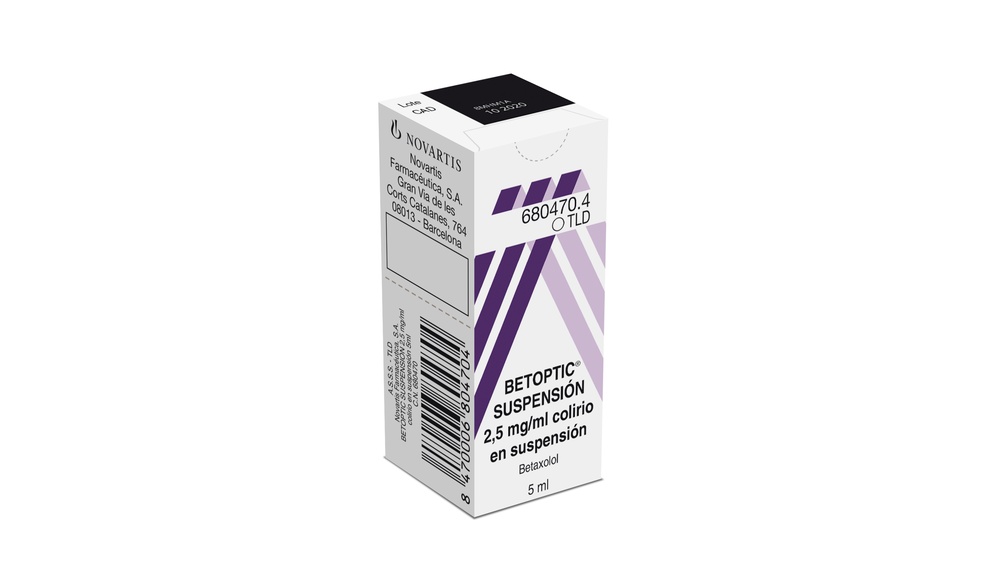
- Страна регистрации
- Форма выпускаEye drops, solution, <5 MG/ML
- Код АТХS01ED02
- Действующее вещество
- Отпускается по рецептуДа
- Производитель
- Информация на этой странице носит справочный характер и не является медицинской консультацией. Перед началом приема лекарства обязательно проконсультируйтесь с врачом.
- Аналоги BETOPTIKФорма выпуска: Eye drops, solution, 40 MCG/ML + 5 MG/MLДействующее вещество: timolol, combinationsПроизводитель: GENETIC S.P.A.Отпускается по рецептуФорма выпуска: Eye drops, suspension, 10 MG/ML + 5 MG/MLДействующее вещество: timolol, combinationsПроизводитель: NOVARTIS EUROPHARM LIMITEDОтпускается без рецептаФорма выпуска: Eye drops, solution, 20 MG/ML + 5 MG/MLДействующее вещество: timolol, combinationsПроизводитель: OMNIVISION ITALIA SRLОтпускается по рецепту
Аналоги BETOPTIK в других странах
Лекарства с тем же действующим веществом, доступные в других странах.
Аналог BETOPTIK в Польша
Аналог BETOPTIK в Украина
Аналог BETOPTIK в Испания
Врачи онлайн по BETOPTIK
Обсудите применение BETOPTIK и возможные следующие шаги — по оценке врача.









Получите рецепт на BETOPTIK онлайн
Заполните форму за 2 минуты
Расскажите о симптомах, истории болезни и нужном препарате.
Выберите врача или мы назначим
Выберите специалиста или мы подберём ближайшего доступного врача.
Врач рассматривает ваш случай
Обычно в течение 30 минут. Может задать уточняющие вопросы в чате.
Получите в любой аптеке
Электронный рецепт отправляется на вашу почту — действителен по всей Польше.
Часто задаваемые вопросы
BETOPTIK требует рецепта в Италия. Вы можете уточнить у врача онлайн, подходит ли это лекарство для вашей ситуации.
Действующее вещество BETOPTIK — betaxolol. Эта информация помогает определить лекарства с тем же составом под другими торговыми названиями.
BETOPTIK производится компанией IMMEDICA PHARMA AB. Упаковка и торговое название могут отличаться в зависимости от дистрибьютора.
Врачи, включая Семейные врачи, Психиатры, Дерматологи, Кардиологи, Эндокринологи, Гастроэнтерологи, Пульмонологи, Нефрологи, Ревматологи, Гематологи, Инфекционисты, Аллергологи, Гериатры, Педиатры, Онкологи, могут оценить целесообразность применения BETOPTIK с учетом вашей ситуации и местных правил. Вы можете записаться на онлайн-консультацию, чтобы обсудить возможные варианты.
Польша имеет хорошо развитую систему здравоохранения в крупных городах, таких как Варшава, Краков, Вроцлав и Гданьск. Аптеки широко доступны и работают в соответствии с действующим законодательством, обеспечивая доступ к рецептурным препаратам.
Вы можете купить BETOPTIK в Варшаве, Кракове, Вроцлаве или Гданьске в любой аптеке при наличии действующего рецепта.
Чтобы получить рецепт, вы можете воспользоваться Oladoctor:
Другие лекарства с тем же действующим веществом (betaxolol) включают ALDUOVITS, ATSARGA, BETAKLAR. Они могут отличаться торговым названием или формой выпуска, но содержат одинаковый терапевтический компонент. Перед изменением лечения рекомендуется проконсультироваться с врачом.
