



КВАДРОЦЕФ 1.0 g Powder

Ocena recepty online
Lekarz przeanalizuje Twój przypadek i zdecyduje, czy wystawienie recepty jest medycznie uzasadnione.

Porozmawiaj z lekarzem o tym leku
Omów swoje objawy i opcje leczenia podczas szybkiej konsultacji online.



Jak stosować KVADROCEF
Treść ulotki
- INSTRUCTIONS FOR MEDICAL USE OF LORNADO (LORNADO)
- Composition
- Main Physical and Chemical Properties
- Pharmacotherapeutic Group
- Pharmacological Properties
- Clinical Characteristics
- Interaction with Other Medicinal Products and Other Types of Interactions
- Special Instructions
- Use During Pregnancy or Breastfeeding
- Ability to Affect the Speed of Reaction When Driving or Operating Other Mechanisms
- Method of Administration and Dosage
- Children
- Overdose
- Adverse Reactions
- Shelf Life
- Storage Conditions
- Incompatibility
- Packaging
- Release Category
- Manufacturer
- Manufacturer's Location and Address
- Applicant
INSTRUCTIONS FOR MEDICAL USE OF LORNADO (LORNADO)
Pharmaceutical form. Lyophilisate for solution for injections.
Composition
Active substance: lornoxicam; 1 vial contains 8 mg of lornoxicam; excipients: mannitol (E 421), tromethamine, disodium edetate. 1 ampoule (2 ml) of solvent contains water for injections.
Main Physical and Chemical Properties
Lyophilisate - lyophilized yellow powder. Solvent - colorless transparent solution. Ready (restored) solution - transparent greenish-yellow solution, which practically does not contain particles.
Pharmacotherapeutic Group
Nonsteroidal anti-inflammatory and anti-rheumatic agents. Oxycams. ATC code M01AC05.
Pharmacological Properties
Pharmacodynamics
Lornoxicam is a nonsteroidal anti-inflammatory agent (NSAID) with analgesic and anti-inflammatory properties, which belongs to the class of oxycams. The mechanism of its action is mainly associated with the inhibition of prostaglandin synthesis (inhibition of the cyclooxygenase enzyme), which leads to desensitization of peripheral nociceptors and inhibition of inflammation. Also, a central effect on nociceptors is assumed, which is not related to anti-inflammatory action. Lornoxicam does not affect vital signs (such as body temperature, breathing rate, heart rate, blood pressure, ECG, spirometry).
The analgesic properties of lornoxicam have been successfully demonstrated in several clinical trials during development.
Due to the systemic ulcerogenic effect associated with the inhibition of prostaglandin synthesis, the use of lornoxicam, like other NSAIDs, often leads to the development of gastrointestinal complications.
Pharmacokinetics
Absorption. After intramuscular administration, the maximum concentration in plasma (Cmax) of 8 mg of lornoxicam is reached approximately after 0.4 hours. The absolute bioavailability (calculated by the area under the pharmacokinetic curve "concentration-time" (AUC)) after intramuscular administration of the drug is 97%.
Distribution. In plasma, lornoxicam is present in an unchanged state and in an inactive form of its hydroxylated metabolite. The binding of lornoxicam to plasma proteins is 99% and does not depend on its concentration.
Metabolism. Lornoxicam is actively metabolized in the liver by hydroxylation, mainly into an inactive 5-hydroxylornoxicam. Lornoxicam undergoes biotransformation with the participation of cytochrome CYP2C9. Due to genetic polymorphism, there are individuals with slowed and intense metabolism of this enzyme, which can manifest in a significant increase in the level of lornoxicam in the plasma of individuals with slowed metabolism. The hydroxylated metabolite has no pharmacological activity. Lornoxicam is completely metabolized. Approximately 2/3 are excreted through the liver and 1/3 through the kidneys in the form of an inactive compound. In animal studies, lornoxicam did not cause induction of liver enzymes. In clinical trials, no data on the accumulation of lornoxicam after repeated administration of recommended doses were obtained. The absence of accumulation was confirmed by data from monitoring the safety and efficacy of the drug in studies lasting 1 year.
Excretion. The half-life of the initial substance is 3-4 hours. After oral administration, approximately 50% are excreted with feces and 42% with urine, mainly in the form of 5-hydroxylornoxicam. The half-life of 5-hydroxylornoxicam is approximately 9 hours after parenteral administration 1 or 2 times a day.
Special Categories of Patients
Elderly patients. In elderly patients (aged 65 and over), clearance decreases by 30-40%. In addition to decreased clearance, there are no significant changes in the kinetic profile of lornoxicam in elderly patients.
Patients with impaired liver and/or kidney function. There is no significant change in the kinetic profile of lornoxicam in patients with renal or hepatic insufficiency, except for accumulation in patients with chronic liver disease after 7 days of therapy with daily doses of 12 mg and 16 mg.
Clinical Characteristics
Indications
Short-term treatment of acute pain of mild and moderate severity.
Contraindications
Increased sensitivity to the active substance and/or excipients of the drug.
Increased sensitivity (symptoms similar to those of asthma, rhinitis, angioneurotic edema, or urticaria) to other NSAIDs, including acetylsalicylic acid.
Gastrointestinal bleeding, cerebrovascular, or other bleeding.
Gastrointestinal bleeding or perforation in the history, associated with previous NSAID therapy.
Active recurrent peptic ulcer of the stomach/blood or recurrent peptic ulcer of the stomach/blood in the history (two or more separate proven episodes of ulcer development or bleeding).
Thrombocytopenia.
Severe heart failure.
Severe liver failure.
Severe kidney failure (plasma creatinine level > 700 μmol/L).
III trimester of pregnancy (see section "Use during pregnancy or breastfeeding").
Special Safety Measures
The solution for injection is prepared immediately before use (the contents of 1 vial (8 mg of lyophilisate) are dissolved in water for injection (2 ml)). The external appearance of the drug after restoration is a transparent greenish-yellow solution that practically does not contain particles.
In case of visible signs of drug spoilage, it should be disposed of in accordance with local requirements.
Interaction with Other Medicinal Products and Other Types of Interactions
When used concomitantly with lornoxicam, the following interactions are possible.
Cimetidine. When used concomitantly, it is possible to increase the level of lornoxicam in the plasma (no interactions between lornoxicam and ranitidine or lornoxicam and antacids have been detected).
Anticoagulants. When used concomitantly, it is possible to enhance the effect of anticoagulants, such as warfarin (see section "Special Instructions"). In case of concomitant use of these drugs, careful monitoring of the international normalized ratio is recommended.
Phenprocoumon. When used concomitantly, the effectiveness of treatment with phenprocoumon is reduced.
Heparin. When used concomitantly, it is possible to increase the risk of spinal/epidural hematoma during spinal or epidural anesthesia (see section "Special Instructions").
Angiotensin-converting enzyme (ACE) inhibitors. When used concomitantly, it is possible to reduce the effect of ACE inhibitors.
Diuretics. When used concomitantly, it is possible to weaken the diuretic and hypotensive effect of loop, thiazide, and potassium-sparing diuretics.
Beta-blockers. When used concomitantly, it is possible to reduce the hypotensive effect of beta-blockers.
Angiotensin II receptor blockers. When used concomitantly, it is possible to reduce the hypotensive effect of angiotensin II receptor blockers.
Digoxin. When used concomitantly, it is possible to reduce the renal clearance of digoxin.
Corticosteroids. When used concomitantly, it is possible to increase the risk of gastrointestinal ulcers or bleeding (see section "Special Instructions").
Antibacterial agents of the quinolone group. When used concomitantly, it is possible to increase the risk of seizures.
Antiplatelet agents. When used concomitantly, the risk of gastrointestinal bleeding increases (see section "Special Instructions").
Other NSAIDs. When used concomitantly, the risk of gastrointestinal bleeding increases.
Methotrexate. When used concomitantly, the level of methotrexate in the plasma increases, leading to an increase in its toxicity. In case of concomitant use of these drugs, careful monitoring of the patient's condition is recommended.
Selective serotonin reuptake inhibitors (SSRIs). When used concomitantly, the risk of gastrointestinal bleeding increases (see section "Special Instructions").
Lithium preparations. When used concomitantly, the renal clearance of lithium is reduced, so the concentration of plasma lithium may exceed the toxicity threshold. In case of concomitant use of these drugs, it is recommended to monitor the level of lithium in the plasma, especially at the beginning of treatment, when adjusting the dose, and when stopping treatment.
Cyclosporine. When used concomitantly, it is possible to increase the level of cyclosporine in the plasma and its nephrotoxicity, which is caused by effects mediated by renal prostaglandins. In case of concomitant use of these drugs, careful monitoring of kidney function is recommended.
Sulfonylurea derivatives (e.g., glibenclamide). When used concomitantly, the risk of hypoglycemia increases.
Known inducers and inhibitors of CYP2C9 isoenzymes. Lornoxicam (like other NSAIDs that depend on cytochrome P450 2C9 (CYP2C9 isoenzyme)) interacts with known inducers and inhibitors of CYP2C9 isoenzymes (see section "Metabolism").
Tacrolimus. When used concomitantly, the risk of nephrotoxicity increases due to the reduction of prostacyclin synthesis in the kidneys. In case of concomitant use of these drugs, monitoring of kidney function is recommended (see section "Special Instructions").
Pemetrexed. When used concomitantly, the renal clearance of pemetrexed may be reduced, resulting in increased renal and gastrointestinal toxicity and myelosuppression.
Special Instructions
In the following cases, the drug should be used only after careful evaluation of the expected benefit and potential risk.
The drug should be used with caution in patients with mild (creatinine level 150-300 μmol/L) and moderate (creatinine level 300-700 μmol/L) kidney failure, due to the important role of prostaglandins in maintaining renal blood flow. In case of kidney function impairment, the use of the drug should be discontinued.
After extensive surgical interventions, patients with heart failure who are taking diuretics or drugs that may cause kidney damage require careful monitoring of kidney function.
During the use of the drug, patients with coagulation disorders are recommended to undergo careful clinical examination and evaluation of laboratory parameters (e.g., activated partial thromboplastin time).
During the use of the drug at a dose of 12-16 mg per day, patients with liver failure (e.g., with liver cirrhosis) are recommended to regularly undergo laboratory tests due to the possibility of lornoxicam accumulation in the body (increase in AUC). However, no deviations in pharmacokinetic parameters were found in patients with liver failure compared to healthy volunteers.
With long-term use of the drug (more than 3 months), it is recommended to evaluate the condition of the blood (determination of hemoglobin), kidney function (determination of creatinine), and liver enzymes.
During the use of the drug, elderly patients are recommended to monitor kidney and liver function. The drug should be used with caution in such patients after surgical interventions.
Concomitant use of the drug with other NSAIDs, including selective cyclooxygenase-2 inhibitors, should be avoided.
Undesirable reactions can be minimized by taking the smallest effective dose of lornoxicam for the shortest period necessary to control the symptoms of the disease.
During the use of any NSAID (including lornoxicam) at any time during treatment, gastrointestinal bleeding, ulcers, or perforation may occur (with or without warning symptoms or serious gastrointestinal disorders in the history), which can be fatal.
The risk of gastrointestinal bleeding, ulcers, or perforation increases with increasing doses of NSAIDs in patients with a history of ulcers, especially those complicated by bleeding or perforation (see section "Contraindications"), as well as in elderly patients. The use of the drug should be started with caution and at the lowest therapeutic doses in such patients.
The drug should be used with caution in the above-mentioned groups of patients and in patients who are taking low doses of acetylsalicylic acid or other drugs that increase the risk of gastrointestinal complications (see section "Interaction with Other Medicinal Products and Other Types of Interactions").
For patients who require such concomitant therapy, treatment can be performed against the background of concomitant use of protective agents, such as misoprostol or proton pump inhibitors (see section "Interaction with Other Medicinal Products and Other Types of Interactions"). Regular clinical monitoring is recommended.
During the use of the drug, patients with a history of toxic effects on the gastrointestinal tract, especially elderly patients, should be informed about any unusual abdominal symptoms (especially gastrointestinal bleeding) at the initial stages of treatment.
The drug should be used with caution in patients who are taking drugs that may increase the risk of ulcers or bleeding, such as oral corticosteroids, anticoagulants - warfarin, SSRIs, or antiplatelet agents, such as acetylsalicylic acid (see section "Interaction with Other Medicinal Products and Other Types of Interactions").
In case of gastrointestinal bleeding or ulcers in patients taking lornoxicam, the use of the drug should be discontinued.
The drug should be used with caution in patients with a history of gastrointestinal diseases (ulcerative colitis, Crohn's disease), as their condition may worsen (see section "Adverse Reactions").
In elderly patients, the frequency of adverse reactions during the use of NSAIDs increases, including gastrointestinal bleeding and perforation, which can be fatal (see section "Contraindications").
The drug should be used with caution in patients with arterial hypertension and/or heart failure in the history, as the use of NSAIDs may lead to edema and fluid retention.
During the use of the drug, patients with arterial hypertension and/or congestive heart failure of mild to moderate severity in the history should be monitored, as NSAID therapy may be accompanied by such phenomena as fluid retention and edema.
There are clinical trials and epidemiological data that suggest that the use of some NSAIDs (especially long-term therapy and high doses) may be associated with a small increase in the risk of arterial thrombotic events (myocardial infarction or stroke). There is insufficient data to exclude such a risk when taking lornoxicam.
The drug should be used only after careful evaluation of indications in patients with uncontrolled arterial hypertension, chronic heart failure, ischemic heart disease, peripheral artery disease, and/or cerebrovascular disorders. Evaluation is also necessary before long-term use of the drug in patients with risk factors for cardiovascular diseases (e.g., hypertension, hyperlipidemia, diabetes, smoking).
When lornoxicam is used concomitantly with heparin, the risk of spinal/epidural hematoma during spinal or epidural anesthesia increases (see section "Interaction with Other Medicinal Products and Other Types of Interactions").
During the use of lornoxicam, very rarely, severe skin reactions may develop, including exfoliative dermatitis, Stevens-Johnson syndrome, and toxic epidermal necrolysis, sometimes with fatal outcomes (see section "Adverse Reactions"). The risk of developing such reactions is highest at the beginning of treatment: in most cases, these reactions occur within the first month of taking lornoxicam. The use of the drug should be discontinued at the first signs of skin rash, mucous membrane lesions, and other manifestations of hypersensitivity.
The drug should be used with caution in patients with bronchial asthma or a history of the disease, as NSAIDs may provoke bronchospasm in such patients.
During the use of lornoxicam, patients with systemic lupus erythematosus and mixed connective tissue disease may have an increased risk of developing aseptic meningitis.
Lornoxicam inhibits platelet aggregation, increasing bleeding time. The drug should be used with caution in patients with a tendency to bleeding.
When lornoxicam is used concomitantly with tacrolimus, the risk of nephrotoxicity may increase due to the reduction of prostacyclin synthesis in the kidneys. In case of necessary combination, careful monitoring of kidney function is recommended.
During the use of lornoxicam, it is possible to have episodic increases in transaminases, bilirubin in the plasma, increases in plasma levels of urea and creatinine, and other deviations of laboratory parameters from normal. If deviations in laboratory parameters are significant and prolonged, the use of the drug should be discontinued and the necessary examination should be performed.
Lornoxicam, like other agents that inhibit cyclooxygenase/prostaglandin synthesis, may impair fertility, so it is not recommended for use in women who are trying to conceive. Women who have difficulty becoming pregnant or are undergoing examination for infertility should discontinue the use of the drug.
In case of chickenpox, severe infectious lesions of the skin and soft tissues may rarely develop. It is also impossible to exclude the influence of NSAIDs on the worsening of such infectious lesions. It is recommended to avoid the use of the drug in case of chickenpox.
Use During Pregnancy or Breastfeeding
Pregnancy
The drug is contraindicated in the III trimester of pregnancy. There are no clinical data on the use of lornoxicam in the I-II trimesters of pregnancy and during childbirth, so the drug is not recommended for use during this period.
There are insufficient data on the use of lornoxicam in pregnant women. Animal studies have shown reproductive toxicity.
Inhibition of prostaglandin synthesis may have a negative effect on pregnancy and/or the development of the embryo/fetus. Epidemiological studies suggest an increased risk of miscarriage and heart defects when using prostaglandin synthesis inhibitors at early stages of pregnancy. The risk increases with increasing doses and duration of therapy. In animals, the use of prostaglandin synthesis inhibitors leads to an increase in pre- and post-implantation fetal death and embryofetal mortality. Prostaglandin synthesis inhibitors should not be used in the I and II trimesters of pregnancy. Use is possible only in cases of extreme necessity.
Starting from the 20th week of pregnancy, the use of lornoxicam may cause oligohydramnios due to fetal kidney dysfunction. This can occur soon after the start of treatment and is usually reversible after discontinuation of treatment. In addition, there are reports of narrowing of the arterial duct after treatment in the II trimester of pregnancy, most of which passed after discontinuation of treatment. It is recommended to avoid the use of NSAIDs starting from the 20th week of pregnancy or later.
In case of necessity to use NSAIDs during the period between the 20th and 28th weeks of pregnancy, it is recommended to use the lowest effective dose of the drug for the shortest period.
Prenatal monitoring of oligohydramnios and narrowing of the arterial duct should be considered after exposure to lornoxicam for several days, starting from the 20th gestational week. The use of the drug should be discontinued if oligohydramnios or narrowing of the arterial duct is detected.
Breastfeeding
There are no data on the excretion of lornoxicam in breast milk in women. Relatively high concentrations of lornoxicam are excreted in the milk of lactating rats. The drug should not be used during breastfeeding.
Ability to Affect the Speed of Reaction When Driving or Operating Other Mechanisms
In case of dizziness and/or drowsiness when using the drug, it is not recommended to drive a car or operate other mechanisms.
Method of Administration and Dosage
The drug is used for initial therapy and when rapid achievement of analgesic effect is necessary or when the use of oral preparations or suppositories is impossible.
Undesirable reactions can be minimized by taking the smallest effective dose of lornoxicam for the shortest period necessary to control the symptoms (see section "Special Instructions").
Dilution of the lyophilisate with the solvent should be performed under conditions that ensure microbiological purity.
After dilution, the ready (restored) solution should be used immediately.
Dosage
For all patients, the appropriate dosing regimen should be based on individual response to treatment.
The recommended dose of the drug is 8 mg intravenously or intramuscularly. The maximum daily dose is 16 mg. Some patients may require an additional dose of 8 mg in the first 24 hours.
Elderly Patients
Except for individuals with impaired liver or kidney function, other patients do not require dose adjustment, but the drug should be used with caution in such patients due to the likelihood of adverse reactions from the gastrointestinal tract.
Patients with Impaired Kidney Function
Patients with mild and moderate kidney failure require a reduction in the dose of lornoxicam.
Patients with Impaired Liver Function
Patients with moderate liver failure require a reduction in the dose of lornoxicam.
Method of Administration
The drug is intended for intravenous and intramuscular administration. The duration of intravenous administration of the solution should be at least 15 seconds, and intramuscular administration - at least 5 seconds.
After preparing the solution, the needle should be replaced.
For intramuscular injection, a long needle is required to ensure deep administration.
The diluted drug is intended for single use only.
The solution for injection is prepared immediately before use (the contents of 1 vial (8 mg of lyophilisate) are dissolved in water for injection (2 ml)).
Children
The drug is not recommended for use in children under 18 years of age due to insufficient clinical data on the efficacy and safety of lornoxicam.
Overdose
Currently, there are no data on overdose that would allow determining its consequences or proposing specific treatment. However, as a result of lornoxicam overdose, the following symptoms may be observed: nausea, vomiting, cerebral symptoms (dizziness, vision disorders); in severe cases - ataxia with transition to coma and seizures; liver and kidney damage, possible coagulation disorders.
In case of real or suspected overdose, the use of the drug should be discontinued. Due to the short half-life of lornoxicam, it is quickly eliminated from the body. Hemodialysis is not effective. Currently, there is no specific antidote. For the treatment of gastrointestinal disorders, for example, a prostaglandin analog or ranitidine can be used.
Adverse Reactions
The most common adverse reactions to NSAIDs were related to the gastrointestinal tract. When taking NSAIDs, peptic ulcers, perforation, or gastrointestinal bleeding may occur, which can be fatal, especially in elderly patients (see section "Special Instructions"). Nausea, vomiting, diarrhea, flatulence, constipation, dyspepsia, abdominal pain, melena, hematemesis, stomatitis, exacerbation of colitis, and Crohn's disease have been reported during NSAID therapy. Gastritis has been observed less frequently.
It is believed that approximately 20% of patients treated with lornoxicam may experience adverse reactions. The most common adverse reactions are nausea, dyspepsia, gastrointestinal disorder, abdominal pain, vomiting, and diarrhea. These symptoms were generally observed in less than 10% of patients who participated in the study.
Adverse Reactions by Frequency of Occurrence
Edema, arterial hypertension, and heart failure have been reported during NSAID therapy.
Clinical trials and epidemiological data show that the use of some NSAIDs, especially in high doses and with long-term use, may be associated with an increased risk of arterial thrombotic events, such as myocardial infarction or stroke (see section "Special Instructions").
Exceptionally, during chickenpox, severe infectious complications of the skin and soft tissues have been reported.
Adverse reactions are classified by frequency of occurrence into the following categories: very common (> 1/10); common (> 1/100, < 1/10); uncommon (> 1/1000, < 1/100); rare (> 1/10000, < 1/1000); very rare (< 1/10000); frequency unknown (frequency cannot be estimated from available data).
Infections and Invasions
Rarely - pharyngitis.
Blood and Lymphatic System Disorders
Rarely - anemia, thrombocytopenia, leukopenia, prolonged bleeding time; very rarely - ecchymosis. NSAIDs can cause specific hematological disorders, such as neutropenia, agranulocytosis, aplastic anemia, and hemolytic anemia.
Immune System Disorders
Rarely - hypersensitivity reactions, anaphylactoid reactions, and anaphylaxis.
Metabolism and Nutrition Disorders
Uncommonly - loss of appetite, changes in body weight.
Psychiatric Disorders
Uncommonly - insomnia, depression; rarely - confusion, nervousness, agitation.
Nervous System Disorders
Commonly - mild and transient headache, dizziness; rarely - drowsiness, paresthesia, taste disorders (dysgeusia), tremor, migraine; very rarely - aseptic meningitis in patients with systemic lupus erythematosus (SLE) and mixed connective tissue disease (see section "Special Instructions").
Eye Disorders
Uncommonly - conjunctivitis; rarely - vision disorders.
Ear and Labyrinth Disorders
Uncommonly - vertigo, tinnitus.
Cardiovascular Disorders
Uncommonly - palpitations, tachycardia, edema, heart failure, flushing; rarely - hypertension, hot flashes, hemorrhages, hematomas.
Respiratory, Thoracic, and Mediastinal Disorders
Uncommonly - rhinitis; rarely - dyspnea, cough, bronchospasm.
Gastrointestinal Disorders
Commonly - nausea, abdominal pain, dyspepsia, diarrhea, vomiting; uncommonly - constipation, flatulence, eructation, dry mouth, gastritis, stomach ulcers, duodenal ulcers, abdominal pain in the upper abdomen, ulcers of the mucous membrane of the oral cavity; rarely - melena, hematemesis, stomatitis, esophagitis, gastroesophageal reflux, dysphagia, aphthous stomatitis, glossitis, perforation of peptic ulcers, gastrointestinal bleeding.
Hepatobiliary Disorders
Uncommonly - increased liver enzyme levels (ALT, AST); very rarely - toxic liver damage, which can lead to the development of liver failure, hepatitis, jaundice, and cholestasis.
Skin and Subcutaneous Tissue Disorders
Uncommonly - rash, itching, increased sweating, erythematous rash, urticaria, angioedema; rarely - dermatitis, eczema, purpura; very rarely - bullous and exfoliative reactions, such as multiforme erythema, Stevens-Johnson syndrome, and toxic epidermal necrolysis.
Musculoskeletal and Connective Tissue Disorders
Uncommonly - arthralgia; rarely - bone pain, muscle spasms, myalgia.
Renal and Urinary Disorders
Rarely - nocturia, urinary disorders, increased levels of urea and creatinine in the plasma; very rarely - lornoxicam can cause acute kidney failure in patients with kidney diseases that depend on renal prostaglandins and play an important role in maintaining renal blood flow (see section "Special Instructions"). Nephrotoxicity in various forms, including nephritis and nephrotic syndrome, is an effect specific to NSAIDs.
General Disorders
Uncommonly - malaise, facial edema; rarely - asthenia.
Reports of suspected adverse reactions that occurred after the registration of the drug are very important. This allows for continuous monitoring of the benefit/risk ratio of the drug. Healthcare professionals should report any suspected adverse reactions through the national pharmacovigilance system.
Shelf Life
Lyophilisate for solution for injections in a vial - 3 years.
Solvent in an ampoule - 5 years.
After dilution, the ready (restored) solution should be used immediately.
Storage Conditions
Store at a temperature not exceeding 25°C in the original packaging and out of reach of children.
Incompatibility
The drug should not be mixed with other medicinal products, except for those specified in the instructions for medical use.
Packaging
8 mg of lyophilisate for solution for injections in a vial with 2 ml of solvent (water for injections) in an ampoule;
1 vial with lyophilisate for solution for injections and 1 ampoule of solvent in a cardboard box;
3 vials with lyophilisate for solution for injections and 3 ampoules of solvent in a contour cell package, 1 contour cell package in a cardboard box.
Release Category
By prescription.
Manufacturer
Mefar Ilac San. A.S.
Manufacturer's Location and Address
Ramazanoglu Mah. Ensar Cad. No: 20, 34906 Kurtkoy - Pendik/Istanbul, Turkey.
Applicant
WORLD MEDICINE, LLC, Ukraine.

Nie jesteś pewien, czy ten lek jest odpowiedni dla ciebie?
Omów swoje objawy i leczenie z lekarzem online.

Zacząłeś przyjmować lek i masz pytania?
Omów swoje objawy i leczenie z lekarzem online.
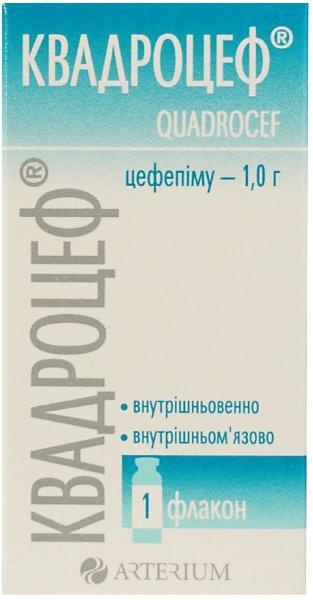
- Kraj rejestracji
- Postać farmaceutycznapowder, 1.0 g
- Kod ATCJ01DE01
- Substancja czynna
- Wymaga receptyTak
- Producent
- Te treści mają charakter wyłącznie informacyjny i nie zastępują konsultacji lekarskiej.
- Zamienniki KVADROCEFPostać farmaceutyczna: powder, 1000 mg, 1 vialSubstancja czynna: cefepimeProducent: Нектар Лайфсайнсіз Лімітед-Юніт VIWymaga receptyPostać farmaceutyczna: powder, 500 mg, 1 vialSubstancja czynna: cefepimeProducent: Нектар Лайфсайнсіз Лімітед-Юніт VІWymaga receptyPostać farmaceutyczna: powder, 1000 mgSubstancja czynna: cefepimeProducent: Зейсс Фармас’ютікелс Пвт. Лтд.Wymaga recepty
Odpowiedniki KVADROCEF w innych krajach
Leki z tą samą substancją czynną dostępne w innych krajach.
Odpowiednik KVADROCEF w Włochy
Odpowiednik KVADROCEF w Hiszpania
Odpowiednik KVADROCEF w Polska
Lekarze online w sprawie KVADROCEF
Omów stosowanie KVADROCEF, bezpieczeństwo i ocenę zasadności recepty zgodnie z obowiązującymi przepisami.









Uzyskaj receptę na KVADROCEF online
Wypełnij 2-minutowy formularz
Opisz swoje objawy, historię choroby i lek, o który prosisz.
Wybierz lekarza lub pozwól nam przydzielić
Wybierz specjalistę lub dopasujemy Cię do najbliższego dostępnego lekarza.
Lekarz analizuje Twój przypadek
Zazwyczaj w ciągu 30 minut. Może zadawać dodatkowe pytania przez czat.
Odbierz w dowolnej aptece
Recepta elektroniczna wysłana na Twój e-mail — ważna w całej Polsce.
Często zadawane pytania
KVADROCEF wymaga recepty w Ukraina. Możesz skonsultować się z lekarzem online, aby sprawdzić, czy ten lek może być odpowiedni w Twojej sytuacji.
Substancją czynną w KVADROCEF jest cefepime. Informacja ta pomaga rozpoznać leki o tym samym składzie, ale pod różnymi nazwami handlowymi.
KVADROCEF jest produkowany przez PAT "Kiivmedpreparat. Nazwy handlowe i opakowania mogą się różnić w zależności od dystrybutora.
Lekarze, tacy jak Lekarze rodzinni, Psychiatrzy, Dermatolodzy, Kardiolodzy, Endokrynolodzy, Gastroenterolodzy, Pulmonolodzy, Nefrolodzy, Reumatolodzy, Hematolodzy, Zakaźnicy, Alergolodzy, Geriatrzy, Pediatrzy, Onkolodzy, mogą ocenić, czy stosowanie KVADROCEF jest odpowiednie w Twoim przypadku, w zależności od sytuacji klinicznej i lokalnych przepisów. Możesz umówić konsultację online, aby omówić objawy i możliwe dalsze kroki.
Polska posiada dobrze rozwiniętą infrastrukturę ochrony zdrowia w dużych miastach, takich jak Warszawa, Kraków, Wrocław i Gdańsk. Apteki są łatwo dostępne i działają zgodnie z obowiązującymi przepisami, zapewniając dostęp do leków na receptę.
Możesz kupić KVADROCEF w Warszawie, Krakowie, Wrocławiu lub Gdańsku w każdej aptece, posiadając ważną receptę.
Aby uzyskać receptę, możesz skorzystać z Oladoctor:
Inne leki zawierające tę samą substancję czynną (cefepime) to m.in. АБИПИМ, АБИПИМ, БЛІПІМ. Mogą one różnić się nazwą handlową lub postacią, ale zawierają ten sam składnik terapeutyczny. Przed zmianą lub rozpoczęciem nowego leku skonsultuj się z lekarzem.
