



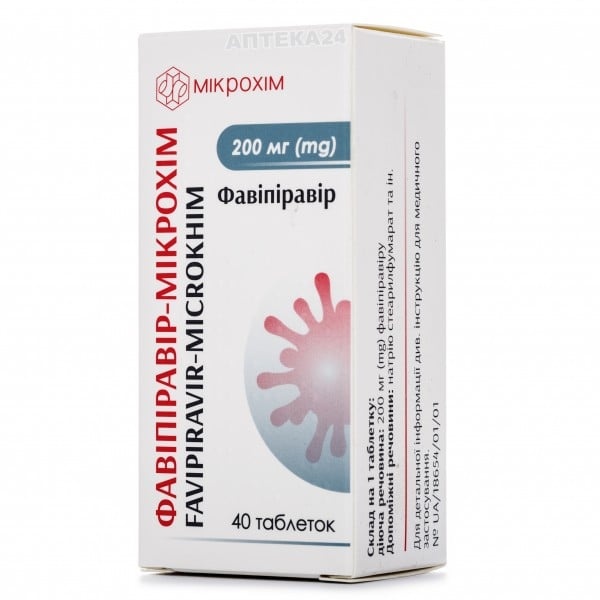
ФАВІПІРАВІР-МІКРОХІМ 200 mg Таблетки

Рассмотрение рецепта онлайн
Врач рассмотрит ваш случай и примет решение о назначении рецепта, если это медицински оправдано.

Поговорите с врачом об этом лекарстве
Обсудите симптомы и возможные дальнейшие шаги на онлайн-консультации.



Инструкция по применению FAVIPIRAVIR-MIKROHIM
Содержание инструкции
- ИНСТРУКЦИЯ для медицинского применения лекарственного средства ВИТАМИН С
- Состав:
- Лекарственная форма.
- Основные физико-химические свойства:
- Фармакотерапевтическая группа.
- Фармакологические свойства.
- Клинические характеристики.
- Способ применения и дозы.
- Побочные реакции.
- Срок годности.
- Условия хранения.
- Упаковка.
- Категория отпуска.
- Производитель.
- Местонахождение производителя и адрес места осуществления его деятельности.
ИНСТРУКЦИЯ для медицинского применения лекарственного средства ВИТАМИН С
ВИТАМИН С
Состав:
действующее вещество: аскорбиновая кислота, натрия аскорбат;
1 таблетка содержит аскорбиновой кислоты 199,5 мг, натрия аскорбата 338,0 мг (в пересчете на аскорбиновую кислоту 300,5 мг);
вспомогательные вещества:
таблетки жевательные
сорбит (Е 420), целлулоза микрокристаллическая, калия ацесульфам (Е 950), аспартам (Е 951), магния стеарат, кремния диоксид коллоидный безводный, краситель тартразин (Е 102);
таблетки жевательные с вкусом апельсина
сорбит (Е 420), целлулоза микрокристаллическая, калия ацесульфам (Е 950), аспартам (Е 951), магния стеарат, кремния диоксид коллоидный безводный, ароматизатор апельсиновый натуральный, краситель желтый запад FCF (Е 110).
Лекарственная форма.
Таблетки жевательные.
Основные физико-химические свойства:
таблетки жевательные
таблетки желтого цвета, плоскоцилиндрической формы с фаской; допускается неоднородность цвета (вкрапления белого и желтого цвета); на поверхности таблетки допускается наличие порошкоподобного налета;
таблетки жевательные с вкусом апельсина
таблетки розово-оранжевого цвета, плоскоцилиндрической формы с фаской; допускается неоднородность цвета (вкрапления белого и розово-оранжевого цвета); на поверхности таблетки допускается наличие порошкоподобного налета.
Фармакотерапевтическая группа.
Простые препараты аскорбиновой кислоты (витамина С). Аскорбиновая кислота (витамин С).
Код АТХ A11G А01.
Фармакологические свойства.
Фармакодинамика.
Аскорбиновая кислота (витамин C) относится к группе водорастворимых витаминов.
Аскорбиновая кислота имеет выраженные восстановительные свойства, участвует во многих окисно-восстановительных реакциях, в регуляции обмена углеводов, липидов и белков; влияет на обмен аминокислот ароматического ряда, фолиевой кислоты, гистамина, тироксина, стероидных гормонов, инсулина; необходима для синтеза, межклеточной вещества, регенерации соединительной и костной тканей. Аскорбиновая кислота участвует во важных реакциях гидроксилирования, включая образование нейромедиатора норадреналина из дофамина и превращение пролина в гидроксипролин (т.е. принимает участие в процессах синтеза и созревания коллагена соединительной ткани). Аскорбиновая кислота играет важную роль в обмене ионами металлов, в том числе в абсорбции железа из желудочно-кишечного тракта
(повышает абсорбцию железа) и его транспортировке до тканей и органов. Аскорбиновая кислота влияет на синтез гемоглобина и созревание эритроцитов, стабилизирует стенки капилляров, необходима для свертывания крови. Аскорбиновая кислота способствует повышению сопротивляемости организма к инфекциям и негативному воздействию внешней среды, улучшает аппетит, способствует нормализации сна; имеет антиоксидантные и радиопротекторные свойства, уменьшает геморрагические проявления лучевой болезни и стимулирует кроветворение.
Дефицит аскорбиновой кислоты в пище приводит к развитию недостаточности аскорбиновой кислоты, поскольку в организме она не синтезируется. При определенных условиях потребность организма в аскорбиновой кислоте может увеличиваться, например в период активного роста, при физическом или умственном переутомлении, при острых респираторных и других инфекционных заболеваниях.
Фармакокинетика.
Абсорбция
После приема внутрь аскорбиновая кислота хорошо всасывается в желудочно-кишечном тракте, преимущественно в тонком кишечнике.
Распределение
Максимальная концентрация аскорбиновой кислоты в плазме крови достигается через 4–7 часов. Легко проникает в лейкоциты, тромбоциты, эритроциты (концентрация в лейкоцитах и тромбоцитах выше, чем в эритроцитах и плазме крови), а затем – во все ткани. Депонируется в задней части гипофиза, коре надпочечников, промежуточных клетках семенных желез, яичниках, щитовидной железе, поджелудочной железе, печени, стенке кишечника, мозгу, глазном эпителии, селезенке, легких, почках, сердце и мышцах. Физиологический уровень депо аскорбиновой кислоты в организме составляет примерно 1,5 г.
Метаболизм
Метаболизируется преимущественно в печени в дегидроаскорбиновую кислоту и в дальнейшем – в дикетогулоновую и щавлевую кислоты.
Выведение
Аскорбиновая кислота, которая поступает в организм в избыточных количествах (обычно > 200 мг/добу), быстро выводится; аскорбиновая кислота в неизмененном виде и ее неактивные метаболиты выводятся преимущественно с мочой. Количество аскорбиновой кислоты, выделяемой в неизмененном виде с мочой, зависит от дозы; возможен незначительный диуретический эффект. При применении больших доз аскорбиновой кислоты, когда концентрация в плазме крови составляет более 1,4 мг/дл, выведение резко усиливается, причем повышенная экскреция может сохраняться после прекращения применения лекарственного средства.
Аскорбиновая кислота проникает через плаценту и в грудное молоко.
Клинические характеристики.
Показания.
Для лечения недостаточности аскорбиновой кислоты.
Обеспечение повышенной потребности организма в аскорбиновой кислоте:
- в период острых респираторных и других инфекционных заболеваний;
- в период реконвалесценции после тяжелых заболеваний, оперативных вмешательств;
- при различных интоксикациях, геморрагических диатезах, заболеваниях соединительной ткани (ревматоидный артрит), кровотечах (носовых, легких, маточных);
- при лучевой болезни, гепатите, холецистите, болезни Аддисона, при ранах мягких тканей, которые вяло заживают, инфицированных ранах и переломах костей.
Противопоказания.
Повышенная чувствительность к аскорбиновой кислоте и к другим компонентам лекарственного средства, склонность к тромбофлебиту, тромбофлебиту, сахарный диабет, тяжелые заболевания почек, мочекаменная болезнь (при применении доз более 1000 мг в день), гипероксалурия, фенилкетонурия.
Детский возраст до 14 лет. Период беременности или кормления грудью.
Взаимодействие с другими лекарственными средствами и другие виды взаимодействий.
При одновременном применении аскорбиновая кислота повышает абсорбцию из желудочно-кишечного тракта пенициллина, тетрациклина, этинилэстрадиола, железа.
При одновременном применении аскорбиновой кислоты с десфероксамином (дефероксамином) повышается выведение железа с мочой. Сообщали о случаях кардиомиопатии при застойной сердечной недостаточности у пациентов с идиопатическим гемохроматозом и талассемией, которые на фоне применения десфероксамина начали принимать аскорбиновую кислоту. Применение аскорбиновой кислоты в данной группе пациентов требует осторожности и мониторинга функции сердца.
При совместном применении аскорбиновой кислоты с антацидами, содержащими алюминий, может повышаться выведение алюминия с мочой. Одновременное применение аскорбиновой кислоты и антацидов не рекомендуется, особенно пациентам с почечной недостаточностью.
Аскорбиновая кислота уменьшает токсичность сульфаниламидных лекарственных средств, снижает эффективность гепарина и непрямых антикоагулянтов.
При одновременном применении аскорбиновая кислота уменьшает хронотропное действие изопреналина.
Аскорбиновая кислота в больших дозах снижает терапевтическое действие трициклических антидепрессантов, нейролептиков (производных фенотиазина), повышает выведение почками амфетамина, мексилетина; влияет на резорбцию витамина В12.
Применение аскорбиновой кислоты в комбинации с дисульфирамом, особенно в течение длительного периода или в больших дозах, снижает эффективность лечения дисульфирамом.
Аскорбиновая кислота повышает общий клиренс этилового спирта.
Одновременное применение с ацигидалином (в рамках комплементарной медицины) может вызывать проявления цианидной токсичности.
Барбитураты и примидон могут повышать выведение аскорбиновой кислоты с мочой.
Фруктовые или овощные соки, щелочное питье снижают абсорбцию аскорбиновой кислоты.
Пероральные контрацептивы и курение снижают концентрацию аскорбиновой кислоты в плазме крови.
Прием ацетилсалициловой кислоты (аспирина) снижает абсорбцию аскорбиновой кислоты примерно на треть, что, соответственно, требует увеличения дозы последней. При одновременном применении с ацетилсалициловой кислотой повышается выведение с мочой аскорбиновой кислоты; выведение с мочой ацетилсалициловой кислоты не подвергается влиянию и не приводит к снижению ее противовоспалительного действия. Аскорбиновая кислота повышает риск возникновения кристаллурии при лечении салицилатами.
Лекарственные средства хинолинового ряда, кальция хлорид, салицилаты, тетрациклины, глюкокортикостероиды при длительном применении снижают запасы аскорбиновой кислоты в организме.
Особенности применения.
Одновременный прием лекарственного средства с щелочным питьем снижает всасывание аскорбиновой кислоты, поэтому его не следует запивать щелочной минеральной водой. Процесс всасывания аскорбиновой кислоты может нарушаться при дискинезиях кишечника, энтеритах, ахилии (пониженной шлунковой секреции), глистной инвазии, лямблиозе.
Лекарственное средство следует применять с особой осторожностью пациентам:
- с недостаточностью глюкозо-6-фосфатдегидрогеназы (аскорбиновая кислота может спровоцировать гемолитическую анемию);
- с нефролитиазом в анамнезе (риск гипероксалурии и осаждения оксалатов в мочевом тракте после приема больших доз аскорбиновой кислоты);
- с нарушением метаболизма железа (гемохроматоз, талассемия, гемосидероз).
Поскольку аскорбиновая кислота повышает абсорбцию железа, ее применение в больших дозах может быть опасным для пациентов с гемохроматозом, талассемией, полицитемией, лейкемией и сидеробластной анемией. Пациентам с высоким содержанием железа в организме следует применять аскорбиновую кислоту в минимальных дозах.
Следует с осторожностью применять лекарственное средство пациентам с заболеваниями почек в анамнезе. Аскорбиновая кислота усиливает экскрецию оксалатов с мочой, повышая риск образования оксалатных камней в почках. Пациентам из группы риска развития гипероксалурии не следует принимать аскорбиновую кислоту в дозах, превышающих 1000 мг, однако пациенты, которые не входят в данную группу, этому риску не подвергаются. При мочекаменной болезни суточная доза аскорбиновой кислоты не должна превышать 1000 мг (см. раздел «Противопоказания»).
Не следует применять большие дозы аскорбиновой кислоты пациентам с повышенным свертыванием крови. Следует с осторожностью применять аскорбиновую кислоту пациентам с прогрессирующим онкологическим заболеванием, поскольку ее применение может осложнить течение болезни.
При применении больших доз или при длительном применении аскорбиновой кислоты необходимо контролировать функцию почек и уровень артериального давления в связи со стимулирующим влиянием аскорбиновой кислоты на образование кортикостероидных гормонов.
При длительном применении аскорбиновой кислоты в больших дозах возможно подавление функции инсулярного аппарата поджелудочной железы, что требует контроля за состоянием последней.
Длительное применение больших доз аскорбиновой кислоты может ускорять ее ренальный клиренс, в результате чего после резкого снижения дозы или отмены лечения может возникнуть парадоксальная недостаточность аскорбиновой кислоты.
Не следует превышать рекомендованную дозу.
Не следует применять одновременно с другими лекарственными средствами, содержащими аскорбиновую кислоту.
Поскольку аскорбиновая кислота оказывает легкое стимулирующее действие на центральную нервную систему, лекарственное средство ВИТАМИН С не рекомендуется принимать в конце дня.
Влияние на результаты лабораторных исследований
Аскорбиновая кислота как восстановитель может влиять на результаты лабораторных исследований при определении содержания глюкозы, билирубина, мочевой кислоты, креатинина, неорганических фосфатов, активности лактатдегидрогеназы, трансаминаз в крови; может вызывать ложноположительный или ложноотрицательный результат (в зависимости от применяемого метода) при определении содержания глюкозы в моче; может влиять на результаты определения биохимическими методами концентрации креатинина, мочевой кислоты в моче. При применении больших доз аскорбиновой кислоты может быть ложноотрицательный результат исследования на наличие скрытой крови в кале.
1 таблетка лекарственного средства ВИТАМИН С содержит 1,7 ммоль (или 39 мг) натрия, поэтому пациентам, которые придерживаются диеты с контролируемым содержанием натрия, следует с осторожностью применять это лекарственное средство.
1 таблетка жевательная лекарственного средства ВИТАМИН С содержит 506,26 мг сорбита (Е 420).
1 таблетка жевательная с вкусом апельсинового лекарственного средства ВИТАМИН С содержит 484,80 мг сорбита (Е 420).
При установленной непереносимости некоторых сахаров следует проконсультироваться с врачом, прежде чем принимать это лекарственное средство. Необходимо учитывать аддитивный эффект совместно применяемых лекарственных средств, содержащих сорбит (или фруктозу), а также употребление сорбита (или фруктозы) с пищей. Содержание сорбита в лекарственных средствах для перорального применения может влиять на биодоступность других лекарственных средств для перорального применения при их совместном применении.
Лекарственное средство содержит аспартам (Е 951) – источник фенилаланина, что представляет опасность для больных фенилкетонурией (см. раздел «Противопоказания»).
Лекарственное средство содержит краситель тартразин (E 102) или желтый запад FCF (Е 110), который может вызывать аллергические реакции.
Применение в период беременности или кормления грудью.
Лекарственное средство в этой дозовой форме не предназначено для применения в период беременности или кормления грудью.
Влияние на способность управлять транспортными средствами и работать с механизмами.
Нет данных о том, что лекарственное средство может иметь негативное влияние на скорость реакции при управлении транспортными средствами или работе с сложными механизмами при соблюдении рекомендованного режима дозирования.
Способ применения и дозы.
Лекарственное средство принимать внутрь после еды, разжевывая таблетку.
Взрослым и детям от 14 лет с лечебной целью необходимо принимать по 1 таблетке (500 мг) в день. Срок лечения – 10–15 дней.
При острых респираторных и других инфекционных заболеваниях для взрослых рекомендуется прием по 1–2 таблетки (500–1000 мг) в день (за 2 приема) в течение 7–10 дней. Детям – по 250 мг в день. Для такого дозирования следует применять препараты аскорбиновой кислоты с соответствующим содержанием действующего вещества.
Продолжительность лечения зависит от характера и течения заболевания и определяется врачом индивидуально.
Дети.
Детям до 14 лет лекарственное средство рекомендуется применять в другой дозовой форме.
Передозировка.
Острое передозирование лекарственного средства практически невозможно. Аскорбиновая кислота, которая поступает в организм в избыточных количествах, быстро выводится. При применении доз более 3000 мг в день неабсорбированная аскорбиновая кислота выводится преимущественно в неизмененном виде с калом.
Симптомы. Применение аскорбиновой кислоты в больших дозах может вызывать диарею и образование оксалатных камней в почках. Может быть необходимым симптоматическое лечение.
Применение аскорбиновой кислоты в больших дозах может привести к рвоте, тошноте, которые исчезают после отмены лекарственного средства.
Аскорбиновая кислота может вызывать развитие ацидоза или гемолитической анемии у некоторых пациентов с дефицитом глюкозо-6-фосфатдегидрогеназы.
При длительном применении больших доз аскорбиновой кислоты возможно подавление функции инсулярного аппарата поджелудочной железы, нарушение функции почек, повышение артериального давления и развитие других побочных эффектов, указанных в разделе «Побочные реакции».
Массовая передозировка аскорбиновой кислоты может привести к почечной недостаточности.
Лечение. Если избыточную дозу аскорбиновой кислоты было принято недавно, следует промыть желудок, в противном случае следует принять общие поддерживающие меры. Аскорбиновую кислоту можно удалить из организма с помощью гемодиализа.
Побочные реакции.
Лекарственное средство очень хорошо переносится в рекомендованной дозе, и обычно при соблюдении рекомендованного режима дозирования побочные реакции не возникают. Однако при длительном применении в больших дозах возможны следующие побочные реакции.
Со стороны психики: повышенная возбудимость, повышенная утомляемость, нарушение сна.
Со стороны нервной системы: повышение возбудимости центральной нервной системы, головная боль.
Со стороны сердечно-сосудистой системы: дистрофия миокарда, артериальная гипертензия, приливы.
Со стороны системы крови и лимфатической системы: тромбоз, гиперпротромбинемия, тромбоцитоз, эритроцитопения, нейтрофильный лейкоцитоз; гемолитическая анемия у пациентов с недостаточностью глюкозо-6-фосфатдегидрогеназы возможен гемолиз эритроцитов.
Со стороны желудочно-кишечного тракта: раздражение слизистой оболочки желудочно-кишечного тракта, изжога, тошнота, рвота, спазмы желудка; при применении в дозах более 1000 мг в день – диарея.
Со стороны эндокринной системы: поражение инсулярного аппарата поджелудочной железы (гипергликемия, глюкозурия), нарушение синтеза гликогена вплоть до появления сахарного диабета.
Со стороны обмена веществ: нарушение обмена цинка, меди.
Со стороны мочевыделительной системы: поражение гломерулярного аппарата почек, кристаллурия, образование уратных, цистиновых и/или оксалатных камней в почках и мочевыделительных путях, почечная недостаточность, при применении в дозах более 600 мг в день – диуретическое действие.
Со стороны иммунной системы: аллергические реакции, ангіоневротичний набряк, анафилактический шок при наличии сенсибилизации.
Со стороны кожи и подкожной клетчатки: покраснение кожи, высыпания на коже (в том числе крапивница), зуд, экзема.
Общие нарушения: чувство жара, эрозия зубной эмали, иногда – боль в спине.
Срок годности.
2 года.
Условия хранения.
Хранить в оригинальной упаковке при температуре не выше 25 °С.
Хранить в недоступном для детей месте.
Упаковка.
По 8 таблеток в блистере; по 3 или 7 блистеров в пачке.
Категория отпуска.
Без рецепта.
Производитель.
Общество с ограниченной ответственностью «ИНТЕРХИМ».
Местонахождение производителя и адрес места осуществления его деятельности.
Украина, 65025, г. Одесса, 21-й км Старокиевской дороги, 40-а.

Не уверены, подходит ли вам это лекарство?
Обсудите симптомы и варианты лечения с врачом онлайн.

Уже начали прием и появились вопросы?
Обсудите свое состояние и дальнейшие шаги с врачом онлайн.
- Страна регистрации
- Форма выпускатаблетки, по 200 мг
- Код АТХJ05AX27
- Действующее вещество
- Отпускается по рецептуДа
- Производитель
- Информация на этой странице носит справочный характер и не является медицинской консультацией. Перед началом приема лекарства обязательно проконсультируйтесь с врачом.
- Аналоги FAVIPIRAVIR-MIKROHIMФорма выпуска: таблетки, таблетки 200мгДействующее вещество: фавипиравирПроизводитель: ТОЯМА ФЕКТОРІ ФУДЖИФІЛЬМ Тояма Кемікал Ко., ЛтдОтпускается по рецептуФорма выпуска: таблетки, 200 мгДействующее вещество: фавипиравирПроизводитель: Гленмарк Фармасьютикалз Лтд.Отпускается по рецептуФорма выпуска: таблетки, по 0,125 г по 10 таблеток в блистереДействующее вещество: энизамиума йодидПроизводитель: АТ "ФармакОтпускается без рецепта
Аналоги FAVIPIRAVIR-MIKROHIM в других странах
Лекарства с тем же действующим веществом, доступные в других странах.
Аналог FAVIPIRAVIR-MIKROHIM в Испания
Врачи онлайн по FAVIPIRAVIR-MIKROHIM
Обсудите применение FAVIPIRAVIR-MIKROHIM и возможные следующие шаги — по оценке врача.









Получите рецепт на FAVIPIRAVIR-MIKROHIM онлайн
Заполните форму за 2 минуты
Расскажите о симптомах, истории болезни и нужном препарате.
Выберите врача или мы назначим
Выберите специалиста или мы подберём ближайшего доступного врача.
Врач рассматривает ваш случай
Обычно в течение 30 минут. Может задать уточняющие вопросы в чате.
Получите в любой аптеке
Электронный рецепт отправляется на вашу почту — действителен по всей Польше.
Часто задаваемые вопросы
FAVIPIRAVIR-MIKROHIM требует рецепта в Украина. Вы можете уточнить у врача онлайн, подходит ли это лекарство для вашей ситуации.
Действующее вещество FAVIPIRAVIR-MIKROHIM — фавипиравир. Эта информация помогает определить лекарства с тем же составом под другими торговыми названиями.
FAVIPIRAVIR-MIKROHIM производится компанией TOV NVF "MIKROHIM. Упаковка и торговое название могут отличаться в зависимости от дистрибьютора.
Врачи, включая Семейные врачи, Психиатры, Дерматологи, Кардиологи, Эндокринологи, Гастроэнтерологи, Пульмонологи, Нефрологи, Ревматологи, Гематологи, Инфекционисты, Аллергологи, Гериатры, Педиатры, Онкологи, могут оценить целесообразность применения FAVIPIRAVIR-MIKROHIM с учетом вашей ситуации и местных правил. Вы можете записаться на онлайн-консультацию, чтобы обсудить возможные варианты.
Польша имеет хорошо развитую систему здравоохранения в крупных городах, таких как Варшава, Краков, Вроцлав и Гданьск. Аптеки широко доступны и работают в соответствии с действующим законодательством, обеспечивая доступ к рецептурным препаратам.
Вы можете купить FAVIPIRAVIR-MIKROHIM в Варшаве, Кракове, Вроцлаве или Гданьске в любой аптеке при наличии действующего рецепта.
Чтобы получить рецепт, вы можете воспользоваться Oladoctor:
Другие лекарства с тем же действующим веществом (фавипиравир) включают АВІГАН, КОВІФЛУ, АМІЗОН. Они могут отличаться торговым названием или формой выпуска, но содержат одинаковый терапевтический компонент. Перед изменением лечения рекомендуется проконсультироваться с врачом.
