



VICTOZA 6 mg /Ml Roztwór Do Wstrzykiwań

Ocena recepty online
Lekarz przeanalizuje Twój przypadek i zdecyduje, czy wystawienie recepty jest medycznie uzasadnione.

Porozmawiaj z lekarzem o tym leku
Omów swoje objawy i opcje leczenia podczas szybkiej konsultacji online.



Jak stosować VIKTOTSA
Treść ulotki
Victoza 6 mg/ml solution for injection in prefilled pen
liraglutide
Read this leaflet carefully before you start using this medicine because it contains important
information for you.
- Keep this leaflet. You may need to read it again.
- If you have any questions, ask your doctor, pharmacist or nurse.
- This medicine has been prescribed for you personally. Do not pass it on to others, even if they have the same symptoms as you, as it may be harmful.
- If you get any side effects, even those not listed in this leaflet, tell your doctor, pharmacist or nurse. See section 4.
Contents of this leaflet:
- 1. What Victoza is and what it is used for
- 2. What you need to know before you use Victoza
- 3. How to use Victoza
- 4. Possible side effects
- 5. How to store Victoza
- 6. Contents of the pack and other information
1. What Victoza is and what it is used for
Victoza contains the active ingredient liraglutide which helps the body to lower its blood sugar level only when it is too high. Furthermore, it slows down the passage of food through the
stomach and may help to prevent heart disease.
Victoza is used when diet and exercise alone do not provide adequate blood sugar control and
metformin (another medicine for diabetes) cannot be used.
Victoza is used with other medicines for diabetes, when these are not sufficient to control your
blood sugar level. These include:
- Oral antidiabetic medicines (such as metformin, pioglitazone, sulfonylurea, sodium-glucose co-transporter 2 (SGLT2) inhibitors) and/or insulin.
2. What you need to know before using Victoza
Do not use Victoza
- if you are allergic to liraglutide or any of the other ingredients of this medicine (listed in section 6).
Warnings and precautions
Talk to your doctor, pharmacist or nurse:
- before you use Victoza
- if you have or have had a disease of the pancreas.
This medicine should not be used if you have type 1 diabetes (your body does not produce insulin) or
diabetic ketoacidosis (a complication of diabetes that involves a high level of sugar in the
blood and increased difficulty breathing). It is not insulin and therefore should not be used as a
substitute for insulin.
The use of Victoza is not recommended if you are undergoing dialysis.
The use of Victoza is not recommended if you have severe liver problems.
The use of Victoza is not recommended if you have severe heart failure.
The use of this medicine is not recommended if you have severe gastrointestinal problems, which are
manifested by delayed gastric emptying (called gastroparesis) or inflammatory bowel disease.
If you experience symptoms of acute pancreatitis, such as severe and persistent stomach pain, you should
consult your doctor immediately (see section 4).
If you have thyroid diseases, including nodules and enlargement of the thyroid gland, consult your
doctor.
When you start treatment with Victoza, you may in some cases experience fluid loss/dehydration, for example, vomiting, nausea and diarrhea. It is important to avoid
dehydration by drinking fluids. Contact your doctor if you have any doubts or questions.
Children and adolescents
Victoza can be used in adolescents and children aged 10 years and over. There are no data
available in children under 10 years of age.
Other medicines and Victoza
Tell your doctor, pharmacist or nurse if you are taking, have recently taken or might
take any other medicines.
In particular, tell your doctor, pharmacist or nurse if you are using medicines that contain
any of the following active substances:
- Sulfonylurea (e.g. glimepiride or glibenclamide) or insulin. You may have hypoglycemia (low blood sugar) if you use Victoza together with a sulfonylurea or insulin, because sulfonylurea and insulin increases the risk of hypoglycemia. When you start using these medicines together, your doctor may ask you to reduce the dose of sulfonylurea or insulin. See section 4 for the warning signs of low blood sugar. If you are also taking a sulfonylurea (such as glimepiride or glibenclamide) or insulin, your doctor should check your blood sugar level. This will help your doctor decide whether the dose of sulfonylurea or insulin you need needs to be changed.
- if you are using insulin, your doctor will tell you how to reduce the dose of insulin and will recommend that you monitor your blood sugar more frequently to avoid the onset of hyperglycemia (high blood sugar levels) and diabetic ketoacidosis (a complication of diabetes that occurs when the body is unable to break down glucose because there is not enough insulin).
- Warfarin or other oral anticoagulant medicines. Frequent blood tests are needed to determine the blood's ability to clot.
Pregnancy and breastfeeding
Tell your doctor if you are, or think you might be, pregnant or if you are planning a pregnancy. Victoza should
not be used during pregnancy because it is not known whether it may harm the baby before
birth.
It is not known whether Victoza passes into breast milk, therefore do not use this medicine if you are breastfeeding.
Driving and using machines
Low blood sugar (hypoglycemia) can reduce your ability to concentrate. Avoid
driving or using machines if you experience signs of hypoglycemia. See section 4 for the warning
signs of low blood sugar. Consult your doctor for further information
on the subject.
Important information about some ingredients of Victoza
This medicine contains less than 1 mmol of sodium (23 mg) per dose. Therefore, it is essentially
‘sodium-free’.
3. How to use Victoza
Always use the medicine following the doctor's instructions exactly. If you have any doubts, consult your
doctor, pharmacist or nurse.
- The initial dose is 0.6 mg once a day, for at least one week.
- The doctor will tell you when to increase it to 1.2 mg once a day.
- The doctor may tell you to further increase the dose to 1.8 mg once a day, if your blood sugar level is not adequately controlled with a 1.2 mg dose. Do not change the dose unless your doctor tells you to.
Victoza is administered with an injection under the skin (subcutaneous). Do not inject it into a vein
or a muscle. The best places to give yourself the injection are the front of the thighs, the abdomen
(stomach) or the upper arm. Change the injection site every day to
reduce the risk of nodules forming.
You can give yourself the injection at any time of the day, regardless of meals. Once
you have chosen the most convenient time, it is preferable to inject Victoza at approximately the same time.
Before using the pen for the first time, your doctor or nurse will show you how to do it.
Detailed instructions for use are reported on the back of this leaflet.
If you use more Victoza than you should
If you use more Victoza than you should, inform your doctor immediately because you may need
medical treatment. You may experience nausea, vomiting, diarrhea or low blood sugar
(hypoglycemia). See section 4 for the warning signs of low blood sugar.
If you forget to use Victoza
If you forget a dose, take Victoza as soon as you remember.
However, if more than 12 hours have passed since when you should have used Victoza, skip the
missed dose and take the next one as usual the next day.
Do not take a double dose or increase the dose the next day to make up for forgetting the
previous dose.
If you stop using Victoza
Do not stop treatment with Victoza without talking to your doctor. If you stop the
treatment, your blood sugar levels may increase.
If you have any doubts about the use of this medicine, ask your doctor, pharmacist or
nurse.
4. Possible side effects
Like all medicines, this medicine can cause side effects, although not everyone will experience them.
Serious side effects
Common: affects up to 1 in 10 people
- Hypoglycemia (low blood sugar level). Warning signs of low blood sugar can occur suddenly and may include: cold sweat,
cold and pale skin, headache, rapid heartbeat, feeling unwell (nausea), feeling very hungry, changes in vision, drowsiness, feeling weak,
nervousness, anxiety, confusion, difficulty concentrating, tremor. Your doctor will tell you how to treat
low blood sugar levels and what to do if you notice these warning signs. This is what can
happen if you take a sulfonylurea or insulin. Before you start using Victoza, your doctor may reduce
the dose of these medicines.
Rare: affects up to 1 in 1,000
- A severe form of allergic reaction (anaphylactic reaction) with additional symptoms such as breathing problems, swelling of the throat and face, rapid heartbeat, etc. If these symptoms occur, you should seek immediate medical attention and inform your doctor as soon as possible.
- Intestinal obstruction. A severe form of constipation with additional symptoms such as stomach pain, bloating, vomiting etc.
Very rare: affects up to 1 in 10,000
- Cases of inflammation of the pancreas (pancreatitis). Pancreatitis can be a serious medical condition potentially life-threatening. If you notice any of the following serious side effects, stop Victoza and contact your doctor immediately:
Severe and persistent pain in the abdomen (stomach area) that can reach the
back, as well as nausea and vomiting, may be a sign of inflammation of the pancreas
(pancreatitis).
Other side effects
Very common: affects more than 1 in 10 people
- Nausea (feeling unwell). Usually disappears over time.
- Diarrhea. Usually disappears over time.
Common
- Vomiting.
When you start treatment with Victoza, you may in some cases experience fluid loss/dehydration, for example in case of vomiting, nausea and diarrhea. It is important to avoid
dehydration by drinking plenty of fluids.
- Headache
- Indigestion
- Inflammation of the stomach (gastritis). Signs include stomach pain, nausea and vomiting.
- Gastro-esophageal reflux disease (GORD). Signs include heartburn.
- Pain or swelling in the abdomen (belly)
- Abdominal discomfort
- Constipation
- Intestinal gas (flatulence)
- Decreased appetite
- Bronchitis
- Common cold
- Dizziness
- Increased heart rate
- Fatigue
- Toothache
- Reactions at the injection site (such as bruising, pain, irritation, itching and rash).
- Increased pancreatic enzymes (such as lipase and amylase).
Uncommon: affects up to 1 in 100
- Allergic reactions such as itching and hives (a type of skin rash).
- Dehydration, sometimes with decreased kidney function
- Feeling unwell
- Gallstones
- Inflammation of the gallbladder
- Change in the perception of the taste of things
- Delayed stomach emptying.
Not known: frequency cannot be estimated based on available data
- Subcutaneous nodules may be caused by the accumulation of a protein called amyloid (cutaneous amyloidosis; the frequency with which this occurs is not known).
Reporting of side effects
If you get any side effects, talk to your doctor, pharmacist or nurse. This
includes any side effects not listed in this leaflet. You can also report side effects directly through the national reporting system detailed in
Appendix V. By reporting side effects you can help provide more information on the
safety of this medicine.
5. How to store Victoza
Keep this medicine out of the sight and reach of children.
Do not use this medicine after the expiry date which is stated on the pen label and on the
pack after ’EXP’. The expiry date refers to the last day of the month.
Before opening:
Store in a refrigerator (2°C – 8°C). Do not freeze .Keep away from the freezer compartment.
During use:
The pen can be stored for 1 month at a temperature below 30˚C or in a refrigerator (2°C – 8°C),
away from the freezer compartment. Do not freeze.
When you are not using the pen, store it with the cap on to protect the product from light.
Do not use the medicine if the solution is not clear and colourless or almost colourless.
Medicines should not be disposed of via wastewater or household waste. Ask your
pharmacist how to dispose of medicines no longer used. This will help to protect the environment.
6. Content of the pack and other information
What Victoza contains
- The active substance is liraglutide. 1 ml of injectable solution contains 6 mg of liraglutide. One prefilled pen contains 18 mg of liraglutide.
- The excipients are disodium phosphate dihydrate, propylene glycol, phenol, water for injections.
Description of the appearance of Victoza and contents of the pack
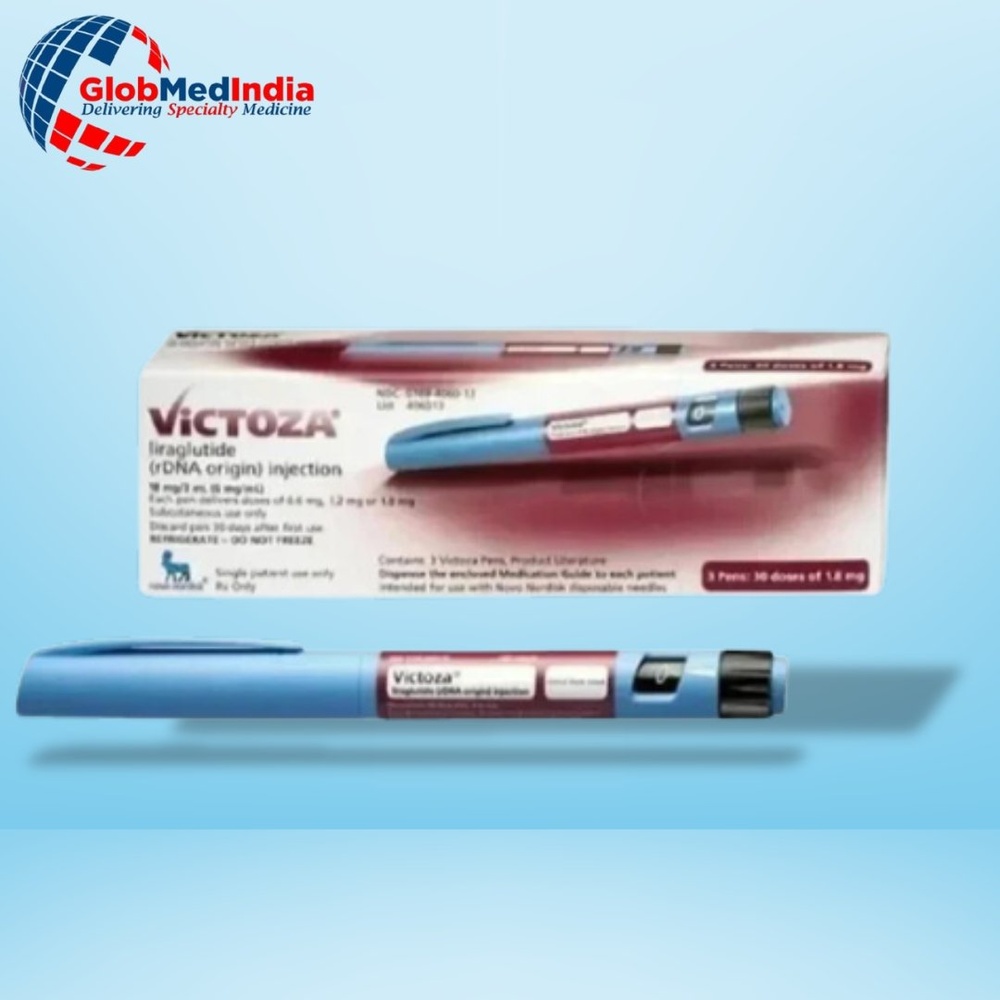
Victoza is supplied as a clear and colourless or almost colourless injectable solution, in a prefilled
pen. Each pen contains 3 ml of solution, which corresponds to 30 doses of 0.6 mg, 15 doses of
1.2 mg or 10 doses of 1.8 mg.
Victoza is available in packs containing 1, 2, 3, 5 or 10 pens. Not all pack sizes may be
marketed.
Needles are not included.
Marketing authorisation holder and manufacturer
Novo Nordisk A/S
Novo Allé,
DK-2880 Bagsværd,
Denmark
Other sources of information
More detailed information on this medicine is available on the website of the European Medicines
Agency: http://www.ema.europa.eu
| INSTRUCTIONS FOR USE OF THE VICTOZA PEN. Read these instructions carefully before using your pen. The pen contains 18 mg of liraglutide. You can select doses of 0.6 mg, 1.2 mg and 1.8 mg. The pen is designed to be used with NovoFine and NovoTwist long needles up to 8 mm and thin needles up to 32 G (0.25/0.23 mm). | a c o |
F a r m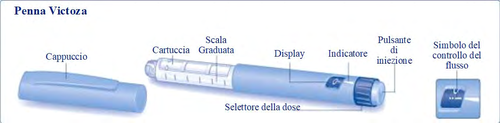 | |
| Preparing the pen Check the name and coloured label on the pen to make sure it contains liraglutide. Using an incorrect medicine can be seriously harmful. d Remove the cap from the pen. | e l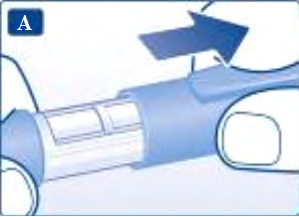 |
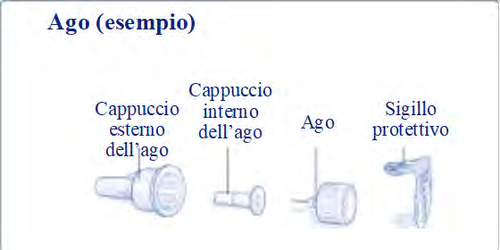
| a Remove the protective seal from a new single-use needle. Screw the needle firmly and straight onto your pen. n a | 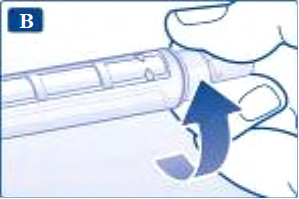 |
| i l Remove the outer needle cap and keep it for later. a t I | 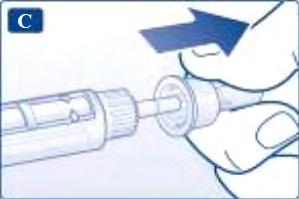 |
| Remove the inner needle cap and throw it away. a i z | 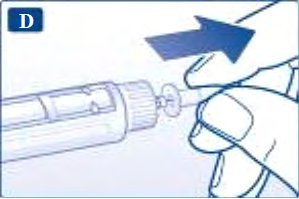 |
| n Always use a new needle for each injection. This reduces the risk of contamination, infection, e liraglutide leakage, blocked needles and inaccurate doses. g Never try to put the inner needle cap back on after removing it. You could injure yourself with l the needle. | |
A Pen maintenance
| |
Important information
| |
| Check the flow with a new pen Check the flow before an injection with a new pen. If the pen has already been used, go directly to “Selecting the dose” point H. Rotate the dose selector until the flow check symbol is aligned with the indicator. | F a r m a c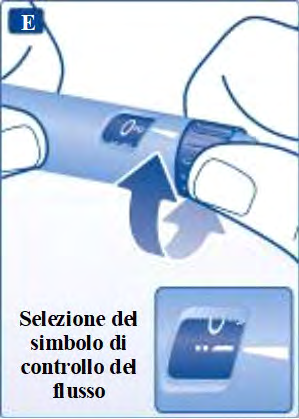 |
| Hold the pen with the needle pointing upwards. Tap the cartridge gently several times with your finger so that air bubbles collect at the top of the cartridge. d | e l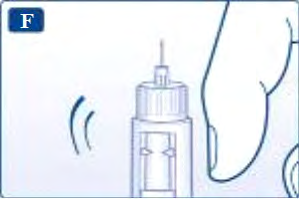 |
| a Hold the needle pointing upwards and press the injection button until the indicator aligns to 0 n mg. a A drop of liraglutide should come out of the needle tip. If no drop comes out, repeat i steps E to G up to four times. l If no drop of liraglutide still appears, change the needle and repeat steps E to G once more. t If no drop of liraglutide still appears, do not use the pen. This indicates that the pen is I defective and a new one must be used. | 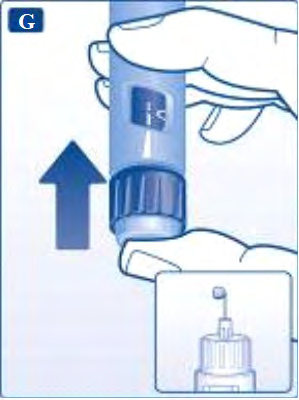 |
| If the pen has been hit against a hard surface or if you suspect it is defective, always insert a new single-use needle and check the flow before giving yourself an injection. | |
| Selecting the dose Always check that the indicator is aligned with 0 mg. Rotate the dose selector until the required dose is aligned with the indicator (0.6 mg, 1.2 mg or 1.8 mg). If you have accidentally selected the wrong dose, simply correct it by rotating the dose selector forwards or backwards until the indicator is aligned with the correct dose. Be careful not to press the injection button while rotating the dose selector backwards as this could cause liraglutide to leak. If the dose selector locks before the required dose is aligned with the indicator, this means that there is not enough liraglutide left in the cartridge for a full dose. In this case, you can: d Split your dose into two injections: Rotate the dose selector forwards or backwards until a the indicator is aligned to 0.6 mg or 1.2 mg. Inject the dose. Then, prepare a new pen for injection and inject the n remaining mg to complete the dose. a You can split the dose between the pen in use and the new pen only if instructed by healthcare professionals. Use a i calculator to schedule the doses. If you split the doses l incorrectly, you may inject too much or too little liraglutide. a t Inject the full dose with a new pen: If the dose selector locks before the indicator I is aligned with 0.6 mg, prepare a new pen and inject the full dose with the new pen. | e l F a r m a c o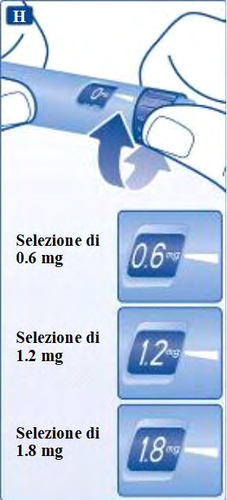 |
| a Do not try to select doses other than 0.6 mg, 1.2 mg or 1.8 mg. The numbers on the display i must align precisely with the indicator to ensure that the correct dose is delivered. When you rotate the dose selector, you will hear clicks (“clicks”). Do not use z these clicks as indicators to select the amount of liraglutide to inject. n Do not use the cartridge scale to measure the amount of liraglutide to inject because it is not accurate enough. | |
| e Injecting the dose g Insert the needle into the skin using the injection technique shown by your doctor or nurse. Then follow the instructions below: Press the injection button until the indicator aligns to 0 mg. Be careful not to touch the display with your other fingers and do not press the dose A selector from the side when injecting. This could | 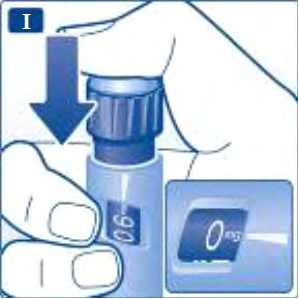 |
| lock the injection. Keep the injection button pressed and leave the needle under the skin for at least 6 seconds. This will ensure that the full dose is administered. | |
| Withdraw the needle from the skin. You may then see a drop of liraglutide on the needle tip. This is normal and does not affect the dose just administered. | m a c o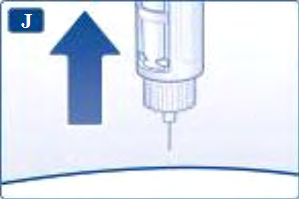 |
| Slip the needle tip into the outer needle cap without touching the needle or the cap itself. | F a r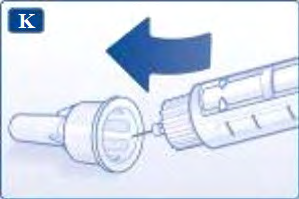 |
| When the needle is covered, press the outer cap fully with caution and then unscrew the needle. Dispose of the needle carefully and put the cap back on the pen. d When the pen is empty, dispose of it carefully without the needle inserted. Dispose of the pen and the needle according to local regulations. | e l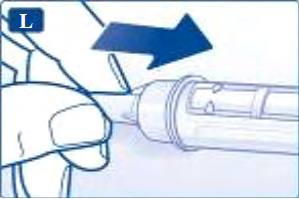 |
| a Always remove the needle after each injection and store the pen without the needle inserted. This reduces the risk of contamination, infection, liraglutide leakage, blocked needles and n inaccurate doses. Anyone assisting the patient must take great care when handling used needles to prevent cross-contamination and needle-stick injuries. | |
Annex IV
Scientific conclusions and justification for the variation of the terms of the marketing authorisation(s)
Scientific conclusions
In light of the assessment by the Pharmacovigilance and Risk Assessment Committee (PRAC) of the Periodic Safety Update Report (PSUR) for liraglutide, the PRAC’s scientific conclusions are as follows:
In light of the available data on cutaneous amyloidosis in the literature, the spontaneous reports including in some cases a close temporal relationship, a positive biopsy and in light of a plausible mechanism of action, the PRAC considers that a causal relationship between liraglutide and cutaneous amyloidosis is at least a reasonable possibility. The PRAC concluded that the product information of products containing liraglutide should be amended accordingly.
Having examined the PRAC recommendation, the Committee for Human Medicinal Products (CHMP) agrees with the related overall conclusions and with the justification of the recommendation.
Justification for the variation of the terms of the marketing authorisation(s)
Based on the scientific conclusions on liraglutide, the CHMP considers that the benefit/risk balance of the medicinal product containing liraglutide remains unchanged subject to the proposed changes to the product information.
The CHMP recommends the variation of the terms of the marketing authorisation(s).

Nie jesteś pewien, czy ten lek jest odpowiedni dla ciebie?
Omów swoje objawy i leczenie z lekarzem online.

Zacząłeś przyjmować lek i masz pytania?
Omów swoje objawy i leczenie z lekarzem online.
- Kraj rejestracji
- Postać farmaceutycznaInjectable solution, 6 MG/ML
- Kod ATCA10BJ02
- Substancja czynna
- Wymaga receptyTak
- Producent
- Te treści mają charakter wyłącznie informacyjny i nie zastępują konsultacji lekarskiej.
- Zamienniki VIKTOTSAPostać farmaceutyczna: Pre-filled pen injectable solution, 6 MG/MLSubstancja czynna: liraglutideProducent: SUN PHARMACEUTICAL INDUSTRIES (EUROPE) B.V.Wymaga receptyPostać farmaceutyczna: Pre-filled pen injectable solution, 6 MG/MLSubstancja czynna: liraglutideProducent: CIPLA EUROPE NVWymaga receptyPostać farmaceutyczna: Pre-filled pen injectable solution, 6 MG/MLSubstancja czynna: liraglutideProducent: ZENTIVA ITALIA S.R.L.Wymaga recepty
Odpowiedniki VIKTOTSA w innych krajach
Leki z tą samą substancją czynną dostępne w innych krajach.
Odpowiednik VIKTOTSA w Hiszpania
Odpowiednik VIKTOTSA w Polska
Odpowiednik VIKTOTSA w Ukraina
Lekarze online w sprawie VIKTOTSA
Omów stosowanie VIKTOTSA, bezpieczeństwo i ocenę zasadności recepty zgodnie z obowiązującymi przepisami.


Uzyskaj receptę na VIKTOTSA online
Wypełnij 2-minutowy formularz
Opisz swoje objawy, historię choroby i lek, o który prosisz.
Wybierz lekarza lub pozwól nam przydzielić
Wybierz specjalistę lub dopasujemy Cię do najbliższego dostępnego lekarza.
Lekarz analizuje Twój przypadek
Zazwyczaj w ciągu 30 minut. Może zadawać dodatkowe pytania przez czat.
Odbierz w dowolnej aptece
Recepta elektroniczna wysłana na Twój e-mail — ważna w całej Polsce.
Często zadawane pytania
VIKTOTSA wymaga recepty w Włochy. Możesz skonsultować się z lekarzem online, aby sprawdzić, czy ten lek może być odpowiedni w Twojej sytuacji.
Substancją czynną w VIKTOTSA jest liraglutide. Informacja ta pomaga rozpoznać leki o tym samym składzie, ale pod różnymi nazwami handlowymi.
VIKTOTSA jest produkowany przez NOVO NORDISK A/S. Nazwy handlowe i opakowania mogą się różnić w zależności od dystrybutora.
Lekarze, tacy jak Lekarze rodzinni, Psychiatrzy, Dermatolodzy, Kardiolodzy, Endokrynolodzy, Gastroenterolodzy, Pulmonolodzy, Nefrolodzy, Reumatolodzy, Hematolodzy, Zakaźnicy, Alergolodzy, Geriatrzy, Pediatrzy, Onkolodzy, mogą ocenić, czy stosowanie VIKTOTSA jest odpowiednie w Twoim przypadku, w zależności od sytuacji klinicznej i lokalnych przepisów. Możesz umówić konsultację online, aby omówić objawy i możliwe dalsze kroki.
Polska posiada dobrze rozwiniętą infrastrukturę ochrony zdrowia w dużych miastach, takich jak Warszawa, Kraków, Wrocław i Gdańsk. Apteki są łatwo dostępne i działają zgodnie z obowiązującymi przepisami, zapewniając dostęp do leków na receptę.
Możesz kupić VIKTOTSA w Warszawie, Krakowie, Wrocławiu lub Gdańsku w każdej aptece, posiadając ważną receptę.
Aby uzyskać receptę, możesz skorzystać z Oladoctor:
Inne leki zawierające tę samą substancję czynną (liraglutide) to m.in. DIAVIK, LIRATIGT, PLYTSARI. Mogą one różnić się nazwą handlową lub postacią, ale zawierają ten sam składnik terapeutyczny. Przed zmianą lub rozpoczęciem nowego leku skonsultuj się z lekarzem.
