



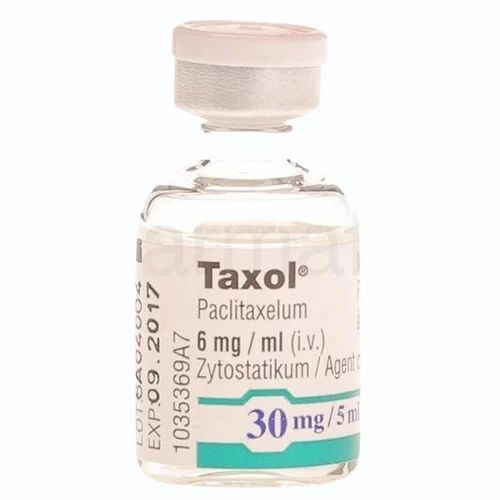
TAXOL 30 mg /5 Ml Roztwór Do Infuzji

Ocena recepty online
Lekarz przeanalizuje Twój przypadek i zdecyduje, czy wystawienie recepty jest medycznie uzasadnione.

Porozmawiaj z lekarzem o tym leku
Omów swoje objawy i opcje leczenia podczas szybkiej konsultacji online.



Jak stosować TAXOL
Treść ulotki
TAXOL 6 mg/ml concentrate for solution for infusion
paclitaxel
Read this leaflet carefully before using this medicine as it contains important
information for you
- Keep this leaflet. You may need to read it again.
- If you have any questions, ask your doctor.
- If any side effects occur, including those not listed in this leaflet, tell your doctor. See section 4.
Contents of this leaflet:
- 1. What TAXOL is and what it is used for
- 2. What you need to know before you use TAXOL
- 3. How to use TAXOL
- 4. Possible side effects
- 5. How to store TAXOL
- 6. Contents of the pack and other information
- 1.What TAXOLis and what it is used for
Paclitaxel belongs to a group of anti-cancer medicines called taxanes. These agents inhibit
the growth of cancer cells.
TAXOL is indicated for the treatment of:
Ovarian cancer:
- as first-line therapy (after initial surgery in combination with cisplatin, a platinum-containing medicine).
- after standard treatments with platinum-based medicines that have not been effective. Breast cancer:
- as first-line therapy in advanced disease or disease that has spread to other parts of the body (metastatic disease). TAXOL is combined with both anthracyclines(e.g. doxorubicin) and with a medicine called trastuzumab(in patients for whom anthracycline is not indicated and whose cancer cells have a protein called HER 2 on their surface),
- after initial surgery, as further treatment, after treatment with anthracyclines and cyclophosphamide (AC).
- as second-line therapy in patients who have not responded to standard anthracycline treatments or for those for whom such treatment should not be used. Non-small cell lung cancer in advanced stage:
- in combination with cisplatin, when surgery and/or radiation therapy are not suitable. AIDS-related Kaposi's sarcoma:
- when another treatment (e.g. liposomal anthracyclines) has been attempted but has not worked.
2. What you need to know before using TAXOL
Do not use TAXOL
- if you are allergic(hypersensitive) to paclitaxel or any of the other ingredients of this medicine (listed in section 6), especially to polyoxyethylated castor oil.
- if your white blood cell count is too low.Your doctor will ask you for blood tests.
- if you are breastfeeding.
- if you have a severe and uncontrolled infection and TAXOL is used to treat Kaposi's sarcoma.
If you are in any of these situations, tell your doctor before starting treatment with TAXOL.
The use of TAXOL is not recommended in children(under 18 years of age).
Warnings and precautions
Talk to your doctor before using TAXOL.
To minimize allergic reactions,you will be given other medicines before receiving the
TAXOL.
- if you experience severe allergic reactions(for example, difficulty breathing, shortness of breath, chest tightness, low blood pressure, dizziness, lightheadedness, skin reactions such as rash or swelling).
- if you have fever, shaking chills, sore throat or mouth ulcers(signs of myelosuppression).
- if you have numbness or weakness in your arms and legs(signs of peripheral neuropathy); a dose reduction of TAXOL may be necessary.
- if you suffer from severe liver problems; in this case, the use of TAXOL is not recommended.
- if you have abnormalities in cardiac conduction.
- if you have severe or persistent diarrhea, with fever and stomach pain, during or immediately after treatment with TAXOL. The colon may be inflamed (pseudomembranous colitis).
- if you have received previous radiation to the chest(because it may increase the risk of pulmonary inflammation).
- if you have a sore or red mouth(signs of mucositis) and are being treated for Kaposi's sarcoma. You may need a lower dose. If you are in any of these situations, tell your doctor immediately.
TAXOL must always be administered intravenously. Administration of TAXOL into the arteries
can cause inflammation and may result in pain, swelling, redness and warmth.
Other medicines and TAXOL
Tell your doctor if you are taking, have recently taken or might take any other
medicines, including those available without a prescription.
This is because TAXOL or other medicines may not work as expected, or you may be
more likely to experience side effects.
Interaction means that different medicines can affect each other.
Talk to your doctor when taking paclitaxel at the same time as any of the
following:
- medicines to treat infections (i.e., antibiotics such as erythromycin, rifampicin, etc.; ask your doctor, nurse or pharmacist if you are not sure whether the medicine you are taking is an antibiotic)
- medicines used to help stabilize your mood, sometimes called antidepressants (e.g., fluoxetine)
- medicines used to treat seizures (epilepsy) (e.g., carbamazepine, phenytoin)
- medicines used to help lower your blood fat levels (e.g., gemfibrozil)
- medicines used for heartburn or stomach ulcers (e.g., cimetidine)
- medicines used to treat HIV and AIDS (e.g., ritonavir, saquinavir, indinavir, nelfinavir, efavirenz, nevirapine)
- a medicine called clopidogrel used to prevent blood clots.
- a medicine called rifampicin, an antibiotic used for tuberculosis. An increase in the dose of TAXOL may be necessary.
- vaccines: tell your doctor if you have recently been vaccinated or are planning to get vaccinated. The use of TAXOL together with some vaccines can cause serious complications
- cisplatin (anticancer): TAXOL must be administered before cisplatin. Kidney function may need to be monitored more frequently.
- doxorubicin (anticancer): TAXOL must be administered 24 hours after doxorubicin, to avoid high levels of doxorubicin in circulation.
Pregnancy and breastfeeding
Tell your doctor if you are pregnant orif you think you might be before receiving treatment
with TAXOL. If there is a possibility that you may become pregnant, use effective and safe
contraception during treatment. TAXOL should not be used during pregnancy unless absolutely
necessary. Women and men of childbearing potential, and/or their partners, should
use contraception for at least six months after treatment with paclitaxel.
Men should inquire about sperm cryopreservation before
treatment with paclitaxel due to possible infertility.
If you are breastfeeding, tell your doctor. Stop breastfeeding if you are using TAXOL. Do not resume
breastfeeding without your doctor's permission.
Driving and using machines
This medicine contains alcohol. For this reason, it may be unwise to drive vehicles
immediately after a treatment cycle. In any case, do not drive if you feel dizzy or
unsafe.
Important information about some of the ingredients of TAXOL
- TAXOL contains castor oil(50% polyoxyethylated castor oil) which can cause severe allergic reactions. If you are allergic to castor oil, talk to your doctor before takingTAXOL.
- TAXOL contains approximately 50% ethanol (alcohol), e.g. up to 20 g per 300 mg/50 ml dose, equivalent to 450 ml of beer or 175 ml of wine. It may be harmful to alcoholics. This should be taken into account in pregnant or breastfeeding women, and in high-risk groups such as people with liver disease or epilepsy. The amount of alcohol in this medicine can alter the effects of other medicines. The amount of alcohol in this medicine can impair the ability to drive and use machines.
3. How to use TAXOL
- To minimize allergic reactions,you will be given other medications before TAXOL. These medications may be in tablet form or intravenous infusion, or both.
- You will receive TAXOL drop by dropinto a vein (by intravenous infusion), through an in-line filter. TAXOL will be administered by a healthcare professional. He or she will prepare the infusion solution before it is administered to you. The dose you receive will also depend on the results of your blood tests. Depending on the type and severity of the tumor, you will receive TAXOL as a single agent or in combination with another antineoplastic agent.
- TAXOL must always be administered into a vein over a period of 3 or 24 hours. It is usually administered every 2 or 3 weeks, unless your doctor advises otherwise. The doctor will inform you about the number of TAXOL cycles you will need to undergo.
If you have further questions about the use of this product, ask your doctor.
If you take more TAXOL than you should
There are no antidotes for TAXOL overdose. You will receive treatment for your symptoms.
4. Possible side effects
Like all medicines, this medicine can cause side effects, although not everyone will experience them.
Immediately inform your doctor if you notice any signs of allergic reactions.These may
include one or more of the following:
- flushing,
- skin reactions,
- itching,
- chest tightness,
- shortness of breath or difficulty breathing,
- swelling. These may all be signs of serious side effects.
Immediately inform your doctor:
- If you have fever, shaking chills, sore throat or mouth ulcers(signs of myelosuppression)
- If you have numbness or weakness in your arms and legs (signs of peripheral neuropathy). These symptoms may persist for more than 6 months after stopping treatment.
- If you develop severe or persistent diarrhea, with fever and stomach pain.
Very common side effects
(May affect more than 1 in 10 people):
- Minor allergic reactions such as flushing, rash, itching
- Infections: mainly of the upper respiratory tract, urinary tract infections
- Shortness of breath
- Sore throat or mouth ulcers, inflamed and red mouth, diarrhea, feeling or state of unwellness (nausea, vomiting)
- Hair loss (most cases of hair loss occurred less than one month after starting treatment with paclitaxel. When this happens, hair loss is evident [over 50%] in most patients).
- Muscle pain, cramps, joint pain
- Fever, shaking chills, headache, dizziness, fatigue, paleness, increased tendency to bruising
- Numbness, tingling or weakness in the arms and legs (all symptoms of peripheral neuropathy)
- Tests may show: decreased number of platelets, white blood cells or red blood cells, low blood pressure
Common side effects
(May affect up to 1 in 10 people):
- Mild and transient changes in nails and skin, reactions at the injection sites (localized swelling, pain, and skin redness)
- Tests may show: slowing of the heartbeat, severe increase in liver enzymes (alkaline phosphatase and AST - SGOT)
Uncommon side effects
(May affect up to 1 in 100 people):
- Shock due to infections (known as 'septic shock')
- Palpitations, heart problems (AV block), increased heart rate, heart attack, respiratory distress
- Fatigue, sweating, fainting (syncope), significant allergic reactions, inflammation of the veins caused by a thrombus (thrombophlebitis), swelling of the face, lips, mouth, tongue or throat
- Back pain, chest pain, pain in the hands and feet, chills, abdominal pain (stomach)
- Tests may show: severe increase in bilirubin (jaundice), high blood pressure, blood clot
Rare side effects
(May affect up to 1 in 1,000 people):
- Decreased white blood cells with fever and increased risk of infection (febrile neutropenia)
- Nerve involvement with a feeling of weakness in the muscles of the arms and legs (motor neuropathy)
- Shortness of breath, pulmonary embolism, pulmonary fibrosis, interstitial pneumonia, dyspnea, pleural effusion
- Intestinal obstruction, intestinal perforation, inflammation of the colon (ischemic colitis), inflammation of the pancreas (pancreatitis)
- Itching, rash, skin redness (erythema)
- Blood infection (sepsis), peritonitis
- Fever, dehydration, asthenia, edema, malaise
- Severe and potentially fatal hypersensitivity reactions (anaphylactic reactions)
- Tests may show: increased blood creatinine indicating kidney dysfunction
Very rare side effects
(May affect up to 1 in 10,000 people):
- Fast and irregular heartbeat (atrial fibrillation, supraventricular tachycardia)
- Sudden change in the formation of blood cells (acute myeloid leukemia, myelodysplastic syndrome)
- Optic nerve disorder and/or visual disturbances (scintillating scotoma)
- Loss or reduction of hearing (ototoxicity), ringing in the ears (tinnitus), dizziness
- Cough
- Blood clot in a vein in the abdomen and intestine (mesenteric thrombosis), inflammation of the colon sometimes with severe and persistent diarrhea (pseudomembranous colitis, neutropenic colitis), edema (ascites), esophagitis, constipation
- Severe hypersensitivity reactions including fever, skin redness, joint pain and/or eye inflammation (Stevens-Johnson syndrome), localized skin peeling (epidermal necrolysis), redness with red and irregular patches (erythema multiforme), skin inflammation with blisters and scaling (exfoliative dermatitis), hives, loss of nails (patients undergoing therapy should protect hands and feet with sunscreen)
- Loss of appetite (anorexia)
- Severe and potentially fatal hypersensitivity reactions with shock (anaphylactic shock)
- Impaired liver function (liver necrosis, hepatic encephalopathy (both have reported fatal cases)
- Confusion
Side effects with frequencynot known(the frequency cannot be estimated on the basis of the available
data)
- Disseminated intravascular coagulation or “DIC” has been reported. This is a serious condition that makes people easily susceptible to bleeding, blood clot formation, or both
- Hardening/thickening of the skin (Scleroderma)
- Metabolic complications after chemotherapy (tumor lysis syndrome)
- Eye diseases, such as thickening and swelling of the macula (macular edema), flashes of light (photopsia) and spots, specks, dots and “floaters” in your field of vision (floaters), increased tear secretion
- Inflammation of the veins (phlebitis)
- Autoimmune disease with multiple symptoms such as red and scaly patches on the skin, joint pain or fatigue (systemic lupus erythematosus) or skin rashes and red, thick and often scaly sores that may burn or itch (cutaneous lupus erythematosus)
- Redness, swelling and pain on the palms of the hands and/or soles of the feet (hand-foot syndrome)
- Acute inflammatory reaction confined to previously irradiated areas that is triggered by the administration of precipitating systemic agents after radiation therapy (recall phenomenon)
- Excessive sweating (hyperhidrosis)
Reporting of side effects
If you experience any side effects, including those not listed in this leaflet, please tell your
doctor. You can also report side effects directly through the national reporting system at https://www.aifa.gov.it/content/segnalazioni-reazioni-avverse . By reporting
side effects you can help provide more information on the safety of this
medicine.
5. How to store TAXOL
Keep this medicine out of the sight and reach of children.
Do not use this medicine after the expiry date which is stated on the pack and vial. The
expiry date refers to the last day of that month.
Before dilution of TAXOL:
Store at a temperature below 25°C.
Store in the original package to protect the medicine from light.
Freezing does not negatively affect unopened vials.
From a microbiological point of view, once opened the product can be stored for a
maximum of 28 days at 25°C. Other storage periods and conditions are the responsibility
of the user.
After dilution of TAXOL:
From a microbiological point of view, the diluted product must be used immediately. If not
used immediately, store in a refrigerator (2°C - 8°C) for no more than 24 hours, unless the
dilution has been carried out in validated and controlled aseptic conditions. For more details
on stability after dilution, see the section for healthcare professionals.
6. Contents of the pack and other information
What TAXOL contains
The active ingredient is paclitaxel.
Each ml of concentrate contains 6 mg of paclitaxel.
Each vial contains 5 - 16.7 or 50 ml (corresponding respectively to 30, 100 or 300 mg of
paclitaxel).
The other components are ethanol (alcohol) and polyoxyethylated castor oil.
Description of the appearance of TAXOL and contents of the pack
TAXOL 6 mg/ml concentrate for solution for infusion is a transparent solution, from colourless to
lightly yellow viscous, contained in vials of 5 ml, 16.7 ml, and 50 ml of concentrate for
dilution.
The vials are packaged individually in a carton, and boxes containing 10 cartons are also available.
Not all pack sizes may be marketed.
Marketing Authorisation Holder and Manufacturer
Marketing Authorisation Holder
CHEPLAPHARM Arzneimittel GmbH
Ziegelhof 24
17489 Greifswald
Germany
Manufacturer
Latina Pharma S.P.A
Via Murillo, 7
04013 Sermoneta (Latina) - Italy
-----------------------------------------------------------------------------------------------------------------------------
The following information is intended exclusively for healthcare professionals:
Preparation of infusion solutions:
- Containers and infusion sets used with TAXOL must be free of DEHP. This will reduce the risk of patient exposure to the plasticizer DEHP [di-(2-ethylhexyl) phthalate], which may be released from containers or infusion sets made of PVC. The use of devices with a filter (e.g. IVEX-2) incorporating short PVC inlet and/or outlet tubes has not shown significant DEHP leaching.
- As with all antineoplastic agents, TAXOL must be handled with care. Always wear appropriate protective gloves when handling vials containing paclitaxel. Dilution of paclitaxel must occur under aseptic conditions by trained personnel in a dedicated area. If contact with the skin occurs, wash the area with soap and water. If contact with mucous membranes occurs, wash thoroughly with water.
- Do not use the Chemo-Dispensing Pin or similar piercing devices that may cause the cap to fall inside the vial, resulting in loss of sterility.
Step 1: Dilute the concentrate
Before administration, TAXOL must be diluted with one of the following:
- 0.9% Sodium Chloride
- 5% Dextrose
- 5% Dextrose and 0.9% Sodium Chloride Injection
- 5% Dextrose in Ringer’s Injection
The concentration of the final paclitaxel solution must be between 0.3 mg/ml and 1.2
mg/ml. Containers and infusion devices free of DEHP must be used.
After dilution, solutions may appear turbid, attributable to the vehicle formulation,
and is not removable by filtration. No significant decrease in concentration has been observed
following simulated solution administration through an in-line filter-equipped intravenous
cannula.
Step 2: Administration of the infusion
Premedicateall patients with corticosteroids, antihistamines and H antagonists before
administration.
Do not readminister TAXOL until the neutrophil count is ≥ 1,500/mm³
(≥ 1,000/mm³ for patients with Kaposi’s sarcoma) and the platelet count is ≥ 100,000/mm³
(≥ 75,000/mm³ for patients with Kaposi’s sarcoma).
Avoid precipitation of the infusion solution:
- Use as soon as possible after dilution
- Avoid excessive shaking, vibration or agitation
- Infusion sets must be thoroughly cleaned before use.
- Regularly check the appearance of the solution and stop the infusion if precipitates are present. Chemical-physical stability of the solution has been demonstrated at 5°C and 25°C for 7 days when diluted with 5% dextrose injection, and for 14 days when diluted with 0.9% sodium chloride solution.
From a microbiological point of view, the diluted product must be used
immediately or stored at 2°C-8°C for a maximum of 24 hours.
TAXOL must be administered through an appropriate in-line micropore membrane filter
with a diameter ≤ 0.2 micrometers. Containers and infusion sets free of
DEHP must be used. The use of filters incorporating short PVC inlet and outlet tubes has not
shown significant DEHP leaching.
Step 3: Disposal
Disposal of any unused material or waste must be carried out in accordance with
regulations regarding the handling of cytotoxic drugs.
Dose:
The recommended doses for intravenous infusion of TAXOL are as follows:
| Indication | Dose | Interval between TAXOL cycles |
| First-line therapy of ovarian cancer | 135 mg/m2 over 24 hours, followed by cisplatin 75 mg/m2 or 175 mg/m2 over 3 hours, followed by cisplatin 75 mg/m2 | 3 weeks |
| Second-line therapy of ovarian cancer | 175 mg/m2 over 3 hours | 3 weeks |
| Adjuvant therapy of breast cancer | 175 mg/m2 over 3 hours; followed by anthracycline and cyclophosphamide (AC) therapy | 3 weeks |
| First-line therapy of breast cancer (with doxorubicin) | 220 mg/m2 over 3 hours, 24 hours after doxorubicin (50 mg/m2) | 3 weeks |
| First-line therapy of breast cancer (with trastuzumab) | 175 mg/m2 over 3 hours, after trastuzumab (see trastuzumab SmPC) | 3 weeks |
| Second-line therapy of breast cancer | 175 mg/m2 over 3 hours | 3 weeks |
| Advanced non-small cell lung cancer | 175 mg/m2 over 3 hours, followed by cisplatin 80 mg/m2; | 3 weeks |
| AIDS-related Kaposi’s sarcoma | 100 mg/m2 over 3 hours | 2 weeks |
Do not readminister TAXOL until the neutrophil count is ≥ 1,500/mm³ (≥ 1,000/mm³ for
patients with Kaposi’s sarcoma) and the platelet count is ≥ 100,000/mm³ (≥ 75,000/mm³ for patients
with Kaposi’s sarcoma).
Patients with severe neutropenia (neutrophil count < 500/mm³ for one or more weeks) or severe
peripheral neuropathy should receive a 20% dose reduction for subsequent cycles (25% for patients
with Kaposi’s sarcoma) (see Summary of Product Characteristics).
There are insufficient data to recommend dose adjustments in patients with mild to moderate hepatic impairment.
Patients with severe hepatic impairment should not be treated with TAXOL
(see Summary of Product Characteristics).
The use of TAXOL is not recommended in children under 18 years of age due to limited safety and
efficacy data.

Nie jesteś pewien, czy ten lek jest odpowiedni dla ciebie?
Omów swoje objawy i leczenie z lekarzem online.

Zacząłeś przyjmować lek i masz pytania?
Omów swoje objawy i leczenie z lekarzem online.
- Kraj rejestracji
- Postać farmaceutycznaInfusion solution, 30 MG/5 ML
- Kod ATCL01CD01
- Substancja czynna
- Wymaga receptyTak
- Producent
- Te treści mają charakter wyłącznie informacyjny i nie zastępują konsultacji lekarskiej.
- Zamienniki TAXOLPostać farmaceutyczna: Powder for injectable suspension, 5 MG/MLSubstancja czynna: paclitaxelProducent: BRISTOL-MYERS SQUIBB PHARMA EEIGBez receptyPostać farmaceutyczna: Powder for dispersion for infusion, 5mg / mlSubstancja czynna: paclitaxelProducent: WHITEOAK PHARMACEUTICAL B.V.Wymaga receptyPostać farmaceutyczna: Concentrate for infusion solution, 6 MG/MLSubstancja czynna: paclitaxelProducent: ACCORD HEALTHCARE, S.L.U.Wymaga recepty
Odpowiedniki TAXOL w innych krajach
Leki z tą samą substancją czynną dostępne w innych krajach.
Odpowiednik TAXOL w Hiszpania
Odpowiednik TAXOL w Polska
Odpowiednik TAXOL w Ukraina
Uzyskaj receptę na TAXOL online
Wypełnij 2-minutowy formularz
Opisz swoje objawy, historię choroby i lek, o który prosisz.
Wybierz lekarza lub pozwól nam przydzielić
Wybierz specjalistę lub dopasujemy Cię do najbliższego dostępnego lekarza.
Lekarz analizuje Twój przypadek
Zazwyczaj w ciągu 30 minut. Może zadawać dodatkowe pytania przez czat.
Odbierz w dowolnej aptece
Recepta elektroniczna wysłana na Twój e-mail — ważna w całej Polsce.
Często zadawane pytania
TAXOL wymaga recepty w Włochy. Możesz skonsultować się z lekarzem online, aby sprawdzić, czy ten lek może być odpowiedni w Twojej sytuacji.
Substancją czynną w TAXOL jest paclitaxel. Informacja ta pomaga rozpoznać leki o tym samym składzie, ale pod różnymi nazwami handlowymi.
TAXOL jest produkowany przez CHEPLAPHARM ARZNEIMITTEL GMBH. Nazwy handlowe i opakowania mogą się różnić w zależności od dystrybutora.
Lekarze, tacy jak Lekarze rodzinni, Psychiatrzy, Dermatolodzy, Kardiolodzy, Endokrynolodzy, Gastroenterolodzy, Pulmonolodzy, Nefrolodzy, Reumatolodzy, Hematolodzy, Zakaźnicy, Alergolodzy, Geriatrzy, Pediatrzy, Onkolodzy, mogą ocenić, czy stosowanie TAXOL jest odpowiednie w Twoim przypadku, w zależności od sytuacji klinicznej i lokalnych przepisów. Możesz umówić konsultację online, aby omówić objawy i możliwe dalsze kroki.
Polska posiada dobrze rozwiniętą infrastrukturę ochrony zdrowia w dużych miastach, takich jak Warszawa, Kraków, Wrocław i Gdańsk. Apteki są łatwo dostępne i działają zgodnie z obowiązującymi przepisami, zapewniając dostęp do leków na receptę.
Możesz kupić TAXOL w Warszawie, Krakowie, Wrocławiu lub Gdańsku w każdej aptece, posiadając ważną receptę.
Aby uzyskać receptę, możesz skorzystać z Oladoctor:
Inne leki zawierające tę samą substancję czynną (paclitaxel) to m.in. ABRAXANE, APEXELSIN, PAKLITAXEL AKKORD EALTKARE ITALIA. Mogą one różnić się nazwą handlową lub postacią, ale zawierają ten sam składnik terapeutyczny. Przed zmianą lub rozpoczęciem nowego leku skonsultuj się z lekarzem.
