



SERETIDE 50/100 Ингаляционный порошок

Рассмотрение рецепта онлайн
Врач рассмотрит ваш случай и примет решение о назначении рецепта, если это медицински оправдано.

Поговорите с врачом об этом лекарстве
Обсудите симптомы и возможные дальнейшие шаги на онлайн-консультации.



Инструкция по применению SERETIDE
Содержание инструкции
- Seretide 25 micrograms/50 micrograms / dose pressurized suspension for inhalation, 25 micrograms/125 micrograms/dose pressurized suspension for inhalation, 25 micrograms/250 micrograms/dose pressurized suspension for inhalation
- What is Seretide and what is it used for
- What you need to know before using Seretide
- How to use Seretide
- Possible side effects
- How to store Seretide
- Package Contents and Other Information
- What is Seretide and what it is used for
- What you need to know before using Seretide
- How to use Seretide
- Possible side effects
- How to store Seretide
- Contents of the pack and other information
Seretide 25 micrograms/50 micrograms / dose pressurized suspension for inhalation, 25 micrograms/125 micrograms/dose pressurized suspension for inhalation, 25 micrograms/250 micrograms/dose pressurized suspension for inhalation
salmeterol/fluticasone propionate
Read this leaflet carefully before you start using this medicine as it contains important
information for you.
- Keep this leaflet. You may need to read it again.
- If you have any questions, ask your doctor or pharmacist.
- This medicine has been prescribed for you only. Do not pass it on to others, even if their symptoms are the same as yours, as it may be harmful.
- If you get any side effects, even those not listed in this leaflet, tell your doctor or pharmacist. See section 4.
Contents of this leaflet:
- 1. What Seretide is and what it is used for
- 2. What you need to know before you use Seretide
- 3. How to use Seretide
- 4. Possible side effects
- 5. How to store Seretide
- 6. Contents of the pack and other information
1. What is Seretide and what is it used for
Seretide contains two medicines, salmeterol and fluticasone propionate.
- Salmeterol is a long-acting bronchodilator. Bronchodilators help the airways in the lungs to stay open. This makes it easier to breathe in and out. The effects last for at least 12 hours.
- Fluticasone propionate is a corticosteroid that reduces swelling and irritation in the lungs.
Your doctor has prescribed this medicine to help prevent breathing problems such as asthma.
You should use Seretide every day as prescribed by your doctor. This ensures that the medicine works
correctly to control asthma.
Seretide helps to block the onset of shortness of breath and wheezing. However Seretide
should not be used to treat a sudden attack of shortness of breath or wheezing.
If this occurs you should use a quick-relief medicine (“rescue”) of rapid onset of
action such as salbutamol. You should always have your rescuemedicine of rapid
onset of action with you.
2. What you need to know before using Seretide
Do not use Seretide:
if you are allergic to salmeterol, fluticasone propionate or the other excipient norflurane (HFA 134a).
Warnings and precautions
Talk to your doctor before taking Seretide if you have:
- Heart disease, including irregular or fast heartbeat
- Hyperactivity of the thyroid gland
- High blood pressure
- Diabetes mellitus (Seretide may increase blood sugar levels)
- Low levels of potassium in the blood
- Tuberculosis (TB) now or in the past, or other lung infections.
Contact your doctor if you experience blurred vision or other visual disturbances.
Other medicines and Seretide
Tell your doctor or pharmacist if you are taking, have recently taken or might take any
other medicine, including medicines for asthma or any over-the-counter medicines. This
is because it may not be appropriate to take Seretide with some other medicines.
Tell your doctor if you are taking the following medicines before starting to use Seretide:
- beta-blockers (such as atenolol, propranolol and sotalol). Beta-blockers are mainly used to treat high blood pressure or other heart conditions.
- Medicines for the treatment of infections (such as ketoconazole, itraconazole and erythromycin) including some medicines for the treatment of HIV (such as ritonavir and medicinal products containing cobicistat). Some of these medicines may increase the amount of fluticasone propionate or salmeterol in the body. This may increase the risk of experiencing undesirable effects with Seretide, including irregular heartbeats or worsening of undesirable effects. Your doctor may want to keep you under close observation if you are taking these medicines.
- Corticosteroids (by mouth or by injection). If you have taken one of these drugs recently, this may increase the risk that this medicine interferes with the adrenal gland.
- Diuretics, used for the treatment of high blood pressure.
- Other bronchodilators (such as salbutamol).
- Xanthine-based medicines. These are often used for the treatment of asthma.
Pregnancy and breastfeeding
If you are pregnant, suspect you are pregnant, are planning a pregnancy, or are breastfeeding with
breast milk, ask your doctor for advice before using this medicine.
Driving and using machines
It is unlikely that Seretide will affect your ability to drive or operate machinery.
For athletes
The use of the drug without therapeutic need constitutes doping and may still result in a positive doping test.
3. How to use Seretide
Use this medicine following the instructions of your doctor or pharmacist exactly. If you have doubts
consult your doctor or pharmacist.
- Use Seretide every day, until your doctor tells you to stop the treatment. Do not exceed the recommended dose. If you have doubts consult your doctor or pharmacist.
- Do not stop using Seretide or reduce the dosage of Seretide without first consulting your doctor.
- Seretide must be inhaled into the lungs through the mouth.
Adults and adolescents aged 12 years and over
- Seretide 25/50 - 2 inhalations twice a day
- Seretide 25/125 - 2 inhalations twice a day
- Seretide 25/250 - 2 inhalations twice a day
Children aged 4 to 12 years
- Seretide 25/50 - 2 inhalations twice a day
- Seretide is not recommended for use in children under 4 years of age.
Symptoms may be well controlled by using Seretide twice a day. In this case, your doctor may
decide to reduce the dose to once a day. The dose can be modified to:
- once in the evening if you suffer from nighttimesymptoms,
- once in the morning if you suffer from daytimesymptoms.
It is very important to follow your doctor's prescription regarding the number of puffs to take and with
how often to take the medicine.
If you are using Seretide for asthma, your doctor will regularly check your symptoms.
If your asthma or breathing gets worse, inform your doctor immediately.You may notice that your
breathing becomes more labored, that you feel chest tightness more often, or that you need to
use your reliever medicine more often. If any of these conditions occur, you should continue to use Seretide but do not increase the number of doses you take. Your respiratory condition may worsen to become particularly serious. Consult your doctor
as you may require additional therapy.
Instructions for use
- Your doctor, nurse or pharmacist will show you how to use the inhaler. They should check how you use the inhaler from time to time. If you do not use Seretide properly or as prescribed, this may mean that it will not treat your asthma as it should.
- The medicine is contained in a pressurized canister placed inside a plastic casing with a mouthpiece.
- The canister is connected to a counter on the back that shows the number of doses of medicine remaining. Each time you press the canister, a puff of medicine is released and the counter decreases by one dose.
- Be careful not to drop the inhaler as this may decrease the number of doses reported by the counter.
Checking the operation of the inhaler
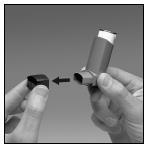
- 1. Before using the inhaler for the first time, check that it works. Remove the mouthpiece cover by gently pressing the sides of the cover with your thumb and index finger and pull it off.
- 2. To make sure it works, shake the inhaler well, point the mouthpiece away from yourself, then press the canister and spray a puff into the air. Repeat this operation shaking the inhaler before releasing each puff, until the dose counter indicates the number 120. If you have not used your inhaler for a week or more, release two puffs of the medicine into the air.
Using the inhaler
It is important to start inhaling as slowly as possible immediately before using the inhaler.
- 1.Stand or sit upright while using your inhaler.
- 2.Remove the mouthpiece cover (as shown in the first figure). Check inside and outside to make sure the mouthpiece is clean and free from loose particles.
- 3.Shake the inhaler 4 or 5 times to make sure any loose particles present have been removed and that the contents of the inhaler are mixed evenly.
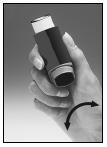
- 4.Hold the inhaler in a vertical position holding your thumb on the base, under the mouthpiece. Exhale as much as possible.
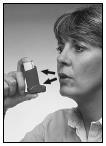
- 5.Place the mouthpiece in your mouth between your teeth. Close your lips around it. Do not bite the mouthpiece.
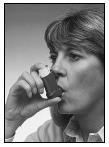
- 6.Inhale through your mouth slowly and deeply. Immediately after starting to inhale, press firmly on the top of the canister to release a puff of medicine. Meanwhile continue to inhale steadily and deeply.
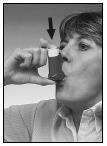
- 7.Hold your breath, remove the inhaler from your mouth and stop pressing your finger on the top of the inhaler. Continue to hold your breath for a few seconds or as long as you can.
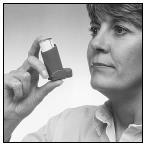
- 8.Wait about half a minute between taking each puff and then repeat steps 3 to 7.
- 9.Afterwards rinse your mouth with water and spit it out, and/or brush your teeth. This can help prevent thrush (oral candidiasis) and hoarseness.
- 10.After use, always immediately replace the mouthpiece cover to prevent dust from entering. When the protective cap of the mouthpiece is positioned correctly you will hear a click. If you do not hear the click, turn the mouthpiece cap in the other direction and try again. Do not use too much force.
Do not rush during steps 4, 5, 6 and 7. It is important that you inhale as slowly as possible just
before using the inhaler. The first few times you should use the inhaler standing in front of a mirror. If
you notice a loss of product, which appears as "mist", coming from the top of the inhaler or on the
sides of your mouth, you should start again from step number 3.
As with all inhalers, people caring for children prescribed Seretide
Pressurized Suspension must ensure they use the correct inhalation technique, as described
above.
If you or your child find it difficult to use the pressurized inhaler, your doctor and a nurse or
other healthcare professional may advise you to use a spacer such as the Volumatic or Aerochamber
Plus together with the inhaler. Your doctor, nurse, pharmacist or other healthcare professional should show you
how to use the spacer with the inhaler and how to care for the spacer and answer any
questions you may have. It is important that if you are using a spacer with the inhaler you do not stop
using it without first talking to your doctor or nurse. It is also important that you do not change the type of
spacer you are using without talking to your doctor. If you stop using a spacer or change the
type of spacer you are using, you may need to change the dose of medicine needed for
asthma control.
Always talk to your doctor before making changes to your asthma treatment
Older children or people with weak hands may find it easier to hold the inhaler with both
hands. Place both index fingers on the top of the inhaler and both thumbs on the bottom under the
mouthpiece.
Get a new pack of medicine when the dose counter shows the number 020. Stop
using the inhaler when the counter shows the number 000 as some puffs remaining in the
canister may not be enough to provide you with a full dose. Never try to alter the number
of doses shown on the counter or detach the counter from the canister.
Cleaning the inhaler
To prevent the inhaler from becoming blocked, it is important to clean it at least once a week.
To clean the inhaler:
- Remove the protective cap of the mouthpiece.
- Do not remove the metal canister from the plastic inhaler under any circumstances.
- Clean the inside and outside of the mouthpiece and the plastic inhaler with a dry cloth or tissue.
- Replace the protective cap on the mouthpiece. You will hear a click when the cap is positioned correctly. If you do not hear the click, turn the mouthpiece cap in the other direction and try again. Do not use too much force.
Do not put the metal container in water.
If you use more Seretide than you should
It is important to use the inhaler as instructed. If you accidentally have taken a dose higher than
that recommended, inform your doctor or pharmacist. You may observe an increase in heart rate and a feeling of tremor. You may also have dizziness, headache, muscle weakness and joint pain.
If you have used higher doses for a long period of time, you should consult your doctor or pharmacist.
This is because higher doses of Seretide can reduce the amount of steroid hormones produced by the
adrenal gland.
If you forget to use Seretide
Do not take a double dose to make up for a missed dose. Just take the next dose at the
usual time.
If you stop taking Seretide
It is very important to take Seretide every day as prescribed by your doctor. Continue to take it,
until your doctor tells you to stop the treatment. Do not stop or reduce
abruptly the dose of Seretide.This could cause your breathing to worsen.
In addition, if you stop or reduce the dose of Seretide abruptly, this can cause (very rarely) problems with the adrenal glands (adrenal insufficiency) which can sometimes cause side effects.
These side effects may include any of the following:
- Stomach pain
- Fatigue and loss of appetite, feeling unwell
- Nausea and diarrhea
- Weight loss
- Headache or drowsiness
- Lowering of blood sugar levels
- Lowering of blood pressure and seizures. When the body is under stress, following a fever, trauma (such as after a car accident), an infection, surgery, adrenal insufficiency can worsen and one of the side effects listed above may occur. If you experience any of the side effects, see your doctor or pharmacist. To prevent these symptoms from occurring, your doctor may prescribe you to take additional doses of corticosteroids in the form of tablets (such as prednisolone).
If you have any doubts about using this medicine, ask your doctor, nurse or pharmacist.
4. Possible side effects
Like all medicines, this medicine can cause side effects, although not everybody gets them.
To reduce the possibility of side effects occurring, your doctor will prescribe the lowest dose of Seretide needed to control your asthma.
Allergic reactions: you may notice that your breathing gets worse suddenly immediately after
taking Seretide. You may have very difficulty breathing and coughing. You may also notice itching,
rash (urticaria) and swelling (usually of the face, lips, tongue or throat), or you may
suddenly feel that your heart is beating very fast or feel weak and dizzy (which may cause you to collapse or lose consciousness). If you have any of
these effects or if they occur suddenly after using Seretide, stop using Seretide and tell your
doctor immediately. Allergic reactions to Seretide are uncommon (affecting less than 1
in 100 people).
Other side effects are listed below:
Very common (affecting more than 1 in 10 people)
- Headache, which usually improves as treatment continues.
- In patients with Chronic Obstructive Pulmonary Disease (COPD), an increase in the number of colds has been reported.
Common (affecting less than 1 in 10 people)
- Thrush (painful, creamy-yellow raised patches) in the mouth and throat. Also, soreness of the tongue, hoarseness and irritation of the throat. Rinsing your mouth with water and spitting it out immediately and/or brushing your teeth after taking each dose of medicine may help. Your doctor may prescribe an antifungal medicine to treat thrush.
- Pain, swelling of the joints and muscle pain.
- Muscle cramps
In patients with Chronic Obstructive Pulmonary Disease (COPD), the following side effects have also been reported:
- Pneumonia and bronchitis (lung infection). Tell your doctor if you notice any of the following symptoms: increased production of sputum, change in the color of sputum, fever, chills, increased cough, increased breathing problems.
- Bruising and fractures
- Inflammation of the nasal sinuses (a feeling of tension or fullness in the nose, cheeks and behind the eyes, sometimes accompanied by a throbbing pain)
- Reduction in blood potassium levels (you may experience irregular heartbeat, muscle weakness, cramps)
Uncommon (affecting less than 1 in 100 people)
- Increased blood sugar (glucose) levels (hyperglycemia). If you have diabetes, more frequent blood sugar checks and, possibly, an adjustment of your antidiabetic therapy may be necessary.
- Cataract (clouding of the lens of the eye).
- Very fast heartbeat (tachycardia).
- Shaking (tremor) and fast or irregular heartbeat (palpitations) - these side effects are usually harmless and decrease as treatment continues.
- Chest pain.
- Feeling anxious (these effects occur particularly in children).
- Disturbed sleep.
- Allergic skin rash.
Rare (affecting less than 1 in 1000 people)
- Difficulty breathing or wheezing that gets worse immediately after takingSeretide. If this happens, stop using your Seretide inhaler immediately. Use your reliever inhaler to help your breathing and tell your doctor immediately.
- Seretide can alter the normal production of steroid hormones in the body, particularly if you have
taken high doses for a prolonged period of time. The effects include:
- Slowed growth in children and adolescents
- Thinning of the bones
- Glaucoma
- Weight gain
- Rounded (moon-shaped) face (Cushing's syndrome). Your doctor will check you regularly to look for any of these side effects and will make sure you are taking the lowest dose of Seretide to control your asthma.
- Changes in behaviour, such as unusual hyperactivity and irritability (these effects occur particularly in children).
- Irregular heartbeat or presence of extra beats (arrhythmia). Tell your doctor but do not stop taking Seretide unless your doctor tells you to stop taking the medicine.
- A fungal infection in the esophagus (throat), which may cause difficulty swallowing.
Frequency not known, but may occur
- Depression or aggression. These are more likely to occur in children.
- Blurred vision.
Reporting of side effects
If you get any side effects, talk to your doctor or pharmacist. You can also report side effects directly through the national reporting system at www.aifa.gov.it/content/come-segnalare-una-sospetta-reazione-
avversa .By reporting side effects you can help provide more information on the safety
of this medicine.
5. How to store Seretide
- Keep this medicine out of the sight and reach of children.
- Do not use Seretide Pressurised Inhalation after the expiry date which is stated on the label and the packaging after Exp. The expiry date refers to the last day of the month.
- Do not store at a temperature above 25°C.
- Do not store Seretide in a cold place as it may not work properly.
- The container contains a pressurised liquid. Do not expose to temperatures above 50°C, protect from direct sunlight. Do not puncture or burn the container, even when it is empty.
- As with most inhaled medicines in pressurised containers, the therapeutic effect of this medicine may decrease when the container is cold.
Do not dispose of any medicine in wastewater or household waste. Ask your pharmacist how to dispose of
medicines you no longer use. This will help protect the environment.
6. Package Contents and Other Information
What Seretide Contains
- Each dose (delivered by the metering valve) contains 25 micrograms of salmeterol (as salmeterol xinafoate) and 50, 125 or 250 micrograms of fluticasone propionate.
- The other excipient is the propellant: norflurane (HFA 134a)
Description of Seretide and Package Contents
- Seretide is supplied in a metered-dose inhaler that delivers the medicine as a pressurized suspension for inhalation into the lungs through the mouth.
- The pressurized container contains a suspension for inhalation ranging in color from white to off-white.
- The containers are inserted into a plastic pouch incorporating a mouthpiece and are filled with powder capsules.
- The inhalers are packaged in cardboard boxes containing 1, 3 or 10 inhalers. Not all pack sizes may be marketed.
Marketing Authorisation Holder
GlaxoSmithKline S.p.A. - Via A. Fleming, 2 - Verona
Manufacturer responsible for batch release
Glaxo Wellcome Production
Zone Industrielle No.2, 23 Rue Lavoisier, La Madeleine, 27000 Evreux, France.
Tel: +33 2 3223 5500; Fax: +33 2 3223 5558
or
Glaxo Wellcome S.A.
Avenida de Extremadura, 3 - 09400, Aranda de Duero, Burgos, Spain
Tel: +34 947 529 700; Fax: +34 947 529 800
or
Aspen Bad Oldesloe GmbH
Industriestrasse 32-36, D-23843, Bad Oldesloe, Germany
Tel: +49 4531 8020; Fax: +49 4531 84956
Austria Seretide Dosieraerosol
Belgium Seretide
Denmark Seretide
Finland Seretide Evohaler
France Seretide
Germany atmadisc
Greece Seretide Inhaler
Iceland Seretide
Ireland Seretide Evohaler
Italy Seretide
Luxembourg Seretide Inhaler
Netherlands Seretide
Portugal Seretaide Inalador
Spain Seretide
Sweden Seretide Evohaler
United Kingdom Seretide Evohaler
This leaflet was last updated in
Seretide Diskus 50 micrograms/100 micrograms/dose powder for inhalation in a single-dose container
Seretide Diskus 50 micrograms/250 micrograms/dose powder for inhalation in a single-dose container
Seretide Diskus 50 micrograms/500 micrograms/dose powder for inhalation in a single-dose container
salmeterol/fluticasone propionate
Read all of this leaflet carefully before you start using this medicine because it contains important
information for you.
- Keep this leaflet. You may need to read it again.
- If you have any questions, ask your doctor or pharmacist.
- This medicine has been prescribed for you only. Do not pass it on to others even if their symptoms are the same as yours because it may harm them.
- If you get any side effects, talk to your doctor or pharmacist. See section 4.
Contents of this leaflet:
- 1. What Seretide is and what it is used for
- 2. What you need to know before you use Seretide
- 3. How to use Seretide
- 4. Possible side effects
- 5. How to store Seretide
- 6. Contents of the pack and other information
1. What is Seretide and what it is used for
Seretide contains two medicines, salmeterol and fluticasone propionate.
- Salmeterol is a long-acting bronchodilator. Bronchodilators help the airways in the lungs to stay open. This makes it easier to breathe in and out. The effects last for at least 12 hours.
- Fluticasone propionate is a corticosteroid that reduces swelling and inflammation in the lungs.
Your doctor has prescribed this medicine to help prevent breathing problems such as:
- Asthma
- Chronic Obstructive Pulmonary Disease (COPD). Seretide Diskus, at a dose of 50/500 micrograms, reduces the number of symptom exacerbations of COPD. You should use Seretide every day as prescribed by your doctor. This ensures that the medicine works correctly to control asthma or COPD.
Seretide helps to block the onset of shortness of breath and wheezing. However Seretide
should not be used to treat a sudden attack of shortness of breath or wheezing.
If this occurs you should use a fast-acting relief medicine (“rescue”) such as salbutamol. You should always have your rescue
medicine with youfor fast relief.
2. What you need to know before using Seretide
Do not use Seretide:
if you are allergic to salmeterol, fluticasone propionate or the excipient lactose monohydrate.
Warnings and precautions
Talk to your doctor before taking Seretide if you have:
- Heart disease, including an irregular or fast heartbeat
- Hyperactivity of the thyroid gland
- High blood pressure
- Diabetes mellitus (Seretide may increase blood sugar levels)
- Low levels of potassium in the blood
- Tuberculosis (TB) now or in the past, or other lung infections.
Contact your doctor if you experience blurred vision or other visual disturbances.
Other medicines and Seretide
Tell your doctor or pharmacist if you are taking, have recently taken, or might take any other
medicines, including medicines for asthma or any medicine obtained without a prescription.
This is because it may not be appropriate to take Seretide with some other medicines.
Tell your doctor if you are taking the following medicines before starting to use Seretide:
- - beta-blockers (such as atenolol, propranolol and sotalol). Beta-blockers are mainly used to treat high blood pressure or other heart conditions.
- Medicines for the treatment of infections (such as ketoconazole, itraconazole and erythromycin) including some medicines for the treatment of HIV (such as ritonavir and medicinal products containing cobicistat). Some of these medicines can increase the amount of fluticasone propionate or salmeterol in the body. This may increase the risk of experiencing undesirable effects with Seretide, including irregular heartbeats or worsening of undesirable effects. Your doctor may want to keep you under close observation if you are taking these medicines
- Corticosteroids (by mouth or by injection). If you have taken one of these drugs recently, this may increase the risk that this medicine interferes with the adrenal gland.
- Diuretics, used for the treatment of high blood pressure.
- Other bronchodilators (such as salbutamol).
- Xanthine-based medicines. These are often used for the treatment of asthma.
Pregnancy and breastfeeding
If you are pregnant, suspect you are pregnant, are planning a pregnancy, or are breastfeeding with
breast milk, ask your doctor for advice before using this medicine.
Driving and using machines
It is unlikely that Seretide will affect your ability to drive or use machines.
For athletes
The use of the drug without therapeutic necessity constitutes doping and may still result in positive
doping tests.
Seretide contains lactose
Seretide Diskus contains up to 12.5 milligrams of lactose monohydrate in each dose. The amount of
lactose in this medicine normally does not cause problems in patients who are intolerant to lactose.
The excipient lactose contains small amounts of milk proteins, which may cause allergic reactions.
3. How to use Seretide
Use this medicine following the instructions of your doctor or pharmacist exactly. If you have any doubts
consult your doctor or pharmacist.
- Use Seretide every day, until your doctor tells you to stop the treatment. Do not exceed the recommended dose. If you have any doubts consult your doctor or pharmacist.
- Do not stop using Seretide or reduce the dosage of Seretide without first consulting your doctor.
- Seretide must be inhaled into the lungs through the mouth.
- You may not be able to taste the flavour or feel the powder on your tongue, even if you have used Seretide Diskus correctly.
For asthma
Adults and adolescents aged 12 years and over
- Seretide 50/100 Diskus - one inhalation twice a day
- Seretide 50/250 Diskus - one inhalation twice a day
- Seretide 50/500 Diskus - one inhalation twice a day
Children from 4 to 12 years of age
- Seretide 50/100 Diskus - one inhalation twice a day
- Seretide is not recommended for use in children under 4 years of age.
For adults with Chronic Obstructive Pulmonary Disease (COPD)
- Seretide 50/500 Diskus - one inhalation twice a day
Symptoms may be well controlled by using Seretide twice a day. In this case, your doctor may
decide to reduce the dose to once a day. The dose may be changed to:
- once in the evening if you suffer from night-timesymptoms,
- once in the morning if you suffer from daytimesymptoms. It is very important to follow your doctor's prescription regarding the number of inhalations to take and how often to take the medicine.
If you are using Seretide for asthma, your doctor will regularly check your symptoms.
If your asthma or breathing gets worse, inform your doctor immediately.You may notice that your
breathing becomes more short of breath, that you feel chest tightness more often, or that you need to
use your reliever medicine more often. If any of these phenomena occur, you should continue to use Seretide but do not increase the number of doses you take. Your respiratory condition may worsen to become particularly serious. You should consult your
doctor as you may require additional therapy.
Instructions for use
- Your doctor, nurse or pharmacist will show you how to use the inhaler. They should check how you use the inhaler from time to time. Incorrect or not as prescribed use of Seretide Diskus may result in it not treating asthma or COPD as it should.
- The Diskus device contains doses (blisters) containing Seretide in powder form.
- There is a counter on the top of the Diskus that indicates how many doses are remaining. The counter goes down to 0. The numbers from 5 to 0 appear in red to warn when only a few doses remain. Once the counter reads 0, the inhaler is empty.
Using the inhaler
- 1. To open the Diskus, hold the outer part with one hand and place your thumb of the other hand on the appropriate recess. Push with your thumb forward until possible. You will hear a click. This will open a small hole in the mouthpiece.
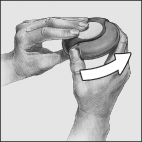
- 2. Hold the Diskus with the mouthpiece towards you. You can hold it with your right or left hand. Slide the lever forward until possible. You will hear a click. This deposits a dose of the medicine into the mouthpiece.
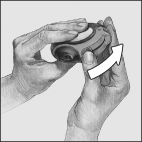
Each time the lever is slid back, a blister inside is opened and the
powder is made available for inhalation. Do not play with the lever as this causes the blister to open and
therefore waste of medicine.
- 3. Hold the Diskus away from your mouth. Exhale as deeply as possible. Never blow into the Diskus.
- 4. Put the mouthpiece between your lips. Inhale deeply and steadily through the Diskus and not through your nose. Remove the Diskus from your mouth. Hold your breath for about 10 seconds or as long as possible. Exhale slowly.
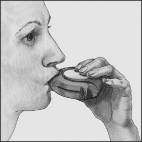
- 5. Afterwards rinse your mouth with water and spit it out, and/or brush your teeth. This may help to prevent the occurrence of oral thrush (candidiasis) and hoarseness.
- 6. To close the Diskus, position your thumb in the appropriate recess and slide it back to the end of its travel. You will hear a click. The lever returns automatically to its original position.
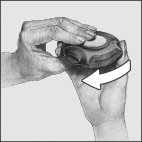
The Diskus is now ready to be used again.
As with all inhalers, people who care for children who have been prescribed Seretide Diskus
must ensure that they use the correct inhalation technique, as described above.
Cleaning the inhaler
Rub the mouthpiece of the Diskus with a dry cloth to clean it.
If you use more Seretide than you should
It is important to use the inhaler according to the instructions. If you accidentally have taken a dose higher than
that recommended, inform your doctor or pharmacist. You may observe an increase in heart rate, and a feeling of tremor. You may also have dizziness, headache, muscle weakness and joint pain.
If you have taken higher doses for a long period of time, you should consult your doctor or pharmacist.
This is because higher doses of Seretide can reduce the amount of steroid hormones produced by the
adrenal gland.
If you forget to use Seretide
Do not take a double dose to make up for a missed dose. Just take the next dose
at the usual time.
If you stop using Seretide
It is very important to take Seretide every day as prescribed by your doctor. Continue to take it
until your doctor tells you to stop the treatment. Do not stop or reduce
abruptly the dose of Seretide.This may cause your breathing to worsen.
Furthermore, if you stop or reduce the dose of Seretide abruptly, this can cause (very rarely) the
occurrence of problems with the adrenal glands (adrenal insufficiency) which sometimes can cause adverse
effects.These effects may include any of the following:
- Stomach pain
- Fatigue and loss of appetite, feeling unwell
- Nausea and diarrhoea
- Weight loss
- Headache or drowsiness
- Lowering of blood sugar levels
- Lowering of blood pressure and seizures When the body is under stress, following fever, trauma (such as after a car accident), an infection, surgery, adrenal insufficiency can worsen and one of the adverse effects listed above can occur. If any of the adverse effects occur, contact your doctor or pharmacist. To prevent these symptoms from occurring, your doctor may prescribe you to take additional doses of corticosteroids in tablet form (such as prednisolone).
If you have any doubts about the use of this medicine, ask your doctor, nurse or pharmacist.
4. Possible side effects
Like all medicines, this medicine can cause side effects, although not everyone gets them.
To reduce the possibility of side effects occurring, your doctor will prescribe the lowest dose of Seretide needed to control your asthma or COPD.
Allergic reactions: you may notice that your breathing gets worse suddenly immediately after
taking Seretide. You may have very wheezy breathing and coughing, or feel short of breath. You
may also notice itching, rash (hives) and swelling (usually of the face, lips, tongue or
throat), or you may suddenly feel your heart beating very
fast or feel weak and dizzy (which can cause you to collapse or lose
consciousness). If you have any of these effects or they occur suddenly after using Seretide,
stop using Seretide and tell your doctor immediately. Allergic reactions to Seretide are uncommon (affect less than 1 in 100 people).
Pneumonia (lung infection) in patients with COPD(common side effect).
Tell your doctorif you have any of the following symptoms while taking Seretide, as they could be symptoms of a
lung infection:
- fever or chills,
- increased mucus production, changes in mucus colour,
- increased coughing or greater difficulty breathing.
Other side effects are listed below:
Very common(affect more than 1 in 10 people)
- Headache, which usually improves as treatment continues
- In patients with COPD, an increase in the number of colds has been reported
Common(affect less than 1 in 10 people)
- Thrush (painful, creamy-yellow patches) in the mouth and throat. Also soreness of the tongue, hoarseness and irritation of the throat. Rinsing your mouth with water and spitting it out immediately and/or brushing your teeth after taking each dose of medicine can help. Your doctor may prescribe an antifungal medicine to treat thrush.
- Pain, swelling of the joints and muscle pain
- Muscle cramps
- In patients with Chronic Obstructive Pulmonary Disease (COPD), the following side effects have also been reported:
- Bruising and fractures
- Inflammation of the sinuses (a feeling of tension or fullness in the nose, cheeks and behind the eyes, sometimes accompanied by a throbbing pain)
- Decreased potassium levels in the blood (you may experience irregular heartbeat, muscle weakness, cramps).
Uncommon (affect less than 1 in 100 people)
- Increased blood sugar (glucose) levels (hyperglycaemia). If you have diabetes, you may need more frequent blood sugar checks and, possibly, adjustment of your diabetes treatment
- Cataracts (clouding of the lens of the eye)
- Very fast heartbeat (tachycardia)
- Shaking (tremor) and fast or irregular heartbeat (palpitations) - these side effects are generally harmless and decrease as treatment continues
- Chest pain
- Feeling anxious (these effects occur particularly in children)
- Disturbed sleep
- Allergic skin rash.
Rare (affect less than 1 in 1000 people)
- Difficulty breathing or wheezing that gets worse immediately after takingSeretide. If this happens, stop using your Seretide inhaler immediately. Use your reliever inhaler to help your breathing and tell your doctor immediately.
- Seretide can alter the normal production of steroid hormones in the body, particularly if you have taken high doses for a prolonged period of time. The effects include:
- Slowed growth in children and adolescents
- Thinning of the bones
- Glaucoma
- Weight gain
- Rounded (moon-shaped) face (Cushing’s syndrome). Your doctor will check you regularly to look for any of these side effects and will make sure you are taking the lowest dose of Seretide to control your asthma.
- Changes in behaviour, such as unusual hyperactivity and irritability (these effects occur particularly in children).
- Irregular heartbeat or presence of extra beats (arrhythmia). Tell your doctor but do not stop taking Seretide unless your doctor tells you to stop taking the medicine.
- A fungal infection of the oesophagus (throat), which may cause difficulty swallowing.
Frequency not known, but may occur
- Depression or aggression. These are more likely to occur in children.
- Blurred vision.
Reporting of side effects
If you get any side effects, talk to your doctor or pharmacist. This includes any side effects not listed in this leaflet. You can also report side effects directly through the
Reporting side effects you can help provide more information on the safety of
this medicine.
5. How to store Seretide
- Keep this medicine out of the sight and reach of children.
- Do not use Seretide after the expiry date which is stated on the label and the package after “Exp.”. The expiry date refers to the last day of that month.
- Do not store at a temperature above 30°C.
Do not dispose of any medicine in wastewater or household waste. Ask your pharmacist how to dispose of
medicines you no longer use. This will help protect the environment.
6. Contents of the pack and other information
What Seretide contains
- Each delivered dose contains 50 micrograms of salmeterol (as salmeterol xinafoate) and 100, 250 or 500 micrograms of fluticasone propionate.
- The excipient is lactose monohydrate (which contains milk proteins).
Description of the appearance of Seretide and contents of the pack
- Seretide Diskus contains a laminate strip. The laminate protects the powder for inhalation from the effects of the atmosphere.
- Each dose is pre-metered.
- The devices are packaged in cardboard boxes containing: 1 Diskus of 28 doses or 1, 2, 3 or 10 Diskus each containing 60 doses. Not all pack sizes may be marketed.
Marketing Authorisation Holder
GlaxoSmithKline S.p.A. - Viale dell’Agricoltura, 7 – 37135 Verona, Italy
Manufacturer
Glaxo Operations UK Ltd (trading as Glaxo Wellcome Operations)
Priory Street, Ware, Hertfordshire SG12 ODJ, United Kingdom
Tel: +44 (0)1920 463993; Fax: +44 (0)1920 864000
Glaxo Wellcome Production
Zone Industrielle No. 2, 23 Rue Lavoisier, La Madeleine, 27000 Evreux, France
Tel: +33 2 322 5500; Fax: + 33 2 322 5558
Aspen Bad Oldesloe GmbH
Industriestrasse 32-36, 23843 Bad Oldesloe, Germany
Tel: +49 4531 8020; Fax: +49 4531 84956
Austria Seretide Diskus
Belgium Seretide Diskus
Croatia Seretide Diskus
Cyprus Seretide Diskus
Czech Republic Seretide Diskus
Denmark Seretide
Estonia Seretide Diskus
Finland Seretide Diskus
France Seretide Diskus
Germany atmadisc Diskus
Greece Seretide Diskus
Hungary Seretide Diskus
Iceland Seretide
Ireland Seretide Diskus
Italy Seretide Diskus
Luxembourg Seretide Diskus
Malta Seretide Diskus
Netherlands Seretide Diskus
Portugal Seretaide Diskus
Romania Seretide Diskus
Slovakia Seretide Diskus
Spain Seretide Accuhaler
Sweden Seretide Diskus
United Kingdom Seretide Accuhaler
This leaflet was last updated in

Не уверены, подходит ли вам это лекарство?
Обсудите симптомы и варианты лечения с врачом онлайн.

Уже начали прием и появились вопросы?
Обсудите свое состояние и дальнейшие шаги с врачом онлайн.
- Страна регистрации
- Форма выпускаInhalation powder, 50/100
- Код АТХR03AK06
- Действующее вещество
- Отпускается по рецептуДа
- Производитель
- Информация на этой странице носит справочный характер и не является медицинской консультацией. Перед началом приема лекарства обязательно проконсультируйтесь с врачом.
- Аналоги SERETIDEФорма выпуска: Inhalation powder, 50 MICROGRAMS/500 MICROGRAMSДействующее вещество: salmeterol and fluticasoneПроизводитель: GLENMARK PHARMACEUTICALS S.R.O.Отпускается по рецептуФорма выпуска: Pressurized inhalation suspension, 25 MICROGRAMS/50 MICROGRAMSДействующее вещество: salmeterol and fluticasoneПроизводитель: ITALCHIMICI S.P.A.Отпускается без рецептаФорма выпуска: Pressurized suspension for inhalation, 25 MICROGRAMS/50 MICROGRAMSДействующее вещество: salmeterol and fluticasoneПроизводитель: GENETIC S.P.A.Отпускается без рецепта
Аналоги SERETIDE в других странах
Лекарства с тем же действующим веществом, доступные в других странах.
Аналог SERETIDE в Испания
Аналог SERETIDE в Польша
Аналог SERETIDE в Украина
Врачи онлайн по SERETIDE
Обсудите применение SERETIDE и возможные следующие шаги — по оценке врача.









Получите рецепт на SERETIDE онлайн
Заполните форму за 2 минуты
Расскажите о симптомах, истории болезни и нужном препарате.
Выберите врача или мы назначим
Выберите специалиста или мы подберём ближайшего доступного врача.
Врач рассматривает ваш случай
Обычно в течение 30 минут. Может задать уточняющие вопросы в чате.
Получите в любой аптеке
Электронный рецепт отправляется на вашу почту — действителен по всей Польше.
Часто задаваемые вопросы
SERETIDE требует рецепта в Италия. Вы можете уточнить у врача онлайн, подходит ли это лекарство для вашей ситуации.
Действующее вещество SERETIDE — salmeterol and fluticasone. Эта информация помогает определить лекарства с тем же составом под другими торговыми названиями.
SERETIDE производится компанией GLAXOSMITHKLINE S.P.A.. Упаковка и торговое название могут отличаться в зависимости от дистрибьютора.
Врачи, включая Семейные врачи, Психиатры, Дерматологи, Кардиологи, Эндокринологи, Гастроэнтерологи, Пульмонологи, Нефрологи, Ревматологи, Гематологи, Инфекционисты, Аллергологи, Гериатры, Педиатры, Онкологи, могут оценить целесообразность применения SERETIDE с учетом вашей ситуации и местных правил. Вы можете записаться на онлайн-консультацию, чтобы обсудить возможные варианты.
Польша имеет хорошо развитую систему здравоохранения в крупных городах, таких как Варшава, Краков, Вроцлав и Гданьск. Аптеки широко доступны и работают в соответствии с действующим законодательством, обеспечивая доступ к рецептурным препаратам.
Вы можете купить SERETIDE в Варшаве, Кракове, Вроцлаве или Гданьске в любой аптеке при наличии действующего рецепта.
Чтобы получить рецепт, вы можете воспользоваться Oladoctor:
Другие лекарства с тем же действующим веществом (salmeterol and fluticasone) включают AEROMEX, AIRSALES, AIRSUS. Они могут отличаться торговым названием или формой выпуска, но содержат одинаковый терапевтический компонент. Перед изменением лечения рекомендуется проконсультироваться с врачом.
