



SCEMBLIX 20 mg Tabletki Powlekane

Ocena recepty online
Lekarz przeanalizuje Twój przypadek i zdecyduje, czy wystawienie recepty jest medycznie uzasadnione.

Porozmawiaj z lekarzem o tym leku
Omów swoje objawy i opcje leczenia podczas szybkiej konsultacji online.



Jak stosować SEMBLIX
Treść ulotki
Scemblix 20 mg film-coated tablets, 40 mg film-coated tablets
asciminib
Medicinal product subject to additional monitoring. This will allow the rapid identification of
new safety information. You can contribute by reporting any adverse effects
experienced during the use of this medicine. See the end of section 4 for
information on how to report adverse effects.
Read this leaflet carefully before taking this medicine, as it contains
important information for you.
- Keep this leaflet. You may need to read it again.
- If you have any questions, ask your doctor or pharmacist.
- This medicine has been prescribed for you only. Do not pass it on to others, even if their symptoms are the same as yours, as it may be harmful.
- If any side effects occur, including those not listed in this leaflet, tell your doctor or pharmacist. See section 4.
Contents of this leaflet
- 1. What Scemblix is and what it is used for
- 2. What you need to know before you take Scemblix
- 3. How to take Scemblix
- 4. Possible side effects
- 5. How to store Scemblix
- 6. Contents of the pack and other information
1. What is Scemblix and what it is used for
What is Scemblix
Scemblix contains the active substance asciminib, which belongs to a group of medicines called
protein kinase inhibitors.
What is Scemblix used for
Scemblix is an anti-cancer medicine used to treat adults with a type of blood cancer
(leukaemia) called chronic myeloid leukaemia with positive Philadelphia chromosome in the chronic phase
(CML-CP Ph+). It is administered to patients who have previously been treated with two or more
anti-cancer medicines called tyrosine kinase inhibitors.
How Scemblix works
In CML Ph+, the body produces a large number of abnormal white blood cells. Scemblix blocks
the action of a protein (BCR::ABL1) that is produced by these abnormal white blood cells and stops their
division and growth.
If you have any doubts about how this medicine works or why it has been prescribed to you,
ask your doctor or pharmacist.
2. What you need to know before taking Scemblix
Do not take Scemblix
- if you are allergic to asciminib or any of the other ingredients of this medicine (listed in section 6).
Warnings and precautions
Talk to your doctor or pharmacist before taking Scemblix if any of the following applies to you:
- if you have or have ever had severe upper abdominal pain which may be due to problems with your pancreas (inflamed pancreas, pancreatitis).
- if you have ever had or may have an ongoing hepatitis B infection. This is because Scemblix may cause hepatitis B to become active again. You will be carefully monitored by your doctor for signs of this infection before starting treatment.
Tell your doctor or pharmacist immediately if you experience any of the following conditions during treatment with Scemblix:
- if you experience weakness, spontaneous bleeding or bruising and frequent infections with signs such as fever, chills, sore throat or mouth ulcers. These may be signs of reduced bone marrow activity, resulting in myelosuppression (a reduction in the number of white blood cells, red blood cells and platelets).
- if blood tests show that you have high levels of enzymes called lipase and amylase (signs of damage to the pancreas, also known as pancreatic toxicity).
- if you have a heart condition or an irregular heartbeat, such as an irregular heartbeat or abnormal electrical activity of the heart called prolonged QT interval which can be observed on an electrocardiogram (ECG).
- if blood tests show that you have a low level of potassium or magnesium (hypokalaemia or hypomagnesaemia).
- if you are being treated with medicines that can have an undesirable effect on heart function (torsades de pointes) (see “Other medicines and Scemblix”).
- if you experience headache, dizziness, chest pain or shortness of breath (possible signs of high blood pressure, also known as hypertension).
Monitoring during treatment with Scemblix
Your doctor will regularly check your condition to ensure that the treatment has the desired
effect. During treatment, you will have regular tests, including blood tests. These tests will
check:
- the amount of blood cells (white blood cells, red blood cells and platelets).
- the levels of pancreatic enzymes (amylase and lipase).
- the levels of electrolytes (potassium, magnesium).
- your heart rate and blood pressure.
Children and adolescents
Do not give this medicine to children or adolescents under 18 years of age.
Other medicines and Scemblix
Tell your doctor or pharmacist if you are taking, have recently taken or might take
any other medicines. In particular, tell your doctor or pharmacist if you are using:
- medicines usually used to treat seizures (fits), such as carbamazepine, phenobarbital or phenytoin.
- medicines used to treat pain and/or as sedatives before or during medical or surgical procedures, such as alfentanil or fentanyl.
- medicines used to treat migraine or dementia, such as dihydroergotamine or ergotamine.
- medicines that can have an undesirable effect on the electrical activity of the heart (torsades de pointes), such as bepridil, chloroquine, clarithromycin, halofantrine, haloperidol, methadone, moxifloxacin or pimozide.
- medicines used to reduce the ability of the blood to clot, such as warfarin or dabigatran.
- medicines used to treat severe inflammation of the bowel or severe rheumatic or painful inflammation of the joints, such as sulfasalazine or colchicine.
- medicines used to treat cancer, severe rheumatic inflammation of the joints or psoriasis, such as methotrexate.
- rosuvastatin, a medicine used to reduce cholesterol levels in the blood.
- medicines used to treat high blood pressure and other heart conditions, such as digoxin.
- St John's Wort (also known as Hypericum perforatum), a herbal medicine used to treat depression.
If you are already taking Scemblix, you must tell your doctor if you are prescribed any new
medicine.
Ask your doctor or pharmacist if you are not sure if your medicine is one of the medicines listed
above.
Scemblix with food and drink
Do not take this medicine with food. Take at least 2 hours after and 1 hour before any
food. For further information, see “When to take Scemblix” in section 3.
Pregnancy and breastfeeding
If you are pregnant, suspect you may be pregnant, are planning to become pregnant or are breastfeeding, ask your doctor or pharmacist for advice before taking this medicine.
Pregnancy
Scemblix may harm the unborn child. If you are a woman who could become pregnant, your doctor will discuss with
you the potential risks of taking this medicine during pregnancy or breastfeeding.
If you are a woman who could become pregnant, your doctor may perform a pregnancy test before
starting treatment with Scemblix.
If you become pregnant or think you might be, after starting treatment with Scemblix, tell your
doctor immediately.
Contraceptive advice for women
If you are a woman who could become pregnant, you must use effective contraception during
treatment with Scemblix and for at least 3 days after stopping it, to avoid pregnancy. Ask your doctor about effective methods of contraception.
Breastfeeding
It is not known whether Scemblix passes into breast milk. Therefore you must stop breastfeeding
during treatment with this medicine and for at least 3 days after stopping it.
Driving and using machines
This medicine does not impair or negligibly impairs the ability to drive and operate
machinery. If, after taking this medicine, you experience side effects (such as dizziness or
visual disturbances) with a potential impact on the ability to drive or operate tools or
machinery safely, you must refrain from these activities until the effect has worn off.
Scemblix contains lactose and sodium
If your doctor has told you that you have an intolerance to some sugars, contact your
doctor before taking
this medicine.
This medicine contains less than 1 mmol (23 mg) of sodium per tablet, i.e. essentially
“sodium-free”.
3. How to take Scemblix
Take this medicine following exactly the instructions of your doctor or pharmacist. If you
have any doubts, ask your doctor or pharmacist.
How much Scemblix to take
Your doctor will tell you exactly how many tablets you need to take each day and how to take them.
The recommended dose is 1 Scemblix 40 mg tablet twice a day. Take 1 tablet, and
then take another after approximately 12 hours.
Depending on your response to treatment and any possible side effects, your doctor may ask you to
switch to a lower dose or to temporarily or permanently stop treatment.
When to take Scemblix
Take Scemblix:
- at least 2 hours after any food
- then wait at least 1 hour before eating again. Taking this medicine every day at the same time will help you remember when to take it.
How to take Scemblix
Swallow the tablets whole with a glass of water. Do not break, crush, or chew the
tablets to ensure adequate dosage.
For how long to take Scemblix
Continue to take this medicine for as long as your doctor tells you to. This is a long-term
treatment, which may last for months or years. Your doctor will regularly check your condition to
verify that the treatment has the desired effect.
If you have questions about how long to take this medicine, ask your doctor or pharmacist.
If you take more Scemblix than you should
If you have taken more tablets than you should, or if someone else has accidentally taken your
medicine, contact a doctor immediately for advice. Show the packaging. Medical treatment
may be necessary.
If you forget to take Scemblix
If less than 6 hours remain until the next dose, skip the missed dose and then take the
next dose as scheduled.
If more than 6 hours remain until the next dose, take the missed dose and then take the next
dose as scheduled.
If you stop taking Scemblix
Do not stop treatment with this medicine unless your doctor tells you to.
If you have any doubts about using this medicine, ask your doctor or pharmacist.
4. Possible side effects
Like all medicines, this medicine can cause side effects, although not everybody gets them.
Some side effects can be serious
If you experience any serious side effect, stop taking this medicine and tell your doctor immediately.
Very common(may affect more than 1 in 10 people)
- spontaneous bleeding or bruising (signs of a low level of platelets, thrombocytopenia)
- fever, sore throat, frequent infections (signs of a low level of white blood cells, neutropenia)
Common(may affect up to 1 in 10 people)
- irregular heartbeat, change in the heart's electrical activity (prolongation of the QT interval)
Uncommon(may affect up to 1 in 100 people)
- fever above 38°C associated with a low level of white blood cells (febrile neutropenia)
- low levels of all types of blood cells (pancytopenia)
Other possible side effects
Other side effects include those listed below. If these side effects become serious, tell your doctor or pharmacist.
Very common(may affect more than 1 in 10 people)
- infections of the nose and throat (upper respiratory tract infection)
- fatigue, tiredness, paleness (signs of a low level of red blood cells, anemia)
- headache, dizziness, chest pain, shortness of breath (signs of high blood pressure, hypertension)
- headache
- dizziness
- shortness of breath, labored breathing (signs of dyspnea)
- cough
- vomiting
- diarrhea
- nausea
- abdominal pain (stomach ache)
- skin rash
- itching
- muscle, bone and joint pain (musculoskeletal pain)
- joint pain (arthralgia)
- fatigue (tiredness)
- generalized swelling (edema)
- fever (pyrexia)
Common(may affect up to 1 in 10 people)
- fever, cough, difficulty breathing, wheezing (signs of lower respiratory tract infections)
- influenza
- loss of appetite
- blurred vision
- dry eyes
- palpitations
- chest pain, cough, hiccups, rapid breathing, fluid build-up between the lungs and chest cavity which, if severe, can leave you breathless (pleural effusion)
- chest pain (non-cardiac chest pain)
- severe pain in the upper part of the stomach (sign of inflammation of the pancreas, pancreatitis)
- itchy skin rash (urticaria)
Uncommon(may affect up to 1 in 100 people)
- allergic reaction that can include skin rash, urticaria, difficulty breathing or low blood pressure (hypersensitivity)
Abnormal blood test results
During treatment, blood test results may be abnormal, which can provide your doctor with information about how your organs are functioning. For example:
Very common(may affect more than 1 in 10 people)
- elevated levels of the enzymes lipase and amylase (pancreas function)
- elevated levels of the enzymes transaminases, including alanine aminotransferase (ALT), aspartate aminotransferase (AST) and gamma-glutamyltransferase (GGT) (liver function)
- elevated level of fats/lipids
Common(may affect up to 1 in 10 people)
- elevated level of the substance bilirubin (liver function)
- elevated level of the enzyme creatine phosphokinase (muscle function)
- elevated blood sugar level
Reporting of side effects
If you get any side effects, even those not listed in this leaflet, tell your doctor or pharmacist. You can also report side effects directly through the national reporting system listed in Annex V. By reporting side effects you can help provide more information on the safety of this medicine.
5. How to store Scemblix
Keep this medicine out of the sight and reach of children.
Do not use this medicine after the expiry date which is stated on the blister after EXP and on the pack
after Scad. The expiry date refers to the last day of that month.
Do not store at a temperature above 25 °C.
Store in the original packaging to protect the medicine from moisture.
Do not use this medicine if you notice any damage to the packaging or if there are signs of tampering.
Do not dispose of any medicine in wastewater or household waste. Ask your pharmacist how
to dispose of medicines you no longer use. This will help protect the environment.
6. Package contents and other information
What Scemblix contains
- The active ingredient is asciminib. Each 20 mg film-coated tablet contains asciminib hydrochloride, equivalent to 20 mg of asciminib. Each 40 mg film-coated tablet contains asciminib hydrochloride, equivalent to 40 mg of asciminib.
- The other excipients are: 20 mg and 40 mg film-coated tablets: lactose monohydrate, microcrystalline cellulose (E460i), hydroxypropylcellulose (E463), crosslinked sodium carboxymethylcellulose (E468), polyvinyl alcohol (E1203), titanium dioxide (E171), magnesium stearate, talc (E553b), anhydrous colloidal silica, lecithin (E322), xanthan gum (E415), red iron oxide (E172). Only for 20 mg film-coated tablets: yellow iron oxide (E172) Only for 40 mg film-coated tablets: black iron oxide (E172). See “Scemblix contains lactose and sodium” in section 2.
Description of the appearance of Scemblix and contents of the pack
Scemblix 20 mg film-coated tablets (tablets): pale yellow, round, biconvex tablets with beveled edges approximately 6 mm in diameter, with the company logo imprinted on one side and “20” on the other side.
Scemblix 40 mg film-coated tablets (tablets): lilac-white, round, biconvex tablets with beveled edges approximately 8 mm in diameter, with the company logo imprinted on one side and “40” on the other side.
Scemblix is supplied in blisters containing 10 film-coated tablets.
The following pack sizes are available:
Packs containing 20 or 60 film-coated tablets.
Scemblix 40 mg film-coated tablets are also available in multipacks containing 180 (3 packs of 60) film-coated tablets.
Not all pack sizes may be marketed.
Marketing Authorisation Holder
Novartis Europharm Limited
Vista Building
Elm Park, Merrion Road
Dublin 4
Ireland
Manufacturer
Novartis Farmacéutica S.A.
Gran Via de les Corts Catalanes, 764
08013 Barcelona
Spain
Novartis Pharma GmbH
Roonstrasse 25
90429 Nuremberg
Germany
Novartis Pharma GmbH
Sophie-Germain-Strasse 10
90443 Nuremberg
Germany
For further information on this medicinal product, contact the local representative of the Marketing Authorisation Holder:
België/Belgique/Belgien
Novartis Pharma N.V.
Tél/Tel: +32 2 246 16 11
Lietuva
SIA Novartis Baltics Lietuvos filialas
Tel: +370 5 269 16 50
България
Novartis Bulgaria EOOD
Тел.: +359 2 489 98 28
Luxembourg/Luxemburg
Novartis Pharma N.V.
Tél/Tel: +32 2 246 16 11
Česká republika
Novartis s.r.o.
Tel: +420 225 775 111
Magyarország
Novartis Hungária Kft.
Tel.: +36 1 457 65 00
Danmark
Novartis Healthcare A/S
Tlf.: +45 39 16 84 00
Malta
Novartis Pharma Services Inc.
Tel: +356 2122 2872
Deutschland
Novartis Pharma GmbH
Tel: +49 911 273 0
Nederland
Novartis Pharma B.V.
Tel: +31 88 04 52 111
Eesti
SIA Novartis Baltics Eesti filiaal
Tel: +372 66 30 810
Norge
Novartis Norge AS
Tlf: +47 23 05 20 00
Ελλάδα
Novartis (Hellas) A.E.B.E.
Τηλ: +30 210 281 17 12
Österreich
Novartis Pharma GmbH
Tel: +43 1 86 6570
España
Novartis Farmacéutica, S.A.
Tel: +34 93 306 42 00
Polska
Novartis Poland Sp. z o.o.
Tel.: +48 22 375 4888
France
Novartis Pharma S.A.S.
Tél: +33 1 55 47 66 00
Portugal
Novartis Farma - Produtos Farmacêuticos, S.A.
Tel: +351 21 000 8600
Hrvatska
Novartis Hrvatska d.o.o.
Tel. +385 1 6274 220
România
Novartis Pharma Services Romania SRL
Tel: +40 21 31299 01
Ireland
Novartis Ireland Limited
Tel: +353 1 260 12 55
Slovenija
Novartis Pharma Services Inc.
Tel: +386 1 300 75 50
Ísland
Vistor hf.
Sími: +354 535 7000
Slovenská republika
Novartis Slovakia s.r.o.
Tel: +421 2 5542 5439
Italia
Novartis Farma S.p.A.
Tel: +39 02 96 54 1
Suomi/Finland
Novartis Finland Oy
Puh/Tel: +358 (0)10 6133 200
Κύπρος
Novartis Pharma Services Inc.
Τηλ: +357 22 690 690
Sverige
Novartis Sverige AB
Tel: +46 8 732 32 00
Latvija
SIA Novartis Baltics
Tel: +371 67 887 070
Other sources of information
More detailed information on this medicinal product is available on the website of the European Medicines Agency: https://www.ema.europa.eu .

Nie jesteś pewien, czy ten lek jest odpowiedni dla ciebie?
Omów swoje objawy i leczenie z lekarzem online.

Zacząłeś przyjmować lek i masz pytania?
Omów swoje objawy i leczenie z lekarzem online.
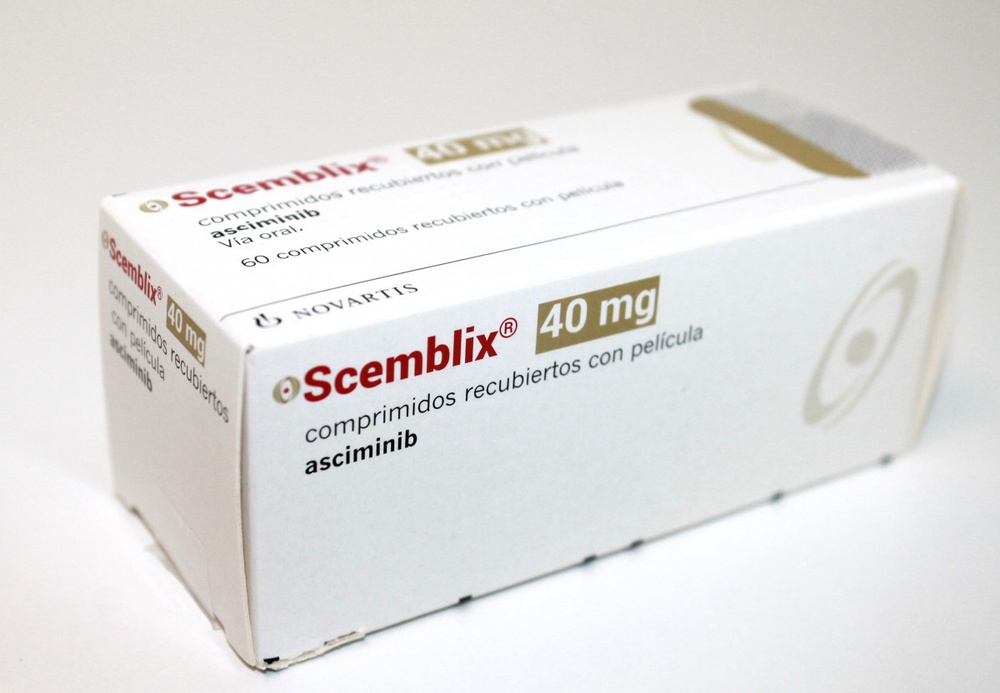
- Kraj rejestracji
- Postać farmaceutycznaFilm-coated tablet, 20 mg
- Kod ATCL01EA06
- Substancja czynna
- Wymaga receptyTak
- Producent
- Te treści mają charakter wyłącznie informacyjny i nie zastępują konsultacji lekarskiej.
- Zamienniki SEMBLIXPostać farmaceutyczna: Film-coated tablet, 100 MGSubstancja czynna: bosutinibProducent: PFIZER EUROPE MA EEIGWymaga receptyPostać farmaceutyczna: Film-coated tablet, 100 MGSubstancja czynna: bosutinibProducent: TEVA ITALIA S.R.L.Wymaga recepty
Odpowiedniki SEMBLIX w innych krajach
Leki z tą samą substancją czynną dostępne w innych krajach.
Odpowiednik SEMBLIX w Ukraina
Odpowiednik SEMBLIX w Hiszpania
Uzyskaj receptę na SEMBLIX online
Wypełnij 2-minutowy formularz
Opisz swoje objawy, historię choroby i lek, o który prosisz.
Wybierz lekarza lub pozwól nam przydzielić
Wybierz specjalistę lub dopasujemy Cię do najbliższego dostępnego lekarza.
Lekarz analizuje Twój przypadek
Zazwyczaj w ciągu 30 minut. Może zadawać dodatkowe pytania przez czat.
Odbierz w dowolnej aptece
Recepta elektroniczna wysłana na Twój e-mail — ważna w całej Polsce.
Często zadawane pytania
SEMBLIX wymaga recepty w Włochy. Możesz skonsultować się z lekarzem online, aby sprawdzić, czy ten lek może być odpowiedni w Twojej sytuacji.
Substancją czynną w SEMBLIX jest asciminib. Informacja ta pomaga rozpoznać leki o tym samym składzie, ale pod różnymi nazwami handlowymi.
SEMBLIX jest produkowany przez NOVARTIS EUROPHARM LIMITED. Nazwy handlowe i opakowania mogą się różnić w zależności od dystrybutora.
Lekarze, tacy jak Lekarze rodzinni, Psychiatrzy, Dermatolodzy, Kardiolodzy, Endokrynolodzy, Gastroenterolodzy, Pulmonolodzy, Nefrolodzy, Reumatolodzy, Hematolodzy, Zakaźnicy, Alergolodzy, Geriatrzy, Pediatrzy, Onkolodzy, mogą ocenić, czy stosowanie SEMBLIX jest odpowiednie w Twoim przypadku, w zależności od sytuacji klinicznej i lokalnych przepisów. Możesz umówić konsultację online, aby omówić objawy i możliwe dalsze kroki.
Polska posiada dobrze rozwiniętą infrastrukturę ochrony zdrowia w dużych miastach, takich jak Warszawa, Kraków, Wrocław i Gdańsk. Apteki są łatwo dostępne i działają zgodnie z obowiązującymi przepisami, zapewniając dostęp do leków na receptę.
Możesz kupić SEMBLIX w Warszawie, Krakowie, Wrocławiu lub Gdańsku w każdej aptece, posiadając ważną receptę.
Aby uzyskać receptę, możesz skorzystać z Oladoctor:
Inne leki zawierające tę samą substancję czynną (asciminib) to m.in. BOSULIF, BOSUTINIB EG, BOSUTINIB TEVA. Mogą one różnić się nazwą handlową lub postacią, ale zawierają ten sam składnik terapeutyczny. Przed zmianą lub rozpoczęciem nowego leku skonsultuj się z lekarzem.
