



SANDRENA 0.1% Żel

Ocena recepty online
Lekarz przeanalizuje Twój przypadek i zdecyduje, czy wystawienie recepty jest medycznie uzasadnione.

Porozmawiaj z lekarzem o tym leku
Omów swoje objawy i opcje leczenia podczas szybkiej konsultacji online.



Jak stosować SANDRENA
Treść ulotki
Sandrena 0.5 mg gel, 1 mg gel
estradiol
Read this leaflet carefully before you start using this medicine as it contains
important information for you.
- Keep this leaflet. You may need to read it again.
- If you have any questions, ask your doctor or pharmacist.
- This medicine has been prescribed for you only. Do not pass it on to others, even if their symptoms are the same as yours, as it may be harmful.
- If you get any side effects, even those not listed in this leaflet, tell your doctor or pharmacist. See section 4.
Contents of this leaflet:
- 1. What Sandrena is and what it is used for
- 2. What you need to know before you use Sandrena
- 3. How to use Sandrena
- 4. Possible side effects
- 5. How to store Sandrena
- 6. Contents of the pack and other information
1. What is Sandrena and what is it used for
Sandrena is a medicine used in Hormone Replacement Therapy (HRT). Sandrena
contains the female hormone estrogen.
Sandrena is used for:
Relief of post-menopausal symptoms
During menopause, the amount of estrogen produced by the woman decreases. This can
cause symptoms such as a warm face, neck and chest (“hot flushes”). Sandrena relieves
these post-menopausal symptoms. Sandrena will only be prescribed to you if your symptoms
seriously interfere with your daily life.
Talk to your doctor if you do not feel better or if you feel worse.
2. Cosa deve sapere prima di usare Sandrena
Medical history and regular check-ups
Hormone replacement therapy (HRT) presents some risks that must be considered if you are deciding to start or
continue therapy.
Experience in treating women with premature menopause (caused by
ovarian failure or surgery) is limited. If you suffer from premature
menopause, the risks associated with the use of HRT may be different. Talk to your doctor.
Before starting (or resuming) HRT, your doctor will ask you about your personal and family
medical history. Your doctor may decide to perform a physical examination. This, if necessary, can include a breast exam and/or a pelvic exam.
Once you have started HRT, see your doctor for regular check-ups (at least
once a year). During these check-ups, discuss with your doctor the risks and benefits
associated with continuing therapy with Sandrena.
Regularly check your breasts for any changes(see the section
“Breast cancer” below). Have regular breast screenings, as
recommended by your doctor.
Do not use Sandrena
If you experience any of the following conditions. If you have any doubts about any of the points listed below, talk to your doctorbefore using Sandrena.
Do not use Sandrena
- if you have or have had breast canceror suspect you have it
- if you have a cancer that is sensitive to estrogen, such as uterine (endometrial) cancer, or suspect you have it
- if you have unexpected vaginal bleeding
- if you have excessive thickening of the uterine lining(endometrial hyperplasia) that is not being treated
- if you have or have ever had a blood clot in a vein(thrombosis) such as in the legs (deep vein thrombosis) or in the lungs (pulmonary embolism)
- if you suffer from a blood clotting disorder(such as protein C, protein S, or antithrombin deficiency)
- if you have or have recently had a disease caused by blood clots in the arteries, such as a heart attack, stroke, or angina
- if you have or have ever had liver diseaseand liver function tests have not returned to normal
- if you have a rare blood disease called "porphyria", which is hereditary (inherited)
- if you are allergicto estradiolor any of the excipients of this medicine (listed in section 6).
If any of the conditions described above appear for the first time during the use
of Sandrena, stop taking it immediately and consult your doctor immediately.
Warnings and precautions
Talk to your doctor or pharmacist before using Sandrena. Tell your doctor if you have ever
had any of the following problems, before starting treatment as these may
reappear or worsen during treatment with Sandrena. If this happens,
see your doctor more often for a check-up:
- fibroids inside the uterus
- growth of the uterine lining outside the uterus (endometriosis) or a history of excessive growth of the uterine lining (endometrial hyperplasia)
- increased risk of developing blood clots (see "blood clots in veins [thrombosis]")
- increased risk of having an estrogen-sensitive cancer (due to having a mother, sister or grandmother with breast cancer)
- high blood pressure
- liver disorder, such as a benign liver tumor
- diabetes
- gallstones
- migraine or severe headaches
- a disease of the immune system that affects many organs of the body (systemic lupus erythematosus, SLE)
- epilepsy
- asthma
- a disease that affects the eardrum and hearing (otosclerosis)
- a very high level of fats in the blood (triglycerides)
- fluid retention due to heart or kidney problems
- angioedema (hereditary or acquired).
Stop using Sandrena and see your doctor immediately,
if during therapy with HRT you notice any of the following effects:
- one of the conditions listed in the section "Do not use Sandrena"
- yellowing of the skin or whites of the eyes (jaundice). These may be signs of a liver disease
- a significant increase in blood pressure (symptoms may include headache, fatigue, dizziness)
- headache similar to migraine that occurs for the first time
- pregnancy
- if you notice signs of a blood clot, such as:
- painful swelling and redness of the legs
- sudden chest pain
- difficulty breathing. For more information, see "Blood clots in a vein (thrombosis)".
Note:Sandrena is not a contraceptive. If less than 12
months have passed since your last menstrual period or you are under 50 years of age,
you may still need to use a supplemental contraceptive method to
prevent pregnancy. Talk to your doctor for advice.
HRT and cancer
Excessive thickening of the uterine lining (endometrial hyperplasia) and uterine cancer
(endometrial carcinoma)
HRT based on estrogen alone increases the risk of excessive thickening of the uterine lining
(endometrial hyperplasia) and uterine cancer (endometrial carcinoma).
Taking a progestin in addition to estrogen for at least 12 days of every
28-day cycle protects against this additional risk. Therefore, if you still have a uterus, your
doctor will prescribe a progestin separately. If you have had your uterus removed
(hysterectomy), discuss with your doctor whether you can safely take this medicine without
a progestin.
In women who still have a uterus and who are not taking HRT, an average of 5 cases of endometrial carcinoma are diagnosed per 1,000 women in the age group between 50 and
65 years.
For women aged 50 to 65 who still have a uterus and who are taking HRT based on estrogen alone, between 10 and 60 cases of endometrial carcinoma are diagnosed per 1,000 (i.e. between 5
and 55 cases more), depending on the dose and duration of therapy.
Unexpected bleeding
If your doctor has prescribed progestin tablets in addition to Sandrena, you will usually have some bleeding once a month (withdrawal bleeding). But, if
you have unexpected bleeding or spotting, in addition to your monthly bleeding,
that:
- continues for more than the first 6 months of therapy
- starts after you have been taking Sandrena for more than 6 months
- continues after you stop using Sandrena consult your doctor as soon as possible.
Breast cancer
Evidence shows that taking hormone replacement therapy (HRT)
combined estrogen-progestin or estrogen-only therapy increases the risk of breast cancer. This additional risk depends on the duration of HRT use. The additional risk
becomes apparent within 3 years of use.
After stopping HRT, the additional risk will decrease over time, but this risk
may persist for 10 years or more if you use HRT for more than 5 years.
Comparison
In women aged 50-54 who are not taking HRT, an average of 13-17 cases per 1,000 of breast cancer will be
diagnosed over a 5-year period. In women
aged 50 who start estrogen-only HRT for a period of 5 years, 16-17 cases per 1,000 users will occur (i.e. 0-3 cases more). For women aged 50 who start combined estrogen-progestin hormone replacement therapy for 5 years,
21 cases per 1,000 will be diagnosed (i.e. 4 to 8 cases more).
In women aged 50 to 59 who are not following HRT, breast cancer will be diagnosed in an average of 27 women per 1,000 over a 10-year period.
In women aged 50 who start estrogen-only HRT for 10 years, 34 cases per 1,000 users will occur (i.e. 7 cases more).
In women aged 50 who start combined estrogen and progestin HRT for 10 years, 48 cases per 1,000 users will occur (i.e. 21 cases more).
Regular breast screenings.Make an appointment with your doctor if you notice any
changes to your breasts such as:
- small depressions on the skin
- changes in the nipple
- any visible or palpable lump Also, it is recommended to participate in breast screening programs when they are offered to you. For breast screening, it is important that you inform the healthcare professional/nurse who will perform the X-ray that you are taking HRT, as this medicine may increase the density of your breasts and this may interfere with the result of the mammogram. When breast density is increased, mammography may not detect all lumps.
Ovarian cancer
Ovarian cancer is rare - much rarer than breast cancer. The use of estrogen-only or estrogen-progestin HRT has been associated with a slight increase in the risk of ovarian cancer.
The risk of ovarian cancer varies with age. For example, for women aged between
50 and 54 who are not taking HRT, about 2 women out of 2,000 will be diagnosed with
ovarian cancer over a 5-year period. For women who have taken hormone replacement
therapy for 5 years, there will be about 3 cases per 2,000 (i.e. about 1 case more).
Effects of HRT on the heart and circulation
Blood clots in a vein (thrombosis)
The risk of blood clots in the veinsis approximately 1.3 - 3 times higher for women who
use HRT compared to those who do not, especially during the first year
of treatment.
Blood clots can be serious, and if one of them reaches the lungs, it can cause
chest pain, shortness of breath, fainting or even death.
You are more likely to form a blood clot in the veins with
increasing age and if one of the following conditions occurs. Tell your doctor if you
experience any of the following situations:
- you are unable to walk for a long period due to major surgery,
injury or illness (see also paragraph 3, if you need surgery)
- you are seriously overweight (BMI > 30 kg/m)
- you have or have had blood clotting problems for which you need long-term treatment with a drug used to prevent blood clots
- one of your relatives has ever had a blood clot in the leg, lung or another organ
- you have systemic lupus erythematosus(SLE)
- you have cancer.
For symptoms of a blood clot forming, see "Stop using Sandrena
and see your doctor immediately".
Comparison
Analyzing women aged 50 who are not taking HRT, an average of 4 to 7
cases per 1,000 are expected in which blood clots in the vein will occur over 5 years.
For women aged 50 who have taken estrogen-progestin HRT for more than 5
years, there will be 9-12 cases per 1,000 (i.e. 5 cases more).
For women aged 50 who have had a hysterectomy and have been treated
with estrogen-only HRT for more than 5 years, there will be 5 to 8 cases per 1,000 (i.e. 1 case
more).
Heart disease (heart attack)
There is no evidence that HRT can prevent a heart attack.
Women over 60 who use estrogen-progestin HRT have a
slightly higher probability of developing heart disease compared to those who do not
use HRT.
For women who have had a hysterectomy and are taking estrogen-only therapy, there is no increased risk of developing heart disease.
Stroke
The risk of stroke is approximately 1.5 times higher for women who use HRT compared to
those who do not. The number of additional cases of stroke due to HRT use
increases with age.
Comparison
Analyzing women aged 50 who are not taking HRT, an average of 8 cases of
stroke per 1,000 are expected over a 5-year period.
For women aged 50 who have taken HRT for more than 5 years, there will be 11 cases
per 1,000 (i.e. 3 cases more).
Other conditions
- HRT does not prevent memory loss. There is some evidence of a greater risk of memory loss in women who start HRT after age 65. Talk to your doctor for advice.
- Women with a tendency to skin discoloration (chloasma) should minimize exposure to sunlight and ultraviolet radiation while using Sandrena.
Other medicines and Sandrena
Tell your doctor or pharmacist if you are taking, have recently taken or might
take any other medicines, including those available without a prescription, herbal medicines
or other natural products.
Some medicines can interfere with the effect of Sandrena. This could cause
irregular bleeding. This applies to the following medicines:
- medicines for epilepsy(such as phenobarbital, phenytoin and carbamazepine)
- medicines for tuberculosis(such as rifampicin, rifabutin)
- medicines for HIV infectionand hepatitis C infection(that is, protease inhibitors and non-nucleoside reverse transcriptase inhibitors such as nevirapine, efavirenz, ritonavir and nelfinavir)
- herbal remedies containing St John's Wort( Hypericumperforatum).
Laboratory tests
If you need to have blood tests, tell your doctor or the laboratory staff that
you are using Sandrena because this medicine can affect the results of some tests.
Pregnancy, breastfeeding and fertility
Sandrena is used only in post-menopausal women. If you become pregnant, stop
taking Sandrena and contact your doctor.
Driving and using machines
No studies have been conducted on the effects on the ability to drive vehicles or use
machines.
Sandrena contains propylene glycol and ethanol
This medicine contains 62.5, 125 and 187.5 mg of propylene glycol in 0.5,
1.0 and 1.5 g of dose, respectively.
This medicine contains 292.5, 585 and 877.5 mg of alcohol (ethanol) in 0.5,
1.0 and 1.5 g of dose, respectively. It may cause a burning sensation on damaged skin .
3. How to use Sandrena
Always use this medicine exactly as your doctor or pharmacist has told you. If you have any doubts, ask your doctor or pharmacist.
When to start using Sandrena
You can start using Sandrena immediately if:
- you have never used HRT before
- you are coming from a period when you were not using HRT.
Wait for the end of your menstrual cycle if:
- you are coming from another type of HRT where you had menstrual cycles.
If your uterus has not been removed, your doctor will probably also prescribe another
medicine containing the progestin hormone. This is usually a tablet taken for
12 to 14 days per monthly cycle. After each progestin cycle, you may experience some
bleeding, similar to menstruation.
How much Sandrena to use
Sandrena is available in sachets containing 0.5 mg of estradiol in 0.5 g of gel, or in sachets
containing 1 mg of estradiol in 1 g of gel.
- Each pack of Sandrena 0.5 mg gel contains only 0.5 g sachets.
- Each pack of Sandrena 1 mg gel contains only 1 g sachets.
Use the amount of Sandrena that your doctor has prescribed for you. Your doctor should
prescribe the lowest dose to treat your symptoms, for the shortest possible time. Talk to your
doctor if you think this dosage is too high or not strong enough.
- The recommended dose is between 0.5 mg and 1.5 mg of estradiol per day.
- Use the following number of 0.5 g or 1 g sachets based on the dose and pack prescribed by your doctor:
For a daily dose of 0.5 mg:use one 0.5 g sachet.
For a daily dose of 1 mg:There are two options. Use one 1 g sachet oruse two
0.5 g sachets.
For a daily dose of 1.5 mg:There are two options. Use three 0.5 g sachets
oruse one 0.5 g sachet and one 1 g sachet.
If you are also taking progestin tablets, take them as prescribed by your
doctor. You will normally have some bleeding after each progestin cycle.
How to apply the gel
Sandrena should be spread gently on dry and clean skin. It should not be
swallowed.
Where to apply the gel
- Do not apply the gel to the breasts, face, or irritated skin.
- Apply the gel to the lower abdomen or thighs.
- Apply the gel each day to a different part of the body.
Follow these instructions:
- 1. Apply the gel to the skin once a day,to the lower abdomen or thighs.
- 2. Spread the gel over an area about 1-2 times the size of your hand.
- 3. Allow the gel to dry for a few minutes.
- 4. Wash your hands after applying the gel. Avoid getting the gel in your eyes. The gel may irritate your eyes.
- 5. Do not wash the area where you applied the gel for at least one hour.
If you are going to have surgery
If you are going to have surgery, tell the surgeon that you are using Sandrena.
You may need to stop using Sandrena about 4-6 weeks before
surgery to reduce the risk of a blood clot (see section 2, Blood clots in a vein). Ask your
doctor when you can start using Sandrena again.
If you use more Sandrena than you should
If you use more gel than you should, contact your doctor or pharmacist.
You may feel swollen, anxious or irritable, or have breast tenderness. Nausea, vomiting
and breakthrough bleeding can also occur in some women.
Overdose is unlikely with transdermal application. Treatment is symptomatic.
The gel should be washed off. Symptoms disappear when treatment is stopped or
when the dose is reduced.
If you swallow Sandrena
If you swallow Sandrena, do not worry. However, contact your doctor.
If you forget to use Sandrena
- Apply the forgotten dose when you remember, unless more than 12 hours have passed.
- If more than 12 hours have passed, skip the forgotten dose.
- Missing more than one dose may cause bleeding between periods. This is called breakthrough bleeding.
If you stop using Sandrena
Continue to use this medicine as prescribed by your doctor. Continue to
use Sandrena even if you notice improvements. If you stop treatment too early or too
suddenly, your problem may return.
If you have any further questions on the use of this medicine, ask your doctor or pharmacist.
4. Possible side effects
Like all medicines, this medicine can cause side effects, although not everyone will experience them.
If you notice any of the following serious side effects, stop using the gel and see your doctor immediately:
- your blood pressure increases
- your skin or the white of your eye becomes yellowish (jaundice)
- you suddenly experience migraine-type headache (see section 2)
- you have symptoms of blood clot formation (see section 2)
- you experience one of the problems listed in section 2.
The following conditions are reported more often in women using HRT than in those not using HRT:
- breast cancer
- abnormal growth or tumor of the uterine wall (endometrial hyperplasia or tumor)
- ovarian cancer
- blood clots in the veins of the legs or lungs (venous thromboembolism)
- heart disease
- stroke
- possible memory loss if HRT is started at over 65 years of age. For more information on these side effects, see paragraph 2.
Bleeding from withdrawal, spotting, and tenderness or enlargement of the breasts may occur during the first few months of treatment. These effects are usually temporary and normally disappear with continued treatment.
Other side effects
Common (may affect up to 1 in 10 people):
- skin itching, rash, pain, increased sweating, swelling of the feet and ankles
- the breasts become more sensitive or painful
- weight gain or loss
- headache, dizziness
- abdominal pain, nausea or vomiting, flatulence
- vaginal bleeding or spotting, menstrual disorders
- depression, nervousness, lethargy
- hot flushes
Uncommon (may affect up to 1 in 100 people):
- changes in sexual desire and mood, anxiety, insomnia, apathy, emotional instability, reduced concentration, euphoria, agitation
- migraine, delirium, tremor
- impaired vision, dry eye
- hypertension, superficial phlebitis, purpura
- shortness of breath, rhinitis
- benign tumor of the breast or endometrium
- increased appetite, elevated cholesterol levels in the blood
- increased heart rate
- constipation, digestive disorders, diarrhea, rectal disorders
- acne, alopecia, dry skin, nail disease, skin nodule, excessive hair growth, urticaria (a raised, itchy rash that appears on the skin), painful reddish skin nodules (erythema nodosum)
- joint disorders, muscle cramps
- increased frequency/urgency of urination, loss of bladder control, urinary tract infection, discoloration of urine, hematuria
- sensitive or swollen breasts, abnormal growth of the uterine wall, uterine pathology
- fatigue, altered laboratory tests, weakness, fever, para-influenza-like syndrome, general feeling of unwellness
- allergic reaction (hypersensitivity)
Rare (may affect up to 1 in 1,000 people):
- venous thromboembolism
- alterations in liver function and bile flow
- rash
- contact lens intolerance
- menstrual pain
- pre-menstrual-like syndrome
Post-marketing adverse reactions with frequency not known (cannot be defined on the basis of available data):
- uterine fibroids
- exacerbation of angioedema (hereditary or acquired)
- cerebral circulatory disorders
- swelling
- liver diseases causing yellowing of the skin
- contact dermatitis, eczema
If you notice any of these side effects, contact your doctor. The doctor may decide to stop treatment for a period of time.
Dementia
HRT does not prevent memory loss. There is some evidence of an increased risk of memory loss in women who start HRT after the age of 65. Talk to your doctor for advice.
The following side effects have been reported with other HRTs:
- gallbladder disease
- possible dementia over 65 years of age
- various skin disorders:
- alteration of skin color especially of the face or neck known as "chloasma" (melasma)
- rash in the form of redness or sores (erythema multiforme)
- purpura due to loss of integrity or functionality of the vessels (vascular purpura)
Reporting of side effects
If you get any side effects, even those not listed in this leaflet, tell your doctor or pharmacist.
You can also report side effects directly through the national reporting system at https://www.aifa.gov.it/content/segnalazioni-reazioni-avverse .
By reporting side effects you can help provide more information on the safety of this medicine.
5. How to store Sandrena
Keep this medicine out of the sight and reach of children.
Do not use this medicine after the expiry date which is stated on the packaging and on the
sachet after the words “Exp”. The expiry date refers to the last day of that
month.
Do not store at a temperature above 25 C.
Do not dispose of any medicine in waste water or household waste. Ask your pharmacist
how to dispose of medicines you no longer use. This will help protect the environment.
6. Contents of the pack and other information
What Sandrena 0.5 mg gel and Sandrena 1 mg gel contain:
- The active ingredient is estradiol. Each sachet contains 0.5 mg (milligrams) or 1.0 mg (milligrams) of estradiol.
- The excipients are Carbopol 974P, triethanolamine, propylene glycol, ethanol and purified water.
Description of the appearance of Sandrena 0.5 mg gel and Sandrena 1 mg gel and pack contents
Sandrena is a smooth alcohol-based gel.
Pack sizes:
Sandrena 0.5 mggel is available in packs of 28 or 91 sachets.
Sandrena 1 mggel is available in packs of 28 or 91 sachets.
Not all pack sizes are marketed.
Marketing Authorisation Holder:
Orion Corporation
Orionintie 1
FI-02200 Espoo
Finland
Manufacturer
Orion Corporation Orion Pharma
Tengströminkatu 8 FI-20360 Turku
Finland
Distributor for sales
Orion Pharma S.r.l. Milano
This medicinal product is authorised in the Member States of the European Economic Area under the following designations:
Denmark Ercostrol
France Délidose
Italy, United Kingdom Sandrena
Sweden Divigel

Nie jesteś pewien, czy ten lek jest odpowiedni dla ciebie?
Omów swoje objawy i leczenie z lekarzem online.

Zacząłeś przyjmować lek i masz pytania?
Omów swoje objawy i leczenie z lekarzem online.
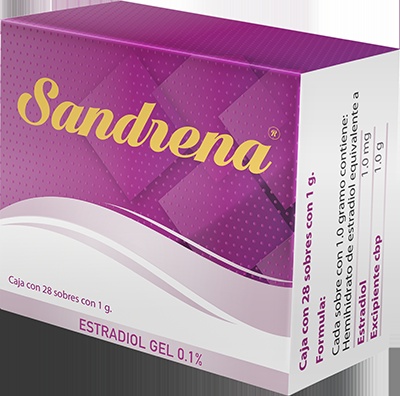
- Kraj rejestracji
- Postać farmaceutycznaGel, 0.1%
- Kod ATCG03CA03
- Substancja czynna
- Wymaga receptyTak
- Producent
- Te treści mają charakter wyłącznie informacyjny i nie zastępują konsultacji lekarskiej.
- Zamienniki SANDRENAPostać farmaceutyczna: Transdermal patch, 25 MICROGRAMS/24 HOURSSubstancja czynna: estradiolProducent: EXELTIS ITALIA S.R.L.Wymaga receptyPostać farmaceutyczna: Transdermal patch, 25 MCGSubstancja czynna: estradiolProducent: Merus Labs Luxco II S.a.r.l.Wymaga receptyPostać farmaceutyczna: Gel, <0.1%Substancja czynna: estradiolProducent: THERAMEX IRELAND LIMITEDWymaga recepty
Odpowiedniki SANDRENA w innych krajach
Leki z tą samą substancją czynną dostępne w innych krajach.
Odpowiednik SANDRENA w Hiszpania
Odpowiednik SANDRENA w Polska
Odpowiednik SANDRENA w Ukraina
Lekarze online w sprawie SANDRENA
Omów stosowanie SANDRENA, bezpieczeństwo i ocenę zasadności recepty zgodnie z obowiązującymi przepisami.


Uzyskaj receptę na SANDRENA online
Wypełnij 2-minutowy formularz
Opisz swoje objawy, historię choroby i lek, o który prosisz.
Wybierz lekarza lub pozwól nam przydzielić
Wybierz specjalistę lub dopasujemy Cię do najbliższego dostępnego lekarza.
Lekarz analizuje Twój przypadek
Zazwyczaj w ciągu 30 minut. Może zadawać dodatkowe pytania przez czat.
Odbierz w dowolnej aptece
Recepta elektroniczna wysłana na Twój e-mail — ważna w całej Polsce.
Często zadawane pytania
SANDRENA wymaga recepty w Włochy. Możesz skonsultować się z lekarzem online, aby sprawdzić, czy ten lek może być odpowiedni w Twojej sytuacji.
Substancją czynną w SANDRENA jest estradiol. Informacja ta pomaga rozpoznać leki o tym samym składzie, ale pod różnymi nazwami handlowymi.
SANDRENA jest produkowany przez ORION CORPORATION. Nazwy handlowe i opakowania mogą się różnić w zależności od dystrybutora.
Lekarze, tacy jak Lekarze rodzinni, Psychiatrzy, Dermatolodzy, Kardiolodzy, Endokrynolodzy, Gastroenterolodzy, Pulmonolodzy, Nefrolodzy, Reumatolodzy, Hematolodzy, Zakaźnicy, Alergolodzy, Geriatrzy, Pediatrzy, Onkolodzy, mogą ocenić, czy stosowanie SANDRENA jest odpowiednie w Twoim przypadku, w zależności od sytuacji klinicznej i lokalnych przepisów. Możesz umówić konsultację online, aby omówić objawy i możliwe dalsze kroki.
Polska posiada dobrze rozwiniętą infrastrukturę ochrony zdrowia w dużych miastach, takich jak Warszawa, Kraków, Wrocław i Gdańsk. Apteki są łatwo dostępne i działają zgodnie z obowiązującymi przepisami, zapewniając dostęp do leków na receptę.
Możesz kupić SANDRENA w Warszawie, Krakowie, Wrocławiu lub Gdańsku w każdej aptece, posiadając ważną receptę.
Aby uzyskać receptę, możesz skorzystać z Oladoctor:
Inne leki zawierające tę samą substancję czynną (estradiol) to m.in. DERMESTRIL, ESTRADERM MX, ESTREVA. Mogą one różnić się nazwą handlową lub postacią, ale zawierają ten sam składnik terapeutyczny. Przed zmianą lub rozpoczęciem nowego leku skonsultuj się z lekarzem.
