



RIZEN 5 mg Tabletka

Ocena recepty online
Lekarz przeanalizuje Twój przypadek i zdecyduje, czy wystawienie recepty jest medycznie uzasadnione.

Porozmawiaj z lekarzem o tym leku
Omów swoje objawy i opcje leczenia podczas szybkiej konsultacji online.



Jak stosować RITSEN
Treść ulotki
RIZEN 10 mg/ml oral drops, solution
clotiazepam
Read this leaflet carefully before taking this medicine as it contains
important information for you.
- Keep this leaflet. You may need to read it again.
- If you have any questions, ask your doctor or pharmacist.
- This medicine has been prescribed for you only. Do not pass it on to others, even if they have the same symptoms as you, as it may be harmful.
- If you get any side effects, even those not listed in this leaflet, tell your doctor or pharmacist. See section 4.
Contents of this leaflet:
- 1. What Rizen is and what it is used for
- 2. What you need to know before you take Rizen
- 3. How to take Rizen
- 4. Possible side effects
- 5. How to store Rizen
- 6. Contents of the pack and other information
1. What is RIZEN and what it is used for
Rizen contains the active ingredient clotiazepam which belongs to a group of medicines called
benzodiazepines.
Rizen is used to treat anxiety, tension and related disorders.
This medicine is also indicated for the treatment of insomnia. All benzodiazepines are used
only if the problem is severe enough to be disabling or to cause serious discomfort to those who suffer from it.
2. What you need to know before you take RIZEN
Do not take Rizen
- if you are allergic to the active ingredient, to other benzodiazepines or thienodiazepines or to any of the other ingredients of this medicine (listed in section 6)
- if you suffer from myasthenia gravis, a condition in which the muscles are very weak
- if you suffer from severe breathing difficulties
- if you suffer from severe liver problems
- if you suffer from a sleep disorder caused by partial or complete blockage of the airways during sleep (obstructive sleep apnea syndrome)
- if you suffer from a condition of the eye called narrow-angle glaucoma, characterized by high pressure inside the eye.
Warnings and precautions
Talk to your doctor before using Rizen. The doctor will need to pay particular attention:
- if you have liver, kidney or heart problems as the dose may need to be adjusted
- if you have a history of alcohol or drug abuse
- if you suffer from depression or psychiatric disorders
- if you suffer from epilepsy
- if you are elderly
- if you suffer from brain disorders, including disorders of the blood vessels of the brain
- if you have chronic respiratory problems
- if you feel intensely tired (asthenia).
Elderly patients:
Talk to your doctor or pharmacist before taking Rizen if you are over 65 years old. This is because the
elderly are more sensitive to side effects such as drowsiness, dizziness and
muscle weakness. There is also an increased risk of falls which can cause serious injury
Other important information
Rizen, taken for several weeks, may become less effective. If you notice that the medicine becomes
less effective, tell your doctor.
The use of medicines like Rizen can cause physical and psychological dependence. The risk increases with
increasing dosage and with the prolongation of the duration of treatment and is greater in patients
with a history of alcohol or drug abuse. For this reason, treatment should be as short as
possible.
The dosage of Rizen must be reduced gradually to avoid the “withdrawal syndrome”,
characterized by unpleasant side effects (see section 3, “If you stop taking Rizen”).
You may experience amnesia (total or partial memory loss) during treatment with Rizen.
To avoid this, it is important that you have uninterrupted sleep of 7-8 hours (see section 4 “Possible
side effects”).
Effects such as agitation, restlessness, hyperactivity, aggression, irritation,
nightmares or hallucinations (“psychiatric paradoxical reaction”) may occur. If you experience these effects, treatment should
be discontinued and you should contact your doctor. These reactions are more common in children and the
elderly.
Children and adolescents
Rizen should not be used in children under the age of 6 years.
In children over 6 years of age, Rizen may only be administered after careful
assessment of the need for treatment and the duration of treatment should be as short as
possible.
Other medicines and RIZEN
Tell your doctor or pharmacist if you are taking, have recently taken or may take
any other medicines. In particular, tell your doctor if you are taking:
- medicines that depress brain activity such as antipsychotics, hypnotics, anxiolytics/sedatives, antidepressants (such as drugs called MAO inhibitors), analgesics, narcotics, antiepileptics, anesthetics or sedative antihistamines, as Rizen may increase the sedative effect of these medicines
- theophylline (used to treat asthma and lung problems), because it may have an effect on the effectiveness of Rizen.
- the concomitant use of Rizen and opioids (medicines for the treatment of severe pain, for substitution therapy and some medicines to calm the cough) increases the risk of drowsiness, breathing difficulties (respiratory depression), coma and life-threatening events. For this reason, concomitant use should only be considered when other treatments cannot be used.
However, if your doctor prescribes Rizen together with opioids, the doctor must limit the dose and the
duration of concomitant therapy.
Tell your doctor if you are taking opioid medicines and strictly follow your doctor's recommendations for the dose. It may be helpful to tell friends or relatives to pay attention to the signs
and symptoms reported above. Contact your doctor if you notice these symptoms.
RIZEN and alcohol
Avoid drinking alcohol while taking Rizen, as alcohol can increase the sedative effect of
RIZEN.
Pregnancy, breastfeeding and fertility
If you are pregnant, suspect or are planning a pregnancy, or if you are breastfeeding with
breast milk, ask your doctor for advice before taking this medicine.
Avoid taking Rizen during the first trimester of pregnancy. After this period, you may take the
medicine only with caution and only if the expected benefits outweigh the risks.
If you take this medicine during late pregnancy or during childbirth, your newborn baby may be less active than other babies, have a low body temperature or have
difficulty breathing.
If you take this medicine regularly during late pregnancy, your baby may
develop withdrawal symptoms after birth.
Rizen passes into breast milk and therefore it is recommended not to breastfeed during
treatment.
Driving and operating machinery
Rizen can cause sedation, memory loss, loss of concentration and reduced muscle function, which can alter the ability to drive vehicles and operate machinery safely. If
the duration of sleep has been insufficient, these effects may be more pronounced.
Do not drive or operate machinery if these effects affect you.
RIZEN oral drops contains alcohol
Rizen oral drops contains 8.8 mg of alcohol (ethanol) in each drop, which is equivalent to 440 mg of
alcohol in the dose of 20 mg (50 drops). The amount in 20 mg is equivalent to 11 mL of beer or 4.4 mL
of wine.
The amount of alcohol in this medicine does not appear to have an effect on adults and adolescents and its
effects in children are not evident. Some effects may occur in young children, for
example feeling sleepy.
The alcohol in this medicine may alter the effects of other medicines. Talk to your doctor or
pharmacist if you are taking other medicines.
If you are pregnant or breastfeeding, talk to your doctor or pharmacist before taking this
medicine.
If you have an alcohol dependence, talk to your doctor before taking this medicine.
RIZEN oral drops contains sodium (sodium saccharin)
Rizen oral drops contains less than 1 mmol (23 mg) of sodium per dose, i.e. essentially ‘sodium free’.
3. How to take RIZEN
Take this medicine following exactly what is reported in this leaflet or the instructions of your doctor or pharmacist. If you have doubts, consult your doctor or pharmacist.
Adults
The recommended dose is 12-15 drops one to three times a day.
Young adults and patients suffering from severe discomfort may take 5 to 30 mg of
Rizen per day, according to the doctor's judgement.
In elderly patients and in mild cases, the recommended dose is 5 to 15 mg of Rizen
per day, according to the doctor's judgement.
To induce sleep, the recommended dose is 10 to 20 mg of Rizen in the evening, before going to bed.
Use in children
The recommended dose in children over 6 years of age is 0.2-0.6 mg / kg per day, that is
5 to 15 drops per day divided into 2-3 administrations (5 drops = 2 mg of clotiazepam).
In all cases, the treatment period must be as short as possible. The doctor will adjust the dose and the
duration of treatment according to their age and conditions.
The doctor must consider a reduction of the dose in case of other pathologies (see
paragraph 2 “Warnings and precautions”).
Anxiety, tension and related disorders
The total duration of treatment is generally a maximum of 8-12 weeks, including a period of
gradual dose reduction.
Insomnia
The duration of treatment is generally from a few days to 2 weeks, up to a maximum of
4 weeks. Your treatment will start at the minimum recommended dose and should not exceed the
maximum dose.
Instructions for opening the bottle
The bottle is closed with a child-resistant safety cap. To open, press and
simultaneously unscrew the cap. To close: press the cap and
simultaneously screw it on tightly.
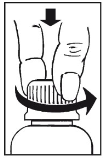
- 2) To close after withdrawal, push the cap down firmly and simultaneously screw it on tightly
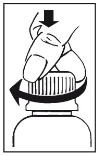
- 3) To ensure that the mechanism has engaged correctly, rotate the cap counterclockwise without pressing and verify the inability to open the bottle
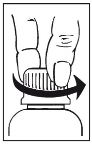
If you take more RIZEN than you should
If you or someone else has taken more drops of RIZEN than you should, contact your doctor or go to the nearest
hospital, bringing the package with you if possible.
The symptoms of overdose vary depending on the amount taken, and include feeling
dizzy, confused and lethargic. In more severe cases, symptoms may include loss
of muscle coordination (ataxia), decreased muscle tone, decreased blood pressure,
difficulty breathing, coma (rare) and death (very rare).
If you forget to take RIZEN
Do not take a double dose to make up for a missed dose.
If you stop taking RIZEN
Do not stop taking RIZEN without consulting your doctor. Treatment with RIZEN must be reduced
gradually (tapered off).
If you stop taking RIZEN abruptly, your original symptoms may reappear more strongly than
before and you may experience withdrawal syndrome, characterized by headache, muscle pain,
extreme anxiety, tension, restlessness, confusion and irritability. In severe cases, the following may occur:
derealization (altered perception of the external world), depersonalization (altered perception of
self), hypersensitivity and intolerance to sounds, numbness and tingling of the extremities, hypersensitivity
to light, noise and physical contact, hallucinations or seizures.
If you have any doubts about the use of this medicine, ask your doctor or pharmacist.
4. Possible side effects
Like all medicines, this medicine can cause side effects, although not everybody gets them.
If you experience any of the side effects described below, stop taking Rizen and
contact your doctor (these effects are more likely to occur in children and the elderly)
(see section 2 “Warnings and precautions”):
- agitation
- irritability
- aggressiveness
- delirium
- violent rage
- nightmares
- hallucinations
- personality changes
The frequency of side effects depends on your age, dosage and duration of
treatment.
More common side effects at the beginning of treatment
- headache, drowsiness and drowsiness upon waking (when the medicine is taken late in the evening), confusion, lethargy (pathological deep sleep), loss of muscle coordination (ataxia)
- dizziness
- dry mouth (xerostomia)
- decreased muscle tone
- emotional numbness
- arthralgia
- fatigue
Other possible side effects
- low blood pressure (hypotension)
- fainting (syncope)
- uncoordinated gait
- tremor
- vertigo
- tinnitus
- numbness of the limbs and lips
- double vision (diplopia) and visual disturbances
- confusion (in the elderly), memory disorders, behavioral changes, symptoms of paranoia
- breathing problems (respiratory depression in patients with chronic respiratory problems)
- edema
- nausea, vomiting
- increased or decreased appetite
- constipation
- impaired liver function, visible with yellowish discoloration of the skin and mucous membranes (jaundice) and altered transaminase levels
- tachycardia
- postural hypotension
- allergic skin reactions
- erythema
- urticaria
- myalgia,
- muscle weakness
- changes in sexual desire
- menstrual and ovulation disorders
- increased breast volume in males (gynecomastia)
- depression
- sedation
- asthenia, malaise
- anaphylactic reactions (which generally manifest with facial swelling, flushing, difficulty breathing and dizziness)
- decreased white blood cells in the blood (leukopenia)
The use of medicines like Rizen can cause physical and psychological dependence. The risk increases with
increasing dosage and lengthening of the treatment duration and is greater in patients
with a history of alcohol or drug abuse. For this reason, treatment should be as short as
possible (see section 2 “Warnings and precautions” and section 3 “if you stop taking Rizen”).
Discontinuation of therapy can cause seizures, delirium, tremors, insomnia, anxiety, delusions and
hallucinations (see section 2 “Warnings and precautions” and section 3 “if you stop taking
Rizen”).
You may experience amnesia (total or partial memory loss) during treatment with Rizen. The
risk increases with increasing dose. To avoid this, it is important to have uninterrupted sleep
of 7-8 hours (see section 2 “Warnings and precautions”).
Reporting of side effects
If you experience any side effect, including those not listed in this leaflet, tell your
doctor or pharmacist. You can also report side effects directly through the national reporting system at www.aifa.gov.it/content/segnalazioni-reazioni-avverse .
By reporting side effects you can help provide more information on the safety of
this medicine.
5. How to store RIZEN GOCCE ORALI
Keep this medicine out of the sight and reach of children.
Do not use this medicine after the expiry date which is stated on the pack after SCAD: .
The expiry date refers to the last day of that month.
Keep this medicine protected from light. Store at a temperature not exceeding 25 ° C.
The product must be used within 6 months of first opening. Unused product must be
discarded.
Do not dispose of any medicine in wastewater or household waste. Ask your pharmacist how to
dispose of medicines you no longer use. This will help protect the environment.
6. Contents of the pack and other information
What Rizen contains
- The active ingredient is clotiazepam; 100 mL of solution contains 1 g of clotiazepam.
- The other ingredients are: alcohol, sodium saccharin, raspberry aroma, cherry aroma, quinoline yellow (E 104), macrogol 400.
Description of the appearance of Rizen and contents of the pack
Rizen oral drops is a solution in a bottle with a dropper with child-resistant safety closure containing 20 mL of solution.
Marketing authorisation holder and manufacturer
GRÜNENTHAL ITALIA S.r.l.
Via Carlo Bo, 11 - 20143 Milano
Manufacturer
FARMACEUTICI FORMENTI S.p.A.
Manufacturing site: Origgio (VA)
Via di Vittorio, 2 (Italy)
RIZEN 5 mg tablets, 10 mg tablets
clotiazepam
Read this leaflet carefully before taking this medicine because it contains important information for you.
- Keep this leaflet. You may need to read it again.
- If you have any questions, ask your doctor or pharmacist.
- This medicine has been prescribed for you only. Do not pass it on to others, even if their symptoms are the same as yours, as it could be harmful.
- If any side effects occur, including those not listed in this leaflet, tell your doctor or pharmacist. See section 4.
Contents of this leaflet:
- 1. What Rizen is and what it is used for
- 2. What you need to know before you take Rizen
- 3. How to take Rizen
- 4. Possible side effects
- 5. How to store Rizen
- 6. Contents of the pack and other information
1. What is RIZEN and what is it used for
Rizen contains the active ingredient clotiazepam which belongs to a group of medicines called
benzodiazepines.
Rizen is used to treat anxiety, tension and related disorders.
This medicine is also indicated for the treatment of insomnia. All benzodiazepines are used
only if the problem is severe enough to be disabling or to cause serious distress to those who suffer from it.
2. What you need to know before you take RIZEN
Do not take Rizen
- if you are allergic to the active ingredient or to any of the other ingredients of this medicine (listed in section 6).
- if you suffer from myasthenia gravis, a condition in which the muscles are very weak
- if you suffer from severe breathing difficulties
- if you suffer from severe liver problems
- if you suffer from a sleep disorder caused by partial or complete blockage of the airways during sleep (obstructive sleep apnea syndrome)
- if you suffer from a condition of the eye called narrow-angle glaucoma, characterized by high pressure inside the eye.
Rizen should not be used in children under 6 years of age.
Warnings and precautions
Talk to your doctor before using Rizen. The doctor will need to pay particular attention:
- if you have liver, kidney or heart problems as the dose may need to be adjusted
- if you have a history of alcohol or drug abuse
- if you suffer from depression or psychiatric disorders
- if you suffer from epilepsy
- if you are elderly
- if you suffer from brain disorders, including disorders of the blood vessels of the brain
- if you have chronic respiratory problems
- if you experience a feeling of intense fatigue (asthenia).
Elderly patients:
talk to your doctor or pharmacist before taking Rizen if:
you are over 65 years old. This is because the elderly are more sensitive to adverse reactions
such as drowsiness, dizziness and muscle weakness. There is also an increased risk of falls which can
cause serious injury.
Other important information
Rizen, taken for several weeks, may become less effective. If you notice that the medicine becomes
less effective, tell your doctor.
The use of medicines like Rizen can cause physical and psychological dependence. The risk increases with
increasing dosage and with prolongation of treatment and is greater in patients
with a history of alcohol or drug abuse. For this reason, treatment should be as short as
possible.
The dosage of Rizen must be reduced gradually to avoid the “withdrawal syndrome”,
characterized by unpleasant side effects (see section 3, “If you stop taking Rizen”).
You may experience amnesia (total or partial memory loss) during treatment with Rizen.
To avoid this, it is important that you have uninterrupted sleep of 7-8 hours (see section 4 “Possible
side effects”).
Effects such as agitation, restlessness, hyperactivity, aggression, irritation,
nightmares or hallucinations (“psychiatric paradoxical reaction”) may occur. If you experience these effects, treatment should
be discontinued and you should contact your doctor. These reactions are more common in children and the
elderly.
Children and adolescents
Rizen should not be used in children under 6 years of age.
In children over 6 years of age, Rizen can only be administered after careful
assessment of the need for treatment and the duration of treatment should be as short as
possible.
Other medicines and RIZEN
Tell your doctor or pharmacist if you are taking, have recently taken or might take
any other medicines, even those available without a prescription. In particular, tell your
doctor if you are taking:
- medicines that depress brain activity such as antipsychotics, hypnotics, anxiolytics/sedatives, antidepressants (such as drugs called MAO inhibitors), analgesics, narcotics, antiepileptics, anesthetics or sedative antihistamines, as Rizen may increase the sedative effect of these medicines
- theophylline (used to treat asthma and lung problems), because it may have an effect on the effectiveness of Rizen
- The concomitant use of Rizen and opioids (medicines for the treatment of severe pain, for substitution therapy and some medicines to suppress cough) increases the risk of drowsiness, breathing difficulties (respiratory depression), coma and life-threatening events. For this reason, concomitant use should only be considered when other treatments cannot be used.
However, if your doctor prescribes Rizen together with opioids, the doctor must limit the dose and
duration of concomitant therapy.
Tell your doctor if you are taking opioid medicines and strictly follow your doctor's recommendations for the dose. It may be helpful to inform friends or relatives to pay attention to the signs
and symptoms reported above. Contact your doctor if you notice these symptoms.
Rizen and alcohol
Avoid drinking alcohol while taking Rizen tablets, as alcohol can increase the sedative
effect of Rizen.
Pregnancy, breastfeeding and fertility
If you are pregnant, suspect you may be pregnant or are planning to become pregnant, or if you are breastfeeding
with breast milk, ask your doctor for advice before taking this medicine.
Avoid taking Rizen during the first trimester of pregnancy. After this period, you can take the
medicine only with caution and only if the expected benefits outweigh the risks.
If you take this medicine during late pregnancy or during childbirth, your newborn baby may be less active than other babies, have a
low body temperature or have
difficulty breathing.
If you take this medicine regularly during late pregnancy, your baby may
develop withdrawal symptoms after birth.
Rizen passes into breast milk and therefore it is recommended not to breastfeed during
treatment.
Driving and using machines
Rizen can cause sedation, memory loss, loss of concentration and reduced muscle function, which can impair your ability to drive vehicles and operate machinery safely. If
the duration of sleep has been insufficient, these effects may be more pronounced.
Do not drive or operate machinery if these effects affect you.
Rizen 5 mg and 10 mg tablets contains lactose
If your doctor has diagnosed you with intolerance to certain sugars, contact him before taking
this medicine.
Rizen 5 mg contains Sunset Yellow (E 110)
It may cause allergic reactions.
3. How to take RIZEN
Take this medicine following exactly as indicated in this leaflet or as instructed by your doctor or pharmacist. If you have any doubts, consult your doctor or pharmacist.
Adults
The recommended dose is 1 tablet one to three times a day.
Young adults and patients suffering from severe discomfort may take from 5 to 30 mg of
RIZEN per day, at the doctor’s discretion.
In elderly patients and in mild cases, the recommended dose is from 5 to 15 mg of RIZEN per day,
at the doctor’s discretion.
To induce sleep, the recommended dose is from 10 to 20 mg of RIZEN in the evening, before going to bed.
In all cases, the treatment period should be as short as possible. The doctor will adjust your
dose and the duration of treatment according to your age and your condition.
The doctor should consider a dose reduction if you suffer from other illnesses (see
section 2 “Warnings and precautions”).
Anxiety, tension and related disorders
The total duration of treatment is generally a maximum of 8-12 weeks, including a period of
gradual dose reduction.
Insomnia
The duration of treatment is generally from a few days to 2 weeks, up to a maximum of
4 weeks. Treatment should begin with the lowest recommended dose and should not exceed the maximum dose.
Use in children
In children, the use of RIZEN oral drops is recommended.
If you take more RIZEN than you should
If you or someone else has taken more RIZEN tablets than you should, contact your doctor or go to the nearest
hospital, bringing the packaging with you if possible.
The symptoms of overdose vary depending on the amount taken, and include feeling
dizzy, confused and lethargic. In more serious cases, symptoms may include loss of
muscle coordination (ataxia), decreased muscle tone, low blood pressure, difficulty breathing, coma (rare) and death (very rare).
If you forget to take RIZEN
Do not take a double dose to make up for a missed tablet.
If you stop taking RIZEN
Do not stop taking RIZEN without consulting your doctor. Treatment with RIZEN must be reduced
gradually (discontinued in a decreasing manner).
If you stop taking RIZEN abruptly, your original symptoms may reappear more strongly than
before and withdrawal syndrome may occur, characterized by headache, muscle pain,
extreme anxiety, tension, restlessness, confusion and irritability. In severe cases, the following may occur: de
realization (altered perception of the external world), depersonalization (altered perception of self),
hypersensitivity and intolerance to sounds, numbness and tingling of the extremities, hypersensitivity to
light, noise and physical contact, hallucinations or seizures.
If you have any questions about the use of this medicine, ask your doctor or pharmacist.
4. Possible side effects
Like all medicines, this medicine can cause side effects, although not everyone will experience them.
If you experience any of the side effects described below, stop taking Rizen and
consult your doctor (these effects are more likely to occur in children and the elderly)
(see section 2 “Warnings and precautions”):
- agitation
- irritability
- aggressiveness
- delirium
- violent rage
- nightmares
- hallucinations
- personality changes
The frequency of side effects depends on your age, dosage and duration of
treatment.
Side effects more frequent at the beginning of treatment
- headache, drowsiness and drowsiness upon waking (when the medicine is taken late in the evening), confusion, lethargy (pathological deep sleep), loss of muscle coordination (ataxia)
- dizziness
- dry mouth (xerostomia)
- decreased muscle tone
- emotional numbness
- arthralgia
- fatigue
Other possible side effects
- low blood pressure (hypotension)
- fainting (syncope)
- uncoordinated gait
- tremor
- vertigo
- tinnitus
- numbness of the limbs and lips
- double vision (diplopia) and visual disturbances
- confusion (in the elderly)
- memory disorders
- behavioral changes
- paranoid symptoms
- breathing problems (respiratory depression in patients with chronic respiratory problems)
- edema
- nausea
- vomiting
- increased or decreased appetite
- constipation
- alteration of liver function, visible with yellowish discoloration of the skin and mucous membranes (jaundice) and alteration of transaminase values
- tachycardia
- postural hypotension
- allergic skin reactions
- erythema
- urticaria
- myalgia
- muscle weakness
- changes in sexual desire
- menstrual and ovulation disorders
- increased breast volume in males (gynecomastia)
- depression
- sedation
- asthenia, malaise
- anaphylactic reactions (which generally manifest with facial swelling, flushing, difficulty breathing and dizziness)
- decreased white blood cells in the blood (leukopenia)
The use of medicines like Rizen can cause physical and psychological dependence. The risk increases with
increasing dosage and lengthening of the treatment duration and is greater in patients
with a history of alcohol or drug abuse. For this reason, treatment should be as short as
possible (see section 2 “Warnings and precautions” and section 3 “if you stop treatment
with Rizen”).
Discontinuation of therapy can cause seizures, delirium, tremors, insomnia, anxiety, delusions and
hallucinations (see section 2 “Warnings and precautions” and section 3 “if you stop the
treatment with Rizen”).
You may experience amnesia (total or partial memory loss) during treatment with Rizen. The
risk increases with increasing dose. To avoid this, it is important to have uninterrupted sleep
of 7-8 hours (see section 2 “Warnings and precautions”).
Reporting of side effects
If you experience any side effect, including those not listed in this leaflet, please inform
your doctor or pharmacist. You can also report side effects directly through the national reporting system at www.aifa.gov.it/content/segnalazioni-reazioni-avverse
By reporting side effects you can help provide more information on the safety of
this medicine.
5. How to store RIZEN
Keep this medicine out of the sight and reach of children.
Do not use this medicine after the expiry date which is stated on the pack after EXP:.
The expiry date refers to the last day of that month.
Store this medicine protected from light.
Rizen 10 mg tablets: store at a temperature not exceeding 25 ° C
Do not dispose of any medicine in waste water or household waste. Ask your pharmacist how
to dispose of medicines you no longer use. This will help protect the environment.
6. Contents of the pack and other information
What Rizen contains
Rizen 5 mg tablets:
- The active ingredient is clotiazepam. One tablet contains 5 mg of clotiazepam.
- The other ingredients are: lactose monohydrate, corn starch, microcrystalline cellulose, povidone, magnesium stearate, Quinoline Yellow (E 104) and Sunset Yellow(E 110).
Rizen 10 mg tablets:
- The active ingredient is clotiazepam. One tablet contains 10 mg of clotiazepam.
- The other ingredients are: lactose monohydrate, corn starch, microcrystalline cellulose, povidone, magnesium stearate, indigotine (E 132).
Description of the appearance of Rizen and contents of the pack
Rizen 5 mg tablets are available in packs of 40 tablets.
Rizen 10 mg tablets are available in packs of 30 tablets.
Marketing Authorisation Holder and Manufacturer
GRŰNENTHAL ITALIA S.r.l.
Via Carlo Bo, 11-20143 Milano
Manufacturer
FARMACEUTICI FORMENTI S.p.A.
Manufacturing site: Origgio (VA)
Via di Vittorio, 2 (Italy)

Nie jesteś pewien, czy ten lek jest odpowiedni dla ciebie?
Omów swoje objawy i leczenie z lekarzem online.

Zacząłeś przyjmować lek i masz pytania?
Omów swoje objawy i leczenie z lekarzem online.
- Kraj rejestracji
- Postać farmaceutycznaTablet, 5 MG
- Kod ATCN05BA21
- Substancja czynna
- Wymaga receptyTak
- Producent
- Te treści mają charakter wyłącznie informacyjny i nie zastępują konsultacji lekarskiej.
- Zamienniki RITSENPostać farmaceutyczna: Tablet, 5 MGSubstancja czynna: clotiazepamProducent: FARMAKA S.R.L.Wymaga receptyPostać farmaceutyczna: Tablet, <0.25 mgSubstancja czynna: alprazolamProducent: LABORATORI BALDACCI S.P.A.Wymaga receptyPostać farmaceutyczna: Tablet, 0.25 MGSubstancja czynna: alprazolamProducent: AUROBINDO PHARMA (ITALIA) S.R.L.Wymaga recepty
Odpowiedniki RITSEN w innych krajach
Leki z tą samą substancją czynną dostępne w innych krajach.
Odpowiednik RITSEN w Ukraina
Odpowiednik RITSEN w Hiszpania
Lekarze online w sprawie RITSEN
Omów stosowanie RITSEN, bezpieczeństwo i ocenę zasadności recepty zgodnie z obowiązującymi przepisami.







Uzyskaj receptę na RITSEN online
Wypełnij 2-minutowy formularz
Opisz swoje objawy, historię choroby i lek, o który prosisz.
Wybierz lekarza lub pozwól nam przydzielić
Wybierz specjalistę lub dopasujemy Cię do najbliższego dostępnego lekarza.
Lekarz analizuje Twój przypadek
Zazwyczaj w ciągu 30 minut. Może zadawać dodatkowe pytania przez czat.
Odbierz w dowolnej aptece
Recepta elektroniczna wysłana na Twój e-mail — ważna w całej Polsce.
Często zadawane pytania
RITSEN wymaga recepty w Włochy. Możesz skonsultować się z lekarzem online, aby sprawdzić, czy ten lek może być odpowiedni w Twojej sytuacji.
Substancją czynną w RITSEN jest clotiazepam. Informacja ta pomaga rozpoznać leki o tym samym składzie, ale pod różnymi nazwami handlowymi.
RITSEN jest produkowany przez GRUNENTHAL ITALIA S.R.L.. Nazwy handlowe i opakowania mogą się różnić w zależności od dystrybutora.
Lekarze, tacy jak Lekarze rodzinni, Psychiatrzy, Dermatolodzy, Kardiolodzy, Endokrynolodzy, Gastroenterolodzy, Pulmonolodzy, Nefrolodzy, Reumatolodzy, Hematolodzy, Zakaźnicy, Alergolodzy, Geriatrzy, Pediatrzy, Onkolodzy, mogą ocenić, czy stosowanie RITSEN jest odpowiednie w Twoim przypadku, w zależności od sytuacji klinicznej i lokalnych przepisów. Możesz umówić konsultację online, aby omówić objawy i możliwe dalsze kroki.
Polska posiada dobrze rozwiniętą infrastrukturę ochrony zdrowia w dużych miastach, takich jak Warszawa, Kraków, Wrocław i Gdańsk. Apteki są łatwo dostępne i działają zgodnie z obowiązującymi przepisami, zapewniając dostęp do leków na receptę.
Możesz kupić RITSEN w Warszawie, Krakowie, Wrocławiu lub Gdańsku w każdej aptece, posiadając ważną receptę.
Aby uzyskać receptę, możesz skorzystać z Oladoctor:
Inne leki zawierające tę samą substancję czynną (clotiazepam) to m.in. TIENOR, ALPRATSIG, ALPRATSOLAM AUROBINDO ITALIA. Mogą one różnić się nazwą handlową lub postacią, ale zawierają ten sam składnik terapeutyczny. Przed zmianą lub rozpoczęciem nowego leku skonsultuj się z lekarzem.
