



PHEBURANE 483 mg /G Granulki

Ocena recepty online
Lekarz przeanalizuje Twój przypadek i zdecyduje, czy wystawienie recepty jest medycznie uzasadnione.

Porozmawiaj z lekarzem o tym leku
Omów swoje objawy i opcje leczenia podczas szybkiej konsultacji online.



Jak stosować PEBURANE
Treść ulotki
PHEBURANE 483 mg/g granulato
Sodium phenylbutyrate
Read this leaflet carefully before you start taking this medicine as it contains
important information for you.
- Keep this leaflet. You may need to read it again.
- If you have any questions, ask your doctor or pharmacist.
- This medicine has been prescribed for you only. Do not pass it on to others, even if their symptoms are the same as yours, as it may be harmful.
- If you get any side effects, even those not listed in this leaflet, tell your doctor or pharmacist. See section 4.
Contents of this leaflet:
- 1. What PHEBURANE is and what it is used for
- 2. What you need to know before you take PHEBURANE
- 3. How to take PHEBURANE
- 4. Possible side effects
- 5. How to store PHEBURANE
- 6. Contents of the pack and other information
1. What is PHEBURANE and what is it used for
PHEBURANE contains the active ingredient sodium phenylbutyrate, used for the treatment of
patients of all ages affected by urea cycle disorders. This rare type of disorder is due to a
deficiency of certain liver enzymes necessary to eliminate waste nitrogen in the form of ammonia.
Nitrogen is a constituent element of proteins, which represent an essential part of the
foods we eat. When the body metabolizes proteins following ingestion, there is an
accumulation of waste nitrogen, in the form of ammonia, because the body is unable to
eliminate it. Ammonia is particularly toxic to the brain and, in severe cases, can lead to
lowering of the levels of consciousness up to coma.
This medicine helps the body eliminate waste nitrogen by reducing the amount of ammonia
present in the body. However, PHEBURANE must be taken together with a diet with a
reduced protein content, specifically designed for you by the doctor and dietitian. You must follow
this diet carefully.
2. What you need to know before taking PHEBURANE
Do not take PHEBURANE:
- if you are allergic to sodium phenylbutyrate or any of the other ingredients of this medicine (listed in section 6);
- if you are pregnant;
- if you are breastfeeding.
Warnings and precautions
Talk to your doctor or pharmacist before taking PHEBURANE:
- if you have congestive heart failure (a form of heart disease in which the heart is unable to pump a sufficient amount of blood through the body) or reduced kidney function;
- if you have reduced liver or kidney function, as PHEBURANE is eliminated from the body through the liver and kidneys.
PHEBURANE does not completely prevent the occurrence of an acute excess of
ammonia in the blood (hyperammonemia), a condition that generally constitutes
a medical emergency. If this condition occurs, symptoms such as nausea,
vomiting and confusion develop, which require urgent medical attention.
If you need to have laboratory tests, it is important that you remember to tell your doctor that you are taking
PHEBURANE, as sodium phenylbutyrate may interfere with certain laboratory test results (such as, for example, electrolyte or protein levels or liver function tests).
If in doubt, talk to your doctor or pharmacist.
Other medicines and PHEBURANE
Tell your doctor or pharmacist if you are taking, have recently taken or might take
any other medicine.
It is particularly important that you inform your doctor if you are taking medicines containing:
- valproate (an anti-epileptic medicine),
- haloperidol (used in certain psychotic disorders),
- corticosteroids (medicines used to relieve inflamed areas of the body),
- probenecid (for the treatment of hyperuricemia, i.e. high levels of uric acid in the blood, associated with gout).
These medicines can alter the effect of PHEBURANE and you will need to have more frequent blood tests. If you are not sure whether the medicines you are taking contain these
substances, check with your doctor or pharmacist.
Pregnancy and breastfeeding
Do not use PHEBURANE if you are pregnant, as this medicine can harm the fetus.
If you are a woman of childbearing potential, you must use reliable contraceptive methods during treatment with PHEBURANE. Talk to your doctor for more information.
Do not use PHEBURANE if you are breastfeeding, as this medicine can pass into
breast milk and harm the newborn.
Driving and using machines
It is unlikely that PHEBURANE will affect your ability to drive vehicles and use
machinery.
PHEBURANE contains sodium and sucrose.
This medicine contains 124 mg (5.4 mmol) of sodium (the main component of table/cooking salt) per gram of granules. This is equivalent to 6.2% of the maximum recommended daily intake of sodium for an adult.
The maximum daily dose of this medicine contains 2.5 g of sodium per 20 g of granules, equal to
125% of the maximum recommended daily intake of sodium for an adult.
Talk to your doctor or pharmacist if you need 3 or more grams a day for a prolonged
period, especially if you have been advised to follow a low-salt (sodium) diet.
This medicine contains 768 mg of sucrose per gram of granules. This must be
taken into consideration if you have diabetes mellitus. If your doctor has told you that you suffer from
reduced tolerance to certain sugars, talk to your doctor before taking this
medicine.
3. How to take PHEBURANE
Always take this medicine exactly as your doctor has told you. If you have any doubts,
consult your doctor or pharmacist.
Dosage
The daily dose of PHEBURANE will be calculated based on body weight or body surface
area and adjusted according to protein tolerance and based on the diet you are following. Regular blood tests will therefore be necessary to determine the exact daily dose. Your doctor will tell you the
daily amount of granules to take.
Method of administration
PHEBURANE must be taken by mouth. Because the medicine dissolves slowly,
PHEBURANE should not be administered via gastrostomy (a tube that goes from the abdomen to the
stomach) or through a nasogastric tube (a tube that goes from the nose to the stomach).
PHEBURANE must be taken with a low-protein diet.
PHEBURANE must be taken with each meal or feeding. For young children, the frequency may be
from 4 to 6 times a day.
The doses of PHEBURANE prescribed by your doctor are expressed in grams of sodium phenylbutyrate. A calibrated measuring scoop is provided with the medicine to administer up to 3 g of
sodium phenylbutyrate at a time. Use only the provided measuring scoop to measure the dose of
PHEBURANE. The measuring scoop must not be used for other medicines.
To measure the dose:
- The lines on the measuring scoop indicate the amount of PHEBURANE in grams of sodium phenylbutyrate. Take the correct amount prescribed by your doctor.
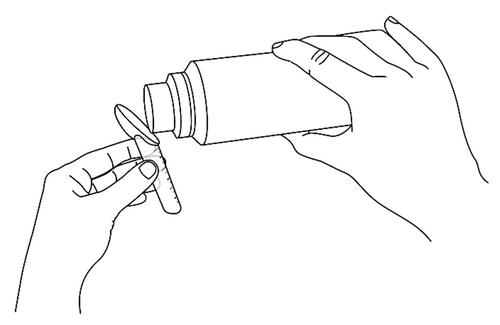
- Pour the granules directly into the measuring scoop as shown in the image (on the outer packaging and in this leaflet).
- Tap the measuring scoop once on a table to obtain a flat surface of the granules and continue to fill the measuring scoop, if necessary.
The granules can be ingested directly with liquid foods (water, fruit juices,
protein-free infant formula) or sprinkled on a spoonful of solid food (mashed potatoes or
applesauce). If the medicine is added to food, it is important that it is taken
immediately. This way the granules will not produce any taste.
You will need to use this medicine and follow a diet for life.
If you take more PHEBURANE than you should
In patients who have taken very high doses of sodium phenylbutyrate, the following have occurred:
- drowsiness, fatigue, dizziness and, less commonly, confusion,
- headache,
- altered sense of taste,
- decreased hearing,
- disorientation,
- memory problems,
- worsening of existing neurological conditions.
If any of these symptoms occur, contact your doctor or the nearest hospital emergency room immediately for supportive treatment.
If you forget to take PHEBURANE
Take a dose as soon as possible with the next meal. Make sure at least 3 hours pass between one
dose and the next. Do not take a double dose to make up for a missed dose.
If you have any questions about using this medicine, ask your doctor or pharmacist.
4. Possible side effects
Like all medicines, this medicine can cause side effects, although not everybody gets them.
If you experience persistent vomiting, seek medical advice immediately.
Very common side effects (may affect more than 1 in 10 people): irregular menstrual cycles and
cessation of menstrual cycles in women of childbearing potential. If you are sexually active and your
period stops completely, do not immediately assume that this is due to
PHEBURANE. Instead, talk to your doctor, as the absence of your period may be
caused by pregnancy (see the section above "Pregnancy and breastfeeding") or by
menopause.
Common side effects (may affect more than 1 in 100 people): changes in the number of
blood cells (red blood cells, white blood cells and platelets), changes in bicarbonate levels in the
blood, loss of appetite, depression, irritability, headache, fainting,
fluid retention (swelling), altered taste, stomach pain, vomiting, nausea, constipation, abnormal
skin odor, rash, abnormal kidney function, weight gain and altered laboratory test values.
Uncommon side effects (may affect more than 1 in 1000 people): decrease in
red blood cells due to bone marrow damage, bruising, altered heart rhythm, rectal bleeding,
stomach inflammation, gastric ulcer, inflammation of the pancreas.
Reporting of side effects
If you get any side effects, even those not listed in this leaflet, tell your doctor or pharmacist. You can also
report side effects directly through the national reporting system detailed in Annex V. By reporting side
effects you can help provide more information on the safety of this medicine.
5. How to store PHEBURANE
Keep this medicine out of the sight and reach of children.
Do not use PHEBURANE after the expiry date which is stated on the package and on the label of the
vial after Exp. The expiry date refers to the last day of the month.
After first opening, PHEBURANE must be used within 45 days.
Do not dispose of any medicine in wastewater or household waste. Ask your pharmacist how to
dispose of medicines you no longer use. This will help protect the environment.
6. Contents of the pack and other information
What PHEBURANE contains
The active ingredient is sodium phenylbutyrate.
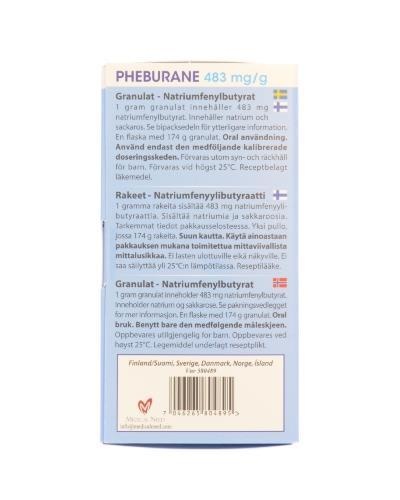
Each gram of granules contains 483 mg of sodium phenylbutyrate.
The excipients are: sugar spheres (consisting of sucrose and corn starch; see paragraph 2
"PHEBURANE contains sucrose”), hypromellose, ethylcellulose N7, macrogol 1500, povidone K25.
Description of the appearance of PHEBURANE and contents of the pack
The granules of PHEBURANE are from white to off-white in colour.
The granules are packaged in a plastic bottle with a child-resistant closure with a
desiccant.
Each bottle contains 174 g of granules.
Each box contains 1 bottle.
A calibrated measuring spoon is provided.
Marketing authorisation holder and manufacturer
Eurocept International BV
Trapgans 5
1244 RL Ankeveen
The Netherlands
For further information on this medicine, contact the local representative of the marketing
authorisation holder:
België/Belgique/Belgien
Lucane Pharma
Tél/Tel: + 33 153 868 750
[email protected]
Lietuva
FrostPharma AB
Tel: +46 775 86 80 02
[email protected]
България
Lucane Pharma
Тел.: + 33 153 868 750
[email protected]
Luxembourg/Luxemburg
Lucane Pharma
Tél/Tel: + 33 153 868 750
[email protected]
Magyarország
Lucane Pharma
Tel: + 33 153 868 750
[email protected]
Česká republika
Lucane Pharma
Tél/Tel: + 33 153 868 750
[email protected]
Malta
Lucane Pharma
Tel: + 33 153 868 750
[email protected]
Danmark
FrostPharma AB
Tlf: +45 808 20 101
[email protected]
Deutschland
Lucane Pharma
Tel: + 33 153 868 750
[email protected]
Nederland
Eurocept International BV
Tel: +31 35 528 39 57
[email protected]
Eesti
FrostPharma AB
Tel: +46 775 86 80 02
[email protected]
Norge
FrostPharma AB
Tlf: +47 815 03 175
[email protected]
Österreich
Lucane Pharma
Tel: + 33 153 868 750
[email protected]
Ελλάδα
Lucane Pharma
Τηλ: + 33 153 868 750
[email protected]
Polska
Lucane Pharma
Tel: + 33 153 868 750
[email protected]
España
Lucane Pharma
Tel: + 33 153 868 750
[email protected]
Portugal
Lucane Pharma
Tel: + 33 153 868 750
[email protected]
France
Lucane Pharma
Tél: + 33 153 868 750
[email protected]
România
Lucane Pharma
Tel: + 33 153 868 750
[email protected]
Ireland
Lucane Pharma
Tel: + 33 153 868 750
[email protected]
Hrvatska
Lucane Pharma
Tel: + 33 153 868 750
[email protected]
Slovenija
Lucane Pharma
Tel: + 33 153 868 750
[email protected]
Slovenská republika
Lucane Pharma
Tel: + 33 153 868 750
[email protected]
Ísland
FrostPharma AB
Sími: +46 775 86 80 02
[email protected]
Suomi/Finland
FrostPharma AB
Puh/Tel: +35 875 32 51 209
[email protected]
Κύπρος
Lucane Pharma
Τηλ: + 33 153 868 750
[email protected]
Italia
Lucane Pharma
Tel: + 33 153 868 750
[email protected]
Sverige
FrostPharma AB
Tel: +46 775 86 80 02
[email protected]
United Kingdom
Lucane Pharma
Tel: + 33 153 868 750
[email protected]
More detailed information on this medicine is available on the European Medicines Agency website, http://www.ema.europa.eu/ .
Also, links to other websites on rare diseases and related therapeutic treatments are provided.
Latvija
FrostPharma AB
Tel: +46 775 86 80 02
[email protected]
PHEBURANE 350 mg/ml oral solution
sodium phenylbutyrate
Read this leaflet carefully before you start to take this medicine because it contains
important information for you.
- Keep this leaflet. You may need to read it again.
- If you have any questions, ask your doctor or pharmacist.
- This medicine has been prescribed for you only. Do not pass it on to others, even if they have the same symptoms as you, as it may be harmful.
- If you get any side effects, even those not listed in this leaflet, tell your doctor or pharmacist. See section 4.
Contents of this leaflet
- 1. What PHEBURANE oral solution is and what it is used for
- 2. What you need to know before you take PHEBURANE
- 3. How to take PHEBURANE
- 4. Possible side effects
- 5. How to store PHEBURANE
- 6. Contents of the pack and other information
1. What is PHEBURANE and what is it used for
PHEBURANE contains the active ingredient sodium phenylbutyrate, used for the treatment of patients affected by urea cycle disorders. These rare disorders are due to a deficiency of certain liver enzymes necessary to eliminate waste nitrogen in the form of ammonia.
Nitrogen is a building block of proteins, which are an essential part of the food we eat. When the body breaks down proteins after eating, waste nitrogen, in the form of ammonia, accumulates because the body cannot eliminate it. Ammonia is particularly
toxic to the brain and leads, in the most severe cases, to reduced levels of consciousness and coma.
PHEBURANE helps the body eliminate waste nitrogen, reducing the amount of ammonia
present in the body. However, PHEBURANE oral solution must be taken together with a diet with a reduced protein content, specifically designed for you by the doctor and
dietitian. You must carefully follow this diet.
2. What you need to know before taking PHEBURANE
Do not take PHEBURANE:
- if you are allergic to sodium phenylbutyrate or any of the other ingredients of this medicine (listed in section 6);
- if you are pregnant;
- if you are breastfeeding.
Warnings and precautions
Talk to your doctor or pharmacist before taking PHEBURANE:
- if you have congestive heart failure (a form of heart disease where the heart is unable to pump enough blood through the body) or reduced kidney function.
- if you have reduced liver or kidney function, as PHEBURANE oral solution is eliminated from the body through the liver and kidneys.
PHEBURANE does not prevent the occurrence of an acute episode of hyperammonemia,
a condition that usually constitutes a medical emergency. If this condition occurs, symptoms such as nausea, vomiting and confusion will develop, which require urgent medical attention.
If you need to have laboratory tests, it is important that you remind your doctor that you are taking
PHEBURANE oral solution, as sodium phenylbutyrate may interfere with the results of
certain laboratory tests (such as, for example, electrolyte or protein levels in the blood or liver function tests).
If in doubt, talk to your doctor or pharmacist.
Other medicines and PHEBURANE
Tell your doctor or pharmacist if you are taking, have recently taken or might take
any other medicine.
It is particularly important that you inform your doctor if you are taking medicines containing:
- valproate (an anti-epileptic medicine);
- haloperidol (used for certain psychotic disorders);
- corticosteroids (medicines used to relieve inflamed areas of the body);
- probenecid (for the treatment of hyperuricemia, i.e. high levels of uric acid in the blood, associated with gout).
These medicines can alter the effect of PHEBURANE and you may need to have more frequent blood tests. If you are not sure whether the medicines you are taking contain these
substances, check with your doctor or pharmacist.
Pregnancy and breastfeeding
Do not use PHEBURANE during pregnancy, as this medicine can harm the fetus.
If you are a woman of childbearing potential, you must use reliable contraceptive methods during treatment with PHEBURANE. Talk to your doctor for more information.
Do not use PHEBURANE if you are breastfeeding, as this medicine can pass into
breast milk and harm the newborn.
Driving and using machines
It is unlikely that PHEBURANE oral solution will affect your ability to drive and
use machines.
PHEBURANE oral solution contains sodium
This medicine contains 124 mg (5.4 mmol) of sodium (the main component of table salt)
per each g of sodium phenylbutyrate. This is equivalent to 6.2% of the maximum recommended daily intake of sodium for an adult.
The maximum daily dose of this medicine contains 2.5 g of sodium, equivalent to 125% of the maximum recommended daily intake of sodium for an adult.
Talk to your doctor or pharmacist if you need 3 or more grams a day for a prolonged
period, especially if you have been advised to follow a low-salt (sodium) diet.
PHEBURANE oral solution contains aspartame
This medicine contains 5.7 mg of aspartame per g of sodium phenylbutyrate dose. Aspartame is
a source of phenylalanine. It may be harmful if you suffer from phenylketonuria (PKU), a rare genetic disease in which there is an accumulation of phenylalanine due to the body's inability to
eliminate it properly.
The blackcurrant flavour contains propylene glycol
The medicine contains 26.55 mg of propylene glycol per drop.
If the child is less than 4 weeks old, it is advisable to discuss with the doctor or pharmacist before
administering the medicine, especially if the child is taking other medicines containing propylene
glycol or alcohol.
3. How to take PHEBURANE oral solution
Take this medicine following the doctor's instructions exactly. If you have any doubts,
consult your doctor or pharmacist.
Dosage
The daily dose of PHEBURANE oral solution will be calculated based on body weight or
body surface area and adjusted according to your tolerance to protein and based on the diet you follow.
Regular blood tests will therefore be necessary to determine the exact daily dose. The
doctor will tell you the amount of liquid to take.
Method of administration
PHEBURANE oral solution must be taken with meals.
Use only the measuring syringe supplied with PHEBURANE oral solution to
measure a dose of PHEBURANE oral solution. Do not use other devices/spoons/syringes
for administration. The measuring syringe ranges from 0.5 g to 3 g in increments of 0.25. The
graduation of the measuring syringe reflects the grams of sodium phenylbutyrate. Follow the following
instructions for administering PHEBURANE oral solution.
Administration for oral use
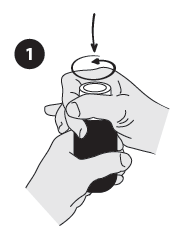
- 1. Open the bottle of PHEBURANE oral solution by pressing the cap and rotating it to the left.
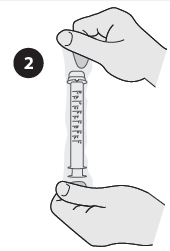
- 2. Remove the CE-marked measuring syringe connected to the bottle adapter from the bag.
- 3. Insert (push) the adapter into the neck of the bottle while the syringe is inside the adapter.
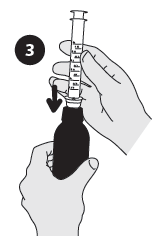
- 4. Turn the bottle upside down.
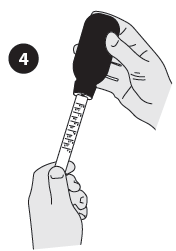
- 5. Draw from the bottle the amount of PHEBURANE oral solution necessary (equivalent to the number of grams of sodium phenylbutyrate prescribed by the doctor) using the measuring syringe.
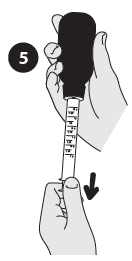
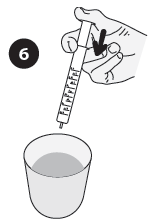
- 6. Separate the measuring syringe with PHEBURANE oral solution from the adapter and pour the amount of PHEBURANE oral solution from the measuring syringe into a glass with at least 20 ml of water.
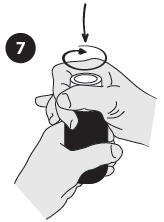
- 7. Close the bottle of PHEBURANE oral solution without removing the adapter inserted into the neck of the bottle.
- 8. Add one dropof your preferred flavor (blackcurrant or lemon-mint) to the contents of the glass of water; stir gently and drink (if one drop of flavor is not enough to impart intensity to the taste, you can use 2 drops).
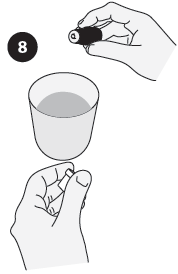
- 9. After each administration, wash the syringe with cold or lukewarm water only.
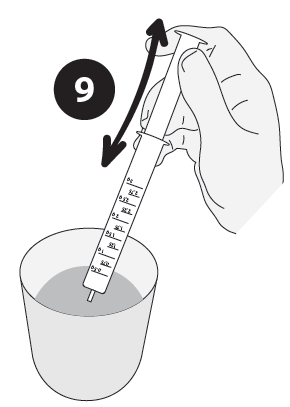
PHEBURANE oral solution must be taken with a special diet low in protein.
PHEBURANE oral solution must be taken with each meal or feeding. For young children, the
frequency may be from 4 to 6 times a day.
PHEBURANE oral solution can also be administered via nasogastric or
gastrostomy tubes. PHEBURANE oral solution can be administered with tubes with a diameter of
2 mm or greater (7-8 French). Use the supplied oral administration syringe to
measure the dose and follow these instructions:
Preparation for administration via nasogastric or gastrostomy tube
- 1. Follow steps 1 to 5 of Method of administration for oral use.
- 2. The Pheburane oral solution is ready to use and does not need to be diluted.
- 3. Do not add flavorif using a nasogastric/gastrostomy tube.
- 4. Insert the tip of the syringe filled with the medicine into the tip of the nasogastric/gastrostomy tube.
- 5. Use the plunger of the measuring syringe to administer the prescribed dose of PHEBURANE oral solution into the nasogastric/gastrostomy tube.
- 6. After each administration, the tube must be rinsed once with the appropriate volume of lukewarm water and allowed to drain. For adults, use 20 ml of lukewarm water. For children weighing less than 20 kg and infants, use 3 ml of water.
You will need to take this medicine and follow a diet for life.
If you take more PHEBURANE oral solution than you should
In patients who have taken very high doses of sodium phenylbutyrate, the following have occurred:
- drowsiness, fatigue, mild mental confusion and, less commonly, confusion,
- headache;
- altered taste (dysgeusia);
- decreased hearing;
- disorientation;
- memory impairment;
- worsening of existing neurological conditions.
If you experience any of these symptoms, contact your doctor or the emergency room
of the nearest hospital immediately for supportive treatment.
If you forget to take PHEBURANE oral solution
Take a dose as soon as possible with your next meal. Make sure at least 3 hours pass between
doses. Do not take a double dose to make up for a missed dose.
If you have any doubts about using this medicine, ask your doctor or pharmacist.
4. Possible side effects
Like all medicines, this medicine can cause side effects, although not everybody gets them.
If you experience persistent vomiting, seek medical advice immediately.
Very common side effects (may affect more than 1 in 10 people)
irregular menstrual cycles and cessation of menstrual cycles in women of childbearing potential.
If you are sexually active and your period stops completely, do not immediately assume that this is due to PHEBURANE oral solution. Instead, talk to your doctor, as the absence of your period may be caused by pregnancy (see the section
above "Pregnancy and breastfeeding") or menopause.
Common side effects (may affect more than 1 in 100 people)
changes in the number of blood cells (red blood cells, white blood cells and platelets), changes
in bicarbonate levels in the blood, loss of appetite, depression, irritability, headache,
fainting, fluid retention (swelling), altered taste, stomach pain, vomiting, nausea, constipation, abnormal
skin odor, rash, abnormal kidney function, weight gain and altered laboratory test values.
Uncommon side effects (may affect more than 1 in 1,000 people)
decrease in red blood cells due to bone marrow damage, bruising, altered heart rate,
rectal bleeding, inflammation of the stomach, stomach ulcer, inflammation of the
pancreas.
Reporting of side effects
If you get any side effects, talk to your doctor or pharmacist. You can also report side effects directly through the
national reporting system as detailed in Annex V. By reporting side effects you can help provide more information on the safety of this medicine.
5. How to store PHEBURANE oral solution
Keep this medicine out of the sight and reach of children.
Do not use PHEBURANE oral solution after the expiry date which is stated on the package and
on the bottle label after Exp. The expiry date refers to the last day of the month.
After the first opening of the PHEBURANE oral solution bottle, the medicine must be
used within 4 weeks. Dispose of the bottle even if it is not empty.
After the first opening, the aroma bottle must be used within 4 weeks. Dispose of the
bottle even if it is not empty.
This medicine does not require special storage precautions.
Do not dispose of any medicine in wastewater or household waste. Ask your pharmacist how to
dispose of medicines you no longer use. This will help protect the environment.
6. Contents of the pack and other information
What PHEBURANE oral solution contains
- The active ingredient is sodium phenylbutyrate. Each ml of liquid contains 350 mg of sodium phenylbutyrate.
- The other ingredients are: purified water, aspartame (E951), sucralose (E955), glycerol (E422), hydroxyethylcellulose (E1525) (See section 2 “PHEBURANE oral solution contains aspartame”).
Flavours:
- The blackcurrant flavour is composed of blackcurrant and mint flavouring, and contains propylene glycol (E1520).
- The lemon-mint flavour is composed of lemon and mint flavouring.
Description of the appearance of PHEBURANE oral solution and contents of the pack
PHEBURANE oral solution is a clear liquid, from colourless to pale yellow.
Each pack contains:
- One 100 ml amber glass bottle of oral solution closed with a child-resistant plastic cap;
- A dosing syringe from 0.5 g to 3 g with 0.25 increments to measure the dose in grams of sodium phenylbutyrate;
- An adapter for the bottle;
- One 3 ml amber glass bottle of lemon-mint flavour,
- One 3 ml amber glass bottle of blackcurrant flavour.
Marketing authorisation holder and manufacturer
Eurocept International BV
Trapgans 5
1244 RL Ankeveen
Netherlands
For further information on this medicinal product, contact the local representative of the marketing
authorisation holder:
België/Belgique/Belgien
Lucane Pharma
(Eurocept International BV)
Tél/Tel: +31 35 528 39 57
[email protected]
Lietuva
Lucane Pharma
(Eurocept International BV)
Tel: +31 35 528 39 57
[email protected]
България
Lucane Pharma
(Eurocept International BV)
Teл.: +31 35 528 39 57
[email protected]
Luxembourg/Luxemburg
Lucane Pharma
(Eurocept International BV)
Tél/Tel: +31 35 528 39 57
[email protected]
Magyarország
Lucane Pharma
(Eurocept International BV)
Tel: +31 35 528 39 57
[email protected]
Danmark
Lucane Pharma
(Eurocept International BV)
Tlf: +31 35 528 39 57
[email protected]
Česká republika
Lucane Pharma
(Eurocept International BV)
Tél/Tel: +31 35 528 39 57
[email protected]
Malta
Lucane Pharma
(Eurocept International BV)
Tel: +31 35 528 39 57
[email protected]
Deutschland
Lucane Pharma
(Eurocept International BV)
Tel: +31 35 528 39 57
[email protected]
Nederland
Lucane Pharma
(Eurocept International BV)
Tel: +31 35 528 39 57
[email protected]
Eesti
Lucane Pharma
(Eurocept International BV)
Tel: +31 35 528 39 57
[email protected]
Norge
Lucane Pharma
(Eurocept International BV)
Tlf: +31 35 528 39 57
[email protected]
Ελλάδα
Lucane Pharma
(Eurocept International BV)
Τηλ: +31 35 528 39 57
[email protected]
Österreich
Lucane Pharma
(Eurocept International BV)
Tel: +31 35 528 39 57
[email protected]
España
Lucane Pharma
(Eurocept International BV)
Tel: +31 35 528 39 57
[email protected]
Polska
Lucane Pharma
(Eurocept International BV)
Tel: +31 35 528 39 57
[email protected]
France
Lucane Pharma
Tél: + 33 153 868 750
[email protected]
Portugal
Lucane Pharma
(Eurocept International BV)
Tel: +31 35 528 39 57
[email protected]
Hrvatska
Lucane Pharma
(Eurocept International BV)
Tel: +31 35 528 39 57
[email protected]
România
Lucane Pharma
(Eurocept International BV)
Tel: +31 35 528 39 57
[email protected]
Slovenija
Lucane Pharma
(Eurocept International BV)
Tel: +31 35 528 39 57
[email protected]
Ísland
Lucane Pharma
(Eurocept International BV)
Sími: +31 35 528 39 57
[email protected]
Ireland
Lucane Pharma
(Eurocept International BV)
Tel: +31 35 528 39 57
[email protected]
Slovenská republika
Lucane Pharma
(Eurocept International BV)
Tel: +31 35 528 39 57
[email protected]
Italia
Lucane Pharma
(Eurocept International BV)
Tel: +31 35 528 39 57
[email protected]
Suomi/Finland
Lucane Pharma
(Eurocept International BV)
Puh/Tel: +31 35 528 39 57
[email protected]
Κύπρος
Lucane Pharma
(Eurocept International BV)
Τηλ: +31 35 528 39 57
[email protected]
Sverige
Lucane Pharma
(Eurocept International BV)
Tel: +31 35 528 39 57
[email protected]
Latvija
Lucane Pharma
(Eurocept International BV)
Tel: +31 35 528 39 57
[email protected]
United Kingdom (Northern Ireland)
Lucane Pharma
(Eurocept International BV)
Tel: +31 35 528 39 57
[email protected]
More detailed information on this medicinal product is available on the website of the European
Medicines Agency, http://www.ema.europa.eu/.
Also, links to other websites on rare diseases and related therapeutic treatments are provided.

Nie jesteś pewien, czy ten lek jest odpowiedni dla ciebie?
Omów swoje objawy i leczenie z lekarzem online.

Zacząłeś przyjmować lek i masz pytania?
Omów swoje objawy i leczenie z lekarzem online.
- Kraj rejestracji
- Postać farmaceutycznaGranules, 483 MG/G
- Kod ATCA16AX03
- Substancja czynna
- Wymaga receptyNie
- Producent
- Te treści mają charakter wyłącznie informacyjny i nie zastępują konsultacji lekarskiej.
- Zamienniki PEBURANEPostać farmaceutyczna: Tablet, 500 MGSubstancja czynna: sodium phenylbutyrateProducent: IMMEDICA PHARMA ABBez receptyPostać farmaceutyczna: Hard capsule, 84 MGSubstancja czynna: eliglustatProducent: SANOFI B.V.Wymaga receptyPostać farmaceutyczna: Hard capsule, 200 MGSubstancja czynna: trientineProducent: UNIVAR SOLUTION BVWymaga recepty
Odpowiedniki PEBURANE w innych krajach
Leki z tą samą substancją czynną dostępne w innych krajach.
Odpowiednik PEBURANE w Hiszpania
Odpowiednik PEBURANE w Ukraina
Lekarze online w sprawie PEBURANE
Omów stosowanie PEBURANE, bezpieczeństwo i ocenę zasadności recepty zgodnie z obowiązującymi przepisami.









Uzyskaj receptę na PEBURANE online
Wypełnij 2-minutowy formularz
Opisz swoje objawy, historię choroby i lek, o który prosisz.
Wybierz lekarza lub pozwól nam przydzielić
Wybierz specjalistę lub dopasujemy Cię do najbliższego dostępnego lekarza.
Lekarz analizuje Twój przypadek
Zazwyczaj w ciągu 30 minut. Może zadawać dodatkowe pytania przez czat.
Odbierz w dowolnej aptece
Recepta elektroniczna wysłana na Twój e-mail — ważna w całej Polsce.
Często zadawane pytania
PEBURANE nie wymaga recepty w Włochy. Możesz skonsultować się z lekarzem online, aby sprawdzić, czy ten lek może być odpowiedni w Twojej sytuacji.
Substancją czynną w PEBURANE jest sodium phenylbutyrate. Informacja ta pomaga rozpoznać leki o tym samym składzie, ale pod różnymi nazwami handlowymi.
PEBURANE jest produkowany przez EUROCEPT INTERNATIONAL B.V.. Nazwy handlowe i opakowania mogą się różnić w zależności od dystrybutora.
Lekarze, tacy jak Lekarze rodzinni, Psychiatrzy, Dermatolodzy, Kardiolodzy, Endokrynolodzy, Gastroenterolodzy, Pulmonolodzy, Nefrolodzy, Reumatolodzy, Hematolodzy, Zakaźnicy, Alergolodzy, Geriatrzy, Pediatrzy, Onkolodzy, mogą ocenić, czy stosowanie PEBURANE jest odpowiednie w Twoim przypadku, w zależności od sytuacji klinicznej i lokalnych przepisów. Możesz umówić konsultację online, aby omówić objawy i możliwe dalsze kroki.
Polska posiada dobrze rozwiniętą infrastrukturę ochrony zdrowia w dużych miastach, takich jak Warszawa, Kraków, Wrocław i Gdańsk. Apteki są łatwo dostępne i działają zgodnie z obowiązującymi przepisami, zapewniając dostęp do leków na receptę.
Możesz kupić PEBURANE w Warszawie, Krakowie, Wrocławiu lub Gdańsku w każdej aptece, posiadając ważną receptę.
Aby uzyskać receptę, możesz skorzystać z Oladoctor:
Inne leki zawierające tę samą substancję czynną (sodium phenylbutyrate) to m.in. AMMONAPS, KERDELGA, KUFENKE. Mogą one różnić się nazwą handlową lub postacią, ale zawierają ten sam składnik terapeutyczny. Przed zmianą lub rozpoczęciem nowego leku skonsultuj się z lekarzem.
