



OCTANATE 50 IU/ML Proszek i rozpuszczalnik do roztworu do wstrzykiwań

Ocena recepty online
Lekarz przeanalizuje Twój przypadek i zdecyduje, czy wystawienie recepty jest medycznie uzasadnione.

Porozmawiaj z lekarzem o tym leku
Omów swoje objawy i opcje leczenia podczas szybkiej konsultacji online.



Jak stosować OKTANATE
Treść ulotki
- Octanate 100 IU/ml, Powder and solvent for injectable solution
- Octanate 200 IU/ml, Powder and solvent for injectable solution
Octanate, 50 IU/ml, Powder and solvent for injectable solution
Human coagulation Factor VIII.
Octanate 100 IU/ml, Powder and solvent for injectable solution
Human coagulation Factor VIII.
Read this leaflet carefully before you use this medicine as it contains important
information for you.
- Keep this leaflet. You may need to read it again.
- If you have any questions, ask your doctor, pharmacist or nurse.
- This medicine has been prescribed for you only. Do not pass it on to others, even if they have the same symptoms as you, as it could be harmful.
- If you get any side effects, even those not listed in this leaflet, tell your doctor, pharmacist or nurse. See section 4.
Contents of this leaflet:
- 1. What Octanate is and what it is used for.
- 2. What you need to know before you use Octanate
- 3. How to use Octanate
- 4. Possible side effects
- 5. How to store Octanate.
- 6. Contents of the pack and other information.
1. What is Octanate and what is it used for
Octanate belongs to the group of medicines called “Coagulation Factors” and contains Factor VIII
of human plasma coagulation. This is a special protein involved in blood clotting.
Octanate is used for the treatment and prevention of bleeding in patients with Hemophilia A. This is a
condition in which bleeding can continue for longer than expected. This is due to a
hereditary deficiency of blood coagulation factor VIII.
2. What you need to know before you use Octanate
It is strongly recommended to record the name and batch number of the product each time you receive a dose of
Octanate, in order to keep a record of the batch used.
If you regularly/repeatedly use products based on Factor VIII derived from human plasma, your doctor
may recommend that you consider the possibility of getting vaccinated against hepatitis A and B.
Do not use Octanate
if you are allergic to human blood coagulation factor VIII or any of the other ingredients of
this medicine (listed in section 6).
Warnings and precautions
Talk to your doctor, pharmacist or nurse before taking Octanate.
Octanate contains a very small amount of other human proteins. Any medicine that contains proteins
and is injected into a vein (intravenous administration) can cause allergic reactions (see
section 4. "Possible side effects").
The formation of inhibitors (antibodies) is a known complication that can occur during treatment with all
medicines containing factor VIII. Inhibitors, especially at high levels, prevent the treatment from working
correctly and you or your child will be closely monitored to check for the development of these
inhibitors. If Octanate does not keep bleeding under control in you or your child, inform your doctor
immediately.
Information about the blood and plasma used for Octanate
When medicines are prepared from human blood or plasma, standard measures are used
to prevent the transmission of infections to patients. These measures include careful selection of blood and plasma donors to ensure that those at risk of carrying infections are excluded, screening
of individual donations and plasma pools for specific viral/infection markers, and the inclusion of effective production stages for virus inactivation/removal. Despite this, when medicines prepared from human blood or plasma are administered, the possibility of transmission of infectious agents cannot
be totally excluded. This also applies to unknown or emerging viruses and other types of infection.
The measures taken are considered effective for enveloped viruses such as the human immunodeficiency virus
(HIV), hepatitis B (HBV) and hepatitis C (HCV), and for the non-enveloped hepatitis A (HAV) virus. The
measures taken may be of limited value against non-enveloped viruses such as parvovirus B19. Infection
with parvovirus B19 can be severe for pregnant women (fetal infection) and for people with
immunodeficiency or with certain types of anemia (e.g. sickle cell anemia or abnormal red blood cell loss).
Other medicines and Octanate
Tell your doctor or pharmacist if you are taking, have recently taken or might take any other
medicines, including those available without a prescription.
No interactions of products containing human blood coagulation factor VIII with other
medicines are known. However, do not mix Octanate with other medicines during infusion.
Pregnancy, breastfeeding and fertility
If you are pregnant, suspect you are pregnant, are planning to become pregnant, or are breastfeeding,
ask your doctor or pharmacist for advice before using this medicine.
Driving and using machines
No effects on the ability to drive and use machines have been observed.
Octanate contains
per 250 IU/vial:
less than 1 mmol of sodium (23 mg) (main component of table salt) per vial, i.e. it is practically
‘sodium-free’.
per 500 and 1000 IU/vial:
up to 40 mg of sodium (main component of table salt) per vial. This is equivalent to 2%
of the maximum recommended daily intake with the diet of an adult.
3. How to use Octanate
Octanate must be administered intravenously, after reconstitution with the appropriate solvent. The
treatment must be initiated under the supervision of a physician.
Dosage for the prevention of bleeding
If you suffer from severe hemophilia A, you should inject 20-40 IU of factor VIII per kg of body weight every two or three
days for long-term prevention. The dose should be adjusted based on your response. In some cases
shorter dosing intervals or higher doses may be necessary.
Dose calculation
Always use Octanate exactly as your doctor has instructed. Consult your doctor or pharmacist if you are not
sure.
The activity of factor VIII refers to the amount of factor VIII present in plasma. This is expressed in
percentage (compared to normal human blood plasma) or in International Units (IU).
The dosage of factor VIII is expressed in IU.
One IU of factor VIII activity is equivalent to the amount of factor VIII present in one ml of
normal human blood plasma. One IU of factor VIII per kg of body weight increases plasma factor
VIII activity by 1.5% - 2% of normal activity. To calculate your dosage, the level of factor VIII activity in your plasma is measured. This indicates how much the activity needs to be increased. It is recommended to consult
your doctor if you are unsure how much your factor VIII activity needs to be increased or how to
calculate the dosage.
The required dosage is calculated using the following formula:
Units required = body weight (kg) x desired increase of factor VIII (%) (IU/dl) x 0.5
The dosage and how often it should be administered (frequency) must always take into account the clinical
efficacy in the individual patient.
If the following bleeding events occur, the factor VIII activity must not fall below the level of
plasma activity required (in % compared to normal) shown in the following table, for the corresponding
period.
The following table can be used to guide the dosage in bleeding episodes and in case of surgical interventions:
| z Grade of bleeding/ Type of surgical intervention n | Required Factor VIII Level (%) (IU/dl) | Dosing frequency (hours between dosages) / Duration of therapy (days) |
| e Bleeding | ||
| g Joint bleeding (early hemarthrosis), muscle bleeding or oral bleeding | 20-40 | Repeat every 12 - 24 hours for at least 1 day, until pain subsides or healing occurs |
| More extensive joint bleeding (hemarthrosis) muscle bleeding or hematoma | 30-60 | Repeat infusion every 12-24 hours for 3-4 days or more, until pain and |
Your doctor will advise you on the dosage and frequency with which you should use Octanate.
Your response to factor VIII-based products may vary. The level of factor VIII in the blood must therefore
be measured during treatment to calculate the correct dosage and infusion frequency.
Use in children
Clinical studies have not identified any special dosage requirements for children. For treatment and prophylaxis,
the dosage is the same in adults and children.
Instructions for home treatment
- Please read all instructions and follow them carefully!
- Do not use Octanate after the expiry date indicated on the label.
- Sterility must be maintained during the procedure described below!
- The reconstituted medicinal product must be visually inspected for any particulate matter and color changes before administration.
- The solution should be clear or slightly opalescent. Do not use solutions that are cloudy or with deposits.
- Use the prepared solution immediately to avoid microbial contamination.
- Use only the supplied infusion set. The use of other injection/infusion equipment may cause additional risks and treatment failure.
Instructions for preparing the solution:
- 1. Do not use the product immediately after removing it from the refrigerator. Allow the solvent and powder in the closed vials to reach room temperature.
| hematoma | the illness is resolved. | |
| Life-threatening bleeding episodes, such as head surgery, throat bleeding, major abdominal bleeding | 60-100 | or Repeat infusion every 8-24 hours until the danger has passed. c |
| Surgical treatment | a | |
| Minor including tooth extraction | 30-60 | m Every 24 hours, for at least 1 day, until healing. |
| Major | 80-100 (pre and postoperative) | r Repeat infusion for 8-24 hours until a adequate wound healing, then continue therapy for at least another F 7 days to maintain Factor VIII activity at 30%-60%. |
- 2. Remove the tear-off capsules from both vials and clean the rubber stoppers with one of the supplied alcohol swabs.
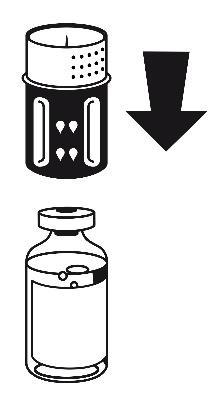
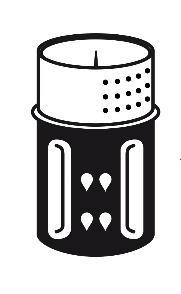
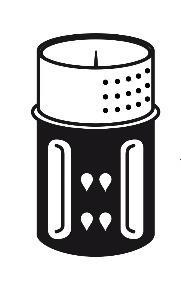
- 3. The transfer set is shown in fig. 1:
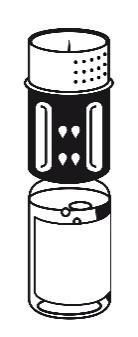
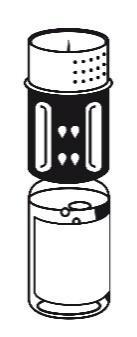
Place the solvent vial on a flat surface and hold it firmly. Take the transfer set and turn it upside down. Place the blue part of the transfer set on top of the solvent vial and, without rotating it, press down firmly until it locks (Fig. 2 + 3).
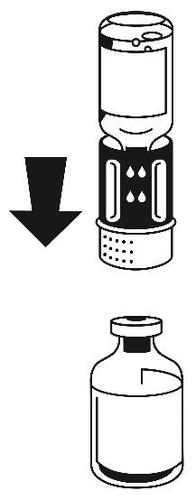
- 4. Place the powder vial on a flat surface and hold it
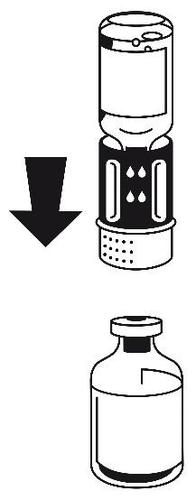
firmly.
Take the solvent vial attached to the transfer set and
turn it upside down.
Place the white part on top of the vial with the
powder and, without rotating it, press down firmly until
it locks (Fig. 4). The solvent will automatically pass into the powder vial.
Fig. 4
Fig. 4
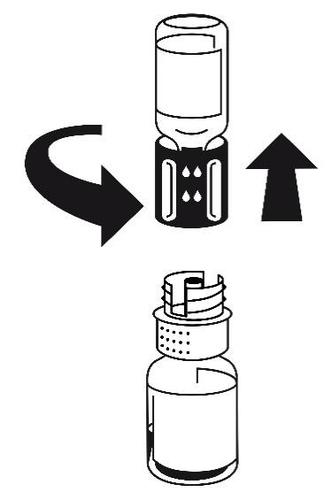
- 5. With both vials still attached, gently turn the powder vial upside down until the
product is dissolved.
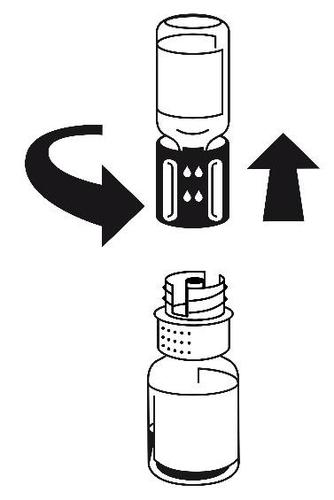
Dissolution occurs in less than 10 minutes at
room temperature. Foam may form during preparation.
Unscrew the transfer set into two parts (Fig. 5).
The foam will disappear.
Dispose of the empty solvent vial with the blue part
of the transfer set
Fig. 5
Instructions for injection:
As a precaution, the heart rate should be measured before and during the injection. If a marked
increase in heart rate occurs, reduce the injection rate or interrupt administration for a short
period.
- 1. Connect the syringe to the white part of the transfer set. Turn the vial upside down and draw the solution into the syringe (Fig. 6). The solution must be clear or slightly opalescent .
Once the solution has been transferred, hold the syringe plunger firmly (pointing
downwards) and remove the syringe from the transfer set (Fig. 7).
Dispose of the empty vial with the white part of the transfer set.
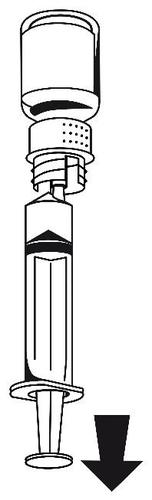
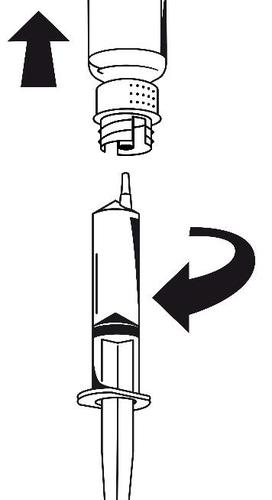
Fig. 6 Fig. 7
- 2. Clean the chosen injection site with one of the supplied alcohol swabs
- 3. Attach the supplied infusion set to the syringe.
- 4. Insert the injection needle into the chosen vein. If you have used a tourniquet to make the vein more visible, the tourniquet must be loosened before starting the Octanate injection.
- 5. Blood must not flow into the syringe due to the risk of fibrin clot formation.
- 6. Inject the solution into the vein at a slow rate, no faster than 2-3 ml per minute.
If you are using more than one vial of Octanate powder for a single treatment, you can reuse the same
infusion set and the same syringe. The transfer set is for single use only.
Unused medicinal product and waste material derived from such medicinal product should be disposed of in accordance with local regulations.
If you use more Octanate than you should
No symptoms of overdose with human blood coagulation factor VIII have been reported.
However, the recommended dose should not be exceeded.
If you forget to take Octanate
Do not take a double dose to make up for a missed dose. Proceed immediately to the next
dose and continue as advised by your doctor or pharmacist.
If you have any further questions about the use of this product, ask your doctor or pharmacist.
4. Possible side effects
Like all medicines, this medicine can cause side effects, although not everybody gets them.
Hypersensitivity or allergic reactions, even if rare(may affect up to 1 in 1,000 people) ,have been
observed in patients treated with products containing Factor VIII.
If you experience any of these symptoms, contact your doctor:
feeling unwell (vomiting), burning and redness at the infusion site, a feeling of tightness in the chest, chills,
fast heartbeat (tachycardia), feeling unwell (nausea), prickling sensation (tingling),
hot flushes, headache, hives, low blood pressure (hypotension), rash,
restlessness, swelling of the face, lips, mouth, tongue or throat that can cause difficulty swallowing or breathing (angioedema), fatigue (lethargy), shortness of breath.
In very rarecases (may affect up to 1 in 10,000), this hypersensitivity can lead to a form of
severe allergic reaction, life-threatening, called anaphylaxis, which may include shock, as well as some or all of the
symptoms described above. In this case, contact your doctor immediately or call an ambulance.
Other side effects rare(may affect up to 1 in 1,000)
Fever
In children not previously treated with Factor VIII-based medicines, the formation of inhibitor antibodies
(see section 2) may be very common (more than 1 in 10 patients); however, in patients who have received
previous treatment with Factor VIII (more than 150 days of treatment) the risk is uncommon (less than 1
in 100 patients). If this happens, the medicine for you or your child may stop working properly and you or
your child may experience persistent bleeding. If this happens, you should contact your doctor
immediately.
For information on viral safety see section 2. (Please pay attention with Octanate - Information about the
blood and plasma used for Octanate).
Reporting of side effects
If you get any side effects, talk to your doctor, pharmacist or nurse. You can also report side effects directly through the
national reporting system at https://www.aifa.gov.it/content/segnalazioni-reazioni-avverse.
By reporting side effects you can help provide more information on the safety of this
medicine.
5. How to store Octanate
Keep this medicine out of the sight and reach of children.
Do not use this medicine after the expiry date which is stated on the label. The expiry date refers
to the last day of that month.
Store in a refrigerator (2°C - 8°C).
Do not freeze.
Keep the vials in the outer packaging to protect the product from light.
Use the reconstituted solution immediately and in a single administration.
Do not use this medicine if you notice that the solutions are cloudy or not completely dissolved.
Do not dispose of any medicine in the drain or in household waste. Ask your pharmacist how to eliminate the
medicines that you no longer use. This will help to protect the environment.
6. Contents of the pack and other information
What Octanate contains
The active substanceis human coagulation factor VIII.
| Size of the vial of Octanate powder (IU FVIII) | Size of the vial of solvent (to be added to the vial n of Octanate powder) (ml) | d Nominal concentration of the a reconstituted solution (IU FVIII/ml) |
| 250 IU | a 5 | 50 |
| 500 IU | i 10 | 50 |
| 1000 IU | l 10 | 100 |
The other ingredientsare:
For the powder: sodium citrate, sodium chloride, calcium chloride, glycine
For the solvent: water for injections.
Description of Octanate and contents of the pack
Octanate is presented as powder and solvent for injection.
The powder is white or pale yellow, it may also appear as a friable mass.
The solvent is a clear, colourless liquid.
The three available packs differ in the amount of human blood coagulation factor VIII and
of solvent:
- 250 IU/vial: reconstitution with 5 ml, equivalent to 50 IU/ml
- 500 IU/vial: reconstitution with 10 ml, equivalent to 50 IU/ml
- 1000 IU/vial: reconstitution with 10 ml, equivalent to 100 IU/ml
All packs include:
- 1 intravenous administration kit (1 transfer set, 1 infusion set, 1 disposable syringe)
- 2 alcohol swabs Not all packs may be marketed.
Marketing Authorisation Holder and Manufacturer
OCTAPHARMA ITALY S.p.A.
Via Cisanello, 145
56124 Pisa
Italy
For further information on this medicine, please contact the Local Representative of the Marketing
Authorisation Holder.
Manufacturers
Octapharma Pharmazeutika Produktionsges.m.b.H.
Oberlaaer Str. 235
A-1100 Vienna
Austria
or
Octapharma S.A.S
70-72 Rue du Maréchal Foch
BP 33, F - 67381 Lingolsheim
France
or
Octapharma AB
SE 112 75 Stockholm
Sweden
Octanate, 100 IU/ml, Powder and solvent for solution for injection
Human coagulation factor VIII.
Octanate 200 IU/ml, Powder and solvent for injectable solution
Human coagulation Factor VIII.
Read this leaflet carefully before using this medicine as it contains important
information for you.
- Keep this leaflet. You may need to read it again.
- If you have any questions, ask your doctor, pharmacist or nurse.
- This medicine has been prescribed for you only. Do not pass it on to others, even if their symptoms are the same as yours, as it could be harmful.
- If you get any side effects, even those not listed in this leaflet, tell your doctor, pharmacist or nurse. See section 4.
Contents of this leaflet:
- 1. What Octanate is and what it is used for.
- 2. What you need to know before you use Octanate
- 3. How to use Octanate
- 4. Possible side effects
- 5. How to store Octanate.
- 6. Contents of the pack and other information.
1. What is Octanate and what is it used for
Octanate belongs to the group of medicines called “Coagulation Factors” and contains Human Blood Coagulation Factor VIII.
This is a special protein involved in blood clotting.
Octanate is used for the treatment and prevention of bleeding in patients with Hemophilia A. This is a
condition in which bleeding can continue for longer than expected. This is due to a
hereditary deficiency of blood coagulation factor VIII.
2. What you need to know before you use Octanate
It is strongly recommended to record the name and batch number of the product each time you receive a dose of
Octanate, to keep a record of the batch used.
If you regularly or repeatedly use products based on Factor VIII derived from human plasma, your doctor
may recommend that you consider the possibility of getting vaccinated against hepatitis A and B.
Do not use Octanate
if you are allergic to human blood coagulation factor VIII or to any of the other ingredients of
this medicine (listed in section 6).
Warnings and precautions
Talk to your doctor, pharmacist or nurse before you use Octanate.
Octanate contains a very small amount of other human proteins. Any medicine containing proteins
and which is injected into a vein (intravenous administration) can cause allergic reactions (see
section 4. "Possible side effects").
The formation of inhibitors (antibodies) is a known complication that can occur during treatment with all
medicines based on factor VIII. Inhibitors, especially at high levels, prevent the treatment from working
correctly and you or your child will be closely monitored to check for the development of these
inhibitors. If Octanate does not keep bleeding under control in you or your child, inform your doctor
immediately.
Information about blood and plasma used for Octanate
When medicines are prepared from human blood or plasma, certain standard measures are used to prevent the transmission of infections to patients. These measures include careful selection of
blood and plasma donors to ensure that those at risk of carrying infections are excluded, testing individual donations and plasma pools for specific viral/infection markers, and the inclusion of
effective production stages to inactivate/remove viruses. Nevertheless, when medicinal products prepared from human blood or plasma are administered, the possibility of transmitting infectious agents cannot
be totally excluded. This also applies to unknown or emerging viruses and other types of infection.
The measures taken are considered effective for enveloped viruses such as the human immunodeficiency virus
(HIV), hepatitis B (HBV) and hepatitis C (HCV), and for the non-enveloped hepatitis A (HAV) virus. The
measures taken may be of limited value against non-enveloped viruses such as parvovirus B19. Infection
with parvovirus B19 can be severe for pregnant women (fetal infection) and for people with
immunodeficiency or with certain types of anemia (e.g. sickle cell anemia or abnormal red blood cell breakdown).
Other medicines and Octanate
Tell your doctor or pharmacist if you are taking, have recently taken or might take any other
medicines, including those available without a prescription.
No interactions of products based on human blood coagulation factor VIII with other
medicines are known. However, do not mix Octanate with other medicines during infusion.
Pregnancy and breastfeeding and fertility
If you are pregnant, suspect you are pregnant, are planning to become pregnant, or are breastfeeding,
ask your doctor or pharmacist for advice before using this medicine.
Driving and using machines
No effects on the ability to drive and use machines have been observed.
Octanate contains
up to 40 mg of sodium (the main component of table salt) per vial. This is equivalent to 2%
of the maximum recommended daily intake of sodium for an adult.
3. How to use Octanate
Octanate must be administered intravenously, after reconstitution with the appropriate solvent. The
treatment must be initiated under the supervision of a physician.
Dosage for the prevention of bleeding
If you suffer from severe hemophilia A, you should inject 20-40 IU of factor VIII per kg of body weight every two or three
days for long-term prevention. The dose should be adjusted based on your response. In some cases
shorter dosing intervals or higher doses may be necessary.
Dose calculation
Always use Octanate exactly as instructed by your doctor. Consult your doctor or pharmacist if you are not
sure.
The activity of factor VIII refers to the amount of factor VIII present in plasma. This is expressed in
percentage (compared to normal human blood plasma) or in International Units (IU).
The dosage of factor VIII is expressed in IU.
One IU of factor VIII activity is equivalent to the amount of factor VIII present in one ml of
normal human blood plasma. One IU of factor VIII per kg of body weight increases plasma factor
VIII activity by 1.5% - 2% of normal activity. To calculate your dosage, the level of factor VIII activity in your plasma is measured. This indicates how much the activity needs to be increased. It is recommended to consult
your doctor if you are unsure how much your factor VIII activity needs to be increased or how to
calculate the dosage.
The required dosage is calculated using the following formula:
Units required = body weight (kg) x desired increase of factor VIII (%) (IU/dl) x 0.5
The dosage and how often it should be administered (frequency) must always take into account the clinical efficacy
in the individual patient.
If the following bleeding events occur, the factor VIII activity must not fall below the required plasma activity level (in % compared to normal) shown in the following table, for the corresponding
period.
The following table can be used to guide dosage in bleeding episodes and in case of surgical interventions:
| a Grade of bleeding/ Type of surgical intervention i z | Required Factor VIII level (%) (IU/dl) | Dosing frequency (hours between dosages) / Duration of therapy (days) |
| n Bleeding | ||
| e Joint bleeding (early hemarthrosis), muscle bleeding or oral bleeding | 20-40 | Repeat every 12 - 24 hours for at least 1 day, until pain subsides or healing occurs |
| A More extensive joint bleeding (hemarthrosis) muscle bleeding or blood effusion (hematoma) | 30-60 | Repeat infusion every 12-24 hours for 3-4 days or more, until pain and illness are resolved. |
Your doctor will advise you on the dosage and frequency with which you should use Octanate.
Your response to factor VIII-based products may vary. The level of factor VIII in the blood must therefore
be measured during treatment to calculate the correct dosage and infusion frequency.
Use in children
Clinical studies have not identified any special dosage requirements for children. For treatment and prophylaxis,
the dosage is the same in adults and children.
Instructions for home treatment
- Please read all instructions and follow them carefully!
- Do not use Octanate after the expiration date indicated on the label.
- Sterility must be maintained during the procedure described below!
- The reconstituted medicinal product must be visually inspected for particulate matter and color changes before administration.
- The solution should be clear or slightly opalescent. Do not use solutions that are cloudy or with deposits.
- Use the prepared solution immediately to avoid microbial contamination.
- Use only the supplied infusion set. The use of other injection/infusion devices may cause additional risks and treatment failure.
Instructions for preparing the solution:
- 1. Do not use the product immediately after removing it from the refrigerator. Allow the solvent and powder in the closed vials to reach room temperature.
- 2. Remove the tear-off capsules from both vials and clean the rubber stoppers with one of the supplied alcohol-soaked swabs.
| Life-threatening bleeding episodes, such as head surgery, bleeding in the throat, major abdominal bleeding | 60-100 | Repeat infusion every 8-24 hours until or the danger has passed. |
| Surgical treatment | c | |
| Minor including tooth extraction | 30-60 | a Every 24 hours, for at least 1 day, until healing. |
| Major | 80-100 (pre and postoperative) | m Repeat the infusion for 8-24 hours until r adequate wound healing, then continue therapy for at least another 7 days to maintain Factor VIII activity at 30%-60%. |
- 3. The transfer set is shown in Fig. 1:
Place the solvent vial on a flat surface and hold it firmly. Take the transfer set and turn it upside down. Place the blue part of the transfer set on top of the
solvent vial and, without rotating it, press down firmly until it locks (Fig. 2 + 3).
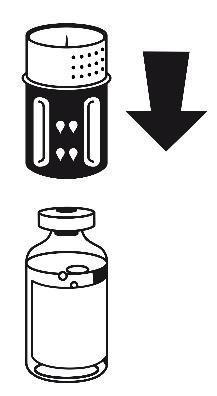
- 4. Place the powder vial on a flat surface and
hold it firmly.
Take the solvent vial attached to the transfer set
and turn it upside down.
Place the white part on top of the vial
with the powder and, without rotating it, press down firmly until
it locks (Fig. 4). The solvent will pass
automatically into the powder vial.
Fig. 4
- 5. With both vials still attached, gently turn the powder vial upside down until the product is dissolved. Dissolution occurs in less than 10 minutes at room temperature. Slight foaming may occur during preparation. Unscrew the transfer set into two parts (Fig. 5). The foam will disappear.
Dispose of the empty solvent vial with the blue part of the transfer
set.
Fig. 5
Instructions for injection:
As a precaution, the heartbeat should be detected before and during the injection. If a marked
increase in heart rate occurs, reduce the injection rate or interrupt administration for a short
period.
- 1. Connect the syringe to the white part of the transfer set. Turn the vial upside down and aspirate the solution into the syringe (Fig. 6). The solution should be clear or slightly opalescent .
Once the solution has been transferred, hold the syringe plunger firmly (pointing
downwards) and remove the syringe from the transfer set (Fig. 7).
Dispose of the empty vial with the white part of the transfer set.
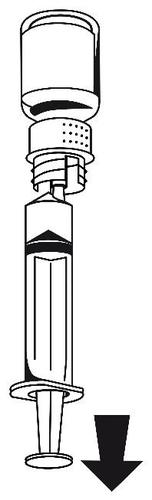
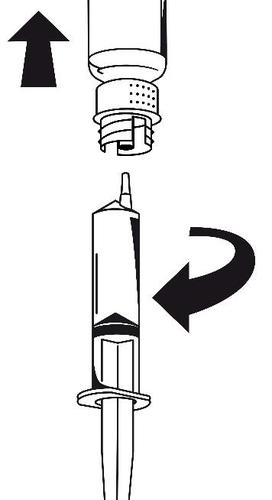
Fig. 6 Fig. 7
- 2. Clean the chosen injection site with one of the supplied alcohol-soaked swabs
- 3. Attach the supplied infusion set to the syringe.
- 4. Insert the injection needle into the chosen vein. If you have used a tourniquet to make the vein more visible, the tourniquet must be loosened before starting the Octanate injection.
- 5. Blood must not flow into the syringe due to the risk of fibrin clot formation.
- 6. Inject the solution into the vein at a slow rate, no faster than 2-3 ml per minute.
If you are using more than one vial of Octanate powder for a single treatment, you can reuse the same
infusion set and the same syringe. The transfer set is for single use only.
Unused medicinal product and waste material derived from such medicinal product must be disposed of in accordance with
current local regulations.
If you use more Octanate than you should
No symptoms of overdose with human blood coagulation factor VIII have been reported. However
the recommended dose should not be exceeded.
If you forget to take Octanate
Do not take a double dose to make up for a missed dose. Proceed immediately to the next
dose and continue as advised by your doctor or pharmacist.
If you have any further questions on the use of this product, ask your doctor or pharmacist.
4. Possible side effects
Like all medicines, this medicine can cause side effects, although not everybody gets them.
Hypersensitivity or allergic reactions, even if rare(may affect up to 1 in 1,000 people), have been
observed in patients treated with products containing factor VIII.
If you experience any of these symptoms, contact your doctor:
feeling unwell (vomiting), burning and redness at the infusion site, a feeling of tightness in the chest, chills,
fast heartbeat (tachycardia), feeling unwell (nausea), prickling sensation (tingling),
hot flushes, headache, hives, low blood pressure (hypotension), rash,
restlessness, swelling of the face, lips, mouth, tongue or throat that may cause difficulty in
swallowing or breathing (angioedema), fatigue (lethargy), shortness of breath.
In cases very rare(may affect up to 1 in 10,000 people), this hypersensitivity can lead to a form of
severe allergic reaction, life-threatening, called anaphylaxis, which may include shock, as well as
some or all of the symptoms described above. In this case, contact your doctor immediately or call an ambulance.
Other side effects rare(may affect up to 1 in 1,000 people)
Fever
In children not previously treated with factor VIII-based medicines, the formation of inhibitor antibodies
(see section 2) may be very common (more than 1 in 10 patients); however, in patients who have received
previous treatment with factor VIII (more than 150 days of treatment) the risk is uncommon (less than 1
in 100 patients). If this happens, the medicine for you or your child may stop working properly and you or
your child may experience persistent bleeding. If this happens, you should contact your doctor
immediately.
For information on viral safety see section 2. (Take care with Octanate - Information on
blood and plasma used for Octanate).
Reporting of side effects
If you get any side effects, even those not listed in this leaflet, tell your doctor, pharmacist or nurse. You can also
report side effects directly through the national reporting system at https://www.aifa.gov.it/content/segnalazioni-reazioni-avverse.
By reporting side effects you can help provide more information on the safety of this
medicine.
5. How to store Octanate
Keep this medicine out of the sight and reach of children.
Do not use this medicine after the expiry date which is stated on the label. The expiry date refers
to the last day of that month.
Store in a refrigerator (2°C - 8°C).
Do not freeze.
Keep the vials in the outer packaging to protect the product from light.
Use the reconstituted solution immediately and in a single administration.
Do not use this medicine if you notice that the solutions are cloudy or not completely dissolved.
Do not dispose of any medicine in wastewater or household waste. Ask your pharmacist how to dispose of the
medicines that you no longer use. This will help protect the environment.
6. Contents of the pack and other information
What Octanate contains
The active substanceis human coagulation factor VIII.
| Size of the Octanate powder vial (FVIII IU) | Size of the solvent vial (to be added to the Octanate powder vial) (ml) | a F Nominal concentration of the reconstituted solution l (FVIII IU/ml) e |
| 500 IU | 5 | d 100 |
| 1000 IU | 5 | 200 |
The other ingredientsare:
For the powder: sodium citrate, sodium chloride, calcium chloride, glycine
For the solvent: water for injections.
Description of Octanate and contents of the pack
Octanate is presented as powder and solvent for injectable solution.
The powder is white or pale yellow, it may also appear as a friable mass.
The solvent is a clear, colourless liquid.
The two available packs differ in the amount of human blood coagulation factor VIII and
solvent:
100 IU/ml powder and solvent:
- Powder, 500 IU, in a vial with a rubber stopper and tear-off cap
- 5 ml of solvent in a vial with a rubber stopper and tear-off cap
- 1 intravenous administration kit (1 transfer set, 1 infusion set, 1 disposable syringe)
- 2 alcohol swabs.
200 IU/ml powder and solvent:
- Powder, 1000 IU, in a vial with a rubber stopper and tear-off cap
- 5 ml of solvent in a vial with a rubber stopper and tear-off cap
- 1 intravenous administration kit (1 transfer set, 1 infusion set, 1 disposable syringe)
- 2 alcohol swabs.
Not all pack sizes may be marketed.
Marketing Authorisation Holder and Manufacturer
OCTAPHARMA ITALY S.p.A.
Via Cisanello, 145
56124 Pisa
Italy
Manufacturers
Octapharma Pharmazeutika Produktionsges.m.b.H.
Oberlaaer Str. 235
A-1100 Vienna
Austria
or
Octapharma S.A.S
70-72 Rue du Maréchal Foch
BP 33, F - 67381 Lingolsheim
France
or
Octapharma AB
Lars Forssells gata 23
SE 112 75 Stockholm
Sweden
This medicinal product is authorised in the Member States of the European Economic Area with the following
names:
- Octanate LV: Austria, Cyprus, Denmark, France, Netherlands, Malta, Poland, Romania, Spain, Sweden, United Kingdom
- Octafil LV: Finland
- Octanate: Belgium, Czech Republic, Germany, Ireland, Italy, Latvia, Lithuania, Luxembourg, Portugal
- Octanate Kons: Republic of Slovenia

Nie jesteś pewien, czy ten lek jest odpowiedni dla ciebie?
Omów swoje objawy i leczenie z lekarzem online.

Zacząłeś przyjmować lek i masz pytania?
Omów swoje objawy i leczenie z lekarzem online.
- Kraj rejestracji
- Postać farmaceutycznaPowder and solvent for injectable solution, 50 IU/ML
- Kod ATCB02BD06
- Substancja czynna
- Wymaga receptyTak
- Producent
- Te treści mają charakter wyłącznie informacyjny i nie zastępują konsultacji lekarskiej.
- Zamienniki OKTANATEPostać farmaceutyczna: Powder and solvent for intravenous infusion solution, 250 U I+ 300 UI/5 MLSubstancja czynna: von Willebrand factor and coagulation factor VIII in combinationProducent: GRIFOLS ITALIA S.P.A.Wymaga receptyPostać farmaceutyczna: Powder and solvent for injectable solution, 250 IU + 300 IU/10 MLSubstancja czynna: von Willebrand factor and coagulation factor VIII in combinationProducent: INSTITUTO GRIFOLS S.A.Wymaga receptyPostać farmaceutyczna: Powder and solvent for injectable solution, 1000 IU/15 MLSubstancja czynna: von Willebrand factor and coagulation factor VIII in combinationProducent: CSL BEHRING GMBHWymaga recepty
Odpowiedniki OKTANATE w innych krajach
Leki z tą samą substancją czynną dostępne w innych krajach.
Odpowiednik OKTANATE w Polska
Odpowiednik OKTANATE w Ukraina
Odpowiednik OKTANATE w Hiszpania
Lekarze online w sprawie OKTANATE
Omów stosowanie OKTANATE, bezpieczeństwo i ocenę zasadności recepty zgodnie z obowiązującymi przepisami.









Uzyskaj receptę na OKTANATE online
Wypełnij 2-minutowy formularz
Opisz swoje objawy, historię choroby i lek, o który prosisz.
Wybierz lekarza lub pozwól nam przydzielić
Wybierz specjalistę lub dopasujemy Cię do najbliższego dostępnego lekarza.
Lekarz analizuje Twój przypadek
Zazwyczaj w ciągu 30 minut. Może zadawać dodatkowe pytania przez czat.
Odbierz w dowolnej aptece
Recepta elektroniczna wysłana na Twój e-mail — ważna w całej Polsce.
Często zadawane pytania
OKTANATE wymaga recepty w Włochy. Możesz skonsultować się z lekarzem online, aby sprawdzić, czy ten lek może być odpowiedni w Twojej sytuacji.
Substancją czynną w OKTANATE jest von Willebrand factor and coagulation factor VIII in combination. Informacja ta pomaga rozpoznać leki o tym samym składzie, ale pod różnymi nazwami handlowymi.
OKTANATE jest produkowany przez OCTAPHARMA ITALY S.P.A.. Nazwy handlowe i opakowania mogą się różnić w zależności od dystrybutora.
Lekarze, tacy jak Lekarze rodzinni, Psychiatrzy, Dermatolodzy, Kardiolodzy, Endokrynolodzy, Gastroenterolodzy, Pulmonolodzy, Nefrolodzy, Reumatolodzy, Hematolodzy, Zakaźnicy, Alergolodzy, Geriatrzy, Pediatrzy, Onkolodzy, mogą ocenić, czy stosowanie OKTANATE jest odpowiednie w Twoim przypadku, w zależności od sytuacji klinicznej i lokalnych przepisów. Możesz umówić konsultację online, aby omówić objawy i możliwe dalsze kroki.
Polska posiada dobrze rozwiniętą infrastrukturę ochrony zdrowia w dużych miastach, takich jak Warszawa, Kraków, Wrocław i Gdańsk. Apteki są łatwo dostępne i działają zgodnie z obowiązującymi przepisami, zapewniając dostęp do leków na receptę.
Możesz kupić OKTANATE w Warszawie, Krakowie, Wrocławiu lub Gdańsku w każdej aptece, posiadając ważną receptę.
Aby uzyskać receptę, możesz skorzystać z Oladoctor:
Inne leki zawierające tę samą substancję czynną (von Willebrand factor and coagulation factor VIII in combination) to m.in. ALPANATE, FANDI, AEMATE P. Mogą one różnić się nazwą handlową lub postacią, ale zawierają ten sam składnik terapeutyczny. Przed zmianą lub rozpoczęciem nowego leku skonsultuj się z lekarzem.
