



MULTIFLOXOFTA 3 mg /Ml Krople Do Oczu, Roztwór

Ocena recepty online
Lekarz przeanalizuje Twój przypadek i zdecyduje, czy wystawienie recepty jest medycznie uzasadnione.

Porozmawiaj z lekarzem o tym leku
Omów swoje objawy i opcje leczenia podczas szybkiej konsultacji online.



Jak stosować MULTIFLOXOFTA
Treść ulotki
- What MONOFLOXOFTA is and what it is used for
- What you need to know before using MONOFLOXOFTA
- How to use MONOFLOXOFTA
- Possible side effects
- How to store MONOFLOXOFTA
- Contents of the pack and other information
MONOFLOXOFTA 0.3% eye drops, solution
Ofloxacin
Read this leaflet carefully before you start using this medicine as it contains important
information for you.
- Keep this leaflet. You may need to read it again.
- If you have any questions, ask your doctor or pharmacist.
- This medicine has been prescribed for you only. Do not pass it on to others, even if their symptoms are the same as yours, as it could be harmful.
- If you get any side effects, even those not listed in this leaflet, tell your doctor or pharmacist. See section 4.
Contents of this leaflet:
- 1. What Monofloxofta is and what it is used for
- 2. What you need to know before you use Monofloxofta
- 3. How to use Monofloxofta
- 4. Possible side effects
- 5. How to store Monofloxofta
- 6. Contents of the pack and other information
1. What MONOFLOXOFTA is and what it is used for
Monofloxofta contains the active substance ofloxacin, which belongs to a class of medicines called
fluoroquinolone antibiotics.
This medicine is indicated for the treatment of external eye infections, in particular:
eyelid inflammations (blepharitis)
conjunctiva inflammations (conjunctivitis)
inflammations of the eyelid margins and conjunctiva (blepharoconjunctivitis)
inflammations of the cornea and conjunctiva (keratoconjunctivitis)
lacrimal sac inflammations (dacryocystitis)
cornea inflammations (keratitis)
dysfunction of the glands that produce eyelid sebum (meibomitis)
open corneal lesions (corneal ulcers) caused by bacterial infections
Furthermore, the medicine is indicated as prophylactic treatment after surgical procedures.
2. What you need to know before using MONOFLOXOFTA
Do not use Monofloxofta
- if you are allergic to ofloxacin, to other medicines of the same class (quinolones) or to any of the other components of this medicine (listed in section 6);
- if you are pregnant (see “Pregnancy and breastfeeding”).
Warnings and precautions
Consult your doctor or pharmacist before using Monofloxofta.
Monofloxofta is a medicine for the eyes for external use only: do not use for injections or intraocular use.
Swelling and rupture of tendons have occurred in people taking fluoroquinolones orally or intravenously, particularly in elderly patients and those treated concurrently with corticosteroids.
Stop taking Monofloxofta if you start to experience pain or swelling of the tendons (tendinitis).
Take special care with Monofloxofta:
- If you have experienced sensitivity to medicines similar to Monofloxofta (quinolones) in the past or if you experience allergic reactions during treatment, as severe and rare
hypersensitivity reactions (anaphylactic/anaphylactoid) with fatal outcome, some following the
first dose, have been reported in patients who have taken quinolones systemically,
including ofloxacin (the active ingredient of Monofloxofta). Some reactions may be
accompanied by collapse of the circulatory system, loss of consciousness, rapid swelling
of the skin and mucous membranes (angioedema), including swelling of the larynx, pharynx or
facial area, blockage of the airways, difficulty breathing, urticaria and itching.
In addition, a severe allergic skin reaction potentially fatal
(Stevens-Johnson syndrome) has been reported in patients who have received ofloxacin (the active
ingredient of Monofloxofta) for local ocular administration, but no causal relationship with the
medicine has been demonstrated.
If you experience an allergic reaction following the use of Monofloxofta, stop the
administration of the medicine and contact your doctor immediately.
- If you suffer from a heart rhythm disorder called prolongation of the QT interval or if you are at risk for this condition, for example:
- if you are being treated with medicines known to prolong the QT interval, such as heart medicines (class IA and III antiarrhythmics), medicines for depression (tricyclic antidepressants), macrolide antibiotics, medicines for mental disorders (antipsychotics) (see “Other medicines and Monofloxofta”);
- if you have an uncorrected electrolyte imbalance in the blood (for example, low levels of potassium or magnesium in the blood);
- if you have or have had heart problems, such as heart failure, myocardial infarction, slow heartbeat (bradycardia);
- if you are an elderly person or a woman, as you may be more sensitive to medicines that prolong the QT interval.
- If you need to use Monofloxofta for a long period, as prolonged use can cause excessive development of bacteria that are not sensitive to this medicine; if you do not notice an improvement after a reasonable period of time or if you notice a worsening of the infection, stop using the medicine and consult your doctor to establish alternative therapy.
- If you have a corneal disease, e.g. defects of the superficial layer or open lesions (ulcers) of the cornea, due to the risk of corneal perforation. This risk appears to be higher if you are elderly, if you have extensive ulcers or other eye conditions (e.g. severe dry eye), systemic inflammatory diseases (e.g. rheumatoid arthritis), or if you are applying other medicines to the eyes at the same time (steroids or non-steroidal anti-inflammatory drugs) (see “Other medicines and Monofloxofta”). Cases of corneal opacity (corneal precipitates) have been reported following treatment, but no causal relationship with the medicine has been demonstrated.
During the use of Monofloxofta:
Avoid exposure to sunlight or UV rays due to potential photosensitivity;
Consider the risk of the drops passing into the upper part of the throat (nasopharynx)
which may contribute to the occurrence and spread of bacterial resistance.
Do not use contact lenses, as their use is not recommended in patients being treated for eye
infections.
Children
Do not use Monofloxofta in children under 1 year of age as the efficacy and safety of the medicine in
this age group have not been established.
Other medicines and Monofloxofta
Tell your doctor or pharmacist if you are taking, have recently taken or might take any
other medicines.
In particular, tell your doctor if you are taking:
- medicines that can alter the heart rhythm (medicines known to prolong the QT interval) such as heart medicines (antiarrhythmicsof class IA and III), medicines for depression (tricyclic antidepressants), macrolide antibiotics, medicines for mental disorders (antipsychotics) (see “Warnings and precautions”);
- steroids or non-steroidal anti-inflammatory drugs applied to the eyes, for the risk of corneal perforation; this may occur if the cornea has a disease or lesion, such as defects of the superficial layer or open lesions (ulcers) (see “Warnings and precautions”).
Pregnancy and breastfeeding
If you are pregnant, suspect you may be pregnant, are planning a pregnancy, or are breastfeeding, ask your doctor or pharmacist for advice before using this medicine.
Do not use Monofloxofta during pregnancy (see “Do not use Monofloxofta”).
This medicine passes into breast milk, so you should discuss with your doctor whether to temporarily stop breastfeeding or the therapy with Monofloxofta.
Driving and operating machinery
No specific studies have been conducted on the ability to drive vehicles and operate machinery. After
administration of the medicine, you may experience blurred vision or other temporary visual disturbances.
Do not drive vehicles or operate machinery unless your vision has returned to normal.

Nie jesteś pewien, czy ten lek jest odpowiedni dla ciebie?
Omów swoje objawy i leczenie z lekarzem online.
3. How to use MONOFLOXOFTA
Use this medicine following the instructions of your doctor exactly. If you have any doubts, consult your doctor or
pharmacist.
The recommended doseis 1-2 drops four to six times a day, or as prescribed by your doctor.
- Treatment of corneal inflammations ( keratitis) and open corneal lesions ( ulcerscorneal) caused by bacterial infections: for the first two days: 1-2 drops every 30 minutes, during the day; in the following week: 1-2 drops every hour initially, then gradually reduce the dose (1-2 drops four times a day) until the treatment is completed. Limit the treatment with Monofloxofta to the period necessary to achieve healing of your condition.
Instructions for use
- wash your hands thoroughly before administering the eye drops;
- separate a single-dose container from the strip;
- open the single-dose container by rotating the cap onto itself;
- apply 1-2 drops into the space between the eyelid and the white part of the eye (conjunctival sac).
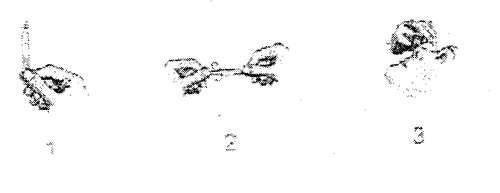
Caution: When administering the eye drops, make sure that the tip of the single-dose container does not touch
the eye or the surrounding areas;
If you are using other eye drops at the same time, administer the medicines with an interval of at least 15 minutes between
instillations.
If you use more Monofloxofta than you should
In case of ingestion/accidental intake of an excessive dose of Monofloxofta, immediately inform your
doctor or go to the nearest hospital .
If you administer an excessive amount of medicine into the eye, rinse the eye with water.
In case of overdose, symptoms should be treated and monitoring with ECG should be performed for the
possibility of heart rhythm disturbances (prolongation of the QT interval).
If you forget to use Monofloxofta
If, due to forgetfulness, a dose of this medicine is not administered, instill the dose as soon as possible. However, if the time to instill the next dose is approaching, skip the forgotten dose
and resume the usual dosage schedule.
Do not use a double dose to compensate for forgetting the previous dose
If you stop using Monofloxofta
Do not interrupt the therapy with Monofloxofta without consulting your doctor first.
If you have any doubts about the use of this medicine, ask your doctor or pharmacist.
4. Possible side effects
Like all medicines, this medicine can cause side effects, although not everybody gets them.
Serious reactions after the use of Monofloxofta are rare and most of the symptoms are reversible.
Since a small amount of Monofloxofta can be absorbed into the body after administration
into the eye, other side effects may appear at the body level.
Common(may affect up to 1 in 10 people)
- eye irritation
- eye discomfort
Very rare(may affect up to 1 in 10,000 people)
Allergic reactions (hypersensitivity), including:
- rapid swelling of the skin and mucous membranes (angioedema)
- difficulty breathing (dyspnea)
- severe allergic reactions with rapid onset (anaphylactic reactions/shock)
- swelling (edema) of the tongue and throat
Frequency not known(the frequency cannot be estimated from available data)
- heart rhythm disturbances (ventricular arrhythmia, torsades de pointes, QT prolongation on ECG) particularly in patients with known risk factors for QT interval prolongation (see “Warnings and precautions”)
- dizziness, nausea
- inflammation of the cornea (keratitis) or conjunctiva (conjunctivitis)
- blurred vision
- increased sensitivity to light (photophobia)
- foreign body sensation in the eye
- increased tearing
- dry eye
- eye pain
- hypersensitivity in the eye area (including eye and/or eyelid itching)
- redness of the eye (ocular hyperemia)
- swelling around the eyes (including eyelid swelling)
- swelling of the eye (ocular edema) or around the eye (periorbital edema)
- facial swelling (facial edema)
Life-threatening, potentially dangerous skin rashes
(Stevens-Johnson syndrome, toxic epidermal necrolysis) have been reported with the use of Monofloxofta, which initially appear as reddish spots resembling a target or circular patches often with central blisters on the trunk.
Reporting of side effects
If you get any side effects, talk to your
doctor or pharmacist. You can also report side effects directly through the national reporting system at https://www.aifa.gov.it/content/segnalazioni-reazioni-avverse .
By reporting side effects you can help provide more information on the safety of this
medicine.

Zacząłeś przyjmować lek i masz pytania?
Omów swoje objawy i leczenie z lekarzem online.
5. How to store MONOFLOXOFTA
Keep this medicine out of the sight and reach of children.
Store the medicine at a temperature not exceeding 25°C in the original packaging to protect the
medicine from light.
Do not use this medicine after the expiry date which is reported on the packaging after “Exp.”. The expiry
date refers to the last day of that month. The expiry date refers to the product in
intact packaging, correctly stored.
Use the medicine within 3 months after the first opening of the sachet; after this period, discard the
residual medicine.
Use the eye drops immediately after opening the single-dose container; discard the residual medicine.
Do not dispose of any medicine in wastewater or household waste. Ask your pharmacist how to dispose of the
medicines you no longer use. This will help protect the environment.
6. Contents of the pack and other information
What Monofloxofta contains
- The active ingredient is ofloxacin. 100 ml of solution contains 0.3 g of ofloxacin.
- The other components are: sodium chloride, water for injections, hydrochloric acid, sodium hydroxide (sufficient to adjust the pH).
Description of the appearance of Monofloxofta and contents of the pack
Monofloxofta is presented as eye drops, solution. It does not contain preservatives.
Pack of 20 single-dose containers of 0.5 ml.
Marketing Authorisation Holder
Fidia Farmaceutici S.p.A., Via Ponte della Fabbrica 3/A, 35031 Abano Terme (PD)
Manufacturer
Pharma Stulln GmbH - Werksstraße 3, 92551 Stulln, Germany
- Kraj rejestracji
- Postać farmaceutycznaEye drops, solution, 3 MG/ML
- Kod ATCS01AE01
- Substancja czynna
- Wymaga receptyTak
- Producent
- Te treści mają charakter wyłącznie informacyjny i nie zastępują konsultacji lekarskiej.
- Zamienniki MULTIFLOXOFTAPostać farmaceutyczna: Eye drops, solution, 3 MG/MLSubstancja czynna: ofloxacinProducent: BIONATIVA S.P.A.Wymaga receptyPostać farmaceutyczna: Ointment, 0.3%Substancja czynna: ofloxacinProducent: ABBVIE S.R.L.Wymaga receptyPostać farmaceutyczna: Eye drops, solution, 3 MG/MLSubstancja czynna: ofloxacinProducent: FARMIGEA S.P.A.Wymaga recepty
Odpowiedniki MULTIFLOXOFTA w innych krajach
Leki z tą samą substancją czynną dostępne w innych krajach.
Odpowiednik MULTIFLOXOFTA w Polska
Odpowiednik MULTIFLOXOFTA w Ukraina
Odpowiednik MULTIFLOXOFTA w Hiszpania
Lekarze online w sprawie MULTIFLOXOFTA
Omów stosowanie MULTIFLOXOFTA, bezpieczeństwo i ocenę zasadności recepty zgodnie z obowiązującymi przepisami.









Uzyskaj receptę na MULTIFLOXOFTA online
Wypełnij 2-minutowy formularz
Opisz swoje objawy, historię choroby i lek, o który prosisz.
Wybierz lekarza lub pozwól nam przydzielić
Wybierz specjalistę lub dopasujemy Cię do najbliższego dostępnego lekarza.
Lekarz analizuje Twój przypadek
Zazwyczaj w ciągu 30 minut. Może zadawać dodatkowe pytania przez czat.
Odbierz w dowolnej aptece
Recepta elektroniczna wysłana na Twój e-mail — ważna w całej Polsce.
Często zadawane pytania
MULTIFLOXOFTA wymaga recepty w Włochy. Możesz skonsultować się z lekarzem online, aby sprawdzić, czy ten lek może być odpowiedni w Twojej sytuacji.
Substancją czynną w MULTIFLOXOFTA jest ofloxacin. Informacja ta pomaga rozpoznać leki o tym samym składzie, ale pod różnymi nazwami handlowymi.
MULTIFLOXOFTA jest produkowany przez FIDIA FARMACEUTICI S.P.A.. Nazwy handlowe i opakowania mogą się różnić w zależności od dystrybutora.
Lekarze, tacy jak Lekarze rodzinni, Psychiatrzy, Dermatolodzy, Kardiolodzy, Endokrynolodzy, Gastroenterolodzy, Pulmonolodzy, Nefrolodzy, Reumatolodzy, Hematolodzy, Zakaźnicy, Alergolodzy, Geriatrzy, Pediatrzy, Onkolodzy, mogą ocenić, czy stosowanie MULTIFLOXOFTA jest odpowiednie w Twoim przypadku, w zależności od sytuacji klinicznej i lokalnych przepisów. Możesz umówić konsultację online, aby omówić objawy i możliwe dalsze kroki.
Polska posiada dobrze rozwiniętą infrastrukturę ochrony zdrowia w dużych miastach, takich jak Warszawa, Kraków, Wrocław i Gdańsk. Apteki są łatwo dostępne i działają zgodnie z obowiązującymi przepisami, zapewniając dostęp do leków na receptę.
Możesz kupić MULTIFLOXOFTA w Warszawie, Krakowie, Wrocławiu lub Gdańsku w każdej aptece, posiadając ważną receptę.
Aby uzyskać receptę, możesz skorzystać z Oladoctor:
Inne leki zawierające tę samą substancję czynną (ofloxacin) to m.in. DUNAFLOT, EXOKIN, FLOXIJEN. Mogą one różnić się nazwą handlową lub postacią, ale zawierają ten sam składnik terapeutyczny. Przed zmianą lub rozpoczęciem nowego leku skonsultuj się z lekarzem.
