



MONOPROST 50 MIKROGRAMÓW/ML Krople do oczu, roztwór

Ocena recepty online
Lekarz przeanalizuje Twój przypadek i zdecyduje, czy wystawienie recepty jest medycznie uzasadnione.

Porozmawiaj z lekarzem o tym leku
Omów swoje objawy i opcje leczenia podczas szybkiej konsultacji online.



Jak stosować MONOPROST
Treść ulotki
- MONOPROST 50 micrograms/ml eye drops, solution in single dose container
- MONOPROST 50 micrograms/ml eye drops, solution
MONOPROST 50 micrograms/ml eye drops, solution in single dose container
Latanoprost
Read this leaflet carefully before you start using this medicine as it contains important
information for you.
- Keep this leaflet. You may need to read it again.
- If you have any questions, ask your doctor, pharmacist or nurse.
- This medicine has been prescribed for you only. Do not pass it on to others, even if they have the same symptoms as you because it could be harmful.
- If you get any side effects, even those not listed in this leaflet, tell your doctor, pharmacist or nurse. See section 4. Contents of this leaflet:
- 1. What MONOPROST is and what it is used for
- 2. What you need to know before you use MONOPROST
- 3. How to use MONOPROST
- 4. Possible side effects
- 5. How to store MONOPROST
- 6. Contents of the pack and other information
1. WHAT IS MONOPROST AND WHAT IT IS USED FOR
MONOPROST belongs to a group of medicines known as prostaglandins. It lowers the pressure
inside your eye by increasing the natural outflow of fluid from the eye into the bloodstream.
MONOPROST is used to treat conditions known as open-angle glaucomaand ocular hypertension
. Both of these conditions are related to an increase in pressure inside your eye, which
could damage your vision.
2. WHAT YOU NEED TO KNOW BEFORE USING MONOPROST
Do not use MONOPROST
- If you are allergic (hypersensitive) to latanoprost, or to any of the other ingredients of this medicine (listed in section 6).
Warnings and precautions
Talk to your doctor, pharmacist or nurse before using MONOPROST if you think that any of the
following conditions apply to you:
- If you are about to have or have had eye surgery (including cataract surgery).
- If you suffer from eye problems (such as eye pain, irritation or inflammation, blurred vision).
- If you know you suffer from dry eyes.
- If you suffer from severe asthma or your asthma is not well controlled.
- If you wear contact lenses. You can use MONOPROST, but follow the instructions for contact lens wearers in section 3.
- If you have suffered or are suffering from a viral eye infection caused by the herpes simplex virus (HSV).
Children
MONOPROST has not been studied in children (under 18 years of age).
Other medicines and MONOPROST
MONOPROST can interact with other medicines. Tell your doctor or pharmacist if you are using, have
recently used or might use any other medicine.
Pregnancy, breastfeeding and fertility
Do not use MONOPROSTif you are pregnant or if you are breastfeeding.
If you are pregnant, suspect you are pregnant, are planning to become pregnant, or are breastfeeding,
ask your doctor or pharmacist for advice before using this medicine.
Driving and using machines
Blurred vision may occur for a
short period of time after administering MONOPROST. If this happens to you, wait until your vision has returned to normal
before driving vehicles or using tools and machinery.
Important information about the excipients of MONOPROST
MONOPROST contains macrogolglycerol hydroxystearate (derived from castor oil) which may cause
skin reactions.
3. HOW TO USE MONOPROST
Usual dosage
- Use MONOPROST always following exactly the doctor's instructions. If you have doubts, consult your doctor or pharmacist.
- The usual dosage for adults (including the elderly) is one drop, once a day in the affected eye(s). Preferably in the evening.
- Do not use MONOPROST more than once a day, because the effectiveness of the treatment may be reduced if it is administered more frequently.
doctor's instructions, until the doctor tells you to stop. If you have doubts
consult your doctor, pharmacist or nurse.
Contact lens wearers
If you use contact lenses, you must remove them before using MONOPROST. After using MONOPROST you must
wait 15 minutes before putting the lenses back in.
Instructions for use
The eye drops are presented in single-dose containers. The solution of each single-dose container of
MONOPROST must be used immediately after opening and administered to the affected eye(s).
Because sterility cannot be maintained after opening the single-dose container, it is necessary to open a
new container before each administration and it must be discarded immediately afterwards.
Follow these instructions to use the drops:
- 1. Wash your hands and sit or lie down comfortably.
- 2. Gently lower the lower eyelid of the affected eye using a finger.
- 3. Bring the opening of the single-dose container to the eye, but without touching it.
- 4. Gently compress the single-dose container so that only one drop falls into the eye, then release the lower eyelid.
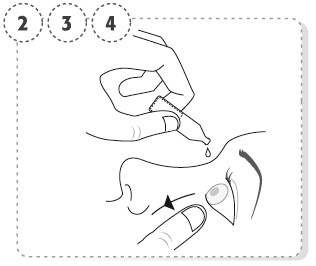
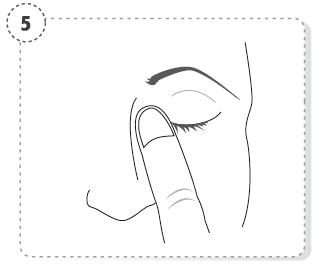
- 5. Press a finger on the corner of the affected eye, near the nose, for 1 minute keeping the eye closed.
- 6. Repeat the operation in the other eye if your doctor has told you to do so.
- 7. Dispose of the single-dose container after use. Do not keep the container for further use.
If you use MONOPROST together with other eye drops
Wait at least 5 minutes between the administration of MONOPROST and that of another eye drop.
If you use more MONOPROST than you should
If you have put too many drops in your eye, mild irritation in your eye may occur and your eyes
may water or become red. This should resolve, but if you are worried ask for advice from your
doctor.
Contact your doctor immediately if you have accidentally ingested MONOPROST.
If you forget to use MONOPROST
Continue with the usual dose at the usual time. Do not use a double dose to make up for forgetting a
dose. If you are unsure about anything, ask your doctor or pharmacist.
If you stop using MONOPROST
You must talk to your doctor if you want to stop using MONOPROST.
If you have any doubts about the use of MONOPROST, ask your doctor or pharmacist or nurse.
4. POSSIBLE SIDE EFFECTS
Like all medicines, this medicine can cause side effects, although not everybody gets them.
Below are listed the known side effects for the use of MONOPROST:
Very common: may affect more than 1 in 10 people
- A gradual change in the color of your eye due to an increase in the amount of brown pigment in the colored part of the eye, known as the iris.
- If your eyes have a mixed coloration (blue-brown, grey-brown, yellow-brown or green-brown) you will more easily notice these changes compared to those with eyes of a single color (blue, grey, green or brown eyes).
- Any changes in eye color may take years to develop although they usually occur within 8 months of treatment.
- The change in coloration may be permanent and may be more noticeable if you use MONOPROST in only one eye.
- There appear to be no problems associated with the color change.
- The change in eye color does not continue after stopping treatment with MONOPROST.
- Redness of the eye.
- Eye irritation (burning sensation, gritty feeling, itching, stinging pain and foreign body sensation).
- A gradual change in the eyelashes of the treated eye and the hairs around it, observed mainly in subjects of Japanese origin. These changes include an increase in color (darkening), length, thickness and number of eyelashes.
Common: may affect up to 1 in 10 people
- Irritation or damage to the surface of the eye, inflammation of the eyelids (blepharitis), eye pain, sensitivity to light (photophobia), conjunctivitis.
Uncommon: may affect up to 1 in 100 people
- Swelling of the eyelids, dry eye, inflammation or irritation of the surface of the eye (keratitis), blurred vision, inflammation of the colored part of the eye (uveitis), swelling of the retina (macular edema).
- Skin rash.
- Chest pain (angina), awareness of heartbeat (palpitations).
- Asthma, shortness of breath (dyspnea).
- Chest pain.
- Headache, dizziness.
- Muscle pain, joint pain.
Rare: may affect up to 1 in 1000 people
- Inflammation of the iris, (iritissymptoms of swelling or erosion/damage to the surface of the eye, swelling in the area around the eye (periorbital edema), eyelashes with abnormal direction or an extra row of eyelashes fluid-filled area inside the colored part of the eye (iris cyst).
- Skin reaction on the eyelids, darkening of the skin of the eyelids.
- Worsening of asthma.
- Severe skin itching
- development of viral infections in the eye caused by the herpes simplex virus (HSV).
Very rare: may affect up to 1 in 10000 people
- Worsening of angina in patients who also have heart disease.
- Appearance of a sunken eye (hollowing of the eye socket).
Reporting of side effects
If you get any side effects, talk to your doctor or pharmacist. This includes any possible side effects not listed in this leaflet. You can also report side effects directly through the national reporting system at www.agenziafarmaco.gov.it/content/come-segnalare-una-
sospetta-reazione-avversa By reporting side effects you can help provide more information on the safety of this medicine.
5. HOW TO STORE MONOPROST
Keep this medicine out of the sight and reach of children.
Do not use this medicine after the expiry date which is stated on the package, on the sachet and on the single-dose container.
The expiry date refers to the last day of that month.
Store at a temperature below 25°C.
After first opening of the sachet: use the single-dose containers within 7 days.
After first opening of the single-dose container: use the single-dose container immediately and dispose of it
after use.
Do not dispose of any medicine in wastewater or household waste. Ask your pharmacist how to dispose of
medicines you no longer use. This will help protect the environment.
6. PACKAGE CONTENTS AND OTHER INFORMATION
What MONOPROST contains
The active ingredient is latanoprost.
1 ml of eye drops solution contains 50 micrograms of latanoprost.
The other ingredients are: hydroxy stearate macrogolglycerol 40, sorbitol, carbomer 974P, macrogol 4000,
disodium edetate, sodium hydroxide (for pH adjustment), water for injections.
Description of the appearance of MONOPROST and package contents
This medicine is an eye drop, solution in single-dose containers. The solution is slightly
yellow and opalescent without preservatives, presented in single-dose containers packaged in a bag of 5
units, each single-dose container containing 0.2 ml of product.
One pack contains 5 (1 x 5), 10 (2 x 5), 30 (6 x 5) or 90 (18 x 5) single-dose containers.
Not all pack sizes may be marketed
Marketing Authorisation Holder and Manufacturer
Marketing Authorisation Holder
LABORATOIRES THEA
12, RUE LOUIS BLERIOT
63017 CLERMONT-FERRAND CEDEX 2
FRANCE
Manufacturer
EXCELVISION
27, RUE DE LA LOMBARDIERE
ZI LA LOMBARDI É RE
07100 ANNONAY
FRANCE
Or
LABORATOIRES THEA
12, RUE LOUIS BLERIOT
63017 CLERMONT-FERRAND CEDEX 2
FRANCE
This medicinal product is authorised in the Member States of the European Economic Area under the following
names:
Belgium, Bulgaria, Cyprus, Denmark, Estonia, Finland, France, Germany, Greece, Iceland, Italy, Latvia,
Luxembourg, Netherlands, Norway, Poland, Portugal, Spain, Sweden: ........................................Monoprost
Ireland: ........................................................................................................................Monopost Unidose
Austria, Czech Republic, Lithuania, Great Britain, Romania, Slovak Republic, Slovenia: ...... Monopost
This leaflet was last approved on:
Detailed information on this medicine is available on the website of the [MA/Agency]
MONOPROST 50 micrograms/ml eye drops, solution
Latanoprost
Only for the 1 bottle of 2.5 ml pack: Generic medicine
Read this leaflet carefully before you start using this medicine as it contains important
information for you.
- Keep this leaflet. You may need to read it again.
- If you have any questions, ask your doctor, pharmacist or nurse.
- This medicine has been prescribed for you only. Do not pass it on to others, even if they have the same symptoms as you because it may be harmful.
- If you get any side effects, even those not listed in this leaflet, tell your doctor, pharmacist or nurse. See section 4.
Contents of this leaflet:
- 1. What MONOPROST is and what it is used for
- 2. What you need to know before you use MONOPROST
- 3. How to use MONOPROST
- 4. Possible side effects
- 5. How to store MONOPROST
- 6. Contents of the pack and other information
1. WHAT IS MONOPROST AND WHAT IT IS USED FOR
MONOPROST belongs to a group of medicines known as prostaglandins. It lowers the pressure
inside your eye by increasing the natural outflow of fluids from inside the eye to the bloodstream.
MONOPROST is used to treat conditions known as open-angle glaucomaand ocular hypertension
in adults. Both of these conditions are related to an increase in pressure inside your
eye, which could damage your vision.
MONOPROST is an eye drop, solution, without preservative.
2. WHAT YOU NEED TO KNOW BEFORE USING MONOPROST
Do not use MONOPROST
- If you are allergic (hypersensitive) to latanoprost, or to any of the other ingredients of this medicine (listed in section 6).
Warnings and precautions
Talk to your doctor, pharmacist or nurse before using MONOPROST if you think that any of the following
conditions apply to you:
- If you are about to have or have had eye surgery (including cataract surgery).
- If you suffer from eye problems (such as eye pain, irritation or inflammation, blurred vision).
- If you know you suffer from dry eyes.
- If you suffer from severe asthma or your asthma is not well controlled.
- If you wear contact lenses. You can use MONOPROST, but follow the instructions for contact lens wearers in section 3.
- If you have suffered or are currently suffering from a viral eye infection caused by the herpes simplex virus (HSV).
Children
Do not give this medicine to children under 18 years of age. MONOPROST has not been studied in
this population.
Other medicines and MONOPROST
MONOPROST can interact with other medicines. Tell your doctor or pharmacist if you are using, have
recently used or might use any other medicine.
Pregnancy, breastfeeding and fertility
Do not use MONOPROSTif you are pregnant or if you are breastfeeding.
If you are pregnant, suspect you are pregnant, are planning to become pregnant, or are breastfeeding,
ask your doctor or pharmacist for advice before using this medicine.
Driving and using machines
Blurred vision may occur for a
short period of time after administering MONOPROST. If this happens to you, do not drive vehiclesor use tools and machinery until
your vision returns to normal.
Important information about some of the excipients of MONOPROST
MONOPROST contains macrogolglycerol hydroxystearate (derived from castor oil) which may cause
skin reactions.
3. HOW TO USE MONOPROST
Usual dosage
- Use MONOPROST always following exactly the doctor's instructions. If you have doubts, consult your doctor or pharmacist.
- The usual dosage for adults (including the elderly) is one drop, once a day in the affected eye(s). The best time to do this is in the evening.
- Do not use MONOPROST more than once a day, because the effectiveness of the treatment may be reduced if it is administered more frequently.
exactly the doctor's instructions, until the doctor tells you to stop. If you have
doubts, consult your doctor, pharmacist or nurse.
- This medicine is an eye drop, solution, without preservative. Do not allow the tip of the container to touch the eye or the areas around the eye. The tip of the container could become contaminated with bacteria that can cause serious eye infections with severe damage, up to loss of vision. To avoid possible contamination of the bottle, keep the tip of the bottle away from contact with any surface.
Contact lens wearers
If you use contact lenses, you must remove them before using MONOPROST. After using MONOPROST you must
wait 15 minutes before putting the lenses back in.
Instructions for use
It is very important to follow the following instructions when using the product:
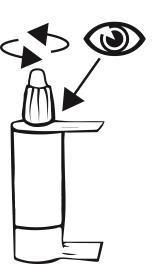 | o Before using the medicine for the first time: c
|
a F
| |
 | e d
|
n
| |
a t If the drop does not come down, gently shake the bottle to remove the drop remaining on the tip. In this case, repeat point 3.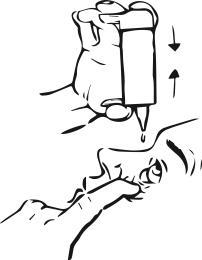 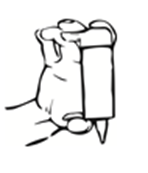 | |
I a
| |
 |
|
If you use MONOPROST together with other eye drops
Wait at least 5 minutes between the administration of MONOPROST and that of other eye drops.
If you use more MONOPROST than you should
If you have put too many drops in your eye, mild irritation may occur in your eye and your eyes
may water or become red. This should resolve, but if you are worried, ask for advice from your
doctor.
Contact your doctor immediately if you have accidentally swallowed MONOPROST.
If you forget to use MONOPROST
Continue with the usual dose at the usual time. Do not use a double dose to make up for the missed dose. If you are unsure about anything, consult your doctor or pharmacist.
If you stop the treatment with MONOPROST
You must talk to your doctor if you want to stop using MONOPROST.
If you have any doubts about the use of this medicine, consult your doctor or pharmacist or nurse.
4. POSSIBLE SIDE EFFECTS
Like all medicines, this medicine can cause side effects, although not everybody gets them.
Below are listed the known side effects associated with the use of MONOPROST:
Very common: may affect more than 1 in 10 people
- A gradual change in the colour of your eye due to an increase in the amount of brown pigment in the coloured part of the eye, known as the iris.
- If your eyes have a mixed colour (blue-brown, grey-brown, yellow-brown or green-brown) you will more easily notice these changes compared to those with eyes of a single colour (blue, grey, green or brown eyes).
- Any changes in eye colour may take years to develop, although they usually occur within 8 months of treatment.
- The change in colour may be permanent and may be more noticeable if you use MONOPROST in only one eye.
- There do not appear to be any problems associated with the change in eye colour.
- The change in eye colour does not continue after stopping treatment with MONOPROST.
- Redness of the eye.
- Eye irritation (burning sensation, gritty sensation, itching, stinging pain and feeling of something in the eye).
- A gradual change in the eyelashes of the treated eye and the hairs around it, observed mainly in subjects of Japanese origin. These changes include an increase in colour (darkening), length, thickness and number of eyelashes.
Common: may affect up to 1 in 10 people
- Irritation or damage to the surface of the eye, inflammation of the eyelids (blepharitis), eye pain, sensitivity to light (photophobia), conjunctivitis.
Uncommon: may affect up to 1 in 100 people
- Swelling of the eyelids, dry eye, inflammation or irritation of the surface of the eye (keratitis), blurred vision, inflammation of the coloured part of the eye (uveitis), swelling of the retina (macular edema).
- Skin rash
- Chest pain (angina), awareness of heartbeat (palpitations).
- Asthma, shortness of breath (dyspnea).
- Chest pain.
- Headache, dizziness.
- Muscle pain, joint pain.
Rare: may affect up to 1 in 1,000 people
- Inflammation of the iris (iritis, symptoms of swelling or erosion/damage to the surface of the eye, swelling in the area around the eye (periorbital edema), eyelashes with abnormal direction or an additional row of eyelashes, area filled with fluid inside the coloured part of the eye (iris cyst).
- Skin reaction on the eyelids, darkening of the skin of the eyelids.
- Worsening of asthma.
- Severe skin itching
- Development of viral infections in the eye caused by the herpes simplex virus (HSV).
Very rare: may affect up to 1 in 10,000 people
- Worsening of angina in patients who also have heart disease.
- Sunken appearance of the eye (deepening of the eye socket).
Reporting of side effects
If you get any side effects, even those not listed in this leaflet, tell your
doctor or pharmacist. You can also report side effects directly through the national
reporting system at http:// www.agenziafarmaco.gov.it/content/come-segnalare-una-
sospetta-reazione-avversa . By reporting side effects you can help provide more
information on the safety of this medicine.
5. HOW TO STORE MONOPROST
Keep this medicine out of the sight and reach of children.
Do not use this medicine after the expiry date which is stated on the package and the vial. The expiry date refers to the last day of that month.
Before opening: do not store at a temperature above 25°C.
After first opening: MONOPROST can be used for 1 month for the 2.5 ml vial and for 3 months
for the 6 ml vial, without any particular storage conditions.
Write the date of first opening on the package.
Do not dispose of any medicine in wastewater or household waste. Ask your pharmacist how to
dispose of medicines you no longer use. This will help protect the environment.
6. PACKAGE CONTENTS AND OTHER INFORMATION
What MONOPROST contains
The active ingredient is latanoprost.
1 ml of eye drops solution contains 50 micrograms of latanoprost.
The other ingredients are: macrogolglycerol hydroxystearate 40, sorbitol, carbomer 974P, macrogol 4000,
disodium edetate, sodium hydroxide (for pH adjustment), water for injections.
Description of MONOPROST and package contents
MONOPROST is a slightly yellow and opalescent solution, without preservative.
MONOPROST is available in the following formats:
- Multidose bottle of 2.5 ml (at least 70 drops without preservative), for one month of treatment, with Easygrip pump and ergonomic supports.
- Multidose bottle of 6 ml (at least 190 drops without preservative), for 3 months of treatment, with Easygrip pump and ergonomic supports.
Not all pack sizes may be marketed
Marketing Authorisation Holder and Manufacturer
Marketing Authorisation Holder
LABORATOIRES THEA
12, RUE LOUIS BLERIOT
63017 CLERMONT-FERRAND CEDEX 2
FRANCE
Manufacturer
DELPHARM TOURS
RUE PAUL LANGEVIN
37170 CHAMBRAY LES TOURS
FRANCE
Or
LABORATOIRES THEA
12, RUE LOUIS BLERIOT
63017 CLERMONT-FERRAND CEDEX 2
FRANCE
This medicinal product is authorised in the Member States of the European Economic Area under the following
names:
Belgium, Bulgaria, Cyprus, Denmark, Finland, France, Germany, Greece, Iceland, Italy, Luxembourg, Netherlands,
Norway, Poland, Portugal, Spain, Sweden................................................................... Monoprost
Austria, Czech Republic, Romania, Slovak Republic, Slovenia ...............................................Monopost
This leaflet was last updated on:
Detailed information on this medicinal product is available on the website of the Italian Medicines Agency

Nie jesteś pewien, czy ten lek jest odpowiedni dla ciebie?
Omów swoje objawy i leczenie z lekarzem online.

Zacząłeś przyjmować lek i masz pytania?
Omów swoje objawy i leczenie z lekarzem online.
- Kraj rejestracji
- Postać farmaceutycznaEye drops, solution, 50 MICROGRAMMI/ML
- Kod ATCS01EE01
- Substancja czynna
- Wymaga receptyTak
- Producent
- Te treści mają charakter wyłącznie informacyjny i nie zastępują konsultacji lekarskiej.
- Zamienniki MONOPROSTPostać farmaceutyczna: Emulsion eye drops, 50 ?g / mlSubstancja czynna: latanoprostProducent: SANTEN OYWymaga receptyPostać farmaceutyczna: Eye drops, solution, 50 MICROGRAMMI/MLSubstancja czynna: latanoprostProducent: OMNIVISION ITALIA SRLWymaga receptyPostać farmaceutyczna: Eye drops, solution, 0.005 %Substancja czynna: latanoprostWymaga recepty
Odpowiedniki MONOPROST w innych krajach
Leki z tą samą substancją czynną dostępne w innych krajach.
Odpowiednik MONOPROST w Hiszpania
Odpowiednik MONOPROST w Polska
Odpowiednik MONOPROST w Ukraina
Lekarze online w sprawie MONOPROST
Omów stosowanie MONOPROST, bezpieczeństwo i ocenę zasadności recepty zgodnie z obowiązującymi przepisami.









Uzyskaj receptę na MONOPROST online
Wypełnij 2-minutowy formularz
Opisz swoje objawy, historię choroby i lek, o który prosisz.
Wybierz lekarza lub pozwól nam przydzielić
Wybierz specjalistę lub dopasujemy Cię do najbliższego dostępnego lekarza.
Lekarz analizuje Twój przypadek
Zazwyczaj w ciągu 30 minut. Może zadawać dodatkowe pytania przez czat.
Odbierz w dowolnej aptece
Recepta elektroniczna wysłana na Twój e-mail — ważna w całej Polsce.
Często zadawane pytania
MONOPROST wymaga recepty w Włochy. Możesz skonsultować się z lekarzem online, aby sprawdzić, czy ten lek może być odpowiedni w Twojej sytuacji.
Substancją czynną w MONOPROST jest latanoprost. Informacja ta pomaga rozpoznać leki o tym samym składzie, ale pod różnymi nazwami handlowymi.
MONOPROST jest produkowany przez LABORATOIRES THEA. Nazwy handlowe i opakowania mogą się różnić w zależności od dystrybutora.
Lekarze, tacy jak Lekarze rodzinni, Psychiatrzy, Dermatolodzy, Kardiolodzy, Endokrynolodzy, Gastroenterolodzy, Pulmonolodzy, Nefrolodzy, Reumatolodzy, Hematolodzy, Zakaźnicy, Alergolodzy, Geriatrzy, Pediatrzy, Onkolodzy, mogą ocenić, czy stosowanie MONOPROST jest odpowiednie w Twoim przypadku, w zależności od sytuacji klinicznej i lokalnych przepisów. Możesz umówić konsultację online, aby omówić objawy i możliwe dalsze kroki.
Polska posiada dobrze rozwiniętą infrastrukturę ochrony zdrowia w dużych miastach, takich jak Warszawa, Kraków, Wrocław i Gdańsk. Apteki są łatwo dostępne i działają zgodnie z obowiązującymi przepisami, zapewniając dostęp do leków na receptę.
Możesz kupić MONOPROST w Warszawie, Krakowie, Wrocławiu lub Gdańsku w każdej aptece, posiadając ważną receptę.
Aby uzyskać receptę, możesz skorzystać z Oladoctor:
Inne leki zawierające tę samą substancję czynną (latanoprost) to m.in. KATIOLANTSE, DROPLATAN, GALAXIA. Mogą one różnić się nazwą handlową lub postacią, ale zawierają ten sam składnik terapeutyczny. Przed zmianą lub rozpoczęciem nowego leku skonsultuj się z lekarzem.
