



MIRAPEXIN 0.088 mg Coated tablet

Запит на рецепт онлайн
Лікар розгляне ваш випадок і визначить, чи є рецепт медично доцільним.

Поговоріть з лікарем про ці ліки
Обговоріть симптоми та можливі подальші кроки під час короткої онлайн-консультації.



Інструкція із застосування MIRAPEXIN
Зміст інструкції
- MIRAPEXIN 0.088 mg tablets, 0.18 mg tablets, 0.35 mg tablets, 0.7 mg tablets
- MIRAPEXIN 0.26 mg prolonged-release tablets, 0.52 mg prolonged-release tablets, 1.05 mg prolonged-release tablets, 1.57 mg prolonged-release tablets, 2.1 mg prolonged-release tablets, 2.62 mg prolonged-release tablets, 3.15 mg prolonged-release tablets
MIRAPEXIN 0.088 mg tablets, 0.18 mg tablets, 0.35 mg tablets, 0.7 mg tablets
pramipexole
Read this leaflet carefully before you start taking this medicine as it contains important information for you.
- Keep this leaflet. You may need to read it again.
- If you have any questions, ask your doctor or pharmacist.
- This medicine has been prescribed for you only. Do not pass it on to others, even if they have the same symptoms as you, as it may be harmful.
- If you get any side effects, even those not listed in this leaflet, tell your doctor or pharmacist. See section 4.
Contents of this leaflet:
- 1. What MIRAPEXIN is and what it is used for
- 2. What you need to know before you take MIRAPEXIN
- 3. How to take MIRAPEXIN
- 4. Possible side effects
- 5. How to store MIRAPEXIN
- 6. Contents of the pack and other information
1. What is MIRAPEXIN and what it is used for
MIRAPEXIN contains the active substance pramipexole and belongs to a group of medicines known
as dopamine agonists which stimulate dopamine receptors located in the brain. Stimulation of the
dopamine receptors in the brain triggers nerve impulses that help to
control body movements.
MIRAPEXIN is used for:
- the treatment of symptoms of primary Parkinson's disease in adults. It can be used alone or in combination with levodopa (another medicine for Parkinson's disease).
- the treatment of moderate to severe primary Restless Legs Syndrome (RLS) in adults.
2. What you need to know before taking MIRAPEXIN
Do not take MIRAPEXIN
- if you are allergic to pramipexole or any of the other ingredients of this medicine (listed in section 6).
Warnings and precautions
Talk to your doctor before taking MIRAPEXIN. Tell your doctor if you have (have had) or develop any
medical condition or symptom, especially if you belong to the following list:
- Kidney disease.
- Hallucinations (seeing, hearing or perceiving things that are not there). Most hallucinations are visual.
- Dyskinesia (e.g. abnormal, uncontrolled movements of the limbs). If you suffer from advanced Parkinson's disease and are also taking levodopa, you may develop dyskinesia during the titration of MIRAPEXIN.
- Dystonia (inability to keep the body and neck upright (axial dystonia)). In particular, you may experience forward flexion of the head and neck (also known as anterior torticollis), forward flexion of the lower back (also known as camptocormia) or lateral flexion of the trunk (also known as pleurototonia or Pisa syndrome).
- Sleepiness and sudden onset of sleep.
- Psychosis (e.g. comparable to symptoms of schizophrenia).
- Vision impairment. During treatment with MIRAPEXIN, you should undergo regular eye checks.
- Severe heart or blood vessel disease. Especially at the beginning of treatment, your blood pressure will need to be checked regularly. This is to avoid postural hypotension (a drop in blood pressure when standing up).
- Worsening of symptoms of restless legs syndrome. If you notice that the symptoms occur earlier than usual in the evening (or even in the afternoon), are more intense or involve more extensive parts of the affected limbs or involve other limbs. Your doctor may reduce the dose or stop treatment.
Tell your doctor if you, your family members or your caregivers notice that you are developing a
urge or desire to behave in ways that are unusual for you and that you are unable to resist the impulse, drive or temptation to perform certain activities that may harm yourself or others. These
phenomena are called impulse control disorders and may include behaviors such as
gambling, overeating or excessive spending, an unusually high sexual desire or increased sexual thoughts or feelings. Your doctor may need to
adjust the dose or stop therapy.
Tell your doctor if you, your family members or your caregivers notice that you are developing mania
(agitation, feeling of euphoria or overexcitement) or delirium (reduced awareness,
confusion or loss of sense of reality). Your doctor may need to adjust the dose or
stop therapy.
Tell your doctor if you experience symptoms such as depression, apathy, anxiety, feeling of fatigue,
sweating or pain after stopping treatment or reducing the dosage of MIRAPEXIN. If the
symptoms persist for more than a few weeks, your doctor may need to modify
therapy.
Tell your doctor if you experience an inability to keep your body and neck upright (axial
dystonia). If this should happen, your doctor may decide to adjust or change the treatment.
Children and adolescents
The use of MIRAPEXIN is not recommended in children or adolescents under the age of 18 years.
Other medicines and MIRAPEXIN
Tell your doctor or pharmacist if you are taking, have recently taken or might take
any other medicines, including medicines, herbal preparations, dietary products or
supplements obtained without a prescription.
You should avoid taking MIRAPEXIN in combination with antipsychotic medicines.
Be careful if you are taking the following medicines:
- cimetidine (to treat excess acid in the stomach and gastric ulcers)
- amantadine (which may be used to treat Parkinson's disease)
- mexiletine (to treat irregular heartbeats, a condition known as ventricular arrhythmia)
- zidovudine (which may be used to treat acquired immunodeficiency syndrome (AIDS), a disease of the human immune system)
- cisplatin (to treat various types of cancer)
- quinine (which may be used for the prevention of painful leg cramps at night and for the treatment of a type of malaria known as falciparum malaria (malignant malaria))
- procainamide (to treat irregular heartbeats)
If you are taking levodopa, it is recommended to reduce the dose when starting treatment with
MIRAPEXIN.
Be careful if you are taking any sedative medicine (which has a sedative effect) or if
you are drinking alcohol. In these cases, MIRAPEXIN may impair your ability to drive or
operate machinery.
MIRAPEXIN with food, beverages and alcohol
You should be cautious if you drink alcohol while taking MIRAPEXIN.
MIRAPEXIN can be taken with or without food.
Pregnancy and breastfeeding
If you are pregnant, suspect you may be pregnant or are planning to become pregnant, ask your doctor for advice before taking this medicine. The doctor will discuss with
you whether to continue taking MIRAPEXIN.
The effect of MIRAPEXIN on the fetus is unknown. Therefore, do not take MIRAPEXIN if you are pregnant
unless your doctor tells you to do so.
MIRAPEXIN should not be taken during breastfeeding. MIRAPEXIN may reduce milk production.
It may also pass into the milk and reach the baby. If taking MIRAPEXIN is
unavoidable, breastfeeding must be stopped.
Ask your doctor or pharmacist for advice before taking any medicine.
Driving and operating machinery
MIRAPEXIN can cause hallucinations (seeing, hearing or perceiving things that are not there). If this
happens, do not drive or operate machinery.
MIRAPEXIN has been associated with sleepiness and sudden onset of sleep,
particularly in patients with Parkinson's disease. If these side effects occur, avoid
driving and do not operate machinery. Tell your doctor if this happens.
3. How to take MIRAPEXIN
Take this medicine exactly as your doctor has told you. If you have any doubts, ask your doctor.
Your doctor will tell you the correct dosage.
MIRAPEXIN can be taken with or without food. The tablets must be swallowed with water.
Parkinson’s Disease
The daily dose should be taken divided into 3 equal doses.
During the first week, the usual dose is 1 MIRAPEXIN 0.088 mg tablet three times a day (equivalent to 0.264 mg per day):
| 1st week | |
| Number of tablets | 1 MIRAPEXIN 0.088 mg tablet three times a day |
| Total daily dose (mg) | 0.264 |
This dose will be increased every 5-7 days as directed by your doctor until symptoms are controlled (maintenance dose).
The usual maintenance dose is 1.1 mg per day. However, your dose may also be further increased. If necessary, your doctor may increase the dose of tablets up to a maximum of 3.3 mg per day of pramipexole. A lower maintenance dose of three MIRAPEXIN 0.088 mg tablets per day is also possible.
| 2nd week | or 3rd week | |
| Number of tablets | 1 MIRAPEXIN 0.18 mg tablet three times a day OR 2 MIRAPEXIN 0.088 mg tablets three times a day | 1 MIRAPEXIN 0.35 mg tablet three times a day OR 2 MIRAPEXIN 0.18 mg tablets three times a day |
| Total daily dose (mg) | 0.54 | 1.1 |
| Lowest maintenance dose | Highest maintenance dose | |
| Number of tablets | 1 MIRAPEXIN 0.088 mg tablet three times a day and | 1 MIRAPEXIN 0.7 mg tablet and 1 MIRAPEXIN 0.35 mg tablet three times a day |
| Total daily dose (mg) | 0.264 | 3.15 |
Patients with kidney disease
If you suffer from moderate or severe kidney disease, your doctor will prescribe a lower dose. In this case, you will need to take the tablets only once or twice a day. If you suffer from moderate kidney disease, the usual starting dose is 1 MIRAPEXIN 0.088 mg tablet twice a day. In the case of severe kidney disease, the usual starting dose is only 1 MIRAPEXIN 0.088 mg tablet per day.
Restless Legs Syndrome
The dose is usually taken once a day in the evening, 2-3 hours before going to bed.
During the first week, the usual dose is 1 MIRAPEXIN 0.088 mg tablet once a day (equivalent to 0.088 mg per day):
| I | 1st week |
| Number of tablets | 1 MIRAPEXIN 0.088 mg tablet |
| Total daily dose (mg) | 0.088 |
This dose will be increased every 4-7 days as directed by your doctor until symptoms are controlled (maintenance dose).
| 2nd week | 3rd week | 4th week | |
| Number of tablets | 1 MIRAPEXIN 0.18 mg tablet OR 2 MIRAPEXIN 0.088 mg tablets | 1 MIRAPEXIN 0.35 mg tablet OR 2 MIRAPEXIN 0.18 mg tablets OR 4 MIRAPEXIN 0.088 mg tablets | 1 MIRAPEXIN 0.35 mg tablet and 1 MIRAPEXIN 0.18 mg tablet OR 3 MIRAPEXIN 0.18 mg tablets OR 6 MIRAPEXIN 0.088 mg tablets |
| Total daily dose (mg) | 0.18 | 0.35 | 0.54 |
The daily dose should not exceed 6 MIRAPEXIN 0.088 mg tablets or a dose of 0.54 mg (0.75 mg pramipexole salt).
If you stop taking the tablets for a period longer than a few days and intend to resume treatment, you should start again with the lowest dose. You can then return to your dose as before. Ask your doctor for advice.
Your doctor will review your treatment after 3 months to decide whether to continue it or not.
Patients with kidney disease
If you suffer from severe kidney disease, treatment with MIRAPEXIN may not be suitable for you.
If you take more MIRAPEXIN than you should
If you accidentally take too many tablets,
- contact your doctor immediately or go to the emergency room of the nearest hospital.
- You may experience vomiting, a feeling of restlessness, or any of the undesirable effects described in section 4 (Possible side effects).
If you forget to take MIRAPEXIN
Do not worry. Simply skip the missed dose completely and then take the next dose at the usual time.
Do not take a double dose to make up for a missed dose.
If you stop taking MIRAPEXIN
Do not stop taking MIRAPEXIN without first talking to your doctor. If you need to stop treatment with this medicine, your doctor will gradually reduce the dose. This reduces the risk of worsening symptoms.
If you suffer from Parkinson’s disease, you should not stop treatment with MIRAPEXIN abruptly.
Sudden discontinuation could lead to the development of a medical condition called neuroleptic malignant syndrome, which can pose a greater risk to your health. Symptoms include:
- akinesia (loss of muscle movement)
- muscle rigidity
- fever
- unstable blood pressure
- tachycardia (increased heart rate)
- confusion
- decreased level of consciousness (e.g., coma)
If you stop taking MIRAPEXIN or reduce the dose, you may also develop a medical condition called dopamine agonist withdrawal syndrome. Symptoms include depression, apathy, anxiety, a feeling of fatigue, sweating, or pain. If you experience these symptoms, you should contact your doctor.
If you have any further questions on the use of this medicine, ask your doctor or pharmacist.
4. Possible side effects
Like all medicines, this medicine can cause side effects, although not everybody gets them.
The assessment of these side effects is based on the following frequencies:
| Very common | m can affect more than 1 in 10 people |
| Common | can affect up to 1 in 10 people |
| Uncommon | can affect up to 1 in 100 people |
| Rare | r can affect up to 1 in 1,000 people |
| Very rare | a can affect up to 1 in 10,000 people |
| Not known | the frequency cannot be estimated based on the available data |
If you suffer from Parkinson's disease, you may develop the following side effects:
Very common:
- Dyskinesia (e.g. involuntary, abnormal movements of the limbs)
- Drowsiness
- Dizziness
- Nausea (feeling unwell)
Common:
- Urge to behave unusually
- Hallucinations (seeing, hearing or perceiving things that are not there)
- Confusion
- Fatigue (feeling tired)
- Sleeplessness (insomnia)
- Fluid retention, usually in the legs (peripheral edema)
- Headache
- Hypotension (low blood pressure)
- Abnormal dreams
- Constipation
- Vision changes
- Vomiting (feeling unwell)
- Weight loss accompanied by reduced appetite
Uncommon:
- Paranoia (e.g. excessive fear for one's well-being)
- Delirium
- Excessive daytime sleepiness and sudden onset of sleep
- Amnesia (memory disorders)
- Hyperkinesia (increased movements and inability to remain still)
- Weight gain
- Allergic reactions (e.g. skin rash, itching, hypersensitivity)
- Fainting
- Heart failure (heart problems that can cause shortness of breath or swelling of the ankles)*
- Inappropriate secretion of antidiuretic hormone*
- Restlessness
- Dyspnea (difficulty breathing)
- Hiccups
- Pneumonia (lung infection)
- Inability to resist the urge, drive or temptation to perform an action that may be
harmful to you or others, which may include:
- Strong urge to gamble excessively despite serious personal or family consequences.
- Altered or increased sexual interest and behaviour that causes significant concern to you or others, for example an increased sexual drive.
- Excessive and uncontrollable shopping or spending.
- Uncontrolled eating (eating large amounts of food in a short period of time) or compulsive eating (eating more food than normal and more than needed to satisfy your appetite)*
- Delirium (reduced awareness, confusion, loss of sense of reality)
Rare:
- Mania (agitation, feeling of euphoria or overexcitement)
- Spontaneous penile erection
Not known:
- After stopping or reducing the dosage of MIRAPEXIN, depression, apathy, anxiety, feeling tired, sweating or pain (dopamine agonist withdrawal syndrome or DAWS) may occur.
Tell your doctor if you experience any of these behaviours; they will explain how to manage or
reduce the symptoms.
For side effects marked with * it is not possible to make a precise estimate of the frequency as
these side effects have not been observed in clinical studies involving 2,762 patients treated with
pramipexole. The frequency category is likely no greater than “uncommon”.
If you suffer from restless legs syndrome, you may develop the following side effects:
Very common:
- Nausea (feeling unwell)
- Symptoms that occur earlier than usual, are more intense or involve other limbs (worsening of restless legs syndrome symptoms).
Common:
- Sleep disturbances, such as difficulty falling asleep (insomnia) and drowsiness
- Fatigue (feeling tired)
- Headache
- Abnormal dreams
- Constipation
- Dizziness
- Vomiting (feeling unwell)
Uncommon:
- Urge to behave unusually*
- Heart failure (heart problems that can cause shortness of breath or swelling of the ankles)*
- Inappropriate secretion of antidiuretic hormone*
- Dyskinesia (e.g. involuntary, abnormal movements of the limbs)
- Hyperkinesia (increased movements and inability to remain still)*
- Paranoia (e.g. excessive fear for one's well-being)*
- Delirium*
- Amnesia (memory disorders)*
- Hallucinations (seeing, hearing or perceiving things that are not there)
- Confusion
- Excessive daytime sleepiness and sudden onset of sleep
- Weight gain
- Hypotension (low blood pressure)
- Fluid retention, usually in the legs (peripheral edema)
- Allergic reactions (e.g. skin rash, itching, hypersensitivity)
- Fainting
- Restlessness
- Vision changes
- Weight loss accompanied by decreased appetite
- Dyspnea (difficulty breathing)
- Hiccups
- Pneumonia (lung infection)*
- Inability to resist the urge, drive or temptation to perform an action that may be harmful to you or others, which may include:
- Strong urge to gamble excessively despite serious personal or family consequences.*
- Altered or increased sexual interest and behaviour that causes significant concern to you or others, for example an increased sexual drive.*
- Excessive and uncontrollable shopping or spending.*
- Uncontrolled eating (eating large amounts of food in a short period of time) or compulsive eating (eating more food than normal and more than needed to satisfy your appetite)*
- Mania (agitation, feeling of euphoria or overexcitement)*
- Delirium (reduced awareness, confusion, loss of sense of reality)*
Rare:
- Spontaneous penile erection
Not known:
- After stopping or reducing the dosage of MIRAPEXIN, depression, apathy, anxiety, feeling tired, sweating or pain (dopamine agonist withdrawal syndrome or DAWS) may occur.
Tell your doctor if you experience any of these behaviours; they will explain how to manage or
reduce the symptoms.
For side effects marked with * it is not possible to make a precise estimate of the frequency as
these side effects have not been observed in clinical studies involving 1,395 patients treated with
pramipexole. The frequency category is likely no greater than “uncommon”.
Reporting of side effects
If you get any side effects, even those not listed in this leaflet, tell your
doctor or pharmacist. You can also report side effects directly through the national reporting system
detailed in Annex V. By reporting side effects you can help provide more information on the safety of
this medicine.
5. How to store MIRAPEXIN
Keep this medicine out of the sight and reach of children.
Do not use this medicine after the expiry date which is stated on the pack after Exp. The expiry date refers to the last day of that month.
Do not store at a temperature above 30 °C.
Store in the original package to protect the tablets from light.
Do not dispose of any medicine in waste water or household waste. Ask your pharmacist how to
dispose of medicines you no longer use. This will help protect the environment.
6. Package contents and other information
What MIRAPEXIN contains
The active ingredient is pramipexole.
Each tablet contains 0.088 mg, 0.18 mg, 0.35 mg or 0.7 mg of pramipexole, respectively as
0.125 mg, 0.25 mg, 0.5 mg or 1 mg of pramipexole dihydrochloride monohydrate.
The other ingredients are mannitol, corn starch, anhydrous colloidal silica, povidone K25, magnesium
stearate.
Description of the appearance of MIRAPEXIN and contents of the pack
MIRAPEXIN 0.088 mg tablets are white, round, flat and are not divisible.
MIRAPEXIN 0.18 mg and MIRAPEXIN 0.35 mg tablets are white, oval and
flat. They are scored on both sides and divisible.
MIRAPEXIN 0.7 mg tablets are white, round and flat. They are scored on
both sides and divisible.
All tablets have the Boehringer Ingelheim logo imprinted on one side and the codes P6,
P7, P8 or P9 on the other, representing the tablet dosage, respectively 0.088 mg,
0.18 mg, 0.35 mg and 0.7 mg.
All strengths of MIRAPEXIN are available in aluminum blisters of 10 tablets,
packaged in cardboard cartons containing 3 or 10 blisters (30 or 100 tablets).
Not all pack sizes may be marketed.
Marketing Authorisation Holder
Boehringer Ingelheim International GmbH
Binger Strasse 173
55216 Ingelheim am Rhein
Germany
Manufacturer
Boehringer Ingelheim Pharma GmbH & Co. KG
Binger Strasse 173
55216 Ingelheim am Rhein
Germany
Rottendorf Pharma GmbH
Ostenfelder Strasse 51 – 61
59320 Ennigerloh
Germany
Boehringer Ingelheim France
100-104 avenue de France
75013 Paris
France
For further information on this medicine, contact the local representative of the marketing
authorisation holder:
België/Belgique/Belgien
Boehringer Ingelheim SComm
Tél/Tel: +32 2 773 33 11
Lietuva
Boehringer Ingelheim RCV GmbH & Co KG
Lietuvos filialas
Tel: +370 5 2595942
България
Бьорингер Ингелхайм РЦВ ГмбХ и Ко.КГ -
клон България
Тел: +359 2 958 79 98
Luxembourg/Luxemburg
Boehringer Ingelheim SComm
Tél/Tel: +32 2 773 33 11
Česká republika
Boehringer Ingelheim spol. s r.o.
Tel: +420 234 655 111
Magyarország
Boehringer Ingelheim RCV GmbH & Co KG
Magyarországi Fióktelepe
Tel.: +36 1 299 89 00
Danmark
Boehringer Ingelheim Danmark A/S
Tlf: +45 39 15 88 88
Malta
Boehringer Ingelheim Ireland Ltd.
Tel: +353 1 295 9620
Deutschland
BIOTHERAX biochemisch-pharmazeutische
Gesellschaft mbH
Tel: +49 (0) 800 77 90 900
Nederland
Boehringer Ingelheim B.V.
Tel: +31 (0) 800 22 55 889
Eesti
Boehringer Ingelheim RCV GmbH & Co KG
Eesti filiaal
Tel: +372 612 8000
Norge
Boehringer Ingelheim Danmark Norwegian branch
Tlf: +47 66 76 13 00
Ελλάδα
Boehringer Ingelheim Ελλάς Μονοπρόσωπη A.E.
Tηλ: +30 2 10 89 06 300
Österreich
Boehringer Ingelheim RCV GmbH & Co KG
Tel: +43 1 80 105-7870
España
Boehringer Ingelheim España, S.A.
Tel: +34 93 404 51 00
Polska
Boehringer Ingelheim Sp.zo.o.
Tel: +48 22 699 0 699
France
Boehringer Ingelheim France S.A.S.
Tél: +33 3 26 50 45 33
Portugal
Boehringer Ingelheim Portugal, Lda.
Tel: +351 21 313 53 00
Hrvatska
Boehringer Ingelheim Zagreb d.o.o.
Tel: +385 1 2444 600
România
Boehringer Ingelheim RCV GmbH & Co KG
Viena - Sucursala Bucureşti
Tel: +40 21 302 28 00
Ireland
Boehringer Ingelheim Ireland Ltd.
Tel: +353 1 295 9620
More detailed information on this medicine is available on the website of the European
Medicines Agency: http://www.ema.europa.eu.
MIRAPEXIN 0.26 mg prolonged-release tablets, 0.52 mg prolonged-release tablets, 1.05 mg prolonged-release tablets, 1.57 mg prolonged-release tablets, 2.1 mg prolonged-release tablets, 2.62 mg prolonged-release tablets, 3.15 mg prolonged-release tablets
pramipexole
Read this leaflet carefully before you start taking this medicine because it contains important information for you.
- Keep this leaflet. You may need to read it again.
- If you have any questions, ask your doctor or pharmacist.
- This medicine has been prescribed for you only. Do not pass it on to others, even if their symptoms are the same as yours, as it may be harmful.
- If you get any side effects, even those not listed in this leaflet, tell your doctor or pharmacist. See section 4.
Contents of this leaflet:
- 1. What MIRAPEXIN is and what it is used for
- 2. What you need to know before you take MIRAPEXIN
- 3. How to take MIRAPEXIN
- 4. Possible side effects
- 5. How to store MIRAPEXIN
- 6. Contents of the pack and other information
1. What is MIRAPEXIN and what is it used for
MIRAPEXIN contains the active substance pramipexole and belongs to a group of medicines known
as dopamine agonists which stimulate dopamine receptors located in the brain. The
stimulation of dopamine receptors in the brain triggers nerve impulses that help to
control body movements.
MIRAPEXIN is used for the treatment of symptoms of primary Parkinson's disease in
adults. It can be used alone or in combination with levodopa (another medicine for Parkinson's
disease).
2. What you need to know before you take MIRAPEXIN
Do not take MIRAPEXIN
- if you are allergic to pramipexole or any of the other ingredients of this medicine (listed in section 6).
Warnings and precautions
Talk to your doctor before taking MIRAPEXIN. Tell your doctor if you have (had) or develop any
medical condition or symptom, especially if you belong to the following list:
- Kidney disease.
- Hallucinations (seeing, hearing or perceiving things that are not there). Most hallucinations are visual.
- Dyskinesia (e.g. abnormal, uncontrolled movements of the limbs). If you suffer from advanced Parkinson's disease and are also taking levodopa, you may develop dyskinesia during the titration of MIRAPEXIN.
- Dystonia (inability to keep the body and neck upright (axial dystonia)). In particular, you may experience forward bending of the head and neck (also known as anterior torticollis), forward bending of the lower back (also known as camptocormia) or lateral bending of the trunk (also known as pleurototonia or Pisa syndrome).
- Sleepiness and sudden onset of sleep.
- Psychosis (e.g. comparable to symptoms of schizophrenia).
- Visual impairment. During treatment with MIRAPEXIN, you should undergo regular eye examinations.
- Severe heart or blood vessel disease. Especially at the beginning of treatment, your blood pressure should be checked regularly. This is to avoid postural hypotension (a drop in blood pressure when standing up).
Tell your doctor if you, your family members or your caregivers notice that you are developing a
urge or desire to behave in ways that are unusual for you and that you are unable to resist the impulse, drive or temptation to perform certain activities that may harm yourself or others. These
phenomena are called impulse control disorders and may include behaviors such as
gambling, overeating or excessive shopping, an unusually high sexual desire or thoughts or feelings. Your doctor may need to
adjust the dose or stop therapy.
Tell your doctor if you, your family members or your caregivers notice that you are developing mania
(agitation, feeling of euphoria or overexcitement) or delirium (reduced awareness,
confusion, loss of reality). Your doctor may need to adjust the dose or
stop therapy.
Tell your doctor if you experience symptoms such as depression, apathy, anxiety, feeling of fatigue,
sweating or pain after stopping treatment or reducing the dosage of MIRAPEXIN. If the
symptoms persist for more than a few weeks, your doctor may need to modify
therapy.
Tell your doctor if you experience an inability to keep your body and neck upright (axial
dystonia). If this happens, your doctor may decide to adjust or change the treatment.
MIRAPEXIN prolonged-release tablets are tablets specially designed for the gradual release of the
active ingredient once the tablet is swallowed. Parts of the
tablets may be expelled and observed in the stool and may look like whole tablets. Tell
your doctor if you find pieces of tablet in your stool.
Children and adolescents
The use of MIRAPEXIN is not recommended in children or adolescents under the age of 18 years.
Other medicines and MIRAPEXIN
Tell your doctor or pharmacist if you are taking, have recently taken or might take
any other medicines, including medicines, herbal preparations, dietary products or
supplements obtained without a prescription.
You should avoid taking MIRAPEXIN in combination with antipsychotic medicines.
Be careful if you are taking the following medicines:
- cimetidine (to treat excess acid in the stomach and gastric ulcers)
- amantadine (which can be used to treat Parkinson's disease)
- mexiletine (to treat irregular heartbeats, a condition known as ventricular arrhythmia)
- zidovudine (which can be used to treat acquired immunodeficiency syndrome (AIDS), a disease of the human immune system)
- cisplatin (to treat various types of cancer)
- quinine (which can be used for the prevention of painful leg cramps at night and for the treatment of a type of malaria known as falciparum malaria (malignant malaria))
- procainamide (to treat irregular heartbeats)
If you are taking levodopa, it is recommended to reduce the dose when you start treatment with
MIRAPEXIN.
Be careful if you are taking any sedative medicine (which has a sedative effect) or if
you are drinking alcohol. In these cases MIRAPEXIN may impair your ability to drive or
operate machinery.
MIRAPEXIN with food, beverages and alcohol
You should be careful if you drink alcohol while taking MIRAPEXIN.
MIRAPEXIN can be taken with or without food.
Pregnancy and breastfeeding
If you are pregnant, suspect you may be pregnant or are planning to become pregnant, ask your doctor for advice before taking this medicine. The doctor will discuss with
you whether to continue taking MIRAPEXIN.
The effect of MIRAPEXIN on the fetus is unknown. Therefore, do not take MIRAPEXIN if you are pregnant
unless your doctor tells you to do so.
MIRAPEXIN should not be taken during breastfeeding. MIRAPEXIN may reduce milk production.
It can also pass into the milk and reach the baby. If taking MIRAPEXIN is
unavoidable, breastfeeding must be stopped.
Ask your doctor or pharmacist for advice before taking any medicine.
Driving and using machines
MIRAPEXIN can cause hallucinations (seeing, hearing or perceiving things that are not there). If this
happens, do not drive or operate machinery.
MIRAPEXIN has been associated with sleepiness and sudden onset of sleep,
particularly in patients with Parkinson's disease. If these side effects occur, avoid
driving and do not operate machinery. Tell your doctor if this happens.
3. How to take MIRAPEXIN
Take this medicine always exactly as your doctor has told you. If you have any doubts ask your
doctor. Your doctor will tell you the correct dosage.
Take MIRAPEXIN prolonged-release tablets only once a day and every day
approximately at the same time.
MIRAPEXIN can be taken with or without food. Swallow the tablets whole with water.
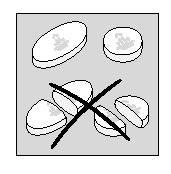
Do not chew, divide or crush the prolonged-release
tablets. If you do, there is a risk of
overdosage, because the medicine may be
released too quickly inside your
body.
During the first week, the usual daily dose is 0.26 mg of pramipexole.
This dose will be increased every 5-7 days as directed by your doctor until the symptoms are
controlled (maintenance dose).
The usual maintenance dose is 1.05 mg per day. However, your dose may also be
further increased. If necessary, your doctor may increase the dose up to a maximum of
3.15 mg per day of pramipexole. A lower maintenance dose of one
MIRAPEXIN 0.26 mg prolonged-release tablet per day is also possible.
Patients with kidney disease
If you suffer from kidney disease, your doctor may tell you to take the usual starting dose of
prolonged-release tablets of 0.26 mg only on alternate days for the first week.
Subsequently, your doctor may increase the frequency of the dose to one prolonged-release
tablet of 0.26 mg every day. If a further increase in dose is necessary, your doctor may
increase it by 0.26 mg of pramipexole.
If you have severe kidney problems, your doctor may consider it necessary to give you a different medicine
always based on pramipexole. If your kidney problems worsen during treatment, you should
contact your doctor as soon as possible.
If you are switching from MIRAPEXIN tablets (immediate-release)
Your doctor will base the choice of the dose of MIRAPEXIN prolonged-release tablets on the dose of
MIRAPEXIN tablets (immediate-release) that you were taking.
Take MIRAPEXIN tablets (immediate-release) as usual the day before switching.
Then take MIRAPEXIN prolonged-release tablets the following morning and do not take any more
MIRAPEXIN tablets (immediate-release).
If you take more MIRAPEXIN than you should
If you accidentally take too many tablets,
- contact your doctor immediately or go to the emergency room of the nearest hospital.
- You may experience vomiting, a feeling of restlessness or any of the undesirable effects described in paragraph 4 (Possible undesirable effects).
If you forget to take MIRAPEXIN
If you forget to take a dose of MIRAPEXIN, but remember within 12 hours of your usual time
of taking it, take the tablet immediately and then the next at the usual time.
If more than 12 hours have already passed, simply take the next dose at the usual time. Do not
take a double dose to make up for a forgotten dose.
If you stop taking MIRAPEXIN
Do not stop taking MIRAPEXIN without first talking to your doctor. If you need to
stop treatment with this medicine, your doctor will reduce the dose gradually. This reduces the
risk of worsening of symptoms.
| o Increasing dose schedule of MIRAPEXIN prolonged-release tablets | ||
| Week | Daily dose (mg) | Number of tablets |
| 1 | 0.26 | c One MIRAPEXIN 0.26 mg prolonged-release tablet. |
| 2 | 0.52 | a One MIRAPEXIN 0.52 mg prolonged-release tablet, OR two MIRAPEXIN 0.26 mg prolonged-release tablets. |
| 3 | 1.05 | m One MIRAPEXIN 1.05 mg prolonged-release tablet, OR r two MIRAPEXIN 0.52 mg prolonged-release tablets, a OR four MIRAPEXIN 0.26 mg prolonged-release tablets. |
If you suffer from Parkinson's disease, you should not stop treatment with MIRAPEXIN abruptly.
An abrupt stop could induce the development of a medical condition called malignant neuroleptic syndrome which may represent a greater risk to your health. Symptoms include:
- akinesia (loss of muscle movement)
- muscle rigidity
- fever
- unstable blood pressure
- tachycardia (increased heart rate)
- confusion
- reduced level of consciousness (e.g. coma)
If you stop taking MIRAPEXIN or reduce it, you may also develop a medical condition
called dopamine agonist withdrawal syndrome. Symptoms include depression,
apathy, anxiety, a feeling of fatigue, sweating or pain. If you experience these symptoms, you should
contact your doctor.
If you have any further questions on the use of this medicine, ask your doctor or pharmacist.
4. Possible side effects
Like all medicines, this medicine can cause side effects, although not everybody gets them.
The assessment of these side effects is based on the following frequencies:
| Very common | may affect more than 1 in 10 people |
| Common | may affect up to 1 in 10 people |
| Uncommon | may affect up to 1 in 100 people |
| Rare | may affect up to 1 in 1,000 people |
| Very rare | may affect up to 1 in 10,000 people |
| Not known | the frequency cannot be estimated from the available data |
You may experience the following side effects:
Very common:
- Dyskinesia (e.g. involuntary, abnormal movements of the limbs)
- Drowsiness
- Dizziness
- Nausea (feeling unwell)
Common:
- Urge to behave unusually
- Hallucinations (seeing, hearing or feeling things that are not there)
- Confusion
- Fatigue (feeling tired)
- Difficulty sleeping (insomnia)
- Fluid retention, usually in the legs (peripheral oedema)
- Headache
- Hypotension (low blood pressure)
- Abnormal dreams
- Constipation
- Vision disturbances
- Vomiting (feeling unwell)
- Weight loss accompanied by decreased appetite
Uncommon:
- Paranoia (e.g. excessive fear for one's well-being)
- Delusion
- Excessive daytime sleepiness and sudden onset of sleep
- Amnesia (memory disorders)
- Hyperkinesia (increased movements and inability to remain still)
- Weight gain
- Allergic reactions (e.g. skin rash, itching, hypersensitivity)
- Fainting
- Heart failure (heart problems that can cause shortness of breath or swelling of the ankles)*
- Inappropriate secretion of antidiuretic hormone*
- Restlessness
- Dyspnea (difficulty breathing)
- Hiccups
- Pneumonia (lung infection)
- Inability to resist the urge, drive or temptation to perform an action that may be harmful to you or others, which may include:
- Strong urge to gamble excessively despite serious personal or family consequences.
- Altered or increased sexual interest and behaviour that causes significant distress to you or others, for example an increased sexual impulse.
- Excessive and uncontrollable shopping or spending
- Uncontrollable eating (eating large amounts of food in a short period of time) or compulsive eating (eating more food than normal and more than needed to satisfy your appetite)*
- Delirium (reduced awareness, confusion, loss of sense of reality)
- Mania (agitation, feeling euphoric or overexcited)
- Spontaneous penile erection
Not known:
- After stopping or reducing the dose of MIRAPEXIN, depression, apathy, anxiety, feeling tired, sweating or pain (dopamine agonist withdrawal syndrome or DAWS) may occur.
Tell your doctor if you experience any of these behaviours; they will explain how to manage or
reduce the symptoms.
For the side effects marked with * it is not possible to make a precise estimate of the frequency as
these side effects have not been observed in clinical studies involving 2,762 patients treated with
pramipexole. The frequency category is likely to be no greater than “uncommon”.
Reporting of side effects
If you get any side effects, even those not listed in this leaflet, tell your
doctor or pharmacist. You can also report side effects directly through the national reporting system listed in
Appendix V. By reporting side effects you can help provide more information on the safety of this medicine.
5. How to store MIRAPEXIN
Keep this medicine out of the sight and reach of children.
Do not use this medicine after the expiry date which is stated on the pack after Exp. The expiry date refers to the last day of that month.
Store in the original package to protect the medicine from moisture.
This medicine does not require any particular storage temperature.
Do not dispose of any medicine in waste water or household waste. Ask your pharmacist how to
dispose of medicines you no longer use. This will help protect the environment.
6. Contents of the pack and other information
What MIRAPEXIN contains
The active ingredient is pramipexole.
Each tablet contains 0.26 mg, 0.52 mg, 1.05 mg, 1.57 mg, 2.1 mg, 2.62 mg or 3.15 mg of
pramipexole, respectively as 0.375 mg, 0.75 mg, 1.5 mg, 2.25 mg, 3 mg, 3.75 mg or 4.5 mg of
pramipexole dihydrochloride monohydrate.
The other ingredients are hypromellose 2208, corn starch, carbomer 941, anhydrous colloidal silica,
magnesium stearate.
Description of the appearance of MIRAPEXIN and contents of the pack
MIRAPEXIN 0.26 mg and MIRAPEXIN 0.52 mg prolonged-release tablets are from
white to almost white, round in shape and with bevelled edges.
MIRAPEXIN 1.05 mg, MIRAPEXIN 1.57 mg, MIRAPEXIN 2.1 mg, MIRAPEXIN 2.62 mg and
MIRAPEXIN 3.15 mg prolonged-release tablets are from white to almost
white and oval in shape.
All tablets have the Boehringer Ingelheim logo imprinted on one side and the code P1, P2, P3,
P12, P4, P13 or P5 on the other, representing the dosage of the 0.26 mg, 0.52 mg, 1.05 mg,
1.57 mg, 2.1 mg, 2.62 mg and 3.15 mg tablets respectively.
All strengths of MIRAPEXIN are available in aluminium blisters of 10 tablets each,
packaged in cardboard cartons containing 1, 3 or 10 blisters (10, 30 or 100 prolonged-release
tablets). Not all pack sizes may be marketed.
Marketing authorisation holder
Boehringer Ingelheim International GmbH
Binger Strasse 173
55216 Ingelheim am Rhein
Germany
Manufacturer
Boehringer Ingelheim Pharma GmbH & Co. KG
Binger Strasse 173
55216 Ingelheim am Rhein
Germany
Rottendorf Pharma GmbH
Ostenfelder Strasse 51 – 61
59320 Ennigerloh
Germany
Boehringer Ingelheim France
100-104 avenue de France
75013 Paris
France
For further information on this medicine, contact the local representative of the marketing
authorisation holder:
België/Belgique/Belgien
Boehringer Ingelheim SComm
Tél/Tel: +32 2 773 33 11
Lietuva
Boehringer Ingelheim RCV GmbH & Co KG
Lietuvos filialas
Tel: +370 5 2595942
България
Бьорингер Ингелхайм РЦВ ГмбХ и Ко. КГ -
клон България
Тел: +359 2 958 79 98
Luxembourg/Luxemburg
Boehringer Ingelheim SComm
Tél/Tel: +32 2 773 33 11
Česká republika
Boehringer Ingelheim spol. s r.o.
Tel: +420 234 655 111
Magyarország
Boehringer Ingelheim RCV GmbH & Co KG
Magyarországi Fióktelepe
Tel: +36 1 299 89 00
Danmark
Boehringer Ingelheim Danmark A/S
Tlf: +45 39 15 88 88
Malta
Boehringer Ingelheim Ireland Ltd.
Tel: +353 1 295 9620
Deutschland
BIOTHERAX biochemisch-pharmazeutische
Gesellschaft mbH
Tel: +49 (0) 800 77 90 900
Nederland
Boehringer Ingelheim B.V.
Tel: +31 (0) 800 22 55 889
Eesti
Boehringer Ingelheim RCV GmbH & Co KG
Eesti filiaal
Tel: +372 612 8000
Norge
Boehringer Ingelheim Danmark Norwegian branch
Tlf: +47 66 76 13 00
Ελλάδα
Boehringer Ingelheim Ελλάς Μονοπρόσωπη A.E.
Τηλ: +30 2 10 89 06 300
Österreich
Boehringer Ingelheim RCV GmbH & Co KG
Tel: +43 1 80 105-7870
España
Boehringer Ingelheim España, S.A.
Tel: +34 93 404 51 00
Polska
Boehringer Ingelheim Sp.zo.o.
Tel: +48 22 699 0 699
France
Boehringer Ingelheim France S.A.S.
Tél: +33 3 26 50 45 33
Portugal
Boehringer Ingelheim Portugal, Lda.
Tel: +351 21 313 53 00
Hrvatska
Boehringer Ingelheim Zagreb d.o.o.
Tel: +385 1 2444 600
România
Boehringer Ingelheim RCV GmbH & Co KG Viena
- Sucursala Bucureşti Tel: +40 21 302 28 00
Ireland
Boehringer Ingelheim Ireland Ltd.
Tel: +353 1 295 9620
Slovenija
Boehringer Ingelheim RCV GmbH & Co KG
Podružnica Ljubljana
Tel: +386 1 586 40 00
Ísland
Vistor hf.
Sími: +354 535 7000
Slovenská republika
Boehringer Ingelheim RCV GmbH & Co KG
organizačná zložka
Tel: +421 2 5810 1211
Italia
Boehringer Ingelheim Italia S.p.A.
Tel: +39 02 5355 1
Suomi/Finland
Boehringer Ingelheim Finland Ky
Puh/Tel: +358 10 3102 800
Κύπρος
Boehringer Ingelheim Ελλάς Μονοπρόσωπη A.E.
Τηλ: +30 2 10 89 06 300
Sverige
Boehringer Ingelheim AB
Tel: +46 8 721 21 00
Latvija
Boehringer Ingelheim RCV GmbH & Co KG
Latvijas filiāle
Tel: +371 67 240 011
United Kingdom (Northern Ireland)
Boehringer Ingelheim Ireland Ltd.
Tel: +353 1 295 9620
More detailed information on this medicine is available on the website of the European
Medicines Agency: http://www.ema.europa.eu.

Не впевнені, чи підходить вам цей лікарський засіб?
Обговоріть симптоми та можливі варіанти лікування з лікарем онлайн.

Виникли питання під час прийому ліків?
Обговоріть свої симптоми та лікування з лікарем онлайн.
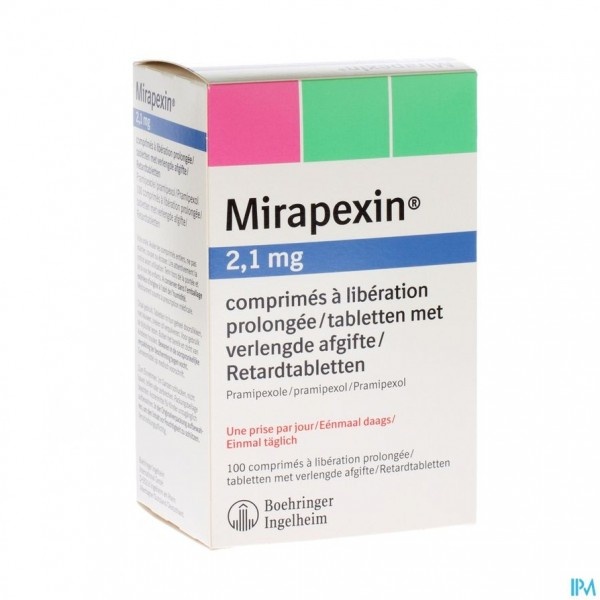
- Країна реєстрації
- Лікарська формаCoated tablet, 0.088 MG
- Код АТХN04BC05
- Діюча речовина
- Потрібен рецептТак
- Виробник
- Ця інформація надана лише для ознайомлення і не є медичною порадою. Рішення щодо лікування завжди приймає лікар.
- Альтернативи до MIRAPEXINЛікарська форма: Tablet, 0.088 MGДіюча речовина: прамипексолВиробник: KRKA D.D. NOVO MESTOПотрібен рецептЛікарська форма: Extended-release tablet, 0.26 MGДіюча речовина: прамипексолВиробник: RALPHARMA S.R.L.Потрібен рецептЛікарська форма: Coated tablet, 0.18 MGДіюча речовина: прамипексолВиробник: AUROBINDO PHARMA (ITALIA) S.R.L.Потрібен рецепт
Аналоги MIRAPEXIN в інших країнах
Препарати з тією самою діючою речовиною, доступні в інших країнах.
Аналог MIRAPEXIN у Іспанія
Аналог MIRAPEXIN у Україна
Лікарі онлайн щодо MIRAPEXIN
Застосування, безпека та можливість призначення рецепта — за результатами медичної оцінки.



Отримайте рецепт на MIRAPEXIN онлайн
Заповніть форму за 2 хвилини
Розкажіть про симптоми, історію хвороби та потрібний препарат.
Оберіть лікаря або ми призначимо
Оберіть спеціаліста або ми підберемо найближчого доступного лікаря.
Лікар розглядає ваш випадок
Зазвичай протягом 30 хвилин. Може ставити уточнювальні запитання в чаті.
Отримайте в будь-якій аптеці
Електронний рецепт надсилається на вашу пошту — дійсний по всій Польщі.
Часті запитання
MIRAPEXIN потребує рецепта в Італія. Ви можете обговорити з лікарем онлайн, чи підходить цей лікарський засіб для вашої ситуації.
Діюча речовина у MIRAPEXIN — прамипексол. Це допомагає визначити препарати з тим самим складом, але під іншими торговими назвами.
MIRAPEXIN виробляється компанією BOEHRINGER INGELHEIM INTERNATIONAL GMBH. Назва бренду та упаковка можуть відрізнятися залежно від дистрибʼютора.
Лікарі, зокрема Сімейні лікарі, Психіатри, Дерматологи, Кардіологи, Ендокринологи, Гастроентерологи, Пульмонологи, Нефрологи, Ревматологи, Гематологи, Інфекціоністи, Алергологи, Геріатри, Педіатри, Онкологи, можуть оцінити доцільність застосування MIRAPEXIN з урахуванням вашого стану та місцевих правил. Ви можете записатися на онлайн-консультацію, щоб обговорити симптоми та можливі подальші кроки.
Польща має добре розвинену систему охорони здоров'я у великих містах, таких як Варшава, Краків, Вроцлав і Гданськ. Аптеки широко доступні та працюють відповідно до чинного законодавства, забезпечуючи доступ до рецептурних препаратів.
Ви можете придбати MIRAPEXIN у Варшаві, Кракові, Вроцлаві або Гданську в будь-якій аптеці за наявності дійсного рецепта.
Щоб отримати рецепт, ви можете скористатися Oladoctor:
Інші препарати з тією самою діючою речовиною (прамипексол) включають OPRYMEA, PRAMIPERAL, PRAMIPEXOLO AUROBINDO. Вони можуть відрізнятися торговою назвою або формою випуску, але містять той самий терапевтичний компонент. Перед зміною або початком прийому нового препарату варто проконсультуватися з лікарем.
