



LIXIDOL 30 mg /Ml Roztwór Do Wstrzykiwań

Ocena recepty online
Lekarz przeanalizuje Twój przypadek i zdecyduje, czy wystawienie recepty jest medycznie uzasadnione.

Porozmawiaj z lekarzem o tym leku
Omów swoje objawy i opcje leczenia podczas szybkiej konsultacji online.



Jak stosować LIXIDOL
Treść ulotki
Lixidol 10 mg film-coated tablets
ketorolac tromethamine
Read this leaflet carefully before taking this medicine as it contains important
information for you.
- Keep this leaflet. You may need to read it again.
- If you have any questions, ask your doctor or pharmacist.
- This medicine has been prescribed for you only. Do not pass it on to others, even if they have the same symptoms as you, as it could be harmful.
- If you get any side effects, even those not listed in this leaflet, tell your doctor or pharmacist. See section 4.
Contents of this leaflet:
- 1. What Lixidol is and what it is used for
- 2. What you need to know before you take Lixidol
- 3. How to take Lixidol
- 4. Possible side effects
- 5. How to store Lixidol
- 6. Contents of the pack and other information
1. What is Lixidol and what is it used for
Lixidol contains the active substance ketorolac tromethamine belonging to a group of medicines known as
non-steroidal anti-inflammatory drugs (NSAIDs) which work by reducing inflammation and pain.
Lixidol is indicated in adultsand adolescents over 16 years of age onlyfor the short-term
treatment (maximum 5 days)of moderate pain following surgical operation.
See your doctor if you do not feel better or if you feel worse.
2. What you need to know before taking Lixidol
Do not take Lixidol
- if you are allergic to ketorolac tromethamine or any of the other ingredients of this medicine (listed in section 6);
- if you are allergic to other substances similar to ketorolac tromethamine;
- if you have previously had an allergic reaction after using acetylsalicylic acid (medicine to treat inflammation, pain, fever and to thin the blood) and/or other non-steroidal anti-inflammatory drugs (NSAIDs). This is to avoid the risk of you developing serious allergic reactions;
- if you suffer from nasal polyps (nodules that form inside the nose);
- if you suffer from angioedema (swelling of hands, feet, ankles, face, lips, tongue and/or throat);
- if you suffer from bronchospasm (narrowing of the bronchi which causes severe difficulty breathing due to reduced airflow);
- if you suffer from asthma;
- if you suffer from or have previously suffered from active peptic ulcer(lesion of the stomach and the first part of the intestine);
- if you suffer from or have previously suffered from gastrointestinal bleeding, ulceration or perforation(bleeding, lesion or perforation of the stomach and intestine);
- if you suffer from severe heart failure(severe reduction of heart function);
- if you have previously suffered from, are suffering from or suspect you are suffering from bleeding in the brain, as ketorolac reduces blood clotting and therefore increases the risk of bleeding;
- if you suffer from hypovolemia (reduced blood volume);
- if you suffer from dehydration (severe loss of water from the body);
- if you suffer from moderate or severe kidney failure (moderate or severe reduction of kidney function);
- if you are at risk of kidney failure due to hypovolemia or dehydration;
- if you suffer from severe liver disease (liver cirrhosis or severe hepatitis);
- if you suffer from a bleeding diathesis (you are prone to bleeding);
- if you suffer from blood coagulation disorders;
- if you are taking or are being treated with the following medicines (see section “Other medicines and Lixidol”):
- other non-steroidal anti-inflammatory drugs (NSAIDs), including high doses of acetylsalicylic acid
- anticoagulants
- lithium salts
- probenecid
- pentoxifylline
- intensive diuretic therapy;
- as a pain reliever for prophylactic purposes before and during surgical operations, as it increases the risk of bleeding;
- if you have recently undergone or are about to undergo surgical operations with a high risk of bleeding
- for children and adolescents under the age of 16;
- if you are pregnant for more than 6 months, during labor, delivery and breastfeeding.
Caution:
Donot take Lixidol in case of mild or chronic pain.
The use of ketorolac may be associated with a high risk of severe toxicity to the stomach and
intestine, compared to other non-steroidal anti-inflammatory drugs (NSAIDs), especially when
used outside the intended indications (see section 1 “What is Lixidol and what it is used for”) and/or
for prolonged periods.
Warnings and precautions
Talk to your doctor or pharmacist before taking Lixidol.
Adverse skin reactions in the form of reddish spots, widespread skin redness, ulcers and widespread rash accompanied by flu-like symptoms, including fever (see section 4) have been reported with the use of NSAIDs. The rash may progress to widespread blisters or peeling of the
skin. The highest risk of developing these serious skin reactions occurs within the first
weeks of treatment, but they may develop up to several months after administration of Lixidol
(see section 4). If you have developed any other serious adverse reaction with the use of Lixidol, do not
resume therapy with this medicine. If you have developed a rash or these skin symptoms,
stop using Lixidol and contact your doctor or seek immediate medical attention.
In particular, tell your doctor:
- if you have or think you have problems with fertility (see section “Pregnancy, breastfeeding and fertility”);
- if you have/have had inflammation of the stomach and intestines, because in this case treatment with Lixidol must only occur under strict medical supervision;
- if you have previously suffered from a peptic ulcer (lesion of the stomach and the first part of the intestine), especially if complicated by bleeding or perforation, as there is a risk that these disorders may recur, especially with high doses of the medicine. In these cases, your doctor may prescribe you medicines to protect your stomach and intestines (misoprostol or proton pump inhibitors) and/or start treatment with low doses of Lixidol (see section 2 “Do not take Lixidol”).
If you experience any undesirable effects of the stomach, especially at the beginning of treatment, inform
immediatelyyour doctor who will interruptthe treatment with Lixidol (see section 4 “Possible
side effects”);
- if you have previously suffered from severe chronic diseases of the intestine (ulcerative colitis, Crohn's disease), as these diseases may worsen;
- if you have previously suffered from asthma or are prone to having asthma attacks, as it increases the risk of having bronchospasm (narrowing of the bronchi causing severe difficulty breathing) or other serious allergic reactions;
- if you have previously suffered from bronchospasm, nasal polyps (nodules that form inside the nose), angioedema (swelling of hands, feet, ankles, face, lips, tongue and/or throat), as it increases the risk of developing allergic reactions. If you experience any allergic reaction, inform immediatelyyour doctor who will interruptthe treatment with Lixidol (see section 4 “Possible side effects”);
- if you suffer from or have suffered from high blood pressure (hypertension) and/or mild-moderate heart failure (mild-moderate reduction of heart function), as it increases the risk of developing a tendency to retain fluids in the body and edema (swelling due to fluid accumulation);
- if you suffer from or have suffered from heart disorders, or have had a heart attack or stroke (sudden blockage or rupture of a blood vessel in the brain) or think you may be at risk (for example if you have high blood pressure, diabetes or high cholesterol or smoke);
- if you suffer from mild kidney dysfunction and/or have previously suffered from kidney disease, as it increases the risk of having kidney side effects;
- if you suffer from hypovolemia (reduced blood volume) and/or reduced blood flow to the kidneys, as it increases the risk of having kidney side effects;
- if you suffer from or have suffered from impaired liver function. Increases in some liver values may occur, which may be transient, remain unchanged or progress with continued therapy. The doctor will interrupt the treatment if he/she deems it appropriate (see section 4 “Possible side effects”).
Caution:
- Lixidol is not a simple pain reliever and use requires strict medical control.
- The doctor, before starting therapy with Lixidol, will ask you if you have had an allergic reaction to ketorolac, acetylsalicylic acid and/or other non-steroidal anti-inflammatory drugs (NSAIDs).
Before taking this medicine, tell your doctor:
- if you are taking medicines that can cause problems with the stomach or intestines (oral corticosteroids, selective serotonin re-uptake inhibitors), medicines that promote the elimination of fluids with the urine (diuretics) and medicines that interfere with coagulation (see section “Other medicines and Lixidol”); If you are elderly(age 65 or over) and/or debilitatedIf you are elderly and/or debilitated, use Lixidol with caution, as it may have an increased frequency of side effects, especially bleeding and perforations of the stomach and intestines, which may be fatal (see section 4 “Possible side effects”). The doctor will assess a possible dose reduction and a possible increase in the interval between doses (see section 3 “How to take Lixidol”). The doctor may also prescribe you medicines to protect your stomach and intestines (misoprostol or proton pump inhibitors). In addition, if you are elderly and suffer from kidney disorders, you may have a greater risk of developing possible side effects affecting the kidneys.
Children and adolescents
Donot give Lixidol to children and adolescents under the age of 16, as the safety and efficacy in
children and adolescents under 16 years of age have not been established (see section “Do not take
Lixidol”).
Other medicines and Lixidol
Tell your doctor or pharmacist if you are taking, have recently taken or might take any
other medicine.
In particular, tell your doctor if you are taking the following medicines.
Medicines not to be taken with Lixidol(see section “Do not take Lixidol”)
- other non-steroidal anti-inflammatory drugs(NSAIDs), including acetylsalicylic acid and “cyclooxygenase-2 (COX-2) selective inhibitors” (a class of NSAIDs), as they can cause serious side effects when taken together with Lixidol;
- anticoagulants(medicines used to thin the blood and prevent the formation of clots) including warfarin and low-dose heparin administered for prophylactic purposes, as they can cause bleeding;
- lithium salts(used to treat depression and mental disorders), as it may increase the toxicity of these medicines;
- probenecid(medicine used to treat gout), as it increases the time and amount of Lixidol in the blood, causing an increase in side effects;
- pentoxifylline(medicine that improves blood flow), as it may increase the risk of bleeding;
Medicines to be used with caution
- medicines that can increase the risk of side effects affecting the stomach andintestine(lesion and bleeding), such as: o oral corticosteroids (medicines to treat inflammation and allergies) o selective serotonin re-uptake inhibitors (medicines to treat anxiety and behavioral disorders)
- methotrexate (a medicine used in the treatment of some cancers and autoimmune diseases)
- diuretics(such as furosemide) and medicines used to treat high blood pressure(angiotensin-converting enzyme inhibitors and angiotensin II antagonists), as Ketorolac reduces the effect of these medicines. If you suffer from kidney disorders (for example if you are dehydrated or elderly with kidney disorders), the simultaneous administration of these medicines with Lixidol may lead to a further worsening of kidney function, such as a possible acute renal failure, generally reversible. In these cases, the doctor will adopt the due therapy to rehydrate you and will monitor the function of your kidneys at the beginning and during the therapy with Lixidol, especially if you are elderly. pain relievers (analgesics) Lixidol with foodPlease note that a fatty meal may delay the effect of ketorolac by about 1 hour.
Pregnancy, breastfeeding and fertility
If you are planning a pregnancy, ask your doctor or pharmacist for advice before taking this
medicine.
- Taking NSAIDs around the 20th week of pregnancy or later can cause damage to the unborn baby. If you need to take NSAIDs for more than 2 days between the 20th and 30th week of pregnancy, your doctor may need to monitor the amount of fluid in the uterus around the baby.
- Do not take Lixidol around the 30th week of pregnancy as it can cause damage to the baby.
Pregnancy
Donot take Lixidol if you are pregnant for more than 6 months, during labor and delivery (see section
“Do not take Lixidol”).
The doctor may prescribe Lixidol in the first 6 months of pregnancy, only if strictly necessary.
In this case, the doctor will prescribe you the lowest dose and the shortest possible duration of treatment.
Breastfeeding
Donot take Lixidol if you are breastfeeding (see section “Do not take Lixidol”).
Fertility
- The use of Lixidol, like any similar drug Lixidol, isnot recommended in women who intend tostart a pregnancy.Therefore, if you are of childbearing age, your doctor will advise you to exclude a possible pregnancy, therefore before the start of treatment and during treatment, they will advise you to use contraceptives (methods to avoid pregnancy).
- If you have or think you have problems with fertility, your doctor may advise you to stop treatment with Lixidol.
Driving and using machines
Lixidol may cause drowsiness, dizziness, insomnia or depression, so use caution when driving vehicles and
using machinery.
Lixidol contains lactose
If your doctor has diagnosed you with intolerance to some sugars, contact him/her before taking this
medicine.
3. How to take Lixidol
Take this medicine following exactly the instructions of your doctor or pharmacist. If you have
any doubts, consult your doctor or pharmacist.
Using the minimum dose for the shortest possible duration of treatment necessary to control the symptoms
reduces the undesirable effects.
Adults and adolescents over 16 years of age
- The recommended dose is 10 mg (1 tablet) every 4-6 hours, as established by your doctor.
- Your doctor will appropriately reduce the dose if you weigh less than 50 kg.
- The maximum dose is 40 mg/day (4 tablets).
- Do not exceed the dose and duration of treatment prescribed by your doctor, especially if you suffer from or have suffered from heart disorders, or have had a heart attack or stroke.
- If you need to switch to oral therapy with Lixidol, your doctor will indicate the dose to take on the day of the switch.
If you are elderly(age 65 years or older)
If you are elderly, your doctor will assess a possible reduction of the above dosages and an increase in the interval
between doses.
If you have suffered from ulcers
If you have suffered from ulcers, especially if complicated by bleeding or perforation, your doctor will start the
treatment with low doses of Lixidol.
Duration of treatment
Donot exceed 5 days of treatment.
If you take more Lixidol than you should
In case of taking an excessive dose of Lixidol, immediately inform your doctor or go to the nearest
hospital.
Symptoms
In case of taking an excessive dose of Lixidol, you may experience the following symptoms:
- erosive gastritis (inflammation of the stomach characterized by shedding of the stomach mucosa), stomach pain, peptic ulcer (stomach lesion), abdominal pain that disappears with discontinuation of treatment
- bleeding of the stomach and intestines
- hypertension (high blood pressure)
- acute renal failure (reduction of kidney function)
- respiratory depression (reduction and/or blockage of breathing)
- coma
- severe allergic reactions.
Treatment
The doctor will adopt, if necessary, the appropriate supportive therapy. In case of accidental ingestion, the normal
safety measures should be added (inducing vomiting, gastric lavage, administration of
activated charcoal).
If you forget to take Lixidol
Do not take a double dose to make up for a missed dose.
If you stop taking Lixidol
If you have any doubts about the use of this medicine, ask your doctor or pharmacist.
The use of Lixidol does not cause dependence. No withdrawal symptoms have been observed following abrupt discontinuation of Ketorolac injectable.
4. Possible side effects
Like all medicines, this medicine can cause side effects, although not everyone gets them.
If you experience any of the following side effects, seek immediate medical attention or go to the nearest
hospital:
Effects affecting the body's defense system
- allergic reactions, such as: anaphylactic reactions (allergic reactions that can be fatal) bronchospasm (narrowing of the bronchi causing severe difficulty breathing due to reduced airflow) vasodilation (increase in the caliber of blood vessels causing a decrease in blood pressure)
flushing
rash (skin eruptions)
hypotension (low blood pressure)
laryngeal edema (swelling of the throat).
- hematemesis (bleeding in the stomach manifested by the presence of blood in the vomit or dark particles resembling coffee grounds)
- melena (sticky black stools or diarrhea with blood)
- peptic ulcers, ulcers or perforations or gastrointestinal bleeding
- pancreatitis (problems with the pancreas)
- worsening of ulcerative colitis or Crohn's disease
- hepatitis (inflammation of the liver)
- cholestatic jaundice (yellowing of the skin and whites of the eyes)
Other side effects with unknown frequency (whose frequency cannot be established based on the
available data) are listed below according to the affected body part:
Effects affecting the blood
thrombocytopenia (reduction in the number of platelets in the blood)
purpura (appearance of red spots on the skin due to blood accumulation under the skin)
epistaxis (nose bleeding).
Effects affecting metabolism and nutrition
anorexia (weight loss)
hyperkalemia (high levels of potassium in the blood)
hyponatremia (low levels of sodium in the blood).
Effects affecting the mind:
abnormal thinking (thinking disorder)
depression
insomnia
anxiety
- irritability
- nervousness
- psychotic reactions (mental disorders, resulting in loss of contact with reality)
- sleep disorders
- hallucinations (perception of things that do not exist in reality)
- euphoria
- reduced ability to concentrate
- states of torpor (physical or mental sluggishness)
- confusion.
Effects affecting the nervous system
headache
dizziness
convulsions and hyperkinesia (uncontrolled body movements)
paresthesia (numbness of arms, legs or other parts of the body)
altered taste.
Effects affecting the eye
visual disturbances
swelling around the eyes.
Effects affecting the ear and labyrinth
tinnitus (ringing in the ears)
hearing loss
vertigo.
Effects affecting the heart
- palpitations (sensation of increased heartbeats)
- bradycardia (decreased heart rate, i.e. the number of heartbeats per minute)
- heart failure (reduced heart function)
- edema (fluid accumulation) Effects affecting blood vessels
- hypertension (high blood pressure)
- vasodilation (increase in the caliber of blood vessels causing a decrease in blood pressure)
- hypotension (low blood pressure)
- hematomas (blood accumulation under the skin manifested as a bruise-like spot on the skin)
- flushing (hot flashes)
- pallor
- post-operative wound bleeding
- formation of blood clots, especially at high doses and for long-term treatments (arterial thrombotic events) which can cause, for example, heart attack or stroke.
Effects affecting the respiratory tract
- pulmonary edema (fluid accumulation in the lungs)
- dyspnea (shortness of breath)
- asthma.
Effects affecting mouth, stomach, intestines and pancreas
- nausea
- vomiting
- diarrhea
- flatulence (gas emission from the intestines)
- constipation
- dyspepsia (stomach discomfort)
- abdominal pain/discomfort
- feeling of fullness
- rectal bleeding
- ulcerative stomatitis (oral infections)
- esophagitis (inflammation of the esophagus, the tube that carries food from the mouth to the stomach)
- eructation
- dry mouth
- gastrointestinal ulceration
- gastritis (inflammation of the stomach).
Effects affecting the liver and biliary tract
- hepatic failure (reduced liver function).
Effects affecting the skin and subcutaneous tissue
- angioedema
- exfoliative dermatitis
- increased sweating
- maculopapular rash (skin eruption presenting with flat or raised red spots on the skin)
- urticaria (skin redness accompanied by itching)
- pruritus
- purpura (appearance of red spots on the skin due to blood accumulation under the skin)
- bullous reactions (including very rarely Stevens-Johnson syndrome, drug reaction with eosinophilia and systemic symptoms (DRESS) and toxic epidermal necrolysis).
Effects affecting the muscles
- myalgia (muscle pain).
Effects affecting the kidneys and urinary tract
- polyuria (excessive production and elimination of urine)
- increased frequency of urination
- oliguria (decreased urine output)
- uremic-hemolytic syndrome (syndrome characterized by blood and kidney disorders)
- kidney diseases (acute renal failure, interstitial nephritis, nephrotic syndrome)
- urinary retention (inability of the urinary bladder to empty completely)
- flank pain.
- increased creatinine in the blood (a protein whose increase indicates reduced kidney function)
- increased potassium in the blood (a sign of reduced kidney function).
Effects affecting the reproductive system
- female infertility.
Infections
- aseptic meningitis (infection manifested by, for example, pain, drowsiness, fever, general malaise, headache, nausea, vomiting).
Effects affecting various parts of the body
- fatigue
- fever
- edema (swelling)
- chest pain
- excessive thirst
- weight gain.
Changes in blood test results
- increased bleeding time
- increased urea in the blood
- increased creatinine and potassium in the blood
- alteration of tests to evaluate liver function.
Reporting of side effects
If you experience any side effects, including those not listed in this leaflet, please inform your
doctor or pharmacist. You can also report side effects directly through the national
reporting system at https://www.aifa.gov.it/content/segnalazioni-reazioni-avverse .
By reporting side effects you can help provide more information on the safety of this
medicine.
5. How to store Lixidol
Keep this medicine out of the sight and reach of children.
Do not use this medicine after the expiry date which is stated on the pack after Exp. The expiry date refers to the last day of that month.
Store in the original package to protect the medicine from light and moisture.
Do not dispose of any medicine in wastewater or household waste. Ask your pharmacist how to dispose of
medicines you no longer use. This will help protect the environment.
6. Contents of the pack and other information
What Lixidol contains
- the active ingredient is: ketorolac tromethamine (each tablet contains 10 mg of ketorolac tromethamine)
- the other ingredients are: microcrystalline cellulose, lactose(see section “Lixidol contains lactose”), magnesium stearate, hypromellose, titanium dioxide, macrogol 8000.
Description of the appearance of Lixidol and contents of the pack
Lixidol is presented in round and white tablets imprinted with "KET 10" on one side, packaged in blisters
in a carton containing 10 tablets.
Marketing Authorisation Holder and Manufacturer
Marketing Authorisation Holder
Atnahs Pharma Netherlands B.V.
Copenhagen Towers
Ørestads Boulevard 108, 5.tv
DK-2300 København S
Denmark
Manufacturer
Atnahs Pharma Denmark ApS
Copenhagen Towers
Ørestads Boulevard 108, 5.tv
DK-2300 København S
Denmark
Lixidol 30 mg/ml injectable solution
ketorolac tromethamine
Read this leaflet carefully before you use/are given this medicine because
it contains important information for you.
- Keep this leaflet. You may need to read it again.
- If you have any questions, ask your doctor or pharmacist.
- This medicine has been prescribed for you only. Do not pass it on to others, even if they have the same symptoms as you, as it could be harmful.
- If you get any side effects, even those not listed in this leaflet, tell your doctor or pharmacist. See section 4.
Contents of this leaflet:
- 1. What Lixidol is and what it is used for
- 2. What you need to know before you use/are given Lixidol
- 3. How to use/will be given Lixidol
- 4. Possible side effects
- 5. How to store Lixidol
- 6. Contents of the pack and other information
1. What is Lixidol and what is it used for
Lixidol contains the active ingredient ketorolac tromethamine, belonging to a group of medicines known as
non-steroidal anti-inflammatory drugs (NSAIDs) which work by reducing inflammation and pain.
Lixidol can be used intramuscularly (through injection into a muscle) or intravenously (through
injection/infusion into a vein) and is indicated in adultsand adolescents over 16 years of age:
- in the short-term treatment (maximum two days) of moderate-to-severe acute pain after a surgical operation;
- in the treatment of pain due to renal colic (sudden and severe pain localized in the abdomen and back, caused by the presence of kidney stones).
In addition, Lixidol can be used intravenously in cases of major surgical operations or very intense pain in addition to therapy with opioid analgesics (other medicines to relieve pain).
See your doctor if you do not feel better or if you feel worse.
2. Cosa deve sapere prima di usare/che le venga somministrato Lixidol
Non usi/non le verrà somministrato Lixidol
- se è allergico a ketorolac trometamina o ad uno qualsiasi degli altri componenti di questo medicinale (elencati al paragrafo 6);
- se è allergico ad altre sostanze simili a ketorolac trometamina;
- se ha avuto in passato una reazione allergica dopo l’uso di acido acetilsalicilico (medicinale per trattare infiammazioni, dolore, febbre e per fluidificare il sangue) e/o altri farmaci antinfiammatori non steroidei (FANS). Questo per evitare il rischio che manifesti gravi reazioni allergiche;
- se soffre di poliposi nasali (noduli che si formano all’interno del naso);
- se soffre di angioedema (gonfiore di mani, piedi, caviglie, viso, labbra, lingua e/o gola);
- se soffre di broncospasmo (restringimento dei bronchi che provoca grave difficoltà respiratoria dovuta ad un ridotto passaggio dell'aria);
- se soffre di asma;
- se soffre o in passato ha sofferto di ulcera peptica in fase attiva(lesione dello stomaco e della prima parte dell’intestino);
- se soffre o in passato ha sofferto di emorragia gastrointestinale, ulcerazione o perforazione(sanguinamento, lesione o perforazione di stomaco ed intestino);
- se soffre di grave insufficienza cardiaca(grave riduzione della funzionalità del cuore);
- se ha sofferto in passato, soffre o ha il sospetto di soffrire di sanguinamenti al cervello, in quanto ketorolac riduce la coagulazione del sangue e quindi aumenta il rischio di sanguinamento;
- se soffre di ipovolemia (ridotto volume di sangue in circolo);
- se soffre di disidratazione (grave perdita di acqua dall’organismo);
- se soffre di moderata o grave insufficienza renale (moderata o grave riduzione della funzionalità dei reni);
- se è a rischio di insufficienza renale a causa di ipovolemia o disidratazione;
- se soffre di gravi malattie del fegato (cirrosi epatica o epatiti gravi);
- se soffre di diatesi emorragica (è soggetto ad avere sanguinamenti);
- se soffre di disordini della coagulazione del sangue;
- se sta prendendo o è in trattamento con i seguenti medicinali (vedere paragrafo “Altri medicinali e Lixidol”):
- altri farmaci antinfiammatori non steroidei (FANS), compreso l’acido acetilsalicilico ad alte dosi
- anticoagulanti
- sali di litio
- probenecid
- pentossifillina
- terapia diuretica intensiva;
- come antidolorifico a scopo preventivo prima e durante gli interventi chirurgici, in quanto aumenta il rischio di sanguinamento;
- se è stato recentemente sottoposto o sta per sottoporsi ad interventi chirurgici ad alto rischio di sanguinamento
- nei bambini e negli adolescenti di età inferiore ai 16 anni;
- se è in gravidanza da più di 6 mesi, durante il travaglio, il parto e l'allattamento.
Attenzione:
- Nonusi/non le verrà somministrato Lixidol in caso di dolore lieve o di tipo cronico. L’uso di ketorolac può essere associato ad un elevato rischio di grave tossicità allo stomaco e all’intestino, rispetto ad altri farmaci antinfiammatori non steroidei (FANS), specialmente quando è usato al di fuori delle indicazioni previste (vedere paragrafo 1 “Cos’è Lixidol e a cosa serve”) e/o per prolungati periodi.
- Nonusi/non le verrà somministrato Lixidol attraverso un’iniezione nella schiena (iniezione epidurale o intratecale). Vedere paragrafo 3 “Come usare/le verrà somministrato Lixidol”.
Avvertenze e precauzioni
Si rivolga al medico, al farmacista o all’infermiere prima di usare/che le venga somministrato Lixidol.
Con l’uso di FANS sono state segnalate reazioni avverse della pelle sotto forma di macchie rossastre,
arrossamento generalizzato della pelle, ulcere ed eruzione diffusa accompagnata da sintomi simil-influenzali,
inclusa febbre (vedere paragrafo 4). L’eruzione può progredire fino a vesciche diffuse o desquamazione della
pelle. Il rischio più elevato di insorgenza di queste reazioni gravi della pelle si verifica entro le prime
settimane di trattamento, ma potrebbero svilupparsi fino a molti mesi dopo la somministrazione di Lixidol
(vedere paragrafo 4). Se ha sviluppato qualsiasi altra reazione avversa grave con l’uso di Lixidol non deve
riprendere la terapia con questo medicinale. Se ha sviluppato un’eruzione o questi sintomi della pelle,
interrompa l’uso di Lixidol e contatti il medico o cerchi immediatamente assistenza medica.
In particolare informi il medico:
- se ha o pensa di avere problemi di fertilità (vedere paragrafo “Gravidanza, allattamento e fertilità”);
- se ha/ha avuto infiammazioni dello stomaco e dell’intestino, perché in questo caso il trattamento con Lixidol dovrà avvenire solo sotto stretto controllo medico;
- se ha sofferto in passato di ulcera peptica (lesione dello stomaco e della prima parte dell’intestino), soprattutto se complicata da sanguinamento o perforazione, poiché c’è il rischio che questi disturbi possano ripresentarsi, soprattutto con alte dosi del medicinale. In questi casi, il medico potrebbe prescriverle dei medicinali per proteggere lo stomaco e l’intestino (misoprostolo o inibitori di pompa protonica) e/o iniziare il trattamento con dosi basse di Lixidol (vedere paragrafo 2 “Non usi/non le verrà somministrato Lixidol”). Se manifesta qualsiasi effetto indesiderato dello stomaco, specialmente all’inizio del trattamento, informi immediatamenteil medico che interromperàil trattamento con Lixidol (vedere paragrafo 4 “Possibili effetti indesiderati”);
- se ha sofferto in passato di gravi malattie croniche dell’intestino (colite ulcerosa, morbo di Crohn), in quanto queste malattie possono aggravarsi;
- se ha sofferto in passato di asma o è soggetto ad avere attacchi di asma, in quanto aumenta il rischio di avere crisi di broncospasmo (restringimento dei bronchi che provoca grave difficoltà respiratoria) o altre reazioni allergiche anche gravi;
- se ha sofferto in passato di broncospasmo, polipi nasali (noduli che si formano all’interno del naso), angioedema (gonfiore di mani, piedi, caviglie, viso, labbra, lingua e/o gola), in quanto aumenta il rischio che possa manifestare reazioni allergiche. Se manifesta una qualsiasi reazione allergica, informi immediatamenteil medico che interromperàil trattamento con Lixidol (vedere paragrafo 4 “Possibili effetti indesiderati”);
- se soffre o ha sofferto in passato di ipertensione (alta pressione del sangue) e/o lieve-moderata insufficienza cardiaca (lieve-moderata riduzione della funzionalità del cuore), in quanto aumenta il rischio di manifestare tendenza a trattenere liquidi nell’organismo ed edema (gonfiore per accumulo di liquidi);
- se soffre o ha sofferto di disturbi del cuore, o ha avuto un infarto o un ictus (improvvisa chiusura o rottura di un vaso sanguigno del cervello) o pensa di poterne essere a rischio (per esempio se ha la pressione sanguigna alta, diabete o colesterolo elevato o fuma);
- se soffre di lieve riduzione della funzionalità dei reni e/o ha sofferto in passato di malattie dei reni, in quanto aumenta il rischio di avere effetti indesiderati dei reni;
- se soffre di ipovolemia (ridotto volume di sangue in circolo) e/o ridotto flusso di sangue ai reni, in quanto aumenta il rischio di avere effetti indesiderati dei reni;
- se soffre o ha sofferto in passato di ridotta funzionalità del fegato. Possono verificarsi aumenti di alcuni valori del fegato, che possono essere transitori, rimanere invariati o progredire continuando la terapia. Il medico interromperà il trattamento se lo riterrà opportuno (vedere paragrafo 4 “Possibili effetti indesiderati”)
Attenzione:
- Lixidol non è un semplice antidolorifico e l’uso richiede lo stretto controllo del medico.
- Il medico prima di iniziare la terapia con Lixidol le chiederà se ha avuto in passato una reazione allergica verso il ketorolac, acido acetilsalicilico e/o altri farmaci antinfiammatori non steroidei (FANS).
Eviti che le venga somministrato questo medicinalenei seguenti casi:
- se sta assumendo medicinali che possono causare problemi allo stomaco o all’intestino, medicinali che favoriscono l’eliminazione di liquidi con le urine (diuretici) e medicinali che interferiscono con la coagulazione (vedere il paragrafo “Altri medicinali e Lixidol”); Se è anziano(età uguale o superiore a 65 anni) e/o debilitatoSe è anziano e/o debilitato usi Lixidol con cautela, perché può avere un aumento della frequenza di effetti indesiderati, specialmente sanguinamenti e perforazioni dello stomaco e dell’intestino, che possono essere fatali (vedere paragrafo 4 “Possibili effetti indesiderati”).
Questi effetti indesiderati si verificano soprattutto con alte dosi del medicinale, pertanto il medico le ridurrà
la dose ed eventualmente aumenterà l’intervallo tra le dosi (vedi paragrafo 3 “Come usare/le verrà
somministrato Lixidol”). Il medico potrebbe anche prescriverle dei medicinali per proteggere lo stomaco e
l’intestino (misoprostolo o inibitori di pompa protonica).
Inoltre, se è anziano e soffre di disturbi ai reni, potrebbe avere un rischio maggiore di manifestare possibili
effetti indesiderati che riguardano i reni.
Per chi svolge attività sportiva
L’uso di medicinali contenenti alcool etilico può determinare positività ai test antidoping in rapporto ai limiti
di concentrazione alcolemica indicata da alcune federazioni sportive.
Bambini e adolescenti
Nonusi/non verrà somministrato Lixidol nei bambini e negli adolescenti di età inferiore ai 16 anni, in quanto
la sicurezza e l’efficiacia nei bambini e negli adolescenti sotto i 16 anni di età non sono state stabilite (vedere
paragrafo “Non usi/non verrà somministrato Lixidol”).
Altri medicinali e Lixidol
Informi il medico o il farmacista se sta assumendo, ha recentemente assunto o potrebbe assumere qualsiasi
altro medicinale.
In particolare, informi il medico se sta assumendo i seguenti medicinali.
Medicinali da non prendere insieme a Lixidol(vedere paragrafo “Non usi/non verrà somministrato
Lixidol”)
- altri farmaci antinfiammatori non steroidei(FANS), inclusi l’acido acetilsalicilico e gli “inibitori selettivi delle cicloossigenasi-2 (COX-2)” (una classe di FANS), in quanto possono dare gravi effetti indesiderati se presi insieme a Lixidol;
- anticoagulanti(medicinali usati per fluidificare il sangue ed impedire la formazione di coaguli) compreso warfarin ed eparina a basse dosi somministrata a scopo preventivo, in quanto possono dare sanguinamento;
- sali di litio(usati per trattare la depressione e i disturbi mentali), in quanto può aumentare la tossicità di questi medicinali;
- probenecid(medicinale usato per trattare la gotta), poiché aumenta il tempo e la quantità di Lixidol nel sangue, provocando un aumento degli effetti indesiderati;
- pentossifillina(medicinale che migliora il flusso sanguigno), poiché può aumentare il rischio di sanguinamento;
Medicinali da usare con cautela
- medicinali che possono aumentare il rischio di effetti indesiderati che riguardano stomaco edintestino(lesione e sanguinamento), come: o corticosteroidi orali (medicinali per trattare le infiammazioni e le allergie) o inibitori selettivi del re-uptake della serotonina (medicinali per trattare disturbi d’ansia e del comportamento)
- diuretici(come la furosemide) e medicinali usati per trattare l’elevata pressione del sangue(inibitori dell'enzima di conversione dell'angiotensina e antagonisti dell'angiotensina II), in quanto Ketorolac riduce l’effetto di questi medicinali. Se soffre di disturbi dei reni (per esempio se è disidratato o anziano con disturbi ai reni), la somministrazione contemporanea di questi medicinali con Lixidol può portare ad un ulteriore peggioramento della funzione renale, come una possibile insufficienza renale acuta, generalmente reversibile. In questi casi il medico adotterà le dovuta terapia per reidratarla e terrà sotto controllo la funzionalità dei suoi reni all’inizio e durante la terapia con Lixidol, specialmente se è anziano.
- metotressato(un medicinale utilizzato nel trattamento di alcuni tumori e malattie autoimmuni)
- medicinali contro il dolore (analgesici)
Incompatibilità
Non deve miscelare Lixidol in una siringa contenente i seguenti medicinali:
- morfina, meperidina (altri medicinali usati per alleviare il dolore)
- prometazina (medicinale usato per trattare gli stati allergici)
- idrossizina (medicinale usato per trattare gli stati ansiosi).
Gravidanza, allattamento e fertilità
Se sta pianificando una gravidanza chieda consiglio al medico o al farmacista prima di usare/che le venga
somministrato questo medicinale.
- L’assunzione di FANS intorno alla 20° settimana di gravidanza o oltre può causare danni al bambino non ancora nato. Se ha bisogno di assumere FANS per più di 2 giorni tra la 20° e la 30° settimana di gravidanza, il medico può aver bisogno di monitorare la quantità di liquido nell’utero intorno al bambino.
- Non prenda Lixidol intorno alla 30° settimana di gravidanza poiché può causare danni al bambino.
Gravidanza
Nonprenda Lixidol se è in gravidanza da più di 6 mesi, durante il travaglio e il parto (vedere paragrafo
“Non usi/non verrà somministrato Lixidol”).
Il medico potrebbe prescriverle Lixidol nei primi 6 mesi di gravidanza, solo se strettamente necessario.
In questo caso il medico le prescriverà la dose più bassa e la durata del trattamento più breve possibile.
Allattamento
Donot take Lixidol if you are breastfeeding (see section “Do not use/Lixidol will not be administered”).
Fertility
- The use of Lixidol, as with any similar medicine to Lixidol, isnot recommended in women who intendto become pregnant.Therefore, if you are of childbearing potential, your doctor will advise you to rule out pregnancy, and will therefore advise you to use contraceptives (methods to avoid pregnancy) before starting treatment and during treatment.
- If you have or suspect you have fertility problems, your doctor may advise you to stop treatment with Lixidol.
Driving and using machines
Lixidol may cause drowsiness, dizziness, insomnia or depression, therefore use caution when driving vehicles and
using machines.
Lixidol contains ethanol
This medicine contains 100 mg of alcohol (ethanol) in each ml, which is equivalent to 100 mg/ml (10%w/v). The
amount in 1 ml of this medicine is equivalent to less than 3 ml of beer or 1 ml of wine.
The small amount of alcohol in this medicine will not produce significant effects.
Lixidol contains sodium
This medicine contains less than 1 mmol (23 mg) of sodium per dose, i.e. it is essentially ‘sodium-free’.
3. How to use/how you will be administered Lixidol
INTRAMUSCULAR ADMINISTRATION(injection into a muscle)
Use this medicine following exactly the instructions of your doctor or pharmacist. If you have any doubts
consult your doctor or pharmacist.
Using the minimum dose for the shortest possible treatment duration necessary to control the symptoms
reduces undesirable effects.
Adults and adolescents over 16 years of age
- In case of moderate-to-severe acute pain after surgery
- The recommended initial dose is 10 mg, followed by doses of 10-30 mg to be repeated every 4-6 hours, as established by the doctor.
- The doctor will appropriately reduce the dose if you weigh less than 50 kg.
- The maximum dose is 90 mg/day (3 injections).
- Do not exceed the dose and duration of treatment prescribed by your doctor, especially if you suffer from or have suffered from heart disorders, or have had a heart attack or stroke.
- If you need to switch to oral therapy with Lixidol, on the day of the switch your doctor will indicate the dose to take.
- In case of pain from renal colic
- The recommended dose is 30 mg (1 injection).
If you are elderly(age equal to or greater than 65 years)
If you are elderly, your doctor will assess a possible reduction of the above dosages and an increase in the interval
between doses.
If you are elderly, the maximum daily dose should not exceed 60 mg/day (2 injections).
If you have suffered from peptic ulcer
If you have suffered from peptic ulcer, especially if complicated by bleeding or perforation, your doctor will start the
treatment with low doses of Lixidol.
Duration of treatment
Donot exceed 2 days of treatment.
INTRAVENOUS ADMINISTRATION(injection/infusion into a vein)
Intravenous use of the medicine is reserved for hospitals and nursing homes, therefore Lixidol will be
administered to you by healthcare personnel. If you have any doubts consult your doctor.
Instructions for use
To open the vial, follow the instructions below:
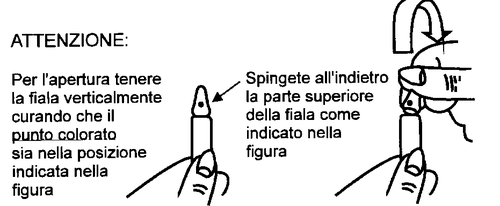
After opening the vial, draw the solution of the medicine with a syringe and administer it intramuscularly.
The injection must be performed according to hygienic rules.
Do not use Lixidol through an injection into the back (epidural or intrathecal injection).
If you use/are administered more Lixidol than you should
In case of taking an excessive dose of Lixidol, immediately inform your doctor or go to the nearest
hospital.
Symptoms
In case of taking an excessive dose of Lixidol, you may experience the following symptoms:
- erosive gastritis (inflammation of the stomach characterized by shedding of the stomach mucosa), abdominal pain, peptic ulcer (stomach lesion), which disappear with discontinuation of treatment
- stomach and intestinal bleeding
- hypertension (high blood pressure)
- acute renal failure (reduction of kidney function)
- respiratory depression (reduction and/or blockage of breathing)
- coma
- severe allergic reactions. TreatmentThe doctor will adopt, if necessary, the appropriate supportive therapy. In case of accidental ingestion, normal safety measures should be added (inducing vomiting, gastric lavage, administration of activated charcoal).
If you forget to use Lixidol
Do not use a double dose to make up for the missed dose.
If you stop using Lixidol
If you have any doubts about the use of this medicine, consult your doctor, pharmacist or nurse.
The use of Lixidol does not cause dependence. No withdrawal symptoms have been observed following abrupt
discontinuation of injectable Ketorolac.
4. Possible side effects
Like all medicines, this medicine can cause side effects, although not everyone will experience them.
Other side effects, which may occur in patients treated with the medicine, are listed below
according to the affected body part:
Effects relating to the blood
- thrombocytopenia (reduction in the number of platelets in the blood)
- purpura (appearance of red spots on the skin, due to blood accumulation under the skin)
- epistaxis (nose bleeding).
If you experience any of the following side effects, seek immediate medical attention or go to the nearest
hospital:
Effects relating to the body's defense system
- allergic reactions, such as: o anaphylactic reactions (severe allergic reactions) o bronchospasm (narrowing of the bronchi causing severe breathing difficulties due to reduced airflow) o vasodilation (increase in the caliber of blood vessels causing a decrease in blood pressure) o flushing o rash (skin eruptions) o hypotension (low blood pressure) o laryngeal edema (swelling of the throat).
- hematemesis (bleeding in the stomach manifested by the presence of blood in the vomit or dark particles resembling coffee grounds
- melena (sticky black stools or diarrhea with the presence of blood)
- peptic ulcers, ulcers or perforations or gastrointestinal bleeding
- pancreatitis (problems with the pancreas)
- worsening of ulcerative colitis or Crohn's disease
- hepatitis (inflammation of the liver)
- cholestatic jaundice (yellowing of the skin and whites of the eyes)
Other side effects with unknown frequency (whose frequency cannot be established based on
available data) are listed below according to the affected body part:
Effects relating to metabolism and nutrition
- anorexia (weight loss)
- hyperkalemia (high levels of potassium in the blood)
- hyponatremia (low levels of sodium in the blood). Effects relating to the mind:
- abnormal thinking (thought disorder)
- depression
- insomnia
- anxiety
- irritability
- nervousness
- psychotic reactions (mental disorders, resulting in loss of contact with reality)
- sleep disorders
- hallucinations (perception of things that do not exist in reality)
- euphoria
- reduced ability to concentrate
- states of torpor (physical or mental sluggishness)
- confusion.
Effects relating to the nervous system
- headache
- dizziness
- convulsions and hyperkinesia (uncontrolled body movements)
- paresthesia (numbness of arms, legs or other parts of the body)
- altered taste.
Effects relating to the eye
- visual disturbances
- swelling around the eyes.
Effects relating to the ear and labyrinth
- tinnitus (ringing in the ears)
- hearing loss
- vertigo.
Effects relating to the heart
- palpitations (sensation of increased heartbeats)
- bradycardia (reduction in heart rate, i.e. the number of heartbeats per minute)
- heart failure (reduced heart function)
- edema (fluid accumulation)
Effects relating to blood vessels
- hypertension (high blood pressure)
- vasodilation (increase in the caliber of blood vessels causing a decrease in blood pressure)
- hypotension (low blood pressure)
- hematomas (blood accumulation under the skin manifested as a bruise-like spot on the skin)
- flushing (hot flashes)
- pallor
- post-operative wound bleeding
- formation of blood clots, especially at high doses and for long-term treatments (arterial thrombotic events) which can cause, for example, heart attack or stroke.
Effects relating to the respiratory tract
- pulmonary edema (fluid accumulation in the lungs)
- dyspnea (shortness of breath)
- asthma.
Effects relating to the mouth, stomach, intestines and pancreas
- nausea
- vomiting
- diarrhea
- flatulence (emission of gas from the intestines)
- constipation
- dyspepsia (stomach pain)
- pain/discomfort in the abdomen
- feeling of fullness
- rectal bleeding
- ulcerative stomatitis (oral infections)
- esophagitis (inflammation of the esophagus, the tube that carries food from the mouth to the stomach)
- eructation
- dry mouth
- gastrointestinal ulceration
- gastritis (inflammation of the stomach).
Effects relating to the liver and biliary tract
- hepatic failure (reduced liver function).
Effects relating to the skin and subcutaneous tissue
- angioedema
- exfoliative dermatitis
- increased sweating
- maculopapular rash (skin eruption that appears with flat or raised red spots on the skin)
- urticaria (skin redness accompanied by itching)
- pruritus
- purpura (appearance of red spots on the skin, due to blood accumulation under the skin)
- bullous reactions (including very rarely Stevens-Johnson syndrome, drug reaction with eosinophilia and systemic symptoms (DRESS) and toxic epidermal necrolysis).
Effects relating to muscles
- myalgia (muscle pain). Effects relating to the kidneys and urinary tract
- polyuria (excessive production and elimination of urine)
- increased frequency of urination
- oliguria (decreased urine output)
- uremic-hemolytic syndrome (syndrome characterized by the presence of blood and kidney disorders)
- kidney diseases (acute renal failure, interstitial nephritis and nephrotic syndrome,)
- urinary retention (inability of the urinary bladder to empty completely)
- flank pain
- increased creatinine in the blood (a protein whose increase indicates the presence of reduced kidney function)
- increased potassium in the blood (a sign of reduced kidney function).
Effects relating to the reproductive system
- female infertility.
Infections
- aseptic meningitis (infection manifested by pain, drowsiness, fever, general malaise, headache, nausea, vomiting). Effects relating to various parts of the body and the site of administration
- fatigue
- fever
- reactions at the injection site
- edema (swelling)
- chest pain
- excessive thirst
- weight gain.
Changes in blood test results
- increased bleeding time
- increased urea in the blood
- increased creatinine and potassium in the blood
- alteration of tests to assess liver function.
Reporting of side effects
If you experience any side effects, including those not listed in this leaflet, tell your
doctor, pharmacist or nurse. You can also report side effects directly through the
national reporting system at https://www.aifa.gov.it/content/segnalazioni-reazioni-avverse .
By reporting side effects you can contribute to providing more information on the safety of this
medicine.
5. How to store Lixidol
Keep this medicine out of the sight and reach of children.
Do not use this medicine after the expiry date which is stated on the pack after Scad.
The expiry date refers to the last day of that month.
Store in the original package to protect the medicine from light.
Do not dispose of any medicine in wastewater or household waste. Ask your pharmacist how to dispose of
medicines you no longer use. This will help protect the environment.
6. Package Contents and Other Information
What Lixidol contains
- the active ingredient is: ketorolac tromethamine (each 1 ml vial contains 30 mg of ketorolac tromethamine).
- the other ingredients are: ethanol(see section “Lixidol contains alcohol”), sodium chloride(see section “Lixidol contains sodium”), water for injections.
Description of Lixidol and package contents
Lixidol presents as a transparent solution for intramuscular use (through injection into
a muscle) or intravenous use (through injection/infusion into a vein). The solution is contained in a
colourless glass vial.
It is available in packs of 3 vials of 1 ml.
Marketing Authorisation Holder and Manufacturer
Marketing Authorisation Holder
Atnahs Pharma Netherlands B.V.
Copenhagen Towers
Ørestads Boulevard 108, 5.tv
DK-2300 København S
Denmark
Manufacturer
Atnahs Pharma Denmark ApS
Copenhagen Towers
Ørestads Boulevard 108, 5.tv
DK-2300 København S
Denmark
---------------------------------------------------------------------------------------------------------------------------
The following information is intended exclusively for doctors or healthcare professionals:
Caution:the injectable solution contains ethanol and therefore must not be used via the epidural or
intrathecal route
For parenteral administration, the duration of therapy should not exceed 2 days in case of bolus administration and 1 day in case of continuous infusion.
Injections must be performed according to strict rules of sterilization, asepsis and antisepsis.
The administered dose should be the lowest effective dose in relation to the severity of the pain and the patient's response.
Lixidol is compatible with aminophylline, lidocaine, morphine, meperidine, dopamine, insulin and heparin mixed
together in a solution contained in an intravenous infusion bag for i.v. administration, but cannot be
mixed with morphine, meperidine, promethazine or hydroxyzine in a syringe.
Ketorolac has been shown to reduce the need for concomitant opioid analgesic therapy when
used for the relief of post-operative pain.
Intravenous Administration
ADULTS
In situations characterized by severe acute pain (such as, for example, in the attack therapy of post-operative pain) an initial dose of 10 mg is recommended, followed by doses of 10-30 mg which may be repeated, if necessary, after 4-6 hours, using the minimum effective dose. If necessary, treatment may continue
at longer intervals; however, the daily dose of 90 mg should not be exceeded.
ELDERLY ( 65 years)
In elderly patients, the maximum daily dose should not exceed 60 mg/day.
CHILDREN
Safety and efficacy in children have not been established. Use of the drug is therefore contraindicated below
16 years of age.
RENAL COLIC
The recommended dosage is one 30 mg vial for intravenous administration.

Nie jesteś pewien, czy ten lek jest odpowiedni dla ciebie?
Omów swoje objawy i leczenie z lekarzem online.

Zacząłeś przyjmować lek i masz pytania?
Omów swoje objawy i leczenie z lekarzem online.
- Kraj rejestracji
- Postać farmaceutycznaInjectable solution, 30 MG/ML
- Kod ATCM01AB15
- Substancja czynna
- Wymaga receptyTak
- Producent
- Te treści mają charakter wyłącznie informacyjny i nie zastępują konsultacji lekarskiej.
- Zamienniki LIXIDOLPostać farmaceutyczna: Injectable solution, 30 MG/MLSubstancja czynna: ketorolacProducent: PHARMABER S.R.L.Wymaga receptyPostać farmaceutyczna: Injectable solution, 30 MG/MLSubstancja czynna: ketorolacProducent: EPIFARMA S.R.LWymaga receptyPostać farmaceutyczna: Oral drops, solution, 20 MG/MLSubstancja czynna: ketorolacProducent: ABC FARMACEUTICI S.P.A.Wymaga recepty
Odpowiedniki LIXIDOL w innych krajach
Leki z tą samą substancją czynną dostępne w innych krajach.
Odpowiednik LIXIDOL w Ukraina
Odpowiednik LIXIDOL w Hiszpania
Lekarze online w sprawie LIXIDOL
Omów stosowanie LIXIDOL, bezpieczeństwo i ocenę zasadności recepty zgodnie z obowiązującymi przepisami.









Uzyskaj receptę na LIXIDOL online
Wypełnij 2-minutowy formularz
Opisz swoje objawy, historię choroby i lek, o który prosisz.
Wybierz lekarza lub pozwól nam przydzielić
Wybierz specjalistę lub dopasujemy Cię do najbliższego dostępnego lekarza.
Lekarz analizuje Twój przypadek
Zazwyczaj w ciągu 30 minut. Może zadawać dodatkowe pytania przez czat.
Odbierz w dowolnej aptece
Recepta elektroniczna wysłana na Twój e-mail — ważna w całej Polsce.
Często zadawane pytania
LIXIDOL wymaga recepty w Włochy. Możesz skonsultować się z lekarzem online, aby sprawdzić, czy ten lek może być odpowiedni w Twojej sytuacji.
Substancją czynną w LIXIDOL jest ketorolac. Informacja ta pomaga rozpoznać leki o tym samym składzie, ale pod różnymi nazwami handlowymi.
LIXIDOL jest produkowany przez ATNAHS PHARMA NETHERLANDS BV. Nazwy handlowe i opakowania mogą się różnić w zależności od dystrybutora.
Lekarze, tacy jak Lekarze rodzinni, Psychiatrzy, Dermatolodzy, Kardiolodzy, Endokrynolodzy, Gastroenterolodzy, Pulmonolodzy, Nefrolodzy, Reumatolodzy, Hematolodzy, Zakaźnicy, Alergolodzy, Geriatrzy, Pediatrzy, Onkolodzy, mogą ocenić, czy stosowanie LIXIDOL jest odpowiednie w Twoim przypadku, w zależności od sytuacji klinicznej i lokalnych przepisów. Możesz umówić konsultację online, aby omówić objawy i możliwe dalsze kroki.
Polska posiada dobrze rozwiniętą infrastrukturę ochrony zdrowia w dużych miastach, takich jak Warszawa, Kraków, Wrocław i Gdańsk. Apteki są łatwo dostępne i działają zgodnie z obowiązującymi przepisami, zapewniając dostęp do leków na receptę.
Możesz kupić LIXIDOL w Warszawie, Krakowie, Wrocławiu lub Gdańsku w każdej aptece, posiadając ważną receptę.
Aby uzyskać receptę, możesz skorzystać z Oladoctor:
Inne leki zawierające tę samą substancję czynną (ketorolac) to m.in. BENKETOL, EUMAT, KETOROLAK ABK. Mogą one różnić się nazwą handlową lub postacią, ale zawierają ten sam składnik terapeutyczny. Przed zmianą lub rozpoczęciem nowego leku skonsultuj się z lekarzem.
