



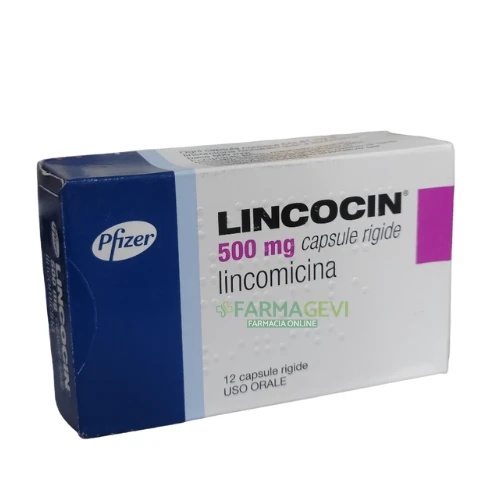
LINCOCIN 500 mg Kapsułka Twarda

Ocena recepty online
Lekarz przeanalizuje Twój przypadek i zdecyduje, czy wystawienie recepty jest medycznie uzasadnione.

Porozmawiaj z lekarzem o tym leku
Omów swoje objawy i opcje leczenia podczas szybkiej konsultacji online.



Jak stosować LINKOKIN
Treść ulotki
LINCOCIN 500 mg hard capsules
Lincomycin
Read this leaflet carefully before taking this medicine as it contains important
information for you.
- Keep this leaflet. You may need to read it again.
- If you have any questions, ask your doctor or pharmacist.
- This medicine has been prescribed for you only. Do not pass it on to others, even if they have the same symptoms as you, as it could be harmful.
- If you get any side effects, even those not listed in this leaflet, tell your doctor or pharmacist. See section 4.
Contents of this leaflet:
- 1. What Lincocin is and what it is used for
- 2. What you need to know before you take Lincocin
- 3. How to take Lincocin
- 4. Possible side effects
- 5. How to store Lincocin
- 6. Contents of the pack and other information
1. What is Lincocin and what is it used for
Lincocin contains the active ingredient lincomycin hydrochloride which belongs to a group of medicines
called “antibacterial for systemic use – lincosamides” which slow down or stop the growth of bacteria.
This medicine is indicated for the treatment of severe infections, caused by some types of bacteria
(staphylococci, pneumococci, streptococci), which cannot be treated with other antibiotics. In
particular, Lincocin should be reserved for people who are allergic to penicillin or in cases where the
doctor believes that penicillin cannot be used.
Before starting treatment with Lincocin, the doctor, considering the nature of the infection, must carefully evaluate
the possibility of using other less toxic medicines to avoid the occurrence of
severe inflammation of the intestine (colitis) (see the section “Possible side effects”).
During therapy, laboratory tests (sensitivity tests to the medicine) should be performed, in
as Lincocin may lose its effectiveness.
If necessary, this medicine can be taken together with other antibiotics.
2. What you need to know before taking Lincocin
Do not take Lincocin if
- you are allergic to lincomycin hydrochloride, to other similar products (clindamycin) or to any of the other ingredients of this medicine (listed in section 6);
- you suffer from a non-serious infection or an infection caused by a virus (viral infections).
Warnings and precautions
Talk to your doctor or pharmacist beforetaking Lincocin.
If you develop very serious skin reactions, contact your doctor immediately.
The use of this medicine is not recommended if you:
- experience diarrheaduringtreatment with Lincocin, because it may develop into inflammation of the intestine (colitis), which can be fatal (see also section 4 “Possible side effects”). Like other antibiotics, Lincocin can also alter the normal bacterial flora of the intestine and can cause the overgrowth of a bacterium called Clostridium difficilewhich causes diarrhea. In less severe cases, these symptoms disappear after stopping treatment with Lincocin. The doctor will establish the
most appropriate therapy based on the severity of the symptoms and will subject you to regular checks, because
diarrhea from Clostridium difficilecan occur even 2 months after stopping this medicine;
- suffer from stomachor intestinaldiseases;
- have a hereditary predisposition to develop severe allergic reactions(anaphylactic reactions);
- suffer from liver diseases, except in cases of actual necessity;
- suffer from kidney problems;
- are being treated with erythromycin, another antibiotic used for the treatment of infections caused by bacteria (see section “Other medicines and Lincocin”);
- suffer from an infection of the membranes surrounding the brain, called meningitis, as Lincocin is not effective in this case.
Tell your doctor if you think any of the following conditions apply to you:
- are being treated with other medicines that relax the muscles(medicines with neuromuscular blocking properties), because in this case Lincocin must be administered with caution (see section “Other medicines and Lincocin”);
- have suffered in the past from asthmaor other allergic reactions;
- are being treated with medicines that reduce the natural movements of the intestine (antiperistalticmedicines) such as opioids and diphenoxylate with atropine, as they may worsen the possible side effects of Lincocin on the intestine;
- if you are debilitated, as you are more exposed to possible side effects of this medicine on the intestine;
- if you are an elderly person(see section “Elderly”).
During therapy, this medicine may lose its effectiveness and favor the development of more
serious infections (superinfections). In this case, the doctor will prescribe appropriate therapy.
If you suffer from an infection caused by a fungus (thrush), the doctor will prescribe, together with Lincocin,
also a medicine specific for the treatment of thrush (antifungal treatment).
Laboratory tests
During long-term treatment with Lincocin, the doctor will perform regular blood tests and
checks of liver and kidney function.
Elderly
If you are elderly, during treatment with Lincocin, the doctor will subject you to regular checks, as
you are more exposed to the possible side effects of this medicine on the intestine, such as
diarrhea.
Other medicines and Lincocin
Tell your doctor or pharmacist if you are taking, have recently taken or might take any
other medicines.
Tell your doctor if you are taking the following medicines:
- neuromuscular blockers(medicines used to relax muscles, especially before surgery);
- erythromycinand clindamycin(antibiotics used to treat infections caused by bacteria).
Pregnancy and breastfeeding
If you are pregnant, suspect you are pregnant or are planning a pregnancy, or if you are breastfeeding with breast
milk, ask your doctor or pharmacist for advice before taking this medicine.
Do not take Lincocin if you are pregnant or breastfeeding.
Driving and operating machinery
No data are available to establish the effect of the medicine on the ability to drive vehicles and operate
machinery.
Lincocin contains lactose
This medicine contains lactose, a type of sugar. If your doctor has diagnosed you with an intolerance to
certain sugars, contact him before taking this medicine.
Lincocin contains sodium
This medicine contains less than 1 mmol (23 mg) of sodium per capsule, i.e. essentially ‘sodium-free’.
3. How to take Lincocin
Take this medicine following exactly the instructions of your doctor. If you have any doubts, consult your
doctor or pharmacist.
The recommended dose is:
- severe infections: 1 capsule of 500 mg, every 8 hours;
- very severe infections: 1 capsule of 500 mg, every 6 hours.
It is recommended not to ingest anything, other than water, for 1-2 hours both beforeand aftertaking
Lincocin.
Use in people with severe kidney problems
If you suffer from severe kidney problems (severely impaired renal function), your doctor will prescribe
lower doses of this medicine than those normally recommended.
If you take moreLincocin than you should
No cases of overdose are known.
If you believe you have taken more Lincocin than necessary, stop the treatment and immediately contact
your doctor or the nearest hospital.
If you forget to take Lincocin
If you forget to take a dose, take it as soon as you remember. Do not take a double dose to
make up for the missed dose. If you think you have forgotten more than one dose, consult your doctor.
If you have any doubts about the use of this medicine, ask your doctor or pharmacist.
4. Possible side effects
Like all medicines, this medicine can cause side effects, although not everybody gets them.
The following side effects may occur:
Common(may affect up to 1 in 10 people):
- diarrhoea, nausea, vomiting
Uncommon(may affect up to 1 in 100 people):
- vaginal infection
- skin rash, urticaria
Rare(may affect up to 1 in 1,000 people):
- pruritus
Frequency not known(the frequency cannot be estimated from the available data):
- persistent diarrhoea which may be a symptom of a severe inflammation of the colon (see section “Warnings and precautions”);
- reduction in the number of white blood cells in the blood (neutropenia, leucopenia, agranulocytosis), formation of reddish-brown spots on the skin due to a decrease in the number of platelets (thrombocytopenic purpura), reduction in the number of red blood cells (aplastic anaemia) or of all blood components (pancytopenia);
- allergic reactions such as swelling of the face, lips and tongue (angioedema), very serious allergic reactions (serum sickness and anaphylactic reactions);
- inflammation of the oesophagus (oesophagitis), abdominal discomfort;
- yellowing of the skin, mucous membranes and eyes, caused by liver problems, and alteration of the results of some liver function tests;
- very serious skin reactions:
- sudden onset of a severe rash or blisters or peeling of the skin, possibly accompanied by high fever or joint pain (toxic epidermal necrolysis (TEN))
- rash characterised by the rapid appearance of areas of red skin studded with small pustules (small blisters filled with white/yellow liquid) (acute generalised exanthematous pustulosis (AGEP))
- widespread rash with blisters and peeling of large areas of skin, especially around the mouth, nose, eyes or genitals (Stevens-Johnson syndrome (SJS))
- rash, which may present with blisters and which appears as small targets (dark central spots surrounded by a lighter area, with a dark ring around the edge) (erythema multiforme);
- irritation and inflammation of the skin (exfoliative dermatitis, bullous dermatitis).
Other side effects:
- inflammations of the tongue (glossitis) or the mucous membrane of the mouth (stomatitis), inflammation of the intestine (enterocolitis), itching near the anus (anal);
- kidney disorders (renal dysfunction) characterised by an increase in nitrogen levels in the blood (azotaemia), reduced urine output (oliguria) and/or the presence of protein in the urine (proteinuria);
- dizziness and perception of ringing inside the ear (tinnitus).
Reporting of side effects
If you get any side effects, even those not listed in this leaflet, tell your
doctor or pharmacist. You can also report side effects directly through the national
reporting system at: https://www.aifa.gov.it/content/segnalazioni-reazioni-avverse.
By reporting side effects you can help provide more information on the safety of
this medicine.
5. How to store Lincocin
Keep this medicine out of the sight and reach of children.
Do not use this medicine after the expiry date which is stated on the package and on the blister after “Exp.”. The
expiry date refers to the last day of that month.
Do not store at a temperature above 25°C.
Do not dispose of any medicine in wastewater or household waste. Ask your pharmacist how to dispose of
medicines you no longer use. This will help protect the environment.
6. Contents of the pack and other information
What Lincocin contains
The active ingredient is lincomycin (as lincomycin hydrochloride).
Each capsule contains 544.81 mg of lincomycin hydrochloride (equivalent to 500 mg of lincomycin base).
The other ingredients are: talc, magnesium stearate, lactose monohydrate.
The hard capsule is made of gelatin, titanium dioxide, indigotine (E132), iron oxide (E172).
Description of the appearance of Lincocin and contents of the pack
Lincocin 500 mg hard capsules are available in PVC/aluminium blisters in a pack
containing 12 capsules.
Marketing Authorisation Holder
Pfizer Italia S.r.l.
Via Isonzo,71
04100 Latina
Manufacturer
Pfizer Italia S.r.l.
Località Marino del Tronto
63100, Ascoli Piceno (AP)
LINCOCIN 300 mg injectable solution, 600 mg injectable solution
Lincomycin
Read this leaflet carefully before using this medicine as it contains important
information for you.
- Keep this leaflet. You may need to read it again.
- If you have any questions, ask your doctor or the doctor caring for your child, your pharmacist or your nurse.
- This medicine has been prescribed only for you or your child. Do not give it to other people, even if their symptoms are the same as yours, as it could be dangerous.
- If any side effects occur, including those not listed in this leaflet, ask your doctor or the doctor caring for your child, your pharmacist or your nurse. See section 4.
Contents of this leaflet:
- 1. What Lincocin is and what it is used for
- 2. What you need to know before Lincocin is administered
- 3. How to administer Lincocin
- 4. Possible side effects
- 5. How to store Lincocin
- 6. Contents of the pack and other information
1. What is Lincocin and what is it used for
Lincocin contains the active ingredient lincomycin hydrochloride which belongs to a group of medicines
called “antibacterial for systemic use – lincosamides” which slow down or stop the growth of bacteria.
This medicine is indicated for the treatment of severe infections, caused by some types of bacteria
(staphylococci, pneumococci, streptococci), which cannot be treated with other antibiotics. In
particular, Lincocin should be reserved for people who are allergic to penicillin or in cases where the
doctor believes that penicillin cannot be used.
Before starting treatment with Lincocin, the doctor, considering the nature of the infection, must carefully evaluate
the possibility of using other medicines less toxic to avoid the occurrence of
severe inflammation of the intestine (colitis) (see the section “Possible side effects”).
During therapy, laboratory tests (sensitivity tests to the medicine) should be performed, in
as Lincocin may lose its effectiveness.
If necessary, this medicine can be administered together with other antibiotics.
2. What you need to know before Lincocin is administered
Lincocin must not be administered if
- you or your child:
- are allergic to lincomycin hydrochloride, to other similar products (clindamycin) or to any of the other ingredients of this medicine (listed in section 6);
- suffer from a non-serious infection or an infection caused by a virus (viral infections).
- your child:
- was born prematurely, is a newborn or is less than 2 years old (see section “Children”).
Warnings and precautions
Consult your doctor, pharmacist or nurse beforeLincocin is administered to you or your
child.
If you or your child develop very serious skin reactions, consult your doctor immediately.
The use of this medicine is not recommended if you or your child:
- experience diarrheaduringtreatment with Lincocin, because it may develop into an inflammation of the intestine (colitis), even fatal (see also section 4 “Possible side effects”). Like other antibiotics, Lincocin can also alter the normal bacterial flora of the intestine and may cause the overgrowth of a bacterium called Clostridium difficilewhich causes diarrhea. In less severe cases, these symptoms disappear after stopping treatment with Lincocin. The doctor will establish the most appropriate therapy based on the severity of the symptoms and will subject you to regular checks, because diarrhea from Clostridium difficilecan occur even 2 months after stopping this medicine;
- suffer from stomachor intestinal diseases;
- have a hereditary predisposition to develop severe allergic reactions(anaphylactic reactions);
- suffer from liver diseases, except in cases of actual necessity;
- suffer from kidney problems;
- are being treated with erythromycin, another antibiotic used to treat infections caused by bacteria (see section “Other medicines and Lincocin”);
- suffer from an infection of the membranes surrounding the brain, called meningitis, as Lincocin is not effective in this case.
Inform your doctor or the doctor caring for your child if you think that any of the following conditions
apply to you or your child:
- are being treated with other medicines that relax the muscles(medicines with neuromuscular blocking properties), because in this case Lincocin must be administered with caution (see section “Other medicines and Lincocin”);
- have suffered in the past from asthmaor other allergic reactions;
- are being treated with medicines that reduce the natural movements of the intestine (antiperistaltic medicines) such as opioids and diphenoxylate with atropine, as they may worsen the possible side effects of Lincocin on the intestine;
- if you are debilitated, as you are more exposed to possible side effects of this medicine on the intestine;
- if you are an elderly person(see section “Elderly”).
During therapy, this medicine may lose its effectiveness and promote the development of more
serious infections (superinfections). In this case, the doctor will prescribe appropriate therapy for you.
If you or your child suffer from an infection caused by a fungus (thrush), the doctor will prescribe,
together with Lincocin, also a medicine specific for the thrush infection (antifungal treatment).
Laboratory tests
During long-term treatment with Lincocin, your doctor or the doctor caring for your child
will perform regular blood tests and checks of liver and kidney function.
Children
This medicine must not be administered to newborns and children under 2 years of age (see
section “Lincocin must not be administered if”). Benzyl alcohol, one of the ingredients of this
medicine, can cause serious, even fatal, side effects in children and newborns such as a disease
called “gasping syndrome”, characterized by a decrease in all brain functions and
deterioration of the nervous system, accumulation of lactic acid in the body, breathing difficulties,
heart problems and blood abnormalities.
Elderly
If you are elderly, during treatment with Lincocin, the doctor will subject you to regular checks, in
as you are more exposed to the possible side effects of this medicine on the intestine, such as
diarrhea.
Other medicines and Lincocin
Inform your doctor, the doctor caring for your child, your pharmacist or your nurse if you or your
child are taking, have recently taken or might take any other medicines.
Inform your doctor if you or your child are taking the following medicines:
- neuromuscular blockers(medicines used to relax muscles, especially before surgery);
- erythromycin and clindamycin(antibiotics used to treat infections caused by bacteria).
Pregnancy and breastfeeding
If you are pregnant, suspect you are pregnant or are planning a pregnancy, or if you are breastfeeding,
ask your doctor or nurse for advice before taking this medicine.
Lincocin will not be administered to you if you are pregnant or if you are breastfeeding.
Driving and operating machinery
There are no data available to establish the effect of the medicine on the ability to drive vehicles and operate
machinery.
Lincocin contains benzyl alcohol
This medicine contains 9.45 mg/ml of benzyl alcohol and therefore must not be given to premature babies or
newborns. It can cause toxic and allergic reactions in children up to 3 years of age.
3. How to administer Lincocin
Use this medicine following exactly the instructions of the doctor. If you have doubts, consult the doctor
or the pharmacist.
This medicine can be administered by injection into a muscle (intramuscular route) or by slow injection
into a vein (intravenous route). In the latter case, Lincocin will always be administered to you or your
child by a doctor or a nurse.
Administration through a muscle (intramuscular route)
Adults
The recommended dose is:
- Severe infections: 1 vial of 2 ml (600 mg), every 24 hours;
- Very severe infections: 1 vial of 2 ml (600 mg), every 12 hours or more frequently.
Children (over 2 years of age)
The recommended dose is:
- Severe infections: 10 mg per kilogram of body weight per day;
- Very severe infections: 10 mg per kilogram of weight every 12 hours or more frequently.
Administration through a vein (intravenous route)
Adults
The recommended dose is 1 vial of 2 ml (600 mg), every 8-12 hours. If the infection is very severe,
the doctor may decide to increase the dose.
Children (over 2 years of age)
The recommended dose is 10-20 mg per kilogram of body weight per day to be divided into 2-3
infusions every 12-8 hours.
If you or your child suffer from an infection caused by a type of bacterium called beta-hemolytic
Streptococcus, the treatment must be continued for at least 10 days, to reduce the risk of autoimmune
diseases that can affect the heart or kidneys (rheumatic disease or glomerulonephritis).
Use in people with severe kidney problems
If you or your child suffer from severe kidney problems (severely impaired renal function), the
doctor will prescribe lower doses of this medicine than those normally recommended.
If more Lincocin is administered than prescribed
No cases of overdose are known.
If you believe you have administered more Lincocin to your child than necessary, stop treatment and
immediately contact your doctor or the nearest hospital.
If you forget to use Lincocin
Do not use a double dose to make up for a missed dose. If you think you have forgotten more than one
dose, consult your doctor or the doctor caring for your child.
If you have any doubts about the use of this medicine, contact your doctor or pharmacist.
4. Possible side effects
Like all medicines, this medicine can cause side effects, although not everybody gets them.
The following side effects may occur:
Common(may affect up to 1 in 10 people):
- diarrhoea, nausea, vomiting
Uncommon(may affect up to 1 in 100 people):
- vaginal infection
- skin rash, urticaria
Rare(may affect up to 1 in 1,000 people):
- pruritus
Frequency not known(frequency cannot be estimated from the available data):
- persistent diarrhoea which may be a symptom of severe inflammation of the colon (see section “Warnings and precautions”);
- reduction in the number of white blood cells in the blood (neutropenia, leucopenia, agranulocytosis), formation of reddish-brown spots on the skin due to a decrease in the number of platelets (thrombocytopenic purpura), reduction in the number of red blood cells (aplastic anaemia) or of all blood components (pancytopenia);
- allergic reactions such as swelling of the face, lips and tongue (angioedema), very serious allergic reactions (serum sickness and anaphylactic reactions);
- cessation of heart and lung function (cardiopulmonary arrest) following too rapid intravenous infusion;
- lowering of blood pressure (hypotension), especially if the medicine is administered too quickly;
- inflammation of the veins (thrombophlebitis) following infusion of the medicine into a vein;
- abdominal discomfort;
- yellowing of the skin, mucous membranes and eyes, caused by liver problems, and alteration of the results of some liver function tests;
- very serious skin reactions:
- sudden onset of a severe rash or blisters or peeling of the skin, possibly accompanied by high fever or joint pain (toxic epidermal necrolysis (TEN))
- rash characterised by the rapid appearance of red areas of skin studded with small pustules (small blisters filled with white/yellow liquid) (acute generalised exanthematous pustulosis (AGEP))
- widespread rash with blisters and peeling of large areas of skin, particularly around the mouth, nose, eyes or genitals (Stevens-Johnson syndrome (SJS))
- rash, which may present with blisters and which appears as small targets (dark central spots surrounded by a lighter area, with a dark ring around the edge) (erythema multiforme);
- irritation and inflammation of the skin (exfoliative dermatitis, bullous dermatitis);
- local irritation, pain, hardening of the skin and accumulation of non-pus material within the tissues (sterile abscess) in the area where the intramuscular injection was given.
Other side effects:
- inflammations of the tongue (glossitis) or the oral mucosa (stomatitis), inflammation of the intestine (enterocolitis), itching near the anus (anal);
- kidney disorders (renal dysfunction) characterised by an increase in nitrogen levels in the blood (azotaemia), reduced urine output (oliguria) and/or the presence of protein in the urine (proteinuria);
- dizziness and perception of ringing in the ears (tinnitus).
Reporting of side effects
If you get any side effects, even those not listed in this leaflet, tell your
doctor or pharmacist. You can also report side effects directly through the national
reporting system at: : www.agenziafarmaco.gov.it/content/come-segnalare-una-sospetta-
reazione-avversa .
By reporting side effects you can help provide more information on the safety of
this medicine.
5. How to store Lincocin
Keep this medicine out of the sight and reach of children.
Do not use this medicine after the expiry date which is stated on the package and on the vial after “Exp.”. The
expiry date refers to the last day of that month.
This medicine does not require any particular storage conditions.
Do not dispose of any medicine in wastewater or household waste. Ask your pharmacist how to dispose of
medicines you no longer use. This will help protect the environment.
6. Package Contents and Other Information
What Lincocin contains
The active ingredient is lincomycin (as lincomycin hydrochloride).
Each 1 ml vial contains 326.88 mg of lincomycin hydrochloride (equivalent to 300 mg of lincomycin base).
Each 2 ml vial contains 653.77 mg of lincomycin hydrochloride (equivalent to 600 mg of lincomycin base).
The other ingredients are: benzyl alcohol, water for injections.
Description of the appearance of Lincocin and contents of the pack
Lincocin 300 mg injectable solution is available in a pack containing 1 glass vial of 1 ml
with safety break-off.
Lincocin 600 mg injectable solution is available in a pack containing 1 glass vial
type I of 2 ml with bromobutyl rubber closure.
Marketing Authorisation Holder
Pfizer Italia S.r.l.
Via Isonzo,71
04100 Latina
Manufacturer
Lincocin 300 mg injectable solution
Valdepharm
Parc Industriel d’Incarville
27106 Val de Reuil, Cedex
France
Lincocin 600 mg injectable solution
Pfizer Manufacturing Belgium N.V.
Rijksweg 12
B-2870 Puurs
Belgium
-----------------------------------------------------------------------------------------------------------------------------------
The following information is intended for healthcare professionals only
LINCOCIN 300 mg injectable solution
LINCOCIN 600 mg injectable solution
Lincomycin
Route of administration
Lincocin injectable solution must be diluted to a concentration not exceeding 600 mg/100 ml
(see section below “Compatibility”) and administered by slow infusion over a period of not less
than 1 hour. Serious cardiopulmonary reactions have occurred when this drug was
administered at concentrations and infusion rates higher than those recommended.
Compatibility
Lincomycin is physically compatible for 24 hours at room temperature unless otherwise
indicated with:
- Infusion solutions:dextrose in water, 5% and 10% solutions; dextrose in saline, 5% and 10% solutions; Ringer's solution; sodium lactate 1/6 molar; Travert 10% - electrolyte N. 1; dextran in saline 6% weight/volume.
- Vitamins in infusion solutions:complex B; complex B with ascorbic acid.
- Antibiotics in infusion solutions:sodium penicillin G (satisfactory for 4 hours); cephalothin; cephaloridine; tetracycline HCl; colistimetate (satisfactory for 4 hours); ampicillin; methicillin; chloramphenicol; polymyxin B sulfate.
It should be emphasized that compatibility and incompatibility determinations are only physical observations and
not chemical determinations. Adequate clinical evaluation of the safety and
efficacy of these combinations has not been performed.
Incompatibility
Lincomycin is physically incompatible with novobiocin and kanamycin.

Nie jesteś pewien, czy ten lek jest odpowiedni dla ciebie?
Omów swoje objawy i leczenie z lekarzem online.

Zacząłeś przyjmować lek i masz pytania?
Omów swoje objawy i leczenie z lekarzem online.
- Kraj rejestracji
- Postać farmaceutycznaHard capsule, 500 MG
- Kod ATCJ01FF02
- Substancja czynna
- Wymaga receptyTak
- Producent
- Te treści mają charakter wyłącznie informacyjny i nie zastępują konsultacji lekarskiej.
- Zamienniki LINKOKINPostać farmaceutyczna: Infusion solution, 600 MG/4 MLSubstancja czynna: clindamycinWymaga receptyPostać farmaceutyczna: Injectable solution, 300 MG/2 MLSubstancja czynna: clindamycinProducent: HIKMA ITALIA S.P.A.Wymaga receptyPostać farmaceutyczna: Injectable or infusion solution, 150 MG/MLSubstancja czynna: clindamycinProducent: AS KALCEKSWymaga recepty
Odpowiedniki LINKOKIN w innych krajach
Leki z tą samą substancją czynną dostępne w innych krajach.
Odpowiednik LINKOKIN w Polska
Odpowiednik LINKOKIN w Ukraina
Odpowiednik LINKOKIN w Hiszpania
Lekarze online w sprawie LINKOKIN
Omów stosowanie LINKOKIN, bezpieczeństwo i ocenę zasadności recepty zgodnie z obowiązującymi przepisami.









Uzyskaj receptę na LINKOKIN online
Wypełnij 2-minutowy formularz
Opisz swoje objawy, historię choroby i lek, o który prosisz.
Wybierz lekarza lub pozwól nam przydzielić
Wybierz specjalistę lub dopasujemy Cię do najbliższego dostępnego lekarza.
Lekarz analizuje Twój przypadek
Zazwyczaj w ciągu 30 minut. Może zadawać dodatkowe pytania przez czat.
Odbierz w dowolnej aptece
Recepta elektroniczna wysłana na Twój e-mail — ważna w całej Polsce.
Często zadawane pytania
LINKOKIN wymaga recepty w Włochy. Możesz skonsultować się z lekarzem online, aby sprawdzić, czy ten lek może być odpowiedni w Twojej sytuacji.
Substancją czynną w LINKOKIN jest lincomycin. Informacja ta pomaga rozpoznać leki o tym samym składzie, ale pod różnymi nazwami handlowymi.
LINKOKIN jest produkowany przez PFIZER ITALIA S.R.L.. Nazwy handlowe i opakowania mogą się różnić w zależności od dystrybutora.
Lekarze, tacy jak Lekarze rodzinni, Psychiatrzy, Dermatolodzy, Kardiolodzy, Endokrynolodzy, Gastroenterolodzy, Pulmonolodzy, Nefrolodzy, Reumatolodzy, Hematolodzy, Zakaźnicy, Alergolodzy, Geriatrzy, Pediatrzy, Onkolodzy, mogą ocenić, czy stosowanie LINKOKIN jest odpowiednie w Twoim przypadku, w zależności od sytuacji klinicznej i lokalnych przepisów. Możesz umówić konsultację online, aby omówić objawy i możliwe dalsze kroki.
Polska posiada dobrze rozwiniętą infrastrukturę ochrony zdrowia w dużych miastach, takich jak Warszawa, Kraków, Wrocław i Gdańsk. Apteki są łatwo dostępne i działają zgodnie z obowiązującymi przepisami, zapewniając dostęp do leków na receptę.
Możesz kupić LINKOKIN w Warszawie, Krakowie, Wrocławiu lub Gdańsku w każdej aptece, posiadając ważną receptę.
Aby uzyskać receptę, możesz skorzystać z Oladoctor:
Inne leki zawierające tę samą substancję czynną (lincomycin) to m.in. KLINDAMIKINA FOSFATO BIOINDUSTRIA LIM, KLINDAMIKINA FOSFATO IKMA, KLINDAMIKINA KALKEKS. Mogą one różnić się nazwą handlową lub postacią, ale zawierają ten sam składnik terapeutyczny. Przed zmianą lub rozpoczęciem nowego leku skonsultuj się z lekarzem.
