



LEPONEX 25 mg Tabletka Powlekana

Ocena recepty online
Lekarz przeanalizuje Twój przypadek i zdecyduje, czy wystawienie recepty jest medycznie uzasadnione.

Porozmawiaj z lekarzem o tym leku
Omów swoje objawy i opcje leczenia podczas szybkiej konsultacji online.



Jak stosować LEPONEX
Treść ulotki
Leponex 25 mg tablets
clozapine
Read this leaflet carefully before you start taking this medicine as it contains important information for you
- Keep this leaflet. You may need to read it again.
- If you have any questions, ask your doctor or pharmacist.
- This medicine has been prescribed for you only. Do not pass it on to others, even if their symptoms are the same as yours, as it could be harmful.
- If you get any side effects, even those not listed in this leaflet, tell your doctor or pharmacist. See section 4.
Contents of this leaflet:
- 1. What Leponex is and what it is used for
- 2. What you need to know before you take Leponex
- 3. How to take Leponex
- 4. Possible side effects
- 5. How to store Leponex
- 6. Contents of the pack and other information
1. What is Leponex and what is it used for
The active ingredient of Leponex is clozapine, which belongs to a group of medicines called
antipsychotics (medicines that are used to treat specific mental disorders such as
psychoses).
Leponex is used to treat people with schizophrenia who have not benefited from other
medicines.
Schizophrenia is a mental illness that influences the way you think, how you feel and how
you behave. You must only use this medicine after having tried at least two other antipsychotics for
the treatment of schizophrenia, including one of the more recent atypical antipsychotics, and only if these
medicines have not worked or have caused serious side effects that cannot be
cured.
Leponex is also used to treat severe disorders of thought, emotions and behaviour in
people with Parkinson's disease who have not benefited from other medicines.
2. Cosa deve sapere prima di prendere Leponex
Non prenda Leponex se
- è allergico (ipersensibile) alla clozapina o ad uno qualsiasi degli altri componenti di Leponex (elencati al paragrafo 6).
- non può effettuare regolari esami del sangue.
- Le è stato riscontrato in passato un basso numero di globuli bianchi (ad esempio leucopenia o agranulocitosi), specialmente se causato da medicinali. Questo non riguarda Lei se il basso numero di globuli bianchi è stato causato da un precedente trattamento chemioterapico.
- in passato ha dovuto interrompere l’assunzione di Leponex a causa di gravi effetti indesiderati (ad esempio agranulocitosi o problemi cardiaci).
- è o è stato in trattamento con iniezioni di antipsicotici depot a lunga durata d’azione.
- soffre o ha sofferto di malattie del midollo osseo.
- soffre di epilessia non controllata (crisi epilettiche o convulsioni).
- è affetto da una malattia mentale acuta causata da alcool o farmaci (ad esempio narcotici).
- soffre di diminuzione dello stato di coscienza e grave sonnolenza.
- soffre di collasso circolatorio che può verificarsi in seguito ad un grave shock.
- soffre di una qualsiasi grave malattia renale.
- soffre di miocardite (un’infiammazione del muscolo cardiaco).
- soffre di un qualsiasi altro grave disturbo cardiaco.
- ha sintomi di malattia epatica acuta come ittero (colorazione gialla della cute e degli occhi, nausea e perdita di appetito).
- soffre di una qualsiasi altra grave malattia epatica.
- soffre di ileo paralitico (il Suo intestino non funziona correttamente causando grave stipsi).
- usa qualche medicinale che impedisce al midollo osseo di funzionare correttamente.
- usa qualche medicinale che riduce il numero di globuli bianchi nel sangue. Se si trova in una delle situazioni descritte qui sopra, informi il medico e non assuma Leponex. Leponex non deve essere somministrato a persone che non sono coscienti o sono in coma.
Avvertenze e precauzioni
Le misure precauzionali descritte in questo paragrafo sono molto importanti e devono essere
rispettate per ridurre al minimo il rischio di gravi effetti indesiderati che potrebbero metterLa
in pericolo di vita.
Prima del trattamento con Leponex,informi il medico se soffre o ha sofferto di:
- formazione di coaguli nel sangue o storia familiare di formazione di coaguli nel sangue, poiché medicinali come questi sono stati associati a formazione di coaguli nel sangue.
- glaucoma (aumento della pressione oculare).
- diabete. Livelli elevati (talvolta anche notevolmente) di zuccheri nel sangue sono stati riscontrati in pazienti con o senza storia di diabete mellito (vedere paragrafo 4).
- problemi alla prostata o difficoltà nell’urinare.
- qualsiasi disturbo al cuore, ai reni o al fegato.
- stipsi cronica o se sta assumendo medicinali che causano stipsi (quali ad esempio gli anticolinergici).
- intolleranza al galattosio, deficit di lattasi o sindrome da malassorbimento del glucosio/galattosio.
- epilessia controllata
- disturbi all’intestino crasso.
- interventi chirurgici all’addome
- un disturbo al cuore o storia familiare di anomalia della conduzione cardiaca nota come “prolungamento dell’intervallo QT”.
- rischio di avere un ictus, per esempio se soffre di pressione alta, di disturbi cardiovascolari o se ha problemi ai vasi sanguigni cerebrali.
Informi immediatamente il medico prima di prendere la prossima compressa di Leponex se:
- manifesta segni di raffreddore, febbre, sintomi simil-influenzali, mal di gola o infezioni diqualsiasi tipo.Dovrà effettuare urgentemente un esame del sangue per verificare se i sintomi che avverte siano correlati al medicinale.
- avverte un improvviso e rapido aumento della temperatura corporea, rigidità muscolare che può condurre a perdita di coscienza (sindrome neurolettica maligna): in questo caso c’è la possibilità che si stia verificando un grave effetto indesiderato che richiede un trattamento immediato.
- ha un battito cardiaco accelerato e irregolarepersino a riposo, palpitazioni, respirazionedifficoltosa, dolore toracicoo stanchezza inspiegabile. Il medico avrà bisogno di controllarLe il cuore e, se necessario, La indirizzerà immediatamente ad un cardiologo.
- avverte nausea (sensazione di malessere), vomitoe/o perdita di appetito. Il medico avrà bisogno di controllarLe il fegato.
- manifesta grave stipsi. Il medico dovrà trattare questo disturbo per evitare ulteriori complicanze.
- manifesta stipsi, dolore addominale, indolenzimento intestinale, febbre, gonfiore e/o diarrea con sangue. Il medico avrà bisogno di visitarla.
Controlli clinici ed esami ematologici
Prima di iniziare il trattamento con Leponex il medico chiederà informazioni sulla Sua storia clinica ed
effettuerà un esame del sangue per assicurarsi che il numero dei globuli bianchi sia normale. È
importante saperlo, perché il corpo ha bisogno dei globuli bianchi per combattere le infezioni.
Si accerti di avere un esame del sangue regolare prima di iniziare il trattamento, durante il
trattamento e dopo l’interruzione del trattamento con Leponex.
- Il medico Le dirà esattamente quando e dove effettuare gli esami. Leponex può essere assunto solo se il numero delle cellule ematiche è normale.
- Leponex può causare una grave diminuzione nel sangue del numero dei globuli bianchi (agranulocitosi). Solo esami del sangue regolari possono far capire al medico se Lei sia a rischio di sviluppare agranulocitosi.
- Durante le prime 18 settimane di trattamento, è necessario fare gli esami del sangue una volta alla settimana. Successivamente, gli esami del sangue devono essere fatti almeno una volta al mese.
- Se c’è una diminuzione del numero dei globuli bianchi, dovrà interrompere immediatamente il trattamento con Leponex. Il numero dei globuli bianchi dovrà quindi tornare alla normalità.
- Dopo l’interruzione del trattamento con Leponex dovrà fare gli esami del sangue per altre 4 settimane. Il medico Le farà anche una visita generale prima di iniziare il trattamento. Il medico può farLe anche un elettrocardiogramma (ECG) per controllare il cuore, ma solo se necessario o se Lei avesse qualche preoccupazione particolare in merito. Se soffre di disturbi al fegato dovrà effettuare regolarmente dei test sulla funzionalità epatica finchè sarà in trattamento con Leponex. Se ha elevati livelli di zuccheri nel sangue (diabete), il medico può avere la necessità di controllare regolarmente i livelli di zuccheri nel sangue. Leponex può causare alterazioni dei grassi nel sangue. Leponex può causare aumento di peso. Il medico può avere la necessità di controllare il Suo peso e i livelli di grassi nel sangue. Se ha già la sensazione, o Leponex Le provoca la sensazione di testa leggera, di stordimento o di mancamento, faccia attenzione quando si alza in piedi passando dalla posizione di seduto o sdraiato in quanto ciò può aumentare la possibilità di caduta.
Se deve sottoporsi a un intervento chirurgico o se per qualche ragione non riesce a camminare a lungo,
dica al medico che sta assumendo Leponex. In questi casi può essere a rischio di trombosi (formazione
di coaguli di sangue nelle vene).
Bambini e adolescenti al di sotto di 16 anni
Se ha meno di 16 anni non deve prendere Leponex in quanto non ci sono informazioni sufficienti sul
suo utilizzo in questa fascia di età.
Anziani (di età uguale o superiore ai 60 anni)
I pazienti anziani (di età uguale o superiore ai 60 anni) possono con maggior probabilità manifestare i
seguenti effetti indesiderati durante il trattamento con Leponex: debolezza o sensazione di testa
leggera dopo aver cambiato posizione, capogiri, battito cardiaco accelerato, difficoltà nell’urinare e
stipsi.
Informi il medico o il farmacista se soffre di un disturbo chiamato demenza.
Altri medicinali e Leponex
Informi il medico o il farmacista se sta assumendo, ha recentemente assunto o potrebbe assumere
qualsiasi altro medicinale, anche quelli senza prescrizione medica o preparati a base di erbe. Può
essere necessario cambiare la dose di questi medicinali o assumere medicinali differenti.
Non assuma Leponex insieme a medicinali che impediscono al midollo osseo di funzionare
correttamente e/o diminuiscono il numero delle cellule del sangue prodotte dal corpo,quali ad
esempio:
- carbamazepina, un medicinale usato per l’epilessia.
- alcuni antibiotici: cloramfenicolo, sulfonamidi, come cotrimossazolo.
- alcuni farmaci contro il dolore: analgesici pirazolonici, come fenilbutazone.
- penicillamina, un medicinale usato per curare l’infiammazione reumatica delle articolazioni.
- farmaci citotossici, medicinali usati per la chemioterapia.
- iniezioni di medicinali antipsicotici depot a lunga durata d’azione. Questi medicinali aumentano il rischio di sviluppare agranulocitosi (carenza di globuli bianchi).
L’assunzione di Leponex insieme ad un altro medicinale può influenzare l’effetto di Leponex e/o
dell’altro medicinale. Informi il medico se ha intenzione di assumere, se sta assumendo (anche se
il trattamento sta quasi per finire) o se ha recentemente smesso di assumere uno qualsiasi dei
seguenti medicinali:
- medicinali per il trattamento della depressione, come litio, fluvoxamina, antidepressivi triciclici, inibitori MAO, citalopram, paroxetina, fluoxetina e sertralina.
- altri medicinali antipsicotici usati per trattare disturbi mentali come perazina.
- benzodiazepine e altri medicinali usati per curare l’ansia o i disturbi del sonno.
- narcotici e altri medicinali che possono avere un effetto sulla respirazione.
- medicinali usati per controllare l’epilessia, come fenitoina e acido valproico.
- medicinali usati per curare la pressione alta o bassa, come adrenalina e noradrenalina.
- warfarin, un medicinale usato per prevenire la formazione di coaguli nel sangue.
- antistaminici, medicinali usati per raffreddori o allergie come la febbre da fieno.
- medicinali anticolinergici, che vengono usati per alleviare i crampi allo stomaco, gli spasmi e la nausea da viaggio.
- medicinali usati per il trattamento della malattia di Parkinson.
- digossina, un medicinale usato per curare problemi cardiaci.
- medicinali usati per curare un battito cardiaco accelerato o irregolare.
- alcuni medicinali usati per curare l’ulcera gastrica, come omeprazolo o cimetidina.
- alcuni antibiotici, come eritromicina e rifampicina.
- alcuni medicinali usati per curare infezioni da funghi (come ketoconazolo) o infezioni virali (come inibitori delle proteasi, usati per trattare le infezioni da HIV).
- atropina, un medicinale che può essere presente in alcuni colliri o in preparati per la tosse e il raffreddore.
- adrenalina, un medicinale usato in situazioni d’emergenza.
- contraccettivi ormonali (pillole per il controllo delle nascite) La lista non è esaustiva. Il medico e il farmacista hanno maggiori informazioni sui medicinali da assumere con attenzione o da evitare durante il trattamento con Leponex, e sanno anche se il medicinale che sta assumendo appartiene a quelli descritti nell’elenco. Ne discuta con loro.
Assunzione di Leponex con cibi e bevande
Non beva alcolici durante il trattamento con Leponex.
Informi il medico se fuma e con che frequenza assume bevande contenenti caffeina (caffè, tè, Coca-
Cola). Modifiche improvvise delle abitudini riguardanti il fumo e l’assunzione di caffeina possono
anche cambiare gli effetti di Leponex.
Gravidanza e allattamento
Se è in corso una gravidanza, se sospetta o sta pianificando una gravidanza, o se sta allattando con
latte materno chieda consiglio al medico prima di prendere questo medicinale. Il medico discuterà con
Lei i benefici e i potenziali rischi della somministrazione di questo medicinale durante la gravidanza.
Informi tempestivamente il medico se dovesse rimanere incinta durante il trattamento con Leponex.
I seguenti sintomi sono stati osservati nei neonati di madri che hanno assunto Leponex durante
l’ultimo trimestre (gli ultimi tre mesi di gravidanza): tremore, rigidità e/o debolezza muscolare,
sonnolenza, agitazione, problemi respiratori e difficoltà nell’assunzione di cibo. Se il vostro bambino
mostra uno qualsiasi di questi sintomi contattate il vostro medico.
Alcune donne che stanno assumendo certi medicinali per disturbi mentali non hanno mestruazioni o
hanno mestruazioni irregolari. Se questo è il Suo caso, le mestruazioni possono ripresentarsi quando
passa dal medicinale che sta assumendo al trattamento con Leponex. Questo significa che deve
adottare adeguate misure contraccettive.
Non allatti se sta prendendo Leponex. Clozapina, il principio attivo di Leponex, può passare nel latte
materno e avere effetti sul bambino.
Guida di veicoli e utilizzo di macchinari
Leponex può causare stanchezza, sonnolenza e crisi epilettiche, soprattutto all’inizio del trattamento.
Non deve guidare veicoli o utilizzare macchinari quando avverte questi sintomi.
Leponex contiene lattosio.
Se il medico le ha diagnosticato una intolleranza ad alcuni zuccheri, lo contatti prima di prendere
Leponex.
3. How to take Leponex
To minimize the risk of low blood pressure, seizures
and drowsiness, the doctor must increase the dose gradually. Take Leponex following
always exactly the doctor's instructions. If you have doubts, consult your doctor or pharmacist.
It is important that you do not change the dose or stop treatment with Leponex without first having
consulted the doctor. Continue to take the tablets until otherwise indicated by the doctor. If you
are 60 years old or over 60 years old, the doctor may start you on treatment with a lower dose and
increase it gradually, as some side effects may occur more frequently (see paragraph 2 “Before taking Leponex”).
If the dose prescribed to you cannot be obtained with this tablet, other doses of this medicine are available.
Treatment of schizophrenia
The initial dose is usually 12.5 mg (half a 25 mg tablet) one or two times a day on the
first day, followed by 25 mg one or two times a day on the second day. Swallow the tablet
with water. If well tolerated, the doctor will gradually increase the dose by 25-50 mg over the next 2-3 weeks
to reach a dose of 300 mg per day. Subsequently, if necessary, the
daily dose can be increased by 50-100 mg every 3-4 days or, preferably, at weekly intervals.
The effective daily dose is generally between 200 and 450 mg, divided into multiple single doses per day.
Some people may need a higher dose. A daily dose of up to 900 mg is
allowed. Greater side effects (especially seizures) are possible with daily doses
greater than 450 mg. Always take the lowest effective dose for you. Most of the
people take a portion of the dose in the morning and a portion in the evening. The doctor will tell you exactly
how to divide the daily dose. If the daily dose is only 200 mg, then you can take this
as a single dose in the evening. After taking Leponex for some time with good results, the
doctor may try to lower the dose. You will need to take Leponex for at least 6 months.
Treatment of severe thought disorders in patients with Parkinson's disease
The initial dose is usually 12.5 mg (half a 25 mg tablet) in the evening. Swallow the
tablet with water. The doctor will gradually increase the dose by 12.5 mg at a time, with a maximum of
2 increases per week, up to a maximum dose of 50 mg by the end of the second week. Increases in dosage must be interrupted or postponed if you feel weak, confused or lightheaded. To avoid these symptoms, you must measure your blood pressure during the first weeks of
treatment.
The effective daily dose is generally between 25 and 37.5 mg, taken as a single dose in the evening. Only
in exceptional cases should the dose of 50 mg per day be exceeded. The maximum daily dose is 100
mg. Always take the lowest effective dose for you.
If you take more Leponex than you should
Contact your doctor immediately or call for urgent medical assistance if you think you have
taken too many tablets, or if someone else has taken some of your tablets.
The symptoms of overdose are:
Drowsiness, fatigue, lack of energy, loss of consciousness, coma, confusion, hallucinations,
agitation, slurred speech, joint stiffness, hand tremor, seizures
(convulsions), increased saliva production, enlargement of the black part of the eye, visual disturbances,
low blood pressure, collapse, fast or irregular heartbeat, difficulty or
shallow breathing.
If you forget to take Leponex
If you have forgotten to take a dose, take it as soon as you remember. If it is almost time for the next dose,
do not take the forgotten dose and take the next dose at the exact time. Do not take a
double dose to make up for the missed dose. Contact your doctor as soon as possible if you have not
taken Leponex for more than 48 hours.
If you stop taking Leponex
Do not stop treatment with Leponex without consulting your doctor, as you may experience withdrawal reactions. These reactions include sweating, headache, nausea, vomiting and diarrhea. If any of these signs occur, seek immediate medical attention. These signs may be
followed by more serious side effects if you are not immediately given appropriate
treatment.The original symptoms may reappear. If you need to stop treatment, it is
recommended to gradually reduce the dose in fractions of 12.5 mg over one/two
weeks. The doctor will advise you on how to reduce the daily dose. If you need to stop
treatment suddenly, you will need to be monitored by your doctor. If the doctor decides
to restart treatment with Leponex and more than two days have passed since the last
administration of Leponex, you will need to start again with a dose of 12.5 mg.
If you have any doubts about the use of this medicine, ask your doctor or pharmacist.
4. Possible side effects
Like all medicines, Leponex can cause side effects, although not everybody gets them.
Some side effects may be serious and require immediate medical attention.
Consult your doctor immediately before taking your next Leponex tablet if
you experience any of the following side effects:
Very common( occurs in more than 1 in 10 people):
- severe constipation. Your doctor will need to treat this condition to avoid further complications.
- fast heartbeat
Common( occurs in up to 1 in 10 people):
- signs of cold, fever, flu-like symptoms, sore throat or infections of anykind. You will need to have an urgent blood test to check if the symptoms you are experiencing are related to the medicine.
- seizures.
- sudden fainting or sudden loss of consciousness with muscle weakness (syncope) Uncommon( occurs in up to 1 in 100 people):
- a sudden and rapid increase in body temperature, muscle stiffness that can
lead to loss of consciousness (neuroleptic malignant syndrome): in this case there is a possibility
that you are experiencing a serious side effect that requires immediate treatment.
- feeling lightheaded, dizzy or fainting when getting up from sitting or lying down as this can increase the risk of falls.
Rare( occurs in up to 1 in 1000 people):
- signs of respiratory tract or pneumonia infection such as fever, cough, difficulty breathing, wheezing.
- severe abdominal pain and burning in the upper abdomen, radiating to the back accompanied by nausea and vomiting due to inflammation of the pancreas.
- fainting and muscle weakness due to a significant drop in blood pressure (circulatory collapse).
- difficulty swallowing (which can cause food to enter the lungs)
- nausea, vomitingand/or loss of appetite. Your doctor will need to check your liver.
- obesity or increased obesity
- interruption of breathing, with or without snoring, during sleep Rare( occurs in up to 1 in 1000 people) or very rare( occurs in up to 1 in 10,000 people):
- fast and irregular heartbeateven when you are at rest, palpitations, breathing problems, chest painor unexplained fatigue. Your doctor will need to check your heart and, if necessary, refer you immediately to a cardiologist.
Very rare( occurs in up to 1 in 10,000 people):
- painful and persistent erection of the penis if you are a man: this is a condition known as priapism. If you experience an erection that persists for more than 4 hours you may need immediate medical treatment in order to avoid further complications.
- spontaneous bleeding or bruising, which may be signs of a decrease in the number of platelets in the blood.
- symptoms due to uncontrolled blood sugar levels (such as nausea or vomiting, abdominal pain, excessive thirst, excessive urine production, disorientation or confusion).
- abdominal pain, cramps, bloated abdomen, vomiting, constipation, obstruction of gas passage, which may be signs and symptoms of intestinal obstruction.
- loss of appetite, bloated abdomen, abdominal pain, yellowing of the skin, severe weakness and malaise. These symptoms may be signs that you are beginning to develop a liver disorder that can lead to fulminant hepatic necrosis.
- nausea, vomiting, fatigue, weight loss, which may be symptoms of kidney inflammation Not known(frequency cannot be estimated based on available data):
- unbearable chest pain, feeling of oppression, pressure or constriction in the chest (chest pain may radiate to the left arm, jaw, neck and upper abdomen), shortness of breath, sweating, weakness, dizziness, nausea, vomiting and palpitations (symptoms of a heart attack) that can lead to death. In this case, call immediately for urgent medical assistance.
- chest pressure, heaviness, oppression, constriction, burning or feeling of suffocation (signs of insufficient blood and oxygen supply to the heart muscle) that can lead to death. In this case, your doctor will need to check your heart.
- intermittent sensation in the chest of a “jolt”, a “punch”, or an “irregular beat” (palpitations).
- rapid and irregular heartbeats (atrial fibrillation). Occasional heart palpitations, fainting, shortness of breath, or chest discomfort may occur. In this case, your doctor will need to check your heart.
- symptoms of low blood pressure such as dizziness, vertigo, fainting, blurred vision, unusual fatigue, cold and sweaty skin or nausea.
- signs of blood clotting in the veins, especially in the legs (symptoms include swelling, pain and redness in the legs), with clots that can travel through the
blood vessels to the lungs and cause chest pain and difficulty breathing.
- proven or strongly suspected infection with fever or low body temperature, abnormally fast breathing, rapid heart rate, change in reactivity and sensitivity, drop in blood pressure (sepsis).
- profuse sweating, headache, nausea, vomiting and diarrhea (symptoms of cholinergic syndrome).
- severe decrease in urine output (sign of kidney failure).
- allergic reaction (swelling especially of the face, mouth and throat, but also swelling of the tongue, which may cause itching or pain).
- loss of appetite, bloated abdomen, abdominal pain, yellowing of the skin, severe weakness and malaise. This may indicate possible liver disorders involving the replacement of normal liver tissue with scar tissue leading to loss of liver function, including liver events leading to life-threatening consequences such as liver failure (which can lead to death), liver injury (damage to liver cells, bile duct in the liver, or both) and liver transplantation.
- burning pain in the upper abdomen, especially between meals, in the early morning or after drinking acidic beverages; tarry, black or bloody stools; bloating, heartburn, nausea or vomiting, early feeling of fullness (ulceration of the stomach and/or intestine) which can lead to death
- severe abdominal pain worsened by movement, nausea, vomiting including vomiting of blood (or coffee grounds-like liquid); the abdomen becomes rigid with rebound tenderness spreading from the point of perforation throughout the abdomen; fever and/or chills (perforation of the stomach and/or intestine or rupture of the intestine) which can lead to death
- constipation, abdominal pain, abdominal tenderness, fever, bloating, diarrhea with blood. This may indicate a possible megacolon (enlargement of the intestine) or intestinal infarction/ischemia/necrosis which can lead to death. In this case, your doctor will need to examine you.
- acute chest pain with shortness of breath and with or without cough
- new or increased muscle weakness, muscle spasms, muscle pain. This may indicate a possible muscle disorder (rhabdomyolysis). In this case, your doctor will need to examine you.
- acute chest or abdominal pain with shortness of breath and with or without cough or fever.
- extremely intense and severe skin reactions have been reported during the use of Leponex, such as rash with eosinophilia and systemic symptoms (DRESS syndrome). The adverse skin reaction may appear as a rash with or without blisters. Skin irritation, edema, fever and flu-like symptoms may occur. The symptoms of DRESS syndrome usually appear about 2-6 weeks (potentially also up to 8 weeks) after the start of treatment.
If you experience any of the reactions described above, please consult your
doctor immediately before taking a new Leponex tablet.
Other side effects:
Very common( occurs in more than 1 in 10 people):
Drowsiness, dizziness, increased saliva production.
Common( occurs in up to 1 in 10 people):
High levels of white blood cells in the blood (leukocytosis), high levels of certain types of white blood cells (eosinophilia), weight gain, blurred vision, headache, tremor, stiffness, restlessness,
seizures, spasms, abnormal movements, inability to initiate movements, inability to remain
still, changes in the electrocardiogram, high blood pressure, weakness or feeling lightheaded after changing position, nausea (feeling sick), vomiting, loss of
appetite, dry mouth, slightly altered values in liver function tests, loss of
bladder control, difficulty urinating, fatigue, fever, increased sweating, increased
body temperature, speech disorders (e.g. slurred speech).
Uncommon( occurs in up to 1 in 100 people):
Lack of white blood cells in the blood (agranulocytosis), speech disorders (e.g. stuttering).
Rare( occurs in up to 1 in 1000 people):
Low levels of red blood cells in the blood (anemia), inability to rest, agitation, confusion, delirium,
irregular heartbeat, inflammation of the heart muscle (myocarditis) or the membrane surrounding the heart muscle (pericarditis), fluid retention around the heart (pericardial effusion),
high levels of sugar in the blood, diabetes mellitus, blood clots in the lungs
(thromboembolism), inflammation of the liver (hepatitis), liver disorders causing
yellowing of the skin/dark urine/itching, increased levels in the blood of an enzyme called
creatin phosphokinase.
Very rare( occurs in up to 1 in 10,000 people):
Increased number of platelets in the blood with possible formation of clots in blood vessels,
uncontrolled movements of the mouth, tongue and lips, obsessive thoughts and repetitive compulsive behaviors (obsessive/compulsive symptoms), skin reactions, swelling of the front
of the ears (swelling of the salivary glands), difficulty breathing, very high levels of cholesterol and triglycerides in the blood, heart muscle disease (cardiomyopathy),
sudden cardiac arrest (cardiac arrest), unexplained sudden death.
Not known(frequency cannot be estimated based on available data)
Changes found on the electroencephalogram, diarrhea, stomach discomfort, heartburn,
stomach discomfort after meals, muscle weakness, muscle spasms, muscle pain, stuffy
nose, bedwetting at night, sudden and uncontrolled increase in blood pressure
(pseudopheochromocytoma), involuntary curvature of the body to one side (pleurototonia), if you are a male
ejaculation disorders, in which semen enters the bladder instead of being ejaculated through the
penis (dry orgasm or retrograde ejaculation), rash, reddish-purple spots, fever or
itching due to inflammation of the blood vessels, inflammation of the colon causing diarrhea,
abdominal pain, fever, change in skin color, butterfly-shaped rash on the face, joint pain, muscle pain, fatigue (lupus erythematosus). Restless legs syndrome (irresistible urge to move the legs or arms, usually accompanied by unpleasant sensations during periods of rest, especially in the evening or at night and temporarily relieved by movement)
In elderly people with dementia, a small increase in the number of deaths has been reported among
patients taking antipsychotics compared to those who were not taking them.
Reporting of side effects
If you get any side effects, even those not listed in this leaflet, tell your
doctor or pharmacist.
You can also report side effects directly through the national reporting system at https://www.aifa.gov.it/content/segnalazioni-reazioni-avverse. By reporting
side effects you can help provide more information on the safety of this
medicine.
5. How to store Leponex
- Keep this medicine out of the sight and reach of children.
- Do not use Leponex after the expiry date which is stated on the bottle or blister and on the packaging. The expiry date refers to the last day of that month.
- This medicine does not require any special storage conditions.
- Do not dispose of any medicine in waste water or household waste. Ask your pharmacist how to dispose of medicines you no longer use. This will help protect the environment.
6. Package contents and other information
What Leponex contains
- The active ingredient of Leponex is clozapine. Each tablet contains 25 mg of clozapine.
- The other ingredients are magnesium stearate, anhydrous colloidal silica, povidone (K 30), talc, corn starch, lactose monohydrate.
Description of the appearance of Leponex and package contents
Leponex tablets are presented as yellow, round, flat tablets with beveled edges, with
letters “L/O” separated by an angular fracture line on one side and “CLOZ” on the opposite side.
Leponex tablets are available in PVC/PVDC/aluminum or
PVC/PE/PVDC/aluminum blisters containing 7, 14, 20, 28, 30, 40, 50, 60, 84, 98, 100, 500 (10x50) or 5000
(100x50) tablets, unit-dose PVC/PVDC/aluminum or
PVC/PE/PVDC/aluminum blisters containing 7x1, 14x1, 20x1, 28x1, 30x1, 40x1, 50x1, 60x1, 84x1, 98x1,
100x1, 500 (10x50x1) and 5000 (100x50x1) tablets and in white plastic bottles containing 100 or
500 tablets.
Not all pack sizes may be marketed.
Marketing authorisation holder
Viatris Healthcare Limited
Damastown Industrial Park
Mulhuddart
Dublin 15
DUBLIN
Ireland
Manufacturer
McDermott Laboratories Limited
T/A Gerard Laboratories
T/A Mylan Dublin
Unit 35/36 Baldoyle Industrial Estate
Grange Road
Dublin 13
Ireland
Mylan Hungary Kft.
Mylan utca 1.
Komárom, 2900
Hungary
Madaus GmbH
Lütticher Straße 5
53842 Troisdorf
Germany
This medicinal product is authorised in the Member States of the European Economic Area and in the
United Kingdom (Northern Ireland) under the following designations:
Austria Leponex 25 mg Tabletten
Belgium Leponex 25 mg tabletten/Leponex 25 mg Tabletten/Leponex
25 mg comprimés
Denmark Leponex
Finland Leponex 25 mg tabletti
France Leponex 25 mg comprimé sécable
Germany Leponex 25 mg Tabletten
Greece Leponex 25 mg Δισκία
Iceland Leponex 25 mg töflur
Ireland Clozaril 25 mg tablets
Italy Leponex 25 mg compresse
Luxembourg Leponex 25 mg comprimés
Norway Leponex 25 mg tabletter
Netherlands Leponex 25 mg, tabletten
Portugal Leponex 25 mg comprimidos
United Kingdom (Northern Ireland) Clozaril 25 mg tablets
Spain Leponex 25 mg comprimidos
Sweden Leponex 25 mg tabletter
Leponex 100 mg tablets
clozapine
Read this leaflet carefully before you start taking this medicine because it contains important information for you
- Keep this leaflet. You may need to read it again.
- If you have any questions, ask your doctor or pharmacist.
- This medicine has been prescribed for you only. Do not pass it on to others, even if their symptoms are the same as yours, as it could be harmful.
- If you get any side effects, even those not listed in this leaflet, tell your doctor or pharmacist. See section 4.
Contents of this leaflet:
- 1. What Leponex is and what it is used for
- 2. What you need to know before you take Leponex
- 3. How to take Leponex
- 4. Possible side effects
- 5. How to store Leponex
- 6. Contents of the pack and other information
1. What is Leponex and what it is used for
The active ingredient of Leponex is clozapine, which belongs to a group of medicines called
antipsychotics (medicines that are used to treat specific mental disorders such as
psychoses).
Leponex is used to treat people with schizophrenia who have not benefited from other
medicines.
Schizophrenia is a mental illness that influences the way you think, how you feel and how
you behave. You must use this medicine only after having tried at least two other antipsychotics
for the treatment of schizophrenia, including one of the more recent atypical antipsychotics, and only if
these medicines have not worked or have caused serious side effects that cannot
be treated.
Leponex is also used to treat severe disorders of thought, emotions and behaviour
in people with Parkinson's disease who have not benefited from other medicines.
2. What you need to know before taking Leponex
Do not take Leponex if:
- you are allergic (hypersensitive) to clozapine or any of the other ingredients of Leponex (listed in section 6).
- you cannot have regular blood tests.
- you have previously been found to have a low number of white blood cells (for example leucopenia or agranulocytosis), especially if caused by medicines. This does not apply to you if the low number of white blood cells was caused by previous chemotherapy treatment.
- you have had to stop taking Leponex in the past due to serious side effects (for example agranulocytosis or heart problems).
- you are or have been treated with long-acting depot antipsychotic injections.
- you suffer from or have suffered from diseases of the bone marrow.
- you suffer from uncontrolled epilepsy (seizures or convulsions).
- you suffer from an acute mental illness caused by alcohol or drugs (for example narcotics).
- you suffer from decreased state of consciousness and severe drowsiness.
- you suffer from circulatory collapse which can occur following a severe shock.
- you suffer from any serious kidney disease.
- you suffer from myocarditis (inflammation of the heart muscle).
- you suffer from any other serious heart condition.
- you have symptoms of acute liver disease such as jaundice (yellowing of the skin and eyes, nausea and loss of appetite).
- you suffer from any other serious liver disease.
- you suffer from paralytic ileus (your intestine is not working properly causing severe constipation).
- you are using any medicine that prevents the bone marrow from functioning properly.
- you are using any medicine that reduces the number of white blood cells in the blood. If you are in any of the situations described above, tell your doctor and do not take Leponex. Leponex must not be given to people who are unconscious or in a coma.
Warnings and precautions
The precautions described in this paragraph are very important and must be
respected to minimize the risk of serious side effects that could put your
life in danger.
Before treatment with Leponex,tell your doctor if you suffer from or have suffered from:
- formation of blood clots or a family history of blood clots, as medicines like these have been associated with blood clot formation.
- glaucoma (increased pressure in the eye).
- diabetes. High levels (sometimes even markedly) of sugars in the blood have been found in patients with or without a history of diabetes mellitus (see section 4).
- problems with the prostate or difficulty urinating.
- any disorder of the heart, kidneys or liver.
- chronic constipation or if you are taking medicines that cause constipation (such as anticholinergics).
- galactose intolerance, lactase deficiency or glucose/galactose malabsorption syndrome.
- controlled epilepsy
- disorders of the large intestine.
- abdominal surgeries
- a heart disorder or family history of a heart conduction abnormality known as “prolongation of the QT interval”.
- risk of having a stroke, for example if you suffer from high blood pressure, cardiovascular disorders or if you have problems with the blood vessels in the brain.
Tell your doctor immediately before taking the next Leponex tablet if:
- you develop signs of cold, fever, flu-like symptoms, sore throat or infections ofany kind.You will need to have an urgent blood test to check if the symptoms you are experiencing are related to the medicine.
- you experience a sudden and rapid increase in body temperature, muscle stiffness that can lead to loss of consciousness (neuroleptic malignant syndrome): in this case there is a possibility that you are experiencing a serious side effect that requires immediate treatment.
- you have a fast and irregular heartbeateven at rest, palpitations, difficulty breathing, chest painor unexplained fatigue. The doctor will need to check your heart and, if necessary, refer you immediately to a cardiologist.
- you experience nausea (feeling unwell), vomitingand/or loss of appetite. The doctor will need to check your liver.
- you experience severe constipation. The doctor will need to treat this condition to avoid further complications.
- you experience constipation, abdominal pain, intestinal discomfort, fever, bloating and/or diarrhea with blood. The doctor will need to examine you.
Clinical checks and blood tests
Before starting treatment with Leponex, your doctor will ask about your medical history
and will perform a blood test to make sure your white blood cell count is normal. It is
important to know this, because the body needs white blood cells to fight infections.
Make sure you have a regular blood test before starting treatment, during the
treatment and after stopping treatment with Leponex.
- The doctor will tell you exactly when and where to have the tests. Leponex can only be taken if the number of blood cells is normal.
- Leponex can cause a serious decrease in the blood of the number of white blood cells (agranulocytosis). Only regular blood tests can help the doctor understand if you are at risk of developing agranulocytosis.
- During the first 18 weeks of treatment, blood tests must be done once a week. Afterwards, blood tests must be done at least once a month.
- If there is a decrease in the number of white blood cells, you must immediately stop treatment with Leponex. The number of white blood cells must then return to normal.
- After stopping treatment with Leponex, you must have blood tests for another 4 weeks. The doctor will also give you a general check-up before starting treatment. The doctor may also perform an electrocardiogram (ECG) to check your heart, but only if necessary or if you have any particular concerns. If you suffer from liver disorders, you must have regular tests of liver function while being treated with Leponex. If you have high blood sugar levels (diabetes), your doctor may need to check your blood sugar levels regularly. Leponex can cause changes in blood fats. Leponex can cause weight gain. The
doctor may need to check your weight and blood fat levels.
If you already feel, or Leponex makes you feel lightheaded, dizzy or
faint, be careful when getting up from a sitting or lying position
as this may increase the possibility of falling.
If you need to undergo surgery or if for some reason you are unable to walk for a long time,
tell your doctor that you are taking Leponex. In these cases you may be at risk of thrombosis (formation
of blood clots in the veins).
Children and adolescents under 16 years of age
If you are under 16 years of age you should not take Leponex as there is insufficient information about
its use in this age group.
Elderly (aged 60 years or over)
Elderly patients (aged 60 years or over) may be more likely to experience the
following side effects during treatment with Leponex: weakness or feeling lightheaded after changing position, dizziness, rapid heartbeat, difficulty urinating and
constipation.
Tell your doctor or pharmacist if you suffer from a condition called dementia.
Other medicines and Leponex
Tell your doctor or pharmacist if you are taking, have recently taken or might take
any other medicines, including those without a prescription or herbal remedies. It
may be necessary to change the dose of these medicines or take different medicines.
Do not take Leponex together with medicines that prevent the bone marrow from functioning
properly and/or decrease the number of blood cells produced by the body,such as:
- carbamazepine, a medicine used for epilepsy.
- some antibiotics: chloramphenicol, sulfonamides, such as co-trimoxazole.
- some pain relievers: pyrazolone analgesics, such as phenylbutazone.
- penicillamine, a medicine used to treat rheumatoid inflammatory arthritis.
- cytotoxic drugs, medicines used for chemotherapy.
- injections of long-acting depot antipsychotic medicines. These medicines increase the risk of developing agranulocytosis (deficiency of white blood cells).
Taking Leponex with another medicine can affect the effect of Leponex and/or
the other medicine. Tell your doctor if you intend to take, are taking (even if the
treatment is almost finished) or have recently stopped taking any of the
following medicines:
- medicines for the treatment of depression, such as lithium, fluvoxamine, tricyclic antidepressants, MAO inhibitors, citalopram, paroxetine, fluoxetine and sertraline.
- other antipsychotic medicines used to treat mental disorders such as perazine.
- benzodiazepines and other medicines used to treat anxiety or sleep disorders.
- narcotics and other medicines that can have an effect on breathing.
- medicines used to control epilepsy, such as phenytoin and valproic acid.
- medicines used to treat high or low blood pressure, such as adrenaline and noradrenaline.
- warfarin, a medicine used to prevent blood clots.
- antihistamines, medicines used for colds or allergies such as hay fever.
- anticholinergic medicines, which are used to relieve stomach cramps, spasms and travel sickness.
- medicines used to treat Parkinson's disease.
- digoxin, a medicine used to treat heart problems.
- medicines used to treat a fast or irregular heartbeat.
- some medicines used to treat stomach ulcers, such as omeprazole or cimetidine.
- some antibiotics, such as erythromycin and rifampicin.
- some medicines used to treat fungal infections (such as ketoconazole) or viral infections (such as protease inhibitors, used to treat HIV infections).
- atropine, a medicine that may be present in some eye drops or cough and cold remedies.
- adrenaline, a medicine used in emergency situations.
- hormonal contraceptives (birth control pills) The list is not exhaustive. Your doctor and pharmacist have more information about medicines to be taken with caution or to be avoided during treatment with Leponex, and they also know if the medicine you are taking belongs to those described in the list. Discuss this with them.
Taking Leponex with food and drink
Do not drink alcohol during treatment with Leponex.
Tell your doctor if you smoke and how often you consume beverages containing caffeine (coffee, tea, Coca-
Cola). Sudden changes in smoking habits and caffeine intake can
also change the effects of Leponex.
Pregnancy and breastfeeding
If you are pregnant, suspect you may be pregnant or are planning to become pregnant, ask your doctor for advice before taking this medicine. Your doctor will discuss
with you the benefits and potential risks of taking this medicine during
pregnancy. Tell your doctor promptly if you become pregnant during treatment
with Leponex.
The following symptoms have been observed in newborns of mothers who have taken Leponex during
the last trimester (the last three months of pregnancy): tremor, muscle stiffness and/or weakness,
drowsiness, agitation, breathing problems and difficulty feeding. If your baby
shows any of these symptoms, contact your doctor.
Some women who are taking certain medicines for mental disorders do not have menstruation or
have irregular menstruation. If this is your case, menstruation may return when
you switch from the medicine you are taking to treatment with Leponex. This means you
must take appropriate contraceptive measures.
Do not breastfeed if you are taking Leponex. Clozapine, the active ingredient of Leponex, can pass into breast
milk and have effects on the baby.
Driving and using machines
Leponex can cause fatigue, drowsiness and seizures, especially at the beginning of treatment.
You should not drive vehicles or use machines when you experience these symptoms.
Leponex contains lactose.
If you have been diagnosed with lactose intolerance, contact your doctor before taking
Leponex.
3. How to take Leponex
To minimize the risk of low blood pressure, seizures
and drowsiness, the doctor must increase the dose gradually. Take Leponex following
always exactly the doctor's instructions. If you have doubts, consult your doctor or pharmacist.
It is important that you do not change the dose or stop treatment with Leponex without first having
consulted the doctor. Continue to take the tablets until otherwise indicated by the doctor. If you
are 60 years old or over 60 years old, the doctor may start treatment with a lower dose and
increase it gradually, as some side effects may occur with greater probability (see paragraph 2 “Before taking Leponex”).
If the dose prescribed to you cannot be obtained with this tablet, other doses of this medicine are available.
Treatment of schizophrenia
The initial dose is usually 12.5 mg (half a 25 mg tablet) one or two times a day on the
first day, followed by 25 mg one or two times a day on the second day. Swallow the tablet
with water. If well tolerated, the doctor will gradually increase the dose of 25-50 mg in the 2-3 weeks
following to reach a dose of 300 mg per day. Subsequently, if necessary, the
daily dose may be increased by 50-100 mg every 3-4 days or, preferably, at weekly intervals.
The effective daily dose is generally between 200 and 450 mg, divided into multiple single doses per day.
Some people may need a higher dose. A daily dose of up to 900 mg is
allowed. Greater side effects are possible (especially seizures) with daily doses
greater than 450 mg. Always take the lowest effective dose for you. Most of the
people take a portion of the dose in the morning and a portion in the evening. The doctor will tell you exactly
how to divide the daily dose. If the daily dose is only 200 mg, then you can take this
as a single dose in the evening. After taking Leponex for some time with good results, the
doctor may attempt to lower the dose. You will need to take Leponex for at least 6 months.
Treatment of severe thought disorders in patients with Parkinson's disease
The initial dose is usually 12.5 mg (half a 25 mg tablet) in the evening. Swallow the
tablet with water. The doctor will gradually increase the dose by 12.5 mg at a time, with a maximum of
2 increases per week, up to a maximum dose of 50 mg at the end of the second week. Increases in dosage must be interrupted or postponed if you feel weak, confused or lightheaded. To avoid these symptoms, you must measure your blood pressure during the first weeks of
treatment.
The effective daily dose is generally between 25 and 37.5 mg, taken as a single dose in the evening. Only
in exceptional cases should the dose of 50 mg per day be exceeded. The maximum daily dose is 100
mg. Always take the lowest effective dose for you.
If you take more Leponex than you should
Contact your doctor immediately or call for urgent medical assistance if you think you have
taken too many tablets, or if someone else has taken some of your tablets.
Symptoms of overdose are:
Drowsiness, fatigue, lack of energy, loss of consciousness, coma, confusion, hallucinations,
agitation, slurred speech, joint stiffness, hand tremors, seizures
(convulsions), increased saliva production, enlargement of the black part of the eye, visual disturbances,
low blood pressure, collapse, fast or irregular heartbeat, difficulty or
shallow breathing.
If you forget to take Leponex
If you have forgotten to take a dose, take it as soon as you remember. If it is almost time for the next dose,
do not take the forgotten dose and take the next dose at the exact time. Do not take a
double dose to make up for the missed dose. Contact your doctor as soon as possible if you have not
taken Leponex for more than 48 hours.
If you stop taking Leponex
Do not stop treatment with Leponex without consulting your doctor, as you may experience withdrawal reactions.
These reactions include sweating, headache, nausea, vomiting and diarrhea. If any of these signs occur, seek immediate medical attention. These signs may
be followed by more serious side effects if you are not immediately subjected to
adequate treatment.The original symptoms may reappear. If you need to stop treatment,
a gradual reduction of the dose in fractions of 12.5 mg over one/two
weeks is recommended. The doctor will advise you on how to reduce the daily dose. If you need to stop
suddenly taking Leponex, you should be monitored by your doctor. If the doctor decides
to restart treatment with Leponex and more than two days have passed since the last
administration of Leponex, you must start again with a dose of 12.5 mg.
If you have any doubts about the use of this medicine, consult your doctor or pharmacist.
4. Possible side effects
Like all medicines, Leponex can cause side effects, although not everybody gets them.
manifest.
Some side effects can be serious and require immediate medical attention.
Consult your doctor immediately before taking your next Leponex tablet if
you experience any of the following side effects:
Very common( occurs in more than 1 in 10 people):
- severe constipation. The doctor will need to treat this condition to avoid further complications.
- fast heartbeat Common( occurs in up to 1 in 10 people):
- signs of cold, fever, flu-like symptoms, sore throat, or infections of anykind. You should urgently undergo a blood test to check if the symptoms you are experiencing are related to the medicine.
- seizures.
- sudden fainting or sudden loss of consciousness with muscle weakness (syncope)
Uncommon( occurs in up to 1 in 100 people):
- a sudden and rapid increase in body temperature, muscle stiffness that can lead to loss of consciousness (neuroleptic malignant syndrome): in this case there is a possibility that you are experiencing a serious side effect that requires immediate treatment.
- feeling lightheaded, dizzy, or faint when getting up from sitting or lying down as this may increase the possibility of falls.
Rare( occurs in up to 1 in 1000 people):
- signs of respiratory tract or pneumonia infection such as fever, cough, difficulty breathing, wheezing.
- severe abdominal pain and burning in the upper abdomen, extending to the back accompanied by nausea and vomiting due to inflammation of the pancreas.
- fainting and muscle weakness due to a significant drop in blood pressure (circulatory collapse).
- difficulty swallowing (which can cause food to be inhaled)
- nausea, vomitingand/or loss of appetite. The doctor will need to check your liver.
- obesity or increased obesity
- interruption of breathing, with or without snoring, during sleep Rare( occurs in up to 1 in 1000 people) or very rare( occurs in up to 1 in 10,000 people):
- fast and irregular heartbeateven when you are at rest, palpitations, breathingproblems, chest painor unexplained fatigue. The doctor will need to check your heart and, if necessary, refer you immediately to a cardiologist.
Very rare( occurs in up to 1 in 10,000 people):
- painful and persistent erection of the penis if you are a man: this is a condition known as priapism. If you experience an erection that persists for more than 4 hours you may need immediate medical treatment in order to avoid further complications.
- spontaneous bleeding or bruising, which may be signs of a decrease in the number of platelets in the blood.
- symptoms due to uncontrolled blood sugar levels (such as nausea or vomiting, abdominal pain, excessive thirst, excessive urine production, disorientation or confusion).
- abdominal pain, cramps, bloated abdomen, vomiting, constipation, blockage of passing gas which may be signs and symptoms of intestinal obstruction.
- loss of appetite, bloated abdomen, abdominal pain, yellowing of the skin, severe weakness and malaise. These symptoms may be signs that you are beginning to develop a liver disorder that can lead to fulminant hepatic necrosis.
- nausea, vomiting, fatigue, weight loss which may be symptoms of kidney inflammation
Not known(frequency cannot be estimated from available data):
- unbearable chest pain, feeling of oppression, pressure or constriction in the chest (chest pain may radiate to the left arm, jaw, neck and upper abdomen), shortness of breath, sweating, weakness, dizziness, nausea, vomiting and palpitations (symptoms of a heart attack) that can lead to death. In this case, call immediately for urgent medical assistance.
- chest pressure, heaviness, oppression, constriction, burning or feeling of suffocation (signs of insufficient blood and oxygen supply to the heart muscle) which can lead to death. In this case, the doctor will need to check your heart.
- intermittent sensation in the chest of a “jolt”, a “punch”, or an “irregular beat” (palpitations).
- rapid and irregular heartbeats (atrial fibrillation). Occasional heart palpitations, fainting, shortness of breath, or chest discomfort may occur. In this case, the doctor will need to check your heart.
- symptoms of low blood pressure such as dizziness, vertigo, fainting, blurred vision, unusual fatigue, cold and sweaty skin or nausea.
- signs of blood clots in the veins, especially in the legs (symptoms include swelling, pain and redness in the legs), with clots that can travel through the blood vessels to the lungs and cause chest pain and difficulty breathing.
- proven or strongly suspected infection with fever or low body temperature, abnormally fast breathing, rapid heart rate, change in reactivity and sensitivity, drop in blood pressure (sepsis).
- profuse sweating, headache, nausea, vomiting and diarrhea (symptoms of cholinergic syndrome).
- severe decrease in urine output (sign of kidney failure).
- allergic reaction (swelling especially of the face, mouth and throat, but also swelling of the tongue, which may cause itching or pain).
- loss of appetite, bloated abdomen, abdominal pain, yellowing of the skin, severe weakness and malaise. This may indicate possible liver disorders involving the replacement of normal liver tissue with scar tissue leading to loss of liver function, including liver events leading to life-threatening consequences such as liver failure (which can lead to death), liver injury (damage to liver cells, bile duct in the liver, or both) and liver transplantation.
- burning pain in the upper abdomen, especially between meals, in the early morning or after drinking acidic beverages; tarry, black or bloody stools; bloating, heartburn, nausea or vomiting, early feeling of fullness (ulceration of the stomach and/or intestine) which can lead to death
- severe abdominal pain intensified by movement, nausea, vomiting including vomiting blood (or coffee grounds-like liquid); the abdomen becomes rigid with rebound tenderness spreading from the point of perforation throughout the abdomen; fever and/or chills (perforation of the stomach and/or intestine or rupture of the intestine) which can lead to death
- constipation, abdominal pain, abdominal tenderness, fever, bloating, diarrhea with blood. This may indicate a possible megacolon (enlargement of the intestine) or intestinal infarction/ischemia/necrosis which can lead to death. In this case, the doctor will need to examine you.
- acute chest pain with shortness of breath and with or without cough
- new or increased muscle weakness, muscle spasms, muscle pain. This may indicate a possible muscle disorder (rhabdomyolysis). In this case, the doctor will need to examine you.
- acute chest or abdominal pain with shortness of breath and with or without cough or fever.
- extremely intense and severe skin reactions, such as rash with eosinophilia and systemic symptoms (DRESS syndrome) have been reported during the use of Leponex. The skin adverse reaction may appear as a rash with or without blisters. Skin irritation, edema, fever and flu-like symptoms may occur. The symptoms of DRESS syndrome usually appear about 2-6 weeks (potentially also up to 8 weeks) after the start of treatment.
If you experience any of the reactions described above, please consult your doctor immediately
before taking a new Leponex tablet.
Other side effects:
Very common( occurs in more than 1 in 10 people):
Drowsiness, dizziness, increased saliva production.
Common( occurs in up to 1 in 10 people):
Elevated levels of white blood cells in the blood (leukocytosis), elevated levels of certain types of white
blood cells (eosinophilia), weight gain, blurred vision, headache, tremor, stiffness, restlessness,
seizures, spasms, abnormal movements, inability to initiate movements, inability to remain
still, changes in the electrocardiogram, high blood pressure, weakness or feeling lightheaded after changing
position, nausea (feeling sick), vomiting, loss of
appetite, dry mouth, slightly altered values in liver function tests, loss of
bladder control, difficulty urinating, fatigue, fever, increased sweating, increased
body temperature, speech disorders (e.g. slurred speech).
Uncommon( occurs in up to 1 in 100 people):
Lack of white blood cells in the blood (agranulocytosis), speech disorders (e.g. stuttering).
Rare( occurs in up to 1 in 1000 people):
Low levels of red blood cells in the blood (anemia), inability to rest, agitation, confusion, delirium,
irregular heartbeat, inflammation of the heart muscle (myocarditis) or the membrane surrounding the
heart muscle (pericarditis), fluid retention around the heart (pericardial effusion),
elevated blood sugar levels, diabetes mellitus, blood clots in the lungs
(pulmonary thromboembolism), inflammation of the liver (hepatitis), liver disorders causing
yellowing of the skin/dark urine/pruritus, increased levels of an enzyme called
creatine phosphokinase in the blood.
Very rare( occurs in up to 1 in 10,000 people):
Increased number of platelets in the blood with possible formation of clots in blood vessels,
uncontrollable movements of the mouth, tongue and lips, obsessive thoughts and repetitive compulsive behaviors (obsessive/compulsive symptoms), skin reactions, swelling of the front
of the ears (swelling of the salivary glands), difficulty breathing, very high levels of cholesterol and triglycerides in the blood, heart muscle disease (cardiomyopathy),
sudden cardiac arrest (cardiac arrest), unexplained sudden death.
Not known(frequency cannot be estimated from available data)
Changes found on the electroencephalogram, diarrhea, stomach discomfort, heartburn,
stomach discomfort after meals, muscle weakness, muscle spasms, muscle pain, stuffy
nose, bedwetting at night, sudden and uncontrolled increase in blood pressure
(pseudopheochromocytoma), involuntary curvature of the body to one side (pleurototonia), if you
are a male disorders of ejaculation, in which sperm enters the bladder instead of being ejaculated
through the penis (dry orgasm or retrograde ejaculation), rash, reddish-purple spots, fever or itching due to inflammation of the blood vessels, inflammation of the colon causing diarrhea, abdominal pain, fever, change in skin color, butterfly-shaped
rash on the face, joint pain, muscle pain, fatigue (lupus erythematosus). Restless legs syndrome (irresistible urge to move legs or arms, usually
accompanied by unpleasant sensations during periods of rest, especially in the evening or at night and
temporarily relieved by movement).
In elderly people with dementia, a small increase in the number of deaths has been reported among
patients taking antipsychotics compared to those who were not taking them.
Reporting of side effects
If you get any side effects, talk to your doctor or pharmacist.
You can also report side effects directly through the national reporting system at https://www.aifa.gov.it/content/segnalazioni-reazioni-avverse . By reporting
side effects you can help provide more information on the safety of this
medicine.
5. How to store Leponex
- Keep this medicine out of the sight and reach of children.
- Do not use Leponex after the expiry date which is stated on the bottle or blister and on the package. The expiry date refers to the last day of that month.
- This medicine does not require any particular storage conditions.
- Do not dispose of any medicine in waste water or household waste. Ask your pharmacist how to dispose of medicines you no longer use. This will help protect the environment.
6. Package contents and other information
What Leponex contains
- The active ingredient of Leponex is clozapine. Each tablet contains 100 mg of clozapine.
- The other ingredients are magnesium stearate, anhydrous colloidal silica, povidone (K 30), talc, corn starch, lactose monohydrate.
Description of the appearance of Leponex and package contents
Leponex tablets are presented as yellow, round, flat tablets with beveled edges,
with letters “Z/A” separated by a fracture line on one side and “CLOZ” on the opposite side.
Leponex tablets are available in PVC/PVDC/aluminum or
PVC/PE/PVDC/aluminum blisters containing 7, 14, 20, 28, 30, 40, 50, 60, 84, 98, 100, 500 (10x50) or 5000
(100x50) tablets, unit-dose PVC/PVDC/aluminum or
PVC/PE/PVDC/aluminum blisters containing 7x1, 14x1, 20x1, 28x1, 30x1, 40x1, 50x1, 60x1, 84x1, 98x1,
100x1, 500 (10x50x1) and 5000 (100x50x1) tablets and in white plastic bottles containing 100 or
500 tablets.
Not all pack sizes may be marketed.
Marketing authorisation holder
Viatris Healthcare Limited
Damastown Industrial Park
Mulhuddart
Dublin 15
DUBLIN
Ireland
Manufacturer
McDermott Laboratories Limited
T/A Gerard Laboratories
T/A Mylan Dublin
Unit 35/36 Baldoyle Industrial Estate
Grange Road
Dublin 13
Ireland
Mylan Hungary Kft.
Mylan utca 1.
Komárom, 2900
Hungary
Madaus GmbH
Lütticher Straße 5
53842 Troisdorf
Germany
This medicinal product is authorised in the Member States of the European Economic Area and in the
United Kingdom (Northern Ireland) under the following denominations:
Austria Leponex 100 mg Tabletten
Belgium Leponex 100 mg tabletten/Leponex 100 mg
Tabletten/Leponex 100 mg comprimés
Denmark Leponex
Finland Leponex 100 mg tabletti
France Leponex 100 mg comprimé sécable
Germany Leponex 100 mg Tabletten
Greece Leponex 100 mg Δισκία
Iceland Leponex 100 mg töflur
Ireland Clozaril 100 mg tablets
Italy Leponex 100 mg compresse
Luxembourg Leponex 100 mg comprimés
Norway Leponex 100 mg tabletter
Netherlands Leponex 100 mg, tabletten
Portugal Leponex 100 mg comprimidos
United Kingdom (Northern Ireland) Clozaril 100 mg tablets
Spain Leponex 100 mg comprimidos
Sweden Leponex 100 mg tabletter

Nie jesteś pewien, czy ten lek jest odpowiedni dla ciebie?
Omów swoje objawy i leczenie z lekarzem online.

Zacząłeś przyjmować lek i masz pytania?
Omów swoje objawy i leczenie z lekarzem online.
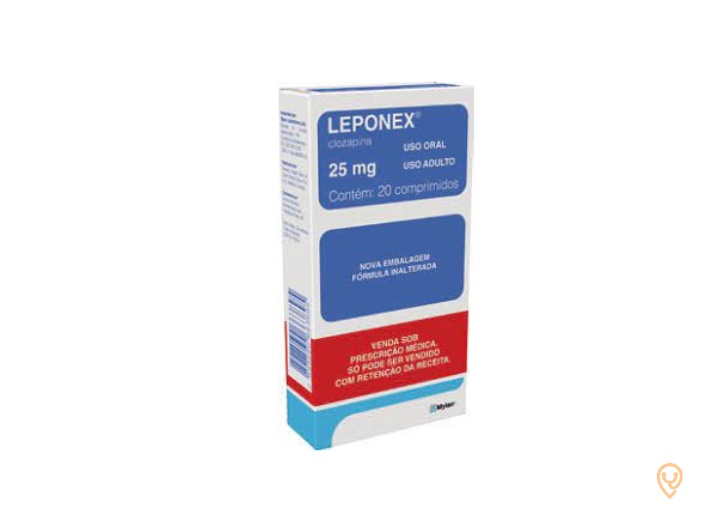
- Kraj rejestracji
- Postać farmaceutycznaCoated tablet, 25 MG
- Kod ATCN05AH02
- Substancja czynna
- Wymaga receptyTak
- Producent
- Te treści mają charakter wyłącznie informacyjny i nie zastępują konsultacji lekarskiej.
- Zamienniki LEPONEXPostać farmaceutyczna: Coated tablet, 25 MGSubstancja czynna: clozapineProducent: ACCORD HEALTHCARE, S.L.U.Wymaga receptyPostać farmaceutyczna: Coated tablet, 25 MGSubstancja czynna: clozapineProducent: AUROBINDO PHARMA (ITALIA) S.R.L.Wymaga receptyPostać farmaceutyczna: Coated tablet, 25 MGSubstancja czynna: clozapineProducent: DOC GENERICI SRLWymaga recepty
Odpowiedniki LEPONEX w innych krajach
Leki z tą samą substancją czynną dostępne w innych krajach.
Odpowiednik LEPONEX w Hiszpania
Odpowiednik LEPONEX w Polska
Odpowiednik LEPONEX w Ukraina
Lekarze online w sprawie LEPONEX
Omów stosowanie LEPONEX, bezpieczeństwo i ocenę zasadności recepty zgodnie z obowiązującymi przepisami.







Uzyskaj receptę na LEPONEX online
Wypełnij 2-minutowy formularz
Opisz swoje objawy, historię choroby i lek, o który prosisz.
Wybierz lekarza lub pozwól nam przydzielić
Wybierz specjalistę lub dopasujemy Cię do najbliższego dostępnego lekarza.
Lekarz analizuje Twój przypadek
Zazwyczaj w ciągu 30 minut. Może zadawać dodatkowe pytania przez czat.
Odbierz w dowolnej aptece
Recepta elektroniczna wysłana na Twój e-mail — ważna w całej Polsce.
Często zadawane pytania
LEPONEX wymaga recepty w Włochy. Możesz skonsultować się z lekarzem online, aby sprawdzić, czy ten lek może być odpowiedni w Twojej sytuacji.
Substancją czynną w LEPONEX jest clozapine. Informacja ta pomaga rozpoznać leki o tym samym składzie, ale pod różnymi nazwami handlowymi.
LEPONEX jest produkowany przez Viatris Healthcare Limited. Nazwy handlowe i opakowania mogą się różnić w zależności od dystrybutora.
Lekarze, tacy jak Lekarze rodzinni, Psychiatrzy, Dermatolodzy, Kardiolodzy, Endokrynolodzy, Gastroenterolodzy, Pulmonolodzy, Nefrolodzy, Reumatolodzy, Hematolodzy, Zakaźnicy, Alergolodzy, Geriatrzy, Pediatrzy, Onkolodzy, mogą ocenić, czy stosowanie LEPONEX jest odpowiednie w Twoim przypadku, w zależności od sytuacji klinicznej i lokalnych przepisów. Możesz umówić konsultację online, aby omówić objawy i możliwe dalsze kroki.
Polska posiada dobrze rozwiniętą infrastrukturę ochrony zdrowia w dużych miastach, takich jak Warszawa, Kraków, Wrocław i Gdańsk. Apteki są łatwo dostępne i działają zgodnie z obowiązującymi przepisami, zapewniając dostęp do leków na receptę.
Możesz kupić LEPONEX w Warszawie, Krakowie, Wrocławiu lub Gdańsku w każdej aptece, posiadając ważną receptę.
Aby uzyskać receptę, możesz skorzystać z Oladoctor:
Inne leki zawierające tę samą substancję czynną (clozapine) to m.in. KLOTSAPINA AKKORD, KLOTSAPINA AUROBINDO, KLOTSAPINA DOK JENERIKI. Mogą one różnić się nazwą handlową lub postacią, ale zawierają ten sam składnik terapeutyczny. Przed zmianą lub rozpoczęciem nowego leku skonsultuj się z lekarzem.
