



INSTANYL 50 MCG Spray do nosa, roztwór

Ocena recepty online
Lekarz przeanalizuje Twój przypadek i zdecyduje, czy wystawienie recepty jest medycznie uzasadnione.

Porozmawiaj z lekarzem o tym leku
Omów swoje objawy i opcje leczenia podczas szybkiej konsultacji online.



Jak stosować INSTANYL
Treść ulotki
- Instanyl 50 micrograms/dose nasal spray, solution, 100 micrograms/dose nasal spray, solution, 200 micrograms/dose nasal spray, solution
- Instanyl 50 micrograms nasal spray, solution in single-dose container, 100 micrograms nasal spray, solution in single-dose container, 200 micrograms nasal spray, solution in single-dose container
- Instanyl 50 micrograms/dose nasal spray, solution, 100 micrograms/dose nasal spray, solution, 200 micrograms/dose nasal spray, solution
Instanyl 50 micrograms/dose nasal spray, solution, 100 micrograms/dose nasal spray, solution, 200 micrograms/dose nasal spray, solution
fentanil
Read this leaflet carefully before you start to use this medicine as it contains important information for you.
- Keep this leaflet. You may need to read it again.
- If you have any questions, ask your doctor or pharmacist.
- This medicine has been prescribed for you only. Do not pass it on to others, even if their symptoms are the same as yours, as it could be harmful.
- If you get any side effects, even those not listed in this leaflet, tell your doctor, pharmacist or nurse. See section 4.
Contents of this leaflet
- 1. What Instanyl is and what it is used for
- 2. What you need to know before you use Instanyl
- 3. How to use Instanyl
- 4. Possible side effects
- 5. How to store Instanyl
- 6. Contents of the pack and other information
1. What is Instanyl and what it is used for
Instanyl contains the active substance fentanyl and belongs to a group of strong painkillers called
opioids. Opioids work by blocking pain signals going to the brain.
Instanyl acts rapidly and is used to relieve severe episodic pain in cancer patients
already being treated with opioids for the treatment of habitual pain. Severe episodic pain is an
additional, sudden pain that occurs despite having taken the usual opioid medicine
for pain relief.
2. Cosa deve sapere prima di usare Instanyl
Non usi Instanyl
- se è allergico al fentanil o ad uno qualsiasi degli altri componenti di questo medicinale (elencati al paragrafo 6)
- se non fa giornalmente e regolarmente uso, da almeno una settimana, di un medicinale oppioide su prescrizione (per es. codeina, fentanil, idromorfone, morfina, ossicodone, petidina), per controllare il dolore persistente. Se non usa questi medicinali non deve usare Instanyl, perché questo potrebbe aumentare il rischio che la sua respirazione diventi pericolosamente lenta e/o superficiale, o perfino che si blocchi
- se sta prendendo un medicinale che contiene sodio oxibato
- se soffre di dolore di breve durata diverso da quello episodico intenso, dovuto a lesioni o interventi chirurgici, cefalee o emicranie
- se ha serie difficoltà di respirazione o soffre di una grave broncopneumopatia ostruttiva
- se ha effettuato in precedenza radioterapia facciale
- se soffre di ricorrenti episodi di sanguinamento dal naso
Avvertenze e precauzioni
Conservi questo medicinale in un luogo sicuro e protetto, inaccessibile ad altre persone (vedere il
paragrafo 5 “Come conservare Instanyl” per maggiori informazioni).
Si rivolga al medico o al farmacista prima di prendere Instanyl, specialmente:
- se è affetto da una broncopneumopatia ostruttiva di lunga durata, la respirazione potrebbe essere compromessa da Instanyl;
- se ha problemi al cuore specialmente rallentamento del ritmo cardiaco, pressione del sangue bassa o ridotto volume sanguigno;
- se ha problemi al fegato o ai reni;
- se ha problemi della funzionalità cerebrale, per es. a causa di un tumore al cervello, di una ferita alla testa o di un aumento della pressione intracranica;
- se ha sviluppato in passato insufficienza surrenalica o mancanza di ormoni sessuali (deficit di androgeni) con l’uso di oppioidi;
- se assume medicinali sedativi come benzodiazepine o farmaci correlati (faccia riferimento anche al paragrafo “Altri medicinali e Instanyl”);
- se assume antidepressivi o antipsicotici (faccia riferimento anche al paragrafo “Altri medicinali e Instanyl”);
- se assume medicinali denominati antagonisti parziali/antagonisti degli oppioidi, per es. buprenorfina, nalbufina e pentazocina (medicinali per il trattamento del dolore), dato che potrebbe manifestare i sintomi della sindrome da astinenza. Faccia riferimento al paragrafo “Altri medicinali e Instanyl” per ulteriori informazioni;
- se usa altri spray nasali per es. per il trattamento del comune raffreddore o allergie.
Disturbi della respirazione correlati al sonno
Instanyl può causare disturbi respiratori correlati al sonno come apnea del sonno (pause della
respirazione durante il sonno) e ipossiemia (bassi livelli di ossigeno nel sangue) correlata al sonno. I
sintomi possono includere pause della respirazione durante il sonno, risvegli nella notte dovuti a
mancanza di fiato, difficoltà a mantenere il sonno o sonnolenza eccessiva durante il giorno. Se lei o
un’altra persona nota questi sintomi, si rivolga al medico. Il medico può valutare la possibilità di una
riduzione della dose.
Se ha la sensazione di difficoltà respiratoria mentre è in trattamento con Instanyl, è molto
importante che contatti immediatamente il medico o l’ospedale.
Consulti il medico durante l’uso di Instanyl se:
- manifesta dolore o aumentata sensibilità al dolore (iperalgesia), che non risponde a un aumento della dose del medicinale prescritto dal medico
- manifesta una combinazione dei seguenti sintomi: nausea, vomito, anoressia, stanchezza, debolezza, capogiro e pressione arteriosa bassa. Nell’insieme, questi sintomi possono essere un segno di una condizione potenzialmente letale, chiamata insufficienza surrenalica, nella quale le ghiandole surrenali non producono una quantità sufficiente di ormoni.
Se soffre di sanguinamento ricorrente dal naso o disturbi nasali durante l’utilizzo di Instanyl, deve
contattare il medico, che prenderà in considerazione trattamenti alternativi per il dolore episodico
intenso.
Uso a lungo termine e tolleranza
Questo medicinale contiene fentanil, un medicinale oppioide. L’uso ripetuto di antidolorifici oppioidi
può rendere il medicinale meno efficace (ci si abitua ad esso, un fenomeno noto come tolleranza al
farmaco). È possibile anche diventare più sensibili al dolore durante l’uso di Instanyl. Questo è noto
come iperalgesia. L’aumento della dose di Instanyl può aiutare a ridurre ulteriormente il dolore per un
po’ di tempo, ma può anche essere dannoso. Se nota che il medicinale diventa meno efficace, si
rivolga al medico. Il medico deciderà se è meglio aumentare la dose o ridurre gradualmente l’uso di
Instanyl.
Dipendenza e tossicodipendenza
L’uso ripetuto di Instanyl può anche portare a dipendenza, abuso e tossicodipendenza, che possono
provocare un sovradosaggio potenzialmente fatale. Il rischio di questi effetti indesiderati può
aumentare con una dose più elevata e una durata d’uso prolungata. La dipendenza o la
tossicodipendenza può darle la sensazione di non avere più il controllo della quantità di medicinale
necessario o della frequenza con cui deve usarlo. Può avvertire la necessità di continuare a usare il
medicinale, anche se non aiuta ad alleviare il dolore.
Il rischio di sviluppare dipendenza o tossicodipendenza varia da persona a persona. Può avere un
rischio maggiore di diventare dipendente o tossicodipendente da Instanyl se:
- lei o un suo familiare ha sofferto in passato di abuso o dipendenza da alcol, medicinali su prescrizione o sostanze illegali (“tossicodipendenza”);
- lei è un fumatore;
- lei ha avuto in passato problemi dell’umore (depressione, ansia o un disturbo della personalità) o è stato in trattamento da uno psichiatra per altre malattie mentali).
La comparsa di uno qualsiasi dei seguenti segni durante l’uso di Instanyl può essere un segno di
dipendenza o tossicodipendenza.
- Ha la necessità di usare il medicinale per un periodo più lungo di quello indicato dal medico
- Ha la necessità di usare una dose superiore a quella raccomandata
- Usa il medicinale per ragioni diverse da quelle prescritte, ad esempio “per restare calmo” o “per favorire il sonno”
- Ha tentato più volte di interrompere o di controllare l’uso di questo medicinale, senza successo
- Quando interrompe il trattamento con il medicinale si sente male (ad es. nausea, vomito, diarrea, ansia, brividi, tremori e sudorazione) e quando riprende a usarlo si sente meglio (“effetti da astinenza”)
Se nota uno qualsiasi di questi segni, si rivolga al medico per discutere il miglior percorso terapeutico
per lei, compresi i casi in cui è opportuno interrompere il trattamento e come interromperlo in modo
sicuro.
Bambini ed adolescenti
Instanyl non deve essere usato nei bambini e adolescenti al di sotto dei 18 anni di età.
Altri medicinali e Instanyl
Informi il medico o il farmacista se sta assumendo, ha recentemente assunto o potrebbe assumere
qualsiasi altro medicinale, compresi quelli senza prescrizione medica.
Instanyl può influenzare o essere influenzato da altri medicinali.
Deve fare particolare attenzione se è in trattamento con qualcuno dei seguenti medicinali:
- Altri medicinali per il dolore e alcuni antidolorifici per il dolore ai nervi (gabapentin e pregabalin).
- Medicinali che normalmente inducono sonnolenza (hanno un effetto sedativo) come sonniferi, medicinali sedativi come benzodiazepine o medicinali correlati, medicinali per il trattamento degli stati d’ansia, antistaminici, o tranquillanti, miorilassanti scheletrici e gabapentinoidi (gabapentin e pregabalin). L’uso concomitante di questi medicinali insieme a Instanyl può indurre il rischio di sonnolenza, sedazione profonda e compromettere la capacità respiratoria (depressione respiratoria), una condizione che può portare al coma ed essere potenzialmente letale. Per questo motivo, l’uso concomitante deve essere considerato solo nel caso in cui non siano possibili altre opzioni di trattamento. Tuttavia, se il medico prescrive Instanyl insieme a medicinali sedativi, dovrà limitare la dose e la durata del trattamento concomitante. Informi il medico su tutti i medicinali sedativi che sta assumendo, e segua attentamente le raccomandazioni del medico riguardo al dosaggio. Può essere utile informare amici o parenti di prestare attenzione alla comparsa dei segni e dei sintomi sopra menzionati. Se avverte questi sintomi, si rivolga al medico.
- Medicinali che possono avere un effetto sul modo in cui il corpo metabolizza Instanyl, come:
- ritonavir, nelfinavir, amprenavir, e fosamprenavir (usati per il trattamento dell’infezione da HIV)
- inibitori del CYP3A4 come ketoconazolo, itraconazolo, o fluconazolo (usati per il trattamento di infezioni fungine)
- troleandomicina, claritromicina, o eritromicina (usati per il trattamento delle infezioni batteriche)
- aprepitant (usato per il trattamento della nausea grave)
- diltiazem e verapamil (usati per il trattamento della pressione sanguigna alta o di malattie cardiache)
- Medicinali chiamati inibitori della monoammino ossidasi (MAO) (usati nelle depressioni gravi), assunti nelle ultime due settimane.
- Il rischio di effetti indesiderati aumenta se sta assumendo medicinali come determinati antidepressivi o antipsicotici. Instanyl può interagire con questi medicinali e possono comparire alterazioni dello stato mentale (per es. agitazione, allucinazioni, coma) e altri effetti, come una temperatura corporea superiore a 38 °C, accelerazione del battito cardiaco, pressione sanguigna instabile e riflessi esagerati, rigidità muscolare, mancanza di coordinazione e/o sintomi gastrointestinali (per es. nausea, vomito, diarrea). Il medico le dirà se Instanyl è adatto a lei.
- Medicinali denominati agonisti/antagonisti parziali degli oppioidi es. buprenorfina, nalbufina e pentazocina (medicinali per il trattamento del dolore). Potrebbe manifestare sintomi di sindrome da astinenza (nausea, vomito, diarrea, ansia, brividi, tremore e sudorazione).
- Altri medicinali assunti per via nasale, in particolare ossimetazolina, xilometazolina e medicinali similari, usati per il sollievo dalla congestione nasale.
Instanyl con cibi, bevande o alcol
Non beva alcool durante il trattamento con Instanyl, perché ciò può aumentare il rischio di effetti
indesiderati pericolosi.
Gravidanza e allattamento
Se è in corso una gravidanza, se sospetta o sta pianificando una gravidanza, o se sta allattando con
latte materno chieda consiglio al medico o al farmacista prima di prendere qualsiasi medicinale.
Instanyl non deve essere usato in gravidanza se prima non he ha discusso con il medico.
Instanyl non deve essere usato durante il parto perché fentanil può causare seri problemi respiratori nel
neonato.
Il fentanil può passare nel latte materno e può provocare effetti indesiderati nel neonato allattato con
latte materno. Non usi Instanyl se sta allattando. Per almeno 5 giorni dopo l’ultima dose di Instanyl
non deve cominciare ad allattare con latte materno.
Guida di veicoli e utilizzo di macchinari
Non deve guidare né utilizzare macchinari mentre è in trattamento con Instanyl. Instanyl può causare
capogiro, sonnolenza e disturbi della vista, che possono influenzare l’abilità nel guidare veicoli o
nell’utilizzo di macchinari.
3. How to use Instanyl
Before starting treatment and regularly during treatment, your doctor will discuss with you also
what you might expect from using Instanyl, when and for how long it is necessary to use it, when
to contact your doctor and when you should stop treatment (see also paragraph 2, Withdrawal symptoms when stopping Instanyl).
Use this medicine following exactly the instructions of your doctor. If you have any doubts, ask your
doctor or pharmacist.
The dose of Instanyl is independent of the usual treatment for cancer pain.
When you start using Instanyl for the first time, your doctor will support you in finding the dose that will
give you relief from intense breakthrough pain.
The initial dose is one spray of 50 micrograms into one nostril each time you have an episode of intense
breakthrough pain. While determining the right dose, your doctor may teach you how to
proceed to move to a higher dose.
If the intense breakthrough pain has not subsided after 10 minutes, you should use only another spray for
this episode.
Generally you should wait 4 hours before treating another episode of intense breakthrough pain. In
exceptional cases, when a new episode of intense breakthrough pain occurs before then, you can use
Instanyl to treat it but you must wait at least 2 hours from the last spray. If you regularly have episodes of
intense breakthrough pain with an interval of less than 4 hours between them, contact your doctor, as
the treatment of your underlying pain must be modified.
You can use Instanyl to treat up to four episodes of intense breakthrough pain per day.
If you experience more than four episodes of intense breakthrough pain per day, contact your doctor,
because they may consider changing the underlying cancer pain treatment.
To keep track of the number of doses of Instanyl used, you should use the table provided
in the package leaflet located on the child-resistant closure of the pack.
Do not change the dose of Instanyl or other pain medications on your own. Changes in
dosage should be made together with your doctor.
Instanyl is for nasal use only.
If you use more Instanyl than you should or if you think someone has accidentally taken Instanyl
Contact your doctor, hospital or emergency room to assess the risk and for advice if you have used
more Instanyl than you should.
The symptoms of overdose are:
Drowsiness, lethargy, dizziness, decreased body temperature, slowed heart rate,
difficulty coordinating arms and legs.
In severe cases, an overdose of Instanyl can cause coma, sedation, convulsions or severe difficulty
breathing (very slow or shallow breathing). An overdose can also cause a brain disorder known as toxic leukoencephalopathy.
If you notice you have any of the above symptoms, seek immediate medical attention.
Note to those providing care to the patient
If you notice that the person taking Instanyl suddenly acts slowly, has
difficulty breathing, or if you have difficulty waking the person:
- You must immediately call the emergency room
- While waiting for help, you must keep the person awake by talking to them or gently shaking them from time to time
- If the person has difficulty breathing, you should encourage the person to breathe every 5-10 seconds
- If the person has stopped breathing, you should try to resuscitate them until help arrives.
If you think someone has accidentally taken Instanyl, seek immediate medical assistance.
Try to keep the person awake until help arrives.
If someone has accidentally taken Instanyl, they may have the same symptoms described above for
overdose.
If you forget to use Instanyl
If the intense breakthrough pain is still present, you can take Instanyl as prescribed by your doctor. If
the intense breakthrough pain has gone away, do not take Instanyl until the next episode of pain
breakthrough pain.
If you stop treatment with Instanyl
You should stop taking Instanyl when you no longer have any intense breakthrough pain. However, you should
continue to take your usual medicine for the treatment of cancer pain. If you are not sure
contact your doctor to confirm the correct dose of your usual medicine.
When you stop using Instanyl you may experience withdrawal symptoms similar to
the possible side effects of Instanyl. If you experience withdrawal symptoms, contact your doctor. The
doctor will assess the need for medicine to reduce or eliminate withdrawal symptoms.
If you have any questions about the use of Instanyl, ask your doctor or pharmacist.
4. Possible side effects
Like all medicines, this medicine can cause side effects, although not everybody gets them.
Side effects will usually stop or decrease in intensity with continued use of the
product.
Stop treatment immediately and contact your doctor, hospital or emergency services
if:
- you experience a sudden severe allergic reaction, with difficulty breathing, swelling, dizziness, rapid heartbeat, sweating or loss of consciousness
- you have severe difficulty breathing
- you feel a wheezing sound when inhaling
- you have a convulsive pain
- you feel severely dizzy
These side effects can be very serious.
Other side effects reported after use of Instanyl:
Common side effects(may affect up to 1 in 10 people):
Drowsiness, dizziness even with difficulty maintaining balance, headache, throat irritation,
nausea, vomiting, flushing, strong feeling of warmth, excessive sweating.
Uncommon side effects(may affect up to 1 in 100 people):
Insomnia ,drowsiness, convulsive muscle contractions, abnormal skin sensation also
unpleasant, changes in taste, motion sickness, low blood pressure, severe breathing
problems, nosebleeds, nasal ulcer, runny nose, constipation, inflammation of the mouth,
dry mouth, skin pain, itching, fever.
Not known(frequency cannot be estimated from available data):
Allergic reaction, falls, diarrhea, seizures (fits), loss of consciousness, swelling of arms or
legs, seeing or hearing things that are not real (hallucinations), delirium (symptoms may include
a combination of agitation, restlessness, disorientation, confusion, fear, seeing or hearing
things that do not exist, sleep disturbances, nightmares), tolerance to the drug, dependence on
substances of abuse (drug addiction), drug abuse (see section 2), fatigue, malaise,
withdrawal syndrome (may manifest with the appearance of the following side effects: nausea,
vomiting, diarrhea, anxiety, chills, tremor and sweating), shortness of breath.
Cases of patients reporting a hole in the nasal septum – the structure that
separates the nostrils – have also been reported.
Prolonged treatment with fentanyl during pregnancy can cause withdrawal symptoms in the
newborn, which can be fatal (see section 2).
Inform your doctor if you experience recurrent nosebleeds or nasal discomfort.
Reporting of side effects
If you get any side effects, talk to your doctor or pharmacist or nurse. You can also report side effects directly
through the national reporting system listed in Annex V .
By reporting side effects you can help provide more information on the safety
of this medicine.
5. How to store Instanyl
The pain-relieving substance contained in Instanyl is very potent and can be life-threatening
for children. Instanyl must be kept out of sight and reach of children.
After use, always store the nasal spray in the child-resistant closure packaging.
Keep this medicine in a safe and protected place, inaccessible to other people. Accidental or intentional
ingestion of this medicine by other people to whom it has not been prescribed
can cause serious harm and be fatal.
Do not use Instanyl after the expiry date which is stated on the bottle after Exp. The expiry date refers
to the last day of that month.
Store at a temperature below 30 °C. Store the nasal spray in an upright position. Do not
freeze. If Instanyl nasal spray is frozen, the metering pump may break. If you are not sure
how the pump has been stored, check it before use.
Expired or no longer used Instanyl may still contain enough medicine to be harmful
to others, especially children. Do not dispose of any medicine in wastewater and household waste.
Any used or unused nasal spray must be systematically disposed of according to
local regulations or returned to the pharmacist in its child-resistant packaging. Ask the
pharmacist how to dispose of medicines you no longer use. This will help protect the environment.
6. Package Contents and Other Information
What Instanyl contains
The active ingredient is fentanyl. The content is:
50 micrograms/dose: 1 ml contains fentanyl citrate equivalent to 500 micrograms of fentanyl. 1 spray
(100 microliters) contains 50 micrograms of fentanyl.
100 micrograms/dose: 1 ml contains fentanyl citrate equivalent to 1,000 micrograms of fentanyl. 1 spray
(100 microliters) contains 100 micrograms of fentanyl.
200 micrograms/dose: 1 ml contains fentanyl citrate equivalent to 2,000 micrograms of fentanyl. 1 spray
(100 microliters) contains 200 micrograms of fentanyl.
The other ingredients are monobasic sodium phosphate dihydrate, dibasic sodium phosphate dihydrate, and purified water.
Description of Instanyl’s appearance and package contents
Instanyl is a nasal spray solution. The solution is clear and colorless. It is contained in a brown glass bottle with a dosing pump.
The nasal spray is supplied in packages with child-resistant closures with 3 different concentrations:
1.8 ml (corresponding to 10 doses), 2.9 ml (corresponding to 20 doses) and 5.0 ml (corresponding to
40 doses).
Not all pack sizes may be marketed.
The labeling of the three concentrations of Instanyl is differentiated by color:
50 micrograms/dose the labeling is orange
100 micrograms/dose the labeling is purple
200 micrograms/dose the labeling is blue-green.
Marketing Authorisation Holder
Istituto Gentili S.r.l.
Via San Giuseppe Cottolengo 15
20143 Milan
Italy
Manufacturer
Curida AS
Solbærvegen 5
NO-2409 Elverum
Norway
More detailed information on this medicine is available on the website of the European Medicines Agency, http://www.ema.europa.eu .
INSTRUCTIONS FOR USE OF INSTANYL NASAL SPRAY
To learn how to use Instanyl nasal spray, read the following instructions carefully:
Preparing Instanyl nasal spray for use:
- Before using the nasal spray for the first time:
- It must be pressed 3 or 4 times (primed) until a slight mist appears.
- During the priming phase, leakage of medicine is expected. For this reason:
- Priming must be performed in a well-ventilated area.
- Do not direct the nasal spray towards yourself and other people.
- Do not direct the nasal spray towards objects and surfaces that could come into contact with other people, especially children.
- If you have not used Instanyl for more than 7 days, you will need to re-prime the pump by pressing the nasal spray into the air before administering the next dose.
Use Instanyl nasal spray as follows:
- 1. Blow your nose if it feels congested or if you have a cold.
- 2. Sit or stand in an upright position.
- 3. Remove the protective cap from the spray.
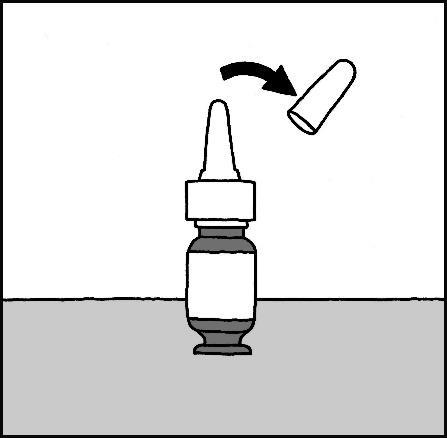
- 4. Hold the nasal spray upright.
- 5. Tilt your head slightly forward.
- 6. Close one nostril by pressing it sideways with a finger and insert the spray nozzle into the other nostril (about 1 cm). It doesn't matter which nostril you use. If you need a second dose after 10 minutes to obtain adequate pain relief, that dose must be administered in the other nostril.
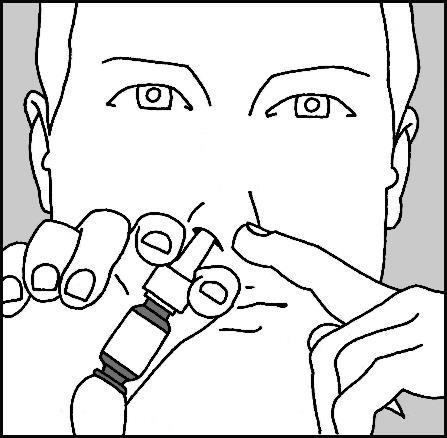
- 7. Press the pump quickly and completely downwards once with two fingers while inhaling through your nose. It is important to make sure that the pump is pressed completely. You may not feel the dose in your nose, but if the piston has been pressed down the dose has been administered.
- 8. Clean the nasal spray applicator after use with a clean cloth and then discard the cloth.
If you need a second dose of Instanyl after 10 minutes to obtain adequate pain relief,
repeat steps 1 to 8 in the other nostril.
After use, always store Instanyl in the child-resistant closure package. Keep out of the sight and reach of children.
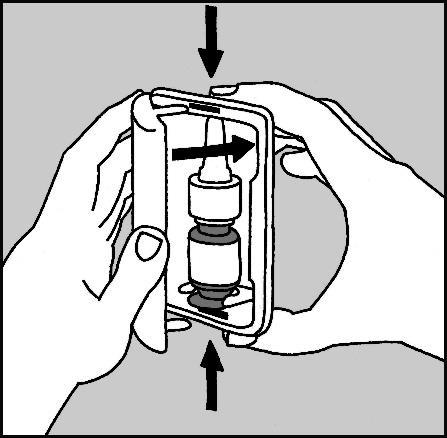
Record the number of doses used and the number of doses remaining in the nasal spray using the
dose record card supplied with Instanyl nasal spray. Each time you use Instanyl nasal spray,
make sure that this information is recorded by you or the person providing you with assistance
on the appropriate card.
If Instanyl nasal spray is blocked or does not dispense correctly:
If it is blocked, point the nasal spray away from yourself (and other people) and press
firmly on the pump. This should remove any blockages.
If the nasal spray continues to malfunction, contact your pharmacist. Never attempt to repair the nasal spray yourself or disassemble it.This could result in
administration of an incorrect dose.
Instanyl 50 micrograms nasal spray, solution in single-dose container, 100 micrograms nasal spray, solution in single-dose container, 200 micrograms nasal spray, solution in single-dose container
fentanil
Read this leaflet carefully before you start to use this medicine because it contains important information for you.
- Keep this leaflet. You may need to read it again.
- If you have any questions, ask your doctor or pharmacist.
- This medicine has been prescribed for you only. Do not pass it on to others, even if their symptoms are the same as yours, as it could be harmful.
- If you get any side effects, even those not listed in this leaflet, tell your doctor or pharmacist or nurse. See section 4.
Contents of this leaflet
- 1. What Instanyl is and what it is used for
- 2. What you need to know before you use Instanyl
- 3. How to use Instanyl
- 4. Possible side effects
- 5. How to store Instanyl
- 6. Contents of the pack and other information
1. What is Instanyl and what is it used for
Instanyl contains the active substance fentanyl and belongs to a group of strong painkillers called
opioids. Opioids work by blocking pain signals that go to the brain.
Instanyl acts rapidly and is used to relieve severe episodic pain in cancer patients
already being treated with opioids for the treatment of habitual pain. Severe episodic pain is an
additional sudden pain that occurs despite having taken the usual opioid medicine
for pain relief.
2. Cosa deve sapere prima di usare Instanyl
Non usi Instanyl
- se è allergico al fentanil o ad uno qualsiasi degli altri componenti di questo medicinale (elencati al paragrafo 6);
- se non fa giornalmente e regolarmente uso, da almeno una settimana, di un medicinale oppioide su prescrizione (per es. codeina, fentanil, idromorfone, morfina, ossicodone, petidina), per controllare il dolore persistente. Se non usa questi medicinali non deve usare Instanyl, perché questo potrebbe aumentare il rischio che la sua respirazione diventi pericolosamente lenta e/o superficiale, o perfino che si blocchi;
- se sta prendendo un medicinale che contiene sodio oxibato;
- se soffre di dolore di breve durata diverso da quello episodico intenso, dovuto a lesioni o interventi chirurgici, cefalee o emicranie;
- se ha serie difficoltà di respirazione o soffre di una grave broncopneumopatia ostruttiva;
- se ha effettuato in precedenza radioterapia facciale;
- se soffre di ricorrenti episodi di sanguinamento dal naso.
Avvertenze e precauzioni
Conservi questo medicinale in un luogo sicuro e protetto, inaccessibile ad altre persone (vedere il
paragrafo 5 “Come conservare Instanyl” per maggiori informazioni).
Si rivolga al medico o al farmacista prima di usare Instanyl, specialmente:
- se è affetto da una broncopneumopatia ostruttiva di lunga durata, la respirazione potrebbe essere compromessa da Instanyl;
- se ha problemi al cuore specialmente rallentamento del ritmo cardiaco, pressione del sangue bassa o ridotto volume sanguigno;
- se ha problemi al fegato o ai reni;
- se ha problemi della la funzionalità cerebrale, per es. a causa di un tumore al cervello, di una ferita alla testa o di un aumento della pressione intracranica;
- se ha sviluppato in passato insufficienza surrenalica o mancanza di ormoni sessuali (deficit di androgeni) con l’uso di oppioidi;
- se assume medicinali sedativi come benzodiazepine o farmaci correlati (faccia riferimento anche al paragrafo “Altri medicinali e Instanyl”);
- se assume antidepressivi o antipsicotici (faccia riferimento anche al paragrafo “Altri medicinali e Instanyl”);
- se assume medicinali denominati antagonisti parziali/antagonisti degli oppioidi, per es. buprenorfina, nalbufina e pentazocina (medicinali per il trattamento del dolore), dato che potrebbe manifestare i sintomi della sindrome da astinenza. Faccia riferimento al paragrafo “Altri medicinali e Instanyl” per ulteriori informazioni;
- se usa altri spray nasali per es. per il trattamento del comune raffreddore o allergie.
Disturbi della respirazione correlati al sonno
Instanyl può causare disturbi respiratori correlati al sonno come apnea del sonno (pause della
respirazione durante il sonno) e ipossiemia (bassi livelli di ossigeno nel sangue) correlata al sonno. I
sintomi possono includere pause della respirazione durante il sonno, risvegli nella notte dovuti a
mancanza di fiato, difficoltà a mantenere il sonno o sonnolenza eccessiva durante il giorno. Se lei o
un’altra persona nota questi sintomi, si rivolga al medico. Il medico può valutare la possibilità di una
riduzione della dose.
Se ha la sensazione di difficoltà respiratoria mentre è in trattamento con Instanyl, è molto
importante che contatti immediatamente il medico o l’ospedale.
Consulti il medico durante l’uso di Instanyl se:
- manifesta dolore o aumentata sensibilità al dolore (iperalgesia), che non risponde a un aumento della dose del medicinale prescritto dal medico
- manifesta una combinazione dei seguenti sintomi: nausea, vomito, anoressia, stanchezza, debolezza, capogiro e pressione arteriosa bassa. Nell’insieme, questi sintomi possono essere un segno di una condizione potenzialmente letale, chiamata insufficienza surrenalica, nella quale le ghiandole surrenali non producono una quantità sufficiente di ormoni.
Se soffre di sanguinamento ricorrente dal naso o disturbi nasali durante l’utilizzo di Instanyl, deve
contattare il medico, che prenderà in considerazione trattamenti alternativi per il dolore episodico
intenso.
Uso a lungo termine e tolleranza
Questo medicinale contiene fentanil, un medicinale oppioide. L’uso ripetuto di antidolorifici oppioidi
può rendere il medicinale meno efficace (ci si abitua ad esso, un fenomeno noto come tolleranza al
farmaco). È possibile anche diventare più sensibili al dolore durante l’uso di Instanyl. Questo è noto
come iperalgesia. L’aumento della dose di Instanyl può aiutare a ridurre ulteriormente il dolore per un
po’ di tempo, ma può anche essere dannoso. Se nota che il medicinale diventa meno efficace, si
rivolga al medico. Il medico deciderà se è meglio aumentare la dose o ridurre gradualmente l’uso di
Instanyl.
Dipendenza e tossicodipendenza
L’uso ripetuto di Instanyl può anche portare a dipendenza, abuso e tossicodipendenza, che possono
provocare un sovradosaggio potenzialmente fatale. Il rischio di questi effetti indesiderati può
aumentare con una dose più elevata e una durata d’uso prolungata. La dipendenza o la
tossicodipendenza può darle la sensazione di non avere più il controllo della quantità di medicinale
necessario o della frequenza con cui deve usarlo. Può avvertire la necessità di continuare a usare il
medicinale, anche se non aiuta ad alleviare il dolore.
Il rischio di sviluppare dipendenza o tossicodipendenza varia da persona a persona. Può avere un
rischio maggiore di diventare dipendente o tossicodipendente da Instanyl se:
- lei o un suo familiare ha sofferto in passato di abuso o dipendenza da alcol, medicinali su prescrizione o sostanze illegali (“tossicodipendenza”);
- lei è un fumatore;
- lei ha avuto in passato problemi dell’umore (depressione, ansia o un disturbo della personalità) o è stato in trattamento da uno psichiatra per altre malattie mentali).
La comparsa di uno qualsiasi dei seguenti segni durante l’uso di Instanyl può essere un segno di
dipendenza o tossicodipendenza.
- Ha la necessità di usare il medicinale per un periodo più lungo di quello indicato dal medico
- Ha la necessità di usare una dose superiore a quella raccomandata
- Usa il medicinale per ragioni diverse da quelle prescritte, ad esempio “per restare calmo” o “per favorire il sonno”
- Ha tentato più volte di interrompere o di controllare l’uso di questo medicinale, senza successo
- Quando interrompe il trattamento con il medicinale si sente male (ad es. nausea, vomito, diarrea, ansia, brividi, tremori e sudorazione) e quando riprende a usarlo si sente meglio (“effetti da astinenza”)
Se nota uno qualsiasi di questi segni, si rivolga al medico per discutere il miglior percorso terapeutico
per lei, compresi i casi in cui è opportuno interrompere il trattamento e come interromperlo in modo
sicuro.
Bambini ed adolescenti
Instanyl non deve essere usato nei bambini e adolescenti al di sotto dei 18 anni di età.
Altri medicinali e Instanyl
Informi il medico o il farmacista se sta assumendo, ha recentemente assunto o potrebbe assumere
qualsiasi altro medicinale, compresi quelli senza prescrizione medica.
Instanyl può influenzare o essere influenzato da altri medicinali.
Deve fare particolare attenzione se è in trattamento con qualcuno dei seguenti medicinali:
- Altri medicinali per il dolore e alcuni antidolorifici per il dolore ai nervi (gabapentin e pregabalin).
- Medicinali che normalmente inducono sonnolenza (hanno un effetto sedativo) come sonniferi, medicinali sedativi come benzodiazepine o medicinali correlati, medicinali per il trattamento degli stati d’ansia, antistaminici, o tranquillanti, miorilassanti scheletrici e gabapentinoidi (gabapentin e pregabalin). L’uso concomitante di questi medicinali insieme a Instanyl può indurre il rischio di sonnolenza, sedazione profonda e compromettere la capacità respiratoria (depressione respiratoria), una condizione che può portare al coma ed essere potenzialmente letale. Per questo motivo, l’uso concomitante deve essere considerato solo nel caso in cui non siano possibili altre opzioni di trattamento. Tuttavia, se il medico prescrive Instanyl insieme a medicinali sedativi, dovrà limitare la dose e la durata del trattamento concomitante. Informi il medico su tutti i medicinali sedativi che sta assumendo, e segua attentamente le raccomandazioni del medico riguardo al dosaggio. Può essere utile informare amici o parenti di prestare attenzione alla comparsa dei segni e dei sintomi sopra menzionati. Se avverte questi sintomi, si rivolga al medico.
- Medicinali che possono avere un effetto sul modo in cui il corpo metabolizza Instanyl, come:
- ritonavir, nelfinavir, amprenavir, e fosamprenavir (usati per il trattamento dell’infezione da HIV)
- inibitori del CYP3A4 come ketoconazolo, itraconazolo, o fluconazolo (usati per il trattamento di infezioni fungine),
- troleandomicina, claritromicina, o eritromicina (usati per il trattamento delle infezioni batteriche),
- aprepitant (usato per il trattamento della nausea grave)
- diltiazem e verapamil (usati per il trattamento della pressione sanguigna alta o di malattie cardiache)
- Medicinali chiamati inibitori della monoammino ossidasi (MAO) (usati nelle depressioni gravi), assunti nelle ultime due settimane.
- Il rischio di effetti indesiderati aumenta se sta assumendo medicinali come determinati antidepressivi o antipsicotici. Instanyl può interagire con questi medicinali e possono comparire alterazioni dello stato mentale (per es. agitazione, allucinazioni, coma) e altri effetti, come una temperatura corporea superiore a 38 °C, accelerazione del battito cardiaco, pressione sanguigna instabile e riflessi esagerati, rigidità muscolare, mancanza di coordinazione e/o sintomi gastrointestinali (per es. nausea, vomito, diarrea). Il medico le dirà se Instanyl è adatto a lei
- Medicinali denominati agonisti/antagonisti parziali degli oppioidi es. buprenorfina, nalbufina e pentazocina (medicinali per il trattamento del dolore). Potrebbe manifestare sintomi di sindrome da astinenza (nausea, vomito, diarrea, ansia, brividi, tremore e sudorazione).
- Altri medicinali assunti per via nasale, in particolare ossimetazolina, xilometazolina e medicinali similari, usati per il sollievo dalla congestione nasale.
Instanyl con cibi, bevande o alcol
Non beva alcool durante il trattamento con Instanyl, perché ciò può aumentare il rischio di effetti
indesiderati pericolosi.
Gravidanza e allattamento
Se è in corso una gravidanza, se sospetta o sta pianificando una gravidanza, o se sta allattando con
latte materno chieda consiglio al medico o al farmacista prima di prendere qualsiasi medicinale.
Instanyl non deve essere usato in gravidanza se prima non he ha discusso con il medico.
Instanyl non deve essere usato durante il parto perché fentanil può causare seri problemi respiratori nel
neonato.
Il fentanil può passare nel latte materno e può provocare effetti indesiderati nel neonato allattato con
latte materno. Non usi Instanyl se sta allattando. Per almeno 5 giorni dopo l’ultima dose di Instanyl
non deve cominciare ad allattare con latte materno.
Guida di veicoli e utilizzo di macchinari
Non deve guidare nè utilizzare macchinari mentre è in trattamento con Instanyl. Instanyl può causare
capogiro, sonnolenza e disturbi della vista, che possono influenzare l’abilità nel guidare veicoli o
nell’utilizzo di macchinari.
3. How to use Instanyl
Before starting treatment and regularly during treatment, your doctor will discuss with you also
what you might expect from using Instanyl, when and for how long it is necessary to use it, when
to contact your doctor and when you should stop treatment (see also paragraph 2, Withdrawal symptoms when
stopping Instanyl).
Use this medicine following exactly the instructions of your doctor. If you have doubts, consult your
doctor or pharmacist.
The dose of Instanyl is independent of the usual treatment for oncological pain.
When you start using Instanyl for the first time, your doctor will support you in finding the dose that will
give you relief from intense episodic pain.
The initial dose is one spray of 50 micrograms into one nostril each time you have an episode of intense
episodic pain. While determining the correct dose, your doctor may teach you how to
proceed to switch to a higher dose.
If the intense episodic pain has not subsided after 10 minutes, you should use only another spray for
this episode.
Generally you should wait 4 hours before treating another episode of intense episodic pain. In exceptional
cases, when a new episode of intense episodic pain occurs sooner, you can use
Instanyl to treat it but you must wait at least 2 hours from the last spray. If you regularly have episodes of
intense episodic pain with an interval of less than 4 hours between them, contact your doctor, as
the treatment of your underlying pain needs to be modified.
You can use Instanyl to treat up to four episodes of intense episodic pain per day.
If you experience more than four episodes of intense episodic pain per day, contact your doctor,
because they may consider changing the underlying oncological pain treatment.
Do not change the dose of Instanyl or other medicines for pain on your own. Changes
in dosage should be made together with your doctor.
Instanyl is for nasal use only.
If you use more Instanyl than you should or if you think someone has accidentally taken Instanyl
Contact your doctor, hospital or emergency room to assess the risk and for advice if you have used
more Instanyl than you should.
The symptoms of overdose are:
Drowsiness, lethargy, dizziness, decreased body temperature, slowing of the heartbeat,
difficulty coordinating arms and legs.
In severe cases, an overdose of Instanyl can cause coma, sedation, convulsions or severe difficulty
breathing (very slow or shallow breathing). An overdose can also cause a brain disorder known as toxic leukoencephalopathy.
If you notice you have any of the above symptoms, seek immediate medical attention.
Note to those providing care to the patient
If you notice that the person taking Instanyl suddenly acts slowly, has
difficulty breathing or if you have difficulty waking the person:
- You must immediately call the emergency room
- While waiting for help, you must keep the person awake by talking to them or gently shaking them from time to time
- If the person has difficulty breathing, you must encourage the person to breathe every 5-10 seconds
- If the person has stopped breathing, you must try to resuscitate them until help arrives
If you think someone has accidentally taken Instanyl, seek immediate medical assistance.
Try to keep the person awake until help arrives.
If someone has accidentally taken Instanyl, they may have the same symptoms as described above for
overdose.
If you forget to use Instanyl
If the intense episodic pain is still present, you can take Instanyl as prescribed by your doctor. If
the intense episodic pain has disappeared, do not take Instanyl until the next episode of pain
episodic pain.
If you stop treatment with Instanyl
You should stop taking Instanyl when you no longer have any intense episodic pain. However, you
should continue to take your usual medicine for the treatment of oncological pain. If you are not sure
contact your doctor to confirm the correct dose of your usual medicine.
When you stop using Instanyl you may experience withdrawal symptoms similar to
the possible side effects of Instanyl. If you experience withdrawal symptoms, contact your doctor. The
doctor will assess the need for medicine to reduce or eliminate withdrawal symptoms.
If you have any doubts about the use of Instanyl, ask your doctor or pharmacist.
4. Possible side effects
Like all medicines, this medicine can cause side effects, although not everybody gets them.
Side effects will usually stop or decrease in intensity with continued use of the
product.
Stop treatment immediately and contact your doctor, hospital or emergency services
if:
- you experience a sudden severe allergic reaction, with difficulty breathing, swelling, dizziness, rapid heartbeat, sweating or loss of consciousness
- you have severe difficulty breathing
- you hear a wheezing sound when breathing in
- you have a convulsive pain
- you feel severely dizzy These side effects can be very serious.
Other side effects reported after use of Instanyl:
Common side effects(may affect up to 1 in 10 people):
Drowsiness, dizziness, even with difficulty maintaining balance, headache, throat irritation,
nausea, vomiting, flushing, a strong sensation of heat, excessive sweating.
Uncommon side effects(may affect up to 1 in 100 people):
Insomnia ,drowsiness, convulsive muscle contractions, abnormal skin sensation also
unpleasant, changes in taste, motion sickness, low blood pressure, severe breathing problems, nosebleeds, nasal ulcer, runny nose, constipation, inflammation of the mouth,
dry mouth, skin pain, itchy skin, fever.
Not known(frequency cannot be estimated from available data):
Allergic reaction, falls, diarrhea, seizures (fits), loss of consciousness, swelling of arms or
legs, seeing or hearing things that are not real (hallucinations), delirium (symptoms may include
a combination of agitation, restlessness, disorientation, confusion, fear, seeing or hearing
things that do not actually exist, sleep disturbances, nightmares), tolerance to the drug, substance dependence
(drug addiction), drug abuse (see section 2), fatigue, malaise,
withdrawal syndrome (may manifest with the appearance of the following side effects: nausea,
vomiting, diarrhea, anxiety, chills, tremor and sweating), shortness of breath.
Cases of patients reporting a hole in the nasal septum – the structure that
separates the nostrils – have also been reported.
Prolonged treatment with fentanyl during pregnancy can cause withdrawal symptoms in the
newborn, which can lead to death (see section 2).
Tell your doctor if you experience recurrent nosebleeds or nasal discomfort.
Reporting of side effects
If you get any side effects, talk to your doctor or pharmacist or nurse. You can also report side effects directly
through the national reporting system listed in Appendix V . By reporting side effects you can help
provide more information on the safety of this medicine.
5. How to store Instanyl
The pain-relieving substance contained in Instanyl is very potent and can be life-threatening
to children. Instanyl must be kept out of the reach and sight of children.
Keep this medicine in a safe and secure place, inaccessible to other people. Accidental or intentional
ingestion of this medicine by other people to whom it has not been prescribed
can cause serious harm and be fatal.
Do not use Instanyl after the expiry date which is stated on the pack and on the single-dose container
after Exp. The expiry date refers to the last day of the month.
Store at a temperature below 30 °C. Keep the blister in the outer carton. Store in
an upright position.
Instanyl may be harmful to others, especially children. Do not dispose of any medicine
in wastewater or household waste. Any unused single-dose container must be
systematically and properly disposed of or returned to the pharmacist in its child-resistant blister
according to local regulations. Ask your pharmacist how to dispose of medicines that you
no longer use. This will help protect the environment.
6. Package contents and other information
What Instanyl contains
The active ingredient is fentanyl. The content is:
50 micrograms: 1 dose (100 microliters) contains fentanyl citrate equivalent to 50 micrograms of
fentanyl
100 micrograms: 1 dose (100 microliters) contains fentanyl citrate equivalent to 100 micrograms of
fentanyl.
200 micrograms: 1 dose (100 microliters) contains fentanyl citrate equivalent to 200 micrograms of
fentanyl
The other ingredients are monobasic sodium phosphate dihydrate, dibasic sodium phosphate dihydrate, and water
for injectable preparations.
Description of the appearance of Instanyl and contents of the pack
Instanyl is a nasal spray solution, in a single-dose spray container. The solution is clear, colorless.
The single-dose container contains 1 dose of Instanyl and is supplied in a child-resistant blister.
Instanyl is available in different packs of 2, 6, 8 and 10 single-dose containers
It is possible that not all packs are marketed.
The labeling of the three concentrations of Instanyl is differentiated by color:
50 micrograms the labeling is orange
100 micrograms the labeling is purple
200 micrograms the labeling is bluish-green.
Marketing authorisation holder
Istituto Gentili S.r.l.
Via San Giuseppe Cottolengo 15
20143 Milano
Italy
Manufacturer
Curida AS
Solbærvegen 5
NO-2409 Elverum
Norway
More detailed information on this medicine is available on the website of the European
Medicines Agency, http://www.ema.europa.eu .
INSTRUCTIONS FOR USE OF INSTANYL NASAL SPRAY SINGLE-DOSE
To learn how to use Instanyl nasal spray single-dose, carefully read the instructions below:
- Each single-dose container is sealed in a child-resistant blister. Do not open the blister before you are ready to use the spray. Each single-dose container contains only one dose of Instanyl. Do not test before use.
- To open, cut along the perforated line of the blister with scissors (following the scissors symbol). Lift the end of the blister closure film, remove it and extract the nasal spray.
- Blow your nose if it feels congested or if you have a cold.
- Hold the single-dose container gently with your thumb supporting the plunger at the bottom and your index and middle fingers on each side of the spray nozzle (see figure). Do not press the plunger yet.

- Close one nostril sideways with the index finger of the other hand and insert the spray nozzle into the other nostril (about 1 cm). It doesn't matter which nostril you are using. If you need a second dose after 10 minutes to obtain adequate pain relief, that dose must be administered into the other nostril.
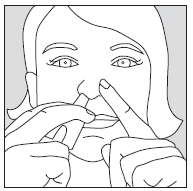
- Keep your head in an upright position.
- Press the plunger firmly with your thumb to release the dose while gently inhaling through your nose, and then remove the spray container from your nose. You may not feel the dose in your nose, but if the plunger has been pressed the dose has been taken. The single-dose container is now empty.

Nie jesteś pewien, czy ten lek jest odpowiedni dla ciebie?
Omów swoje objawy i leczenie z lekarzem online.
Instanyl 50 micrograms/dose nasal spray, solution, 100 micrograms/dose nasal spray, solution, 200 micrograms/dose nasal spray, solution
fentanil
Read this leaflet carefully before you start to use this medicine as it contains important information for you.
- Keep this leaflet. You may need to read it again.
- If you have any questions, ask your doctor or pharmacist.
- This medicine has been prescribed for you only. Do not pass it on to others, even if their symptoms are the same as yours, as it could be harmful.
- If you get any side effects, even those not listed in this leaflet, tell your doctor, pharmacist or nurse. See section 4.
Contents of this leaflet
- 1. What Instanyl is and what it is used for
- 2. What you need to know before you use Instanyl
- 3. How to use Instanyl
- 4. Possible side effects
- 5. How to store Instanyl
- 6. Contents of the pack and other information
1. What is Instanyl and what it is used for
Instanyl contains the active substance fentanyl and belongs to a group of strong painkillers called
opioids. Opioids work by blocking pain signals going to the brain.
Instanyl acts rapidly and is used to relieve severe episodic pain in oncological patients
already treated with opioids for the treatment of habitual pain. Severe episodic pain is an
additional sudden pain that occurs despite having taken the usual opioid medicine
for pain relief.
2. Cosa deve sapere prima di usare Instanyl
Non usi Instanyl
- se è allergico al fentanil o ad uno qualsiasi degli altri componenti di questo medicinale (elencati al paragrafo 6);
- se non fa giornalmente e regolarmente uso, da almeno una settimana, di un medicinale oppioide su prescrizione (per es. codeina, fentanil, idromorfone, morfina, ossicodone, petidina), per controllare il dolore persistente. Se non usa questi medicinali non deve usare Instanyl, perché questo potrebbe aumentare il rischio che la sua respirazione diventi pericolosamente lenta e/o superficiale, o perfino che si blocchi;
- se sta prendendo un medicinale che contiene sodio oxibato;
- se soffre di dolore di breve durata diverso da quello episodico intenso, dovuto a lesioni o interventi chirurgici, cefalee o emicranie;
- se ha serie difficoltà di respirazione o soffre di una grave broncopneumopatia ostruttiva;
- se ha effettuato in precedenza radioterapia facciale;
- se soffre di ricorrenti episodi di sanguinamento dal naso.
Avvertenze e precauzioni
Conservi questo medicinale in un luogo sicuro e protetto, inaccessibile ad altre persone (vedere il
paragrafo 5 “Come conservare Instanyl” per maggiori informazioni).
Si rivolga al medico o al farmacista prima di prendere Instanyl, specialmente:
- se è affetto da una broncopneumopatia ostruttiva di lunga durata, la respirazione potrebbe essere compromessa da Instanyl;
- se ha problemi al cuore specialmente rallentamento del ritmo cardiaco, pressione del sangue bassa o ridotto volume sanguigno;
- se ha problemi al fegato o ai reni;
- se ha problemi della funzionalità cerebrale, per es. a causa di un tumore al cervello, di una ferita alla testa o di un aumento della pressione intracranica;
- se ha sviluppato in passato insufficienza surrenalica o mancanza di ormoni sessuali (deficit di androgeni) con l’uso di oppioidi;
- se assume medicinali sedativi come benzodiazepine o farmaci correlati (faccia riferimento anche al paragrafo “Altri medicinali e Instanyl”);
- se assume antidepressivi o antipsicotici (faccia riferimento anche al paragrafo “Altri medicinali e Instanyl”);
- se assume medicinali denominati antagonisti parziali/antagonisti degli oppioidi, per es. buprenorfina, nalbufina e pentazocina (medicinali per il trattamento del dolore), dato che potrebbe manifestare i sintomi della sindrome da astinenza. Faccia riferimento al paragrafo “Altri medicinali e Instanyl” per ulteriori informazioni;
- se usa altri spray nasali per es. per il trattamento del comune raffreddore o allergie.
Disturbi della respirazione correlati al sonno
Instanyl può causare disturbi respiratori correlati al sonno come apnea del sonno (pause della
respirazione durante il sonno) e ipossiemia (bassi livelli di ossigeno nel sangue) correlata al sonno. I
sintomi possono includere pause della respirazione durante il sonno, risvegli nella notte dovuti a
mancanza di fiato, difficoltà a mantenere il sonno o sonnolenza eccessiva durante il giorno. Se lei o
un’altra persona nota questi sintomi, si rivolga al medico. Il medico può valutare la possibilità di una
riduzione della dose.
Se ha la sensazione di difficoltà respiratoria mentre è in trattamento con Instanyl, è molto
importante che contatti immediatamente il medico o l’ospedale.
Consulti il medico durante l’uso di Instanyl se:
- manifesta dolore o aumentata sensibilità al dolore (iperalgesia), che non risponde a un aumento della dose del medicinale prescritto dal medico
- manifesta una combinazione dei seguenti sintomi: nausea, vomito, anoressia, stanchezza, debolezza, capogiro e pressione arteriosa bassa. Nell’insieme, questi sintomi possono essere un segno di una condizione potenzialmente letale, chiamata insufficienza surrenalica, nella quale le ghiandole surrenali non producono una quantità sufficiente di ormoni.
Se soffre di sanguinamento ricorrente dal naso o disturbi nasali durante l’utilizzo di Instanyl, deve
contattare il medico, che prenderà in considerazione trattamenti alternativi per il dolore episodico
intenso.
Uso a lungo termine e tolleranza
Questo medicinale contiene fentanil, un medicinale oppioide. L’uso ripetuto di antidolorifici oppioidi
può rendere il medicinale meno efficace (ci si abitua ad esso, un fenomeno noto come tolleranza al
farmaco). È possibile anche diventare più sensibili al dolore durante l’uso di Instanyl. Questo è noto
come iperalgesia. L’aumento della dose di Instanyl può aiutare a ridurre ulteriormente il dolore per un
po’ di tempo, ma può anche essere dannoso. Se nota che il medicinale diventa meno efficace, si
rivolga al medico. Il medico deciderà se è meglio aumentare la dose o ridurre gradualmente l’uso di
Instanyl.
Dipendenza e tossicodipendenza
L’uso ripetuto di Instanyl può anche portare a dipendenza, abuso e tossicodipendenza, che possono
provocare un sovradosaggio potenzialmente fatale. Il rischio di questi effetti indesiderati può
aumentare con una dose più elevata e una durata d’uso prolungata. La dipendenza o la
tossicodipendenza può darle la sensazione di non avere più il controllo della quantità di medicinale
necessario o della frequenza con cui deve usarlo. Può avvertire la necessità di continuare a usare il
medicinale, anche se non aiuta ad alleviare il dolore.
Il rischio di sviluppare dipendenza o tossicodipendenza varia da persona a persona. Può avere un
rischio maggiore di diventare dipendente o tossicodipendente da Instanyl se:
- lei o un suo familiare ha sofferto in passato di abuso o dipendenza da alcol, medicinali su prescrizione o sostanze illegali (“tossicodipendenza”);
- lei è un fumatore;
- lei ha avuto in passato problemi dell’umore (depressione, ansia o un disturbo della personalità) o è stato in trattamento da uno psichiatra per altre malattie mentali).
La comparsa di uno qualsiasi dei seguenti segni durante l’uso di Instanyl può essere un segno di
dipendenza o tossicodipendenza.
- Ha la necessità di usare il medicinale per un periodo più lungo di quello indicato dal medico
- Ha la necessità di usare una dose superiore a quella raccomandata
- Usa il medicinale per ragioni diverse da quelle prescritte, ad esempio “per restare calmo” o “per favorire il sonno”
- Ha tentato più volte di interrompere o di controllare l’uso di questo medicinale, senza successo
- Quando interrompe il trattamento con il medicinale si sente male (ad es. nausea, vomito, diarrea, ansia, brividi, tremori e sudorazione) e quando riprende a usarlo si sente meglio (“effetti da astinenza”)
Se nota uno qualsiasi di questi segni, si rivolga al medico per discutere il miglior percorso terapeutico
per lei, compresi i casi in cui è opportuno interrompere il trattamento e come interromperlo in modo
sicuro.
Bambini ed adolescenti
Instanyl non deve essere usato nei bambini e adolescenti al di sotto dei 18 anni di età.
Altri medicinali e Instanyl
Informi il medico o il farmacista se sta assumendo, ha recentemente assunto o potrebbe assumere
qualsiasi altro medicinale, compresi quelli senza prescrizione medica.
Instanyl può influenzare o essere influenzato da altri medicinali.
Deve fare particolare attenzione se è in trattamento con qualcuno dei seguenti medicinali:
- Alcuni medicinali per il dolore e alcuni antidolorifici per il dolore ai nervi (gabapentin e pregabalin).
- Medicinali che normalmente inducono sonnolenza (hanno un effetto sedativo) come sonniferi, medicinali sedativi come benzodiazepine o medicinali correlati, medicinali per il trattamento degli stati d’ansia, antistaminici, o tranquillanti, miorilassanti scheletrici e gabapentinoidi (gabapentin e pregabalin). L’uso concomitante di questi medicinali insieme a Instanyl può indurre il rischio di sonnolenza, sedazione profonda e compromettere la capacità respiratoria (depressione respiratoria), una condizione che può portare al coma ed essere potenzialmente letale. Per questo motivo, l’uso concomitante deve essere considerato solo nel caso in cui non siano possibili altre opzioni di trattamento. Tuttavia, se il medico prescrive Instanyl insieme a medicinali sedativi, dovrà limitare la dose e la durata del trattamento concomitante. Informi il medico su tutti i medicinali sedativi che sta assumendo, e segua attentamente le raccomandazioni del medico riguardo al dosaggio. Può essere utile informare amici o parenti di prestare attenzione alla comparsa dei segni e dei sintomi sopra menzionati. Se avverte questi sintomi, si rivolga al medico.
- Medicinali che possono avere un effetto sul modo in cui il corpo metabolizza Instanyl, come:
- ritonavir, nelfinavir, amprenavir, e fosamprenavir (usati per il trattamento dell’infezione da HIV)
- inibitori del CYP3A4 come ketoconazolo, itraconazolo, o fluconazolo (usati per il trattamento di infezioni fungine),
- troleandomicina, claritromicina, o eritromicina (usati per il trattamento delle infezioni batteriche),
- aprepitant (usato per il trattamento della nausea grave)
- diltiazem e verapamil (usati per il trattamento della pressione sanguigna alta o di malattie cardiache).
- Medicinali chiamati inibitori della monoammino ossidasi (MAO) (usati nelle depressioni gravi), assunti nelle ultime due settimane.
- Il rischio di effetti indesiderati aumenta se sta assumendo medicinali come determinati antidepressivi o antipsicotici. Instanyl può interagire con questi medicinali e possono comparire alterazioni dello stato mentale (per es. agitazione, allucinazioni, coma) e altri effetti, come una temperatura corporea superiore a 38 °C, accelerazione del battito cardiaco, pressione sanguigna instabile e riflessi esagerati, rigidità muscolare, mancanza di coordinazione e/o sintomi gastrointestinali (per es. nausea, vomito, diarrea). Il medico le dirà se Instanyl è adatto a lei
- Medicinali denominati agonisti/antagonisti parziali degli oppioidi es. buprenorfina, nalbufina e pentazocina (medicinali per il trattamento del dolore). Potrebbe manifestare sintomi di sindrome da astinenza (nausea, vomito, diarrea, ansia, brividi, tremore e sudorazione).
- Altri medicinali assunti per via nasale, in particolare ossimetazolina, xilometazolina e medicinali similari, usati per il sollievo dalla congestione nasale.
Instanyl con cibi, bevande o alcol
Non beva alcool durante il trattamento con Instanyl, perché ciò può aumentare il rischio di effetti
indesiderati pericolosi.
Gravidanza e allattamento
Se è in corso una gravidanza, se sospetta o sta pianificando una gravidanza, o se sta allattando con
latte materno chieda consiglio al medico o al farmacista prima di prendere qualsiasi medicinale.
Instanyl non deve essere usato in gravidanza se prima non he ha discusso con il medico.
Instanyl non deve essere usato durante il parto perché fentanil può causare seri problemi respiratori nel
neonato.
Il fentanil può passare nel latte materno e può provocare effetti indesiderati nel neonato allattato con
latte materno. Non usi Instanyl se sta allattando. Per almeno 5 giorni dopo l’ultima dose di Instanyl
non deve cominciare ad allattare con latte materno.
Guida di veicoli e utilizzo di macchinari
Non deve guidare né utilizzare macchinari mentre è in trattamento con Instanyl. Instanyl può causare
capogiro, sonnolenza e disturbi della vista, che possono influenzare l’abilità nel guidare veicoli o
nell’utilizzo di macchinari.
3. How to use Instanyl
Before starting treatment and regularly during treatment, your doctor will discuss with you also
what you might expect from using Instanyl, when and for how long it is necessary to use it, when
to contact your doctor and when you should stop treatment (see also paragraph 2, Withdrawal symptoms when stopping Instanyl).
Use this medicine following exactly the instructions of your doctor. If you have doubts consult your
doctor or pharmacist.
The dose of Instanyl is independent of the usual treatment for oncological pain.
When you start using Instanyl for the first time, your doctor will support you in finding the dose that will
give you relief from intense episodic pain.
The initial dose is one spray of 50 micrograms into one nostril each time you have an episode of intense
episodic pain. While determining the correct dose, your doctor may teach you how to
proceed to move to a higher dose.
If the intense episodic pain has not subsided after 10 minutes, you should use only another spray for
this episode.
Generally you should wait 4 hours before treating another episode of intense episodic pain. In cases
exceptional, when a new episode of intense episodic pain occurs before, you can use
Instanyl to treat it but you must wait at least 2 hours from the last spray. If you regularly have episodes of
intense episodic pain with an interval of less than 4 hours from each other, contact your doctor, as
the treatment of your underlying pain must be modified.
You can use Instanyl to treat up to four episodes of intense episodic pain per day.
If you experience more than four episodes of intense episodic pain per day, contact your doctor,
because they may consider changing the underlying oncological pain treatment.
Do not change the dose of Instanyl or other medicines for pain on your own. The
change in dosage must be done together with your doctor.
Instanyl is equipped with a built-in electronic counter and a mechanism that blocks delivery
between doses, in order to reduce the risk of overdose and help you take this
drug correctly. The counter allows you and your doctor to monitor the use of the drug and
adapt it to your needs. If you take two doses of Instanyl within 60 minutes, the dispenser locks
for a period of two hours from the administration of the first dose and another dose can be
taken only after this period has elapsed.
Instanyl is for nasal use.
To learn how to use the nasal spray, read the Instructions for Use on the back of this leaflet.
If you use more Instanyl than you should or if you think someone has accidentally taken Instanyl
Contact your doctor, hospital or emergency room to assess the risk and for advice if you have used
more Instanyl than you should.
The symptoms of overdose are:
Drowsiness, lethargy, dizziness, decreased body temperature, slowed heart rate,
difficulty coordinating arms and legs.
In severe cases, an overdose of Instanyl can cause coma, sedation, convulsions or severe difficulty
breathing (very slow or shallow breathing). An overdose can also cause a brain disorder known as toxic leukoencephalopathy.
If you notice you have any of the symptoms described above, you should seek immediate medical attention.
Note to those providing assistance to the patient
If you notice that the person taking Instanyl suddenly acts slowly, has
difficulty breathing or if you have difficulty waking the person:
- You must immediately call the emergency room
- While waiting for help, you must keep the person awake by talking to them or gently shaking them from time to time
- If the person has difficulty breathing, you must urge the person to breathe every 5-10 seconds
- If the person has stopped breathing, you must try to resuscitate them until help arrives
If you think someone has accidentally taken Instanyl, seek immediate medical attention.
Try to keep the person awake until help arrives.
If someone has accidentally taken Instanyl, they may have the same symptoms described above for
overdose.
If you forget to use Instanyl
If the intense episodic pain is still present, you can take Instanyl as prescribed by your doctor. If
the intense episodic pain has disappeared, do not take Instanyl until the next episode of pain
episodic pain.
If you stop treatment with Instanyl
You should stop taking Instanyl when you no longer have any intense episodic pain. However, you
should continue to take the usual medicine for the treatment of oncological pain. If you are not sure
contact your doctor for confirmation of the correct dose of your usual medicine.
When you stop using Instanyl you may experience withdrawal symptoms similar to
possible side effects of Instanyl. If you experience withdrawal symptoms, contact your doctor. The
doctor will assess the need for a medicine to reduce or eliminate withdrawal symptoms.
If you have any doubts about the use of Instanyl, ask your doctor or pharmacist.
4. Possible side effects
Like all medicines, this medicine can cause side effects, although not everybody gets them.
Side effects will usually stop or decrease in intensity with continued use of the
product.
Stop treatment immediately and contact your doctor, hospital or emergency department
if:
- you experience a sudden severe allergic reaction, with difficulty breathing, swelling, dizziness, rapid heartbeat, sweating or loss of consciousness
- you have severe difficulty breathing
- you feel a wheezing sound when inhaling
- you have a convulsive pain
- you feel severely dizzy
These side effects can be very serious.
Other side effects reported after use of Instanyl:
Common side effects(may affect up to 1 in 10 people):
Drowsiness, dizziness, even with difficulty maintaining balance, headache, throat irritation,
nausea, vomiting, flushing, strong feeling of warmth, excessive sweating.
Uncommon side effects(may affect up to 1 in 100 people):
Insomnia ,drowsiness, convulsive muscle contractions, abnormal skin sensation also
unpleasant, changes in taste, motion sickness, low blood pressure, severe breathing problems, nosebleeds, nasal ulcer, runny nose, constipation, inflammation of the mouth,
dry mouth, skin pain, itching of the skin, fever.
Not known(frequency cannot be estimated from available data):
Allergic reaction, falls, diarrhea, seizures (fits), loss of consciousness, swelling of arms or
legs, seeing or hearing things that are not real (hallucinations), delirium (symptoms may include
a combination of agitation, restlessness, disorientation, confusion, fear, seeing or hearing
things that do not exist, sleep disorders, nightmares), tolerance to the drug, dependence on
substances of abuse (drug addiction), drug abuse (see section 2), fatigue, malaise,
withdrawal syndrome (may manifest with the appearance of the following side effects: nausea,
vomiting, diarrhea, anxiety, chills, tremor and sweating), shortness of breath.
Cases of patients reporting a hole in the nasal septum – the structure that
separates the nostrils – have also been reported.
Prolonged treatment with fentanyl during pregnancy can cause withdrawal symptoms in the
newborn, which can lead to death (see section 2).
Inform your doctor if you experience recurrent nosebleeds or nasal discomfort.
Reporting of side effects
If you get any side effects, talk to your doctor or pharmacist or nurse. You can also report side effects directly
through the national reporting system listed in Appendix V . By reporting side effects you can help provide more
information on the safety of this medicine.
5. How to store Instanyl
The pain-relieving substance contained in Instanyl is very potent and can be life-threatening
to children. Instanyl must be kept out of sight and reach of children.
Always close the nasal spray with the child-resistant cap after use.
Store this medicine in a safe and secure place, inaccessible to other people. Accidental or
intentional intake of this medicine by other people to whom it has not been prescribed
can cause serious harm and be fatal.
Do not use Instanyl after the expiry date that is stated on the bottle after Exp. The expiry date refers
to the last day of the month.
Store at a temperature below 30 °C. Keep the nasal spray stored in an upright position.
Do not freeze. If Instanyl nasal spray is frozen, the dosing pump may break. If you are not
sure how the pump has been stored, check it before use.
Expired or no longer used Instanyl may still contain enough medicine to be harmful
to others, especially children.

This device has labeling in accordance with the EU Directive on Waste from
Electrical and Electronic Equipment (WEEE). Do not dispose of any medicine down the
drain or with household waste. Any used or unused nasal spray must be returned
to the pharmacy or disposed of in accordance with other local regulations in force. Ask your pharmacist
how to dispose of medicines you no longer use. This will help protect the environment.
6. Content of the pack and other information
What Instanyl contains
The active ingredient is fentanyl. The content is:
50 micrograms/dose: 1 ml contains fentanyl citrate equivalent to 500 micrograms of fentanyl. 1 spray
(100 microlitres) contains 50 micrograms of fentanyl.
100 micrograms/dose : 1 ml contains fentanyl citrate equivalent to 1,000 micrograms of fentanyl. 1 spray
(100 microlitres) contains 100 micrograms of fentanyl.
200 micrograms/dose: 1 ml contains fentanyl citrate equivalent to 2,000 micrograms of fentanyl. 1 spray
(100 microlitres) contains 200 micrograms of fentanyl.
The other ingredients are monobasic sodium phosphate dihydrate, dibasic sodium phosphate dihydrate, and purified water.
Description of the appearance of Instanyl and content of the pack
Instanyl DoseGuard is a nasal spray solution. The solution is clear and colourless. It is contained in
a nasal spray with a dosing pump, an electronic display, a counting device, an
internal locking mechanism and a child-resistant cap.
The nasal spray is available in three different packs: 3.2 ml (corresponding to 20 doses), 4.3 ml
(corresponding to 30 doses) and 5.3 ml (corresponding to 40 doses).
Not all pack sizes may be marketed.
The labelling of the three concentrations of Instanyl is differentiated by colour:
50 micrograms/dose the labelling is orange
100 micrograms/dose the labelling is purple
200 micrograms/dose the labelling is blue-green.
Marketing Authorisation Holder
Istituto Gentili S.r.l.
Via San Giuseppe Cottolengo 15
20143 Milan
Italy
Manufacturer
Curida AS
Solbærvegen 5
NO-2409 Elverum
Norway
More detailed information on this medicine is available on the website of the European Medicines Agency, http://www.ema.europa.eu .
INSTRUCTIONS FOR USE OF INSTANYL
To learn how to use Instanyl nasal spray, read these instructions carefully.
Important information before use:
- Do not modify the device.
- Avoid getting liquids into the device.
Instanyl nasal spray is equipped with:
- Integrated locking function that controls the frequency of use of the nasal spray
- A child-resistant cap, which must be applied to the nasal spray when it is not in use
- An electronic display that indicates how many times to prime the pump with the product before use indicates the number of doses available indicates whether the nasal spray is locked or ready for use
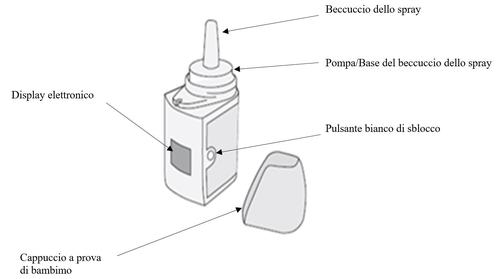
How to remove and reapply the child-resistant cap
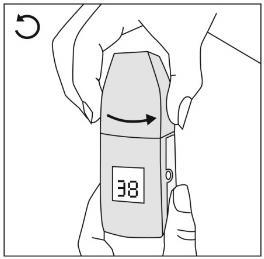
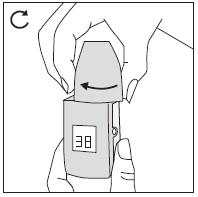
To remove the child-resistant cap, rotate it counterclockwise
while holding it pressed from both sides, then lift it off.
To reapply the child-resistant cap, place it over the nozzle
of the nasal spray and rotate it clockwise. If the cap has been reapplied
correctly, you will hear a “click”.
Always apply the child-resistant cap to the nasal spray after
use.
Preparing Instanyl nasal spray
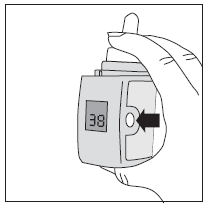
Before using the nasal spray for the first time, prime the pump until
the number of doses appears on the display.
Instructions for priming the device are listed below
(“Priming Procedure”).
Note: to operate the pump, place 2 fingers on the base of the nozzle of
the spray, from both sides, holding your thumb under the device, then press.
Warning: during the priming phase, a small
amount of medicine is expected to leak. For this reason:
- priming must be performed in a well-ventilated area.
- do not point the nasal spray towards yourself or other people.
- do not point the nasal spray towards objects and surfaces thatcould come into contact with other people, especiallychildren.
- do not inhale the medicine expelled during the priming phase.
Priming Procedure:

- 1. Press and release the white button on the side of the nasal spray. The display will light up and show “P5”.
- 2. Holding the nasal spray in an upright position, press the pump once into the air. The display will show “P4” and the lock icon.

- 3. When the lock icon starts to flash, press and release the white button on the side again; the lock icon will disappear from the display.

- 4. Holding the nasal spray in an upright position, press the pump once into the air. The display will show “P3” and the lock icon.


- 5. When the lock icon starts to flash, press and release the white button on the side again; the lock icon will disappear from the display.

- 6. Holding the nasal spray in an upright position, press the pump once into the air. The display will show “P2” and the lock icon.

- 7. When the lock icon starts to flash, press and release the white button on the side again; the lock icon will disappear from the display.

- 8. Holding the nasal spray in an upright position, press the pump once into the air. The display will show “P1” and the lock icon.

- 9. When the lock icon starts to flash, press and release the white button on the side again; the lock icon will disappear from the display.
- 10. Holding the nasal spray in an upright position, press the

pump once into the air. The display will change,
indicating the number of doses contained in the nasal spray (20, 30 or
40 doses) and the lock icon will start to flash.
At this point, the nasal spray is ready for use.
Note: depending on the prescription, the starting number displayed may
be 20, 30 or 40.
New priming procedure for Instanyl nasal spray (after 7 days or more)
If Instanyl has not been used, after 7 days or more, you will need to prime the nasal spray again by pressing the pump once into the air before taking the next dose. This condition will be indicated by
a “P” visible on the display.

New priming procedure:
- 1. Remove the cap.
- 2. Press and release the white button on the side; the lock icon will disappear from the display.
- 3. A “P” will appear on the display without the lock icon; this indicates that the device can be primed.

- 4. Holding the nasal spray in an upright position, press the pump once into the air.
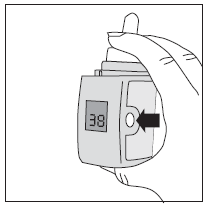
Warning: during the priming phase, a small
amount of medicine is expected to leak. For this reason:
- priming must be performed in a well-ventilated area.
- do not point the nasal spray towards yourself or other people.
- do not point the nasal spray towards objects or surfaces thatcould come into contact with other people, especiallychildren.
- 5. Once priming is complete, the number of doses remaining will appear on the display and the nasal spray will be ready for use again.

How to use Instanyl nasal spray
The nasal spray can only be used when the lock icon is not visible on the display.
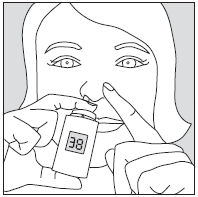
- 1. Blow your nose if it feels congested or if you have a cold.
- 2. Wash your hands.
- 3. Sit or stand in an upright position.
- 4. Hold the nasal spray in an upright position.
- 5. Press and release the white button on the side of the nasal spray (the flashing lock icon will disappear from the display).
- 6. Tilt your head slightly forward.
- 7. Close one nostril by pressing it sideways with a finger and insert the nozzle of the spray into the other nostril.
- 8. Press the pump firmly with two fingers once and simultaneously inhale through your nose. Note: if the pump has been pressed fully, you will feel a “click”, indicating that the dose has been correctly delivered from the nasal spray.
- 9. The display will show the immediately lower number than the one previously displayed and, for a short period, the lock icon.
- 10. If after 10 minutesa second dose of Instanyl is needed
to obtain relief from pain, repeat the procedure from step 1 to
step 8 in the other nostril.
- 11. Always clean the nozzle of the nasal spray with a clean paper tissue and dispose of the tissue after each use.
- 12. Reapply the child-resistant cap covering the nozzle of the nasal spray and rotating the cap clockwise.
Remember to press and release the white button on the side before
operating the pump of the nasal spray.
Remember to always close the nasal spray after use with the
child-resistant cap.
Remember to always keep the nasal spray in an upright position.

The nasal spray allows you to deliver up to a maximum of two doses for
occasional episodes of severe pain (DEI).
If a second dose is delivered, which can be taken 10 minutes
after the first, the nasal spray will lock. The display will show the lock icon
together with another circular icon indicating the remaining time
before unlocking, i.e. before you can use the nasal spray again (each black segment corresponds to 10 minutes).
After the indicated time, the lock icon will start to flash.
The nasal spray will be ready for use again when the next episode of severe pain occurs.
You must wait 4 hours before treating the next episode of severe pain.
Instanyl can be used to treat up to 4 episodes of severe pain
per day. If you experience more than 4 episodes of severe pain
per day, consult your doctor for possible changes to the
basic treatment of cancer pain.
When the nasal spray is empty, the number “0” and the lock icon
will appear on the display.
Disposal
Do not dispose of Instanyl nasal spray in the drain or household waste.
Any used or unused nasal spray must be returned to the pharmacy
or disposed of in accordance with other local regulations in force. Contact
your pharmacist for further instructions on the disposal procedure.

Low battery
If a battery icon appears on the display, this indicates that the battery is
almost depleted. The number of doses indicated on the display will become “5”, which
corresponds approximately to the number of doses still deliverable with the nasal spray,
before the battery runs out and the display turns off.
If a battery icon appears on the display, it is recommended to contact your
doctor or pharmacist to obtain a new nasal spray.
Description of the indications on the electronic display
It is necessary to press (charge) the pump 5 times before being able to use the
nasal spray (see the section “Preparation of Instanyl nasal spray”).
After each press, a countdown appears on the display (P5, P4, P3,
P2 and P1). The nasal spray is ready when the number of doses available is displayed on the
display (20, 30 or 40 doses).

During the charging phase, consult the instructions and safety warnings
previously reported (see the section “Charging procedure”).
The nasal spray has not been used for at least 7 days and it is necessary to perform
recharging again by pressing the pump into the air in a
well-ventilated area before use (see below).

The letter “P” will disappear from the display when the nasal spray pump
is recharged.
During the new charging phase, consult the instructions and safety warnings
previously reported (see the section “New charging procedure”).
Lock icon (LOCK)
The nasal spray is locked and cannot be used.
When the locking period is over, the lock icon will begin to
flash. The icon will disappear from the display by pressing the white
side button on the nasal spray; at this point, the nasal spray can be
used again in case of an intense episodic pain event.


Circular icon (COUNTDOWN)
Indicates how much time remains until the end of the locking period.
The icon indicates a countdown. Each black segment is equivalent to
10 minutes. The maximum lock duration is 2 hours. It is recommended to wait 4
hours before treating the next intense episodic pain event.
The circular COUNTDOWN icon is displayed together with the LOCK icon.

The number of doses remaining in the nasal spray is indicated. After each
dose, the number on the display decreases by one unit. Depending on the nasal spray
used, the starting number may be 20, 30 or 40.

BATTERY icon
The battery is almost depleted. The number of doses indicated on the display becomes “5”,
which corresponds approximately to the number of doses still deliverable with the spray
nasal, before the battery runs out and the display turns off. The battery cannot
be replaced and you will need to contact your doctor or pharmacist to
request a new nasal spray.
If you notice that the nasal spray is not working as described in these “Instructions for
Use”, please contact your doctor or pharmacist.

Zacząłeś przyjmować lek i masz pytania?
Omów swoje objawy i leczenie z lekarzem online.
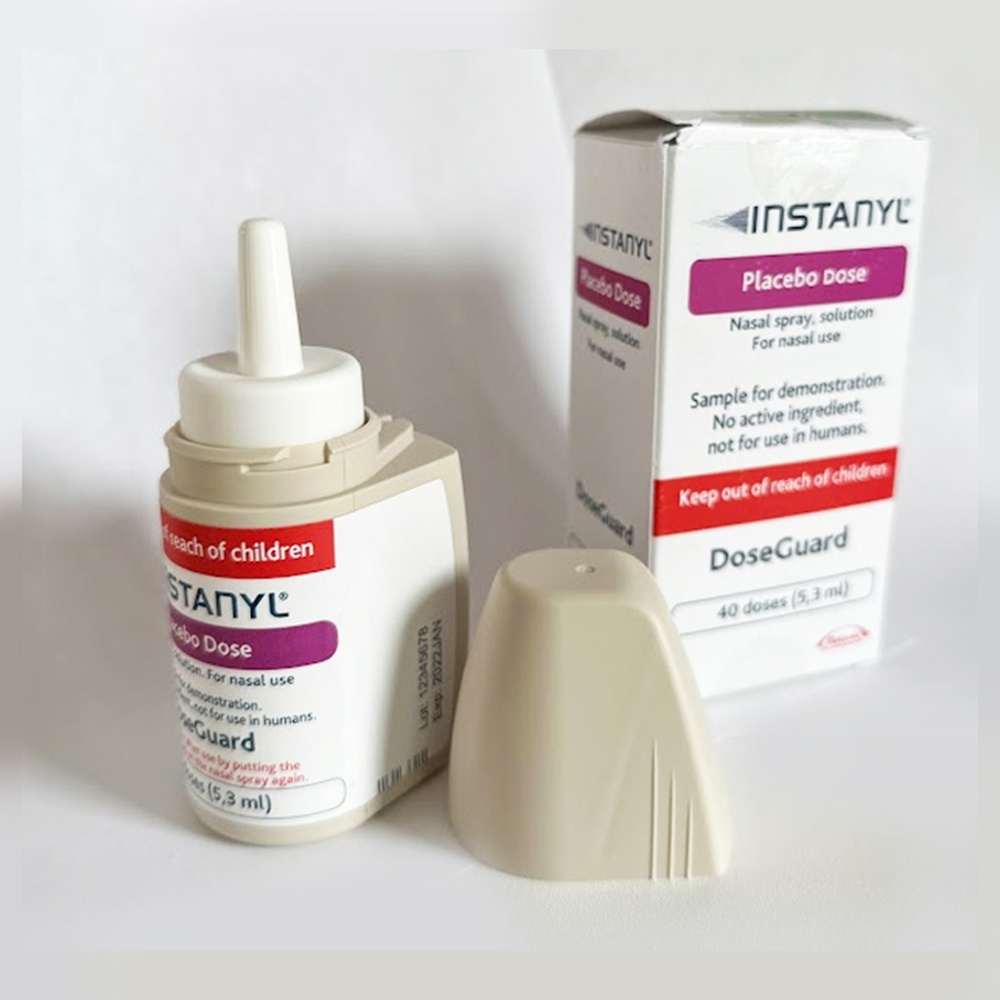
- Kraj rejestracji
- Postać farmaceutycznaNasal spray, solution, 50 MCG
- Kod ATCN02AB03
- Substancja czynna
- Wymaga receptyTak
- Producent
- Te treści mają charakter wyłącznie informacyjny i nie zastępują konsultacji lekarskiej.
- Zamienniki INSTANYLPostać farmaceutyczna: Sublingual tablet, 100 MCGSubstancja czynna: fentanylProducent: GRUNENTHAL ITALIA S.R.L.Wymaga receptyPostać farmaceutyczna: Orally disintegrating tablet, 200 MICROGRAMSSubstancja czynna: fentanylProducent: TEVA ITALIA S.R.L.Wymaga receptyPostać farmaceutyczna: Transdermal patch, 25MCG/ORASubstancja czynna: fentanylWymaga recepty
Odpowiedniki INSTANYL w innych krajach
Leki z tą samą substancją czynną dostępne w innych krajach.
Odpowiednik INSTANYL w Hiszpania
Odpowiednik INSTANYL w Polska
Odpowiednik INSTANYL w Ukraina
Lekarze online w sprawie INSTANYL
Omów stosowanie INSTANYL, bezpieczeństwo i ocenę zasadności recepty zgodnie z obowiązującymi przepisami.









Uzyskaj receptę na INSTANYL online
Wypełnij 2-minutowy formularz
Opisz swoje objawy, historię choroby i lek, o który prosisz.
Wybierz lekarza lub pozwól nam przydzielić
Wybierz specjalistę lub dopasujemy Cię do najbliższego dostępnego lekarza.
Lekarz analizuje Twój przypadek
Zazwyczaj w ciągu 30 minut. Może zadawać dodatkowe pytania przez czat.
Odbierz w dowolnej aptece
Recepta elektroniczna wysłana na Twój e-mail — ważna w całej Polsce.
Często zadawane pytania
INSTANYL wymaga recepty w Włochy. Możesz skonsultować się z lekarzem online, aby sprawdzić, czy ten lek może być odpowiedni w Twojej sytuacji.
Substancją czynną w INSTANYL jest fentanyl. Informacja ta pomaga rozpoznać leki o tym samym składzie, ale pod różnymi nazwami handlowymi.
INSTANYL jest produkowany przez ISTITUTO GENTILI S.R.L.. Nazwy handlowe i opakowania mogą się różnić w zależności od dystrybutora.
Lekarze, tacy jak Lekarze rodzinni, Psychiatrzy, Dermatolodzy, Kardiolodzy, Endokrynolodzy, Gastroenterolodzy, Pulmonolodzy, Nefrolodzy, Reumatolodzy, Hematolodzy, Zakaźnicy, Alergolodzy, Geriatrzy, Pediatrzy, Onkolodzy, mogą ocenić, czy stosowanie INSTANYL jest odpowiednie w Twoim przypadku, w zależności od sytuacji klinicznej i lokalnych przepisów. Możesz umówić konsultację online, aby omówić objawy i możliwe dalsze kroki.
Polska posiada dobrze rozwiniętą infrastrukturę ochrony zdrowia w dużych miastach, takich jak Warszawa, Kraków, Wrocław i Gdańsk. Apteki są łatwo dostępne i działają zgodnie z obowiązującymi przepisami, zapewniając dostęp do leków na receptę.
Możesz kupić INSTANYL w Warszawie, Krakowie, Wrocławiu lub Gdańsku w każdej aptece, posiadając ważną receptę.
Aby uzyskać receptę, możesz skorzystać z Oladoctor:
Inne leki zawierające tę samą substancję czynną (fentanyl) to m.in. ABSTRAL, AKTIQ, ALJEDON. Mogą one różnić się nazwą handlową lub postacią, ale zawierają ten sam składnik terapeutyczny. Przed zmianą lub rozpoczęciem nowego leku skonsultuj się z lekarzem.
