



HYQVIA 100 mg /Ml Roztwór Do Infuzji

Ocena recepty online
Lekarz przeanalizuje Twój przypadek i zdecyduje, czy wystawienie recepty jest medycznie uzasadnione.

Porozmawiaj z lekarzem o tym leku
Omów swoje objawy i opcje leczenia podczas szybkiej konsultacji online.



Jak stosować YQVIA
Treść ulotki
HyQvia 100 mg/mL solution for subcutaneous infusion
normal human immunoglobulin
Read this leaflet carefully before you start using this medicine because it contains important
information for you.
- Keep this leaflet. You may need to read it again.
- If you have any questions, ask your doctor, pharmacist or nurse.
- This medicine has been prescribed for you only. Do not pass it on to others, even if their symptoms are the same as yours, as it may be harmful.
- If you get any side effects, even those not listed in this leaflet, tell your doctor, pharmacist or nurse. See section 4.
Contents of this leaflet
- 1. What HyQvia is and what it is used for
- 2. What you need to know before you use HyQvia
- 3. How to use HyQvia
- 4. Possible side effects
- 5. How to store HyQvia
- 6. Contents of the pack and other information
1. What is HyQvia and what is it used for
What is HyQvia
HyQvia contains 2 solutions for infusion (drip) under the skin (subcutaneous infusion or SC infusion). It is supplied in a package containing:
- a vial of 10% normal human immunoglobulin (the active substance)
- a vial of recombinant human hyaluronidase (a substance that helps the 10% normal human immunoglobulin reach the blood).
10% normal human immunoglobulin belongs to a class of medicines called
“normal human immunoglobulins”. Immunoglobulins are also called antibodies and are present
in the blood of healthy people. Antibodies are part of the immune system (the body's natural defenses
) and help the body fight infections.
How HyQvia works
Recombinant human hyaluronidase is a protein that facilitates the subcutaneous infusion of
immunoglobulins and their entry into the bloodstream.
The immunoglobulin vial is prepared from the blood of healthy people. Immunoglobulins
are produced by the human body's immune system. They help the body fight infections
caused by bacteria and viruses or maintain balance in the immune system (a phenomenon known as
immunomodulation). The medicine works in the same way as immunoglobulins naturally
present in the blood.
What HyQvia is used for
Replacement therapy in adults and children (aged 0 to 18 years)
HyQvia is used in patients who have a weak immune system, who do not have enough antibodies
in their blood and are therefore more frequently exposed to infections, including the following
groups:
- patients who have a congenital inability or reduced ability to produce antibodies (primary immunodeficiencies)
- patients with severe or recurrent infections due to an immune system weakened by other conditions or treatments (secondary immunodeficiencies).
Regular and sufficient doses of HyQvia can increase abnormally low levels of
immunoglobulins in the blood to normal levels (replacement therapy).
Immunomodulatory therapy in adults, children and adolescents (aged 0 to 18 years)
HyQvia is used in adult, children and adolescent patients (aged 0 to 18 years) with
chronic inflammatory demyelinating polyradiculoneuropathy (CIDP), a form of autoimmune disease.
CIDP is characterized by chronic inflammation of the peripheral nerves that causes
muscle weakness and/or numbness mainly in the legs and arms. It is believed that the
body's defense system attacks the peripheral nerves and causes nerve damage and inflammation. Immunoglobulins present in HyQvia are thought to help protect the nerves from damage caused by the immune
system.
2. Cosa deve sapere prima di usare HyQvia
Non si inietti osi esegua l’infusione di HyQvia:
- se è allergico alle immunoglobulins, to hyaluronic acidase, to recombinant hyaluronic acidase or to any of the other ingredients of this medicine (listed in section 6, “Contents of the pack and other information”).
- if you have anti-immunoglobulin A (IgA) antibodies in your blood, for example, if you suffer from IgA deficiency. Because HyQvia contains traces of IgA, you could develop an allergic reaction.
- into a blood vessel (intravenously) or into a muscle (intramuscularly).
Warnings and precautions
Talk to your doctor or nurse before using HyQvia.
► Tell your doctor or healthcare provider before treatment if any of the following circumstances apply to you:
- You or the child may be allergic to immunoglobulins without knowing it. Allergic reactions such as a sudden drop in blood pressure or anaphylactic shock (a sudden drop in blood pressure with other symptoms, such as swelling of the throat, difficulty breathing and skin rash) are rare but can occur occasionally even if you have not had problems with similar treatments in the past. You are at higher risk of allergic reactions if you have IgA deficiency and have anti-IgA antibodies. The signs or symptoms of these rare allergic reactions include:
- feeling of confusion, dizziness or fainting; or skin rash and itching, swelling of the mouth or throat, difficulty breathing, wheezing;
or abnormal heart rate, chest pain, bluish color of the lips or fingertips of the hands and feet;
or blurred vision.
► If you notice any of the following signs during the infusion, tell your doctor or nurse immediately who will decide whether to slow down the infusion rate
or stop the infusion completely.
Your doctor or nurse will infuse recombinant human hyaluronidase (HY) followed by immunoglobulin (IG) slowly and will monitor you carefully during the 1st infusion
to be able to detect and treat any allergic reaction immediately.
Your doctor will pay particular attention if you are overweight, elderly, have diabetes, have been confined to bed for a long time, have high blood pressure, have low blood volume (hypovolemia), have
problems with blood vessels (vascular diseases), have a greater tendency to blood clotting (thrombophilia or thrombotic events) or have a disease or condition that causes an increase
in blood density (hyperviscous blood). In these circumstances, immunoglobulins can
increase the risk of heart attack (myocardial infarction), stroke, blood clots in the lung
(pulmonary embolism) or blockage of a blood vessel in the leg, even if only very rarely.
► If you notice any of these signs and symptoms, including shortness of breath, pain, swelling of a
limb and chest pain during the infusion, tell your doctor or
nurse immediately. They will decide whether to slow down the infusion rate or stop it
completely.
Your doctor or nurse will monitor you carefully during the infusions so that any
thromboembolic events can be detected and treated immediately.
- You will receive this medicine at high doses for 1 or 2 days and if you have blood type A, B or AB and an underlying inflammatory condition. In these circumstances, it has been commonly reported that immunoglobulins increase the risk of red blood cell breakdown (hemolysis).
- Inflammation of the membranes surrounding the brain and spinal cord (aseptic meningitis syndrome) has been reported in association with immunoglobulin treatment. ► If you notice any of these signs and symptoms, including severe headache, stiff neck, drowsiness, fever, photophobia, nausea and vomiting after the infusion, tell your doctor or nurse immediately. The doctor will decide whether further examinations are necessary and whether to continue treatment with HyQvia.
Infusion rate
It is very important that the medicine is infused at the correct rate. Your doctor or nurse
will tell you the appropriate infusion rate to use when administering HyQvia
at home (see section 3, “ How to use HyQvia”).
Monitoring during the infusion
Certain undesirable effects may occur more frequently if:
- you are using HyQvia for the first time.
- you have switched to HyQvia after receiving another immunoglobulin.
- a long interval of time (e.g. more than 2 or 3 infusion intervals) has passed since your last HyQvia administration. ► In these cases, you will be monitored carefully during the first infusion and for the first hour after the infusion is stopped.
In all other cases, during the first infusions, you will need to be observed during the infusion and for
at least 20 minutes after the administration of HyQvia.
Home treatment
Before starting home treatment, it is advisable to have a caregiver.
You and the caregiver will be instructed to recognize the first signs of adverse effects, in
particular allergic reactions. The caregiver must help you monitor
potential adverse effects. During the infusion, the first signs
of adverse effects must be carefully observed (for more information, see section 4, “ Possible side effects”).
► If adverse effects occur, the patient or the caregiver
must stop the infusion immediately and contact the doctor.
► In the event of a serious adverse effect, the patient or the caregiver
must immediately request emergency treatment.
Spread of localized infections
Do not infuse HyQvia into or around an infected area or skin that is swollen and reddened,
because HyQvia may cause the infection to spread.
No long-term (chronic) changes in the
skin have been observed in clinical studies. Any long-term inflammation, nodules or inflammation
that occurs at the infusion site and lasts more than a few days should be reported to the doctor.
Effects on blood tests
HyQvia contains many different antibodies, some of which may affect blood tests
(serological tests).
► Before undergoing any blood test, tell your doctor about the treatment
with HyQvia.
Information about the original material of HyQvia
HyQvia’s 10% normal human immunoglobulin and human serum albumin (a component
of recombinant human hyaluronidase) are produced from human plasma (the liquid part of blood).
When medicines are produced with human blood or plasma, certain measures are taken
to prevent the transmission of infections to patients, including:
- careful selection of blood and plasma donors, to ensure the exclusion of those who are at risk of transmitting infections,
- testing of each donation and of the pooled donations of blood and plasma to detect signs of viruses/infections.
Manufacturers of such medicines also include processing steps for blood and plasma that
can inactivate or remove viruses. Despite these measures, when medicines
derived from human blood or plasma are used, the possibility of transmitting infections cannot be
totally excluded. This applies also to unknown or emerging viruses or other types of infection.
The measures taken for the production of HyQvia are considered effective for enveloped viruses, such as
the human immunodeficiency virus (HIV), hepatitis B virus and hepatitis C virus, as well as
for non-enveloped hepatitis A virus and parvovirus B19.
Immunoglobulins have not been associated with hepatitis A or parvovirus B19 infections,
probably because the antibodies against these infections contained in HyQvia exert a protective effect.
► It is strongly recommended that you record the following data in the treatment diary
every time you use HyQvia:
- the name of the product
- the date of administration
- the batch number of the medicine,
- the volume injected, the infusion rate, the number and location of the infusion sites.
Children and adolescents
Replacement therapy
The same indications, dose and frequency of infusion used in adults apply to children and adolescents (aged 0 to 18 years).
Immunomodulatory therapy in patients with CIDP
The safety and efficacy of HyQvia in children and adolescents (aged 0 to 18 years)
with CIDP have not been established.
Other medicines and HyQvia
Tell your doctor, pharmacist or nurse if you are taking, have recently taken or might
take any other medicines.
Vaccinations
HyQvia may reduce the effect of some live viral vaccines such as those against measles, mumps,
rubella and varicella (vaccines containing live viruses). Therefore, after the administration
of HyQvia, an interval of 3 months must pass before proceeding with vaccination
with certain vaccines. For measles, you may need to wait even 1 year.
► Tell the doctor or nurse administering the vaccine about the treatment with HyQvia.
Pregnancy, breastfeeding and fertility
Data on the effects of long-term use of recombinant human hyaluronidase on pregnancy,
breastfeeding and fertility are limited. HyQvia should be used by pregnant and
breastfeeding women only after discussing this with their doctor.
Driving and operating machinery
Patients may experience side effects such as dizziness or nausea during treatment
with HyQvia that may affect their ability to drive vehicles, ride a bicycle or use
machinery. If such reactions occur, you or your child should wait until
they disappear before resuming these activities. If you or your child experience any side
effect, contact your doctor.
HyQvia contains sodium
This medicine contains from 5.0 to 60.5 mg of sodium (the main component of table salt) in
each vial of HyQvia containing recombinant human hyaluronidase. This is equivalent to
0.25-3% of the recommended daily intake of salt with the diet of an adult. The IG 10% component is essentially sodium-free.
3. Come usare HyQvia
Usi questo medicinale seguendo sempre esattamente le istruzioni del medico. Se ha dubbi consulti il
medico.
HyQvia deve essere infuso sotto la pelle (somministrazione sottocutanea o SC).
Il trattamento con HyQvia sarà iniziato dal medico o dall’infermiere, ma potrebbe esserle consentito
di usare il medicinale a casa dopo che le saranno state somministrate le prime infusioni sotto
supervisione medica e quando lei (e/o la persona che si prende cura di lei) avrà ricevuto un
addestramento adeguato. Lei e il medico deciderete se può usare HyQvia a casa. Non inizi
il trattamento con HyQvia a casa senza aver ricevuto istruzioni complete sul suo utilizzo.
Dosaggio
Terapia sostitutiva
Il medico calcolerà la dose corretta per lei in base al suo peso corporeo, a eventuali trattamenti
precedenti che possono esserle stati somministrati e alla sua risposta al trattamento. La dose iniziale
raccomandata fornisce 400-800 mg di principio attivo per kg di peso corporeo al mese. All’inizio le
sarà somministrato un quarto di questa dose a intervalli di 1 settimana. Con le infusioni successive,
la dose verrà aumentata e somministrata a intervalli di 3-4 settimane. A volte il medico può
raccomandare che dosi maggiori siano suddivise e somministrate in 2 sedi. Il medico può modificare
la dose anche in base alla sua risposta al trattamento.
Terapia immunomodulante
Il medico calcolerà la dose corretta per lei in base ai trattamenti precedenti ricevuti e alla sua risposta
al trattamento. La terapia inizia generalmente 1-2 settimane dopo l’ultima infusione di
immunoglobuline, somministrata per via sottocutanea alla dose equivalente settimanale calcolata. Il
medico può modificare la dose e la frequenza in base alla risposta al trattamento.
Nel caso in cui venga superata la dose massima giornaliera (> 120 g) o se non tollera il volume di
infusione di immunoglobuline, la dose può essere suddivisa e somministrata in più giorni, con un
intervallo di 48--72 ore tra le somministrazioni ai fini di un corretto assorbimento; anche la
somministrazione della ialuronidasi dovrebbe essere suddivisa in modo appropriato.
Inizio del trattamento
Il trattamento sarà iniziato da un medico o un infermiere esperto nel trattamento di pazienti con
sistema immunitario debole (immunodeficienza) e CIDP allo scopo di addestrare questi pazienti al
trattamento domiciliare. Sarà tenuto in osservazione attentamente durante l’intera infusione e per
almeno 1 ora dopo l’interruzione dell’infusione per verificare come sopporta il medicinale. All’inizio,
il medico o l’infermiere userà una velocità di infusione lenta e la aumenterà gradualmente durante la
prima infusione e nelle infusioni successive. Non appena il medico o l’infermiere avrà stabilito la dose
e la velocità di infusione corrette per lei, potrebbe esserle permesso di somministrarsi il trattamento a
domicilio in autonomia.
Trattamento domiciliare
Non utilizzi HyQvia a casa finché non riceve le istruzioni e la formazione dall’operatore sanitario.
Le verranno insegnati:
- L’uso di tecniche di infusione senza germi (asettiche),
- L’uso di una pompa di infusione o di una siringa temporizzata (se necessaria),
- Il mantenimento di un diario del trattamento
- Le misure da adottare in caso di effetti indesiderati gravi.
Deve seguire attentamente le istruzioni del medico in merito alla dose, alla velocità di infusione
e allo schema di infusione di HyQvia in modo che il trattamento le risulti efficace.
Si raccomandano le seguenti velocità di infusione per l’IG 10% per sede di infusione:
Le velocità di infusione di cui sopra si riferiscono a una singola sede di infusione. Nel caso in cui il
paziente necessiti di 2 o 3 sedi di infusione, le velocità di infusione possono essere regolate di
conseguenza (ovvero, raddoppiate o triplicate in base alla velocità di infusione massima della pompa).
Se ha una perdita in sede di infusione
Chieda al medico, al farmacista o all’infermiere se sarebbe più appropriato un ago di un’altra
dimensione.
Qualsiasi cambiamento di dimensione dell’ago deve essere supervisionato dal medico curante.
Se usa più HyQvia di quanto deve
Se pensa di aver usato più HyQvia di quanto deve, contatti il medico appena possibile.
Se dimentica di usare HyQvia
Non usi una dose doppia di HyQvia per compensare la dimenticanza della dose. Se pensa di aver
dimenticato una dose, contatti il medico appena possibile.
Se ha qualsiasi dubbio sull’uso di questo medicinale, si rivolga al medico, al farmacista
o all’infermiere.
| Soggetti < 40 kg | Soggetti ≥ 40 kg | |||
| Intervallo/minuti | Prime 2 infusioni (mL/ora/sede di infusione) | 2-3 infusioni successive (mL/ora/sede di infusione) | Prime 2 infusioni (mL/ora/sede di infusione) | o 2-3 infusioni c successive (mL/ora/sede di infusione) |
| 10 minuti | 5 | 10 | 10 | a 10 |
| 10 minuti | 10 | 20 | 30 | 30 |
| 10 minuti | 20 | 40 | 60 | m 120 |
| 10 minuti | 40 | 80 | 120 | 240 |
| Resto dell’infusione | 80 | 160 | r 240 | 300 |
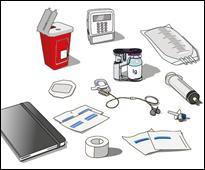
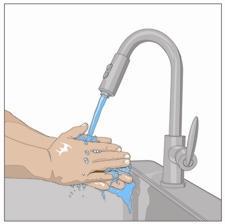
Nel paragrafo successivo sono fornite istruzioni dettagliate per l’uso.
| a r m a c o |
d
| |
a
|  |
i
|  |
a
|  |
| a r m a c o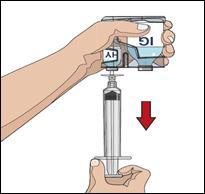 |
n
|  |
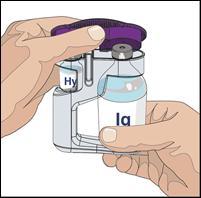
8. Prepare the human immunoglobulin vial
normal 10%:
- Prepare the transfer of the 10% immunoglobulin component of HyQvia by rubbing the cap of each vial with a separate swab moistened with alcohol, if instructed to do so, and letting it air dry (at least 30 seconds).
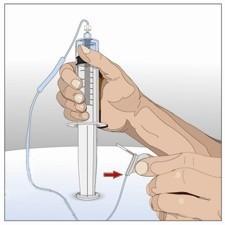
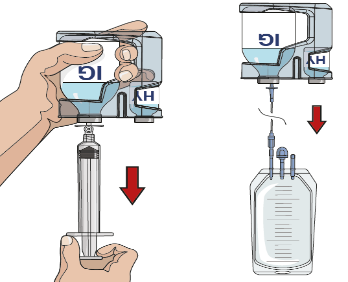
- The HyQvia 10% normal human immunoglobulin can be infused: by transferring the contents of the vials into the larger syringe ( a) or an infusion bag ( b), according to the healthcare provider's instructions, depending on the pump being used; or directly from the IG vial. Insert the vent needle of the pump tubing or a vented needle and catheter into the vial or vials of 10% normal human immunoglobulin. Prime the administration pump tubing and set it aside until the recombinant human hyaluronidase has been administered.
- If more than one vial is needed for a full dose, use subsequent vials after administering the first one.
- (a)(b)
9. Prepare the pump:
Follow the manufacturer's instructions to prepare the pump.
10. Prepare the infusion site:
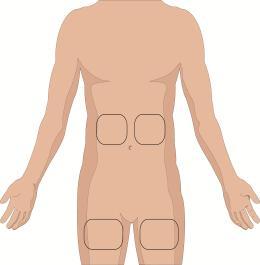
- Choose one or more infusion sites on the central or upper part of the abdomen or on the thighs. See the image for the positions of the infusion sites. Choose infusion sites on opposite sides of the body if you have been instructed to administer in two sites for doses greater than 600 mL. If you are using three sites, they must be 10 cm apart.
- Avoid bony areas, visible blood vessels, scars, and inflamed or infected areas.
- Alternate the infusion sites, choosing opposite sides of the body between each infusion.
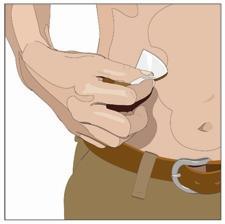
- If instructed to do so by the healthcare professional, clean the site or sites of infusion with a swab moistened with alcohol. Allow to dry (at least 30 seconds).
| 90-degree angle with the skin o c 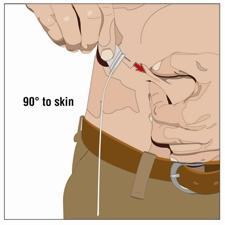 |
| a r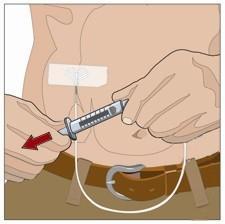 |
l
| 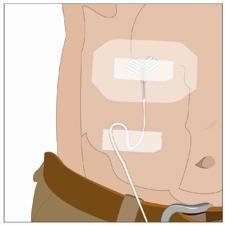 |
n
| 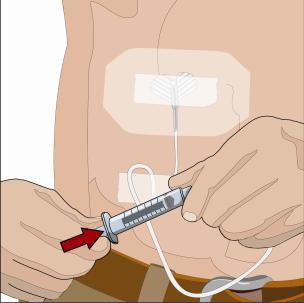 |
z
|
| o |
| a r m a c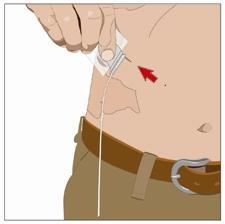 |
|
4. Possible side effects
Like all medicines, this medicine can cause side effects, although not everyone will experience them.
Some side effects, such as headache, chills or body aches, may be reduced by slowing the infusion rate.
Serious side effects
Infusions of medicines like HyQvia can sometimes cause rare, but serious allergic reactions.
You may experience a sudden drop in blood pressure and, in isolated cases, anaphylactic shock.
Doctors are aware of these possible side effects and will monitor you during and after the initial
infusions.
Typical signs and symptoms include: feeling of confusion, dizziness or fainting,
skin rash and itching, swelling of the mouth or throat, difficulty breathing, wheezing,
abnormal heart rate, chest pain, bluish color of the lips or fingers of the hands and feet,
blurred vision.
If you notice any of these signs during the infusion, tell your doctor or nurse immediately.
When using HyQvia at home, you should perform the infusion in the presence of a caregiver who will
help you observe the appearance of allergic reactions, stop the infusion and seek help, if necessary.
HyQvia at home.
Very common side effects (may affect more than 1 in 10 infusions):
Local reactions at the infusion site (includes all reactions at the infusion sites listed below). These
reactions usually disappear after a few days.
Common side effects (may affect up to 1 in 10 infusions):
- headache
- nausea
- reactions at the infusion site including pain, discomfort, tenderness, redness, swelling and itching
- feeling of warmth, fever
- weakness (asthenia), fatigue, lack of energy (lethargy) and general malaise (discomfort)
Uncommon side effects (may affect up to 1 in 100 infusions):
- dizziness
- migraine
- sensations such as numbness, tingling, prickling (paresthesia)
- fast heartbeat (tachycardia)
- high blood pressure (hypertension)
- abdominal pain/abdominal tenderness
- stomach bloating (abdominal distension)
- diarrhea
- vomiting
- skin redness (erythema)
- skin rash
- itching
- itchy skin rash (urticaria)
- muscle pain (myalgia)
- joint pain (arthralgia)
- back pain
- pain in the extremities (including discomfort in the limbs)
- musculoskeletal chest pain
- joint stiffness
- reactions at the infusion site (such as abnormal coloration, bruising, redness (hematoma), bleeding (hemorrhage), blood vessel puncture, mass (nodule), hardening, swelling (edema), chills, burning sensation, rash)
- genital swelling
Rare side effects (may affect up to 1 in 1,000 infusions):
- agitation (tremor)
- stroke
- low blood pressure (hypotension)
- difficulty breathing (dyspnea)
- groin pain
- brown urine (hemosiderinuria)
- excessive sweating (hyperhidrosis)
- inflammation at the infusion site
- heat at the infusion site
- sensations such as numbness, tingling, prickling at the infusion site (paresthesia at the infusion site)
- positive Coombs test
Frequency not known (frequency cannot be estimated based on available data):
- inflammation of the membranes surrounding the brain and spinal cord (aseptic meningitis)
- allergic reactions (hypersensitivity)
- leakage at the infusion site
- flu-like illness
Reporting of side effects
If you get any side effects, talk to your doctor, pharmacist or nurse. This includes any side effects not
listed in this leaflet. You can also report side effects directly through the national reporting system
detailed in Annex V. By reporting side effects, you can help provide more information on the safety
of this medicine.
5. How to store HyQvia
Keep this medicine out of sight and reach of children.
Do not use this medicine after the expiry date which is stated on the label and on the pack
after Exp. The expiry date refers to the last day of that month.
Store in a refrigerator (2 °C – 8 °C). Do not freeze.
The product may be kept outside the refrigerator for a maximum of 3 months and stored at a
temperature higher than +8 °C and lower than +25 °C. Do not refrigerate once stored at room
temperature. Discard after 3 months at room temperature or upon reaching the expiry date, whichever
occurs first.
Note on the outer pack the date on which the product is removed from the refrigerator.
Do not shake.
Keep the vials in the outer packaging to protect them from light.
Do not use this medicine if you notice that the solutions are cloudy or contain particles or deposits.
After opening, discard any unused solution remaining in the vials.
Do not dispose of any medicine in wastewater or household waste. Ask your pharmacist how to
dispose of medicines you no longer use. This will help protect the environment.
6. Contents of the pack and other information
What HyQvia contains
HyQvia is a dual-chamber unit containing:
- a solution of recombinant human hyaluronidase (phase 1 of HyQvia/administer this vial’s infusion first) and
- a solution of 10% normal human immunoglobulin (phase 2 of HyQvia/administer this vial’s infusion second).
The contents of each vial are described below:
- 1. Recombinant human hyaluronidase
This vial contains recombinant human hyaluronidase.
The other ingredients are sodium chloride, sodium phosphate, human albumin, ethylenediaminetetraacetic acid (EDTA) disodium, calcium chloride and water for injections
(see also section 2, “HyQvia contains sodium”).
- 2. 10% Normal human immunoglobulin
1 mL of solution in this vial contains 100 mg of normal human immunoglobulin, of which
at least 98% is immunoglobulin G (IgG).
The active ingredient of HyQvia is normal human immunoglobulin. This medicine contains traces
of immunoglobulin A (IgA) (not more than 140 micrograms/mL, averaging 37 micrograms).
The other ingredients in this vial are glycine and water for injections.
Description of the appearance of HyQvia and contents of the pack
HyQvia 100 mg/mL solution for infusion for subcutaneous use (infused under the skin)
HyQvia is supplied in a pack containing:
- a glass vial of recombinant human hyaluronidase and
- a glass vial of 10% normal human immunoglobulin.
Recombinant human hyaluronidase is a clear and colourless solution.
10% normal human immunoglobulin is a clear, colourless or pale yellow solution.
The following pack sizes are available:
Not all pack sizes may be marketed.
Marketing Authorisation Holder and Manufacturer
Marketing Authorisation Holder:
Baxalta Innovations GmbH
Industriestrasse 67
A-1221 Vienna
Austria
Manufacturer:
Baxalta Belgium Manufacturing SA
Boulevard René Branquart 80
B-7860 Lessines
Belgium
| Recombinant human hyaluronidase | n Normal human immunoglobulin 10% | |
| Volume (mL) | Protein (g) | Volume (mL) |
| a 1.25 | 2.5 | 25 |
| 2.5 | 5 | 50 |
| i 5 | 10 | 100 |
| l 10 | 20 | 200 |
| a 15 | 30 | 300 |
For further information on this medicine, contact the local representative of the Marketing Authorisation Holder:
België/Belgique/Belgien
Takeda Belgium NV
Tél/Tel: +32 2 464 06 11
[email protected]
Lietuva
Takeda, UAB
Tel: +370 521 09 070
[email protected]
България
Такеда България ЕООД
Тел.: +359 2 958 27 36
[email protected]
Luxembourg/Luxemburg
Takeda Belgium NV
Tél/Tel: +32 2 464 06 11
[email protected]
Česká republika
Takeda Pharmaceuticals Czech Republic s.r.o.
Tel: +420 234 722 722
[email protected]
Magyarország
Takeda Pharma Kft.
Tel: +36 1 270 7030
[email protected]
Danmark
Takeda Pharma A/S
Tlf.: +45 46 77 10 10
[email protected]
Malta
Drugsales Ltd
Tel: +356 21419070
[email protected]
Deutschland
Takeda GmbH
Tel: +49 (0)800 825 3325
[email protected]
Nederland
Takeda Nederland B.V.
Tel: +31 20 203 5492
[email protected]
Eesti
Takeda Pharma OÜ
Tel: +372 6177 669
[email protected]
Norge
Takeda AS
Tlf: +47 800 800 30
[email protected]
Ελλάδα
Τakeda ΕΛΛΑΣ Α.Ε.
Tηλ: +30 210 6387800
[email protected]
Österreich
Takeda Pharma Ges.m.b.H.
Tel: +43 (0) 800-20 80 50
[email protected]
España
Takeda Farmacéutica España, S.A.
Tel: +34 917 90 42 22
[email protected]
Polska
Takeda Pharma Sp. z o.o.
Tel: +48223062447
[email protected]
France
Takeda France SAS
Tél. + 33 1 40 67 33 00
[email protected]
Portugal
Takeda Farmacêuticos Portugal, Lda.
Tel: + 351 21 120 1457
[email protected]
Hrvatska
Takeda Pharmaceuticals Croatia d.o.o.
Tel: +385 1 377 88 96
[email protected]
România
Takeda Pharmaceuticals SRL
Tel: +40 21 335 03 91
[email protected]
Ireland
Takeda Products Ireland Ltd
Tel: 1800 937 970
[email protected]
Slovenija
Takeda Pharmaceuticals farmacevtska družba d.o.o.
Tel: + 386 (0) 59 082 480
[email protected]
Ísland
Vistor ehf.
Sími: +354 535 7000
[email protected]
Slovenská republika
Takeda Pharmaceuticals Slovakia s.r.o.
Tel: +421 (2) 20 602 600
[email protected]
Italia
Takeda Italia S.p.A.
Tel: +39 06 502601
[email protected]
Suomi/Finland
Takeda Oy
Puh/Tel: 0800 774 051
[email protected]
Κύπρος
Proton Medical (Cyprus) Ltd
Τηλ: +357 22866000
[email protected]
Sverige
Takeda Pharma AB
Tel: 020 795 079
[email protected]
Latvija
Takeda Latvia SIA
Tel: +371 67840082
[email protected]
Altre fonti d’informazioni
More detailed information on this medicine is available on the European Medicines Agency website, http://www.ema.europa.eu/

Nie jesteś pewien, czy ten lek jest odpowiedni dla ciebie?
Omów swoje objawy i leczenie z lekarzem online.

Zacząłeś przyjmować lek i masz pytania?
Omów swoje objawy i leczenie z lekarzem online.
- Kraj rejestracji
- Postać farmaceutycznaInfusion solution, 100 MG/ML
- Kod ATCJ06BA01
- Substancja czynna
- Wymaga receptyTak
- Producent
- Te treści mają charakter wyłącznie informacyjny i nie zastępują konsultacji lekarskiej.
- Zamienniki YQVIAPostać farmaceutyczna: Injectable solution, 165 MG/MLSubstancja czynna: immunoglobulins, normal human, for extravascular adm.Producent: OCTAPHARMA ITALY S.P.A.Wymaga receptyPostać farmaceutyczna: Injectable solution, 200 MG/MLSubstancja czynna: immunoglobulins, normal human, for extravascular adm.Producent: BAXALTA INNOVATIONS GMBHWymaga receptyPostać farmaceutyczna: Injectable solution, 200 MG/MLSubstancja czynna: immunoglobulins, normal human, for extravascular adm.Producent: CSL BEHRING GMBHWymaga recepty
Odpowiedniki YQVIA w innych krajach
Leki z tą samą substancją czynną dostępne w innych krajach.
Odpowiednik YQVIA w Hiszpania
Odpowiednik YQVIA w Polska
Odpowiednik YQVIA w Ukraina
Lekarze online w sprawie YQVIA
Omów stosowanie YQVIA, bezpieczeństwo i ocenę zasadności recepty zgodnie z obowiązującymi przepisami.









Uzyskaj receptę na YQVIA online
Wypełnij 2-minutowy formularz
Opisz swoje objawy, historię choroby i lek, o który prosisz.
Wybierz lekarza lub pozwól nam przydzielić
Wybierz specjalistę lub dopasujemy Cię do najbliższego dostępnego lekarza.
Lekarz analizuje Twój przypadek
Zazwyczaj w ciągu 30 minut. Może zadawać dodatkowe pytania przez czat.
Odbierz w dowolnej aptece
Recepta elektroniczna wysłana na Twój e-mail — ważna w całej Polsce.
Często zadawane pytania
YQVIA wymaga recepty w Włochy. Możesz skonsultować się z lekarzem online, aby sprawdzić, czy ten lek może być odpowiedni w Twojej sytuacji.
Substancją czynną w YQVIA jest immunoglobulins, normal human, for extravascular adm.. Informacja ta pomaga rozpoznać leki o tym samym składzie, ale pod różnymi nazwami handlowymi.
YQVIA jest produkowany przez BAXALTA INNOVATIONS GMBH. Nazwy handlowe i opakowania mogą się różnić w zależności od dystrybutora.
Lekarze, tacy jak Lekarze rodzinni, Psychiatrzy, Dermatolodzy, Kardiolodzy, Endokrynolodzy, Gastroenterolodzy, Pulmonolodzy, Nefrolodzy, Reumatolodzy, Hematolodzy, Zakaźnicy, Alergolodzy, Geriatrzy, Pediatrzy, Onkolodzy, mogą ocenić, czy stosowanie YQVIA jest odpowiednie w Twoim przypadku, w zależności od sytuacji klinicznej i lokalnych przepisów. Możesz umówić konsultację online, aby omówić objawy i możliwe dalsze kroki.
Polska posiada dobrze rozwiniętą infrastrukturę ochrony zdrowia w dużych miastach, takich jak Warszawa, Kraków, Wrocław i Gdańsk. Apteki są łatwo dostępne i działają zgodnie z obowiązującymi przepisami, zapewniając dostęp do leków na receptę.
Możesz kupić YQVIA w Warszawie, Krakowie, Wrocławiu lub Gdańsku w każdej aptece, posiadając ważną receptę.
Aby uzyskać receptę, możesz skorzystać z Oladoctor:
Inne leki zawierające tę samą substancję czynną (immunoglobulins, normal human, for extravascular adm.) to m.in. KUTAQUIG, KUVITRU, ITSENTRA. Mogą one różnić się nazwą handlową lub postacią, ale zawierają ten sam składnik terapeutyczny. Przed zmianą lub rozpoczęciem nowego leku skonsultuj się z lekarzem.
