



GLUCOSIO 5% Roztwór do infuzji

Ocena recepty online
Lekarz przeanalizuje Twój przypadek i zdecyduje, czy wystawienie recepty jest medycznie uzasadnione.

Porozmawiaj z lekarzem o tym leku
Omów swoje objawy i opcje leczenia podczas szybkiej konsultacji online.



Jak stosować LUKOSIO BAXTER S.P.A.
Treść ulotki
GLUCOSIO BAXTER S.P.A. 5% Infusion Solution, 10% Infusion Solution, 20% Infusion Solution, 33% Infusion Solution, 50% Infusion Solution
Generic medicine
Read this leaflet carefully before using this medicine as it contains important
information for you.
- Keep this leaflet. You may need to read it again.
- If you have any questions, ask your doctor or nurse.
- If any side effects occur, including those not listed in this leaflet, ask your doctor or nurse. See section 4.
Contents of this leaflet:
- 1. What GLUCOSIO BAXTER S.P.A. is and what it is used for
- 2. What you need to know before you use GLUCOSIO BAXTER S.P.A.
- 3. How to use GLUCOSIO BAXTER S.P.A.
- 4. Possible side effects
- 5. How to store GLUCOSIO BAXTER S.P.A.
- 6. Contents of the pack and other information
1. WHAT IS GLUCOSIO BAXTER S.P.A. AND WHAT IS IT FOR
GLUCOSIO BAXTER S.P.A. is a parenteral nutritional solution (allows the administration of
nutrients directly into the vein).
GLUCOSIO BAXTER S.P.A. is used in adults and children for:
- providing the body with water and sugars in emergency situations, especially in patients who do not need salts or in whom these should be avoided. The concentrations of GLUCOSIO BAXTER S.P.A. 20%, 33% and 50% can be used as part of a parenteral nutrition regimen.
- the treatment of low blood sugar (hypoglycemia).
2. WHAT YOU NEED TO KNOW BEFORE USING GLUCOSIO BAXTER S.P.A.
Do not use GLUCOSIO BAXTER S.P.A.
- If you are allergic to the active ingredient or any of the other ingredients of this medicine (listed in section 6).
- If you have problems with urination (anuria).
- In case of bleeding (hemorrhage) that occurs at the spinal level (spinal hemorrhage) or inside the skull (intracranial hemorrhage). If you suffer from delirium tremens (acute psychotic syndrome often associated with alcoholism, characterized by tremors, motor restlessness, hallucinations, attention disorders, incoherence and anguish) and are already dehydrated.
- If you have lost a lot of fluids (are severely dehydrated).
- If you are in hepatic coma (mental confusion, altered level of consciousness and coma due to reduced liver function).
- If you have hyperglycemia (clinically relevant increase in blood glucose levels).
Warnings and precautions
Consult your doctor, pharmacist or nurse before using GLUCOSIO BAXTER S.P.A..
Use this medicine with caution and inform your doctor in the following cases:
- If you have diagnosed or undiagnosed diabetes mellitus (a condition characterized by increased blood sugar levels) or if you have glucose intolerance (sugar) of any kind. To minimize the risk of hyperglycemia (increased blood sugar levels) and subsequent glycosuria (presence of sugar in the urine), it is necessary to monitor blood and urine glucose and, if required, administer insulin.
- If you suffer from heart failure (decreased heart function).
- If you suffer from severe renal failure (decreased kidney function)
- In case of clinical conditions associated with edema (fluid accumulation) and hydrosaline retention (water and salts).
- If you are being treated with corticosteroids (anti-inflammatory drugs) or corticotropin (used to assess the function of the adrenal glands or for the treatment of diseases where corticosteroid treatment is indicated) (see “Other medicines and GLUCOSIO BAXTER S.P.A.”).
The 5% solution is isotonic with blood (has the same concentration).
10%, 20%, 33%, 50% solutions must be infused with caution and at a controlled infusion rate because they are hypertonic (have a higher solute content) than blood.
During prolonged use of concentrated glucose solutions, an accumulation of water may occur in the body (fluid overload) and an excessive loss of mineral salts such as potassium and phosphate (electrolyte deficiency). Therefore, the doctor must periodically check the concentration of mineral salts (electrolytes), correcting imbalances in water and electrolyte balance if necessary.
Furthermore, if necessary, vitamins and mineral salts can be administered.
When the infusion of concentrated glucose must be stopped abruptly, it is recommended to continue with the administration of 5% - 10% glucose, in order to avoid rebound hypoglycemia (see “If you stop GLUCOSIO BAXTER S.P.A.”).
Concentrated glucose solutions must not be administered subcutaneously (under the skin) or intramuscularly (into the muscle).
Do not administer if the solution is not clear and the container is not intact.
One gram of glucose provides a caloric contribution equal to 3.74 Kcal (approximately 15.6 Kjoules).
Glucose solutions should not be administered through the same infusion catheter with whole blood due to the possible risk of pseudoagglutination (aggregation of red blood cells, cells in the blood that carry oxygen) and hemolysis (destruction of red blood cells).
Use in elderly patients
When prescribing the type of infusion solution and the volume/infusion rate for an elderly patient, the doctor must consider that elderly patients are generally more prone to heart, kidney, liver disease or are undergoing concomitant treatments.
Hypersensitivity reactions
Hypersensitivity (allergic) reactions and infusion reactions, including anaphylactic and/or anaphylactoid reactions (rapid-onset allergic reactions) (see section 4 “Possible side effects”) have been reported with the administration of glucose solutions.
Immediately stop the infusion if you develop signs or symptoms of a suspected hypersensitivity reaction. The doctor will institute appropriate therapeutic countermeasures as clinically indicated.
Use solutions containing glucose with caution, especially if you have a known allergy to corn or its derivatives.
Depending on the volume and infusion rate and depending on your clinical condition and your ability to metabolize glucose, intravenous glucose administration may cause, in addition to the above:
- Effects on the amount of fluids in the body, hyperosmolality, osmotic diuresis, dehydration, hypoosmolality, hypervolemia.
- Hyponatremia, hypomagnesemia (decreased levels of sodium and magnesium in the blood).
- Pulmonary congestion and edema (fluid accumulation in the lungs and tissues).
These effects are not only due to the administration of fluids without electrolytes but also to the administration of glucose.
An increase in serum (blood) glucose concentration is associated with an increase in serum osmolality. The osmotic diuresis associated with hyperglycemia (increased glucose concentration in the blood) can develop or contribute to the development of dehydration and electrolyte loss.
Hyperglycemia also causes a transcellular shift of water, leading to a decrease in extracellular sodium concentrations and hyponatremia.
Since glucose is metabolized, the infusion of glucose causes an increase in the body's water volume, resulting in hypoosmotic hyponatremia, a condition that can cause headache, nausea, seizures (recurrent and sudden episodes of loss of consciousness and violent muscle contractions), lethargy (a deep state of sleepiness), coma, cerebral edema (fluid accumulation in the brain) and death. The risk of developing hypoosmotic hyponatremia is greater, for example:
- If you are elderly.
- If you have undergone surgery.
- If you suffer from psychogenic polydipsia (a mental disorder leads the subject to drink continuously).
- In women.
- In children (see “Children and adolescents”).
Symptomatic acute hyponatremic encephalopathy (a serious illness resulting from an increase in fluid volume in the brain) is considered a medical emergency. The risk of developing encephalopathy as a complication of hypoosmotic hyponatremia is greater, for example:
- In pediatric patients (under 16 years of age) (see “Children and adolescents”).
- In women, especially if they are premenopausal.
- If you have hypoxemia (low levels of oxygen in the blood).
- If you suffer from diseases of the central nervous system.
You may need to undergo clinical evaluation and periodic laboratory tests to monitor changes in fluid balance, electrolyte concentrations, and acid-base balance during prolonged parenteral therapy or when your conditions or the rate of drug administration require such evaluation.
Pay particular attention if you are at higher risk of hydro-electrolyte disorders that may be worsened by an increase in water and glucose, or by a possible need for insulin administration.
In such cases, appropriate preventive and corrective measures will be instituted as clinically indicated.
Hyperglycemia
The rapid administration of glucose solutions can cause high hyperglycemia and subsequent hyperosmolar syndrome (a serious condition in which blood glucose levels are excessive).
To avoid hyperglycemia, the doctor will establish an infusion rate that does not exceed the patient's ability to utilize glucose.
To reduce the risk of complications associated with hyperglycemia, the doctor will adjust the infusion rate or administer insulin if blood glucose levels exceed levels considered acceptable for the individual patient.
Glucose intravenously should be administered with caution in case of, for example:
- Impaired glucose tolerance (as in diabetes mellitus, renal failure or in the presence of infection, trauma or shock).
- Severe malnutrition, as there is a risk of refeeding syndrome.
- Thiamine deficiency (vitamin B1), for example in patients with chronic alcoholism, due to the risk of developing severe lactic acidosis due to altered oxidative metabolism of pyruvate.
- Hydro-electrolyte disorders that may be worsened by an increase in glucose and/or water volume. For concentrations of GLUCOSIO BAXTER S.P.A. greater than 10%, as generally occurs with intravenous administration of nutrients (for example glucose, amino acids and lipids), metabolic complications may occur if the nutrient intake is not adapted to your needs (for example if the amount of nutrients is insufficient or excessive) or if the metabolic value of a given component of the diet is not accurately assessed and, consequently, you are given an unsuitable mixture.
Glucose solutions should also be used with caution if:
- You suffer from ischemic heart attack. Hyperglycemia is involved in increased brain damage from ischemia and impairs recovery after acute ischemic stroke events.
- You have suffered severe traumatic brain injury, especially during the first 24 hours after the trauma. Early hyperglycemia has been associated with poor outcomes in patients with severe traumatic brain injury.
- In newborns (see “Children and adolescents”). Prolonged intravenous administration of glucose and the resulting hyperglycemia can cause a decrease in glucose-stimulated insulin secretion.
Refeeding syndrome
Refeeding in severely malnourished patients can cause refeeding syndrome, characterized by a shift of potassium, phosphorus and magnesium into the intracellular compartment as the patient becomes anabolic. Deficiencies of thiamine and fluid retention can also develop.
Careful monitoring and a slow increase in nutrient intake, in order to avoid overfeeding, can prevent these complications.
Risk of gas embolism
Do not use plastic containers connected in series as they can cause gas embolism, due to the residual air from the primary container before the administration of fluid from the secondary container is completed.
Pressurizing intravenous solutions contained in flexible plastic containers to increase flow rates can cause gas embolism if the residual air in the container is not completely eliminated before administration.
The use of an intravenous administration set with the vent in the open position can cause gas embolism. Intravenous administration sets with the vent in the open position should not be used with flexible plastic containers.
GLUCOSIO BAXTER S.P.A. concentrations greater than 10% can also have the following effects:
Liver disorders
It is known that hepatobiliary disorders (affecting the liver and biliary tract) including cholestasis (failure of bile flow from the liver to the intestine), hepatic steatosis (accumulation of fat in the liver), fibrosis and cirrhosis (serious conditions of liver impairment) can develop in some patients in parenteral nutrition, which can lead to liver failure, cholecystitis and cholelithiasis (gallstones). The cause of these disorders is believed to be multifactorial and may differ between patients. If you have abnormal laboratory parameters or other signs of hepatobiliary disorders, you should be evaluated early by a doctor specializing in liver diseases (liver) to identify the causes of possible contributing factors and possible therapeutic and prophylactic interventions (prevention).
Catheter infections and sepsis
Infections and sepsis (presence of a high amount of bacteria in the blood) can occur with the use of intravenous catheters for the administration of contaminated formulations or solutions or inadequate maintenance of catheters. Immunosuppression (decreased functioning of the immune system) and other factors such as hyperglycemia, malnutrition and/or other pathological states can predispose patients to infections. Careful laboratory monitoring and symptoms such as fever/chills, leukocytosis (increased number of leukocytes, a type of white blood cells, in the blood), technical problems with the device and the finding of hyperglycemia are needed for early recognition of infections. The risk of sepsis can be reduced by healthcare professionals with greater attention to aseptic technique (a set of behaviors aimed at preventing the presence of microorganisms that can cause disease in a sterile environment, such as in the case of administration of preparations intravenously) for catheter placement and maintenance, as well as in the preparation of the nutritional preparation.
Precipitates
Pulmonary vascular precipitates (solid formations in the pulmonary blood vessels) have been reported in patients receiving parenteral nutrition, for example following excessive intake of calcium and phosphate. In some cases, the outcomes have been fatal. Precipitates in solution have also been reported in the absence of phosphate salts. In addition to inspecting the solution, the healthcare professional should also periodically check the infusion set and catheter to verify the presence of precipitates. If signs of pulmonary distress occur, the infusion should be stopped and medical evaluation should be initiated.
Children
In newborns, particularly in premature infants and children with low birth weight, the administration of glucose may increase the risk of hyperglycemia or hypoglycemia (decreased blood sugar level).
Furthermore, in children with low body weight, rapid or excessive infusion may cause an increase in serum osmolarity (blood concentration) and intracranial hemorrhage (bleeding within the brain tissue due to rupture of a blood vessel).
Careful monitoring is necessary during treatment with intravenous glucose solutions to ensure adequate blood glucose control, to avoid potential long-term adverse effects.
Hypoglycemia in newborns can cause:
- prolonged seizures (sudden, involuntary muscle movements with loss of consciousness);
- coma;
- brain damage.
Hyperglycemia in newborns has been associated with:
- brain damage, including intraventricular hemorrhage (bleeding at the level of the ventricles that make up the brain);
- late bacterial and fungal infections;
- retinopathy (eye disease) of prematurity;
- necrotizing enterocolitis (death of the tissues that make up the intestine);
- bronchopulmonary dysplasia (abnormal development of the bronchi and lungs);
- prolonged hospital stay;
- death.
Issues related to pediatric hyponatremia
Children (including infants and older children) are at greater risk of developing hypotonic hyponatremia as well as hyponatremic encephalopathy.
Hypotonic hyponatremia can cause headache, nausea, seizures, lethargy, coma, cerebral edema, and death; acute symptomatic hyponatremic encephalopathy is considered a medical emergency.
Plasma electrolyte concentrations must be carefully monitored in the pediatric population. Rapid correction of hypotonic hyponatremia is potentially dangerous due to the risk of developing a number of neurological complications (at the level of the nervous system). Dosage, rate, and duration of administration must be determined by a physician experienced in pediatric intravenous fluid therapy.
Other medicines and GLUCOSIO BAXTER S.P.A.
Tell your doctor if you are taking, have recently taken, or might take any other medicine.
Careful monitoring is necessary if GLUCOSIO BAXTER S.P.A. is administered in association with corticosteroids (anti-inflammatory drugs) or corticotropin (used to assess adrenal gland function or for the treatment of diseases where corticosteroid treatment is indicated) as these medicines are associated with decreased carbohydrate (sugar) tolerance and possible manifestation of latent diabetes mellitus.
If you are using glucose solutions during treatment with other substances that affect glycemic control (blood glucose levels) and/or water and electrolyte balance, your doctor will consider both the glycemic effects of glucose solutions and their effects on water and electrolyte balance.
Pregnancy, breastfeeding and fertility
If you are pregnant, suspect you are pregnant, are planning to become pregnant, or are breastfeeding, ask your doctor or pharmacist for advice before using this medicine.
Pregnancy
Glucose should not be used during pregnancy unless absolutely necessary.
If you are pregnant, your doctor will carefully assess the risk/benefit ratio before administering glucose solutions.
There are no adequate data regarding the use of glucose in pregnant women.
Intravenous glucose infusion to the mother during labor may cause fetal insulin production (at the level of the fetus), with an associated risk of fetal hyperglycemia and metabolic acidosis (accumulation of acidic substances in the body) or rebound hypoglycemia in the newborn.
Breastfeeding
It is not known whether glucose alters the quantity and composition of breast milk.
Until further data are available on the use of glucose during breastfeeding, it is important to exercise particular caution when deciding to administer glucose to breastfeeding women.
Fertility
There are no adequate data regarding the effect of glucose on fertility.
Driving and operating machinery
Not applicable.
3. HOW TO USE GLUCOSIO BAXTER S.P.A.
Your treatment with GLUCOSIO BAXTER S.P.A. will be supervised by a doctor. The doctor will decide the
amount of GLUCOSIO BAXTER S.P.A. to be administered to you, and will prepare the medication.
Glucose solutions are administered intravenously (into a vein).
Solutions of 20%, 33% and 50%, if not diluted, must be administered exclusively through a central venous catheter (a medical device used for the infusion of fluids, the administration of intravenous drugs
and for parenteral nutrition).
These solutions must be diluted before use when administered together with a source of amino acids
(components of proteins, containing nitrogen) at a concentration that produces an appropriate caloric ratio per gram of nitrogen and that has an osmolarity consistent with the route of administration, according to
the doctor's judgment.
If it should be necessary to administer the solutions peripherally, for example in the emergency treatment of
severe hypoglycemic crises (a severe decrease in blood sugar levels), the solutions must
be injected very slowly into a vein of large caliber in the arm.
The administration of hyperosmolar solutions (with a high concentration of glucose) can cause venous irritation
and phlebitis (see section 4 “Possible undesirable effects”).
The osmolarity of a final infusion solution must be considered when peripheral administration is planned.
The infusion rate is generally 0.4 - 0.8 g/hour per Kg of body weight.
The doctor will consider a gradual increase in the flow rate when starting the
administration of products containing glucose.
Below are general guidelines for choosing the different glucose concentrations.
- 5%-10% solutions: are used for the replenishment of fluids and calories.
- 20%-33% solution: are used for caloric replenishment and limited fluid replenishment.
- 50% solution: is used in the treatment of hypoglycemia (low blood glucose levels) due to hyperinsulinemia (excess insulin in the blood) or other causes.
An electrolyte supplement may be indicated according to the patient's clinical needs.
When additives are added to the glucose solution, the instructions for use
of the drug to be added and other texts in the literature should be consulted.
Adults
The concentration of the glucose solution and the dose to be used depend on the characteristics of the
patient (age, weight, clinical conditions, hydro-electrolytic and acid-base balance, metabolic conditions and
concomitant therapies).
Elderly
Clinical studies and clinical practice have not shown differences in response between elderly and younger patients following glucose administration. As a general rule, caution is advised in
administering drugs to elderly patients.
Use in children
The dosage and rate of administration of glucose must be chosen based on the age, weight,
clinical and metabolic conditions of the patient and concomitant therapies. For pediatric patients
a doctor experienced in intravenous fluid therapy in pediatrics should be consulted.
Generally, solutions with a concentration higher than 10% are not used.
Particular caution is required in pediatric patients and especially in neonates or children with low body weight
(see “Warnings and precautions”).
Glucose solutions for intravenous use are incompatible with:
- cyanocobalamin;
- kanamycin sulfate;
- novobiocin sodium;
- warfarin sodium.
In addition, there are conflicting opinions regarding the compatibility of glucose with the following solutions:
- calcium chloride;
- magnesium chloride;
- potassium chloride;
- sodium chloride;
- sodium lactate;
- hetastarch.
Glucose solutions that do not contain electrolytes should not be administered through the same
infusion catheter with whole blood due to the possible formation of aggregates and the risk of hemolysis
(see “Do not use GLUCOSIO BAXTER S.P.A.”).
Ampicillin and amoxicillin are stable in glucose solutions only for a short period.
Take all usual precautions to maintain sterility before and during intravenous infusion.
Do not use if the packaging is damaged.
Do not use the glucose solution if it does not appear clear, colorless or slightly straw-yellow, or if
it contains particles (see “Warnings and precautions”).
Parenteral products must be visually inspected for the possible presence of particles and
discoloration before administration, if the solution and container allow.
If you use more GLUCOSIO BAXTER S.P.A. than you should
In case of prolonged glucose administration, fluid overload (increased
fluids) and solute overload may occur. In this case, the patient's clinical condition should be reassessed and
appropriate corrective measures should be instituted.
Excessive administration of glucose can cause hyperglycemia, effects on hydro-electrolytic balance
and resulting complications (see “Warnings and precautions” and section 4 “Possible undesirable effects”).
Severe hyperglycemia, severe dilutional hyponatremia (due to increased fluid in the body) and
their complications can be fatal.
Therefore, clinically relevant overdose of glucose solutions can constitute a medical emergency.
Stop treatment in case of an overdose of the medicine. The dose will be reduced, insulin will be administered and other specific measures will be taken depending on your
clinical condition.
If you stop using GLUCOSIO BAXTER S.P.A.
When the infusion of concentrated glucose must be stopped abruptly, it is recommended to continue
with the administration of 5% - 10% glucose, in order to avoid the onset of hypoglycemia
(reduction of blood sugar levels).
If you have any doubts about the use of this medicine, ask your doctor or nurse.
4. POSSIBLE SIDE EFFECTS
Like all medicines, this medicine can cause side effects, although not everybody gets them.
Some of the side effects listed below have occurred in cases of incorrect drug administration, for example, too fast administration or via a route other than
intravenous.
- Extravasation (leakage of the medicine into the tissues around the injection site).
- Local pain.
- Infection at the administration site.
- Thrombosis (formation of blood clots inside blood vessels) at the administration site.
- Thrombophlebitis (inflammation of superficial veins with resulting thrombosis), associated with hyperosmolar (highly concentrated) solutions.
- Phlebitis (inflammation of the veins) at the infusion site.
- Erythema (redness of the skin) at the infusion site.
- Pyrexia (fever) and chills.
- Fluid and/or solute overload with resulting dilution of serum electrolytes: hypokalaemia (decreased potassium level in the blood), hypomagnesaemia (decreased magnesium level in the blood), hypophosphataemia (decreased phosphate level in the blood), hyperhydration.
- Increased metabolic rate.
- Hyperglycaemia (increased blood sugar concentration).
- Hyperosmolarity (excessive blood concentration).
- Hypervolaemia (increased circulating blood volume).
- Hypoglycaemia (decreased blood sugar concentration).
- Increased insulin level.
- Increased adrenaline level.
- Hyponatraemia, which may be symptomatic (see “Warnings and precautions”).
- Peripheral oedema (fluid retention).
- Pulmonary oedema (fluid retention in the lungs).
- Cerebral haemorrhage (brain bleeding).
- Cerebral ischaemia (blockage of blood flow to the brain).
- Hypersensitivity (allergy) reactions and infusion reactions, including anaphylactic and anaphylactoid reactions, both with mild manifestations such as itching, and severe manifestations such as bronchospasm (narrowing of the bronchi), cyanosis (bluish discoloration of skin and mucous membranes due to circulatory and respiratory disorders), angioedema (sudden swelling of the skin or mucous membranes) and hypotension (decreased blood pressure).
- Rash (sudden redness of the skin).
For GLUCOSIO BAXTER S.P.A. solutions with concentrations greater than 10%, the following side effects may also occur due to
the presence of glucose:
- Hepatic insufficiency (decreased liver function), hepatic cirrhosis, hepatic fibrosis, cholestasis, hepatic steatosis, increased bilirubin in the blood, increased liver enzymes, cholecystitis, cholelithiasis.
- Pulmonary vascular precipitates.
If you experience any of the following potentially serious side effects:
- If you are in hospital: inform your doctor or nurse immediately.
- After you have left the hospital: go immediately to the nearest hospital Emergency Room.
Reporting of side effects
If you get any side effects, even those not listed in this leaflet, tell your
doctor or pharmacist. You can also report side effects directly through the Italian Medicines Agency, Website: http://www.agenziafarmaco.gov.it/it/responsabili.
By reporting side effects you can help provide more information on the safety of
this medicine.
5. HOW TO STORE GLUCOSIO BAXTER S.P.A.
Keep this medicine out of the sight and reach of children.
Do not use this medicine after the expiry date which is stated on the packaging. The expiry date refers to the last day of that month and to the product in intact packaging, correctly stored.
Do not dispose of any medicine in the wastewater or household waste. Ask your pharmacist how to dispose of
medicines that you no longer use. This will help protect the environment.
Do not refrigerate.
Keep the container tightly closed.
After the first opening of the packaging, the medicine must be used immediately for a single and
uninterrupted administration.
Do not use if the packaging is damaged.
Do not use the glucose solution if it does not appear clear, colorless or slightly straw-yellow, or if
it contains particles.
Do not store solutions that contain additives.
Discard any unused portion.
Do not use additives known to be incompatible with glucose as a diluent.
Before adding a substance or a medicine, verify that it is soluble and/or stable in water and that the
pH range is appropriate.
The instructions for use of the drug to be added and other literature texts must be consulted.
When introducing additives to the glucose solution, an aseptic (sterile) technique must be used.
After addition, check for a possible color change and/or the appearance of precipitates, insoluble complexes or crystals.
Mix solutions thoroughly when additives have been introduced.
Single-use (the medicine can be used only once, after which it must be discarded).
6. CONTENT OF THE PACK AND OTHER INFORMATION
What GLUCOSIO BAXTER S.P.A. contains
Active ingredient:Glucose
Other components:Water for injections.
The table below reports the composition, osmolarity and pH of the individual glucose concentrations.
| Glucose monohydrate (g/L) (corresponding to anhydrous glucose) | Osmolarity (mOsmol/L) | pH | |
| 5% | 55 (50) | a 278 |
|
| 10% | n 110 (100) | 555 |
|
| 20% | 220 (200) | 1110 |
|
| 33% | a 363 (330) | 1832 |
|
| 50% | i 550 (500) | 2775 |
|
Description of the appearance of GLUCOSIO BAXTER S.P.A. and contents of the pack
Solution for infusion, clear, colorless or slightly straw-yellow, free from particles.
Sterile solution and free from bacterial endotoxins.
Various pack sizes are available:
GLUCOSIO BAXTER S.P.A. 5% Solution for infusion
Glass bottles: 50, 100, 250, 500 ml Single pack
Glass bottles 50, 100 ml Pack of 25 units
Glass bottles 250 ml Pack of 30 units
Glass bottles: 500 ml Pack of 20 units
Clear Flex bags: 50, 100, 250, 500 and 1000 ml Single pack
Clear Flex bags 50, 100 ml Pack of 50 units
Clear Flex bags 250 ml Pack of 36 units
Clear Flex bags 500 ml Pack of 20 units
Clear Flex bags 1000 ml Pack of 12 units
GLUCOSIO BAXTER S.P.A. 10% Solution for infusion
Glass bottles: 50, 100, 250, 500 ml Single pack
Glass bottles 250 ml Pack of 30 units
Glass bottles: 500 ml Pack of 20 units
Clear Flex bags: 50, 100, 250, 500 and 1000 ml Single pack
GLUCOSIO BAXTER S.P.A. 20% Solution for infusion
Glass bottles: 50, 100, 250, 500 ml Single pack
Glass bottles: 500 ml Pack of 20 units
Clear Flex bags: 50, 100, 250, 500 and 1000 ml Single pack
Clear Flex bags 500 ml Pack of 20 units
GLUCOSIO BAXTER S.P.A. 33% Solution for infusion
Glass bottles: 50, 100, 250, 500 ml Single pack
Glass bottles: 500 ml Pack of 20 units
Clear Flex bags: 50, 100, 250, 500 and 1000 ml Single pack
Clear Flex bags 500 ml Pack of 20 units
GLUCOSIO BAXTER S.P.A. 50% Solution for infusion
Glass bottles: 50, 100, 250, 500 ml Single pack
Glass bottles: 500 ml Pack of 20 units
Clear Flex bags: 50, 100, 250, 500 and 1000 ml Single pack
Clear Flex bags 500 ml Pack of 20 units
Marketing Authorisation Holder
BAXTER S.p.A.- Piazzale dell’Industria 20 – 00144 Rome.
Manufacturer
Bottles and Clear Flex bags:
BIEFFE MEDITAL S.p.A.
Via Nuova Provinciale - 23034 Grosotto (SO)
Alternatively, the product packaged in Clear Flex bags may be manufactured by:
BIEFFE MEDITAL S.A.Ctra de Biesca s/n – 22666 Sabiñanigo (Spain)
Only for the 5% concentration, alternatively the product packaged in Clear Flex bags may be
manufactured also by:
Baxter S.A. Boulevard Renè De Branquart 80 Lessines (Belgium)
Baxter Healthcare S.A. Moneen road, Castlebar (Ireland)
Baxter Healthcare Ltd Caxton way Thetford (UK)

Nie jesteś pewien, czy ten lek jest odpowiedni dla ciebie?
Omów swoje objawy i leczenie z lekarzem online.

Zacząłeś przyjmować lek i masz pytania?
Omów swoje objawy i leczenie z lekarzem online.
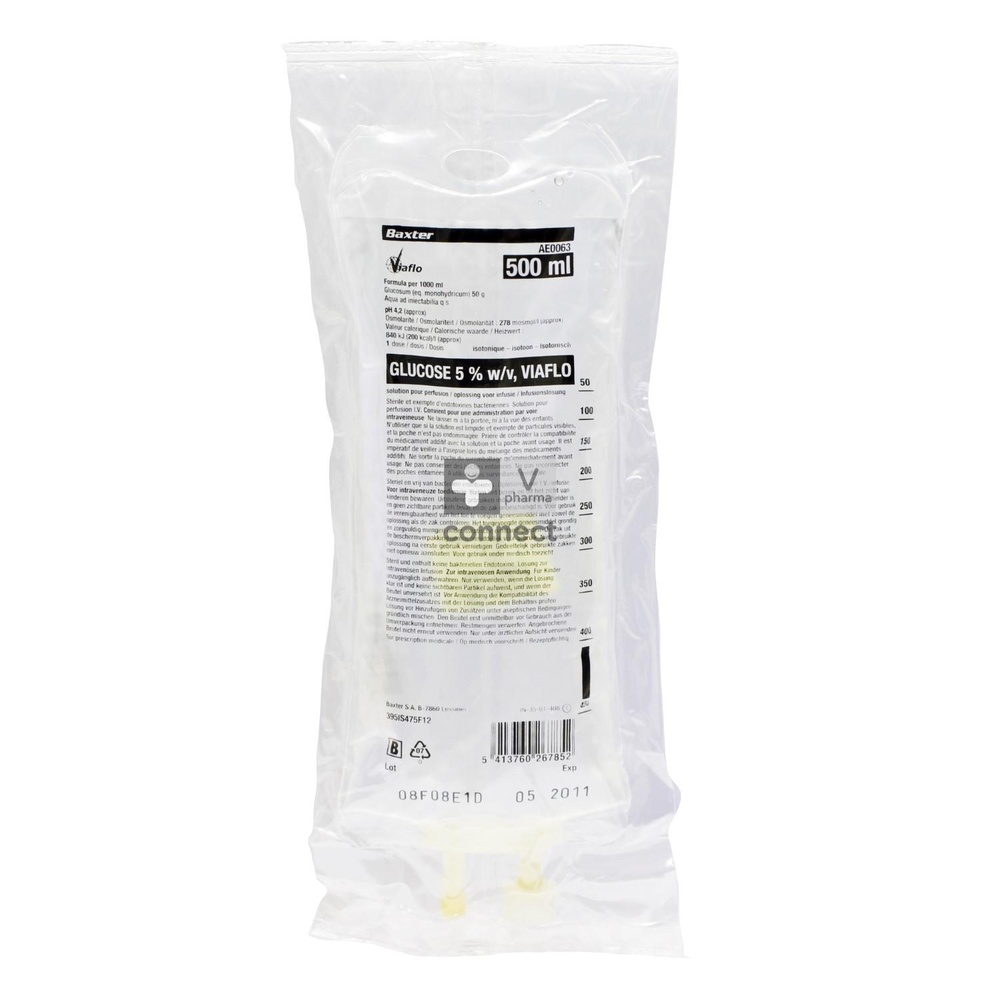
- Kraj rejestracji
- Postać farmaceutycznaInfusion solution, 5%
- Kod ATCB05BA03
- Substancja czynna
- Wymaga receptyTak
- Producent
- Te treści mają charakter wyłącznie informacyjny i nie zastępują konsultacji lekarskiej.
- Zamienniki LUKOSIO BAXTER S.P.A.Postać farmaceutyczna: Infusion solution, 50 MLSubstancja czynna: carbohydratesProducent: BAXTER S.P.A.Wymaga receptyPostać farmaceutyczna: Infusion solution, 5%Substancja czynna: carbohydratesProducent: B. BRAUN MELSUNGEN AGWymaga receptyPostać farmaceutyczna: Infusion solution, 50 G/1000 MLSubstancja czynna: carbohydratesProducent: BAXTER S.P.A.Bez recepty
Odpowiedniki LUKOSIO BAXTER S.P.A. w innych krajach
Leki z tą samą substancją czynną dostępne w innych krajach.
Odpowiednik LUKOSIO BAXTER S.P.A. w Hiszpania
Odpowiednik LUKOSIO BAXTER S.P.A. w Polska
Lekarze online w sprawie LUKOSIO BAXTER S.P.A.
Omów stosowanie LUKOSIO BAXTER S.P.A., bezpieczeństwo i ocenę zasadności recepty zgodnie z obowiązującymi przepisami.









Uzyskaj receptę na LUKOSIO BAXTER S.P.A. online
Wypełnij 2-minutowy formularz
Opisz swoje objawy, historię choroby i lek, o który prosisz.
Wybierz lekarza lub pozwól nam przydzielić
Wybierz specjalistę lub dopasujemy Cię do najbliższego dostępnego lekarza.
Lekarz analizuje Twój przypadek
Zazwyczaj w ciągu 30 minut. Może zadawać dodatkowe pytania przez czat.
Odbierz w dowolnej aptece
Recepta elektroniczna wysłana na Twój e-mail — ważna w całej Polsce.
Często zadawane pytania
LUKOSIO BAXTER S.P.A. wymaga recepty w Włochy. Możesz skonsultować się z lekarzem online, aby sprawdzić, czy ten lek może być odpowiedni w Twojej sytuacji.
Substancją czynną w LUKOSIO BAXTER S.P.A. jest carbohydrates. Informacja ta pomaga rozpoznać leki o tym samym składzie, ale pod różnymi nazwami handlowymi.
LUKOSIO BAXTER S.P.A. jest produkowany przez BAXTER S.P.A.. Nazwy handlowe i opakowania mogą się różnić w zależności od dystrybutora.
Lekarze, tacy jak Lekarze rodzinni, Psychiatrzy, Dermatolodzy, Kardiolodzy, Endokrynolodzy, Gastroenterolodzy, Pulmonolodzy, Nefrolodzy, Reumatolodzy, Hematolodzy, Zakaźnicy, Alergolodzy, Geriatrzy, Pediatrzy, Onkolodzy, mogą ocenić, czy stosowanie LUKOSIO BAXTER S.P.A. jest odpowiednie w Twoim przypadku, w zależności od sytuacji klinicznej i lokalnych przepisów. Możesz umówić konsultację online, aby omówić objawy i możliwe dalsze kroki.
Polska posiada dobrze rozwiniętą infrastrukturę ochrony zdrowia w dużych miastach, takich jak Warszawa, Kraków, Wrocław i Gdańsk. Apteki są łatwo dostępne i działają zgodnie z obowiązującymi przepisami, zapewniając dostęp do leków na receptę.
Możesz kupić LUKOSIO BAXTER S.P.A. w Warszawie, Krakowie, Wrocławiu lub Gdańsku w każdej aptece, posiadając ważną receptę.
Aby uzyskać receptę, możesz skorzystać z Oladoctor:
Inne leki zawierające tę samą substancję czynną (carbohydrates) to m.in. LUKOSIO 5% BAXTER, LUKOSIO B. BRAUN, LUKOSIO BAXTER S.P.A.. Mogą one różnić się nazwą handlową lub postacią, ale zawierają ten sam składnik terapeutyczny. Przed zmianą lub rozpoczęciem nowego leku skonsultuj się z lekarzem.
