



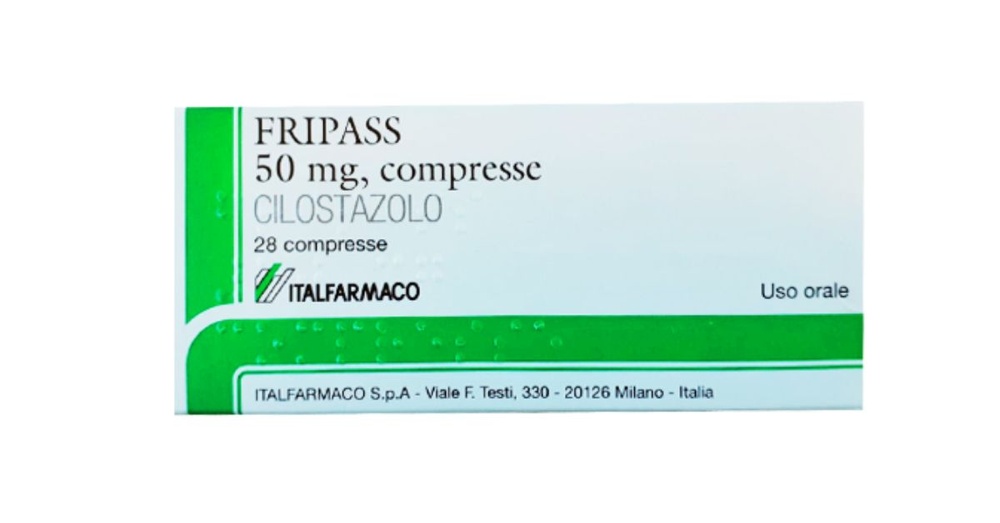
FRIPASS 50 mg Tabletki

Ocena recepty online
Lekarz przeanalizuje Twój przypadek i zdecyduje, czy wystawienie recepty jest medycznie uzasadnione.

Porozmawiaj z lekarzem o tym leku
Omów swoje objawy i opcje leczenia podczas szybkiej konsultacji online.



Jak stosować FRIPASS
Treść ulotki
Fripass 50 mg tablets
Cilostazol
Generic medicine
Read this leaflet carefully before taking this medicine as it contains
important information for you.
- Keep this leaflet. You may need to read it again.
- If you have any questions, ask your doctor or pharmacist.
- This medicine has been prescribed for you only. Do not pass it on to others, even if they have the same symptoms as you, as it may be harmful.
- If you get any side effects, even those not listed in this leaflet, tell your doctor or pharmacist. See section 4.
Contents of this leaflet:
- 1. What Fripass is and what it is used for
- 2. What you need to know before you take Fripass
- 3. How to take Fripass
- 4. Possible side effects
- 5. How to store Fripass
- 6. Contents of the pack and other information
1. What Fripass is and what it is used for
Fripass belongs to a group of medicines called antithrombotics and antiplatelet agents that
prevent the formation of blood clots and the aggregation of platelets which
contribute to the formation of the thrombus.
Fripass is indicated for the treatment of intermittent claudication (pain caused by an
insufficient supply of blood to the legs that occurs during walking).
Fripass is indicated in patients in whom lifestyle changes (including quitting smoking,
exercise programs and other appropriate measures) have not sufficiently reduced the
symptoms of intermittent claudication.
2. What you need to know before taking Fripass
Do not take Fripass
- if you are allergic to cilostazol or any of the other ingredients of this medicine (listed in section 6).
- if you suffer from a condition called "heart failure".
- if you experience persistent chest pain when at rest, or if you have had a “heart attack” or any heart surgery in the last six months.
- if you suffer from or have previously suffered from fainting caused by a heart condition, or from severe heart rhythm disturbances.
- if you know you have a condition that increases the risk of bleeding or bruising, for example:
- one or more active ulcers in the stomach.
- a stroke that occurred in the last six months.
- eye problems if you suffer from diabetes.
- if your blood pressure is not well controlled.
- if you are taking both acetylsalicylic acid and clopidogrel, or any combination of two or more medicines that can increase the risk of bleeding (see Other medicines and Fripass) if you have a severe kidney disease or a severe or moderate liver disease.
- if you are pregnant (see Pregnancy, breastfeeding and fertility).
Warnings and precautions
Before taking Fripass, tell your doctor if you have heart problems or suffer from diabetes.
During treatment with Fripass, it is important to inform your doctor if you easily develop
bruising, bleeding, fever and sore throat.
Treatment should be discontinued promptly in case of retinal hemorrhage
(bleeding of the retina, a membrane that lines the inside of the eye).
If you need to undergo surgery or a dental extraction
inform healthcare professionals that you are taking Fripass.
Health education notes
It is important to continue the changes made to your lifestyle (stopping smoking,
correct diet and adequate physical activity) and lipid-lowering (to decrease
the amount of fat in the blood) and antiplatelet (to reduce the risk of formation of
thrombi) therapies in order to limit the risk of cardiovascular events, such as, for example, cardiac
and cerebral ischemia (suffering of the heart and brain due to reduced oxygen supply), renal
insufficiency (severe alteration of kidney function) and diffuse vascular disease (narrowing
of the arteries).
Other medicines and Fripass
Tell your doctor or pharmacist if you are taking, have recently taken or might
take any other medicines.
Tell your doctor if you are taking:
- acetylsalicylic acid and clopidogrel (medicines that prevent the formation of blood clots and platelet aggregation which contribute to the formation of the thrombus)
- warfarin and other anticoagulants (medicines that delay blood clotting)
- erythromycin, clarithromycin, rifampicin and other antibiotics (used to treat infections caused by bacteria)
- ketoconazole and itraconazole (used for the treatment of fungal infections)
- diltiazem (used to treat high blood pressure or heart disorders)
- omeprazole and cisapride (used for the treatment of stomach disorders)
- lovastatin, simvastatin or atorvastatin (used to reduce cholesterol levels in the blood)
- halofantrine (for treating malaria, a tropical infectious disease)
- pimozide (for treating mental disorders)
- rye ergot derivatives (for treating migraine, a neurological disorder characterized by headache)
- carbamazepine or phenytoin (for treating epilepsy, a disease that causes loss of consciousness and violent involuntary muscle contractions)
- medicines used to treat HIV and hepatitis C (viral diseases)
- St. John's Wort (a herbal remedy used as an antidepressant).
Fripass with drinks
It is recommended to avoid consuming large quantities of grapefruit juice during
treatment.
Pregnancy, breastfeeding and fertility
If you are pregnant, suspect you are pregnant or are planning a pregnancy, or if you are
breastfeeding, ask your doctor or pharmacist for advice before taking
this medicine.
Fripass MUST NOTbe used during pregnancy.
For women who are breastfeeding, the use of Fripass IS NOT RECOMMENDED.
Driving and operating machinery
Fripass can cause dizziness. If you experience dizziness after taking Fripass tablets,
DO NOTdrive vehicles and do not use tools or machinery, and inform your doctor or pharmacist.
3. How to take Fripass
- Take this medicine following exactly the instructions of your doctor. If you have doubts, consult your doctor or pharmacist.
- The recommended dose is 100 mg twice a day. This dose does not require modifications for elderly people. However, the doctor may prescribe a lower dose if you are taking other medicines that may interfere with the effect of Fripass.
- Fripass must be taken 30 minutes before meals, morning and evening. The doctor will evaluate your progress after 3 months of treatment and may recommend that you stop taking cilostazol if the effect of the treatment is insufficient.
Children and adolescents
Safety and efficacy in children and adolescents have not been established.
If you take more Fripass than you should
If for any reason you have taken more Fripass tablets than you should,
you may have signs and symptoms such as severe headache, diarrhea, decreased blood
pressure and irregular heartbeat.
If you have taken more tablets than your prescribed dose, contact your doctor immediately
or the nearest hospital. Remember to bring the package of the medicine with you, so that
it is clear what you have taken.
If you forget to take Fripass
If you miss a dose, do not worry; wait until the time of the next dose and take
the next tablet, then continue normally. DO NOTtake a double dose to
compensate for the missed tablet.
If you stop taking Fripass
If you stop taking Fripass, leg pain may return or worsen. Therefore,
stop taking Fripass only if you notice undesirable effects that require urgent medical
care (see paragraph 4), or if your doctor tells you to. If you have any doubts about the use of this medicine, ask your doctor or pharmacist.
4. Possible side effects
Like all medicines, this medicine can cause side effects, although not everybody gets them.
If you experience any of the following side effects, you may require urgent medical attention.Stop taking Fripass and immediately contact a doctor or go to the nearest hospital.
- heart attack (death of heart cells due to prolonged lack of oxygen supply)
- congestive heart failure (the heart's inability to provide an adequate amount of blood to the body, causing shortness of breath and swelling of the ankles)
- arrhythmia (irregular heartbeat)
- unspecified haemorrhage (bleeding)
- bruising
- Stevens-Johnson syndrome and toxic epidermal necrolysis (severe skin and mucous membrane reactions)
- jaundice (yellowing of the skin or the whites of the eyes)
- pyrexia (fever)
- pharyngitis (sore throat) The following effects have been reported for Fripass. Inform your doctor as soon as possible in thefollowing cases:Very common side effects(affect more than 1 in 10 people)
- headache
- abnormal stools
- diarrhoea Common side effects(affect up to 1 in 10 people)
- tachycardia (increased heart rate)
- palpitations (awareness of heartbeat)
- chest pain
- dizziness
- rhinitis (inflammation of the nose)
- abdominal pain
- ventricular extrasystoles (irregular heartbeat)
- dyspepsia (difficult digestion)
- nausea
- vomiting
- anorexia (loss or decrease of appetite)
- flatulence (passage of intestinal gas through the anus)
- peripheral and facial oedema (swelling of the ankles, feet and face)
- rash (skin irritation)
- pruritus (itching)
- subcutaneous haemorrhage (bleeding under the skin)
- asthenia (weakness) Uncommon side effects(affect up to 1 in 100 people)
- syncope (sudden and transient loss of consciousness)
- atrial fibrillation, supraventricular tachycardia, ventricular tachycardia (irregular heartbeat)
- pneumonia (lung infection)
- cough
- chills
- ocular haemorrhage (bleeding in the eye)
- epistaxis (nosebleed)
- gastrointestinal haemorrhage (bleeding from the stomach or intestines)
- anaemia (decrease in the amount of haemoglobin, a protein found in red blood cells that carries oxygen in the blood)
- orthostatic hypotension (feeling dizzy when standing up, due to a drop in blood pressure)
- anxiety
- insomnia
- abnormal dreams
- allergic reaction
- myalgia (muscle pain)
- diabetes (a disease characterized by high blood glucose levels due to reduced insulin production by the pancreas)
- hyperglycaemia (increased blood glucose)
- gastritis (inflammation of the stomach)
- malaise
- dyspnoea (difficulty breathing) Rare side effects(affect less than 1 in 1,000 people)
- prolonged bleeding time (time it takes for a wound to stop bleeding)
- thrombocythaemia (increased number of platelets)
- renal insufficiency and renal impairment (kidney problems)
Frequency not known (frequency cannot be estimated based on available data):
- hypertension (high blood pressure)
- hypotension (low blood pressure)
- bleeding tendency
- thrombocytopenia (decreased number of platelets)
- granulocytopenia (decreased number of granulocytes, a type of white blood cell)
- agranulocytosis (severe decrease in the number of granulocytes)
- leukopenia (decreased number of white blood cells)
- aplastic pancytopenia (decrease in the number of all blood cells)
- paresis (decreased mobility)
- hot flushes
- eczema (skin inflammation)
- skin eruptions
- urticaria (skin irritation)
- Hypoaesthesia (decreased sensitivity)
- conjunctivitis (red and watery eyes)
- tinnitus (persistent perception of noises in the ear)
- hepatitis (inflammation of the liver)
- abnormal liver function (liver disorders)
- haematuria (blood in the urine)
- pollakiuria (increased frequency of urination)
- interstitial pneumonia (inflammation of the lungs)
- cerebral haemorrhage (bleeding in the brain)
- pulmonary haemorrhage
- muscle haemorrhage
- haemorrhage of the respiratory tract
- increased levels of certain substances in the blood (uric acid, azotaemia and creatinaemia)
- pain
Reporting of side effects
If you get any side effects, talk to your doctor or pharmacist. This includes any possible side effects not listed in this leaflet. You can also report side effects directly through the national reporting system at:
https://www.aifa.gov.it/content/segnalazioni-reazioni-avverse By reporting side effects you can help provide more information on the safety of this medicine.
5. How to store Fripass
Keep this medicine out of the sight and reach of children.
Do not use Fripass after the expiry date which is stated on the packaging and on the blister after
‘Exp.’. The expiry date refers to the last day of that month.
Do not use this medicine if you notice visible signs of deterioration.
This medicine does not require any particular storage conditions.
Do not dispose of any medicine in wastewater or household waste. Ask your pharmacist
how to dispose of medicines you no longer use. This will help protect the environment.
6. Contents of the pack and other information
What Fripass contains
The active ingredient is cilostazol. One tablet contains 50 mg of cilostazol.
The other ingredients are corn starch, microcrystalline cellulose, calcium carmellose,
hypromellose and magnesium stearate.
Description of the appearance of Fripass and contents of the pack
White to almost white, round and flat tablet, with the inscription “50” on one side.
Packs of 14, 20, 28, 30, 50, 56, 98, 100, 112, 168, 70 tablets are available in
PVC/PVDC/Al blisters
Not all pack sizes may be marketed.
Marketing Authorisation Holder and Manufacturer
Italfarmaco S.p.A
Viale F. Testi, 330
20126 Milan
Italy
Manufacturers responsible for batch release:
Adamed Pharma S.A
ul. Marszałka Józefa Piłsudskiego, 5
95-200 Pabiance
Poland
This medicinal product is authorised in the Member States of the European Economic Area
under the following denominations:
Italy Fripass 50 mg tablets
Malta Fripass 50 mg tablets
Fripass 100 mg tablets
Cilostazol
Generic medicine
Read this leaflet carefully before taking this medicine as it contains
important information for you.
- Keep this leaflet. You may need to read it again.
- If you have any questions, ask your doctor or pharmacist.
- This medicine has been prescribed for you only. Do not pass it on to others, even if they have the same symptoms as you, as it could be harmful.
- If you get any side effects, even those not listed in this leaflet, tell your doctor or pharmacist. See section 4.
Contents of this leaflet:
- 1. What Fripass is and what it is used for
- 2. What you need to know before you take Fripass
- 3. How to take Fripass
- 4. Possible side effects
- 5. How to store Fripass
- 6. Contents of the pack and other information
1. What Fripass is and what it is used for
Fripass belongs to a group of medicines called antithrombotics and antiplatelet agents that
prevent the formation of blood clots and the aggregation of platelets which
contribute to the formation of the thrombus.
Fripass is indicated for the treatment of intermittent claudication (pain caused by an
insufficient supply of blood to the legs that occurs during walking).
Fripass is indicated in patients in whom lifestyle changes (including quitting smoking,
exercise programs and other appropriate measures) have not sufficiently reduced the
symptoms of intermittent claudication.
2. What you need to know before taking Fripass
Do not take Fripass
- if you are allergic to cilostazol or any of the other ingredients of this medicine (listed in section 6).
- if you suffer from a condition called "heart failure".
- if you experience persistent chest pain at rest, or if you have had a “heart attack” or any heart surgery in the last six months.
- if you suffer from or have previously suffered from fainting caused by a heart condition, or from severe heart rhythm disturbances.
- if you know you have a condition that increases the risk of bleeding or bruising, for example:
- one or more active ulcers in the stomach.
- a stroke that occurred in the last six months.
- eye problems if you suffer from diabetes.
- if your blood pressure is not well controlled.
- if you are taking both acetylsalicylic acid and clopidogrel, or any combination of two or more medicines that may increase the risk of (see Other medicines and Fripass) if you have severe kidney disease or severe or moderate liver disease.
- if you are pregnant (see Pregnancy, breastfeeding and fertility).
Warnings and precautions
Before taking Fripass, tell your doctor if you have heart problems or suffer from diabetes.
During treatment with Fripass, it is important to inform your doctor if you experience easy
bruising, bleeding, fever and sore throat.
Treatment should be discontinued promptly in case of retinal hemorrhage
(bleeding of the retina, a membrane that lines the inside of the eye).
If you need to undergo surgery or a dental extraction
inform healthcare professionals that you are taking Fripass.
Health education notes
It is important to continue lifestyle changes (stopping smoking,
correct diet and adequate physical activity) and lipid-lowering (to decrease
the amount of fat in the blood) and antiplatelet (to reduce the risk of
thrombus formation) therapies in order to limit the risk of cardiovascular events, such as e.g. cardiac
and cerebral ischemia (heart and brain suffering due to reduced oxygen supply), renal
insufficiency (severe impairment of kidney function) and diffuse vascular disease (narrowing
of the arteries).
Other medicines and Fripass
Tell your doctor or pharmacist if you are taking, have recently taken or might
take any other medicines.
Tell your doctor if you are taking:
- acetylsalicylic acid and clopidogrel (medicines that prevent blood clots from forming and platelet aggregation which contributes to thrombus formation)
- warfarin and other anticoagulants (medicines that delay blood clotting)
- erythromycin, clarithromycin, rifampicin and other antibiotics (used to treat infections caused by bacteria)
- ketoconazole and itraconazole (used for the treatment of fungal infections)
- diltiazem (used to treat high blood pressure or heart disorders)
- omeprazole and cisapride (used for the treatment of stomach disorders)
- lovastatin, simvastatin or atorvastatin (used to reduce cholesterol levels in the blood)
- halofantrine (for treating malaria, a tropical infectious disease)
- pimozide (for treating mental disorders)
- ergotamine derivatives (for treating migraine, a neurological disorder characterized by headache)
- carbamazepine or phenytoin (for treating epilepsy, a disease that causes loss of consciousness and violent involuntary muscle contractions)
- medicines used to treat HIV and hepatitis C (viral diseases)
- St. John's Wort (a herbal remedy used as an antidepressant).
Fripass with drinks
It is recommended to avoid consuming large amounts of grapefruit juice during
treatment.
Pregnancy, breastfeeding and fertility
If you are pregnant, suspect you are pregnant or are planning a pregnancy, or if you
are breastfeeding, ask your doctor or pharmacist for advice before taking
this medicine.
Fripass MUST NOTbe used during pregnancy.
For women who are breastfeeding, the use of Fripass IS NOT RECOMMENDED.
Driving and operating machinery
Fripass may cause dizziness. If you experience dizziness after taking Fripass tablets,
DO NOTdrive vehicles and do not use tools or machinery, and inform your doctor or pharmacist.
3. How to take Fripass
- Take this medicine following exactly the instructions of your doctor. If you have any doubts, consult your doctor or pharmacist.
- The recommended dose is 100 mg twice a day. This dose does not require modifications for elderly people. However, the doctor may prescribe a lower dose if you are taking other medicines that may interfere with the effect of Fripass.
- Fripass must be taken 30 minutes before meals, morning and evening. The doctor will evaluate your progress after 3 months of treatment and may recommend that you stop taking cilostazol if the effect of the treatment is insufficient.
Children and adolescents
Safety and efficacy in children and adolescents have not been established.
If you take more Fripass than you should
If for any reason you have taken more Fripass tablets than you should,
you may experience signs and symptoms such as severe headache, diarrhoea, low blood pressure
and irregular heartbeat.
If you have taken more tablets than your prescribed dose, contact your doctor immediately
or the nearest hospital. Remember to bring the medicine packaging with you, so that
it is clear what you have taken.
If you forget to take Fripass
If you miss a dose, do not worry; wait until the time of the next dose and take
the next tablet, then continue normally. DO NOTtake a double dose to
make up for the missed tablet.
If you stop taking Fripass
If you stop taking Fripass, leg pain may return or worsen. Therefore,
stop taking Fripass only if you notice side effects that require urgent medical attention
(see section 4), or if your doctor tells you to. If you have any doubts about the use of this medicine, ask your doctor or pharmacist.
4. Possible side effects
Like all medicines, this medicine can cause side effects, although not everyone will experience them.
If you experience any of the following side effects, you may require urgent medical attention.Stop taking Fripass and immediately contact a doctor or go to the nearest hospital.
- myocardial infarction (death of heart cells due to prolonged lack of oxygen supply)
- congestive heart failure (the heart's inability to provide an adequate amount of blood to the body, causing shortness of breath and swelling of the ankles)
- arrhythmia (irregular heartbeat)
- unspecified hemorrhage (bleeding)
- ecchymosis (bruising)
- Stevens-Johnson syndrome and toxic epidermal necrolysis (severe skin and mucous membrane reactions)
- jaundice (yellowing of the skin or the whites of the eyes)
- pyrexia (fever)
- pharyngitis (sore throat) The following effects have been reported for Fripass. Inform your doctor as soon as possible in thefollowing cases:Very common side effects(affect more than 1 in 10 people)
- headache
- abnormal stools
- diarrhea Common side effects(affect up to 1 in 10 people)
- tachycardia (increased heart rate)
- palpitations (awareness of heartbeat)
- chest pain
- dizziness
- rhinitis (nasal inflammation)
- abdominal pain
- ventricular extrasystoles (irregular heartbeat)
- dyspepsia (difficult digestion)
- nausea
- vomiting
- anorexia (loss or lack of appetite)
- flatulence (passage of intestinal gas from the anus)
- peripheral and facial edema (swelling of the ankles, feet and face)
- rash (skin irritation)
- pruritus (itching)
- subcutaneous hemorrhage (bleeding under the skin)
- asthenia (weakness) Uncommon side effects(affect up to 1 in 100 people)
- syncope (sudden and transient loss of consciousness)
- atrial fibrillation, supraventricular tachycardia, ventricular tachycardia (irregular heartbeat)
- pneumonia (lung infection)
- cough
- chills
- ocular hemorrhage (bleeding in the eye)
- epistaxis (nosebleed)
- gastrointestinal hemorrhage (bleeding from the stomach or intestines)
- anemia (decrease in the amount of hemoglobin, a protein found in red blood cells that carries oxygen in the blood)
- orthostatic hypotension (feeling of dizziness when getting up, due to a drop in blood pressure)
- anxiety
- insomnia
- abnormal dreams
- allergic reaction
- myalgia (muscle pain)
- diabetes (a disease characterized by high blood glucose levels due to reduced insulin production by the pancreas)
- hyperglycemia (increased blood glucose)
- gastritis (inflammation of the stomach)
- malaise
- dyspnea (difficulty breathing) Rare side effects(affect less than 1 in 1,000 people)
- prolonged bleeding time (time it takes for a wound to stop bleeding)
- thrombocytosis (increased number of platelets)
- renal insufficiency and renal impairment (kidney problems)
Frequency not known (frequency cannot be estimated based on available data):
- hypertension (high blood pressure)
- hypotension (low blood pressure)
- bleeding tendency
- thrombocytopenia (decreased number of platelets)
- granulocytopenia (decreased number of granulocytes, a type of white blood cell)
- agranulocytosis (severe decrease in the number of granulocytes)
- leukopenia (decreased number of white blood cells)
- aplastic pancytopenia (decreased number of all blood cells)
- paresis (decreased mobility)
- hot flashes
- eczema (skin inflammation)
- skin eruptions
- urticaria (skin irritation)
- hypoesthesia (reduced sensitivity)
- conjunctivitis (red and watery eyes)
- tinnitus (persistent perception of noises in the ear)
- hepatitis (inflammation of the liver)
- abnormal liver function (liver disorders)
- hematuria (blood in the urine)
- pollakiuria (increased frequency of urination)
- interstitial pneumonia (lung inflammation)
- cerebral hemorrhage (bleeding in the brain)
- pulmonary hemorrhage
- muscle hemorrhage
- hemorrhage of the respiratory tract
- increased levels of certain substances in the blood (uric acid, azotemia and creatinemia)
- pain
Reporting of side effects
If you experience any side effects, including those not listed in this leaflet, please tell your doctor or pharmacist. You can also report side effects directly through the national reporting system at: .
https://www.aifa.gov.it/content/segnalazioni-reazioni-avverse
By reporting side effects, you can help provide more information on the safety of this medicine.
5. How to store Fripass
Keep this medicine out of the sight and reach of children.
Do not use Fripass after the expiry date which is stated on the packaging and blister after
‘Exp.’. The expiry date refers to the last day of that month.
Do not use this medicine if you notice visible signs of deterioration.
This medicine does not require any particular storage conditions.
Do not dispose of any medicine in wastewater or household waste. Ask your pharmacist
how to dispose of medicines you no longer use. This will help protect the environment.
6. Contents of the pack and other information
What Fripass contains
The active ingredient is cilostazol. One tablet contains 100 mg of cilostazol.
The other ingredients are corn starch, microcrystalline cellulose, calcium carmellose,
hypromellose and magnesium stearate.
Description of the appearance of Fripass and contents of the pack
White to almost white, round and flat tablet, with the inscription “100” on one side.
Packs of 14, 20, 28, 30, 50, 56, 98, 100, 112, 168, 70 tablets are available in
PVC/PVDC Aluminium blisters.
Not all pack sizes may be marketed.
Marketing authorisation holder and manufacturer
Italfarmaco S.p.A
Viale F. Testi, 330
20126 Milano
Italy
Manufacturers responsible for batch release:
Adamed Pharma S.A
ul. Marszałka Józefa Piłsudskiego, 5
95-200 Pabiance
Poland
This medicinal product is authorised in the Member States of the European Economic Area
under the following denominations:
Italy Fripass 100 mg tablets
Malta Fripass 100 mg tablets

Nie jesteś pewien, czy ten lek jest odpowiedni dla ciebie?
Omów swoje objawy i leczenie z lekarzem online.

Zacząłeś przyjmować lek i masz pytania?
Omów swoje objawy i leczenie z lekarzem online.
- Kraj rejestracji
- Postać farmaceutycznaTablet, 50 MG
- Kod ATCB01AC23
- Substancja czynna
- Wymaga receptyTak
- Producent
- Te treści mają charakter wyłącznie informacyjny i nie zastępują konsultacji lekarskiej.
- Zamienniki FRIPASSPostać farmaceutyczna: Tablet, 100 MGSubstancja czynna: cilostazolProducent: S&R FARMACEUTICI SPAWymaga receptyPostać farmaceutyczna: Tablet, 100 MGSubstancja czynna: cilostazolProducent: MYLAN S.P.A.Wymaga receptyPostać farmaceutyczna: Coated tablet, 100 MGSubstancja czynna: cilostazolProducent: SANDOZ S.P.A.Wymaga recepty
Odpowiedniki FRIPASS w innych krajach
Leki z tą samą substancją czynną dostępne w innych krajach.
Odpowiednik FRIPASS w Polska
Odpowiednik FRIPASS w Ukraina
Odpowiednik FRIPASS w Hiszpania
Lekarze online w sprawie FRIPASS
Omów stosowanie FRIPASS, bezpieczeństwo i ocenę zasadności recepty zgodnie z obowiązującymi przepisami.









Uzyskaj receptę na FRIPASS online
Wypełnij 2-minutowy formularz
Opisz swoje objawy, historię choroby i lek, o który prosisz.
Wybierz lekarza lub pozwól nam przydzielić
Wybierz specjalistę lub dopasujemy Cię do najbliższego dostępnego lekarza.
Lekarz analizuje Twój przypadek
Zazwyczaj w ciągu 30 minut. Może zadawać dodatkowe pytania przez czat.
Odbierz w dowolnej aptece
Recepta elektroniczna wysłana na Twój e-mail — ważna w całej Polsce.
Często zadawane pytania
FRIPASS wymaga recepty w Włochy. Możesz skonsultować się z lekarzem online, aby sprawdzić, czy ten lek może być odpowiedni w Twojej sytuacji.
Substancją czynną w FRIPASS jest cilostazol. Informacja ta pomaga rozpoznać leki o tym samym składzie, ale pod różnymi nazwami handlowymi.
FRIPASS jest produkowany przez ITALFARMACO S.P.A.. Nazwy handlowe i opakowania mogą się różnić w zależności od dystrybutora.
Lekarze, tacy jak Lekarze rodzinni, Psychiatrzy, Dermatolodzy, Kardiolodzy, Endokrynolodzy, Gastroenterolodzy, Pulmonolodzy, Nefrolodzy, Reumatolodzy, Hematolodzy, Zakaźnicy, Alergolodzy, Geriatrzy, Pediatrzy, Onkolodzy, mogą ocenić, czy stosowanie FRIPASS jest odpowiednie w Twoim przypadku, w zależności od sytuacji klinicznej i lokalnych przepisów. Możesz umówić konsultację online, aby omówić objawy i możliwe dalsze kroki.
Polska posiada dobrze rozwiniętą infrastrukturę ochrony zdrowia w dużych miastach, takich jak Warszawa, Kraków, Wrocław i Gdańsk. Apteki są łatwo dostępne i działają zgodnie z obowiązującymi przepisami, zapewniając dostęp do leków na receptę.
Możesz kupić FRIPASS w Warszawie, Krakowie, Wrocławiu lub Gdańsku w każdej aptece, posiadając ważną receptę.
Aby uzyskać receptę, możesz skorzystać z Oladoctor:
Inne leki zawierające tę samą substancję czynną (cilostazol) to m.in. ALBATEN, KILOSTATSOLO MYLAN PARMA, KILOSTATSOLO SANDOTS. Mogą one różnić się nazwą handlową lub postacią, ale zawierają ten sam składnik terapeutyczny. Przed zmianą lub rozpoczęciem nowego leku skonsultuj się z lekarzem.
