



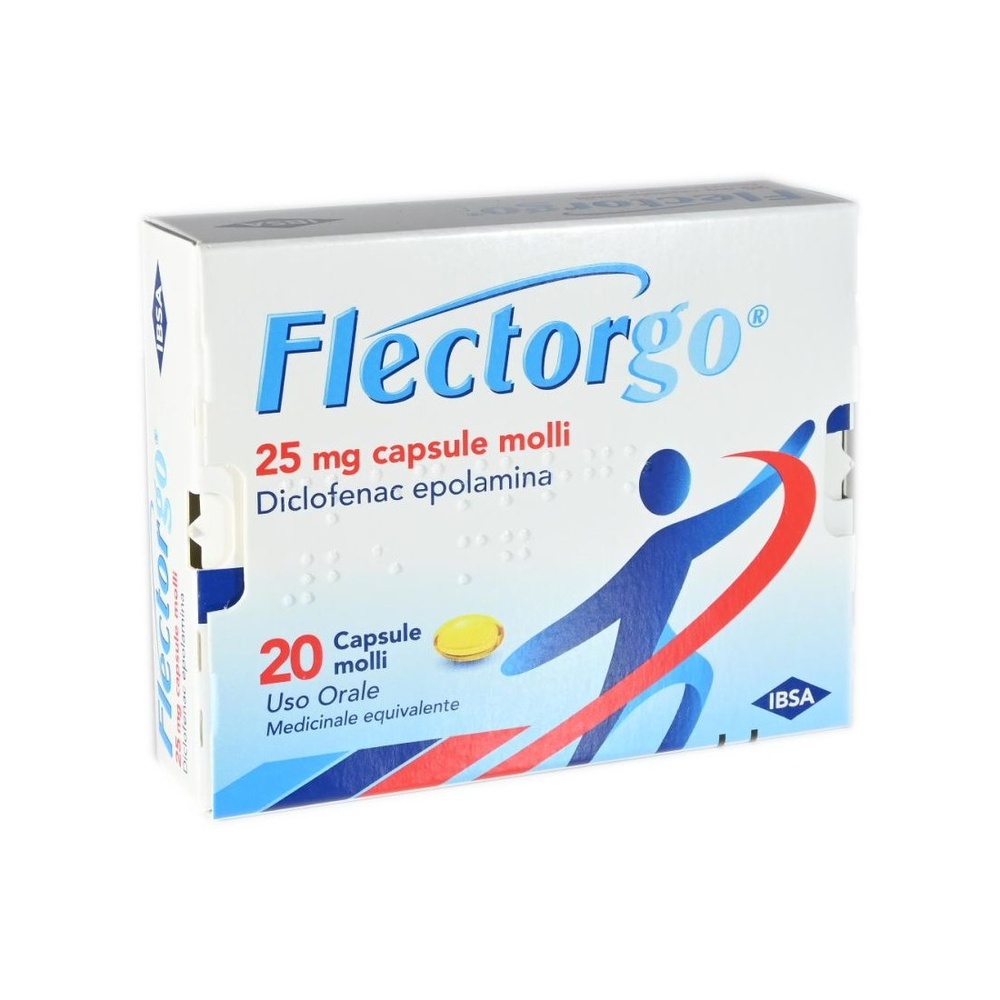
FLECTORGO 12.5 mg Miękkie kapsułki

Ocena recepty online
Lekarz przeanalizuje Twój przypadek i zdecyduje, czy wystawienie recepty jest medycznie uzasadnione.

Porozmawiaj z lekarzem o tym leku
Omów swoje objawy i opcje leczenia podczas szybkiej konsultacji online.



Jak stosować FLEKTORGO
Treść ulotki
FLECTORGO 12,5 mg soft capsules, 25 mg soft capsules
Diclofenac epolamine
Generic medicine
Read this leaflet carefully before taking this medicine as it contains
important information for you.
Always take this medicine exactly as described in this leaflet or as your doctor or
pharmacist has told you to do.
- Keep this leaflet. You may need to read it again.
- If you want more information or advice, ask your pharmacist.
- If any side effects occur, including those not listed in this leaflet, tell your doctor or pharmacist. See section 4.
- See a doctor if you do not feel better or if your symptoms worsen after 3 days.
Contents of this leaflet:
- 1. What FLECTORGO is and what it is used for
- 2. What you need to know before you take FLECTORGO
- 3. How to take FLECTORGO
- 4. Possible side effects
- 5. How to store FLECTORGO
- 6. Contents of the pack and other information
1. What is FLECTORGO and what is it used for
FLECTORGO contains the active ingredient diclofenac epolamine.
FLECTORGO is a medicine that belongs to the group of non-steroidal anti-inflammatory drugs
(NSAIDs). This medicine is a pain reliever that can also reduce inflammation and swelling.
FLECTORGO is used to provide short-term symptomatic relief in the following situations:
mild to moderate pain (such as headache, toothache, menstrual pain, rheumatic pain and muscle
pain).
2. What you need to know before taking FLECTORGO
DO NOT take FLECTORGO:
- if you are allergic to diclofenac epolamine or to any of the other ingredients of this medicine (listed in section 6) or diclofenac, acetylsalicylic acid or any other non-steroidal anti-inflammatory drug (NSAID) The signs of an allergic reaction include asthma, breathing problems, skin rash, swelling of the face and mouth or runny nose
- if you currently have a gastric (stomach) or duodenal (intestine) ulcer, bleeding or perforation
- if you have alterations of unknown origin in the production of blood cells
- if you have a history of bleedingor perforation in the digestive tract, related to a previous therapy based on NSAIDs
- if you have had two or more episodes of gastric (stomach) or duodenal (intestine) ulceror bleeding in the digestive tract(including blood in vomit, bleeding during bowel movements, fresh blood in stools or black, tarry stools)
- if you suffer from heart diseaseand/or established cerebrovascular disease, for example if you have had a heart attack, stroke, mini-stroke (transient ischemic attack - TIA) or blockage of blood vessels leading to the heart or brain or surgery to remove or prevent such blockages
- if you suffer from or have suffered from problems with blood circulation(peripheral arterial disease)
- if you have severe kidney, liver or heart failure
- if you are more than six months pregnant (see also "Pregnancy, breastfeeding and fertility")
- if you are under 14 years of age.
If any of the above situations apply to you, talk to your doctor or pharmacist.
Warnings and precautions
Talk to your doctor or pharmacist before taking FLECTORGO if:
- you suffer from or have suffered from any stomach or intestinal disorder, including ulcerative colitis or Crohn's disease
- you are elderly
- you have problems with your kidneys or liver
- you have a condition called porphyria
- you suffer from any blood or bleeding disorder
- you have ever had asthma
- you are breastfeeding
- you suffer from angina, blood clots, high blood pressure, high levels of cholesterol or triglycerides
- you have diabetes
- you are a smoker
- you have recently undergone surgery
- you are at risk of dehydration (e.g. due to illness or diarrhea) In these cases, FLECTORGO may not be the right medicine for you.
- Because it is an anti-inflammatory medicine, the active ingredient of FLECTORGO may mask the signs and symptoms of an infection. If you do not feel well and need to see a doctor, do not forget to tell him that you are taking FLECTORGO.
Cardiovascular disease
Medicines like FLECTORGO may be associated with a slight increase in the risk of heart attack ("myocardial infarction") or stroke. Any risk is more likely with high doses and prolonged treatment. Do not exceed the recommended dose or duration of treatment.
Make sure your doctor knows, before you are given FLECTORGO:
- if you smoke
- if you suffer from diabetes
- if you suffer from angina, blood clots, high blood pressure, elevated cholesterol or elevated triglycerides
Adverse effects can be minimized by using the lowest effective dose for the shortest duration necessary.
Children and adolescents
Children and adolescents under 14 years of age should not take FLECTORGO (see also "Do not take FLECTORGO").
Other medicines and FLECTORGO
Tell your doctor or pharmacist if you are taking, have recently taken or might take any other medicines.
Ask your doctor for advice before taking FLECTORGO if you are using any of the following medicines:
- Digoxin (a medicine to strengthen the heart), phenytoin (a medicine to treat epilepsy) or lithium (a medicine to treat mental disorders). FLECTORGO may increase the concentration of these substances in the blood.
- Diuretics and medicines to lower blood pressure (diuretics and antihypertensives). FLECTORGO may weaken the effect of these medicines.
- Potassium-sparing diuretics (a certain type of diuretics). FLECTORGO may increase the concentration of potassium in the blood.
- Medicines for the treatment of heart failure and high blood pressure (ACE inhibitors and angiotensin II receptor antagonists). FLECTORGO may weaken the effect of these medicines and may also increase the risk of kidney dysfunction.
- Anticoagulant medicines such as warfarin. Like other NSAIDs, FLECTORGO may increase the effect of these medicines.
- Oral antidiabetic medicines. In some cases, it may be necessary to adjust the dosage of antidiabetic medicines. As a precaution, blood glucose levels should be monitored.
- Other NSAIDs (used for pain and inflammation, e.g. ibuprofen, COX II inhibitors and aspirin) or medicines that contain glucocorticoids. FLECTORGO increases the risk of ulcers or gastrointestinal bleeding.
- Platelet aggregation inhibitors such as acetylsalicylic acid (aspirin) and some antidepressants (selective serotonin reuptake inhibitors or SSRIs). They may increase the risk of gastrointestinal bleeding.
- Cyclosporine and tacrolimus (medicines used to prevent transplant rejection, but also for the treatment of rheumatic diseases or severe skin diseases). NSAIDs may increase the harmful effect on the kidneys caused by cyclosporine and tacrolimus.
- Methotrexate. The use of FLECTORGO within 24 hours before or after methotrexate may increase the concentration of methotrexate in the blood and lead to an increase in the adverse effects of this substance.
- Medicines for the treatment of gout, containing sulfinpyrazone or voriconazole. They may delay the excretion of FLECTORGO, resulting in a higher concentration of DAHILO in the body and an increase in the adverse effects of this substance.
- Cholestyramine and colestipol. They may induce a delay or reduction in the absorption of FLECTORGO. It is recommended to take FLECTORGO at least one hour before or 4-6 hours after the other medicine.
- Quinolones (a type of antibiotic). Isolated cases of convulsions have been reported.
- Cardiac glycosides, concomitant use with NSAIDs may exacerbate heart failure, reduce renal filtration and increase plasma levels of glycosides.
- Mifepristone: NSAIDs should not be used for 8-12 days after the administration of mifepristone because they can reduce its effect.
FLECTORGO with alcohol
While taking FLECTORGO, you should not drink alcohol. Alcohol can increase the possible side effects of FLECTORGO, in particular fatigue and dizziness and effects on the gastrointestinal system.
Pregnancy, breastfeeding and fertility
If you are pregnant, suspect you are pregnant or are planning a pregnancy, or if you are breastfeeding, ask your doctor or pharmacist for advice before taking this medicine.
Pregnancy
If you become pregnant while taking FLECTORGO, you should inform your doctor.During the first 6 months of pregnancy, you can use FLECTORGO only after talking to your doctor. During the last 3 months of pregnancy, FLECTORGO should not be used due to the increased risk of complications for the mother and the baby.
Breastfeeding
FLECTORGO should not be taken if you are breastfeeding as it may be harmful to the newborn. Tell your doctor if you are breastfeeding.
Fertility
FLECTORGO belongs to a group of medicines (NSAIDs) that may impair the fertility of women. This effect is reversible when the medicine is stopped.
The use of FLECTORGO is therefore not recommended for women who are trying to conceive, have difficulty conceiving or are undergoing diagnostic tests for infertility.
Driving and using machines
When using FLECTORGO, side effects such as visual disturbances, dizziness, drowsiness, feeling sleepy or other central nervous system disorders may occur. This effect is increased in combination with alcohol.
If you experience these effects, you should not drive vehicles or use machines.
FLECTORGO contains sorbitol (E420)
If your doctor has told you that you have an intolerance to certain sugars, consult him before taking this medicine.
3. How to take FLECTORGO
Swallow the capsules whole with a sip of water.
To ensure that the medicine works in the best possible way, take the capsule on an empty stomach.
Adults and adolescents aged 14 years and over:
It is important that you use the minimum dose that controls the pain and that you do not take FLECTORGO for
longer than necessary.
Take this medicine always as exactly described in this leaflet or as your doctor or
pharmacist has told you. If you have doubts, consult your doctor or pharmacist.
For FLECTORGO 12.5 mg
Initially take 1 or 2 soft capsules and subsequently, if necessary, 1 or 2 soft capsules every 4 –
6 hours. In any case, do not take more than 6 soft capsules (75 mg) within 24 hours.
For FLECTORGO 25 mg
Initially take 1 soft capsule and subsequently, if necessary, 1 soft capsule every 4 – 6 hours.
In any case, do not take more than 3 soft capsules (75 mg) within 24 hours.
FLECTORGO should not be taken for more than 3 days. If symptoms persist or worsen, consult
your doctor.
If you take more FLECTORGO than you should
If you accidentally take an excessive amount, inform your doctor immediately or go
immediately to the nearest emergency room, bringing the medicine packaging with you.
You may need medical treatment.
If you forget to take FLECTORGO
If you forget a dose, take it as soon as you remember. If it is almost time for the next dose,
do not take the forgotten dose and take the next capsule at the usual time. Do not take a double
dose to make up for a missed dose.
4. Possible side effects
Like all medicines, this medicine can cause side effects, although not everybody gets them.
Some side effects can be serious.
Stop taking FLECTORGO and tell your doctor immediately if you experience:
- severe upper abdominal pain, feeling unwell, feeling sick
- vomiting blood or black particles, black stools or blood in your stools
- allergic reactions such as skin rash, itching, bruising, painful red areas, scaling or blistering
- wheezing or shortness of breath (bronchospasm), difficulty swallowing, collapse
- swelling of the face, lips, hands or fingers
- yellowing of the skin or eyes
- persistent sore throat or high temperature, unusual bleeding or bruising
- unexpected change in the amount of urine produced and/or its appearance
- mild cramps and tenderness in the abdomen, which begin shortly after starting treatment with FLECTORGO and are followed by bleeding from the rectum or diarrhoea with blood, usually within 24 hours of the start of abdominal pain (frequency not known, the frequency cannot be estimated based on the available data).
Medicines like FLECTORGO may be associated with an increased risk of heart attack
("myocardial infarction") or stroke.
The following side effects have also been reported:
Common (may affect up to 1 in 10 people)
- Headache, dizziness, vertigo
- Nausea, vomiting, diarrhoea, indigestion (dyspepsia), abdominal pain, flatulence, loss of appetite
- Skin rash and itching
Uncommon (may affect up to 1 in 100 people)
- Increased levels of liver enzymes in the blood
Rare (may affect up to 1 in 1,000 people)
- Hypersensitivity, anaphylactic and anaphylactoid reactions (severe allergic reactions, including low blood pressure and shock)
- Allergic swelling including swelling of the face (angioedema)
- Drowsiness
- Feeling of constriction of the airways (asthma) including shortness of breath (dyspnea)
- Inflammation of the stomach (gastritis), stomach (gastric) or duodenal (intestinal) ulcer (with or without bleeding or perforation)
- Hepatitis (inflammation of the liver), jaundice
- Urticaria
- Edema (fluid retention in the body)
Very rare (may affect up to 1 in 10,000 people)
- Disorders of the formation of red blood cells and white blood cells
- Disorientation, depression, insomnia, nightmares, irritability, psychotic reactions
- Sensory disturbances (paresthesia), impaired memory, seizures or spasms, anxiety, tremor, meningitis not associated with an infection, altered taste
- Visual disturbance, blurred or double vision
- Ringing in the ears (tinnitus), impaired hearing
- Palpitations, chest pain, weakness of the heart muscle (heart failure)
- High blood pressure (hypertension), inflammation of blood vessels (vasculitis)
- Inflammation of the lungs (pneumonia)
- Inflammation of the colon (colitis), including bleeding and worsening of Crohn's disease or ulcerative colitis, constipation
- Inflammation of the oral mucosa (stomatitis), inflammation of the tongue, lesions of the esophagus (damage to the esophagus), formation of membranous constrictions in the intestine, inflammation of the pancreas (pancreatitis)
- Liver failure
- Skin rash (including eczema and blisters), sensitivity to light, small areas of bleeding in the skin, severe skin reactions such as rash with blistering (e.g. Stevens-Johnson syndrome, toxic epidermal necrolysis / Lyell's syndrome), hair loss
- Acute kidney dysfunction (renal failure), blood in the urine (hematuria), protein in the urine (proteinuria), nephrotic syndrome (fluid retention in the body and high levels of protein passing into the urine), damage to kidney tissue (interstitial nephritis, papillary necrosis)
Reporting of side effects
If you get any side effects, even those not listed in this leaflet, tell your
doctor or pharmacist. You can also report side effects directly through the
national reporting system located at
http://www.agenziafarmaco.gov.it/content/come-segnalare-una-sospetta-reazione-avversa.
By reporting side effects you can help provide more information on the safety of
this medicine.
5. How to store FLECTORGO
- Keep this medicine out of the sight and reach of children.
- Do not use this medicine after the expiry date which is stated on the package and blister after "Exp.". The expiry date refers to the last day of that month.
- Store at a temperature below 25°C.
- Store in the original package to protect from light and moisture.
6. Contents of the pack and other information
What FLECTORGO contains
The active ingredient is diclofenac epolamine.
For FLECTORGO 12.5 mg
Each soft capsule contains diclofenac in the form of 15.38 mg of diclofenac epolamine equivalent
to 12.5 mg of diclofenac potassium.
For FLECTORGO 25 mg
Each soft capsule contains diclofenac in the form of 30.76 mg of diclofenac epolamine equivalent
to 25 mg of diclofenac potassium.
The other ingredients are:
Capsule content:
Macrogol 600, anhydrous glycerol, purified water
Capsule:
Gelatin, anhydrous glycerol, partially dehydrated sorbitol liquid (E420), hydroxypropylbetadex,
sodium hydroxide, purified water.
Description of the appearance of FLECTORGO and contents of the pack
For FLECTORGO 12.5 mg
Soft gelatin capsule, oval in shape, transparent, yellowish in colour, with dimensions of
approximately 0.8 cm, containing a slightly viscous solution.
For FLECTORGO 25 mg
Soft gelatin capsule, oval in shape, transparent, yellowish in colour, with dimensions of
approximately 1 cm, containing a slightly viscous solution.
The soft capsules are packaged in blisters.
For FLECTORGO 12.5 mg
Pack: 10, 20, 30 or 40 soft capsules.
For FLECTORGO 25 mg
Pack: 10 or 20 soft capsules.
Not all pack sizes may be marketed.
Marketing Authorisation Holder and Manufacturer
IBSA Farmaceutici Italia S.r.l., Via Martiri di Cefalonia, 2, 26900 Lodi

Nie jesteś pewien, czy ten lek jest odpowiedni dla ciebie?
Omów swoje objawy i leczenie z lekarzem online.

Zacząłeś przyjmować lek i masz pytania?
Omów swoje objawy i leczenie z lekarzem online.
- Kraj rejestracji
- Postać farmaceutycznaSoft capsule, 12.5 MG
- Kod ATCM01AB05
- Substancja czynna
- Wymaga receptyNie
- Producent
- Te treści mają charakter wyłącznie informacyjny i nie zastępują konsultacji lekarskiej.
- Zamienniki FLEKTORGOPostać farmaceutyczna: Hard capsule with prolonged release, 75 MGSubstancja czynna: diclofenacProducent: FARMA GROUP S.R.L.Wymaga receptyPostać farmaceutyczna: Modified-release hard capsule, 75 MGSubstancja czynna: diclofenacProducent: MORGANCEUTICAL S.R.L.Wymaga receptyPostać farmaceutyczna: Tablet, 50 MGSubstancja czynna: diclofenacProducent: ALFASIGMA S.P.A.Wymaga recepty
Odpowiedniki FLEKTORGO w innych krajach
Leki z tą samą substancją czynną dostępne w innych krajach.
Odpowiednik FLEKTORGO w Polska
Odpowiednik FLEKTORGO w Ukraina
Odpowiednik FLEKTORGO w Hiszpania
Lekarze online w sprawie FLEKTORGO
Omów stosowanie FLEKTORGO, bezpieczeństwo i ocenę zasadności recepty zgodnie z obowiązującymi przepisami.









Uzyskaj receptę na FLEKTORGO online
Wypełnij 2-minutowy formularz
Opisz swoje objawy, historię choroby i lek, o który prosisz.
Wybierz lekarza lub pozwól nam przydzielić
Wybierz specjalistę lub dopasujemy Cię do najbliższego dostępnego lekarza.
Lekarz analizuje Twój przypadek
Zazwyczaj w ciągu 30 minut. Może zadawać dodatkowe pytania przez czat.
Odbierz w dowolnej aptece
Recepta elektroniczna wysłana na Twój e-mail — ważna w całej Polsce.
Często zadawane pytania
FLEKTORGO nie wymaga recepty w Włochy. Możesz skonsultować się z lekarzem online, aby sprawdzić, czy ten lek może być odpowiedni w Twojej sytuacji.
Substancją czynną w FLEKTORGO jest diclofenac. Informacja ta pomaga rozpoznać leki o tym samym składzie, ale pod różnymi nazwami handlowymi.
FLEKTORGO jest produkowany przez IBSA FARMACEUTICI ITALIA S.R.L.. Nazwy handlowe i opakowania mogą się różnić w zależności od dystrybutora.
Lekarze, tacy jak Lekarze rodzinni, Psychiatrzy, Dermatolodzy, Kardiolodzy, Endokrynolodzy, Gastroenterolodzy, Pulmonolodzy, Nefrolodzy, Reumatolodzy, Hematolodzy, Zakaźnicy, Alergolodzy, Geriatrzy, Pediatrzy, Onkolodzy, mogą ocenić, czy stosowanie FLEKTORGO jest odpowiednie w Twoim przypadku, w zależności od sytuacji klinicznej i lokalnych przepisów. Możesz umówić konsultację online, aby omówić objawy i możliwe dalsze kroki.
Polska posiada dobrze rozwiniętą infrastrukturę ochrony zdrowia w dużych miastach, takich jak Warszawa, Kraków, Wrocław i Gdańsk. Apteki są łatwo dostępne i działają zgodnie z obowiązującymi przepisami, zapewniając dostęp do leków na receptę.
Możesz kupić FLEKTORGO w Warszawie, Krakowie, Wrocławiu lub Gdańsku w każdej aptece, posiadając ważną receptę.
Aby uzyskać receptę, możesz skorzystać z Oladoctor:
Inne leki zawierające tę samą substancję czynną (diclofenac) to m.in. DEALJIK, DEFLAMAT, DIKLOFENAK ALFASIGMA. Mogą one różnić się nazwą handlową lub postacią, ale zawierają ten sam składnik terapeutyczny. Przed zmianą lub rozpoczęciem nowego leku skonsultuj się z lekarzem.
