



FLEBOGAMMA 50 mg /Ml Roztwór Do Infuzji

Ocena recepty online
Lekarz przeanalizuje Twój przypadek i zdecyduje, czy wystawienie recepty jest medycznie uzasadnione.

Porozmawiaj z lekarzem o tym leku
Omów swoje objawy i opcje leczenia podczas szybkiej konsultacji online.



Jak stosować FLEBOGAMMA DIF
Treść ulotki
Flebogamma DIF 50 mg/ml solution for infusion
Normal human immunoglobulin (IVIg)
Read this leaflet carefully before you use this medicine as it contains important
information for you.
- Keep this leaflet. You may need to read it again.
- If you have any questions, ask your doctor, pharmacist or nurse.
- This medicine has been prescribed for you only. Do not pass it on to others, even if their symptoms are the same as yours, as it could be harmful.
- If you get any side effects, even those not listed in this leaflet, tell your doctor, pharmacist or nurse. See section 4.
Contents of this leaflet
- 1. What Flebogamma DIF is and what it is used for
- 2. What you need to know before you use Flebogamma DIF
- 3. How to use Flebogamma DIF
- 4. Possible side effects
- 5. How to store Flebogamma DIF
- 6. Contents of the pack and other information
1. What Flebogamma DIF is and what it is used for
What Flebogamma DIF is
Flebogamma DIF contains normal human immunoglobulin, a highly purified protein
extracted from human plasma (a part of the blood of donors). This medicine belongs to the group
of medicines called intravenous immunoglobulins. They are used in the treatment of conditions in which
the body's self-defense immune system does not function properly.
What Flebogamma DIF is used for
Treatment of adults, children and adolescents (2-18 years) who do not have a sufficient level of
antibodies (Flebogamma DIF is used as replacement therapy). There are two groups:
- Patients with Primary Immunodeficiency Syndrome (PID), with a deficiency of antibodies diagnosed at birth (group 1)
- Patients with secondary immunodeficiency syndromes (SID) with severe or recurrent infections, ineffective antimicrobial treatment and who present demonstrated inability to producespecific antibodies (PSAF)*or serum IgG levels < 4 g/l (group 2)
*PSAF = inability to produce at least a 2-fold increase in IgG antibody titers to pneumococcal polysaccharide and containing the polypeptide antigen.
Treatment of adults, children and adolescents (2-18 years) susceptible in whom active vaccination
against measles is not indicated or is not recommended
Treatment of adults, children and adolescents (2-18 years) with autoimmune disorders
(immunomodulation). There are five groups:
- Primary Immune Thrombocytopenia (ITP), in which the amount of platelets in the blood is very reduced. Platelets represent an important part of the coagulation process and a reduction in their number can cause unwanted bleeding and bruising. The medicine is also
used in patients at high risk of bruising, or before hospitalization
to adjust the platelet count.
- Guillain Barré Syndrome, in which the immune system damages the nerves and prevents them from functioning properly.
- Kawasaki disease (in this case together with therapy with acetylsalicylic acid), a childhood disease in which blood vessels (arteries) widen.
- Chronic Inflammatory Demyelinating Polyradiculoneuropathy (CIDP), a rare and progressive disease that causes weakness of the limbs, numbness, pain and fatigue.
- Multifocal Motor Neuropathy (MMN), a rare disease that causes a slow progressive asymmetric weakening of the limbs, without sensory loss.
2. What you need to know before using Flebogamma DIF
Do not use Flebogamma DIF
- If you are allergic to normal immunoglobulins or to any of the other ingredients of this medicine (listed in section 6).
- If you have a deficiency of immunoglobulin A (IgA) or have developed antibodies against IgA.
- If you have hereditary fructose intolerance, a rare genetic disease in which the enzyme that metabolizes fructose is missing. In newborns and young children (0-2 years) hereditary fructose intolerance (HFI) may not yet have been diagnosed and in such subjects taking this medicine may cause death. Therefore, newborns and young children should not receive this medicine (see special warnings regarding excipients at the end of this section).
Warnings and precautions
Talk to your doctor, pharmacist or nurse before using Flebogamma DIF.
Some undesirable effects may occur more frequently:
- if the intravenous infusion is too fast
- if you receive Flebogamma DIF for the first time, or if your medicine based on normal human immunoglobulins has been changed, or if a long time has passed since the previous intravenous infusion (e.g., several weeks). You will be carefully monitored for up to one hour after the infusion, to check for any undesirable effects.
Allergic reactions are rare. They may occur if you do not have enough IgA in your blood
or have developed anti-IgA antibodies.
Patients with pre-existing risk factors
Tell your doctor if you have any other illness or unfavorable condition, as monitoring is necessary in patients with pre-existing risk factors related to thrombotic events (formation of
blood clots). In particular, tell your doctor if:
- you have diabetes
- you have high blood pressure
- you have a history of vascular diseases or thrombosis
- you are overweight
- you have a decrease in blood volume
- you have diseases that cause increased blood viscosity
- you are over 65 years of age.
Patients with kidney problems
If you have a kidney disease and receive Flebogamma DIF for the first time, you may experience a problem
with your kidneys.
The doctor will consider the risk factors and take measures such as reducing the infusion rate or stopping treatment.
Effects on blood tests
After receiving Flebogamma DIF, the results of some blood tests may be altered
for a certain time. If you are about to have a blood test after taking Flebogamma DIF, tell
the analyst or doctor that you have taken this medicine.
Special warnings for safety
When medicines are produced from human plasma or blood, precautionary measures are taken to
prevent infections that could be passed on to patients. These measures include:
- careful selection of plasma and blood donors, to ensure that those at risk of infection are excluded
- testing of each donation and each pool of plasma to detect viruses or infections
- the inclusion of viral inactivation or removal methods in the plasma or human blood processing process.
Despite these measures, when medicines produced from plasma or human blood are administered,
the possibility of transmitting an infection cannot be completely excluded. This applies to all viruses of still unknown origin, emerging viruses or other types of infections.
The measures taken are considered effective for enveloped viruses, such as the human immunodeficiency virus (HIV), hepatitis B and hepatitis C, as well as for non-enveloped viruses, such as hepatitis A and parvovirus B19.
Immunoglobulins have not been associated with hepatitis A or parvovirus B19 infections,
probably because the antibodies against these infections contained in the product have a protective effect.
It is strongly recommended that, whenever Flebogamma DIF is administered, the name and batch number of the medicine (indicated on the label and carton after 'Batch') are recorded, to keep
track of the batches used.
Children and adolescents
During the infusion of Flebogamma DIF, vital signs (body temperature,
blood pressure, heart rate and respiratory rate) must be monitored.
Other medicines and Flebogamma DIF
Tell your doctor or pharmacist if you are taking or have recently taken any other
medicines.
- Effects on vaccines: Flebogamma DIF may reduce the effectiveness of some types of vaccines (live attenuated virus vaccines). In the case of rubella, mumps and varicella, a period of up to 3 months should elapse after the administration of this product and before receiving those vaccines. In the case of measles, this period should be extended to 1 year.
- During treatment with Flebogamma DIF, avoid concomitant use of medicines that increase water excretion from the body (loop diuretics).
Pregnancy and breastfeeding
If you are pregnant, suspect you are pregnant, are planning to become pregnant or are breastfeeding, ask your doctor or pharmacist for advice before using this medicine.
Driving and operating machinery
During treatment, reactions (e.g. dizziness or nausea) may occur that can affect your ability to drive vehicles and operate machinery.
Flebogamma DIF contains sorbitol
Sorbitol is a source of fructose. If your doctor has diagnosed you (or your child) with hereditary fructose intolerance, a rare genetic disease, you (or your child) must not take this
medicine. Patients with hereditary fructose intolerance cannot convert fructose, the accumulation of which can cause serious side effects.
Before taking this medicine, tell your doctor if you (or your child) suffer from
hereditary fructose intolerance or if the child feels unwell, vomits or has unpleasant reactions such as bloating and stomach cramps or diarrhoea when consuming sweet foods or drinks.
Flebogamma DIF contains sodium
This medicine contains less than 7.35 mg of sodium (the main component of table salt) in
100 ml. This is equivalent to 0.37% of the recommended maximum daily intake of sodium in the diet of
an adult.
3. How to use Flebogamma DIF
Flebogamma DIF is administered via injection into a vein (intravenous administration). It may
be self-administered if you have been well instructed by hospital staff or a healthcare
professional. You must perform the infusion exactly as you have been shown, to avoid
the introduction of microorganisms. You should never administer it alone; a healthcare
professional experienced in the preparation of the medicine, insertion of the cannula, in
administration and monitoring of adverse reactions must always be present.
The dose to be administered depends on your condition and your body weight and will be calculated by
your doctor (see the section of instructions for healthcare professionals, at the bottom of this leaflet).
At the beginning of the infusion, you will receive Flebogamma DIF at a low rate (0.01 - 0.02 ml/kg/min).
If you feel well, the doctor may then gradually increase the infusion rate (up to
0.1 ml/kg/min).
Use in children over 2 years of age
The dose in children is not considered different from that of adults, given that it is given based on the
disease and the child's weight.
If you use more Flebogamma DIF than you should
If you take more Flebogamma DIF than you should, your body may take on too much fluid.
This can happen particularly if you are a patient at risk, an elderly patient, or a
patient with heart or kidney problems. Tell your doctor immediately.
If you forget to use Flebogamma DIF
Tell your doctor or pharmacist immediately and follow their instructions.
You should not receive a double dose to make up for a missed dose.
If you have any doubts about the use of this medicine, ask your doctor, pharmacist or
nurse.
4. Possible side effects
Like all medicines, this medicine can cause side effects, although not everybody gets them.
In rare and isolated cases, the following side effects have been reported with immunoglobulin preparations. Seek immediate medical attention if any of the following side effects occur during or after the infusion:
- A sudden drop in blood pressure and, in isolated cases, anaphylactic shock (whose signs, among others, are skin rash, hypotension, palpitations, wheezing, cough, sneezing and difficulty breathing), even if you have not shown hypersensitivity in previous administrations.
- Cases of temporary, non-infectious meningitis (whose signs are headache, fear or intolerance to light, stiff neck).
- Cases of temporary reduction of red blood cells in the blood (reversible hemolytic anemia/hemolysis).
- Cases of temporary skin reactions (side effects on your skin).
- Increased serum creatinine levels (a test that measures your kidney function) and/or acute renal failure (whose signs are lower back pain, fatigue, decreased urine output).
- Thromboembolic reactions, such as: myocardial infarction (chest tightness with a feeling of a racing heartbeat), stroke (weakness of the facial muscles, arms or legs, problems speaking or understanding others while they speak), pulmonary embolism (shortness of breath, chest pain and fatigue), deep vein thrombosis (pain and swelling in a limb).
- Cases of acute transfusion-related lung injury (TRALI) causing hypoxia (lack of oxygen), dyspnea (difficulty breathing), tachypnea (rapid breathing), cyanosis (lack of oxygen in the blood), fever and hypotension.
Other side effects
Common (may affect up to 1 in 10 infusions):
- headache
- fever (increased body temperature)
- tachycardia (accelerated heartbeat)
- hypotension
Uncommon (may affect up to 1 in 100 infusions):
- bronchitis
- nasopharyngitis
- dizziness (motion sickness)
- hypertension
- increased blood pressure
- wheezing
- productive cough
- abdominal pain (including upper abdominal pain)
- diarrhea
- vomiting
- nausea
- urticaria
- pruritus
- rash (skin eruption)
- back pain
- myalgia (muscle pain)
- arthralgia (joint pain)
- febrile chills (feeling of cold with shivering) or chills
- pain
- reaction at the injection site
- positive Coombs test
- decreased blood pressure Rare (may affect up to 1 in 1,000):
- hypersensitivity
- abnormal behavior
- migraine
- blood pressure fluctuations
- hot flush (redness)
- cough
- asthma
- dyspnea (difficulty breathing)
- epistaxis (nosebleed)
- nasal discomfort
- laryngopharyngeal pain
- contact dermatitis
- hyperhidrosis (excessive sweating)
- rash
- muscle spasms
- neck pain
- pain in the extremities
- urinary retention
- asthenia (fatigue)
- chest pain
- reactions at the infusion site (erythema, extravasation, inflammation, pain)
- reactions at the injection site (including edema, pain, pruritus and swelling at the injection site)
- peripheral edema
- increased alanine aminotransferase (liver enzyme)
Additional side effects in children and adolescents
Compared to adults, a higher percentage of headache, fever,
increased heart rate and low blood pressure have been observed in children.
Reporting of side effects
If you get any side effects, talk to your doctor, pharmacist or nurse. You can also report side effects directly
through the national reporting system listed in Annex V. By reporting side effects you can help provide
more information on the safety of this medicine.
5. How to store Flebogamma DIF
Keep this medicine out of the sight and reach of children.
Do not use this medicine after the expiry date which is stated on the label and on the package after
EXP.
Do not store at a temperature above 30 ºC. Do not freeze.
The solution must be clear or slightly opalescent. Do not use this medicine if you notice that the
solution is cloudy or contains a precipitate.
Do not dispose of any medicine in wastewater or household waste. Ask your pharmacist how to
dispose of medicines you no longer use. This will help protect the environment.
6. Package contents and other information
What Flebogamma DIF contains
- The active ingredient is normal human immunoglobulin (IVIg). One ml contains 50 mg of normal human immunoglobulins, of which at least 97% consists of IgG.
Each 10 ml vial contains: 0.5 g of normal human immunoglobulin
Each 50 ml vial contains: 2.5 g of normal human immunoglobulin
Each 100 ml vial contains: 5 g of normal human immunoglobulin
Each 200 ml vial contains: 10 g of normal human immunoglobulin
Each 400 ml vial contains: 20 g of normal human immunoglobulin
The percentage of IgG subclasses is approximately 66.6% IgG, 28.5% IgG, 2.7% IgG and 2.2% IgG.
Contains IgA in trace amounts (less than 50 micrograms/ml).
- The other components are sorbitol and water for injections (see section 2 for further information on the components).
Description of the appearance of Flebogamma DIF and contents of the pack
Flebogamma DIF is a solution for infusion. The solution is clear or slightly opalescent and
colorless or pale yellow.
Flebogamma DIF is supplied in vials of 0.5 g/10 ml, 2.5 g/50 ml, 5 g/100 ml, 10 g/200 ml and
20 g/400 ml.
Pack of 1 vial.
Not all pack sizes may be marketed.
Marketing authorisation holder and manufacturer
Instituto Grifols, S.A.
Can Guasc, 2 - Parets del Vallès
08150 Barcelona - Spain
For further information on this medicine, contact the local representative of the marketing
authorisation holder:
AT/BE/BG/EE/ES/HR/HU/IE/LV/
LT/LU/MT/NL/RO/SI/SK/UK(NI)
Instituto Grifols, S.A.
Tel: +34 93 571 01 00
CY/EL
Instituto Grifols, S.A.
Τηλ: +34 93 571 01 00
CZ
Grifols S.R.O.
Tel: +4202 2223 1415
DE
Grifols Deutschland GmbH
Tel: +49 69 660 593 100
DK/FI/IS/NO/SE
Grifols Nordic AB
Tel: +46 8 441 89 50
FR
Grifols France
T é l: +33 (0)1 53 53 08 70
IT
Grifols Italia S.p.A.
Tel: +39 050 8755 113
PL
Grifols Polska Sp. z o. o.
Tel: +48 22 378 85 60
PT
Grifols Portugal, Lda.
Tel: +351 219 255 200
More detailed information on this medicine is available on the website of the European
Medicines Agency, http://www.ema.europa.eu .
The following information is intended exclusively for healthcare professionals (for further
information see section 3):
Dosage and administration
The dose and dosage regimen depend on the indication.
The dose should be adjusted to the specific needs of each patient, which are dictated by the
clinical response. The dose based on body weight may require adjustment in patients
who are underweight or overweight. The dosage regimens described below are provided as a guideline.
The recommended dosages are summarised in the following table:
| Indication | Dose | Frequency of infusions |
| Replacement therapy | ||
| Primary immunodeficiency syndrome and | Initial dose: 0.4 - 0.8 g/kg Maintenance dose: 0.2 - 0.8 g/kg | every 3 - 4 weeks |
| Secondary immunodeficiencies | 0.2 - 0.4 g/kg | every 3 - 4 weeks |
| Indication | Dose | Frequency of infusions |
| Pre-/post-exposure prophylaxis of measles: | ||
| Post-exposure prophylaxis in susceptible patients | 0.4 g/kg | as soon as possible and within 6 days of exposure, possibly repeated once after 2 weeks to maintain serum antibody levels > 240 mUI/ml |
| Post-exposure prophylaxis in patients with PID/SID | 0.4 g/kg | in addition to maintenance therapy, administered as a supplementary dose within 6 days of exposure |
| Pre-exposure prophylaxis in patients with PID/SID | 0.53 g/kg | if a patient receives a maintenance dose of less than 0.53 g/kg every 3 - 4 weeks, the dose must be increased once to at least 0.53 g/kg |
| Immunomodulation: | ||
| Immune Thrombocytopenia Primary | 0.8 - 1 g/kg or 0.4 g/kg/day | day 1, with possibility of repetition once within 3 days for 2 - 5 days |
| Guillain Barré syndrome | 0.4 g/kg/day | for 5 days |
| Kawasaki disease | 2 g/kg | in a single dose in association with acetylsalicylic acid |
| Chronic inflammatory demyelinating polyradiculoneuropathy (CIDP) i l | Initial dose: 2 g/kg Maintenance dose: 1 g/kg | in fractions over
|
| Multifocal motor neuropathy (MMN) t I a i z | Initial dose: 2 g/kg Maintenance dose: 1 g/kg or 2 g/kg | in fractions over
|
Flebogamma DIF must be administered intravenously at an initial rate of
0.01 - 0.02 ml/kg/min for the first thirty minutes. If well tolerated, the administration rate may
be gradually increased to a maximum of 0.1 ml/kg/minute.
In a clinical trial on patients with chronic ITP, a significant increase in the average platelet
level (64,000/µl) was achieved, although normal levels were not reached.
Paediatric population
Since the dosage for each indication is calculated based on body weight and
adjusted according to the clinical outcome of the aforementioned conditions, the dosage in children is not
considered different from that of adults.
Contraindications
Flebogamma DIF must not be mixed with other medicines or intravenous fluids and must
be administered via a separate intravenous line.
Special warnings
Sorbitol
This medicine must not be administered to patients with hereditary fructose intolerance unless
strictly necessary.
In children under 2 years of age, hereditary fructose intolerance may not yet have been diagnosed.
Medicines containing sorbitol/fructose administered intravenously can be life-threatening and must be contraindicated in these patients unless the clinical need is evident and no alternative therapies are available.
The medical history of patients should be collected, with particular attention to symptoms of
hereditary fructose intolerance, before administering this medicine.
It is strongly recommended that the name and batch number of the product are recorded whenever Flebogamma DIF is administered, to maintain a link between patients and the batches used.
Instructions for handling and disposal
The product must be brought to room temperature (not exceeding 30 °C) before use.
The solution must be clear or slightly opalescent. Do not use Flebogamma DIF if you notice
that the solution is cloudy or contains sediment.
Unused medicine and waste materials derived from such medicine must be disposed of in accordance
with local regulations.
Flebogamma DIF 100 mg/ml solution for infusion
Normal human immunoglobulin (IVIg)
Read this leaflet carefully before you use this medicine as it contains important
information for you.
- Keep this leaflet. You may need to read it again.
- If you have any questions, ask your doctor, pharmacist or nurse.
- This medicine has been prescribed for you only. Do not pass it on to others, even if they have the same symptoms as you, as it may be harmful.
- If you get any side effects, even those not listed in this leaflet, tell your doctor, pharmacist or nurse. See section 4.
Contents of this leaflet
- 1. What Flebogamma DIF is and what it is used for
- 2. What you need to know before you use Flebogamma DIF
- 3. How to use Flebogamma DIF
- 4. Possible side effects
- 5. How to store Flebogamma DIF
- 6. Contents of the pack and other information
1. What is Flebogamma DIF and what is it used for
What is Flebogamma DIF
Flebogamma DIF contains normal human immunoglobulin, a highly purified protein
extracted from human plasma (a part of donor blood). This medicine belongs to the group
of medicines called intravenous immunoglobulins. They are used in the treatment of conditions in which
the body's own immune system does not function properly.
What is Flebogamma DIF used for
Treatment of adults, children and adolescents (2-18 years) who do not have a sufficient level of
antibodies (Flebogamma DIF is used as replacement therapy). There are two groups:
- Patients with Primary Immunodeficiency Syndrome (PID), with a deficiency of antibodies diagnosed at birth (group 1)
- Patients with secondary immunodeficiency syndromes (SID) with severe or recurrent infections, ineffective antimicrobial treatment and who have demonstrated inability to producespecific antibodies (PSAF)*or serum IgG levels < 4 g/l (group 2)
*PSAF = inability to produce at least a 2-fold increase in IgG antibody titers to pneumococcal polysaccharide and containing the polypeptide antigen vaccines.
Treatment of susceptible adults, children and adolescents (2-18 years) in whom active vaccination
against measles is not indicated or is not recommended.
Treatment of adults, children and adolescents (2-18 years) with autoimmune disorders
(immunomodulation). There are five groups:
- Primary Immune Thrombocytopenia (ITP), in which the amount of platelets in the blood is very reduced. Platelets represent an important part of the coagulation process and a reduction in their number can cause unwanted bleeding and bruising. The medicine is also
used in patients at high risk of bruising formation, or before hospitalization
to adjust the platelet count.
- Guillain Barré Syndrome, in which the immune system damages the nerves and prevents them from functioning properly.
- Kawasaki disease (in this case together with therapy with acetylsalicylic acid), a childhood disease in which blood vessels (arteries) widen.
- Chronic Inflammatory Demyelinating Polyradiculoneuropathy (CIDP), a rare and progressive disease that causes weakness of the limbs, numbness, pain and fatigue.
- Multifocal Motor Neuropathy (MMN), a rare disease that causes slow progressive asymmetric weakening of the limbs, without sensory loss.
2. What you need to know before using Flebogamma DIF
Do not use Flebogamma DIF
- If you are allergic to normal immunoglobulins or to any of the other ingredients of this medicine (listed in section 6).
- If you have a deficiency of immunoglobulin A (IgA) or have developed antibodies against IgA.
- If you have hereditary fructose intolerance, a rare genetic disease in which the enzyme that metabolizes fructose is absent. In newborns and young children (0-2 years) hereditary fructose intolerance (HFI) may not yet have been diagnosed and in such subjects taking this medicine may cause death. Therefore, newborns and young children should not receive this medicine (see special warnings about the excipients at the end of this section).
Warnings and precautions
Talk to your doctor, pharmacist or nurse before using Flebogamma DIF.
Some undesirable effects may occur more frequently:
- if the intravenous infusion is too fast.
- if you receive Flebogamma DIF for the first time, or if you were using another medicine based on human immunoglobulins (IVIg), or if a long time has passed since the previous intravenous infusion (e.g., several weeks). You will be carefully monitored for up to one hour after the infusion, to check for any undesirable effects.
Allergic reactions are rare. They can occur in rare cases of IgA deficiency or if you have developed
anti-IgA antibodies.
Patients with pre-existing risk factors
Tell your doctor if you have any other illness or unfavorable condition, as monitoring is necessary in patients with pre-existing risk factors related to thrombotic events (formation of
blood clots). In particular, tell your doctor if:
- you have diabetes
- you have high blood pressure
- you have a history of vascular diseases or thrombosis
- you are overweight
- you have a decrease in blood volume
- you have diseases that cause increased blood viscosity
- you are over 65 years of age
Patients with kidney problems
If you have a kidney disease and receive Flebogamma DIF for the first time, you may experience a problem
with your kidneys.
The doctor will consider the risk factors and take measures such as reducing the infusion rate or stopping treatment.
Effects on blood tests
After receiving Flebogamma DIF, the results of some blood tests may be altered
for a certain time. If you are about to have a blood test after taking Flebogamma DIF, tell
the analyst or doctor that you have taken this medicine.
Special safety warnings
When medicines are produced from human plasma or blood, precautionary measures are taken to
prevent infections that could be passed on to patients. These measures include:
- careful selection of plasma and blood donors, to ensure that those at risk of infection are excluded
- testing of each donation and each pool of plasma for viruses or infections.
- the inclusion of methods for viral inactivation or removal in the processing of human plasma or blood.
Despite these measures, when medicines produced from human plasma or blood are administered,
the possibility of transmitting an infection cannot be completely excluded. This applies to all viruses of unknown origin, emerging viruses or other types of infections.
The measures taken are considered effective for enveloped viruses, such as the human immunodeficiency virus (HIV), hepatitis B and hepatitis C, as well as for non-enveloped viruses, such as hepatitis A and parvovirus B19.
Immunoglobulins have not been associated with hepatitis A or parvovirus B19 infections,
probably because the antibodies against these infections contained in the product have a protective effect.
It is strongly recommended that, whenever Flebogamma DIF is administered, the name and lot number of the medicine (indicated on the label and packaging after 'Lot') are recorded, to keep
track of the batches used.
Children and adolescents
During the infusion of Flebogamma DIF, vital signs (body temperature,
blood pressure, heart rate and respiratory rate) must be monitored.
Other medicines and Flebogamma DIF
- Tell your doctor or pharmacist if you are taking or have recently taken any other medicines.
- Effects on vaccines: Flebogamma DIF may reduce the effectiveness of some types of vaccines (live attenuated virus vaccines). In the case of rubella, mumps and varicella, a period of up to 3 months should elapse after the administration of this product before receiving those vaccines. In the case of measles, this period should be extended to 1 year.
- During treatment with Flebogamma DIF, avoid concomitant use of medicines that increase water excretion from the body (loop diuretics).
Pregnancy and breastfeeding
If you are pregnant, suspect you may be pregnant, are planning a pregnancy, or are breastfeeding with
breast milk, ask your doctor or pharmacist for advice before using this medicine.
Driving and operating machinery
During treatment, reactions (e.g. dizziness or nausea) may occur that can affect your ability to drive vehicles and operate machinery.
Flebogamma DIF contains sorbitol
Sorbitol is a source of fructose. If your doctor has diagnosed you (or your child) with hereditary fructose intolerance, a rare genetic disease, you (or your child) should not take this
medicine. Patients with hereditary fructose intolerance cannot convert
fructose, the accumulation of which can cause serious side effects.
Before taking this medicine, tell your doctor if you (or your child) suffer from
hereditary fructose intolerance or if the child feels unwell, vomits or has unpleasant
reactions such as bloating and stomach cramps or diarrhea when consuming sweet foods or drinks.
Flebogamma DIF contains sodium
This medicine contains less than 7.35 mg of sodium (the main component of table salt) in
100 ml. This is equivalent to 0.37% of the recommended maximum daily intake in the diet of
an adult.
3. How to use Flebogamma DIF
Flebogamma DIF is administered via intravenous injection (intravenous administration). It may
be self-administered if you have been well instructed by hospital staff or a healthcare
professional. You must perform the infusion exactly as shown to you, to avoid
the introduction of microorganisms. You should never self-administer; a healthcare
professional experienced in the preparation of the medicine, insertion of the cannula, in
administration and monitoring of adverse reactions must always be present.
The dose to be administered depends on your weight and will be calculated by your doctor (see the
instructions section for healthcare professionals, at the bottom of this leaflet).
At the beginning of the infusion, you will receive Flebogamma DIF at a low rate (0.01 ml/kg/min). If you
feel well, the doctor may then gradually increase the infusion rate (up to
0.08 ml/kg/min).
Use in children over 2 years of age
The dose in children is not considered different from that of adults, given that it is administered based on the
disease and the child's weight.
If you use more Flebogamma DIF than you should
If you take more Flebogamma DIF than you should, your body may absorb too much fluid.
This can happen particularly if you are a patient at risk, an elderly patient, or
a patient with heart or kidney problems. Tell your doctor immediately.
If you forget to use Flebogamma DIF
Tell your doctor or pharmacist immediately and follow their instructions.
You should not receive a double dose to make up for a missed dose.
If you have any doubts about the use of this medicine, ask your doctor, pharmacist or
nurse.
4. Possible side effects
Like all medicines, this medicine can cause side effects, although not everyone will experience them.
In rare and isolated cases, the following side effects have been reported with immunoglobulin preparations. Seek immediate medical attention if any of the following side effects occur during or after the infusion:
- A sudden drop in blood pressure and, in isolated cases, anaphylactic shock (whose signs, among others, are skin rash, hypotension, palpitations, wheezing, coughing, sneezing and difficulty breathing), even if you have not demonstrated hypersensitivity in previous administrations.
- Cases of temporary, non-infectious meningitis (whose signs are headache, fear or intolerance to light, stiff neck).
- Cases of temporary reduction of red blood cells in the blood (reversible hemolytic anemia/hemolysis).
- Cases of temporary skin reactions (side effects on your skin).
- Increased serum creatinine levels (a test that measures your kidney function) and/or acute renal failure (whose signs are lower back pain, fatigue, decreased urine output).
- Thromboembolic reactions, such as: myocardial infarction (chest tightness with a feeling of a racing heartbeat), stroke (weakness of the facial muscles, arms or legs, problems speaking or understanding others while they speak), pulmonary embolism (shortness of breath, chest pain and fatigue), deep vein thrombosis (pain and swelling in a limb).
- Cases of acute transfusion-related lung injury (TRALI), which causes hypoxia (lack of oxygen), dyspnea (difficulty breathing), tachypnea (rapid breathing), cyanosis (lack of oxygen in the blood), fever and hypotension.
Other side effects:
Very common (may affect more than 1 in 10 infusions):
- headache
Common (may affect up to 1 in 10 infusions):
- tachycardia (accelerated heartbeat)
- hypotension (low blood pressure)
- fever (increased body temperature)
- febrile chills (feeling of cold with shivering) or chills
- nausea
- vomiting
- back pain
- myalgia (muscle pain)
Uncommon (may affect up to 1 in 100 infusions):
- hypersensitivity
- influenza
- dizziness (motion sickness)
- tremor (shaking)
- photophobia (excessive sensitivity to light)
- vertigo
- hypertension (elevated blood pressure)
- wheezing
- abdominal pain (including upper abdominal pain)
- diarrhea
- flatulence
- pruritus (itching)
- rash
- limb discomfort
- muscle spasms and muscle tension
- neck pain
- extremity pain
- chest discomfort/chest pain
- fatigue
- feeling of cold
- malaise
- peripheral edema
- increased heart rate
- contusion
- urinary tract infection
- aseptic meningitis (non-infectious meningitis)
- decreased red blood cells and white blood cells
- anorexia (loss of appetite)
- insomnia
- radicular syndrome (pain in the neck or back and other symptoms such as weakness, tingling or numbness in the arms and legs)
- vasovagal syncope (temporary loss of consciousness)
- conjunctivitis (inflammation of the conjunctiva of the eyes)
- maculopathy (disease of the macula, in the retina of the eye)
- blurred vision
- ear pain
- cyanosis (bluish discoloration of the skin)
- increase or decrease in blood pressure
- hot flush (redness)
- hematoma
- thrombosis
- lymphedema
- dyspnea (difficulty breathing)
- epistaxis (nosebleed)
- rhinorrhea (excessive mucus production)
- nasal sinus pain
- respiratory tract syndrome with cough
- abdominal discomfort and distension
- dry mouth
- hematemesis (vomiting blood)
- acne
- alopecia (hair loss)
- hyperhidrosis (excessive sweating)
- ecchymosis (widespread skin bruise)
- erythema (redness of the skin)
- arthralgia (joint pain)
- musculoskeletal discomfort
- infusion-related reaction and reaction at the infusion site (including erythema and pain at the infusion site)
- irritability (nervousness)
- parainfluenza-like syndrome
- deterioration of general physical condition
- decreased hemoglobin
- increased reticulocyte count
- decreased heart rate
Additional side effects in children and adolescents
Compared to adults, a higher percentage of headache, chills, fever, nausea, vomiting, low blood pressure, increased heart rate and back pain have been observed in children.
Cyanosis (lack of oxygen in the blood) has been reported in one child, but not in adults.
Side effects may be reduced by switching to Flebogamma DIF 50 mg/ml. If you experience an increase in side effects, consult your doctor.
Reporting of side effects
If you experience any side effects, including those not listed in this leaflet, please tell your doctor, pharmacist or nurse. You can also report side effects directly through the national reporting system detailed in Annex V. By reporting side effects you can help provide more information on the safety of this medicine.
5. How to store Flebogamma DIF
Keep this medicine out of the sight and reach of children.
Do not use this medicine after the expiry date which is stated on the label and the packaging after
EXP.
Do not store at a temperature above 30 ºC. Do not freeze.
The solution must be clear or slightly opalescent. Do not use this medicine if you notice that the
solution is cloudy or contains sediment.
Do not dispose of any medicine in wastewater or household waste. Ask your pharmacist how to
dispose of medicines you no longer use. This will help protect the environment.
6. Contents of the pack and other information
What Flebogamma DIF contains
- The active substance is normal human immunoglobulin (IVIg). One ml contains 100 mg of normal human immunoglobulins, of which at least 97% consists of IgG.
Each 50 ml vial contains: 5 g of normal human immunoglobulins.
Each 100 ml vial contains: 10 g of normal human immunoglobulins.
Each 200 ml vial contains: 20 g of normal human immunoglobulins.
The percentage of IgG subclasses is approximately 66.6% IgG, 27.9% IgG, 3.0% IgG and 2.5% IgG.
It contains IgA only in trace amounts (less than 100 micrograms/ml).
- The other components are sorbitol and water for injections (see section 2 for further information on the components).
Description of the appearance of Flebogamma DIF and contents of the pack
Flebogamma DIF is a solution for infusion. The solution is clear or slightly opalescent and
colourless or pale yellow.
Flebogamma DIF is supplied in vials of 5 g/50 ml, 10 g/100 ml and 20 g/200 ml.
Pack of 1 vial.
Not all pack sizes may be marketed.
Marketing authorisation holder and manufacturer
Instituto Grifols, S.A.
Can Guasc, 2 - Parets del Vallès
08150 Barcelona - Spain
For further information on this medicine, contact the local representative of the marketing
authorisation holder:
AT/BE/BG/EE/ES/HR/HU/IE/LV/
LT/LU/MT/NL/RO/SI/SK/UK(NI)
Instituto Grifols, S.A.
Tel: +34 93 571 01 00
CY/EL
Instituto Grifols, S.A.
Τηλ: +34 93 571 01 00
CZ
Grifols S.R.O.
Tel: +4202 2223 1415
DE
Grifols Deutschland GmbH
Tel: +49 69 660 593 100
DK/FI/IS/NO/SE
Grifols Nordic AB
Tel: +46 8 441 89 50
FR
Grifols France
T é l: +33 (0)1 53 53 08 70
IT
Grifols Italia S.p.A.
Tel: +39 050 8755 113
PL
Grifols Polska Sp. z o. o.
Tel: +48 22 378 85 60
PT
Grifols Portugal, Lda.
Tel: +351 219 255 200
More detailed information on this medicine is available on the website of the European
Medicines Agency, http://www.ema.europa.eu .
-----------------------------------------------------------------------------------------------------------------------
The following information is intended exclusively for healthcare professionals (for further
information see section 3):
Posology and method of administration
The dose and dosage schedule depend on the indication.
The dose must be adapted to the specific needs of each patient, which are dictated by the
clinical response. The dose based on body weight may require adjustment in underweight or overweight patients. The dosage regimens described below are provided as a guideline.
The recommended dosages are summarised in the following table:
| Indication | Dose | Frequency of infusions |
| Therapeutic replacement | ||
| Primary immunodeficiency syndromes | Initial dose: 0.4 - 0.8 g/kg Maintenance dose 0.2 - 0.8 g/kg | Every 3 - 4 weeks |
| Secondary immunodeficiencies | 0.2 - 0.4 g/kg | Every 3 - 4 weeks |
| Prophylaxis pre-/post-exposure to measles: | ||
| Post-exposure prophylaxis in susceptible patients | 0.4 g/kg | As soon as possible and within 6 days of exposure, possibly to be repeated once after 2 weeks to maintain serum antibody levels > 240 mUI/ml |
| Post-exposure prophylaxis in patients with PID/SID | 0.4 g/kg | In addition to maintenance therapy, administered as a supplementary dose within 6 days of exposure |
| Prophylaxis pre-exposure in patients with PID/SID | 0.53 g/kg | If a patient receives a maintenance dose of less than 0.53 g/kg every 3 - 4 weeks, the dose must be increased once to at least 0.53 g/kg |
| Immunomodulation: | ||
| Primary Immune Thrombocytopenia | 0.8 - 1 g/kg or 0.4 g/kg/day | Day 1, with possibility of repetition once within 3 days for 2 - 5 days |
| Guillain Barré syndrome | 0.4 g/kg/day | For 5 days |
| Kawasaki disease | 2 g/kg | In a single dose in association with acetylsalicylic acid |
| Chronic inflammatory demyelinating polyradiculoneuropathy (CIDP) | Initial dose: 2 g/kg Maintenance dose: 1 g/kg | In fractions over
|
| Multifocal motor neuropathy (MMN) | Initial dose: 2 g/kg Maintenance dose: 1 g/kg or 2 g/kg | In fractions over o
|
Flebogamma DIF must be administered intravenously at an initial rate of
0.01 ml/kg/min for the first thirty minutes. If tolerated, increase the administration rate to
0.02 ml/kg/min for the second 30 minutes. Again, if tolerated, increase the rate of
administration to 0.04 ml/kg/min for the third 30 minutes. If the administration is well tolerated by
the patient, additional increments of 0.02 ml/kg/min may be made at 30-minute intervals,
up to a maximum of 0.08 ml/kg/min.
The frequency of adverse reactions to IVIg has been reported to increase with the rate of
administration. The administration rate during the first administrations should be
slow. If no adverse reactions occur, the infusion rate in subsequent administrations
may be slowly increased to the maximum rate. For patients who have experienced
adverse reactions, it is advisable to reduce the infusion rate in subsequent administrations and
limit the maximum rate to 0.04 ml/kg/min, or administer 5% IVIg.
Paediatric population
Since the dosage for each indication is calculated based on body weight and
adjusted according to the clinical outcome of the aforementioned conditions, the dosage in children is not
considered different from that of adults.
Incompatibilities
Flebogamma DIF must not be mixed with other medicinal products or intravenous fluids and must
be administered via a separate intravenous line.
Special warnings
Sorbitol
This medicinal product should not be administered to patients with hereditary fructose intolerance unless absolutely necessary.
In children under 2 years of age, hereditary fructose intolerance may not yet have been diagnosed.
Medicinal products containing sorbitol/fructose administered intravenously can be life-threatening and should be contraindicated in these patients unless the clinical need is evident and no alternative therapies are available.
The medical history of patients should be collected, with particular attention to symptoms of
hereditary fructose intolerance, before administering this medicine.
It is strongly recommended that the name and
batch number of the product are recorded whenever Flebogamma DIF is administered, to maintain a link between patients and the batches used.
Instructions for handling and disposal
The product must be brought to room temperature (not exceeding 30 °C) before use.
The solution must be clear or slightly opalescent. Do not use Flebogamma DIF if you notice
that the solution is cloudy or contains sediment.
Unused medicinal product and waste materials derived from such medicinal product should be disposed of in accordance
with local regulations.

Nie jesteś pewien, czy ten lek jest odpowiedni dla ciebie?
Omów swoje objawy i leczenie z lekarzem online.

Zacząłeś przyjmować lek i masz pytania?
Omów swoje objawy i leczenie z lekarzem online.
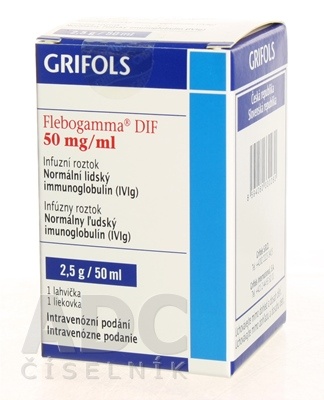
- Kraj rejestracji
- Postać farmaceutycznaInfusion solution, 50 MG/ML
- Kod ATCJ06BA02
- Substancja czynna
- Wymaga receptyTak
- Producent
- Te treści mają charakter wyłącznie informacyjny i nie zastępują konsultacji lekarskiej.
- Zamienniki FLEBOGAMMA DIFPostać farmaceutyczna: Infusion solution, 100 mg/mlSubstancja czynna: immunoglobulins, normal human, for intravascular adm.Producent: TAKEDA MANUFACTURING AUSTRIA AGWymaga receptyPostać farmaceutyczna: Powder and solvent for intravenous infusion solution, 50 MG/MLSubstancja czynna: immunoglobulins, normal human, for intravascular adm.Producent: BAXALTA INNOVATIONS GMBHWymaga receptyPostać farmaceutyczna: Infusion solution, 100MG/MLSubstancja czynna: immunoglobulins, normal human, for intravascular adm.Producent: OCTAPHARMA ITALY S.P.A.Wymaga recepty
Odpowiedniki FLEBOGAMMA DIF w innych krajach
Leki z tą samą substancją czynną dostępne w innych krajach.
Odpowiednik FLEBOGAMMA DIF w Hiszpania
Odpowiednik FLEBOGAMMA DIF w Polska
Odpowiednik FLEBOGAMMA DIF w Ukraina
Lekarze online w sprawie FLEBOGAMMA DIF
Omów stosowanie FLEBOGAMMA DIF, bezpieczeństwo i ocenę zasadności recepty zgodnie z obowiązującymi przepisami.









Uzyskaj receptę na FLEBOGAMMA DIF online
Wypełnij 2-minutowy formularz
Opisz swoje objawy, historię choroby i lek, o który prosisz.
Wybierz lekarza lub pozwól nam przydzielić
Wybierz specjalistę lub dopasujemy Cię do najbliższego dostępnego lekarza.
Lekarz analizuje Twój przypadek
Zazwyczaj w ciągu 30 minut. Może zadawać dodatkowe pytania przez czat.
Odbierz w dowolnej aptece
Recepta elektroniczna wysłana na Twój e-mail — ważna w całej Polsce.
Często zadawane pytania
FLEBOGAMMA DIF wymaga recepty w Włochy. Możesz skonsultować się z lekarzem online, aby sprawdzić, czy ten lek może być odpowiedni w Twojej sytuacji.
Substancją czynną w FLEBOGAMMA DIF jest immunoglobulins, normal human, for intravascular adm.. Informacja ta pomaga rozpoznać leki o tym samym składzie, ale pod różnymi nazwami handlowymi.
FLEBOGAMMA DIF jest produkowany przez INSTITUTO GRIFOLS S.A.. Nazwy handlowe i opakowania mogą się różnić w zależności od dystrybutora.
Lekarze, tacy jak Lekarze rodzinni, Psychiatrzy, Dermatolodzy, Kardiolodzy, Endokrynolodzy, Gastroenterolodzy, Pulmonolodzy, Nefrolodzy, Reumatolodzy, Hematolodzy, Zakaźnicy, Alergolodzy, Geriatrzy, Pediatrzy, Onkolodzy, mogą ocenić, czy stosowanie FLEBOGAMMA DIF jest odpowiednie w Twoim przypadku, w zależności od sytuacji klinicznej i lokalnych przepisów. Możesz umówić konsultację online, aby omówić objawy i możliwe dalsze kroki.
Polska posiada dobrze rozwiniętą infrastrukturę ochrony zdrowia w dużych miastach, takich jak Warszawa, Kraków, Wrocław i Gdańsk. Apteki są łatwo dostępne i działają zgodnie z obowiązującymi przepisami, zapewniając dostęp do leków na receptę.
Możesz kupić FLEBOGAMMA DIF w Warszawie, Krakowie, Wrocławiu lub Gdańsku w każdej aptece, posiadając ważną receptę.
Aby uzyskać receptę, możesz skorzystać z Oladoctor:
Inne leki zawierające tę samą substancję czynną (immunoglobulins, normal human, for intravascular adm.) to m.in. DEQSIGA, GAMMAGARD, GAMTEN. Mogą one różnić się nazwą handlową lub postacią, ale zawierają ten sam składnik terapeutyczny. Przed zmianą lub rozpoczęciem nowego leku skonsultuj się z lekarzem.
