



FENTALGON 25 mcg/h Plaster transdermalny

Ocena recepty online
Lekarz przeanalizuje Twój przypadek i zdecyduje, czy wystawienie recepty jest medycznie uzasadnione.

Porozmawiaj z lekarzem o tym leku
Omów swoje objawy i opcje leczenia podczas szybkiej konsultacji online.



Jak stosować FENTALGON
Treść ulotki
Fentalgon 25 micrograms/hour transdermal patch
Fentalgon 50 micrograms/hour transdermal patch
Fentalgon 75 micrograms/hour transdermal patch
Fentalgon 100 micrograms/hour transdermal patch
fentanil
Generic medicine
Read this leaflet carefully before you start using this medicine as it contains important
information for you.
- Keep this leaflet. You may need to read it again.
- If you have any questions, ask your doctor, pharmacist or nurse.
- This medicine has been prescribed for you only. Do not pass it on to others, even if their symptoms are the same as yours, as it could be harmful.
- If you get any side effects, even those not listed in this leaflet, tell your doctor, pharmacist or nurse. See section 4.
Contents of this leaflet:
- 1. What Fentalgon is and what it is used for
- 2. What you need to know before you use Fentalgon
- 3. How to use Fentalgon
- 4. Possible side effects
- 5. How to store Fentalgon
- 6. Contents of the pack and other information
1. What is Fentalgon and what is it used for
The name of this medicine is Fentalgon.
The patches help to relieve very strong and long-lasting pain:
- in adults who need continuous treatment for pain
- in children over 2 years of age who are already using opioid medicines and who need continuous treatment for pain.
Fentalgon contains a medicine called fentanyl, which belongs to a group of potent painkillers
called opioids.
2. Cosa deve sapere prima di usare Fentalgon
Non usi Fentalgon
- Se è allergico al fentanil o a uno qualsiasi degli altri componenti di questo medicinale (elencati al paragrafo 6).
- Se il dolore è di breve durata, come un dolore improvviso o un dolore postoperatorio.
- Se ha difficoltà a respirare, con respiro lento o corto. Non usi questo medicinale se uno qualsiasi dei punti sopra elencati riguarda lei o il suo bambino. Se ha dubbi si rivolga al medico, al farmacista o all’infermiere prima di usare Fentalgon.
Avvertenze e precauzioni
- Fentalgon può avere effetti indesiderati pericolosi per la vita nelle persone che non stanno già usando regolarmente medicinali oppioidi prescritti.
- Fentalgon è un medicinale che potrebbe essere pericoloso per la vita dei bambini, anche se i cerotti sono già stati utilizzati. Bisogna tenere presente che un cerotto appiccicoso (nuovo o usato) potrebbe essere attraente per un bambino, e che se si attaccasse alla pelle del bambino o se il bambino lo mettesse in bocca il risultato potrebbe essere fatale.
- Conservi questo medicinale in un luogo sicuro e protetto, inaccessibile ad altre persone - vedere paragrafo 5 per maggiori informazioni.
Trasferimento del cerotto a un’altra persona
Il cerotto deve essere utilizzato solo sulla cute della persona a cui è stato prescritto. Sono stati
riportati casi di adesione accidentale del cerotto a un familiare mentre era a stretto contatto fisico o
condivideva lo stesso letto con la persona che utilizzava il cerotto. Un cerotto che si attacca
accidentalmente a un’altra persona (soprattutto se un bambino) può comportare che il medicinale
contenuto nel cerotto passi attraverso la pelle dell’altra persona e causi gravi effetti indesiderati,
come la difficoltà a respirare, con respiro lento e superficiale, che può essere fatale. In caso il cerotto
si incolli alla cute di un’altra persona, tolga il cerotto immediatamente e si rivolga al medico.
Precauzioni particolari con Fentalgon
Si rivolga al medico o al farmacista prima di usarequesto medicinale se una qualsiasi delle condizioni
elencate sotto la riguarda, poiché il medico potrebbe aver bisogno di controllarla più attentamente.
- Se ha mai avuto problemi polmonari o di respirazione.
- Se ha mai avuto problemi al cuore, al fegato, ai reni, o ha/ha avuto la pressione bassa.
- Se ha mai avuto un tumore al cervello.
- Se ha mai avuto cefalee persistenti o una lesione alla testa.
- Se è anziano, poiché può essere più sensibile agli effetti di questo medicinale.
- Se ha una condizione chiamata ‘miastenia grave’ in cui i muscoli vanno incontro ad indebolimento e facile affaticamento. Se una qualsiasi delle condizioni elencate sopra la riguarda (o ha dubbi su questo fatto) si rivolga al medico, al farmacista o all’infermiere prima di usare Fentalgon.
Durante l'utilizzo del cerotto, informi il medico se ha problemi respiratori durante il sonno.Gli
oppioidi come Fentalgon possono causare disturbi respiratori legati al sonno come apnea notturna
(pause respiratorie durante il sonno) e ipossiemia correlata al sonno (basso livello di ossigeno nel
sangue). Informi il medico se lei, il suo partner o la persona che si occupa di lei nota una delle seguenti
condizioni:
- pause respiratorie durante il sonno
- risveglio notturno dovuto alla mancanza di respiro
- difficoltà a rimanere addormentati
- sonnolenza eccessiva durante il giorno. Il medico potrebbe decidere di modificare la dose.
Durante l’uso del cerotto, informi il medico se nota un cambiamento del dolore che sente.Se lei
sente:
- che il dolore non è più alleviato dal cerotto
- un aumento del dolore
- un cambiamento del modo in cui prova il dolore (per esempio, prova dolore in un’altra parte del corpo)
- dolore quando qualcuno la tocca in un modo che non dovrebbe farle male. Non modifichi la dose da solo. Il medico potrebbe decidere di modificare la dose del medicinale o di cambiare trattamento.
Effetti indesiderati e Fentalgon
- Fentalgon può farla sentire insolitamente assonnato, e può rendere la respirazione più lenta e superficiale. Molto raramente questi problemi di respirazione possono essere pericolosi per la vita o persino fatali, soprattutto in persone che non hanno mai usato prima degli antidolorifici oppioidi forti (come Fentalgon o morfina). Se lei o qualcun altro si accorge che la persona che utilizza il cerotto mostra una sonnolenza insolita, con respiro lento o superficiale:
- rimuovere il cerotto
- chiamare immediatamente il medico, o andare all’ospedale più vicino
- fare in modo che la persona si muova e parli il più possibile
- Se le viene la febbre mentre sta usando Fentalgon, avverta il medico, poiché la febbre può aumentare la quantità di medicinale che attraversa la pelle.
- Fentalgon può causare stipsi, si rivolga al medico o al farmacista per consigli su come prevenire o alleviare la stipsi. Vedere paragrafo 4 per un elenco completo dei possibili effetti indesiderati.
Quando sta indossando il cerotto non si esponga a fonti di calore diretto, come termofori, coperte
elettriche, borse di acqua calda, letti ad acqua riscaldati o lampade termiche o abbronzanti. Eviti di
prendere il sole e di fare lunghi bagni caldi o saune o idromassaggi termali caldi. Facendolo, la
quantità di medicinale assorbita dal cerotto potrebbe aumentare.
Uso a lungo termine e tolleranza
Questo medicinale contiene fentanil, un medicinale oppioide. L’uso ripetuto di antidolorifici oppioidi
può rendere il medicinale meno efficace (ci si abitua ad esso, un fenomeno noto come tolleranza al
farmaco). È possibile anche diventare più sensibili al dolore durante l’uso di Fentalgon. Questo è noto
come iperalgesia.
L’aumento della dose dei cerotti può aiutare a ridurre ulteriormente il dolore per un po’ di tempo,
ma può anche essere dannoso. Se nota che il medicinale diventa meno efficace, si rivolga al medico.
Il medico deciderà se è meglio aumentare la dose o ridurre gradualmente l’uso di Fentalgon cerotto
trasdermico.
Dipendenza e tossicodipendenza
L’uso ripetuto di Fentalgon può anche portare a dipendenza, abuso e tossicodipendenza, che
possono provocare un sovradosaggio potenzialmente fatale. Il rischio di questi effetti indesiderati
può aumentare con una dose più elevata e una durata d’uso prolungata. La dipendenza o la
tossicodipendenza può darle la sensazione di non avere più il controllo della quantità di medicinale
necessario o della frequenza con cui deve usarlo. Può avvertire la necessità di continuare a usare il
medicinale, anche se non aiuta ad alleviare il dolore.
Il rischio di sviluppare dipendenza o tossicodipendenza varia da persona a persona. Può avere un
rischio maggiore di diventare dipendente o tossicodipendente da Fentalgon cerotto transdermico se:
- lei o un suo familiare ha sofferto in passato di abuso o dipendenza da alcol, medicinali su prescrizione o sostanze illegali («tossicodipendenza»);
- lei è un fumatore;
- lei ha avuto in passato problemi dell’umore (depressione, ansia o un disturbo della personalità) o è stato in trattamento da uno psichiatra per altre malattie mentali.
La comparsa di uno qualsiasi dei seguenti segni durante l’uso di Fentalgon cerotto transdermico può
essere un segno di dipendenza o tossicodipendenza.
- Ha la necessità di usare il medicinale per un periodo più lungo di quello indicato dal medico
- Ha la necessità di usare una dose superiore a quella raccomandata
- Usa il medicinale per ragioni diverse da quelle prescritte, ad esempio «per restare calmo» o «per favorire il sonno»
- Ha tentato più volte di interrompere o di controllare l’uso di questo medicinale, senza successo
- Quando interrompe il trattamento con il medicinale si sente male, e quando riprende a usarlo si sente meglio («effetti da astinenza»).
Se nota uno qualsiasi di questi segni, si rivolga al medico per discutere il miglior percorso terapeutico
per lei, compresi i casi in cui è opportuno interrompere il trattamento e come interromperlo in modo
sicuro.
Sintomi da astinenza quando si interrompe Fentalgon
Non interrompa improvvisamente l'assunzione di questo medicinale. Possono verificarsi sintomi da
astinenza come irrequietezza, difficoltà a dormire, irritabilità, agitazione, ansia, sentire il proprio
battito cardiaco (palpitazioni), aumento della pressione sanguigna, sensazione di malessere o sentirsi
male, diarrea, perdita di appetito, tremore, brividi o sudorazione. Se desidera interrompere
l'assunzione di questo medicinale, parli prima con il medico. Il medico le dirà come fare, di solito
riducendo la dose gradualmente in modo da ridurre al minimo eventuali effetti di astinenza
spiacevoli.
Per chi svolge attività sportiva
L'uso del farmaco senza necessità terapeutica costituisce doping e può determinare comunque
positività ai test antidoping.
Altri medicinali e Fentalgon
Informi il medico o il farmacista se sta assumendo, ha recentemente assunto o potrebbe assumere
qualsiasi altro medicinale.
Questi includono i medicinali che si acquistano senza prescrizione e i preparati a base di piante
medicinali. Inoltre deve informare il farmacista che sta usando Fentalgon quando acquista qualsiasi
medicinale in farmacia.
Il medico saprà indicare quali medicinali sono sicuri se presi insieme a Fentalgon. Se sta prendendo
o se smette di prendere qualche tipo di medicinale elencato qui sotto, potrebbe essere necessario
un monitoraggio accurato, poiché ciò può influenzare la dose di Fentalgon necessaria per lei.
In particolare, avverta il medico o il farmacista se sta prendendo:
- altri medicinali per il dolore, come altri antidolorifici oppioidi (come buprenorfina, nalbufina o pentazocina) e alcuni antidolorifici per il dolore ai nervi (gabapentin e pregabalin)
- medicinali che aiutano a dormire (come temazepam, zaleplon o zolpidem)
- medicinali contro l’ansia (tranquillanti come alprazolam, clonazepam, diazepam, idrossizina o lorazepam) e medicinali per condizioni mentali (antipsicotici come aripiprazolo, aloperidolo, olanzapina, risperidone o fenotiazine)
- medicinali per rilassare i muscoli (come ciclobenzaprina o diazepam)
- alcuni medicinali usati per il trattamento della depressione chiamati SSRI o SNRI (come citalopram, duloxetina, escitalopram, fluoxetina, fluvoxamina, paroxetina, sertralina o venlafaxina) - per maggiori informazioni vedere sotto
- alcuni medicinali usati per il trattamento della depressione o per la malattia di Parkinson chiamati IMAO (come isocarbossazide, fenelzina, selegilina o tranilcipromina). Non deve usare Fentalgon nei 14 giorni successivi all’interruzione di questi medicinali - per maggiori informazioni vedere sotto
- alcuni antistaminici, soprattutto quelli che provocano sonnolenza (come clorfeniramina, clemastina, ciproeptadina, difenidramina o idrossizina)
- alcuni antibiotici usati per il trattamento delle infezioni (come eritromicina o claritromicina)
- medicinali usati per il trattamento delle infezioni fungine (come itraconazolo, ketoconazolo, fluconazolo o voriconazolo)
- medicinali usati per il trattamento dell’infezione da HIV (come ritonavir)
- medicinali usati per il trattamento dell’aritmia (battito cardiaco irregolare) (come amiodarone, diltiazem e verapamil)
- medicinali usati per il trattamento della tubercolosi (come rifampicina)
- alcuni medicinali usati per il trattamento dell’epilessia (come carbamazepina, fenobarbital o fenitoina)
- alcuni medicinali usati per il trattamento della nausea o della cinetosi (mal di mare o d’auto) (come fenotiazine)
- alcuni medicinali usati per il trattamento del bruciore di stomaco o dell’ulcera (come cimetidina)
- alcuni medicinali usati per trattare l'angina (dolore al petto) o pressione alta (come nicardipina)
- alcuni farmaci usati per trattare il cancro del sangue (come idelalisib).
Fentalgon con antidepressivi
Il rischio di effetti indesiderati aumenta se sta assumendo medicinali come alcuni antidepressivi.
Fentalgon può interagire con questi medicinali e potrebbero verificarsi alterazioni dello stato
mentale, come sentirsi agitato, vedere cose o sentire suoni o odori che non esistono (allucinazioni) e
altri effetti come variazioni della pressione sanguigna, battiti cardiaci accelerati, temperatura
corporea alta, iperreflessia (riflessi eccessivi), mancanza di coordinazione, rigidità muscolare, nausea,
vomito e diarrea (questi potrebbero essere segni della Sindrome Serotoninergica). Se usati insieme,
il medico potrebbe volerla monitorare attentamente per tali effetti collaterali, in particolare quando
si inizia il trattamento o quando si modifica la dose del medicinale.
Uso con sostanze depressive del sistema nervoso centrale, inclusi l'alcol e alcuni farmaci narcotici
L'uso concomitante di Fentalgon e di medicinali sedativi come benzodiazepine o farmaci correlati alle
benzodiazepine aumenta il rischio di sonnolenza, difficoltà respiratoria (depressione respiratoria),
coma e può essere pericoloso per la vita. Per questo motivo, l'uso concomitante deve essere preso
in considerazione solo quando non sono possibili altre opzioni di trattamento.
Tuttavia, se il medico le prescrive Fentalgon insieme a medicinali sedativi, la dose e la durata del
trattamento concomitante devono essere limitate dal medico.
Informi il medico di tutti i medicinali sedativi che sta assumendo e segua attentamente le
raccomandazioni del medico sulla dose. Potrebbe essere utile informare amici o parenti di essere
consapevoli dei segni e dei sintomi sopra indicati. Si rivolga al suo medico qualora si dovessero
verificare tali sintomi.
Fentalgon e alcol
Non assuma alcol mentre usa Fentalgon a meno che non abbia parlato col suo medico.
Fentalgon può causarle sonnolenza o rallentamento della respirazione. Bere alcolici può peggiorare
questi effetti.
Operations
If you think you may need to undergo anesthesia, inform your doctor or dentist that you are using Fentalgon
Pregnancy and breastfeeding
If you are pregnant, suspect you may be pregnant, are planning a pregnancy or if you are breastfeeding with
breast milk, ask your doctor or pharmacist for advice before using this medicine.
Fentalgon should not be used during pregnancy unless you have discussed this with your doctor.
Fentalgon should not be used during labour as the medicine may affect the breathing
of the newborn.
Prolonged use of Fentalgon during pregnancy may cause withdrawal symptoms in the newborn
(such as high-pitched crying, agitation, convulsions, poor feeding and diarrhoea) which may
be potentially fatal if not recognised and treated. Immediately inform your doctor if
you think your baby may have withdrawal symptoms.
Do not use Fentalgon if you are breastfeeding with breast milk. You should not breastfeed for 3 days after
removal of the Fentalgon patch. This is because the medicine may pass into breast milk.
Driving and operating machinery
Fentalgon may interfere with your ability to drive vehicles or use machinery or tools because
it may cause drowsiness or dizziness. If this happens, do not drive and do not use any tools or
machinery. Do not drive vehicles while using this medicine until you know what effect it will have
on you.
Contact your doctor or pharmacist if you have concerns about safety when driving while using this
medicine.
3. How to use Fentalgon
Use this medicine following the instructions of your doctor exactly. If you have any doubts, consult your
doctor or pharmacist.
The doctor will decide which dosage of Fentalgon is most suitable for you, taking into account the intensity of
pain, your general health conditions and the type of pain treatment you have received so far.
Before starting treatment and regularly during treatment, the doctor will also discuss with you
what you might expect from using Fentalgon, when and for how long it is necessary to
use it, when to contact the doctor and when you need to stop treatment (see also
paragraph 2, Withdrawal symptoms when stopping Fentalgon).
Application and replacement of the patch
- Each patch contains enough medicine for 3 days (72 hours).
- You should change the patch every three days, unless otherwise indicated by your doctor.
- Always remove the old patch beforeapplying a new one.
- Always change the patch at the same time of dayevery 3 days (72 hours).
- If you are using more than one patch, change them all at the same time.
- Make a note of the day, date and time when you apply a patch, so you can remember when you need to replace it.
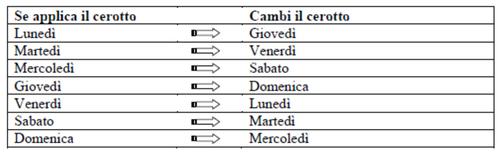
- The following table shows when to change the patch:
Where to apply the patch
Adults
- Apply the patch to a flat part of the trunk or arm (not on a joint).
Children
- Always apply the patch to the upper back to make it difficult for the child to touch or remove it.
- However, check frequently that the patch remains firmly attached to the skin.
- It is important that the child does not remove the patch or put it in their mouth, as this would be life-threatening or even fatal.
- Observe the child carefully for 48 hours after:
- the first patch has been applied
- a patch with a higher dose has been applied
- The patch may take some time to reach its maximum effect. Therefore, the child may also need to use other pain relievers until the patch becomes effective. The doctor will discuss this with you.
Adults and children:
Do not apply the patch:
- To the same place twice in a row.
- To areas that move a lot (joints), irritated skin or with wounds.
- To areas with a lot of hair. Existing hair should not be shaved (razors irritate the skin), but cut with scissors as close to the skin as possible.
How to put on the patch
Step 1: Prepare the skin
- Make sure the skin is completely dry, clean and cool before applying the patch.
- If you need to clean the skin, use only cold water.
- Do not use soap or any other detergent, or creams, moisturizers, oils or talcum powder before applying the patch.
- Do not apply a patch immediately after a hot bath or shower.
Step 2: Open the sachet
- Each patch is sealed in its sachet.
- Gently tear or cut the edge of the sachet completely (if you use scissors, cut close to the sealed edge to avoid damaging the patch).
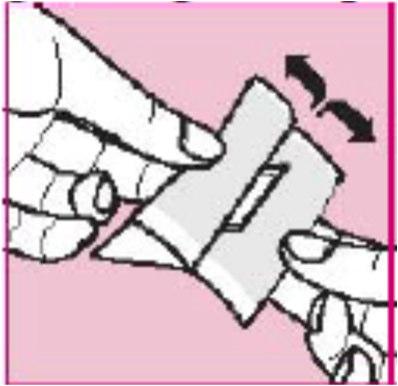
- Grasp both sides of the open sachet and pull them apart.
- Remove the patch and use it immediately.
- Keep the empty sachet to dispose of the used patch later.
- Use each patch only once.
- Do not remove the patch from the sachet until you are ready to use it.
- Inspect the patch to see if it is damaged.
- Do not use the patch if it is split, cut or appears damaged.
- Never split or cut the patch
Step 3: Peel and press
- Make sure the patch will be covered by comfortable clothing and not blocked under tight or elastic bandages.
- Carefully peel off one half of the shiny plastic backing starting from the center of the patch. Try not to touch the adhesive side of the patch.
- Press this adhesive part of the patch onto the skin.
- Remove the other half of the plastic backing and press the entire patch onto the skin with the palm of your hand.
- Hold the pressure for at least 30 seconds, making sure the patch sticks well, especially along the edges.
Step 4: Dispose of the patch
- As soon as you remove a patch, fold it firmly in half, so that the adhesive side sticks to itself.
- Put it back in the original sachet and dispose of the sachet according to the instructions of the pharmacist.
- Keep used patches out of the sight and reach of children, as even used patches contain some medicine, which can be dangerous and even fatal for children.
Step 5: Wash
- Always wash your hands using only running water after touching the patch.
Other information for using Fentalgon.
Daily activities when using the patch
- The patch is waterproof.
- You can shower or bathe while wearing the patch, but do not rub it.
- If your doctor allows it, you can exercise or play sports while wearing the patch.
- You can also swim while wearing the patch, but:
- do not use hot thermal whirlpools
- do not put tight or elastic bandages over the patch
- While wearing the patch, do not expose it to direct heat sources such as hot water bottles, thermal blankets, hot water bags, heated waterbeds, heat lamps or tanning beds. Do not sunbathe, take hot baths or saunas for long periods of time, otherwise the amount of medicine released from the patch may increase.
How long does it take for the patch to work?
- The first patch may take some time to reach its maximum effect.
- The doctor will provide you with other pain relievers for the first day or as needed
- After this period, the patch should help relieve pain continuously, so you can stop the other painkillers. However, the doctor may still prescribe you additional painkillers from time to time
How long will you have to use the patches?
- Fentalgon patches are indicated for long-term pain. The doctor will be able to tell you how long they expect the use of the patches to last.
If the pain gets worse
- If the pain suddenly gets worse after applying your last patch, check your patch. If it is not attached well or has come off, replace the patch (See also the paragraph “If a patch comes off”).
- If the pain gets worse over time while you are using these patches, the doctor may try a patch with a higher dose, or prescribe additional painkillers (or both).
- If increasing the patch dosage does not help, the doctor may decide to stop using the patches.
If you use too many patches or a patch with the wrong dosage
If you have applied too many patches or a patch with the wrong dosage, remove the patch and inform
your doctor immediately.
Signs of overdose include: difficulty breathing or shallow breathing, fatigue,
extreme drowsiness, inability to think clearly, walk or speak normally, and
feeling faint, dizzy or confused. An overdose can also cause a
brain disorder known as toxic leukoencephalopathy.
If you forget to change the patch
- If you forgot, change the patch as soon as you remember and note the day and time. Change the patch again after 3 days (72 hours)as usual.
- If it is very late to change the patch, contact your doctor as you may need additional pain relievers, but do notapply an extra patch.
If the patch comes off
- If a patch comes off before you need to change it, apply a new one immediately and note the day and time. Use a new part of skin on:
- trunk or arm
- upper back (in a child).
- Tell your doctor what happened and leave the patch in place for 3 days (72 hours)or as directed by your doctor, before changing the patch as usual.
- If the patches continue to fall off, talk to your doctor, pharmacist or nurse.
If you want to stop using the patches
Consult your doctor before stopping using these patches.
- If you have been using the patch for a while, your body may have become accustomed to it. Stopping abruptly may make you feel unwell.
- If you stop using the patches, do not start again without first consulting your doctor, as you may need a patch with a different dosage.
If you have any other questions about the use of this medicine, ask your doctor or pharmacist.
4. Possible side effects
Like all medicines, Fentalgon can cause side effects, although not everybody gets them.
manifest.
If you, or someone else, notices that the person using the patch shows any of the following
symptoms, remove the patch and call your doctor immediately, or go to the nearest hospital, because
they may need urgent medical attention.
- Unusual drowsiness, with slower or shallower breathing than expected. Follow the recommendations given above and keep the person who was using the patch as active as possible and make them talk. Very rarely these breathing difficulties can be life-threatening or even fatal, especially in people who have not
ever used strong opioid painkillers before (such as Fentalgon or morphine). (Uncommon, may
affect up to 1 in 100 people)
- Sudden redness of the face or throat, severe itching, redness or blistering of the skin. These may be signs of a serious allergic reaction. (frequency cannot be estimated from available clinical data)
- Convulsions (seizures). (Uncommon, may affect up to 1 in 100 people.)
- Decreased level of consciousness or loss of consciousness (Uncommon, may affect up to 1 in 100 people.)
The following side effects have also been reported
Very common (may affect more than 1 in 10 people)
- Nausea, vomiting, constipation
- Feeling sleepy (drowsiness)
- Feeling dizzy
- Headache
Common (may affect up to 1 in 10 people)
- Allergic reaction
- Loss of appetite
- Difficulty sleeping
- Depression
- Anxiety or confusion
- Seeing things, hearing sounds or smelling odors that are not there (hallucinations)
- Tremors or muscle spasms
- Unusual skin sensations, such as tingling or numbness (paresthesia)
- Feeling of spinning (vertigo)
- Fast or irregular heartbeat (palpitations, tachycardia)
- High blood pressure
- Shortness of breath (dyspnea)
- Diarrhea
- Dry mouth
- Stomach pain or indigestion
- Excessive sweating
- Itching, rash or redness of the skin
- Inability to urinate or completely empty the bladder
- Feeling tired, weak or generally unwell
- Feeling cold
- Swelling of the hands, ankles or feet (peripheral edema)
Uncommon (may affect up to 1 in 100 people)
- Feeling agitated or disoriented
- Feeling extremely happy (euphoria)
- Decreased sensitivity, especially to the skin (hypoesthesia)
- Memory loss
- Blurred vision
- Slow heartbeat (bradycardia) or low blood pressure
- Bluish discoloration of the skin caused by a lack of oxygen in the blood (cyanosis)
- Loss of bowel contractions (ileus)
- Itchy rash (eczema), allergic reaction or other skin disorder where the patch is located
- Flu-like illness
- Feeling of change in body temperature
- Fever
- Muscle spasm
- Difficulty achieving or maintaining an erection (impotence) or problems during sexual intercourse
- Difficulty swallowing
Rare side effects (may affect up to 1 in 1,000 people)
- Constriction of the pupils (miosis)
- Temporary pauses in breathing (apnea)
Frequency not known (frequency cannot be estimated from available data)
- Lack of male sex hormones (androgen deficiency)
- Delirium (symptoms may include a combination of agitation, restlessness, disorientation, confusion, fear, seeing or hearing things that are not there, sleep disturbances, nightmares)
- You may become dependent on Fentalgon (see section 2).
You may notice a rash, redness or mild itching of the skin at the patch site.
These problems are usually mild and disappear after you remove the patch. If
this does not happen, or if the patch severely irritates the skin, tell your doctor.
Repeated use of the patches may make the medicine less effective (you get used to it or may become
more sensitive to pain), or you may become dependent on it.
If you switch to Fentalgon from a different painkiller or if you suddenly stop using
Fentalgon, you may experience withdrawal effects, such as vomiting, nausea, diarrhea, anxiety or chills.
Tell your doctor if you experience any of these effects.
Withdrawal effects have also been reported in newborns after mothers have used Fentalgon
for a long time during pregnancy.
An overdose can cause: signs of overdose include difficulty breathing or
shallow breathing, fatigue, extreme drowsiness, inability to think clearly, to
walk or talk normally and feeling faint, dizzy or confused. An
overdose can also cause a brain disorder known as toxic leukoencephalopathy
Reporting of side effects
If you get any side effects, talk to your doctor, pharmacist or nurse. You can also report side effects
directly through the national reporting system at
https://www.aifa.gov.it/content/segnalazioni-reazioni-avverse.
By reporting side effects you can help provide more information on the safety of
this medicine.
5. How to store Fentalgon
Where to store the patches
Keep all patches (used and unused) out of sight and reach of children.
Store this medicine in a safe and secure place, inaccessible to other people. Accidental or intentional
intake of this medicine by other people to whom it has not been prescribed can cause serious harm and be fatal.
For how long to store Fentalgon
Do not use Fentalgon after the expiry date stated on the box and the sachet. The expiry date refers to the last day of that month. If the patches are expired, they must be taken to a pharmacy.
How to dispose of used patches or patches you no longer use
A used or unused patch that accidentally sticks to another person, especially a child, can be fatal.
Used patches must be firmly folded in half so that the adhesive part of the patch sticks to itself. Subsequently, they must be stored securely in their original sachet and kept out of sight and reach of other people, especially children, until their safe disposal. Ask your pharmacist how to dispose of medicines you no longer use.
Do not dispose of any medicine in the wastewater and household waste. These measures will help to protect the environment.
6. Package Contents and Other Information
What Fentalgon contains
- The active ingredient is fentanyl. Fentalgon 25 micrograms/hour: One transdermal patch (15 cm of active surface) contains 4.8 mg of fentanyl, which corresponds to a release rate of 25 micrograms of fentanyl per hour.
Fentalgon 50 micrograms/hour: One transdermal patch (30 cm of active surface) contains
9.6 mg of fentanyl, which corresponds to a release rate of 50 micrograms of fentanyl
per hour.
Fentalgon 75 micrograms/hour: One transdermal patch (45 cm of active surface) contains
14.4 mg of fentanyl, which corresponds to a release rate of 75 micrograms of fentanyl
per hour.
Fentalgon 100 micrograms/hour: One transdermal patch (60 cm of active surface)
contains 19.2 mg of fentanyl, which corresponds to a release rate of 100 micrograms of
fentanil per hour.
- Other ingredients are: Adhesive layer: Poly(2-ethylhexyl acrylate, vinyl acetate) (50:50), poly[2-ethylhexyl acrylate-co-methyl acrylate-co-acrylic acid-co(2,3-epoxypropyl) methacrylate] (61.5:33:5.5:0.02), dodecan-1-ol Protective film: silicone-treated polyester film Covering layer: polyester/ethylenevinyl acetate film Printing ink
Description of Fentalgon and package contents
Fentalgon 25-50-75-100 micrograms/hour is a thin, transparent transdermal patch with
rounded corners and the following printing:
fentanyl 25 µg/h
fentanyl 50 µg/h
fentanyl 75 µg/h
fentanyl 100 µg/h
Fentalgon 25- 50- 75 -100 micrograms/hour is available in packs of 3 transdermal patches.
The following strengths are available: Fentalgon 25 micrograms/hour, Fentalgon 50 micrograms/hour,
Fentalgon 75 micrograms/hour and Fentalgon 100 micrograms/hour
Not all pack sizes may be marketed.
Marketing Authorisation Holder
Italfarmaco S.p.A.
Viale Fulvio Testi, 330
20126 Milan
Manufacturer
Helm AG
Nordkanalstr. 28
D-20097 Hamburg
Germany
This medicinal product is authorised in the Member States of the European Economic Area under the
following denominations:
Italy:
Fentalgon 25 micrograms/ hour transdermal patch
Fentalgon 50 micrograms/ hour transdermal patch
Fentalgon 75 micrograms/ hour transdermal patch
Fentalgon 100 micrograms/ hour transdermal patch

Nie jesteś pewien, czy ten lek jest odpowiedni dla ciebie?
Omów swoje objawy i leczenie z lekarzem online.

Zacząłeś przyjmować lek i masz pytania?
Omów swoje objawy i leczenie z lekarzem online.
- Kraj rejestracji
- Postać farmaceutycznaTransdermal patch, 25 mcg/h
- Kod ATCN02AB03
- Substancja czynna
- Wymaga receptyTak
- Producent
- Te treści mają charakter wyłącznie informacyjny i nie zastępują konsultacji lekarskiej.
- Zamienniki FENTALGONPostać farmaceutyczna: Sublingual tablet, 100 MCGSubstancja czynna: fentanylProducent: GRUNENTHAL ITALIA S.R.L.Wymaga receptyPostać farmaceutyczna: Orally disintegrating tablet, 200 MICROGRAMSSubstancja czynna: fentanylProducent: TEVA ITALIA S.R.L.Wymaga receptyPostać farmaceutyczna: Transdermal patch, 25MCG/ORASubstancja czynna: fentanylWymaga recepty
Odpowiedniki FENTALGON w innych krajach
Leki z tą samą substancją czynną dostępne w innych krajach.
Odpowiednik FENTALGON w Hiszpania
Odpowiednik FENTALGON w Polska
Odpowiednik FENTALGON w Ukraina
Lekarze online w sprawie FENTALGON
Omów stosowanie FENTALGON, bezpieczeństwo i ocenę zasadności recepty zgodnie z obowiązującymi przepisami.









Uzyskaj receptę na FENTALGON online
Wypełnij 2-minutowy formularz
Opisz swoje objawy, historię choroby i lek, o który prosisz.
Wybierz lekarza lub pozwól nam przydzielić
Wybierz specjalistę lub dopasujemy Cię do najbliższego dostępnego lekarza.
Lekarz analizuje Twój przypadek
Zazwyczaj w ciągu 30 minut. Może zadawać dodatkowe pytania przez czat.
Odbierz w dowolnej aptece
Recepta elektroniczna wysłana na Twój e-mail — ważna w całej Polsce.
Często zadawane pytania
FENTALGON wymaga recepty w Włochy. Możesz skonsultować się z lekarzem online, aby sprawdzić, czy ten lek może być odpowiedni w Twojej sytuacji.
Substancją czynną w FENTALGON jest fentanyl. Informacja ta pomaga rozpoznać leki o tym samym składzie, ale pod różnymi nazwami handlowymi.
FENTALGON jest produkowany przez ITALFARMACO S.P.A.. Nazwy handlowe i opakowania mogą się różnić w zależności od dystrybutora.
Lekarze, tacy jak Lekarze rodzinni, Psychiatrzy, Dermatolodzy, Kardiolodzy, Endokrynolodzy, Gastroenterolodzy, Pulmonolodzy, Nefrolodzy, Reumatolodzy, Hematolodzy, Zakaźnicy, Alergolodzy, Geriatrzy, Pediatrzy, Onkolodzy, mogą ocenić, czy stosowanie FENTALGON jest odpowiednie w Twoim przypadku, w zależności od sytuacji klinicznej i lokalnych przepisów. Możesz umówić konsultację online, aby omówić objawy i możliwe dalsze kroki.
Polska posiada dobrze rozwiniętą infrastrukturę ochrony zdrowia w dużych miastach, takich jak Warszawa, Kraków, Wrocław i Gdańsk. Apteki są łatwo dostępne i działają zgodnie z obowiązującymi przepisami, zapewniając dostęp do leków na receptę.
Możesz kupić FENTALGON w Warszawie, Krakowie, Wrocławiu lub Gdańsku w każdej aptece, posiadając ważną receptę.
Aby uzyskać receptę, możesz skorzystać z Oladoctor:
Inne leki zawierające tę samą substancję czynną (fentanyl) to m.in. ABSTRAL, AKTIQ, ALJEDON. Mogą one różnić się nazwą handlową lub postacią, ale zawierają ten sam składnik terapeutyczny. Przed zmianą lub rozpoczęciem nowego leku skonsultuj się z lekarzem.
