



FENISTIL 1 mg Tabletka Powlekana

Ocena recepty online
Lekarz przeanalizuje Twój przypadek i zdecyduje, czy wystawienie recepty jest medycznie uzasadnione.

Porozmawiaj z lekarzem o tym leku
Omów swoje objawy i opcje leczenia podczas szybkiej konsultacji online.



Jak stosować FENISTIL
Treść ulotki
Fenistil 1 mg/ml oral drops, solution, 1 mg coated tablets
dimetindene maleate
Read this leaflet carefully before taking this medicine as it contains important
information for you.
Always take this medicine exactly as described in this leaflet or as your doctor or pharmacist
has told you to.
- Keep this leaflet. You may need to read it again.
- If you want more information or advice, ask your pharmacist.
- If any side effects occur, including those not listed in this leaflet, tell your doctor or pharmacist. See section 4.
- See a doctor if you do not feel better or if your symptoms worsen after a short period of treatment.
Contents of this leaflet:
- 1. What Fenistil is and what it is used for
- 2. What you need to know before you take Fenistil
- 3. How to take Fenistil
- 4. Possible side effects
- 5. How to store Fenistil
- 6. Contents of the pack and other information
1. What is Fenistil and what is it used for
Fenistil contains the active ingredient dimetindene maleate which belongs to the group of medicines known
as “antihistamines” and is used for allergies and for itching of various origins.
Fenistil is indicated for the treatment:
- of itching of various origins
- of allergies caused by medicines and foods.
Consult your doctor if you do not feel better or if you feel worse after a short period of treatment.
2. What you need to know before taking Fenistil
Do not take Fenistil
- if you are allergic to dimetindene maleate or any of the other ingredients of this medicine (listed in section 6)
- if you have a disease characterized by high pressure inside the eye (glaucoma)
- if you have an enlargement of the prostate gland (prostatic hypertrophy)
- if you have problems with the bladder (obstructions of the bladder neck)
- if you have a narrowing of a section of the stomach or intestine (for example of the pylorus or duodenum)
- if you have a narrowing of a section of the urinary or genital tract
- if you have asthma
- if you have a lung disease characterized by obstruction of the bronchi (chronic obstructive bronchopneumopathy)
- if you have problems with the heart and blood vessels
- if you have high blood pressure
- if you have an overactive thyroid gland (hyperthyroidism)
- if you have epilepsy
- if you are using other medicines such as for the treatment of depression and Parkinson's disease (monoamine oxidase inhibitors) (see section “Other medicines and Fenistil”).
Fenistil should not be used in newborns less than 1 month old, especially if premature.
Warnings and precautions
Talk to your doctor or pharmacist before taking Fenistil.
Do not exceed the recommended dose and use only for short periods of treatment.
Elderly patients should consult a doctor before taking Fenistil because they are more prone to side effects
such as agitation and fatigue.
Pay particular attention:
- if you have severe liver problems
- to sunlight or sunlamps. Do not expose yourself to sunlight or sunlamps after taking Fenistil, because antihistamines can cause skin spots or redness
Children
Fenistil should not be used in newborns less than 1 month old, especially if premature.
Fenistil should be used with caution in children under 1 year of age, because the sedative effect
of the antihistamine may be associated with respiratory arrest during sleep.
Fenistil should be used in children under 12 years of age only when absolutely necessary and after
consulting a doctor.
In younger children, antihistamines such as Fenistil can cause excitability.
Other medicines and Fenistil
Tell your doctor or pharmacist if you are taking, have recently taken or might take any other
medicines, including those available without a prescription.
Tell your doctor if you are taking:
- medicines of the class of monoamine oxidase inhibitors, used for example for the treatment of depression and Parkinson's disease
- tranquilizers or anxiolytics (medicines used for anxiety)
- opioid analgesics (medicines to reduce pain)
- anticonvulsants (medicines used for epilepsy)
- antihistamines (medicines for allergies)
- antiemetics (medicines used to prevent and suppress vomiting)
- antipsychotics (medicines used in severe psychiatric disorders)
- hypnotics (medicines that induce sleep)
- scopolamine (medicine used to treat conditions characterized by painful cramps in the stomach, intestines, urinary tract or genitals)
- tricyclic antidepressants (medicines used for the treatment of depression)
- bronchodilators (medicines used for the treatment of asthma and bronchopulmonary diseases)
- gastrointestinal antispasmodics (medicines used for abdominal and stomach spasms)
- mydriatics (medicines used to dilate the pupils)
- urological antimuscarinics (medicines used to treat overactive bladder)
- procarbazine (medicine used for the treatment of some tumors e.g. Hodgkin's lymphoma)
- antibiotics. The use of antihistamines can mask the early signs of ear damage from some antibiotics.
- oral anticoagulants (medicines used to reduce blood clotting taken by mouth).
Fenistil with alcohol
Do not drink alcohol during treatment with Fenistil because it can cause side effects that may
even be life-threatening.
Pregnancy and breastfeeding
If you are pregnant, suspect you may be pregnant, or are planning to become pregnant, or if you are breastfeeding,
ask your doctor or pharmacist for advice before taking this medicine.
Pregnancy
Pregnant women should consult a doctor before taking this medicine.
Breastfeeding
Fenistil is not recommended during breastfeeding.
Driving and using machines
Fenistil can cause drowsiness and slow down reflexes, therefore it may reduce your ability to drive
vehicles or use machinery.
Fenistil 1 mg coated tablets contains lactose, sucrose and wheat starch.
Fenistil 1 mg coated tablets contains lactose and sucrose. If your doctor has diagnosed you with an
intolerance to certain sugars, contact him before taking this medicine.
Fenistil 1 mg coated tablets contains wheat starch. The wheat starch in this medicine
contains only a very small amount of gluten) it is very unlikely to cause you problems if you are
coeliac.
One tablet contains no more than 0.2 micrograms of gluten.
If you are allergic to wheat (a condition different from coeliac disease) do not take this medicine.
Fenistil 1 mg/ml oral drops, solution contains benzoic acid and propylene glycol.
This medicine contains 2 mg of benzoic acid per dose (40 drops) equivalent to 1 mg/ml.
This medicine contains 200 mg of propylene glycol per dose (40 drops) equivalent to 100 mg/ml.
If you suffer from liver or kidney disease, do not take this medicine unless otherwise recommended
by your doctor. Your doctor may perform further checks during therapy.
Fenistil 1 mg/ml oral drops, solutioncontains less than 1 mmol (23 mg) of sodium per dose (40 drops),
i.e. essentially ‘sodium-free’.
3. How to take Fenistil
Take this medicine following exactly as indicated in this leaflet or as instructed by your doctor or pharmacist. If you have any doubts, consult your doctor or pharmacist.
Do not exceed the recommended doses. Take Fenistil only for short periods of treatment. Also, pay
particular attention to determining the dose in children and the elderly.
Consult your doctor if you do not feel better or if you feel worse after a short period of treatment, if the
disorder recurs, or if you notice any recent change in its characteristics.
Use in adults and children over 12 years of age
The recommended daily dose is 3-6 mg of Fenistil per day, divided into 3 administrations, i.e.:
- 20-40 drops 3 times a day or
- 1-2 coated tablets 3 times a day.
The coated tablets must be swallowed whole with some water or other liquid.
If you suffer from drowsiness, it is recommended to take 2 coated tablets (or alternatively 40 drops) in the evening
before going to bed and 1 coated tablet (or alternatively 20 drops) with breakfast.
Use in children under 12 years of age
Use only after consulting a doctor.
The recommended daily dose is 0.1 mg per kilogram of body weight per day, which corresponds to 2
drops per kilogram of body weight per day, divided into three administrations per day.
Do not expose Fenistil oral drops to high temperatures: if you need to administer Fenistil oral drops to a
small child, add the drops to the bottle only when the contents are lukewarm.
If the child is able to eat with a spoon, put the drops undiluted in a teaspoon. The
drops have a pleasant taste.
Use in the elderly
The dose of Fenistil should be carefully determined in the elderly (over 65 years of age) because the safety and
efficacy of Fenistil have not been accurately evaluated.
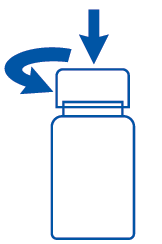
How to open and close the Fenistil oral drops bottle
OPENING:
Turn counterclockwise
while holding down the cap
CLOSING:
Screw the cap on tightly
turning it clockwise
If you take more Fenistil than you should
In case of accidental ingestion of an excessive dose of Fenistil, immediately inform your doctor or
go to the nearest hospital.
If you have taken an excessive dose of Fenistil, you may experience: drowsiness (especially in adults),
stimulation of the central nervous system (especially in children) with excitement, loss of
coordination of movements (ataxia), hallucinations, tremors, convulsions, muscle contractions, dilation
of the pupil of the eye (mydriasis), dry mouth, flushing of the face, urinary retention, fever. You may
also experience low blood pressure.
The doctor will treat the ingestion of an excessive dose of Fenistil based on your condition.
If you forget to take Fenistil
Do not take a double dose to make up for a missed dose.
If you stop taking Fenistil
If you have any doubts about the use of this medicine, consult your doctor or pharmacist.
4. Possible side effects
Like all medicines, this medicine can cause side effects, although not everybody gets them.
Very common side effects (may affect more than 1 in 10 people)
- fatigue
Common side effects (may affect up to 1 in 10 people)
- drowsiness
- nervousness
Rare side effects (may affect up to 1 in 1,000 people)
- agitation
- headache
- dizziness
- stomach and/or intestinal disorders
- nausea
- dryness of the mouth and throat
Very rare side effects (may affect up to 1 in 10,000 people)
- skin rashes
- appearance of spots or redness on the skin following exposure to sunlight or sunlamps
- severe allergic reactions even after the first intake, including swelling (edema) of the face, throat and difficulty breathing (dyspnea)
- signs of excitation such as euphoria, tremor, insomnia, convulsions
- sedation
- weakness (asthenia)
- coordination disorders
- vision disorders
- dryness of the nose
- feeling of tightness in the chest and difficulty breathing due to a reduction and thickening of bronchial secretions
- loss of appetite (anorexia)
- vomiting
- diarrhea or constipation
- difficulty urinating and urinary retention
Side effects with unknown frequency (frequency cannot be estimated from available data)
- edema (swelling from fluid accumulation)
- skin eruption
- muscle spasms
Reporting of side effects
If you get any side effects, even those not listed in this leaflet, tell your doctor or pharmacist. You can also report side effects directly through the national reporting system at https://www.aifa.gov.it/content/segnalazioni-reazioni-avverse.
By reporting side effects you can help provide more information on the safety of this medicine.
5. How to store Fenistil
Keep this medicine out of the sight and reach of children.
Do not use this medicine after the expiry date which is stated on the packaging after Expiry. The expiry
date refers to the last day of that month.
Do not dispose of any medicine in wastewater or household waste. Ask your pharmacist how to dispose of
medicines you no longer use. This will help protect the environment.
Fenistil 1 mg coated tablets
Store in the original packaging.
Fenistil 1 mg/ml oral drops, solution
Store at a temperature below 25°C.
Keep the bottle in the original packaging to protect the medicine from light.
The medicine, once opened, can be used until the expiry date stated on the packaging.
It is important to always have the information about the medicine available, therefore keep both the box
6. Contents of the pack and other information
What contains Fenistil
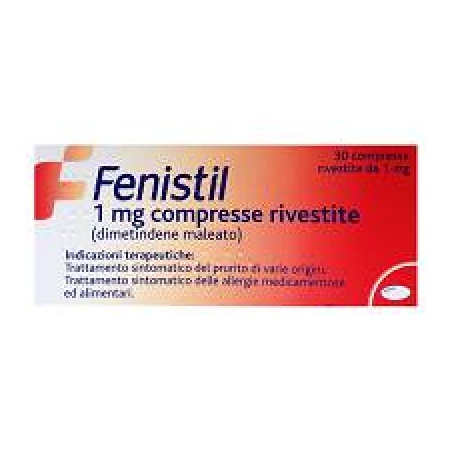
Fenistil 1 mg coated tablets
- The active ingredient is dimetindene maleate. Each tablet contains 1 mg of dimetindene maleate (equivalent to 0.72 mg of dimetindene).
- The other ingredients are lactose, wheat starch, magnesium stearate, talc, sucrose, calcium carbonate, gum arabic, titanium dioxide, macrogol.
Fenistil 1 mg/ml oral drops, solution
- The active ingredient is dimetindene maleate. 1ml of solution contains 1 mg of dimetindene maleate.
- The other ingredients are disodium phosphate dodecahydrate, propylene glycol, benzoic acid, disodium edetate, citric acid monohydrate, sodium saccharin, purified water.
Description of the appearance of Fenistil and contents of the pack
Fenistil 1 mg coated tablets
Each pack of Fenistil 1 mg coated tablets contains 30 coated tablets, packaged in blisters.
Fenistil 1 mg/ml oral drops, solution
Each pack of Fenistil 1 mg/ml oral drops, solution contains a 20 ml bottle of solution, equipped
with a dropper.
Marketing Authorisation Holder
GlaxoSmithKline Consumer Healthcare S.p.A. Via Zambeletti s.n.c. Baranzate (MI)
Manufacturer
Fenistil 1 mg/ml oral drops, solution
Novartis Farma S.p.A.
Via Provinciale Schito n. 131
Torre Annunziata (NA)
Or
GlaxoSmithKline Consumer Healthcare GmbH & Co. KG,
Barthstraße 4, 80339
Munich (Germany)
Fenistil 1 mg coated tablets
Novartis Farmacéutica SA
Barberà del Vallès
Barcelona - Spain
or
Recipharm Uppsala AB
Björkgatan 30,
Uppsala - Sweden
Fenistil 0,1% gel
dimetindene maleate
Read this leaflet carefully before using this medicine as it contains important
information for you.
Always use this medicine exactly as described in this leaflet or as your doctor or pharmacist has told you.
- Keep this leaflet. You may need to read it again.
- If you would like more information or advice, ask your pharmacist.
- If any side effects occur, including those not listed in this leaflet, tell your doctor or pharmacist. See section 4.
- See a doctor if you do not feel better or if your symptoms worsen after 5-7 days.
Contents of this leaflet:
- 1. What Fenistil gel is and what it is used for
- 2. What you need to know before using Fenistil gel
- 3. How to use Fenistil gel
- 4. Possible side effects
- 5. How to store Fenistil gel
- 6. Contents of the pack and other information
1. What is Fenistil gel and what it is used for
Fenistil gel contains the active ingredient dimetindene maleate which belongs to the group of medicines
known as “antihistamines” and is used against itching of various origins and local inflammations.
Fenistil gel is indicated for the local treatment of symptoms:
- of skin inflammations with itching (pruritic dermatitis)
- of sunburn
- of insect bites.
Consult your doctor if you do not feel better or if you feel worse after 5-7 days.
2. What you need to know before using Fenistil gel
Do not use Fenistil gel
- if you are allergic to dimetindene maleate or any of the other ingredients of this medicine (listed in section 6)
- with an occlusive dressing, i.e. a bandage that does not allow air to pass through
Warnings and precautions
Consult your doctor or pharmacist before using Fenistil gel.
Take special care:
- do not apply Fenistil gel to large areas of skin, especially on damaged and inflamed skin, on areas with blisters, on open wounds and on surfaces that produce serum or pus
- avoid getting Fenistil gel in contact with your eyes
- avoid prolonged exposure to sunlight of the treated areas
- the use, especially if for long periods of time, of medicines for local use can cause skin reactions. If this occurs, stop treatment with Fenistil gel and consult your doctor who will give you suitable therapy.
Children
Fenistil gel should be used in children under 2 years of age only after consulting a doctor.
In infants and young children, do not use Fenistil gel on large areas of skin and especially on areas with
damaged and inflamed skin.
Other medicines and Fenistil gel
Tell your doctor or pharmacist if you are taking, have recently taken or might take any other
medicines, including those available without a prescription.
Fenistil gel is absorbed by the body to a limited extent, therefore interactions with other medicines are
very unlikely.
Pregnancy and breastfeeding
If you are pregnant, suspect you are pregnant or are planning a pregnancy, or if you are breastfeeding, ask your
doctor or pharmacist for advice before using this medicine.
Fenistil gel can be used during pregnancy and breastfeeding only after consulting a doctor
in cases of actual need and only under the direct control of the doctor.
Do not apply Fenistil gel to large areas of skin, especially if inflamed and damaged, and to the breast during
breastfeeding.
Driving and operating machinery
Fenistil gel does not or negligibly alters the ability to drive vehicles and operate machinery.
Fenistil gel contains propylene glycol and benzalkonium chloride
Fenistil gel contains 300 mg of propylene glycol per dose (2 g of gel) equivalent to 150 mg/g of gel which may
cause skin irritation. Fenistil gel contains 0.1 mg of benzalkonium chloride per dose (2 g of gel)
equivalent to 0.05 mg/g of gel which may irritate the skin..
If you are breastfeeding, do not apply this medicine to the breast as the baby may ingest it with its
milk.
3. How to use Fenistil gel
Use this medicine following exactly the instructions in this leaflet or as directed by your doctor or pharmacist. If you have any doubts, ask your doctor or pharmacist.
Be careful not to exceed the indicated doses without your doctor's advice. Use Fenistil gel only for short periods of treatment (not more than 5-7 days).
- Apply a small amount of Fenistil gel to the affected area, 2-3 times a day (every 8-12 hours), depending on the intensity of the itching and/or other inflammatory symptom.
- Massage gently to promote penetration of the gel in depth.
If you use more Fenistil gel than you should
In case of accidental ingestion or use of an excessive dose of Fenistil gel, immediately inform your doctor or go to the nearest hospital.
If you have accidentally ingested Fenistil gel, you may experience: drowsiness (especially in adults),
stimulation of the central nervous system (especially in children and the elderly) with excitement, loss of coordination of movements (ataxia), hallucinations, muscle contractions, dilation of the pupil of the eye (mydriasis), dry mouth, flushing of the face, urinary retention, fever. You may also experience low blood pressure.
The doctor will treat the ingestion of an excessive dose of Fenistil gel based on your condition.
If you forget to use Fenistil gel
Do not use a double dose to make up for a missed dose.
If you stop using Fenistil gel
If you have any doubts about the use of this medicine, ask your doctor or pharmacist.
4. Possible side effects
Like all medicines, this medicine can cause side effects, although not everybody gets them.
Stop treatment and consult your doctor if you experience any of the following side effects during
treatment with Fenistil gel:
Uncommon side effects (may affect up to 1 in 100 people)
- dry skin
- burning sensation on the skin.
Very rare side effects (may affect up to 1 in 10,000 people)
- skin inflammation of an allergic nature (allergic dermatitis).
Side effects with unknown frequency (frequency cannot be estimated based on available data)
- allergic skin reactions.
Reporting of side effects
If you get any side effects, even those not listed in this leaflet, please tell your
doctor or pharmacist. You can also report side effects directly through the national reporting system at
https://www.aifa.gov.it/content/segnalazioni-reazioni-avverse.
By reporting side effects you can help provide more information on the safety of
this medicine.
5. How to store Fenistil gel
Keep this medicine out of the sight and reach of children.
Do not use this medicine after the expiry date which is reported on the packaging after Expiry. The expiry
date refers to the last day of that month.
Store at a temperature below 25°C.
Do not dispose of any medicine in wastewater or household waste. Ask your pharmacist how to eliminate
medicines that you no longer use. This will help protect the environment.
It is important to always have the information about the medicine available, therefore keep both the box
6. Contents of the pack and other information
What Fenistil gel contains
- The active ingredient is dimetindene maleate. 100 g of gel contains 100 mg of dimetindene maleate (equivalent to 71.6 mg of dimetindene).
- The other components are benzalkonium chloride, sodium edetate, carbopol 974 P, sodium hydroxide, propylene glycol, purified water.
Description of the appearance of Fenistil gel and contents of the pack
Each pack contains a tube of 30 g of gel for topical use.
Marketing Authorisation Holder
GlaxoSmithKline Consumer Healthcare S.p.A. Via Zambeletti s.n.c. Baranzate (MI)
Manufacturer
Novartis Farma S.p.A.
Via Provinciale Schito n. 131
Torre Annunziata (NA)
or
GlaxoSmithKline Consumer Healthcare GmbH & Co. KG,
Barthstraße 4, 80339
Munich (Germany)

Nie jesteś pewien, czy ten lek jest odpowiedni dla ciebie?
Omów swoje objawy i leczenie z lekarzem online.

Zacząłeś przyjmować lek i masz pytania?
Omów swoje objawy i leczenie z lekarzem online.
- Kraj rejestracji
- Postać farmaceutycznaCoated tablet, 1 MG
- Kod ATCR06AB03
- Substancja czynna
- Wymaga receptyNie
- Producent
- Te treści mają charakter wyłącznie informacyjny i nie zastępują konsultacji lekarskiej.
- Zamienniki FENISTILPostać farmaceutyczna: Extended-release tablet, 6 MGSubstancja czynna: dexchlorpheniramineProducent: BAYER S.P.A.Bez receptyPostać farmaceutyczna: Injectable solution, 10 MG/1 MLSubstancja czynna: chlorphenamineProducent: BAYER S.P.A.Wymaga receptyPostać farmaceutyczna: Film-coated tablet, 5 MGSubstancja czynna: desloratadineProducent: N.V. ORGANONWymaga recepty
Odpowiedniki FENISTIL w innych krajach
Leki z tą samą substancją czynną dostępne w innych krajach.
Odpowiednik FENISTIL w Polska
Odpowiednik FENISTIL w Ukraina
Odpowiednik FENISTIL w Hiszpania
Lekarze online w sprawie FENISTIL
Omów stosowanie FENISTIL, bezpieczeństwo i ocenę zasadności recepty zgodnie z obowiązującymi przepisami.









Uzyskaj receptę na FENISTIL online
Wypełnij 2-minutowy formularz
Opisz swoje objawy, historię choroby i lek, o który prosisz.
Wybierz lekarza lub pozwól nam przydzielić
Wybierz specjalistę lub dopasujemy Cię do najbliższego dostępnego lekarza.
Lekarz analizuje Twój przypadek
Zazwyczaj w ciągu 30 minut. Może zadawać dodatkowe pytania przez czat.
Odbierz w dowolnej aptece
Recepta elektroniczna wysłana na Twój e-mail — ważna w całej Polsce.
Często zadawane pytania
FENISTIL nie wymaga recepty w Włochy. Możesz skonsultować się z lekarzem online, aby sprawdzić, czy ten lek może być odpowiedni w Twojej sytuacji.
Substancją czynną w FENISTIL jest dimetindene. Informacja ta pomaga rozpoznać leki o tym samym składzie, ale pod różnymi nazwami handlowymi.
FENISTIL jest produkowany przez HALEON ITALY S.R.L.. Nazwy handlowe i opakowania mogą się różnić w zależności od dystrybutora.
Lekarze, tacy jak Lekarze rodzinni, Psychiatrzy, Dermatolodzy, Kardiolodzy, Endokrynolodzy, Gastroenterolodzy, Pulmonolodzy, Nefrolodzy, Reumatolodzy, Hematolodzy, Zakaźnicy, Alergolodzy, Geriatrzy, Pediatrzy, Onkolodzy, mogą ocenić, czy stosowanie FENISTIL jest odpowiednie w Twoim przypadku, w zależności od sytuacji klinicznej i lokalnych przepisów. Możesz umówić konsultację online, aby omówić objawy i możliwe dalsze kroki.
Polska posiada dobrze rozwiniętą infrastrukturę ochrony zdrowia w dużych miastach, takich jak Warszawa, Kraków, Wrocław i Gdańsk. Apteki są łatwo dostępne i działają zgodnie z obowiązującymi przepisami, zapewniając dostęp do leków na receptę.
Możesz kupić FENISTIL w Warszawie, Krakowie, Wrocławiu lub Gdańsku w każdej aptece, posiadając ważną receptę.
Aby uzyskać receptę, możesz skorzystać z Oladoctor:
Inne leki zawierające tę samą substancję czynną (dimetindene) to m.in. POLARAMIN, TRIMETON, AERIUS. Mogą one różnić się nazwą handlową lub postacią, ale zawierają ten sam składnik terapeutyczny. Przed zmianą lub rozpoczęciem nowego leku skonsultuj się z lekarzem.
