



EPORATIO 1.000 IU/0.5 ML Roztwór do wstrzykiwań

Ocena recepty online
Lekarz przeanalizuje Twój przypadek i zdecyduje, czy wystawienie recepty jest medycznie uzasadnione.

Porozmawiaj z lekarzem o tym leku
Omów swoje objawy i opcje leczenia podczas szybkiej konsultacji online.



Jak stosować EPORATIO
Treść ulotki
- Eporatio 1,000 IU/0.5 ml injectable solution in pre-filled syringe, 2,000 IU/0.5 ml injectable solution in pre-filled syringe, 3,000 IU/0.5 ml injectable solution in pre-filled syringe, 4,000 IU/0.5 ml injectable solution in pre-filled syringe, 5,000 IU/0.5 ml injectable solution in pre-filled syringe, 10,000 IU/1 ml injectable solution in pre-filled syringe, 20,000 IU/1 ml injectable solution in pre-filled syringe
- What is Eporatio and what is it used for
- What you need to know before using Eporatio
- How to use Eporatio
- Possible side effects
- How to store Eporatio
- Package contents and other information
- Information for self-injecting the medicine
- Information for self-injecting the medicine
- Information for self-injecting the medicine
Eporatio 1,000 IU/0.5 ml injectable solution in pre-filled syringe, 2,000 IU/0.5 ml injectable solution in pre-filled syringe, 3,000 IU/0.5 ml injectable solution in pre-filled syringe, 4,000 IU/0.5 ml injectable solution in pre-filled syringe, 5,000 IU/0.5 ml injectable solution in pre-filled syringe, 10,000 IU/1 ml injectable solution in pre-filled syringe, 20,000 IU/1 ml injectable solution in pre-filled syringe
Eporatio 30,000 IU/1 ml injectable solution in pre-filled syringe
epoetin theta
Read this leaflet carefully before you use this medicine as it contains important information for you.
- Keep this leaflet. You may need to read it again.
- If you have any questions, ask your doctor, pharmacist or nurse.
- This medicine has been prescribed for you only. Do not pass it on to others, even if their symptoms are the same as yours, as it could be harmful.
- If you get any side effects, even those not listed in this leaflet, tell your doctor, pharmacist or nurse. See section 4.
Contents of this leaflet
- 1. What Eporatio is and what it is used for
- 2. What you need to know before you use Eporatio
- 3. How to use Eporatio
- 4. Possible side effects
- 5. How to store Eporatio
- 6. Contents of the pack and other information
- 7. Information for self-injection of the medicine
1. What is Eporatio and what is it used for
What is Eporatio
Eporatio contains the active substance epoetin theta, which is almost identical to erythropoietin, a natural hormone produced by the body. Epoetin theta is a protein produced using biotechnology.
It acts in exactly the same way as erythropoietin. Erythropoietin is produced by the kidneys and
stimulates the bone marrow to produce red blood cells. Red blood cells are very important for the
distribution of oxygen throughout the body.
What is Eporatio used for
Eporatio is used for the treatment of anemia accompanied by symptoms (for example
fatigue, weakness and shortness of breath). Anemia occurs when the blood does not contain
enough red blood cells. Treatment for anemia is administered to adult patients with
chronic renal insufficiency or to adult patients suffering from non-myeloid cancer (cancer that does not
originate in the bone marrow), treated at the same time with chemotherapy (medicines to treat
tumors).
2. What you need to know before using Eporatio
DO NOTuse Eporatio
- if you are allergic to epoetin theta, to other epoetins or to any of the other ingredients of this medicine (listed in section 6);
- if you suffer from high blood pressure that cannot be controlled.
Warnings and precautions
General
This medicine may not be suitable for the following patients. Consult your doctor if you belong to
one of these groups of patients:
- patients with liver problems,
- patients with pathological red blood cell mutations (homozygous sickle cell anemia).
Blood pressure must be carefully monitored before and during treatment with
this medicine. If your blood pressure increases, your doctor will prescribe medicines to
reduce it. If you are already taking medicines for blood pressure, your doctor may increase your dose.
It may also be necessary to reduce the dose of Eporatio or interrupt treatment with Eporatio for
a short period of time.
If you experience headache, especially a sudden, throbbing headache similar to migraine,
confusion, speech disturbances, unstable gait, seizures or convulsions, inform your
doctor immediately. These may in fact be signs of a serious increase in blood
pressure, even if the pressure is usually normal or low, and must be treated immediately.
Your doctor will perform regular blood tests to check the various components of the blood and their
levels. In addition, the iron level will be checked both before and during treatment with this
medicine. If the iron level is too low, your doctor may also prescribe an iron supplement.
If you experience fatigue and weakness, or shortness of breath, you should consult your doctor. These
symptoms may indicate that treatment with this medicine is ineffective. The doctor will investigate
any other causes of anemia and have you undergo blood and bone marrow tests.
The healthcare professional will always accurately record which product is being used. This makes it
possible to provide more information on the safety of medicines like this.
Healthy individuals should not use Eporatio. The use of this medicine by healthy individuals in fact
can excessively increase certain blood parameters and thus cause problems with the heart or blood
vessels that can be life-threatening.
Serious skin reactions, including Stevens-Johnson syndrome and toxic epidermal necrolysis, have been reported in association with epoetin treatment. Stevens-Johnson and toxic epidermal
necrolysis may initially appear as red, target-like spots or circular patches often
with blisters in the center on the trunk. Ulcers of the mouth, throat, nose, genitals and eyes (red and swollen eyes) may also occur. These severe skin rashes are often preceded by
fever and/or flu-like symptoms. The rashes may progress to skin exfoliation and life-threatening complications. If you develop a severe rash or any other of these skin symptoms,
stop using Eporatio and contact your doctor immediately.
Anemia caused by chronic renal failure
If you suffer from chronic renal failure, your doctor will check that a particular blood parameter
(hemoglobin) does not exceed a certain threshold. In fact, if this blood parameter increases
excessively, heart or vascular problems may occur, resulting in an increased
risk of death.
If you suffer from chronic renal failure, and especially if you do not respond adequately to Eporatio,
your doctor will check the dose of Eporatio you receive because, if you do not respond to treatment, repeated
increases in the dose of Eporatio may increase the risk of heart or blood vessel problems and
may increase the risk of myocardial infarction, stroke and death.
If you suffer from hardening of the renal blood vessels (nephrosclerosis) but do not require dialysis,
your doctor will assess whether treatment is appropriate for you. This is necessary because it is not possible to exclude with
absolute certainty an acceleration of the progression of renal disease.
If you are on dialysis, medicines are used to prevent blood clotting. If you are in
treatment with Eporatio, you may need to increase the dose of the anticoagulant medicine,
otherwise the increase in the number of red blood cells may cause blockage of the arteriovenous fistula (a
surgical connection between an artery and a vein performed in patients on
dialysis).
Anemia in cancer patients
If you are affected by cancer, you should be aware that this medicine can act as a
growth factor for blood cells, and in some circumstances can have a negative impact on the tumor. In
based on the individual situation, a blood transfusion may be preferred. Discuss this
with your doctor.
Children and adolescents
Do not give this medicine to children and adolescents under 18 years of age because there is no data
to demonstrate that it is safe and effective in this age group.
Other medicines and Eporatio
Tell your doctor or pharmacist if you are taking, have recently taken or might take
any other medicines.
Pregnancy and breastfeeding
Eporatio has not been tested in pregnant women. It is important that you inform your doctor if you are pregnant,
suspect you are pregnant or are planning to become pregnant, as your doctor may decide that
you cannot use this medicine.
It is not known whether the active ingredient of this medicine passes into breast milk. Therefore, your doctor
may decide not to let you use this medicine if you are breastfeeding.
Driving and operating machinery
This medicine does not impair the ability to drive vehicles and operate machinery.
Eporatio contains sodium
This medicine contains less than 1 mmol (23 mg) of sodium per pre-filled syringe, i.e. it is
practically “sodium-free”.
3. How to use Eporatio
Treatment with this medication has been initiated by a doctor experienced in the indications mentioned above.
Use this medication following the doctor's or pharmacist's instructions exactly. If you have
any doubts, consult your doctor or pharmacist.
The recommended dose is...
The dose of Eporatio (expressed in International Units or IU) depends on the severity of the disease, your
body weight and the method of administering the injection (under the skin [subcutaneous injection] or
into a vein [intravenous injection]). The doctor will select the right dose for you.
Anemia caused by chronic renal failure
The injections are administered under the skin or into a vein. Patients undergoing hemodialysis will receive
the injection usually at the end of the dialysis procedure through an arteriovenous fistula. Patients
who do not need to undergo dialysis receive the injection usually under the skin. The doctor will have
regular blood tests performed and, if necessary, will adjust the dosage or discontinue the
treatment. Hemoglobin levels in the blood must not exceed 12 g/dl (7.45 mmol/l). The doctor
will use the lowest effective dose to control the symptoms of anemia. If you do not respond adequately to Eporatio, the doctor will check the dose you receive and inform you if it should
be modified.
Treatment with Eporatio is divided into two phases:
a) Correction of anemia
The initial dose for subcutaneous injections is 20 IU per kg of body weight, administered 3 times
per week. If necessary, the doctor will increase the dose at monthly intervals.
The initial dose for intravenous injections is 40 IU per kg of body weight, administered 3 times per
week. If necessary, the doctor will increase the dose at monthly intervals.
b) Maintaining sufficient levels of red blood cells
Once an adequate number of red blood cells has been reached, the maintenance dose required to
maintain this number will be determined by the doctor.
In the case of subcutaneous injections, the weekly dose can be administered either as 1 single injection per week or in 3 divided injections per week.
In the case of intravenous injections, the dosage can be changed to 2 weekly injections.
If the frequency of administration is changed, it may be necessary to adjust the dose.
Treatment with Eporatio is normally a long-term therapy.
The maximum dose should not exceed 700 IU per kg of body weight per week.
Anemia in cancer patients
The injections are administered subcutaneously (under the skin) and administered once a
week. The initial dose is 20,000 IU. The doctor will have regular blood tests performed and, if necessary, will adjust the dosage or discontinue the treatment. Hemoglobin levels in the
blood must not exceed 12 g/dl (7.45 mmol/l). Normally, treatment with Eporatio will continue
for 1 month after the end of chemotherapy.
The maximum dose should not exceed 60,000 IU.
How are the injections given?
This medication is administered with an injection using a pre-filled syringe. The injection
is given either into a vein (intravenous injection) or into the tissue just under the skin (subcutaneous
injection).
If you are taking Eporatio with a subcutaneous injection, your doctor may suggest that you learn to
inject the medication yourself. Your doctor or nurse will provide you with all the instructions for doing so. Do not
attempt to inject Eporatio yourself without first receiving adequate instructions. Some of the
(see section 7 “Information for self-injecting the medication”). Appropriate treatment of the
disease, however, requires close and constant cooperation with the doctor.
Each pre-filled syringe is exclusively for single use.
If you use more Eporatio than you should
Do not increase the dose that your doctor has prescribed. If you think you have injected more Eporatio than
you should, contact your doctor. It is unlikely that serious problems will occur. Even in the presence of
high concentrations in the blood, no symptoms of poisoning have been observed.
If you forget to use Eporatio
If you have missed an injection, or injected a reduced amount of medication, contact your doctor. Do not
inject a double dose to make up for a missed dose.
If you stop using Eporatio
Before stopping the use of this medication, talk to your doctor.
If you have any doubts about the use of this medication, ask your doctor, pharmacist or
nurse.
4. Possible side effects
Like all medicines, this medicine can cause side effects, although not everybody gets them.
Serious side effects:
- Severely high blood pressure: If you experience headache, especially a sudden, throbbing headache similar to a migraine, confusion, speech disturbances, unsteady gait, seizures or convulsions, contact your doctor immediately. These may be signs of a serious increase in blood pressure (common in patients with chronic renal insufficiency, may affect up to 1 in 10 people), even if blood pressure is usually normal or low, which needs to be treated immediately.
- Allergic reactions: Allergic reactions such as skin rash, itchy raised areas of skin and severe allergic reactions with weakness, low blood pressure, difficulty breathing and facial swelling have been reported (frequency not known, cannot be estimated on the basis of available data). If you believe you are experiencing this type of reaction, you should stop injecting Eporatio and contact your doctor immediately.
- Severe skin reactions: Severe skin reactions, including Stevens-Johnson syndrome and toxic epidermal necrolysis, have been reported in association with epoetin treatment. These may appear as red, target-like lesions or circular patches often with blisters in the centre on the trunk, skin peeling, ulcers of the mouth, throat, nose, genitals and eyes, and may be preceded by fever and flu-like symptoms. Stop using Eporatio if you develop any of these symptoms and contact your doctor immediately. See also section 2.
You may also experience the following additional side effects:
Common (may affect up to 1 in 10 people)
- Headache;
- High blood pressure;
- Flu-like symptoms, such as fever, chills, feeling weak, tired;
- Skin reactions, such as rash, itching or reactions around the injection site.
Common in patients with chronic renal insufficiency (may affect up to 1 in 10 people)
- Blood clots in the arteriovenous fistula in patients undergoing dialysis.
Common in patients with cancer (may affect up to 1 in 10 people)
- Joint pain.
Frequency not known in patients with chronic renal insufficiency (frequency cannot be estimated on the basis of available data)
- Cases of a disease called pure red cell aplasia (PRCA) have been reported. The disease called PRCA involves the interruption or reduction of the production of
red blood cells by the body, causing severe anemia. If your doctor suspects or
confirms that you have this disease, you should not be treated with Eporatio or other epoetins.
Frequency not known in patients with cancer (frequency cannot be estimated on the basis of available
data)
- Thromboembolic events, e.g. increased blood clots.
Reporting of side effects
If you get any side effects, talk to your doctor, pharmacist or nurse. You can also report side effects directly
through the national reporting system listed in Annex V. By reporting side effects you can help provide
more information on the safety of this medicine.
5. How to store Eporatio
Keep this medicine out of the sight and reach of children.
Do not use this medicine after the expiry date which is stated on the outer packaging and on the
pre-filled syringe after Exp. The expiry date refers to the last day of that month.
Store in a refrigerator (2°C – 8°C).
Do not freeze.
Keep the pre-filled syringe in the outer packaging to protect the medicine from light.
You can remove Eporatio from the refrigerator and store it at a temperature not exceeding 25 °C for a single
period of up to 7 days, without exceeding the expiry date. Once removed from the refrigerator, the medicine
must be used within this period or discarded.
Do not use this medicine if you notice cloudiness of the solution or visible particles.
Do not dispose of any medicine in wastewater or household waste. Ask your pharmacist how to
dispose of medicines you no longer use. This will help protect the environment.
6. Package contents and other information
What Eporatio contains
- The active substance is epoetin theta. Eporatio 1,000 IU/0.5 ml: One pre-filled syringe contains 1,000 international units (IU) (8.3 micrograms) of epoetin theta in 0.5 ml of injectable solution corresponding to 2,000 international units (IU) (16.7 micrograms) per ml. Eporatio 2,000 IU/0.5 ml: One pre-filled syringe contains 2,000 international units (IU) (16.7 micrograms) of epoetin theta in 0.5 ml of injectable solution corresponding to 4,000 international units (IU) (33.3 micrograms) per ml. Eporatio 3,000 IU/0.5 ml: One pre-filled syringe contains 3,000 international units (IU) (25 micrograms) of epoetin theta in 0.5 ml of injectable solution corresponding to 6,000 international units (IU) (50 micrograms) per ml. Eporatio 4,000 IU/0.5 ml: One pre-filled syringe contains 4,000 international units (IU) (33.3 micrograms) of epoetin theta in 0.5 ml of injectable solution corresponding to 8,000 international units (IU) (66.7 micrograms) per ml. Eporatio 5,000 IU/0.5 ml: One pre-filled syringe contains 5,000 international units (IU) (41.7 micrograms) of epoetin theta in 0.5 ml of injectable solution corresponding to 10,000 international units (IU) (83.3 micrograms) per ml. Eporatio 10,000 IU/1 ml: One pre-filled syringe contains 10,000 international units (IU) (83.3 micrograms) of epoetin theta in 1 ml of injectable solution corresponding to 10,000 international units (IU) (83.3 micrograms) per ml. Eporatio 20,000 IU/1 ml: One pre-filled syringe contains 20,000 international units (IU) (166.7 micrograms) of epoetin theta in 1 ml of injectable solution corresponding to 20,000 international units (IU) (166.7 micrograms) per ml. Eporatio 30,000 IU/1 ml: One pre-filled syringe contains 30,000 international units (IU) (250 micrograms) of epoetin theta in 1 ml of injectable solution corresponding to 30,000 international units (IU) (250 micrograms) per ml.
- The other components are disodium hydrogen phosphate dihydrate, sodium chloride, polysorbate 20, trometamol, hydrochloric acid (6 M) (for pH adjustment) and water for injections.
Description of Eporatio and package contents
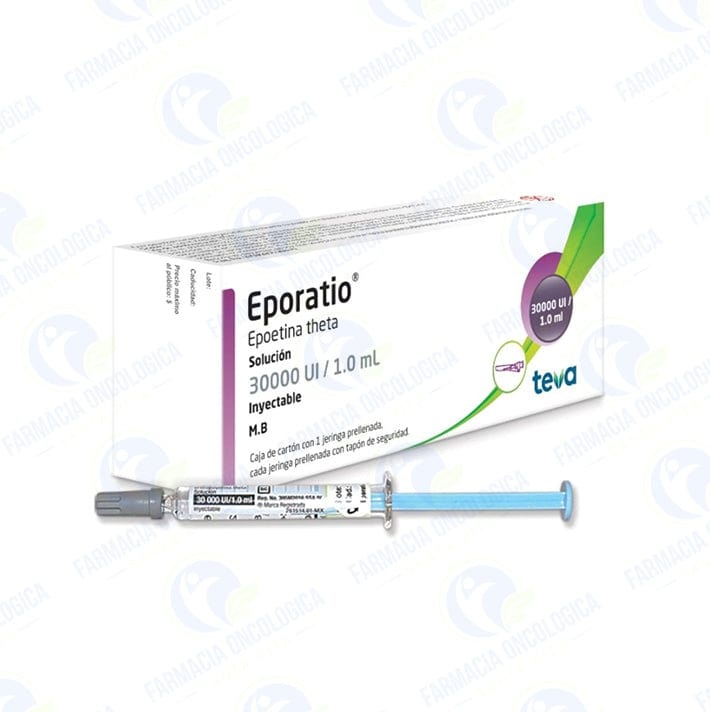
Eporatio is a clear and colourless injectable solution in a pre-filled syringe equipped with an injection needle.
Eporatio 1,000 IU/0.5 ml, Eporatio 2,000 IU/0.5 ml, Eporatio 3,000 IU/0.5 ml, Eporatio 4,000 IU/0.5
ml and Eporatio 5,000 IU/0.5 ml: Each pre-filled syringe contains 0.5 ml of solution. Packs of
6 pre-filled syringes; 6 pre-filled syringes with a safety needle or 6 pre-filled syringes with
a safety device.
Eporatio 10,000 IU/1 ml, Eporatio 20,000 IU/1 ml and Eporatio 30,000 IU/1 ml: Each syringe
pre-filled contains 1 ml of solution. Packs of 1, 4 and 6 pre-filled syringes; 1, 4 and 6 pre-filled syringes
with a safety needle or 1, 4 and 6 pre-filled syringes with a safety device.
Not all pack sizes may be marketed.
Marketing Authorisation Holder
ratiopharm GmbH
Graf-Arco-Straße 3
89079 Ulm
Germany
Manufacturer
Merckle GmbH
Graf-Arco-Straße 3
89079 Ulm
Germany
For further information on this medicine, contact the local representative of the Marketing
Authorisation Holder:
België/Belgique/Belgien
Teva Pharma Belgium N.V./S.A./AG
Tél/Tel: +32 38207373
Lietuva
UAB Teva Baltics
Tel: +370 52660203
България
Тева Фарма ЕАД
Teл: +359 24899585
Luxembourg/Luxemburg
ratiopharm GmbH
Allemagne/Deutschland
Tél/Tel: +49 73140202
Česká republika
Teva Pharmaceuticals CR, s.r.o.
Tel: +420 251007111
Magyarország
Teva Gyógyszergyár Zrt.
Tel: +36 12886400
Danmark
Teva Denmark A/S
Tlf: +45 44985511
Malta
Teva Pharmaceuticals Ireland
L-Irlanda
Tel: +44 2075407117
Deutschland
ratiopharm GmbH
Tel: +49 73140202
Nederland
Teva Nederland B.V.
Tel: +31 8000228400
Eesti
UAB Teva Baltics Eesti filiaal
Tel: +372 6610801
Norge
Teva Norway AS
Tlf: +47 66775590
Ελλάδα
TEVA HELLAS Α.Ε.
Τηλ: +30 2118805000
Österreich
ratiopharm Arzneimittel Vertriebs-GmbH
Tel: +43 1970070
España
Teva Pharma, S.L.U.
Tel: +34 913873280
Polska
Teva Pharmaceuticals Polska Sp. z o.o.
Tel: +48 223459300
France
Teva Santé
Tél: +33 155917800
Portugal
ratiopharm - Comércio e Indústria de Produtos
Farmacêuticos, Lda.
Tel: +351 214248000
Hrvatska
Pliva Hrvatska d.o.o.
Tel: +385 13720000
România
Teva Pharmaceuticals S.R.L.
Tel: +40 212306524
Ireland
Teva Pharmaceuticals Ireland
Tel: +44 2075407117
Slovenija
Pliva Ljubljana d.o.o.
Tel: +386 15890390
ÍslandSlovenská republika
Teva Pharma Iceland ehf.
Sími: +354 5503300
TEVA Pharmaceuticals Slovakia s.r.o.
Tel: +421 257267911
Italia
Teva Italia S.r.l.
Tel: +39 028917981
Suomi/Finland
Teva Finland Oy
Puh/Tel: +358 201805900
Κύπρος
TEVA HELLAS Α.Ε.
Ελλάδα
Τηλ: +30 2118805000
Sverige
Teva Sweden AB
Tel: +46 42121100
United Kingdom (Northern Ireland)
Teva Pharmaceuticals Ireland
Ireland
Tel: +44 2075407117
More detailed information on this medicine is available on the website of the European Medicines
Agency: http://www.ema.europa.eu .
7. Information for self-injecting the medicine
This paragraph contains information on how to perform a subcutaneous self-injection of Eporatio.
It is important that you do not attempt to self-administer the medicine without first receiving adequate
training from your doctor or nurse. If you have doubts about how to self-inject the
medicine or have any questions, ask your doctor or nurse for advice.
How Eporatio is used
The injection must be administered into the tissue just below the skin, and is called a subcutaneous injection.
Equipment you will need
To self-inject the medicine into the subcutaneous tissue you will need:
- a pre-filled syringe of Eporatio,
- an alcohol-soaked wipe,
- a gauze bandage or a sterile gauze pad,
- a puncture-proof container (plastic container provided by the hospital or pharmacy) so that you can safely dispose of used syringes.
What you must do before the injection
- 1. Remove a blister pack containing a pre-filled syringe from the refrigerator.
- 2. Open the blister pack and remove the pre-filled syringe and the needle sheath from the blister pack. Do not hold the pre-filled syringe by the plunger or the needle cap.
- 3. Check the expiry date on the label of the pre-filled syringe (Expiry). Do not use it if the date has exceeded the last day of the month indicated.
- 4. Check the appearance of Eporatio. The liquid in the syringe must appear clear and colourless. If particles are visible in the solution and the appearance appears cloudy, it should not be used.
- 5. There is a cap at the end of the needle sheath. Break the seal labelled and remove the cap (see figure 1).
- 6. Remove the needle cap from the pre-filled syringe (see figure 2).
- 7. Insert the needle onto the syringe (see figure 3) without removing the needle protection yet.
- 8. For a more comfortable injection, leave the pre-filled syringe at room temperature (not exceeding 25 °C) for 30 minutes, or gently hold the pre-filled syringe between your hands LatvijaUAB Teva Baltics filiāle Latvijā Tel: +371 67323666
for a few minutes. Do notheat the Eporatio solution in any other way (for example, do not
heat it in the microwave or in hot water).
- 9. Do notremove the needle protection from the syringe until you are ready for the injection.
- 10. Find a comfortable and well-lit place. Have everything you need close at hand (the pre-filled syringe of Eporatio, an alcohol-soaked wipe, a gauze bandage or a sterile gauze pad, and the puncture-proof container).
- 11. Wash your hands thoroughly.
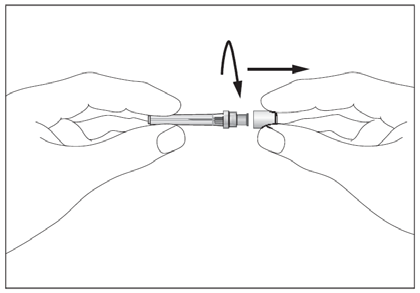
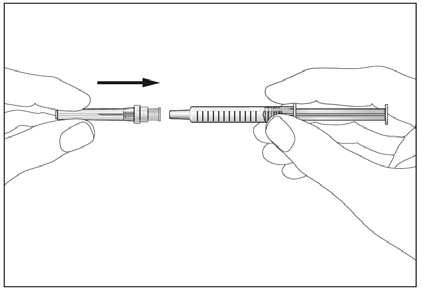
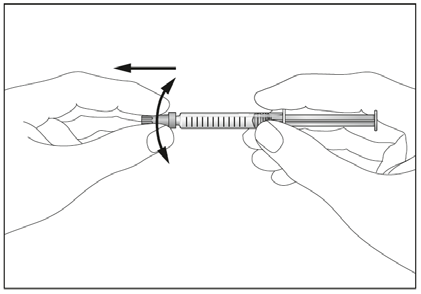
3
How to prepare the injection
Before proceeding with the self-injection of Eporatio, you must follow these instructions:
- 1. Hold the syringe and remove the protection from the needle without rotating. Pull horizontally as shown in figure 4. Do not touch the needle and do not push the plunger.
- 2. You may notice small air bubbles in the pre-filled syringe. If air bubbles are present, gently tap the syringe with your fingers until the air bubbles rise to the surface at the top of the syringe. Holding the syringe upright, expel the air by slowly pushing the plunger upwards.
- 3. The syringe body is graduated. Push the plunger up to the number (IU) on the syringe that corresponds to the dose of Eporatio prescribed by your doctor.
- 4. Double-check to make sure the syringe contains the correct dose of Eporatio.
- 5. Now you can use the pre-filled syringe.
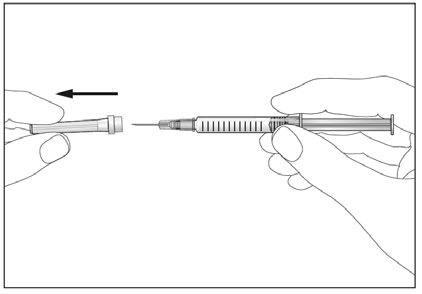
4
Where you should administer the injection
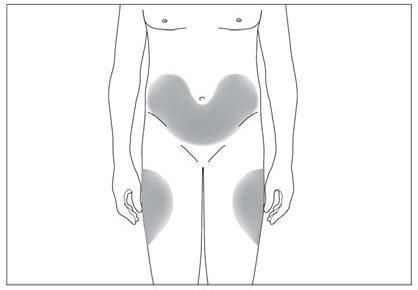
The most suitable areas to administer the injection are:
- the upper thigh
- the abdomen, except for the area around the navel (see the grey areas in figure 5).
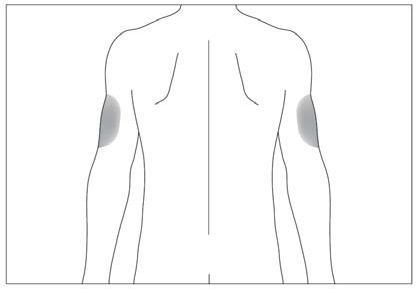
If someone else is administering the injection for you, the back and side of the
arms can also be used (see the grey areas in figure 6).
It is preferable to change the injection site every day to avoid the risk of soreness
at the site.
6
How to perform the self-injection
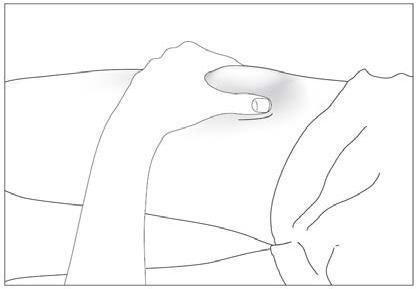
- 1. Disinfect the skin surface chosen for the injection using an alcohol wipe and pinch the skin between your thumb and index finger, without squeezing (see figure 7).
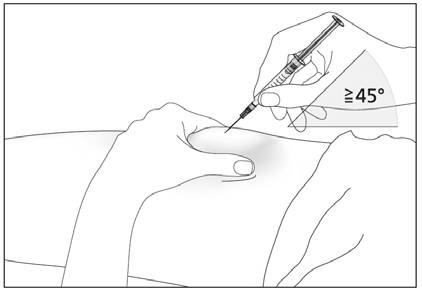
- 2. Insert the needle completely into the skin, as shown by your doctor or nurse. The angle between the syringe and the skin should not be too acute (at least 45°, see figure 8).
- 3. Inject the liquid into the tissue slowly and evenly, always keeping the skin pinched between your thumb and index finger.
- 4. After injecting the liquid, remove the needle and release the skin.
- 5. Press the injection site with a gauze bandage or a sterile gauze pad for a few seconds.
- 6. Use a syringe for only one injection. Do not use any remaining Eporatio in the syringe.
8
Remember
If you have any doubts or problems, contact your doctor or nurse.
How to dispose of used syringes
- Do not re-insert the protective cap onto used needles.
- Place used syringes in the puncture-proof container and keep this container out of sight and reach of children.
- Follow the instructions of your doctor, pharmacist or nurse for disposing of the puncture-proof container.
- Never throw used syringes into household waste.
7. Information for self-injecting the medicine
This paragraph contains information on how to perform a subcutaneous self-injection of Eporatio.
It is important that you do not attempt to self-administer the medicine without first receiving adequate
training from your doctor or nurse. If you have any doubts about how to self-inject the
medicine or have any questions about it, ask your doctor or nurse for advice.
How Eporatio is used
The injection must be performed into the tissue just below the skin, and is called a subcutaneous injection.
Equipment you will need
To self-inject the medicine into the subcutaneous tissue you will need:
- a pre-filled syringe of Eporatio,
- an alcohol-soaked wipe,
- a gauze bandage or a sterile gauze pad,
- a puncture-proof container (plastic container provided by the hospital or pharmacy) so that you can safely dispose of used syringes.
What you must do before the injection
- 1. Remove a blister containing a pre-filled syringe from the refrigerator.
- 2. Open the blister and remove the pre-filled syringe and the needle sheath from the blister. Do not hold the pre-filled syringe by the plunger or the needle cap.
- 3. Check the expiration date on the label of the pre-filled syringe (Exp.). Do not use it if the date has exceeded the last day of the indicated month.
- 4. Check the appearance of Eporatio. The liquid in the syringe must appear clear and colorless. If particles are visible in the solution and the appearance appears cloudy, it should not be used.
- 5. There are tabs at the end of the needle sheath. Open the needle sheath at the tabs (see figure 1).
- 6. Remove the needle cap from the pre-filled syringe (see figure 2).
- 7. Insert the needle onto the syringe (see figure 3) without removing the needle protection yet.
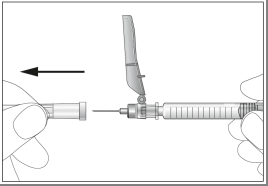
- 8. Move the safety shield in the opposite direction to the needle and towards the body of the syringe. The safety shield will stop in the new position (see figure 4)
- 9. For a more comfortable injection, leave the pre-filled syringe at room temperature (not exceeding 25 °C) for 30 minutes, or gently hold the pre-filled syringe between your hands for a few minutes. Do notheat the Eporatio solution in any other way (for example, do not heat it in the microwave or in hot water).
- 10. Do notremove the needle protection from the syringe until you are ready for the injection.
- 11. Find a comfortable and well-lit place. Have everything you need close at hand (the Eporatio pre-filled syringe, an alcohol-soaked wipe, a gauze bandage or a sterile gauze pad, and the puncture-proof container).
- 12. Wash your hands thoroughly.
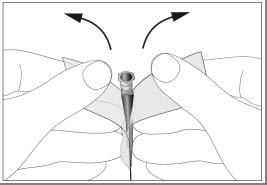
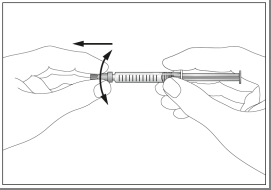
12
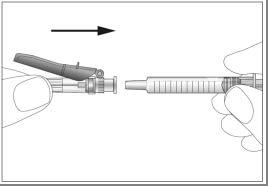
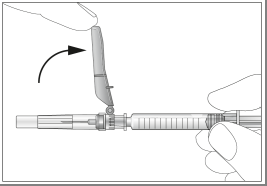
34
How to prepare the injection
Before proceeding with the self-injection of Eporatio, you must follow these instructions:
- 1. Hold the syringe and remove the protection from the needle without rotating. Pull horizontally as shown in figure 5. Do not touch the needle and do not push the plunger.
- 2. Small air bubbles may be noticed in the pre-filled syringe. If air bubbles are present, gently tap the syringe with your fingers until the air bubbles rise to the surface at the top of the syringe. Holding the syringe upright, expel the air by slowly pushing the plunger upwards.
- 3. The body of the syringe is graduated. Push the plunger up to the number (IU) on the syringe that corresponds to the dose of Eporatio prescribed by your doctor.
- 4. Check again to make sure the syringe contains the correct dose of Eporatio.
- 5. Now you can use the pre-filled syringe.
5
Where you should give the injection
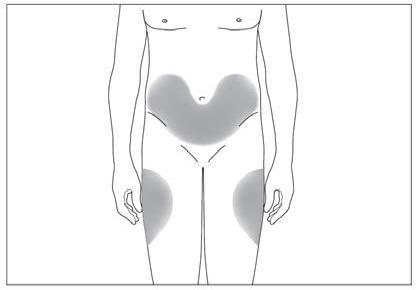
The most suitable areas to perform the injection are:
- the upper thigh
- the abdomen, except for the area around the navel (see the gray areas in figure 6).
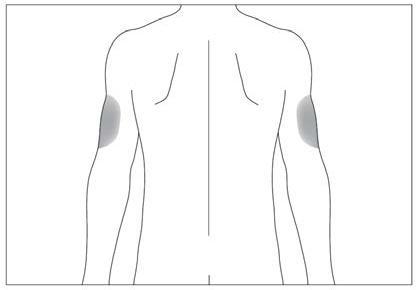
If someone else is giving you the injection, the back and side of your arms can also be used (see the gray areas in figure 7).
It is preferable to change the injection site every day to avoid the risk of soreness at the
site.
7
How you should perform the self-injection
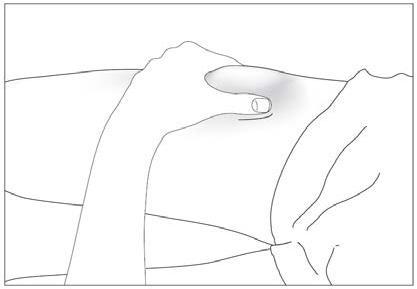
- 1. Disinfect the skin surface chosen for the injection using an alcohol wipe and pinch the skin between your thumb and index finger, without squeezing (see figure 8).
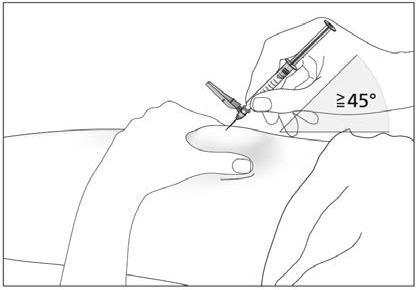
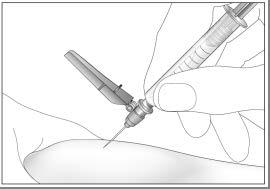
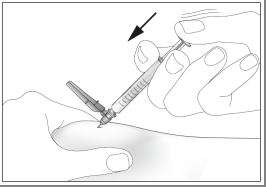
- 2. Insert the needle completely into the skin, as shown by your doctor or nurse. The angle between the syringe and the skin should not be too narrow (at least 45°, see figures 9 and 10).
- 3. Inject the liquid into the tissue slowly and evenly, always holding the skin between your thumb and index finger (see figure 11).
- 4. After injecting the liquid, remove the needle and release the skin.
- 5. Press the injection site with a gauze bandage or a sterile gauze pad for a few seconds.
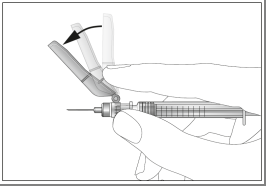
- 6. Push the safety shield towards the needle (see figure 12).
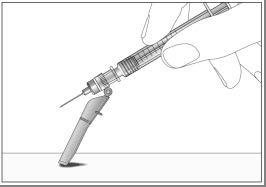
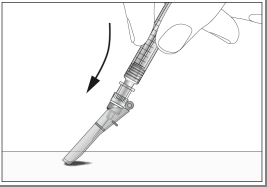
- 7. Rest the safety shield at an angle of about 45° on a flat surface (see figure 13).
- 8. Push the needle downwards with a quick, firm movement, until you hear a clear audible click (see figure 14).
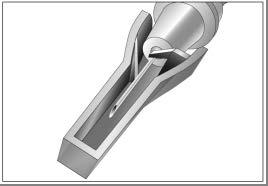
- 9. Visually check that the needle is completely locked inside the safety shield under the guard (see figure 15).
- 10. Use a syringe for only one injection. Do not use any remaining Eporatio in the syringe.
1011
1213
1415
Remember
If you have any doubts or problems, contact your doctor or nurse.
How to dispose of used syringes
- Place used syringes in the puncture-proof container and keep this container out of sight and reach of children.
- Follow the instructions of your doctor, pharmacist or nurse for disposing of the puncture-proof container.
- Never throw used syringes into household waste containers.
7. Information for self-injecting the medicine
This paragraph contains information on how to perform a subcutaneous self-injection of Eporatio.
It is important that you do not attempt to self-administer the medicine without first receiving adequate
training from your doctor or nurse. If you have any doubts about how to self-inject the
medicine or have any questions about it, ask your doctor or nurse for advice.
How Eporatio is used
The injection must be given into the tissue just below the skin, and is called a subcutaneous injection.
Equipment you will need
To self-inject the medicine into the subcutaneous tissue, you will need:
- a pre-filled syringe of Eporatio,
- an alcohol-soaked wipe,
- a gauze pad or a sterile gauze swab,
What you must do before the injection
- 1. Remove a blister containing a pre-filled syringe from the refrigerator.
- 2. Open the blister and remove the pre-filled syringe and the needle sheath from the blister. Do not hold the pre-filled syringe by the plunger or the needle cap.
- 3. Check the expiration date on the pre-filled syringe label (Exp.). Do not use it if the date has passed the last day of the month indicated.
- 4. Check the appearance of Eporatio. The liquid in the syringe must appear clear and colorless. If particles are visible in the solution and the appearance appears cloudy, it should not be used.
- 5. There is a cap at the end of the needle sheath. Break the seal labeled and remove the cap (see figure 1).
- 6. Remove the needle cap from the pre-filled syringe (see figure 2).
- 7. Insert the needle onto the syringe (see figure 3) without removing the needle protection yet.
- 8. For a more comfortable injection, leave the pre-filled syringe at room temperature (not exceeding 25 °C) for 30 minutes, or gently hold the pre-filled syringe between your hands for a few minutes. Do notheat the Eporatio solution in any other way (for example, do not heat it in the microwave or in hot water).
- 9. Do notremove the needle protection from the syringe until you are ready for the injection.
- 10. Find a comfortable and well-lit place. Have everything you need within reach (the Eporatio pre-filled syringe, an alcohol-soaked wipe, and a gauze pad or a sterile gauze swab).
- 11. Wash your hands thoroughly.
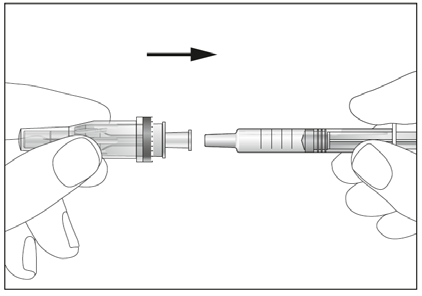
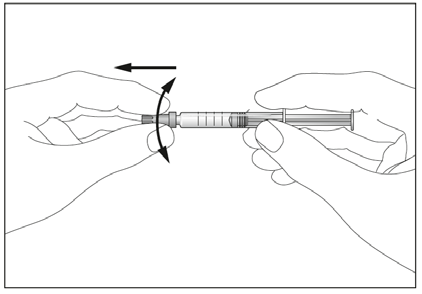
3
How to prepare the injection
Before proceeding with the self-injection of Eporatio, you must follow these instructions:
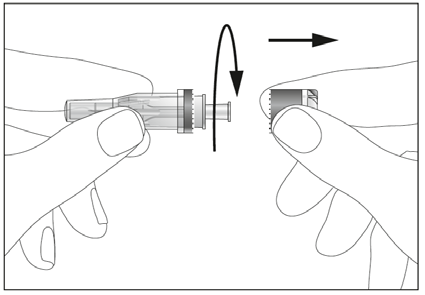
- 1. Hold the syringe and remove the protection from the needle without rotating. Pull horizontally as shown in figure 4. The needle is covered by a retractable needle cover. Do not touch the needle or the cover and do not push the plunger (see figure 5).
- 2. You may notice small air bubbles in the pre-filled syringe. If air bubbles are present, gently tap the syringe with your fingers until the air bubbles rise to the surface at the top of the syringe. Holding the syringe upright, expel the air by slowly pushing the plunger upwards.
- 3. The syringe body is graduated. Push the plunger to the number (IU) on the syringe that corresponds to the dose of Eporatio prescribed by your doctor.
- 4. Double-check to make sure the syringe contains the correct dose of Eporatio.
- 5. Now you can use the pre-filled syringe.
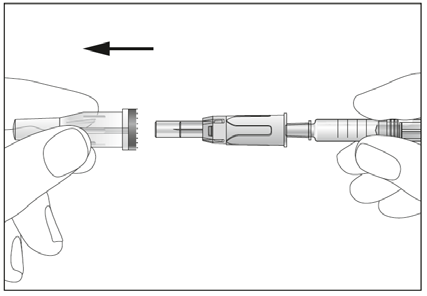
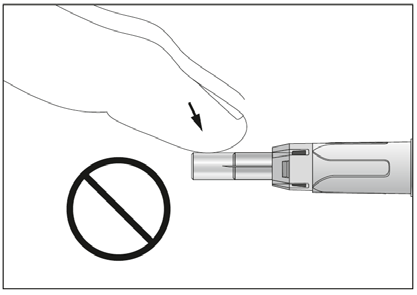
5
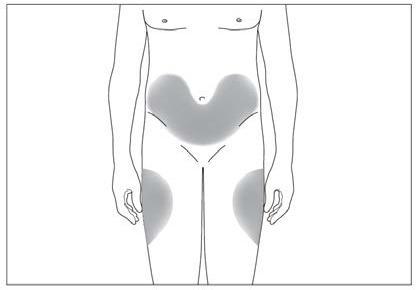
Where you should give the injection
The most suitable areas to give the injection are:
- the upper thigh
- the abdomen, except for the area around the navel (see the gray areas in figure 6).
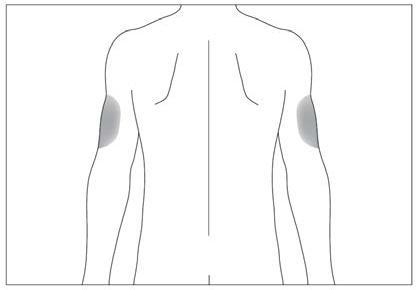
If someone else is giving you the injection, the back and side of your arms can also be used (see the gray areas in figure 7).
It is preferable to change the injection site every day to avoid the risk of soreness at the site.
7
How to perform the self-injection
- 1. Disinfect the skin surface chosen for the injection using an alcohol wipe and pinch the skin between your thumb and index finger, without squeezing (see figure 8).
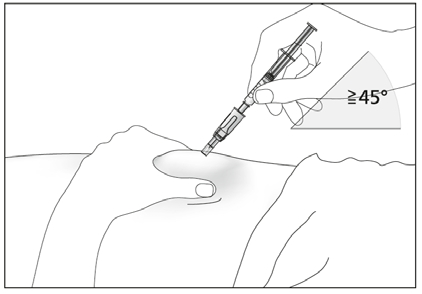
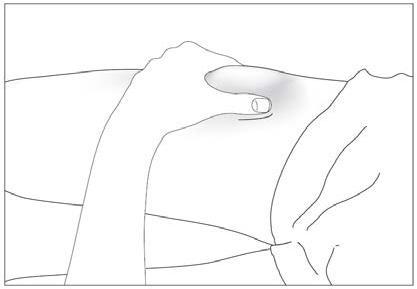
- 2. Insert the needle with the cover in one smooth, continuous motion completely into the skin, as shown by your doctor or nurse. The angle between the syringe and the skin should not be too steep (at least 45°, see figure 9). The cover retracts completely when the needle is inserted into the skin (see figure 10).
- 3. Inject the liquid into the tissue slowly and evenly, always holding the skin between your thumb and index finger (see figure 11).
- 4. After injecting the liquid, remove the needle and release the skin. The needle will be covered by the cover and locked automatically so that you cannot prick yourself (see figure 12)
- 5. Press the injection site with a gauze pad or a sterile gauze swab for a few seconds.
- 6. Use a syringe for only one injection. Do not use any remaining Eporatio in the syringe.
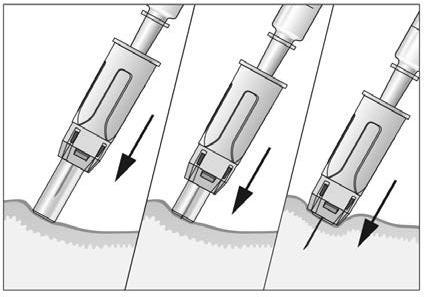
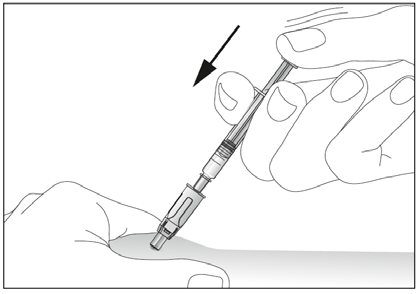
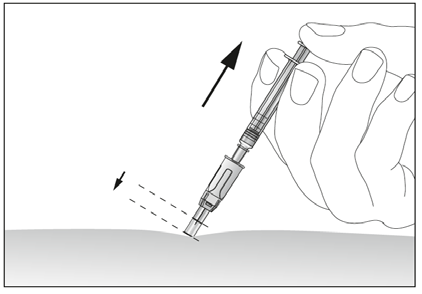
12
Remember
If you have any doubts or problems, contact your doctor or nurse.
How to dispose of used syringes
The safety device prevents needle-stick injuries after use, so no special precautions are necessary for disposal. Dispose of the syringes with safety device
following the instructions of your doctor, pharmacist or nurse.

Nie jesteś pewien, czy ten lek jest odpowiedni dla ciebie?
Omów swoje objawy i leczenie z lekarzem online.

Zacząłeś przyjmować lek i masz pytania?
Omów swoje objawy i leczenie z lekarzem online.
- Kraj rejestracji
- Postać farmaceutycznaInjectable solution, 1.000 IU /0.5 ML
- Kod ATCB03XA01
- Substancja czynna
- Wymaga receptyTak
- Producent
- Te treści mają charakter wyłącznie informacyjny i nie zastępują konsultacji lekarskiej.
- Zamienniki EPORATIOPostać farmaceutyczna: Injectable solution, 1000 IU/0.5 MLSubstancja czynna: erythropoietinProducent: MEDICE ARZNEIMITTEL PUETTER GMBH & CO.KGWymaga receptyPostać farmaceutyczna: Injectable solution, 1,000 IU/0.5 MLSubstancja czynna: erythropoietinProducent: SANDOZ GMBHWymaga receptyPostać farmaceutyczna: Injectable solution, 1000 IU/0.5MLSubstancja czynna: erythropoietinProducent: JANSSEN CILAG S.P.A.Wymaga recepty
Odpowiedniki EPORATIO w innych krajach
Leki z tą samą substancją czynną dostępne w innych krajach.
Odpowiednik EPORATIO w Hiszpania
Odpowiednik EPORATIO w Ukraina
Lekarze online w sprawie EPORATIO
Omów stosowanie EPORATIO, bezpieczeństwo i ocenę zasadności recepty zgodnie z obowiązującymi przepisami.









Uzyskaj receptę na EPORATIO online
Wypełnij 2-minutowy formularz
Opisz swoje objawy, historię choroby i lek, o który prosisz.
Wybierz lekarza lub pozwól nam przydzielić
Wybierz specjalistę lub dopasujemy Cię do najbliższego dostępnego lekarza.
Lekarz analizuje Twój przypadek
Zazwyczaj w ciągu 30 minut. Może zadawać dodatkowe pytania przez czat.
Odbierz w dowolnej aptece
Recepta elektroniczna wysłana na Twój e-mail — ważna w całej Polsce.
Często zadawane pytania
EPORATIO wymaga recepty w Włochy. Możesz skonsultować się z lekarzem online, aby sprawdzić, czy ten lek może być odpowiedni w Twojej sytuacji.
Substancją czynną w EPORATIO jest erythropoietin. Informacja ta pomaga rozpoznać leki o tym samym składzie, ale pod różnymi nazwami handlowymi.
EPORATIO jest produkowany przez RATIOPHARM GMBH. Nazwy handlowe i opakowania mogą się różnić w zależności od dystrybutora.
Lekarze, tacy jak Lekarze rodzinni, Psychiatrzy, Dermatolodzy, Kardiolodzy, Endokrynolodzy, Gastroenterolodzy, Pulmonolodzy, Nefrolodzy, Reumatolodzy, Hematolodzy, Zakaźnicy, Alergolodzy, Geriatrzy, Pediatrzy, Onkolodzy, mogą ocenić, czy stosowanie EPORATIO jest odpowiednie w Twoim przypadku, w zależności od sytuacji klinicznej i lokalnych przepisów. Możesz umówić konsultację online, aby omówić objawy i możliwe dalsze kroki.
Polska posiada dobrze rozwiniętą infrastrukturę ochrony zdrowia w dużych miastach, takich jak Warszawa, Kraków, Wrocław i Gdańsk. Apteki są łatwo dostępne i działają zgodnie z obowiązującymi przepisami, zapewniając dostęp do leków na receptę.
Możesz kupić EPORATIO w Warszawie, Krakowie, Wrocławiu lub Gdańsku w każdej aptece, posiadając ważną receptę.
Aby uzyskać receptę, możesz skorzystać z Oladoctor:
Inne leki zawierające tę samą substancję czynną (erythropoietin) to m.in. ABSEAMED, BINOKRIT, EPREX. Mogą one różnić się nazwą handlową lub postacią, ale zawierają ten sam składnik terapeutyczny. Przed zmianą lub rozpoczęciem nowego leku skonsultuj się z lekarzem.
