



EPLERENONE 25 mg Tabletki Powlekane

Ocena recepty online
Lekarz przeanalizuje Twój przypadek i zdecyduje, czy wystawienie recepty jest medycznie uzasadnione.

Porozmawiaj z lekarzem o tym leku
Omów swoje objawy i opcje leczenia podczas szybkiej konsultacji online.



Jak stosować EPLERENONE TEKNIJEN
Treść ulotki
Eplerenone TecniGen 25 mg film-coated tablets
Generic medicine
Read this leaflet carefully before taking this medicine as it contains important information for you.
- Keep this leaflet. You may need to read it again.
- If you have any questions, ask your doctor, pharmacist or nurse.
- This medicine has been prescribed for you only. Do not pass it on to others even if their symptoms are the same as yours because it could be harmful.
- If you get any side effects, even those not listed in this leaflet, tell your doctor, pharmacist or nurse. See section 4.
Contents of this leaflet:
- 1. What Eplerenone TecniGen is and what it is used for
- 2. What you need to know before you take Eplerenone TecniGen
- 3. How to take Eplerenone TecniGen
- 4. Possible side effects
- 5. How to store Eplerenone TecniGen
- 6. Contents of the pack and other information
1. What is Eplerenone TecniGen and what it is used for
Eplerenone TecniGen belongs to the class of medicines known as selective aldosterone blockers.
These agents inhibit the action of aldosterone, a substance produced by the body that controls blood
pressure and cardiac function. High levels of aldosterone can cause changes
in the body that lead to heart failure.
Eplerenone TecniGen is used to treat your heart failure, to prevent worsening and to reduce
hospitalization, if:
- 1. you have recently had a heart attack, in association with other medicines used to treat heart failure, or
- 2. you have moderate and persistent symptoms despite the treatment you have received so far.
2. What you need to know before taking Eplerenone TecniGen
Do not take Eplerenone TecniGen
- If you are allergic to eplerenone or to any of the other ingredients of this medicine (listed in section 6).
If you have high levels of potassium in your blood (hyperkalaemia)
- If you are taking medicines that help to eliminate excess body fluids (potassium-sparing diuretics) or “salt tablets” (such as potassium supplements)
- If you have a severe kidney disease
- If you have a severe liver disease
- If you are taking medicines used for the treatment of fungal infections (ketoconazole or itraconazole)
- If you are taking antiviral medicines for the treatment of HIV (nelfinavir or ritonavir)
- If you are taking antibiotics for the treatment of bacterial infections (clarithromycin or telithromycin)
- If you are taking nefazodone for the treatment of depression
- If you are taking medicines for the treatment of certain heart conditions or hypertension (called angiotensin converting enzyme (ACE) inhibitors and angiotensin II receptor blockers (ARBs)) together.
Warnings and precautions
Talk to your doctor, pharmacist or nurse before taking Eplerenone TecniGen
- If you have a kidney or liver disease (see also “Do not take Eplerenone TecniGen”)
- If you are taking lithium (usually used for manic-depressive disorders, also called bipolar disorders)
- If you are taking tacrolimus or cyclosporine (used for the treatment of skin conditions such as psoriasis or eczema and to prevent rejection after organ transplantation)
Children and adolescents
The safety and efficacy of eplerenone in children and adolescents have not been established.
Other medicines and Eplerenone TecniGen
Tell your doctor or pharmacist if you are taking, have recently taken or might take any other
medicine.
You must not take Eplerenone TecniGen with the following medicines (see section “Do not take Eplerenone
TecniGen”):
- itraconazole or ketoconazole (for the treatment of fungal infections), ritonavir, nelfinavir (antiviral medicines for the treatment of HIV), clarithromycin, telithromycin (for the treatment of bacterial infections) or nefazodone (for depression), as these medicines reduce the elimination of eplerenone, prolonging its effect.
- potassium-sparing diuretics (medicines that help to eliminate excess body fluids) and potassium supplements (salt tablets) as these medicines increase the risk of high levels of potassium in the blood.
- angiotensin converting enzyme (ACE) inhibitors and angiotensin II receptor blockers (ARBs) together (used in the treatment of high blood pressure, heart disease or certain kidney conditions) because these medicines can increase the risk of high levels of potassium in the blood.
Tell your doctor if you are taking any of the following medicines:
- Lithium (usually used for manic-depressive disorders, also called bipolar disorders). It has been shown that the use of lithium together with diuretics and ACE inhibitors (used in the treatment of high blood pressure and heart disorders) increases the levels of lithium in the blood which can cause the
following undesirable effects: loss of appetite, reduced vision, fatigue, muscle weakness, muscle cramps.
- Cyclosporine or tacrolimus (used for the treatment of skin conditions such as psoriasis or eczema and to prevent rejection after organ transplantation). These medicines can cause kidney problems and therefore increase the risk of high levels of potassium in the blood.
- Non-steroidal anti-inflammatory drugs (NSAIDs - some painkillers such as ibuprofen, used to relieve pain, stiffness and inflammation). These medicines can cause kidney problems and therefore increase the risk of high levels of potassium in the blood.
- Trimethoprim (used for the treatment of bacterial infections) can increase the risk of high levels of potassium in the blood.
- Alpha-1-blockers, such as prazosin or alfuzosin (used for the treatment of high blood pressure and for certain prostate problems) can cause a drop in blood pressure and dizziness when standing up.
- Tricyclic antidepressants such as amitriptyline or amoxapine (for the treatment of depression), antipsychotics (also known as neuroleptics) such as chlorpromazine or haloperidol (for the treatment of psychiatric disorders), amifostine (used in anticancer chemotherapy) and baclofen (used for the treatment of muscle spasms). These medicines can cause drops in blood pressure and dizziness when standing up.
- Glucocorticoids, such as hydrocortisone or prednisone (used for the treatment of inflammation and certain skin conditions) and tetracosactide (mainly used for the diagnosis and treatment of adrenal cortex disorders) can reduce the effect of Eplerenone TecniGen.
- Digoxin (used in the treatment of heart disorders). Digoxin levels in the blood can increase when administered together with Eplerenone TecniGen.
- Warfarin (a medicine that prevents blood clotting): caution is recommended with warfarin, as high levels of warfarin in the blood can alter the effects of Eplerenone TecniGen.
- Erythromycin (used to treat bacterial infections), saquinavir (antiviral medicine for the treatment of HIV), fluconazole (used for the treatment of fungal infections), amiodarone, diltiazem and verapamil (for the treatment of heart disorders and high blood pressure) reduce the elimination of Eplerenone TecniGen prolonging its effect.
- St. John's Wort (herbal medicine), rifampicin (used for the treatment of bacterial infections), carbamazepine, phenytoin and phenobarbital (also used for the treatment of epilepsy) can increase the elimination of Eplerenone TecniGen and therefore decrease its effects.
Eplerenone TecniGen with food, drinks and alcohol
Eplerenone TecniGen can be taken with or without food.
Pregnancy, breastfeeding and fertility
If you are pregnant, suspect you are pregnant or are planning a pregnancy, or if you are breastfeeding, ask your doctor or pharmacist for advice before taking this medicine.
The effect of Eplerenone TecniGen has not been evaluated during pregnancy in humans.
It is not known whether eplerenone is excreted in breast milk. Together with your doctor you will have to decide whether to stop breastfeeding or to stop taking the medicine.
Driving and operating machinery
After taking Eplerenone TecniGen you may experience dizziness. If this happens do not drive or operate
machinery.
For those who participate in sports: the use of the drug without therapeutic need constitutes doping and may nevertheless result in positive doping tests.
Eplerenone TecniGen contains lactose
One of the ingredients of Eplerenone TecniGen is lactose monohydrate (a type of sugar). If your doctor has
diagnosed you as having intolerance to certain sugars, contact him before taking this medicine.
3. How to take Eplerenone TecniGen
Take this medicine following exactly the instructions of your doctor. If you have any doubts, ask your doctor or pharmacist.
Eplerenone TecniGen tablets can be taken with or without food. The tablets should be
swallowed whole with a sufficient amount of water.
Eplerenone TecniGen is generally administered together with other medicines for heart failure, such as beta-blockers. Generally, the initial dose is one 25 mg tablet once a
day, then increase the dose after 4 weeks to 50 mg once a day (one 50 mg tablet or two 25 mg tablets).
The maximum daily dose is 50 mg.
Blood potassium levels must be measured before starting therapy with Eplerenone TecniGen,
within the first week and within the first month of treatment or after a dosage change. The
dosage may be adjusted by your doctor based on blood potassium levels.
If you suffer from mild kidney disease, you should start therapy with one 25 mg tablet once a day. If your
kidney disease is moderate, you should start therapy with one 25 mg tablet every other day. If your
doctor deems it appropriate and based on serum potassium levels, these doses may be adjusted.
Eplerenone TecniGen is not recommended in patients with severe kidney disease.
In patients with mild to moderate liver function impairment, no dosage adjustments are required.
If you have kidney or liver problems, you may need more frequent checks of your
blood potassium levels (see also “Do not take Eplerenone TecniGen").
For the elderly: no initial dose adjustment is required.
For children and adolescents: the use of Eplerenone TecniGen is not recommended.
If you take more Eplerenone TecniGen than you should
If you have taken too many Eplerenone TecniGen tablets, contact your doctor or pharmacist immediately.
If you have taken too many tablets, the most likely symptoms will be low blood pressure (feeling
dizzy, lightheaded, blurred vision, weakness, sudden loss of consciousness) or hyperkalemia,
high levels of potassium in the blood (which manifests with muscle cramps, diarrhea, nausea, dizziness or headache).
If you forget to take Eplerenone TecniGen
If you have forgotten to take the Eplerenone TecniGen tablet and it is almost time to take the next
tablet, skip the missed dose and take the next tablet at the scheduled time.
Otherwise, you can take it as soon as you remember, keeping in mind that at least 12 hours must pass before
taking the next dose. Then resume the medicine normally.
Do not take a double dose to make up for a missed dose.
If you stop taking Eplerenone TecniGen
It is important to take Eplerenone TecniGen as prescribed unless your doctor tells you to
stop treatment.
If you have any doubts about the use of this medicine, ask your doctor or pharmacist.
4. Possible side effects
Like all medicines, this medicine can cause side effects, although not everybody gets them.
If any of the following symptoms occur:
Inform your doctor immediately
- Swelling of the face, tongue or throat
- Difficulty swallowing
- Hives and difficulty breathing These are symptoms of angioedema. Other side effects reported include:
Common(may affect up to 1 in 10 people):
- heart attack
- high levels of potassium in the blood (symptoms include muscle cramps, diarrhoea, nausea, dizziness or headache)
- dizziness
- fainting
- infections
- cough
- constipation
- low blood pressure
- diarrhoea
- nausea
- impaired kidney function
- skin rash
- itching
- muscle spasms
- increased levels of urea in the blood
Uncommon(may affect up to 1 in 100 people):
- eosinophilia (increase in certain white blood cells)
- dehydration
- increased amount of cholesterol or triglycerides (fats) in the blood
- low levels of sodium in the blood
- insomnia (difficulty sleeping)
- headache
- heart problems e.g. irregular heartbeat, fast heartbeat, heart failure
- inflammation of the gallbladder
- decreased blood pressure that can cause dizziness when standing up
- thrombosis (blood clots) in the legs
- sore throat
- flatulence
- vomiting
- reduced thyroid function
- increased glucose in the blood
- reduced sensitivity to touch
- increased sweating
- back pain
- musculoskeletal pain
- feeling weak and unwell
- increased levels of creatinine in the blood which may indicate kidney problems
- kidney inflammation
- breast enlargement in men
- changes in blood test values
If you get any side effects, even those not listed in this leaflet, tell your doctor
or pharmacist.
Reporting of side effects
If you get any side effects, even those not listed in this leaflet, tell your doctor
or pharmacist. You can also report side effects directly through the national reporting system at: www.agenziafarmaco.gov.it/it/responsabili .
By reporting side effects you can help provide more information on the safety of this
medicine.
5. How to store Eplerenone TecniGen
Keep this medicine out of sight and reach of children.
This medicine does not require any special storage conditions.
Do not use this medicine after the expiry date which is stated on the packaging and on the blister after EXP. The
expiry date refers to the last day of that month.
Do not dispose of any medicine in wastewater or household waste. Ask your pharmacist how to dispose of the
medicines you no longer use. This will help protect the environment.
6. Package Contents and Other Information
What Eplerenone TecniGen contains
- The active ingredient is eplerenone. Each tablet contains 25 mg of eplerenone.
- The other ingredients are: lactose monohydrate, microcrystalline cellulose, sodium croscarmellose,
hypromellose, sodium lauryl sulfate, talc and magnesium stearate.
- The yellow opadry coating contains: hypromellose, titanium dioxide (E171), macrogol, polysorbate 80, yellow iron oxide (E172), red iron oxide (E172).
Description of the appearance of Eplerenone TecniGen and package contents
Eplerenone TecniGen 25 mg are yellow, film-coated, round and convex tablets.
Eplerenone TecniGen 25 mg film-coated tablets are available in blisters containing 30 tablets.
Marketing Authorisation Holder
TECNIGEN S.r.l.
Via Galileo Galilei, 40
20092 Cinisello Balsamo (MI), Italy
Manufacturer:
West Pharma – Produções de Especialidades Farmacêuticas, S.A.
Rua João de Deus, n.º 11, Venda Nova, 2700-486 Amadora, Portugal
Atlantic Pharma – Produções Farmacêuticas, S.A.
Rua da Tapada Grande, n.º 2; Abrunheira, 2710-089 Sintra, Portugal
This medicinal product is authorised in the Member States of the European Economic Area under the following
names:
Italy: Eplerenone TecniGen
Portugal: Eplerenona Biofarmoz
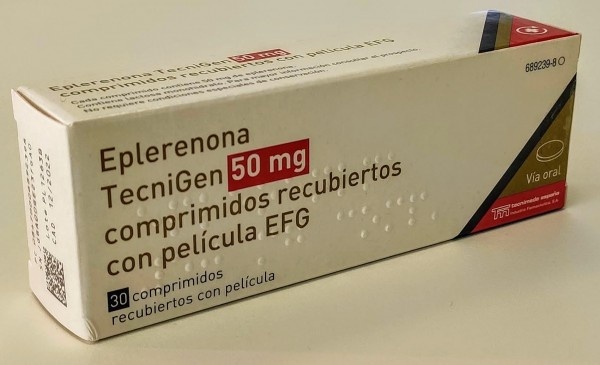
Eplerenone TecniGen 50 mg film-coated tablets
Generic medicine
Read this leaflet carefully before you start taking this medicine as it contains important
information for you.
- Keep this leaflet. You may need to read it again.
- If you have any questions, ask your doctor, pharmacist or nurse
- This medicine has been prescribed for you only. Do not pass it on to others even if their symptoms are the same as yours because it could be harmful.
- If you get any side effects, even those not listed in this leaflet, tell your doctor, pharmacist or nurse. See section 4.
Contents of this leaflet:
- 1. What Eplerenone TecniGen is and what it is used for
- 2. What you need to know before you take Eplerenone TecniGen
- 3. How to take Eplerenone TecniGen
- 4. Possible side effects
- 5. How to store Eplerenone TecniGen
- 6. Contents of the pack and other information
1. What Eplerenone TecniGen is and what it is used for
Eplerenone TecniGen belongs to the class of medicines known as selective aldosterone blockers.
These agents inhibit the action of aldosterone, a substance produced by the body that controls
blood pressure and cardiac function. High levels of aldosterone can cause changes
in the body that lead to heart failure.
Eplerenone TecniGen is used to treat your heart failure, to prevent worsening and to reduce
hospitalization, if:
- 1. you have recently had a heart attack, in association with other medicines used to treat heart failure, or
- 2. you have moderate and persistent symptoms despite the treatment you have been receiving up to now.
2. What you need to know before taking Eplerenone TecniGen
Do not take Eplerenone TecniGen
- If you are allergic to eplerenone or any of the other ingredients of this medicine (listed in section 6).
- If you have high levels of potassium in your blood (hyperkalaemia)
- If you are taking medicines that help to eliminate excess body fluids (potassium-sparing diuretics
of potassium) or “salt tablets” (as potassium supplements)
- If you have a severe kidney disease
- If you have a severe liver disease
- If you are taking medicines used for the treatment of fungal infections (ketoconazole or itraconazole)
- If you are taking antiviral medicines for the treatment of HIV (nelfinavir or ritonavir)
- If you are taking antibiotics for the treatment of bacterial infections (clarithromycin or telithromycin)
- If you are taking nefazodone for the treatment of depression
- If you are taking medicines for the treatment of certain heart conditions or hypertension (called angiotensin converting enzyme (ACE) inhibitors and angiotensin II receptor blockers (ARBs)) together.
Warnings and precautions
Talk to your doctor, pharmacist or nurse before taking Eplerenone TecniGen
- If you have a kidney or liver disease (see also “Do not take Eplerenone TecniGen”)
- If you are taking lithium (usually used for manic-depressive disorders, also called bipolar disorders)
- If you are taking tacrolimus or cyclosporine (used for the treatment of skin conditions such as psoriasis or eczema and to prevent rejection after organ transplantation)
Children and adolescents
The safety and efficacy of eplerenone in children and adolescents have not been established.
Other medicines and Eplerenone TecniGen
Tell your doctor or pharmacist if you are taking, have recently taken or might take any other
medicine.
Do not take Eplerenone TecniGen with the following medicines (see section “Do not take Eplerenone
TecniGen”):
- itraconazole or ketoconazole (for the treatment of fungal infections), ritonavir, nelfinavir (antiviral medicines for the treatment of HIV), clarithromycin, telithromycin (for the treatment of bacterial infections) or nefazodone (for depression), as these medicines reduce the elimination of eplerenone, prolonging its effect.
- potassium-sparing diuretics (medicines that help to eliminate excess body fluids) and potassium supplements (salt tablets) as these medicines increase the risk of high levels of potassium in the blood.
- angiotensin converting enzyme (ACE) inhibitors and angiotensin II receptor blockers (ARBs) together (used in the treatment of high blood pressure, heart disease or specific kidney conditions) because these medicines can increase the risk of high levels of potassium in the blood. Tell your doctor if you are taking any of the following medicines:
- Lithium (usually used for manic-depressive disorders, also called bipolar disorders). It has been shown that the use of lithium together with diuretics and ACE inhibitors (used in the treatment of high blood pressure and heart disorders) increases the levels of lithium in the blood which can cause the following side effects: loss of appetite, reduced vision, fatigue, muscle weakness, muscle cramps.
muscolare.
- Cyclosporine or tacrolimus (used for the treatment of skin conditions such as psoriasis or eczema and to prevent rejection after organ transplantation). These medicines can cause kidney problems and therefore increase the risk of high levels of potassium in the blood.
- Non-steroidal anti-inflammatory drugs (NSAIDs - some painkillers such as ibuprofen, used to relieve pain, stiffness and inflammation). These medicines can cause kidney problems and therefore increase the risk of high levels of potassium in the blood.
- Trimethoprim (used for the treatment of bacterial infections) can increase the risk of high levels of potassium in the blood.
- Alpha-1-blockers, such as prazosin or alfuzosin (used for the treatment of high blood pressure and for specific prostate problems) can cause a drop in blood pressure and dizziness when getting up.
- Tricyclic antidepressants such as amitriptyline or amoxapine (for the treatment of depression), antipsychotics (also known as neuroleptics) such as chlorpromazine or haloperidol (for the treatment of psychiatric disorders), amifostine (used in anticancer chemotherapy) and baclofen (used for the treatment of muscle spasms). These medicines can cause drops in blood pressure and dizziness when getting up.
- Glucocorticoids, such as hydrocortisone or prednisone (used for the treatment of inflammation and some skin conditions) and tetracosactide (mainly used for the diagnosis and treatment of adrenal cortex disorders) can reduce the effect of Eplerenone TecniGen.
- Digoxin (used in the treatment of heart disorders). Digoxin levels in the blood can increase when administered together with Eplerenone TecniGen.
- Warfarin (a blood-thinning medicine): caution is recommended with warfarin, as high levels of warfarin in the blood can alter the effects of Eplerenone TecniGen.
- Erythromycin (used to treat bacterial infections), saquinavir (antiviral medicine for the treatment of HIV), fluconazole (used for the treatment of fungal infections), amiodarone, diltiazem and verapamil (for the treatment of heart disorders and high blood pressure) reduce the elimination of Eplerenone TecniGen prolonging its effect.
- St. John's Wort (herbal medicine), rifampicin (used in the treatment of bacterial infections), carbamazepine, phenytoin and phenobarbital (also used for the treatment of epilepsy) can increase the elimination of Eplerenone TecniGen and therefore decrease its effects.
Eplerenone TecniGen with food, beverages and alcohol
Eplerenone TecniGen can be taken with or without food.
Pregnancy, breastfeeding and fertility
If you are pregnant, suspect you are pregnant or are planning a pregnancy, or if you are breastfeeding,
ask your doctor or pharmacist for advice before taking this medicine.
The effect of Eplerenone TecniGen has not been evaluated during pregnancy in humans.
It is not known whether eplerenone is excreted in breast milk. Together with your doctor you will decide whether to stop
breastfeeding or to stop taking the medicine.
Driving and operating machinery
After taking Eplerenone TecniGen you may experience dizziness. If this happens do not drive or operate
machinery.
For those who play sports: the use of the drug without a therapeutic need constitutes doping and may still result
in positive doping tests.
Eplerenone TecniGen contains lactose
One of the ingredients of Eplerenone TecniGen is lactose monohydrate (a type of sugar). If your
doctor has diagnosed you with intolerance to certain sugars, contact him before taking this medicine.
3. How to take Eplerenone TecniGen
Take this medicine following exactly the instructions of your doctor. If you have any doubts, ask your doctor or pharmacist.
Eplerenone TecniGen tablets can be taken with or without food. The tablets should be
swallowed whole with plenty of water.
Eplerenone TecniGen is generally administered together with other medicines for heart failure, such as beta-blockers. Generally, the initial dose is one 25 mg tablet once a
day, then increase the dose after 4 weeks to 50 mg once a day (one 50 mg tablet or two 25 mg tablets).
The maximum daily dose is 50 mg.
Blood potassium levels must be measured before starting therapy with Eplerenone TecniGen,
within the first week and within the first month of treatment or after a dosage change. The
dosage may be adjusted by your doctor based on blood potassium levels.
If you suffer from mild kidney disease, you should start therapy with one 25 mg tablet once a day. If your
kidney disease is moderate, you should start therapy with one 25 mg tablet every other day. If your
doctor deems it appropriate and based on serum potassium levels, these doses may be adjusted.
Eplerenone TecniGen is not recommended in patients with severe kidney disease.
In patients with mild-to-moderate liver dysfunction, no dosage adjustments are required
initial. If you have kidney or liver problems, you may need more frequent checks of your
blood potassium levels (see also “Do not take Eplerenone TecniGen").
For the elderly: no dose adjustment is required.
For children and adolescents: the use of Eplerenone TecniGen is not recommended.
If you have taken more Eplerenone TecniGen than you should
If you have taken too many Eplerenone TecniGen tablets, contact your doctor or pharmacist immediately.
If you have taken too many tablets, the most likely symptoms will be low blood pressure (feeling of
dizziness, lightheadedness, blurred vision, weakness, sudden loss of consciousness) or hyperpotassemia,
high levels of potassium in the blood (which manifests with muscle cramps, diarrhea, nausea, dizziness or headache).
If you forget to take Eplerenone TecniGen
If you have forgotten to take the Eplerenone TecniGen tablet and it is almost time to take the next tablet,
skip the dose you forgot to take and take the next tablet at the scheduled time.
Otherwise, you can take it as soon as you remember, keeping in mind that at least 12 hours must pass before
taking the next dose. Then resume the medicine normally.
Do not take a double dose to make up for a missed dose.
If you stop taking Eplerenone TecniGen
It is important to take Eplerenone TecniGen as prescribed unless your doctor tells you to
discontinue treatment.
If you have any doubts about the use of this medicine, ask your doctor or pharmacist.
4. Possible side effects
Like all medicines, this medicine can cause side effects, although not everybody gets them.
If any of the following symptoms occur:
Inform your doctor immediately
- Swelling of the face, tongue or throat
- Difficulty swallowing
- Hives and difficulty breathing These are symptoms of angioedema.
Other side effects reported include:
Common(may affect up to 1 in 10 people):
- heart attack
- high levels of potassium in the blood (symptoms include muscle cramps, diarrhoea, nausea, dizziness or headache)
- dizziness
- fainting
- infections
- cough
- constipation
- low blood pressure
- diarrhoea
- nausea
- impaired kidney function
- skin rash
- itching
- muscle spasms
- increased levels of urea in the blood
Uncommon(may affect up to 1 in 100 people):
- eosinophilia (increase in certain white blood cells)
- dehydration
- increased amount of cholesterol or triglycerides (fats) in the blood
- low levels of sodium in the blood
- insomnia (difficulty sleeping)
- headache
- heart problems e.g. irregular heartbeat, fast heartbeat, heart failure
- inflammation of the gallbladder
- decrease in blood pressure which can cause dizziness when standing up
- thrombosis (blood clots) in the legs
- sore throat
- flatulence
- vomiting
- reduced thyroid function
- increased glucose in the blood
- reduced sensitivity to touch
- increased sweating
- back pain
- musculoskeletal pain
- feeling weak and generally unwell
- increased levels of creatinine in the blood which may indicate kidney problems
- kidney inflammation
- breast enlargement in men
- changes in blood test values
If you get any side effects, even those not listed in this leaflet, please tell your doctor
or pharmacist.
Reporting of side effects
If you get any side effects, even those not listed in this leaflet, please tell your doctor
or pharmacist. You can also report side effects directly through the national reporting system at: www.agenziafarmaco.gov.it/it/responsabili .
By reporting side effects you can help provide more information on the safety of this
medicine.
5. How to store Eplerenone TecniGen
Keep this medicine out of the sight and reach of children.
This medicine does not require any special storage conditions.
Do not use this medicine after the expiry date which is stated on the packaging and on the blister after SCAD. The
expiry date refers to the last day of that month.
Do not dispose of any medicine in wastewater or household waste. Ask your pharmacist how to dispose of the
medicines you no longer use. This will help protect the environment.
6. Contents of the pack and other information
What Eplerenone TecniGen contains
- The active ingredient is eplerenone. Each tablet contains 50 mg of eplerenone.
- The other ingredients are: lactose monohydrate, microcrystalline cellulose, sodium croscarmellose, hypromellose, sodium lauryl sulfate, talc and magnesium stearate.
- The opadry yellow coating contains: hypromellose, titanium dioxide (E171), macrogol, polysorbate 80, yellow iron oxide (E172), red iron oxide (E172).
Description of the appearance of Eplerenone TecniGen and contents of the pack
Eplerenone TecniGen 50 mg are yellow, film-coated, round and convex tablets.
Eplerenone TecniGen 50 mg film-coated tablets are available in blisters containing 30 tablets.
Marketing Authorisation Holder
TECNIGEN S.r.l.
Via Galileo Galilei, 40
20092 Cinisello Balsamo (MI), Italy
Manufacturer:
West Pharma – Produções de Especialidades Farmacêuticas, S.A.
Rua João de Deus, n.º 11, Venda Nova, 2700-486 Amadora, Portugal
Atlantic Pharma – Produções Farmacêuticas, S.A.
Rua da Tapada Grande, n.º 2; Abrunheira, 2710-089 Sintra, Portugal
This medicinal product is authorised in the Member States of the European Economic Area under the following
names:
Italy: Eplerenone TecniGen
Portugal: Eplerenona Biofarmoz

Nie jesteś pewien, czy ten lek jest odpowiedni dla ciebie?
Omów swoje objawy i leczenie z lekarzem online.

Zacząłeś przyjmować lek i masz pytania?
Omów swoje objawy i leczenie z lekarzem online.
- Kraj rejestracji
- Postać farmaceutycznaFilm-coated tablet, 25 MG
- Kod ATCC03DA04
- Substancja czynna
- Wymaga receptyTak
- Producent
- Te treści mają charakter wyłącznie informacyjny i nie zastępują konsultacji lekarskiej.
- Zamienniki EPLERENONE TEKNIJENPostać farmaceutyczna: Film-coated tablet, 25 MGSubstancja czynna: eplerenoneProducent: ACCORD HEALTHCARE, S.L.U.Wymaga receptyPostać farmaceutyczna: Film-coated tablet, 25 MGSubstancja czynna: eplerenoneProducent: DOC GENERICI SRLWymaga receptyPostać farmaceutyczna: Film-coated tablet, 25 MGSubstancja czynna: eplerenoneProducent: KRKA D.D. NOVO MESTOWymaga recepty
Odpowiedniki EPLERENONE TEKNIJEN w innych krajach
Leki z tą samą substancją czynną dostępne w innych krajach.
Odpowiednik EPLERENONE TEKNIJEN w Hiszpania
Odpowiednik EPLERENONE TEKNIJEN w Polska
Odpowiednik EPLERENONE TEKNIJEN w Ukraina
Lekarze online w sprawie EPLERENONE TEKNIJEN
Omów stosowanie EPLERENONE TEKNIJEN, bezpieczeństwo i ocenę zasadności recepty zgodnie z obowiązującymi przepisami.
Uzyskaj receptę na EPLERENONE TEKNIJEN online
Wypełnij 2-minutowy formularz
Opisz swoje objawy, historię choroby i lek, o który prosisz.
Wybierz lekarza lub pozwól nam przydzielić
Wybierz specjalistę lub dopasujemy Cię do najbliższego dostępnego lekarza.
Lekarz analizuje Twój przypadek
Zazwyczaj w ciągu 30 minut. Może zadawać dodatkowe pytania przez czat.
Odbierz w dowolnej aptece
Recepta elektroniczna wysłana na Twój e-mail — ważna w całej Polsce.
Często zadawane pytania
EPLERENONE TEKNIJEN wymaga recepty w Włochy. Możesz skonsultować się z lekarzem online, aby sprawdzić, czy ten lek może być odpowiedni w Twojej sytuacji.
Substancją czynną w EPLERENONE TEKNIJEN jest eplerenone. Informacja ta pomaga rozpoznać leki o tym samym składzie, ale pod różnymi nazwami handlowymi.
EPLERENONE TEKNIJEN jest produkowany przez TECNIGEN S.R.L.. Nazwy handlowe i opakowania mogą się różnić w zależności od dystrybutora.
Lekarze, tacy jak Lekarze rodzinni, Psychiatrzy, Dermatolodzy, Kardiolodzy, Endokrynolodzy, Gastroenterolodzy, Pulmonolodzy, Nefrolodzy, Reumatolodzy, Hematolodzy, Zakaźnicy, Alergolodzy, Geriatrzy, Pediatrzy, Onkolodzy, mogą ocenić, czy stosowanie EPLERENONE TEKNIJEN jest odpowiednie w Twoim przypadku, w zależności od sytuacji klinicznej i lokalnych przepisów. Możesz umówić konsultację online, aby omówić objawy i możliwe dalsze kroki.
Polska posiada dobrze rozwiniętą infrastrukturę ochrony zdrowia w dużych miastach, takich jak Warszawa, Kraków, Wrocław i Gdańsk. Apteki są łatwo dostępne i działają zgodnie z obowiązującymi przepisami, zapewniając dostęp do leków na receptę.
Możesz kupić EPLERENONE TEKNIJEN w Warszawie, Krakowie, Wrocławiu lub Gdańsku w każdej aptece, posiadając ważną receptę.
Aby uzyskać receptę, możesz skorzystać z Oladoctor:
Inne leki zawierające tę samą substancję czynną (eplerenone) to m.in. EPLERENONE AKKORD, EPLERENONE DOK JENERIKI, EPLERENONE KRKA. Mogą one różnić się nazwą handlową lub postacią, ale zawierają ten sam składnik terapeutyczny. Przed zmianą lub rozpoczęciem nowego leku skonsultuj się z lekarzem.
