



ENANTYUM 25 mg Tabletki Powlekane

Ocena recepty online
Lekarz przeanalizuje Twój przypadek i zdecyduje, czy wystawienie recepty jest medycznie uzasadnione.

Porozmawiaj z lekarzem o tym leku
Omów swoje objawy i opcje leczenia podczas szybkiej konsultacji online.



Jak stosować ENANTYUM
Treść ulotki
- Enantyum 12.5 mg film-coated tablets
- Enantyum 12.5 mg film-coated tablets
- Enantyum 25 mg film-coated tablets
- Enantyum 25 mg film-coated tablets
- Enantyum 12,5 mg granules for oral solution
- Enantyum 25 mg granules for oral solution
- Enantyum 50 mg/2 ml injectable solution or for infusion
- Enantyum 25 mg oral solution in sachets
- Enantyum 25 mg oral solution in sachets
- Enantyum 25 mg granules for oral solution in sachet
Enantyum 12.5 mg film-coated tablets
Dexketoprofen
Read this leaflet carefully before taking this medicine as it contains important
information for you.
Always take this medicine exactly as described in this leaflet or as your doctor or pharmacist has told you.
Keep this leaflet. You may need to read it again.
If you want more information or advice, ask your pharmacist.
If any side effects occur, including those not listed in this leaflet, tell your
doctor or pharmacist. See section 4.
Talk to your doctor if you do not feel better or if your symptoms worsen after 3 – 4 days.
Contents of this leaflet:
- 1. What Enantyum is and what it is used for
- 2. What you need to know before you take Enantyum
- 3. How to take Enantyum
- 4. Possible side effects
- 5. How to store Enantyum
- 6. Contents of the pack and other information
1. What is Enantyum and what is it used for?
Enantyum is a pain reliever belonging to the group of medicines called non-steroidal anti-inflammatory drugs (NSAIDs).
It is used for the treatment of mild to moderate pain, such as muscle pain, painful periods (dysmenorrhea), toothache.
See your doctor if you do not feel better or if you feel worse after 3 - 4 days.
2. What you need to know before you take Enantyum
Do not take Enantyum:
If you are allergic to dexketoprofen or any of the other ingredients of this medicine (listed in section 6);
If you are allergic to acetylsalicylic acid or other non-steroidal anti-inflammatory drugs;
If you have asthma or have suffered from asthma attacks, acute allergic rhinitis (a short period of inflammation of the nasal mucosa), nasal polyps (polypoid masses in the nose due to allergy), urticaria (skin rash), angioedema (swelling of the face, eyes, lips, or tongue, or difficulty breathing) or wheezing in the chest, after taking acetylsalicylic acid or other non-steroidal anti-inflammatory drugs;
If you have suffered from photoallergic or phototoxic reactions (a particular form of redness and/or blistering of the skin following exposure to sunlight) during treatment with ketoprofen (a non-steroidal anti-inflammatory drug) or with fibrates (drugs used to reduce fat levels in the blood);
If you suffer from a peptic ulcer/bleeding of the stomach or intestine or if you have suffered in the past from bleeding of the stomach or intestine, ulceration or perforation;
If you suffer from chronic digestive problems (e.g. indigestion, heartburn);
If you have suffered in the past from bleeding or perforation of the stomach or intestine due to previous use of non-steroidal anti-inflammatory drugs (NSAIDs) used for pain;
If you are affected by inflammatory bowel disease (Crohn's disease or ulcerative colitis);
If you suffer from severe heart failure, or have moderate to severe kidney disorders or serious liver problems;
If you have bleeding problems or coagulation disorders;
If you are severely dehydrated (have lost a large amount of body fluids) due to vomiting, diarrhea or insufficient fluid intake;
If you are in the third trimester of pregnancy or are breastfeeding.
Warnings and precautions
Talk to your doctor or pharmacist before using Enantyum:
If you suffer from allergy, or have had problems due to allergies in the past;
If you have kidney disorders, liver problems or heart problems (hypertension and/or heart failure) or fluid retention, or have suffered from any of these disorders in the past;
If you are being treated with diuretics or have very poor hydration or have a reduced blood volume due to excessive fluid loss (e.g. due to excessive urination, diarrhea, vomiting);
If you are affected by heart disorders, if you have had a stroke or if you think you may be at risk for these conditions (e.g. if you have high blood pressure, diabetes or high cholesterol or if you are a smoker) you should discuss the therapy with your doctor or pharmacist; medicines like Enantyum may be associated with a small increased risk of heart attack ("myocardial infarction") or stroke. These risks are more likely with high doses of the drug and with prolonged therapy. Do not exceed the recommended dose or duration of treatment;
If you are elderly: there is a greater probability of being subject to side effects (see section 4). If these occur, consult your doctor immediately;
If you are a woman with fertility problems (Enantyum may reduce your fertility, therefore you should not take the medicine if you are planning a pregnancy or if you are undergoing fertility investigations);
If you suffer from a blood or blood cell formation disorder;
If you suffer from systemic lupus erythematosus or mixed connective tissue disease (immune system disorders affecting connective tissue);
If you have suffered in the past from a chronic inflammatory bowel disease (ulcerative colitis, Crohn's disease);
If you have or have suffered in the past from other disorders of the stomach or intestine;
If you have chickenpox, as NSAIDs can exceptionally worsen the infection;
If you are taking other medicines that increase the risk of peptic ulcer or bleeding, such as oral steroids, some antidepressants (those of the SSRI type, i.e. Selective Serotonin Reuptake Inhibitors), medicines that prevent blood clots from forming such as aspirin or anticoagulants such as warfarin. In these cases, consult your doctor before taking Enantyum: this may prescribe you an additional medicine to protect your stomach (e.g. misoprostol or other medicines that block the production of gastric acids);
If you suffer from asthma associated with chronic rhinitis, chronic sinusitis, and/or nasal polyps as you have a higher risk of allergy to acetylsalicylic acid and/or NSAIDs compared to the rest of the population. The administration of this medicine may cause asthma attacks or bronchospasm, especially in subjects allergic to acetylsalicylic acid or NSAIDs.
Children and adolescents
Enantyum has not been studied in children and adolescents. Therefore, safety and efficacy have not been established and the product should not be used in children and adolescents.
Other medicines and Enantyum
Tell your doctor or pharmacist if you are taking, have recently taken or might take any other medicines, including those obtained without a prescription. Some medicines must not be used together, while others require dosage adjustments if taken at the same time.
Always inform your doctor, dentist or pharmacist if you are using or if you are given any of the following medicines in addition to Enantyum:
Associations not recommended:
Acetylsalicylic acid, corticosteroids or other anti-inflammatory drugs
Warfarin, heparin or other medicines used to prevent blood clots
Lithium, used to treat certain mood disorders
Methotrexate (anti-cancer or immunosuppressant medicine), used at doses greater than 15 mg/week
Hydantoins and phenytoin, used for epilepsy
Sulfamethoxazole, used for bacterial infections
Associations requiring caution:
ACE inhibitors, diuretics and angiotensin II antagonists, used for high blood pressure and heart disorders
Pentoxifylline and oxpentifylline, used to treat chronic venous ulcers
Zidovudine, used in the treatment of viral infections
Aminoglycoside antibiotics, used in the treatment of bacterial infections
Sulfonylureas (e.g. chlorpropamide and glibenclamide) used for diabetes
Methotrexate, used at low doses, less than 15 mg/week
Associations to be carefully evaluated:
Quinolone antibiotics (e.g. ciprofloxacin, levofloxacin) used for bacterial infections
Cyclosporine or tacrolimus, used to treat immune system disorders and in organ transplants
Streptokinase and other thrombolytics or fibrinolytic medicines, i.e. medicines used to dissolve blood clots
Probenecid, used for gout
Digoxin, used in the treatment of chronic heart failure
Mifepristone, used as an abortifacient (to terminate a pregnancy)
Antidepressants of the Selective Serotonin Reuptake Inhibitor (SSRI) type
Antiplatelet agents used to reduce platelet aggregation and blood clot formation
Beta-blockers, used for high blood pressure and heart problems
Tenofovir, deferasirox, pemetrexed
If you have any doubts about taking other medicines in combination with Enantyum, consult your doctor or pharmacist.
Enantyum with food and drink
Take the tablets with an adequate amount of water and with food, as this helps to reduce the risk of side effects on the stomach or intestines. However, in case of severe pain, take the tablets on an empty stomach, i.e. at least 30 minutes before meals, to allow the medicine to act more quickly.
Pregnancy, breastfeeding and fertility
Do not use Enantyum in the last three months of pregnancy or if you are breastfeeding.
If you are pregnant, suspect you may be pregnant or are planning a pregnancy, or if you are breastfeeding with breast milk, ask your doctor or pharmacist for advice before taking this medicine, as Enantyum may not be the right medicine for you.
The use of Enantyum should be avoided by women who are planning a pregnancy or who are pregnant. Treatment at any time during pregnancy should be undertaken only under the direct control of the doctor.
The use of Enantyum is not recommended while you are planning a pregnancy or during investigations for infertility.
With regard to potential effects on female fertility, also consult paragraph 2, "Warnings and precautions".
Driving and using machines
Enantyum may slightly affect your ability to drive vehicles and operate machinery due to the possibility of undesirable effects such as dizziness and fatigue associated with therapy. If you experience these effects, do not drive vehicles or use machinery until the symptoms disappear. Consult your doctor.
3. How to take Enantyum
Always take this medicine exactly as your doctor or pharmacist has told you. If you have any doubts
ask your doctor or pharmacist.
The recommended dose is generally 1 tablet (12.5 mg) every 4-6 hours and no more than 6 tablets per day
(75 mg). If you do not feel better or feel worse after 3 – 4 days, consult your doctor.
Your doctor will tell you how many tablets you need to take daily and for how long. The dose of Enantyum that you
need depends on the type, intensity and duration of the pain.
If you are elderly or if you suffer from kidney or liver problems, you should start treatment with a total daily
dose of no more than 4 tablets (50 mg).
In elderly patients this initial dose may then be increased to the generally
recommended dose (75 mg) if Enantyum has been well tolerated.
If the pain is severe and you want to obtain faster relief, take the tablets on an empty stomach (at least 30
minutes before meals), as this will facilitate absorption (see section 2 “Enantyum with food and drinks”).
Use in children and adolescents
This medicine should not be taken by children and adolescents (under 18 years of age).
If you take more Enantyum than you should
If you take an excessive dose of this medicine, inform your doctor or pharmacist immediately or
go to the emergency room of the nearest hospital. Remember to bring the packaging of this medicine with you or
If you forget to take Enantyum
Do not take a double dose to make up for a forgotten dose. Take the regular next dose at the
scheduled time (refer to section 3 “How to take Enantyum ”).
If you have any doubts about the use of this medicine, ask your doctor or pharmacist.
4. Possible side effects
Like all medicines, this medicine can cause side effects, although not everybody gets them.
The possible side effects are listed below, ordered according to how likely they are to occur.
Common side effects: may affect up to 1 in 10 people:
Nausea and/or vomiting, abdominal pain mainly in the upper quadrants, diarrhea, digestive problems
(dyspepsia).
Uncommon side effects: may affect up to 1 in 100 people:
Dizziness, giddiness, drowsiness, sleep disturbances, nervousness, headache, palpitations, hot flushes,
inflammation of the stomach wall (gastritis), constipation, dry mouth, flatulence, skin rash,
fatigue, pain, feeling of fever and chills, general feeling of discomfort.
Rare side effects: may affect up to 1 in 1,000 people:
Peptic ulcer, haemorrhagic or perforated peptic ulcer (which may manifest with traces of blood in vomit or
stools), fainting, high blood pressure, slow breathing, fluid retention and peripheral edema (e.g. swollen ankles),
laryngeal edema, loss of appetite (anorexia), altered sensitivity (paresthesia), itchy rash, acne, increased
sweating, lower back pain, frequent urination, menstrual disorders, prostate problems, abnormal liver function
tests (blood tests), hepatocellular damage (hepatitis), acute renal failure.
Very rare side effects: may affect up to 1 in 10,000 people:
Anaphylactic reaction (hypersensitivity reaction that can also lead to collapse), ulceration of the skin, mouth,
eyes and genital area (Stevens Johnson syndromes and Lyell's syndrome), facial edema or swelling of the
lips and throat (angioedema), difficulty breathing due to contraction of the muscles surrounding the airways
(bronchospasm), shortness of breath, rapid heartbeat, low blood pressure, pancreatitis, blurred
vision, ringing in the ears (tinnitus), skin reactions, hypersensitivity to light, itching, kidney problems.
Decrease in white blood cells in the blood (neutropenia), decrease in platelets in the blood (thrombocytopenia).
Immediately inform your doctor if you notice any side effects in the stomach or intestines at the beginning of
treatment (e.g. stomach pain, acidity or bleeding), if you have previously suffered from some of these side
effects due to prolonged use of anti-inflammatory drugs, and particularly if you are elderly.
Stop using Enantyum as soon as you notice the appearance of a rash, or any lesion on the
inner surface of the mouth or genitals, or any sign of allergy.
During treatment with non-steroidal anti-inflammatory drugs, effects of fluid retention and
swelling (particularly in the ankles and legs), increased blood pressure and heart failure have been reported.
Medicines like Enantyum may be associated with a small increased risk of heart attack ("myocardial
infarction") or stroke.
In patients with autoimmune disorders affecting connective tissue (systemic lupus erythematosus or mixed
connective tissue disease), anti-inflammatory drugs can rarely cause fever, headache and stiff neck.
The most frequently observed adverse events are of a gastrointestinal nature. Peptic ulcers,
perforation or gastrointestinal bleeding, sometimes fatal, especially in the elderly, can occur. Nausea, vomiting, diarrhea,
flatulence, constipation, dyspepsia, abdominal pain, melena, hematemesis, ulcerative stomatitis, worsening of colitis and
Crohn's disease have been reported following administration. Less frequently, inflammation of the stomach wall (gastritis) has been observed.
As with other NSAIDs, hematological reactions (purpura, aplastic and hemolytic anemia and
rarely agranulocytosis and bone marrow hypoplasia) may occur.
Reporting of side effects
If you get any side effects, talk to your doctor or pharmacist. You can also report side effects directly through the national
reporting system at http://www.agenziafarmaco.gov.it/content/come-segnalare-una-sospetta-reazione-
avversa .
By reporting side effects you can help provide more information on the safety of this
medicine.
5. How to store Enantyum
Keep this medicine out of the sight and reach of children.
Do not use this medicine after the expiry date which is stated on the package and blister after “Exp.”
The expiry date refers to the last day of that month.
Do not store at a temperature above 30°C. Keep the blisters in the original packaging to protect the
medicine from light.
Do not dispose of any medicine in wastewater or household waste. Ask your pharmacist how to dispose of
medicines you no longer use. This will help protect the environment.
6. Contents of the pack and other information
What Enantyum contains
- The active ingredient is dexketoprofen (as dexketoprofen trometamol). Each tablet contains 12.5 mg of dexketoprofen.
- The other ingredients are: corn starch, microcrystalline cellulose, sodium starch glycolate, glycerol distearate, hypromellose, titanium dioxide, propylene glycol, macrogol 6000.
Description of the appearance of Enantyum and contents of the pack
Round, film-coated tablet, white in colour.
Enantyum is available in packs containing 10, 20, 30, 40, 50 and 500 film-coated tablets. Not all pack sizes may be marketed.
Marketing Authorisation Holder
Laboratorios Menarini S.A. – Alfons XII, 587 – Badalona (Barcelona) - Spain
Distributor for sales:
- A. Menarini Industrie Farmaceutiche Riunite S.r.l. – Via Sette Santi, 3 – Florence.
Manufacturer
- LABORATORIOS MENARINI S.A. Alfons XII 587, 08918-Badalona (Barcelona) - Spain.
- A. MENARINI MANUFACTURING LOGISTICS and SERVICES srl, Via Campo di Pile s/n Loc. Campo di Pile - L'Aquila - Italy
This medicinal product is authorised in the Member States of the European Economic Area under the following
names:
Spain (RMS), Austria, Belgium, Denmark, France, Iceland, Ireland, Italy, Luxembourg, Portugal, Sweden,
Netherlands, United Kingdom: Enantyum
Slovakia, Slovenia: Ketesse
Greece: Viaxal
Enantyum 12.5 mg film-coated tablets
Dexketoprofen
Read this leaflet carefully before you start taking this medicine as it contains important
information for you.
Keep this leaflet. You may need to read it again.
If you have any questions, ask your doctor or pharmacist.
This medicine has been prescribed for you only. Do not pass it on to others, even if their symptoms are the
same as yours, as it may be harmful.
If you get any side effects, even those not listed in this leaflet, tell your doctor or pharmacist. See section 4.
Contents of this leaflet:
- 1. What Enantyum is and what it is used for
- 2. What you need to know before you take Enantyum
- 3. How to take Enantyum
- 4. Possible side effects
- 6. How to store Enantyum
- 6. Contents of the pack and other information
2. What is Enantyum and what is it used for?
Enantyum is a pain reliever belonging to the group of medicines called non-steroidal anti-inflammatory drugs (NSAIDs).
It is used for the treatment of mild to moderate pain, such as muscle pain, painful periods (dysmenorrhea), toothache.
4. What you need to know before you take Enantyum
Do not take Enantyum:
If you are allergic to dexketoprofen or any of the other ingredients of this medicine (listed in section 6);
If you are allergic to acetylsalicylic acid or other non-steroidal anti-inflammatory drugs;
If you have asthma or have suffered from asthma attacks, acute allergic rhinitis (a short period of inflammation of the nasal mucosa), nasal polyps (polypoid masses in the nose due to allergy), urticaria (skin rash), angioedema (swelling of the face, eyes, lips, or tongue, or difficulty breathing) or wheezing in the chest, after taking acetylsalicylic acid or other non-steroidal anti-inflammatory drugs;
If you have suffered from photoallergic or phototoxic reactions (a particular form of redness and/or blistering of the skin following exposure to sunlight) during treatment with ketoprofen (a non-steroidal anti-inflammatory drug) or with fibrates (drugs used to reduce fat levels in the blood);
If you suffer from a peptic ulcer/bleeding of the stomach or intestine or if you have suffered in the past from bleeding of the stomach or intestine, ulceration or perforation;
If you suffer from chronic digestive problems (e.g. indigestion, heartburn);
If you have suffered in the past from bleeding or perforation of the stomach or intestine due to previous use of non-steroidal anti-inflammatory drugs (NSAIDs) used for pain;
If you are affected by inflammatory bowel disease (Crohn's disease or ulcerative colitis);
If you suffer from severe heart failure, or have moderate to severe kidney disorders or serious liver problems;
If you have bleeding problems or coagulation disorders;
If you are severely dehydrated (have lost a large amount of body fluids) due to vomiting, diarrhea or insufficient fluid intake;
If you are in the third trimester of pregnancy or are breastfeeding.
Warnings and precautions
Talk to your doctor or pharmacist before using Enantyum:
If you suffer from allergies, or have had allergy problems in the past;
If you have kidney problems, liver problems or heart problems (hypertension and/or heart failure) or fluid retention, or have suffered from any of these disorders in the past;
If you are being treated with diuretics or have very poor hydration or have a reduced blood volume due to excessive fluid loss (e.g. due to excessive urination, diarrhea, vomiting);
If you are affected by heart disease, if you have had a stroke or if you think you may be at risk for these conditions (e.g. if you have high blood pressure, diabetes or high cholesterol or if you are a smoker) you should discuss the therapy with your doctor or pharmacist; medicines such as Enantyum may be associated with a small increased risk of heart attack ("myocardial infarction") or stroke. These risks are more likely with high doses of the drug and with prolonged therapy. Do not exceed the recommended dose or duration of treatment;
If you are elderly: there is a greater probability of being subject to side effects (see section 4). If these occur, consult your doctor immediately;
If you are a woman with fertility problems (Enantyum may reduce your fertility, therefore you should not take the medicine if you are planning a pregnancy or if you are undergoing fertility investigations);
If you suffer from a blood or blood cell formation disorder;
If you suffer from systemic lupus erythematosus or mixed connective tissue disease (immune system disorders affecting connective tissue);
If you have suffered in the past from a chronic inflammatory bowel disease (ulcerative colitis, Crohn's disease);
If you have or have suffered in the past from other disorders of the stomach or intestine;
If you have chickenpox, as NSAIDs can exceptionally worsen the infection;
If you are taking other medicines that increase the risk of peptic ulcer or bleeding, such as oral steroids, some antidepressants (those of the SSRI type, i.e. Selective Serotonin Reuptake Inhibitors), medicines that prevent blood clots such as aspirin or anticoagulants such as warfarin. In these cases, consult your doctor before taking Enantyum: they may prescribe you an additional medicine to protect your stomach (e.g. misoprostol or other medicines that block the production of gastric acids);
If you suffer from asthma associated with chronic rhinitis, chronic sinusitis, and/or nasal polyps as you have a higher risk of allergy to acetylsalicylic acid and/or NSAIDs compared to the rest of the population. Administration of this medicine may cause asthma attacks or bronchospasm, especially in subjects allergic to acetylsalicylic acid or NSAIDs.
Children and adolescents
Enantyum has not been studied in children and adolescents. Therefore, safety and efficacy have not been established and the product should not be used in children and adolescents.
Other medicines and Enantyum
Tell your doctor or pharmacist if you are taking, have recently taken or might take any other medicines, including those obtained without a prescription. Some medicines must not be used together, while others require dosage adjustments if taken at the same time.
Always inform your doctor, dentist or pharmacist if you are using or if you are given any of the following medicines in addition to Enantyum:
Associations not recommended:
Acetylsalicylic acid, corticosteroids or other anti-inflammatory drugs
Warfarin, heparin or other medicines used to prevent blood clots
Lithium, used to treat certain mood disorders
Methotrexate (anti-cancer or immunosuppressant medicine), used at doses greater than 15 mg/week
Hydantoins and phenytoin, used for epilepsy
Sulfamethoxazole, used for bacterial infections
Associations requiring caution:
ACE inhibitors, diuretics and angiotensin II antagonists, used for high blood pressure and heart problems
Pentoxifylline and oxpentifylline, used to treat chronic venous ulcers
Zidovudine, used in the treatment of viral infections
Aminoglycoside antibiotics, used in the treatment of bacterial infections
Sulfonylureas (e.g. chlorpropamide and glibenclamide), used for diabetes
Methotrexate, used at low doses, less than 15 mg/week
Associations to be carefully evaluated:
Quinolone antibiotics (e.g. ciprofloxacin, levofloxacin) used for bacterial infections
Cyclosporine or tacrolimus, used to treat immune system disorders and in organ transplants
Streptokinase and other thrombolytics or fibrinolytic medicines, i.e. medicines used to dissolve blood clots
Probenecid, used for gout
Digoxin, used in the treatment of chronic heart failure
Mifepristone, used as an abortifacient (to terminate a pregnancy)
Antidepressants of the type of Selective Serotonin Reuptake Inhibitors (SSRIs)
Antiplatelet agents used to reduce platelet aggregation and blood clot formation
Beta-blockers, used for high blood pressure and heart problems
Tefonovir, deferasirox, pemetrexed
If you have any doubts about taking other medicines in combination with Enantyum, consult your doctor or pharmacist.
Enantyum with food and drink
Take the tablets with an adequate amount of water and with food, as this helps to reduce the risk of side effects on the stomach or intestines. However, in case of severe pain, take the tablets on an empty stomach, i.e. at least 30 minutes before meals, to allow the medicine to act more quickly.
Pregnancy, breastfeeding and fertility
Do not use Enantyum in the last three months of pregnancy or if you are breastfeeding.
If you are pregnant, suspect or are planning a pregnancy, or if you are breastfeeding with breast milk, ask your doctor or pharmacist for advice before taking this medicine, as Enantyum may not be the right medicine for you.
The use of Enantyum should be avoided by women who are planning a pregnancy or who are pregnant. Treatment at any time during pregnancy should be carried out only under the direct control of the doctor.
The use of Enantyum is not recommended while you are planning a pregnancy or during investigations for infertility.
With regard to potential effects on female fertility, see also section 2, "Warnings and precautions".
Driving and using machines
Enantyum may slightly affect the ability to drive vehicles and operate machinery due to the possibility of undesirable effects such as dizziness and fatigue associated with therapy. If you experience these effects, do not drive vehicles or use machinery until the symptoms disappear. Consult your doctor.
5. How to take Enantyum
Always take this medicine exactly as your doctor or pharmacist has told you. If you have any doubts
ask your doctor or pharmacist.
The dose of Enantyum you need depends on the type, intensity and duration of the pain. Your doctor will tell you how many
tablets you should take daily and for how long.
The recommended dose is generally 1 tablet (12.5 mg) every 4-6 hours and no more than 6 tablets per day
(75 mg).
If you are elderly or if you suffer from kidney or liver problems, you should start treatment with a total daily
dose of no more than 4 tablets (50 mg).
In elderly patients this initial dose may subsequently be increased to the generally
recommended dose (75 mg) if Enantyum has been well tolerated.
If the pain is severe and you want to obtain faster relief, take the tablets on an empty stomach (at least 30
minutes before meals), as this will facilitate absorption (see section 2 “Enantyum with food and drinks”).
Use in children and adolescents
This medicine should not be taken by children and adolescents (under 18 years of age).
If you take more Enantyum than you should
If you take an excessive dose of this medicine, inform your doctor or pharmacist immediately or
go to the emergency room of the nearest hospital. Remember to bring the packaging of this medicine with you or
If you forget to take Enantyum
Do not take a double dose to make up for a forgotten dose. Take the regular next dose at the
scheduled time (refer to section 3 “How to take Enantyum ”).
If you have any doubts about the use of this medicine, ask your doctor or pharmacist.
4. Possible side effects
Like all medicines, this medicine can cause side effects, although not everybody gets them.
The possible side effects are listed below, ordered according to how likely they are to occur.
Common side effects: may affect up to 1 in 10 people:
Nausea and/or vomiting, abdominal pain mainly in the upper quadrants, diarrhea, digestive problems
(dyspepsia).
Uncommon side effects: may affect up to 1 in 100 people:
Dizziness, giddiness, drowsiness, sleep disturbances, nervousness, headache, palpitations, hot flushes,
inflammation of the stomach wall (gastritis), constipation, dry mouth, flatulence, skin rash,
fatigue, pain, feeling of fever and chills, general feeling of discomfort.
Rare side effects: may affect up to 1 in 1,000 people:
Peptic ulcer, haemorrhagic or perforated peptic ulcer (which may manifest with traces of blood in vomit or
stools), fainting, high blood pressure, slow breathing, fluid retention and peripheral edema (e.g. swollen ankles),
laryngeal edema, loss of appetite (anorexia), altered sensitivity (paresthesia), itchy rash, acne, increased
sweating, lower back pain, frequent urination, menstrual disorders, prostate problems, abnormal liver function
tests (blood tests), hepatocellular damage (hepatitis), acute renal failure.
Very rare side effects: may affect up to 1 in 10,000 people:
Anaphylactic reaction (hypersensitivity reaction that can also lead to collapse), ulceration of the skin, mouth,
eyes and genitals (Stevens Johnson syndromes and Lyell's syndrome), facial edema or swelling of the
lips and throat (angioedema), difficulty breathing due to contraction of the muscles surrounding the airways
(bronchospasm), shortness of breath, rapid heartbeat, low blood pressure, pancreatitis, blurred
vision, ringing in the ears (tinnitus), skin reactions, hypersensitivity to light, itching, kidney problems.
Decrease in white blood cells in the blood (neutropenia), decrease in platelets in the blood (thrombocytopenia).
Immediately inform your doctor if you notice any side effects in the stomach or intestines at the beginning of
treatment (e.g. stomach pain, acidity or bleeding), if you have previously suffered from some of these side
effects due to prolonged use of anti-inflammatory drugs, and particularly if you are elderly.
Stop using Enantyum as soon as you notice the appearance of a rash, or any lesion on the inside of the
mouth or genitals, or any signs of allergy.
During treatment with non-steroidal anti-inflammatory drugs, effects of fluid retention and
swelling (particularly in the ankles and legs), increased blood pressure and heart failure have been reported.
Medicines like Enantyum may be associated with a small increase in the risk of heart attack ("myocardial
infarction") or stroke.
In patients with disorders of the immune system affecting connective tissue (systemic lupus erythematosus or
mixed connective tissue disease), anti-inflammatory drugs can rarely cause
fever, headache and stiff neck.
The most commonly observed adverse events are of a gastrointestinal nature. Peptic ulcers,
perforation or gastrointestinal bleeding, sometimes fatal, especially in the elderly, can occur. Nausea, vomiting, diarrhea,
flatulence, constipation, dyspepsia, abdominal pain, melena, hematemesis, ulcerative stomatitis, worsening of colitis and
Crohn's disease have been reported following administration. Less frequently, inflammation of the stomach wall (gastritis) has been observed.
As with other NSAIDs, hematological reactions (purpura, aplastic and hemolytic anemia and
rarely agranulocytosis and bone marrow hypoplasia) may occur.
Reporting of side effects
If you get any side effects, even those not listed in this leaflet, tell your doctor or
pharmacist. You can also report side effects directly through the national reporting system at
http://www.agenziafarmaco.gov.it/content/come-segnalare-una-sospetta-reazione-
avversa .
By reporting side effects you can help provide more information on the safety of this
medicine.
5. How to store Enantyum
Keep this medicine out of the sight and reach of children.
Do not use this medicine after the expiry date which is stated on the package and blister after “Exp.”
The expiry date refers to the last day of that month.
Do not store at a temperature above 30°C. Keep the blisters in the original packaging to protect the
medicine from light.
Do not dispose of any medicine in wastewater or household waste. Ask your pharmacist how to dispose of
medicines you no longer use. This will help protect the environment.
6. Contents of the pack and other information
What Enantyum contains
- The active ingredient is dexketoprofen (as dexketoprofen trometamol). Each film-coated tablet contains 12.5 mg of dexketoprofen.
- The other ingredients are: corn starch, microcrystalline cellulose, sodium starch glycolate, glycerol distearate, hypromellose, titanium dioxide, propylene glycol, macrogol 6000.
Description of the appearance of Enantyum and contents of the pack
Round, film-coated tablet, white in colour.
Enantyum is available in packs containing 10, 20, 30, 40, 50 and 500 film-coated tablets. Not all pack sizes may be marketed.
Marketing Authorisation Holder
Laboratorios Menarini S.A. – Alfons XII, 587 – Badalona (Barcelona) - Spain
Distributor for sale:
- A. Menarini Industrie Farmaceutiche Riunite S.r.l. – Via Sette Santi, 3 – Florence.
Manufacturer
- LABORATORIOS MENARINI S.A. Alfons XII 587, 08918-Badalona (Barcelona) - Spain.
- A. MENARINI MANUFACTURING LOGISTICS and SERVICES srl, Via Campo di Pile s/n Loc. Campo di Pile - L'Aquila - Italy
This medicinal product is authorised in the Member States of the European Economic Area under the following
names:
Spain (RMS), Austria, Belgium, Denmark, France, Iceland, Ireland, Italy, Luxembourg, Portugal, Sweden,
Netherlands, United Kingdom: Enantyum
Slovakia, Slovenia: Ketesse
Greece: Viaxal

Nie jesteś pewien, czy ten lek jest odpowiedni dla ciebie?
Omów swoje objawy i leczenie z lekarzem online.
Enantyum 25 mg film-coated tablets
Dexketoprofen
Read this leaflet carefully before you start taking this medicine because it contains important
information for you.
Always take this medicine exactly as described in this leaflet or as your doctor or pharmacist has told you.
Keep this leaflet. You may need to read it again.
If you want more information or advice, ask your pharmacist.
If any side effects occur, including those not listed in this leaflet, tell your doctor or pharmacist. See section 4.
Talk to your doctor if you do not feel better or if your symptoms worsen after 3 – 4 days.
Contents of this leaflet:
- 1. What Enantyum is and what it is used for
- 2. What you need to know before you take Enantyum
- 3. How to take Enantyum
- 4. Possible side effects
- 7. How to store Enantyum
- 6. Contents of the pack and other information
3. What is Enantyum and what is it used for?
Enantyum is a pain reliever belonging to the group of medicines called non-steroidal anti-inflammatory drugs (NSAIDs).
It is used for the treatment of mild to moderate pain, such as muscle pain, painful periods (dysmenorrhea), toothache.
See a doctor if you do not feel better or if you feel worse after 3 - 4 days.
6. What you need to know before you take Enantyum
Do not take Enantyum:
If you are allergic to dexketoprofen or any of the other ingredients of this medicine (listed in section 6);
If you are allergic to acetylsalicylic acid or other non-steroidal anti-inflammatory drugs;
If you have asthma or have suffered from asthma attacks, acute allergic rhinitis (a short period of inflammation of the nasal mucosa), nasal polyps (polypoid masses in the nose due to allergy), urticaria (skin rash), angioedema (swelling of the face, eyes, lips, or tongue, or difficulty breathing) or wheezing in the chest, after taking acetylsalicylic acid or other non-steroidal anti-inflammatory drugs;
If you have suffered from photoallergic or phototoxic reactions (a particular form of redness and/or blistering of the skin following exposure to sunlight) during treatment with ketoprofen (a non-steroidal anti-inflammatory drug) or with fibrates (drugs used to reduce fat levels in the blood);
If you suffer from a peptic ulcer/bleeding of the stomach or intestine or if you have suffered in the past from bleeding of the stomach or intestine, ulceration or perforation;
If you suffer from chronic digestive problems (e.g. indigestion, heartburn);
If you have suffered in the past from bleeding or perforation of the stomach or intestine due to previous use of non-steroidal anti-inflammatory drugs (NSAIDs) used for pain;
If you suffer from inflammatory bowel disease (Crohn's disease or ulcerative colitis);
If you suffer from severe heart failure, or have moderate to severe kidney disorders or serious liver problems;
If you have bleeding problems or coagulation disorders;
If you are severely dehydrated (have lost a large amount of body fluids) due to vomiting, diarrhea or insufficient fluid intake;
If you are in the third trimester of pregnancy or are breastfeeding.
Warnings and precautions
Talk to your doctor or pharmacist before using Enantyum:
If you suffer from allergies, or have had problems due to allergies in the past;
If you have kidney disorders, liver problems or heart problems (hypertension and/or heart failure) or fluid retention, or have suffered from any of these disorders in the past;
If you are being treated with diuretics or have very poor hydration or have a reduced blood volume due to excessive fluid loss (e.g. due to excessive urination, diarrhea, vomiting);
If you suffer from heart disease, if you have had a stroke or if you think you may be at risk for these conditions (e.g. if you have high blood pressure, diabetes or high cholesterol or if you are a smoker) you should discuss the therapy with your doctor or pharmacist; medicines like Enantyum may be associated with a small increased risk of heart attack ("myocardial infarction") or stroke. These risks are more likely with high doses of the drug and with prolonged therapy. Do not exceed the recommended dose or duration of treatment;
If you are elderly: there is a greater likelihood of being subject to side effects (see section 4);
If these occur, consult your doctor immediately;
If you are a woman with fertility problems (Enantyum may reduce your fertility, therefore you should not take the medicine if you are planning a pregnancy or if you are undergoing fertility investigations);
If you suffer from a blood or blood cell formation disorder;
If you suffer from systemic lupus erythematosus or mixed connective tissue disease (immune system disorders affecting connective tissue);
If you have suffered in the past from chronic inflammatory bowel disease (ulcerative colitis, Crohn's disease);
If you have or have suffered in the past from other disorders of the stomach or intestine;
If you have chickenpox, as NSAIDs may exceptionally worsen the infection;
If you are taking other medicines that increase the risk of peptic ulcer or bleeding, such as oral steroids, some antidepressants (those of the SSRI type, i.e. Selective Serotonin Reuptake Inhibitors), medicines that prevent blood clots such as aspirin or anticoagulants such as warfarin. In these cases, consult your doctor before taking Enantyum: this may prescribe you an additional medicine to protect your stomach (e.g. misoprostol or other medicines that block the production of gastric acids);
If you suffer from asthma associated with chronic rhinitis, chronic sinusitis, and/or nasal polyps as you are at greater risk of allergy to acetylsalicylic acid and/or NSAIDs compared to the rest of the population. Administration of this medicine may cause asthma attacks or bronchospasm, especially in subjects allergic to acetylsalicylic acid or NSAIDs.
Children and adolescents
Enantyum has not been studied in children and adolescents. Therefore, safety and efficacy have not been established and the product should not be used in children and adolescents.
Other medicines and Enantyum
Tell your doctor or pharmacist if you are taking, have recently taken or might take any other medicines, including those obtained without a prescription. Some medicines must not be used together, while others require dosage adjustments if taken at the same time.
Always inform your doctor, dentist or pharmacist if you are using or if you are given any of the following medicines in addition to Enantyum:
Associations not recommended:
Acetylsalicylic acid, corticosteroids or other anti-inflammatory drugs
Warfarin, heparin or other medicines used to prevent blood clots
Lithium, used to treat certain mood disorders
Methotrexate (anti-cancer or immunosuppressant medicine), used at doses greater than 15 mg/week
Hydantoin and phenytoin, used for epilepsy
Sulfamethoxazole, used for bacterial infections
Associations that require caution:
ACE inhibitors, diuretics and angiotensin II receptor antagonists, used for high blood pressure and heart disorders
Pentoxifylline and oxpentifylline, used to treat chronic venous ulcers
Zidovudine, used in the treatment of viral infections
Aminoglycoside antibiotics, used in the treatment of bacterial infections
Sulfonylureas (e.g. chlorpropamide and glibenclamide) used for diabetes
Methotrexate, used at low doses, less than 15 mg/week
Associations to be carefully evaluated:
Quinolone antibiotics (e.g. ciprofloxacin, levofloxacin) used for bacterial infections
Cyclosporine or tacrolimus, used to treat immune system disorders and in organ transplantation
Streptokinase and other thrombolytics or fibrinolytic medicines, i.e. medicines used to dissolve blood clots
Probenecid, used for gout
Digoxin, used in the treatment of chronic heart failure
Mifepristone, used as an abortifacient (to terminate a pregnancy)
Antidepressants of the type of Selective Serotonin Reuptake Inhibitors (SSRIs)
Antiplatelet agents used to reduce platelet aggregation and blood clot formation
Beta-blockers, used for high blood pressure and heart problems
Tenofovir, deferasirox, pemetrexed
If you have any doubts about taking other medicines in combination with Enantyum, consult your doctor or pharmacist.
Enantyum with food and drink
Take the tablets with an adequate amount of water and with food, as this helps to reduce the risk of side effects at the level of the stomach or intestine. However, in case of severe pain, take the tablets on an empty stomach, i.e. at least 30 minutes before meals, to allow the medicine to act more quickly.
Pregnancy, breastfeeding and fertility
Do not use Enantyum in the last three months of pregnancy or if you are breastfeeding.
If you are pregnant, suspect or are planning a pregnancy, or if you are breastfeeding with breast milk, ask your doctor or pharmacist for advice before taking this medicine, as Enantyum may not be the right medicine for you.
The use of Enantyum should be avoided by women who are planning a pregnancy or who are pregnant. Treatment at any time during pregnancy should be carried out only under the direct control of a doctor.
The use of Enantyum is not recommended while planning a pregnancy or during fertility investigations.
With regard to potential effects on female fertility, also consult paragraph 2, "Warnings and precautions".
Driving and using machines
Enantyum may slightly affect the ability to drive vehicles and operate machinery due to the possibility of undesirable effects such as dizziness and fatigue associated with therapy. If you notice these effects, do not drive vehicles or use machinery until the symptoms disappear. Consult your doctor.
7. How to take Enantyum
Always take this medicine exactly as your doctor or pharmacist has told you. If you have any doubts
ask your doctor or pharmacist.
The recommended dose is generally 1 tablet (25 mg) every 8 hours and no more than 3 tablets a day (75
mg).
If you do not feel better or feel worse after 3 – 4 days, consult your doctor.
Your doctor will tell you how many tablets you need to take daily and for how long. The dose of Enantyum that
you need depends on the type, intensity and duration of the pain.
If you are elderly or if you suffer from kidney or liver problems, you should start treatment with a total daily
dose of no more than 2 tablets (50 mg).
In elderly patients this initial dose may then be increased to the generally
recommended dose (75 mg) if Enantyum has been well tolerated.
If the pain is severe and you want to obtain faster relief, take the tablets on an empty stomach (at least 30
minutes before meals), as this will facilitate absorption (see section 2 “Enantyum with food and drinks”).
Use in children and adolescents
This medicine should not be taken by children and adolescents (under 18 years of age).
If you take more Enantyum than you should
If you take an excessive dose of this medicine, inform your doctor or pharmacist immediately or
go to the nearest hospital emergency room. Remember to bring the packaging of this medicine with you or
If you forget to take Enantyum
Do not take a double dose to make up for a missed dose. Take the next regular dose at the
scheduled time (refer to section 3 “How to take Enantyum ”).
If you have any further questions on the use of this medicine, ask your doctor or pharmacist.
4. Possible side effects
Like all medicines, this medicine can cause side effects, although not everybody gets them.
Possible side effects are listed below, ordered according to how likely they are to occur.
Common side effects: may affect up to 1 in 10 people
Nausea and/or vomiting, abdominal pain mainly in the upper quadrants, diarrhea, digestive problems
(dyspepsia).
Uncommon side effects: may affect up to 1 in 100 people
Dizziness, giddiness, drowsiness, sleep disturbances, nervousness, headache, palpitations, hot flushes,
inflammation of the stomach wall (gastritis), constipation, dry mouth, flatulence, skin rash,
fatigue, pain, feeling of fever and chills, general feeling of unwellness.
Rare side effects: may affect up to 1 in 1,000 people
Peptic ulcer, hemorrhagic or perforated peptic ulcer (which may manifest with traces of blood in vomit or
stools), fainting, high blood pressure, slow breathing, fluid retention and peripheral edema (e.g. swollen ankles),
laryngeal edema, loss of appetite (anorexia), altered sensitivity (paresthesia), itchy rash, acne, increased
sweating, lower back pain, frequent urination, menstrual disorders, prostate problems, abnormal liver function
tests (blood tests), hepatocellular damage (hepatitis), acute renal failure.
Very rare side effects: may affect up to 1 in 10,000 people
Anaphylactic reaction (hypersensitivity reaction that can also lead to collapse), ulceration of the skin, mouth,
eyes and genital area (Stevens Johnson syndromes and Lyell's syndrome), facial edema or swelling of the
lips and throat (angioedema), difficulty breathing due to contraction of the muscles surrounding the airways
(bronchospasm), shortness of breath, rapid heartbeat, low blood pressure, pancreatitis, blurred
vision, ringing in the ears (tinnitus), skin reactions, light sensitivity, itching, kidney problems.
Decreased white blood cells in the blood (neutropenia), decreased platelets in the blood (thrombocytopenia).
Immediately inform your doctor if you notice any side effects to the stomach or intestines at the beginning of
treatment (e.g. stomach pains, acidity or bleeding), if you have previously suffered from some of these side
effects due to prolonged use of anti-inflammatory drugs, and particularly if you are elderly.
Stop using Enantyum as soon as you notice the appearance of a rash, or any lesion on the
inner surface of the mouth or genitals, or any signs of allergy.
During treatment with non-steroidal anti-inflammatory drugs, effects of fluid retention and
swelling (particularly in the ankles and legs), increased blood pressure and heart failure have been reported.
Medicines like Enantyum may be associated with a small increased risk of heart attack ("myocardial infarction") or
stroke.
In patients with disorders of the immune system affecting connective tissue (systemic lupus erythematosus or
mixed connective tissue disease), anti-inflammatory drugs can rarely cause
fever, headache and stiff neck.
The most frequently observed adverse events are of a gastrointestinal nature. Peptic ulcers, perforation or
gastrointestinal bleeding, sometimes fatal, especially in the elderly, can occur. Nausea, vomiting, diarrhea,
flatulence, constipation, dyspepsia, abdominal pain, melena, hematemesis, ulcerative stomatitis, worsening of
colitis and Crohn's disease have been reported following administration. Less frequently, inflammation of the
stomach wall (gastritis) has been observed.
As with other NSAIDs, hematological reactions (purpura, aplastic and hemolytic anemia and
rarely agranulocytosis and bone marrow hypoplasia) may occur.
Reporting of side effects
If you get any side effects, talk to your doctor or pharmacist. You can also report side effects directly through the
national reporting system at http://www.agenziafarmaco.gov.it/content/come-segnalare-una-sospetta-reazione-
avversa.
By reporting side effects you can help provide more information on the safety of this
medicine.
5. How to store Enantyum
Keep this medicine out of the sight and reach of children.
Do not use this medicine after the expiry date which is stated on the package and on the blister after “Exp.”
The expiry date refers to the last day of that month.
Do not store at a temperature above 30°C. Store the blisters in the original package, to protect
the medicine from light.
Do not dispose of any medicine in wastewater or household waste. Ask your pharmacist how to dispose of the
medicines you no longer use. This will help protect the environment.
6. Contents of the pack and other information
What Enantyum contains
- The active ingredient is dexketoprofen (as dexketoprofen trometamol). Each film-coated tablet contains 25 mg of dexketoprofen.
- The other ingredients are corn starch, microcrystalline cellulose, sodium starch glycolate, glycerol distearate, hypromellose, titanium dioxide, propylene glycol, macrogol 6000.
Description of the appearance of Enantyum and contents of the pack
Round, white, film-coated tablet with a dividing score.
Enantyum is available in packs containing 4, 10, 20, 30, 50 and 500 film-coated tablets. Not all pack sizes may be marketed.
Marketing Authorisation Holder
Laboratorios Menarini S.A. – Alfons XII, 587 – Badalona (Barcelona) Spain
Distributor for sales:
- A. Menarini Industrie Farmaceutiche Riunite S.r.l. – Via Sette Santi, 3 – Florence.
Manufacturer
- LABORATORIOS MENARINI S.A. Alfons XII 587, 08918-Badalona (Barcelona) - Spain.
- A. MENARINI MANUFACTURING LOGISTICS and SERVICES srl, Via Campo di Pile s/n Loc. Campo di Pile - L'Aquila - Italy
This medicinal product is authorised in the Member States of the European Economic Area under the following
names:
Spain (RMS), Austria, Belgium, Denmark, France, Hungary, Iceland, Ireland, Italy, Luxembourg, Portugal,
Sweden, Netherlands, United Kingdom: Enantyum
Czech Republic, Estonia, Latvia, Lithuania, Poland, Slovakia, Slovenia: Ketesse
Greece: Viaxal
Norway: Orodek
Enantyum 25 mg film-coated tablets
Dexketoprofen
Read this leaflet carefully before taking this medicine because it contains important
information for you.
Keep this leaflet. You may need to read it again.
If you have any questions, ask your doctor or pharmacist.
This medicine has been prescribed only for you. Do not give it to other people, even if their symptoms are the
same as yours, as it could be dangerous.
If any side effects occur, including those not listed in this leaflet, tell your
doctor or pharmacist. See section 4.
Contents of this leaflet:
- 1. What Enantyum is and what it is used for
- 2. What you need to know before you take Enantyum
- 3. How to take Enantyum
- 4. Possible side effects
- 8. How to store Enantyum
- 6. Contents of the pack and other information
4. What is Enantyum and what is it used for?
Enantyum is a pain reliever belonging to the group of medicines called non-steroidal anti-inflammatory drugs (NSAIDs).
It is used for the treatment of mild to moderate pain, such as muscle pain, painful menstruation (dysmenorrhea), toothache.
8. What you need to know before you take Enantyum
Do not take Enantyum:
If you are allergic to dexketoprofen or to any of the other ingredients of this medicine (listed in section 6);
If you are allergic to acetylsalicylic acid or other non-steroidal anti-inflammatory drugs;
If you have asthma or have suffered from asthma attacks, acute allergic rhinitis (a short period of inflammation of the nasal mucosa), nasal polyps (polypoid masses in the nose due to allergy), urticaria (skin rash), angioedema (swelling of the face, eyes, lips, or tongue, or difficulty breathing) or wheezing in the chest, after taking acetylsalicylic acid or other non-steroidal anti-inflammatory drugs;
If you have suffered from photoallergic or phototoxic reactions (a particular form of redness and/or blistering of the skin following exposure to sunlight) during treatment with ketoprofen (a non-steroidal anti-inflammatory drug) or with fibrates (drugs used to reduce fat levels in the blood);
If you suffer from a peptic ulcer/bleeding of the stomach or intestine or if you have suffered in the past from bleeding of the stomach or intestine, ulceration or perforation;
If you suffer from chronic digestive problems (e.g. indigestion, heartburn);
If you have suffered in the past from bleeding or perforation of the stomach or intestine due to previous use of non-steroidal anti-inflammatory drugs (NSAIDs) used for pain;
If you are affected by inflammatory bowel diseases (Crohn's disease or ulcerative colitis);
If you suffer from severe heart failure, or have moderate to severe kidney disorders or serious liver problems;
If you have bleeding problems or coagulation disorders;
If you are severely dehydrated (have lost a large amount of body fluids) due to vomiting, diarrhea or insufficient fluid intake;
If you are in the third trimester of pregnancy or are breastfeeding.
Warnings and precautions
Talk to your doctor or pharmacist before using Enantyum:
If you suffer from allergies, or have had allergy problems in the past;
If you have kidney disorders, liver problems or heart problems (hypertension and/or heart failure) or fluid retention, or have suffered from any of these disorders in the past;
If you are being treated with diuretics or have very poor hydration or have a reduced blood volume due to excessive fluid loss (e.g. due to excessive urination, diarrhea, vomiting);
If you suffer from heart problems, if you have had a stroke or if you think you may be at risk for these conditions (e.g. if you have high blood pressure, diabetes or high cholesterol or if you are a smoker) you should discuss the therapy with your doctor or pharmacist; medicines like Enantyum may be associated with a small increased risk of heart attack ("myocardial infarction") or stroke. These risks are more likely with high doses of the drug and with prolonged therapy. Do not exceed the recommended dose or duration of treatment;
If you are elderly: there is a greater probability of being subject to side effects (see section 4). If these occur, consult your doctor immediately;
If you are a woman with fertility problems (Enantyum may reduce your fertility, therefore you should not take the medicine if you are planning a pregnancy or if you are undergoing fertility investigations);
If you suffer from a blood or blood cell formation disorder;
If you suffer from systemic lupus erythematosus or mixed connective tissue disease (immune system disorders affecting connective tissue);
If you have suffered in the past from a chronic inflammatory bowel disease (ulcerative colitis, Crohn's disease);
If you have or have suffered in the past from other disorders of the stomach or intestine;
If you have chickenpox, as NSAIDs can exceptionally worsen the infection;
If you are taking other medicines that increase the risk of peptic ulcer or bleeding, such as oral steroids, some antidepressants (those of the SSRI type, i.e. Selective Serotonin Reuptake Inhibitors), medicines that prevent blood clots from forming such as acetylsalicylic acid or anticoagulants such as warfarin. In these cases, consult your doctor before taking Enantyum: he/she may prescribe you an additional medicine to protect your stomach (e.g. misoprostol or other medicines that block the production of gastric acids);
If you suffer from asthma associated with chronic rhinitis, chronic sinusitis, and/or nasal polyps as you are at a higher risk of allergy to acetylsalicylic acid and/or NSAIDs compared to the rest of the population. The administration of this medicine may cause asthma attacks or bronchospasm, especially in subjects allergic to acetylsalicylic acid or NSAIDs.
Children and adolescents
Enantyum has not been studied in children and adolescents. Therefore, safety and efficacy have not been established and the product should not be used in children and adolescents.
Other medicines and Enantyum
Tell your doctor or pharmacist if you are taking, have recently taken or might take any other medicines, including those obtained without a prescription. Some medicines must not be used together, while others require dosage adjustments if taken at the same time.
Always inform your doctor, dentist or pharmacist if you are using or if you are given any of the following medicines in addition to Enantyum:
Associations not recommended:
Acetylsalicylic acid, corticosteroids or other anti-inflammatory drugs
Warfarin, heparin or other medicines used to prevent blood clots
Lithium, used to treat certain mood disorders
Methotrexate (anti-cancer or immunosuppressant medicine), used at doses greater than 15 mg/week
Hydantoin and phenytoin, used for epilepsy
Sulfamethoxazole, used for bacterial infections
Associations requiring caution:
ACE inhibitors, diuretics and angiotensin II antagonists, used for high blood pressure and heart problems
Pentoxifylline and oxpentifylline, used to treat chronic venous ulcers
Zidovudine, used in the treatment of viral infections
Aminoglycoside antibiotics, used in the treatment of bacterial infections
Sulfonylureas (e.g. chlorpropamide and glibenclamide), used for diabetes
Methotrexate, used at low doses, less than 15 mg/week
Associations to be carefully evaluated:
Quinolone antibiotics (e.g. ciprofloxacin, levofloxacin) used for bacterial infections
Cyclosporine or tacrolimus, used to treat immune system disorders and in organ transplants
Streptokinase and other thrombolytics or fibrinolytic medicines, i.e. medicines used to dissolve blood clots
Probenecid, used for gout
Digoxin, used in the treatment of chronic heart failure
Mifepristone, used as an abortifacient (to terminate a pregnancy)
Antidepressants of the Selective Serotonin Reuptake Inhibitor (SSRI) type
Antiplatelet agents used to reduce platelet aggregation and blood clot formation
Beta-blockers, used for high blood pressure and heart problems
Tefonovir, deferasirox, pemetrexed
If you have any doubts about taking other medicines in combination with Enantyum, consult your doctor or pharmacist.
Enantyum with food and drink
Take the tablets with an adequate amount of water and with food, as this helps to reduce the risk of side effects on the stomach or intestines. However, in case of severe pain, take the tablets on an empty stomach, i.e. at least 30 minutes before meals, to allow the medicine to act more quickly.
Pregnancy, breastfeeding and fertility
Do not use Enantyum in the last three months of pregnancy or if you are breastfeeding.
If you are pregnant, suspect or are planning a pregnancy, or if you are breastfeeding with breast milk, ask your doctor or pharmacist for advice before taking this medicine, as Enantyum may not be the right medicine for you.
The use of Enantyum should be avoided by women who are planning a pregnancy or who are pregnant. Treatment at any time during pregnancy should be carried out only under the direct control of the doctor.
The use of Enantyum is not recommended while planning a pregnancy or during investigations for infertility.
With regard to potential effects on female fertility, see also section 2, "Warnings and precautions".
Driving and using machines
Enantyum may slightly affect the ability to drive vehicles and operate machinery due to the possibility of undesirable effects such as dizziness and fatigue associated with therapy. If you experience these effects, do not drive vehicles or use machinery until the symptoms disappear. Consult your doctor.
9. How to take Enantyum
Always take this medicine exactly as your doctor or pharmacist has told you. If you have any doubts
ask your doctor or pharmacist.
The dose of Enantyum you need depends on the type, intensity and duration of the pain. Your doctor will tell you how many
tablets you should take daily and for how long.
The recommended dose is generally 1 tablet (25 mg) every 8 hours and no more than 3 tablets per day (75
mg).
If you are elderly or if you suffer from kidney or liver problems, you should start treatment with a total daily
dose of no more than 2 tablets (50 mg).
In elderly patients this initial dose may then be increased to the generally
recommended dose (75 mg) if Enantyum has been well tolerated.
If the pain is severe and you want to obtain faster relief, take the tablets on an empty stomach (at least 30
minutes before meals), as this will facilitate absorption (see section 2 “Enantyum with food and beverages”).
Use in children and adolescents
This medicine should not be taken by children and adolescents (under 18 years of age).
If you take more Enantyum than you should
If you take an excessive dose of this medicine, inform your doctor or pharmacist immediately or
go to the nearest hospital emergency room. Remember to bring the packaging of this medicine with you or
If you forget to take Enantyum
Do not take a double dose to make up for a forgotten dose. Take the regular next dose at the
scheduled time (refer to section 3 “How to take Enantyum ”).
If you have any doubts about the use of this medicine, ask your doctor or pharmacist.
4. Possible side effects
Like all medicines, this medicine can cause side effects, although not everybody gets them.
Possible side effects are listed below, ordered according to how likely they are to occur.
Common side effects: may affect up to 1 in 10 people
Nausea and/or vomiting, abdominal pain mainly in the upper quadrants, diarrhea, digestive problems
(dyspepsia).
Uncommon side effects: may affect up to 1 in 100 people
Dizziness, giddiness, drowsiness, sleep disturbances, nervousness, headache, palpitations, hot flushes,
inflammation of the stomach wall (gastritis), constipation, dry mouth, flatulence, skin rash,
fatigue, pain, feeling of fever and chills, general feeling of discomfort.
Rare side effects: may affect up to 1 in 1,000 people
Peptic ulcer, haemorrhagic or perforated peptic ulcer (which may manifest with traces of blood in vomit or
stools), fainting, high blood pressure, slow breathing, fluid retention and peripheral edema (e.g. swollen ankles),
laryngeal edema, loss of appetite (anorexia), altered sensitivity (paresthesia), itchy rash, acne, increased
sweating, lower back pain, frequent urination, menstrual disorders, prostate problems, abnormal liver function
tests (blood tests), hepatocellular damage (hepatitis), acute renal failure.
Very rare side effects: may affect up to 1 in 10,000 people
Anaphylactic reaction (hypersensitivity reaction that can also lead to collapse), ulceration of the skin, mouth,
eyes and genital area (Stevens Johnson syndromes and Lyell's syndrome), facial edema or swelling of the
lips and throat (angioedema), difficulty breathing due to contraction of the muscles surrounding the airways
(bronchospasm), shortness of breath, rapid heartbeat, low blood pressure, pancreatitis, blurred
vision, ringing in the ears (tinnitus), skin reactions, light sensitivity, itching, kidney problems.
Decreased white blood cells in the blood (neutropenia), decreased platelets in the blood (thrombocytopenia).
Immediately inform your doctor if you notice any side effects to the stomach or intestines at the beginning of
treatment (e.g. stomach pains, acidity or bleeding), if you have previously suffered from some of these side
effects due to prolonged use of anti-inflammatory drugs, and particularly if you are elderly.
Stop using Enantyum as soon as you notice the appearance of a rash, or any lesion on the
inner surface of the mouth or genitals, or any signs of allergy.
During treatment with non-steroidal anti-inflammatory drugs, effects of fluid retention and
swelling (particularly in the ankles and legs), increased blood pressure and heart failure have been reported.
Medicines like Enantyum may be associated with a small increased risk of heart attack ("myocardial infarction") or
stroke.
In patients with autoimmune disorders affecting connective tissue (systemic lupus erythematosus or mixed
connective tissue disease), anti-inflammatory drugs can rarely cause
fever, headache and stiff neck.
The most commonly observed adverse events are of a gastrointestinal nature. Peptic ulcers,
perforation or gastrointestinal bleeding, sometimes fatal, especially in the elderly, can occur. Nausea, vomiting, diarrhea,
flatulence, constipation, dyspepsia, abdominal pain, melena, hematemesis, ulcerative stomatitis, worsening of
colitis and Crohn's disease have been reported following administration. Less frequently, inflammation of the
stomach wall (gastritis) has been observed.
As with other NSAIDs, hematological reactions (purpura, aplastic and hemolytic anemia and
rarely agranulocytosis and bone marrow hypoplasia) may occur.
Reporting of side effects
If you get any side effects, talk to your doctor or pharmacist. You can also report side effects directly through the
national reporting system at http://www.agenziafarmaco.gov.it/content/come-segnalare-una-sospetta-reazione-
avversa.
By reporting side effects you can help provide more information on the safety of this
medicine.
5. How to store Enantyum
Keep this medicine out of the sight and reach of children.
Do not use this medicine after the expiry date which is stated on the package and on the blister after “Exp.”
The expiry date refers to the last day of that month.
Do not store at a temperature above 30°C. Store the blisters in the original packaging, to protect
the medicine from light.
Do not dispose of any medicine in wastewater or household waste. Ask your pharmacist how to dispose of the
medicines you no longer use. This will help protect the environment.
6. Contents of the pack and other information
What Enantyum contains
- The active ingredient is dexketoprofen (as dexketoprofen trometamol). Each film-coated tablet contains 25 mg of dexketoprofen.
- The other ingredients are maize starch, microcrystalline cellulose, sodium starch glycolate, glycerol distearate, hypromellose, titanium dioxide, propylene glycol, macrogol 6000.
Description of the appearance of Enantyum and contents of the pack
Round, film-coated tablet, white in colour, divisible.
Enantyum is available in packs containing 4, 10, 20, 30, 50 and 500 film-coated tablets. Not all pack sizes may be marketed.
Marketing Authorisation Holder
Laboratorios Menarini S.A. – Alfons XII, 587 – Badalona (Barcelona) Spain
Distributor for sale:
- A. Menarini Industrie Farmaceutiche Riunite S.r.l. – Via Sette Santi, 3 – Florence.
Manufacturer
- LABORATORIOS MENARINI S.A. Alfons XII 587, 08918-Badalona (Barcelona) - Spain.
- A. MENARINI MANUFACTURING LOGISTICS and SERVICES srl, Via Campo di Pile s/n Loc. Campo di Pile - L'Aquila - Italy
This medicinal product is authorised in the Member States of the European Economic Area under the following
names:
Spain (RMS), Austria, Belgium, Denmark, France, Hungary, Iceland, Ireland, Italy, Luxembourg, Portugal,
Sweden, Netherlands, United Kingdom: Enantyum
Czech Republic, Estonia, Latvia, Lithuania, Poland, Slovakia, Slovenia: Ketesse
Greece: Viaxal
Norway: Orodek

Zacząłeś przyjmować lek i masz pytania?
Omów swoje objawy i leczenie z lekarzem online.
Enantyum 12,5 mg granules for oral solution
Dexketoprofen
Read this leaflet carefully before taking this medicine as it contains important
information for you.
Always take this medicine exactly as described in this leaflet or as your doctor or pharmacist has told you.
Keep this leaflet. You may need to read it again.
If you would like more information or advice, ask your pharmacist.
If any side effects occur, including those not listed in this leaflet, tell your
doctor or pharmacist. See section 4.
Talk to your doctor if you do not feel better or if your symptoms worsen after 3 – 4 days.
Contents of this leaflet
- 1. What Enantyum is and what it is used for
- 2. What you need to know before you take Enantyum
- 3. How to take Enantyum
- 4. Possible side effects
- 5. How to store Enantyum
- 6. Contents of the pack and other information
5. What is Enantyum and what is it used for?
Enantyum is a pain reliever belonging to the group of medicines called non-steroidal anti-inflammatory drugs (NSAIDs).
It is used for the symptomatic treatment of short-term pain of mild to moderate intensity, such as acute muscle pain, joint pain, painful menstruation (dysmenorrhea), toothache.
10. What you need to know before taking Enantyum
Do not take Enantyum:
if you are allergic to dexketoprofen or any of the other ingredients of this medicine (listed in section 6);
if you are allergic to acetylsalicylic acid or other non-steroidal anti-inflammatory drugs;
if you suffer from asthma or have had asthma attacks, acute allergic rhinitis (short periods of inflammation of the nasal mucosa), nasal polyps (polypoid masses in the nose due to allergy), urticaria (skin rash), angioedema (swelling of the face, eyes, lips or tongue, or difficulty breathing) or wheezing in the chest, after taking acetylsalicylic acid or other non-steroidal anti-inflammatory drugs;
if you have suffered from photoallergic or phototoxic reactions (a particular form of redness and/or irritation of the skin exposed to sunlight) in conjunction with the use of ketoprofen (an NSAID) or fibrates (drugs used to lower lipid levels in the blood);
if you suffer from peptic ulcer/bleeding of the stomach or intestine or if you have suffered in the past from bleeding, ulceration or perforation of the stomach or intestine;
if you have chronic digestive problems (e.g. indigestion, heartburn);
if you have suffered in the past from bleeding or perforation of the stomach or intestine due to the use of non-steroidal anti-inflammatory drugs (NSAIDs) for pain;
if you suffer from chronic inflammatory bowel diseases (Crohn's disease or ulcerative colitis);
if you suffer from severe heart failure, moderate or severe kidney failure, severe liver failure;
if you have bleeding problems or coagulation disorders;
if you are severely dehydrated (have lost a lot of fluids) due to vomiting, diarrhea or insufficient fluid intake;
if you are in the third trimester of pregnancy or if you are breastfeeding;
Warnings and precautions
Talk to your doctor or pharmacist before taking Enantyum:
if you suffer from allergies, or have had allergic problems in the past;
if you have kidney, liver or heart problems (hypertension and/or heart failure) and fluid retention, or if you have suffered from one of these disorders in the past;
if you are being treated with diuretics or if you are poorly hydrated and if you have a reduced blood volume due to excessive fluid loss (e.g. due to excessive urination, diarrhea, vomiting);
if you suffer from heart disease, if you have had a stroke or if you think you may be at risk for these conditions (e.g. if you have high blood pressure, diabetes or high cholesterol or if you are a smoker), discuss the therapy with your doctor or pharmacist; drugs like Enantyum may be associated with a slight increase in the risk of heart attack ("myocardial infarction") or stroke. These risks are more likely with high doses of the drug and with prolonged therapy. Do not exceed the recommended dose or duration of treatment;
if you are elderly: the risk of side effects is higher (see section 4). If any occur, consult your doctor immediately;
if you are a woman with fertility problems (Enantyum may reduce female fertility, you should therefore not take the medicine if you are planning a pregnancy or are undergoing fertility investigations);
if you suffer from a blood or blood cell formation disorder;
if you suffer from systemic lupus erythematosus or mixed connective tissue disease (immune system disorders affecting connective tissue);
if you have suffered in the past from a chronic inflammatory bowel disease (ulcerative colitis, Crohn's disease);
if you have suffered in the past from other disorders of the stomach or intestine
if you have chickenpox, because, in exceptional cases, NSAIDs may worsen the infection;
if you are taking other medicines that increase the risk of peptic ulcer or bleeding, such as oral steroids, some antidepressants (e.g. SSRIs, selective serotonin reuptake inhibitors), antiplatelet agents such as aspirin or anticoagulants such as warfarin. In these cases, consult your doctor before taking Enantyum: they may prescribe you an additional medicine to protect your stomach (e.g. misoprostol or other drugs that reduce gastric acid production);
if you suffer from asthma associated with chronic rhinitis, chronic sinusitis and/or nasal polyps, as you have a higher risk of allergy to acetylsalicylic acid and/or NSAIDs than the rest of the population. Administration of this medicine may cause asthma attacks or bronchospasm especially in subjects allergic to acetylsalicylic acid or NSAIDs.
Children and adolescents
The use of Enantyum has not been studied in children and adolescents. Therefore, safety and efficacy have not been established and the medicine should not be used in children and adolescents.
Other medicines and Enantyum
Tell your doctor or pharmacist if you are taking, have recently taken or might take any other medicines, including those available without a prescription. Some medicines must not be used together, while others require dosage adjustments if taken at the same time.
Always inform your doctor, dentist or pharmacist if you are using or if you are given any of the following medicines in addition to Enantyum:
Associations not recommended:
Acetylsalicylic acid, corticosteroids or other anti-inflammatory drugs
Warfarin, heparin or other medicines used to prevent blood clots
Lithium, used to treat mood disorders
Methotrexate (anti-cancer or immunosuppressant medicine), used at doses greater than 15 mg / week
Hydantoin and phenytoin, used for epilepsy
Sulfamethoxazole, used for bacterial infections
Associations that require caution:
ACE-inhibitors, diuretics and angiotensin II receptor antagonists, used for hypertension and heart disorders
Pentoxifylline and oxpentifylline used to treat chronic venous ulcers
Zidovudine, used in the treatment of viral infections
Aminoglycoside antibiotics, used in the treatment of bacterial infections
Sulfonylureas (e.g. chlorpropamide and glibenclamide) used for diabetes
Methotrexate, used at low doses, less than 15 mg / week
Associations to be carefully evaluated:
Quinolone antibiotics (e.g. ciprofloxacin, levofloxacin) used for bacterial infections
Cyclosporine or tacrolimus, used to treat immune system disorders and as therapy in organ transplantation
Streptokinase and other thrombolytic or fibrinolytic drugs, i.e. medicines used to dissolve blood clots
Probenecid, used for gout
Digoxin, used in the treatment of chronic heart failure
Mifepristone, used to induce abortion (to terminate pregnancy)
Selective serotonin reuptake inhibitor (SSRI) antidepressants
Antiplatelet agents used to reduce platelet aggregation and blood clot formation
Beta-blockers, used for high blood pressure and heart problems
Tenofovir, deferasirox, pemetrexed
If you have any doubts about taking other medicines in combination with Enantyum, consult your doctor or pharmacist.
Enantyum with food and drink
In case of severe pain, take the sachet on an empty stomach, i.e. at least 15 minutes before meals, to allow the medicine to act more quickly.
Pregnancy, breastfeeding and fertility
Do not use Enantyum in the last three months of pregnancy or if you are breastfeeding.
If you are pregnant, suspect or are planning a pregnancy, or if you are breastfeeding with breast milk, ask your doctor or pharmacist for advice before taking this medicine, as Enantyum may not be the right medicine for you.
The use of Enantyum should be avoided by women who are planning a pregnancy or who are pregnant. Treatment at any time during pregnancy should be carried out only under the direct supervision of a doctor.
The use of Enantyum is not recommended while planning a pregnancy or during fertility investigations.
With regard to potential effects on female fertility, also consult paragraph 2 “Warnings and precautions”.
Driving and operating machinery
Enantyum may cause side effects such as dizziness, drowsiness and visual disturbances, which may impair your ability to drive vehicles and operate machinery. If you experience these effects, do not drive or use machinery until the symptoms have disappeared. Consult your doctor for advice.
Enantyum contains sucrose
If your doctor has diagnosed you with intolerance to certain sugars, contact him before taking this medicine. This medicine contains 1.20 – 1.22 g of sucrose per dose. To be taken into consideration in people with diabetes mellitus.
11. How to use Enantyum
Take this medicine following exactly as indicated in this leaflet or as instructed by your doctor or pharmacist. If you have any doubts, consult your doctor or pharmacist.
Adults over 18 years of age
The recommended dose is 1 sachet (12.5 mg) every 4-6 hours, not more than 6 sachets per day (75 mg).
Consult your doctor if you do not notice any improvement or if your symptoms worsen after 3–4 days. Your doctor
will tell you how many sachets you need to take daily and for how long. The dose of Enantyum you need
depends on the type, intensity and duration of the pain.
If you are elderly or if you suffer from kidney or liver problems, you should start treatment with a total daily
dose of no more than 4 sachets (50 mg).
In elderly patients, this initial dose may then be increased to the generally recommended dose (75
mg of dexketoprofen) if Enantyum has been well tolerated.
If the pain is severe and you want to obtain faster relief, take the sachets on an empty stomach (at least 15
minutes before meals), because this will facilitate absorption (see section 2 “Enantyum with food and drink”).
Use in children and adolescents
This medicine should not be used in children and adolescents (under 18 years of age).
Instructions for correct use
Dissolve the entire contents of each sachet in a glass of water; shake/stir well to promote
complete dissolution. The resulting solution should be drunk immediately after reconstitution.
If you take more Enantyum than you should
If you have taken an excessive dose of this medicine, inform your doctor or pharmacist immediately or go to
the emergency room of the nearest hospital. Remember to bring the packaging of this medicine or this
If you forget to take Enantyum
Do not take a double dose to make up for the missed dose. Take the next regular dose at
the scheduled time (as written in section 3 “How to use Enantyum ”).
If you have further questions about the use of this product, ask your doctor or pharmacist.
4. Possible side effects
Like all medicines, this medicine can cause side effects, although not everybody gets them.
Possible side effects are listed below, ordered according to how likely they are to occur.
Since the list is based in part on the side effects of the Enantyum tablet formulation, and Enantyum
granules are absorbed more quickly than tablets, the actual frequency of side effects
(gastrointestinal) may be higher with Enantyum granules.
Common side effects (may affect up to 1 in 10 people)
Nausea and/or vomiting, abdominal pain mainly in the upper quadrants, diarrhea, digestive problems
(dyspepsia).
Uncommon side effects (may affect up to 1 in 100 people)
Feelings of dizziness (vertigo), dizziness, drowsiness, insomnia, nervousness, headache, palpitations, hot flushes,
inflammation of the stomach wall (gastritis), constipation, dry mouth, flatulence, skin rash,
fatigue, pain, feeling of fever and chills, general feeling of discomfort (malaise).
Rare side effects (may affect up to 1 in 1,000 people)
Peptic ulcer, hemorrhagic or perforated peptic ulcer (which manifests with hematemesis, i.e. vomiting blood,
or black stools), fainting, hypertension, slowed breathing, fluid retention and peripheral edema
(e.g. swollen ankles), laryngeal edema, loss of appetite (anorexia), altered sensitivity (in particular,
tactile sensitivity), itchy rash, acne, increased sweating, lower back pain, frequent urination, menstrual disorders,
prostatic problems, abnormal liver function tests (blood tests), hepatocellular damage (hepatitis),
acute renal failure.
Very rare side effects (may affect up to 1 in 10,000 people)
Anaphylactic reactions (hypersensitivity reactions that can also lead to collapse), open wounds on the skin,
in the mouth, on the eyes and in the genital area (Stevens Johnson syndromes and Lyell's syndrome), facial edema or swelling
of the lips and throat (angioedema), shortness of breath due to contraction of the muscles surrounding the
airways (bronchospasm), shortness of breath, rapid heartbeat, hypotension, pancreatitis, blurred
vision, ringing in the ears (tinnitus), sensitive skin, light sensitivity, itching, kidney problems. Reduced number of
white blood cells (neutropenia), decreased platelets in the blood (thrombocytopenia).
Immediately inform your doctor if you notice any side effects in the stomach or intestines at the beginning of
treatment (e.g. stomach pain, acidity or bleeding), if you have previously suffered from these side effects due to prolonged use of anti-inflammatory drugs and in particular if you are elderly.
Stop using Enantyum as soon as you notice the appearance of a skin rash or any lesion inside
the mouth or genitals, or any signs of allergy.
During treatment with non-steroidal anti-inflammatory drugs, effects of fluid retention
and swelling (particularly in the ankles and legs), increased blood pressure and heart failure
have been reported.
Drugs like Enantyum may be associated with a small increased risk of heart attack
("myocardial infarction") or stroke.
In patients with autoimmune disorders affecting connective tissue (systemic lupus erythematosus or mixed connective tissue disease), anti-inflammatory drugs can, in rare cases, cause fever, headache and
stiff neck.
The most frequently observed adverse events are of a gastrointestinal nature. Peptic ulcers may occur,
perforation or gastrointestinal bleeding, sometimes fatal, especially in the elderly. Nausea, vomiting, diarrhea,
flatulence, constipation, dyspepsia, abdominal pain, melena, hematemesis, ulcerative stomatitis, worsening of colitis and
Crohn's disease have been reported following administration. Less frequently, inflammation of the stomach wall (gastritis) has been observed.
As with other NSAIDs, hematological reactions may occur (purpura, aplastic and hemolytic anemia and
rarely agranulocytosis and bone marrow hypoplasia).
Reporting of side effects
If you get any side effects, talk to your doctor or pharmacist. You can also report side effects directly through the national reporting system at http://www.agenziafarmaco.gov.it/content/come-segnalare-una-sospetta-reazione-
avversa.
By reporting side effects you can help provide more information on the safety of this
medicine.
5. How to store Enantyum
Keep this medicine out of sight and reach of children.
Do not use this medicine after the expiry date which is stated on the package and on the sachets. The expiry date refers to the last day of that month.
This medicine does not require particular storage conditions.
Do not dispose of any medicine in wastewater or household waste. Ask your pharmacist how to dispose of medicines you no longer use. This will help protect the environment.
6. Contents of the pack and other information
What Enantyum contains
- The active substance is dexketoprofen (as dexketoprofen trometamol). Each sachet contains 12.5 mg of dexketoprofen.
- The other components are ammonium glycyrrhizinate, neohesperidin dihydrochalcone, quinoline yellow (E104), lemon flavour, sucrose and hydrated colloidal silica (see section 2, “Enantyum contains sucrose”).
Description of the appearance of Enantyum and contents of the pack
Sachets containing a lemon-yellow coloured granules.
Enantyum 12.5 mg is available in packs containing 2, 10, 20, 30, 40, 50, 100 and 500 sachets.
Not all pack sizes may be marketed.
Marketing Authorisation Holder
Laboratorios Menarini S.A. – Alfons XII, 587 – Badalona (Barcelona) – Spain.
Legal Representative and Concessionaire for Sales:A. Menarini Industrie Farmaceutiche Riunite S.r.l. –
Via Sette Santi, 3 - Florence.
Manufacturer
LABORATORIOS MENARINI, S.A.,
Alfons XII 587, 08918-Badalona (Barcelona), SPAIN
This medicinal product has been authorised in the Member States of the European Economic Area
with the following trade names:
Austria, Belgium, Denmark, Hungary, Iceland, Ireland, Italy, Luxembourg, Netherlands, Portugal, Spain, Sweden,
United Kingdom: Enantyum
Estonia, Slovakia, Slovenia: Ketesse
Greece: Viaxal
Norway: Orodek
Poland: Ketesse SL
This leaflet was
last updated on
Enantyum 25 mg granules for oral solution
Dexketoprofen
Read this leaflet carefully before taking this medicine as it contains important information for you.
Always take this medicine exactly as described in this leaflet or as your doctor or pharmacist has told you.
Keep this leaflet. You may need to read it again.
If you want more information or advice, ask your pharmacist.
If any side effects occur, including those not listed in this leaflet, tell your doctor or pharmacist. See section 4.
See a doctor if you do not feel better or if your symptoms worsen after 3 – 4 days.
Contents of this leaflet:
- 7. What Enantyum is and what it is used for
- 8. What you need to know before you take Enantyum
- 9. How to take Enantyum
- 10. Possible side effects
- 11. How to store Enantyum
- 12. Contents of the pack and other information
6. What is Enantyum and what is it used for?
Enantyum is a pain reliever belonging to the group of medicines called non-steroidal anti-inflammatory drugs (NSAIDs).
It is used for the symptomatic treatment of short-term pain of mild to moderate intensity, such as acute muscle pain, joint pain, painful menstruation (dysmenorrhea), toothache.
12. What you need to know before you take Enantyum
Do not take Enantyum:
if you are allergic to dexketoprofen or any of the other ingredients of this medicine (listed in section 6);
if you are allergic to acetylsalicylic acid or other non-steroidal anti-inflammatory drugs;
if you suffer from asthma or have had asthma attacks, acute allergic rhinitis (short periods of inflammation of the nasal mucosa), nasal polyps (polypoid masses in the nose due to allergy), urticaria (skin rash), angioedema (swelling of the face, eyes, lips or tongue, or difficulty breathing) or wheezing in the chest, after taking acetylsalicylic acid or other non-steroidal anti-inflammatory drugs;
if you have suffered from photoallergic or phototoxic reactions (a particular form of redness and/or irritation of the skin exposed to sunlight) in conjunction with the use of ketoprofen (an NSAID) or fibrates (drugs used to lower lipid levels in the blood);
if you suffer from peptic ulcer/bleeding of the stomach or intestine or if you have suffered in the past from bleeding, ulceration or perforation of the stomach or intestine;
if you have chronic digestive problems (e.g. indigestion, heartburn);
if you have suffered in the past from bleeding or perforation of the stomach or intestine due to the use of non-steroidal anti-inflammatory drugs (NSAIDs) for pain;
if you suffer from chronic inflammatory bowel diseases (Crohn's disease or ulcerative colitis);
if you suffer from severe heart failure, moderate or severe kidney failure, severe liver failure;
if you have bleeding problems or coagulation disorders;
if you are severely dehydrated (have lost a lot of fluids) due to vomiting, diarrhea or insufficient fluid intake;
if you are in the third trimester of pregnancy or if you are breastfeeding;
Warnings and precautions
Talk to your doctor or pharmacist before taking Enantyum:
if you suffer from allergies, or have had allergic problems in the past;
if you have kidney, liver or heart problems (hypertension and/or heart failure) and fluid retention, or if you have suffered from one of these disorders in the past;
if you are taking diuretics or if you are poorly hydrated and if you have a reduced blood volume due to excessive fluid loss (e.g. due to excessive urination, diarrhea, vomiting);
if you have heart disease, if you have had a stroke or if you think you may be at risk for these conditions (e.g. if you have high blood pressure, diabetes or high cholesterol or if you are a smoker), discuss the therapy with your doctor or pharmacist; drugs like Enantyum may be associated with a slight increase in the risk of heart attack ("myocardial infarction") or stroke. These risks are more likely with high doses of the drug and with prolonged therapy. Do not exceed the recommended dose or duration of treatment;
if you are elderly: the risk of side effects is higher (see section 4). If they occur, consult your doctor immediately;
if you are a woman with fertility problems (Enantyum may reduce female fertility, therefore you should not take the medicine if you are planning a pregnancy or if you are undergoing fertility investigations);
if you suffer from a blood or blood cell formation disorder;
if you suffer from systemic lupus erythematosus or mixed connective tissue disease (immune system disorders affecting connective tissue);
if you have suffered in the past from a chronic inflammatory bowel disease (ulcerative colitis, Crohn's disease);
if you have suffered in the past from other disorders of the stomach or intestine;
if you have chickenpox, because, in rare cases, NSAIDs may worsen the infection;
if you are taking other medicines that increase the risk of peptic ulcer or bleeding, such as oral steroids, some antidepressants (e.g. SSRIs, selective serotonin reuptake inhibitors), antiplatelet agents such as aspirin or anticoagulants such as warfarin. In these cases, consult your doctor before taking Enantyum: they may prescribe you an additional medicine to protect your stomach (e.g. misoprostol or other drugs that reduce gastric acid production);
if you suffer from asthma associated with chronic rhinitis, chronic sinusitis and/or nasal polyps, as you are at a higher risk of allergy to acetylsalicylic acid and/or NSAIDs compared to the rest of the population. The administration of this medicine may cause asthma attacks or bronchospasm especially in subjects allergic to acetylsalicylic acid or NSAIDs.
Children and adolescents
The use of Enantyum has not been studied in children and adolescents. Therefore, safety and efficacy have not been established and the medicine should not be used in children and adolescents.
Other medicines and Enantyum
Tell your doctor or pharmacist if you are taking, have recently taken or might take any other medicines, including those without a prescription. Some medicines must not be used together, while others require dosage adjustments if taken at the same time.
Always inform your doctor, dentist or pharmacist if you are using or if you are given any of the following medicines in addition to Enantyum:
Associations not recommended:
Acetylsalicylic acid, corticosteroids or other anti-inflammatory drugs
Warfarin, heparin or other medicines used to prevent blood clots
Lithium, used to treat mood disorders
Methotrexate (anti-cancer or immunosuppressant drug), used at doses greater than 15 mg / week
Hydantoin and phenytoin, used for epilepsy
Sulfamethoxazole, used for bacterial infections
Associations requiring caution:
ACE inhibitors, diuretics and angiotensin II antagonists, used for hypertension and heart disorders
Pentoxifylline and oxpentifylline, used to treat chronic venous ulcers
Zidovudine, used in the treatment of viral infections
Aminoglycoside antibiotics, used in the treatment of bacterial infections
Sulfonylureas (e.g. chlorpropamide and glibenclamide) used for diabetes
Methotrexate, used at low doses, less than 15 mg / week
Associations to be carefully evaluated:
Quinolone antibiotics (e.g. ciprofloxacin, levofloxacin) used for bacterial infections
Cyclosporine or tacrolimus, used to treat immune system disorders and as therapy in organ transplantation
Streptokinase and other thrombolytic or fibrinolytic drugs, i.e. medicines used to dissolve blood clots
Probenecid, used for gout
Digoxin, used in the treatment of chronic heart failure
Mifepristone, used to induce abortion (to terminate pregnancy)
Selective serotonin reuptake inhibitor (SSRI) antidepressants
Antiplatelet agents used to reduce platelet aggregation and blood clot formation
Beta-blockers, used for high blood pressure and heart problems
Tenofovir, deferasirox, pemetrexed
If you have any doubts about taking other medicines in combination with Enantyum, consult your doctor or pharmacist.
Enantyum with food and drink
In case of severe pain, take the sachet on an empty stomach, i.e. at least 15 minutes before meals, to allow the medicine to act more quickly.
Pregnancy, breastfeeding and fertility
Do not use Enantyum in the last three months of pregnancy or if you are breastfeeding.
If you are pregnant, suspect you are pregnant or are planning a pregnancy, or if you are breastfeeding, ask your doctor or pharmacist for advice before taking this medicine, as Enantyum may not be the right medicine for you.
The use of Enantyum should be avoided by women who are planning a pregnancy or who are pregnant. Treatment at any time during pregnancy should be carried out only under the direct supervision of a doctor.
The use of Enantyum is not recommended while planning a pregnancy or during fertility investigations.
With regard to potential effects on female fertility, also consult section 2 “Warnings and precautions”.
Driving and operating machinery
Enantyum may cause side effects such as dizziness, drowsiness and visual disturbances, which may impair your ability to drive vehicles and operate machinery. If you experience these effects, do not drive or use machinery until the symptoms have disappeared. Consult your doctor for advice.
Enantyum contains sucrose
If your doctor has diagnosed you with intolerance to certain sugars, contact him before taking this medicine. This medicine contains 2.418 g of sucrose per dose. This should be taken into consideration in people with diabetes mellitus.
13. How to use Enantyum
Take this medicine following exactly as indicated in this leaflet or as instructed by your doctor or pharmacist. If you have any doubts, consult your doctor or pharmacist.
Adults aged over 18 years
The recommended dose is 1 sachet (25 mg) every 8 hours, not more than 3 sachets per day (75 mg).
Consult your doctor if you do not notice any improvement or if your symptoms worsen after 3 – 4 days. Your doctor will tell you how many sachets you should take daily and for how long. The dose of Enantyum you need
depends on the type, intensity and duration of the pain.
If you are elderly or if you suffer from kidney or liver problems, you should start treatment with a total daily dose of no more than 2 sachets (50 mg).
In elderly patients, this initial dose may then be increased to the generally recommended dose (75 mg of dexketoprofen) if Enantyum has been well tolerated.
If the pain is severe and you want to obtain faster relief, take the sachets on an empty stomach (at least 15 minutes before meals), because this will facilitate absorption (see section 2 “Enantyum with food and drinks”).
Use in children and adolescents
This medicine should not be used in children and adolescents (under 18 years of age).
Instructions for correct use
Dissolve the entire contents of each sachet in a glass of water; shake/stir well to promote complete dissolution. The resulting solution should be drunk immediately after reconstitution.
If you take more Enantyum than you should
If you have taken an excessive dose of this medicine, inform your doctor or pharmacist immediately or go to the nearest hospital emergency room. Remember to bring the packaging of this medicine or this
If you forget to take Enantyum
Do not take a double dose to make up for the missed dose. Take the next regular dose at the scheduled time (as written in section 3 “How to use Enantyum ”).
If you have further questions about the use of this product, ask your doctor or pharmacist.
4. Possible side effects
Like all medicines, this medicine can cause side effects, although not everybody gets them.
The possible side effects are listed below, ordered according to how likely they are to occur.
Since the list is based in part on the side effects of the tablet formulation of Enantyum, and Enantyum
granules are absorbed more quickly than tablets, the actual frequency of side effects
(gastrointestinal) may be higher with Enantyum granules.
Common side effects (may affect up to 1 in 10 people)
Nausea and/or vomiting, abdominal pain mainly in the upper quadrants, diarrhea, digestive problems
(dyspepsia).
Uncommon side effects (may affect up to 1 in 100 people)
Feelings of dizziness (vertigo), giddiness, drowsiness, insomnia, nervousness, headache, palpitations, hot flushes,
inflammation of the stomach wall (gastritis), constipation, dry mouth, flatulence, skin rash,
fatigue, pain, feeling of fever and chills, general feeling of discomfort (malaise).
Rare side effects (may affect up to 1 in 1,000 people)
Peptic ulcer, haemorrhagic or perforated peptic ulcer (which manifests with haematemesis, i.e. vomiting blood,
or black stools), fainting, hypertension, slowed breathing, fluid retention and peripheral oedema
(e.g. swollen ankles), laryngeal oedema, loss of appetite (anorexia), altered sensitivity (particularly
tactile sensitivity), itchy rash, acne, increased sweating, lower back pain, frequent urination, menstrual disorders,
prostatic problems, abnormal liver function tests (blood tests), hepatocellular damage (hepatitis),
acute renal failure.
Very rare side effects (may affect up to 1 in 10,000 people)
Anaphylactic reactions (hypersensitivity reactions that can also lead to collapse), open wounds on the skin,
in the mouth, in the eyes and in the genital area (Stevens Johnson syndromes and Lyell's syndrome), facial oedema or swelling
of the lips and throat (angioedema), shortness of breath due to contraction of the muscles surrounding the
airways (bronchospasm), shortness of breath, rapid heartbeat, hypotension, pancreatitis, blurred
vision, ringing in the ears (tinnitus), sensitive skin, light sensitivity, itching, kidney problems. Reduced number of
white blood cells (neutropenia), decreased platelets in the blood (thrombocytopenia).
Immediately inform your doctor if you notice any stomach or intestinal side effects at the beginning of
treatment (e.g. stomach pains, acidity or bleeding), if you have previously suffered from these side
effects due to prolonged use of anti-inflammatory drugs and especially if you are elderly.
Stop using Enantyum as soon as you notice the appearance of a skin rash or any lesion inside
the mouth or on the genitals, or any signs of allergy.
During treatment with non-steroidal anti-inflammatory drugs, effects of fluid retention
and swelling (particularly in the ankles and legs), increased blood pressure and heart failure
have been reported.
Drugs like Enantyum may be associated with a small increased risk of heart attack
("myocardial infarction") or stroke.
In patients with autoimmune disorders affecting connective tissue (systemic lupus erythematosus or mixed connective
tissue disease), anti-inflammatory drugs can, in rare cases, cause fever, headache and
stiff neck.
The most frequently observed adverse events are of a gastrointestinal nature. Peptic ulcers may occur,
perforation or gastrointestinal bleeding, sometimes fatal, especially in the elderly. Nausea, vomiting, diarrhea,
flatulence, constipation, dyspepsia, abdominal pain, melena, haematemesis, ulcerative stomatitis, worsening of colitis and
Crohn's disease have been reported following administration. Less frequently, inflammation of the stomach wall (gastritis) has been observed.
As with other NSAIDs, haematological reactions may occur (purpura, aplastic and hemolytic anemia and
rarely agranulocytosis and bone marrow hypoplasia).
Reporting of side effects
If you get any side effects, even those not listed in this leaflet, tell your doctor or
pharmacist. You can also report side effects directly through the national reporting system at http://www.agenziafarmaco.gov.it/content/come-segnalare-una-sospetta-reazione-
avversa.
By reporting side effects you can help provide more information on the safety of this
medicine.
5. How to store Enantyum
Keep this medicine out of the sight and reach of children.
Do not use this medicine after the expiry date which is stated on the pack and on the sachets. The expiry date refers to the last day of that month.
This medicine does not require particular storage conditions.
Do not dispose of any medicine in waste water or household waste. Ask your pharmacist how to dispose of medicines you no longer use. This will help protect the environment.
6. Contents of the pack and other information
What Enantyum contains
- The active ingredient is dexketoprofen (as dexketoprofen trometamol). Each sachet contains 25 mg of dexketoprofen.
- The other ingredients are: ammonium glycyrrhizinate, neohesperidin dihydrochalcone, quinoline yellow (E104), lemon flavour, sucrose (see section 2, “Enantyum contains sucrose”).
Description of the appearance of Enantyum and contents of the pack
Sachets containing a lemon-yellow coloured granules.
Enantyum 25 mg is available in packs containing 2, 4, 10, 20, 30, 40, 50, 100 and 500 sachets.
Not all pack sizes may be marketed.
Marketing Authorisation Holder
Laboratorios Menarini S.A. – Alfons XII, 587 – Badalona (Barcelona) – Spain.
Distributor for the sale:A. Menarini Industrie Farmaceutiche Riunite S.r.l. – Via Sette Santi, 3 -
Florence.
Manufacturer:
LABORATORIOS MENARINI, S.A.,
Alfons XII 587, 08918-Badalona (Barcelona), SPAIN
This medicinal product has been authorised in the Member States of the European Economic Area
under the following trade names:
Austria, Belgium, Denmark, France, Hungary, Iceland, Ireland, Italy, Luxembourg, Netherlands, Portugal, Spain,
Sweden, United Kingdom: Enantyum
Czech Republic, Estonia, Latvia, Lithuania, Slovakia, Slovenia: Ketesse
Greece: Viaxal
Norway: Orodek
Poland: Ketesse SL
This leaflet was last updated in
Enantyum 50 mg/2 ml injectable solution or for infusion
Dexketoprofen
Read this leaflet carefully before taking this medicine as it contains important
information for you.
Keep this leaflet. You may need to read it again.
If you have any questions, ask your doctor or pharmacist.
This medicine has been prescribed for you only. Do not pass it on to others, even if their symptoms are the same as yours, as it could be harmful.
If any side effects occur, including those not listed in this leaflet, tell your doctor or pharmacist. See section 4.
Contents of this leaflet:
- 1. What Enantyum is and what it is used for
- 2. What you need to know before you use Enantyum
- 3. How to use Enantyum
- 4. Possible side effects
- 9. How to store Enantyum
- 6. Contents of the pack and other information
7. What is Enantyum and what is it used for
Enantyum is a pain reliever belonging to the group of medicines called non-steroidal anti-inflammatory drugs (NSAIDs).
It is used for the treatment of acute pain of moderate to severe intensity when the administration of
tablets is not appropriate, for example in cases of post-operative pain, renal colic and lower back pain.
14. What you need to know before using Enantyum
Do not use Enantyum:
if you are allergic to dexketoprofen or to any of the other ingredients of this medicine (listed in
section 6);
if you are allergic to acetylsalicylic acid or other non-steroidal anti-inflammatory drugs;
if you have asthma or have suffered from asthma attacks, acute allergic rhinitis (a short period of inflammation
of the nasal mucosa), nasal polyps (growths in the nose due to allergy), urticaria (skin rash),
angioedema (swelling of the face, eyes, lips, or tongue, or difficulty breathing) or wheezing in
the chest, after taking acetylsalicylic acid or other non-steroidal anti-inflammatory drugs;
if you have suffered from photoallergic or phototoxic reactions (a particular form of redness and/or blistering
of the skin following exposure to sunlight) during treatment with ketoprofen (a
non-steroidal anti-inflammatory drug) or with fibrates (drugs used to reduce fat levels in the
blood);
if you suffer from peptic ulcer/bleeding of the stomach or intestine or if you have suffered in the past from
bleeding from the stomach or intestine, ulceration or perforation;
if you suffer or have suffered in the past from bleeding from the stomach or intestine or perforation, due to the
previous use of non-steroidal anti-inflammatory drugs (NSAIDs);
if you have chronic digestive problems (e.g. indigestion, heartburn);
if you are affected by inflammatory bowel diseases (Crohn's disease or ulcerative colitis);
if you suffer from severe heart failure, have moderate or severe kidney disorders or serious liver problems;
if you have bleeding problems or blood clotting disorders;
if you are severely dehydrated (have lost a large amount of body fluids) due to vomiting, diarrhea or
insufficient fluid intake;
if you are in the third trimester of pregnancy or are breastfeeding;
Warnings and precautions
Talk to your doctor or pharmacist before taking Enantyum:
if you have suffered in the past from a chronic inflammatory bowel disease (ulcerative colitis, Crohn's
disease);
if you suffer or have suffered in the past from other disorders of the stomach or intestine;
if you are taking other medicines that increase the risk of peptic ulcer or bleeding, such as
oral steroids, some antidepressants (those of the SSRI type, i.e. selective serotonin reuptake
inhibitors), medicines that prevent blood clotting such as aspirin or anticoagulants
such as warfarin. In these cases, consult your doctor before taking Enantyum: he/she may prescribe you an additional medicine
to protect your stomach (e.g. misoprostol or other medicines that block the
production of gastric acid);
if you have heart problems, if you have had a stroke or if you think you may be at risk for these
conditions (e.g. if you have high blood pressure, diabetes or high cholesterol or if you are a smoker) you should
discuss the therapy with your doctor or pharmacist; medicines such as Enantyum may be associated with a
small increased risk of heart attack ("myocardial infarction") or stroke. These risks are more likely with
high doses of the drug and with prolonged therapy. Do not exceed the recommended dose or duration of treatment;
if you are elderly: there is a greater probability of being subject to side effects (see section 4).
If this happens, consult your doctor immediately;
if you suffer from allergies or have had allergic problems in the past;
if you have kidney, liver or heart disorders (hypertension and/or heart failure) or fluid retention, or have
suffered from one of these disorders in the past;
if you are being treated with diuretics or are severely dehydrated or have a reduced blood volume due to
excessive fluid loss (e.g. due to excessive urine production, diarrhea, vomiting);
if you are a woman with fertility problems (Enantyum may reduce female fertility, therefore you should not use
this medicine if you are planning a pregnancy or are undergoing fertility investigations);
if you are in the first or second trimester of pregnancy;
if you have a blood or blood cell formation disorder;
if you suffer from systemic lupus erythematosus or mixed connective tissue disease (immune system disorders that
involve connective tissue);
if you have chickenpox, as NSAIDs can exceptionally worsen the infection;
if you suffer from asthma associated with chronic rhinitis, chronic sinusitis, and/or nasal polyposis as you are at greater risk
of allergy to acetylsalicylic acid and/or NSAIDs compared to the rest of the population. The
administration of this medicine may cause asthma attacks or bronchospasm, especially in
subjects allergic to acetylsalicylic acid or NSAIDs.
Children and adolescents
Enantyum has not been studied in children and adolescents. Therefore, safety and efficacy have not been
established and the product should not be used in children and adolescents.
Other medicines and Enantyum
Tell your doctor or pharmacist if you are taking, have recently taken or might take any other
medicines, including those obtained without a prescription. Some medicines must not be used in
combination with Enantyum, while others require specific adjustments, for example in the dose.
Always tell your doctor if you are using or if you are given any of the following medicines in addition to
Enantyum:
Associations not recommended:
Acetylsalicylic acid, corticosteroids or other anti-inflammatory drugs
Warfarin, heparin or other medicines used to prevent blood clots
Lithium, used to treat some mood disorders
Methotrexate (anti-cancer or immunosuppressant medicine), used at doses greater than 15 mg / week
Hydantoin and phenytoin, used for epilepsy
Sulfamethoxazole, used for bacterial infections
Associations requiring caution:
ACE inhibitors, diuretics and angiotensin II antagonists, used for high blood pressure and heart problems
Pentoxifylline and oxpentifylline, used to treat chronic venous ulcers
Zidovudine, used in the treatment of viral infections
Aminoglycoside antibiotics, used in the treatment of bacterial infections
Sulfonylureas (e.g. chlorpropamide and glibenclamide) used for diabetes
Methotrexate, used at low doses, less than 15 mg/week
Associations to be carefully evaluated:
Quinolone antibiotics (e.g. ciprofloxacin, levofloxacin) used for bacterial infections
Cyclosporine or tacrolimus, used to treat immune system disorders and as therapy in organ transplants
Streptokinase and other thrombolytics or fibrinolytic medicines, i.e. medicines used to dissolve blood clots
Probenecid, used for gout
Digoxin, used in the treatment of chronic heart failure
Mifepristone, used to induce abortion (to terminate a pregnancy)
Antidepressants of the type of selective serotonin reuptake inhibitors (SSRIs)
Antiplatelet agents used to reduce platelet aggregation and blood clot formation
Beta-blockers, used for high blood pressure and heart problems
Tenofovir, deferasirox, pemetrexed
If you have any doubts about taking other medicines in association with Enantyum, consult your doctor or
pharmacist.
Pregnancy, breastfeeding and fertility
Do not use Enantyum in the last three months of pregnancy or if you are breastfeeding.
If you are pregnant, suspect you may be pregnant or are planning a pregnancy, or if you are breastfeeding with breast milk
ask your doctor or pharmacist for advice before taking this medicine, as Ketesse may not be the
right medicine for you.
The use of Enantyum should be avoided by women who are planning a pregnancy or who are in
pregnancy. Treatment at any time during pregnancy should be carried out only under the direct
control of the doctor.
The use of Enantyum is not recommended while you are planning a pregnancy or during investigations for infertility.
With regard to potential effects on female fertility, also see section 2, “Warnings and
precautions”.
Driving and using machines
Enantyum may have moderate effects on the ability to drive vehicles and operate machinery due to the possibility of
undesirable effects such as dizziness and drowsiness associated with therapy. If you experience these effects, do not drive vehicles or use
machinery until the symptoms disappear. Ask your doctor for advice.
Enantyum contains ethanol and sodium
Each vial of Enantyum contains 12.5 vol% of ethanol (alcohol), i.e. more than 200 mg per dose, equivalent to 5 ml of
beer or 2.08 ml of wine per dose.
It is therefore harmful to those suffering from alcoholism.
This must be taken into consideration in the case of administration to women who are pregnant or
breastfeeding, in children and in high-risk groups such as patients with liver disorders or epilepsy.
This medicine contains less than 1 mmol of sodium (23 mg) per dose, so it is essentially “sodium-free”.
15. How to take Enantyum
Take this medicine following exactly the instructions of your doctor or pharmacist. If you have doubts
consult your doctor or pharmacist.
The doctor will tell you what dose of Enantyum you need, based on the type, severity and duration of your
symptoms. The recommended dose is generally 1 vial (50 mg) of Enantyum every 8 - 12 hours. If necessary,
the injection can be repeated after only 6 hours. In any case, do not exceed the total daily dose of 150 mg
of Enantyum (3 vials).
Use the injectable therapy only during the acute phase (i.e. for no more than two days). Switch to an oral painkiller
as soon as possible.
Elderly patients with kidney problems and patients with kidney or liver disorders must not exceed the total
daily dose of 50 mg of Enantyum (1 vial).
Method of administration
Enantyum can be administered both intramuscularly and intravenously (technical details for
intravenous injection are provided in section 7):
When Enantyum is administered intramuscularly, the solution must be injected,
immediately after being drawn from the colored vial, by slow injection deep into the muscle.
Use only if the solution is clear and colorless.
Use in children and adolescents
This medicine should not be taken by children and adolescents (under 18 years of age).
If you take more Enantyum than you should
If you take an excessive dose of this medicine, inform your doctor or pharmacist immediately or go
to the emergency room of the nearest hospital. Remember to bring the packaging of this medicine or this
If you forget to take Enantyum
Do not use a double dose to make up for the missed dose. Use the regular next dose at the
scheduled time (refer to section 3 “How to use Enantyum ”).
If you have further questions on the use of this medicine, consult your doctor or pharmacist.
4. Possible side effects
Like all medicines, this medicine can cause side effects, although not everybody gets them.
Possible side effects are listed below, ordered according to how likely they are to occur.
Common side effects: may affect up to 1 in 10 people
Nausea and/or vomiting, pain at the injection site, reactions at the injection site, such as inflammation, bruising or
bleeding.
Uncommon side effects: may affect up to 1 in 100 people
Vomiting blood, low blood pressure, fever, blurred vision, dizziness, drowsiness, sleep disturbances,
headache, anemia, abdominal pain, constipation, digestive problems, diarrhea, dry mouth, hot flushes,
skin rashes, dermatitis, itching, increased sweating, fatigue, pain, feeling of coldness.
Rare side effects: may affect up to 1 in 1,000 people
Peptic ulcer, perforated or bleeding peptic ulcer, high blood pressure, fainting, slow breathing,
inflammation of a superficial vein due to a blood clot (superficial thrombophlebitis), feeling of
a missed heartbeat (extrasystoles), fast heartbeat, peripheral edema, laryngeal edema, altered sensations,
feeling of fever and shivering, ringing in the ears (tinnitus), itchy rash, jaundice, acne, back pain,
kidney pain, increased frequency of urination, menstrual disorders, prostate problems, muscle stiffness,
joint stiffness, muscle cramps, altered liver function tests (blood tests), increased
blood glucose (hyperglycemia), decreased blood glucose (hypoglycemia), increased
triglyceride concentration in the blood (hypertriglyceridemia), ketone bodies in the urine (ketonuria), protein
in the urine (proteinuria), liver cell damage (hepatitis), acute kidney failure.
Very rare side effects: may affect up to 1 in 10,000 people
Anaphylactic reaction (hypersensitivity reaction that can also lead to collapse), ulceration of the skin, of the
mouth, eyes and genital area (Stevens Johnson syndrome and Lyell's syndrome), swelling of the face or lips
and throat (angioedema), difficulty breathing due to contraction of the muscles surrounding the airways
(bronchospasm), shortness of breath, pancreatitis, hypersensitivity reactions of the skin and skin hypersensitivity to
light, kidney damage, reduced number of white blood cells (neutropenia), reduced number of platelets
(thrombocytopenia).
Immediately inform your doctor if you notice side effects in the stomach or intestines at the beginning of treatment
(e.g. stomach pain, acidity or bleeding), if you have previously suffered from these side effects
due to long-term use of anti-inflammatory drugs and especially if you are elderly.
Stop using Enantyum as soon as you notice the appearance of a rash, or any lesion of the
mucous membranes (e.g. the inside of the mouth), or any signs of allergy.
During treatment with non-steroidal anti-inflammatory drugs, fluid retention and
swelling (particularly in the ankles and legs), increased blood pressure and heart failure have been reported.
Medicines like Enantyum may be associated with a small increased risk of heart attack ("myocardial
infarction") or stroke.
In patients with systemic lupus erythematosus or mixed connective tissue disease (immune system disorders
involving connective tissue), anti-inflammatory drugs can, in rare cases, cause fever, headache
and stiffness of the back and neck.
Immediately inform your doctor if you experience signs of infection or if these worsen with the use of
Enantyum.
The most commonly observed adverse events are of a gastrointestinal nature. Peptic ulcers,
perforation or gastrointestinal bleeding, sometimes fatal, especially in the elderly, can occur. Nausea, vomiting, diarrhea,
flatulence, constipation, dyspepsia, abdominal pain, melena, hematemesis, ulcerative stomatitis, worsening of colitis and
Crohn's disease have been reported following administration. Less frequently, inflammation of the stomach wall (gastritis) has been observed.
As with other NSAIDs, hematological reactions (purpura, aplastic and hemolytic anemia and
rarely agranulocytosis and bone marrow hypoplasia) can occur.
Reporting of side effects
If you get any side effects, even those not listed in this leaflet, tell your doctor or
pharmacist. You can also report side effects directly through the national reporting system at www.aifa.gov.it/content/segnalazioni-reazioni-avverse.
By reporting side effects you can help provide more information on the safety of this
medicine.
5. How to store Enantyum
Keep this medicine out of the sight and reach of children.
Do not use this medicine after the expiry date indicated on the pack and on the vial. The expiry date refers to the
last day of that month.
Keep the vial in the outer cardboard packaging to protect the medicine from light.
Do not use this medicine if you notice that the solution is not clear and colourless and if you observe signs of
deterioration (e.g. presence of particulate matter). Enantyum injectable or infusion solution is strictly
single-use and must be used immediately after opening. Discard any unused product
(see the “disposal” subsection below).
Do not dispose of any medicine in wastewater or household waste. Ask your pharmacist how to eliminate
medicines that you no longer use and how to properly dispose of used needles and syringes. This will help to protect
the environment.
6. Contents of the pack and other information
What Enantyum contains
- The active ingredient is dexketoprofen (as dexketoprofen trometamol). Each vial contains 50 mg of dexketoprofen.
- The other ingredients are: alcohol (ethanol, see section 2 “Enantyum contains ethanol”), sodium chloride, sodium hydroxide and water for injections.
Appearance of Enantyum and contents of the pack
Enantyum is an injectable or infusion solution.
It is available in packs containing 1, 5, 6, 10, 20, 50 or 100 coloured glass vials of Type I each containing 2 ml of
clear and colourless solution.
Not all pack sizes may be marketed.
Marketing Authorisation Holder
LABORATORIOS MENARINI S.A. – C/Alfons XII, 587 – Badalona (Barcelona) - Spain
Legal Representative and Concessionary for Sales:
- A. MENARINI INDUSTRIE FARMACEUTICHE RIUNITE S.r.l. – Via Sette Santi, 3 - Florence
Manufacturer
- A. Menarini Manufacturing Logistics And Services S.r.l. Via Sette Santi, 3 - 50131 Florence, Italy
o
Alfasigma S.p.A.
Via Enrico Fermi, 1 - 65020 Alanno (Pescara), Italy
This medicinal product has been authorised in the Member States of the European Economic Area
under the following trade names:
Spain (RMS), Austria, Belgium, Iceland, Ireland, Italy, Luxembourg, Portugal, Sweden, Netherlands, United Kingdom:
Enantyum
Latvia, Slovakia, Slovenia: Ketesse
Greece: Viaxal
This leaflet was last updated on
7. Information for doctors and healthcare professionals
The following information is intended exclusively for doctors or healthcare professionals:
Intravenous use:
Intravenous infusion: the content of one vial (2 ml) of Enantyum must be diluted in a
volume of 30 to 100 ml of normal saline solution, or with 5% glucose solution or with
Ringer's lactate solution. The diluted solution must be administered by slow intravenous
infusion lasting from 10 to 30 minutes. The solution must always be protected from
light.
Intravenous bolus:if necessary, the content of one vial (2 ml) of Enantyum may be
administered as a slow intravenous bolus lasting no less than 15 seconds.
Enantyum is contraindicated for neuroaxial administration (intracranial or epidural)
due to its high ethanol content.
Instructions for product handling:
When Enantyum is administered as an intravenous bolus, the solution must be injected
immediately after withdrawal from the colored vial.
For administration as an intravenous infusion, the solution must be diluted aseptically
and protected from light.
Use only a clear and colorless solution.
Compatibility:
Enantyum has been shown to be compatible when mixed with small volumes (e.g. in a syringe) with
injectable solutions of heparin, lidocaine, morphine and theophylline.
The injectible solution diluted as indicated is a clear solution. Enantyum diluted
in a volume of 100 mlof normal saline solution or glucose solution has been shown to be
compatible with the following injection solutions: dopamine, heparin, hydroxyzine, lidocaine, morphine,
pethidine and theophylline.
No absorption of the active ingredient was found when diluted solutions of Enantyum were
stored in plastic bags or in EVA (ethyl vinyl acetate), CP (cellulose propionate), LDPE (low density
polyethylene) and PVC (polyvinyl chloride) administration devices.
Enantyum 25 mg oral solution in sachets
Dexketoprofen
Read this leaflet carefully before taking this medicine as it contains important
information for you.
Always take this medicine exactly as described in this leaflet or as your doctor or pharmacist has told you.
Keep this leaflet. You may need to read it again.
If you would like more information or advice, ask your pharmacist.
If you experience any side effects, including those not listed in this leaflet, tell your
doctor or pharmacist. See section 4.
Talk to your doctor if you do not feel better or if your symptoms worsen after 3-4 days.
Contents of this leaflet
- 13. What Enantyum is and what it is used for
- 14. What you need to know before you take Enantyum
- 15. How to take Enantyum
- 16. Possible side effects
- 17. How to store Enantyum
- 18. Contents of the pack and other information
8. What is Enantyum and what is it used for?
Enantyum is a pain reliever belonging to the group of medicines called non-steroidal anti-inflammatory drugs (NSAIDs).
It is used for the symptomatic treatment of short-term acute pain of mild to moderate intensity, such as
acute muscle pain, joint pain, painful menstruation (dysmenorrhea), toothache. Enantyum is indicated for
adults.
16. What you need to know before you take Enantyum
Do not take Enantyum
if you are allergic to dexketoprofene trometamol or to any of the other ingredients of this medicine
(listed in section 6);
if you are allergic to acetylsalicylic acid or other non-steroidal anti-inflammatory drugs;
if you suffer from asthma or have had asthma attacks, acute allergic rhinitis (short periods of inflammation
of the nasal mucosa), nasal polyps (polypoid masses in the nose due to allergy), urticaria (skin rash),
angioedema (swelling of the face, eyes, lips or tongue, or difficulty breathing) or wheezing in
the chest, after taking aspirin or other non-steroidal anti-inflammatory drugs;
if you have suffered from photoallergic or phototoxic reactions (a particular form of redness and/or
skin irritation exposed to sunlight) in conjunction with the use of ketoprofen (an NSAID) or
fibrates (drugs used to lower lipid levels in the blood);
if you suffer from peptic ulcer/bleeding of the stomach or intestine or if you have suffered in the past from
bleeding, ulceration or perforation of the stomach or intestine;
if you have chronic digestive problems (e.g. indigestion, heartburn);
if you have suffered in the past from bleeding or perforation of the stomach or intestine due to the use of drugs
non-steroidal anti-inflammatory drugs (NSAIDs) for pain;
if you are affected by chronic inflammatory bowel diseases (Crohn's disease or ulcerative colitis);
if you suffer from severe heart failure, moderate or severe renal failure, severe hepatic failure;
if you have bleeding problems or coagulation disorders;
if you are severely dehydrated (have lost a lot of fluids) due to vomiting, diarrhea or insufficient intake of
liquids;
if you are in the third trimester of pregnancy or if you are breastfeeding;
Warnings and precautions
Talk to your doctor or pharmacist before taking Enantyum:
if you suffer from allergies, or have had allergy problems in the past;
if you have kidney, liver or heart problems (hypertension and/or heart failure) and fluid retention, or
if you have suffered from one of these disorders in the past;
if you are taking diuretics or if you are poorly hydrated and if you have a reduced blood volume due to
excessive fluid loss (e.g. due to excessive urination, diarrhea, vomiting);
if you have heart disease, have had a stroke or think you may be at risk for these
conditions (e.g. if you have high blood pressure, diabetes or high cholesterol or if you are a smoker), discuss the
therapy with your doctor or pharmacist; drugs like Enantyum may be associated with a slight increase
in the risk of heart attack ("myocardial infarction") or stroke. These risks
are more likely with high doses of the drug and with prolonged therapy. Do not exceed the dose
recommended or the duration of treatment;
if you are elderly, the risk of side effects is higher (see section 4); if these occur,
consult your doctor immediately;
if you are a woman with fertility problems (Enantyum may reduce female fertility, you should therefore
not take the medicine if you are planning a pregnancy or if you are undergoing
fertility investigations);
if you suffer from a blood or blood cell formation disorder;
if you suffer from systemic lupus erythematosus or mixed connective tissue disease (immune system disorders that
affect connective tissue);
if you have suffered in the past from a chronic inflammatory bowel disease (ulcerative colitis, Crohn's disease);
if you suffer from or have suffered in the past from other stomach or intestinal disorders;
if you have chickenpox, because, in exceptional cases, NSAIDs may worsen the infection;
if you are taking other medicines that increase the risk of peptic ulcer or bleeding, for example
oral steroids, some antidepressants (e.g. SSRIs, selective serotonin reuptake inhibitors),
antiplatelet agents such as aspirin or anticoagulants such as warfarin. In these cases, consult your doctor before
taking Enantyum: he/she may prescribe you an additional medicine to protect your stomach (e.g.
misoprostol or other drugs that reduce the production of gastric acid);
if you suffer from asthma associated with chronic rhinitis, chronic sinusitis and/or nasal polyposis, as you have a
higher risk of allergy to acetylsalicylic acid and/or NSAIDs than the rest of the population. The
administration of this medicine may cause asthma attacks or bronchospasm especially in subjects
allergic to acetylsalicylic acid or NSAIDs.
Children and adolescents
The use of Enantyum has not been studied in children and adolescents. Therefore, safety and efficacy have not
been established and the medicine should not be used in children and adolescents.
Other medicines and Enantyum
Tell your doctor or pharmacist if you are taking or have recently taken or might take any
other medicines, including those available without a prescription. Some medicines must not be used in
combination, while others require dosage adjustments if taken at the same time.
Always inform your doctor, dentist or pharmacist if you are using or are being given any of the
following medicines in addition to Enantyum.
Associations not recommended:
Acetylsalicylic acid (aspirin), corticosteroids or other anti-inflammatory drugs;
Warfarin, heparin or other medicines used to prevent blood clots;
Lithium, used to treat mood disorders;
Methotrexate (anti-cancer or immunosuppressant medicine), used at doses greater than 15 mg / week;
Hydantoin and phenytoin, used for epilepsy;
Sulfamethoxazole, used for bacterial infections.
Associations that require caution:
ACE inhibitors, diuretics, beta-blockers and angiotensin II antagonists, used for hypertension and
heart disorders;
Pentoxifylline and oxpentifylline, used to treat chronic venous ulcers;
Zidovudine, used in the treatment of viral infections;
Aminoglycoside antibiotics, used in the treatment of bacterial infections;
Chlorpropamide and glibenclamide used for diabetes;
Methotrexate, used at low doses, less than 15 mg / week.
Associations to be carefully evaluated:
Quinolone antibiotics (e.g. ciprofloxacin, levofloxacin) used for bacterial infections;
Cyclosporine or tacrolimus, used to treat immune system disorders and as therapy in organ transplantation;
Streptokinase and other thrombolytic or fibrinolytic drugs, i.e. medicines used to dissolve blood clots;
Probenecid, used for gout;
Digoxin, used in the treatment of chronic heart failure;
Mifepristone, used to induce abortion (to terminate pregnancy);
Selective serotonin reuptake inhibitor (SSRI) antidepressants;
Antiplatelet agents used to reduce platelet aggregation and blood clot formation;
Beta-blockers, used for high blood pressure and heart problems.
If you have any doubts about taking other medicines in combination with Enantyum, consult your doctor or
pharmacist.
Enantyum with food and drink
Take the sachets with food, as this helps to reduce the risk of side effects on the stomach and
intestines. However, if you suffer from acute pain, take the sachet on an empty stomach, i.e. at least 30 minutes before
meals, to allow the medicine to act more quickly.
Pregnancy, breastfeeding and fertility
Do not use Enantyum during the third trimester of pregnancy or if you are breastfeeding. If you are pregnant, or
suspect or are planning a pregnancy, ask your doctor or pharmacist for advice before taking this
medicine.
With regard to potential effects on female fertility, see also section 2 “Warnings and
precautions”.
Driving and using machines
Enantyum may slightly impair the ability to drive vehicles and operate machinery, due to the possibility of
dizziness or drowsiness and visual disturbances as side effects of treatment. If you experience these effects, do not drive or
use machines until the symptoms disappear. Consult your doctor for advice.
Enantyum contains methyl parahydroxybenzoate
This medicine may cause allergic reactions (possibly delayed) as it contains methyl
parahydroxybenzoate.
Enantyum contains sucrose
If you have been diagnosed with an intolerance to certain sugars, contact your doctor before taking this
medicine. This medicine contains 2.0 g of sucrose per dose. This should be taken into account in people
with diabetes mellitus.
17. How to take Enantyum
Take this medicine following exactly the instructions of your doctor. If you have doubts, consult your doctor or
pharmacist.
The dose of Enantyum you need depends on the type, intensity and duration of the pain. Your doctor will tell you how many
sachets you will need to take daily and for how long.
Adults over 18 years of age
The recommended dose is generally 1 sachet (25 mg of dexketoprofen) every 8 hours, and not more than 3 sachets per
day (75 mg).
Consult your doctor if you do not feel better after 3-4 days or if you feel worse. Your doctor will tell you how many
sachets to take per day and for how long. The dose of Enantyum you need depends on the type,
intensity and duration of the pain.
If you are elderly or if you suffer from kidney or liver problems, you should start treatment with a total daily
dose of no more than 2 sachets (50 mg of dexketoprofen).
In elderly patients, this initial dose may then be increased to the generally recommended dose (75
mg of dexketoprofen) if Enantyum has been well tolerated.
If the pain is severe and you want to obtain faster relief, take the sachets on an empty stomach (at least 30
minutes before meals), because this will facilitate absorption (see point 2 “Taking Enantyum with food
and drinks”).
Use in children and adolescents
This medicine should not be used in children and adolescents (under 18 years of age).
Instructions for correct use
The oral solution can be taken directly from the sachet or, if you prefer, you can dissolve the entire contents
in a glass of water. Once the sachet is opened, take all the contents.
If you take more Enantyum than you should
If you have taken an excessive dose of this medicine, inform your doctor or pharmacist immediately or go
to the emergency room of the nearest hospital. Remember to bring the packaging of this medicine or this
If you forget to take Enantyum
Do not take a double dose to make up for the missed dose. Take the next regular dose at the
scheduled time (as written in point 3 “How to use Enantyum ”).
If you have further questions about the use of this product, ask your doctor or pharmacist.
4. Possible side effects
Like all medicines, Enantyum can cause side effects, although not everybody gets them.
The possible side effects are listed below, ordered according to how likely they are to occur.
Since the list is based in part on the side effects of the tablet formulation of Enantyum, and Enantyum
oral solution is absorbed more quickly than tablets, it is possible that the actual frequency of side
effects (gastrointestinal) may be higher with Enantyum oral solution in sachets.
Common side effects (may affect up to 1 in 10 people):
Nausea and/or vomiting, abdominal pain mainly in the upper quadrants, diarrhea, digestive problems
(dyspepsia).
Uncommon side effects (may affect up to 1 in 100 people):
Feeling of dizziness (vertigo), giddiness, drowsiness, insomnia, nervousness, headache, palpitations, flushing,
inflammation of the stomach wall (gastritis), constipation, dry mouth, flatulence, skin rash,
fatigue, pain, feeling of fever and chills, general feeling of discomfort (malaise).
Rare side effects (may affect up to 1 in 1,000 people):
Peptic ulcer, peptic ulcer with bleeding or perforation (which manifests with hematemesis, i.e. vomiting blood,
or black stools), fainting, hypertension, slowed breathing, fluid retention and peripheral edema
(e.g. swollen ankles), laryngeal edema, loss of appetite (anorexia), altered sensitivity, itchy rash
pruritus, acne, increased sweating, back pain, frequent urination, menstrual disorders, prostate problems,
abnormal liver function tests (blood tests), hepatocellular damage (hepatitis), acute renal failure.
Very rare side effects (may affect up to 1 in 10,000 people):
Anaphylactic reactions (hypersensitivity reactions that can also lead to collapse), open wounds on the skin,
mouth, eyes and genitals (Stevens Johnson syndrome and Lyell's syndrome), facial edema or swelling
of the lips and throat (angioedema), shortness of breath due to contraction of the muscles surrounding the
airways (bronchospasm), shortness of breath, fast heartbeat, hypotension, pancreatitis, blurred
vision, ringing in the ears (tinnitus), sensitive skin, light sensitivity, itching, kidney problems. Reduced number of
white blood cells (neutropenia), decreased platelets in the blood (thrombocytopenia).
Immediately inform your doctor if you notice any side effects in the stomach or intestines at the beginning of
treatment (e.g. stomach pain, acidity or bleeding), if you have previously suffered from these side
effects due to prolonged use of anti-inflammatory drugs and especially if you are elderly.
Stop using Enantyum as soon as you notice the appearance of a skin rash or any lesion inside
the mouth or genitals, or any signs of allergy.
During treatment with non-steroidal anti-inflammatory drugs, effects of fluid retention
and swelling (particularly in the ankles and legs), increased blood pressure and heart failure have been reported.
Drugs like Enantyum may be associated with a small increased risk of heart attack
("myocardial infarction") or stroke.
In patients with autoimmune disorders affecting connective tissue (systemic lupus erythematosus or mixed connective
tissue disease), anti-inflammatory drugs can, in rare cases, cause fever, headache and
stiff neck.
The most commonly observed adverse events are of a gastrointestinal nature. Peptic ulcers may occur,
perforation or gastrointestinal bleeding, sometimes fatal especially in the elderly. Nausea, vomiting, diarrhea,
flatulence, constipation, dyspepsia, abdominal pain, melena, hematemesis, ulcerative stomatitis, worsening of colitis and
Crohn's disease have been reported following administration. Less frequently, inflammation of the stomach wall (gastritis) has been observed.
As with other NSAIDs, aseptic meningitis may occur, which can occur predominantly in patients affected
by systemic lupus erythematosus or mixed connective tissue disease and hematological reactions (purpura, aplastic and hemolytic anemia, and more rarely agranulocytosis and bone marrow hypoplasia).
Reporting of side effects
If you get any side effects, even those not listed in this leaflet, tell your doctor or
pharmacist. You can also report side effects directly through the national reporting system at www.agenziafarmaco.gov.it/it/responsabili. By reporting side effects you can
help provide more information on the safety of this medicine.
5. How to store Enantyum
Keep this medicine out of the sight and reach of children.
Do not use this medicine after the expiry date which is stated on the pack and on the sachets. The expiry date refers to the last day of that month.
This medicine does not require special storage conditions.
Do not dispose of any medicine in waste water or household waste. Ask your pharmacist how to dispose of medicines you no longer use. This will help protect the environment.
6. Contents of the pack and other information
What Enantyum contains
- The active ingredient is dexketoprofen (as dexketoprofen trometamol). Each oral solution sachet contains 25 mg of dexketoprofen as dexketoprofen trometamol.
- The other ingredients are ammonium glycyrrhizinate, neohesperidin dihydrochalcone, methyl parahydroxybenzoate (E-218), sodium saccharin, sucrose, macrogol 400, lemon flavour, povidone K-90, anhydrous disodium phosphate, dihydrate sodium hydrogen phosphate, purified water.
Description of the appearance of Enantyum and contents of the pack
Slightly coloured solution with a lemon odour and sweet citrus-lemon flavour.
Enantyum 25 mg oral solution in a sachet is available in packs containing 20 and 500 sachets.
Not all pack sizes may be marketed.
Marketing Authorisation Holder
Laboratorios Menarini S.A. – Alfonso XII, 587 – Badalona (Barcelona) Spain
Distributor for sale:
A.Menarini Industrie Farmaceutiche Riunite S.r.l. – Via Sette Santi, 3 – Florence.
Manufacturer
LABORATORIOS MENARINI, S.A.
Alfonso XII 587, 08918-Badalona (Barcelona), SPAIN
This medicinal product has been authorised in the Member States of the European Economic Area
with the following trade names:
Austria, Belgium, France, Hungary, Iceland, Ireland, Italy, Luxembourg, Netherlands, Portugal, Spain, Sweden,
United Kingdom: Enantyum
Czech Republic, Estonia, Latvia, Lithuania, Slovakia, Slovenia: Ketesse
Greece: Viaxal
Norway: Orodek
Poland: Ketesse
This leaflet was last updated on
Package leaflet: information for the user
Enantyum 25 mg oral solution in sachets
Dexketoprofen
Read this leaflet carefully before taking this medicine because it contains
important information for you.
Keep this leaflet. You may need to read it again.
If you have any questions, ask your doctor or pharmacist.
This medicine has been prescribed only for you. Do not give it to other people even if their symptoms are the same as yours, because it could be dangerous.
If any of the side effects become serious, or if you notice any side effects not listed in this leaflet, tell your doctor or pharmacist. See section 4.
Contents of this leaflet
- 19. What Enantyum is and what it is used for
- 20. What you need to know before you take Enantyum
- 21. How to take Enantyum
- 22. Possible side effects
- 23. How to store Enantyum
- 24. Contents of the pack and other information
9. What is Enantyum and what is it used for?
Enantyum is a pain reliever belonging to the group of medicines called non-steroidal anti-inflammatory drugs (NSAIDs).
It is used for the symptomatic treatment of short-term acute pain of mild to moderate intensity, such as
acute muscle pain, joint pain, painful menstruation (dysmenorrhea), toothache. Enantyum is indicated for
adults.
18. What you need to know before you take Enantyum
Do not take Enantyum
if you are allergic to dexketoprofene trometamol or any of the other ingredients of this medicine
(listed in section 6);
if you are allergic to acetylsalicylic acid or other non-steroidal anti-inflammatory drugs;
if you suffer from asthma or have had asthma attacks, acute allergic rhinitis (short periods of inflammation
of the nasal mucosa), nasal polyps (polypoid masses in the nose due to allergy), urticaria (skin rash),
angioedema (swelling of the face, eyes, lips or tongue, or difficulty breathing) or wheezing in
the chest, after taking aspirin or other non-steroidal anti-inflammatory drugs;
if you have suffered from photoallergic or phototoxic reactions (a particular form of redness and/or
irritation of the skin exposed to sunlight) in conjunction with the use of ketoprofen (an NSAID) or
fibrates (drugs used to lower lipid levels in the blood);
if you suffer from peptic ulcer/bleeding of the stomach or intestines or if you have suffered in the past from
bleeding, ulceration or perforation of the stomach or intestines;
if you have chronic digestive problems (e.g. indigestion, heartburn);
if you have previously suffered from bleeding or perforation of the stomach or intestines due to the use of non-
steroidal anti-inflammatory drugs (NSAIDs) for pain;
if you suffer from chronic inflammatory bowel diseases (Crohn's disease or ulcerative colitis);
if you suffer from severe heart failure, moderate or severe kidney failure, severe liver failure;
if you have bleeding problems or coagulation disorders;
if you are severely dehydrated (have lost a lot of fluids) due to vomiting, diarrhea or insufficient intake of
fluids;
if you are in the third trimester of pregnancy or if you are breastfeeding;
Warnings and precautions
Talk to your doctor or pharmacist before taking Enantyum:
if you suffer from allergies, or have had allergic problems in the past;
if you have kidney, liver or heart problems (hypertension and/or heart failure) and fluid retention, or
if you have suffered from one of these disorders in the past;
if you are taking diuretics or if you are poorly hydrated and if you have a reduced blood volume due to
excessive fluid loss (e.g. due to excessive urination, diarrhea, vomiting);
if you have heart disease, if you have had a stroke or if you think you may be at risk for these
conditions (e.g. if you have high blood pressure, diabetes or high cholesterol or if you are a smoker), discuss the
therapy with your doctor or pharmacist; drugs like Enantyum may be associated with a slight increase
in the risk of heart attack ("myocardial infarction") or stroke. These risks
are more likely with high doses of the drug and with prolonged therapy. Do not exceed the recommended dose
or the duration of treatment;
if you are elderly, the risk of side effects is higher (see section 4); if these occur, consult your doctor immediately;
if you are a woman with fertility problems (Enantyum may reduce female fertility, so you should not
take the medicine if you are planning a pregnancy or if you are undergoing fertility investigations);
if you suffer from a blood or blood cell formation disorder;
if you suffer from systemic lupus erythematosus or mixed connective tissue disease (immune system disorders that
affect connective tissue);
if you have previously suffered from a chronic inflammatory bowel disease (ulcerative colitis, Crohn's disease);
if you suffer from or have previously suffered from other stomach or intestinal disorders;
if you have chickenpox, because, in exceptional cases, NSAIDs may worsen the infection;
if you are taking other medicines that increase the risk of peptic ulcer or bleeding, such as
oral steroids, some antidepressants (e.g. SSRIs, selective serotonin reuptake inhibitors),
antiplatelet agents such as aspirin or anticoagulants such as warfarin. In these cases, consult your doctor before
taking Enantyum: he/she may prescribe you an additional medicine to protect your stomach (e.g.
misoprostol or other drugs that reduce gastric acid production);
if you suffer from asthma associated with chronic rhinitis, chronic sinusitis and/or nasal polyps, as you have a
higher risk of allergy to acetylsalicylic acid and/or NSAIDs than the rest of the population. Administration of this
medicine may cause asthma attacks or bronchospasm especially in subjects
allergic to acetylsalicylic acid or NSAIDs.
Children and adolescents
The use of Enantyum has not been studied in children and adolescents. Therefore, safety and efficacy have not
been established and the medicine should not be used in children and adolescents.
Other medicines and Enantyum
Tell your doctor or pharmacist if you are taking or have recently taken or might take any
other medicines, including those available without a prescription. Some medicines must not be used together,
while others require dosage adjustments if taken at the same time.
Always tell your doctor, dentist or pharmacist if you are using or are being given any of the
following medicines in addition to Enantyum.
Associations not recommended:
Acetylsalicylic acid (aspirin), corticosteroids or other anti-inflammatory drugs;
Warfarin, heparin or other medicines used to prevent blood clots;
Lithium, used to treat mood disorders;
Methotrexate (anti-cancer or immunosuppressant medicine), used at doses greater than 15 mg / week;
Hydantoin and phenytoin, used for epilepsy;
Sulfamethoxazole, used for bacterial infections.
Associations that require caution:
ACE inhibitors, diuretics, beta-blockers and angiotensin II antagonists, used for hypertension and
heart disorders;
Pentoxifylline and oxpentifylline, used to treat chronic venous ulcers;
Zidovudine, used in the treatment of viral infections;
Aminoglycoside antibiotics, used in the treatment of bacterial infections;
Chlorpropamide and glibenclamide used for diabetes;
Methotrexate, used at low doses, less than 15 mg / week.
Associations that require careful evaluation:
Quinolone antibiotics (e.g. ciprofloxacin, levofloxacin) used for bacterial infections;
Cyclosporine or tacrolimus, used to treat immune system disorders and as therapy in organ transplantation;
Streptokinase and other thrombolytic or fibrinolytic drugs, i.e. medicines used to dissolve blood clots;
Probenecid, used for gout;
Digoxin, used in the treatment of chronic heart failure;
Mifepristone, used to induce abortion (to terminate pregnancy);
Selective serotonin reuptake inhibitor (SSRI) antidepressants;
Antiplatelet agents used to reduce platelet aggregation and blood clot formation;
Beta-blockers, used for high blood pressure and heart problems.
If you have any doubts about taking other medicines in combination with Enantyum, consult your doctor or
pharmacist.
Enantyum with food and drink
Take the sachets with food, as this helps to reduce the risk of side effects on the stomach and
intestines. However, if you suffer from acute pain, take the sachet on an empty stomach, i.e. at least 30 minutes before
meals, to allow the medicine to act more quickly.
Pregnancy, breastfeeding and fertility
Do not use Enantyum during the third trimester of pregnancy or if you are breastfeeding. If you are pregnant, if
you suspect or are planning a pregnancy, ask your doctor or pharmacist for advice before taking this
medicine.
With regard to potential effects on female fertility, also see section 2 “Warnings and
precautions”.
Driving and using machines
Enantyum may slightly impair the ability to drive vehicles and operate machinery, due to the possibility of
dizziness or drowsiness and visual disturbances as side effects of treatment. If you experience these effects, do not drive or
use machinery until the symptoms disappear. Consult your doctor for advice.
Enantyum contains methyl parahydroxybenzoate
This medicine may cause allergic reactions (possibly delayed) as it contains methyl
parahydroxybenzoate.
Enantyum contains sucrose
If you have been diagnosed with an intolerance to certain sugars, contact your doctor before taking this
medicine. This medicine contains 2.0 g of sucrose per dose. This should be taken into account in people
with diabetes mellitus.
19. How to take Enantyum
Take this medicine following exactly the instructions of your doctor. If you have any doubts, consult your doctor or
pharmacist.
The dose of Enantyum you need depends on the type, intensity and duration of the pain. Your doctor will tell you how many
sachets you will need to take daily and for how long.
Adults over 18 years of age
The recommended dose is generally 1 sachet (25 mg of dexketoprofen) every 8 hours, and not more than 3 sachets per
day (75 mg).
If you are elderly or if you suffer from kidney or liver problems, you should start treatment with a total daily
dose of no more than 2 sachets (50 mg of dexketoprofen).
In elderly patients this initial dose may then be increased to the generally recommended dose (75
mg of dexketoprofen) if Enantyum has been well tolerated.
If the pain is severe and you want to obtain faster relief, take the sachets on an empty stomach (at least 15
minutes before meals), because this will facilitate absorption (see point 2 “Taking Enantyum with food
and drinks”).
Use in children and adolescents
This medicine should not be used in children and adolescents (under 18 years of age).
Instructions for correct use
.
The oral solution can be taken directly from the sachet or, if you prefer, you can dissolve the entire contents
in a glass of water.,. Once the sachet is opened, take all the contents.
If you take more Enantyum than you should
If you have taken an excessive dose of this medicine, inform your doctor or pharmacist immediately or go to
the nearest hospital emergency room. Remember to bring the packaging of this medicine with you or this
If you forget to take Enantyum
Do not take a double dose to make up for the missed dose. Take the next regular dose at the
scheduled time (as written in point 3 “How to use Enantyum ”).
If you have further questions about the use of this product, ask your doctor or pharmacist.
4. Possible side effects
Like all medicines, Enantyum can cause side effects, although not everybody gets them.
The possible side effects are listed below, ordered according to how likely they are to occur.
Since the list is based in part on the side effects of the tablet formulation of Enantyum, and Enantyum
oral solution is absorbed more quickly than the tablets, it is possible that the actual frequency of side
effects (gastrointestinal) may be higher with Enantyum oral solution in sachets.
Common side effects (may affect up to 1 in 10 people):
Nausea and/or vomiting, abdominal pain mainly in the upper quadrants, diarrhea, digestive problems
(dyspepsia).
Uncommon side effects (may affect up to 1 in 100 people):
Feeling of dizziness (vertigo), dizziness, drowsiness, insomnia, nervousness, headache, palpitations, flushing,
inflammation of the stomach wall (gastritis), constipation, dry mouth, flatulence, skin rash,
fatigue, pain, feeling of fever and chills, general feeling of discomfort (malaise).
Rare side effects (may affect up to 1 in 1,000 people):
Peptic ulcer, peptic ulcer with bleeding or perforation (which manifests with hematemesis, i.e. vomiting blood
or black stools), fainting, hypertension, slowed breathing, fluid retention and peripheral edema
(e.g. swollen ankles), laryngeal edema, loss of appetite (anorexia), altered sensitivity, itchy rash
pruritus, acne, increased sweating, back pain, frequent urination, menstrual disorders, prostate problems,
abnormal liver function tests (blood tests), hepatocellular damage (hepatitis), acute renal failure.
Very rare side effects (may affect up to 1 in 10,000 people):
Anaphylactic reactions (hypersensitivity reactions that can also lead to collapse), open wounds on the skin,
mouth, eyes and genital area (Stevens Johnson syndrome and Lyell's syndrome), facial edema or swelling
of the lips and throat (angioedema), shortness of breath due to contraction of the muscles surrounding the
airways (bronchospasm), shortness of breath, rapid heartbeat, hypotension, pancreatitis, blurred
vision, ringing in the ears (tinnitus), sensitive skin, light sensitivity, itching, kidney problems. Reduced number of
white blood cells (neutropenia), decreased platelets in the blood (thrombocytopenia).
Immediately inform your doctor if you notice any side effects in the stomach or intestines at the beginning of
treatment (e.g. stomach pain, acidity or bleeding), if you have previously suffered from these side
effects due to prolonged use of anti-inflammatory drugs and especially if you are elderly.
Stop using Enantyum as soon as you notice the appearance of a skin rash or any lesion inside
the mouth or genitals, or any signs of allergy.
During treatment with non-steroidal anti-inflammatory drugs, effects of fluid retention
and swelling (particularly in the ankles and legs), increased blood pressure and heart failure have been reported.
Drugs like Enantyum may be associated with a small increased risk of heart attack
("myocardial infarction") or stroke.
In patients with autoimmune disorders affecting connective tissue (systemic lupus erythematosus or mixed connective
tissue disease), anti-inflammatory drugs can, in rare cases, cause fever, headache and
stiff neck.
The most frequently observed adverse events are of a gastrointestinal nature. Peptic ulcers may occur,
perforation or gastrointestinal bleeding, sometimes fatal, especially in the elderly. Nausea, vomiting, diarrhea,
flatulence, constipation, dyspepsia, abdominal pain, melena, hematemesis, ulcerative stomatitis, worsening of colitis and
Crohn's disease have been reported following administration. Less frequently, inflammation of the stomach wall (gastritis) has been observed.
As with other NSAIDs, aseptic meningitis may occur, which can occur predominantly in patients with systemic lupus erythematosus or mixed connective tissue disease and hematological reactions (purpura, aplastic and hemolytic anemia, and more rarely agranulocytosis and bone marrow hypoplasia).
Reporting of side effects
If you get any side effects, talk to your doctor or pharmacist. This includes any possible side effects not listed in this leaflet. You can also report side effects directly through the national reporting system at www.agenziafarmaco.gov.it/it/responsabili. By reporting side effects you can help provide more information on the safety of this medicine.
5. How to store Enantyum
Keep this medicine out of the sight and reach of children.
Do not use this medicine after the expiry date which is stated on the pack and on the sachets. The expiry date refers to the last day of that month.
This medicine does not require particular storage conditions.
Do not dispose of any medicine in waste water or household waste. Ask your pharmacist how to dispose of medicines you no longer use. This will help protect the environment.
6. Contents of the pack and other information
What Enantyum contains
- The active ingredient is dexketoprofen (as dexketoprofen trometamol). Each oral solution sachet contains 25 mg of dexketoprofen as dexketoprofen trometamol.
- The other ingredients are ammonium glycyrrhizate, neohesperidin dihydrochalcone, methyl parahydroxybenzoate (E-218), sodium saccharin, sucrose, macrogol 400, lemon flavour, povidone K-90, anhydrous disodium phosphate, dihydrate sodium hydrogen phosphate, purified water.
Description of the appearance of Enantyum and contents of the pack
Slightly coloured solution with a lemon odour and sweet citrus-lemon flavour.
Enantyum 25 mg oral solution in sachets is available in packs containing 20 and 500 sachets.
Not all pack sizes may be marketed.
Marketing Authorisation Holder
Laboratorios Menarini S.A. – Alfonso XII, 587 – Badalona (Barcelona) Spain
Distributor for sale:
A.Menarini Industrie Farmaceutiche Riunite S.r.l. – Via Sette Santi, 3 – Florence.
Manufacturer
LABORATORIOS MENARINI, S.A.
Alfonso XII 587, 08918-Badalona (Barcelona), SPAIN
This medicinal product has been authorised in the Member States of the European Economic Area
with the following trade names:
Austria, Belgium, France, Hungary, Iceland, Ireland, Italy, Luxembourg, Netherlands, Portugal, Spain, Sweden,
United Kingdom: Enantyum
Czech Republic, Estonia, Latvia, Lithuania, Slovakia, Slovenia: Ketesse
Greece: Viaxal
Norway: Orodek
Poland: Ketesse
This leaflet was last updated in
Enantyum 25 mg granules for oral solution in sachet
Dexketoprofen
[For medicines available only on prescription:]
Read this leaflet carefully before you start taking this medicine because it contains
important information for you.
- Keep this leaflet. You may need to read it again.
- If you have any questions, ask your doctor or pharmacist.
- This medicine has been prescribed for you only. Do not pass it on to others, even if their symptoms are the same as yours, as it could be harmful.
- If you get any side effects, even those not listed in this leaflet, tell your doctor or pharmacist. See section 4.
[For medicines available without a prescription:]
Read this leaflet carefully before you start taking this medicine because it contains
important information for you.
Always take this medicine exactly as described in this leaflet, or as your doctor or
pharmacist has told you.
Keep this leaflet. You may need to read it again.
If you want more information or advice, ask your pharmacist.
If you get any side effects, even those not listed in this leaflet, tell your doctor or pharmacist. See section 4.
Talk to your doctor if you do not feel better or if you feel worse after 3 – 4
days.
Contents of this leaflet:
- 1. What Enantyum is and what it is used for
- 2. What you need to know before you take Enantyum How to take Enantyum
- 3. Possible side effects
- 4. How to store Enantyum
- 5. Contents of the pack and other information
1. What is Enantyum and what is it used for
- 6. Enantyum is a pain reliever belonging to the group of medicines called non-steroidal anti-inflammatory drugs (NSAIDs).
- 7. It is used in adults for the symptomatic treatment of short-term acute pain of mild to moderate intensity, such as muscle and joint pain (e.g. back pain, sprains and acute trauma), painful menstruation and toothache.
2. What you need to know before you take Enantyum
Do not take Enantyum:
if you are allergic to dexketoprofen or any of the other ingredients of this medicine
(listed in section 6);
if you are allergic to acetylsalicylic acid or other non-steroidal anti-inflammatory drugs;
if you suffer from asthma or have had asthma attacks, acute allergic rhinitis (short-term inflammation of the nasal mucosa), nasal polyps (polypoid masses in the nose due to allergy),
urticaria (skin rash), angioedema (swelling of the face, eyes, lips or tongue, or difficulty breathing) or wheezing in the chest, after taking acetylsalicylic acid or
other non-steroidal anti-inflammatory drugs;
if you have suffered from photoallergic or phototoxic reactions (a particular form of redness and/or blistering of the skin following exposure to sunlight) during
treatment with ketoprofen (a non-steroidal anti-inflammatory drug) or fibrates (drugs used to lower blood fat levels);
if you suffer from peptic ulcer/bleeding of the stomach or intestine or if you have suffered in
the past from bleeding, ulceration or perforation of the stomach or intestine;
if you have chronic digestive problems (e.g. indigestion, heartburn);
if you have suffered in the past from bleeding or perforation of the stomach or intestine due to
the use of non-steroidal anti-inflammatory drugs (NSAIDs) for pain;
if you suffer from chronic inflammatory bowel diseases (Crohn's disease or ulcerative colitis);
if you suffer from severe heart failure, moderate or severe kidney failure or severe
liver problems;
if you have bleeding problems or coagulation disorders;
if you are severely dehydrated (have lost a lot of fluids) due to vomiting, diarrhea or insufficient
fluid intake;
if you are in the third trimester of pregnancy or if you are breastfeeding.
Warnings and precautions
Talk to your doctor or pharmacist before taking Enantyum:
if you suffer from allergies, or have had allergy problems in the past;
if you have problems with your kidneys, liver or heart (hypertension and/or heart failure) and fluid retention,
or if you have suffered from one of these disorders in the past;
if you are being treated with diuretics or if you are poorly hydrated and if you have a reduced blood volume
due to excessive fluid loss (e.g. due to excessive urination, diarrhea, vomiting);
if you suffer from heart disease, if you have had a stroke or if you think you may be at risk for
these conditions (e.g. if you have high blood pressure, diabetes or high cholesterol or if you
are a smoker), discuss the therapy with your doctor or pharmacist; drugs like Enantyum may be
associated with a slight increase in the risk of heart attack ("myocardial infarction") or
stroke. These risks are more likely with high doses of the drug and
with prolonged therapy. Do not exceed the recommended dose or duration of treatment;
if you are elderly: the risk of side effects is higher (see section 4). If
they occur, consult your doctor immediately;
if you are a woman with fertility problems (see section 2, “Pregnancy, breastfeeding and
fertility”);
if you suffer from a blood or blood cell formation disorder;
if you suffer from systemic lupus erythematosus or mixed connective tissue disease (immune system disorders
that affect connective tissue);
if you have suffered in the past from a chronic inflammatory bowel disease (ulcerative colitis,
Crohn's disease);
if you suffer from or have suffered in the past from other disorders of the stomach or intestine;
if you have an infection – see section “Infections” below;
if you are taking other medicines that increase the risk of peptic ulcer or bleeding, such as
oral steroids, some antidepressants (e.g. SSRIs, selective serotonin
reuptake inhibitors), agents that prevent blood clot formation such as
aspirin or anticoagulants such as warfarin. In these cases, consult your doctor before taking
Enantyum: they may prescribe you an additional medicine to protect your stomach (e.g.
misoprostol or other drugs that block the production of gastric acids);
if you suffer from asthma associated with chronic rhinitis, chronic sinusitis and/or nasal polyps, as you
have a higher risk of allergy to acetylsalicylic acid and/or NSAIDs than the rest of the
population. The administration of this medicine may cause asthma attacks or
bronchospasm especially in subjects allergic to acetylsalicylic acid or NSAIDs.
Infections
Dexketoprofen can mask the symptoms of infection such as fever and pain. Therefore, it is possible
that this medicine may delay adequate treatment of the infection, which could
increase the risk of complications. This has been observed in pneumonia caused by bacteria and in
bacterial skin infections related to varicella. If you take this medicine while you have
an infection and the symptoms of the infection persist or worsen, see your doctor immediately.
Do not use Enantyum if you have chickenpox.
Children and adolescents
The use of Enantyum has not been studied in children and adolescents. Therefore, safety and
efficacy have not been established and the medicine should not be used in children and
adolescents.
Other medicines and Enantyum
Tell your doctor or pharmacist if you are taking, have recently taken or might take
any other medicines, including those available without a prescription. Some medicines cannot
be used together, while others require adjustments to the dosage if taken
at the same time.
Always inform your doctor, dentist or pharmacist if you are using or if you are given any of the
following medicines in addition to Enantyum:
Associations not recommended:
Acetylsalicylic acid, corticosteroids or other anti-inflammatory drugs
Warfarin, heparin or other medicines used to prevent blood clot formation
Lithium, used to treat mood disorders
Methotrexate (anti-cancer or immunosuppressant medicine), used at doses greater than 15
mg/week
Hydantoin and phenytoin, used for epilepsy
Sulfamethoxazole, used for bacterial infections
Associations that require caution:
ACE inhibitors, diuretics and angiotensin II antagonists, used for high blood pressure and heart problems
Pentoxifylline and oxpentifylline, used to treat chronic venous ulcers
Zidovudine, used in the treatment of viral infections
Aminoglycoside antibiotics, used in the treatment of bacterial infections
Sulfonylureas (e.g. chlorpropamide and glibenclamide) used for diabetes
Methotrexate, used at low doses, less than 15 mg/week
Associations to be carefully evaluated:
Quinolone antibiotics (e.g. ciprofloxacin, levofloxacin) used for bacterial infections
Cyclosporine or tacrolimus, used to treat immune system disorders and as therapy in
organ transplantation
Streptokinase and other thrombolytic or fibrinolytic drugs, i.e. medicines used to dissolve
blood clots
Probenecid, used for gout
Digoxin, used in the treatment of chronic heart failure
Mifepristone, used to induce abortion (to terminate pregnancy)
Antidepressants selective serotonin reuptake inhibitors (SSRIs)
Antiplatelet agents used to reduce platelet aggregation and blood clot formation
Beta-blockers, used for high blood pressure and heart problems
Tenofovir, deferasirox, pemetrexed
If you have any doubts about taking other medicines in combination with Enantyum, consult
your doctor or pharmacist.
Enantyum with food and drink and alcohol
In general, it is recommended to take this medicine with meals to reduce the possibility of
gastrointestinal disturbances (see also section 3, “How to take”).
The use of NSAIDs in combination with alcohol may intensify the adverse reactions caused by the active
ingredient.
Pregnancy, breastfeeding and fertility
Do not use Enantyum during the last three months of pregnancy or if you are breastfeeding.
If you are pregnant, suspect you may be pregnant or are planning to become pregnant, ask your
doctor or pharmacist for advice before taking this medicine, as Enantyum may not be the
right medicine for you.
The use of Enantyum should be avoided by women who are planning a pregnancy or who are
pregnant. Treatment at any time during pregnancy should be carried out only
under the direct control of a doctor.
The use of Enantyum may impair your fertility, therefore it is not recommended to take
the medicine if you are planning a pregnancy or are undergoing fertility investigations.
Driving and using machines
Enantyum may slightly affect your ability to drive and operate machinery, due to the
possibility of side effects associated with therapy such as dizziness or drowsiness. If you experience these
effects, do not drive or use machinery until the symptoms have disappeared. Consult your doctor for
advice.
Enantyum contains sodium
This medicine contains less than 1 mmol (23 mg) of sodium per dosage unit, i.e. it is
essentially "sodium-free”.
3. How to take Enantyum
[For medicines available only on prescription:]
Take this medicine following exactly the instructions of your doctor. If you have any doubts,
consult your doctor or pharmacist.
Your doctor will tell you how many sachets you need to take each day and for how long.
[For medicines available without a prescription:]
Take this medicine following exactly as stated in this leaflet or as
instructed by your doctor or pharmacist. If you have any doubts consult your doctor or pharmacist.
The dose of Enantyum you need depends on the type, intensity and duration of the pain.
The lowest effective dose should be used for the shortest period necessary to relieve the
symptoms. If you have an infection, see your doctor immediately if symptoms (e.g.
fever and pain) persist or worsen (see section 2).
Adults over 18 years of age
The recommended dose is generally 1 sachet (25 mg) every 8 hours, not more than 3 sachets per day
(75 mg).
Elderly, hepatic and renal impairment
If you are elderly or suffer from mild renal problems or mild to moderate liver problems, you should start the
treatment with a total daily dose not exceeding 2 sachets (50 mg).
In elderly patients this initial dose may subsequently be increased to the
generally recommended dose (75 mg), if Enantyum has been well tolerated.
You should not use Enantyum if you suffer from moderate or severe renal impairment or severe
liver problems. If in doubt, consult your doctor or pharmacist.
Use in children and adolescents
This medicine should not be used in children and adolescents (under 18 years of age).
Method of administration
Place the entire dose of one sachet of granules directly on the tongue and swallow as soon as
it dissolves in the mouth, or by drinking a glass of water.
It can be taken with or without food. Taking Enantyum with food helps to reduce the risk of
stomach upset, however, if the pain is severe and you need faster relief, take
the granules on an empty stomach (at least 30 minutes before any meal or food intake) because
it will be absorbed more easily (see section 2 "Enantyum with food, drinks and alcohol").
[For medicines available without a prescription:]
Duration of treatment
See your doctor if you do not feel better after 3-4 days or if you feel worse.
If you take more Enantyum than you should
If you have taken an excessive dose of this medicine, inform your doctor or
pharmacist immediately or go to the nearest hospital emergency room. Remember to bring with you
If you forget to take Enantyum
Do not take a double dose to make up for a missed sachet. Take the regular dose
next scheduled time (according to section 3 “How to take Enantyum ”).
If you have further questions on the use of this medicine, ask your doctor or pharmacist.
4. Possible side effects
Like all medicines, this medicine can cause side effects, although not everyone gets them.
The possible side effects are listed below, ordered according to how likely they are to occur.
Common side effects: (may affect up to 1 in 10 people)
Nausea and/or vomiting, abdominal pain mainly in the upper quadrants, diarrhea, digestive problems (dyspepsia).
Uncommon side effects (may affect up to 1 in 100 people)
Feeling dizzy (vertigo), dizziness, drowsiness, sleep disturbances, nervousness, headache,
palpitations, flushing, inflammation of the stomach lining (gastritis), constipation, dry mouth,
flatulence, skin rash, fatigue, pain, feeling of fever and chills, feeling generally unwell (malaise).
Rare side effects (may affect up to 1 in 1,000 people)
Peptic ulcer, perforation or bleeding from an ulcer (which manifests with vomiting blood or black stools), fainting, high blood pressure, slowed breathing, fluid retention and
peripheral edema (e.g. swollen ankles), laryngeal edema, loss of appetite (anorexia), altered
sensitivity, itchy skin rash, acne, increased sweating, back pain,
frequent urination, menstrual disorders, prostate problems, abnormal liver function tests
(blood tests), liver cell damage (hepatitis), acute renal failure.
Very rare side effects (may affect up to 1 in 10,000 people)
Anaphylactic reactions (hypersensitivity reactions that can also lead to collapse), open wounds
on the skin, in the mouth, eyes and genital area (Stevens Johnson syndrome and Lyell's syndrome),
facial swelling or swelling of the lips and throat (angioedema), shortness of breath due to
constriction of the airways (bronchospasm), shortness of breath, rapid heartbeat, low blood
pressure, inflammation of the pancreas, blurred vision, ringing in the ears
(tinnitus), sensitive skin, light sensitivity, itching, kidney problems. Reduced number of white
blood cells (neutropenia), decreased platelets in the blood (thrombocytopenia).
Immediately inform your doctor if you notice any side effects to the stomach or intestines
at the beginning of treatment (e.g. stomach pain, heartburn or bleeding), if you have
previously suffered from these side effects due to prolonged use of anti-inflammatory drugs
and especially if you are elderly.
Stop using Enantyum as soon as you notice the appearance of a rash or any
lesion inside the mouth or genitals, or any signs of allergy.
During treatment with non-steroidal anti-inflammatory drugs, effects of
fluid retention and swelling (particularly in the ankles and legs), increased blood
pressure and heart failure have been reported.
Drugs like Enantyum may be associated with a small increased risk of heart attack ("myocardial infarction") or stroke.
In patients with autoimmune disorders affecting connective tissue (systemic lupus erythematosus or mixed connective tissue disease), anti-inflammatory drugs can, in rare cases, cause
fever, headache and stiff neck.
The most frequently observed adverse events are of a gastrointestinal nature. Peptic ulcers may occur,
perforation or gastrointestinal bleeding, sometimes fatal, especially in the elderly.
Nausea, vomiting, diarrhea, flatulence, constipation, dyspepsia, abdominal pain, melena, hematemesis,
ulcerative stomatitis, worsening of colitis and Crohn's disease have been reported following
administration. Less frequently, inflammation of the stomach lining (gastritis) has been observed.
As with other NSAIDs, hematological reactions (purpura, aplastic and hemolytic anemia and rarely agranulocytosis and bone marrow hypoplasia) can occur.
Reporting of side effects
If you get any side effects, even those not listed in this leaflet, tell your
doctor or pharmacist. You can also report side effects directly through the
national reporting system at https://www.aifa.gov.it/content/segnalazioni-reazioni-
avverse.
By reporting side effects you can help provide more information on the safety of
this medicine.
5. How to store Enantyum
Keep this medicine out of the sight and reach of children.
Do not use this medicine after the expiry date which is stated on the package and on the sachets after
“Exp”. The expiry date refers to the last day of that month.
This medicine does not require any particular storage temperature.
Do not dispose of any medicine in wastewater or household waste. Ask your pharmacist how to
dispose of medicines you no longer use. This will help protect the environment.
6. Contents of the pack and other information
What Enantyum contains
- The active ingredient is dexketoprofen (as dexketoprofen trometamol). Each sachet contains 25 mg of dexketoprofen.
- The other ingredients are: basic butyl methacrylate copolymer, anhydrous colloidal silica, mannitol (E-421), lime flavour (containing natural lime flavour, gum arabic and medium chain triglycerides), sucralose
Description of the appearance of Enantyum and contents of the pack
Granules of colour between white and pale yellow, packaged in single-dose sachets.
It is available in packs of 2, 4, 10, 20, 30, 50 or 100 sachets and in multipacks comprising 5 cartons,
each containing 100 sachets.
Not all pack sizes may be marketed.
Marketing Authorisation Holder
Laboratorios Menarini S.A. – Alfons XII, 587 – Badalona (Barcelona) – Spain.
Legal Representative and Sales Concessionaire:
- A. Menarini Industrie Farmaceutiche Riunite S.r.l. – Via Sette Santi, 3 - Florence.
Manufacturer:
LOSAN PHARMA GmbH
Otto-Hahn-Strasse 13-15
79395 Neuchâtel, Baden-Württemberg GERMANY
This medicinal product is authorised in the Member States of the European Economic Area with the
following names:
Spain, Italy: Enantyum
Greece: Viaxal
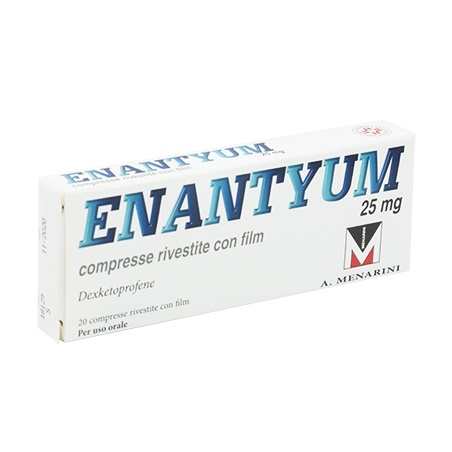
- Kraj rejestracji
- Postać farmaceutycznaFilm-coated tablet, 25 MG
- Kod ATCM01AE17
- Substancja czynna
- Wymaga receptyNie
- Producent
- Te treści mają charakter wyłącznie informacyjny i nie zastępują konsultacji lekarskiej.
- Zamienniki ENANTYUMPostać farmaceutyczna: Film-coated tablet, 25 MGSubstancja czynna: dexketoprofenProducent: KRKA D.D. NOVO MESTOBez receptyPostać farmaceutyczna: Film-coated tablet, 25 MGSubstancja czynna: dexketoprofenProducent: TOWA PHARMACEUTICAL S.P.A.Bez receptyPostać farmaceutyczna: Film-coated tablet, 25 MGSubstancja czynna: dexketoprofenProducent: PHARMACARE S.R.L.Bez recepty
Odpowiedniki ENANTYUM w innych krajach
Leki z tą samą substancją czynną dostępne w innych krajach.
Odpowiednik ENANTYUM w Hiszpania
Odpowiednik ENANTYUM w Polska
Odpowiednik ENANTYUM w Ukraina
Lekarze online w sprawie ENANTYUM
Omów stosowanie ENANTYUM, bezpieczeństwo i ocenę zasadności recepty zgodnie z obowiązującymi przepisami.









Uzyskaj receptę na ENANTYUM online
Wypełnij 2-minutowy formularz
Opisz swoje objawy, historię choroby i lek, o który prosisz.
Wybierz lekarza lub pozwól nam przydzielić
Wybierz specjalistę lub dopasujemy Cię do najbliższego dostępnego lekarza.
Lekarz analizuje Twój przypadek
Zazwyczaj w ciągu 30 minut. Może zadawać dodatkowe pytania przez czat.
Odbierz w dowolnej aptece
Recepta elektroniczna wysłana na Twój e-mail — ważna w całej Polsce.
Często zadawane pytania
ENANTYUM nie wymaga recepty w Włochy. Możesz skonsultować się z lekarzem online, aby sprawdzić, czy ten lek może być odpowiedni w Twojej sytuacji.
Substancją czynną w ENANTYUM jest dexketoprofen. Informacja ta pomaga rozpoznać leki o tym samym składzie, ale pod różnymi nazwami handlowymi.
ENANTYUM jest produkowany przez LABORATORIOS MENARINI S.A.. Nazwy handlowe i opakowania mogą się różnić w zależności od dystrybutora.
Lekarze, tacy jak Lekarze rodzinni, Psychiatrzy, Dermatolodzy, Kardiolodzy, Endokrynolodzy, Gastroenterolodzy, Pulmonolodzy, Nefrolodzy, Reumatolodzy, Hematolodzy, Zakaźnicy, Alergolodzy, Geriatrzy, Pediatrzy, Onkolodzy, mogą ocenić, czy stosowanie ENANTYUM jest odpowiednie w Twoim przypadku, w zależności od sytuacji klinicznej i lokalnych przepisów. Możesz umówić konsultację online, aby omówić objawy i możliwe dalsze kroki.
Polska posiada dobrze rozwiniętą infrastrukturę ochrony zdrowia w dużych miastach, takich jak Warszawa, Kraków, Wrocław i Gdańsk. Apteki są łatwo dostępne i działają zgodnie z obowiązującymi przepisami, zapewniając dostęp do leków na receptę.
Możesz kupić ENANTYUM w Warszawie, Krakowie, Wrocławiu lub Gdańsku w każdej aptece, posiadając ważną receptę.
Aby uzyskać receptę, możesz skorzystać z Oladoctor:
Inne leki zawierające tę samą substancję czynną (dexketoprofen) to m.in. DEXFENIA, DEXKETOPROFENE PENSAVITAL, DEXKETOPROFENE PARMAKARE. Mogą one różnić się nazwą handlową lub postacią, ale zawierają ten sam składnik terapeutyczny. Przed zmianą lub rozpoczęciem nowego leku skonsultuj się z lekarzem.
