



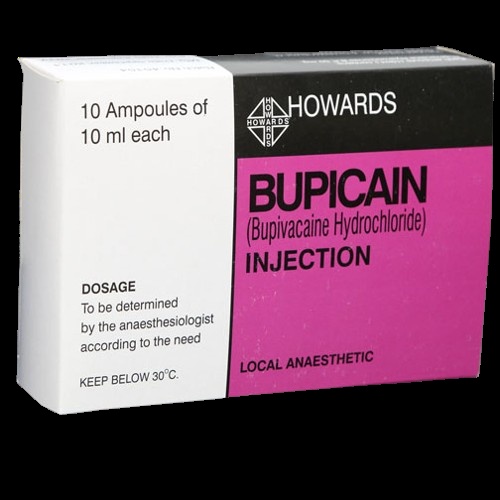
BUPICAIN 2.5 mg/ml Roztwór do wstrzykiwań

Ocena recepty online
Lekarz przeanalizuje Twój przypadek i zdecyduje, czy wystawienie recepty jest medycznie uzasadnione.

Porozmawiaj z lekarzem o tym leku
Omów swoje objawy i opcje leczenia podczas szybkiej konsultacji online.



Jak stosować BUPIKAIN
Treść ulotki
bupicain
2.5 mg/ml injectable solution
5 mg/ml injectable solution
10 mg/ml hyperbaric injectable solution
bupivacaine hydrochloride
Generic medicine
Read this leaflet carefully before using this medicine as it contains important
information for you.
- Keep this leaflet. You may need to read it again.
- If you have any questions, ask your doctor, pharmacist or nurse.
- This medicine has been prescribed for you only. Do not pass it on to others, even if their symptoms are the same as yours, as it could be harmful.
- If you get any side effects, even those not listed in this leaflet, tell your doctor, pharmacist or nurse. See section 4.
Contents of this leaflet:
- 1. What bupicain is and what it is used for
- 2. What you need to know before bupicain is administered to you
- 3. How to use bupicain
- 4. Possible side effects
- 5. How to store bupicain
- 6. Contents of the pack and other information
1. What is Bupicain and what is it used for
Bupicain contains the active substance bupivacaine hydrochloride and belongs to a class of medicines called local anesthetics, used before a surgical procedure to induce anesthesia.
Bupicain can be used in any type of peripheral anesthesia.
Bupicain is indicated, either alone or in combination with general anesthesia (narcosis), in the following procedures:
- general surgery;
- bones and joints (orthopedics);
- eyes (ophthalmology);
- ear and throat (otorhinolaryngology);
- stomach (stomatology);
- genitals and during childbirth (gynecology-obstetrics);
- skin (dermatology).
Bupicain 2.5 mg/ml injectable solution and Bupicain 5 mg/ml injectable solution are indicated in
adults and children over 12 years of age for surgical anesthesia and in adults and children over
1 year of age for acute pain.
Bupicain 10 mg/ml hyperbaric injectable solution is indicated in adults for spinal anesthesia.
2. What you need to know before you are given bupicain
You must not be given bupicain:
- if you are allergic to bupivacaine hydrochloride, to similar substances (such as amide-type local anesthetics) or to any of the other ingredients of this medicine (listed in section 6);
- if you are to undergo a type of regional anesthesia called Bier Block.
In the event that you are to undergo a type of anesthesia called spinal (bupicain 10 mg/ml
hyperbaric injectable solution), this medicine must not be given to you if:
- you suffer from diseases of the central nervous system (such as meningitis, tumors, poliomyelitis, intracranial hemorrhages);
- you suffer from diseases of the spine (such as spondylitis, tuberculosis, tumor), have an abnormal narrowing (stenosis) of the spinal canal that can occur in one of the regions of the spine or have recently suffered a trauma (such as fractures);
- you suffer from infections characterized by the presence of bacteria in the blood (septicemia);
- you have a vitamin B12 deficiency (pernicious anemia), associated with problems of the spinal cord (subacute spinal cord degeneration);
- you have a skin infection caused by bacteria (pyogenic) at the injection site or in the surrounding area;
- you have had a blockage of heart function (cardiogenic shock) or have a reduced blood volume due to bleeding or fluid loss (hypovolemic shock);
- you suffer from blood clotting disorders or are taking medicines used to prevent blood clots (anticoagulants).
Warnings and precautions
Talk to your doctor, pharmacist or nurse before you are given bupicain.
Serious side effects, such as blockage of heart function (cardiac arrest) or death, may occur in the case of epidural anesthesia or peripheral nerve block.
In addition, during treatment with bupicain, problems of the central nervous system, heart and blood vessels (cardiovascular problems, ventricular arrhythmias, ventricular fibrillation, sudden cardiovascular collapse) and death may occur when this medicine is present in high concentrations in the blood, especially when accidentally administered into the blood (intravascular injection) or in areas rich in blood vessels (highly vascularized).
This medicine must be given to you with great caution and under strict medical supervision if:
- you are elderly or debilitated;
- you suffer from heart problems (partial or complete heart block), as this medicine may decrease heart contraction (cardiac conduction);
- you have advanced liver disease or have severe kidney dysfunction;
- you are in advanced pregnancy;
- you have a reduced blood volume (hypovolemia), as this medicine during spinal anesthesia (bupicain 10 mg/ml hyperbaric injectable solution) may cause a severe and sudden drop in blood pressure (hypotension);
- you are taking medicines used for heart rhythm disturbances (Class III antiarrhythmics), such as amiodarone; in this case, the doctor may decide to monitor heart function (by electrocardiogram) (see “Other medicines and bupicain”);
- you suffer from disorders of the nervous system (multiple sclerosis, hemiplegia, paraplegia) or disorders of the nerves and muscles (neuromuscular) and are to undergo spinal anesthesia (bupicain 10 mg/ml hyperbaric injectable solution);
- you have suffered a trauma to the joints (major intra-articular) or have undergone surgery on the joints and bupicain is to be given to you via intra-articular route;
- you have reduced heart and blood vessel function (reduced cardiovascular function) and bupicain is to be given to you via epidural route;
- you are taking medicines used for the treatment of mood disorders (MAOIs, tricyclic antidepressants) (see “Other medicines and bupicain”).
The doctor will monitor you during treatment with this medicine as some local anesthesia techniques can cause even serious side effects:
- central nervous system block: a decrease in heart and blood vessel function (cardiovascular depression) may occur, especially if you already have a reduced blood volume (hypovolemia); therefore caution is necessary if you have reduced heart and blood vessel function (cardiovascular) and are to undergo epidural anesthesia;
- epidural anesthesia: a reduction in blood pressure (hypotension) and a decrease in heart rate (bradycardia) may occur; the reduction in blood pressure requires immediate administration of medicines used to stimulate the heart (sympathomimetics) intravenously;
- injections behind the eyes (retrobulbar): very rarely, temporary loss of vision (temporary blindness), blockage of heart and circulation (cardiovascular collapse), difficulty breathing (apnea) and convulsions may occur, which must be treated immediately;
- injections behind the eyes (retrobulbar) or around the eyes (peribulbar): rare persistent disorders of the eye muscles may occur; therefore, the lowest doses and concentrations of anesthetic should be used;
- paracervical block: a reduction or increase in fetal heart rate (bradycardia/tachycardia) may occur; therefore, fetal heart rate must be monitored during use of this medicine (see “Pregnancy and breastfeeding”);
- spinal anesthesia(bupicain 10 mg/ml hyperbaric injectable solution): total or high spinal block may occur, with decreased heart and circulation function (cardiovascular depression) and decreased breathing (respiratory depression); these effects may be more likely if you are elderly or in advanced pregnancy; in these two cases the dose should be reduced; in addition, rare damage to the brain and nerves (paresthesia, anesthesia, motor weakness and paralysis) may occur in spinal anesthesia, which in some cases may be permanent.
In the case of local anesthesia in areas such as fingers, root of the penis, bupivacaine without epinephrine will be given to you to prevent tissue damage (ischemic necrosis).
Before using this medicine, the doctor must check the condition of blood circulation.
The doctor may decide to use a test dose of this medicine in association with epinephrine to avoid accidental intravenous or spinal injection.
During administration, the doctor will carefully monitor you, immediately stopping treatment at the first sign of alarm, for example if you experience changes in sensitivity or drowsiness (altered sensorium).
Rare cases of severe reactions, even in non-allergic people, have been reported; therefore, during use of this medicine, immediate availability of equipment, medicines and specialized personnel for emergency treatment is necessary.
Children
The safety and efficacy of bupivacaine hydrochloride in children under 1 year of age have not been established.
The use of bupivacaine hydrochloride for intra-articular or major nerve block in children aged between 1 and 12 years has not been documented.
In epidural anesthesia, the dose must be adjusted to weight and age (see “Use in children from 1 to 12 years of age”).
Other medicines and bupicain
Tell your doctor, pharmacist or nurse if you are taking, have recently taken or might take any other medicines.
This medicine must be given to you with caution if you are taking:
- other medicines used to reduce pain during surgery (local anesthetics);
- medicines similar to bupicain, such as some medicines used to treat heart rhythm disturbances (antiarrhythmics), such as lidocaine, mexiletine and tocainide;
- Class III antiarrhythmic medicines, such as amiodarone (see “Warnings and precautions”);
- MAOIs, tricyclic antidepressants (see “Warnings and precautions”).
Pregnancy and breastfeeding
If you are pregnant, suspect you are pregnant or are planning a pregnancy, or if you are breastfeeding, ask your doctor, pharmacist or nurse for advice before using this medicine.
Pregnancy
If you are in advanced pregnancy, the dose in case of spinal anesthesia (bupicain 10 mg/ml hyperbaric injectable solution) must be reduced.
Paracervical anesthesia is associated with an increased risk of adverse effects on the fetus (see “Warnings and precautions”).
Breastfeeding
If you are breastfeeding, bupicain may pass in very small amounts into breast milk; generally there is no risk to the newborn.
Driving and using machines
Bupicain impairs the ability to drive vehicles or use machines. Bupicain can cause mild disturbances to the mind and control of movements (coordination) and can temporarily negatively affect the ability to move and the degree of vigilance. If you experience these symptoms, avoid driving vehicles and using machines.
Bupicain2.5 mg/ml injectable solution and bupicain5 mg/ml injectable solution contain sodium
5 ml vial: these medicines contain less than 1 mmol (23 mg) of sodium per vial, i.e. they are essentially ‘sodium-free’.
10 ml vial: these medicines contain 31.5 mg of sodium (the main component of table salt) per vial. This is equivalent to 1.6% of the recommended daily intake with the diet of an adult.
3. How to use bupicain
This medicine will be administered to you by a doctor or specialized personnel during surgical procedures.
If you have any doubts, consult your doctor, pharmacist or nurse.
The dose and method of administration will be established by the doctor based on needs and age.
Use in adults and children over 12 years of age
The dose should be the minimum possible that allows adequate anesthesia, the recommended dose varies from 2-3 mg to 100-150 mg depending on the type of anesthesia.
The maximum dose for single administration should not exceed 150 mg, corresponding to 30 ml of the 5 mg/ml solution and 60 ml of the 2.5 mg/ml solution.
In general, the maximum recommended dose is 2 mg per kg of body weight for a single administration.
Use in children from 1 to 12 years of age( bupicain2.5 mg/ml injectable solution and bupicain5 mg/ml
injectable solution)
The dose should be the minimum possible that allows adequate anesthesia.
The maximum dose is 2 mg per kg of body weight.
The doctor will adjust the dose based on body weight.
Children under 1 year of age: safety and efficacy of bupivacaine have not been established (see “Children”).
If you use more bupicainthan you should
Accidental injection into a vessel can cause toxic effects after a few seconds or minutes.
Following the administration of an excessive dose of this medicine, toxic effects (systemic toxic reactions) may occur
15-60 minutes after the injection.
Bupicain 10 mg/ml hyperbaric injectable solution, if administered under recommended conditions, is unlikely to cause general toxicity. However, if other local anesthetics are administered simultaneously, the toxic effects may be additive.
In case of accidental use/ingestion of an excessive dose of this medicine, immediately inform your doctor or go to the nearest hospital Emergency Room.
If you forget to use bupicain
This medicine will be administered by a doctor or a nurse, so it is unlikely that a dose will be forgotten.
If you have any doubts about the use of this medicine, consult your doctor, pharmacist or nurse.
4. Possible side effects
Like all medicines, this medicine can cause side effects, although not everybody gets them.
The following side effects may occur:
Very common(may affect more than 1 in 10 people):
- reduction of blood pressure (hypotension);
- nausea.
Common(may affect up to 1 in 10 people):
- disturbances of sensitivity in legs and arms or other parts of the body (paresthesia), dizziness;
- reduction of heart rate (bradycardia);
- increase in blood pressure (hypertension);
- vomiting;
- inability of the bladder to empty (urinary retention).
Uncommon(may affect up to 1 in 100 people):
- convulsions, disturbance of sensitivity around the mouth (paresthesia in the circumoral region), numbness of the tongue, intolerance to sounds (hyperacusis), visual disturbances, loss of consciousness, tremor, feeling of emptiness in the head, perception of ringing in the ears (tinnitus), speech disorders (dysarthria).
Rare(may affect up to 1 in 1000 people):
- allergic reactions, severe allergic reaction (anaphylactic shock);
- disease characterized by malfunctioning of the nerves (neuropathy), nerve injury (peripheral nerve lesion), inflammation of a membrane surrounding the brain and spinal cord (arachnoiditis), loss of the ability to contract one or more muscles (paresis), movement and sensitivity disorders of the lower limbs (paraplegia), total spinal block (unintentional) ;
- double vision (diplopia);
- heart block (cardiac arrest), heart rhythm alterations (cardiac arrhythmias);
- breathing problems (respiratory depression).
Not known(frequency cannot be estimated from available data):
- excitement, disorientation, pupil dilation (mydriasis), increased metabolism and body temperature, contraction of the jaw muscles (trismus), sweating, increased number of breaths (tachypnea), bronchial dilation (bronchodilation), increased volume of blood vessels (vasodilation);
- allergic reactions with local manifestations such as skin irritation (urticaria, itching) or systemic such as contraction of the bronchial muscles (bronchospasm).
Following the administration of bupicain 10 mg/ml hyperbaric injectable solution, the following side effects may also occur:
Common(may affect up to 1 in 10 people):
- headache after puncture in the dura mater (post-dural puncture headache);
- involuntary loss of urine (urinary incontinence).
Uncommon(may affect up to 1 in 100 people):
- reduction of the ability to contract one or more muscles (paresis), disturbance of sensitivity (dysesthesia);
- muscle weakness, back pain.
Rare(may affect up to 1 in 1000 people):
- loss of contraction of one or more muscles (paralysis).
Possible side effects in children
The side effects that may occur in children are similar to those reported for adults. It may be difficult to detect the onset of early signs of toxicity of this medicine when it is used during general anesthesia in children.
Reporting of side effects
If you get any side effects, talk to your doctor or pharmacist. This includes any possible side effects not listed in this leaflet. You can also report side effects directly through the national reporting system at https://www.aifa.gov.it/content/segnalazioni-reazioni-avverse. By reporting side effects you can help provide more information on the safety of this medicine.
5. How to store bupicain
Keep this medicine out of the sight and reach of children.
Do not use this medicine after the expiry date which is stated on the packaging after “Exp.”. The expiry date
refers to the last day of that month.
The solution must be used immediately after opening. Any unused medicine must be
discarded.
Do not dispose of any medicine in wastewater or household waste. Ask your pharmacist how to dispose of
medicines you no longer use. This will help protect the environment.
6. Package contents and other information
What bupicain contains 2.5 mg/ml injectable solution
- The active ingredient is bupivacaine hydrochloride: 1 ml contains 2.5 mg of bupivacaine hydrochloride.
- The other ingredients are: sodium chloride, water for injections. What bupicain contains 5 mg/ml injectable solution
- The active ingredient is bupivacaine hydrochloride: 1 ml contains 5 mg of bupivacaine hydrochloride.
- The other ingredients are: sodium chloride, water for injections.
What bupicain contains 10 mg/ml hyperbaric injectable solution
- The active ingredient is bupivacaine hydrochloride: 1 ml contains 10 mg of bupivacaine hydrochloride.
- The other ingredients are: glucose monohydrate, water for injections.
Description of the appearance of bupicain and package contents
Bupicain 2.5 mg/ml injectable solution and bupicain 5 mg/ml injectable solution:
pack of 10 vials of 5 ml or 10 ml.
Bupicain 10 mg/ml hyperbaric injectable solution:
pack of 10 vials of 2 ml.
Marketing authorisation holder and manufacturer
Monico spa
Via Ponte di Pietra 7, 30173 Venice Mestre - Italy
-----------------------------------------------------------------------------------------------------------------------------------
The following information is intended exclusively for healthcare professionals
Dosage and administration
In adults, the recommended dose is given as a guideline in the following table:
| Type of anesthesia | Concentration (mg/ml) | a Dosage | Observations | |
| ml | mg | |||
| Trigeminal block | 2.5 5 | 1-5 0.5-4 | F 2.5-12.5 2.5-20 | |
| Axillary block | 2.5 5 | 20-40 10-30 | l e 50-100 50-150 | |
| Stellate ganglion block | 2.5 | 10-20 | d 25-50 | |
| Intercostal block | 2.5 5 | a 4-8 3-5 | 10-20 15-25 | The dose is per each intercostal space |
| Epidural | 2.5 5 | n 30-40 10-20 | 75-100 50-100 | |
| Continuous epidural | 2.5 5 | a Start with 10 ml, then 3-5-8 ml every 4-6 hours, i according to the segments to be anesthetized and l the patient's age | ||
| Sacral | 2.5 5 | a 15-40 15-20 | 37.5-100 75-100 | |
| Splanchic block | 2.5 | t 10-40 | 25-100 | |
| Lumbar sympathetic block | I 2.5 | 10-40 | 25-100 | |
| Pelvic block | a 5 | 20-30 | 100-150 | |
| Spinal subarachnoid | i 5 10 | 4 2 | 20 20 | |
In children from 1 to 12 years of age, the recommended doses of bupicain 2.5 mg/ml injectable solution and
bupicain 5 mg/ml injectable solution are reported in the following table:
a) The onset and duration of peripheral nerve block depend on the type of block and the dose administered.
b) Thoracic epidural blocks require incremental dosages until the desired level of
anesthesia is reached.
Treatment of acute systemic toxicity
Administration of the local anesthetic must be stopped immediately if signs of
acute systemic toxicity or total spinal block appear. Symptoms of central nervous system toxicity must
be treated immediately with adequate support of airway patency and breathing and
with the administration of anticonvulsants, such as diazepam at a dose of 10-20 mg intravenously; barbiturates are
instead not recommended as they can exacerbate bulbous depression. Circulation can be
supported by administering corticosteroids in appropriate doses intravenously; diluted solutions of alpha-beta-stimulants with
vasoconstrictor action (mefentermine, metaraminol and others) or
atropine sulfate may be added.
If cardiovascular depression occurs, appropriate treatment with fluids intravenously, vasopressors, inotropic agents and/or lipid emulsion should be considered. In children, the
dosage must be adjusted to age and weight.
If cardiac arrest occurs, cardiopulmonary resuscitation must be performed immediately. It is vitally important to ensure optimal oxygenation, support ventilation and
circulation and treat acidosis.
If cardiac arrest occurs, it may be necessary to prolong resuscitation maneuvers for
achieving a favorable outcome.
Incompatibilities
The solubility of bupivacaine at a pH higher than 6.5 is limited. This should be taken into account when
adding alkaline solutions, such as carbonates, which can cause the solution to precipitate.
For further information, see the Summary of Product Characteristics.
| Concentration (mg/ml) | Volum e (ml/kg) | Dose (mg/kg) | Onset (min) | o Duration of effect (hours) | |
| c ACUTE PAIN (peri- and post-operative) | |||||
| Caudal Epidural Administration | 2.5 | 0.6-0.8 | 1.5-2.0 | a 20-30 | 2-6 |
| Lumbar Epidural Administration | 2.5 | 0.6-0.8 | 1.5-2.0 | 20-30 | 2-6 |
| Thoracic Epidural Administrationb) | 2.5 | 0.6-0.8 | m 1.5-2.0 | 20-30 | 2-6 |
| Surgical Field Block (e.g., minor nerve blocks and infiltration) | 2.5 5 | 0.5-2.0 r 0.5-2.0 | |||
| Peripheral Nerve Blocks (e.g., ilioinguinal-iliohypogastric) | 2.5 5 | a 0.5-2.0 0.5-2.0 | a) a) | a) a) | |

Nie jesteś pewien, czy ten lek jest odpowiedni dla ciebie?
Omów swoje objawy i leczenie z lekarzem online.

Zacząłeś przyjmować lek i masz pytania?
Omów swoje objawy i leczenie z lekarzem online.
- Kraj rejestracji
- Postać farmaceutycznaInjectable solution, 2.5 MG/ML
- Kod ATCN01BB01
- Substancja czynna
- Wymaga receptyTak
- Producent
- Te treści mają charakter wyłącznie informacyjny i nie zastępują konsultacji lekarskiej.
- Zamienniki BUPIKAINPostać farmaceutyczna: Injectable solution, 2,5MG/MLSubstancja czynna: bupivacaineWymaga receptyPostać farmaceutyczna: Injectable solution, 2.5 MG/MLSubstancja czynna: bupivacaineWymaga receptyPostać farmaceutyczna: Injectable solution, 2,5 MG/MLSubstancja czynna: bupivacaineProducent: S.A.L.F. SPA LABORATORIO FARMACOLOGICOWymaga recepty
Odpowiedniki BUPIKAIN w innych krajach
Leki z tą samą substancją czynną dostępne w innych krajach.
Odpowiednik BUPIKAIN w Hiszpania
Odpowiednik BUPIKAIN w Polska
Odpowiednik BUPIKAIN w Ukraina
Lekarze online w sprawie BUPIKAIN
Omów stosowanie BUPIKAIN, bezpieczeństwo i ocenę zasadności recepty zgodnie z obowiązującymi przepisami.









Uzyskaj receptę na BUPIKAIN online
Wypełnij 2-minutowy formularz
Opisz swoje objawy, historię choroby i lek, o który prosisz.
Wybierz lekarza lub pozwól nam przydzielić
Wybierz specjalistę lub dopasujemy Cię do najbliższego dostępnego lekarza.
Lekarz analizuje Twój przypadek
Zazwyczaj w ciągu 30 minut. Może zadawać dodatkowe pytania przez czat.
Odbierz w dowolnej aptece
Recepta elektroniczna wysłana na Twój e-mail — ważna w całej Polsce.
Często zadawane pytania
BUPIKAIN wymaga recepty w Włochy. Możesz skonsultować się z lekarzem online, aby sprawdzić, czy ten lek może być odpowiedni w Twojej sytuacji.
Substancją czynną w BUPIKAIN jest bupivacaine. Informacja ta pomaga rozpoznać leki o tym samym składzie, ale pod różnymi nazwami handlowymi.
BUPIKAIN jest produkowany przez MONICO S.P.A.. Nazwy handlowe i opakowania mogą się różnić w zależności od dystrybutora.
Lekarze, tacy jak Lekarze rodzinni, Psychiatrzy, Dermatolodzy, Kardiolodzy, Endokrynolodzy, Gastroenterolodzy, Pulmonolodzy, Nefrolodzy, Reumatolodzy, Hematolodzy, Zakaźnicy, Alergolodzy, Geriatrzy, Pediatrzy, Onkolodzy, mogą ocenić, czy stosowanie BUPIKAIN jest odpowiednie w Twoim przypadku, w zależności od sytuacji klinicznej i lokalnych przepisów. Możesz umówić konsultację online, aby omówić objawy i możliwe dalsze kroki.
Polska posiada dobrze rozwiniętą infrastrukturę ochrony zdrowia w dużych miastach, takich jak Warszawa, Kraków, Wrocław i Gdańsk. Apteki są łatwo dostępne i działają zgodnie z obowiązującymi przepisami, zapewniając dostęp do leków na receptę.
Możesz kupić BUPIKAIN w Warszawie, Krakowie, Wrocławiu lub Gdańsku w każdej aptece, posiadając ważną receptę.
Aby uzyskać receptę, możesz skorzystać z Oladoctor:
Inne leki zawierające tę samą substancję czynną (bupivacaine) to m.in. BUPISEN, BUPIVAKAINA ANJELINI, BUPIVAKAINA KLORIDRATO S.A.L.F.. Mogą one różnić się nazwą handlową lub postacią, ale zawierają ten sam składnik terapeutyczny. Przed zmianą lub rozpoczęciem nowego leku skonsultuj się z lekarzem.
