



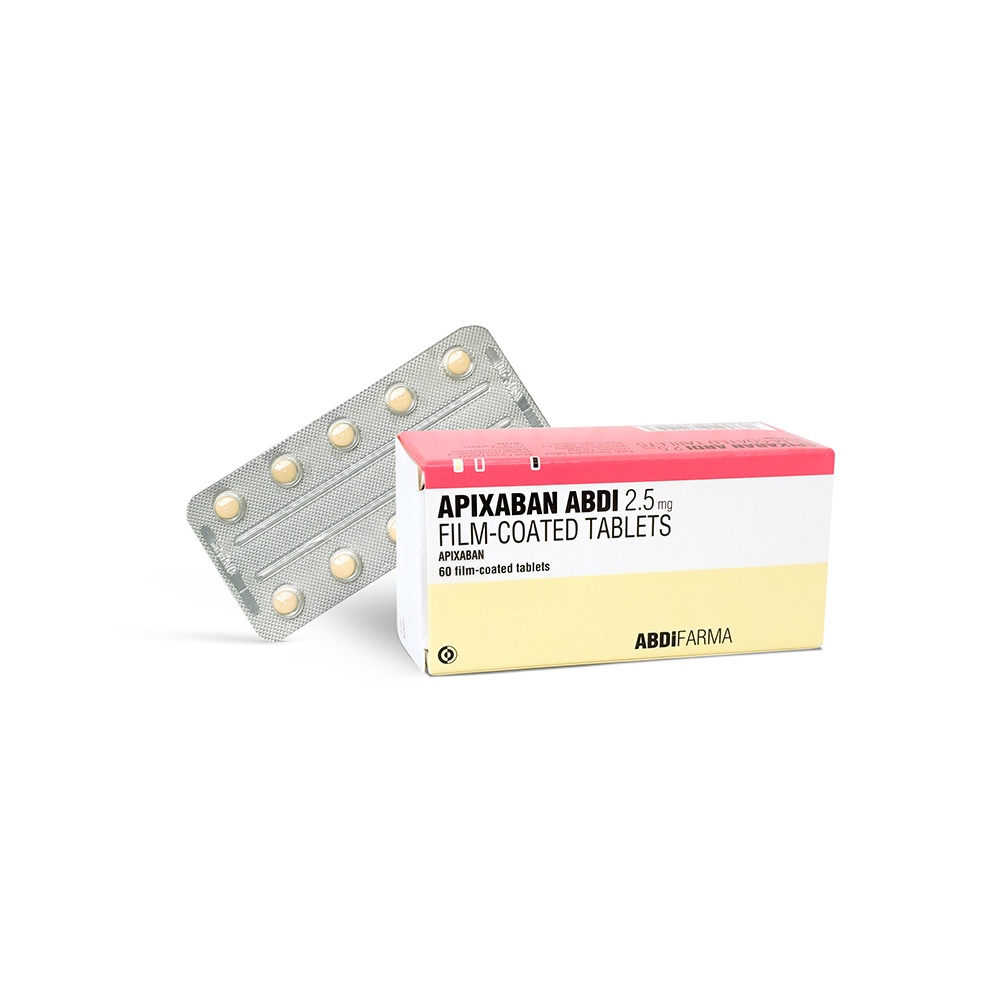
APIXABAN 2.5 mg Tabletki powlekane

Ocena recepty online
Lekarz przeanalizuje Twój przypadek i zdecyduje, czy wystawienie recepty jest medycznie uzasadnione.

Porozmawiaj z lekarzem o tym leku
Omów swoje objawy i opcje leczenia podczas szybkiej konsultacji online.



Jak stosować APIXABAN ABDI
Treść ulotki
Apixaban Abdi 2,5 mg film-coated tablets
apixaban
Generic medicine
Read this leaflet carefully before you start taking this medicine because it contains important information for you.
- Keep this leaflet. You may need to read it again.
- If you have any questions, ask your doctor, pharmacist or nurse.
- This medicine has been prescribed for you only. Do not pass it on to others, even if they have the same symptoms as you, as it may be harmful.
- If you get any side effects, even those not listed in this leaflet, tell your doctor, pharmacist or nurse. See section 4.
Contents of this leaflet
- 1. What Apixaban Abdi is and what it is used for
- 2. What you need to know before you take Apixaban Abdi
- 3. How to take Apixaban Abdi
- 4. Possible side effects
- 5. How to store Apixaban Abdi
- 6. Contents of the pack and other information
1. What is Apixaban Abdi and what it is used for
Apixaban Abdi contains the active ingredient apixaban and belongs to a group of medicines called
anticoagulants. This medicine helps to prevent the formation of blood clots by blocking
Factor Xa, which is an important component of blood coagulation.
Apixaban Abdi is used in adults:
to prevent the formation of blood clots (deep vein thrombosis [DVT]) after
hip or knee replacement surgery. After a hip or knee operation,
you may be at a higher risk of developing blood clots in the veins of your legs. This
can cause swelling of the legs, with or without pain. If a blood clot moves from the
leg to the lungs, it can block the flow of blood causing shortness of breath, with or without
chest pain. This condition (pulmonary embolism) can be life-threatening and requires
immediate medical attention.
to prevent the formation of blood clots in the heart in patients with irregular heartbeat
(atrial fibrillation) and with at least one additional risk factor. Blood clots
can break off and reach the brain, and lead to stroke, or reach other organs preventing
normal blood flow to those organs (also known as systemic embolism). A stroke can
be life-threatening and requires immediate medical attention.
to treat blood clots in the veins of the legs (deep vein thrombosis) and in the blood
vessels of the lungs (pulmonary embolism) and to prevent blood clots from reforming in the
blood vessels of the legs and/or lungs.
Apixaban Abdi is used in children aged from 28 days to less than 18 years to treat blood
clots and to prevent blood clots from reforming in the veins or blood vessels of the lungs.
For the appropriate recommended dose for body weight, see section 3.
2. What you need to know before taking Apixaban Abdi
Do not take Apixaban Abdi if
you are allergicto apixaban or to any of the other ingredients of this medicine (listed in
section 6);
you have excessive bleeding;
you have a disease in an organof the body that leads to a higher risk of serious bleeding
(such as an ulcer, recent or ongoing,of the stomach or intestine, recent bleeding in the
brain);
you have a liver diseasethat leads to a higher risk of bleeding (hepatic coagulopathy);
you are taking medicines to prevent blood clots(for example,
warfarin, rivaroxaban, dabigatran or heparin), except when you are changing anticoagulant
treatment, while you have a venous or arterial catheter and are receiving heparin through this
route to keep it open, or if a catheter is inserted into one of your blood vessels (transcatheter
ablation) to treat an irregular heartbeat (arrhythmia).
Warnings and precautions
Talk to your doctor, pharmacist or nurse before taking this medicine if you have any of the
following conditions:
an increased risk of bleeding, such as:
bleeding disorders, including conditions that lead to reduced platelet
activity;
very high blood pressure,not controlled by medical treatment;
if you are over 75 years old;
if you weigh 60 kg or less;
a serious kidney disease or if you are on dialysis;
liver problems or a history of liver problems;
This medicine will be used with caution in patients with signs of altered liver function.
have a tube (catheter) or have had an injection into your spine(for anesthesia or
pain relief). Your doctor will tell you to take this medicine after 5 hours or more from the
removal of the catheter;
you have a prosthetic heart valve;
if your doctor finds that your blood pressure is unstable or if another
treatment or surgical procedure to remove a blood clot from the lungs is planned.
Take special care with Apixaban Abdi
if you know you have a condition called antiphospholipid syndrome (a disorder of the immune
system that increases the risk of blood clots), tell your doctor, who will decide if it is
necessary to change therapy.
If you need to undergo surgery or a procedure that may cause bleeding, your
doctor may ask you to temporarily interrupt, for a short time, taking this
medicine. If you are not sure if a procedure may cause bleeding, ask your doctor.
Children and adolescents
This medicine is not recommended in children and adolescents weighing less than 35 kg.
Other medicines and Apixaban Abdi
Tell your doctor, pharmacist or nurse if you are taking, have recently taken or might
take any other medicines.
Some medicines can increase the effect of Apixaban Abdi and others can decrease it. Your doctor
will decide if you should be treated with Apixaban Abdi when taking these medicines and how
carefully you should be monitored.
The following medicines can increase the effect of Apixaban Abdi and increase the possibility of
undesirable bleeding:
some medicines for fungal infections(e.g. ketoconazole, etc.);
some antiviral medicines for HIV/AIDS(e.g. ritonavir);
other medicines used to reduce blood clotting(e.g. enoxaparin, etc.);
anti-inflammatoryor pain relievers(e.g. acetylsalicylic acid or naproxen). In particular, if you are over
75 years of age and are taking acetylsalicylic acid, you may have a greater risk of
bleeding;
medicines for high blood pressure or heart problems(e.g. diltiazem);
antidepressant medicinescalled selective serotonin reuptake inhibitorsor
serotonin-norepinephrine reuptake inhibitors.
The following medicines can reduce the effect of Apixaban Abdi in helping to prevent the formation of
blood clots:
medicines for epilepsy or seizures(e.g. phenytoin, etc.);
St. John's wort(a herbal product used for depression);
medicines to treat tuberculosisor other infections(e.g. rifampicin).
Pregnancy and breastfeeding
If you are pregnant, suspect you may be pregnant or are planning to become pregnant, ask your doctor, pharmacist or nurse for advice before taking this medicine.
The effects of Apixaban Abdi on pregnancy and the developing baby are unknown. You should not take
this medicine if you are pregnant. Contact your doctor immediatelyif you become pregnant while taking
this medicine.
It is not known whether Apixaban Abdi passes into breast milk. Consult your doctor, pharmacist or nurse
before taking this medicine while breastfeeding. They will advise you whether to stop
breastfeeding or stop/not start therapy with this medicine.
Driving and using machines
Apixaban Abdi has not shown effects on the ability to drive vehicles or use machines.
Apixaban Abdi contains lactose (a type of sugar) and sodium
If your doctor has told you that you have an intolerance to some sugars, contact him before taking this
medicine.
This medicine contains less than 1 mmol (23 mg) of sodium per dose, i.e. essentially “sodium-free”.
3. How to take Apixaban Abdi
Take this medicine following exactly the instructions of your doctor or pharmacist. If you have
any doubts, ask your doctor, pharmacist or nurse.
Dose
Swallow the tablet with a little water. Apixaban Abdi can be taken with or without food.
Try to take the tablets every day at the same time, to get the best effect from the
treatment.
If you have difficulty swallowing the whole tablet, ask your doctor in which other ways Apixaban Abdi can be taken.
The tablet can be crushed and mixed with water, or 5% glucose in water, or
apple juice or applesauce, immediately before taking it.
Instructions for crushing:
Crush the tablets with a pestle and mortar.
Carefully transfer all the powder into a suitable container and then mix the powder with
a small amount, e.g., 30 mL (2 tablespoons), of water or one of the other liquids mentioned
above to prepare a mixture.
Swallow the mixture.
Rinse the pestle and mortar used to crush the tablet and the container with a
small amount of water (e.g., 30 mL) or one of the other liquids, and swallow the rinse.
If necessary, your doctor may also administer the crushed and mixed Apixaban Abdi tablet to you
through a nasogastric tube.
Take Apixaban Abdi as recommended:
To prevent the formation of blood clots after hip or
knee replacement surgeries.
The recommended dose is one Apixaban Abdi 2.5 mg tablet twice a day. For example, one in the
morning and one in the evening.
You should take the first tablet 12 to 24 hours after the surgery.
If you have had a major hipsurgery, you will generally take the tablets for 32 to 38 days.
If you have had a major kneesurgery, you will generally take the tablets for 10 to 14 days.
To prevent the formation of blood clots in the heart in patients with irregular heartbeat and
with at least one other additional risk factor.
The recommended dose is one Apixaban Abdi 5 mgtablet twice a day.
The recommended dose is one Apixaban Abdi 2.5 mgtablet twice a day if:
you have severely reduced kidney function;
you fall into two or more of the following conditions:
blood test results suggest poor kidney function (the value of
serum creatinine is 1.5 mg/dL (133 micromoles/L) or higher);
you are 80 years of age or older;
your weight is 60 kg or less.
The recommended dose is one tablet twice a day, for example, one in the morning and one in the evening.
Your doctor will decide how long you should continue the treatment.
To treat blood clots in the veins of the legs and in the blood vessels of the lungs
The recommended dose is two tabletsof Apixaban Abdi 5 mgtwice a day for the first 7 days,
for example, two in the morning and two in the evening.
After 7 days, the recommended dose is one tabletof Apixaban Abdi 5 mgtwice a day, for
example, one in the morning and one in the evening.
To prevent the recurrence of clots after completion of 6 months of treatment
The recommended dose is one tabletof Apixaban Abdi 2.5 mgtwice a day, for example, one
in the morning and one in the evening.
Your doctor will decide how long you should continue the treatment.
Use in children and adolescents
To treat blood clots and to prevent the recurrence of clots in the veins or blood vessels of the
lungs.
Take or administer this medicine following exactly the instructions of your doctor or
the child’s doctor or pharmacist. If you have any doubts, ask your doctor or the child’s doctor, the
pharmacist or nurse.
Try to take or administer the dose at the same time each day, to get the best effect from the
treatment.
The dose of Apixaban Abdi depends on body weight and will be calculated by the doctor.
The recommended dose for children and adolescents with a body weight of at least 35 kg is four
tabletsof Apixaban Abdi 2.5 mgtwice a day for the first 7 days, for example, four in the
morning and four in the evening.
After 7 days, the recommended dose is two tabletsof Apixaban Abdi 2.5 mgtwice a day, for
example, two in the morning and two in the evening.
For parents or caregivers :observe the child to make sure they have taken the entire
dose.
It is important to keep scheduled medical visits because the dose may need to be adjusted
as body weight changes.
Your doctor may modify your anticoagulant treatment as follows:
Switching from Apixaban Abdi to an anticoagulant medicine
Stop taking Apixaban Abdi. Start treatment with the anticoagulant medicine (for
example heparin) at the time you would have taken the next tablet.
Switching from an anticoagulant medicine to Apixaban Abdi
Stop taking the anticoagulant medicine. Start treatment with Apixaban Abdi at the
time you would have taken the next dose of the anticoagulant medicine, then continue
taking it normally.
Switching from treatment with an anticoagulant containing a vitamin K antagonist (e.g.
warfarin) to Apixaban Abdi
Stop taking the medicine containing the vitamin K antagonist. The doctor will need
to perform blood tests and instruct you on when to start treatment with Apixaban Abdi.
Switching from Apixaban Abdi to treatment with an anticoagulant containing a vitamin K antagonist
(e.g. warfarin).
If the doctor tells you to start taking a medicine containing a vitamin K antagonist,
continue taking Apixaban Abdi for at least 2 days after the first dose of the medicine containing
a vitamin K antagonist. The doctor will need to perform blood tests and
instruct you on when to stop treatment with Apixaban Abdi.
Patients undergoing cardioversion
If your irregular heartbeat needs to be restored to normal by a procedure
called cardioversion, take this medicine at the times your doctor tells you to take it, to
prevent blood clots in the blood vessels in the brain and other blood vessels in your body.
If you take more Apixaban Abdi than you should
Tell your doctor immediatelyif you have taken more than the prescribed dose of this medicine. Bring with
you the package of the medicine, even if there are no tablets left.
If you take more Apixaban Abdi than recommended, you may have a greater risk of
bleeding. If bleeding occurs, surgery, a transfusion, or other treatments that can inactivate the activity of factor Xa may be necessary.
If you forget to take Apixaban Abdi
If you forget to take a morning dose, take it as soon as you remember, you can take it
together with the evening dose.
A forgotten evening dose can only be taken that same evening. Do not take two doses the next morning,
and then continue instead to follow the dosing schedule twice a day,
as recommended, the next day.
If you have any questions about what to do or if you have forgotten more than one dose,consult your doctor, pharmacist or
nurse.
If you stop taking Apixaban Abdi
Do not stop taking this medicine without talking to your doctor first, as the risk of
developing a blood clot may be greater if you stop treatment too early.
If you have any questions about using this medicine, ask your doctor, pharmacist or nurse.
4. Possible side effects
Like all medicines, this medicine can cause side effects, although not everyone will experience them.
Apixaban Abdi may be given for three different medical conditions. The known side effects and the
frequency with which they occur may be different for each of these medical conditions and are listed
separately below. For these conditions, the most common general side effect of this medicine is
bleeding, which can potentially be life-threatening and requires immediate medical attention.
The following side effects are known to occur when Apixaban Abdi is taken to prevent the
formation of blood clots after hip or knee replacement surgery.
Common side effects (may affect up to 1 in 10 people)
Anemia, which can cause fatigue or paleness;
Bleeding, including:
bruising and swelling;
Nausea (feeling sick).
Uncommon side effects (may affect up to 1 in 100 people)
Reduced number of platelets in the blood (which may affect blood clotting);
Bleeding:
that occurs after surgery, including bruising and swelling, leakage of blood or fluid from the
wound/surgical incision (wound secretion) or injection site;
from the stomach, intestines, or bright/red blood in the stool;
in the urine;
from the nose;
from the vagina;
Low blood pressure, which can cause weakness or a rapid heartbeat;
Blood tests may show:
abnormal liver function
increased levels of certain liver enzymes;
increased bilirubin, a breakdown product of red blood cells, which can cause
yellowing of the skin and eyes;
Itching.
Rare side effects (may affect up to 1 in 1,000 people)
Allergic reactions (hypersensitivity) that can cause: swelling of the face, lips, mouth, tongue and/or
throat and difficulty breathing. Contact your doctor immediatelyif you experience any of these
symptoms.
Bleeding:
into the muscle;
in the eyes;
in the gums and blood in the sputum when coughing;
from the rectum;
Hair loss.
Not known (frequency cannot be estimated from the available data)
Bleeding:
in the brain or spinal cord;
in the lungs or throat;
in the mouth;
in the abdomen or the space behind the abdominal cavity;
from hemorrhoids;
tests showing blood in the stool or urine;
Skin rash that can form blisters and appears as small patches (dark central spots surrounded by a
clearer area, with a dark ring around the edge) (erythema
multiforme);
Inflammation of blood vessels (vasculitis) which can manifest with skin rashes or
pointed, flat, red, round spots under the skin surface or bruising.
The following side effects are known to occur when Apixaban Abdi is taken to prevent the
formation of blood clots in the heart in patients with irregular heartbeat and with at least one
additional risk factor.
Common side effects (may affect up to 1 in 10 people)
Bleeding, including:
in the eyes;
in the stomach or intestines;
from the rectum;
in the urine;
from the nose;
from the gums;
bruising and swelling;
Anemia, which can cause fatigue or paleness;
Low blood pressure, which can cause weakness or a rapid heartbeat;
Nausea (feeling sick);
Blood tests may show:
an increase in gamma-glutamyl transferase (GGT).
Uncommon side effects (may affect up to 1 in 100 people)
Bleeding:
in the brain or spinal cord;
in the mouth or blood in the sputum when coughing;
in the abdomen or from the vagina;
bright/red blood in the stool;
bleeding that occurs after surgery, including bruising and swelling, leakage of blood
or fluid from the wound/surgical incision (wound secretion) or injection site;
from hemorrhoids;
tests showing blood in the stool or urine;
Reduced number of platelets in the blood (which may affect blood clotting);
Blood tests may show:
abnormal liver function;
increased levels of certain liver enzymes;
increased bilirubin, a breakdown product of red blood cells, which can cause
yellowing of the skin and eyes;
Skin rash;
Itching;
Hair loss;
Allergic reactions (hypersensitivity) that can cause: swelling of the face, lips, mouth, tongue and/or
throat and difficulty breathing. Contact your doctor immediatelyif you experience any of these
symptoms.
Rare side effects (may affect up to 1 in 1,000 people)
Bleeding:
in the lungs or throat;
in the space behind the abdominal cavity;
into the muscle.
Very rare side effects (may affect up to 1 in 10,000 people)
Skin rash that can form blisters and appears as small patches (dark central spots
surrounded by a clearer area, with a dark ring around the edge) (erythema
multiforme).
Not known (frequency cannot be estimated from the available data)
Inflammation of blood vessels (vasculitis) which can manifest with skin rashes or
pointed, flat, red, round spots under the skin surface or bruising.
The following side effects are known to occur when Apixaban Abdi is taken to treat or
prevent blood clots from reforming in the veins of the legs and blood vessels in the lungs.
Common side effects (may affect up to 1 in 10 people)
Bleeding, including:
from the nose;
from the gums;
in the urine;
bruising and swelling;
in the stomach, intestines, from the rectum;
in the mouth;
from the vagina;
Anemia, which can cause fatigue or paleness;
Reduced number of platelets in the blood (which may affect blood clotting);
Nausea (feeling sick);
Skin rash;
Blood tests may show:
an increase in gamma-glutamyl transferase (GGT) or alanine aminotransferase (ALT).
Uncommon side effects (may affect up to 1 in 100 people)
Low blood pressure, which can cause weakness or a rapid heartbeat
Bleeding:
in the eyes;
in the mouth or blood in the sputum when coughing;
bright/red blood in the stool;
bleeding that occurs after surgery, including bruising and swelling, leakage of blood
or fluid from the wound/surgical incision (wound secretion) or injection site;
from hemorrhoids;
into the muscle;
Itching;
Hair loss;
Allergic reactions (hypersensitivity) that can cause: swelling of the face, lips, mouth, tongue and/or
throat and difficulty breathing. Contact your doctor immediatelyif you experience any of these
symptoms.
Blood tests may show:
abnormal liver function;
increased levels of certain liver enzymes;
increased bilirubin, a breakdown product of red blood cells, which can cause
yellowing of the skin and eyes.
Rare side effects (may affect up to 1 in 1,000 people)
Bleeding:
in the brain or spinal cord;
in the lungs.
Not known (frequency cannot be estimated from the available data)
Bleeding:
in the abdomen or the space behind the abdominal cavity.
Skin rash that can form blisters and appears as small patches (dark central spots
surrounded by a clearer area, with a dark ring around the edge) (erythema
multiforme);
Inflammation of blood vessels (vasculitis) which can manifest with skin rashes or
pointed, flat, red, round spots under the skin surface or bruising.
Other side effects in children and adolescents
Inform your child’s doctor immediatelyif you notice any of these symptoms;
Allergic reactions (hypersensitivity) that can cause: swelling of the face, lips, mouth, tongue and/or
throat and difficulty breathing. The frequency of these side effects is common (may affect up to 1 in 10
people).
In general, the side effects observed in children and adolescents treated with apixaban have been
similar to those observed in adults and have been mainly mild to moderate in severity. The side effects
that have been observed more frequently in children and adolescents have been nosebleeds and
abnormal vaginal bleeding.
Very common side effects (may affect more than 1 in 10 people)
Bleeding, including:
from the vagina;
from the nose.
Common side effects (may affect up to 1 in 10 people)
Bleeding, including:
from the gums;
in the urine;
bruising and swelling;
from the intestines or rectum;
bright/red blood in the stool;
bleeding that occurs after any surgery, including bruising and swelling, leakage
of blood from the wound/surgical incision (wound secretion) or injection site;
Hair loss;
Anemia, which can cause fatigue or paleness;
Reduced number of platelets in the child's blood (which may affect blood clotting);
Nausea (feeling sick);
Skin rash;
Itching;
Low blood pressure, which can cause the child to feel weak or have a rapid heartbeat;
Blood tests may show:
abnormal liver function;
increased levels of certain liver enzymes;
increased alanine aminotransferase (ALT).
Not known (frequency cannot be estimated from the available data)
Bleeding:
in the abdomen or the space behind the abdominal cavity;
in the stomach;
in the eyes;
in the mouth;
from hemorrhoids;
in the mouth or blood in the sputum when coughing;
in the brain or spinal cord;
in the lungs;
into the muscle;
Skin rash that can form blisters and appears as small patches (dark central spots
surrounded by a clearer area, with a dark ring around the edge) (erythema
multiforme);
Inflammation of blood vessels (vasculitis) which can manifest with skin rashes or
pointed, flat, red, round spots under the skin surface or bruising;
Blood tests may show:
an increase in gamma-glutamyl transferase (GGT);
tests showing blood in the stool or urine.
Reporting of side effects
If you get any side effects, even those not listed in this leaflet, tell your doctor, pharmacist or
nurse. You can also report side effects directly through the national reporting system https://www.aifa.gov.it/content/segnalazioni-reazioni-avverse .
By reporting side effects you can help provide more information on the safety of
this medicine.
5. How to store Apixaban Abdi
Keep this medicine out of the sight and reach of children.
Do not use this medicine after the expiry date which is stated on the package and on the blister after Scad. or
EXP. The expiry date refers to the last day of that month.
This medicine does not require any special storage conditions.
Do not dispose of any medicine in waste water or household waste. Ask your pharmacist how to
dispose of medicines you no longer use. This will help protect the environment.
6. Package Contents and Other Information
What Apixaban Abdi contains
- The active ingredient is apixaban. Each tablet contains 2.5 mg of apixaban.
- The other ingredients are: Tablet core: lactose(see section 2 "Apixaban Abdi contains lactose (a type of sugar) and sodium"), microcrystalline cellulose, sodium croscarmellose (see section 2 "Apixaban Abdi contains lactose (a type of sugar) and sodium"), sodium lauryl sulfate, magnesium stearate (E470b); Coating: lactose monohydrate(see section 2 "Apixaban Abdi contains lactose (a type of sugar) and sodium"), HPMC 2910/hypromellose (E464), titanium dioxide (E171), triacetin, yellow iron oxide (E172).
Description of the appearance of Apixaban Abdi and package contents
(film-coated tablet)
Yellow, round, biconvex tablet imprinted with “A1” on one side and smooth on the other. It is available in
PVC/PE/PVDC-aluminum blisters containing 20, 60 and 200 film-coated tablets.
Not all pack sizes may be marketed.
Patient Alert Card: information management
for the Patient or their doctor may give you a similar one.
This Patient Alert Card includes information that may be useful to you and that
warns other doctors that you are taking Apixaban Abdi. You should always carry this card with you.
- 1. Take the card.
- 2. Separate the text in your language as needed (this will be facilitated by the pre-perforated edge).
- 3. Complete the following sections or ask your doctor to do so: Name: Date of birth: Indication: Dose: ......mg twice a day Doctor's name: Doctor's phone number:
- 4. Fold the card and keep it with you at all times
Marketing Authorisation Holder and Manufacturer
Marketing Authorisation Holder
Abdi Farma GmbH
Donnersbergstraße 4
64646 Heppenheim
Germany
Manufacturer
Interpharma Services Ltd.
43A Cherni Vrach Blvd.
1407 Sofia
Bulgaria
Flavine Pharma France
3 Voie d´Allemagne
13127 Vitrolles
France
Pharmadox Healthcare Ltd.
KW20A Kordin Industrial Park,
Paola, Malta
PLA3000
Apixaban Abdi 5 mg film-coated tablets
apixaban
Generic medicine
Read this leaflet carefully before you start taking this medicine as it contains important information for you.
- Keep this leaflet. You may need to read it again.
- If you have any questions, ask your doctor, pharmacist or nurse.
- This medicine has been prescribed for you only. Do not pass it on to others, even if they have the same symptoms as you, as it may be harmful.
- If you get any side effects, even those not listed in this leaflet, tell your doctor, pharmacist or nurse. See section 4.
Contents of this leaflet
- 1. What Apixaban Abdi is and what it is used for
- 2. What you need to know before you take Apixaban Abdi
- 3. How to take Apixaban Abdi
- 4. Possible side effects
- 5. How to store Apixaban Abdi
- 6. Contents of the pack and other information
1. What is Apixaban Abdi and what it is used for
Apixaban Abdi contains the active substance apixaban and belongs to a group of medicines called
anticoagulants. This medicine helps to prevent the formation of blood clots by blocking
Factor Xa, which is an important component of blood coagulation.
Apixaban Abdi is used in adults:
to prevent the formation of blood clots in the heart in patients with irregular heartbeat (atrial
fibrillation) and with at least one additional risk factor. Blood clots can break off and reach the
brain, leading to stroke, or reach other organs preventing the normal blood flow to those organs
(also known as systemic embolism). A stroke can be life-threatening and requires immediate
medical attention.
to treat blood clots in the veins of the legs (deep vein thrombosis) and in the blood vessels of the
lungs (pulmonary embolism) and to prevent blood clots from reforming in the blood vessels of the
legs and/or lungs.
Apixaban Abdi is used in children aged between 28 days and less than 18 years to treat blood
clots and to prevent blood clots from reforming in the veins or blood vessels of the lungs.
For the recommended appropriate dose for body weight, see section 3.
2. What you need to know before taking Apixaban Abdi
Do not take Apixaban Abdi if
you are allergicto apixaban or any of the other ingredients of this medicine (listed in
section 6);
you have excessive bleeding;
you have a disease in an organof the body that leads to a higher risk of serious bleeding
(such as a stomach or intestinal ulcer, recent or ongoing,a recent brain bleed);
you have a liver diseasethat leads to a higher risk of bleeding (hepatic coagulopathy);
you are taking medicines to prevent blood clots(for example,
warfarin, rivaroxaban, dabigatran or heparin), except when you are changing anticoagulant
treatment, while you have a venous or arterial catheter and are receiving heparin through it
to keep it open, or if a catheter is inserted into your blood vessel (transcatheter ablation)
to treat an irregular heartbeat (arrhythmia).
Warnings and precautions
Talk to your doctor, pharmacist or nurse before taking this medicine if you have any of the
following conditions:
an increased risk of bleeding, such as:
bleeding disordersincluding conditions that lead to reduced
platelet activity;
very high blood pressure,not controlled by medical treatment;
if you are over 75 years old;
if you weigh 60 kg or less;
a serious kidney disease or if you are on dialysis;
liver problems or a history of liver problems;
This medicine will be used with caution in patients with signs of altered liver function.
you have a prosthetic heart valve;
if your doctor finds that your blood pressure is unstable or if another
treatment or surgical procedure to remove a blood clot from the lungs is planned.
Take special care with Apixaban Abdi
if you know you have a condition called antiphospholipid syndrome (an immune system disorder that increases the risk of blood clots), tell your doctor, who will decide if
it is necessary to change therapy.
If you need to undergo surgery or a procedure that may cause bleeding, your
doctor may ask you to temporarily stop taking this
medicine for a short time. If you are not sure whether a procedure may cause bleeding, ask your doctor.
Children and adolescents
This medicine is not recommended in children and adolescents weighing less than 35 kg.
Other medicines and Apixaban Abdi
Tell your doctor, pharmacist or nurse if you are taking, have recently taken or might
take any other medicines.
Some medicines can increase the effect of Apixaban Abdi and others can decrease it. Your doctor
will decide if you should be treated with Apixaban Abdi when you take these medicines and how
carefully you should be monitored.
The following medicines can increase the effect of Apixaban Abdi and increase the possibility of
undesirable bleeding:
some medicines for fungal infections(e.g. ketoconazole, etc.);
some antiviral medicines for HIV/AIDS(e.g. ritonavir);
other medicines used to reduce blood clotting(e.g. enoxaparin, etc.);
anti-inflammatoryor painkillers(e.g. acetylsalicylic acid or naproxen). Especially if you are over
75 years of age and are taking acetylsalicylic acid, you may have a higher chance of
bleeding;
medicines for high blood pressure or heart problems(e.g. diltiazem);
antidepressant medicinescalled selective serotonin reuptake inhibitorsor
serotonin-norepinephrine reuptake inhibitors.
The following medicines can reduce the effect of Apixaban Abdi in helping to prevent the formation of
blood clots:
medicines for epilepsy or seizures(e.g. phenytoin, etc.);
St John's wort(a herbal product used for depression);
medicines to treat tuberculosisor other infections(e.g. rifampicin).
Pregnancy and breastfeeding
If you are pregnant, suspect you may be pregnant or are planning to become pregnant, ask your doctor, pharmacist or nurse for advice before taking this medicine.
The effects of Apixaban Abdi on pregnancy and the developing baby are unknown. You should not take
this medicine if you are pregnant. Contact your doctor immediatelyif you become pregnant while taking
this medicine.
It is not known whether Apixaban Abdi passes into breast milk. Ask your doctor, pharmacist or nurse
before taking this medicine while breastfeeding. They will advise you whether to stop
breastfeeding or stop/not start therapy with this medicine.
Driving and using machines
Apixaban Abdi has not shown effects on the ability to drive vehicles or use machines.
Apixaban Abdi contains lactose (a type of sugar) and sodium
If your doctor has told you that you have an intolerance to some sugars, contact them before taking this
medicine.
This medicine contains less than 1 mmol (23 mg) of sodium per dose, that is to say essentially “sodium-free”.
3. How to take Apixaban Abdi
Take this medicine following exactly the instructions of your doctor or pharmacist. If you have
doubts, consult your doctor, pharmacist or nurse.
Dose
Swallow the tablet with a little water. Apixaban Abdi can be taken with or without food.
Try to take the tablets every day at the same time, to get the best effect from the
treatment.
If you have difficulty swallowing the whole tablet, ask your doctor in what other ways Apixaban Abdi can be taken.
The tablet can be crushed and mixed with water, or 5% glucose in water, or
apple juice or applesauce, immediately before taking it.
Instructions for crushing:
Crush the tablets with a pestle and mortar.
Carefully transfer all the powder into a suitable container and then mix the powder with
a small amount, e.g., 30 mL (2 tablespoons), of water or one of the other liquids mentioned above to prepare a mixture.
Swallow the mixture.
Rinse the pestle and mortar used to crush the tablet and the container with a
small amount of water (e.g., 30 mL) or one of the other liquids, and swallow the rinse.
If necessary, your doctor may also administer the crushed and mixed Apixaban Abdi tablet to you
with 60 mL of water or 5% glucose in water, through a nasogastric tube.
Take Apixaban Abdi as recommended:
To prevent the formation of blood clots in the heart in patients with irregular heartbeat and
with at least one other additional risk factor.
The recommended dose is one Apixaban Abdi 5 mgtablet twice a day.
The recommended dose is one Apixaban Abdi 2.5 mgtablet twice a day if:
you have a severely reduced kidney function;
you fall into two or more of the following conditions:
blood test results suggest poor kidney function (the serum creatinine value is 1.5 mg/dL (133 micromoles/L) or higher);
you are 80 years of age or older;
your weight is 60 kg or less.
The recommended dose is one tablet twice a day, for example, one in the morning and one in the evening.
Your doctor will decide how long you need to continue the treatment.
To treat blood clots in the veins of the legs and in the blood vessels of the lungs
The recommended dose is two tabletsof Apixaban Abdi 5 mgtwice a day for the first 7 days,
for example, two in the morning and two in the evening.
After 7 days, the recommended dose is one tabletof Apixaban Abdi 5 mgtwice a day, for
example, one in the morning and one in the evening.
To prevent blood clots from reforming after completing 6 months of treatment
The recommended dose is one Apixaban Abdi 2.5 mgtablet twice a day, for example, one in the
morning and one in the evening.
Your doctor will decide how long you need to continue the treatment.
Use in children and adolescents
To treat blood clots and to prevent the recurrence of blood clots in the veins or blood
vessels of the lungs.
Take or administer this medicine following exactly the instructions of your doctor or the
child's doctor or pharmacist. If you have doubts, consult your doctor or the child's doctor, the
pharmacist or the nurse.
Try to take or administer the dose at the same time each day, to get the best effect from the
treatment.
The dose of Apixaban Abdi depends on body weight and will be calculated by the doctor.
The recommended dose for children and adolescents weighing 35 kg or more is two
tabletsof Apixaban Abdi 5 mgtwice a day for the first 7 days, for example, two in the morning and
two in the evening.
After 7 days, the recommended dose is one tabletof Apixaban Abdi 5 mgtwice a day, for
example, one in the morning and one in the evening.
For parents or caregivers: observe the child to make sure they have taken the entire
dose.
It is important to keep scheduled medical visits because the dose may need to be adjusted
as body weight changes.
Your doctor may modify your anticoagulant treatment as follows:
Switching from Apixaban Abdi to an anticoagulant medicine
Stop taking Apixaban Abdi. Start treatment with the anticoagulant medicine (for
example heparin) at the time you would have taken the next Apixaban Abdi tablet.
Switching from an anticoagulant medicine to Apixaban Abdi
Stop taking the anticoagulant medicine. Start treatment with Apixaban Abdi at the
time you would have taken the next dose of the anticoagulant medicine, then continue
taking it normally.
Switching from treatment with an anticoagulant containing a vitamin K antagonist (such as
warfarin) to Apixaban Abdi
Stop taking the medicine containing the vitamin K antagonist. The doctor will need to perform blood tests and instruct you on when to start treatment with Apixaban Abdi.
Switching from Apixaban Abdi to treatment with an anticoagulant containing a vitamin K antagonist
(such as warfarin).
If your doctor tells you to start taking a medicine containing a vitamin K antagonist,
continue taking Apixaban Abdi for at least 2 days after the first dose of the medicine containing
a vitamin K antagonist. The doctor will need to perform blood tests and
instruct you on when to stop treatment with Apixaban Abdi.
Patients undergoing cardioversion
If your irregular heartbeat needs to be restored to normal by a procedure
called cardioversion, take this medicine at the times your doctor tells you to take it, to
prevent blood clots in the blood vessels in the brain and other blood vessels in your body.
If you take more Apixaban Abdi than you should
Tell your doctor immediatelyif you have taken more than the prescribed dose of Apixaban Abdi. Bring with you
the packaging of the medicine, even if there are no tablets left.
If you take more Apixaban Abdi than recommended, you may have a higher risk of
bleeding. If bleeding occurs, surgery, a transfusion or
other treatments that can inactivate the activity of the anticoagulant towards factor Xa may be necessary.
If you forget to take Apixaban Abdi
If you forget to take a morning dose, take it as soon as you remember, you can take it
together with the evening dose.
A forgotten evening dose can only be taken that same evening. Do not take two doses the next morning,
and then continue instead to follow the dosing schedule twice a day,
as recommended, the next day.
If you have doubts about what to do or if you have forgotten more than one dose,consult your doctor, pharmacist or
nurse.
If you stop taking Apixaban Abdi
Do not stop taking this medicine without talking to your doctor first, because the risk of
developing a blood clot may be higher if you stop treatment too soon.
If you have any questions about using this medicine, ask your doctor, pharmacist or nurse.
4. Possible side effects
Like all medicines, this medicine can cause side effects, although not everyone will experience them.
The most common general side effect of this medicine is bleeding, which can potentially be life-threatening and requires immediate medical attention.
The following side effects are known to occur when Apixaban Abdi is taken to prevent the formation of blood clots in the heart in patients with irregular heartbeat and with at least one additional risk factor.
Common side effects (may affect up to 1 in 10 people)
Bleeding, including:
in the eyes;
in the stomach or intestines;
from the rectum;
blood in the urine;
from the nose;
from the gums;
bruising and swelling;
Anemia, which can cause fatigue or paleness;
Low blood pressure, which can cause weakness or a rapid heartbeat;
Nausea (feeling sick);
Blood tests may show:
an increase in gamma-glutamyl transferase (GGT).
Uncommon side effects (may affect up to 1 in 100 people)
Bleeding:
in the brain or spinal cord;
in the mouth or blood in sputum when coughing;
in the abdomen or from the vagina;
light/red blood in the stool;
bleeding that occurs after surgery, including bruising and swelling, leakage of blood or fluids from the wound/surgical incision (wound secretion) or from the injection site;
from hemorrhoids;
tests showing blood in the stool or urine;
Reduced number of platelets in the blood (which may affect coagulation);
Blood tests may show:
liver function abnormalities;
increased levels of certain liver enzymes;
increased bilirubin, a product of red blood cell breakdown, which can cause
yellowing of the skin and eyes;
Skin rash;
Itching;
Hair loss;
Allergic reactions (hypersensitivity) that can cause: swelling of the face, lips, mouth, tongue and/or throat and difficulty breathing. Contact your doctor immediatelyif you experience any of these symptoms.
Rare side effects (may affect up to 1 in 1,000 people)
Bleeding:
in the lungs or throat;
in the space behind the abdominal cavity;
in the muscle.
Very rare side effects (may affect up to 1 in 10,000 people)
Skin rash that may blister and appears as small spots (dark central spots surrounded by a clearer area, with a dark ring around the edge) ( erythema
multiforme).
Not known (frequency cannot be estimated based on available data)
Inflammation of blood vessels (vasculitis) which may manifest with skin rashes or pointed, flat, red, round spots under the skin surface or bruising.
The following side effects are known to occur when Apixaban Abdi is taken to treat or prevent blood clots from reforming in the leg veins and blood vessels in the lungs.
Common side effects (may affect up to 1 in 10 people)
Bleeding, including:
from the nose;
from the gums;
blood in the urine;
bruising and swelling;
in the stomach, intestines, from the rectum;
in the mouth;
from the vagina;
Anemia, which can cause fatigue or paleness;
Reduced number of platelets in the blood (which may affect coagulation);
Nausea (feeling sick);
Skin rash;
Blood tests may show:
an increase in gamma-glutamyl transferase (GGT) or alanine aminotransferase (ALT).
Uncommon side effects (may affect up to 1 in 100 people)
Low blood pressure, which can cause weakness or a rapid heartbeat
Bleeding:
in the eyes;
in the mouth or blood in sputum when coughing;
light/red blood in the stool;
tests showing blood in the stool or urine;
bleeding that occurs after any surgery, including bruising and swelling, leakage of blood or fluids from the wound/surgical incision (wound secretion) or from the injection site;
from hemorrhoids;
in the muscle;
Itching;
Hair loss;
Allergic reactions (hypersensitivity) that can cause: swelling of the face, lips, mouth, tongue and/or throat and difficulty breathing. Contact your doctor immediatelyif you experience any of these symptoms.
Blood tests may show:
liver function abnormalities;
increased levels of certain liver enzymes;
increased bilirubin, a product of red blood cell breakdown, which can cause
yellowing of the skin and eyes.
Rare side effects (may affect up to 1 in 1,000 people)
Bleeding:
in the brain or spinal cord;
in the lungs.
Not known (frequency cannot be estimated based on available data)
Bleeding:
in the abdomen or in the space behind the abdominal cavity.
Skin rash that may blister and appears as small spots (dark central spots surrounded by a clearer area, with a dark ring around the edge) ( erythema
multiforme);
Inflammation of blood vessels (vasculitis) which may manifest with skin rashes or pointed, flat, red, round spots under the skin surface or bruising.
Other side effects in children and adolescents
Immediately inform your child's doctorif you notice any of these symptoms;
Allergic reactions (hypersensitivity) that can cause: swelling of the face, lips, mouth, tongue and/or throat and difficulty breathing. The frequency of these side effects is
common (may affect up to 1 in 10 people).
In general, the side effects observed in children and adolescents treated with apixaban have been similar to those observed in adults and have been mainly of mild to moderate severity. The side effects that have been observed more frequently in children and adolescents have been
nosebleeds and abnormal vaginal bleeding.
Very common side effects (may affect more than 1 in 10 people)
Bleeding, including:
from the vagina;
from the nose.
Common side effects (may affect up to 1 in 10 people)
Bleeding, including:
from the gums;
blood in the urine;
bruising and swelling;
from the intestine or rectum;
light/red blood in the stool;
bleeding that occurs after any surgery, including bruising and swelling, leakage of blood from the wound/surgical incision (wound secretion) or from the injection site;
Hair loss;
Anemia, which can cause fatigue or paleness;
Reduced number of platelets in the child's blood (which may affect coagulation);
Nausea (feeling sick);
Skin rash;
Itching;
Low blood pressure, which can cause the child to feel weak or have a rapid heartbeat;
Blood tests may show:
liver function abnormalities;
increased levels of certain liver enzymes;
increased alanine aminotransferase (ALT).
Not known (frequency cannot be estimated based on available data)
Bleeding:
in the abdomen or in the space behind the abdominal cavity;
in the stomach;
in the eyes;
in the mouth;
from hemorrhoids;
in the mouth or blood in sputum when coughing;
in the brain or spinal cord;
in the lungs;
in the muscle;
Skin rash that may blister and appears as small spots (dark central spots surrounded by a clearer area, with a dark ring around the edge) ( erythema
multiforme);
Inflammation of blood vessels (vasculitis) which may manifest with skin rashes or pointed, flat, red, round spots under the skin surface or bruising;
Blood tests may show:
an increase in gamma-glutamyl transferase (GGT);
tests showing blood in the stool or urine.
Reporting of side effects
If you get any side effects, talk to your doctor, pharmacist or nurse. This includes any side effects not listed in this leaflet. You can also report side effects directly through the national reporting system https://www.aifa.gov.it/content/segnalazioni-reazioni-avverse.
By reporting side effects you can help provide more information on the safety of this medicine.
5. How to store Apixaban Abdi
Keep this medicine out of the sight and reach of children.
Do not use this medicine after the expiry date which is stated on the box and blister after Scad. or
EXP. The expiry date refers to the last day of that month.
This medicine does not require any special storage conditions.
Do not dispose of any medicine in waste water or household waste. Ask your pharmacist how to
dispose of medicines you no longer use. This will help protect the environment.
6. Package contents and other information
What Apixaban Abdi contains
- The active ingredient is apixaban. Each tablet contains 5 mg of apixaban.
- The other ingredients are: Tablet core: lactose(see section 2 "Apixaban Abdi contains lactose (a type of sugar) and sodium"), microcrystalline cellulose, sodium croscarmellose (see section 2 "Apixaban Abdi contains lactose (a type of sugar) and sodium"), sodium lauryl sulfate, magnesium stearate (E470b); Coating: lactose monohydrate(see section 2 "Apixaban Abdi contains lactose (a type of sugar) and sodium"), hypromellose (E464), titanium dioxide (E171), triacetin, red iron oxide (E172).
Description of the appearance of Apixaban Abdi and package contents
(film-coated tablet)
Pink, oval, biconvex tablet imprinted with “A2” on one side and smooth on the other. Available in blisters
PVC/PE/PVDC-aluminum containing 20, 60 and 200 film-coated tablets.
Not all pack sizes may be marketed.
Patient Alert Card: information management
for the Patient or their doctor may give you a similar one.
This Patient Alert Card includes information that may be useful to you and that
warns other doctors that you are taking Apixaban Abdi. You should always carry this card with you.
- 5. Take the card.
- 6. Separate the text in your language as needed (this will be facilitated by the pre-perforated edge).
- 7. Complete the following sections or ask your doctor to do so: Name: Date of birth: Indication: Dose: ......mg twice a day Doctor's name: Doctor's telephone number:
- 8. Fold the card and keep it with you at all times
Marketing authorization holder and manufacturer
Marketing authorization holder
Abdi Farma GmbH
Donnersbergstraße 4
64646 Heppenheim
Germany
Manufacturer
Interpharma Services Ltd.
43A Cherni Vrach Blvd.
1407 Sofia
Bulgaria
Flavine Pharma France
3 Voie d´Allemagne
13127 Vitrolles
France
Pharmadox Healthcare Ltd.
KW20A Kordin Industrial Park,
Paola, Malta
PLA3000

Nie jesteś pewien, czy ten lek jest odpowiedni dla ciebie?
Omów swoje objawy i leczenie z lekarzem online.

Zacząłeś przyjmować lek i masz pytania?
Omów swoje objawy i leczenie z lekarzem online.
- Kraj rejestracji
- Postać farmaceutycznaFilm-coated tablet, 2.5 MG
- Kod ATCB01AF02
- Substancja czynna
- Wymaga receptyTak
- Producent
- Te treści mają charakter wyłącznie informacyjny i nie zastępują konsultacji lekarskiej.
- Zamienniki APIXABAN ABDIPostać farmaceutyczna: Film-coated tablet, 2.5 MGSubstancja czynna: apixabanProducent: ACCORD HEALTHCARE, S.L.U.Wymaga receptyPostać farmaceutyczna: Film-coated tablet, 2.5 MGSubstancja czynna: apixabanProducent: ADAMED S.R.L.Wymaga receptyPostać farmaceutyczna: Film-coated tablet, 2.5 MGSubstancja czynna: apixabanProducent: CIPLA EUROPE NVWymaga recepty
Odpowiedniki APIXABAN ABDI w innych krajach
Leki z tą samą substancją czynną dostępne w innych krajach.
Odpowiednik APIXABAN ABDI w Hiszpania
Odpowiednik APIXABAN ABDI w Polska
Odpowiednik APIXABAN ABDI w Ukraina
Lekarze online w sprawie APIXABAN ABDI
Omów stosowanie APIXABAN ABDI, bezpieczeństwo i ocenę zasadności recepty zgodnie z obowiązującymi przepisami.









Uzyskaj receptę na APIXABAN ABDI online
Wypełnij 2-minutowy formularz
Opisz swoje objawy, historię choroby i lek, o który prosisz.
Wybierz lekarza lub pozwól nam przydzielić
Wybierz specjalistę lub dopasujemy Cię do najbliższego dostępnego lekarza.
Lekarz analizuje Twój przypadek
Zazwyczaj w ciągu 30 minut. Może zadawać dodatkowe pytania przez czat.
Odbierz w dowolnej aptece
Recepta elektroniczna wysłana na Twój e-mail — ważna w całej Polsce.
Często zadawane pytania
APIXABAN ABDI wymaga recepty w Włochy. Możesz skonsultować się z lekarzem online, aby sprawdzić, czy ten lek może być odpowiedni w Twojej sytuacji.
Substancją czynną w APIXABAN ABDI jest apixaban. Informacja ta pomaga rozpoznać leki o tym samym składzie, ale pod różnymi nazwami handlowymi.
APIXABAN ABDI jest produkowany przez Abdi Farma GmbH. Nazwy handlowe i opakowania mogą się różnić w zależności od dystrybutora.
Lekarze, tacy jak Lekarze rodzinni, Psychiatrzy, Dermatolodzy, Kardiolodzy, Endokrynolodzy, Gastroenterolodzy, Pulmonolodzy, Nefrolodzy, Reumatolodzy, Hematolodzy, Zakaźnicy, Alergolodzy, Geriatrzy, Pediatrzy, Onkolodzy, mogą ocenić, czy stosowanie APIXABAN ABDI jest odpowiednie w Twoim przypadku, w zależności od sytuacji klinicznej i lokalnych przepisów. Możesz umówić konsultację online, aby omówić objawy i możliwe dalsze kroki.
Polska posiada dobrze rozwiniętą infrastrukturę ochrony zdrowia w dużych miastach, takich jak Warszawa, Kraków, Wrocław i Gdańsk. Apteki są łatwo dostępne i działają zgodnie z obowiązującymi przepisami, zapewniając dostęp do leków na receptę.
Możesz kupić APIXABAN ABDI w Warszawie, Krakowie, Wrocławiu lub Gdańsku w każdej aptece, posiadając ważną receptę.
Aby uzyskać receptę, możesz skorzystać z Oladoctor:
Inne leki zawierające tę samą substancję czynną (apixaban) to m.in. APIXABAN AKKORD, APIXABAN ADAMED, APIXABAN KIPLA. Mogą one różnić się nazwą handlową lub postacią, ale zawierają ten sam składnik terapeutyczny. Przed zmianą lub rozpoczęciem nowego leku skonsultuj się z lekarzem.
