



XYZAL 5 mg Film-Coated Tablets

Запит на рецепт онлайн
Лікар розгляне ваш випадок і визначить, чи є рецепт медично доцільним.

Поговоріть з лікарем про ці ліки
Обговоріть симптоми та можливі подальші кроки під час короткої онлайн-консультації.



Інструкція із застосування XYTSAL
Зміст інструкції
Xyzal 5 mg film-coated tablets
For adults and children starting from 6 years of age
levocetirizine dihydrochloride
Read this leaflet carefully before taking this medicine as it contains important
information for you.
- Keep this leaflet. You may need to read it again.
- If you have any questions, ask your doctor or pharmacist.
- This medicine has been prescribed only for you. Do not give it to other people, even if their symptoms are the same as yours, as it could be harmful.
- If any side effects occur, including those not listed in this leaflet, tell your doctor or pharmacist. See section 4.
Contents of this leaflet:
- 1. What Xyzal is and what it is used for
- 2. What you need to know before you take Xyzal
- 3. How to take Xyzal
- 4. Possible side effects
- 5. How to store Xyzal
- 6. Contents of the pack and other information
1. What is Xyzal and what is it used for
The active ingredient of Xyzal is levocetirizine dihydrochloride.
Xyzal is an antihistamine medicine.
For the treatment of signs of the disease (symptoms) associated with:
- allergic rhinitis (including persistent allergic rhinitis);
- chronic urticaria (chronic idiopathic urticaria)
2. What you need to know before you take Xyzal
Do not take Xyzal
- if you are allergic to levocetirizine dihydrochloride, cetirizine, hydroxyzine or any of the other ingredients of this medicine (listed in section 6).
- if you have a severe kidney disease requiring dialysis.
Warnings and precautions
Talk to your doctor or pharmacist before taking Xyzal.
Ask your doctor for advice if you are likely to be unable to empty your bladder (in conditions such as
spinal cord injury or enlarged prostate).
Ask your doctor for advice if you suffer from epilepsy or are at risk of seizures, as the use of Xyzal may
worsen seizures.
If you are going to have an allergy test, ask your doctor if you should stop taking Xyzal for a few
days before the test. This medicine may alter the results of the allergy test.
Children
The use of Xyzal is not recommended in children under 6 years of age because the film-coated tablets
do not allow for dose adjustment.
Other medicines and Xyzal
Tell your doctor or pharmacist if you are taking, have recently taken or might take any
other medicines.
Xyzal with food, beverages and alcohol
Caution is advised if Xyzal is taken together with alcohol or other substances that affect the brain.
In sensitive patients, the simultaneous intake of Xyzal and alcohol or other substances that affect the brain
may cause further reduction of vigilance and impairment of performance.
Xyzal can be taken with or without food.
Pregnancy, breastfeeding and fertility
If you are pregnant, suspect you are pregnant or are planning a pregnancy, or if you are breastfeeding
ask your doctor or pharmacist for advice before taking this medicine.
Driving and using machines
Some patients, following treatment with Xyzal, may experience drowsiness/torpor, fatigue and
asthenia. Caution is advised when driving vehicles and using machinery until you know how this medicine
affects you. Specific tests conducted on healthy volunteers have not, however,
detected any reduction in alertness, reaction ability or driving ability following the administration of levocetirizine at the recommended dose.
Xyzal contains lactose
If your doctor has diagnosed you with intolerance to certain sugars, contact him before taking this
medicine.
3. How to take Xyzal
Take this medicine following exactly the instructions of your doctor or pharmacist. If you have
doubts, consult your doctor or pharmacist.
The recommended dose for adults and children 6 years of age and over is one tablet a day.
Special dosage instructions for specific populations:
Renal and hepatic impairment
Patients with impaired renal function may be given a lower dose in accordance with
the severity of their kidney disease and in children the dose will be chosen based on body weight; the dose will be
determined by the doctor.
Patients who have severe kidney disease requiring dialysis should not take Xyzal.
Patients who have only impaired hepatic function should take the usual prescribed dose.
Patients who have both hepatic and renal impairment may be given a lower dose
in relation to the severity of kidney disease and, in children, the dose will also be chosen based on weight
body weight; the dose will be determined by the doctor.
Elderly patients aged ≥ 65 years
No dose adjustment is necessary in elderly patients, provided their renal function is
normal.
Use in children
Xyzal tablets are not recommended for children under 6 years of age.
How and when should you take Xyzal?
For oral use only.
The tablets should be swallowed whole with water and can be taken with or without food.
For how long should you take Xyzal?
The duration of treatment depends on the type, duration and course of your disorders and is established by the
doctor.
If you take more Xyzal than you should
Taking a higher amount of Xyzal than necessary can cause drowsiness in adults. Children may initially show excitement and restlessness followed by drowsiness.
If you think you have taken an excessive dose of Xyzal, inform your doctor, who will decide what actions should
be taken.
If you forget to take Xyzal
If you forget to take Xyzal or if you take a dose lower than that prescribed by your doctor, do not take
a double dose to compensate for the missed dose. Take the next dose at the scheduled time.
If you stop taking Xyzal
Stopping treatment should have no negative effects. However, if you stop treatment with
Xyzal, itching (intense tingling) may rarely occur, even if this symptom was not present before
the start of treatment. This symptom may resolve spontaneously. In some cases, the symptom may
be severe and it may be necessary to restart treatment. This symptom should resolve when
treatment is restarted.
If you have any doubts about the use of this medicine, ask your doctor or pharmacist.
4. Possible side effects
Like all medicines, this medicine can cause side effects, although not everybody gets them.
Common: may affect up to 1 in 10 people
Dry mouth, headache, fatigue and drowsiness/somnolence.
Uncommon: may affect up to 1 in 100 people
Weakness and abdominal pain.
Not known: frequency cannot be estimated based on available data
Other side effects have been reported such as palpitations, increased heart rate, convulsions,
tingling, dizziness, syncope, tremor, dysgeusia (altered sense of taste), sensation of rotation or
movement, visual disturbances, blurred vision, oculogyric crisis (eyes with uncontrolled circular movements),
pain or difficulty in urination, inability to completely empty the bladder, edema, itching, rash,
urticaria (swelling, redness and itching of the skin), skin eruption, shortness of breath, increased
weight, muscle pain, joint pain, aggressive or agitated behaviour, hallucination, depression,
insomnia, recurring worries or suicidal thoughts, nightmare, hepatitis, abnormal liver function, vomiting,
increased appetite, nausea and diarrhoea.
Itching (intense prickling) following discontinuation of treatment.
Stop taking Xyzal at the first signs of a hypersensitivity reaction and contact your doctor
immediately. Symptoms of a hypersensitivity reaction may include: swelling of the mouth, tongue, face and/or throat, difficulty in breathing or swallowing (chest tightness or wheezing) urticaria,
sudden drop in blood pressure which can lead to collapse or shock, which can be fatal.
Reporting of side effects
If you get any side effects, even those not listed in this leaflet, tell your
doctor or pharmacist.
You can also report side effects directly through the national reporting system at the
address: https://www.aifa.gov.it/content/segnalazioni-reazioni-avverse.
By reporting side effects you can help provide more information on the safety of
this medicine.
5. How to store Xyzal
Keep this medicine out of the sight and reach of children.
Do not use this medicine after the expiry date which is stated on the inner label and on the packaging after
Exp. The expiry date refers to the last day of that month.
This medicine does not require any particular storage conditions.
Do not dispose of any medicine in waste water or household waste. Ask your pharmacist how to dispose of
medicines you no longer use. This will help protect the environment.
6. Package contents and other information
What Xyzal contains
- The active ingredient is levocetirizine dihydrochloride. Each film-coated tablet contains 5 mg of levocetirizine dihydrochloride.
- The excipients are microcrystalline cellulose, lactose monohydrate, anhydrous colloidal silica, magnesium stearate, hypromellose (E464), titanium dioxide (E171) and macrogol 400.
Description of the appearance of Xyzal and package contents
The film-coated tablets are white or off-white, oval, with a Y-shaped logo on one side.
They are supplied in blisters of 1, 2, 4, 5, 7, 10, 2 x 10, 10 x 10, 14, 15, 20, 21, 28, 30, 40, 50, 60, 70, 90 and 100
tablets.
Not all pack sizes may be marketed.
Marketing Authorisation Holder and Manufacturer
Marketing Authorisation Holder
UCB Pharma S.p.A., Via Varesina 162, 20156 Milan, Italy
Manufacturer
Aesica Pharmaceuticals S.r.l., Via Praglia 15, 10044 Pianezza (TO), Italy
UCB Pharma Ltd, 208 Bath Road, Slough, Berkshire, SL1 3 WE, United Kingdom
Phoenix Pharma Polska Sp. z o.o., ul. Rajdowa 9, Konotopa, 05-850 Ożarów Mazowiecki, Poland
ExtractumPharma Co. Ltd.,6413 Kunfehértó, IV. körzet 6., Hungary
UCB Pharma GmbH, Alfred-Nobel-Straße 10, 40789 Monheim, Germany
UCB Pharma B.V., Hoge Mosten 2 A1, 4822 NH, Breda, Netherlands
UCB Pharma AS, Haakon VIIs gate 6, NO-0161 Oslo, Norway
UCB Nordic A/S, Edvard Thomsens Vej 14, DK-2300 København S, Denmark
UCB Pharma SA, Chemin Du Foriest 1, Braine-L'alleud, 1420, Belgium
This medicinal product is authorised in the Member States of the European Economic Area with the following
names:
Austria: Xyzall
Belgium: Xyzall
Cyprus: Xyzal
Denmark: Xyzal
Estonia: Xyzal
Finland: Xyzal
France: Xyzall
Germany: Xusal
Greece: Xozal
Ireland: Xyzal
Italy: Xyzal
Latvia: Xyzal
Lithuania: Xyzal
Luxembourg: Xyzall
Malta: Xyzal
Norway: Xyzal
Netherlands: Xyzal
Poland: Xyzal
Portugal: Xyzal
United Kingdom: Xyzal
Czech Republic: Xyzal
Slovak Republic: Xyzal
Slovenia: Xyzal
Spain: Xazal
Hungary: Xyzal 5 mg filmtabletta
Xyzal 5 mg/ml oral drops, solution
For adults and children from 2 years of age
levocetirizine dihydrochloride
Read this leaflet carefully before taking this medicine as it contains important
information for you.
- Keep this leaflet. You may need to read it again.
- If you have any questions, ask your doctor or pharmacist.
- This medicine has been prescribed only for you. Do not give it to other people, even if their symptoms are the same as yours, because it could be dangerous.
- If any side effects occur, including those not listed in this leaflet, tell your doctor or pharmacist. See section 4.
Contents of this leaflet
- 1. What Xyzal is and what it is used for
- 2. What you need to know before you take Xyzal
- 3. How to take Xyzal
- 4. Possible side effects
- 5. How to store Xyzal
- 6. Contents of the pack and other information
1. What is Xyzal and what is it used for
The active ingredient of Xyzal is levocetirizine dihydrochloride.
Xyzal is an antihistamine medicine.
For the treatment of signs of the disease (symptoms) associated with:
- allergic rhinitis (including persistent allergic rhinitis);
- chronic urticaria (chronic idiopathic urticaria).
2. What you need to know before you take Xyzal
Do not take Xyzal
- if you are allergic to levocetirizine dihydrochloride, cetirizine, hydroxyzine or any of the other ingredients of this medicine (listed in section 6).
- if you have a severe kidney disease requiring dialysis.
Warnings and precautions
Talk to your doctor or pharmacist before taking Xyzal.
Ask your doctor if you are likely to be unable to empty your bladder (in conditions such as:
spinal cord injury or enlarged prostate).
Ask your doctor if you suffer from epilepsy or are at risk of seizures, as the use of Xyzal may
worsen seizures.
If you need to have an allergy test, ask your doctor if you should stop taking Xyzal for a few
days before the test. This medicine may alter the results of the allergy test.
Children
The use of Xyzal is not recommended in infants and children under 2 years of age.
Other medicines and Xyzal
Tell your doctor or pharmacist if you are taking, have recently taken or might take any
other medicines.
Xyzal with food, beverages and alcohol
Caution is advised if Xyzal is taken together with alcohol or other substances that affect the brain.
In sensitive patients, the simultaneous intake of Xyzal and alcohol or other substances that affect the brain
may cause further reduction in alertness and impaired performance.
Xyzal can be taken with or without food.
Pregnancy, breastfeeding and fertility
If you are pregnant, suspect you are pregnant or are planning a pregnancy, or if you are breastfeeding with breast
milk, ask your doctor or pharmacist for advice before taking this medicine.
Driving and using machines
Some patients, following treatment with Xyzal, may experience drowsiness/torpor, fatigue and
exhaustion. Caution is advised when driving vehicles and using machinery until you know the effect
of this medicine on you. Specific tests, conducted on healthy volunteers, have not however
detected any reduction in the degree of alertness, reaction ability or ability to drive vehicles after
taking levocetirizine at the recommended dose.
Xyzal contains methyl parahydroxybenzoate and propyl parahydroxybenzoate
Methyl parahydroxybenzoate (E 218) and propyl parahydroxybenzoate (E 216) may cause allergic reactions (including delayed reactions).
Xyzal contains sodium
This medicine contains less than 1 mmol (23 mg) of sodium per ml, i.e. essentially “sodium-free”.
Xyzal contains propylene glycol
This medicine contains 350 mg of propylene glycol per ml of solution (equivalent to 20 drops), which is
equivalent to 6.03 mg/kg/day for adults and 19.44 mg/kg/day for children under 6 years of age.
3. How to take Xyzal
Take this medicine following exactly the instructions of your doctor or pharmacist. If you have
doubts, consult your doctor or pharmacist.
The recommended dose is:
- Adults and adolescents starting from 12 years of age: 20 drops once a day.
Special instructions on doses for specific populations:
Renal and hepatic impairment
Patients with impaired renal function may be given a lower dose in accordance with
the severity of their renal disease and in children the dose will also be chosen based on body weight; the
dose will be determined by the doctor.
Patients who have severe renal disease requiring dialysis should not take Xyzal.
Patients who have only impaired hepatic function should take the usual prescribed dose.
Patients who have both hepatic and renal impairment may be given a lower dose
in relation to the severity of the renal disease and, in children, the dose will also be chosen based on body
weight; the dose will be determined by the doctor.
Elderly patients aged ≥ 65 years
No dose adjustment is necessary in elderly patients, provided their renal function is
normal.
Use in children
Children aged between 6 and 12 years: 20 drops once a day.
Children aged between 2 and 6 years: 5 drops twice a day.
Administration of Xyzal is not recommended in infants and children under 2 years of age.
How and when should you take Xyzal?
For oral use only.
Xyzal can be taken with or without food.
The drops should be poured into a spoon or diluted in water and taken orally.
If dilution is used, it should be considered, especially for administration in children, that the volume
of water to which the drops are added must be proportional to the amount of water the patient is able to
drink. The diluted solution must be taken immediately.
When counting the drops, the bottle must be held vertically (inverted).
If the flow of drops stops and if the correct amount has not been dispensed, return the bottle to
an upright position, then invert it again and continue counting the drops.
For how long should you take Xyzal?
The duration of treatment depends on the type, duration and course of your condition and is established by
the doctor.
If you take more Xyzal than you should
Taking a higher amount of Xyzal than necessary can cause drowsiness in adults. Children may initially show excitement and restlessness followed by drowsiness.
If you think you have taken an excessive dose of Xyzal, inform your doctor, who will decide what actions should
be taken.
If you forget to take Xyzal
If you forget to take Xyzal or if you take a dose lower than that prescribed by your doctor, do not take
a double dose to make up for the missed dose. Take the next dose at the scheduled time.
If you stop taking Xyzal
Stopping treatment should not have any negative effects. However, if you stop treatment with
Xyzal, itching (intense tingling) may rarely occur, even if this symptom was not present before
the start of treatment. This symptom may resolve spontaneously. In some cases, the symptom may
be severe and it may be necessary to restart treatment. This symptom should resolve when
treatment is restarted.
If you have any doubts about the use of this medicine, ask your doctor or pharmacist.
4. Possible side effects
Like all medicines, this medicine can cause side effects, although not everybody gets them.
Common: may affect up to 1 in 10 people
Dry mouth, headache, fatigue and drowsiness/somnolence
Uncommon: may affect up to 1 in 100 people
Weakness and abdominal pain
Not known: frequency cannot be estimated from available data
Other side effects have been reported such as palpitations, increased heart rate, convulsions,
tingling, dizziness, syncope, tremor, dysgeusia (altered sense of taste), sensation of rotation or
movement, visual disturbances, blurred vision, oculogyric crisis (eyes with uncontrolled circular movements),
pain or difficulty in urination, inability to completely empty the bladder, edema, itching, rash,
urticaria (swelling, redness and itching of the skin), skin rash, shortness of breath, increased body
weight, muscle pain, joint pain, aggressive or agitated behavior, hallucination,
depression, insomnia, recurring worries or suicidal thoughts, nightmare, hepatitis, abnormal liver function, vomiting, increased appetite, nausea and diarrhea.
Itching (intense prickling) following discontinuation of treatment.
Stop taking Xyzal at the first signs of a hypersensitivity reaction and contact your doctor
immediately. Symptoms of a hypersensitivity reaction may include: swelling of the mouth, tongue, face and/or throat, difficulty breathing or swallowing (tightness in the chest or wheezing),
urticaria, sudden drop in blood pressure which can lead to collapse or shock, which can be
fatal.
Reporting of side effects
If you get any side effects, even those not listed in this leaflet, tell your
doctor or pharmacist. You can also report side effects directly through the national reporting system at
https://www.aifa.gov.it/content/segnalazioni-reazioni-avverse.
By reporting side effects you can help provide more information on the safety of
this medicine.
5. How to store Xyzal
Keep this medicine out of sight and reach of children.
Do not use this medicine after the expiry date which is stated on the label and on the packaging after Scad.
The expiry date refers to the last day of the month.
Store in the original packaging to protect the medicine from light.
Do not use after three months from first opening.
Do not dispose of any medicine in waste water or household waste. Ask your pharmacist how to dispose of
medicines you no longer use. This will help protect the environment.
6. Package contents and other information
What Xyzal contains
- The active ingredient is levocetirizine dihydrochloride. Each ml (which is equivalent to 20 drops) contains 5 mg of levocetirizine dihydrochloride.
- The other ingredients are sodium acetate trihydrate, acetic acid, propylene glycol, methyl parahydroxybenzoate (E218), propyl parahydroxybenzoate (E216), glycerol 85%, sodium saccharin and purified water.
Description of Xyzal and package contents
The oral drops, solution are a clear solution from colorless to slightly yellow-brownish, presented
in an amber glass bottle equipped with a low-density natural polyethylene dropper and a white
polypropylene cap with a child-resistant closure.
Packs: 10 ml, 15 ml and 20 ml.
Not all pack sizes may be marketed.
Marketing authorization holder and manufacturer
Marketing authorization holder
UCB Pharma S.p.A., Via Varesina 162, 20156 Milan, Italy
Manufacturer
Aesica Pharmaceuticals S.r.l., Via Praglia 15, 10044 Pianezza (TO), Italy
UCB Pharma Ltd, 208 Bath Road, Slough, Berkshire, SL1 3 WE, United Kingdom
UCB Pharma GmbH, Alfred-Nobel-Straße 10, 40789 Monheim, Germany
UCB Pharma AS, Haakon VIIs gate 6, NO-0161 Oslo, Norway
UCB Nordic A/S, Edvard Thomsens Vej 14, DK-2300 København S, Denmark
UCB Pharma SA, Chemin Du Foriest 1, Braine-L'alleud, 1420, Belgium
This medicinal product is authorised in the Member States of the European Economic Area under the following
names:
Belgium: Xyzall
Denmark: Xyzal
Finland: Xyzal
France: Xyzall
Germany: Xusal
Greece: Xozal
Ireland: Xyzal
Italy: Xyzal
Luxembourg: Xyzall
Norway: Xyzal
Portugal: Xyzal
Spain: Xazal

Не впевнені, чи підходить вам цей лікарський засіб?
Обговоріть симптоми та можливі варіанти лікування з лікарем онлайн.
Xyzal 0.5 mg/ml oral solution
For adults and children starting from 2 years of age
levocetirizine dihydrochloride
Read this leaflet carefully before taking this medicine as it contains important
information for you.
- Keep this leaflet. You may need to read it again.
- If you have any questions, ask your doctor or pharmacist.
- This medicine has been prescribed only for you. Do not give it to other people, even if their symptoms are the same as yours, because it could be dangerous.
- If any side effects occur, including those not listed in this leaflet, tell your doctor or pharmacist. See section 4.
Contents of this leaflet:
- 1. What Xyzal is and what it is used for
- 2. What you need to know before you take Xyzal
- 3. How to take Xyzal
- 4. Possible side effects
- 5. How to store Xyzal
- 6. Contents of the pack and other information
1. What is Xyzal and what is it used for
The active ingredient of Xyzal is levocetirizine dihydrochloride.
Xyzal is an antihistamine medicine.
For the treatment of signs of the disease (symptoms) associated with:
- allergic rhinitis (including persistent allergic rhinitis);
- chronic urticaria (chronic idiopathic urticaria).
2. What you need to know before you take Xyzal
Do not take Xyzal
- if you are allergic to levocetirizine dihydrochloride, cetirizine, hydroxyzine or any of the other ingredients of this medicine (listed in section 6).
- if you have a severe kidney disease requiring dialysis.
Warnings and precautions
Talk to your doctor or pharmacist before taking Xyzal.
Ask your doctor if you are likely to be unable to empty your bladder (in conditions such as
spinal cord injury or enlarged prostate).
Ask your doctor if you suffer from epilepsy or are at risk of seizures, as the use of Xyzal may
worsen seizures.
If you need to have an allergy test, ask your doctor if you should stop taking Xyzal for a few
days before the test. This medicine may alter the results of the allergy test.
Children
The use of Xyzal is not recommended in infants and children under 2 years of age.
Other medicines and Xyzal
Tell your doctor or pharmacist if you are taking, have recently taken or might take any
other medicines.
Xyzal with food, beverages and alcohol
Caution is advised if Xyzal is taken together with alcohol or other substances that affect the brain.
In sensitive patients, the simultaneous intake of Xyzal and alcohol or other substances that affect the brain
may cause further reduction of vigilance and impairment of performance.
Xyzal can be taken with or without food.
Pregnancy, breastfeeding and fertility
If you are pregnant, suspect you are pregnant or are planning a pregnancy, or if you are breastfeeding with milk
ask your doctor or pharmacist before taking this medicine.
Driving and operating machinery
Some patients, following treatment with Xyzal, may experience drowsiness/torpor, fatigue and
weakness. Caution is advised when driving vehicles and operating machinery until you know how
this medicine affects you. Specific tests, conducted on healthy volunteers, have not however
detected any reduction in the degree of vigilance, reaction capacity or ability to drive vehicles
after taking levocetirizine at the recommended dose.
Xyzal contains sodium, liquid maltitol, methyl parahydroxybenzoate and propyl parahydroxybenzoate
- This medicine contains less than 1 mmol (23 mg) of sodium per ml, i.e. essentially “sodium-free”.
- This medicine contains liquid maltitol. If your doctor has diagnosed you with an intolerance to certain sugars, contact him before taking Xyzal.
- Methyl parahydroxybenzoate (E 218) and propyl parahydroxybenzoate (E 216) may cause allergic reactions (including delayed reactions).
3. How to take Xyzal
Take this medicine following exactly the instructions of your doctor or pharmacist. If you have
doubts, consult your doctor or pharmacist.
The recommended dose is:
Adults and adolescents starting from 12 years of age: 10 ml of solution once a day.
Special instructions on doses for specific populations:
Renal and hepatic impairment
Patients with impaired renal function may be given a lower dose in accordance with
the severity of their renal disease and in children the dose will also be chosen based on body weight; the
dose will be determined by the doctor.
Patients who have severe renal disease requiring dialysis should not take Xyzal.
Patients who have only impaired hepatic function should take the usual prescribed dose.
Patients who have both hepatic and renal impairment, may be given a lower dose
in relation to the severity of the renal disease and, in children, the dose will also be chosen based on body
weight; the dose will be determined by the doctor.
Elderly patients aged ≥ 65 years
No dose adjustment is necessary in elderly patients, provided their renal function is
normal.
Use in children
Children aged between 6 and 12 years: 10 ml of solution once a day.
Children aged between 2 and 6 years: 2.5 ml of solution twice a day.
Administration of Xyzal is not recommended in infants and children under 2 years of age.
How and when should you take Xyzal?
For oral use only.
An oral administration syringe is provided with the package. The solution can be taken neat
or diluted in a glass of water.
Xyzal can be taken with or without food.
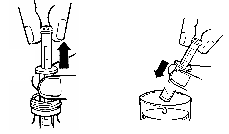
Using the oral administration syringe
Immerse the oral administration syringe in the bottle and pull the plunger up to the mark that
corresponds to the dose in milliliters (ml) prescribed by the doctor. For use in children under 6 years of age,
a daily dose of 5 ml is measured by taking 2.5 ml of solution from the bottle twice a day (take
great care when referring to the scale on the syringe).
Remove the oral administration syringe from the bottle and empty its contents into a spoon or
into a glass of water by pressing down on the plunger. The oral administration of the medicine must be
carried out immediately after dilution.
Rinse the plunger with water after each use.
How long should you take Xyzal?
The duration of treatment depends on the type, duration and course of your condition and is established by
the doctor.
If you take more Xyzal than you should
Taking a higher amount of Xyzal than necessary can cause drowsiness in adults. Children may initially show excitement and restlessness followed by drowsiness.
If you think you have taken an excessive dose of Xyzal, inform your doctor, who will decide what actions should
be taken.
If you forget to take Xyzal
If you forget to take Xyzal or if you take a dose lower than that prescribed by your doctor, do not take
a double dose to make up for the missed dose. Take the next dose at the scheduled time.
If you stop taking Xyzal
Stopping treatment should not have any negative effects. However, if you stop treatment with
Xyzal, itching (intense tingling) may rarely occur, even if this symptom was not present before
the start of treatment. This symptom may resolve spontaneously. In some cases, the symptom may
be severe and it may be necessary to restart treatment. This symptom should resolve when
treatment is restarted.
If you have any doubts about the use of this medicine, ask your doctor or pharmacist.
4. Possible side effects
Like all medicines, this medicine can cause side effects, although not everybody gets them.
Common: may affect up to 1 in 10 people
Dry mouth, headache, fatigue and drowsiness/somnolence
Uncommon: may affect up to 1 in 100 people
Weakness and abdominal pain
Not known: frequency cannot be estimated from available data
Other side effects have been reported such as palpitations, increased heart rate, convulsions,
tingling, dizziness, syncope, tremor, dysgeusia (altered sense of taste), sensation of rotation or
movement, visual disturbances, blurred vision, oculogyric crisis (eyes with uncontrolled circular movements),
pain or difficulty in urination, inability to completely empty the bladder, edema, itching, rash,
urticaria (swelling, redness and itching of the skin), skin eruption, shortness of breath, increased
body weight, muscle pain, joint pain, aggressive or agitated behaviour, hallucination,
depression, insomnia, recurring worries or suicidal thoughts, nightmare, hepatitis, abnormal liver
function, vomiting, increased appetite, nausea and diarrhoea.
Itching (intense prickling) following discontinuation of treatment.
Stop taking Xyzal at the first signs of a hypersensitivity reaction and contact your doctor
immediately.
Symptoms of a hypersensitivity reaction may include: swelling of the mouth, tongue, face and/or
throat, difficulty breathing or swallowing (tightness in the chest or wheezing), urticaria, sudden
drop in blood pressure which can lead to collapse or shock, which can be fatal.
Reporting of side effects
If you get any side effects, even those not listed in this leaflet, tell your
doctor or pharmacist. You can also report side effects directly through the national reporting system at
https://www.aifa.gov.it/content/segnalazioni-reazioni-avverse.
By reporting side effects you can help provide more information on the safety of
this medicine.
5. How to store Xyzal
Keep this medicine out of the sight and reach of children.
Do not use this medicine after the expiry date which is stated on the label and the packaging box after Exp.
The expiry date refers to the last day of the month.
This medicine does not require any particular storage conditions.
Do not use after three months from first opening.
Do not dispose of any medicine in waste water or household waste. Ask your pharmacist how to dispose of
medicines you no longer use. This will help protect the environment.
6. Package contents and other information
What Xyzal contains
- The active ingredient is levocetirizine dihydrochloride. 1 ml of oral solution contains 0.5 mg of levocetirizine dihydrochloride.
- The other ingredients are: sodium acetate trihydrate, glacial acetic acid, methyl parahydroxybenzoate (E218), propyl parahydroxybenzoate (E216), glycerol 85%, liquid maltitol (E965), sodium saccharin, all fruits flavour (triacetin (E1518), benzaldehyde, orange essence, vanillin, ethyl butyrate,
concentrated orange essence, isoamyl acetate, allyl hexanoate, gamma-undecalactone, citral,
geraniol, citronellol, alpha tocopherol (E307)), purified water.
Description of Xyzal and package contents
The oral solution is a clear and colourless solution contained in a glass bottle closed with a
white child-resistant polypropylene cap. The solution bottle is supplied in a cardboard box
also containing an oral administration syringe.
Pack sizes: 75 ml, 150 ml and 200 ml.
Not all pack sizes may be marketed.
Marketing authorisation holder and manufacturer
Marketing authorisation holder
UCB Pharma S.p.A., ViaVaresina 162, 20156 Milano, Italy
Manufacturer
Aesica Pharmaceuticals S.r.l.,Via Praglia 15, 10044 Pianezza (TO), Italy
UCB Pharma Limited, 208 Bath Road, Slough, Berkshire, SL1 3WE, United Kingdom
Phoenix Pharma Polska Sp. z o.o., ul. Rajdowa 9, Konotopa, 05-850 Ożarów Mazowiecki, Poland
ExtractumPharma Co. Ltd.,6413 Kunfehértó, IV. körzet 6., Hungary
UCB Pharma GmbH, Alfred-Nobel-Straße 10, 40789 Monheim, Germany
UCB Pharma B.V., Hoge Mosten 2 A1, 4822 NH, Breda, Netherlands
UCB Pharma AS, Haakon VIIs gate 6, NO-0161 Oslo, Norway
UCB Nordic A/S, Edvard Thomsens Vej 14, DK-2300 København S, Denmark
UCB Pharma SA, Chemin Du Foriest 1, Braine-L'alleud, 1420, Belgium
This medicinal product is authorised in the Member States of the European Economic Area under the following
names:
Belgium: Xyzall
Cyprus: Xyzal
Denmark: Xyzal
Estonia: Xyzal
Finland: Xyzal
France: Xyzall
Germany: Levocetirizine Juice
Greece: Xozal
Ireland: Xyzal
Italy: Xyzal
Latvia: Xyzal
Lithuania: Xyzal
Luxembourg: Xyzall
Malta: Xyzal
Norway: Xyzal
Netherlands: Xyzal
Poland: Xyzal
Portugal: Xyzal
United Kingdom: Xyzal
Czech Republic: Xyzal
Slovak Republic: Xyzal 0.5 mg/ml oral solution
Slovenia: Xyzal
Spain: Xazal
Hungary: XYZAL 0.5 mg/ml oral solution

Виникли питання під час прийому ліків?
Обговоріть свої симптоми та лікування з лікарем онлайн.

- Країна реєстрації
- Лікарська формаFilm-coated tablet, 5 MG
- Код АТХR06AE09
- Діюча речовина
- Потрібен рецептТак
- Виробник
- Ця інформація надана лише для ознайомлення і не є медичною порадою. Рішення щодо лікування завжди приймає лікар.
- Альтернативи до XYTSALЛікарська форма: Film-coated tablet, 5 MGДіюча речовина: levocetirizineВиробник: AUROBINDO PHARMA (ITALIA) S.R.L.Потрібен рецептЛікарська форма: Film-coated tablet, 5 MGДіюча речовина: levocetirizineВиробник: DOC GENERICI SRLПотрібен рецептЛікарська форма: Film-coated tablet, 5 MGДіюча речовина: levocetirizineВиробник: KRKA D.D. NOVO MESTOПотрібен рецепт
Аналоги XYTSAL в інших країнах
Препарати з тією самою діючою речовиною, доступні в інших країнах.
Аналог XYTSAL у Іспанія
Аналог XYTSAL у Польща
Аналог XYTSAL у Україна
Лікарі онлайн щодо XYTSAL
Застосування, безпека та можливість призначення рецепта — за результатами медичної оцінки.









Отримайте рецепт на XYTSAL онлайн
Заповніть форму за 2 хвилини
Розкажіть про симптоми, історію хвороби та потрібний препарат.
Оберіть лікаря або ми призначимо
Оберіть спеціаліста або ми підберемо найближчого доступного лікаря.
Лікар розглядає ваш випадок
Зазвичай протягом 30 хвилин. Може ставити уточнювальні запитання в чаті.
Отримайте в будь-якій аптеці
Електронний рецепт надсилається на вашу пошту — дійсний по всій Польщі.
Часті запитання
XYTSAL потребує рецепта в Італія. Ви можете обговорити з лікарем онлайн, чи підходить цей лікарський засіб для вашої ситуації.
Діюча речовина у XYTSAL — levocetirizine. Це допомагає визначити препарати з тим самим складом, але під іншими торговими назвами.
XYTSAL виробляється компанією UCB PHARMA S.P.A.. Назва бренду та упаковка можуть відрізнятися залежно від дистрибʼютора.
Лікарі, зокрема Сімейні лікарі, Психіатри, Дерматологи, Кардіологи, Ендокринологи, Гастроентерологи, Пульмонологи, Нефрологи, Ревматологи, Гематологи, Інфекціоністи, Алергологи, Геріатри, Педіатри, Онкологи, можуть оцінити доцільність застосування XYTSAL з урахуванням вашого стану та місцевих правил. Ви можете записатися на онлайн-консультацію, щоб обговорити симптоми та можливі подальші кроки.
Польща має добре розвинену систему охорони здоров'я у великих містах, таких як Варшава, Краків, Вроцлав і Гданськ. Аптеки широко доступні та працюють відповідно до чинного законодавства, забезпечуючи доступ до рецептурних препаратів.
Ви можете придбати XYTSAL у Варшаві, Кракові, Вроцлаві або Гданську в будь-якій аптеці за наявності дійсного рецепта.
Щоб отримати рецепт, ви можете скористатися Oladoctor:
Інші препарати з тією самою діючою речовиною (levocetirizine) включають LEVOKETIRITSINA AUROBINDO, LEVOKETIRITSINA DOK JENERIKI, LEVOKETIRITSINA KRKA. Вони можуть відрізнятися торговою назвою або формою випуску, але містять той самий терапевтичний компонент. Перед зміною або початком прийому нового препарату варто проконсультуватися з лікарем.
