



TRESIBA 100U/ML Pre-filled pen injectable solution

Запит на рецепт онлайн
Лікар розгляне ваш випадок і визначить, чи є рецепт медично доцільним.

Поговоріть з лікарем про ці ліки
Обговоріть симптоми та можливі подальші кроки під час короткої онлайн-консультації.



Інструкція із застосування TRESIBA
Зміст інструкції
- Tresiba 100 units/mL injectable solution in prefilled pen
- Tresiba 200 units/mL injectable solution in prefilled pen
- Tresiba 100 units/mL injectable solution in cartridge
Tresiba 100 units/mL injectable solution in prefilled pen
insulin degludec
Read this leaflet carefully before you start using this medicine as it contains important
information for you.
- Keep this leaflet. You may need to read it again.
- If you have any questions, ask your doctor, pharmacist or nurse.
- This medicine has been prescribed for you only. Do not pass it on to others, even if their symptoms are the same as yours, as it could be harmful.
- If you get any side effects, even those not listed in this leaflet, tell your doctor, pharmacist or nurse. See section 4.
Contents of this leaflet
- 1. What Tresiba is and what it is used for
- 2. What you need to know before you use Tresiba
- 3. How to use Tresiba
- 4. Possible side effects
- 5. How to store Tresiba
- 6. Contents of the pack and other information
1. What is Tresiba and what is it used for
Tresiba is a long-acting basal insulin called insulin degludec. It is used to treat
diabetes mellitus in adults, adolescents and children from 1 year of age. Tresiba helps the body to
reduce blood sugar levels. It is administered once a day. Tresiba has a prolonged effect of reducing
blood sugar, therefore, when you cannot follow the scheduled regular dose, you can vary the time of
administration (see section 3 for ‘Flexibility in timing of administration’). Tresiba can be used with
rapid-acting prandial insulin medications. In type 2 diabetes mellitus, Tresiba can be used in
combination with diabetes tablets or with injectable antidiabetic medications, as well as with insulin.
In type 1 diabetes mellitus, Tresiba must always be used in combination with rapid-acting prandial
insulin medications.
2. What you need to know before you use Tresiba
Do not use Tresiba:
- if you are allergic to insulin degludec or any of the other ingredients of this medicine (listed in section 6).
Warnings and precautions
Talk to your doctor, pharmacist or nurse before you use Tresiba. Pay particular
attention to:
- Low blood sugar (hypoglycemia) - if your blood sugar is too low, follow the instructions for low blood sugar in section 4.
- High blood sugar (hyperglycemia) - if your blood sugar is too high, follow the instructions for high blood sugar in section 4.
- Switching from other insulin medicines - you may need to change your insulin dose if you switch from another type, brand, or manufacturer of insulin. Talk to your doctor.
- Pioglitazone used with insulin, see 'Pioglitazone' below.
- Eye problems - rapid improvement in blood sugar control can lead to temporary worsening of eye problems. If you experience eye problems, talk to your doctor.
- Make sure you are using the correct type of insulin - always check the insulin label before each injection to avoid accidental confusion between different strengths of Tresiba as well as with other insulin medicines.
If you do not see well, see section 3.
Changes to the skin at the injection site
The injection site must be rotated to help prevent changes in the fatty tissue under the
skin, such as thickening of the skin, thinning of the skin, or the appearance of lumps under the skin.
Insulin may not work as well if you inject into an area with lumps, in an area
thinned, or in an area thickened (see section 3, ‘How to use Tresiba’). Tell your doctor if
you notice changes to the skin at the injection site. If you are currently injecting into one of these
affected areas, talk to your doctor before starting to inject into another area. Your doctor
may advise you to check your blood sugar more carefully and adjust your insulin or other
diabetes medicines.
Children and adolescents
Tresiba can be used in adolescents and children from 1 year of age. There is no experience
in the use of Tresiba in children under 1 year of age.
Other medicines and Tresiba
Tell your doctor, pharmacist or nurse if you are taking, have recently taken or might take
any other medicines. Some medicines affect blood sugar levels, this
may mean that a change in your insulin dose is necessary.
The medicines most commonly listed below may affect your insulin treatment.
Your blood sugar may be lowered (hypoglycemia) if you use:
- other medicines for diabetes (oral and injectable)
- sulfonamides, for infections
- anabolic steroids, such as testosterone
- beta-blockers, for high blood pressure. They may make it difficult to recognize the warning signs of blood sugar being too low (see section 4 for ‘Warning signs of blood sugar being too low’).
- acetylsalicylic acid (and other salicylates), for mild pain and fever
- monoamine oxidase inhibitors (MAOIs), for depression
- angiotensin converting enzyme (ACE) inhibitors, for certain heart conditions or high blood pressure.
Your blood sugar may be raised (hyperglycemia) if you use:
- danazol, for endometriosis
- oral contraceptives, birth control pills
- thyroid hormones, for thyroid problems
- growth hormone, for growth hormone deficiency
- glucocorticoids, such as ‘cortisone’, for inflammation
- sympathomimetics, such as epinephrine (adrenaline), salbutamol, terbutaline, for asthma
- thiazides, for high blood pressure or excessive fluid retention.
Octreotide and lanreotide: used for the treatment of a rare disease characterized by excessive
production of growth hormone (acromegaly). They may increase or decrease your blood sugar level.
Pioglitazone: an oral antidiabetic medicine used for the treatment of type 2 diabetes mellitus.
Some patients with long-standing type 2 diabetes and with heart problems or previous stroke,
who were treated with pioglitazone and insulin, have developed heart failure. Tell your
doctor immediately if you develop signs of heart failure such as unusual shortness of breath or
rapid weight gain or swelling of the ankles (edema).
If any of these situations apply to you (or if you are not sure), talk to your doctor, pharmacist or nurse.
Tresiba with alcohol
If you drink alcohol, your insulin needs may change as your blood sugar level may
increase or decrease. You should therefore check your blood sugar more frequently than usual.
Pregnancy and breastfeeding
If you are pregnant, suspect you may be pregnant, or are planning to become pregnant, or if you are
breastfeeding, ask your doctor or pharmacist for advice before using this medicine. You may
need to adjust your insulin dose during pregnancy and after delivery. During
pregnancy, it is necessary to carefully control your diabetes and it is particularly important for
the health of the baby to prevent blood sugar being too low (hypoglycemia).
Driving and using machines
Blood sugar that is too low (hypoglycemia) or too high (hyperglycemia) can affect
your ability to drive or operate tools or machines. If your blood sugar is too
low or too high, your ability to concentrate or react may be impaired. This
could endanger yourself or others. Ask your doctor if you are able to drive if:
- your blood sugar often becomes too low.
- you have difficulty recognizing the signs of blood sugar being too low.
Important information about some ingredients of Tresiba
This medicine contains less than 1 mmol of sodium (23 mg) per dose, that is to say it is practically ‘sodium-free’.
3. How to use Tresiba
Use this medicine following the doctor's instructions exactly. If you have any doubts, consult your
doctor, nurse or pharmacist.
If you are blind or have vision problems and cannot read the dose counter on the pen, do not
use this pen without assistance. Ask someone with good eyesight, who is
trained to use the pre-filled FlexTouch pen, to help you.
The pre-filled Tresiba pen is available in two formulations. “Tresiba 100 units/mL” or “Tresiba
200 units/mL” is clearly marked on the pen label and on the packaging. Furthermore, the
packaging and label of Tresiba 100 units/mL are light green in colour and the packaging and
label of Tresiba 200 units/mL are dark green in colour, with a red strip highlighting the
formulation.
For both dosages, the required dose is measured in units. However, the unit increments
differ between the two Tresiba dosages.
The 100 units/mL pre-filled pen can deliver a dose of 1–80 units in one injection with
increments of 1 unit. The dose counter on the pre-filled pen shows the number of insulin units to
inject. Do not perform any recalculation of the dose.
The doctor will decide together with you:
- how much Tresiba you will need each day
- when to check your blood sugar level and whether a higher or lower dose is needed.
Flexibility in administration times
- Always follow the dose recommended by your doctor.
- Use Tresiba once every day, preferably at the same time each day.
- When it is not possible to take Tresiba at the same time of day, you can take it at a different time. Ensure that at least 8 hours have passed between doses. There is no experience regarding the flexibility of administration times for Tresiba in children and adolescents.
- If you want to change your usual diet, ask your doctor, pharmacist or nurse for advice first, because a change in diet can alter your insulin needs.
Based on your blood sugar level, your doctor may change your dose.
When using Tresiba with other medicines, ask your doctor if the treatment needs to be modified.
Use in the elderly (≥65 years)
Tresiba can be used in the elderly, but if you are elderly, you may need to check your blood sugar level more
frequently. Talk to your doctor about dose changes.
If you have kidney or liver problems
If you have kidney or liver problems, you may need to check your blood sugar level more
frequently. Talk to your doctor about dose changes.
Injecting the medicine
Before using Tresiba FlexTouch for the first time, your doctor or nurse must show you
how to use it.
- Check the name and dosage on the pen label to make sure it is Tresiba 100 units/mL.
Do not use Tresiba
- In insulin infusion pumps.
- If the pen is damaged or has not been stored correctly (see section 5).
- If the insulin does not appear clear and colourless.
How to inject
- Tresiba is administered by injection under the skin (subcutaneous injection). Do not inject it into a vein or a muscle.
- The best areas to inject are the front of the thighs, the upper arms or the front of the abdomen.
- Vary the injection site within the area where you inject each day to avoid the risk of developing nodules and skin indentations (see section 4).
- Always use a new needle for each injection. Reusing needles increases the risk of needle blockage causing inaccurate dosages. Dispose of the needle carefully after each use.
- Do not use a syringe to draw the solution from the pen, to avoid dose errors and potential overdoses.
If you use more Tresiba than you should
If you use too much insulin, your blood sugar level may drop too low (hypoglycemia),
see the advice in section 4 ‘Blood sugar too low’.
If you forget to use Tresiba
If you forget a dose, inject the missed dose when you remember, making sure there is a
gap of at least 8 hours between doses. If you remember you have forgotten the dose after the time you
should have taken the scheduled dose, do not inject a double dose, but resume the daily scheduled dose.
If you stop treatment with Tresiba
Do not stop insulin treatment without talking to your doctor. If you stop using
insulin, a very high blood sugar level and ketoacidosis (a
condition characterised by too much acid in the blood) may develop, see the advice in section 4 ‘Blood sugar
too high’.
4. Possible side effects
Like all medicines, this medicine can cause side effects, although not everyone will experience them.
With insulin treatment, hypoglycaemia (blood sugar level too low) is very common (may affect more than 1 in 10 people). It can become very serious. If your blood sugar level drops too low, you may lose consciousness. Severe hypoglycaemia can cause brain damage and be life-threatening. If you experience symptoms of low blood sugar, take immediate action to raise it. See the advice in the “Blood sugar too low” section below.
If you experience a severe allergic reaction to this medicine (rarely) or to any of the ingredients of Tresiba, stop using Tresiba and seek immediate medical attention. Signs of a severe allergic reaction are:
- localized reactions spread to other parts of the body
- you suddenly feel unwell and start to sweat
- you begin to feel sick (vomiting)
- you have difficulty breathing
- your heartbeat is racing or you feel dizzy.
Skin changes at the injection site:
If you inject insulin into the same place, the fatty tissue may become thinner (lipoatrophy) or thicker (lipohypertrophy) (may affect up to 1 in 100 people). Lumps under the skin can also be caused by the build-up of a protein called amyloid (cutaneous amyloidosis; the frequency with which this occurs is not known). Insulin may not work as well as it should if you inject into an area with lumps, an area that is thinned, or an area that is thickened. Change the injection site with each injection to prevent these skin changes.
Other side effects include:
Common(may affect up to 1 in 10 people)
Local reactions: reactions can occur at the injection site. Signs may include: pain, redness, hives, swelling and itching. Reactions usually disappear within a few days. If they do not disappear within a few weeks, see your doctor. If the reactions become severe, stop using Tresiba and seek immediate medical attention. For more information, see above ‘severe allergic reactions’.
Uncommon(may affect up to 1 in 100 people)
Swelling around the joints: when you start using the medicine, your body may retain more water than it should. This effect causes swelling around the ankles and other joints. It usually only lasts a short time.
Rare(may affect up to 1 in 1,000)
This medicine can cause allergic reactions such as hives, swelling of the tongue and lips, diarrhoea, nausea, fatigue and itching.
General effects of diabetes treatment
- Blood sugar level too low (hypoglycaemia)
Your blood sugar level may become too low if:
you drink alcohol; you use too much insulin; you do more physical activity than usual; you eat too little or skip a meal.
Warning signs of blood sugar too low, which can occur suddenly:
headache; confused speech; racing heartbeat; cold sweat; cold and pale skin; feeling unwell; very hungry; trembling or nervousness or anxiety; unusual tiredness, weakness and drowsiness; confusion; difficulty concentrating; temporary visual disturbances.
What to do if your blood sugar is too low
- Eat glucose tablets or a high-sugar snack, such as sweets, biscuits, fruit juice (always carry glucose tablets or a high-sugar snack with you to use if needed).
- Measure your blood sugar if possible and then rest. You may need to measure your blood sugar more than once, as with all basal insulins, the improvement from low blood sugar can be delayed.
- Wait until the signs of low blood sugar have disappeared or your blood sugar level has stabilised, then continue your insulin treatment as usual.
What others should do if you faint
Tell everyone you spend time with that you have diabetes and what the consequences may be, including the risk of fainting due to low blood sugar.
Explain to them that, if you should faint, they must:
- turn you onto your side
- seek immediate medical help
- do notgive you food or drink as this could cause you to choke.
You may regain consciousness more quickly with a glucagon injection, which should only be given by someone who knows how to use it.
- If you are given glucagon, you will need sugar or a sweet snack as soon as you regain consciousness.
- If you do not respond to the glucagon injection, you will need to be taken to hospital.
- If severe hypoglycaemia is not treated in time, it can cause brain damage, temporary or permanent, and can also cause death.
See your doctor if:
- your blood sugar has become so low that you have fainted
- you have used a glucagon injection
- you have recently had more episodes of low blood sugar. You may need to change the dose or timing of your insulin injections, your diet or your exercise.
- Blood sugar level too high (hyperglycaemia)
Your blood sugar level may become too high if:
you eat more or exercise less than usual; you drink alcohol; you get an infection or a fever; you do not use enough insulin; you continue to use less insulin than you need; you forget to use your insulin or stop using insulin without talking to your doctor.
Warning signs of blood sugar too high, which usually develop gradually:
dry, flushed skin; feeling sleepy or tired; dry mouth and fruity-smelling breath (acetone); passing urine more often; thirst; loss of appetite; feeling unwell (nausea or vomiting).
These can be signs of a very serious condition called ketoacidosis. This is a build-up of acid in the blood because the body is metabolising fat instead of sugar. If left untreated, it can lead to diabetic coma and eventually death.
What to do if your blood sugar is too high
- Measure your blood sugar level.
- Check for ketones in your urine or blood.
- Contact your doctor immediately.
Reporting of side effects
If you get any side effects, talk to your doctor, pharmacist or nurse. This includes any side effects not listed in this leaflet. You can also report side effects directly through the national reporting system listed in Annex V. By reporting side effects you can help provide more information on the safety of this medicine.
5. How to store Tresiba
Keep this medicine out of sight and reach of children.
Do not use this medicine after the expiry date which is stated on the pen label and on the
pack after ‘EXP’. The expiry date refers to the last day of that month.
Before opening
Store in a refrigerator (2 C - 8 C). Do not freeze. Keep away from refrigerating elements.
Keep the cap on the pen to protect it from light.
After first opening or carried with you as a spare
You can carry the pre-filled Tresiba (FlexTouch) pen with you as a spare and keep it at room
temperature (not above 30 C) or in a refrigerator (from 2 C to 8 C) for up to 8 weeks.
When not in use, keep the pen with the cap on to protect the medicine from light.
Do not dispose of any medicine in wastewater or household waste. Ask your pharmacist how to
dispose of medicines you no longer use. This will help protect the environment.
6. Content of the pack and other information
What Tresiba contains
- The active ingredient is insulin degludec. Each mL of the solution contains 100 units of insulin degludec. Each pre-filled pen contains 300 units of insulin degludec in 3 mL of solution.
- The other ingredients are glycerol, metacresol, phenol, zinc acetate, hydrochloric acid, sodium hydroxide (for pH adjustment) and water for injections (see section 2).
Description of the appearance of Tresiba and contents of the pack
Tresiba is presented as a clear and colourless injectable solution contained in a pre-
filled pen (300 units per 3 mL).
Pack sizes of 1 (with or without a needle), 5 (without a needle) and a multi-pack of 10 (2 x 5) (without a needle)
pre-filled pens of 3 mL. Not all pack sizes may be marketed.
Marketing Authorisation Holder and Manufacturer
Novo Nordisk A/S
Novo Allé
DK-2880 Bagsværd, Denmark
Manufacturer
The manufacturer can be identified by the batch number printed on the pen cap and
on the label:
- If the second and third characters are P5, ZF or FG, the manufacturer is Novo Nordisk A/S, Novo Allé, DK-2880 Bagsværd, Denmark
- If the second and third characters are T6, the manufacturer is Novo Nordisk Production SAS, 45 Avenue d’Orléans, 28000 Chartres, France.
More detailed information on this medicine is available on the website of the European
Medicines Agency: http://www.ema.europa.eu
Instructions on how to use Tresiba 100 units/mL solution for injection in a pre-filled pen
(FlexTouch)
Read these instructions carefullybefore using the FlexTouch pre-filled pen.If you do not
follow the instructions carefully, you may inject too much or too little insulin which can lead to
blood sugar levels that are too high or too low.
Do not use the pen without receiving adequate instructionfrom your doctor or nurse.
Start by checking that the pen contains Tresiba 100 units/mL, then look at the
illustrations below to learn about the different parts of the pen and the needle.
If you are blind or have serious vision problems, do not use this pen without help.Ask someone
with good vision and who is trained in using the Tresiba FlexTouch pen to help you.
The pen is a pre-filled insulin pen with a selectable dose, containing 300 units of insulin.
You can select a maximum dose of 80 units per dose, in 1 unit increments. The pen is
designed to be used with NovoTwist or NovoFine single-use needles up to
8 mm in length.

Important information
Pay particular attention to these notes because they are important for correct use of the
pen.
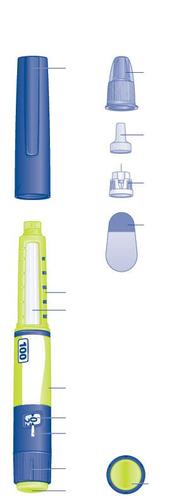
Tresiba
1 Preparing the pen
- Check the name and dosage on the pen labelto make sure the pen contains Tresiba 100 units/mL. This is particularly important if you use more than one type of insulin. If you administer the wrong type of insulin, your blood sugar level may become too high or too low.
- Remove the pen cap.
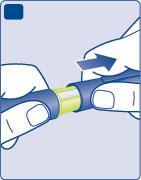
A
- Check that the insulin in the pen is clearand colourless. Look through the insulin window. If the insulin appears cloudy, do not use the pen.
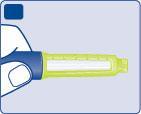
B
- Take a new needleand remove the protective seal.
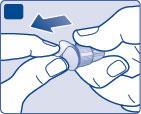
C
- Push the needle onto the pen and rotate it until it is secure.
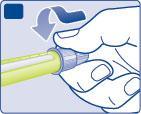
D
- Remove the outer needle cap and keep it for later.You will need it after the injection to remove the needle correctly from the pen.
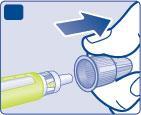
E
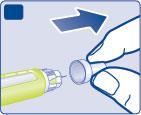
- Remove the inner needle cap and throw it away.If you try to put it back on, you may accidentally prick yourself with the needle.
A drop of insulin may appear on the tip of the needle. This is normal, but you should still check the insulin flow.

Always use a new needle for each injection.
This reduces the risk of contamination, infection, insulin leakage, needle blockage and incorrect dosage.

Never use a bent or damaged needle.
2 Checking the insulin flow
- Always check the insulin flow before starting.This helps to ensure that the entire dose of insulin is delivered.
- Rotate the dose selector and select 2 units. Make sure the dose counter shows
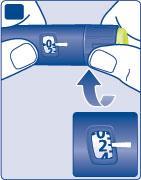
- Hold the pen with the needle pointing upwards. Gently tap the tip of the penseveral times so that air bubbles collect at the top.
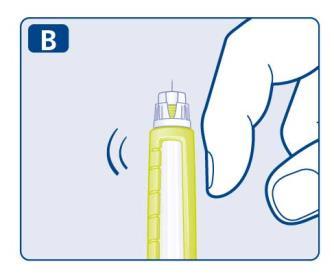
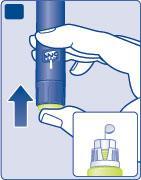
- Press and hold the injection buttonuntil the dose counter returns to zero. 0 must align with the dose indicator. A drop of insulin should appear on the tip of the needle.
C
A small air bubble may remain on the tip of the needle, but it will not be injected.
If the drop does not appear,repeat steps 2Ato 2Cup to 6 times. If the drop still does not appear, change the needle and repeat steps 2Ato 2Cagain.
If the drop of insulin still does not appear,discard the pen and use a new one.

Always make sure a drop appearson the tip of the needle before the injection.
This ensures the flow of insulin. If this does not happen, do notinject the insulin, even if the dose counter may move. This may indicate a blocked or damaged needle.
Always check the flow before the injection.If you do not check the flow, you may not inject
any insulin at all or you may inject too little. This can lead to a blood sugar level that is too high.

3 Selecting the dose
- Before starting, check that the dose counter is at 0.0 must align with the dose indicator.
- Rotate the dose selector to select the required dose,as prescribed by your doctor or nurse. If you select the wrong dose, you can correct it by rotating the dose selector forwards or backwards.
A maximum of 80 units can be selected on the pen.
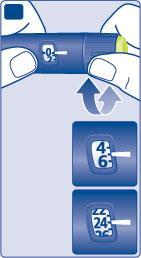
The dose selector changes the number of units. Only the dose counter and the dose indicator
show how many units have been selected for each dose.
You can select up to 80 units per dose. When the pen contains less than 80 units, the dose counter displays the number of units remaining.
The dose selector makes a different click if rotated forwards, backwards or when exceeding the number of
remaining units. Do not count the clicks of the pen.

Always use the dose counter and dose indicator to
see how many units you are selecting before injecting the insulin.
Do not count the clicks of the pen. If you select and inject the wrong dose, your blood sugar level may become too high or too low.
Do not use the insulin scale, which only shows approximately how much insulin is
remaining in the pen.
4 Injecting the dose
- Insert the needle into the skinas shown to you by your doctor or nurse.
- Make sure you can see the dose counter.Do not touch the dose counter with your fingers, otherwise the injection may stop.
- Press and hold the injection button until the dose counter returns to 0.0 must align with the dose indicator. You may feel or hear a click.
- Leave the needle in the skin for at least 6 secondsto make sure you have injected the entire dose.
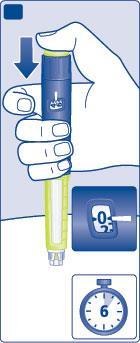
A
6 seconds
- Remove the needle and pen from the skin while holding them in a vertical position.If blood appears at the injection site, press gently with a cotton swab without rubbing the area.
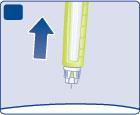
B
After the injection, you may see a drop of insulin on the tip of the needle. This is normal and has
no effect on the dose.

Always look at the dose counter to know how many units you are injecting.
Do not count the clicks of the pen. The dose counter shows the exact number of units. Keep
the injection button pressed until the dose counter returns to 0 after
the injection. If the dose counter stops before reaching 0, the full dose has not
been delivered and may cause a blood sugar level that is too high.
5 After the injection
- Insert the needle tip into the outer capon a flat surface, without touching either the needle or the outer cap of the needle.
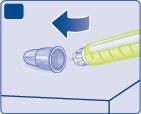
A
- When the needle is covered, press the outer cap firmly, being careful.
- Unscrew the needleand dispose of it carefully.
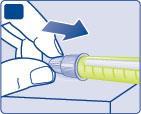
B
- Put the pen cap back on the penafter each use to protect the insulin from light.
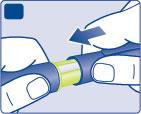
C
Always dispose of the needle after each injectionin an appropriate sharps container. This reduces
the risk of contamination, infection, insulin leakage, needle blockage and incorrect dosage. If
the needle is blocked, you will not be able to inject your insulin.
When the pen is empty, discard it withoutthe needle attached as instructed by your doctor, nurse,
pharmacist or local authorities. Do not dispose of used needles in household waste.
Never try to put the inner needle cap back on.You may prick yourself with the needle.

Always remove the needle from the pen after each injectionand store the pen without the needle

attached.
This reduces the risk of contamination, infection, insulin leakage, needle blockage and incorrect dosage.
6 How much insulin is left?
- The insulin scaleshows approximatelyhow much insulin is left in the pen.
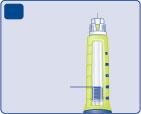
actively
how much
remaining
- To see precisely how much insulin is remaining,use the dose counter: rotate the dose selector until the dose counterstops. If it shows 80, there are at least 80units remaining in the pen. If it shows less than 80,the number shown is the number of units remaining in the pen.
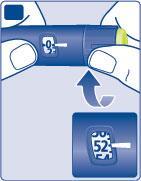
B
- Rotate the dose selector back until the dose counter shows 0.
- If you need a number of insulin doses greater than those remaining in the pen, you can divide the dose into two pens.

Be very careful to calculate the correct number if you divide the dose.
If you are unsure, inject the full dose using a new pen. If you divide the dose incorrectly, you will inject a dose that is too low or too high of insulin, which can lead to a
blood sugar level that is too high or too low.

Other important information
- Always carry the pen with you.
- Always carry an extra pen and new needlesin case you lose or damage the pen or needles.
- Always keep the pen and needles out of sight and reach of others,especially children.
- Never share the penand needles with other people. This can lead to cross-infection.
- Never sharethe pen with other people. The medicine may be dangerous to their health.
- You must be very careful when handling used needles to reduce the risk of needle-stick injuries and cross-infection.
Pen maintenance
Treat the pen with care. Incorrect or improper use can cause incorrect dosages, which can lead
to a blood sugar level that is too high or too low.
- Do not leave the pen in a car or other places where it could overheat or become toocold.
- Do not expose the pen to dust, dirt or liquids.
- Do not wash, immerse or lubricate the pen.If necessary, clean it with a mild detergent on a damp cloth.
- Do not drop the penor knock it against hard surfaces. If you drop it or suspect a problem, insert a new needle and check the insulin flow before injecting.
- Do not try to refill the pen.When it is empty, it must be discarded.
- Do not try to repairor disassemble the pen.
Tresiba 200 units/mL injectable solution in prefilled pen
insulin degludec
Read this leaflet carefully before you start using this medicine as it contains important
information for you.
- Keep this leaflet. You may need to read it again.
- If you have any questions, ask your doctor, pharmacist or nurse.
- This medicine has been prescribed for you only. Do not pass it on to others, even if they have the same symptoms as you, as it may be harmful.
- If you get any side effects, even those not listed in this leaflet, tell your doctor, pharmacist or nurse. See section 4.
Contents of this leaflet
- 1. What Tresiba is and what it is used for
- 2. What you need to know before you use Tresiba
- 3. How to use Tresiba
- 4. Possible side effects
- 5. How to store Tresiba
- 6. Contents of the pack and other information
1. What is Tresiba and what it is used for
Tresiba is a long-acting basal insulin called insulin degludec. It is used to treat
diabetes mellitus in adults, adolescents and children from 1 year of age onwards. Tresiba helps the body to
reduce blood sugar levels. It is administered once a day. Tresiba has a prolonged effect of reducing blood sugar, therefore, when you cannot follow the regular scheduled dose you can vary the time of administration from day to day (see section 3 for
‘Flexibility in timing of administration’). Tresiba can be used with rapid-acting prandial insulin medications.
In type 2 diabetes mellitus, Tresiba can be used in combination with tablets for diabetes or
with injectable antidiabetic medications, as well as with insulin.
In type 1 diabetes mellitus, Tresiba must always be used in combination with rapid-acting prandial insulin medications.
2. What you need to know before you use Tresiba
Do not use Tresiba:
- if you are allergic to insulin degludec or any of the other ingredients of this medicine (listed in section 6).
Warnings and precautions
Talk to your doctor, pharmacist or nurse before you use Tresiba. Pay particular
attention to:
- Low blood sugar levels (hypoglycemia) - if your blood sugar level is too low, follow the instructions for low blood sugar in section 4.
- High blood sugar levels (hyperglycemia) - if your blood sugar level is too high, follow the instructions for high blood sugar in section 4.
- Switching from other insulin medicines - you may need to change your insulin dose if you switch from another type, brand, or manufacturer of insulin. Talk to your doctor.
- Pioglitazone used with insulin, see 'Pioglitazone' below.
- Eye problems - rapid improvement in blood sugar control can lead to temporary worsening of eye problems. If you experience eye problems, talk to your doctor.
- Make sure you are using the correct type of insulin - always check the insulin label before each injection to avoid accidental confusion between different strengths of Tresiba as well as with other insulin medicines.
If you do not see well, see section 3.
Changes to the skin at the injection site
The injection site must be rotated to help prevent changes in the fatty tissue under the
skin, such as thickening of the skin, thinning of the skin, or the appearance of lumps under the skin.
Insulin may not work as well if you inject into an area with lumps, in an area
thinned, or in an area thickened (see section 3, ‘How to use Tresiba’). Tell your doctor if
you notice changes to the skin at the injection site. If you are currently injecting into one of these
affected areas, talk to your doctor before starting to inject into another area. Your doctor
may advise you to check your blood sugar more carefully and adjust your insulin or other
diabetes medicines dose.
Children and adolescents
Tresiba can be used in adolescents and children from 1 year of age. There is no experience
in the use of Tresiba in children under 1 year of age.
Other medicines and Tresiba
Tell your doctor, pharmacist or nurse if you are taking, have recently taken or might take
any other medicines. Some medicines affect blood sugar levels, this
may mean that a change in your insulin dose is necessary.
The medicines most commonly listed below may affect insulin treatment.
Your blood sugar level may decrease (hypoglycemia) if you use:
- other medicines for diabetes (oral and injectable)
- sulfonamides, for infections
- anabolic steroids, such as testosterone
- beta-blockers, for high blood pressure. They may make it difficult to recognize the warning signs of a blood sugar level that is too low (see section 4 for ‘Warning signs of a blood sugar level that is too low’).
- acetylsalicylic acid (and other salicylates), for mild pain and fever
- monoamine oxidase inhibitors (MAOIs), for depression
- angiotensin converting enzyme (ACE) inhibitors, for some heart conditions or high blood pressure.
Your blood sugar level may increase (hyperglycemia) if you use:
- danazol, for endometriosis
- oral contraceptives (birth control pills)
- thyroid hormones, for thyroid problems
- growth hormone, for growth hormone deficiency
- glucocorticoids, such as ‘cortisone’, for inflammation
- sympathomimetics, such as epinephrine (adrenaline), salbutamol, terbutaline, for asthma
- thiazides, for high blood pressure or excessive fluid retention.
Octreotide and lanreotide: used for the treatment of a rare disease characterized by excessive
production of growth hormone (acromegaly). They may increase or decrease your blood sugar level.
Pioglitazone: an oral antidiabetic medicine used to treat type 2 diabetes mellitus.
Some patients with long-standing type 2 diabetes and heart problems or previous stroke,
who have been treated with pioglitazone and insulin, have developed heart failure. Tell your
doctor immediately if you develop signs of heart failure such as unusual shortness of breath or
rapid weight gain or swelling of the ankles or feet (edema).
If any of these situations apply to you (or if you are not sure), talk to your doctor, pharmacist or nurse.
Tresiba with alcohol
If you drink alcohol, your insulin needs may change as your blood sugar level may
increase or decrease. You should therefore check your blood sugar level more frequently than usual.
Pregnancy and breastfeeding
If you are pregnant, trying to become pregnant or breastfeeding with
breast milk, ask your doctor or pharmacist for advice before using this medicine. You may
need to adjust your insulin dose during pregnancy and after delivery. During
pregnancy it is necessary to carefully control your diabetes and it is particularly important for
the health of the baby to prevent blood sugar levels that are too low (hypoglycemia).
Driving and using machines
Blood sugar levels that are too low (hypoglycemia) or too high (hyperglycemia) can affect
your ability to drive or operate tools or machinery. If your blood sugar level is too
low or too high, your ability to concentrate or react may be impaired. This
could endanger yourself or others. Ask your doctor if you are able to drive if:
- your blood sugar level often becomes too low
- you have difficulty recognizing the signs of a blood sugar level that is too low.
Important information about some ingredients of Tresiba
This medicine contains less than 1 mmol of sodium (23 mg) per dose, which is to say that this
medicine is essentially ‘sodium-free’.
3. How to use Tresiba
Use this medicine following the doctor's instructions exactly. If you have any doubts, consult your
doctor, nurse or pharmacist.
If you are blind or have vision problems and cannot read the dose counter on the pen, do not
use this pen without help. Ask someone with good eyesight, who is
trained to use the pre-filled FlexTouch pen, to help you.
The pre-filled Tresiba pen is available in two formulations. “Tresiba 100 units/mL” or “Tresiba
200 units/mL” is clearly marked on the pen label and on the packaging. Furthermore, the
packaging and label of Tresiba 100 units/mL are light green in color and the packaging and
label of Tresiba 200 units/mL are dark green in color, with a red strip highlighting the
formulation.
For both dosages, the required dose is measured in units. However, unit increments
differ between the two dosages of Tresiba.
The pre-filled 200 units/mL pen can deliver a dose of 2–160 units in one injection with
increments of 2 units. The dose counter on the pre-filled pen shows the number of insulin units
to inject. Do not perform any recalculation of the dose.
The doctor will decide together with you:
- how much Tresiba you will need each day
- when to check your blood sugar level and whether a higher or lower dose is needed.
Flexibility in administration times
- Always follow the dose recommended by your doctor.
- Use Tresiba once every day, preferably at the same time each day.
- When it is not possible to take Tresiba at the same time of day, you can take it at a different time. Make sure that at least 8 hours have passed between doses. There is no experience regarding the flexibility of administration times for Tresiba in children and adolescents.
- If you want to change your usual diet, ask your doctor, pharmacist or nurse for advice first, because a change in diet can alter your insulin needs.
Based on your blood sugar level, your doctor may change your dose.
When using Tresiba with other medicines, ask your doctor if the treatment needs to be modified.
Use in the elderly (≥65 years)
Tresiba can be used in the elderly, but if you are elderly, you may need to check your blood sugar level more
frequently. Talk to your doctor about dose changes.
If you have kidney or liver problems
If you have kidney or liver problems, you may need to check your blood sugar level more
frequently. Talk to your doctor about dose changes.
Injecting the medicine
Before using Tresiba FlexTouch for the first time, your doctor or nurse must show you
how to use it.
- Check the name and dosage on the pen label to make sure it is Tresiba 200 units/mL.
- The dose counter on the pen shows the exact number of insulin units. Do not recalculate the dose.
Do not use Tresiba FlexTouch
- In insulin infusion pumps.
- If the pen is damaged or has not been stored correctly (see section 5 ‘How to store Tresiba’).
- If the insulin does not appear clear and colourless.
How to inject
- Tresiba is administered by injection under the skin (subcutaneous injection). Do not inject it into a vein or muscle.
- The best areas to inject are the front of the thighs, the upper arms or the front of the waist (abdomen).
- Vary the injection site within the area where you inject each day to reduce the risk of developing nodules and skin depressions (see section 4).
- Always use a new needle for each injection. Reusing needles increases the risk of needle blockage causing inaccurate dosages. Dispose of the needle carefully after each use.
- Do not use a syringe to draw the solution from the pen, to avoid dosage errors and potential overdoses.
If you use more Tresiba than you should
If you use too much insulin, your blood sugar level may drop too low (hypoglycemia),
see the advice in section 4 ‘Blood sugar level too low’.
If you forget to use Tresiba
If you forget a dose, inject the missed dose when you remember, making sure there is
at least 8 hours between doses. If you remember you have forgotten the dose after the time
you were supposed to take the scheduled dose, do not inject a double dose, but resume the daily dose
scheduled.
If you stop treatment with Tresiba
Do not stop treatment with insulin without talking to your doctor. If you stop using
insulin, a very high blood sugar level and ketoacidosis (a
condition characterized by too much acid in the blood) may develop, see the advice in section 4 ‘Blood sugar
level too high’.
4. Possible side effects
Like all medicines, this medicine can cause side effects, although not everyone will experience them.
With insulin treatment, hypoglycemia (blood sugar level too low) is very common (may affect more than 1 in 10 people). It can become very serious. If your blood sugar level drops too low, you may lose consciousness. Severe hypoglycemia can cause brain damage and be life-threatening. If you experience symptoms of low blood sugar, take immediate action to raise it. See the advice in the section “Blood sugar too low” below.
If you experience a severe allergic reaction to Tresiba (which has happened rarely) or to any of the ingredients of this medicine, stop using Tresiba and seek immediate medical attention. The signs of a severe allergic reaction are:
- localized reactions spread to other parts of the body
- you suddenly feel unwell and start to sweat
- you begin to feel sick (vomiting)
- you have difficulty breathing
- your heartbeat is racing or you feel dizzy.
Skin changes at the injection site:
If you inject insulin into the same place, the fatty tissue may become thinner (lipoatrophy) or thicker (lipohypertrophy) (may affect up to 1 in 100 people). Lumps under the skin can also be caused by the build-up of a protein called amyloid (cutaneous amyloidosis; the frequency with which this occurs is not known). Insulin may not work as well as it should if you inject it into an area with lumps, an area that is thinned, or an area that is thickened. Change the injection site with each injection to prevent these skin changes.
Other side effects include:
Common(may affect up to 1 in 10 people)
Local reactions: reactions can occur at the injection site. Signs may include: pain, redness, hives, swelling, and itching. Reactions usually disappear within a few days. If they do not disappear within a few weeks, see your doctor. If the reactions become severe, stop using Tresiba and seek immediate medical attention. For more information, see above ‘severe allergic reactions’.
Uncommon(may affect up to 1 in 100 people)
Swelling around the joints: when you start using the medicine, your body may retain more water than it should. This effect causes swelling around the ankles and other joints. It usually only lasts for a short time.
Rare(may affect up to 1 in 1,000 people)
This medicine can cause allergic reactions such as hives, swelling of the tongue and lips, diarrhea, nausea, fatigue, and itching.
General effects of treatment
- Blood sugar too low (hypoglycemia)
Your blood sugar may become too low if:
you drink alcohol; you use too much insulin; you do more physical activity than usual; you eat too little or skip a meal.
Warning signs of blood sugar too low, which can occur suddenly:
headache; confused speech; racing heartbeat; cold sweat; cold and pale skin; feeling unwell; extreme hunger; trembling or nervousness or anxiety; unusual tiredness, weakness, and drowsiness; confusion; difficulty concentrating; temporary vision disturbances.
What to do if your blood sugar is too low
- Eat glucose tablets or a sugary snack, such as sweets, biscuits, fruit juice (always carry glucose tablets or a sugary snack with you to use if needed).
- Measure your blood sugar if possible and then rest. You may need to measure your blood sugar more than once, as with all basal insulins, the improvement from low blood sugar may be delayed.
- Wait until the signs of low blood sugar have disappeared or your blood sugar has stabilized, then continue insulin treatment as usual.
What others should do if you faint
Tell everyone you spend time with that you have diabetes and what the consequences might be, including the risk of fainting due to low blood sugar.
Explain to them that, if you should faint, they must:
- turn you onto your side
- seek immediate medical help
- do notgive you food or drink as this could cause you to choke.
You may regain consciousness faster with a glucagon injection, which should only be given by someone who knows how to use it.
- If you are given glucagon, you will need sugar or a sweet snack as soon as you regain consciousness.
- If you do not respond to the glucagon injection, you will need to be taken to hospital.
- If severe hypoglycemia is not treated in time, it can cause brain damage, temporary or permanent, and can also cause death.
See your doctor if:
- your blood sugar has become so low that you have fainted
- you have used a glucagon injection
- you have recently had more episodes of low blood sugar. You may need to adjust the dose or timing of your insulin injections, your diet, or your exercise.
- Blood sugar too high (hyperglycemia)
Your blood sugar may become too high if:
you eat more or exercise less than usual; you drink alcohol; you get an infection or fever; you do not use enough insulin; you continue to use less insulin than you need; you forget to use insulin or stop using insulin without talking to your doctor.
Warning signs of blood sugar too high, which usually develop gradually:
dry, flushed skin; feeling sleepy or tired; dry mouth and fruity-smelling breath (acetone); passing urine more often; thirst; loss of appetite; feeling unwell (nausea or vomiting).
These can be signs of a very serious condition called ketoacidosis. This is a build-up of acid in the blood because the body is metabolizing fat instead of sugar. If left untreated, it could lead to diabetic coma and eventually death.
What to do if your blood sugar is too high
- Measure your blood sugar.
- Check for ketones in your urine or blood.
- Contact your doctor immediately.
If you experience any side effects, including those not listed in this leaflet, tell your doctor, pharmacist or nurse.
Reporting of side effects
If you get any side effects, talk to your doctor, pharmacist or nurse. This includes any side effects not listed in this leaflet. You can also report side effects directly through the national reporting system listed in Annex V. By reporting side effects you can help provide more information on the safety of this medicine.
5. How to store Tresiba
Keep this medicine out of the sight and reach of children.
Do not use this medicine after the expiry date which is stated on the pen label and on the
pack after ‘EXP’. The expiry date refers to the last day of that month.
Before opening
Store in a refrigerator (2 C – 8 C). Do not freeze. Keep away from refrigerating elements.
Keep the cap on the pen to protect it from light.
After first opening or if carried with you as a spare
You can carry the pre-filled Tresiba (FlexTouch) pen with you as a spare and keep it at room
temperature (not above 30 C) or in a refrigerator (from 2 C to 8 C) for up to 8 weeks.
When not in use, keep the pen with the cap on to protect the medicine from light.
Do not dispose of any medicine in waste water or household waste. Ask your pharmacist how to
dispose of medicines you no longer use. This will help protect the environment.
6. Content of the pack and other information
What Tresiba contains
- The active ingredient is insulin degludec. Each mL of the solution contains 200 units of insulin degludec. Each pre-filled pen contains 600 units of insulin degludec in 3 mL of solution.
- The other ingredients are glycerol, metacresol, phenol, zinc acetate, hydrochloric acid, sodium hydroxide (for pH adjustment) and water for injections (see section 2).
Description of the appearance of Tresiba and content of the pack
Tresiba is presented as a clear and colourless injectable solution contained in a pre-
filled pen (600 units per 3 mL).
Pack sizes of 1 (with or without needles), 2 (without needles), 3 (without needles), 5 (without needles) and a multiple pack of 6 (2 x 3) (without needles) pre-filled 3 mL pens are available. Not all pack sizes
may be marketed.
Marketing Authorisation Holder and Manufacturer
Novo Nordisk A/S
Novo Allé
DK-2880 Bagsværd, Denmark
More detailed information on this medicinal product is available on the website of the European
Medicines Agency:
http://www.ema.europa.eu
Instructions on how to use Tresiba FlexTouch 200 units/mL solution for injection in a pre-
filled pen (FlexTouch)
Read these instructions carefully before using the FlexTouch pre-filled pen.If you do
not follow the instructions carefully, you may inject too little or too much insulin which
can lead to a blood sugar level that is too high or too low.
Do not use the pen without receiving adequate instructionfrom your doctor or nurse.
Start by checking that the pen contains Tresiba 200 units/mL,then look at the
illustrations below to learn about the different parts of the pen and the needle.
If you are blind or have severe visual impairment and cannot read the dose counter, do not use
this pen without assistance.Ask someone with good vision who is trained
in using the Tresiba FlexTouch pen to help you.
The pen is a pre-filled insulin pen with a selectable dose, containing 600 units of insulin.
You can select a maximum dose of 160 units per dose, in increments of 2 units. The
pen dose counter shows the exact number of insulin units. Do not recalculate the dose. The
pen is designed to be used with NovoTwist or NovoFine single-use needles of length
up to 8 mm.

Important information
Pay particular attention to these notes because they are important for correct use of the
pen.
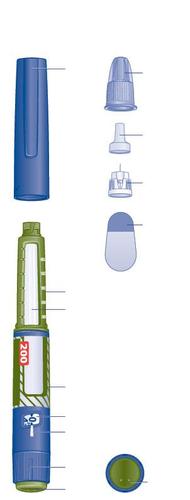
Tresiba
1 Preparing the pen
- Check the name and dosage on the labelof the pen to make sure the pen contains Tresiba 200 units/mL. This is particularly important if you use more than one type of insulin. If you administer the wrong type of insulin, your blood sugar level may become too high or too low.
- Remove the pen cap.
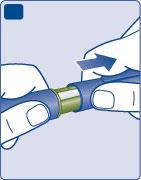
A
- Check that the insulin in the pen is clearand colourless. Look through the insulin window. If the insulin appears cloudy, do not use the pen.
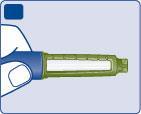
B
- Take a new needleand remove the protective seal.
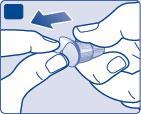
C
- Push the needle onto the pen and rotate it until it is secure.
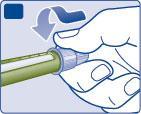
D
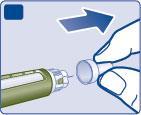
- Remove the outer needle cap and keep it for later.You will need it after the injection to correctly remove the needle from the pen.
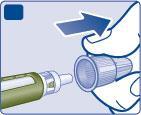
E
- Remove the inner needle cap and throw it away.If you try to put it back on, you may accidentally prick yourself with the needle.
A drop of insulin may appear on the tip of the needle. This is normal, but you should still check the insulin flow.
F

Always use a new needle for each injection
This reduces the risk of contamination, infection, insulin leakage, needle blockage and
incorrect dosing.
Never use a bent or damaged needle.
2 Checking the insulin flow
- Always check the insulin flow before starting.This helps to ensure that the entire dose of insulin is delivered.
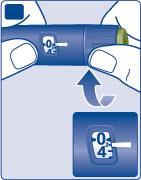
- Rotate the dose selector and select 2 units. Make sure the dose counter shows
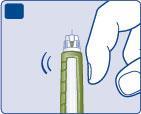
- Hold the pen with the needle pointing upwards. Gently tap the tip of the penseveral times so that air bubbles collect at the top.
B
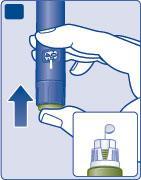
- Press and hold the injection buttonuntil the dose counter returns to zero. The 0 must align with the dose indicator. A drop of insulin should appear on the tip of the needle.
C
A small air bubble may remain on the tip of the needle, but it will not be injected.
If the drop does not appear,repeat steps 2Ato 2Cup to 6 times. If the drop still does not appear, change the needle and repeat steps 2Ato 2Cagain.
If the drop of insulin still does not appear,discard the pen and use a new one.
Always make sure a drop appearson the tip of the needle before the injection. This

ensures the insulin flow.
If this does not happen, do notinject the insulin, even if the dose counter may move. This
may indicate a blocked or damaged needle.
Always check the flow before the injection.If you do not check the flow, you may not inject

any insulin at all or you may inject too little. This can lead to a blood sugar level that is too high.
3 Selecting the dose
- Before starting, check that the dose counter is at 0.The 0 must align with the dose indicator.
- Rotate the dose selector to select the required dose,as prescribed by your doctor or nurse.
- The dose counter shows the dose measured in units. Do not recalculate the dose.
If you select the wrong dose, you can correct it by rotating the dose selector forwards or backwards.
Up to 160 units can be selected on the pen.
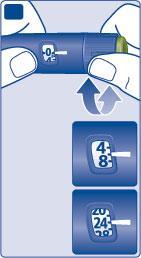
A
Example
6 units
The dose selector changes the number of units. Only the dose counter and the dose indicator
show how many units have been selected for each dose.
You can select up to 160 units per dose. When the pen contains less than 160 units, the dose counter
displays the number of units remaining.
The dose selector makes a different click if rotated forwards, backwards or if it exceeds the number of
units remaining. Do not count the clicks of the pen.

Before injecting the insulin, always use the dose counter and the dose indicator to
see how many units have been selected.
Do not count the clicks of the pen to select the dose. If you select and inject the wrong dose, the
blood sugar level may become too high or too low.
Do not use the insulin scale, which only shows approximately how much insulin is
remaining in the pen.
4 Injecting the dose
- Insert the needle into the skinas shown to you by your doctor or nurse.
- Make sure you can see the dose counter.Do not touch the dose counter with your fingers, otherwise the injection may be blocked.
- Press and hold the injection button until the dose counter returns to 0.The 0 must align with the dose indicator. You may feel or hear a click.
- Leave the needle under the skin for at least 6 secondsto make sure you have injected the entire dose.
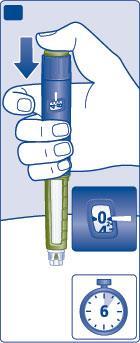
- Remove the needle and pen from the skin while holding them vertically.If blood appears at the injection site, press gently with a cotton swab without rubbing the area.
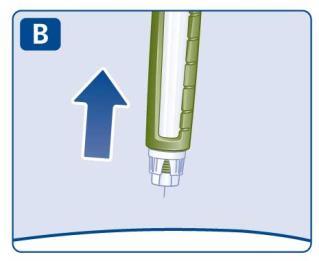
After the injection, a drop of insulin may appear on the tip of the needle. This is normal and has
no effect on the dose.
Always look at the dose counter to know how many units you are injecting.
The dose counter shows the exact number of units. Do not count the clicks of the pen. Keep
pressing the injection button until the dose counter returns to 0 after
the injection. If the dose counter stops before reaching 0, the full dose has not
been delivered and may lead to a blood sugar level that is too high.
5 After the injection
- Insert the tip of the needle into the outer capon a flat surface, without touching either the needle or the outer cap of the needle.
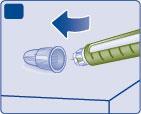
A
- When the needle is covered, firmly press the outer cap, being careful.
- Unscrew the needleand dispose of it carefully.
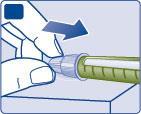
B
- Put the pen cap back on the penafter each use to protect the insulin from light.
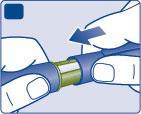
C
Always dispose of the needle after each injectionin an appropriate sharps container. This
reduces the risk of contamination, infection, insulin leakage, needle blockage and
incorrect dosing. If the needle is blocked, you will notbe able to inject your insulin.
When the pen is empty, discard it withoutthe needle attached as instructed by your doctor, nurse,
pharmacist or local authorities. Do not dispose of used needles in household waste.

Never try to put the inner needle cap back on.You may prick yourself with the needle.
Always remove the needle from the pen after each injectionand store the pen
without the needle
attached.
This reduces the risk of contamination, infection, insulin leakage, needle blockage and
incorrect dosing.
6 How much insulin is left?
- The insulin scaleshows approximatelyhow much insulin is left in the pen.
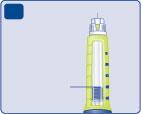
A
Approximately
how much
insulin is
remaining
- To see how much insulin is remaining,use the dose counter: rotate the dose selector until the dose counterstops. If it shows 160, there are at least 160units remaining in the pen. If it shows less than 160,the number shown is the number of units remaining in the pen.
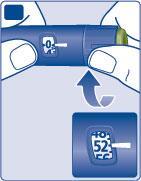
- Rotate the dose selector back until the dose counter shows 0.
- If you need a number of insulin doses greater than those remaining in the pen, you can divide the dose between two pens.

Be very careful to calculate the correct number if you divide the dose.
If you are unsure, inject the full dose using a new pen. If you divide the dose incorrectly, you will inject a dose that is too low or too high of insulin, which can lead to a
blood sugar level that is too high or too low.

Other important information
- Always carry the pen with you.
- Always carry a spare pen and new needlesin case you lose or damage the pen or needles.
- Always keep the pen and needles out of sight and reach of others,especially children.
- Never share the penand needles with other people. This can lead to cross-infection.
- Never sharethe pen with other people. The medicine may be dangerous to their health.
- You must be very careful when handling used needlesto reduce the risk of needle-stick injury and cross-infection.
Pen maintenance
Treat the pen with care. Incorrect or improper use can cause incorrect dosages, which can lead
to a blood sugar level that is too high or too low.
- Do not leave the pen in a caror in other places where it may overheat or become too cold.
- Do not expose the pen to dust, dirt, or liquids.
- Do not wash, immerse, or lubricate the pen.If necessary, clean it with a mild detergent on a damp cloth.
- Do not drop the penor knock it against hard surfaces. If you drop it or suspect a problem, insert a new needle and check the insulin flow before injection.
- Do not try to refill the pen.When it is empty, it must be discarded.
- Do not try to repairor disassemble the pen.

Не впевнені, чи підходить вам цей лікарський засіб?
Обговоріть симптоми та можливі варіанти лікування з лікарем онлайн.
Tresiba 100 units/mL injectable solution in cartridge
insulin degludec
Read this leaflet carefully before you start using this medicine as it contains important
information for you.
- Keep this leaflet. You may need to read it again.
- If you have any questions, ask your doctor, pharmacist or nurse.
- This medicine has been prescribed for you only. Do not pass it on to others, even if their symptoms are the same as yours, as it could be harmful.
- If you get any side effects, even those not listed in this leaflet, tell your doctor, pharmacist or nurse. See section 4.
Contents of this leaflet
- 1. What Tresiba is and what it is used for
- 2. What you need to know before you use Tresiba
- 3. How to use Tresiba
- 4. Possible side effects
- 5. How to store Tresiba
- 6. Contents of the pack and other information
1. What is Tresiba and what is it used for
Tresiba is a long-acting basal insulin called insulin degludec. It is used to treat
diabetes mellitus in adults, adolescents and children from 1 year of age onwards. Tresiba helps the body to
reduce blood sugar levels. Tresiba has a prolonged effect of reducing blood sugar
levels, therefore, when it is not possible to follow the regular scheduled dose, the time of
administration can be varied from day to day (see section 3 for ‘Flexibility in timing of
administration’). Tresiba can be used with rapid-acting prandial insulin medications.
In type 2 diabetes mellitus, Tresiba can be used in combination with diabetes tablets or
with injectable antidiabetic medications, as well as with insulin.
In type 1 diabetes mellitus, Tresiba must always be used in combination with rapid-acting prandial insulin medications.
2. What you need to know before you use Tresiba
Do not use Tresiba:
- if you are allergic to insulin degludec or any of the other ingredients of this medicine (see section 6).
Warnings and precautions
Talk to your doctor, pharmacist or nurse before you use Tresiba. Pay particular
attention to:
- Low blood sugar (hypoglycemia) - if your blood sugar is too low, follow the instructions for low blood sugar in section 4 'Possible side effects’.
- High blood sugar (hyperglycemia) - if your blood sugar is too high, follow the instructions for high blood sugar in section 4 'Possible side effects".
- Switching from other insulin medicines - you may need to change your insulin dose if you switch from another type, brand, or manufacturer of insulin. Talk to your doctor.
- Pioglitazone used with insulin, see 'Pioglitazone' below.
- Eye problems - rapid improvement in blood sugar control can lead to temporary worsening of eye problems. If you experience eye problems, talk to your doctor.
- Make sure you are using the correct type of insulin - always check the insulin label before each injection to avoid accidental confusion between different strengths of Tresiba as well as with other insulin medicines.
If you do not see well, see section 3.
Changes to the skin at the injection site
The injection site must be rotated to help prevent changes in the fatty tissue under the
skin, such as thickening of the skin, thinning of the skin, or the appearance of lumps under the skin.
Insulin may not work as well if you inject into an area with lumps, in a thinned area, or in a thickened area (see section 3, ‘How to use Tresiba’). Tell your doctor if
you notice changes to the skin at the injection site. If you are currently injecting into one of these
affected areas, talk to your doctor before starting to inject into another area. Your doctor
may advise you to check your blood sugar more carefully and adjust your insulin dose or other
diabetes medicines.
Children and adolescents
Tresiba can be used in adolescents and children from 1 year of age. There is no experience
in the use of Tresiba in children under 1 year of age.
Other medicines and Tresiba
Tell your doctor, pharmacist or nurse if you are taking, have recently taken or might take
any other medicines. Some medicines affect your blood sugar level, this
may mean that a change in your insulin dose is necessary.
The most common medicines that may affect insulin treatment are listed below.
Your blood sugar level may be lowered (hypoglycemia) if you use:
- other medicines for diabetes (oral and injectable)
- sulfonamides, for infections
- anabolic steroids, such as testosterone
- beta-blockers, for high blood pressure. They may make it difficult to recognise the warning signs of low blood sugar (see section 4 for ‘Warning signs of low blood sugar’).
- acetylsalicylic acid (and other salicylates), for mild pain and fever
- monoamine oxidase inhibitors (MAOIs), for depression
- angiotensin converting enzyme (ACE) inhibitors, for some heart conditions or high blood pressure.
Your blood sugar level may be raised (hyperglycemia) if you use:
- danazol, for endometriosis
- oral contraceptives (birth control pills)
- thyroid hormones, for thyroid problems
- growth hormone, for growth hormone deficiency
- glucocorticoids, such as ‘cortisone’, for inflammation
- sympathomimetics, such as epinephrine (adrenaline), salbutamol, terbutaline, for asthma
- thiazides, for high blood pressure or excessive fluid retention.
Octreotide and lanreotide: used for the treatment of a rare disease characterized by excessive
production of growth hormone (acromegaly). They may increase or decrease your blood sugar level.
Pioglitazone: an oral antidiabetic medicine used for the treatment of type 2 diabetes mellitus.
Some patients with long-lasting type 2 diabetes and with heart problems or previous stroke,
who were treated with pioglitazone and insulin, have developed heart failure. Tell your
doctor immediately if you experience signs of heart failure such as unusual shortness of breath or a
rapid weight gain or localized swelling (edema).
If any of these situations apply to you (or if you are not sure), talk to your doctor, pharmacist or nurse.
Tresiba with alcohol
If you drink alcohol, your insulin needs may change as your blood sugar level may
increase or decrease. You should therefore check your blood sugar level more frequently than usual.
Pregnancy and breastfeeding
If you are pregnant, suspect you may be pregnant, or are planning to become pregnant, ask your doctor or pharmacist for advice before using this medicine. It may
be necessary to adjust your insulin dose during pregnancy and after delivery. During
pregnancy, diabetes needs to be carefully controlled and it is particularly important to prevent low blood sugar (hypoglycemia) for the health of the baby.
Driving and using machines
Low blood sugar (hypoglycemia) or high blood sugar (hyperglycemia) can affect
your ability to drive or operate tools or machines. If your blood sugar is too
low or too high, your ability to concentrate or react may be impaired. This
could put yourself or others at risk. Ask your doctor if you are able to drive if:
► your blood sugar often becomes too low.
► you have difficulty recognising the signs of low blood sugar.
Important information about some ingredients of Tresiba
This medicine contains less than 1 mmol of sodium (23 mg) per dose, that is to say it is practically ‘sodium-free’.
3. How to use Tresiba
Use this medicine following the doctor's instructions exactly. If you have any doubts, consult your
doctor, nurse or pharmacist.
If you are blind or have vision problems and cannot read the dose counter on the pen, do not
use this insulin medicine without help. Ask someone with good vision
who is trained to use the pen to help you.
The doctor will decide together with you:
- how much Tresiba you will need each day
- when to check your blood sugar level and whether a higher or lower dose is needed.
Flexibility in administration times
- Always follow the dose recommended by your doctor.
- Use Tresiba once every day, preferably at the same time each day.
- When it is not possible to take Tresiba at the same time of day, you can take it at a different time. Make sure that at least 8 hours have passed between doses. There is no experience regarding the flexibility of administration times of Tresiba in children and adolescents.
- If you want to change your usual diet, ask your doctor, pharmacist or nurse for advice first, because a change in diet can alter your insulin needs.
Based on your blood sugar level, your doctor may change your dose.
When using Tresiba with other medicines, ask your doctor if the treatment needs to be modified.
Use in the elderly (≥65 years)
Tresiba can be used in the elderly, but if you are elderly, you may need to check your blood sugar level more
frequently. Talk to your doctor about dose changes.
If you have kidney or liver problems
If you have kidney or liver problems, you may need to check your blood sugar level more frequently.
Talk to your doctor about dose changes.
Injecting the medicine
Before using Tresiba Penfill for the first time, your doctor or nurse must show you how to
use it.
- Also read the manual provided with the insulin delivery device.
- Check the name and dosage on the pen label to make sure it is Tresiba 100 units/mL.
Do not use Tresiba Penfill
- In insulin infusion pumps.
- If the cartridge or the insulin delivery device you are using is damaged. Return it to the supplier. For further instructions, see the manual of the delivery device.
- If the cartridge is damaged or has not been stored correctly (see section 5 ‘How to store Tresiba’).
- If the insulin does not appear clear and colorless.
How to inject
- Tresiba is administered by injection under the skin (subcutaneous injection). Do not inject it into a vein or a muscle.
- The best areas to inject are the front of the thighs, the upper arms, or the front of the abdomen.
- Vary the injection site within the area where you inject each day to reduce the risk of developing nodules and skin indentations (see section 4).
- Always use a new needle for each injection. Reusing needles increases the risk of needle blockage causing inaccurate dosages. Dispose of the needle carefully after each use.
If you use more Tresiba than you should
If you use too much insulin, your blood sugar level may drop too low (hypoglycemia),
see the advice in section 4 ‘Blood sugar too low’.
If you forget to use Tresiba
If you forget a dose, inject the missed dose when you remember, making sure there is
at least 8 hours between doses. If you remember you have forgotten the dose before the time you have to take the scheduled dose, do not inject a double dose, but resume the daily scheduled dose.
If you stop treatment with Tresiba
Do not stop treatment with insulin without talking to your doctor. If you stop using
insulin, a very high blood sugar level and ketoacidosis (a
condition characterized by too much acid in the blood) may develop, see the advice in section 4 ‘Blood sugar too high’.
4. Possible side effects
Like all medicines, this medicine can cause side effects, although not everyone will experience them.
With insulin treatment, hypoglycaemia (blood sugar level too low) is very common (may affect more than 1 in 10 people). It can become very serious. If your blood sugar level drops too low, you may lose consciousness. Severe hypoglycaemia can cause brain damage and be life-threatening. If you experience symptoms of low blood sugar, take immediate action to raise it. See the advice in the section “Blood sugar too low” below.
If you experience a severe allergic reaction to this medicine (which has happened rarely) or to any of the ingredients of Tresiba, stop using Tresiba and seek immediate medical attention. Signs of a severe allergic reaction are:
- localized reactions spread to other parts of the body
- you suddenly feel unwell and start to sweat
- you start to feel sick (vomiting)
- you have difficulty breathing
- your heartbeat is racing or you feel dizzy.
Changes to the skin at the injection site:
If you inject insulin into the same place, the fatty tissue may become thinner (lipoatrophy) or thicker (lipohypertrophy) (may affect up to 1 in 100 people). Lumps under the skin can also be caused by a build-up of a protein called amyloid (cutaneous amyloidosis; the frequency with which this occurs is not known). Insulin may not work as well as it should if you inject it into an area with lumps, an area that is thinned, or an area that is thickened. Change the injection site with each injection to prevent these skin changes.
Other side effects include:
Common(may affect up to 1 in 10 people)
Local reactions: reactions may occur at the injection site. Signs may include: pain, redness, hives, swelling and itching. Reactions usually disappear within a few days. If they do not disappear within a few weeks, see your doctor. If the reactions become severe, stop using Tresiba and seek immediate medical attention. For further information, see above ‘severe allergic reactions’.
Uncommon(may affect up to 1 in 100 people)
Swelling around the joints: when you start using the medicine, your body may retain more water than it should. This effect causes swelling around the ankles and other joints. It usually only lasts a short time.
Rare(may affect up to 1 in 1,000 people)
This medicine can cause allergic reactions such as hives, swelling of the tongue and lips, diarrhoea, nausea, fatigue and itching.
General effects of diabetes treatment
- Blood sugar too low (hypoglycaemia)
Your blood sugar may become too low if:
you drink alcohol; you use too much insulin; you do more physical activity than usual; you eat too little or skip a meal.
Warning signs of blood sugar being too low, which can occur suddenly:
headache; confusion; racing heartbeat; cold sweat; cold and pale skin; feeling unwell; extreme hunger; trembling or nervousness or anxiety; unusual tiredness, weakness and sleepiness; confusion; difficulty concentrating; temporary visual disturbances.
What to do if your blood sugar is too low
- Eat glucose tablets or a fast-acting carbohydrate such as sweets, biscuits, fruit juice (always carry glucose tablets or a fast-acting carbohydrate with you, to use if needed).
- Measure your blood sugar if possible and then rest. You may need to measure your blood sugar more than once, as with all basal insulins the improvement from low blood sugar can be delayed.
- Wait until the signs of low blood sugar have disappeared or your blood sugar has stabilized, then continue your insulin treatment as usual.
What others should do if you faint
Tell everyone you spend time with that you have diabetes and what the consequences may be, including the risk of fainting due to low blood sugar.
Explain to them that, if you should faint, they must:
- turn you onto your side
- seek immediate medical help
- do notgive you food or drink as this could cause you to choke.
You may regain consciousness faster with a glucagon injection, which should only be given by someone who knows how to use it.
- If you are given glucagon, you will need sugar or a sweet snack as soon as you regain consciousness.
- If you do not respond to the glucagon injection, you will need to be taken to hospital.
- If severe hypoglycaemia is not treated in time, it can cause brain damage, temporary or permanent, and can also cause death.
See your doctor if:
- your blood sugar has become so low that you have fainted
- you have used a glucagon injection
- you have recently had more episodes of low blood sugar. You may need to adjust your insulin dose or injection times, your diet or your exercise.
- Blood sugar too high (hyperglycaemia)
Your blood sugar may become too high if:
you eat more or exercise less than usual; you drink alcohol; you get an infection or a fever; you do not use enough insulin; you continue to use less insulin than you need; you forget to use your insulin or stop using insulin without talking to your doctor.
Warning signs of blood sugar being too high, which usually develop gradually:
dry, flushed skin; feeling sleepy or tired; dry mouth and fruity-smelling breath (acetone); passing urine more often; thirst; loss of appetite; feeling unwell (nausea or vomiting).
These can be signs of a very serious condition called ketoacidosis. This is a build-up of acid in the blood because the body is metabolizing fat instead of sugar. If not treated, it could lead to diabetic coma and eventually death.
What to do if your blood sugar is too high
- Measure your blood sugar.
- Check for ketones in your urine or blood.
- Contact your doctor immediately.
If you experience any side effects, including those not listed in this leaflet, tell your doctor, pharmacist or nurse. This includes any possible side effects not listed in this leaflet.
Reporting of side effects
If you get any side effects, talk to your doctor, pharmacist or nurse. This includes any possible side effects not listed in this leaflet. You can also report side effects directly through the national reporting system listed in Annex V. By reporting side effects you can help provide more information on the safety of this medicine.
5. How to store Tresiba
Keep this medicine out of the sight and reach of children.
Do not use this medicine after the expiry date which is stated on the Penfill label and on the
pack after ‘EXP’. The expiry date refers to the last day of that month.
Before first use
Store in a refrigerator (2 C – 8 C). Do not freeze. Keep away from refrigerating elements.
After first opening or if carried as a spare
Do not refrigerate. If you carry with you as a spare the Tresiba (Penfill) cartridge, keep it at room
temperature (not above 30 C) for up to 8 weeks.
When not in use, always keep Tresiba Penfill in the outer packaging to protect the
medicine from light.
Do not dispose of any medicine in wastewater or household waste. Ask your pharmacist how to
dispose of medicines you no longer use. This will help protect the environment.
6. Contents of the pack and other information
What Tresiba contains
- The active ingredient is insulin degludec. Each mL of the solution contains 100 units of insulin degludec. Each Penfill cartridge contains 300 units of insulin degludec in 3 mL of solution.
- The other ingredients are glycerol, metacresol, phenol, zinc acetate, hydrochloric acid, sodium hydroxide (for pH adjustment) and water for injections (see section 2).
Description of the appearance of Tresiba and contents of the pack
Tresiba is presented as a clear and colourless injectable solution contained in a cartridge (300
units per 3 mL).
Pack of 5 and 10 cartridges of 3 mL. Not all pack sizes may be
marketed.
Marketing authorisation holder and manufacturer
Novo Nordisk A/S
Novo Allé
DK-2880 Bagsværd, Denmark
More detailed information on this medicinal product is available on the website of the European
Medicines Agency: http://www.ema.europa.eu

Виникли питання під час прийому ліків?
Обговоріть свої симптоми та лікування з лікарем онлайн.

- Країна реєстрації
- Лікарська формаPre-filled pen injectable solution, 100U/ML
- Код АТХA10AE06
- Діюча речовина
- Потрібен рецептТак
- Виробник
- Ця інформація надана лише для ознайомлення і не є медичною порадою. Рішення щодо лікування завжди приймає лікар.
- Альтернативи до TRESIBAЛікарська форма: Injectable solution, 100 UNITS/MLДіюча речовина: инсулин гларгинВиробник: ELI LILLY NEDERLAND B.V.Потрібен рецептЛікарська форма: Pre-filled pen injectable solution, 700 U/mlДіюча речовина: insulin icodecВиробник: NOVO NORDISK A/SПотрібен рецептЛікарська форма: Injectable solution, 100 IU/MLДіюча речовина: инсулин гларгинВиробник: SANOFI-AVENTIS DEUTSCHLAND GMBHПотрібен рецепт
Аналоги TRESIBA в інших країнах
Препарати з тією самою діючою речовиною, доступні в інших країнах.
Аналог TRESIBA у Україна
Аналог TRESIBA у Іспанія
Лікарі онлайн щодо TRESIBA
Застосування, безпека та можливість призначення рецепта — за результатами медичної оцінки.









Отримайте рецепт на TRESIBA онлайн
Заповніть форму за 2 хвилини
Розкажіть про симптоми, історію хвороби та потрібний препарат.
Оберіть лікаря або ми призначимо
Оберіть спеціаліста або ми підберемо найближчого доступного лікаря.
Лікар розглядає ваш випадок
Зазвичай протягом 30 хвилин. Може ставити уточнювальні запитання в чаті.
Отримайте в будь-якій аптеці
Електронний рецепт надсилається на вашу пошту — дійсний по всій Польщі.
Часті запитання
TRESIBA потребує рецепта в Італія. Ви можете обговорити з лікарем онлайн, чи підходить цей лікарський засіб для вашої ситуації.
Діюча речовина у TRESIBA — инсулин деглюдек. Це допомагає визначити препарати з тим самим складом, але під іншими торговими назвами.
TRESIBA виробляється компанією NOVO NORDISK A/S. Назва бренду та упаковка можуть відрізнятися залежно від дистрибʼютора.
Лікарі, зокрема Сімейні лікарі, Психіатри, Дерматологи, Кардіологи, Ендокринологи, Гастроентерологи, Пульмонологи, Нефрологи, Ревматологи, Гематологи, Інфекціоністи, Алергологи, Геріатри, Педіатри, Онкологи, можуть оцінити доцільність застосування TRESIBA з урахуванням вашого стану та місцевих правил. Ви можете записатися на онлайн-консультацію, щоб обговорити симптоми та можливі подальші кроки.
Польща має добре розвинену систему охорони здоров'я у великих містах, таких як Варшава, Краків, Вроцлав і Гданськ. Аптеки широко доступні та працюють відповідно до чинного законодавства, забезпечуючи доступ до рецептурних препаратів.
Ви можете придбати TRESIBA у Варшаві, Кракові, Вроцлаві або Гданську в будь-якій аптеці за наявності дійсного рецепта.
Щоб отримати рецепт, ви можете скористатися Oladoctor:
Інші препарати з тією самою діючою речовиною (инсулин деглюдек) включають ABASALAR, AWIQLI, LANTUS. Вони можуть відрізнятися торговою назвою або формою випуску, але містять той самий терапевтичний компонент. Перед зміною або початком прийому нового препарату варто проконсультуватися з лікарем.
