



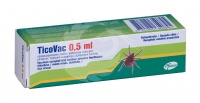
TICOVAC 0.25 ML Injectable suspension

Запит на рецепт онлайн
Лікар розгляне ваш випадок і визначить, чи є рецепт медично доцільним.

Поговоріть з лікарем про ці ліки
Обговоріть симптоми та можливі подальші кроки під час короткої онлайн-консультації.



Інструкція із застосування TIKOVAK
Зміст інструкції
- TICOVAC
- TICOVAC 0.25 ml for paediatric use is presented as an injectable suspension in a syringe
- TICOVAC
TICOVAC
0.25 ml for paediatric use
Injectable suspension in a pre-filled syringe
Vaccine (whole virus, inactivated) against tick-borne encephalitis
Read this leaflet carefully before you or your child is given this
vaccine as it contains important information for you and your child
- 1. Keep this leaflet. You may need to read it again.
- 2. If you have any questions, ask your doctor, pharmacist or nurse.
- 3. This vaccine has been prescribed only for you and your child. Do not give it to other people.
- 4. If you or your child gets any side effects, even those not listed in this leaflet, tell your doctor, pharmacist or nurse. See section 4.
Contents of this leaflet
- 1. What TICOVAC 0.25 ml for paediatric use is and what it is used for
- 2. What you need to know before you or your child receive TICOVAC 0.25 ml for paediatric use
- 3. How to use TICOVAC 0.25 ml for paediatric use
- 4. Possible side effects
- 5. How to store TICOVAC 0.25 ml for paediatric use
- 6. Contents of the pack and other information
1. What is TICOVAC 0.25 ml for paediatric use and what is it used for
TICOVAC 0.25 ml for paediatric use is a vaccine, which is used to prevent the disease
caused by the tick-borne encephalitis virus (TBE).It is indicated for children aged between 1
and 15 years.
- The vaccine stimulates the body to produce adequate protection (antibodies) against the virus.
- It does not protect against other viruses and bacteria (some of which are transmitted by tick bites) that can produce similar symptoms.
The tick-borne encephalitis viruscan cause very serious infections of the brain or spinal cord
and its membranes. These often begin with headache and high temperature. In
some individuals and in more severe forms, they can progress to loss of consciousness, coma
and death.
The virus can be carried by ticks. It is transmitted to humans through tick bites.
The probability of being bitten by ticks carrying the virus is very high in large parts
of Europe, as well as central and eastern Asia. People who live in or spend
their holidays in these parts of the world are at risk of contracting tick-borne encephalitis. Ticks
are not always visible on the skin and bites may go unnoticed.
- As with all vaccines, this vaccine may not completely protect everyone who has been vaccinated.
- It is likely that a single dose of the vaccine will not be sufficient to protect you or your child against infection. You or your child will need to be given 3 doses (see section 3 for more information) to achieve optimal protection.
- The protection does not last for life. Regular booster doses are necessary (see section 3 for more information).
- There are no data relating to post-exposure prophylaxis (vaccination after a tick bite).
2. What you need to know before your child or you receive TICOVAC 0.25 ml for use
for pediatric use
Do not use TICOVAC 0.25ml for pediatric use:
- If you or your child is allergic to the active ingredient, to any of the other ingredients (listed in section 6), formaldehyde or protamine sulfate (used during the manufacturing process) or to antibiotics such as neomycin and gentamicin. For example, if you or your child has experienced a skin rash, swelling of the face and throat, difficulty breathing, bluish discoloration of the tongue or lips, low blood pressure and collapse.
- If you or your child has had a severe allergic reaction after eating eggs or chicken.
- If you or your child has an acute illness with or without fever, you should wait before receiving TICOVAC 0.25 ml for pediatric use. The doctor may ask you or your child to delay the injection until you or your child feel better.
Warnings and precautions
Consult your doctor, pharmacist or nurse before vaccination if you or your
child:
- suffers from a bleeding disorder or is prone to bruising
- suffers from an autoimmune disease (e.g. rheumatoid arthritis or multiple sclerosis)
- has a weakened immune system (so you or your child are unable to fight infections effectively)
- does not produce antibodies effectively
- is taking medicines against cancer
- is taking medicines called corticosteroids (which reduce inflammation)
- suffers from any brain disease
- suffers from neurological disorders or epilepsy
The vaccine may not be effective if any of the above conditions apply to you
or your child. Or the doctor may administer the vaccine to you or your child. The doctor
may ask you to have a blood test to check that the vaccine has worked.
Other medicines and TICOVAC 0.25ml for pediatric use
Tell your doctor, pharmacist or nurse if you or your child are taking or have
recently taken any other medicines, including those available without a prescription. The
doctor will tell you if you or your child can receive TICOVAC 0.25 ml for pediatric use
at the same time as other vaccines. If you or your child have recently received another
vaccine, the doctor will decide where and when to administer TICOVAC 0.25 ml for use
for pediatric use.
TICOVAC 0.25 ml for pediatric use may not provide complete protection if you or your
child are undergoing immunosuppressive treatment.
Tell your doctor if you or your child have ever been infected or vaccinated against
yellow fever, Japanese encephalitis or Dengue virus. This is because you or your child may
have antibodies in the blood that can react with the tick-borne encephalitis virus (TBE)
used in the tests to measure your antibody levels. Such tests may then give incorrect
results.
Pregnancy, breastfeeding and fertility
If you are pregnant, suspect you may be pregnant, are planning a pregnancy, or are
breastfeeding, ask your doctor or pharmacist for advice before using this vaccine.
The doctor will discuss the possible risks and benefits with you. The effect of TICOVAC
0.25 ml for pediatric use during pregnancy or breastfeeding is not known. However, it may
still be administered if the risk of infection is high.
Driving and operating machinery
It is unlikely that the vaccine will affect a person's ability to drive vehicles or
operate machinery (playing in the street or riding a bicycle). However, you may experience
problems with your vision or dizziness.
TICOVAC 0.25ml for pediatric use contains potassium and sodium
Potassium and sodium are present at levels below 1 mmol per dose, i.e. the product is
essentially “potassium and sodium free”.
3. How to use TICOVAC 0.25 ml for paediatric use
Generally, this vaccine is injected into the muscle of the upper arm. In children under 18 months, the vaccine may be injected into the thigh. It must not be injected into a blood vessel. Only in exceptional cases (if you or your child have a bleeding disorder or are taking medications to thin the blood, called anticoagulants), the vaccine may be administered under the skin (subcutaneously).
This vaccine should not be administered to people aged 16 years or older. For this age group, the TBE vaccine for adults is recommended. The administration of the vaccine must be documented by the doctor, who records the batch number.
Primary injection series
The primary injection series consists of three doses of TICOVAC 0.25 ml for paediatric use:
- 1. The doctor will decide when to administer the first injection.
- 2. The second injection will be administered 1-3 months later. It may be administered two weeks after the first dose if urgent protection is needed.
- 3. The third injection will be administered 5-12 months after the second.
- It is preferable that the first and second doses are administered during the winter period. This is because the tick begins to become active in spring. This way, you will be able to develop sufficient protection before the start of the tick season.
- The third dose completes the primary injection series. The vaccination schedule should ideally be completed with the third vaccination within the same tick season or at least before the start of the next tick season.
- Provides protection for a maximum period of three years.
- If too much time passes between the three doses, you may not have complete protection against infection.
Booster vaccinations
The first booster dose should be administered 3 years after the third dose. Further booster doses should be administered every 5 years.
| Primary immunisation | Dose | Conventional schedule | or c Rapid immunisation schedule |
| 1st dose | 0.25 ml | Date established | Date established |
| 2nd dose | 0.25 ml | 1-3 months after the 1st vaccination | a 14 days after the 1st vaccination |
| 3rd dose | 0.25 ml | 5-12 months after the 2nd vaccination | m 5-12 months after the 2nd vaccination |
| Booster dose | Dose | Time |
| 1st booster dose | 0.25 ml | l 3 years after the third dose |
| Subsequent booster doses | 0.25 ml | e every 5 years |
Catch-up dose
If too much time passes between a vaccine dose and the next, you may not be protected against TBE. However, a single catch-up dose with TICOVAC is sufficient to continue the vaccination plan if you have previously received at least two vaccinations. It is not necessary to restart the entire vaccination cycle. Consult your doctor for more information.
No data are available regarding the catch-up dose in children under 6 years of age.
Children with a compromised immune system (including those undergoing immunosuppressive therapy)
The doctor may decide to measure the antibodies present in the blood four weeks after the second dose and administer an additional dose if, at this point, there are no signs of an immune response. The same applies to each of the subsequent doses.
If you use more TICOVAC 0.25 ml for paediatric use than you should
An overdose is highly unlikely as the injection is administered by a doctor with a single-dose syringe.
If you have any doubts about the use of this vaccine, ask your doctor, nurse or pharmacist.
4. Possible side effects
Like all medicines, this vaccine can cause side effects, although not everybody gets them. If any of the side effects gets worse or if you notice any side effects not listed here, please tell your doctor or pharmacist.
As with all vaccines, serious allergic reactions can occur. These are very rare, but appropriate treatment and medical supervision must always be readily available. Symptoms of serious allergic reactions include:
- swelling of the lips, mouth, and throat (which may make it difficult to swallow and breathe),
- a rash or swelling of the hands, feet, and ankles,
- loss of consciousness due to a drop in blood pressure.
These signs or symptoms usually occur very quickly after the injection, while the person is still in the clinic or outpatient setting. If you notice any of these symptoms after leaving the place where you received the injection, seek IMMEDIATE medical attention.
High temperature (fever) can occur in children. Among young children (aged 1 to 2 years), one in three has a fever after the first injection. Among children aged 3 to 15 years, less than 1 in 10 has a fever. Usually the fever lasts only 1-2 days. Fever occurs less frequently after the second, third injection or after the booster injection. If necessary, your doctor may recommend treatment to prevent or treat the fever.
The following side effects have been reported:
Very common (may affect more than 1 in 10 people):
- Pain at the injection site
Common (may affect up to 1 in 10 people):
- Headache
- Swelling, hardening and redness at the injection site
- Nausea or vomiting, decreased appetite
- Feeling tired or unwell
- Restlessness and insomnia (in young children)
- Muscle aches
- Fever (see above)
Uncommon (may affect up to 1 in 100 people):
- Swollen lymph nodes
- Stomach pain
- Joint pain
- Chills
Rare (may affect up to 1 in 1,000 people):
- Itching at the injection site
- Abnormal and reduced sensitivity such as tingling or numbness along many nerves
- Dizziness
- Vertigo
- Diarrhea
- Indigestion
- Hives
The following additional side effects have also been reported from post-marketing surveillance, with a rare frequency:
- Allergic reactions
- Inflammation of the brain, signs of meningeal irritation such as stiff neck
- Neurological symptoms such as facial paralysis, paralysis, nerve inflammation
- A disease characterized by muscle weakness, abnormal sensations, tingling in the arms, legs, and upper body (Guillain-Barré syndrome)
- Impaired/disturbed vision, increased sensitivity to light, eye pain
- Tinnitus (ringing in the ears)
- Shortness of breath
- Skin reactions (rash and/or itching), skin redness, increased sweating
- Musculoskeletal and neck stiffness, arm and leg pain
- Flu-like illness, weakness, skin swelling, unsteady gait
- Convulsions with or without fever
In a small comparative study of the immune response after intramuscular and subcutaneous administration of TICOVAC in healthy adults, the subcutaneous route led to higher local reactions at the injection site (e.g., redness, swelling, itching, and pain), particularly in women.
Reporting of side effects
If you get any side effects, even those not listed in this leaflet, tell your doctor or pharmacist.
You can also report side effects directly through the national reporting system at https://www.aifa.gov.it/content/segnalazioni-reazioni-avverse .
By reporting side effects you can help provide more information on the safety of this vaccine.
5. How to store TICOVAC 0.25 ml for paediatric use
- Store in a refrigerator (2°C - 8°C). Keep the syringe in the outer packaging, to protect the medicine from light. Do not freeze. Do not use this vaccine if there are any visible signs of foreign particles or leakage.
- Keep this vaccine out of the sight and reach of children.
- Do not use this vaccine after the expiry date stated on the carton after Exp. The expiry date refers to the last day of that month.
- Do not dispose of any vaccine in wastewater or household waste. Ask your pharmacist how to dispose of vaccines that you no longer use. This will help protect the environment.
6. Contents of the pack and other information
What TICOVAC 0,25ml for paediatric use contains
The active substance is: tick-borne encephalitis virus(Neudörfl strain)
One dose (0.25 millilitres) of the vaccine contains 1.2 micrograms of inactivated tick-borne encephalitis virus(Neudörfl strain), produced in chicken embryo cells.
The other components are: human albumin, sodium chloride, dibasic sodium phosphate dihydrate,
monobasic potassium phosphate, sucrose and water for injections. Aluminium hydroxide (hydrated) is included in this vaccine as an adjuvant. Adjuvants are substances
included in certain vaccines to accelerate, enhance and/or prolong the protective effects of the vaccine.
Description of the appearance of TICOVAC 0,25ml for paediatric use and contents of the
pack
TICOVAC 0.25 ml for paediatric use is presented as an injectable suspension in a syringe
prefilled with 0.25 millilitres (one dose). The package may not contain a needle or
may contain 1 separate needle per syringe. The needles are sterile and for single use. Packages of 1 and 10 prefilled syringes are available. It is possible that not all packages are
marketed. After shaking, the suspension is whitish and milky.
Each prefilled syringe is packaged in a blister. The opening in the blister seal is
intentional and allows for humidity equilibration during warming, which is recommended before
vaccine administration. To remove the syringe, open the blister by removing its
cover. Do not press the syringe against the blister.
Marketing Authorisation Holder and Manufacturer:
Marketing Authorisation Holder:
Pfizer S.r.l.
Via Isonzo, 71 - 04100 Latina
Italy
Manufacturer:
Pfizer Manufacturing Belgium NV
Rijksweg 12
2870 Puurs-Sint-Amands
Belgium
This medicinal product is authorised in the Member States of the European Economic Area and in the
United Kingdom (Northern Ireland) with the following denominations:
België/Belgique/Belgien, Deutschland,
Luxembourg/Luxemburg, Nederland, Polska,
Portugal
FSME-IMMUN 0.25 ml Junior
БългарияFSME-IMMUN 0.25 ml Junior
Česká republikaFSME-IMMUN
Danmark, Suomi/Finland, Norge, Ísland,TicoVac Junior
Ελλάδα, Κύπρος
EestiTicoVac 0.25 ml
HrvatskaFSME-IMMUN 0.25 ml Junior, suspension for
injection in a prefilled syringe, inactivated tick-borne encephalitis vaccine
MagyarországFSME-IMMUN Junior vaccine in syringe
MaltaTicoVac Junior 0.25 ml Suspension for injection
in pre-filled syringe
ÖsterreichFSME-IMMUN 0.25 ml Junior
Injectionsuspension in einer Fertigspritze
FranceTicoVac Enfant 0.25 ml
Ireland, United Kingdom (Northern Ireland)TicoVac Junior 0.25 ml
SverigeFSME-IMMUN Junior
ItaliaTicoVac 0.25 ml for paediatric use
Latvija, LietuvaTicoVac 0.25 ml
RomâniaFSME-IMMUN 0.25 ml Junior
suspensie injectabilă în seringă preumplută
SlovenijaFSME-IMMUN 0.25 ml za otroke
Slovenská republikaFSME-IMMUN 0.25 ml Junior Injekčná
suspenzia
Other sources of information
More detailed information on this medicinal product is available on the website of the Italian Medicines Agency, https://www.aifa.gov.it.
----------------------------------------------------------------------------------------------------------------
The following information is intended exclusively for doctors or healthcare professionals:
The vaccine must be brought to room temperature before administration. Shake
well before administration in order to thoroughly mix the vaccine suspension. After shaking, TICOVAC 0.25 ml for paediatric use appears as a homogeneous suspension of
whitish opalescent colour.
Before administration, the vaccine must be visually inspected for any foreign particles and/or a change in physical appearance. If any of these conditions are observed, do not use the vaccine.
After removing the syringe cap, attach the needle immediately and remove the
needle protection before administration. Once the needle is attached, the vaccine must
be administered immediately. In exceptional cases of subcutaneous administration,
an appropriate needle must be used.
Unused product and waste materials derived from such product must be disposed of in
accordance with current local regulations.

Не впевнені, чи підходить вам цей лікарський засіб?
Обговоріть симптоми та можливі варіанти лікування з лікарем онлайн.
TICOVAC
0.5ml
Injectable suspension in a pre-filled syringe
Vaccine (whole virus, inactivated) against tick-borne encephalitis
Read this leaflet carefully before you or your child are given this vaccine because it contains important information for you or your child
- 1. Keep this leaflet. You may need to read it again.
- 2. If you have any questions, ask your doctor, pharmacist or nurse.
- 3. This vaccine has been prescribed only for you or your child. Do not give it to other people.
- 4. If you or your child experience any side effects, including those not listed in this leaflet, tell your doctor, pharmacist or nurse. See section 4.
Contents of this leaflet
- 1. What TICOVAC 0.5 ml is and what it is used for
- 2. What you need to know before you or your child receive TICOVAC 0.5 ml
- 3. How to use TICOVAC 0.5 ml
- 4. Possible side effects
- 5. How to store TICOVAC 0.5 ml
- 6. Contents of the pack and other information
1. What is TICOVAC 0.5 ml and what is it used for
TICOVAC 0.5 ml is a vaccine, which is used to prevent the disease caused by the tick-borne encephalitis virus (TBE).It is indicated for subjects aged 16 years or older.
- The vaccine stimulates the body to produce adequate protection (antibodies) against the virus.
- It does not protect against other viruses and bacteria (some of which are transmitted by tick bites) that can produce similar symptoms.
The tick-borne encephalitis viruscan cause very serious infections of the brain or spinal cord and its coverings. These often begin with headache and high temperature. In some subjects and in the more severe forms, they can progress to loss of consciousness, coma and death.
The virus can be carried by ticks. It is transmitted to humans through tick bites.
The probability of being bitten by ticks carrying the virus is very high in large parts of Europe, as well as central and eastern Asia. People who live in or spend their holidays in these parts of the world are at risk of contracting tick-borne encephalitis. Ticks are not always visible on the skin and bites may go unnoticed.
- As with all vaccines, this vaccine may not completely protect everyone who has been vaccinated.
- It is likely that a single dose of the vaccine is not sufficient to protect you or your child against infection. You or your child will need to be given 3 doses (see section 3 for more information) to achieve optimal protection.
- The protection does not last for life. Regular booster doses are necessary (see section 3 for more information).
- There are no data relating to post-exposure prophylaxis (vaccination after a tick bite).
2. What you need to know before your child or you receive TICOVAC 0.5 ml
Do not use TICOVAC 0.5 ml:
- If you or your child are allergic to the active ingredient, to any of the other ingredients (listed in section 6), formaldehyde or protamine sulfate (used during the manufacturing process) or to antibiotics such as neomycin and gentamicin. For example, if you or your child have experienced a skin rash, swelling of the face and throat, difficulty breathing, bluish discoloration of the tongue or lips, low blood pressure and collapse.
- If you or your child have had a severe allergic reaction after eating eggs or chicken.
- If you or your child have an acute illness with or without fever, you should wait before receiving TICOVAC 0.5 ml. The doctor may ask you or your child to delay the injection until you or your child feel better.
Warnings and precautions
Consult your doctor, pharmacist or nurse before vaccination if you or your child:
- suffer from a bleeding disorder or are prone to bruising easily
- suffer from an autoimmune disease (e.g. rheumatoid arthritis or multiple sclerosis)
- have a weakened immune system (so you or your child are unable to fight infections effectively)
- do not produce antibodies effectively
- are taking medicines against cancer
- are taking medicines called corticosteroids (which reduce inflammation)
- suffer from any brain disease
- suffer from neurological disorders or epilepsy
The vaccine may not be effective if any of the above conditions apply to you or your child. Or the doctor may administer the vaccine to you or your child. The doctor may ask you to have a blood test to check that the vaccine has worked.
Other medicines and TICOVAC 0.5 ml
Tell your doctor, pharmacist or nurse if you or your child are taking or have recently taken any other medicines, including those available without a prescription. The doctor will tell you if you or your child can receive TICOVAC 0.5 ml at the same time as other vaccines. If you or your child have recently received another vaccine, the doctor will decide where and when to administer TICOVAC 0.5 ml.
TICOVAC 0.5 ml may not provide complete protection if you or your child are undergoing immunosuppressive treatment.
Tell your doctor if you or your child have ever been infected or vaccinated against yellow fever, Japanese encephalitis or Dengue virus. This is because you or your child may have antibodies in the blood that can react with the tick-borne encephalitis (TBE) virus used in the tests to measure your antibody levels. Such tests may then give incorrect results.
Pregnancy, breastfeeding and fertility
If you are pregnant, suspect you may be pregnant, or are planning a pregnancy, or if you are breastfeeding, ask your doctor or pharmacist for advice before using this vaccine.
The doctor will discuss the possible risks and benefits with you. The effect of TICOVAC 0.5 ml during pregnancy or breastfeeding is unknown. However, it may still be administered if the risk of infection is high.
Driving and operating machinery
It is unlikely that the vaccine will affect your ability to drive or operate machinery. However, you may experience vision problems or dizziness.
TICOVAC 0.5 ml contains potassium and sodium
Potassium and sodium are present at levels less than 1mmol per dose, meaning the product is essentially “potassium and sodium free”.
3. How to use TICOVAC 0,5 ml
In general, this vaccine is injected into the muscle of the upper arm. The vaccine
must not be injected into a blood vessel. Only in exceptional cases (if you or your child have
a bleeding disorder or are taking medications to thin the blood, called
anticoagulants), the vaccine may be administered under the skin (subcutaneously).
This vaccine should not be administered to people under the age of 16. For this
age group, a TBE vaccine for paediatric use is recommended. The administration of the
vaccine must be documented by the doctor, who records the batch number.
First course of injections
The first course of injections consists of three doses of TICOVAC 0,5 ml:
- 6. The doctor will decide when to administer the first injection.
- 7. The second injection will be administered at an interval of 1-3 months. It may be administered two weeks after the first dose if urgent protection is needed.
- 8. The third injection will be administered at an interval of 5-12 months from the second.
- It is preferable that the first and second doses are administered during the winter period. This is because the tick begins to become active in spring. In this way, you will be able to develop sufficient protection before the start of the tick season.
- The third dose completes the primary course of injections. The vaccination schedule should ideally be completed with the third vaccination within the same tick season or at least before the start of the next tick season.
- Provides protection for a maximum period of three years.
- If you allow too much time to elapse between the three doses, you may not have complete protection against infection.
| A Primary immunization | Dose | Conventional schedule | Rapid immunization schedule |
| 1st dose | 0,5 ml | Date established | Date established |
| 2nd dose | 0,5 ml | 1-3 months after the 1st vaccination | 14 days after the 1st vaccination |
| 3rd dose | 0,5 ml | 5-12 months after the 2nd vaccination | or 5-12 months after the 2nd vaccination |
Booster vaccinations
People aged between 16 and 59 years
If you are younger than 60 years, the first booster dose must be administered 3 years
after the third dose. Further booster doses must be administered every 5 years.
People aged 60 years or over
In general, you will need to receive booster doses – the first and all other booster doses – at
intervals of three years.
| Booster dose from 16 years up to 59 years | Dose | T i m e |
| 1st booster dose | 0,5 ml | 3 years after the third dose |
| Subsequent booster doses | 0,5 ml | e v e r y 5 years |
| Booster dose from 60 years onwards | a Dose | Time |
| All booster doses | n 0,5 ml | every 3 years |
Catch-up dose
If too much time elapses between a vaccine dose and the next, you may not be protected against the
TBE. However, a single catch-up dose with TICOVAC is sufficient to continue the vaccination plan if you have previously received at least two vaccinations. It is not necessary
to restart the entire vaccination cycle. Consult your doctor for more information.
People with a compromised immune system (including those undergoing immunosuppressive
therapy)
The doctor may decide to measure the antibodies present in the blood four weeks after the
second dose and administer an additional dose if, at this point, there are no signs of
an immune response. The same applies to each of the subsequent doses.
If you use more TICOVAC 0,5 ml than you should
An overdose is highly unlikely as the injection is administered by
a doctor with a single-dose syringe.
If you have any doubts about the use of this vaccine, ask your doctor, nurse or
pharmacist.
4. Possible side effects
Like all medicines, this vaccine can cause side effects, although not everybody gets them. If any of the side effects gets serious or if you notice any side effects not listed in this leaflet, tell your doctor or pharmacist. As with all vaccines, serious allergic reactions can occur. They are very rare, but it is always necessary to have the appropriate treatment and medical supervision readily available. Symptoms of serious allergic reactions include:
- swelling of the lips, mouth, throat (which may make it difficult to swallow or breathe)
- a rash and swelling of the hands, feet and ankles
- loss of consciousness due to a drop in blood pressure
These signs or symptoms usually occur very quickly after the injection is given, while the person is still in the clinic or outpatient setting. If you notice any of these symptoms after leaving the place where you received the injection, seek IMMEDIATE medical attention. The following side effects have been reported:
Very common (may affect more than 1 in 10 people):
- Pain at the injection site
Common (may affect up to 1 in 10 people):
- Headache
- Nausea
- Muscle and joint pain
- Feeling tired or unwell
Uncommon (may affect up to 1 in 100 people):
- Swollen lymph nodes
- Vomiting
- Fever
- Bruising at the injection site Rare (may affect up to 1 in 1,000):
- Allergic reactions
- Drowsiness
- Motion sickness
- Diarrhea
- Abdominal pain
- Redness, tissue hardening, swelling, itching, tingling and a feeling of warmth at the injection site
The following additional side effects have also been reported, emerging from post-marketing surveillance with rare frequency:
- St. Anthony’s Fire (erysipelas)
- Onset of autoimmune diseases, e.g. multiple sclerosis
- Allergic reactions
- Neurological disorders such as encephalomyelitis, inflammation of the spinal cord (myelitis, transverse myelitis)
- A disease characterized by muscle weakness, abnormal sensations, tingling of arms, legs and upper body (Guillain-Barré syndrome)
- Inflammation of the brain, convulsions, inflammation of the meninges (membranes covering the brain)
- Signs of meningeal irritation such as neck pain and stiffness
- Neurological symptoms such as facial paralysis, paralysis, nerve inflammation, abnormal or reduced sensitivity such as tingling or numbness, throbbing or shooting pain in one or more nerves, inflammation of the optic nerve
- Feeling of dizziness
- Impaired/disturbed vision, increased sensitivity to light, eye pain
- Tinnitus (ringing in the ears)
- Rapid heartbeat
- Shortness of breath
- Skin reactions (rash and/or itching of the skin), dermatitis, skin redness, increased sweating, skin inflammation
- Back pain, swollen joints, neck pain, musculoskeletal and neck stiffness, arm and leg pain
- Chills, flu-like symptoms, weakness, edema, unsteady gait, fluid accumulation under the skin
- Joint pain at the injection site, nodules and inflammation at the injection site
In a small comparative study on the immune response after intramuscular and subcutaneous administration of TICOVAC in healthy adults, the subcutaneous route led to higher local reactions at the injection site (e.g., redness, swelling, itching and pain), particularly in women.
Reporting of side effects
If you get any side effects, talk to your doctor or pharmacist. This includes any possible side effects not listed in this leaflet. You can also report side effects directly through the national reporting system at
https://www.aifa.gov.it/content/segnalazioni-reazioni-avverse .
By reporting side effects you can help provide more information on the safety of this vaccine.
5. How to store TICOVAC 0.5 ml
- Store in a refrigerator (2°C - 8°C). Keep the syringe in the outer packaging to protect the medicine from light. Do not freeze. Do not use this vaccine if there are any visible signs of foreign particles or leakage.
- Keep this vaccine out of the sight and reach of children.
- Do not use this vaccine after the expiry date which is stated on the carton after Exp. The expiry date refers to the last day of that month.
- Do not dispose of any vaccine in wastewater or household waste. Ask your pharmacist how to dispose of vaccines that you no longer use. This will help protect the environment.
6. Package contents and other information
What TICOVAC 0.5 ml contains
The active ingredient is: tick-borne encephalitis virus(Neudörfl strain)
One dose (0.5 milliliters) of the vaccine contains 2.4 micrograms of tick-borne encephalitis virus
inactivated(Neudörfl strain), produced in chicken embryo cells.
The other ingredients are: human albumin, sodium chloride, disodium phosphate dihydrate,
monobasic potassium phosphate, sucrose and water for injections. Aluminum hydroxide (hydrated) is included in this vaccine as an adjuvant. Adjuvants are substances
included in certain vaccines to accelerate, enhance and/or prolong the protective effects of the vaccine.
Description of the appearance of TICOVAC 0.5 ml and contents of the pack
TICOVAC 0.5 ml is presented as an injectable suspension in a pre-filled syringe of 0.5
milliliters (one dose). The pack may not contain a needle or may contain 1 separate needle
per syringe. The needles are sterile and for single use. Packs of 1 and 10 pre-filled syringes are available.
Not all pack sizes may be marketed. After shaking,
the suspension is whitish and milky in color.
Each pre-filled syringe is packaged in a blister. The opening in the blister seal is
intentional and allows for humidity equalization during warming, recommended before
vaccine administration. To remove the syringe, open the blister by removing the
cover. Do not press the syringe against the blister.
Marketing authorization holder and manufacturer:
Marketing authorization holder:
Pfizer S.r.l.
Via Isonzo, 71 - 04100 Latina
Italy
Manufacturer
Pfizer Manufacturing Belgium NV
Rijksweg 12
2870 Puurs-Sint-Amands
Belgium
This medicinal product is authorised in the Member States of the European Economic Area and in the
United Kingdom (Northern Ireland) under the following denominations:
België/Belgique/Belgien,
Luxembourg/Luxemburg, Nederland, Polska,
Portugal, Slovenija
FSME-IMMUN 0.5 ml
Česká republikaFSME-IMMUN
БългарияFSME-IMMUN 0.5 ml
Danmark, Norge, Suomi/Finland, Ísland,TicoVac
Ελλάδα, Κύπρος
DeutschlandFSME-IMMUN 0.5 ml Erwachsene
Eesti, Italia, Latvija, LietuvaTicoVac 0.5 ml
HrvatskaFSME-IMMUN 0.5 ml, suspension for injection in
pre-filled syringe, vaccine against tick-borne
encephalitis, inactivated
Ireland, United Kingdom (Northern Ireland)TicoVac 0.5 ml
FranceTicoVac 0,5 ml ADULTES
SverigeFSME-IMMUN Vuxen
MagyarországFSME-IMMUN 0,5 ml felnőtteknek
TicoVac 0.5 ml Suspension for injection in pre-
filled syringe
Malta
ÖsterreichFSME-Immun 0,5 ml Erwachsene
Injektionssuspension in einer Fertigspritze
RomâniaFSME-IMMUN 0.5 ml
suspensie injectabila in seringa preumpluta
Slovenská republikaFSME-IMMUN 0,5 ml Injekčná suspenzia
Other sources of information
More detailed information on this medicinal product is available on the website of the Italian Medicines Agency, https://www.aifa.gov.it .
----------------------------------------------------------------------------------------------------------------
The following information is intended exclusively for physicians or healthcare professionals:
The vaccine must be brought to room temperature before administration. Shake well before administration in order to thoroughly mix the vaccine suspension. After shaking, TICOVAC 0.5 ml appears as a homogeneous, opalescent whitish suspension.
Before administration, the vaccine must be visually inspected for any foreign particles and/or a change in physical appearance. If any of these conditions are observed, do not use the vaccine.
After removing the syringe cap, attach the needle immediately and remove the needle shield before administration. Once the needle is attached, the vaccine must be administered immediately. In exceptional cases of subcutaneous administration, an appropriate needle must be used.
Unused product and waste materials derived from such product must be disposed of in
accordance with local regulations.

Виникли питання під час прийому ліків?
Обговоріть свої симптоми та лікування з лікарем онлайн.
- Країна реєстрації
- Лікарська формаInjectable suspension, 0.25 ML
- Код АТХJ07BA01
- Діюча речовина
- Потрібен рецептНі
- Виробник
- Ця інформація надана лише для ознайомлення і не є медичною порадою. Рішення щодо лікування завжди приймає лікар.
- Альтернативи до TIKOVAKЛікарська форма: Injectable suspension, 6 MCGДіюча речовина: encephalitis, Japanese, inactivated, whole virusВиробник: VALNEVA AUSTRIA GMBHРецепт не потрібенЛікарська форма: Powder and solvent for injectable solution, 0.5 mlДіюча речовина: respiratory syncytial virus vaccinesВиробник: PFIZER EUROPE MA EEIGПотрібен рецептЛікарська форма: Injectable suspension in pre-filled syringe, 720 U. + 20 MCGДіюча речовина: combinationsВиробник: GLAXOSMITHKLINE BIOLOGICALS S.A.Рецепт не потрібен
Аналоги TIKOVAK в інших країнах
Препарати з тією самою діючою речовиною, доступні в інших країнах.
Аналог TIKOVAK у Польща
Аналог TIKOVAK у Україна
Аналог TIKOVAK у Іспанія
Лікарі онлайн щодо TIKOVAK
Застосування, безпека та можливість призначення рецепта — за результатами медичної оцінки.









Отримайте рецепт на TIKOVAK онлайн
Заповніть форму за 2 хвилини
Розкажіть про симптоми, історію хвороби та потрібний препарат.
Оберіть лікаря або ми призначимо
Оберіть спеціаліста або ми підберемо найближчого доступного лікаря.
Лікар розглядає ваш випадок
Зазвичай протягом 30 хвилин. Може ставити уточнювальні запитання в чаті.
Отримайте в будь-якій аптеці
Електронний рецепт надсилається на вашу пошту — дійсний по всій Польщі.
Часті запитання
TIKOVAK не потребує рецепта в Італія. Ви можете обговорити з лікарем онлайн, чи підходить цей лікарський засіб для вашої ситуації.
Діюча речовина у TIKOVAK — encephalitis, tick borne, inactivated, whole virus. Це допомагає визначити препарати з тим самим складом, але під іншими торговими назвами.
TIKOVAK виробляється компанією PFIZER S.R.L.. Назва бренду та упаковка можуть відрізнятися залежно від дистрибʼютора.
Лікарі, зокрема Сімейні лікарі, Психіатри, Дерматологи, Кардіологи, Ендокринологи, Гастроентерологи, Пульмонологи, Нефрологи, Ревматологи, Гематологи, Інфекціоністи, Алергологи, Геріатри, Педіатри, Онкологи, можуть оцінити доцільність застосування TIKOVAK з урахуванням вашого стану та місцевих правил. Ви можете записатися на онлайн-консультацію, щоб обговорити симптоми та можливі подальші кроки.
Польща має добре розвинену систему охорони здоров'я у великих містах, таких як Варшава, Краків, Вроцлав і Гданськ. Аптеки широко доступні та працюють відповідно до чинного законодавства, забезпечуючи доступ до рецептурних препаратів.
Ви можете придбати TIKOVAK у Варшаві, Кракові, Вроцлаві або Гданську в будь-якій аптеці за наявності дійсного рецепта.
Щоб отримати рецепт, ви можете скористатися Oladoctor:
Інші препарати з тією самою діючою речовиною (encephalitis, tick borne, inactivated, whole virus) включають IXIARO, ABRYSVO, AMBIRIX. Вони можуть відрізнятися торговою назвою або формою випуску, але містять той самий терапевтичний компонент. Перед зміною або початком прийому нового препарату варто проконсультуватися з лікарем.
