



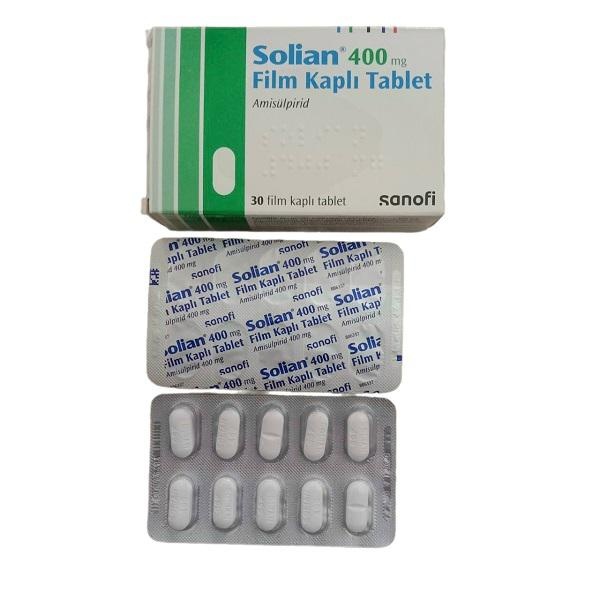
SOLIAN 100 mg Tablet

Запит на рецепт онлайн
Лікар розгляне ваш випадок і визначить, чи є рецепт медично доцільним.

Поговоріть з лікарем про ці ліки
Обговоріть симптоми та можливі подальші кроки під час короткої онлайн-консультації.



Інструкція із застосування SOLIAN
Зміст інструкції
Solian 100 mg Tablets, 200 mg Tablets, 400 mg Coated Tablets
amisulpride
Read this leaflet carefully before you start taking this medicine as it contains
important information for you.
- Keep this leaflet. You may need to read it again.
- If you have any questions, ask your doctor or pharmacist.
- This medicine has been prescribed for you only. Do not pass it on to others, even if their symptoms are the same as yours, as it could be harmful.
- If you get any side effects, even those not listed in this leaflet, tell your doctor or pharmacist. See section 4.
Contents of this leaflet:
- 1. What Solian is and what it is used for
- 2. What you need to know before you take Solian
- 3. How to take Solian
- 4. Possible side effects
- 5. How to store Solian
- 6. Contents of the pack and other information
1. What Solian is and what it is used for
Solian contains amisulpride, which belongs to a class of medicines called “Psycholeptics, benzamides”.
Solian is indicated for the treatment of mental disorders characterized by the inability to
distinguish between self and the external world (acute and chronic psychotic disorders).
The symptoms of this disorder include:
- positive symptoms such as:
- disorder of interpretation of reality (delusion)
- hallucinations, such as experiencing, seeing or hearing things that do not exist
- strange and/or frightening thoughts (thought disorders)
- negative symptoms such as:
- difficulty in feeling genuine emotions towards other people (blunted affect)
- becoming isolated and submissive (emotional and social withdrawal)
2. What you need to know before taking Solian
Do not take Solian
- if you are allergic to amisulpride, to any of the other ingredients of this medicine (listed in section 6) and to substances closely related to it;
- if you have breast cancer (mammary tumor) or a disorder called “prolactin-dependent tumor” (see “Warnings and precautions” and “Possible side effects”);
- if you have a tumor of the gland located above the kidneys (pheochromocytoma);
- if you are a child in development and until puberty;
- if you are taking any of the following medicines because they could cause serious heart rhythm disturbances (onset of torsades de pointes):
- medicines used in the treatment of irregular heartbeat (arrhythmias) such as: o class Ia antiarrhythmics such as quinidine, disopyramide; o class III antiarrhythmics such as amiodarone, sotalol;
- other medicines such as bepridil (for the treatment of irregular heartbeat), cisapride (for the treatment of gastric disorders), sultopride, thioridazine (for the treatment of mental disorders), methadone administered by intravenous injection (for the treatment of severe pain or to counteract drug addiction), vincamine administered by intravenous injection (to increase blood flow to the brain), halofantrine (for the treatment of malaria), erythromycin administered by intravenous injection, pentamidine, sparfloxacin (for the treatment of bacterial infections) (see “Other medicines and Solian”).
- levodopa, a medicine used to treat Parkinson's disease (see “Other medicines and Solian”).
Warnings and precautions
Talk to your doctor or pharmacist before taking Solian.
Pay particular attention before taking Solian especially if:
- you suffer from Parkinson's disease because this medicine may worsen your condition;
- you suffer from high blood sugar levels (diabetes mellitus) or are at risk of developing it. In this case, during treatment with Solian your doctor will check your blood sugar levels;
- you suffer from epilepsy. During treatment with Solian you may be subject to more frequent seizures; your doctor will need to monitor you closely;
- you suffer from impaired kidney function. The doctor will reduce your dose or prescribe intermittent treatment (see “How to take Solian”);
- you are elderly as you are more likely to experience low blood pressure and drowsiness. A dosage reduction may also be required in case of renal insufficiency.
Decreases in some types of white blood cells (leukopenia, neutropenia and agranulocytosis) have been reported with medicines used to treat psychosis, including Solian. Unexplained infections or fever may indicate an imbalance in blood composition (hematologic dyscrasia - see “Possible side effects”), which requires immediate blood tests.
As with other medicines that act on the Central Nervous System, a set of disorders called Neuroleptic Malignant Syndrome may occur, a potentially fatal complication, characterized by increased body temperature (hyperthermia), muscle rigidity, akinesia (movement disorders), irregular heartbeat and blood pressure, sweating, increased heart rate, changes in heart rhythm, elevated levels of creatine phosphokinase (a substance produced by the body that indicates possible muscle damage), rhabdomyolysis (muscle damage) disorders of consciousness that can progress to stupor and coma.
If you have a high body temperature, especially when the daily doses are high, your doctor will stop administering any antipsychotic medicine, including Solian.
Amisulpride causes a heart disorder called “QT prolongation” (see “Possible side effects”) which increases the risk of heart rhythm disturbances (severe ventricular arrhythmias, such as torsades de pointes). The doctor will check the condition of your heart, especially if you have other cardiovascular diseases or relatives with “QT prolongation”. Avoid concomitant therapy with other neuroleptic medicines.
Use Solian with caution if you have risk factors for cerebrovascular disorders (stroke).
Elderly patients with dementia-related psychosis:
The risk of death is higher in elderly patients with dementia.
Disease of the circulatory system called “Venous Thromboembolism” (VTE)
Before and during treatment with Solian, your doctor will perform checks to identify any risk factors for a circulatory system disease called “Venous Thromboembolism” (see “Possible Side Effects”).
Breast cancer
Solian may increase levels of prolactin (a hormone that acts on the breast). If you have a personal or family history of breast cancer, your doctor will monitor you during therapy with Solian.
Benign tumor of the pituitary gland (Benign pituitary tumor)
Amisulpride may increase levels of a hormone called “prolactin”. Cases of benign pituitary tumor (such as prolactinoma, see “Side Effects”) have been observed during therapy with amisulpride. If the levels of the prolactin hormone are very high, or if you have clinical signs of a pituitary tumor (such as visual field defects and headache), your doctor will perform specific tests (imaging tests of the pituitary gland). If the diagnosis of pituitary tumor is confirmed, your doctor will stop treatment with Solian.
After abrupt discontinuation of high therapeutic doses of antipsychotic medicines, withdrawal symptoms have been described, including nausea, vomiting and insomnia.
Psychotic disorders may also reappear and involuntary movement disorders (such as akathisia, dystonia and dyskinesia) have been reported with Solian.
Therefore, your doctor will gradually discontinue Solian.
Severe liver toxicity has been reported following the use of Solian. Contact your doctor immediately if you experience fatigue, loss of appetite, nausea, vomiting, abdominal pain or yellowing of the eyes and skin.
Children and adolescents
Amisulpride should not be given to children until puberty (see “Do not take Solian”).
The efficacy and safety of amisulpride from development (puberty) to the age of 18 years have not been established. Therefore, the use of Solian from development (puberty) to the age of 18 years is not recommended.
Other medicines and Solian
Tell your doctor or pharmacist if you are taking, have recently taken or might take any other medicines.
When drugs called neuroleptics are administered in conjunction with drugs that “prolong the QT” (like Solian) the risk of developing heart rhythm disturbances (cardiac arrhythmias) increases.
The effects of Solian may be influenced by or influence the following medicines:
Contraindicated combinations
- Some medicines that can cause serious heart rhythm disturbances must not be used with Solian (medicines capable of causing torsades de pointes). These include:
- medicines used to treat irregular heartbeat such as class Ia antiarrhythmics (e.g. quinidine, disopyramide) and class III antiarrhythmics (e.g. amiodarone, sotalol);
- other medicines such as bepridil (for the treatment of irregular heartbeat), cisapride (for the treatment of gastric disorders), sultopride and thioridazine (for the treatment of mental disorders), methadone administered by intravenous injection (for the treatment of severe pain or to counteract drug addiction), vincamine administered by intravenous injection (to increase blood flow to the brain), halofantrine (for the treatment of malaria), erythromycin by intravenous injection, pentamidine and sparfloxacin (for the treatment of bacterial infections).
- levodopa, a medicine used to treat Parkinson's disease, as the effects of levodopa and Solian may influence each other;
- medicines classified as “dopamine agonists” such as bromocriptine and ropinirole (for the treatment of Parkinson's disease) because Solian may counteract their effect;
- medicines that can cause a decrease in blood potassium levels (hypokalemia) such as: hypokalemic diuretics, stimulant laxatives, amphotericin B administered by intravenous injection (for the treatment of fungal infections), glucocorticoids (to treat inflammatory disorders), tetracosactides (to treat a severe form of epilepsy). The doctor will correct the reduction in potassium in the blood with appropriate therapy.
Combinations not recommended
- Some medicines that can cause serious heart rhythm disturbances (increase the risk of torsades de pointes or can prolong the QT):
- medicines that can reduce the heart rate: beta-blockers, calcium channel blockers such as diltiazem, verapamil and guanfacine, clonidine (for the treatment of high blood pressure), digitalis (to improve the pumping force of the heart);
- medicines with a strong sedative effect on the nervous system (neuroleptics such as pimozide, haloperidol), imipramine antidepressants, lithium;
- some medicines for the treatment of allergies (antihistamines);
- some medicines for the treatment of malaria (for example mefloquine). Combinations to be considered with caution
- Medicines that act on the Central Nervous System (including narcotics, anesthetics, analgesics, sedatives, H1 antihistamines), medicines that calm, induce sleep or relax muscles (barbiturates and benzodiazepines and other medicines against anxiety (anxiolytics), clonidine and derivatives);
- medicines to regulate blood pressure (anti-hypertensives and other hypotensive preparations);
- clozapine, because it can lead to an increase in amisulpride levels in the blood.
Solian with alcohol
Solian may increase some effects caused by alcohol.
Pregnancy, breastfeeding and fertility
If you are pregnant or breastfeeding, if you suspect or are planning a pregnancy, ask your doctor or pharmacist for advice before taking this medicine.
Pregnancy
Do not take Solian if you are pregnant or suspect you are and if you are of childbearing potential and are not using effective contraception.
If you have used Solian during the last three months of pregnancy, the baby may experience agitation, increased muscle tension, involuntary tremors, drowsiness, breathing problems or difficulty feeding. If your baby shows any of these symptoms, contact a doctor immediately.
Breastfeeding
Do not breastfeed during therapy with Solian. Ask your doctor how to feed your baby if you are taking Solian.
Driving and using machines
Even when used as recommended, Solian can cause drowsiness and blurred vision and therefore impair the ability to drive vehicles or use machinery (see “Possible side effects”).
Solian tablets and Solian coated tablets contain lactose
If your doctor has diagnosed you with intolerance to some sugars, contact him before taking this medicine.
Solian tablets and Solian coated tablets contain sodium
This medicine contains less than 1 mmol (23 mg) of sodium per tablet or coated tablet, i.e. essentially ‘sodium-free’.
3. How to take Solian
Take this medicine following exactly the instructions of your doctor or pharmacist. If you have any doubts, ask your doctor or pharmacist.
If you suffer from acute psychotic disorders, the recommended dose is between 400 and 800 mg per day.
The doctor may decide to increase the daily dose up to 1200 mg per day, based on your individual response.
If you suffer from mixed positive and negative disorders,the doctor will establish the recommended dose to
achieve optimal control of your positive disorders.
For maintenance treatment, the doctor will use the lowest possible effective dose.
If you suffer from predominantly negative disorders, the recommended dose is between 50 and 300 mg
per day. The doctor will adjust the dose based on your individual response.
You can take Solian once a day for doses up to 400 mg; for doses higher than 400 mg
daily, you must divide the dose into twice a day.
Elderly patients
If you are elderly, your doctor will carefully assess the recommended dose and consider a possible
reduction in the dose, especially in patients with kidney problems (see “Warnings and
precautions”).
Children and adolescents
Amisulpride should not be given to children until puberty.
The use of Solian from development (puberty) to the age of 18 is not recommended (see
“Do not take Solian” and “Warnings and precautions”).
Impaired renal function (renal insufficiency)
Your doctor will prescribe a lower dose, half or one-third of the usual daily dose, depending on
the degree of renal impairment.
Impaired hepatic function (hepatic insufficiency)
No dose adjustment is necessary.
If you take more Solian than you should
In case of accidental ingestion/intake of an excessive dose of Solian, immediately inform your
doctor or go to the nearest hospital.
In case of overdose, you may experience drowsiness or sedation, low
blood pressure (hypotension), tremors, rigidity, increased saliva, movement disorders (extrapyramidal
symptoms) and coma. Fatal cases have been reported, especially in association with other psychotropic agents.
If you forget to take Solian
Do not take a double dose to make up for a missed dose.
If you have any doubts about the use of this medicine, ask your doctor or pharmacist.
4. Possible side effects
Like all medicines, this medicine can cause side effects, although not everybody gets them.
Very common (may affect more than 1 in 10 people)
- tremor
- rigidity
- slowing or reduction of spontaneous body movements (hypokinesia)
- increased salivation (hypersalivation)
- feeling of restlessness (akathisia)
- movement alterations (dyskinesia) These disorders are generally mild at recommended dosages and partially reversible with the administration of antiparkinson medicines, even without stopping Solian.
Common (may affect up to 1 in 10 people)
- muscle cramps, especially in the neck (spasmodic torticollis), eyes (oculogyric crisis) and jaw (trismus) which are reversible with the administration of appropriate medicines, prescribed by the doctor, even without stopping therapy with Solian
- drowsiness or insomnia
- anxiety
- agitation
- psychomotor excitability
- orgasm abnormalities
- blurred vision (see “Driving and using machines”)
- heartbeat disorders (prolongation of the QT interval)
- constipation
- nausea
- vomiting
- dry mouth
- difficulty digesting food (dyspepsia)
- increase in the levels of a hormone in the blood called prolactin which can cause:
- unusual production of milk in women and men (galactorrhea)
- absence of menstruation (amenorrhea)
- breast enlargement in men (gynecomastia)
- breast pain (mastodynia)
- erection dysfunction These disorders disappear after stopping therapy with Solian.
- low blood pressure (hypotension)
- weight gain.
Uncommon (may affect up to 1 in 100 people)
- decrease in some types of cells present in the blood (leukopenia, neutropenia) (see “Warnings and precautions”)
- movement disorders including uncontrollable movements of the tongue, mouth and face (tardive dyskinesia). These can occur during or after a period of prolonged treatment.
- convulsions
- elevated blood sugar levels (hyperglycemia) (see “Warnings and precautions”)
- slowing of the heartbeat (bradycardia)
- palpitations
- increase in liver blood test values (in particular transaminases)
- allergic reactions
- increased triglycerides and cholesterol in the blood (hypertriglyceridemia and hypercholesterolemia)
- confusion
- increased blood pressure
- blocked nose
- aspiration pneumonia due to aspiration of foreign material (mainly in association with other psychotropic drugs and drugs that act on the Central Nervous System)
- osteopenia and osteoporosis (increased bone fragility)
- inability to completely empty the bladder (urinary retention)
- liver tissue damage (hepatocellular trauma).
Rare (may affect more than 1 in 1,000 people)
- decrease in some types of cells present in the blood (agranulocytosis) (see “Warnings and precautions”)
- benign tumor of a gland called the pituitary gland (pituitary tumor, such as prolactinoma) (see “What you need to know before you take Solian”)
- decreased sodium in the blood (hyponatremia)
- alterations in the production of some hormones (syndrome of inappropriate secretion of the antidiuretic hormone - SIADH)
- combination of fever, rapid breathing, sweating, muscle rigidity and decreased state of consciousness associated with a serious disorder known as “Neuroleptic Malignant Syndrome”, sometimes fatal (see “Warnings and precautions”)
- heartbeat disorders (prolongation of the QT interval, ventricular arrhythmias such as torsade de pointes, ventricular tachycardia which can lead to ventricular fibrillation or cardiac arrest)
- sudden death
- blood clots in the veins (venous thromboembolism, including pulmonary embolism, sometimes fatal and deep vein thrombosis)
- rapid swelling of legs, arms, face or tongue (angioedema)
- urticaria.
Frequency not known (the frequency cannot be estimated from the available data)
- drug withdrawal symptoms in newborns of mothers who have taken Solian (neonatal withdrawal syndrome, extrapyramidal disorders) (see “Pregnancy and breastfeeding”)
- feeling of discomfort in the legs temporarily relieved by movement and symptoms that worsen at the end of the day (restless legs syndrome)
- increased skin sensitivity to the sun and ultraviolet rays (photosensitivity reaction)
- falls due to reduced body balance, which can sometimes lead to fractures
- rhabdomyolysis (muscle breakdown associated with muscle pain)
- high levels of creatine phosphokinase (blood test indicating muscle damage).
Chills of mild intensity, difficulty breathing (dyspnea), muscle pains have also been observed.
Reporting of side effects
If you get any side effects, talk to your doctor or pharmacist. This includes any possible side effects not listed in this leaflet. You can also report side effects directly through the national reporting system at:
https://www.aifa.gov.it/content/segnalazioni-reazioni-avverse.
By reporting side effects you can help provide more information on the safety of this medicine.
5. How to store Solian
This medicine does not require any special storage conditions.
Keep this medicine out of the sight and reach of children.
Do not use this medicine after the expiry date which is stated on the package and on the blister
after “Exp.”. The expiry date refers to the last day of that month.
Do not dispose of any medicine in the drain or household waste. Ask your pharmacist
how to dispose of medicines you no longer use. This will help protect the environment.
Package contents and other information
What Solian contains
Solian 100 mg tablets
- The active ingredient is amisulpride. Each tablet contains 100 mg of amisulpride.
- The other ingredients are sodium carboxymethylcellulose (type A), lactose monohydrate, microcrystalline cellulose, hypromellose, magnesium stearate.
Solian 200 mg tablets
- The active ingredient is amisulpride. Each tablet contains 200 mg of amisulpride.
- The other ingredients are sodium carboxymethylcellulose (type A), lactose monohydrate, microcrystalline cellulose, hypromellose, magnesium stearate.
Solian 400 mg coated tablets
- The active ingredient is amisulpride. Each coated tablet contains 400 mg of amisulpride.
- The other ingredients are sodium glycolate starch (type A), lactose monohydrate, microcrystalline cellulose, hypromellose, magnesium stearate.
- Tablet coating: hypromellose, microcrystalline cellulose, polyoxyl stearate 40, titanium dioxide (E171).
Description of the appearance of Solian and contents of the pack
Solian 100 mg tablets are presented in the form of divisible tablets:
box of 30 divisible tablets
Solian 200 mg tablets are presented in the form of divisible tablets:
box of 30 divisible tablets
Solian 400 mg coated tablets are presented in the form of coated tablets:
box of 30 divisible coated tablets
Marketing Authorisation Holder
Sanofi S.r.l. – Viale L. Bodio, 37/B - Milan.
Manufacturer
Delpharm Dijon – 6, Boulevard de l’Europe – 21800 Quétigny (France)

Не впевнені, чи підходить вам цей лікарський засіб?
Обговоріть симптоми та можливі варіанти лікування з лікарем онлайн.

Виникли питання під час прийому ліків?
Обговоріть свої симптоми та лікування з лікарем онлайн.
- Країна реєстрації
- Лікарська формаTablet, 100 MG
- Код АТХN05AL05
- Діюча речовина
- Потрібен рецептТак
- Виробник
- Ця інформація надана лише для ознайомлення і не є медичною порадою. Рішення щодо лікування завжди приймає лікар.
- Альтернативи до SOLIANЛікарська форма: Tablet, 50 MGДіюча речовина: амисульпридаВиробник: AUROBINDO PHARMA (ITALIA) S.R.L.Потрібен рецептЛікарська форма: Coated tablet, 50 MGДіюча речовина: амисульпридаВиробник: EG S.P.A.Потрібен рецептЛікарська форма: Coated tablet, 50 MGДіюча речовина: амисульпридаВиробник: MYLAN S.P.A.Потрібен рецепт
Аналоги SOLIAN в інших країнах
Препарати з тією самою діючою речовиною, доступні в інших країнах.
Аналог SOLIAN у Польща
Аналог SOLIAN у Україна
Аналог SOLIAN у Іспанія
Лікарі онлайн щодо SOLIAN
Застосування, безпека та можливість призначення рецепта — за результатами медичної оцінки.







Отримайте рецепт на SOLIAN онлайн
Заповніть форму за 2 хвилини
Розкажіть про симптоми, історію хвороби та потрібний препарат.
Оберіть лікаря або ми призначимо
Оберіть спеціаліста або ми підберемо найближчого доступного лікаря.
Лікар розглядає ваш випадок
Зазвичай протягом 30 хвилин. Може ставити уточнювальні запитання в чаті.
Отримайте в будь-якій аптеці
Електронний рецепт надсилається на вашу пошту — дійсний по всій Польщі.
Часті запитання
SOLIAN потребує рецепта в Італія. Ви можете обговорити з лікарем онлайн, чи підходить цей лікарський засіб для вашої ситуації.
Діюча речовина у SOLIAN — амисульприда. Це допомагає визначити препарати з тим самим складом, але під іншими торговими назвами.
SOLIAN виробляється компанією SANOFI S.R.L.. Назва бренду та упаковка можуть відрізнятися залежно від дистрибʼютора.
Лікарі, зокрема Сімейні лікарі, Психіатри, Дерматологи, Кардіологи, Ендокринологи, Гастроентерологи, Пульмонологи, Нефрологи, Ревматологи, Гематологи, Інфекціоністи, Алергологи, Геріатри, Педіатри, Онкологи, можуть оцінити доцільність застосування SOLIAN з урахуванням вашого стану та місцевих правил. Ви можете записатися на онлайн-консультацію, щоб обговорити симптоми та можливі подальші кроки.
Польща має добре розвинену систему охорони здоров'я у великих містах, таких як Варшава, Краків, Вроцлав і Гданськ. Аптеки широко доступні та працюють відповідно до чинного законодавства, забезпечуючи доступ до рецептурних препаратів.
Ви можете придбати SOLIAN у Варшаві, Кракові, Вроцлаві або Гданську в будь-якій аптеці за наявності дійсного рецепта.
Щоб отримати рецепт, ви можете скористатися Oladoctor:
Інші препарати з тією самою діючою речовиною (амисульприда) включають AMISULPRIDE AUROBINDO, AMISULPRIDE EG, AMISULPRIDE MYLAN. Вони можуть відрізнятися торговою назвою або формою випуску, але містять той самий терапевтичний компонент. Перед зміною або початком прийому нового препарату варто проконсультуватися з лікарем.
