



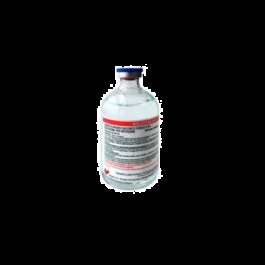
SODIO BIKARBONATO MONIKO 1 MEQ/ML Infusion solution

Запит на рецепт онлайн
Лікар розгляне ваш випадок і визначить, чи є рецепт медично доцільним.

Поговоріть з лікарем про ці ліки
Обговоріть симптоми та можливі подальші кроки під час короткої онлайн-консультації.



Інструкція із застосування SODIO BIKARBONATO MONIKO
Зміст інструкції
SODIO BICARBONATO MONICO 10 mEq/10 ml
Concentrate for solution for infusion
PHARMACOTHERAPEUTIC CATEGORY
Electrolyte solutions.
THERAPEUTIC INDICATIONS
Treatment of:
- Cardiopulmonary arrest
- States of metabolic acidosis
- Shock
- Intoxication from barbiturates, salicylates and methanol
- Hemolytic and rhabdomyolytic syndromes
- Hyperuricemia
- Intestinal losses of bicarbonate (resulting from diarrhea).
CONTRAINDICATIONS
- hypersensitivity to the active ingredient or to any of the excipients;
- metabolic or respiratory alkalosis, particularly if hypochloremic (vomiting, gastrointestinal losses, diuretic therapy):
- hypocalcemia.
PRECAUTIONS FOR USE
Use with caution in patients with congestive heart failure, severe renal insufficiency and in clinical conditions
in which there is edema with salt retention; in patients undergoing treatment with drugs with inotropic cardiac
action and with corticosteroids or corticotropins.
Sodium salts should be administered with caution in patients with hypertension, heart failure,
peripheral or pulmonary edema, reduced renal function, pre-eclampsia or other conditions associated with
sodium retention (see Interactions).
During infusion, it is good practice to monitor fluid balance, electrolytes, plasma osmolarity and
acid-base balance, correcting, if necessary, any depletion of potassium and calcium to avoid
tetany episodes.
INTERACTIONS
Tell your doctor or pharmacist if you have recently taken any other medicines, even those
available over the counter.
Corticosteroids are associated with sodium and water retention, resulting in edema and hypertension:
therefore, caution is required when co-administering sodium salts and
corticosteroids (see Precautions for use).
Sodium Bicarbonate increases the renal clearance of tetracyclines.
The administration of sodium bicarbonate and drugs that promote potassium excretion increases the
risk of hypochloremic alkalosis.
Sodium bicarbonate increases the half-life and therefore the duration of action of basic drugs such as quinidine,
ephedrine and pseudoephedrine.
SPECIAL WARNINGS
The solution must be clear, colorless and free from visible particles. Use immediately after opening the
container. The container is for single and uninterrupted administration only and any residue cannot be used.
Pregnancy and breastfeeding
Ask your doctor or pharmacist for advice before taking any medicine.
No data are available on possible adverse effects of the medicine when administered during
pregnancy or breastfeeding or on reproductive capacity.
Therefore, the medicine should not be used during pregnancy and breastfeeding unless absolutely necessary
and only after assessing the risk/benefit ratio.
Effects on ability to drive and operate machinery
The medicine does not affect the ability to drive and operate machinery.
DOSAGE, METHOD AND DURATION OF ADMINISTRATION
The medicine is a hypertonic solution with blood that must be administered intravenously
with caution and at a controlled infusion rate only after dilution to isotonicity (approximately 1.5% sodium
bicarbonate corresponding to approximately 16 mEq of bicarbonate per 100 ml) with compatible solutions (see
paragraph 6.2).
The solution may be used as is intravenously only in the case of cardiac arrest.
In general, the dose depends on the age, weight, clinical conditions, electrolyte status, acid-base balance and
osmolarity of the patient in order to restore normal pH and electrolyte values (in case of shock,
hemolytic syndromes and rhabdomyolysis and bicarbonate losses) or to alkalinize the urine in case of
intoxication or hyperuricemia (at least to pH 7.0).
In particular:
In cardiac arrest:
From 50 to 100 mEq in bolus, followed by 50 mEq every 5-10 minutes in relation to acid-base balance assessments.
In acute and subacute forms of metabolic acidosis
Adults: initial dose of 2 to 5 mEq/kg of body weight over 4-8 hours depending on the severity
of the acidosis. The dose should then be adjusted based on blood bicarbonate concentrations or
blood gas analysis results (increase of 20-22 mmol/L).
Children: initial dose of 1 mEq/Kg administered by slow intravenous infusion, diluting the solution to
0.5 mEq/ml, up to a maximum dosage of 8 mEq/kg of body weight per day to avoid excessive
decrease in cerebrospinal fluid pressure and possible intracranial hemorrhages.
In children, the safety and efficacy of the use of sodium bicarbonate have not been established.
Elderly:in elderly patients over 60 years of age, the maximum dose is 90-100 mEq of bicarbonate per day.
It is advisable NOT to achieve full correction of acidosis within the first 24 hours to avoid alkalosis related to
excessive respiratory correction.
Incompatibilities with Sodio Bicarbonato MONICO:do not use with medicines containing norepinephrine,
dobutamine and calcium.
Dilute the solution immediately after opening the container; the diluted solution must be used
immediately. It must be clear, colorless and free from visible particles. It is for single and
uninterrupted administration only and any residue cannot be used.
Do not use the medicine if the solution does not appear clear, colorless or if it contains particles.
Take all normal precautions to maintain sterility before and during infusion.
OVERDOSE
Symptoms
The administration of excessive doses of sodium bicarbonate solutions can lead, depending on
the patient's clinical condition, to alkalemia, hypernatremia and/or hypervolemia.
Hypernatremia and excessive sodium retention where there is defective sodium excretion at the renal level determines dehydration of internal organs, particularly the brain, and the accumulation of fluids
extracellularly with edema that can affect the cerebral, pulmonary and peripheral circulation with the appearance
of pulmonary and peripheral edema.
Symptoms of alkalosis include muscle weakness associated with potassium depletion, hypertonicity
muscle, muscle spasms and tetany can occur especially in hypocalcemic patients.
Treatment
Immediately stop the infusion and institute corrective therapy to reduce plasma levels
of the ions that are in excess and restore, if necessary, the acid-base balance.
The patient should be kept under observation to assess the appearance of any signs and
symptoms related to the drug administered, ensuring the patient with appropriate symptomatic and
supportive measures as needed.
In case of high natremia, loop diuretics can be used.
A natremia greater than 200 mmol/l may require dialysis.
The irritability and tetany associated with alkalosis can be administered with the administration of
adequate doses of calcium gluconate. In case of severe alkalosis, ammonium is recommended
chloride, except in patients with liver disease.
In case of accidental intake/ingestion of an excessive dose of Sodio Bicarbonato MONICO, immediately warn
the doctor or go to the nearest hospital.
If you have any doubts about the use of Sodio Bicarbonato MONICO, consult your doctor or pharmacist.
UNDESIRABLE EFFECTS
Like all medicines, Sodio Bicarbonato can cause side effects, although not everyone will
experience them.
The following are reported side effects of Sodio Bicarbonato. There is insufficient data to
establish the frequency of the individual effects listed.
Disorders of water and electrolyte balance:alkalemia, hypernatremia, hypervolemia, hyperosmolarity
Systemic diseases and conditions related to the site of administration:febrile episodes. infection at the site of
infusion, pain or relation locally, venous irritation, thrombosis or phlebitis, chemical cellulitis with
necrotic tissue of soft tissues due to accidental extravasation.
If any of the side effects worsen, or if you notice any side effect
SHELF LIFE AND STORAGE
Expiry date: see the expiry date reported on the packaging.
The expiry date refers to the product in intact packaging, stored correctly.
Warning: do not use the medicine after the expiry date indicated on the packaging.
Store in a tightly closed container. Do not freeze and do not refrigerate.
Medicines should not be disposed of via drains and household waste. Ask your pharmacist
how to dispose of medicines you no longer use. This will help protect the environment.
Keep the medicine out of the reach and sight of children.
COMPOSITION
10 ml of solution contains:
Active ingredient: sodium bicarbonate 0.84 g.
Excipients: sodium edetate 0.001 g, water for injections q.s..
PHARMACEUTICAL FORM AND CONTENT
Concentrate for solution for infusion.
Pack of 5 or 10 vials of 10 ml each.
MARKETING AUTHORISATION HOLDER
MONICO SPA - via Ponte di Pietra 7, VENEZIA/MESTRE.
MANUFACTURER
MONICO SPA - via Ponte di Pietra 7, VENEZIA/MESTRE.
SODIO BICARBONATO MONICO 1.4%
SODIO BICARBONATO MONICO 5%
SODIO BICARBONATO MONICO 7.5%
SODIO BICARBONATO MONICO 8.4%
Solution for infusion
PHARMACOTHERAPEUTIC CATEGORY
Electrolytes.
THERAPEUTIC INDICATIONS
Treatment of:
- States of metabolic acidosis
- Shock
- Intoxication from barbiturates, salicylates and methanol
- Hemolytic and rhabdomyolytic syndromes
- Hyperuricemia
- Intestinal losses of bicarbonate (resulting from diarrhea).
CONTRAINDICATIONS
- Hypersensitivity to the active ingredient or to any of the excipients;
- metabolic or respiratory alkalosis, especially if hypochloremic (vomiting, gastrointestinal losses, diuretic therapy);
- hypocalcemia.
PRECAUTIONS FOR USE
Use with caution in patients with congestive heart failure, severe renal insufficiency and in clinical conditions
where there is edema with salt retention; in patients undergoing treatment with drugs with inotropic cardiac action
or with corticosteroid or corticotropic drugs.
Sodium salts should be administered with caution in patients with hypertension, heart failure,
peripheral or pulmonary edema, reduced renal function, pre-eclampsia, or other conditions associated with
sodium retention (see Interactions).
During the infusion, it is good practice to monitor fluid balance, electrolytes, plasma osmolarity
and acid-base balance, correcting, if necessary, any depletion of potassium and calcium to
avoid episodes of tetany.
INTERACTIONS
Inform your doctor or pharmacist if you have recently taken any other medicines, even those
available over the counter.
Corticosteroids are associated with sodium and water retention, resulting in edema and hypertension:
therefore, caution is necessary when co-administering sodium salts and
corticosteroids (see Precautions for Use). Sodium Bicarbonate increases the renal clearance of
tetracyclines. The administration of sodium bicarbonate and drugs that promote potassium excretion
increases the risk of hypochloremic alkalosis. Sodium bicarbonate increases the half-life and therefore the duration of action
of basic drugs such as quinidine, ephedrine and pseudoephedrine.
SPECIAL WARNINGS
The solution must be clear, colorless and free of visible particles. Use immediately after opening
of the container. The container is for single and uninterrupted administration and any residue cannot be used.
Pregnancy and breastfeeding
Ask your doctor or pharmacist for advice before taking any medicine.
No data are available on possible adverse effects of the medicine when administered during
pregnancy or breastfeeding or on reproductive capacity. Therefore, the medicine should not be used
during pregnancy and breastfeeding unless absolutely necessary and only after assessing the risk/benefit ratio.
Effects on the ability to drive vehicles and operate machinery
The medicine does not impair the ability to drive vehicles or operate machinery.
DOSAGE, ADMINISTRATION AND DURATION OF TREATMENT
The 1.4% solution is isotonic with blood; the 5%, 7.5%, 8.4% solutions are hypertonic with blood.
The solutions must be administered by intravenous infusion with caution and at a controlled infusion rate,
avoiding the infusion of large volumes of solution at a high infusion rate. The medicine
should not be used unless specifically prescribed. In general, the dose is dependent on age,
weight, clinical condition, electrolyte status, acid-base balance and osmolarity of the patient in order to
restore normal pH and electrolyte values (in case of shock, hemolytic and rhabdomyolytic syndromes and
bicarbonate losses) or to alkalinize the urine in case of intoxication or hyperuricemia (at least to a pH
of 7.0).
In particular:
Acute and subacute forms of metabolic acidosis
Adults
Initial dose of 2 to 5 mEq/kg of body weight over 4-8 hours depending on the severity of the acidosis. The
dose should then be adjusted in relation to the blood bicarbonate concentrations detected or the results
of blood gas analysis (increase of 20-22 mmol/L).
Children
Initial dose of 1 mEq/Kg administered by slow intravenous infusion, diluting the solution to 0.5
mEq/ml, up to a maximum dose of 8 mEq/kg of body weight per day to avoid excessive
decrease in cerebrospinal fluid pressure and possible intracranial hemorrhages. In children, the safety and
efficacy of sodium bicarbonate have not been determined.
Elderly
In the elderly over 60 years of age, the maximum dose is 90-100 mEq of bicarbonate per day. It is advisable not to
obtain a full correction of the acidosis in the first 24 hours to avoid alkalosis related to an
excessive respiratory overcompensation.
Incompatibilities with SODIO BICARBONATO MONICO: do not use with solutions containing norepinephrine,
dobutamine and calcium.
Use the solution immediately after opening the container. It is for single and uninterrupted
administration and any residue cannot be used. Do not use the medicine if the solution
does not appear clear, colorless or contains particles. Take all usual precautions to
maintain sterility before and during intravenous infusion.
OVERDOSE
Symptoms
The administration of excessive doses of sodium bicarbonate solutions can lead, depending on
the patient's clinical condition, to alkalemia, hypernatremia and/or hypervolemia.
Hypernatremia and excessive sodium retention where there is defective sodium excretion at the renal level determines
dehydration of internal organs, particularly the brain, and accumulation of extracellular fluids
with edema that can affect the cerebral, pulmonary and peripheral circulation with the appearance
of pulmonary and peripheral edema. The symptoms of alkalosis include muscle weakness associated with
potassium depletion, muscle hypertonia, muscle spasms and tetany can manifest especially
in hypocalcemic patients.
Treatment
Immediately stop the infusion and institute corrective therapy to reduce plasma levels of
ions that are in excess and restore, if necessary, the acid-base balance (see Precautions for
Use).
The patient should be kept under observation to assess the appearance of any signs and symptoms
related to the drug administered, providing the patient with appropriate symptomatic and supportive measures as
needed.
In case of high natremia, loop diuretics can be used.
A natremia greater than 200 mmol/l may require dialysis.
The irritability and tetany associated with alkalosis can be controlled by administering
adequate doses of calcium gluconate. In case of severe alkalosis, the administration of ammonium chloride is recommended,
except in patients with liver disease.
In case of accidental ingestion/intake of an excessive dose of SODIO BICARBONATO MONICO
immediately inform your doctor or go to the nearest hospital.
If you have any doubts about the use of SODIO BICARBONATO MONICO, consult your doctor or pharmacist.
UNDESIRABLE EFFECTS
Like all medicines, Sodium Bicarbonate can cause side effects, although not everyone will
experience them.
The following are the undesirable effects of Sodium Bicarbonate. No sufficient data are available to
establish the frequency of individual effects listed.
Disorders of water and electrolyte balance:a lkalemia, hypernatremia, hypervolemia, hyperosmolarity.
Systemic diseases and conditions related to the site of administration:febrile episodes, infection at the site of
infusion, pain or local reaction, venous irritation, thrombosis or phlebitis, chemical cellulitis with
necrosis of soft tissues due to accidental extravasation.
If any of these side effects worsen, or if you notice any side effect
SHELF LIFE AND STORAGE
Shelf life: see the expiry date printed on the packaging.
The expiry date refers to the product in intact packaging, stored correctly.
Caution: do not use the medicine after the expiry date printed on the packaging.
Storage conditions: store in the original packaging and in a tightly closed container.
Do not refrigerate or freeze.
Medicines should not be disposed of via wastewater or household waste. Ask your pharmacist
how to dispose of medicines you no longer use. This will help protect the environment.
KEEP OUT OF THE REACH AND SIGHT OF CHILDREN.
COMPOSITION
SODIO BICARBONATO 1.4% solution for infusion
1000 ml of solution contains:
Active ingredient: sodium bicarbonate 14.0 g
Excipients: sodium edetate g 0.1, water for injections q.s.
mEq/liter Na 167
HCO 167
theoretical osmolarity (mOsm/liter): 334
pH: 7.0 ÷ 8.5
SODIO BICARBONATO 5% solution for infusion
1000 ml of solution contains:
Active ingredient: sodium bicarbonate 50.0 g
Excipients: sodium edetate g 0.1, water for injections q.s.
mEq/liter Na 595
HCO 595
theoretical osmolarity (mOsm/liter): 1190
pH: 7.0 ÷ 8.5
SODIO BICARBONATO 7.5% solution for infusion
1000 ml of solution contains:
Active ingredient: sodium bicarbonate 75.0 g
Excipients: sodium edetate g 0.1, water for injections q.s.
mEq/liter Na 893
HCO 893
theoretical osmolarity (mOsm/liter): 1785
pH: 7.0 ÷ 8.5
SODIO BICARBONATO 7.5% solution for infusion
1000 ml of solution contains:
Active ingredient: sodium bicarbonate 84.0 g
Excipients: sodium edetate g 0.1, water for injections q.s.
mEq/liter Na 1000
HCO 1000
theoretical osmolarity (mOsm/liter): 2000
pH: 7.0 ÷ 8.5
PHARMACEUTICAL FORM AND CONTENT
Solution for infusion, sterile and apyrogenic .
Glass bottle or plastic bag (polypropylene) containing 50, 100, 250, 500 or 1000 ml of
solution at 1.4%, 5%, 7.5% or 8.4%.
MARKETING AUTHORISATION HOLDER
MONICO SPA - via Ponte di Pietra 7, VENEZIA/MESTRE.
MANUFACTURER
MONICO SPA - via Ponte di Pietra 7, VENEZIA/MESTRE.
March 8, 2013

Не впевнені, чи підходить вам цей лікарський засіб?
Обговоріть симптоми та можливі варіанти лікування з лікарем онлайн.

Виникли питання під час прийому ліків?
Обговоріть свої симптоми та лікування з лікарем онлайн.
- Країна реєстрації
- Лікарська формаInfusion solution, 1 MEQ/ML
- Код АТХB05XA02
- Діюча речовина
- Потрібен рецептТак
- Виробник
- Ця інформація надана лише для ознайомлення і не є медичною порадою. Рішення щодо лікування завжди приймає лікар.
- Альтернативи до SODIO BIKARBONATO MONIKOЛікарська форма: Concentrate for infusion solution, 1 G/10 MLДіюча речовина: Хлорид кальцияПотрібен рецептЛікарська форма: Concentrate for injectable/infusion solution, 500 MG/10 MLДіюча речовина: Хлорид кальцияПотрібен рецептЛікарська форма: Concentrate for infusion solution, 1 G/10 MLДіюча речовина: Хлорид кальцияВиробник: S.A.L.F. SPA LABORATORIO FARMACOLOGICOПотрібен рецепт
Аналоги SODIO BIKARBONATO MONIKO в інших країнах
Препарати з тією самою діючою речовиною, доступні в інших країнах.
Аналог SODIO BIKARBONATO MONIKO у Україна
Аналог SODIO BIKARBONATO MONIKO у Іспанія
Аналог SODIO BIKARBONATO MONIKO у Польща
Лікарі онлайн щодо SODIO BIKARBONATO MONIKO
Застосування, безпека та можливість призначення рецепта — за результатами медичної оцінки.









Отримайте рецепт на SODIO BIKARBONATO MONIKO онлайн
Заповніть форму за 2 хвилини
Розкажіть про симптоми, історію хвороби та потрібний препарат.
Оберіть лікаря або ми призначимо
Оберіть спеціаліста або ми підберемо найближчого доступного лікаря.
Лікар розглядає ваш випадок
Зазвичай протягом 30 хвилин. Може ставити уточнювальні запитання в чаті.
Отримайте в будь-якій аптеці
Електронний рецепт надсилається на вашу пошту — дійсний по всій Польщі.
Часті запитання
SODIO BIKARBONATO MONIKO потребує рецепта в Італія. Ви можете обговорити з лікарем онлайн, чи підходить цей лікарський засіб для вашої ситуації.
Діюча речовина у SODIO BIKARBONATO MONIKO — Бикарбонат натрия. Це допомагає визначити препарати з тим самим складом, але під іншими торговими назвами.
SODIO BIKARBONATO MONIKO виробляється компанією MONICO S.P.A.. Назва бренду та упаковка можуть відрізнятися залежно від дистрибʼютора.
Лікарі, зокрема Сімейні лікарі, Психіатри, Дерматологи, Кардіологи, Ендокринологи, Гастроентерологи, Пульмонологи, Нефрологи, Ревматологи, Гематологи, Інфекціоністи, Алергологи, Геріатри, Педіатри, Онкологи, можуть оцінити доцільність застосування SODIO BIKARBONATO MONIKO з урахуванням вашого стану та місцевих правил. Ви можете записатися на онлайн-консультацію, щоб обговорити симптоми та можливі подальші кроки.
Польща має добре розвинену систему охорони здоров'я у великих містах, таких як Варшава, Краків, Вроцлав і Гданськ. Аптеки широко доступні та працюють відповідно до чинного законодавства, забезпечуючи доступ до рецептурних препаратів.
Ви можете придбати SODIO BIKARBONATO MONIKO у Варшаві, Кракові, Вроцлаві або Гданську в будь-якій аптеці за наявності дійсного рецепта.
Щоб отримати рецепт, ви можете скористатися Oladoctor:
Інші препарати з тією самою діючою речовиною (Бикарбонат натрия) включають KALKIO KLORURO BIOINDUSTRIA L.I.M., KALKIO KLORURO GALENIKA SENESE, KALKIO KLORURO S.A.L.F.. Вони можуть відрізнятися торговою назвою або формою випуску, але містять той самий терапевтичний компонент. Перед зміною або початком прийому нового препарату варто проконсультуватися з лікарем.
