



RITMODAN 100 mg Hard Capsule

Запит на рецепт онлайн
Лікар розгляне ваш випадок і визначить, чи є рецепт медично доцільним.

Поговоріть з лікарем про ці ліки
Обговоріть симптоми та можливі подальші кроки під час короткої онлайн-консультації.



Інструкція із застосування RITMODAN
Зміст інструкції
Ritmodan 100 mg hard capsules
disopiramide
Read this leaflet carefully before taking this medicine as it contains
important information for you.
- Keep this leaflet. You may need to read it again.
- If you have any questions, ask your doctor or pharmacist.
- This medicine has been prescribed for you only. Do not pass it on to others, even if their symptoms are the same as yours, as it could be harmful.
- If you get any side effects, even those not listed in this leaflet, tell your doctor or pharmacist. See section 4.
Contents of this leaflet:
- 1. What Ritmodan is and what it is used for
- 2. What you need to know before you take Ritmodan
- 3. How to take Ritmodan
- 4. Possible side effects
- 5. How to store Ritmodan
- 6. Contents of the pack and other information
1. What Ritmodan is and what it is used for
Ritmodan contains disopyramide, an active ingredient belonging to a class of medicines called
“Class IA Antiarrhythmics”.
It works by regulating the heartbeat.
Ritmodan is indicated:
to prevent:
- recurrences of heart rhythm disturbances (complete arrhythmia with atrial fibrillation and flutter), after these disturbances have already been corrected;
- recurrences of events of excessive heart rate (paroxysmal and ventricular tachycardia);
- heart rhythm disturbances in myocardial infarction. to treat:
- heart rhythm anomalies (atrial or ventricular extrasystoles).
2. What you need to know before taking Ritmodan
Do not take Ritmodan
- if you are allergic to the active ingredient or to any of the other ingredients of this medicine (listed in section 6);
- if you have certain heart conditions that can alter your heartbeat called: second or third degree atrioventricular block not regulated, bundle branch block associated with first-degree atrioventricular block, double block (posterior or anterior left bundle branch block and right bundle branch block), prolongation of the QT interval, severe sinoatrial node dysfunction;
- in case of the heart's inability to pump a sufficient amount of blood to the body (heart failure, not secondary to cardiac arrhythmias) (See “Warnings and precautions”);
- if you are also taking other medicines to regulate your heartbeat (antiarrhythmics) or medicines that can cause heartbeat abnormalities (ventricular arrhythmias and especially torsade de pointes) (See section “Other medicines and Ritmodan”).
Warnings and precautions
It is important to read this section carefully if you are taking this medicine.
Consult your doctor or pharmacist before taking Ritmodan.
Your doctor will subject you to visits and electrocardiogram checks if:
- you have a severely ill heart (established cardiac pathology), because you may be more sensitive to the decrease in heart contraction (negative inotropic effect) caused by disopyramide;
- you experience a worsening of a heartbeat abnormality (existing arrhythmia) that you already had, or if a new type of heartbeat abnormality appears;
- if an atrioventricular block or bifascicular block develops;
- you have abnormalities in the electrocardiogram (prolongation of the QT interval and the QRS complex).
Potassium imbalance
Your doctor will check the amount of potassium in your blood (kaliemia) and correct any imbalance
of potassium, especially if you are taking medicines called “diuretics” at the same time, used
to lower blood pressure.
If you are taking diuretic or stimulant laxatives (a type of laxative), you are at risk of having
a decrease in potassium in the blood (hypokalemia).
Kidney problems (Renal insufficiency)
If you have kidney problems, your doctor will reduce the dose of disopyramide and modify the interval between
administrations.
Liver problems (Hepatic insufficiency)
If you have liver problems, your doctor will reduce the dose of disopyramide.
Particular effects
The following undesirable effects, called “Atropine-like effects”, may appear:
- increased pressure in the eye (ocular hypertension) if you suffer from an eye disease called “narrow-angle glaucoma”;
- urine retention in the bladder (acute urinary retention), if you suffer from a prostate disease (prostatic hypertrophy);
- blockage of the intestine due to paralysis of the intestinal muscles, especially if you are elderly, and when Ritmodan is taken with other medicines that can cause constipation or in situations where there is an increase in Ritmodan levels in the blood (e.g. due to kidney or liver problems or if you have taken an excessive dose of Ritmodan);
- worsening of your condition, if you suffer from a disease that causes severe muscle weakness (myasthenia gravis);
- alteration of memory, attention, perception, reasoning (cognitive disorders) in some elderly patients (for other atropine-like effects see “Possible side effects”). Blood sugar concentration (glycemia)Your doctor will check your blood sugar levels because there is a risk that they may decrease (hypoglycemia), sometimes even severely, especially if you are elderly or malnourished, if you are receiving medicines for diabetes, if you have kidney problems.
Heart diseases
If you have serious heart problems (such as: some serious arrhythmias, heart failure with decompensation,
established cardiac disease) your doctor will carefully evaluate the prescription of Ritmodan.
Before using Ritmodan, tell your doctor if:
- you have glaucoma (an eye condition often caused by abnormally high eye pressure, which damages the optic nerve and can lead to blindness): in this case you should not use Ritmodan,
- you have ever had glaucoma in your life or someone in your family has ever had glaucoma: in this case the doctor will perform an eye pressure test before prescribing Ritmodan.
Children and adolescents
The use of Ritmodan in children and adolescents under 18 years of age has not been sufficiently
studied.
Children with hepatic insufficiency may be at risk of increased exposure.
Other medicines and Ritmodan
Tell your doctor or pharmacist if you are taking, have recently taken or might take
any other medicines.
The effects of Ritmodan may be influenced by or influence the following medicines:
The association between Ritmodan and the following medicines is contraindicated :
- Other medicines belonging to the same class as Ritmodan (antiarrhythmics), such as:
- phenytoin;
- beta-blockers;
- amiodarone;
- bretylium;
- d-sotalol;
- ibutilide;
- verapamil;
- diltiazem;
- lidoflazine;
- bepridil.
The doctor will avoid associations with antiarrhythmic medicines except in particular circumstances.
- Medicines that can cause heartbeat abnormalities called “torsade de pointes” such as:
- medicines used to treat depression (tricyclic and tetracyclic antidepressants);
- erythromycin (an antibiotic), if administered intravenously;
- vincamine (used to improve blood circulation in the brain);
- sultopride (used to treat mental illnesses).
The association between Ritmodan and the following medicines is not recommended:
- Other medicines that can cause heartbeat abnormalities called “torsade de pointes” such as:
- astemizole and terfenadine (used for allergies);
- cisapride (used for stomach and intestinal problems);
- pentamidine and sparfloxacin (antibiotics);
- pimozide (used to treat mental illnesses).
- Medicines called “phosphodiesterase Type 5 inhibitors” (used for erectile dysfunction such as sildenafil, tadalafil or vardenafil), which can lead to a heart alteration called “prolongation of the QT interval”, because the concomitant administration of disopyramide with these medicines can increase such prolongation of the QT.
- Stimulant laxatives (which work by increasing intestinal motility such as bisacodyl and senna). Use other types of laxatives.
The association between Ritmodan and the following medicines should be avoided as it may lead to effects
whose severity is unpredictable:
- Medicines called “inhibitors of the liver CYP3A enzyme” (e.g. some macrolide antibiotics or azole antifungal antibiotics, quinupristin/dalfopristin), because they can increase the levels of disopyramide in the blood.
- Medicines called “CYP3A inducers” (e.g. rifampicin, some medicines against convulsions such as phenobarbital, primidone or phenytoin) because they can reduce the levels of disopyramide in the blood.
The association between Ritmodan and the following medicines that lead to a decrease in potassium in
the blood (hypokalemia) (See “Warnings and precautions”) requires precautions:
diuretics (used to lower blood pressure such as furosemide);
amphotericin B (an antibiotic);
tetracosactide (medicine with activity similar to cortisone, used in some inflammatory diseases and in laboratory tests);
gluco/mineralcorticoids (e.g. hydrocortisone, betamethasone or prednisolone used
for allergies and inflammation).
Conditions that must be considered:
- Atropine, used as eye drops and in medicines for the treatment of cough and colds, and other medicines called “anticholinergics” (including phenothiazines): can increase the undesirable “atropine-like” effects of disopyramide (see sections “Warnings and precautions” and “Possible side effects”).
- Roxithromycin (antibiotic): can cause an increase in the levels of disopyramide in the blood.
- Theophylline, medicines called “HIV protease inhibitors” (e.g. ritonavir, indinavir, saquinavir), cyclosporine A (used after transplants), warfarin (medicine to thin the blood): the association with disopyramide can cause an increase in the levels of these medicines in the blood.
Pregnancy and breastfeeding
If you are pregnant, suspect or are planning a pregnancy, or if you are breastfeeding with
breast milk, ask your doctor or pharmacist for advice before taking this medicine.
Pregnancy
If you are pregnant, this medicine can only be used after consulting your doctor, in
as it can cause uterine contractions during pregnancy and could harm the fetus.
Breastfeeding
This medicine should not be taken during breastfeeding. Therefore, discontinue
breastfeeding or therapy with disopyramide to avoid risks to the newborn.
Driving and using machines
Some side effects of the medicine can alter your reaction and concentration ability and, therefore, also the ability to drive and operate machinery. (See “Possible
side effects).
Ritmodan contains lactose
If your doctor has diagnosed you with intolerance to certain sugars, contact him before taking
this medicine.
3. How to take Ritmodan
Take this medicine following exactly the instructions of your doctor or pharmacist. If you
have any doubts, consult your doctor or pharmacist.
The recommended dose is:
- Attack therapy: 4 to 6 capsules per day divided into 3-4 administrations. In particular cases, your doctor may decide to give you 8 capsules per day.
- Maintenance therapy: the doctor will decide the minimum dose, decreasing it progressively. You should not go below 1 capsule every 8 hours, possibly 1 every 6 hours, i.e. 3-4 capsules in 24 hours.
If you suffer from kidney problems
If you suffer from kidney problems (renal insufficiency), your doctor will reduce the dose of disopyramide and
modify the interval between administrations.
If you suffer from liver problems
If you suffer from liver problems (hepatic insufficiency), your doctor will reduce the dose of disopyramide.
If you take more Ritmodan than you should
In case of accidental ingestion/intake of an excessive dose of Ritmodan, immediately notify your
doctor or go to the nearest hospital.
After taking a too high dose of Ritmodan, the following may appear:
- intestinal blockage due to paralysis of the intestinal muscles, dilation of the pupils (bilateral mydriasis) and coma in case of very high doses;
- loss of consciousness (syncope), decrease in blood pressure (hypotension) or shock;
- cardiac arrest (intraventricular block or asystole);
- breathing problems. Too high concentrations of disopyramide in the blood determine alterations in the electrocardiogram.
If you forget to take Ritmodan
Do not take a double dose to make up for a missed dose.
If you have any doubts about the use of Ritmodan, consult your doctor or pharmacist.
4. Possible side effects
Like all medicines, this medicine can cause side effects, although not everybody gets them.
The following effects on the heart can occur (see section “Do not take Ritmodan”)
- heartbeat changes (ventricular arrhythmias), such as increased heartbeat (ventricular tachycardia), ventricular fibrillation and torsades de pointes, or worsening of these changes. This effect is more likely if you also have a decrease in blood potassium (hypokalaemia), if you use Ritmodan together with other antiarrhythmic medicines, if you suffer from a serious heart condition (concomitant heart disease), if you have an anomaly called “QT interval prolongation”;
- other types of heart rhythm or electrocardiogram abnormalities (such as: bradycardia, sinus block, QT prolongation, QRS complex widening, atrioventricular and branch block);
- serious heart problems (heart failure), collapse or severe depression of heart activity (cardiogenic shock), particularly if you have been diagnosed with a serious heart condition (concomitant heart disease). In these cases, the resulting decrease in heart function (low cardiac output) can cause a decrease in blood pressure (hypotension),
kidney problems (renal failure) and/or lack of oxygenation to the liver (acute hepatic ischemia) which may resemble a serious liver disease (acute hepatocellular hepatitis).
Other side effects
(See “Warnings and precautions”):
- difficulty urinating (dysuria), urine retention in the bladder (acute urinary retention), especially if you suffer from prostate problems (prostatism),
- visual disturbances (accommodation disorders), double vision (diplopia),
- dry mouth (xerostomia),
- constipation,
- erectile dysfunction,
- memory, attention, perception, reasoning impairment (cognitive disorders),
- mental disorders (psychiatric disorders),
- abdominal and epigastric pain (epigastralgia),
- nausea,
- vomiting,
- loss of appetite (anorexia),
- diarrhoea,
- skin rash (very rarely),
- isolated cases of allergic-type reactions (e.g. urticaria, angioedema) that can lead to shock (these effects generally occur with the use of the injectable formulation),
- rarely, a decrease in blood sugar (hypoglycaemia) may occur, sometimes severe (See “Warnings and precautions”),
- very rarely: yellowing of the skin and eyes due to an obstruction of the bile flow (cholestatic jaundice), headache, dizziness, decrease in the number of certain blood cells (neutropenia),
- severe reduction of white blood cells called "granulocytes" (agranulocytosis).
Reporting of side effects
If you get any side effects, even those not listed in this leaflet, tell your doctor or pharmacist. You can also report side effects directly through the national reporting system at https://www.aifa.gov.it/content/segnalazioni-reazioni-avverse.
By reporting side effects you can help provide more information on the safety of
this medicine.
5. How to store Ritmodan
Do not store at a temperature above 25°C.
Keep this medicine out of the sight and reach of children.
Do not use this medicine after the expiry date which is stated on the pack after “Exp.”.
The expiry date refers to the last day of that month.
The expiry date indicated refers to the product in intact packaging, correctly
stored.
Do not dispose of any medicine in wastewater or household waste. Ask your pharmacist how to
dispose of medicines you no longer use. This will help protect the environment
6. Contents of the pack and other information
What Ritmodan contains:
- The active ingredient is: disopyramide. Each hard capsule contains 100 mg of disopyramide.
- The other ingredients are: lactose, corn starch, talc, magnesium stearate. Capsule composition:gelatin, iron oxide (E172), titanium dioxide (E171), erythrosine (E127).
Description of the appearance of Ritmodan and contents of the pack
Ritmodan is presented in the form of 100 mg hard capsules in a pack of 40 capsules.
Marketing Authorisation Holder and Manufacturer
Marketing Authorisation Holder
CHEPLAPHARM Arzneimittel GmbH
Ziegelhof 24,
17489 Greifswald,
Germany
Manufacturer
Sanofi Winthrop Industrie
56, Route de Choisy Au Bac
60205 Compiègne - France

Не впевнені, чи підходить вам цей лікарський засіб?
Обговоріть симптоми та можливі варіанти лікування з лікарем онлайн.

Виникли питання під час прийому ліків?
Обговоріть свої симптоми та лікування з лікарем онлайн.
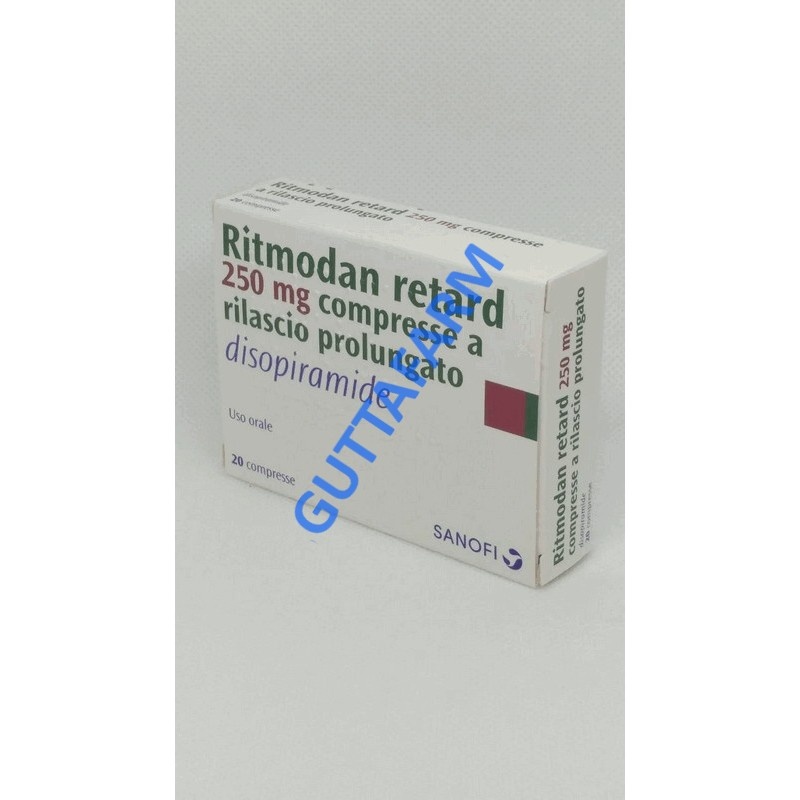
- Країна реєстрації
- Лікарська формаHard capsule, 100 MG
- Код АТХC01BA03
- Діюча речовина
- Потрібен рецептНі
- Виробник
- Ця інформація надана лише для ознайомлення і не є медичною порадою. Рішення щодо лікування завжди приймає лікар.
- Альтернативи до RITMODANЛікарська форма: Tablet, 150 MGДіюча речовина: hydroquinidineВиробник: TEOFARMA S.R.L.Потрібен рецептЛікарська форма: Soft capsule, 5 MG/1000 MGДіюча речовина: Antiarrhythmics, class IaВиробник: SPA SOCIETA' PRODOTTI ANTIBIOTICI S.P.A.Потрібен рецептЛікарська форма: Tablet, <100 MGДіюча речовина: flecainideВиробник: Viatris Healthcare LimitedПотрібен рецепт
Аналоги RITMODAN в інших країнах
Препарати з тією самою діючою речовиною, доступні в інших країнах.
Аналог RITMODAN у Іспанія
Лікарі онлайн щодо RITMODAN
Застосування, безпека та можливість призначення рецепта — за результатами медичної оцінки.
Отримайте рецепт на RITMODAN онлайн
Заповніть форму за 2 хвилини
Розкажіть про симптоми, історію хвороби та потрібний препарат.
Оберіть лікаря або ми призначимо
Оберіть спеціаліста або ми підберемо найближчого доступного лікаря.
Лікар розглядає ваш випадок
Зазвичай протягом 30 хвилин. Може ставити уточнювальні запитання в чаті.
Отримайте в будь-якій аптеці
Електронний рецепт надсилається на вашу пошту — дійсний по всій Польщі.
Часті запитання
RITMODAN не потребує рецепта в Італія. Ви можете обговорити з лікарем онлайн, чи підходить цей лікарський засіб для вашої ситуації.
Діюча речовина у RITMODAN — disopyramide. Це допомагає визначити препарати з тим самим складом, але під іншими торговими назвами.
RITMODAN виробляється компанією CHEPLAPHARM ARZNEIMITTEL GMBH. Назва бренду та упаковка можуть відрізнятися залежно від дистрибʼютора.
Лікарі, зокрема Сімейні лікарі, Психіатри, Дерматологи, Кардіологи, Ендокринологи, Гастроентерологи, Пульмонологи, Нефрологи, Ревматологи, Гематологи, Інфекціоністи, Алергологи, Геріатри, Педіатри, Онкологи, можуть оцінити доцільність застосування RITMODAN з урахуванням вашого стану та місцевих правил. Ви можете записатися на онлайн-консультацію, щоб обговорити симптоми та можливі подальші кроки.
Польща має добре розвинену систему охорони здоров'я у великих містах, таких як Варшава, Краків, Вроцлав і Гданськ. Аптеки широко доступні та працюють відповідно до чинного законодавства, забезпечуючи доступ до рецептурних препаратів.
Ви можете придбати RITMODAN у Варшаві, Кракові, Вроцлаві або Гданську в будь-якій аптеці за наявності дійсного рецепта.
Щоб отримати рецепт, ви можете скористатися Oladoctor:
Інші препарати з тією самою діючою речовиною (disopyramide) включають IDROKINIDINA LIRKA, ROSUVASTATINA E OMEGA 3 SPA SOKIETA PRODOTTI ANTIBIOTIKI, ALMARYTM. Вони можуть відрізнятися торговою назвою або формою випуску, але містять той самий терапевтичний компонент. Перед зміною або початком прийому нового препарату варто проконсультуватися з лікарем.
