



PROTAPHANE 40 IU/ML Injectable suspension

Запит на рецепт онлайн
Лікар розгляне ваш випадок і визначить, чи є рецепт медично доцільним.

Поговоріть з лікарем про ці ліки
Обговоріть симптоми та можливі подальші кроки під час короткої онлайн-консультації.



Інструкція із застосування PROTAPANE
Зміст інструкції
- Protaphane 40 UI/ml (international units/ml) injectable suspension in a vial
- Protaphane 100 IU/ml (international units/ml) injectable suspension in a vial
- What is Protaphane and what is it used for
- What you need to know before using Protaphane
- How to use Protaphane
- Possible side effects
- How to store Protaphane
- Contents of the pack and other information
- What is Protaphane and what is it used for
- What you need to know before using Protaphane
- How to use Protaphane
- Possible side effects
- How to store Protaphane
- Contents of the pack and other information
- Protaphane InnoLet 100 IU/ml (international units/ml) injectable suspension in pen
- Protaphane FlexPen 100 IU/ml (international units/ml) injectable suspension in pen
Protaphane 40 UI/ml (international units/ml) injectable suspension in a vial
human insulin
Read this leaflet carefully before using this medicine as it contains important
information for you.
- Keep this leaflet. You may need to read it again.
- If you have any questions, ask your doctor, pharmacist or nurse.
- This medicine has been prescribed for you only. Never give it to others. It could be harmful even if their symptoms of the illness are the same as yours.
- If you experience any side effects, speak to your doctor, pharmacist or nurse. This includes any side effects not listed in this leaflet. See section 4.
1. What is Protaphane and what is it used for
Protaphane is a human insulin with a gradual onset of action and prolonged duration.
Protaphane is used to reduce high blood sugar levels in patients with diabetes mellitus (diabetes). Diabetes is a condition in which the body does not produce enough insulin to control blood sugar levels. Treatment with Protaphane helps to prevent complications of diabetes.
Protaphane will begin to reduce blood sugar levels approximately one and a half hours after injection, and its effect will last for approximately 24 hours. Protaphane is often administered in combination with rapid-acting insulin preparations.
2. What you need to know before using Protaphane
Do not use Protaphane
► If you are allergic to human insulin or any of the other ingredients of this medicine,
see section 6.
► If you experience the warning signs of hypoglycaemia (low blood sugar level),
see the Summary of serious and very common side effects in section 4.
► In microinfusers.
► If the protective cap is loose or missing. Each vial has a tamper-evident plastic protective cap.
If the cap is not in perfect condition upon purchase, return the vial to the supplier.
► If it has not been stored correctly or has been frozen, see section 5.
► If the resuspended insulin does not appear uniformly white and milky.
Do not use Protaphane if any of these conditions apply. Talk to your doctor, pharmacist or nurse
for advice.
Before using Protaphane
► Check the label to make sure it is the correct type of insulin.
► Remove the protective cap.
► Always use a new needle for each injection to prevent contamination.
► Needles and syringes must not be shared.
Warnings and precautions
Some conditions and activities can affect your insulin needs. Consult your doctor:
► If you have kidney or liver disorders, abnormalities affecting the adrenal gland, pituitary gland or
thyroid.
► If there has been an increase in physical activity or a change in your usual diet, as this may
affect your blood sugar level.
► If you become ill, continue your insulin therapy and consult your doctor.
► If you intend to travel abroad, travelling to countries with a different time zone may
change your insulin requirements and the timing of these.
Skin changes at the injection site
The injection site must be rotated to help prevent changes in the fatty tissue under the
skin, such as skin thickening, skin thinning or the appearance of nodules under the skin.
Insulin may not work as well if you inject into an area with nodules, into a thinned area or into a
thickened area (see section 3). Tell your doctor if you notice skin changes at the injection site.
If you are currently injecting into one of these affected areas, consult your doctor before starting to
inject into another area. Your doctor may advise you to check your blood sugar more carefully and
adjust your dose of insulin or other antidiabetic medicines.
Other medicines and Protaphane
Tell your doctor, pharmacist, nurse if you are taking, have recently taken or might
take any other medicines.
Some medicines affect blood sugar levels, which means that the dose of insulin may need to
be adjusted. The most common medicines that can affect insulin treatment are listed below.
Your blood sugar level may be lowered (hypoglycaemia) if you take:
- Other medicines for the treatment of diabetes
- Monoamine oxidase inhibitors (MAOIs) (used to treat depression)
- Beta-blockers (used to treat high blood pressure)
- Angiotensin converting enzyme (ACE) inhibitors (used to treat some heart conditions or high blood pressure)
- Salicylates (used to relieve pain and reduce fever)
- Anabolic steroids (such as testosterone)
- Sulphonamides (used to treat infections).
Your blood sugar level may be raised (hyperglycaemia) if you take:
- Oral contraceptives (birth control pills)
- Thiazides (used to treat high blood pressure or excessive fluid retention)
- Glucocorticoids (such as “cortisone” used to treat inflammation)
- Thyroid hormones (used to treat thyroid disorders)
- Sympathomimetics (such as epinephrine [adrenaline], salbutamol or terbutaline, used to treat asthma)
- Growth hormone (a medicine used to stimulate skeletal and somatic growth and which significantly affects the body's metabolic processes)
- Danazol (a medicine that acts on ovulation).
Octreotide and lanreotide (used to treat acromegaly, a rare hormonal disorder that
usually occurs in middle-aged adults, caused by excessive production of growth hormone from the
pituitary gland) may increase or decrease your blood sugar level.
Beta-blockers (used to treat high blood pressure) can weaken or completely suppress the warning
symptoms that can help you recognise a low blood sugar level.
Pioglitazone (tablets used to treat type 2 diabetes mellitus)
Some patients with long-standing type 2 diabetes and heart problems or previous stroke who
have been treated with pioglitazone and insulin have developed heart failure. Inform your
doctor immediately if you experience signs of heart failure such as unusual shortness of breath or
rapid weight gain or localised swelling (edema).
If you have taken any of the medicines listed, tell your doctor, pharmacist or nurse.
Protaphane with alcohol
► If you drink alcohol, your insulin needs may change as your blood sugar level may
increase or decrease. Careful monitoring is recommended.
Pregnancy and breastfeeding
► If you are pregnant, suspect you may be pregnant or are planning to become pregnant, ask your
doctor for advice before taking this medicine. Protaphane can be used during
pregnancy. It may be necessary to adjust the dose during pregnancy and after
delivery. It is important to control diabetes carefully, especially to prevent episodes of
hypoglycaemia, also for the health of the baby.
► There are no restrictions on treatment with Protaphane during breastfeeding.
Consult your doctor, pharmacist or nurse before taking any medicine during
pregnancy or breastfeeding.
Driving and using machines
► Ask your doctor whether it is safe for you to drive or use machines:
- If you have frequent episodes of hypoglycaemia.
- If you find it difficult to recognise the warning signs of hypoglycaemia.
If your blood sugar is high or low, this can affect your concentration and reaction time and
consequently your ability to drive or use machines. Be aware that you could put yourself or others
at risk.
Protaphane contains sodium
Protaphane contains less than 1 mmol of sodium (23 mg) per dose, which means that Protaphane is
essentially “sodium-free”.
3. How to use Protaphane
Dosage and when to administer insulin
Always use insulin and adjust the dose according to your doctor's prescription. If you are unsure, consult your
doctor, pharmacist or nurse.
Do not change your insulin unless your doctor tells you to do so. If your doctor has changed the type or
brand of insulin you are using to another, a dose adjustment may be necessary
by the doctor themselves.
Use in children and adolescents
Protaphane can be used in children and adolescents.
Use in special groups of patients
If you have kidney or liver failure, or if you are over 65 years of age, you should monitor your blood sugar
regularly and talk to your doctor about adjusting your insulin dose.
How and where to inject
Protaphane is administered by injection under the skin (subcutaneous use). Never inject insulin
directly into the vein (intravenously) or into the muscle (intramuscularly). With each injection, vary the
injection site within the particular area of skin you usually use. This can reduce the risk
of developing nodules or skin indentations, see section 4. The best areas for self-injection are: the abdomen; the buttocks; the front of the thigh or upper arm. Your
insulin will work faster if it is injected into the abdomen. Always check your blood glucose regularly.
How to administer Protaphane
Protaphane in vials is designed to be used with insulin syringes with a scale in
units.
If you need to use a single type of insulin
- 1. Rotate the vial between your hands until the liquid appears uniformly white and milky. Resuspension is easier if the insulin has reached room temperature. Draw air into the syringe in an amount equal to the dose of insulin to be injected. Inject the air into the vial. Push the needle through the rubber stopper and press the syringe plunger
- 2. Turn the vial and syringe over and draw the correct dose of insulin into the syringe. Remove the needle from the vial. Expel the air from the syringe and check that the dose of insulin drawn is correct
If you need to mix two types of insulin
- 1. Immediately before the injection, rotate the Protaphane vial between your hands. Continue until the liquid appears uniformly white and milky. Resuspension is easier if the insulin has reached room temperature.
- 2. Draw air into the syringe in an amount equal to the dose of Protaphane to be injected. Inject the air into the vial containing Protaphane and remove the needle.
- 3. Draw air into the syringe in an amount equal to the dose of rapid-acting insulin to be injected. Inject the air into the vial containing the rapid-acting insulin. Turn the vial and syringe over and draw the prescribed dose of rapid-acting insulin. Expel the air from the syringe and check that the dose is correct.
- 4. Insert the needle into the vial containing Protaphane, turn the vial and syringe over and draw the prescribed dose. Expel the air from the syringe and check that the dose is correct. Inject the mixture immediately.
- 5. Always mix Protaphane and a rapid-acting insulin in this order.
How to inject Protaphane
► Inject the insulin under your skin. Use the injection technique recommended by your doctor or
nurse.
► Keep the needle under the skin for at least 6 seconds to ensure you have injected the entire dose.
► Dispose of the needle and syringe after each injection.
If you take more Protaphane than you should
If you take too much insulin, your blood sugar will drop too low (hypoglycemia). See
Summary of serious and very common side effects in section 4.
If you forget to take Protaphane
If you forget to take insulin, your blood sugar will become too high (hyperglycemia).
See Effects of diabetes in section 4.
If you stop taking Protaphane
Do not stop taking insulin without talking to your doctor, who will tell you what
you need to do. This could lead to a high level of sugar in the blood (severe
hyperglycemia) and ketoacidosis. See Effects of diabetes in section 4.
If you have any other questions about the use of this medicine, ask your doctor, pharmacist or
nurse.
4. Possible side effects
Like all medicines, this medicine can cause side effects, although not everyone gets them.
Summary of serious and very common side effects
Low blood sugar (hypoglycemia)is a very common side effect. It may occur in more than 1 in 10 people.
You may have low blood sugar if:
- You inject too much insulin.
- You eat too little or miss meals.
- You do more physical activity than usual.
- You drink alcohol, see Protaphane with alcohol in section 2.
Warning signs of low blood sugar: cold sweat; cold and pale skin; headache; rapid heartbeat; feeling unwell; feeling hungry; temporary visual disturbances; drowsiness; unusual tiredness and weakness; nervousness or tremor; anxiety; confusion; difficulty concentrating.
Severe hypoglycemia can lead to loss of consciousness. If prolonged severe hypoglycemia is not treated, it can cause brain damage (transient or permanent) up to and including death. You may regain consciousness more quickly with an injection of the hormone glucagon performed by trained personnel who know how to use it. If glucagon is administered to you, you will need glucose or a sugary snack as soon as you regain consciousness. If you do not respond to glucagon treatment, you will need to be taken to hospital.
What to do if your blood sugar is low:
► If your blood sugar is too low, eat glucose tablets or another sugary snack (candies, biscuits, fruit juice). Measure your blood sugar if possible and then rest. Always carry glucose tablets or sugary snacks with you to be used if necessary.
► When the symptoms of hypoglycemia have disappeared or when your blood sugar has stabilized, continue your insulin treatment.
► If you have low blood sugar, have needed a glucagon injection, or have many episodes of low blood sugar, see your doctor. It may be necessary to adjust the dose and timing of your insulin, food, and physical activity.
Tell people close to you that you have diabetes and what the consequences can be, including the risk of fainting due to hypoglycemia. Explain that, if you should faint, they should turn you on your side and seek immediate medical attention. You should not be given food or drink as you could choke.
Serious allergic reactionto Protaphane or one of its ingredients (called a systemic allergic reaction) is a rare side effect but can be life-threatening. It may occur in less than 1 in 10,000 people.
Contact your doctor immediately:
- if the signs of allergy spread to other parts of the body.
- if you suddenly feel unwell, and: you start to sweat; you start to feel sick (vomiting); you have difficulty breathing; your heartbeat is racing; you feel dizzy. ► If you notice any of these signs, contact your doctor immediately.
Changes in the skin at the injection site:If you inject insulin into the same spot, the fatty tissue may become thinner (lipoatrophy) or thicker (lipohypertrophy) (may affect less than 1 in 100 people). Lumps under the skin can also be caused by the build-up of a protein called amyloid (cutaneous amyloidosis; the frequency with which it occurs is unknown). Insulin may not work as well as it should if you inject into an area with lumps, an area that is thinned, or an area that is thickened. Change the injection site with each injection to prevent these skin changes.
List of other side effects
Uncommon side effects
May affect less than 1 in 100 people.
Signs of allergy: local allergic reactions (pain, redness, urticaria, inflammation, bruising, swelling and itching) at the injection site. These symptoms usually disappear within a few weeks of treatment. If the symptoms do not disappear or spread to other parts of the body, see your doctor immediately. Also see Serious allergic reaction.
Diabetic retinopathy(an eye disorder related to diabetes that can lead to vision loss): if you have diabetic retinopathy and your blood sugar improves very quickly, the retinopathy may worsen. Consult your doctor for more information.
Swollen joints:at the beginning of insulin treatment, fluid retention can cause swelling around the ankles and other joints. This is usually a phenomenon that soon disappears. If it does not, contact your doctor.
Very rare side effects
May affect less than 1 in 10,000 people.
Visual disturbances:visual disturbances may occur at the beginning of insulin treatment, but are usually temporary.
Painful neuropathy(pain due to nerve damage): if blood sugar improves very quickly, it may cause pain originating in the nerve fibers. This is defined as acute painful neuropathy which is usually transient.
Reporting of side effects
If you get any side effects, tell your doctor, pharmacist or nurse. This includes any side effects not listed in this leaflet. You can also report side effects directly through the national reporting system listed in Annex V. By reporting side effects you can help provide more information on the safety of this medicine.
Effects of diabetes
High blood sugar (hyperglycemia)
You may have high blood sugar if:
- You have not injected enough insulin.
- You have forgotten to take insulin or have stopped taking it.
- You repeatedly take less insulin than you need.
- You have an infection or fever.
- You eat more than usual.
- You do less physical activity than usual.
Warning signs of high blood sugar:
The warning signs appear gradually. They include: passing more urine than usual; thirst; loss of appetite; feeling unwell (nausea or vomiting); feeling sleepy or tired; dry, flushed skin; dry mouth and fruity-smelling breath (acetone).
What to do if your blood sugar is high:
► If you experience any of these symptoms: check your blood sugar if you can, check for ketones in your urine and contact a doctor immediately.
► These may be the symptoms of a very serious condition called diabetic ketoacidosis (build-up of acid in the blood because the body is metabolizing fat instead of sugar).
If left untreated, it could lead to diabetic coma and eventually death.
5. How to store Protaphane
Keep this medicine out of the sight and reach of children.
Do not use this medicine after the expiry date which is stated on the vial label and on the
packaging. The expiry date refers to the last day of the month.
Before opening: store in a refrigerator at 2°C - 8°C. Keep away from refrigerating elements.
Do not freeze.
During use or when transporting as a supply:do not refrigerate or freeze. It is possible to carry it with you
and keep it at room temperature (below 25 ° C) for up to 4 weeks.
Always keep the vial in the outer packaging to protect it from light.
Dispose of the needle and syringe after each injection.
Do not dispose of any medicine in wastewater or household waste. Ask your pharmacist how to
dispose of medicines you no longer use. This will help protect the environment.
6. Contents of the pack and other information
What Protaphane contains
- The active substance is human insulin. Protaphane is a suspension of isophane (NPH) human insulin. Each ml contains 40 IU of human insulin. Each vial contains 400 IU of human insulin in 10 ml of injectable suspension.
- The other excipients are zinc chloride, glycerol, metacresol, phenol, disodium phosphate dihydrate, sodium hydroxide, hydrochloric acid, protamine sulfate and water for injections.
Description of Protaphane and contents of the pack
Protaphane is presented as a suspension for injection. After resuspension the liquid must
appear uniformly white and milky.
Packs of 1 and 5 vials of 10 ml or in a multipack of 5 packs of 1 x 10 ml
vial. Not all pack sizes may be marketed.
The suspension is aqueous, white and milky.
Marketing Authorisation Holder and Manufacturer
Novo Nordisk A/S, Novo Allé, DK-2880 Bagsværd, Denmark
This leaflet was last updated on
Other sources of information
More detailed information on this medicine is available on the European
Medicines Agency website: http://www.ema.europa.eu/.
Protaphane 100 IU/ml (international units/ml) injectable suspension in a vial
human insulin
Read this leaflet carefully before using this medicine as it contains important information for you.
- Keep this leaflet. You may need to read it again.
- If you have any questions, ask your doctor, pharmacist or nurse.
- This medicine has been prescribed for you only. Never give it to others. It could be harmful even if their symptoms are the same as yours.
- If you experience any side effect, ask your doctor, pharmacist or nurse. This includes any side effects not listed in this leaflet. See section 4.
1. What is Protaphane and what is it used for
Protaphane is a human insulin with a gradual onset of action and prolonged duration.
Protaphane is used to reduce the high level of sugar in patients with diabetes mellitus (diabetes).
Diabetes is a disease in which the body does not produce enough insulin to control the level
of sugar in the blood. Treatment with Protaphane helps to prevent the complications of diabetes.
Protaphane will begin to reduce the level of sugar in the blood approximately one and a half hours
after its administration and its effect will last for approximately 24 hours. Protaphane is often administered
in association with rapid-acting insulin preparations.
2. What you need to know before using Protaphane
Do not use Protaphane
► If you are allergic to human insulin, or to any of the other ingredients of this medicine,
see section 6.
► If you experience the warning signs of hypoglycaemia (low blood sugar level),
see the Summary of serious and very common side effects in section 4.
► In microinfusion pumps.
► If the protective cap is loose or missing. Each vial has a plastic, tamper-evident protective cap.
If the cap is not in perfect condition when you purchase it, return the vial to the supplier.
► If it has not been stored correctly or has been frozen, see section 5.
► If the resuspended insulin does not appear uniformly white and milky.
Do not use Protaphane if any of these conditions apply. Talk to your doctor, pharmacist or nurse
for advice.
Before using Protaphane
► Check the label to make sure it is the correct type of insulin.
► Remove the protective cap.
► Always use a new needle for each injection to prevent contamination.
► Needles and syringes must not be shared with others.
Warnings and precautions
Some conditions and activities can affect your insulin needs. Consult your doctor:
► If you have kidney or liver problems, abnormalities affecting the adrenal gland, pituitary gland or
thyroid.
► If there is an increase in physical activity or a change in your usual diet, as this
may affect your blood sugar level.
► If you become ill: you must continue insulin therapy and consult your doctor.
► If you are planning to travel abroad: travelling to countries with a different time zone may
change your insulin requirements and the timing of injections.
► If you are planning to travel abroad: travelling to countries with a different time zone may
change your insulin requirements and the timing of injections.
Changes in the skin at the injection site
The injection site should be rotated to help prevent changes in the fatty tissue under the
skin, such as thickening of the skin, thinning of the skin or the appearance of lumps under the skin.
Insulin may not work as well if you inject into an area with lumps, into a thinned area or into a
thickened area (see section 3). Tell your doctor if you notice changes in the
skin at the injection site. If you are currently injecting into one of these affected areas, consult
your doctor before starting to inject into another area. Your doctor may advise you to
check your blood sugar more carefully and adjust your insulin or other antidiabetic medications.
Other medicines and Protaphane
Tell your doctor, pharmacist or nurse if you are taking, have recently taken or might
take any other medicines.
Some medicines affect blood sugar levels, which means that the dose of insulin may need to
be adjusted. The most common medicines that can affect insulin treatment are listed below.
Your blood sugar level may decrease (hypoglycaemia) if you take:
- Other medicines for the treatment of diabetes
- Monoamine oxidase inhibitors (MAOIs) (used to treat depression)
- Beta-blockers (used to treat high blood pressure)
- Angiotensin converting enzyme (ACE) inhibitors (used to treat some heart conditions or high blood pressure)
- Salicylates (used to relieve pain and reduce fever)
- Anabolic steroids (such as testosterone)
- Sulfonamides (used to treat infections).
Your blood sugar level may increase (hyperglycaemia) if you take:
- Oral contraceptives (birth control pills)
- Thiazides (used to treat high blood pressure or excessive fluid retention)
- Glucocorticoids (such as “cortisone” used to treat inflammation)
- Thyroid hormones (used to treat thyroid disorders)
- Sympathomimetics (such as epinephrine [adrenaline], salbutamol or terbutaline, used to treat asthma)
- Growth hormone (a medicine used to stimulate skeletal and somatic growth and which significantly affects the body's metabolic processes)
- Danazol (a medicine that affects ovulation).
Octreotide and lanreotide (used to treat acromegaly, a rare hormonal disorder that
usually occurs in middle-aged adults, caused by excessive production of growth hormone from the
pituitary gland) may increase or decrease your blood sugar level.
Beta-blockers (used to treat high blood pressure) can weaken or
completely suppress the warning symptoms that can help you recognise a low
blood sugar level.
Pioglitazone (tablets used to treat type 2 diabetes mellitus)
Some patients with long-standing type 2 diabetes and heart problems or previous stroke who
have been treated with pioglitazone and insulin have developed heart failure. Tell your
doctor immediately if you experience signs of heart failure such as unusual shortness of breath or
rapid weight gain or localised swelling (edema).
If you have taken any of the medicines listed, tell your doctor, pharmacist or nurse.
Protaphane with alcohol
► If you drink alcohol, your insulin needs may change as your blood sugar level may increase or
decrease. Careful monitoring is recommended.
Pregnancy and breastfeeding
► If you are pregnant, suspect you may be pregnant or are planning to become pregnant, ask your
doctor for advice before taking this medicine. Protaphane can be used during
pregnancy. An adjustment of the dose may be necessary during pregnancy and after
delivery. It is important to carefully control diabetes, especially to prevent hypoglycaemic episodes, also for the health of the baby.
► There are no restrictions on treatment with Protaphane during breastfeeding.
Consult your doctor, pharmacist or nurse before taking any medicine during
pregnancy or breastfeeding.
Driving and using machines
► Ask your doctor whether it is safe for you to drive or use machines:
- If you have frequent episodes of hypoglycaemia.
- If you find it difficult to recognise the warning signs of hypoglycaemia.
If your blood sugar is too high or too low, this can affect your ability to concentrate and react and
consequently also your ability to drive or use machines. Be aware that you could
put yourself or others at risk.
.
Protaphane contains sodium
Protaphane contains less than 1 mmol of sodium (23 mg) per dose, which means that Protaphane is
essentially “sodium-free”.
3. How to use Protaphane
Dosage and when to administer insulin
Always use insulin and adjust the dose according to your doctor's prescription. If you are unsure, consult your
doctor, pharmacist, or nurse.
Do not change your insulin unless your doctor tells you to. If your doctor has changed the type or
brand of insulin you are using to another, a dose adjustment may be necessary by the doctor themselves.
Use in children and adolescents
Protaphane can be used in children and adolescents.
Use in specific patient groups
If you have kidney or liver failure, or if you are over 65 years of age, you should monitor your blood sugar
regularly and talk to your doctor about adjusting your insulin dose.
How and where to inject
Protaphane is administered by injection under the skin (subcutaneous use). Do not inject insulin
directly into the vein (intravenous route) or into the muscle (intramuscular route).
With each injection, vary the injection site within the particular area of skin you usually use.
This can reduce the risk of developing nodules or skin indentations, see section 4. The
best areas to inject are: the abdomen; the buttocks; the front of the thigh or
upper arm. Insulin will work faster if injected into the abdomen. Always check
your blood glucose regularly.
How to administer Protaphane
Protaphane in vials is designed to be used with insulin syringes with a scale in
units.
If you need to use a single type of insulin
- 1. Rotate the vial between your hands until the liquid appears uniformly white and milky. Resuspension is easier if the insulin has reached room temperature. Draw air into the syringe in an amount equal to the dose of insulin to be injected. Inject the air into the vial.
- 2. Invert the vial and syringe and draw the correct dose of insulin into the syringe. Remove the needle from the vial. Expel the air from the syringe and check that the dose is correct
If you need to mix two types of insulin
- 1. Immediately before injection, rotate the Protaphane vial between your hands. Continue until the liquid appears uniformly white and milky. Resuspension is easier if the insulin has reached room temperature.
- 2. Draw air into the syringe in an amount equal to the dose of Protaphane to be injected. Inject the air into the vial containing Protaphane and remove the needle.
- 3. Draw air into the syringe in an amount equal to the dose of rapid-acting insulin to be injected. Inject the air into the vial containing the rapid-acting insulin. Invert the vial and syringe, expel the air from the syringe and check that the dose is correct.
- 4. Insert the needle into the vial containing Protaphane, and invert the vial and syringe and draw the prescribed dose of rapid-acting insulin. Expel the air from the syringe and check that the dose is correct. Inject the mixture immediately.
- 5. Always mix Protaphane and a rapid-acting insulin in this order.
How to inject Protaphane
► Inject the insulin under your skin. Use the injection technique recommended by your doctor or
nurse.
► Keep the needle under the skin for at least 6 seconds to ensure you have injected the entire dose.
► Dispose of the needle and syringe after each injection.
If you take more Protaphane than you should
If you take too much insulin, your blood sugar will drop too low (hypoglycemia). See
Summary of serious and very common side effects in section 4.
If you forget to take Protaphane
If you forget to take insulin, your blood sugar will become too high (hyperglycemia).
See Effects of diabetes in section 4.
If you stop taking Protaphane
Do not stop taking insulin without talking to your doctor, who will tell you what
you need to do. This could lead to a high level of sugar in the blood (severe
hyperglycemia) and ketoacidosis. See Effects of diabetes in section 4.
If you have any further questions about the use of this medicine, ask your doctor, pharmacist or
nurse.
4. Possible side effects
Like all medicines, this medicine can cause side effects, although not everyone will experience them.
Summary of serious and very common side effects
Low blood sugar (hypoglycemia)is a very common side effect. It may occur in more than 1 in 10 people.
You may have low blood sugar if:
- You inject too much insulin.
- You eat too little or miss meals.
- You do more physical activity than usual.
- You drink alcohol, see Protaphane with alcohol in section 2.
Warning signs of low blood sugar: cold sweat; cold and pale skin; headache; rapid heartbeat; feeling unwell; feeling hungry; temporary visual disturbances; drowsiness; unusual tiredness and weakness; nervousness or tremor; anxiety; confusion; difficulty concentrating.
Severe hypoglycemia can lead to loss of consciousness. If a prolonged severe hypoglycemia is not treated, it can cause brain damage (transient or permanent) up to death. You may regain consciousness more quickly with an injection of the hormone glucagon performed by trained personnel who know how to use it. If glucagon is administered to you, you will need glucose or a sugary snack as soon as you regain consciousness. If you do not respond to glucagon treatment, you will need to be taken to hospital.
What to do if your blood sugar is low:
► If your blood sugar is too low, eat glucose tablets or another high-sugar snack (candies, biscuits, fruit juice). Measure your blood sugar if possible and then rest. Always carry glucose tablets or high-sugar snacks with you to be used if necessary.
► When the symptoms of hypoglycemia have disappeared or when your blood sugar has stabilized, continue your insulin treatment.
► If you have low blood sugar, you may lose consciousness, if you have needed a glucagon injection, or if you have many episodes of low blood sugar, consult your doctor. It may be necessary to adjust the dose and timing of your insulin, food and physical activity.
Inform people close to you that you have diabetes and what the consequences can be, including the risk of fainting due to hypoglycemia. Explain that, if you were to faint, they should turn you onto your side and seek immediate medical attention. You should not be given food or drink as you could choke.
Serious allergic reactionto Protaphane or any of its excipients (called a systemic allergic reaction) is a rare side effect but can be life-threatening. It may occur in less than 1 in 10,000 people.
Contact your doctor immediately:
- if the signs of allergy spread to other parts of the body.
- if you suddenly feel unwell, and: you start to sweat; you start to feel sick (vomiting); you have difficulty breathing; your heartbeat is racing; you feel dizzy. ► If you notice any of these signs, contact your doctor immediately.
Skin changes at the injection site:If you inject insulin into the same spot, the fatty tissue may become thinner (lipoatrophy) or thicker (lipohypertrophy) (may affect less than 1 in 100 people). Lumps under the skin can also be caused by the accumulation of a protein called amyloid (cutaneous amyloidosis; the frequency with which it occurs is unknown). Insulin may not work as well as it should if you inject into an area with lumps, an area that has become thinner, or an area that has become thicker. Change the injection site with each injection to prevent these skin changes.
List of other side effects
Uncommon side effects
May affect less than 1 in 100 people.
Signs of allergy:local allergic reactions (pain, redness, hives, inflammation, bruising, swelling and itching) at the injection site. These symptoms usually disappear within a few weeks of treatment. If the symptoms do not disappear or spread to other parts of the body, consult your doctor immediately. Also see Serious allergic reaction.
Diabetic retinopathy(an eye disorder related to diabetes that can lead to vision loss): if you have diabetic retinopathy and your blood sugar improves very quickly, the retinopathy may worsen. Consult your doctor for more information.
Swollen joints:at the beginning of insulin treatment, fluid retention can cause swelling around the ankles and other joints. This is usually a phenomenon that soon disappears. If not, contact your doctor.
Very rare side effects
May affect less than 1 in 10,000 people.
Visual disturbances:Visual disturbances may occur at the beginning of insulin treatment, but are usually temporary.
Painful neuropathy(pain due to nerve damage): if blood sugar improves very quickly, it may cause pain originating in the nerve fibers. This is defined as acute painful neuropathy which is usually transient.
Reporting of side effects
If you experience any side effects, tell your doctor, pharmacist or nurse. This includes any side effects not listed in this leaflet. You can also report side effects directly through the national reporting system reported in Annex V. By reporting side effects you can help provide more information on the safety of this medicine.
Effects of diabetes
High blood sugar (hyperglycemia)
You may have high blood sugar if:
- You did not inject enough insulin.
- You forgot to take insulin or stopped taking it.
- You repeatedly take less insulin than necessary.
- You have an infection or fever.
- You eat more than usual.
- You do less physical activity than usual.
Warning signs of high blood sugar:
The warning signs appear gradually. They include: passing more urine than usual; thirst; loss of appetite; feeling unwell (nausea or vomiting); feeling sleepy or tired; dry, flushed skin; dry mouth and fruity-smelling breath (acetone).
What to do if your blood sugar is high:
► If you experience any of these symptoms: check your blood sugar if you can, check for ketones in your urine and contact a doctor immediately.
► These may be symptoms of a very serious condition called diabetic ketoacidosis (build-up of acid in the blood because the body is metabolizing fat instead of sugar).
If left untreated, it could lead to diabetic coma and eventually death.
5. How to store Protaphane
Keep this medicine out of sight and reach of children.
Do not use this medicine after the expiry date stated on the vial label and on the
packaging, after ‘EXP’. The expiry date refers to the last day of the month.
Before opening:store in a refrigerator at 2°C - 8°C. Keep away from refrigerating elements.
Do not freeze.
During use or when carrying as a supply:do not refrigerate or freeze. It is possible to carry it with you
and keep it at room temperature (below 25 ° C) for up to 6 weeks.
Always keep the vial in the outer packaging to protect it from light.
Dispose of the needle and syringe after each injection.
Do not dispose of any medicine in wastewater or household waste. Ask your pharmacist how to
dispose of medicines you no longer use. This will help protect the environment.
6. Contents of the pack and other information
What Protaphane contains
- The active substance is human insulin. Protaphane is a suspension of human isophane (NPH) insulin. Each ml contains 100 IU of human insulin. Each vial contains 1000 IU of human insulin in 10 ml of injectable suspension.
- The excipients are zinc chloride, glycerol, metacresol, phenol, disodium phosphate dihydrate, sodium hydroxide, hydrochloric acid, protamine sulfate and water for injections.
Description of Protaphane and contents of the pack
Protaphane is presented as an aqueous suspension for injection. After resuspension the liquid
should appear uniformly white and milky.
Packs of 1 or 5 vials of 10 ml or a multipack of 5 packs of 1 x 10 ml
vial. Not all pack sizes may be marketed.
The suspension is aqueous, white and milky.
Marketing Authorisation Holder
Novo Nordisk A/S, Novo Allé, DK-2880 Bagsværd, Denmark
Manufacturer
The manufacturer can be identified by the batch number printed on the pack flap and
on the label:
- If the second and third characters are S6 or ZF, the manufacturer is Novo Nordisk A/S, Novo Allé, DK- 2880 Bagsværd, Denmark.
- If the second and third characters are T6, the manufacturer is Novo Nordisk Production SAS, 45 Avenue d’Orléans F-28000 Chartres, France.
This leaflet was last updated on
Other sources of information
More detailed information on this medicine is available on the website of the European
Medicines Agency: http://www.ema.europa.eu/.
Protaphane Penfill 100 IU/ml (international units/ml) injectable suspension in cartridge
human insulin
Read this leaflet carefully before you start using this medicine because it contains important
information for you.
- Keep this leaflet. You may need to read it again.
- If you have any questions, ask your doctor, pharmacist or nurse.
- This medicine has been prescribed for you only. Do not pass it on to others. It may be harmful to them, even if their symptoms are the same as yours.
- If you get any side effects, talk to your doctor, pharmacist or nurse. This includes any possible side effects not listed in this leaflet. See section 4.
Contents of this leaflet
- 1. What Protaphane is and what it is used for
- 2. What you need to know before you use Protaphane
- 3. How to use Protaphane
- 4. Possible side effects
- 5. How to store Protaphane
- 6. Contents of the pack and other information
1. What is Protaphane and what is it used for
Protaphane is a human insulin with a gradual onset of action and prolonged duration.
Protaphane is used to reduce the high level of sugar in patients with diabetes mellitus (diabetes). Diabetes is a disease in which the body does not produce enough insulin to control blood sugar levels. Treatment with Protaphane helps to prevent complications of diabetes.
Protaphane will begin to reduce the level of sugar in the blood approximately one and a half hours after the injection and its effect will last for about 24 hours. Protaphane is often administered in combination with rapid-acting insulin preparations.
2. What you need to know before using Protaphane
Do not use Protaphane
► If you are allergic to human insulin, or to any of the other ingredients of this medicine,
see section 6.
► If you experience the warning signs of hypoglycaemia (low blood sugar),
see the Summary of serious and very common side effects in section 4.
► In infusion pumps.
► If the cartridge or the device containing the cartridge is leaking, damaged or cracked.
► If it has not been stored correctly or has been frozen, see section 5.
► If the resuspended insulin does not appear uniformly white and milky.
Do not use Protaphane if any of these occur. Talk to your doctor, pharmacist, or nurse for
advice.
Before using Protaphane
► Check the label to make sure it is the correct type of insulin.
► Always check the cartridge, including the rubber plunger on the top of the
cartridge. Do not use it if it appears damaged or if the rubber plunger has been pushed beyond the
white band on the top of the cartridge. This could lead to loss of insulin.
If you suspect the cartridge is damaged, return it to the supplier. See the pen manual for
further information.
► Always use a new needle for each injection to prevent contamination.
► Needles and Protaphane Penfill must not be shared.
► Protaphane Penfill is only suitable for subcutaneous injections with a reusable pen. Talk to your
doctor if you need to inject the insulin by another method.
Warnings and precautions
Some conditions and activities can affect your insulin needs. Talk to your doctor:
► If you have kidney or liver problems, abnormalities affecting the adrenal gland, pituitary gland or
thyroid.
► If there is an increase in physical activity or a change in your usual diet as this
may affect your blood sugar level.
► If you become ill, continue your insulin therapy
► If you intend to travel abroad, travelling to countries with a different time zone may
change your insulin requirements and the timing of these.
.
Changes in the skin at the injection site
The injection site must be rotated to help prevent changes in the fatty tissue under the
skin, such as thickening of the skin, thinning of the skin or the appearance of lumps under the skin.
Insulin may not work as well if you inject into an area with lumps, in a thinned area or in a
thickened area (see section 3). Tell your doctor if you notice changes in the
skin at the injection site. If you are currently injecting into one of these affected areas, consult
your doctor before starting to inject into another area. Your doctor may advise you to
check your blood sugar more carefully and adjust your insulin or other antidiabetic medicines.
.
Other medicines and Protaphane
Tell your doctor, pharmacist or nurse if you are taking, have recently taken or might
take any other medicines.
Some medicines influence your blood sugar level, which means that your insulin dose
may need to be adjusted. The most common medicines that can affect
insulin treatment are listed below.
Your blood sugar level may decrease (hypoglycaemia) if you take:
- Other medicines for the treatment of diabetes
- Monoamine oxidase inhibitors (MAOIs) (used to treat depression)
- Beta-blockers (used to treat high blood pressure)
- Angiotensin converting enzyme (ACE) inhibitors (used to treat some heart conditions or high blood pressure)
- Salicylates (used to relieve pain and reduce fever)
- Anabolic steroids (such as testosterone)
- Sulphonamides (used to treat infections).
Your blood sugar level may increase (hyperglycaemia) if you take:
- Oral contraceptives (birth control pills)
- Thiazides (used to treat high blood pressure or excessive fluid retention)
- Glucocorticoids (such as “cortisone” used to treat inflammation)
- Thyroid hormones (used to treat thyroid disorders)
- Sympathomimetics (such as epinephrine [adrenaline], salbutamol or terbutaline, used for the
treatment of asthma)
- Growth hormone (a medicine used to stimulate skeletal and somatic growth and which significantly affects the body’s metabolic processes)
- Danazol (a medicine that acts on ovulation).
Octreotide and lanreotide (used to treat acromegaly, a rare hormonal disorder that
usually occurs in middle-aged adults, caused by excessive production of growth hormone from the
pituitary gland) may increase or decrease your blood sugar level.
Beta-blockers (used to treat high blood pressure) can weaken or
completely suppress the warning signs that can help you recognise a low
blood sugar level.
Pioglitazone (tablets used to treat type 2 diabetes)
Some patients with long-standing type 2 diabetes mellitus and heart problems or previous
stroke who have been treated with pioglitazone and insulin, have developed heart failure.
Tell your doctor immediately if you experience signs of heart failure such as unusual shortness of breath or rapid weight gain or localised swelling (edema).
If you have taken any of the medicines listed, tell your doctor, pharmacist or nurse.
Pregnancy and breastfeeding
► If you are pregnant, suspect you are pregnant or are planning to become pregnant, ask your
doctor for advice before taking this medicine. Protaphane can be used during
pregnancy. An adjustment of the dose may be necessary during pregnancy and after
delivery. It is important to carefully control diabetes, especially to prevent episodes
of hypoglycaemia, also for the health of the baby.
► There are no restrictions on the use of Protaphane during breastfeeding.
Consult your doctor, pharmacist or nurse before taking any medicine during
pregnancy or breastfeeding.
Driving and using machines
► Ask your doctor whether it is safe for you to drive or use machines:
- If you have frequent episodes of hypoglycaemia.
- If you find it difficult to recognise the warning signs of hypoglycaemia.
If your blood sugar is too high or too low, this can affect your ability to concentrate and react and therefore also your ability to drive or use machines. Be aware that you could
put yourself or others at risk.
.
Protaphane contains sodium
Protaphane contains less than 1 mmol of sodium (23 mg) per dose, which means that Protaphane is
essentially “sodium-free”.
3. How to use Protaphane
Dosage and when to administer insulin
Always use insulin and adjust the dose according to your doctor's prescription. If you are unsure, consult your
doctor, pharmacist or nurse.
Do not change your insulin unless your doctor tells you to. If your doctor has changed the type or
brand of insulin you are using to another, a dose adjustment may be necessary by the doctor himself.
Use in children and adolescents
Protaphane can be used in children and adolescents.
Use in special patient groups
If you have kidney or liver failure, or if you are over 65 years of age, you should monitor your blood sugar
regularly and talk to your doctor about adjusting your insulin dose.
How and where to inject
Protaphane is administered by injection under the skin (subcutaneous use). Never inject insulin
directly into the vein (intravenous route) or into the muscle (intramuscularly). Protaphane Penfill is suitable
only for subcutaneous injections with a reusable pen. Talk to your doctor if you need to inject
insulin using another method.
With each injection, vary the injection site within the particular area of skin you usually use.
This can reduce the risk of developing nodules or skin indentations, see section 4. The
best areas to inject are: the abdomen; the buttocks; the front of the thigh or
upper arm. Insulin will work faster if injected into the abdomen. Always check
your blood glucose regularly.
► Do not refill the cartridge. Once empty, it must be discarded.
► Penfill cartridges are designed to be used with insulin delivery devices from
Novo Nordisk and NovoFine or NovoTwist needles.
► If, in addition to Protaphane Penfill, you have been prescribed another insulin in a Penfill cartridge, you must
use two different insulin delivery devices, one for each type of insulin.
► Always carry a Penfill cartridge with you as a spare in case the one in use is lost or
damaged.
Resuspension of Protaphane
Always check that there is enough insulin (at least 12 units) available in the cartridge to be able to
carry out the resuspension. If there is not enough insulin, use a new one. See the pen manual for further instructions.
► Every time you use a new Protaphane Penfill(first put the cartridge inside the
insulin delivery device).
- Allow the insulin to reach room temperature before use. This will make resuspension easier.
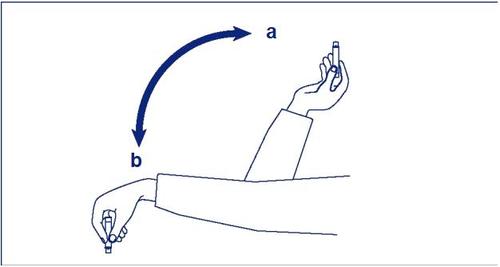
- Move the cartridge up and down between positions aand band vice versa (see the figure) so that the glass ball moves from one end to the other of the cartridge at least 20 times.
- Repeat the movement at least 10 times before each injection.
- The movement must always be repeated until the liquid appears uniformly white and milky.
- Complete the other operations illustrated below without delay.
How to inject Protaphane
► Inject the insulin under your skin .Use the injection technique recommended by your doctor or
nurse and described in the pen's instructions for use.
► Keep the needle under the skin for at least 6 seconds. Keep the button pressed down until
you have withdrawn the needle from the skin. This will ensure that you have injected the correct dose and will limit
possible backflow of blood into the needle or insulin reservoir.
If you take more insulin than you should
If you take too much insulin, your blood sugar will drop too low (hypoglycemia). See
Summary of serious and very common side effects in section 4.
If you forget to take insulin
If you forget to take insulin, your blood sugar will become too high (hyperglycemia).
See Effects of diabetes in section 4.
If you stop taking insulin
Do not stop taking insulin without talking to your doctor, who will tell you what
you need to do. This could lead to a high level of sugar in the blood (severe
hyperglycemia) and ketoacidosis. See Effects of diabetes in section 4.
If you have any other questions about the use of this medicine, ask your doctor, pharmacist or
nurse.
4. Possible side effects
Like all medicines, this medicine can cause side effects. Although not everybody gets them.
Summary of serious and very common side effects
Low blood sugar (hypoglycemia)is a very common side effect. It may affect more than 1 in 10 people.
You may have low blood sugar if:
- You inject too much insulin.
- You eat too little or miss meals.
- You do more physical activity than usual.
- You drink alcohol, see Protaphane with alcohol in section 2.
Warning signs of low blood sugar: cold sweat; cold and pale skin; headache; fast heartbeat; feeling unwell; feeling hungry; temporary visual disturbances; drowsiness; unusual tiredness and weakness; nervousness or tremor; anxiety; confusion; difficulty concentrating.
Severe hypoglycemia can lead to loss of consciousness. If a severe hypoglycemia is prolonged and not
treated, it can cause brain damage (transient or permanent) up to death. You can regain
consciousness more quickly with an injection of the hormone glucagon performed by trained personnel
who know how to use it. If glucagon is administered to you, you will need glucose or a sugary snack
as soon as you regain consciousness. If you do not respond to glucagon treatment, you will need to
be taken to hospital.
What to do if your blood sugar is low:
► If your blood sugar is too low, eat glucose tablets or another sugary snack (sweets, biscuits, fruit juice). Measure your blood sugar if
possible and then rest. Always carry glucose tablets or sugary snacks with you to be used if necessary.
► When the symptoms of hypoglycemia have disappeared or when your blood sugar has stabilized
continue your insulin treatment.
► If you have low blood sugar, or if you have needed
a glucagon injection, or if you have many episodes of low blood sugar, see your doctor. It may be necessary to adjust the dose and timing of
insulin, food and physical activity.
Tell people close to you that you have diabetes and what the consequences can be, including the
risk of fainting due to hypoglycemia. Explain that, if you were to faint, they should
turn you on your side and seek immediate medical attention. You should not be given food or drink as you could choke.
Serious allergic reactionto Protaphane or any of its ingredients (called a systemic allergic
reaction) is a rare side effect but can be life-threatening. It may affect less than 1 in 10,000 people.
Contact your doctor immediately:
- if the signs of allergy spread to other parts of your body.
- if you suddenly feel unwell, and: you start to sweat; you start to feel sick (vomiting); you have difficulty breathing; your heartbeat is fast; you feel dizzy. ► If you notice any of these signs, contact your doctor immediately.
Changes in the skin at the injection site:If you inject insulin into the same place, the fatty
tissue may become thinner (lipoatrophy) or thicker (lipohypertrophy) (may affect less than 1
in 100 people). Lumps under the skin can also be caused by the build-up of a protein
called amyloid (cutaneous amyloidosis; the frequency with which it occurs is unknown). Insulin
may not work as well as it should if you inject into an area with lumps, in a thinned area or in a thickened area. Change the injection site with each injection to prevent these
skin changes.
List of other side effects
Uncommon side effects
May affect less than 1 in 100 people.
Signs of allergy:local allergic reactions (pain, redness, hives, inflammation, bruising,
swelling or itching). These symptoms usually disappear within a few weeks of treatment. If the
symptoms do not disappear or spread to other parts of your body, see your doctor
immediately. Also see Serious allergic reaction.
Diabetic retinopathy(an eye disorder related to diabetes that can lead to loss of
vision): if you have diabetic retinopathy and your blood sugar improves very quickly, the retinopathy
may worsen. Consult your doctor for more information.
Swollen joints:at the beginning of insulin treatment, fluid retention can cause swelling
around the ankles and other joints. This is usually a temporary phenomenon that soon
disappears. If it doesn’t, contact your doctor.
Very rare side effects
May affect less than 1 in 10,000 people.
Visual disturbances:Visual disturbances may occur at the beginning of insulin treatment, but
they are usually temporary.
Painful neuropathy(pain due to nerve damage): if your blood sugar improves very quickly,
it may cause pain originating in the nerve fibers, which is defined as acute painful neuropathy that
is usually transient.
Reporting of side effects
If you get any side effects, tell your doctor, pharmacist or nurse. This includes any side effects not listed in this leaflet. You can also report side effects directly through the national reporting system reported in Annex V.
By reporting side effects you can help provide more information on the safety of
this medicine.
Effects of diabetes
You may have a high blood sugar level if:
- You have not injected enough insulin.
- You have forgotten to take insulin or have stopped taking it.
- You repeatedly take less insulin than you need.
- You have an infection or fever.
- You eat more than usual.
- You do less physical activity than usual.
Warning signs of high blood sugar:
The warning signs appear gradually. They include: passing more urine than usual; thirst; loss of appetite; feeling unwell (nausea or vomiting); feeling
sleepy or tired; dry, flushed skin; dry mouth and fruity-smelling breath (acetone).
What to do if your blood sugar is high:
► If you experience any of these symptoms: check your blood sugar if you can, check for ketones in your urine and contact a doctor immediately.
► These may be the symptoms of a very serious condition called diabetic ketoacidosis
(build-up of acid in the blood because the body is metabolizing fat instead of sugar).
If left untreated, it could lead to diabetic coma and eventually death.
5. How to store Protaphane
Keep this medicine out of the sight and reach of children.
Do not use this medicine after the expiry date which is stated on the cartridge label and on the
pack after ‘EXP’. The expiry date refers to the last day of the month.
Before opening:store in a refrigerator at 2°C - 8°C. Keep away from freezing agents.
Do not freeze.
During use or when carrying as a supply: do not refrigerate or freeze. It can be carried with you and
kept at room temperature (below 30 ° C) for up to 6 weeks.
Always keep the cartridge in the outer packaging to protect it from light.
Dispose of the needle after each injection.
Do not dispose of any medicine in wastewater or household waste. Ask your pharmacist how to
dispose of medicines you no longer use. This will help protect the environment.
6. Contents of the pack and other information
What Protaphane contains
- The active substance is human insulin Protaphane is a suspension of human isophane (NPH) insulin. Each ml contains 100 IU of human insulin. Each cartridge contains 300 IU of human insulin in 3 ml of injectable suspension.
- The other excipients are zinc chloride, glycerol, metacresol, phenol, disodium phosphate dihydrate, sodium hydroxide, hydrochloric acid, protamine sulfate and water for injections.
Description of Protaphane and contents of the pack
Protaphane is presented as a suspension for injection. After resuspension the liquid must
appear uniformly white and milky.
Packs of 1, 5 and 10 cartridges of 3 ml. Not all pack sizes may be
marketed.
The suspension is aqueous, white and milky.
Marketing Authorisation Holder and Manufacturer
Marketing Authorisation Holder
Novo Nordisk A/S, Novo Allé, DK-2880 Bagsværd, Denmark
Manufacturer
The manufacturer can be identified by the batch number printed on the carton flap and
on the label:
- If the second and third characters are S6, P5, K7, R7 or VG, FG or ZF the manufacturer is Novo Nordisk A/S, Novo Allé, DK-2880 Bagsværd, Denmark
- If the second and third characters are H7 or T6 the manufacturer is Novo Nordisk Production SAS 45 Avenue d’Orleans, F-28000 Chartres, France.
This leaflet was last updated on
Other sources of information
More detailed information on this medicinal product is available on the website of the European
Medicines Agency: http://www.ema.europa.eu/.

Не впевнені, чи підходить вам цей лікарський засіб?
Обговоріть симптоми та можливі варіанти лікування з лікарем онлайн.
Protaphane InnoLet 100 IU/ml (international units/ml) injectable suspension in pen
prefilled
human insulin
Read this leaflet carefully before using this medicine as it contains important
information for you.
- Keep this leaflet. You may need to read it again.
- If you have any questions, ask your doctor, pharmacist or nurse.
- This medicine has been prescribed only for you. Never give it to others. It could be harmful even if their symptoms of the illness are the same as yours.
- If you get any side effects, talk to your doctor, pharmacist or nurse. This includes any side effects not listed in this leaflet. See section 4.
Contents of this leaflet
1 What Protaphane is and what it is used for
2 What you need to know before you use Protaphane
3 How to use Protaphane
4 Possible side effects
5 How to store Protaphane
6 Contents of the pack and other information
1. What is Protaphane and what is it used for
Protaphane is a human insulin with a gradual onset of action and prolonged duration.
Protaphane is used to reduce the high level of sugar in patients with diabetes mellitus (diabetes). Diabetes is a disease in which the body does not produce enough insulin to control blood sugar levels. Treatment with Protaphane helps to prevent complications of diabetes.
Protaphane will begin to reduce the level of sugar in the blood approximately one and a half hours after injection and its effect will last for about 24 hours. Protaphane is often administered in combination with rapid-acting insulin preparations.
2. What you need to know before using Protaphane
Do not use Protaphane
► If you are allergic to human insulin or any of the other ingredients, see section 6.
► If you experience the warning signs of hypoglycaemia (low blood sugar level), see the section on serious and very common adverse effects in section 4.
► In microinfusors.
► If InnoLet is leaking, damaged or cracked.
► If it has not been stored correctly or has been frozen, see section 5.
► If the resuspended insulin does not appear uniformly white and milky.
Do not use Protaphane if any of these occur. Talk to your doctor, pharmacist or nurse for advice.
Before using Protaphane
► Check the label to make sure it is the correct type of insulin.
► Always use a new needle for each injection to prevent contamination.
► Needles and Protaphane InnoLet must not be shared.
► Protaphane Innolet is only suitable for subcutaneous injections. Talk to your doctor if you need to inject the insulin in a different way.
Warnings and precautions
Some conditions and activities can affect your insulin needs. Consult your doctor:
► If you have kidney or liver problems, abnormalities of the adrenal gland, pituitary gland or
thyroid.
► If there is an increase in physical activity or a change in your usual diet, as this may affect your blood sugar level.
► If you become ill, continue your insulin therapy and consult your doctor.
► If you are planning to travel abroad: travelling to countries with a different time zone may change your insulin requirements and the timing of these.
Skin changes at the injection site
The injection site should be rotated to help prevent changes in the fatty tissue under the
skin, such as thickening of the skin, thinning of the skin or the appearance of lumps under the skin.
Insulin may not work as well if you inject into an area with lumps, into a thinned area or into a thickened area (see section 3). Tell your doctor if you notice skin changes at the injection site. If you are currently injecting into one of these affected areas, consult your doctor before starting to inject into another area. Your doctor may advise you to check your blood sugar more carefully and adjust your insulin or other diabetes medications.
Other medicines and Protaphane
Tell your doctor, pharmacist or nurse if you are taking or have recently taken, or might take any other medicines.
Some medicines affect blood sugar levels, which means that the dose of insulin may need to be adjusted. The most common drugs that can affect insulin treatment are listed below.
Your blood sugar level may decrease (hypoglycaemia) if you take:
- Other medicines for the treatment of diabetes
- Monoamine oxidase inhibitors (MAOIs) (used to treat depression)
- Beta-blockers (used to treat high blood pressure)
- Angiotensin converting enzyme (ACE) inhibitors (used to treat some heart conditions or high blood pressure)
- Salicylates (used to relieve pain and reduce fever)
- Anabolic steroids (such as testosterone)
- Sulfonamides (used to treat infections).
Your blood sugar level may increase (hyperglycaemia) if you take:
- Oral contraceptives (birth control pills)
- Thiazides (used to treat high blood pressure or excessive fluid retention)
- Glucocorticoids (such as “cortisone” used to treat inflammation)
- Thyroid hormones (used to treat thyroid disorders)
- Sympathomimetics (such as epinephrine [adrenaline], salbutamol or terbutaline, used to treat asthma)
- Growth hormone (a medicine used to stimulate skeletal and somatic growth and which significantly affects the body's metabolic processes)
- Danazol (a medicine that acts on ovulation).
Octreotide and lanreotide (used to treat acromegaly, a rare hormonal disorder that usually occurs in middle-aged adults, caused by excessive production of growth hormone from the pituitary gland) may increase or decrease blood sugar levels.
Beta-blockers (used to treat high blood pressure) can weaken or completely suppress the warning symptoms that can help you recognise a low blood sugar level.
Pioglitazone (tablets used to treat type 2 diabetes mellitus)
Some patients with long-standing type 2 diabetes mellitus and heart problems or previous
stroke who have been treated with pioglitazone and insulin have developed heart failure.
Tell your doctor immediately if you experience signs of heart failure such as unusual shortness of breath or rapid weight gain or localised swelling (edema).
If you have taken any of the medicines listed, tell your doctor, pharmacist or nurse.
Protaphane with alcohol
► If you drink alcohol, your insulin needs may change as your blood sugar level may increase or decrease. Careful monitoring is recommended.
Pregnancy and breastfeeding
► If you are pregnant, suspect you are pregnant or are planning to become pregnant, ask your
doctor for advice before taking this medicine. Protaphane can be used during
pregnancy. An adjustment of the dose may be necessary during pregnancy and after
delivery. It is important to carefully control diabetes, especially to prevent hypoglycaemic episodes, also for the health of the baby.
► There are no restrictions on the use of Protaphane during breastfeeding.
Consult your doctor, pharmacist or nurse before taking any medicine during
pregnancy or breastfeeding.
Driving and using machines
► Ask your doctor whether it is safe to drive or use machines:
- If you have frequent episodes of hypoglycaemia.
- If you find it difficult to recognise the warning signs of hypoglycaemia.
If your blood sugar is high or low, this can affect your ability to concentrate and react and therefore also your ability to drive or use machines. Be aware that you may put yourself or others at risk.
Protaphane contains sodium
Protaphane contains less than 1 mmol of sodium (23 mg) per dose, which means that Protaphane is
essentially “sodium-free”.
3. How to use Protaphane
Dosage and when to administer insulin
Always use insulin and adjust the dose according to your doctor's prescription. If you are unsure, consult your
doctor, pharmacist or nurse.
Do not change your insulin unless your doctor tells you to. If your doctor has changed the type or
brand of insulin you are using to another, a dose adjustment may be necessary by the doctor himself .
Use in children and adolescents
Protaphane can be used in children and adolescents.
Use in particular groups of patients
If you have kidney or liver failure, or if you are over 65 years of age, you should monitor your blood sugar
regularly and talk to your doctor about adjusting your insulin dose.
How and where to inject
Protaphane is administered by injection under the skin (subcutaneous use). Never inject insulin
directly into the vein (intravenously) or into the muscle (intramuscularly). Protaphane Innolet is
only suitable for subcutaneous injections. Talk to your doctor if you need to inject insulin using another
method.
With each injection, always vary the injection site within the particular area of skin that you usually use.
This can reduce the risk of developing nodules or skin indentations, see
paragraph 4. The best areas to inject are: the abdomen; the buttocks; the front of the
thigh or arm. Your insulin will work faster if it is injected into the abdomen. Always check
your blood sugar regularly.
How to inject Protaphane InnoLet
Protaphane InnoLet is a prefilled pen containing human isophane insulin (NPH).
Read carefully the Instructions on how to use Protaphane InnoLet presented in this leaflet
illustratively. You must use the pen as described in the Instructions on how to use Protaphane InnoLet .
Always make sure you are using the correct pen before injecting your insulin.
If you take more insulin than you should
If you take too much insulin, your blood sugar will drop too low (hypoglycemia). See
Summary of serious and very common side effects in paragraph 4.
If you forget to take insulin
If you forget to take insulin, your blood sugar will become too high (hyperglycemia).
See Effects of diabetes in paragraph 4.
If you stop treatment with insulin
Do not stop treatment with insulin without talking to your doctor, who will tell you what
you need to do. This could lead to a high level of sugar in the blood (severe
hyperglycemia) and ketoacidosis. See Effects of diabetes in paragraph 4.
If you have any other questions about the use of this medicine, ask your doctor, pharmacist or
nurse.
4Possible side effects
Like all medicines, this medicine can cause side effects, although not everyone
experiences them.
Summary of serious and very common side effects
Low blood sugar (hypoglycemia)is a very common side effect. It can
occur in more than 1 in 10 people.
You may have low blood sugar if:
- You inject too much insulin.
- You eat too little or skip meals.
- You do more physical activity than usual.
- You drink alcohol, see Protaphane with alcohol in paragraph 2.
Warning signs of low blood sugar: cold sweat; cold and
pale skin; headache; rapid heartbeat; feeling unwell; feeling hungry; temporary visual disturbances; drowsiness; unusual tiredness and weakness; nervousness or tremor; anxiety; confused state; difficulty concentrating.
Severe hypoglycemia can lead to loss of consciousness. If prolonged severe hypoglycemia is not
treated, it can cause brain damage (transient or permanent) up to death. You can regain
consciousness more quickly with an injection of the hormone glucagon performed by trained personnel
who know how to use it. If you are given glucagon, you will need glucose or a sugary snack
as soon as you regain consciousness. If you do not respond to glucagon treatment, you will need to be
taken to hospital.
What to do if your blood sugar is low:
► If your blood sugar is too low, eat glucose tablets or another high-sugar snack (candies, biscuits, fruit juice). Measure your blood sugar if
possible and then rest. Always carry glucose tablets, candies, biscuits or fruit juices with you, to be used if necessary.
► When the symptoms of hypoglycemia have disappeared or when your blood sugar has stabilized
continue insulin treatment.
► If you have low blood sugar, you may lose consciousness, if you have needed
the glucagon injection, or if you have many episodes of low blood sugar, consult your doctor. It may be necessary to adjust the dose and timing
of insulin, food and physical activity.
Inform people close to you that you are diabetic and what the consequences may be, including the
risk of fainting due to hypoglycemia. Explain that, if you were to faint, they should
turn you on your side and seek immediate medical attention. It is advisable that you are not
given food or drink as you may choke.
Serious allergic reactionto Protaphane or one of its excipients (called a systemic allergic reaction) is a side effect that can be life-threatening. It can occur in less
than 1 in 10,000 people.
Contact your doctor immediately:
- if the signs of allergy spread to other parts of the body.
- if you suddenly feel unwell, and: you start to sweat; you start to feel sick (vomiting); you have difficulty breathing; your heartbeat is fast; you feel dizzy. ► If you notice any of these signs, contact your doctor immediately.
Changes in the skin at the injection site:If you inject insulin in the same place, the fatty tissue may thin (lipoatrophy) or thicken (lipohypertrophy) (may affect less than 1
in 100 people). Nodules under the skin can also be caused by the accumulation of a protein
called amyloid (cutaneous amyloidosis; the frequency with which it occurs is unknown). Insulin
may not work as well as it should if you inject into an area with nodules, an area
thinned or an area thickened. Change the injection site with each injection to prevent these
skin changes.
List of other side effects
Uncommon side effects
May affect less than 1 in 100 people.
Signs of allergy: local allergic reactions (pain, redness, hives, inflammation, bruising,
swelling or itching) at the injection site. These symptoms usually disappear within a few weeks of
treatment. If the symptoms do not disappear or spread to other parts of the body, contact
your doctor immediately. See also Serious allergic reaction.
Diabetic retinopathy(an eye disorder related to diabetes that can lead to vision loss): if you have diabetic retinopathy and your blood sugar improves rapidly, retinopathy
may worsen. Consult your doctor for more information.
Swollen joints:at the beginning of insulin treatment, fluid retention can cause swelling
around the ankles and other joints. This is usually a phenomenon that soon
disappears. If it does not, contact your doctor.
Very rare side effects
May affect less than 1 in 10,000 people.
Visual disturbances:visual disturbances may occur at the beginning of insulin treatment, but
usually this is a temporary reaction.
Painful neuropathy(pain due to nerve damage): if blood sugar improves rapidly,
it may cause pain originating in the nerve fibers. this is defined as acute painful neuropathy which
is usually transient.
Reporting of side effects
If any of these side effects occur, inform your doctor, pharmacist or nurse. This
also includes any side effect not listed in this leaflet. You can also report side effects directly through the national reporting system reported in Annex V .
By reporting side effects you can help provide more information on the safety
of this medicine.
Other effects of diabetes
High blood sugar (hyperglycemia)
You may have a high level of sugar in the blood if:
- You have not injected enough insulin.
- You have forgotten to take insulin or stopped taking it.
- You repeatedly take less insulin than necessary.
- You have an infection or fever.
- You eat more than usual.
- You do less physical activity than usual.
Warning signs of high blood sugar:
The warning signs appear gradually. They include: passing a greater amount of urine than
usual; thirst; loss of appetite; feeling unwell (nausea or vomiting); feeling
sleepy or tired; dry, flushed skin; dry mouth and fruity breath (acetone).
What to do if your blood sugar is high:
► If you experience any of these symptoms: check your blood sugar if you can, check for ketones in your urine and contact a doctor immediately.
► These may be the symptoms of a very serious condition called diabetic ketoacidosis
(build-up of acid in the blood because the body is metabolizing fat instead of sugar).
If left untreated, it can lead to diabetic coma and eventually death.
5. How to store Protaphane
Keep this medicine out of the sight and reach of children.
Do not use this medicine after the expiry date which is stated on the InnoLet label and on the
pack after ‘EXP’. The expiry date refers to the last day of the month.
Before opening:store in a refrigerator at 2°C - 8°C. Keep away from refrigerating elements.
Do not freeze.
During use or when carrying as a supply:do not refrigerate or freeze. It can be carried with you and
kept at room temperature (below 30 ° C) for up to 6 weeks.
Always keep the pen cap on the InnoLet when not in use, to protect it from light.
Dispose of the needle after each injection.
Do not dispose of any medicine in wastewater or household waste. Ask your pharmacist how to
dispose of medicines you no longer use. This will help protect the environment.
6. Package Contents and Other Information
What Protaphane Contains
- The active ingredient is human insulin. Protaphane is a suspension of human isophane insulin (NPH). Each ml contains 100 IU of human insulin. Each pre-filled pen contains 300 IU of human insulin in 3 ml of injectable suspension.
- The other excipients are zinc chloride, glycerol, metacresol, phenol, disodium phosphate dihydrate, sodium hydroxide, hydrochloric acid, protamine sulfate and water for injections.
Description of Protaphane and Package Contents
Protaphane presents as a suspension for injection. After resuspension the liquid must
appear uniformly white and milky.
Packs of 1, 5 or 10 pre-filled pens of 3 ml. Not all pack sizes may be
marketed.
The suspension is aqueous, white and milky.
Marketing Authorisation Holder and Manufacturer
Novo Nordisk A/S, Novo Allé, DK-2880 Bagsværd, Denmark
This leaflet was last updated on
Further information
More detailed information on this medicine is available on the European Medicines
Agency website: http://www.ema.europa.eu/.
For information on how to use your InnoLet, turn the page.
Instructions on how to use Protaphane injectable suspension in InnoLet.
Read the following instructions carefully before using your InnoLet.If you do not follow
the instructions carefully, you may inject too much or too little insulin, which can lead to a level of
blood sugar that is too high or too low.
Protaphane InnoLet is a simple and compact pre-filled pen capable of delivering from 1 to 50 units of
insulin in 1-unit increments. InnoLet is designed to be used with NovoFine or NovoTwist single-use needles up to 8 mm in length. As a precaution, always carry with you a
insulin delivery device in case the InnoLet in use is lost or damaged.
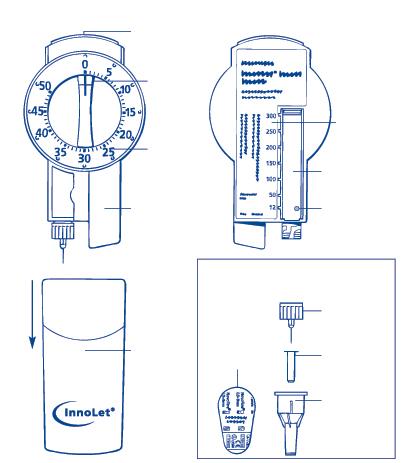



To get started
Check the name and colored labelof your InnoLet to verify that it contains the correct type
of insulin. This is especially important if you use more than one type of insulin. If you take the wrong type of
insulin, your blood sugar level may become too high or too low. Remove the
pen cap. It is easier to resuspend the insulin if it has reached room temperature.
Resuspending the insulin
Before each injection:
- To allow uniform resuspension, make sure there are at least 12 units of insulin in the cartridge. If there are less than 12 units of medicine, use a new Protaphane InnoLet.
- Move the pen up and downbetween positions A and B and vice versa so that the glass ball moves from one end to the other of the insulin cartridge (figure 1A) at least 20 times before first use. Repeat the movement at least 10 times before subsequent uses. The movement must always be repeated until the liquid appears uniformly white and milky.
- Always make sure to resuspend the insulin before each injection. If you do not resuspend the insulin, this can lead to inaccurate dosages that can make your blood sugar level too high or too low. After resuspending, immediately completethe other operations illustrated below.
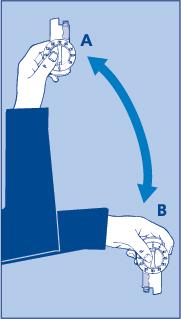
Attaching the needle
Always use a new needlefor each injection. This reduces the risk of contamination, infection,
insulin leakage, needle blockage and incorrect dosage.
- Be careful not to bend or damage the needle before use.
- Remove the protective sealfrom a new single-use needle.
- Screw the needle onto the InnoLet perpendicularly and firmly (figure 1B).
- Remove the large outer cap and the inner cap of the needle. It may be helpful to keep the large outer cap of the needle in the designated compartment.
- Never try to put the inner cap of the needle back on the needle itself. You could injure yourself with the needle.
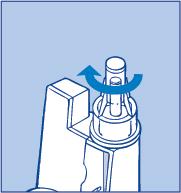
Preparing to remove air before each injection
Small amounts of air may accumulate in the needle and insulin cartridge during normal use.
To avoid injecting air and to ensure you deliver the correct dose of insulin:
- Select 2 unitsby turning the dose selector clockwise.
- Hold the InnoLet with the needle pointing upwards and gently tap the insulin cartridge with your fingers several times (figure 1C), in this way the air bubbles will collect at the top of the cartridge (figure 1C).
- Still holding the needle upwards, press the button and the dose selector will return to 0.
- Always make sure that a drop of insulin comes out of the end of the needle (figure 1C)before the injection. This ensures that insulin is flowing. If this does not happen, change the needle and repeat the procedure no more than 6 times.
Further failure to eject a drop of insulin indicates that the device is defective and
should not be used.
- If no drop appears, the insulin will not be injected, even if the dose selector moves. This may indicate that the needle is blocked or damaged.
- Always check your InnoLet before the injection. If you do not check InnoLet, you may inject too little insulin or not inject it at all. This can lead to a blood sugar level that is too high.
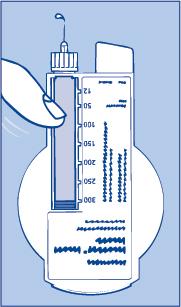
Selecting the dose
- Always make sure that the injection button is fully pressed and that the dose selector is positioned at 0.
- Select the number of units to be injectedby rotating the selector clockwise (figure 2).
- You will feel a click for each single unit selected.The dose can be corrected by rotating the selector in both directions. Make sure not to rotate the knob or correct the dose when the needle is inserted into the skin. This can lead to inaccurate dosages that can make your blood sugar level too high or too low.
Always use the dose scale and the dose selector to see how many units you have selected
before injecting the insulin. Do not count the pen clicks. If you select and inject the wrong dose,
your blood sugar level may be too high or too low. Do not use the residual scale, it only
approximately shows how much insulin is left in the pen.
It is not possible to select a dose higher than the number of units remaining in the cartridge.
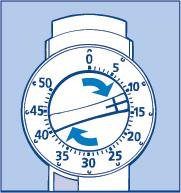
Injecting the insulin
Insert the needle into the skin.Use the injection technique recommended by your doctor.
Deliver the dose of insulin by pushing the injection button all the way down (figure 3).You will
feel clicks as the selector returns to 0.
After the injection, you must wait at least 6 seconds before removing the needleto ensure
complete delivery of the dose.
- Make sure you do not block the dose selector during the injectionas it must be free to return to 0 when the injection button is pressed. Always make sure that the dose selector returns to 0 after the injection. If the dose selector stops before reaching 0, the full dose has not been delivered and may cause a blood sugar level that is too high.
- Remove the needle after each injection.
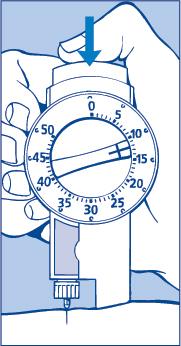
Removing the needle
- Put the large outer protective cap on and unscrew the needle (figure 4). Dispose of the needle with due caution.
- Put the pen cap on your InnoLet to protect the insulin from light.
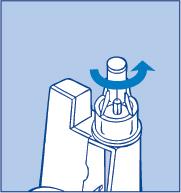
Always use a new needle for each injection.
Always remove and dispose of the needle after each injection and store the InnoLet without the needle attached. This
reduces the risk of contamination, infection, insulin leakage, needle blockage and inaccurate dose.
Further important information
Anyone caring for you should be very careful when handling used needles to reduce the
risk of needle stick injuries and cross-infections.
Dispose of the used InnoLet with due caution, making sure to remove the needle.
Never share the pen and needles with other people. This can lead to cross-infection.
Never share the pen with other people. The medicine may be dangerous to their health.
Always keep InnoLet and needles out of sight and reach of others, especially children.
Pen maintenance
InnoLet is designed to work accurately and safely. It should be handled with care. If
it has been dropped, is damaged or injured, there is a risk of insulin leakage. This can cause inaccurate dosages, which can lead to a blood sugar level that is too high or too low.
You can clean the outside of Protaphane InnoLet by wiping with a disinfecting wipe. Do not
immerse, wash or lubricate it to avoid damaging the mechanism and causing inaccurate dosages, which
can lead to a blood sugar level that is too high or too low.
Do not refill the InnoLet. Once empty, it must be discarded.
Protaphane FlexPen 100 IU/ml (international units/ml) injectable suspension in pen
prefilled
human insulin
Read this leaflet carefully before you use this medicine because it contains important
information for you.
- Keep this leaflet. You may need to read it again.
- If you have any questions, ask your doctor, pharmacist or nurse.
- This medicine has been prescribed for you only. Never pass it on to others. It could be harmful even if their symptoms of the illness are the same as yours.
- If you get any side effects, speak to your doctor, pharmacist or nurse. This includes any possible side effects not listed in this leaflet. See section 4.
Contents of this leaflet
- 1. What Protaphane is and what it is used for
- 2. What you need to know before you use Protaphane
- 3. How to use Protaphane
- 4. Possible side effects
- 5. How to store Protaphane
- 6. Contents of the pack and other information
1. What is Protaphane and what is it used for
Protaphane is a human insulin with a gradual onset of action and prolonged duration.
Protaphane is used to reduce high blood sugar levels in patients with diabetes mellitus (diabetes). Diabetes is a condition in which the body does not produce enough insulin to control blood sugar levels. Treatment with Protaphane helps to prevent complications of diabetes.
Protaphane will begin to reduce blood sugar levels approximately one and a half hours after injection, and its effect will last for about 24 hours. Protaphane is often administered in combination with rapid-acting insulin preparations.
2. What you need to know before using Protaphane
Do not use Protaphane
► If you are allergic to human insulin, or to any of the other ingredients of this medicine,
see section 6.
► If you experience the warning signs of hypoglycaemia (low blood sugar),
see the Summary of serious and very common side effects in section 4.
► In infusion pumps.
► If FlexPen is leaking, damaged or cracked.
► If it has not been stored correctly or has been frozen, see section 5.
► If the resuspended insulin does not appear uniformly white and milky.
Do not use Protaphane if any of these occur. Talk to your doctor, pharmacist or nurse
for advice.
Before using Protaphane
► Check the label to make sure it is the correct type of insulin.
► Always use a new needle for each injection to prevent contamination.
► Needles and Protaphane FlexPen should not be shared.
► Protaphane FlexPen is only suitable for subcutaneous injections. Talk to your doctor if you need to
inject the insulin by another route.
Warnings and precautions
Some conditions and activities can affect your insulin needs. Consult your doctor:
► If you have kidney or liver problems, abnormalities of the adrenal gland, pituitary gland or
thyroid.
► If there is an increase in physical activity or a change in your usual diet, as this
may affect your blood sugar level.
► If you become ill, continue your insulin therapy and consult your doctor.
► If you are planning to travel abroad: travelling to countries with a different time zone may
change your insulin requirements and the times of these.
Skin changes at the injection site
The injection site must be rotated to help prevent changes in the fatty tissue under the
skin, such as thickening of the skin, thinning of the skin or the appearance of lumps under the skin.
Insulin may not work as well if you inject into an area with lumps, an area
thinned or an area thickened (see section 3). Tell your doctor if you notice skin changes at the
injection site. If you are currently injecting into one of these affected areas, consult
your doctor before starting to inject into another area. Your doctor may advise you to
check your blood glucose more carefully and adjust your insulin or other antidiabetic medicines.
Other medicines and Protaphane
Tell your doctor, pharmacist or nurse if you are taking, have recently taken or might
take any other medicines.
Some medicines affect blood sugar levels, which means that your insulin dose
may need to be adjusted. The most common medicines that can affect your
insulin treatment are listed below.
Your blood sugar level may be lowered (hypoglycaemia) if you take:
- Other medicines for the treatment of diabetes
- Monoamine oxidase inhibitors (MAOIs) (used to treat depression)
- Beta-blockers (used to treat high blood pressure)
- Angiotensin converting enzyme (ACE) inhibitors (used to treat some heart conditions or high blood pressure)
- Salicylates (used to relieve pain and reduce fever)
- Anabolic steroids (such as testosterone)
- Sulphonamides (used to treat infections).
Your blood sugar level may be raised (hyperglycaemia) if you take:
- Oral contraceptives (birth control pills)
- Thiazides (used to treat high blood pressure or excessive fluid retention)
- Glucocorticoids (such as “cortisone” used to treat inflammation)
- Thyroid hormones (used to treat thyroid disorders)
- Sympathomimetics (such as epinephrine [adrenaline], salbutamol or terbutaline, used to treat asthma)
- Growth hormone (medicine used to stimulate skeletal and somatic growth and which significantly affects the body's metabolic processes)
- Danazol (medicine that acts on ovulation).
Octreotide and lanreotide (used to treat acromegaly, a rare hormonal disorder that
usually occurs in middle-aged adults, caused by excessive production of growth hormone from the
pituitary gland) may increase or decrease your blood sugar level.
Beta-blockers (used to treat high blood pressure) can weaken or
completely suppress the warning symptoms that can help you recognise low blood
sugar.
Pioglitazone (tablets used to treat type 2 diabetes mellitus)
Some patients with long-standing type 2 diabetes mellitus and heart problems or previous
stroke who have been treated with pioglitazone and insulin have developed heart failure.
Tell your doctor immediately if you experience signs of heart failure such as unusual shortness of breath or rapid weight gain or localised swelling (edema).
If you have taken any of the medicines listed, tell your doctor, pharmacist or nurse.
Protaphane with alcohol
► If you drink alcohol, your insulin needs may change as your blood sugar level may increase or
decrease. Careful monitoring is recommended.
Pregnancy and breastfeeding
► If you are pregnant, suspect you are pregnant or are planning to become pregnant, ask your
doctor for advice before taking this medicine. Protaphane can be used during
pregnancy. An adjustment of the dose may be necessary during pregnancy and after
delivery. It is important to control diabetes carefully, especially to prevent episodes of
hypoglycaemia, also for the health of the baby.
► There are no restrictions on treatment with Protaphane during breastfeeding.
Consult your doctor, pharmacist or nurse before taking any medicine during
pregnancy or breastfeeding.
Driving and using machines
► Ask your doctor whether it is safe for you to drive or operate machinery:
- If you have frequent episodes of hypoglycaemia.
- If you have difficulty recognising the warning signs of hypoglycaemia.
If your blood sugar is too high or too low, this can affect your concentration and reaction time and therefore also your ability to drive or operate machinery. Be aware that you could
put yourself or others at risk.
Protaphane contains sodium
Protaphane contains less than 1 mmol of sodium (23 mg) per dose, which means that Protaphane is
essentially “sodium-free”.
3. How to use Protaphane
Dosage and when to take insulin
Always use insulin and adjust the dose according to your doctor's prescription. If you are not sure, consult your
doctor, pharmacist or nurse.
Do not change your insulin unless your doctor tells you to. If your doctor has changed the type or
brand of insulin you are using to another, a dose adjustment may be necessary by the doctor himself .
Use in children and adolescents
Protaphane can be used in children and adolescents.
Use in particular groups of patients
If you have kidney or liver failure, or if you are over 65 years of age, you should monitor your blood sugar
regularly and talk to your doctor about adjusting your insulin dose.
How and where to inject
Protaphane is administered by injection under the skin (subcutaneous use). Never inject insulin
directly into the vein (intravenously) or into the muscle (intramuscularly). Protaphane FlexPen is
only suitable for subcutaneous injections. Talk to your doctor if you need to inject insulin using another
method.
With each injection, always vary the injection site within the particular area of skin you usually use
regularly. This can reduce the risk of developing nodules or skin indentations, see
paragraph 4. The best areas for injecting are: the abdomen; the buttocks; the front of the
thigh or upper arm. Your insulin will work faster if it is injected into the abdomen.
Always check your blood glucose regularly.
How to inject Protaphane FlexPen
Protaphane FlexPen is a prefilled pen containing human isophane (NPH) insulin.
Read carefully the Instructions on how to use Protaphane FlexPen in this leaflet
attentively. You must use the pen as described in the Instructions on how to use Protaphane Flexpen.
Always make sure you are using the correct pen before injecting your insulin.
If you take more insulin than you should
If you take too much insulin, your blood sugar level will drop too low (hypoglycemia). See
Summary of serious and very common side effects in paragraph 4.
If you forget to take insulin
If you forget to take insulin, your blood sugar level will become too high (hyperglycemia).
See Effects of diabetes in paragraph 4.
If you stop taking insulin
Do not stop treatment with insulin without talking to your doctor, who will tell you what
you need to do. This could lead to a high blood sugar level (severe
hyperglycemia) and ketoacidosis. See Effects of diabetes in paragraph 4.
If you have any further questions about the use of this medicine, ask your doctor, pharmacist or
nurse.
4. Possible side effects
Like all medicines, this medicine can cause side effects, although not everybody gets them.
Summary of serious and very common side effects
Low blood sugar (hypoglycemia)is a very common side effect. It may affect more than 1 in 10 people.
You may have low blood sugar if:
- You inject too much insulin.
- You eat too little or miss meals.
- You do more physical activity than usual.
- You drink alcohol, see Protaphane with alcohol in section 2.
Warning signs of low blood sugar: cold sweat; cold and pale skin; headache; fast heartbeat; feeling unwell; feeling hungry; temporary vision disturbances; drowsiness; unusual tiredness and weakness; nervousness or tremor; anxiety; confusion; difficulty concentrating.
Severe hypoglycemia can lead to loss of consciousness. If a severe hypoglycemia is prolonged and not treated, it can cause brain damage (transient or permanent) up to death. You may regain consciousness more quickly with an injection of the hormone glucagon by trained personnel who know how to use it. If glucagon is administered to you, you will need glucose or a sugary snack as soon as you regain consciousness. If you do not respond to glucagon treatment, you will need to be taken to hospital.
What to do if your blood sugar is low:
► If your blood sugar is too low, eat glucose tablets or another sugary snack (sweets, biscuits, fruit juice). Measure your blood sugar if possible and then rest. Always carry glucose tablets, sweets, biscuits or fruit juice with you, to be used if necessary.
► When the symptoms of hypoglycemia have disappeared or when your blood sugar has stabilised, continue your insulin treatment.
► If you have low blood sugar, have needed a glucagon injection, or have many episodes of low blood sugar, see your doctor. It may be necessary to adjust the dose and timing of your insulin, food and physical activity.
Tell people close to you that you have diabetes and what the consequences may be, including the risk of fainting due to hypoglycemia. Explain that, if you should faint, they should turn you onto your side and seek immediate medical attention. You should not be given food or drink as you could choke.
Serious allergic reactionto Protaphane or any of its ingredients (called a systemic allergic reaction) is a rare side effect but can be life-threatening. It may affect less than 1 in 10,000 people.
Contact your doctor immediately:
- if the signs of allergy spread to other parts of the body.
- if you suddenly feel unwell, and: you start to sweat; you feel sick (vomiting); you have difficulty breathing; your heartbeat is fast; you feel dizzy. ► If you notice any of these signs, contact your doctor immediately.
Changes in the skin at the injection site:If you inject insulin into the same place, the fatty tissue may become thinner (lipoatrophy) or thicker (lipohypertrophy) (may affect less than 1 in 100 people). Lumps under the skin can also be caused by the build-up of a protein called amyloid (cutaneous amyloidosis; the frequency with which it occurs is unknown). Insulin may not work as well as it should if you inject into an area with lumps, an area that is thinned or an area that is thickened. Change the injection site with each injection to prevent these skin changes.
List of other side effects
Uncommon side effects
May affect less than 1 in 100 people.
Signs of allergy:Local allergic reactions (pain, redness, hives, inflammation, bruising, swelling or itching around the injection site. These symptoms usually disappear within a few weeks of treatment. If the symptoms do not disappear or spread to other parts of the body, see your doctor. Also see Serious allergic reaction.
Diabetic retinopathy(an eye disorder related to diabetes that can lead to blindness): if you have diabetic retinopathy and your blood sugar improves very quickly, the retinopathy may worsen. See your doctor for more information.
Swollen joints:At the beginning of insulin treatment, fluid retention can cause swelling around the ankles and other joints. This is usually a temporary phenomenon. If it does not go away, contact your doctor.
Very rare side effects
May affect less than 1 in 10,000 people.
Visual disturbances:Visual disturbances may occur at the beginning of insulin treatment, but this is usually a temporary reaction.
Painful neuropathy(pain due to nerve damage): if your blood sugar improves very quickly, it may cause pain originating in the nerve fibres. This is called acute painful neuropathy which is usually transient.
Reporting of side effects
If you get any side effects, talk to your doctor, pharmacist or nurse. This includes any possible side effects not listed in this leaflet. You can also report side effects directly through the national reporting system reported in Annex V. By reporting side effects you can help provide more information on the safety of this medicine.
Other effects of diabetes
High blood sugar (hyperglycemia)
You may have high blood sugar if:
- You have not injected enough insulin.
- You have forgotten to take insulin or have stopped taking it.
- You repeatedly take less insulin than you need.
- You have an infection or fever.
- You eat more than usual.
- You do less physical activity than usual.
Warning signs of high blood sugar:
The warning signs appear gradually. They include: passing more urine than usual; thirst; loss of appetite; feeling unwell (nausea or vomiting); feeling sleepy or tired; dry, flushed skin; dry mouth and fruity-smelling breath (acetone).
What to do if your blood sugar is high:
► If you experience any of these symptoms: check your blood sugar if you can, check for ketones in your urine and contact a doctor immediately.
► These may be the symptoms of a very serious condition called diabetic ketoacidosis (build-up of acid in the blood because the body is metabolising fat instead of sugar).
If left untreated, it can lead to diabetic coma and eventually death.
5. How to store Protaphane
Keep this medicine out of sight and reach of children.
Do not use this medicine after the expiry date which is stated on the FlexPen label and on the
pack after ‘EXP’. The expiry date refers to the last day of the month.
Before opening:store in a refrigerator at 2°C - 8°C. Keep away from refrigerating elements
Do not freeze.
During use or when carried as a supply:do not refrigerate or freeze. It can be carried with you
and kept at room temperature (below 30 ° C) for up to 6 weeks.
Always keep the pen cap on the FlexPen when not in use to protect it from light.
Dispose of the needle after each injection.
Do not dispose of any medicine in waste water or household waste. Ask your pharmacist how to
dispose of medicines you no longer use. This will help protect the environment.
6. Contents of the pack and other information
What Protaphane contains
- The active ingredient is Protaphane insulin is a suspension of human isophane (NPH) insulin. Each ml contains 100 IU of human insulin. Each pre-filled pen contains 300 IU of human insulin in 3 ml of injectable suspension.
- The other excipients are zinc chloride, glycerol, metacresol, phenol, disodium phosphate dihydrate, sodium hydroxide, hydrochloric acid, protamine sulfate and water for injections.
Description of Protaphane and contents of the pack
Protaphane presents as a suspension for injection. After resuspension the liquid will appear
uniformly white and milky.
Packs of 1, 5 and 10 pre-filled pens of 3 ml. Not all pack sizes may be
marketed.
The suspension is aqueous, white and milky.
Marketing Authorisation Holder and Manufacturer
Marketing Authorisation Holder
Novo Nordisk A/S, Novo Allé, DK-2880 Bagsværd, Denmark
Manufacturer
The manufacturer can be identified by the batch number printed on the pack tab and
on the label:
- If the second and third characters are S6, P5, K7, R7, VG, FG or ZF the manufacturer is Novo Nordisk A/S, Novo Allé, DK-2880 Bagsværd, Denmark
- If the second and third characters are H7 or T6 the manufacturer is Novo Nordisk Production SAS 45 Avenue d’Orleans, F-28000 Chartres, France.
This leaflet was last updated on
Other sources of information
More detailed information on this medicine is available on the European Medicines
Agency website: http://www.ema.europa.eu/.
For information on how to use your FlexPen turn the page.
Instructions on how to use Protaphane injectable suspension in FlexPen.
Read the following instructions carefully before using the FlexPen.If you do not follow
the instructions carefully, you may inject too much or too little insulin which can lead to a level of
blood sugar that is too high or too low .
FlexPen is a pre-filled pen for administering variable-dose insulin. It is possible to
select a dose between 1 and 60 units in 1-unit increments. FlexPen is designed and
tested for use with NovoFine or NovoTwist disposable needles up to 8 mm in length.
As a precaution, always carry a spare device for administering
insulin in case the FlexPen in use is lost or damaged.
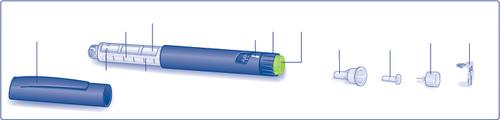
Pen maintenance
FlexPen must be handled with care. If it leaks or has been dropped, it may be
damaged and leak insulin. This can cause incorrect dosages, which can lead to a
blood sugar level that is too high or too low.
You can clean the outside of your FlexPen with a disinfecting wipe. Do not immerse, wash or lubricate
the pen to avoid damaging the mechanism.
Do not refill your FlexPen. Once empty, it must be discarded.
Preparing Protaphane FlexPen
A
Check the name and coloured label of your pen to make sure it contains the correct
type of insulin. This is very important if you use more than one type of insulin. If you administer a
wrong type of insulin, the blood sugar level may become too high or too low.
Every time you use a new pen
Allow the insulin to reach room temperature before use.
This makes resuspension easier. Remove the pen cap (see A).
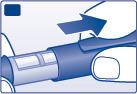
B
Before each injection with a new FlexPen, you must resuspend the insulin:
Move the pen up and down between the two positions twenty times as shown, so that the glass ball
movesbetween the two ends of the cartridge. Repeat the procedure until the liquid appears
uniformly white and milky.
For each subsequent injection,move the pen up and down between the two positions at least 10 times until the
liquid appears uniformly white and milky.
Always make sure to resuspend the insulin before each injection. This reduces the risk of a blood sugar level that is too high or too low. After resuspension, quickly perform all the
following steps.
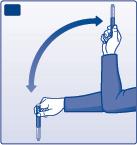
Always check that there are at least 12 units of insulin remaining in the cartridge after
resuspending. If there are less than 12 units, use a new FlexPen. 12 units are marked on the
graduation scale. Refer to the large figure at the top of the instructions.
Do not use the pen if the resuspendedinsulin does not appear uniformly white and milky.
Insert the needle
C
Remove the protective seal from a new disposable needle.
Screw the needle onto your FlexPen perpendicularly and firmly.
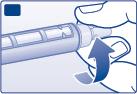
D
Remove the outer cap of the needle and keep it for later.
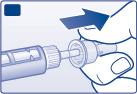
E
Remove the inner cap of the needle and discard it.
Never try to put the inner cap of the needle back on the needle itself. You could injure yourself with the needle.
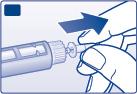
Always use a new needle for each injection. This reduces the risk of contamination, infection,
insulin leakage, needle blockage and incorrect dosage.
Be careful not to bend or damage the needle before use.
Checking the insulin flow
F
During normal use, small amounts of air may accumulate in the cartridge before each injection. To ensure you inject the air and administer the
correct dose of insulin:
Rotate the dose selector and select 2 units.
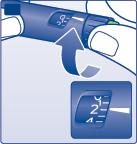
G
Hold the FlexPen with the needle pointing upwards and gently tap the cartridge with your finger for
several times so that air bubbles collect at the top of the cartridge.
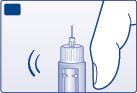
H
Hold the needle pointing upwards, press the injection button all the way down. The dose selector will
return to 0.
A drop of insulin should appear at the tip of the needle. If this does not happen, change the needle and
repeat the procedure no more than 6 times.
If the drop of insulin still does not appear, the pen is defective and you should use a new one.
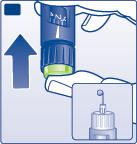
Always make sure a drop appears on the tip of the needle before the injection. This
ensures that insulin is flowing. If no drop appears, you will not inject insulin, even if the
dose selector moves. This may indicate that the needle is blocked or damaged.
Always check the flow before the injection. If you do not check the flow, you may inject a
too low dose of insulin or may not inject any at all. This can lead to a
blood sugar level that is too high.
Selecting the dose
I
Verify that the dose selector is at 0.
Rotate the dose selector to select the number of units to be injected.
The dose can be increased or decreased by rotating the selector in both directions until the
correct dose is indicated by the indicator. When rotating the dose selector, be careful not to
press the injection button to avoid insulin leakage.
You cannot select a dose higher than the number of units remaining in the cartridge.
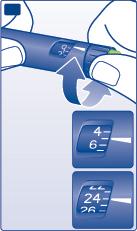
Before injecting the insulin, always use the dose selector and the indicator to see how many
units have been selected.
Do not count the pen clicks. If you select and inject the wrong dose, the blood sugar
level may become too high or too low. Do not use the graduation scale, which only
approximately shows how much insulin is left in the pen.
Injection
J
Insert the needle into the skin. Use the injection technique shown by your doctor or nurse.
Administer the dose of insulin by pushing the injection button until the 0 is reached
by the indicator. Be careful to only act on the button.
Rotating the dial will not inject insulin.
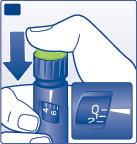
K
Keep the button pressed down fully and leave the needle under the skin for at least 6 seconds. This will ensure the
complete administration of the dose.
Withdraw the needle from the skin and release pressure on the injection button.
Always make sure the dose selector returns to 0 after the injection. If the dose selector
stops before reaching 0, the full dose has not been administered and may
cause a blood sugar level that is too high.
L
Insert the tip of the needle into the outer cap without touching the cap itself. When the needle is
covered, press the outer cap fully and then unscrew the needle.
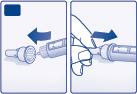
Always remove the needle after each injection and store your FlexPen without the needle screwed on. This
reduces the risk of contamination, infection, insulin leakage, needle blockage and
incorrect dosage.
Other important information
Anyone caring for you must be very careful when handling used needles to reduce
the risk of needle stick injuries and cross-infections.
Dispose of the used FlexPen with due caution, making sure to remove the needle.
Never share the pen and needles with other people. This can lead to cross-infections.
Never share the pen with other people. The medicine may be dangerous to their
health.
Always keep the pen and needles out of sight and reach of others, especially
children.

Виникли питання під час прийому ліків?
Обговоріть свої симптоми та лікування з лікарем онлайн.
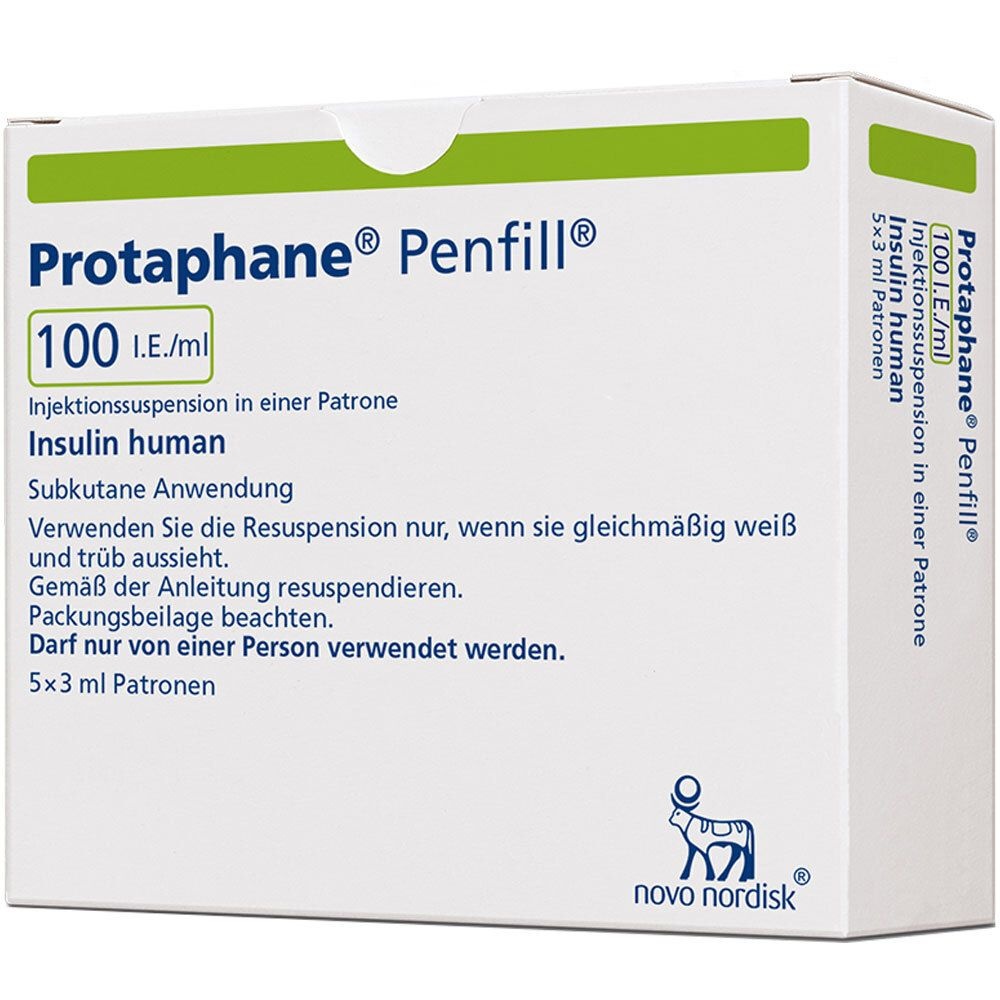
- Країна реєстрації
- Лікарська формаInjectable suspension, 40 IU/ML
- Код АТХA10AC01
- Діюча речовина
- Потрібен рецептНі
- Виробник
- Ця інформація надана лише для ознайомлення і не є медичною порадою. Рішення щодо лікування завжди приймає лікар.
- Альтернативи до PROTAPANEЛікарська форма: Injectable solution, 100 UNITS/MLДіюча речовина: инсулин гларгинВиробник: ELI LILLY NEDERLAND B.V.Потрібен рецептЛікарська форма: Injectable suspension, 30 40 IU/MLДіюча речовина: инсулин человекаВиробник: NOVO NORDISK A/SРецепт не потрібенЛікарська форма: Injectable solution, 40 IU/MLДіюча речовина: инсулин человекаВиробник: NOVO NORDISK A/SПотрібен рецепт
Аналоги PROTAPANE в інших країнах
Препарати з тією самою діючою речовиною, доступні в інших країнах.
Аналог PROTAPANE у Іспанія
Аналог PROTAPANE у Польща
Аналог PROTAPANE у Україна
Лікарі онлайн щодо PROTAPANE
Застосування, безпека та можливість призначення рецепта — за результатами медичної оцінки.









Отримайте рецепт на PROTAPANE онлайн
Заповніть форму за 2 хвилини
Розкажіть про симптоми, історію хвороби та потрібний препарат.
Оберіть лікаря або ми призначимо
Оберіть спеціаліста або ми підберемо найближчого доступного лікаря.
Лікар розглядає ваш випадок
Зазвичай протягом 30 хвилин. Може ставити уточнювальні запитання в чаті.
Отримайте в будь-якій аптеці
Електронний рецепт надсилається на вашу пошту — дійсний по всій Польщі.
Часті запитання
PROTAPANE не потребує рецепта в Італія. Ви можете обговорити з лікарем онлайн, чи підходить цей лікарський засіб для вашої ситуації.
Діюча речовина у PROTAPANE — инсулин человека. Це допомагає визначити препарати з тим самим складом, але під іншими торговими назвами.
PROTAPANE виробляється компанією NOVO NORDISK A/S. Назва бренду та упаковка можуть відрізнятися залежно від дистрибʼютора.
Лікарі, зокрема Сімейні лікарі, Психіатри, Дерматологи, Кардіологи, Ендокринологи, Гастроентерологи, Пульмонологи, Нефрологи, Ревматологи, Гематологи, Інфекціоністи, Алергологи, Геріатри, Педіатри, Онкологи, можуть оцінити доцільність застосування PROTAPANE з урахуванням вашого стану та місцевих правил. Ви можете записатися на онлайн-консультацію, щоб обговорити симптоми та можливі подальші кроки.
Польща має добре розвинену систему охорони здоров'я у великих містах, таких як Варшава, Краків, Вроцлав і Гданськ. Аптеки широко доступні та працюють відповідно до чинного законодавства, забезпечуючи доступ до рецептурних препаратів.
Ви можете придбати PROTAPANE у Варшаві, Кракові, Вроцлаві або Гданську в будь-якій аптеці за наявності дійсного рецепта.
Щоб отримати рецепт, ви можете скористатися Oladoctor:
Інші препарати з тією самою діючою речовиною (инсулин человека) включають ABASALAR, AKTRAPANE, AKTRAPID. Вони можуть відрізнятися торговою назвою або формою випуску, але містять той самий терапевтичний компонент. Перед зміною або початком прийому нового препарату варто проконсультуватися з лікарем.
