



MEDIKINET 5 mg Modified-Release Hard Capsules

Запит на рецепт онлайн
Лікар розгляне ваш випадок і визначить, чи є рецепт медично доцільним.

Поговоріть з лікарем про ці ліки
Обговоріть симптоми та можливі подальші кроки під час короткої онлайн-консультації.



Інструкція із застосування MEDIKINET
Зміст інструкції
MEDIKINET 5 mg prolonged-release hard capsules, 10 mg prolonged-release hard capsules, 20 mg prolonged-release hard capsules, 30 mg prolonged-release hard capsules, 40 mg prolonged-release hard capsules
methylphenidate hydrochloride
Read this leaflet carefully before you take or give to your child this medicine because it contains important information for you.
- Keep this leaflet. You may need to read it again.
- If you have any questions, ask your doctor or pharmacist.
- This medicine has been prescribed for you or your child. Do not give it to other people, even if their symptoms are the same as yours, as it could be harmful.
- If any side effects occur, including those not listed in this leaflet, tell your doctor or pharmacist. See section 4.
Contents of this leaflet
- 1. What MEDIKINET is and what it is used for
- 2. What you need to know before you take or give MEDIKINET to your child
- 3. How to take MEDIKINET
- 4. Possible side effects
- 5. How to store MEDIKINET
- 6. Contents of the pack and other information
1. What is MEDIKINET and what is it used for
What it is used for
MEDIKINET is used to treat 'attention deficit and hyperactivity disorder'
( attention deficit hyperactivity disorder- ADHD);
- it is used in children and adolescents between the ages of 6 and 18 years;
- it is used only after trying other non-pharmacological treatments, such as support and behavioral therapy. MEDIKINET is not indicated as a treatment for ADHD in children under 6 years of age or in adults. If you have been successfully treated with MEDIKINET as an adolescent for ADHD, if symptoms persist into adulthood, and if the need to continue therapy has been determined, it may be appropriate to continue taking MEDIKINET when you become an adult. Your doctor will be able to advise you on this. How it worksMEDIKINET improves the activity of certain parts of the brain that exhibit hypoactivity. The drug can help improve attention span and concentration and reduce impulsive behavior.
The drug is administered as part of a therapeutic program, which usually
includes:
- psychological measures
- educational measures and
- social therapy. Treatment with MEDIKINET must be initiated exclusively by a specialist in behavioral disorders of childhood and adolescence and must be used under their supervision. Although there is no cure for ADHD, it can be managed by adopting therapeutic programs. Information about ADHDChildren and adolescents with ADHD have:
- difficulty sitting still and
- difficulty concentrating. It is not their fault if they cannot do so. Many children and adolescents make efforts to succeed. However, ADHD can cause them problems in everyday life. Children and adolescents with ADHD may have difficulty learning and completing homework. They find it difficult to behave well at home, at school or in other places. ADHD does not affect the intelligence of a child or adolescent.
2. What you need to know before taking or giving MEDIKINET to your child
Do not take MEDIKINET if you or your child:
- are allergic to methylphenidate or any of the other ingredients of this medicine (listed in section 6);
- have problems with your thyroid
- have increased pressure inside the eye (glaucoma)
- have a tumor of the adrenal gland (pheochromocytoma)
- have problems with eating when you have no appetite or when you want to eat, such as “anorexia nervosa”
- have very high blood pressure or narrowing of the blood vessels that can cause pain in your arms and legs
- have had problems with your heart, such as heart attack, irregular heartbeat, chest pain and discomfort, heart failure, heart disease, or if you were born with heart problems
- have had a problem with the blood vessels in the brain, such as stroke, swelling or weakening of part of the blood vessels (aneurysm), narrowing or blockage of blood vessels, or inflammation of the blood vessels (vasculitis)
- are currently taking or have taken within the last 14 days an antidepressant (known as a monoamine oxidase inhibitor): see section ‘Other medicines and MEDIKINET’
- have mental health problems such as:
- a “psychopathic” or “ borderline” personality disorder;
- abnormal thoughts or visions or a disease called “schizophrenia”
- signs of a serious mood problem such as:
or suicidal thoughts
or severe depression, that is feeling very sad, useless and hopeless
or mania, that is feeling unusually excitable, hyperactive and disinhibited.
- have a history of severe stomach acid deficiency (achlorhydria) with a pH value greater than 5.5
- are taking medicines to reduce stomach acid secretion or to treat excessive stomach acidity (H2 receptor blockers or treatment for acidity). Do not take methylphenidate if you or your child are in one of the above conditions. If you have any doubts, consult your doctor or pharmacist before taking or giving methylphenidate to your child, because methylphenidate can worsen these problems.
Warnings and precautions
Talk to your doctor before taking MEDIKINET if you or your child
- have problems with your liver or kidneys
- have difficulty swallowing or swallowing whole tablets
- have had seizures (fits, convulsions, epilepsy) or any abnormalities resulting from electroencephalograms (EEG)
- have ever abused or been dependent on alcohol, prescription medicines or illegal drugs
- are female and have started to have your menstrual cycle (see section “Pregnancy and breastfeeding”)
- have repeated spasms, difficult to control in any part of the body or if you repeat sounds and words (tics)
- have high blood pressure
- have a heart problem that is not present in the previous section “Do not take”
- have a mental health problem that is not present in the previous section “Do not take”. Other mental health problems include:
- mood swings (from mania to depression: this is called “bipolar disorder”)
- aggressiveness and hostility or worsening of aggressiveness
- seeing, hearing or perceiving things that do not exist (hallucinations)
- believing things that are not true (delusions)
- unreasonable suspicions (paranoia)
- agitation, anxiety or tension
- depression or feelings of guilt. If any of the above situations describe your case or that of your child, consult your doctor or pharmacist before starting or giving treatment to your child, because methylphenidate can worsen these problems. The doctor will want to monitor the effect of the medicine on you or your child. Checks carried out by the doctor before starting treatment with methylphenidateThese checks are to decide if methylphenidate is the right medicine for you or your child. The doctor will talk to you:
- about any other medicines that you or your child are taking
- about any history of sudden unexplained death in your family
- about any other clinical problems (such as heart problems) that you or your family may have
- about how you or your child feel, if you feel cheerful or depressed, if you have strange thoughts or if you or your child have ever experienced any of these feelings in the past
- about family history of “tics” (repeated spasms, difficult to control in any part of the body or repetition of sounds or words)
- about any mental or behavioral health problems that you, your child or your family have ever suffered from. The doctor will discuss whether you or your child are at risk of mood swings (from mania to depression: this is called “bipolar disorder”). They will check your mental medical history or that of your child and check if there have been cases of suicide, bipolar disorder or depression in your family. It is important that you provide as much information as possible, to allow the doctor to decide if methylphenidate is the right medicine for you or your child. The doctor may decide to subject you or your child to other clinical examinations, before starting to take this medicine. During treatment, children and adolescents may unexpectedly experience prolonged erections that may be painful and occur at any time. It is important to see a doctor immediately if the erection lasts more than 2 hours, especially if it is painful.
Doping tests
This medicine may give a positive result in doping tests.
For athletes: the use of the drug without therapeutic necessity constitutes
doping and may still result in a positive doping test.
Other medicines and MEDIKINET
Tell your doctor or pharmacist if you or your child are taking, have recently
taken or might take any other medicines.
Do not take methylphenidate if you or your child:
- are taking or have taken within the last 14 days a medicine called “monoamine oxidase inhibitor” (MAOI), used for depression. Taking an MAOI and methylphenidate at the same time can cause a sudden increase in blood pressure. If you or your child are taking other medicines, methylphenidate may affect their mechanism of action or may cause unwanted effects. If you or your child are taking any of the following medicines, check with your doctor or pharmacist, before taking methylphenidate:
- other medicines for depression
- medicines for serious mental health problems
- medicines for epilepsy
- medicines used to lower or raise blood pressure
- some remedies for cough or cold, which contain substances that can affect blood pressure. It is important to check with the pharmacist, when purchasing some of these products
- medicines that thin the blood to prevent blood clots. MEDIKINET must not be taken together with H2 receptor blockers or antacids that are used to reduce stomach acid secretion or to neutralize excessive activity in the stomach, as this condition can lead to a faster release of the total amount of active ingredient. If you are not sure if any of the medicines that you or your child are taking are included in the above list, ask your doctor or pharmacist for advice, before taking methylphenidate. In case of surgeryTell your doctor if you or your child are about to undergo surgery. Methylphenidate should not be taken on the day of surgery, in case a certain type of anesthetic is used, as there is a possibility of a sudden increase in blood pressure during the operation.
Taking methylphenidate with alcohol
Do not drink alcohol when taking this medicine. Alcohol can worsen
the unwanted effects of this medicine. Keep in mind that some foods and
medicines contain alcohol.
Pregnancy and breastfeeding
Available data do not indicate an increased risk of overall birth defects,
while a small increase in the risk of heart malformations following use during the first three months of pregnancy could not be excluded. Your doctor can provide
you with more information about this risk. Tell your doctor or pharmacist before using
methylphenidate if you or your daughter:
- are sexually active. The doctor will discuss with you or your daughter about contraceptive measures.
- are pregnant or suspect you may be. The doctor will decide whether methylphenidate should be taken.
- are breastfeeding or intend to do so. Methylphenidate may be excreted in human breast milk. Therefore, the doctor will decide whether you or your daughter can breastfeed while taking methylphenidate.
Driving and using machines
You or your child may experience dizziness, feel sleepy, have difficulty focusing or blurred vision, have hallucinations or other central nervous system effects
when taking methylphenidate. If this happens, it may be dangerous
to drive, operate machinery, ride a bicycle or horseback ride or climb a tree.
MEDIKINET contains sucrose
If your doctor has diagnosed you or your child with an intolerance to certain sugars, lo
contact him before taking this medicine.
This medicine contains less than 1 mmol (23 mg) of sodium per dose, which is essentially
‘sodium-free’.
3. How to take MEDIKINET
How much to take
You or your child should always take MEDIKINET exactly as your doctor has instructed. If you have any doubts, ask your doctor or pharmacist.
In children and adolescents, the maximum daily dose is 60 mg.
For use in continuing treatment from adolescence to adulthood, the daily dose is 1 mg per kg of body weight, up to a maximum of 80 mg per day.
- The doctor will usually start treatment with a low dose, then gradually increase it if necessary.
- The doctor will tell you which capsule dosage to take each day.
- Do not divide the dose of a capsule; take the entire contents of the capsule.
- MEDIKINET should not be taken in the late morning as it may cause sleep disturbances. The doctor will perform some tests
- before you or your child start, to ensure that MEDIKINET is safe and effective.
- after you or your child have started, they will need to be performed at least every 6 months, but possibly more often. They will also be performed when the dosage is changed.
- these tests include:
- checking appetite
- measuring height and weight
- measuring blood pressure and heart rate checking for mood problems, mental state or any other unusual feelings. Or if these symptoms worsen while taking MEDIKINET. How to takeMEDIKINETThis medicinal product is for oral use. Take MEDIKINET in the morning with breakfast or immediately afterwards. This is very important to achieve a sufficiently prolonged action. The capsules can be swallowed whole with water. Alternatively, you can open the capsules, spread the contents on a small amount (one tablespoon) of applesauce and take it immediately. Do not store it for later use.
The capsules and the contents of the capsules must not be crushed or chewed.
If you or your child do not improve after 1 month of treatment
If you or your child do not improve after 1 month of treatment, tell your doctor. The
doctor may decide that you or your child need different treatment.
Long-term treatment
MEDIKINET should not be taken forever. If you or your child take
MEDIKINET for more than a year, the doctor should interrupt the treatment for a short
period, for example, for the child this could happen during the school
holidays. This allows you to check if the medicine is still needed.
Improper use of MEDIKINET
If MEDIKINET is not used correctly, it can cause abnormal behavior.
It can also mean that you or your child start to become dependent on the medicine.
Tell your doctor if you or your child have ever abused alcohol, prescription drugs or street drugs or if you have ever been addicted.
This medicine is only for you. Do not give this medicine to anyone else, even if their
symptoms seem similar to yours.
If you or your child take more MEDIKINET than you should
If you or your child take more medicine than you should, seek immediate
medical attention or call an ambulance. Tell them the amount ingested. Medical
treatment may be necessary.
Signs of an overdose may include: vomiting, agitation, tremor, increased
uncontrolled movements, muscle spasms, seizures (which may be followed by
coma), feeling of extreme happiness, confusion, visions, feeling or perception of things
that are not real (hallucinations), sweating, hot flashes, headache, high fever,
changes in heart rate (slow, fast or irregular), high blood pressure, dilated pupils and dryness of the nose and mouth, muscle spasms, fever and brownish-red urine
which may be possible signs of abnormal muscle breakdown (rhabdomyolysis).
If you or your child forget to take MEDIKINET
Do not take a double dose to make up for a missed dose. If you or your
child forget to take a dose, wait until the time you are supposed to
take the next dose.
If you or your child stop taking MEDIKINET
If you or your child suddenly stop taking this medicine,
the symptoms of ADHD may return or adverse effects, such as
depression, may occur. The doctor may gradually reduce the dose of the medicine each
day before stopping it completely. Consult your doctor before stopping
treatment with MEDIKINET.
If you have any questions about the use of this medicine, ask your doctor or pharmacist.
4. POSSIBLE SIDE EFFECTS
Like all medicines, this medicine can cause side effects, although not everyone will experience them.
Your doctor will talk to you about these side effects.
Some side effects can be serious. If you experience any of the following side effects,
seek immediate medical attention.
Common (affects less than 1 in 10 people)
- irregular heartbeat (palpitations)
- changes in personality
- excessive teeth grinding (bruxism) Uncommon (affects less than 1 in 100 people)
- thoughts or desires of suicide
- perceiving or hearing things that do not exist; these are signs of psychosis
- uncontrolled body and language movements (Tourette's syndrome) or worsening of these
- signs of allergy such as rash, itching or hives on the skin, swelling of the face, lips, tongue or other parts of the body, shortness of breath, wheezing or difficulty breathing
- mood changes or mood swings Rare (affects less than 1 in 1,000 people)
- feeling of unusual excitement, hyperactivity and disinhibition (mania) Very rare (affects less than 1 in 10,000 people)
- heart attack
- seizures (convulsions)
- skin peeling or red-purple blotches
- uncontrollable muscle spasms affecting eyes, head, neck, body and nervous system, due to temporary interruption of blood flow to the brain
- reduced number of blood cells (red blood cells, white blood cells and platelets), which may make you more susceptible to infections and more easily develop bleeding and bruising
- sudden increase in body temperature, very high blood pressure and severe convulsions (“Neuroleptic Malignant Syndrome”). It is unclear whether this side effect is caused by methylphenidate or other medicines that may be taken together with methylphenidate. Not known (frequency cannot be estimated from available data)
- unwanted thoughts that keep recurring
- unexplained fainting, chest pain, shortness of breath (these may be signs of heart problems). If you experience any of these side effects, seek immediate medical attention.
Other side effects include the following. If they worsen, tell your doctor or
pharmacist:
Very common: may affect more than 1 in 10 people
- decreased appetite
- headache
- nervousness
- inability to sleep
- dry mouth
- feeling unwell. Common: may affect less than 1 in 10 people
- joint pain
- high temperature (fever)
- unusual hair loss or thinning
- drowsiness or unusual dizziness
- loss of appetite
- panic attack
- reduced sexual desire
- toothache
- itching, rash or increase in itchy, red bumps (hives)
- cough, sore throat or irritation of nose and throat, shortness of breath or chest pain
- changes in blood pressure (usually high blood pressure)
- fast heartbeat (tachycardia), cold hands and feet
- tremors and shaking, dizziness, uncontrolled movements, feeling of inner restlessness
- unusual activity
- aggressiveness, agitation, restlessness, emotional instability, anxiety, depression, stress, irritability and abnormal behavior, sleep problems, fatigue
- stomach pain, diarrhea, nausea, upset stomach, indigestion, thirst, vomiting. These usually occur at the beginning of treatment and can be reduced by taking the medicine with food.
- excessive sweating. Uncommon: may affect less than 1 in 100 people
- constipation
- chest discomfort
- inflammation of the mucous membranes of the stomach and small intestine
- blood in the urine
- double or blurred vision
- muscle pain, muscle spasms, muscle tension
- increased liver function levels (resulting from blood tests)
- anger, feeling like crying, excessive awareness of the surrounding environment, tension Rare: may affect less than 1 in 1,000 people
- changes in libido
- disorientation
- dilated pupils, vision problems
- breast enlargement in men
- redness of the skin, increased redness of the rash Very rare: may affect less than 1 in 10,000 people
- heart attack
- sudden death
- muscle cramps
- small red spots on the skin
- inflammation or blockage of the arteries in the brain
- abnormal liver function, including liver failure and coma
- changes in test results, including blood tests and liver function tests
- suicide attempt (including completed suicide), abnormal thoughts, lack of feelings or emotions, continuous repetition of actions, being obsessed with something
- fingers and toes numb and cold, with tingling and color change (from white to blue, then red), in the presence of cold (Raynaud's phenomenon). Not known: frequency cannot be defined on the basis of available data
- migraine
- very high fever
- slow, fast or irregular heartbeats
- major seizures (“grand mal” seizures)
- seeing things that do not exist, confusion
- problems with blood vessels in the brain (stroke, cerebral arteritis or cerebral occlusion)
- erectile dysfunction
- prolonged, sometimes painful, erections or increased number of erections
- talking excessively in an uncontrollable manner Effects on growthIf used for more than one year, methylphenidate may cause a delay in growth in some children. This condition occurs in less than 1 in 10 children.
- It may be possible to observe a lack of weight or height gain.
- The doctor will carefully monitor the height and weight of you or your child, as well as the diet of you or your child. If you or your child does not grow as expected, treatment with methylphenidate may be interrupted for a short period of time. Reporting of side effectsIf you get any side effects, even those not listed in this leaflet, tell your doctor or pharmacist. You can also report side effects directly through the website: https://www.aifa.gov.it/content/segnalazioni-reazioni-avverse. By reporting side effects you can help provide more information on the safety of this medicine.
5. How to store MEDIKINET
Keep this medicine out of the sight and reach of children.
Do not use this medicine after the expiry date which is stated on the blister and the carton
after “Exp.:”. The expiry date refers to the last day of that month.
Do not store at a temperature above 30°C.
Store in the original package to protect the medicine from humidity.
Do not dispose of any medicine in wastewater or household waste. Ask your pharmacist
how to dispose of medicines you no longer use. This will help protect the environment.
6. Package contents and other information
What MEDIKINET contains:
The active ingredient is: methylphenidate hydrochloride.
MEDIKINET 5 mgmodified-release hard capsules
Each modified-release hard capsule contains 5 mg of methylphenidate hydrochloride
equivalent to 4.35 mg of methylphenidate.
MEDIKINET 10 mgmodified-release hard capsules
Each modified-release hard capsule contains 10 mg of methylphenidate hydrochloride
equivalent to 8.65 mg of methylphenidate.
MEDIKINET 20 mgmodified-release hard capsules
Each modified-release hard capsule contains 20 mg of methylphenidate hydrochloride
equivalent to 17.30 mg of methylphenidate.
MEDIKINET 30 mgmodified-release hard capsules
Each modified-release hard capsule contains 30 mg of methylphenidate hydrochloride
equivalent to 25.95 mg of methylphenidate.
MEDIKINET 40 mgmodified-release hard capsules
Each modified-release hard capsule contains 40 mg of methylphenidate hydrochloride
equivalent to 34.60 mg of methylphenidate.
The excipients are:
Capsule content:
Sugar spheres (containing sucrose and corn starch), methacrylic acid - ethyl acrylate
copolymer (1:1), talc, triethyl citrate, polyvinyl alcohol, macrogol 3350, polysorbate 80, sodium
hydroxide, sodium lauryl sulfate, simethicone, anhydrous colloidal silica, methylcellulose, sorbic
acid, aluminium lake containing indigotine (E 132).
Capsule shell
Gelatin, titanium dioxide (E 171), sodium lauryl sulfate, purified water.
Furthermore, in the capsule shell of MEDIKINET 10 mg and 20 mg:
Erythrosine (E 127), Patent Blue V (E 131).
Furthermore, in the capsule shell of MEDIKINET 30 mg and 40 mg:
Erythrosine (E 127), black iron oxide (E 172), indigotine (E 132).
Description of the appearance of MEDIKINET and package contents
MEDIKINET 5 mgmodified-release hard capsules
Capsule body of opaque white colour/capsule cap of opaque white colour
(15.9 mm), containing white and blue granules.
MEDIKINET 10 mgmodified-release hard capsules
Capsule body of opaque white colour/capsule cap of opaque lilac colour
(15.9 mm), containing white and blue granules.
MEDIKINET 20 mgmodified-release hard capsules
Capsule body of opaque lilac colour/capsule cap of opaque lilac colour
(15.9 mm), containing white and blue granules.
MEDIKINET 30 mgmodified-release hard capsules
Capsule body of opaque light grey colour/capsule cap of opaque dark purple colour
(15.9 mm), containing white and blue granules.
MEDIKINET 40 mgmodified-release hard capsules
Capsule body of opaque grey colour/capsule cap of opaque dark purple colour
(18.0 mm), containing white and blue granules.
Pack sizes:
Blister packs containing 28 or 30 modified-release hard capsules
made of PVC/PVdC with an aluminium foil.
Not all pack sizes may be marketed.
Marketing authorisation holder and manufacturer
MEDICE Arzneimittel Pütter GmbH & Co. KG
Kuhloweg 37
58638 Iserlohn
Germany
Distributor:
Ecupharma S.r.l.
Via Mazzini, 20
20123 Milan
Italy
This medicinal product is authorised in the Member States of the European Economic Area with the
following denominations:
Germany Medikinet retard 5 mg, 10 mg, 20 mg, 30 mg, 40 mg Hartkapseln mit
veränderter Wirkstofffreisetzung
Belgium Medikinet retard 5 mg, 10 mg, 20 mg, 30 mg, 40 mg Capsule met
gereguleerde afgifte, hard
Estonia Medikinet XL 5 mg, 10 mg, 20 mg, 30 mg, 40 mg
France Medikinet 5 mg, 10 mg, 20 mg, 30 mg, 40 mg Gélule à libération modifiée
Ireland Medikinet MR 5 mg, 10 mg, 20 mg, 30 mg, 40 mg modified release
capsules, hard
Italy Medikinet 5 mg, 10 mg, 20 mg, 30 mg, 40 mg Capsule rigide a rilascio
modificato
Latvia Medikinet XL 5 mg, 10 mg, 20 mg, 30 mg, 40 mg ilgstošās darbības cietās
kapsulas
Lithuania Medikinet XL 5 mg, 10 mg, 20 mg, 30 mg, 40 mg modifikuoto atpalaidavimo
kietos kapsulės
Portugal Medikinet 5 mg, 10 mg, 20 mg, 30 mg, 40 mg Cápsula de libertação
modificada

Не впевнені, чи підходить вам цей лікарський засіб?
Обговоріть симптоми та можливі варіанти лікування з лікарем онлайн.

Виникли питання під час прийому ліків?
Обговоріть свої симптоми та лікування з лікарем онлайн.
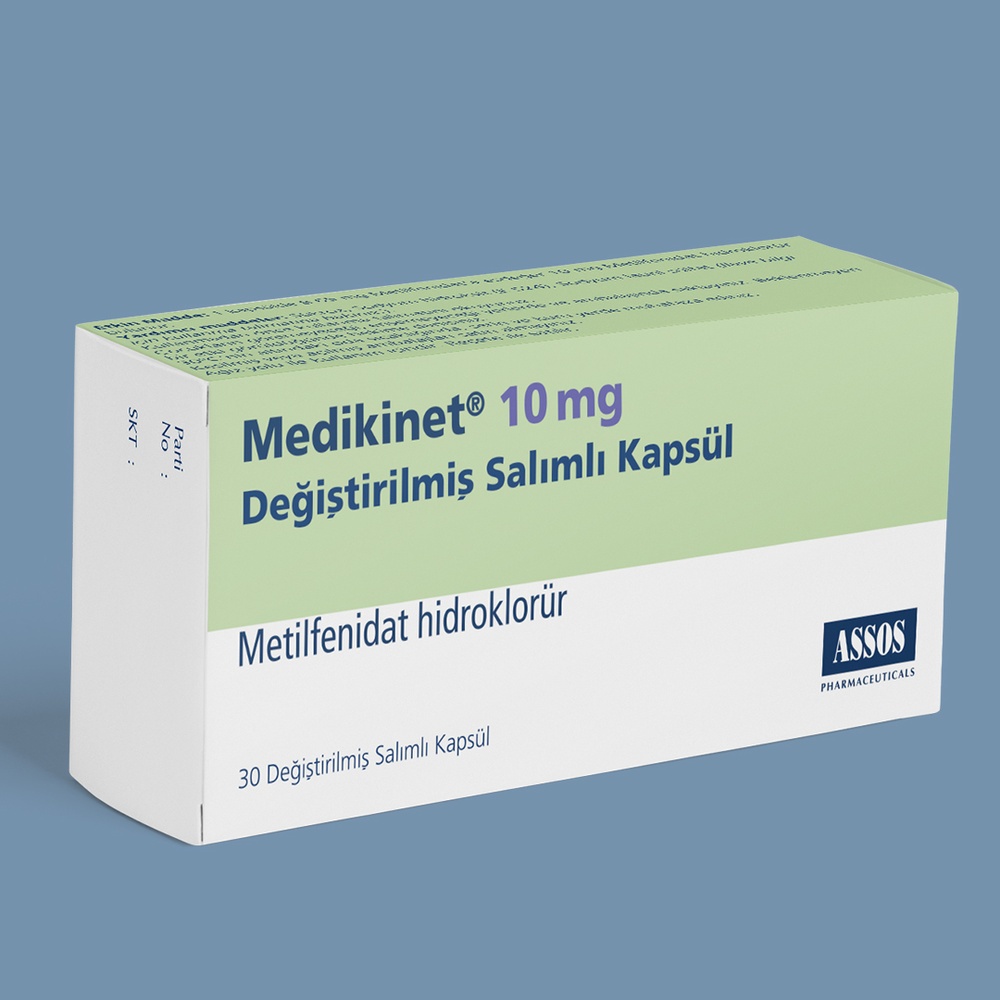
- Країна реєстрації
- Лікарська формаModified-release hard capsule, 5 MG
- Код АТХN06BA04
- Діюча речовина
- Потрібен рецептТак
- Виробник
- Ця інформація надана лише для ознайомлення і не є медичною порадою. Рішення щодо лікування завжди приймає лікар.
- Альтернативи до MEDIKINETЛікарська форма: Modified-release hard capsule, 10 MGДіюча речовина: methylphenidateПотрібен рецептЛікарська форма: Modified-release hard capsule, 10 MGДіюча речовина: methylphenidateРецепт не потрібенЛікарська форма: Tablet, 10 MGДіюча речовина: methylphenidateПотрібен рецепт
Аналоги MEDIKINET в інших країнах
Препарати з тією самою діючою речовиною, доступні в інших країнах.
Аналог MEDIKINET у Іспанія
Аналог MEDIKINET у Польща
Аналог MEDIKINET у Україна
Лікарі онлайн щодо MEDIKINET
Застосування, безпека та можливість призначення рецепта — за результатами медичної оцінки.









Отримайте рецепт на MEDIKINET онлайн
Заповніть форму за 2 хвилини
Розкажіть про симптоми, історію хвороби та потрібний препарат.
Оберіть лікаря або ми призначимо
Оберіть спеціаліста або ми підберемо найближчого доступного лікаря.
Лікар розглядає ваш випадок
Зазвичай протягом 30 хвилин. Може ставити уточнювальні запитання в чаті.
Отримайте в будь-якій аптеці
Електронний рецепт надсилається на вашу пошту — дійсний по всій Польщі.
Часті запитання
MEDIKINET потребує рецепта в Італія. Ви можете обговорити з лікарем онлайн, чи підходить цей лікарський засіб для вашої ситуації.
Діюча речовина у MEDIKINET — methylphenidate. Це допомагає визначити препарати з тим самим складом, але під іншими торговими назвами.
MEDIKINET виробляється компанією MEDICE ARZNEIMITTEL PUETTER GMBH & CO.KG. Назва бренду та упаковка можуть відрізнятися залежно від дистрибʼютора.
Лікарі, зокрема Сімейні лікарі, Психіатри, Дерматологи, Кардіологи, Ендокринологи, Гастроентерологи, Пульмонологи, Нефрологи, Ревматологи, Гематологи, Інфекціоністи, Алергологи, Геріатри, Педіатри, Онкологи, можуть оцінити доцільність застосування MEDIKINET з урахуванням вашого стану та місцевих правил. Ви можете записатися на онлайн-консультацію, щоб обговорити симптоми та можливі подальші кроки.
Польща має добре розвинену систему охорони здоров'я у великих містах, таких як Варшава, Краків, Вроцлав і Гданськ. Аптеки широко доступні та працюють відповідно до чинного законодавства, забезпечуючи доступ до рецептурних препаратів.
Ви можете придбати MEDIKINET у Варшаві, Кракові, Вроцлаві або Гданську в будь-якій аптеці за наявності дійсного рецепта.
Щоб отримати рецепт, ви можете скористатися Oladoctor:
Інші препарати з тією самою діючою речовиною (methylphenidate) включають EQUASYM, RITALIN EFFETTO PROLUNGATO, RITALIN. Вони можуть відрізнятися торговою назвою або формою випуску, але містять той самий терапевтичний компонент. Перед зміною або початком прийому нового препарату варто проконсультуватися з лікарем.
