



ISOPTIN 40 mg Coated Tablet

Запит на рецепт онлайн
Лікар розгляне ваш випадок і визначить, чи є рецепт медично доцільним.

Поговоріть з лікарем про ці ліки
Обговоріть симптоми та можливі подальші кроки під час короткої онлайн-консультації.



Інструкція із застосування ISOPTIN
Зміст інструкції
- ISOPTIN 5 mg/2 ml injectable solution for intravenous use
- ISOPTIN 180 mg Prolonged-release Tablets
- ISOPTIN 80 mg film-coated tablets
- ISOPTIN 240 mg Prolonged-release Tablets
- ISOPTIN 120 mg Prolonged-release Tablets
- ISOPTIN 120 mg Prolonged-release Tablets
ISOPTIN 5 mg/2 ml injectable solution for intravenous use
Verapamil hydrochloride
Read this leaflet carefully before you are given this medicine because
it contains important information for you.
Keep this leaflet. You may need to read it again.
If you have any questions, ask your doctor or nurse.
This medicine has been prescribed for you only. Do not pass it on to others, even if their symptoms
are the same as yours, as it could be harmful.
If you get any side effects, even those not listed in this leaflet, tell your doctor or nurse. See section 4.
Contents of this leaflet:
- 1. What ISOPTIN is and what it is used for
- 2. What you need to know before you are given ISOPTIN
- 3. How to use ISOPTIN
- 4. Possible side effects
- 5. How to store ISOPTIN
- 6. Contents of the pack and other information
1. What ISOPTIN is and what it is used for
ISOPTIN is a medicine that contains verapamil hydrochloride, an active ingredient belonging to a group
of medicines called calcium channel blockers (calcium antagonists).
ISOPTIN is used:
- to treat some types of heart rhythm disturbances (paroxysmal tachycardia; tachyarrhythmia; extrasystole);
- in case of heart vessel diseases (acute (anginal syndrome) and chronic coronary insufficiency).
2. What you need to know before using ISOPTIN
Do not use ISOPTIN if:
- you are allergic to the active ingredient or to any of the other ingredients of this medicine (listed in section 6);
- you have recently had a myocardial infarction with a marked decrease in heart rate (bradycardia);
- you have a severe problem with blood circulation due to reduced activity of your heart (cardiogenic shock);
- you suffer from a condition in which the heart is weakened (manifest heart failure);
- you have heart problems, for example, reduced heart function (contractile dysfunction of the left ventricle, heart failure with a reduced ejection fraction of less than 35%, pulmonary pressure greater than 20 mmHg);
- you have heart rhythm problems such as complete AV block, partial AV block, incomplete bundle branch block, sinus node disease (except those with an artificial pacemaker), AV block of II-III degree (except in patients with a functioning pacemaker, atrial fibrillation/flutter in carriers of bypass (Wolff-Parkinson-White or Lown-Ganong-Levine syndrome or short PR));
- you suffer from very low blood pressure (hypotension, systolic pressure < 90 mm Hg. Hypotensive states secondary to a critical decrease in stroke volume due to tachycardia are excluded) (see also “Warnings and precautions”);
- you have a high heart rate (ventricular tachycardia with wide complexes) or very low (pronounced bradycardia, < 50 beats/min);
- you are taking or have recently taken drugs called MAO inhibitors (used for depression), beta-blockers (used to treat heart rhythm disturbances and lower the
blood pressure), quinidine (used for heart rhythm abnormalities) and drugs containing
ivabradine (used for some heart diseases);
- you have been given a beta-blocker intravenously.
Warnings and precautions
Talk to your doctor before using ISOPTIN if:
- you have or have had heart problems, for example, heart failure;
- you have heart rhythm problems, for example, you have a decreased or increased or irregular heartbeat, or you have diseases that cause alteration of the heartbeat (Wolff-Parkinson-White syndrome or Lown-Ganong-Levine syndrome);
- you suffer from low blood pressure (hypotension);
- you have liver problems (hepatic insufficiency);
- you have kidney problems (renal insufficiency);
- you have muscle diseases such as myasthenia gravis, Lambert-Eaton syndrome or Duchenne muscular dystrophy;
- you are going to undergo surgery with inhalational anesthetics.
- if you are taking or have recently taken other antiarrhythmic/Beta-blockers, digoxin, statins, digitalis, quinidine, disopyramide, flecainide (see section “Other medicines and ISOPTIN”). In all these cases, the doctor will carefully assess whether therapy with ISOPTIN is suitable for you.
Paediatric population
No specific controlled studies have been conducted on patients in the paediatric age group. Consequently, it is
necessary to exercise extreme caution when administering verapamil to subjects of this age.
Other medicines and ISOPTIN
Do not use ISOPTIN if you are taking or have recently taken:
- drugs called MAO inhibitors (used for depression);
- beta-blockers (used to lower blood pressure) such as metoprolol, propranolol, timolol eye drops;
- quinidine (used for heart rhythm abnormalities);
- drugs containing ivabradine (used for some heart diseases).
Tell your doctor or pharmacist if you are taking, have recently taken or might take
any other medicine. This is particularly important if you are taking:
- alpha-blockers (used to lower blood pressure) such as prazosin, terazosin;
- drugs used for heart rhythm (antiarrhythmics), such as quinidine, flecainide, disopyramide, dronedarone;
- drugs used for heart problems, such as digoxin and digitoxin;
- medicines that lower blood pressure such as diuretics, vasodilators, angiotensin converting enzyme inhibitors I, aliskiren;
- dabigatran etexilate, and other direct oral anticoagulants, drugs used to prevent blood clot formation;
- aspirin (acetylsalicylic acid);
- drugs used to treat bronchial asthma, for example, theophylline;
- drugs that act on the nervous system (barbiturates and benzodiazepines), used as sedatives or anxiolytics such as phenobarbital, buspirone, midazolam;
- drugs used to treat epilepsy (antiepileptics) and convulsions (anticonvulsants) such as carbamazepine, phenytoin;
- imipramine, a drug used for depression (antidepressant);
- St John's wort, used for depression or anxiety;
- lithium, a drug used for mood disorders;
- drugs used to lower blood sugar levels (antidiabetics) such as gliburide;
- drugs used in gout such as colchicine or sulfinpyrazone;
- drugs used in infections such as clarithromycin, erythromycin, rifampicin and telithromycin;
- doxorubicin, a drug used for cancer treatment;
- drugs known as immunosuppressants such as cyclosporine, everolimus, sirolimus, tacrolimus;
- cimetidine, a drug used to treat stomach ulcers;
- drugs used to lower cholesterol levels in the blood (statins) such as atorvastatin, lovastatin, simvastatin;
- almotriptan, a drug used for headaches;
- drugs used for HIV infection, such as ritonavir;
- drugs used to relax muscles (neuromuscular blocking agents - curare-like and depolarizing);
- dantrolene, a drug used in malignant hyperthermia.
- metformin, verapamil can reduce the hypoglycemic effect of metformin. ISOPTIN with beveragesDo not drink grapefruit juice during treatment with ISOPTIN, as grapefruit juice can increase plasma concentrations of verapamil.
ISOPTIN and alcohol
If you drink alcohol during treatment with ISOPTIN, the time it takes for your body to eliminate alcohol
is increased. This means that the risk of side effects is increased.
Pregnancy and breastfeeding
If you are pregnant, suspect or are planning a pregnancy, or if you are breastfeeding with breast
milk, ask your doctor for advice before taking this medicine, as in these conditions
ISOPTIN should only be used if strictly necessary and under strict medical supervision.
Driving and using machines
As ISOPTIN can affect your ability to drive vehicles or use machines, do not drive, do not
use machines and do not do activities that require attention, until you know the side effects
this medicine can cause you.
This is particularly important at the beginning of treatment with this medicine or if the
dose is increased or if you take alcohol at the same time.
ISOPTIN 5 mg/2 ml injectable solution for intravenous usecontains 34 mg of sodium (the main component
of table salt) per dose (2 vials). This is equivalent to 1.9% of the maximum daily intake
recommended with the diet of an adult.
3. How to use ISOPTIN
ISOPTIN will be administered to you exclusively by a competent doctor, who knows the correct way
to use this medicine. The doctor will determine the dose based on your condition. Furthermore
during treatment, the doctor will monitor blood pressure and electrocardiogram.
Adults and adolescents over 14 years of age
Acute therapy for angina attacks or tachycardic rhythm disturbances:
The recommended dose is 5 – 10 mg (1 - 2 vials), 1 time a day. If necessary, the dose may be
repeated 2 - 3 times a day.
Children up to 14 years of age
To promptly interrupt paroxysmal supraventricular tachycardias and extrasystoles
The recommended dose is:
- newborns: 0.75-1 mg (0.3-0.4 ml);
- infants: 0.75-2 mg (0.3-0.8 ml);
- children: from 1 to 5 years 2-3 mg (0.8-1.2 ml);
- children: from 6 to 14 years 2.5-5 mg (1.0-2.0 ml). If necessary, the above doses may be repeated after 2-5 minutes.
Route of administration
This medicine will be administered to you via a slow intravenous injection (intravenous infusion).
The injection must be performed under electrocardiographic and blood pressure monitoring.
If you use more ISOPTIN than you should
It is unlikely that you will use excessively high doses of ISOPTIN since this medicine is
administered by a specialist. If this were to happen, the following may occur: lowering of
blood pressure (hypotension) or blood pH (metabolic acidosis), increased levels of
blood glucose, loss of consciousness also accompanied by lack of reaction to external stimuli
(stupor), decrease or cessation of heartbeat, death. In such a case, contact your doctor or
nurse immediately.
If you have any doubts about the use of this medicine, ask your doctor or nurse.
4. Possible side effects
Like all medicines, this medicine can cause side effects, although not everybody gets them.
Stop taking ISOPTIN immediately and contact your doctor if any of the
following conditions occur:
- reactions (hypersensitivity) such as swelling (angioedema) of the face, eyes, lips, tongue and throat, difficulty breathing;
- heart problems such as rhythm disturbances (atrioventricular block, sinus arrest), heart failure, or failure of the heart to contract (asystole);
- ileus, a condition of the intestine that manifests with abdominal bloating associated with pain, nausea, vomiting and inability to defecate;
- severe skin rashes with redness, blistering and peeling, ulcers of the mouth, lips and skin (Stevens-Johnson syndrome, erythema multiforme);
- total loss of muscle movement in the arms and legs (tetraplegia).
Tell your doctor if you notice any of the following during therapy with ISOPTIN:
Common side effects(may affect up to 1 in 10 people)
- dizziness, headache;
- decreased heart rate (bradycardia);
- flushing of the face and neck, low blood pressure (hypotension);
- constipation, nausea;
- swelling of the legs or arms (peripheral edema).
Uncommon side effects(may affect up to 1 in 100 people)
- feeling of heart racing (palpitations), increased heart rate (tachycardia);
- abdominal pain;
- fatigue.
Rare side effects(may affect up to 1 in 1,000 people)
- tingling sensation on the skin, altered sensitivity (paresthesia), tremors;
- drowsiness;
- ringing in the ears (tinnitus);
- vomiting;
- excessive sweating (hyperhidrosis).
Other side effects(frequency cannot be estimated from available data)
- difficulty breathing (bronchospasm, dyspnea);
- extrapyramidal symptoms including tremors, dizziness, headache, difficulty speaking, amnesia, coma;
- kidney function disorders (renal insufficiency);
- increased potassium levels in the blood (hyperkalemia);
- convulsions, vertigo;
- abdominal discomfort, swollen gums (hyperplasia);
- patchy hair loss (alopecia);
- appearance of a rash on the skin, appearance of small red spots on the skin (purpura), or spots with papules (maculopapular rash), itching, hives;
- muscle weakness, joint pain (arthralgia) or muscle pain (myalgia);
- increased breast volume in males (gynecomastia), production of milk from the breasts (galactorrhea), erectile dysfunction;
- increased levels of prolactin, alterations in liver function tests;
- impaired glucose tolerance. In a small percentage of patients treated with verapamil, very serious adverse effects have been reported that can put the patient at risk of life (rapid increase in ventricular rate up to flutter or atrial fibrillation in patients with bypass, with ectopic rhythm, marked hypotension or extreme bradycardia/asystole).
Reporting of side effects
If you get any side effects, talk to your doctor or pharmacist. This includes any possible side effects not listed in this leaflet. You can also report side effects directly through the national reporting system at https://www.aifa.gov.it/content/segnalazioni-reazioni-avverse.
By reporting side effects you can help provide more information on the safety of
this medicine.
5. How to store ISOPTIN
Keep this medicine out of the sight and reach of children.
Do not use this medicine after the expiry date which is stated on the packaging. The expiry date
refers to the last day of that month.
Store this medicine at a temperature not exceeding 30°C. Protect this medicine
from light.
Do not dispose of any medicine in wastewater or household waste. Ask your pharmacist how
to dispose of medicines you no longer use. This will help protect the environment.
6. Contents of the pack and other information
What ISOPTIN contains
The active ingredient is: verapamil hydrochloride.
One vial contains 5 mg of verapamil hydrochloride.
The other ingredients are: water for injections, sodium chloride, hydrochloric acid.
Description of the appearance of ISOPTIN and contents of the pack
This medicine is available in packs of 5 vials of 5 mg/2 ml.
Marketing Authorisation Holder
Mylan Italia S.r.l.
Via Vittor Pisani, 20
20124 Milan
Manufacturer
FAMAR HEALTH CARE SERVICES MADRID S.A.U. - Alcorcón-Madrid (Spain)
AbbVie S.r.l. – Campoverde (LT) (only batch release)
ISOPTIN 180 mg Prolonged-release Tablets
Verapamil hydrochloride
Read this leaflet carefully before you start taking this medicine because it contains
important information for you.
Keep this leaflet. You may need to read it again.
If you have any questions, ask your doctor or pharmacist.
This medicine has been prescribed for you only. Do not pass it on to others, even if their symptoms
are the same as yours, as it may be harmful.
If you get any side effects, even those not listed in this leaflet, tell your doctor or pharmacist. See section 4.
Contents of this leaflet:
- 1. What ISOPTIN is and what it is used for
- 2. What you need to know before you take ISOPTIN
- 3. How to take ISOPTIN
- 4. Possible side effects
- 5. How to store ISOPTIN
- 6. Contents of the pack and other information
1. What ISOPTIN is and what it is used for
ISOPTIN is a medicine that contains verapamil hydrochloride, the active substance belonging to a group
of medicines called calcium channel blockers (calcium antagonists). Calcium channel blockers modify the amount of calcium that enters the muscle cells of the heart and blood vessels.
This mechanism:
modifies the strength and speed of the heartbeat. This allows more oxygen to reach the heart
and for blood to be pumped throughout the body much more easily;
dilates blood vessels, resulting in a lowering of blood pressure.
ISOPTIN is used:
- to treat high blood pressure (hypertension);
- to treat some types of heart rhythm disturbances (hyperkinetic supraventricular arrhythmias such as paroxysmal supraventricular tachycardia, atrial fibrillation and flutter with rapid ventricular response, extrasystoles);
- in case of heart vessel diseases (chronic coronary insufficiency);
- to treat the consequences caused by a heart attack;
- after a heart attack, to prevent the occurrence of another heart attack, if it does not present signs of heart failure and cannot take other medicines called beta-blockers.
2. What you need to know before taking ISOPTIN
Do not take ISOPTIN unless specifically indicated by your doctor, if:
- you are allergic to the active ingredient or to any of the other ingredients of this medicine (listed in section 6);
- you have recently had a myocardial infarction with a marked decrease in heart rate (bradycardia);
- you have a serious blood circulation problem due to reduced activity of your heart (cardiogenic shock);
- you have heart problems, for example, reduced heart function (contractile dysfunction of the left ventricle, heart failure with reduced ejection fraction less than 35%, pulmonary pressure greater than 20 mmHg);
- you have heart rhythm problems such as complete AV block, partial AV block, incomplete bundle branch block, sinus node disease (except those with an artificial pacemaker), AV block of II-III degree (except in patients with a functioning pacemaker), atrial fibrillation/flutter in carriers of bypass (Wolff-Parkinson-White syndrome or Lown-Ganong-Levine syndrome or with short PR);
- you have a high heart rate associated with alteration of the Electrocardiogram (wide QRS complex ventricular tachycardia) or very low (pronounced bradycardia, < 50 beats/min);
- you suffer from very low blood pressure (hypotension, systolic pressure < 90 mm Hg) (see also “Warnings and precautions”);
- you are taking or have recently taken drugs called MAO inhibitors (used for depression), beta-blockers (used to treat heart rhythm disturbances and lower the
blood pressure), quinidine (used for heart rhythm abnormalities) and drugs containing
ivabradine (used for some heart diseases).
Warnings and precautions
Talk to your doctor before taking ISOPTIN if:
- you have or have had heart problems (heart failure);
- you have heart rhythm problems, for example, decreased or increased or irregular heartbeats, or have diseases that cause alteration of the heartbeat (Wolff-Parkinson-White syndrome or Lown-Ganong-Levine syndrome);
- you suffer from low blood pressure (hypotension);
- you have liver problems (hepatic insufficiency). Your doctor may advise you to have periodic tests to assess liver function;
- you have kidney problems (renal insufficiency);
- you have muscle diseases such as myasthenia gravis, Lambert-Eaton syndrome or Duchenne muscular dystrophy;
- you are taking or have recently taken statins (used to reduce cholesterol levels in the blood), digoxin, beta-blockers such as timolol eye drops. In all these cases, the doctor will carefully assess whether therapy with ISOPTIN is suitable for you.
Other medicines and ISOPTIN
Do not take ISOPTIN if you are taking or have recently taken:
- drugs called MAO inhibitors (used for depression);
- beta-blockers (used to lower blood pressure) such as metoprolol propranolol;
- quinidine (used for heart rhythm abnormalities);
- drugs containing ivabradine (used for some heart diseases).
Tell your doctor or pharmacist if you are taking, have recently taken or might take
any other medicine. This is particularly important if you are taking:
- alpha-blockers (used to lower blood pressure) such as prazosin, terazosin;
- drugs used for heart rhythm (antiarrhythmics), such as quinidine, flecainide, disopyramide, dronedarone;
- drugs used for heart problems, such as nitrates, digoxin and digitoxin;
- medicines that reduce blood pressure such as diuretics (, vasodilators, angiotensin converting enzyme inhibitors I, aliskiren;
- dabigatran etexilate, and other direct oral anticoagulants, drugs used to prevent blood clot formation;
- aspirin (acetylsalicylic acid);
- drugs used to treat bronchial asthma, for example, theophylline;
- drugs that act on the nervous system (barbiturates and benzodiazepines), used as sedatives or anxiolytics such as phenobarbital, buspirone, midazolam;
- drugs used against epilepsy (antiepileptics) and seizures (anticonvulsants) such as carbamazepine, phenytoin;
- imipramine, a drug used against depression (antidepressant);
- St. John's wort, used for depression or anxiety;
- lithium, a drug used for mood disorders;
- drugs used to lower blood sugar levels (antidiabetics) such as gliburide;
- drugs used in gout such as colchicine or sulfinpyrazone;
- drugs used in infections such as clarithromycin, erythromycin, rifampicin and telithromycin;
- doxorubicin, a drug used for cancer treatment;
- drugs known as immunosuppressants such as cyclosporine, everolimus, sirolimus, tacrolimus;
- cimetidine, a drug used for the treatment of stomach ulcers;
- drugs used to lower cholesterol levels (statins) such as atorvastatin, lovastatin, simvastatin;
- almotriptan, a drug used for headaches;
- drugs used for HIV infection, such as ritonavir;
- drugs used to relax muscles (neuromuscular blocking agents - curare-like and depolarizing);
- dantrolene, a drug used in malignant hyperthermia.
- metformin, verapamil can reduce the hypoglycemic effect of metformin.
ISOPTIN with drinks
Do not drink grapefruit juice during treatment with ISOPTIN, as grapefruit juice can
increase plasma concentrations of verapamil.
ISOPTIN and alcohol
If you drink alcohol during treatment with ISOPTIN, the time it takes for your body to eliminate alcohol
is increased. This means that the risk of side effects is increased.
Pregnancy and breastfeeding
If you are pregnant, suspect or are planning a pregnancy, or if you are breastfeeding, ask your doctor for advice before taking this medicine, as ISOPTIN should only be used if strictly necessary or under strict medical supervision in such conditions.
Driving and using machines
As ISOPTIN can affect your ability to drive vehicles or use machines, do not drive, do not
use machines and do not do activities that require attention, until you know the side effects
that this medicine may cause you.
This is particularly important at the beginning of treatment with this medicine or if the
dose is increased or if you take alcohol at the same time.
ISOPTIN 180 mg Prolonged Release Tabletscontains 27.85 mg of sodium (main component
of table salt) per tablet. This is equivalent to 1.4% of the maximum recommended daily intake
of an adult.
3. How to take ISOPTIN
Take this medicine following exactly the instructions of your doctor, who will establish the dose based on the reason why you are taking this medicine. If you have any doubts, consult your doctor or pharmacist.
Adults
In moderate severity coronary insufficiency
the recommended dose is 1 tablet, 2 times a day (1 in the morning and 1 in the evening).
Method of administration
Take the tablets by mouth (oral use) with a glass of water, preferably during or immediately after meals.
The tablets must be swallowed whole, without being sucked or chewed.
If you take more ISOPTIN than you should, contact your doctor IMMEDIATELY or go to the nearest hospital. If you take high doses of this medicine, the following may occur: lowering of blood pressure (hypotension) or blood pH (metabolic acidosis), increased blood glucose levels, lack of motivation (apathy), decrease or cessation of heartbeat, death.
If you forget to take ISOPTIN
If you forget to take the dose of the medicine at the scheduled time, take it as soon as you remember. However, if it is almost time for the next dose, skip the forgotten dose. Do not take a double dose to compensate for the forgetfulness.
If you stop taking ISOPTIN
It is important that you take this medicine until the end of the treatment prescribed by your doctor. Do not stop treatment just because you feel better, as your symptoms may reappear or worsen.
If you have any doubts about the use of this medicine, consult your doctor or pharmacist.
4. Possible side effects
Like all medicines, this medicine can cause side effects, although not everybody gets them.
Stop taking ISOPTIN immediately and contact your doctor if any of the following conditions occur:
- reactions (hypersensitivity) such as swelling (angioedema) of the face, eyes, lips, tongue and throat, difficulty breathing;
- heart problems such as rhythm disturbances (atrioventricular block, sinus arrest), heart failure, or failure of the heart to contract (asystole);
- ileus, a condition of the intestine that manifests with abdominal bloating associated with pain, nausea, vomiting and inability to defecate;
- severe skin rashes with redness, blistering and exfoliation, ulcers of the mouth, lips and skin (Stevens-Johnson syndrome, erythema multiforme);
- total loss of muscle movement in the arms and legs (tetraplegia).
Tell your doctor if you notice any of the following during therapy with ISOPTIN:
Common side effects(may affect up to 1 in 10 people)
- dizziness, headache;
- decreased heart rate (bradycardia);
- flushing of the face and neck, low blood pressure (hypotension);
- constipation, nausea;
- swelling of the legs or arms (peripheral edema).
Uncommon side effects(may affect up to 1 in 100 people)
- feeling of heart racing (palpitations), increased heart rate (tachycardia);
- abdominal pain;
- fatigue.
Rare side effects(may affect up to 1 in 1,000 people)
- tingling sensation on the skin, altered sensitivity (paresthesia), tremors;
- drowsiness;
- ringing in the ears (tinnitus);
- vomiting;
- excessive sweating (hyperhidrosis).
Other side effects(frequency cannot be estimated based on available data)
- difficulty breathing (bronchospasm, dyspnea);
- extrapyramidal symptoms including tremors, dizziness, headache, difficulty speaking, amnesia, coma;
- kidney dysfunction (renal failure);
- increased potassium levels in the blood (hyperkalemia);
- seizures, vertigo;
- abdominal discomfort, swollen gums (hyperplasia);
- patchy hair loss (alopecia);
- appearance of a rash, appearance of small red spots on the skin (purpura), or spots with papules (maculopapular rash), itching, hives;
- muscle weakness, joint pain (arthralgia) or muscle pain (myalgia);
- increased breast volume in males (gynecomastia), production of milk from the breasts (galactorrhea), erectile dysfunction;
- increased levels of prolactin, altered liver function tests,
- impaired glucose tolerance.
Reporting of side effects
If you get any side effects, talk to your doctor or pharmacist. You can also report side effects directly through the national reporting system at https://www.aifa.gov.it/content/segnalazioni-reazioni-avverse.
By reporting side effects you can help provide more information on the safety of this medicine.
5. How to store ISOPTIN
Keep this medicine out of sight and reach of children.
Do not use this medicine after the expiry date which is stated on the packaging. The expiry date
refers to the last day of that month.
Store this medicine at a temperature not exceeding 25°C.
Do not dispose of any medicine in waste water or household waste. Ask your pharmacist how
to eliminate medicines that you no longer use. This will help protect the environment.
6. Contents of the pack and other information
What ISOPTIN contains
The active ingredient is: verapamil hydrochloride.
A prolonged-release tablet contains 180 mg of verapamil hydrochloride.
The other ingredients are: microcrystalline cellulose, red iron oxide E172, glycolated montan wax,
hypromellose, magnesium stearate, macrogol 400, macrogol 6000, povidone, sodium alginate, talc, titanium
dioxide E171.
Description of the appearance of ISOPTIN and contents of the pack
This medicine is available in packs of 30 prolonged-release tablets.
Marketing Authorisation Holder
Mylan Italia S.r.l.
Via Vittor Pisani, 20
20124 Milano
Manufacturer
AbbVie Deutschland GmbH & Co. KG – Ludwigshafen (Germany)
Famar A.V.E. Anthoussa Plant - Anthoussa Attiki (Greece)
AbbVie S.r.l. - Campoverde (LT) (batch release only)

Не впевнені, чи підходить вам цей лікарський засіб?
Обговоріть симптоми та можливі варіанти лікування з лікарем онлайн.
ISOPTIN 80 mg film-coated tablets
Verapamil hydrochloride
Read this leaflet carefully before you start taking this medicine because it contains
important information for you.
Keep this leaflet. You may need to read it again.
If you have any questions, ask your doctor or pharmacist.
This medicine has been prescribed for you only. Do not pass it on to others, even if their symptoms
are the same as yours, as it may be harmful.
If you get any side effects, even those not listed in this leaflet, tell your doctor or pharmacist. See section 4.
Contents of this leaflet:
- 1. What ISOPTIN is and what it is used for
- 2. What you need to know before you take ISOPTIN
- 3. How to take ISOPTIN
- 4. Possible side effects
- 5. How to store ISOPTIN
- 6. Contents of the pack and other information
1. What ISOPTIN is and what it is used for
ISOPTIN is a medicine that contains verapamil hydrochloride, the active substance belonging to a group
of medicines called calcium channel blockers (calcium antagonists). Calcium channel blockers modify the amount of calcium that enters the muscle cells of the heart and blood vessels.
This mechanism:
modifies the strength and speed of the heartbeat. This allows more oxygen to reach the
heart and for blood to be pumped throughout the body much more easily;
dilates blood vessels, resulting in a lowering of blood pressure.
ISOPTIN is used:
- to treat high blood pressure (hypertension);
- to treat some types of heart rhythm disturbances (hyperkinetic supraventricular arrhythmias such as paroxysmal supraventricular tachycardia, atrial fibrillation and flutter with rapid ventricular response, extrasystoles);
- in case of diseases of the heart vessels (acute and chronic coronary insufficiency);
- to treat the consequences caused by a heart attack.
2. What you need to know before taking ISOPTIN
Do not take ISOPTIN unless specifically indicated by your doctor, if:
- you are allergic to the active ingredient or to any of the other ingredients of this medicine (listed in section 6);
- you have recently had a myocardial infarction with a marked decrease in heart rate (bradycardia);
- you have a serious problem with blood circulation due to reduced activity of your heart (cardiogenic shock);
- you have heart problems, for example, reduced heart function (contractile dysfunction of the left ventricle, heart failure with a reduced ejection fraction of less than 35%, pulmonary pressure greater than 20 mmHg);
- you have heart rhythm problems such as complete AV block, partial AV block, incomplete bundle branch block, sinus node disease (except those who have an artificial pacemaker), AV block of II-III degree (except in patients who have a functioning pacemaker), atrial fibrillation/flutter in carriers of bypass (Wolff-Parkinson-White or Lown-Ganong-Levine syndrome or with short PR);
- you have a high heart rate associated with alteration of the Electrocardiogram (wide complex ventricular tachycardia) or very low (pronounced bradycardia, < 50 beats/min);
- you suffer from very low blood pressure (hypotension (systolic pressure < 90 mm Hg)) (see also “Warnings and precautions”);
- you are taking or have recently taken drugs called MAO inhibitors (used for depression), beta-blockers (used to treat heart rhythm disturbances and lower blood pressure), quinidine (used for heart rhythm abnormalities) and drugs containing ivabradine (used for some heart diseases).
Warnings and precautions
Talk to your doctor before taking ISOPTIN if:
- you have or have had heart problems (heart failure);
- you have heart rhythm problems, for example, decreased or increased or irregular heartbeats, or have diseases that cause alteration of the heartbeats (Wolff-Parkinson-White syndrome or Lown-Ganong-Levine syndrome);
- you suffer from low blood pressure (hypotension);
- you have liver problems (hepatic insufficiency). Your doctor may advise you to have periodic tests to assess liver function;
- you have kidney problems (renal insufficiency);
- you have muscle diseases such as myasthenia gravis, Lambert-Eaton syndrome or Duchenne muscular dystrophy.
- you are taking or have recently taken statins (used to reduce blood cholesterol levels), digoxin, beta-blockers such as timolol eye drops. In all these cases, the doctor will carefully assess whether therapy with ISOPTIN is suitable for you.
Other medicines and ISOPTIN
Do not take ISOPTIN if you are taking or have recently taken:
- drugs called MAO inhibitors (used for depression);
- beta-blockers (used to lower blood pressure) such as metoprolol propranolol;
- quinidine (used for heart rhythm abnormalities);
- drugs containing ivabradine (used for some heart diseases).
Tell your doctor or pharmacist if you are taking, have recently taken or might take
any other medicine. This is particularly important if you are taking:
- alpha-blockers (used to lower blood pressure) such as prazosin, terazosin;
- drugs used for heart rhythm (antiarrhythmics), such as quinidine, flecainide, disopyramide, dronedarone;
- drugs used for heart problems, such as nitrates, digoxin and digitoxin;
- medicines that lower blood pressure such as diuretics, vasodilators, angiotensin converting enzyme inhibitors I, aliskiren;
- dabigatran etexilate, and other direct oral anticoagulants, drugs used to prevent blood clot formation;
- aspirin (acetylsalicylic acid);
- drugs used to treat bronchial asthma, for example, theophylline;
- drugs that act on the nervous system (barbiturates and benzodiazepines), used as sedatives or anxiolytics such as phenobarbital, buspirone, midazolam;
- drugs used against epilepsy (antiepileptics) and convulsions (anticonvulsants) such as carbamazepine, phenytoin;
- imipramine, a drug used against depression (antidepressant);
- St. John's wort, used for depression or anxiety;
- lithium, a drug used for mood disorders;
- drugs used to lower blood sugar levels (antidiabetics) such as gliburide;
- drugs used in gout such as colchicine or sulfinpyrazone;
- drugs used in infections such as clarithromycin, erythromycin, rifampicin and telithromycin;
- doxorubicin, a drug used for cancer treatment;
- drugs known as immunosuppressants such as cyclosporine, everolimus, sirolimus, tacrolimus;
- cimetidine, a drug used for the treatment of stomach ulcers;
- drugs used to lower cholesterol levels (statins) such as atorvastatin, lovastatin, simvastatin;
- almotriptan, a drug used for headaches;
- drugs used for HIV infection, such as ritonavir;
- drugs used to relax muscles (neuromuscular blocking agents - curare-like and depolarizing);
- dantrolene, a drug used in malignant hyperthermia.
- metformin, verapamil can reduce the hypoglycemic effect of metformin.
ISOPTIN with drinks
Do not drink grapefruit juice during treatment with ISOPTIN, as grapefruit juice can
increase plasma concentrations of verapamil.
ISOPTIN and alcohol
If you drink alcohol during treatment with ISOPTIN, the time it takes for your body to eliminate alcohol
is increased. This means that you may increase the risk of having unwanted effects.
Pregnancy and breastfeeding
If you are pregnant, suspect or are planning a pregnancy, or if you are breastfeeding with breast
milk, ask your doctor for advice before taking this medicine, as in these conditions
ISOPTIN should only be used if strictly necessary and under strict medical supervision.
Driving and using machines
Because ISOPTIN can affect your ability to drive vehicles or use machines, do not drive, do not
use machines and do not do activities that require attention, until you know the unwanted effects
that this medicine can cause you.
This is particularly important at the beginning of treatment with this medicine or if the
dose is increased or if you take alcohol at the same time.
ISOPTIN80 mg film-coated tabletscontains less than 1 mmol (23 mg) of sodium per
tablet, i.e. essentially ‘sodium-free’.
3. How to take ISOPTIN
Take this medicine following the instructions of your doctor exactly, who will establish the dose based on the reason why you are taking this medicine. If you have any doubts, consult your doctor or pharmacist.
The dose may vary from 40 and 80 mg (from ½ to 1 coated tablet), up to 3 times a day.
Adults
The recommended dose is 1 coated tablet, 3 times a day.
In recurrent tachyarrhythmias, ISOPTIN can also be administered at shorter intervals
(1 tablet every 3-4 hours).
Adolescents
In adolescents the dose is 1 coated tablet, 2 - 3 times a day.
Method of administration
Take the tablets by mouth (oral use) with a glass of water, preferably during or
immediately after meals.
The tablets must be swallowed whole, without being sucked or chewed.
The tablets are divisible.
If you take more ISOPTIN than you should, contact your doctor IMMEDIATELY or go to the nearest
hospital. If you take high doses of this medicine, the following may occur: lowering of
blood pressure (hypotension) or blood pH (metabolic acidosis), increased levels of
glucose in the blood, lack of motivation (apathy), decrease or cessation of heartbeat,
death.
If you forget to take ISOPTIN
If you forget to take the dose of the medicine at the scheduled time, take it as soon as you remember.
However, if it is almost time for the next dose, skip the forgotten dose. Do not take a double dose to
make up for the forgotten dose.
If you stop taking ISOPTIN
It is important that you take this medicine until the end of the treatment prescribed by your doctor. Do not
stop treatment just because you feel better, because your symptoms may reappear or
worsen.
If you have any doubts about the use of this medicine, consult your doctor or pharmacist.
4. Possible side effects
Like all medicines, this medicine can cause side effects, although not everybody gets them.
Stop taking ISOPTIN immediately and contact your doctor if any of the following conditions occur:
- reactions (hypersensitivity) such as swelling (angioedema) of the face, eyes, lips, tongue and throat, difficulty breathing;
- heart problems such as rhythm disturbances (atrioventricular block, sinus arrest), heart failure, or failure of the heart to contract (asystole);
- ileus, a condition of the intestine that manifests with abdominal bloating associated with pain, nausea, vomiting and inability to defecate;
- severe skin rashes with redness, blistering and exfoliation, ulcers of the mouth, lips and skin (Stevens-Johnson syndrome, erythema multiforme);
- total loss of muscle movement in the arms and legs (tetraplegia).
Tell your doctor if you notice any of the following during therapy with ISOPTIN:
Common side effects(may affect up to 1 in 10 people)
- dizziness, headache;
- decreased heart rate (bradycardia);
- redness of the face and neck (hot flushes), low blood pressure (hypotension);
- constipation, nausea;
- swelling of the legs or arms (peripheral edema). Uncommon side effects(may affect up to 1 in 100 people)
- feeling of heart racing (palpitations), increased heart rate (tachycardia);
- abdominal pain;
- fatigue. Rare side effects(may affect up to 1 in 1,000 people)
- feeling of pins and needles on the skin, altered sensitivity (paresthesia), tremors;
- drowsiness;
- ringing in the ears (tinnitus);
- vomiting;
- excessive sweating (hyperhidrosis).
Other side effects(frequency cannot be estimated based on available data)
- difficulty breathing (bronchospasm, dyspnea);
- extrapyramidal symptoms including tremors, dizziness, headache, difficulty speaking, amnesia, coma;
- kidney dysfunction (renal failure);
- increased potassium levels in the blood (hyperkalemia);
- convulsions, vertigo;
- abdominal discomfort, swollen gums (hyperplasia);
- patchy hair loss (alopecia);
- appearance of a rash on the skin, appearance of small red spots on the skin (purpura), or spots with papules (maculopapular rash), itching, hives;
- muscle weakness, joint pain (arthralgia) or muscle pain (myalgia);
- increased breast volume in males (gynecomastia), milk production from the breasts (galactorrhea), erectile dysfunction;
- increased levels of prolactin, alterations in liver function tests;
- impaired glucose tolerance.
Reporting of side effects
If you get any side effects, even those not listed in this leaflet, tell your
doctor or pharmacist. You can also report side effects directly through the national
reporting system at https://www.aifa.gov.it/content/segnalazioni-reazioni-avverse.
By reporting side effects you can help provide more information on the safety of
this medicine.
5. How to store ISOPTIN
Keep this medicine out of the sight and reach of children.
Do not use this medicine after the expiry date which is stated on the packaging. The expiry date
refers to the last day of that month.
This medicine does not require any particular storage conditions.
Do not dispose of any medicine in wastewater or household waste. Ask your pharmacist how
to dispose of medicines you no longer use. This will help protect the environment.
6. Contents of the pack and other information
What ISOPTIN contains
The active ingredient is: verapamil hydrochloride.
One film-coated tablet contains 80 mg of verapamil hydrochloride.
The other ingredients are: dibasic calcium phosphate dihydrate, microcrystalline cellulose, croscarmellose
sodium, hypromellose, macrogol 6000, magnesium stearate, anhydrous colloidal silica, sodium lauryl sulfate,
talc, titanium dioxide E171.
Description of the appearance of ISOPTIN and contents of the pack
This medicine is available in packs of 30 film-coated tablets.
Marketing Authorisation Holder
Mylan Italia S.r.l.
Via Vittor Pisani, 20
20124 Milan
Manufacturer
AbbVie Deutschland GmbH & Co. KG – Ludwigshafen (Germany)
FAMAR A.V.E. Anthoussa - Anthoussa, Athens (Greece)
AbbVie S.r.l. - Campoverde (LT) (batch release only)
ISOPTIN 240 mg Prolonged-release Tablets
Verapamil hydrochloride
Read this leaflet carefully before you start taking this medicine because it contains
important information for you.
Keep this leaflet. You may need to read it again.
If you have any questions, ask your doctor or pharmacist.
This medicine has been prescribed for you only. Do not pass it on to others, even if their symptoms
are the same as yours, as it may be harmful.
If you get any side effects, even those not listed in this leaflet, tell your doctor or pharmacist. See section 4.
Contents of this leaflet:
- 1. What ISOPTIN is and what it is used for
- 2. What you need to know before you take ISOPTIN
- 3. How to take ISOPTIN
- 4. Possible side effects
- 5. How to store ISOPTIN
- 6. Contents of the pack and other information
1. What ISOPTIN is and what it is used for
ISOPTIN is a medicine that contains verapamil hydrochloride, an active ingredient belonging to a group
of medicines called calcium channel blockers (calcium antagonists). Calcium channel blockers modify the amount of calcium that enters the muscle cells of the heart and blood vessels.
This mechanism:
modifies the strength and speed of the heartbeat. This allows more oxygen to reach the heart
and for blood to be pumped throughout the body much more easily;
dilates blood vessels, resulting in a lowering of blood pressure.
ISOPTIN is used to treat high blood pressure (mild to moderate hypertension).
2. What you need to know before taking ISOPTIN
Do not take ISOPTIN unless specifically indicated by your doctor, if:
- you are allergic to the active ingredient or to any of the other ingredients of this medicine (listed in section 6);
- you have recently had a myocardial infarction with a marked decrease in heart rate (bradycardia);
- you have a serious problem with blood circulation due to reduced activity of your heart (cardiogenic shock);
- you have heart problems, for example, reduced heart function (contractile dysfunction of the left ventricle, heart failure with a reduced ejection fraction of less than 35%, pulmonary pressure greater than 20 mmHg);
- you have heart rhythm problems such as complete AV block, partial AV block, incomplete bundle branch block, sinus node disease (except those who have an artificial pacemaker), II-III degree AV block (except in patients who have a functioning pacemaker) fibrillation
atrial/flutter in carriers of bypass (if you have Wolff-Parkinson-White or Lown-Ganong-
Levine syndrome or short PR);
- you have a high heart rate associated with alteration of the Electrocardiogram (wide QRS complex ventricular tachycardia) or very low (pronounced bradycardia, < 50 beats/min);
- you suffer from very low blood pressure (hypotension, systolic pressure < 90 mm Hg) (see also “Warnings and precautions”);
- you are taking or have recently taken drugs called MAO inhibitors (used for depression), beta-blockers (used to treat heart rhythm disturbances and lower blood pressure), quinidine (used for heart rhythm abnormalities) and drugs containing ivabradine (used for some heart diseases).
Warnings and precautions
Talk to your doctor before taking ISOPTIN if:
- you have or have had heart problems (heart failure);
- you have heart rhythm problems, for example, a decreased or increased or irregular heartbeat, or have diseases that cause alteration of the heartbeat (Wolff-Parkinson-White syndrome or Lown-Ganong-Levine syndrome);
- you suffer from low blood pressure (hypotension);
- you have liver problems (hepatic insufficiency). Your doctor may advise you to have periodic tests to assess liver function;
- you have kidney problems (renal insufficiency);
- you have muscle diseases such as myasthenia gravis, Lambert-Eaton syndrome or Duchenne muscular dystrophy;
- you are taking or have recently taken statins (used to reduce cholesterol levels in the blood), digoxin, beta-blockers such as timolol eye drops. In all these cases, the doctor will carefully assess whether therapy with ISOPTIN is suitable for you.
Other medicines and ISOPTIN
Do not take ISOPTIN if you are taking or have recently taken:
- drugs called MAO inhibitors (used for depression);
- beta-blockers (used to lower blood pressure) such as metoprolol, propranolol;
- quinidine (used for heart rhythm abnormalities);
- drugs containing ivabradine (used for some heart diseases).
Tell your doctor or pharmacist if you are taking, have recently taken or might take
any other medicine. This is particularly important if you are taking:
- alpha-blockers (used to lower blood pressure) such as prazosin, terazosin;
- drugs used for heart rhythm (antiarrhythmics), such as quinidine, flecainide, disopyramide, dronedarone;
- drugs used for heart problems, such as nitrates, digoxin and digitoxin;
- medicines that lower blood pressure such as diuretics, vasodilators, angiotensin converting enzyme inhibitors, aliskiren;
- dabigatran etexilate, and other direct oral anticoagulants, drugs used to prevent blood clots;
- aspirin (acetylsalicylic acid);
- drugs used to treat bronchial asthma, for example, theophylline;
- drugs that act on the nervous system (barbiturates and benzodiazepines), used as sedatives or anxiolytics such as phenobarbital, buspirone, midazolam;
- drugs used to treat epilepsy (antiepileptics) and seizures (anticonvulsants) such as carbamazepine, phenytoin;
- imipramine, a drug used for depression (antidepressant);
- St. John's wort, used for depression or anxiety;
- lithium, a drug used for mood disorders;
- drugs used to lower blood sugar levels (antidiabetics) such as gliburide;
- drugs used in gout such as colchicine or sulfinpyrazone;
- drugs used in infections such as clarithromycin, erythromycin, rifampicin and telithromycin;
- doxorubicin, a drug used for cancer treatment;
- drugs known as immunosuppressants such as cyclosporine, everolimus, sirolimus, tacrolimus;
- cimetidine, a drug used to treat stomach ulcers;
- drugs used to lower cholesterol levels (statins) such as atorvastatin, lovastatin, simvastatin;
- almotriptan, a drug used for headaches;
- drugs used for HIV infection, such as ritonavir;
- drugs used to relax muscles (neuromuscular blocking agents - curare-like and depolarizing);
- dantrolene, a drug used in malignant hyperthermia.
- metformin, verapamil may reduce the hypoglycemic effect of metformin.
ISOPTIN with drinks
Do not drink grapefruit juice during treatment with ISOPTIN, as grapefruit juice can
increase plasma concentrations of verapamil.
ISOPTIN and alcohol
If you drink alcohol during treatment with ISOPTIN, the time it takes for your body to eliminate alcohol
is increased. This means that the risk of side effects is increased.
Pregnancy and breastfeeding
If you are pregnant, suspect or are planning a pregnancy, or if you are breastfeeding, ask your doctor for advice before taking this medicine, as ISOPTIN should only be used if strictly necessary and under strict medical supervision in such conditions.
Driving and using machines
As ISOPTIN can affect your ability to drive vehicles or use machines, do not drive, do not
use machines and do not do activities that require attention, until you know the side effects
this medicine may cause you.
This is particularly important at the beginning of treatment with this medicine or if the
dose is increased or if you take alcohol at the same time.
ISOPTIN 240 mg Prolonged Release Tabletscontains 37.14 mg of sodium (component
mainly of table salt) per tablet. This is equivalent to 1.9% of the recommended maximum
daily intake with the diet of an adult.
3. How to take ISOPTIN
Take this medicine following the instructions of your doctor exactly, who will establish the dose based on the reason why you are taking this medicine. If you have any doubts, consult your doctor or pharmacist.
Adults
The recommended dose is 240 mg of verapamil hydrochloride (1 tablet) per day.
If necessary, your doctor may modify this dose as follows:
240 mg (1 tablet) every morning plus 120 mg every evening;
240 mg (1 tablet) every 12 hours.
Use in children and adolescents
The safety and efficacy of ISOPTIN 240 mg Prolonged-release tabletsin children and adolescents under 18 years of age have not been established.
Method of administration
Take the tablets by mouth (oral use) with a glass of water, preferably during or immediately after meals.
The tablets must be swallowed whole, without being sucked or chewed.
If you take more ISOPTIN than you should, contact your doctor IMMEDIATELY or go to the nearest hospital. If you take high doses of this medicine, the following may occur: lowering of blood pressure (hypotension) or blood pH (metabolic acidosis), increased blood glucose levels, lack of motivation (apathy), decrease or cessation of heartbeat, death.
If you forget to take ISOPTIN
If you forget to take the dose of medicine at the scheduled time, take it as soon as you remember. However, if it is almost time for the next dose, skip the forgotten dose. Do not take a double dose to compensate for the forgotten dose.
If you stop taking ISOPTIN
It is important that you take this medicine until the end of the treatment prescribed by your doctor. Do not stop treatment just because you feel better, as your symptoms may reappear or worsen.
If you have any doubts about the use of this medicine, consult your doctor or pharmacist.
4. Possible side effects
Like all medicines, this medicine can cause side effects, although not everybody gets them.
Stop taking ISOPTIN immediately and contact your doctor if any of the following conditions occur:
- reactions (hypersensitivity) such as swelling (angioedema) of the face, eyes, lips, tongue and throat, difficulty breathing;
- heart problems such as rhythm disturbances (atrioventricular block, sinus arrest), heart failure, or failure of the heart to contract (asystole);
- ileus, a condition of the intestine that manifests with abdominal bloating associated with pain, nausea, vomiting and inability to defecate;
- severe skin rashes with redness, blistering and exfoliation, ulcers of the mouth, lips and skin (Stevens-Johnson syndrome, erythema multiforme);
- total loss of muscle movement in the arms and legs (tetraplegia).
Tell your doctor if you notice any of the following during therapy with ISOPTIN:
Common side effects(may affect up to 1 in 10 people)
- dizziness, headache;
- decreased heart rate (bradycardia);
- flushing of the face and neck (hot flushes), low blood pressure (hypotension);
- constipation, nausea;
- swelling of the legs or arms (peripheral edema).
Uncommon side effects(may affect up to 1 in 100 people)
- feeling of heart racing (palpitations), increased heart rate (tachycardia);
- abdominal pain;
- fatigue.
Rare side effects(may affect up to 1 in 1,000 people)
- tingling sensation on the skin, altered sensitivity (paresthesia), tremors;
- drowsiness;
- ringing in the ears (tinnitus);
- vomiting;
- excessive sweating (hyperhidrosis).
Other side effects(frequency cannot be estimated from available data)
- difficulty breathing (bronchospasm, dyspnea);
- extrapyramidal symptoms including tremors, dizziness, headache, difficulty speaking, amnesia, coma;
- kidney dysfunction (renal insufficiency);
- increased potassium levels in the blood (hyperkalemia);
- seizures, vertigo;
- abdominal discomfort, swollen gums (hyperplasia);
- patchy hair loss (alopecia);
- appearance of a rash (skin rash), appearance of small red spots on the skin (purpura), or spots with papules (maculopapular rash), itching, hives;
- muscle weakness, joint pain (arthralgia) or muscle pain (myalgia);
- increased breast volume in males (gynecomastia), milk production from the breasts (galactorrhea), erectile dysfunction;
- increased levels of prolactin, alterations in liver function tests,
- impaired glucose tolerance.
Reporting of side effects
If you get any side effects, talk to your doctor or pharmacist. You can also report side effects directly through the national reporting system at https://www.aifa.gov.it/content/segnalazioni-reazioni-avverse.
By reporting side effects you can help provide more information on the safety of this medicine.
5. How to store ISOPTIN
Keep this medicine out of the sight and reach of children.
Do not use this medicine after the expiry date which is stated on the packaging. The expiry date
refers to the last day of that month.
Store this medicine at a temperature not exceeding 25°C.
Do not dispose of any medicine in wastewater or household waste. Ask your pharmacist how to
dispose of medicines you no longer use. This will help protect the environment.
6. Contents of the pack and other information
What ISOPTIN contains
The active ingredient is: verapamil hydrochloride.
A prolonged-release tablet contains 240 mg of verapamil hydrochloride.
The other ingredients are: microcrystalline cellulose, magnesium stearate, hypromellose, talc, titanium
dioxide E171, macrogol 400, macrogol 6000, povidone, sodium alginate, glyceryl montanate wax, yellow
quinoline and indigo carmine aluminium lake E104+E132 (Green Lake E104/E132).
Description of the appearance of ISOPTIN and contents of the pack
This medicine is available in packs of 30 prolonged-release tablets.
Marketing Authorisation Holder
Mylan Italia S.r.l.
Via Vittor Pisani, 20
20124 Milano
Manufacturer
AbbVie Deutschland GmbH & Co. KG – Ludwigshafen (Germany)
Famar A.V.E. Anthoussa Plant - Anthoussa Attiki (Greece)
AbbVie S.r.l. - Campoverde (LT) (batch release only)

Виникли питання під час прийому ліків?
Обговоріть свої симптоми та лікування з лікарем онлайн.
ISOPTIN 120 mg Prolonged-release Tablets
Verapamil hydrochloride
Read this leaflet carefully before you start taking this medicine because it contains
important information for you.
Keep this leaflet. You may need to read it again.
If you have any questions, ask your doctor or pharmacist.
This medicine has been prescribed for you only. Do not pass it on to others, even if they have the same
symptoms as you, as it may be harmful.
If you get any side effects, even those not listed in this leaflet, tell your doctor or pharmacist. See section 4.
Contents of this leaflet:
- 1. What ISOPTIN is and what it is used for
- 2. What you need to know before you take ISOPTIN
- 3. How to take ISOPTIN
- 4. Possible side effects
- 5. How to store ISOPTIN
- 6. Contents of the pack and other information
1. What ISOPTIN is and what it is used for
ISOPTIN is a medicine that contains verapamil hydrochloride, an active ingredient belonging to a group
of medicines called calcium channel blockers (calcium antagonists). Calcium channel blockers modify the amount of calcium that enters the heart muscle cells and blood vessels.
This mechanism:
modifies the strength and speed of the heartbeat. This allows more oxygen to reach the heart
and for blood to be pumped throughout the body much more easily;
dilates blood vessels, resulting in a lowering of blood pressure.
ISOPTIN is used:
- to treat high blood pressure (hypertension);
- to treat some types of heart rhythm disturbances (hyperkinetic supraventricular arrhythmias such as paroxysmal supraventricular tachycardia, atrial fibrillation and flutter with rapid ventricular response, extrasystoles);
- in cases of heart vessel diseases (chronic coronary insufficiency);
- to treat the consequences caused by a heart attack;
- after a heart attack, to prevent the occurrence of another heart attack, if it does not present signs of heart failure and cannot take other medicines called beta-blockers.
2. What you need to know before taking ISOPTIN
Do not take ISOPTIN if:
- you are allergic to the active ingredient or to any of the other ingredients of this medicine (listed in section 6);
- you have recently had a myocardial infarction with a marked decrease in heart rate (bradycardia);
- you have a serious problem with blood circulation due to reduced activity of your heart (cardiogenic shock);
- you have heart problems, for example, reduced heart function (contractile dysfunction of the left ventricle, heart failure with a reduced ejection fraction of less than 35%, pulmonary pressure greater than 20 mmHg);
- you have heart rhythm problems such as complete AV block, partial AV block, incomplete bundle branch block, sinus node disease (except those who have an artificial pacemaker), AV block of II-III degree (except in patients who have a functioning pacemaker), atrial fibrillation/flutter in carriers of bypass (Wolff-Parkinson-White or Lown-Ganong-Levine syndrome or with short PR);
- you have a high heart rate associated with an alteration of the Electrocardiogram (wide QRS complex ventricular tachycardia) or very low (pronounced bradycardia, < 50 beats/min);
- you suffer from very low blood pressure (hypotension, systolic pressure < 90 mm Hg) (see also “Warnings and precautions”);
- you are taking or have recently taken drugs called MAO inhibitors (used for depression), beta-blockers (used to treat heart rhythm disturbances and lower blood pressure), quinidine (used for heart rhythm abnormalities) and drugs containing ivabradine (used for some heart diseases).
Warnings and precautions
Talk to your doctor before taking ISOPTIN if:
- you have or have had heart problems (heart failure);
- you have heart rhythm problems, for example, you have a decreased or increased or irregular heartbeat, or you have diseases that cause alterations in the heartbeat (Wolff-Parkinson-White syndrome or Lown-Ganong-Levine syndrome);
- you suffer from low blood pressure (hypotension);
- you have liver problems (hepatic insufficiency). Your doctor may advise you to have periodic tests to assess liver function;
- you have kidney problems (renal insufficiency);
- you are taking or have recently taken statins (used to reduce cholesterol levels in the blood), digoxin, beta-blockers such as timolol eye drops.
- you have muscle diseases such as myasthenia gravis, Lambert-Eaton syndrome or Duchenne muscular dystrophy. In all these cases, the doctor will carefully assess whether therapy with ISOPTIN is suitable for you.
Other medicines and ISOPTIN
Do not take ISOPTIN if you are taking or have recently taken:
- drugs called MAO inhibitors (used for depression);
- beta-blockers (used to lower blood pressure) such as metoprolol propranolol;
- quinidine (used for heart rhythm abnormalities);
- drugs containing ivabradine (used for some heart diseases). Tell your doctor or pharmacist if you are taking, have recently taken or might take any other medicine. This is particularly important if you are taking:
- alpha-blockers (used to lower blood pressure) such as prazosin, terazosin;
- drugs used for heart rhythm (antiarrhythmics), such as quinidine, flecainide, disopyramide, dronedarone;
- drugs used for heart problems, such as nitrates, digoxin and digitoxin;
- medicines that lower blood pressure such as diuretics, vasodilators, angiotensin converting enzyme inhibitors I, aliskiren;
- dabigatran etexilate, and other direct oral anticoagulants, drugs used to prevent blood clot formation;
- aspirin (acetylsalicylic acid);
- drugs used to treat bronchial asthma, for example, theophylline;
- drugs that act on the nervous system (barbiturates and benzodiazepines), used as sedatives or anxiolytics such as phenobarbital, buspirone, midazolam;
- drugs used to treat epilepsy (antiepileptics) and convulsions (anticonvulsants) such as carbamazepine, phenytoin;
- imipramine, a drug used for depression (antidepressant);
- St. John's wort, used for depression or anxiety;
- lithium, a drug used for mood disorders;
- drugs used to lower blood sugar levels (antidiabetics) such as gliburide;
- drugs used in gout such as colchicine or sulfinpyrazone;
- drugs used in infections such as clarithromycin, erythromycin, rifampicin and telithromycin;
- doxorubicin, a drug used for cancer treatment;
- drugs known as immunosuppressants such as cyclosporine, everolimus, sirolimus, tacrolimus;
- cimetidine, a drug used to treat stomach ulcers;
- drugs used to lower cholesterol levels (statins) such as atorvastatin, lovastatin, simvastatin;
- almotriptan, a drug used for headaches;
- drugs used for HIV infection, such as ritonavir;
- drugs used to relax muscles (neuromuscular blocking agents - curare-like and depolarizing);
- dantrolene, a drug used in malignant hyperthermia.
- metformin, verapamil can reduce the hypoglycemic effect of metformin. ISOPTIN with beveragesDo not drink grapefruit juice during treatment with ISOPTIN, as grapefruit juice can affect the absorption of this medicine.
ISOPTIN and alcohol
If you drink alcohol during treatment with ISOPTIN, the time it takes for your body to eliminate alcohol
is increased. This means that the risk of side effects is increased.
Pregnancy and breastfeeding
If you are pregnant, suspect you may be pregnant, are planning to become pregnant, or are breastfeeding
with breast milk, ask your doctor for advice before taking this medicine, as ISOPTIN should only be used
in these conditions if strictly necessary and under strict medical supervision.
Driving and using machines
Because ISOPTIN can affect your ability to drive vehicles or use machines, do not drive, do not
use machines and do not do activities that require attention, until you know the side effects
this medicine may cause you.
This is particularly important at the beginning of treatment with this medicine or if the
dose is increased or if you take alcohol at the same time.
ISOPTIN 120 mg Prolonged Release Tabletscontains 37.14 mg of sodium (the main component
of table salt) per 2 tablets. This is equivalent to 1.9% of the maximum recommended daily intake
of an adult.
3. How to take ISOPTIN
Take this medicine following exactly the instructions of your doctor, who will establish the dose based on the reason why you are taking this medicine. If you have any doubts, consult your doctor or pharmacist.
Adults
In moderate severity coronary insufficiency and for the prophylaxis of tachycardic disorders, the recommended dose is 1 tablet, 2 times a day (1 in the morning and 1 in the evening). If necessary, your doctor may increase this dose to 2 tablets, 2 times a day.
Method of administration
Take the tablets by mouth (oral use) with a glass of water, preferably during or immediately after meals.
The tablets must be swallowed whole, without being sucked or chewed.
If you take more ISOPTIN than you should, contact your doctor IMMEDIATELY or go to the nearest hospital. If you take high doses of this medicine, the following may occur: lowering of blood pressure (hypotension) or blood pH (metabolic acidosis), increased blood glucose levels, lack of motivation (apathy), decrease or cessation of heartbeat, death.
If you forget to take ISOPTIN
If you forget to take the dose of the medicine at the scheduled time, take it as soon as you remember. However, if it is almost time for the next dose, skip the forgotten dose. Do not take a double dose to compensate for the forgotten one.
If you stop taking ISOPTIN
It is important that you take this medicine until the end of the treatment prescribed by your doctor. Do not stop treatment just because you feel better, as your symptoms may reappear or worsen.
If you have any doubts about the use of this medicine, ask your doctor or pharmacist.
4. Possible side effects
Like all medicines, this medicine can cause side effects, although not everybody gets them.
Stop taking ISOPTIN immediately and contact your doctor if any of the
following conditions occur:
- reactions (hypersensitivity) such as swelling (angioedema) of the face, eyes, lips, tongue and throat, difficulty breathing;
- heart problems such as rhythm disturbances (atrioventricular block, sinus arrest), heart failure, or failure of the heart to contract (asystole);
- ileus, a condition of the intestine that manifests with abdominal bloating associated with pain, nausea, vomiting and inability to defecate;
- severe skin rashes with redness, blistering and exfoliation, ulcerations of the mouth, lips and skin (Stevens-Johnson syndrome, erythema multiforme);
- total loss of muscle movement in the arms and legs (tetraplegia).
Tell your doctor if you notice any of the following during treatment with ISOPTIN:
Common side effects(may affect up to 1 in 10 people)
- dizziness, headache;
- decreased heart rate (bradycardia);
- flushing of the face and neck, low blood pressure (hypotension);
- constipation, nausea;
- swelling of the legs or arms (peripheral edema).
Uncommon side effects(may affect up to 1 in 100 people)
- feeling of heart racing (palpitations), increased heart rate (tachycardia);
- abdominal pain;
- fatigue.
Rare side effects(may affect up to 1 in 1,000 people)
- tingling sensation on the skin, altered sensitivity (paresthesia), tremors;
- drowsiness;
- ringing in the ears (tinnitus);
- vomiting;
- excessive sweating (hyperhidrosis).
Other side effects(frequency cannot be estimated based on available data)
- difficulty breathing (bronchospasm, dyspnea);
- extrapyramidal symptoms including tremors, dizziness, headache, difficulty speaking, amnesia, coma;
- kidney dysfunction (renal failure);
- increased potassium levels in the blood (hyperkalemia);
- seizures;
- vertigo;
- abdominal discomfort, swollen gums (hyperplasia);
- patchy hair loss (alopecia);
- appearance of a rash, appearance of small red spots on the skin (purpura), or spots with papules (maculopapular rash), itching, hives;
- muscle weakness, joint or muscle pain;
- increased breast volume in men (gynecomastia), milk production from the breasts (galactorrhea), erectile dysfunction;
- increased levels of prolactin, liver function test alterations;
- impaired glucose tolerance.
Reporting of side effects
If you get any side effects, even those not listed in this leaflet, tell your
doctor or pharmacist. You can also report side effects directly through the national
reporting system at https://www.aifa.gov.it/content/segnalazioni-reazioni-avverse.
By reporting side effects you can help provide more information on the safety of
this medicine.
5. How to store ISOPTIN
Keep this medicine out of sight and reach of children.
Do not use this medicine after the expiry date which is stated on the packaging. The expiry date
refers to the last day of that month.
Store this medicine at a temperature not exceeding 25°C.
Do not dispose of any medicine in wastewater or household waste. Ask your pharmacist how
to dispose of medicines you no longer use. This will help protect the environment.
6. Contents of the pack and other information
What ISOPTIN contains
The active ingredient is: verapamil hydrochloride.
A prolonged-release tablet contains 120 mg of verapamil hydrochloride.
Microcrystalline cellulose, magnesium stearate, hypromellose, talc, titanium dioxide E171, macrogol 400 and
macrogol 6000, povidone K30, sodium alginate, glyceryl monostearate.
Description of the appearance of ISOPTIN and contents of the pack
This medicine is available in packs of 30 and 60 prolonged-release tablets.
Marketing Authorisation Holder
Mylan Italia S.r.l.
Via Vittor Pisani, 20
20124 Milano
Manufacturer
AbbVie Deutschland GmbH & Co. KG – Ludwigshafen (Germany)
Famar A.V.E. Anthoussa Plant – Anthoussa Attiki (Greece)
AbbVie S.r.l. - Campoverde (LT) (batch release only)
ISOPTIN 120 mg Prolonged-release Tablets
Verapamil hydrochloride
Read this leaflet carefully before you start taking this medicine because it contains
important information for you.
Keep this leaflet. You may need to read it again.
If you have any questions, ask your doctor or pharmacist.
This medicine has been prescribed for you only. Do not pass it on to others, even if they have the same
symptoms as you, as it may be harmful.
If you get any side effects, even those not listed in this leaflet, tell your doctor or pharmacist. See section 4.
Contents of this leaflet:
- 1. What ISOPTIN is and what it is used for
- 2. What you need to know before you take ISOPTIN
- 3. How to take ISOPTIN
- 4. Possible side effects
- 5. How to store ISOPTIN
- 6. Contents of the pack and other information
1. What ISOPTIN is and what it is used for
ISOPTIN is a medicine that contains verapamil hydrochloride, an active ingredient belonging to a group
of medicines called calcium channel blockers (calcium antagonists). Calcium channel blockers modify the amount of calcium that enters the heart muscle cells and blood vessels.
This mechanism:
modifies the strength and speed of the heartbeat. This allows more oxygen to reach the heart
and for blood to be pumped throughout the body much more easily;
dilates blood vessels, resulting in a lowering of blood pressure.
ISOPTIN is used:
- to treat high blood pressure (hypertension);
- to treat some types of heart rhythm disturbances (hyperkinetic supraventricular arrhythmias such as paroxysmal supraventricular tachycardia, atrial fibrillation and flutter with rapid ventricular response, extrasystoles);
- in case of heart vessel diseases (chronic coronary insufficiency);
- to treat the consequences caused by a heart attack;
- after a heart attack, to prevent another heart attack, if it does not present signs of heart failure and cannot take other medicines called beta-blockers.
2. What you need to know before taking ISOPTIN
Do not take ISOPTIN if:
- you are allergic to the active ingredient or to any of the other ingredients of this medicine (listed in section 6);
- you have recently had a myocardial infarction with a marked decrease in heart rate (bradycardia);
- you have a severe problem with blood circulation due to reduced activity of your heart (cardiogenic shock);
- you have heart problems such as reduced heart function (contractile dysfunction of the left ventricle, heart failure with a reduced ejection fraction of less than 35%, pulmonary pressure greater than 20 mmHg);
- you have heart rhythm problems such as complete AV block, partial AV block, incomplete bundle branch block, sinus node disease (except those with an artificial pacemaker), II-III degree AV block (except in patients with a functioning pacemaker), atrial fibrillation/flutter in carriers of bypass (Wolff-Parkinson-White or Lown-Ganong-Levine syndrome or with short PR);
- you have a high heart rate associated with alteration of the Electrocardiogram (wide QRS complex ventricular tachycardia) or very low (pronounced bradycardia, < 50 beats/min);
- you suffer from very low blood pressure (hypotension, systolic pressure < 90 mm Hg) (see also “Warnings and precautions”);
- you are taking or have recently taken drugs called MAO inhibitors (used for depression), beta-blockers (used to treat heart rhythm disturbances and lower blood pressure), quinidine (used for heart rhythm abnormalities) and drugs containing ivabradine (used for some heart diseases).
Warnings and precautions
Talk to your doctor before taking ISOPTIN if:
- you have or have had heart problems (heart failure);
- you have heart rhythm problems, for example, you have a decreased or increased or irregular heartbeat, or you have diseases that cause alteration of the heartbeat (Wolff-Parkinson-White syndrome or Lown-Ganong-Levine syndrome);
- you suffer from low blood pressure (hypotension);
- you have liver problems (hepatic insufficiency). Your doctor may advise you to undergo periodic tests to assess liver function;
- you have kidney problems (renal insufficiency);
- you are taking or have recently taken statins (used to reduce cholesterol levels in the blood), digoxin, beta-blockers such as timolol eye drops.
- you have muscle diseases such as myasthenia gravis, Lambert-Eaton syndrome or Duchenne muscular dystrophy. In all these cases, the doctor will carefully assess whether therapy with ISOPTIN is suitable for you.
Other medicines and ISOPTIN
Do not take ISOPTIN if you are taking or have recently taken:
- drugs called MAO inhibitors (used for depression);
- beta-blockers (used to lower blood pressure) such as metoprolol propranolol;
- quinidine (used for heart rhythm abnormalities);
- drugs containing ivabradine (used for some heart diseases).
Tell your doctor or pharmacist if you are taking, have recently taken or might take
any other medicine. This is particularly important if you are taking:
- alpha-blockers (used to lower blood pressure) such as prazosin, terazosin;
- drugs used for heart rhythm (antiarrhythmics), such as quinidine, flecainide, disopyramide, dronedarone;
- drugs used for heart problems, such as nitrates, digoxin and digitoxin;
- medicines that lower blood pressure such as diuretics, vasodilators, angiotensin converting enzyme inhibitors I, aliskiren;
- dabigatran etexilate, and other direct oral anticoagulants, drugs used to prevent blood clot formation;
- aspirin (acetylsalicylic acid);
- drugs used to treat bronchial asthma, for example, theophylline;
- drugs that act on the nervous system (barbiturates and benzodiazepines), used as sedatives or anxiolytics such as phenobarbital, buspirone, midazolam;
- drugs used to treat epilepsy (antiepileptics) and seizures (anticonvulsants) such as carbamazepine, phenytoin;
- imipramine, a drug used for depression (antidepressant);
- St. John's wort, used for depression or anxiety;
- lithium, a drug used for mood disorders;
- drugs used to lower blood sugar levels (antidiabetics) such as gliburide;
- drugs used in gout such as colchicine or sulfinpyrazone;
- drugs used in infections such as clarithromycin, erythromycin, rifampicin and telithromycin;
- doxorubicin, a drug used for cancer treatment;
- drugs known as immunosuppressants such as cyclosporine, everolimus, sirolimus, tacrolimus;
- cimetidine, a drug used to treat stomach ulcers;
- drugs used to lower cholesterol levels in the blood (statins) such as atorvastatin, lovastatin, simvastatin;
- almotriptan, a drug used for headaches;
- drugs used for HIV infection, such as ritonavir;
- drugs used to relax muscles (neuromuscular blocking agents - curare-like and depolarizing);
- dantrolene, a drug used in malignant hyperthermia.
- metformin, verapamil can reduce the hypoglycemic effect of metformin. ISOPTIN with beveragesDo not drink grapefruit juice during treatment with ISOPTIN, as grapefruit juice can affect the absorption of this medicine.
ISOPTIN and alcohol
If you drink alcohol during treatment with ISOPTIN, the time it takes for your body to eliminate alcohol
is increased. This means that the risk of side effects is increased.
Pregnancy and breastfeeding
If you are pregnant, suspect or are planning a pregnancy, or if you are breastfeeding with breast
milk, ask your doctor for advice before taking this medicine, as in these conditions
ISOPTIN should only be used if strictly necessary and under strict medical supervision.
Driving and using machines
Because ISOPTIN can affect your ability to drive vehicles or use machines, do not drive, do not
use machines and do not do activities that require attention, until you know the side effects
this medicine can cause you.
This is particularly important at the beginning of treatment with this medicine or if the
dose is increased or if you take alcohol at the same time.
ISOPTIN 120 mg Prolonged Release Tabletscontains 37.14 mg of sodium (component
main of table salt) per 2 tablets. This is equivalent to 1.9% of the maximum recommended daily intake
dietary of an adult.
3. How to take ISOPTIN
Take this medicine following the instructions of your doctor exactly, who will establish the dose based on the reason why you are taking this medicine. If you have any doubts, consult your doctor or pharmacist.
Adults
In moderate severity coronary insufficiency and for the prophylaxis of tachycardic disorders, the recommended dose is 1 tablet, 2 times a day (1 in the morning and 1 in the evening). If necessary, your doctor may increase this dose to 2 tablets, 2 times a day.
Method of administration
Take the tablets by mouth (oral use) with a glass of water, preferably during or immediately after meals.
The tablets must be swallowed whole, without being sucked or chewed.
If you take more ISOPTIN than you should, contact your doctor IMMEDIATELY or go to the nearest hospital. If you take high doses of this medicine, the following may occur: lowering of blood pressure (hypotension) or blood pH (metabolic acidosis), increased blood glucose levels, lack of motivation (apathy), decrease or cessation of heartbeat, death.
If you forget to take ISOPTIN
If you forget to take the dose of the medicine at the scheduled time, take it as soon as you remember. However, if it is almost time for the next dose, skip the forgotten dose. Do not take a double dose to compensate for the forgotten dose.
If you stop taking ISOPTIN
It is important that you take this medicine until the end of the treatment prescribed by your doctor. Do not stop treatment just because you feel better, as your symptoms may reappear or worsen.
If you have any doubts about the use of this medicine, consult your doctor or pharmacist.
4. Possible side effects
Like all medicines, this medicine can cause side effects, although not everybody gets them.
Stop taking ISOPTIN immediately and contact your doctor if any of the following occur:
- reactions (hypersensitivity) such as swelling (angioedema) of the face, eyes, lips, tongue and throat, difficulty breathing;
- heart problems such as rhythm disturbances (atrioventricular block, sinus arrest), heart failure, or failure of the heart to contract (asystole);
- ileus, a condition of the intestine that manifests with abdominal bloating associated with pain, nausea, vomiting and inability to defecate;
- severe skin rashes with redness, blistering and exfoliation, ulcers of the mouth, lips and skin (Stevens-Johnson syndrome, erythema multiforme);
- total loss of muscle movement in the arms and legs (tetraplegia).
Tell your doctor if you notice any of the following during therapy with ISOPTIN:
Common side effects(may affect up to 1 in 10 people)
- dizziness, headache;
- decreased heart rate (bradycardia);
- flushing of the face and neck (hot flushes), low blood pressure (hypotension);
- constipation, nausea;
- swelling of the legs or arms (peripheral edema).
Uncommon side effects(may affect up to 1 in 100 people)
- feeling of heart racing (palpitations), increased heart rate (tachycardia);
- abdominal pain;
- fatigue. Rare side effects(may affect up to 1 in 1,000 people)
- tingling sensation on the skin, altered sensitivity (paresthesia), tremors;
- drowsiness;
- ringing in the ears (tinnitus);
- vomiting;
- excessive sweating (hyperhidrosis). Other side effects(frequency cannot be estimated based on available data)
- difficulty breathing (bronchospasm, dyspnea);
- extrapyramidal symptoms including tremors, dizziness, headache, difficulty speaking, amnesia, coma;
- kidney dysfunction (renal failure);
- increased potassium levels in the blood (hyperkalemia);
- convulsions;
- vertigo;
- abdominal discomfort, swollen gums (hyperplasia);
- patchy hair loss (alopecia);
- appearance of a rash (skin rash), appearance of small red spots on the skin (purpura), or spots with papules (maculopapular rash), itching, hives;
- muscle weakness, joint or muscle pain;
- increased breast volume in males (gynecomastia), milk production from the breasts (galactorrhea), erectile dysfunction;
- increased levels of prolactin, alterations in liver function tests;
- impaired glucose tolerance.
Reporting of side effects
If you get any side effects, even those not listed in this leaflet, tell your
doctor or pharmacist. You can also report side effects directly through the national reporting system at
https://www.aifa.gov.it/content/segnalazioni-reazioni-avverse.
By reporting side effects you can help provide more information on the safety of
this medicine.
5. How to store ISOPTIN
Keep this medicine out of the sight and reach of children.
Do not use this medicine after the expiry date which is stated on the packaging. The expiry date
refers to the last day of that month.
Store this medicine at a temperature not exceeding 25°C.
Do not dispose of any medicine in wastewater or household waste. Ask your pharmacist how
to dispose of medicines you no longer use. This will help protect the environment.
6. Contents of the pack and other information
What ISOPTIN contains
The active ingredient is: verapamil hydrochloride.
A prolonged-release tablet contains 120 mg of verapamil hydrochloride.
Microcrystalline cellulose, magnesium stearate, hypromellose, talc, titanium dioxide E171, macrogol 400 and
macrogol 6000, povidone K30, sodium alginate, glycolated montan wax.
Description of the appearance of ISOPTIN and contents of the pack
This medicine is available in packs of 30 and 60 prolonged-release tablets.
Marketing Authorisation Holder
Mylan Italia S.r.l.
Via Vittor Pisani, 20
20124 Milan
Manufacturer
AbbVie Deutschland GmbH & Co. KG – Ludwigshafen (Germany)
Famar A.V.E. Anthoussa Plant – Anthoussa Attiki (Greece)
AbbVie S.r.l. - Campoverde (LT) (batch release only)
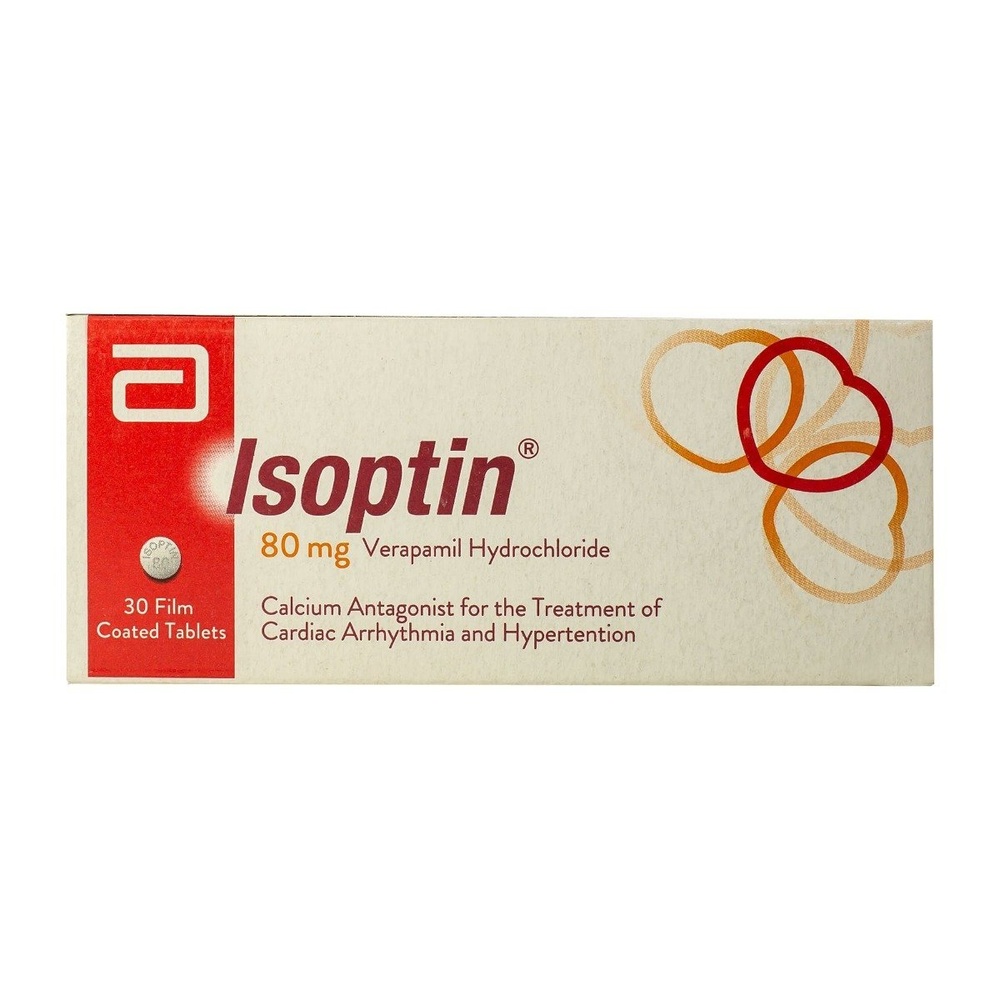
- Країна реєстрації
- Лікарська формаCoated tablet, 40 MG
- Код АТХC08DA01
- Діюча речовина
- Потрібен рецептНі
- Виробник
- Ця інформація надана лише для ознайомлення і не є медичною порадою. Рішення щодо лікування завжди приймає лікар.
- Альтернативи до ISOPTINЛікарська форма: Hard capsule, prolonged release, 120 MGДіюча речовина: verapamilВиробник: DOC GENERICI SRLПотрібен рецептЛікарська форма: Film-coated tablet, 80 MGДіюча речовина: verapamilВиробник: SANDOZ S.P.A.Потрібен рецепт
Аналоги ISOPTIN в інших країнах
Препарати з тією самою діючою речовиною, доступні в інших країнах.
Аналог ISOPTIN у Польща
Аналог ISOPTIN у Україна
Аналог ISOPTIN у Іспанія
Лікарі онлайн щодо ISOPTIN
Застосування, безпека та можливість призначення рецепта — за результатами медичної оцінки.
Отримайте рецепт на ISOPTIN онлайн
Заповніть форму за 2 хвилини
Розкажіть про симптоми, історію хвороби та потрібний препарат.
Оберіть лікаря або ми призначимо
Оберіть спеціаліста або ми підберемо найближчого доступного лікаря.
Лікар розглядає ваш випадок
Зазвичай протягом 30 хвилин. Може ставити уточнювальні запитання в чаті.
Отримайте в будь-якій аптеці
Електронний рецепт надсилається на вашу пошту — дійсний по всій Польщі.
Часті запитання
ISOPTIN не потребує рецепта в Італія. Ви можете обговорити з лікарем онлайн, чи підходить цей лікарський засіб для вашої ситуації.
Діюча речовина у ISOPTIN — verapamil. Це допомагає визначити препарати з тим самим складом, але під іншими торговими назвами.
ISOPTIN виробляється компанією VIATRIS ITALIA S.R.L.. Назва бренду та упаковка можуть відрізнятися залежно від дистрибʼютора.
Лікарі, зокрема Сімейні лікарі, Психіатри, Дерматологи, Кардіологи, Ендокринологи, Гастроентерологи, Пульмонологи, Нефрологи, Ревматологи, Гематологи, Інфекціоністи, Алергологи, Геріатри, Педіатри, Онкологи, можуть оцінити доцільність застосування ISOPTIN з урахуванням вашого стану та місцевих правил. Ви можете записатися на онлайн-консультацію, щоб обговорити симптоми та можливі подальші кроки.
Польща має добре розвинену систему охорони здоров'я у великих містах, таких як Варшава, Краків, Вроцлав і Гданськ. Аптеки широко доступні та працюють відповідно до чинного законодавства, забезпечуючи доступ до рецептурних препаратів.
Ви можете придбати ISOPTIN у Варшаві, Кракові, Вроцлаві або Гданську в будь-якій аптеці за наявності дійсного рецепта.
Щоб отримати рецепт, ви можете скористатися Oladoctor:
Інші препарати з тією самою діючою речовиною (verapamil) включають VERAPAMIL DOK JENERIKI, VERAPAMIL EG, VERAPAMIL EXAL. Вони можуть відрізнятися торговою назвою або формою випуску, але містять той самий терапевтичний компонент. Перед зміною або початком прийому нового препарату варто проконсультуватися з лікарем.
