



GUTTALAX 7.5 mg/ml Oral drops, solution

Запит на рецепт онлайн
Лікар розгляне ваш випадок і визначить, чи є рецепт медично доцільним.

Поговоріть з лікарем про ці ліки
Обговоріть симптоми та можливі подальші кроки під час короткої онлайн-консультації.



Інструкція із застосування GUTTALAX
Зміст інструкції
GUTTALAX 2,5 mg soft capsules
Sodium picosulfate
Read this leaflet carefully before you take/give this medicine to the child as it
contains important information for you.
Always take/give this medicine to the child exactly as described in this leaflet or
as your doctor or pharmacist has told you.
- Keep this leaflet. You may need to read it again.
- If you would like more information or advice, ask your pharmacist.
- If any side effects occur, including those not listed in this leaflet, tell your doctor or pharmacist. See section 4.
- Talk to your doctor if you do not feel better or if your symptoms get worse after 7 days.
Contents of this leaflet:
- 1. What Guttalax is and what it is used for
- 2. What you need to know before you take/give Guttalax to the child
- 3. How to take/give Guttalax to the child
- 4. Possible side effects
- 5. How to store Guttalax
- 6. Contents of the pack and other information
1. What is Guttalax and what is it used for
Guttalax contains sodium picosulfate. It belongs to a group of medicines called contact laxatives, which work by stimulating bowel movements, accelerating the passage of the intestinal contents.
Guttalax is used in adults, children over 4 years of age and adolescents for the short-term treatment of occasional constipation.
See a doctor if you do not feel better or if you feel worse after 7 days.
2. What you need to know before taking/giving Guttalax to the child
Do not take/give Guttalax to the child
- if you and/or the child are allergic to sodium picosulfate or to any of the other ingredients of this medicine (listed in section 6);
- if you and/or the child suffer from a blockage of the intestinal muscles (paralytic ileus) which prevents normal intestinal transit;
- if you and/or the child suffer from acute, severe abdominal pain, with or without fever, such as appendicitis (inflammation of the appendix, a part of the intestine), and severe stomach pains associated with nausea and vomiting;
- if you and/or the child suffer from obstruction or narrowing of the intestine (intestinal stenosis) or of the bile ducts (where bile flows, a substance involved in some digestive processes);
- if you and/or the child suffer from acute inflammation of the stomach and intestines;
- if you and/or the child suffer from rectal bleeding of unknown origin;
- if you and/or the child suffer from severe loss of water from the body (state of dehydration);
- if you and/or the child suffer from nausea or vomiting;
- if you and/or the child suffer from gallstones (presence of small stones that obstruct the flow of bile);
- if you and/or the child suffer from reduced liver function (hepatic insufficiency).
Do not administer Guttalax soft capsules to children under the age of 4 years.
If you are pregnant or breastfeeding, see section “Pregnancy, breastfeeding and fertility”.
Warnings and precautions
Consult your doctor or pharmacist before taking/giving Guttalax to the child.
Cases of dizziness and/or fainting (syncope) have been reported after taking Guttalax. Data
relating to these cases suggest that the events, rather than being related to the intake
of Guttalax, may be interpreted as a manifestation of “defecation syncope” (attributable to the effort of defecation), or as a reflex response to abdominal pain related to constipation itself.
Like all laxatives, do not take/give Guttalax to the child daily or for prolonged
periods without the doctor first evaluating the cause of the constipation. The treatment of
chronic or recurrent constipation always requires the intervention of a doctor for diagnosis, the
prescription of drugs and monitoring during therapy.
In particular, consult your doctor:
- when the need for a laxative derives from a sudden change in previous bowel habits (frequency and characteristics of bowel movements) that lasts for more than two weeks or when the use of the laxative fails to produce effects;
- in cases of episodes of chronic or recurrent constipation;
- if you are elderly or in poor health.
Do not use this medicine to try to lose weight. This medicine does not reduce
the absorption of calories from the intestine and can cause serious side effects. This
medicine, like other stimulant laxatives, does not help to lose weight.
Laxative abuse
Abuse of laxatives (frequent or prolonged use or with excessive doses) can cause diarrhea
persistent with consequent loss of water, mineral salts (especially potassium) and other essential
nutrients.
In the most severe cases, dehydration (loss of fluids) or hypokalaemia (decrease in potassium levels in the blood) may occur, which can determine cardiac or
neuromuscular dysfunction, especially if you are taking cardiac glycosides, diuretics at the same time
or corticosteroids.
Abuse of laxatives, especially contact laxatives (stimulant laxatives), can cause dependence
(and, therefore, possible need to gradually increase the dosage), chronic constipation and
loss of normal bowel function (intestinal atony).
Children and adolescents
Do not administer Guttalax to children between 4 and 12 years of age without first consulting
the doctor.
Other medicines and Guttalax
Tell your doctor or pharmacist if you/the child are taking, have recently taken or
may take any other medicine.
Tell your doctor if you/the child are taking:
- diuretics (medicines that increase urinary excretion);
- adrenocorticosteroids (medicines for the treatment of inflammation). If you use these medicines and excessive doses of Guttalax, you may experience an imbalance of the elements contained in the blood (electrolytes). This imbalance, in turn, can lead to increased sensitivity to cardiac glycosides (medicines for the treatment of heart disorders);
- antacids (for the treatment of heartburn). They can modify the effect of the medicine; allow at least one hour to pass before taking the laxative;
- antibiotics. They can reduce the laxative effect of Guttalax;
- oral anticoagulants (medicines that make the blood more fluid). Continued use of Guttalax with oral anticoagulants may increase their effect and alter glucose tolerance (a type of sugar).
Laxatives can reduce the time of stay in the intestine and therefore the absorption of other
drugs administered simultaneously orally.
Therefore, avoid taking/giving the child laxatives and other drugs at the same time: after
having taken/given the child a medicine, allow at least 2 hours to pass before
taking the laxative.
Guttalax with drinks
Milk can alter the effect of the medicine; allow at least 1 hour to pass
before taking/giving the child the laxative.
Pregnancy, breastfeeding and fertility
If you are pregnant, suspect or are planning a pregnancy, or if you are breastfeeding with
breast milk, ask your doctor or pharmacist for advice before taking this medicine.
Pregnancy
There are no adequate and well-controlled studies on the use of the medicine in pregnancy. Therefore, although
no adverse or harmful effects have ever been reported during pregnancy, if you are
pregnant, use Guttalax only if necessary, under the direct control of the doctor who will assess
the expected benefit for you in relation to the possible risk to the fetus.
Breastfeeding
Sodium picosulfate and its derivatives do not pass into breast milk, however use the medicine only in
case of need and under the direct control of the doctor, who will assess the expected benefit for you in
relation to the possible risk to the infant.
Fertility
No studies have been conducted to investigate the effects on human fertility.
Driving and operating machinery
Since studies on the effects on the ability to drive and use machines have not been conducted,
there are no known effects of Guttalax that compromise the ability to drive and use machines.
However, patients must be informed that due to the reflex response to abdominal pain
related to constipation itself, dizziness and/or fainting (syncope) may occur.
If you/the child experience abdominal pain (abdominal spasm), avoid potentially
dangerous activities such as driving vehicles/bicycle or using machinery.
Guttalax contains sodium
This medicine contains less than 1 mmol of sodium (23 mg) per soft capsule, i.e.
essentially “sodium-free”.
3. How to take/give Guttalax to the child
Take/give this medicine to the child following exactly as indicated in
this leaflet or as instructed by the doctor or pharmacist. If you have any doubts, consult the doctor or
pharmacist.
The recommended dose is as follows:
Adults
2-3 soft capsules per day (5-7.5 mg).
Use in children and adolescents
Children between 4 and 10 years: 1 soft capsule per day (2.5 mg).
Children over 10 years: 2-3 soft capsules per day (5-7.5 mg).
Children aged between 4 and 12 years should take Guttalax under medical supervision. Do not give Guttalax to children under 4 years of age.
For children under 4 years of age, use Guttalax drops.
Caution: do not exceed the indicated doses without the advice of a doctor.
It is advisable to start with the lowest dose provided.
The correct dose is the minimum sufficient to produce an easy evacuation of soft stools.
When necessary, the dose may then be increased, but never exceeding the maximum
indicated.
Take/give the soft capsules to the child preferably in the evening to provoke evacuation in the
following morning.
Do not take/give the soft capsules with milk or antacids (for example, bicarbonate).
The soft capsules should be swallowed with an adequate amount of water (a large glassful). A diet rich in fluids promotes the effect of the medicine.
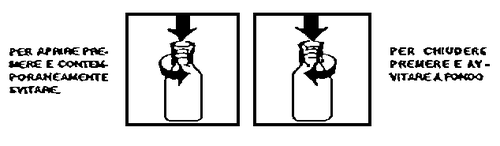
Open the bottle containing the soft capsules as shown in the figure:
Duration of treatment
Use laxatives as infrequently as possible and for no more than seven days. Use for longer periods requires a doctor's prescription after adequate assessment of the individual case.
Consult your doctor if the disorder occurs repeatedly or if you have noticed any
recent change in its characteristics.
If you take/give the child more Guttalax than you should
In case of accidental ingestion/taking of an excessive dose of Guttalax, immediately notify
the doctor or go to the nearest hospital, where appropriate measures will be taken.
Symptoms
If you take/give the child high doses of Guttalax, you may experience abdominal cramps and watery stools (diarrhea), and significant loss of fluids and substances contained in the blood (potassium and
other electrolytes).
Cases of ischemia of the colon mucosa (when the colon, a part of the intestine,
is not adequately oxygenated, due to reduced blood supply) have been reported.
If you/the child chronically abuse Guttalax, as with other laxatives, you may experience chronic diarrhea, abdominal pain, decreased levels of potassium in the blood (hypokalemia),
increased production of a hormone (aldosterone) by the adrenal gland, which can lead to
decreased levels of potassium in the blood (secondary hyperaldosteronism) and formation of
kidney stones (renal calculi). You may also experience kidney injury, reduced blood acidity
(metabolic alkalosis) and muscle weakness caused by low levels of potassium in the
blood (hypokalemia).
See also what is reported in the “Warnings and precautions” section regarding the abuse of laxatives.
If you forget to take/give Guttalax to the child
Do not take/do not give the child a double dose to compensate for forgetting the capsule.
If you stop the treatment with Guttalax
If you have any doubts about the use of this medicine, consult your doctor or pharmacist.
4. Possible side effects
Like all medicines, this medicine can cause side effects, although not everybody gets them.
The following side effects are listed according to frequency:
very common (may affect more than 1 in 10 people)
- diarrhoea; common (may affect up to 1 in 10 people)
- abdominal cramps, abdominal pain and abdominal discomfort; uncommon (may affect up to 1 in 100 people)
- dizziness. Cases of dizziness that occur after taking sodium picosulfate appear to be attributable to a reflex response (resulting, for example, from abdominal pain or bowel movement);
- vomiting, nausea; not known (frequency cannot be estimated from available data)
- hypersensitivity;
- skin reactions such as swelling of the skin and mucous membranes of the face, lips and throat (angioedema), rash due to taking the medicine, eruption, itching;
- fainting (syncope). Cases of fainting that occur after taking sodium picosulfate appear to be attributable to a reflex response (resulting, for example, from abdominal pain or bowel movement).
In addition, you may occasionally experience the following effects which occur more
frequently in cases of severe constipation:
- abdominal cramps (cramping pains);
- severe abdominal pain with cramps (abdominal colic).
These side effects are generally transient.
Reporting of side effects
If you and/or your child experience any side effects, including those not listed in
this leaflet, please inform your doctor or pharmacist. You can also report side effects
directly through the national reporting system at the website of the Italian Medicines Agency:
https://www.aifa.gov.it/content/segnalazioni-reazioni-avverse. By reporting side effects you can
help provide more information on the safety of this medicine.
5. How to store Guttalax
Keep this medicine out of the sight and reach of children.
Do not use this medicine after the expiry date which is stated on the pack after Exp.
The expiry date refers to the last day of that month.
Store at a temperature below 30°C.
Do not dispose of any medicine in wastewater or household waste. Ask your pharmacist how
to dispose of medicines you no longer use. This will help protect the environment.
6. Contents of the pack and other information
What Guttalax contains
- The active ingredient is: sodium picosulfate 2.5 mg.
- The other ingredients are: macrogol 400, propylene glycol, purified water, gelatin, glycerol.
Description of the appearance of Guttalax and contents of the pack
Guttalax 2.5 mg soft capsules are presented in the form of round soft gelatin capsules
for oral use.
The pack contains 30 soft capsules.
Marketing Authorisation Holder
Opella Healthcare Italy S.r.l.
Viale L. Bodio, 37/B
20158 Milano (Italy)
Manufacturer
Opella Healthcare Hungary Limited Liability Company (Opella Healthcare Hungary Ltd.)-
Veresghyház site
2112, Veresghyház, Lévai u. 5, Hungary
Health education notes
First of all, you should bear in mind that, in most cases, a balanced diet rich
in water and fibre (bran, vegetables and fruit) can durably solve the problem of constipation.
Many people think they suffer from constipation if they cannot evacuate every day. This is
a mistaken belief, as this situation is perfectly normal for a large number of
individuals. Instead, consider that constipation occurs when bowel movements are reduced compared
to your personal habits and are associated with the passage of hard stools. If episodes of
constipation occur repeatedly, consult your doctor.
GUTTALAX 7,5 mg/ml oral drops, solution
Sodium picosulfate
Read this leaflet carefully before taking/giving this medicine to the child as it contains important information for you.
Always take/give this medicine to the child exactly as described in this leaflet or
as your doctor or pharmacist has told you to do.
- Keep this leaflet. You may need to read it again.
- If you would like more information or advice, ask your pharmacist.
- If any side effects occur, including those not listed in this leaflet, tell your doctor or pharmacist. See section 4.
- See a doctor if you do not feel better or if your symptoms worsen after 7 days.
Contents of this leaflet:
- 1. What Guttalax is and what it is used for
- 2. What you need to know before taking/giving Guttalax to the child
- 3. How to take/give Guttalax to the child
- 4. Possible side effects
- 5. How to store Guttalax
- 6. Contents of the pack and other information
1. What is Guttalax and what is it used for
Guttalax contains sodium picosulfate. It belongs to a group of medicines called contact laxatives, which work by stimulating the movements of the intestine, accelerating the passage of the intestinal contents.
Guttalax is used in adults, children from 3 years of age and adolescents for the short-term treatment of occasional constipation.
See a doctor if you do not feel better or if you feel worse after 7 days.
2. What you need to know before taking/giving Guttalax to the child
Do not take/give Guttalax to the child
- if you and/or the child are allergic to sodium picosulfate or to any of the other ingredients of this medicine (listed in section 6);
- if you and/or the child suffer from a blockage of the intestinal muscles (paralytic ileus) which prevents normal intestinal transit;
- if you and/or the child suffer from acute, severe abdominal pain, with or without fever, such as appendicitis (inflammation of the appendix, a part of the intestine), and severe stomach pain associated with nausea and vomiting;
- if you and/or the child suffer from obstruction or narrowing of the intestine (intestinal stenosis) or of the bile ducts (where bile flows, a substance involved in some digestive processes);
- if you and/or the child suffer from acute inflammation of the stomach and intestines;
- if you and/or the child suffer from rectal bleeding of unknown origin;
- if you and/or the child suffer from severe loss of water from the body (state of dehydration);
- if you and/or the child suffer from nausea or vomiting;
- if you and/or the child suffer from a hereditary disease that may be incompatible with taking one of the excipients (see “Guttalax contains sorbitol, sodium benzoate and sodium”);
- if you and/or the child suffer from gallstones (presence of stones obstructing the flow of bile);
- if you and/or the child suffer from reduced liver function (hepatic insufficiency).
Do not administer Guttalax drops to children under 3 years of age.
If you are pregnant or breastfeeding, see section “Pregnancy, breastfeeding and fertility”.
Warnings and precautions
Consult your doctor or pharmacist before taking/giving Guttalax to the child.
Cases of dizziness and/or fainting (syncope) have been reported after taking Guttalax. Data
relating to these cases suggest that the events, rather than being related to taking Guttalax, could be interpreted as a manifestation of “defecation syncope” (attributable to the effort of the act of defecation), or as a reflex response to abdominal pain related to constipation itself.
Like all laxatives, do not take/give Guttalax daily or for prolonged periods without your doctor first evaluating the cause of the constipation. Treatment of
chronic or recurrent constipation always requires the intervention of a doctor for diagnosis, prescription of drugs and monitoring during therapy.
In particular, consult your doctor:
- when the need for a laxative derives from a sudden change in previous bowel habits (frequency and characteristics of bowel movements) that lasts for more than two weeks or when the use of the laxative fails to produce effects;
- in cases of episodes of chronic or recurrent constipation;
- if you are elderly or in poor health.
Do not use this medicine to try to lose weight. This medicine does not reduce
the absorption of calories from the intestine and can cause serious side effects. This
medicine, like other stimulant laxatives, does not help to lose weight.
Laxative abuse
Abuse of laxatives (frequent or prolonged use or with excessive doses) can cause persistent diarrhea
resulting in loss of water, mineral salts (especially potassium) and other essential
nutrients.
In the most severe cases, dehydration (loss of fluids) or hypokalemia (decreased levels of potassium in the blood) may occur, which can lead to cardiac or
neuromuscular dysfunction, especially if you are also taking cardiac glycosides, diuretics
or corticosteroids.
Abuse of laxatives, especially contact laxatives (stimulant laxatives), can cause dependence
(and, therefore, a possible need to gradually increase the dosage), chronic constipation and
loss of normal bowel function (intestinal atony).
Children and adolescents
Do not administer Guttalax to children between 3 and 12 years of age without first consulting
your doctor.
Other medicines and Guttalax
Tell your doctor or pharmacist if you/the child are taking, have recently taken or
may take any other medicines.
Tell your doctor if you/the child are taking:
- diuretics (medicines that increase urinary excretion);
- adrenocorticosteroids (medicines for the treatment of inflammation). If you use these medicines and excessive doses of Guttalax you may experience an imbalance of elements in the blood (electrolytes). This imbalance, in turn, can increase sensitivity to cardiac glycosides (medicines for the treatment of heart disorders);
- antacids (for the treatment of heartburn). They can modify the effect of the medicine; allow at least one hour to pass before taking the laxative;
- antibiotics. They can reduce the laxative effect of Guttalax;
- oral anticoagulants (medicines that make the blood more fluid). Continued use of Guttalax with oral anticoagulants may increase their effect and alter glucose tolerance (a type of sugar).
Laxatives can reduce the time of permanence in the intestine and therefore the absorption of other
drugs administered simultaneously orally.
Therefore, avoid taking/giving the child laxatives and other drugs at the same time: after
taking/giving the child a medicine, allow at least 2 hours to pass before
taking the laxative.
Guttalax with drinks
Milk can alter the effect of the medicine; allow at least 1 hour to pass
before taking/giving the child the laxative.
Pregnancy, breastfeeding and fertility
If you are pregnant, suspect or are planning a pregnancy, or if you are breastfeeding with
breast milk, ask your doctor or pharmacist for advice before taking this medicine.
Pregnancy
There are no adequate and well-controlled studies on the use of the medicine in pregnancy. Therefore, although
no adverse or harmful effects have ever been reported during pregnancy, if you are
pregnant, use Guttalax only if necessary, under the direct control of your doctor, who will assess
the expected benefit for you in relation to the possible risk to the fetus.
Breastfeeding
Sodium picosulfate and its derivatives do not pass into breast milk, however use the medicine only if
necessary and under the direct control of your doctor, who will assess the expected benefit for you in
relation to the possible risk to the infant.
Fertility
No studies have been conducted to investigate the effects on human fertility.
Driving and operating machinery
Since studies on the effects on the ability to drive and use machines have not been conducted,
no effects of Guttalax are known to impair the ability to drive and use machines.
However, patients should be informed that due to the reflex response to abdominal pain
related to constipation itself, dizziness and/or fainting (syncope) may occur.
If you/the child experience abdominal pain (abdominal spasm), avoid potentially
dangerous activities such as driving vehicles/bicycle or using machinery.
Guttalax contains sorbitol, sodium benzoate and sodium
Each drop of this medicine contains 30 mg of sorbitol, equivalent to 600 mg of sorbitol
in the maximum recommended daily dose in the treatment of an adult patient (20 drops) and to
90 mg of sorbitol in the maximum recommended daily dose in the treatment of the child (3
drops)..
Sorbitol is a source of fructose. If your doctor has told you that you (or your child) are intolerant
to some sugars, or if you have a diagnosis of hereditary fructose intolerance (HFI), a rare
genetic disease in which patients cannot transform fructose, talk to your doctor
before you (or your child) take this medicine.
Each drop of this medicine contains 0.13 mg of sodium benzoate, equivalent to 2.7 mg of benzoate salt
in the maximum recommended daily dose in the treatment of an adult patient (20
drops) and 0.4 mg of benzoate salt in the maximum recommended daily dose in the treatment
of the child (3 drops).
This medicine contains less than 1 mmol of sodium (23 mg) in 20 drops, i.e. essentially
“sodium-free”.
3. How to take/give Guttalax to the child
Take/give this medicine to the child following exactly as stated in
this leaflet or as instructed by your doctor or pharmacist. If you have any doubts, consult your doctor or
pharmacist.
The recommended dose is as follows:
Adults
7-8 drops in water. Decrease the dose if the effect is excessive or increase it if the laxative effect is not
achieved.
In cases of persistent constipation, you may take up to a maximum of 15-20 drops in water.
Use in children and adolescents
Children over 3 years of age: 2-3 drops in water.
Children between 3 and 12 years of age should take Guttalax under the supervision of a
doctor. Guttalax should not be used in children under 3 years of age.
Caution: do not exceed the indicated doses without the advice of your doctor.
It is advisable to start with the lowest dose provided.
The correct dose is the minimum sufficient to produce easy evacuation of soft stools.
When necessary, the dose may then be increased, but never exceeding the maximum
indicated.
Take/give the drops to the child preferably in the evening to provoke evacuation in the
following morning.
Do not take/give the drops to the child together with milk or antacids (for example, bicarbonate).
The drops should be taken with an adequate amount of water. A diet rich in fluids
favors the effect of the medicine.
Duration of treatment
Use laxatives as infrequently as possible and for no more than seven days. Use for longer
periods requires a doctor's prescription after adequate evaluation of the individual case.
Consult your doctor if the disorder occurs repeatedly or if you have noticed any
recent change in its characteristics.
If you take/give the child more Guttalax than you should
In case of accidental ingestion/intake of an excessive dose of Guttalax, immediately notify
your doctor or go to the nearest hospital where appropriate measures will be taken.
Symptoms
If you take/give the child high doses of Guttalax, you may experience abdominal cramps and watery stools
(diarrhea), and significant loss of fluids and substances contained in the blood (potassium and
other electrolytes).
Cases of ischemia of the colon mucosa have been reported (when the colon, a part of the intestine,
is not adequately oxygenated due to reduced blood supply).
If you/the child abuses Guttalax chronically, as with other laxatives, you may experience chronic
diarrhea, abdominal pain, decreased levels of potassium in the blood (hypokalemia),
increased production of a hormone (aldosterone) by the adrenal gland, which can lead to
decreased levels of potassium in the blood (secondary hyperaldosteronism) and formation of
kidney stones (renal calculi). You may also experience kidney damage, reduced blood acidity
(metabolic alkalosis) and muscle weakness caused by low levels of potassium in the
blood (hypokalemia).
See also what is stated in the “Warnings and precautions” section regarding the abuse of laxatives.
If you forget to take/give Guttalax to the child
Do not take/do not give the child a double dose to compensate for forgetting the dose.
If you stop the treatment with Guttalax
If you have any doubts about the use of this medicine, consult your doctor or pharmacist.
4. Possible side effects
Like all medicines, this medicine can cause side effects, although not everybody gets them.
The following side effects are listed according to frequency:
very common (may affect more than 1 in 10 people)
- diarrhoea; common (may affect up to 1 in 10 people)
- abdominal cramps, abdominal pain and abdominal discomfort; uncommon (may affect up to 1 in 100 people)
- dizziness. Cases of dizziness that occur after taking sodium picosulfate appear to be attributable to a reflex response (resulting, for example, from abdominal pain or bowel evacuation);
- vomiting, nausea; not known (frequency cannot be estimated from available data)
- hypersensitivity;
- skin reactions such as swelling of the skin and mucous membranes of the face, lips and throat (angioedema), rash due to taking the medicine, eruption, itching;
- fainting (syncope). Cases of fainting that occur after taking sodium picosulfate appear to be attributable to a reflex response (resulting, for example, from abdominal pain or bowel evacuation).
In addition, you may occasionally experience the following effects which occur more
frequently in cases of severe constipation:
- abdominal cramps (cramping pains);
- severe abdominal pain with cramps (abdominal colic).
These side effects are generally transient.
Reporting of side effects
If you and/or your child experience any side effects, including those not listed in
this leaflet, please tell your doctor or pharmacist. You can also report side effects
directly through the national reporting system at the website of the Italian Medicines Agency:
https://www.aifa.gov.it/content/segnalazioni-reazioni-avverse . By reporting side effects you can help
provide more information on the safety of this medicine.
5. How to store Guttalax
Keep this medicine out of the sight and reach of children.
Do not use this medicine after the expiry date which is stated on the pack after Exp.
The expiry date refers to the last day of that month.
Keep the bottle in the outer packaging to protect the medicine from light.
After first opening the bottle, the product can be used for 12 months.
Do not dispose of any medicine in wastewater or household waste. Ask your pharmacist how
to eliminate medicines that you no longer use. This will help protect the environment.
6. Contents of the pack and other information
What Guttalax contains
- The active ingredient is: sodium picosulfate, 1 ml of solution contains 7.5 mg of sodium picosulfate, equivalent to 0.5 mg of sodium picosulfate in each drop of solution.
- The other ingredients are: sodium benzoate(E211), liquid sorbitol (E420)(see paragraph “Guttalax contains sorbitol, sodium benzoate and sodium”), sodium citrate, citric acid monohydrate, purified water.
Description of the appearance of Guttalax and contents of the pack
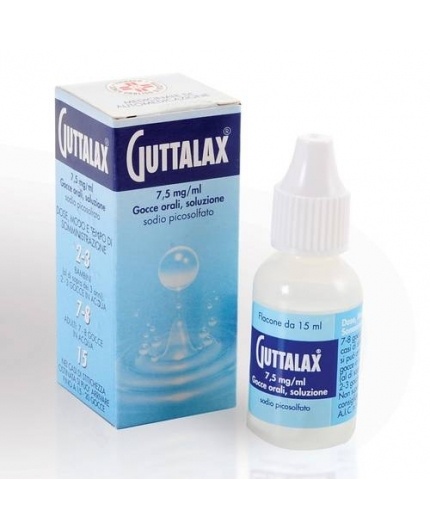
Guttalax is presented in the form of an oral solution. The contents of the pack are a dropper bottle of 10 ml or 15 ml.
Not all pack sizes may be marketed.
Marketing Authorisation Holder
Opella Healthcare Italy S.r.l.
Viale L. Bodio, 37/B
20158 Milan (Italy)
Manufacturer
Istituto De Angeli S.r.l. – Loc. Prulli n. 103/c – 50066 Reggello (FI)
Health education notes
First of all, you should keep in mind that, in most cases, a balanced diet rich in water and fiber (bran, vegetables and fruit) can durably solve the problem of constipation.
Many people think they suffer from constipation if they cannot evacuate every day. This is a mistaken belief, as this situation is perfectly normal for a large number of individuals. Instead, consider that constipation occurs when bowel movements are reduced compared to your personal habits and are associated with the passage of hard stools. If episodes of constipation occur repeatedly, consult your doctor.

Не впевнені, чи підходить вам цей лікарський засіб?
Обговоріть симптоми та можливі варіанти лікування з лікарем онлайн.

Виникли питання під час прийому ліків?
Обговоріть свої симптоми та лікування з лікарем онлайн.
- Країна реєстрації
- Лікарська формаOral drops, solution, 7.5 MG/ML
- Код АТХA06AB08
- Діюча речовина
- Потрібен рецептНі
- Виробник
- Ця інформація надана лише для ознайомлення і не є медичною порадою. Рішення щодо лікування завжди приймає лікар.
- Альтернативи до GUTTALAXЛікарська форма: Oral drops, solution, 750 MG/100 MLДіюча речовина: Пикосульфат натрияВиробник: CHIESI FARMACEUTICI S.P.A.Рецепт не потрібенЛікарська форма: Oral drops, solution, 15 MLДіюча речовина: Пикосульфат натрияРецепт не потрібенЛікарська форма: Coated tablet, 5 MGДіюча речовина: БисакодилРецепт не потрібен
Аналоги GUTTALAX в інших країнах
Препарати з тією самою діючою речовиною, доступні в інших країнах.
Аналог GUTTALAX у Іспанія
Аналог GUTTALAX у Польща
Аналог GUTTALAX у Україна
Лікарі онлайн щодо GUTTALAX
Застосування, безпека та можливість призначення рецепта — за результатами медичної оцінки.









Отримайте рецепт на GUTTALAX онлайн
Заповніть форму за 2 хвилини
Розкажіть про симптоми, історію хвороби та потрібний препарат.
Оберіть лікаря або ми призначимо
Оберіть спеціаліста або ми підберемо найближчого доступного лікаря.
Лікар розглядає ваш випадок
Зазвичай протягом 30 хвилин. Може ставити уточнювальні запитання в чаті.
Отримайте в будь-якій аптеці
Електронний рецепт надсилається на вашу пошту — дійсний по всій Польщі.
Часті запитання
GUTTALAX не потребує рецепта в Італія. Ви можете обговорити з лікарем онлайн, чи підходить цей лікарський засіб для вашої ситуації.
Діюча речовина у GUTTALAX — Пикосульфат натрия. Це допомагає визначити препарати з тим самим складом, але під іншими торговими назвами.
GUTTALAX виробляється компанією OPELLA HEALTHCARE ITALY S.R.L.. Назва бренду та упаковка можуть відрізнятися залежно від дистрибʼютора.
Лікарі, зокрема Сімейні лікарі, Психіатри, Дерматологи, Кардіологи, Ендокринологи, Гастроентерологи, Пульмонологи, Нефрологи, Ревматологи, Гематологи, Інфекціоністи, Алергологи, Геріатри, Педіатри, Онкологи, можуть оцінити доцільність застосування GUTTALAX з урахуванням вашого стану та місцевих правил. Ви можете записатися на онлайн-консультацію, щоб обговорити симптоми та можливі подальші кроки.
Польща має добре розвинену систему охорони здоров'я у великих містах, таких як Варшава, Краків, Вроцлав і Гданськ. Аптеки широко доступні та працюють відповідно до чинного законодавства, забезпечуючи доступ до рецептурних препаратів.
Ви можете придбати GUTTALAX у Варшаві, Кракові, Вроцлаві або Гданську в будь-якій аптеці за наявності дійсного рецепта.
Щоб отримати рецепт, ви можете скористатися Oladoctor:
Інші препарати з тією самою діючою речовиною (Пикосульфат натрия) включають EUKESSINA K.M., GOKKE LASSATIVE AIKARDI, ALAXA. Вони можуть відрізнятися торговою назвою або формою випуску, але містять той самий терапевтичний компонент. Перед зміною або початком прийому нового препарату варто проконсультуватися з лікарем.
