



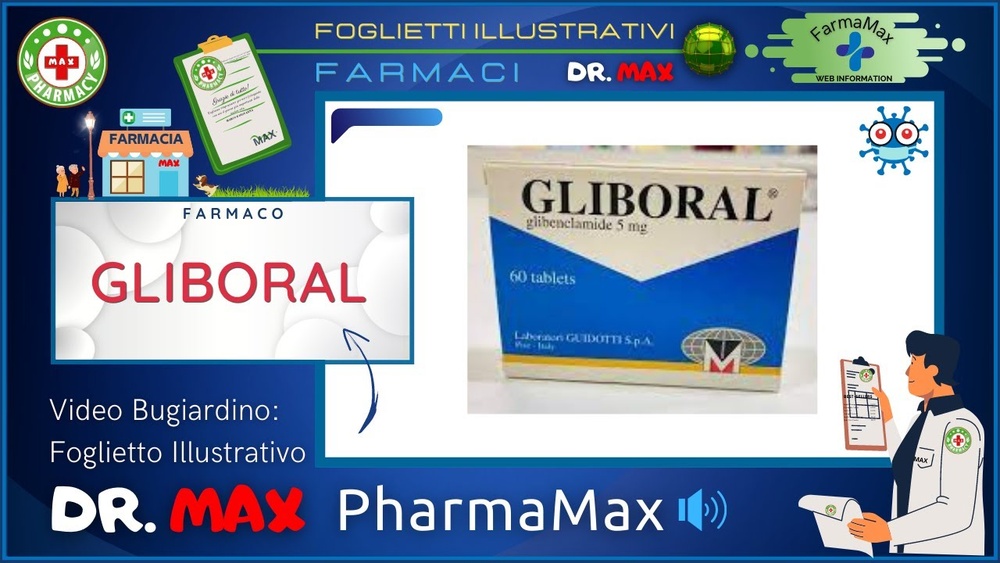
GLIBORAL 5 mg Tablet

Запит на рецепт онлайн
Лікар розгляне ваш випадок і визначить, чи є рецепт медично доцільним.

Поговоріть з лікарем про ці ліки
Обговоріть симптоми та можливі подальші кроки під час короткої онлайн-консультації.



Інструкція із застосування LYBORAL
Зміст інструкції
GLIBORAL 5 mg tablets
Glibenclamide
Read this leaflet carefully before taking this medicine because it contains important information for you.
- Keep this leaflet. You may need to read it again.
- If you have any questions, ask your doctor or pharmacist.
- This medicine has been prescribed for you only. Do not pass it on to others, even if they have the same symptoms as you, as it may be harmful.
- If you get any side effects, even those not listed in this leaflet, tell your doctor or pharmacist. See section 4.
Contents of this leaflet:
- 1. What GLIBORAL is and what it is used for
- 2. What you need to know before you take GLIBORAL
- 3. How to take GLIBORAL
- 4. Possible side effects
- 5. How to store GLIBORAL
- 6. Contents of the pack and other information
1. What is GLIBORAL and what is it used for
GLIBORAL contains the active ingredient glibenclamide, belonging to the class of sulfonylureas,
substances capable of lowering blood sugar concentration by stimulating the
release of insulin from the pancreas.
GLIBORAL is used in adults for the treatment of diabetes, a chronic disorder of
metabolism characterized by high blood glucose levels due to insufficient
production of insulin by the body and/or alterations in insulin action, in particular
for the treatment of symptomatic, non-acidotic non-juvenile diabetes mellitus (without the presence
of ketone bodies in the blood that causes a drop in pH to very acidic values), in subjects
stenic-obese.
2. What you need to know before taking GLIBORAL
Do not take GLIBORAL
- if you are allergic to glibenclamide, to sulfonylureas in general or to any of the other components of this medicine (listed in section 6).
- if you suffer from insulin-dependent diabetes (a particular form of the disease in which the pancreas is no longer able to produce insulin, a substance that regulates blood glucose levels and which, therefore, must be administered externally) and you have experienced an accumulation of substances called ketone bodies in the blood (diabetic ketoacidosis) if you are in a state of diabetic ketoacidosis, coma or diabetic precoma (alterations of consciousness that are complications of diabetes mellitus that can put your life in danger)
- if you suffer from severe kidney problems
- if you suffer from severe liver problems
- in case of adrenal insufficiency (severe reduction of the function of the adrenal glands)
- if you are pregnant or breastfeeding (see “Pregnancy and breastfeeding”)
- if you suffer from insufficient production of natural corticosteroids by the adrenal glands, glands located above the kidneys (adrenal insufficiency)
- if you are being treated with bosentan, a medicine for treating high blood pressure at the pulmonary level (see “Other medicines and Gliboral”).
Warnings and precautions
Consult your doctor or pharmacist before taking GLIBORAL.
You can only take oral hypoglycemic drugs of the sulfonylurea group (such as GLIBORAL) if
you have symptomatic and non-ketogenic diabetes mellitus that cannot be controlled with diet and
if insulin administration is not indicated for you.
To achieve the goal of therapy with GLIBORAL – namely optimal control of blood sugar levels (glycemia) – in addition to the regular intake of GLIBORAL, other factors such as a correct diet, sufficient and regular physical exercise and, if necessary,
also a reduction in body weight are equally important.
At the beginning of therapy, the doctor will inform you about the effects and risks of GLIBORAL and
the importance of adopting adequate dietary measures, physical exercise and adequate collaboration during treatment with GLIBORAL.
Medical examinations
During therapy with GLIBORAL, the doctor will prescribe you some examinations, including regularly evaluating the amount of sugar in your blood and urine and periodically checking
glycated hemoglobin, an examination that allows you to monitor the state of your diabetes. In this
way, the doctor will be able to assess how the therapy is progressing.
Too low blood sugar level (hypoglycemia)
During therapy with GLIBORAL you may experience hypoglycemia (see section “Possible side effects”). The symptoms of hypoglycemia may manifest especially:
- if the instructions provided by your doctor are not followed very carefully; this aspect is particularly important if you are elderly
- if you have an insufficient diet or consume meals irregularly or skip meals
- if the physical activity you perform is inadequate to the amount of sugar you consume, or vice versa
- if you have changed your eating habits or lifestyle
- if you have kidney and/or severe liver problems
- if you have taken an excessive dose of GLIBORAL (see section “If you take more GLIBORAL than you should”)
- if you suffer from diseases that affect sugar metabolism or hypoglycemia, such as for example:
- some thyroid disorders, a gland located at the base of the neck
- insufficient production of natural corticosteroids by the adrenal glands, glands located above the kidneys (corticosurrenal insufficiency) or by the pituitary gland, a small gland located at the base of the brain (hypopituitarism)
- if you are taking GLIBORAL at the same time as some drugs (see section “Other medicines and GLIBORAL”)
- if the therapy with GLIBORAL is not suitable for you.
If one of the cases above applies to you or if you experience hypoglycemia or other diseases during therapy with GLIBORAL, inform your doctor immediatelywho will carry out
the appropriate examinations. If necessary, the doctor will modify the dose of GLIBORAL or the entire
therapy.
If you experience symptoms of hypoglycemia(e.g. decreased concentration, alertness and reactions, tremors, sweating. See section 4 “Possible side effects”):
- 1. first take sugars, for example one or more sugar cubes/sachets or sweetened tea or sweetened fruit juices. For this reason, it is important to always carry with you at least 20 grams of sugar (about 4 sugar cubes/sachets). Do not take artificial sweeteners (e.g. acesulfame, aspartame, saccharin) because they are not effective in controlling hypoglycemia.
- 2. IMMEDIATELY INFORM THE DOCTORas hypoglycemia, even if it disappears at the moment due to the intake of sugar, may recur and it may be necessary to remain under medical observation. In fact, in case of severe hypoglycemia or a prolonged episode of hypoglycemia, immediate medical control and treatment may be necessary and, in some cases, hospitalization.
- 3. Rest.
- 4. If you are assisted by a doctor who is not your usual doctor (e.g. during a hospital stay, after an accident, for an illness during a vacation), inform the doctor of your diabetic condition and the therapy carried out previously and currently.
- 5. In case of trauma, surgery, infectious diseases and fever, the doctor may temporarily prescribe insulin therapy.
Taking Gliboral may expose you to a greater risk of fatal heart and blood vessel diseases (cardiovascular mortality), especially if you also suffer from heart artery disorders (coronary heart disease), compared to treatment with other medicines for diabetes such as
metformin or gliclazide.
In patients treated with sulfonylureas (such as GLIBORAL), it is important to be aware of the possible
onset of some signs or symptoms such as: redness of the skin, increased heart rate, shortness of breath, nausea, vomiting, headache, visual disturbances, mental confusion,
circulatory collapse (known as disulfiram-like reaction) if taken together with beverages
containing alcohol.
Also inform the doctor:
- if you have an increased frequency of urination, intense thirst, dryness of the mouth and skin, as you may have a high level of sugar in your blood (hyperglycemia)
- if you are allergic to sulfonamide derivatives (antibiotics, medicines used to treat infections), as you may experience allergic reactions also to glibenclamide
- if you suffer from a disease due to the lack of an enzyme called glucose-6-phosphate dehydrogenase (G6PD). In this case, the doctor will evaluate alternative therapy.
Children and adolescents
In these patients, the safety and efficacy of this medicine have not yet been established: therefore
this medicine is not indicated for children and adolescents.
Other medicines and GLIBORAL
Inform your doctor or pharmacist if you are taking, have recently taken or may take
any other medicine.
If you start or stop any therapy with a medicine during treatment with GLIBORAL,
inform your doctor as it may cause an alteration of blood sugar control with
consequent side effects.
Medicines not to be taken with GLIBORAL
- bosentan, a medicine for treating high blood pressure at the pulmonary level (see section “Do not take GLIBORAL”), as it may have an increase in some substances produced by the liver (liver enzymes and bile salts) which may cause side effects.
Medicines to be taken only after consulting the doctor
- The following drugs that may increase the action of GLIBORAL and therefore cause a too low blood sugar level (hypoglycemia):
- insulinand other medicines for the treatment of diabetes (oral antidiabetics). In particular, if you were to switch from treatment with GLIBORAL to treatment with another oral antidiabetic (such as carbutamide, chlorpropamide, etc.), the doctor will have to assess how much time needs to elapse between the two treatments
- ACE inhibitors, medicines for treating heart disease or high blood pressure
- anabolic steroids, medicines for increasing muscle mass
- male sex hormones(e.g. testosterone and derivatives), medicines for treating diseases due to the failure to produce hormones
- antibiotics(chloramphenicol, quinolones, sulfonamides, clarithromycin, tetracyclines), medicines used to treat infections
- cyclophosphamide, ifosfamide and trofosfamide, medicines for treating tumors
- disopyramide, a medicine for treating heart rhythm disorders
- fenfluramine, used in the past to treat obesity
- pheniramidol, a medicine used in the past to treat pain
- fibrates, medicines for reducing fat levels in the blood
- fluoxetine and MAO inhibitors, medicines for treating depression
- miconazole, antibiotic for treating fungal infections
- para-aminosalicylic acid, an antibacterial, medicine used to treat infections
- pentoxifylline(if administered by injection and at high doses), a medicine for improving blood flow
- phenylbutazone, azapropazone, oxyphenbutazone, medicines for treating inflammation and pain
- probenecid,a medicine for treating gout, a disease that causes inflammation and joint pain
- salicylates, medicines for treating inflammation
- sulfinpyrazone, a medicine for the prevention after a heart attack
- drugs such as beta-blockers(used for the treatment of high blood pressure) and guanethidine(used in the past for the treatment of high blood pressure)
- tritoqualine, a medicine used in the past for allergies.
- The following drugs that may decrease the action of GLIBORAL therefore causing an increase in blood sugar:
- acetazolamide, a medicine used to reduce blood pressure
- barbiturates and phenytoin, medicines used to treat epilepsy
- corticosteroids(anti-inflammatory drugs)
- diazoxide, a medicine used to correct hypoglycemia
- diuretics, medicines for treating high blood pressure
- adrenaline and other similar drugs (sympathomimetics), used generally to treat severe allergic reactions, cardiac arrest and low blood pressure
- glucagon, a medicine for increasing blood sugar levels
- laxatives(after prolonged use)
- nicotinic acid(at high doses), used in the past to lower cholesterol
- estrogens and progestins, pill
- phenothiazines, medicines for treating mental disorders such as schizophrenia
- thyroid hormones,for treating thyroid disorders, a gland located at the base of the neck
- rifampicin, an antibiotic.
- The following drugs may increase or decrease the action of GLIBORAL:
- H2 receptor antagonists, medicines for treating gastritis and ulcers
- clonidine, a medicine used to lower blood pressure
- reserpine, a medicine used in the past to lower blood pressure and in some mental illnesses.
- Glibenclamide may:
- increase or reduce the effect of coumarin derivatives,medicines for making the blood more fluid; therefore it is necessary to consult a doctor before taking these medicines
- increase the toxicity of cyclosporine, used for example after an organ transplant, therefore the doctor will monitor you and adjust the dose of cyclosporine
- colesevelam, a medicine used to lower blood cholesterol, reduces the absorption of glibenclamide, therefore take glibenclamide at least 4 hours before colesevelam.
GLIBORAL with alcohol
The hypoglycemic action of glibenclamide may be increased by the simultaneous ingestion of alcohol.
After drinking alcoholic beverages, it is advisable to be aware of the possibility of reactions such as
general malaise, difficulty breathing, palpitations, headache, nausea,
vomiting (see “Warnings and precautions” and section 4 “Possible side effects”).
Pregnancy and breastfeeding
Do not take GLIBORAL if you are pregnant or if you are breastfeeding (see section 2
“Do not take GLIBORAL”).
In case of pregnancy and breastfeeding, diabetes should not be treated with glibenclamide, therefore
the doctor will prescribe you the appropriate alternative therapy in order to reduce the risk of fetal malformation.
Driving and operating machinery
During treatment with GLIBORAL you may experience a level of sugar in the blood that is too low (hypoglycemia) or a level of sugar in the blood that is too high (hyperglycemia) which can cause decreased alertness and reactions. This may affect your ability to drive vehicles
or operate machinery.
GLIBORAL contains lactose. If your doctor has diagnosed you with an intolerance to certain sugars
(such as: lactase deficiency, galactosemia or glucose/galactose malabsorption syndrome), contact them before taking this medicine.
3. How to take GLIBORAL
Take this medicine following exactly the instructions of your doctor or pharmacist.
If you have doubts, consult your doctor or pharmacist.
Always strictly adhere to the doctor's prescriptions regarding dosage, method of
administration and the diet to follow during treatment with the medicine.
Treatment with GLIBORAL must be constantly monitored by the doctor.
The recommended dose, method and duration of treatment must be established by the doctor
specifically for you based on the metabolic tests performed.
Usually the initial dosage is half a tablet (2.5 mg) per day.
Only after a doctor's check-up can the daily dose be gradually increased by half
a tablet at a time. Daily doses greater than 3 tablets generally do not determine an
increase in effect.
Method of administration
Take the tablets without chewing, with a little water.
If you need to change your therapy with oral antidiabetics and switch to GLIBORAL, you must inform your
doctor of the dosage of the antidiabetic drugs previously taken; the doctor will take this into account,
also considering your overall metabolic situation.
If you take more GLIBORAL than you should
Symptoms
If you have taken more GLIBORAL than you should, a severe reduction in blood sugar levels (hypoglycemia) may occur,
prolonged and potentially life-threatening. In particular, in the most
severe cases, you may experience symptoms such as loss of consciousness or other brain disorders. These
symptoms constitute a medical emergency and require immediate therapy and hospitalization.
Treatment
If you have taken more GLIBORAL than you should, take some sugar (for example, one or more
cubes/packets of sugar or tea or sweetened fruit juices) and immediately notify your
doctor or go to the nearest hospital.
The doctor will adopt the appropriate supportive therapy and keep you under strict control. Hospitalization may be
necessary.
If you forget to take GLIBORAL
Do not take a double dose to make up for a missed dose.
Do not interrupt the treatment with GLIBORAL without first consulting your doctor.
If you have any doubts about the use of this medicine, ask your doctor or pharmacist.
4. Possible side effects
Like all medicines, this medicine can cause side effects, although not everyone will experience them.
If you experience the following side effects/symptoms during treatment with GLIBORAL inform your
doctor immediately:
- too low blood sugar level (hypoglycemia), sometimes prolonged, which can also put you at risk of life, especially if you are elderly. The symptoms of hypoglycemia usually disappear with its correction and include:
- headache
- uncontrollable hunger
- nausea
- vomiting
- fatigue
- disturbed sleep
- agitation
- aggressiveness
- decreased concentration, alertness and reactions
- depression
- confusion
- speech disorders (aphasia)
- visual disturbances
- tremors
- paralysis
- sensory disturbances
- dizziness
- feeling of helplessness
- loss of self-control
- delirium
- convulsions
- drowsiness
- loss of consciousness up to coma
- shallow breathing
- reduced heart rate, i.e. the number of heartbeats per minute (bradycardia)
- sweating
- moist skin
- anxiety
- increased (or feeling of increased) heart rate or irregularity of the heartbeat (palpitations, tachycardia and cardiac arrhythmia)
- high blood pressure (hypertension)
- chest pain (angina pectoris)
- skin redness accompanied by itching (urticaria). This reaction can turn into serious reactions, even life-threatening, causing difficulty breathing (dyspnea) and a drop in pressure that sometimes worsens into shock (loss of consciousness).
In addition, the following side effects have been observed during treatment with GLIBORAL:
Eye disorders
- temporary visual disturbancescaused by changes in blood sugar levels (glycemia) may occur at the beginning of treatment.
Gastrointestinal disorders
- stomach and intestinal disorderssuch as:
- nausea
- vomiting
- feeling of pressure or fullness in the upper abdomen
- stomach pain
- diarrhea. These symptoms often disappear during treatment and generally do not require discontinuation of GLIBORAL treatment.
Liver disorders
- increased levels of certain substances produced by the liver (liver enzymes), which may indicate liver damage
- liver disorderssuch as:
- cholestasis (a liver disorder that generally causes digestive problems, stomach pain, nausea, vomiting)
- jaundice (yellowing of the skin and whites of the eyes)
- liver inflammation (hepatitis). These effects may disappear after stopping GLIBORAL, but can lead to a reduction in liver function (liver failure) which can be life-threatening.
Blood disorders
- blood changesthat can be life-threatening and include:
- reduction in the number of platelets in the blood (thrombocytopenia), from mild to severe, which presents, for example, with purpura (red spots on the skin due to abnormal blood accumulation)
- disease due to the destruction of red blood cells (hemolytic anemia)
- reduction of red blood cells in the blood (erythrocytopenia)
- reduction of white blood cells in the blood (leukopenia, granulocytopenia, agranulocytosis)
- reduction in the number of all types of cells present in the blood (pancytopenia), due, for example, to myelosuppression (reduction/blockage of the activity of the bone marrow, the organ that produces blood cells).
Generally these reactions disappear with the discontinuation of GLIBORAL.
Disorders involving various parts of the body
- allergic reactions, for example:
- itching
- skin irritation
- inflammation of blood vessels (allergic vasculitis) which, in some cases, can be life-threatening
- reduction of sodiumlevels in the blood.
Skin disorders
- change in skin color and appearance associated with skin irritation or swelling (rash) and skin redness (erythema),
- skin changes characterized by: an inflammatory redness of the skin, widespread or generalized and persistent, added to dry scaling of the epidermis (exfoliative dermatitis) and: skin lesions "in the shape of flakes" and erosion of the mucous membranes (especially at the level of the mouth) with papules and/or blisters, accompanied by fever, joint and muscle pain (erythema multiforme),
- swelling due to fluid retention in the tissues (edema) severe of the skin or mucous membranes (angioedema),
- appearance of blisters on the skin (bullous reactions) and spots and papules (maculopapular eruptions).
- skin hypersensitivityto light
Diagnostic tests
- weight gain
Reporting of side effects
If you experience any side effects, including those not listed in this leaflet, please
tell your doctor or pharmacist. You can also report side effects directly
through the national reporting system at
www.agenziafarmaco.gov.it/content/come-segnalare-una-sospetta-reazione-avversa.. By reporting
side effects you can help provide more information on the safety of this
medicine.
5. How to store GLIBORAL
Keep this medicine out of the sight and reach of children.
Do not use this medicine after the expiry date which is reported on the packaging. The expiry date refers to the last day of that month and the product in intact packaging,
correctly stored.
This medicine does not require particular precautions for storage.
Do not dispose of any medicine in wastewater or household waste. Ask your pharmacist how to
dispose of medicines that you no longer use. This will help protect the environment.
6. Contents of the pack and other information
What GLIBORAL contains
Each tablet contains:
Active substance: Glibenclamide 5 mg.
Other components: Lactose, starch, precipitated silica, talc, magnesium stearate.
Description of the appearance of GLIBORAL and contents of the pack
White, round and flat tablets, with a fracture line on one side. Pack of 30 tablets
contained in rigid blisters and in a cardboard box.
Marketing Authorisation Holder
Laboratori Guidotti S.p.A. - Via Livornese, 897 – PISA – La Vettola.
Manufacturer
- A. Menarini Manufacturing Logistics and Services srl – Località Campo di Pile, L’Aquila. Menarini – Von Heyden GmbH - Leipziger Strasse, 7 – 13 - Dresda – Germany.

Не впевнені, чи підходить вам цей лікарський засіб?
Обговоріть симптоми та можливі варіанти лікування з лікарем онлайн.

Виникли питання під час прийому ліків?
Обговоріть свої симптоми та лікування з лікарем онлайн.
- Країна реєстрації
- Лікарська формаTablet, 5 MG
- Код АТХA10BB01
- Діюча речовина
- Потрібен рецептТак
- Виробник
- Ця інформація надана лише для ознайомлення і не є медичною порадою. Рішення щодо лікування завжди приймає лікар.
- Альтернативи до LYBORALЛікарська форма: Coated tablet, 5 MGДіюча речовина: глибенкламидаВиробник: ABIOGEN PHARMA S.P.A.Потрібен рецептЛікарська форма: Coated tablet, 2 MGДіюча речовина: ГлимепиридВиробник: SANOFI S.R.L.Потрібен рецептЛікарська форма: Modified-release tablet, 30 MGДіюча речовина: гликлазидВиробник: LES LABORATOIRES SERVIERПотрібен рецепт
Аналоги LYBORAL в інших країнах
Препарати з тією самою діючою речовиною, доступні в інших країнах.
Аналог LYBORAL у Іспанія
Аналог LYBORAL у Україна
Лікарі онлайн щодо LYBORAL
Застосування, безпека та можливість призначення рецепта — за результатами медичної оцінки.


Отримайте рецепт на LYBORAL онлайн
Заповніть форму за 2 хвилини
Розкажіть про симптоми, історію хвороби та потрібний препарат.
Оберіть лікаря або ми призначимо
Оберіть спеціаліста або ми підберемо найближчого доступного лікаря.
Лікар розглядає ваш випадок
Зазвичай протягом 30 хвилин. Може ставити уточнювальні запитання в чаті.
Отримайте в будь-якій аптеці
Електронний рецепт надсилається на вашу пошту — дійсний по всій Польщі.
Часті запитання
LYBORAL потребує рецепта в Італія. Ви можете обговорити з лікарем онлайн, чи підходить цей лікарський засіб для вашої ситуації.
Діюча речовина у LYBORAL — глибенкламида. Це допомагає визначити препарати з тим самим складом, але під іншими торговими назвами.
LYBORAL виробляється компанією LABORATORI GUIDOTTI S.P.A.. Назва бренду та упаковка можуть відрізнятися залежно від дистрибʼютора.
Лікарі, зокрема Сімейні лікарі, Психіатри, Дерматологи, Кардіологи, Ендокринологи, Гастроентерологи, Пульмонологи, Нефрологи, Ревматологи, Гематологи, Інфекціоністи, Алергологи, Геріатри, Педіатри, Онкологи, можуть оцінити доцільність застосування LYBORAL з урахуванням вашого стану та місцевих правил. Ви можете записатися на онлайн-консультацію, щоб обговорити симптоми та можливі подальші кроки.
Польща має добре розвинену систему охорони здоров'я у великих містах, таких як Варшава, Краків, Вроцлав і Гданськ. Аптеки широко доступні та працюють відповідно до чинного законодавства, забезпечуючи доступ до рецептурних препаратів.
Ви можете придбати LYBORAL у Варшаві, Кракові, Вроцлаві або Гданську в будь-якій аптеці за наявності дійсного рецепта.
Щоб отримати рецепт, ви можете скористатися Oladoctor:
Інші препарати з тією самою діючою речовиною (глибенкламида) включають LYBEN, AMARYL, DIAMIKRON. Вони можуть відрізнятися торговою назвою або формою випуску, але містять той самий терапевтичний компонент. Перед зміною або початком прийому нового препарату варто проконсультуватися з лікарем.
