



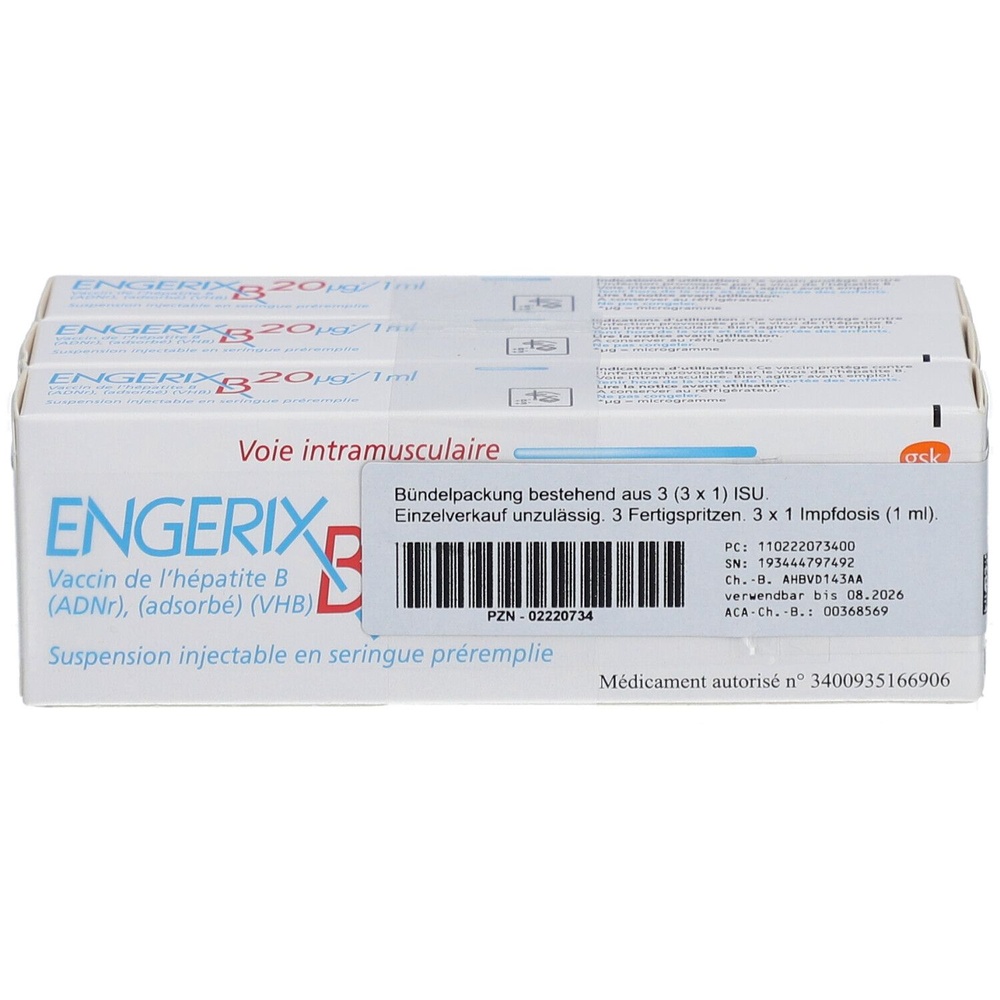
ENGERIX Injectable suspension

Запит на рецепт онлайн
Лікар розгляне ваш випадок і визначить, чи є рецепт медично доцільним.

Поговоріть з лікарем про ці ліки
Обговоріть симптоми та можливі подальші кроки під час короткої онлайн-консультації.



Інструкція із застосування ENJERIX B
Зміст інструкції
- ENGERIX B 20 micrograms/1 ml, injectable suspension
- ENGERIX B 10 micrograms/0.5 ml, injectable suspension
ENGERIX B 20 micrograms/1 ml, injectable suspension
Hepatitis B (HBV) vaccine (adsorbed) (recombinant DNA)
Read this leaflet carefully before this vaccine is administered to you as it contains
important information for you.
- Keep this leaflet. You may need to read it again.
- If you have any questions, ask your doctor or pharmacist.
- This vaccine has been prescribed for you only. Do not pass it on to others.
- If you experience any side effects, including those not listed in this leaflet, tell your doctor or pharmacist. See section 4.
Contents of this leaflet:
- 1. What Engerix B is and what it is used for
- 2. What you need to know before you receive Engerix B
- 3. How Engerix B is administered
- 4. Possible side effects
- 5. How to store Engerix B
- 6. Contents of the pack and other information
1. What Engerix B is and what it is used for
Engerix B is a vaccine used to prevent infection from hepatitis B. It can also help to prevent
infection from hepatitis D.
This vaccine can be given to both adults and adolescents starting from the age of 16
years. In exceptional circumstances it can also be given to children and adolescents from 11 to 15
years of age (see section 3).
Hepatitis B is an infectious liver disease caused by a virus. Some people have the virus
of hepatitis B in their body and are unable to eliminate it. They can still infect other people and
are called carriers. This disease spreads when the virus enters a person’s body
following contact with body fluids, often blood, from an infected person.
If a mother is a carrier of the virus, she can transmit the virus to the baby at birth. It is
also possible to catch the virus from a carrier through, for example, unprotected sex, sharing
infected needles or treatments with medical equipment that has not been
correctly sterilised.
The main signs of the disease include headache, fever, nausea, jaundice (yellowing of the skin and eyes) but in three out of 10 patients they do not appear.
Among people infected with the hepatitis B virus, one in 10 adults and up to nine in 10 children
will become carriers of the virus and will likely develop serious liver damage and in some cases
even liver cancer.
How Engerix B works
Engerix B contains a small amount of the “outer coating” of the hepatitis B virus. This
“outer coating” is not infectious and cannot cause the disease.
- When the vaccine is given, it stimulates the body’s immune system to prepare to protect itself in the future against these viruses.
- Engerix B does not protect if you have already caught the hepatitis B virus.
- Engerix B can only help to protect against infection from the hepatitis B virus.
2. What you need to know before you receive Engerix B
Engerix B must not be administered:
- if you are allergic (hypersensitive) to Engerix B or to any of the excipients of this vaccine (listed in section 6)
- if you have a fever (high temperature). Engerix B must not be administered if any of the above conditions apply to you. If you are not sure, talk to your doctor or pharmacist before receiving Engerix B. Tell your doctor or pharmacist if you have any allergies or if you have had health problems following vaccination.
Warnings and precautions
Talk to your doctor or pharmacist before you are given Engerix B if:
- you are on dialysis for kidney problems or have a disease that can affect your immune system. People who are on dialysis, who have long-term liver problems, who are carriers of hepatitis C or who are HIV positive can be vaccinated with Engerix B. This is because hepatitis B infections can be severe in these patients. Further information on kidney problems and dialysis can be found in section 3. If you are not sure whether any of the above conditions apply to you, talk to your doctor before receiving Engerix B.
Fainting (especially in adolescents) can occur after, or even before any
injection with a needle. Therefore, inform your doctor or nurse if you or your child have fainted with
a previous injection.
Like all vaccines, Engerix B may not fully protect you from hepatitis B. Some factors
such as advanced age, gender, overweight, smoking and some long-term problems reduce the
immune response to the vaccine. If any of these conditions apply to you, your doctor may
decide to have a blood test or give you an additional dose of Engerix B
to ensure that you are protected.
Other medicines and Engerix B
Tell your doctor or pharmacist if you are taking, have recently taken or might take
any other medicine.
Engerix B can be given at the same time as most routine vaccines. The
doctor will ensure that the vaccines are injected separately and in different parts of the body.
Pregnancy and breastfeeding
If you are pregnant, suspect you are pregnant, are planning a pregnancy, or are breastfeeding with
breast milk, ask your doctor or pharmacist for advice before you are given this
medicine.
Driving and using machines
It is unlikely that Engerix B will affect your ability to drive and operate machinery.
However, do not drive or use machines if you do not feel well.
Engerix B contains sodium
This vaccine contains less than 1mmol (23 mg) of sodium per dose, i.e. essentially ‘sodium-free’.
3. How Engerix B is administered
How the vaccine is administered
The doctor will administer the recommended dose of Engerix B to you
Engerix B will be administered:
- by injection into the muscle of the upper arm
- by injection under the skin if you are prone to easy bruising or have bleeding problems.
How much vaccine is administered
You will receive a series of Engerix B injections. Once you have completed the course of
injections, you can expect long-term protection against hepatitis B.
Adults and adolescents aged 16 years and over will be given a vaccine dose of
20 micrograms/1 ml.
There are several ways in which Engerix B can be administered. The doctor will choose the most
appropriate one for your case:
Schedule 1 – for adults or adolescents aged 16 years or over
First injection - now
Second injection - 1 month after the first injection
Third injection - 6 months after the first injection
Schedule 2 – for adults or adolescents aged 16 years or over
First injection - now
Second injection - 1 month after the first injection
Third injection - 2 months after the first injection
Fourth injection - 12 months after the first injection
- This schedule can also be used if you are about to be vaccinated following recent exposure to the hepatitis B virus, as it provides protection more quickly.
Schedule 3 – only for adults (18 years and over)
This schedule will only be administered in exceptional circumstances, for example if you need to travel to
a high-risk area within one month of vaccination
First injection - now
Second injection - 1 week after the first injection
Third injection - 3 weeks after the first injection
Fourth injection - 12 months after the first injection
Schedule 4 – only for children and adolescents aged 11 to 15 years
This schedule is used only if it is uncertain that the child will receive the third injection. For
this schedule, Engerix B (20 micrograms/1 ml) is used. This provides a
higher level of protection compared to 2 doses of Engerix B (10 micrograms/0.5 ml).
First injection - now
Second injection - 6 months after the first injection
- When this schedule is used, protection is not always achieved until after the second dose. This two-dose schedule is used only when there is a relatively low risk of hepatitis B infection during the course of vaccination and when completion of that course can be guaranteed. It is very important that you attend for the injections at the recommended times. If you have any questions about the amount of vaccine you will be given, talk to your doctor.
Kidney problems and dialysis
- Individuals aged 16 years and over If you have kidney problems or are on dialysis, your doctor may decide to vaccinate you with four double doses (2 x 20 micrograms/1 ml) of vaccine at months 0, 1, 2 and 6. The doctor may also decide to have you undergo a blood test to make sure you are protected against hepatitis B.
4. Possible side effects
Like all vaccines, this vaccine can cause side effects, although not everybody gets them.
The following side effects may occur following this vaccination:
Allergic reactions(may occur in up to 1 case per 10,000 doses of vaccine)
If you experience an allergic reaction, seek immediate medical attention. Symptoms may
include:
- swelling of the face
- low blood pressure
- difficulty breathing
- bluish discoloration of the skin
- loss of consciousness These symptoms usually appear very early after the injection. Seek immediate medical attention if they occur after you have left the clinic.
Other side effects include:
Very common(may occur in more than 1 case per 10 doses of vaccine)
- pain and redness at the injection site
- fatigue
- irritability
Common(may occur in up to 1 case per 10 doses of vaccine)
- headache
- drowsiness
- nausea or vomiting
- diarrhea or abdominal pain
- loss of appetite
- fever
- general feeling of discomfort
- swelling at the injection site
- reactions at the injection site such as hard nodule formation
Uncommon(may occur in up to 1 case per 100 doses of vaccine)
- feeling dizzy
- muscle pain
- flu-like symptoms
Rare(may occur in up to 1 case per 1,000 doses of vaccine)
- swollen glands
- urticaria, rash and itching
- joint pain
- tingling
Very rare(may occur in up to 1 case per 10,000 doses of vaccine)
- easy bruising and difficulty clotting in case of injury
- low blood pressure
- inflammation of blood vessels
- sudden swelling of the face around the mouth and in the throat area (angioedema)
- inability to move muscles (paralysis)
- inflammation of the nerves (neuritis) which can cause loss of sensation or numbness, including temporary inflammation of the nerves causing pain, weakness and paralysis of the limbs which often progresses to the chest and face (Guillain-Barré syndrome), a disease of the eye nerves (optic neuritis) and multiple sclerosis
- difficulty moving arms and legs (neuropathy)
- inflammation of the brain (encephalitis)
- degenerative brain disease (encephalopathy)
- infection around the brain (meningitis)
- convulsions
- loss of sensitivity to pain or touch in the skin (hypoesthesia)
- formation of purple or reddish-purple bumps on the skin (lichen planus)
- formation of red or purple spots on the skin
- stiffness and pain in the joints (arthritis)
- muscle weakness
Reporting of side effects
If you get any side effects, even those not listed in this leaflet, tell your
doctor or pharmacist. You can also report side effects directly through the national
reporting system at: https://www.aifa.gov.it/content/segnalazioni-reazioni-avverse .
By reporting side effects you can help provide more information on the safety of
this medicine.
5. How to store Engerix B
- Keep this vaccine out of the sight and reach of children.
- Do not use this vaccine after the expiry date stated on the label and the carton after EXP. The expiry date refers to the last day of that month.
- Store in a refrigerator between 2°C and 8°C.
- Do not freeze.
- Store in the original package to protect from light.
- Do not dispose of any medicine in wastewater or household waste. Ask your pharmacist how to dispose of medicines you no longer use. This will help protect the environment.
6. Package Contents and Other Information
What Engerix B contains
- The active ingredient is the “outer coating” of the hepatitis B virus. Each dose contains 20 micrograms/1 ml of protein consisting of this outer coating adsorbed on aluminium hydroxide hydrate.
- The excipients are sodium chloride, disodium phosphate dihydrate, sodium dihydrogen phosphate and water for injections.
Description of the appearance of Engerix B and package contents
- Engerix B is a white, turbid injectable liquid
- For the vial: Injectable suspension (20 micrograms/ml). Packs of 1, 10, 25 or 100.
- For the pre-filled syringes: Injectable suspension in pre-filled syringe (20 micrograms/ml). Packs of 1 and 10. Not all pack sizes may be marketed.
Marketing Authorisation Holder and Manufacturer
GlaxoSmithKline Biologicals s.a. – Rixensart (Belgium)
Local Representative: GlaxoSmithKline S.p.A. – Viale dell’Agricoltura, 7 - 37135 Verona - Italy
GlaxoSmithKline Biologicals s.a., Rue de l’Institut 89, B-1330 Rixensart, Belgium
This medicinal product is authorised in the Member States of the European Economic Area with the
following denominations:
Austria, Denmark, Finland, Iceland, Netherlands, Norway, Spain, Sweden: Engerix-B
Belgium, Luxembourg, Portugal, Italy: Engerix B
France, Ireland: Engerix B-20
Germany: Engerix-B Adult
Greece: Engerix
Other sources of information
More detailed information on this medicinal product is available on the website of the Italian Medicines Agency.
The following information is intended exclusively for healthcare professionals:
During storage, the contents may present a fine white sediment with a clear, colourless supernatant.
Once mixed, the vaccine is slightly opaque.
The vaccine must be visually inspected to verify the absence of particulate matter and/or an abnormal physical appearance before administration. If either of these conditions is found, do not administer the vaccine.
The entire contents of a single-dose container must be withdrawn and injected immediately.
Instructions for the pre-filled syringe
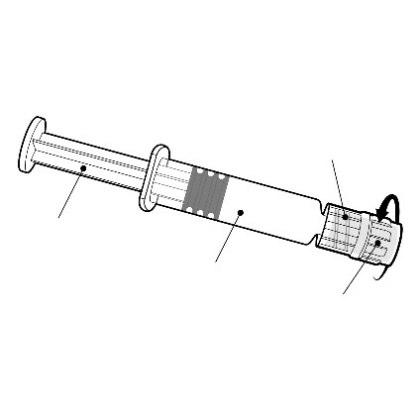
Luer Lock Adapter
Hold the syringe by the body, not by the
plunger.
Unscrew the syringe cap by rotating it counterclockwise.
Plunger
Cap
Body
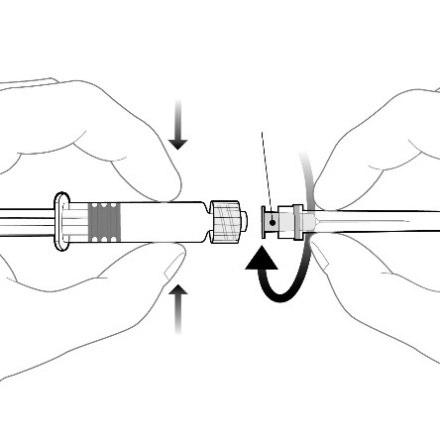
Needle hub
To attach the needle to the syringe, gently connect the needle hub to the Luer Lock Adapter and rotate a quarter turn clockwise until a lock is felt.
Do not pull the syringe plunger out of the body.
If this happens, do not administer the vaccine.
Disposal
Unused medicinal product and waste materials derived from such medicinal product must be disposed of in accordance with current local regulations.
ENGERIX B 10 micrograms/0.5 ml, injectable suspension
Hepatitis B (HBV) vaccine (adsorbed) (recombinant DNA)
Read this leaflet carefully before you or your child are given this vaccine as it contains important information for you.
- Keep this leaflet. You may need to read it again.
- If you have any questions, ask your doctor or pharmacist.
- This vaccine has been prescribed for you or your child only. Do not give it to other people.
- If you or your child experience any side effects, including those not listed in this leaflet, tell your doctor or pharmacist. See section 4. In this leaflet, any reference to “you” can also be understood to refer to “your child”.
Contents of this leaflet:
- 1. What Engerix B (10 µg/0.5 ml) is and what it is used for
- 2. What you need to know before you receive Engerix B (10 µg/0.5 ml)
- 3. How Engerix B (10 µg/0.5 ml) is given
- 4. Possible side effects
- 5. How to store Engerix B (10 µg/0.5 ml)
- 6. Contents of the pack and other information
1. What is Engerix B (10 µg/0.5 ml) and what is it used for?
Engerix B (10 µg/0.5 ml) is a vaccine used to prevent infection from hepatitis B. It can also help
to prevent infection from hepatitis D.
This vaccine can be given to newborns, children and adolescents up to and including the age of 15 years.
Hepatitis B is an infectious liver disease caused by a virus. Some people have the hepatitis B virus
in their body and are unable to eliminate it. They can still infect other people and are called carriers.
This disease spreads when the virus enters a person's body following contact with body fluids, often
blood, from an infected person.
If a mother is a carrier of the virus, she can transmit it to her baby at birth. It is also possible to
catch the virus from a carrier through, for example, unprotected sex, sharing infected needles or
treatments with medical equipment that have not been properly sterilized.
The main signs of the disease include headache, fever, nausea, jaundice (yellowing of the skin and
eyes) but in three out of 10 patients they do not manifest.
Among people infected with the hepatitis B virus, one in 10 adults and up to nine in 10 children
will become carriers of the virus and will likely develop serious liver damage and in some cases even
liver cancer.
How Engerix B (10 µg/0.5 ml) works
Engerix B (10 µg/0.5 ml) contains a small amount of the "outer coating" of the hepatitis B virus.
This "outer coating" is not infectious and cannot cause the disease.
- When the vaccine is given, it stimulates the body's immune system to prepare to protect itself in the future against these viruses.
- Engerix B (10 µg/0.5 ml) does not protect if you have already contracted the hepatitis B virus.
- Engerix B (10 µg/0.5 ml) can only help protect against infection from the hepatitis B virus.
2. What you need to know before you are given Engerix B (10 µg/0.5 ml)
Engerix B (10 µg/0.5 ml)must not be given:
- if you are allergic (hypersensitive) to Engerix B (10 µg/0.5 ml) or to any of the other ingredients of this vaccine (listed in section 6)
- if you have a fever (high temperature). Engerix B (10 µg/0.5 ml) must not be given if any of the above conditions apply to you. If you are not sure, talk to your doctor or pharmacist before receiving Engerix B (10 µg/0.5 ml). Tell your doctor or pharmacist if you have any allergies or if you have had health problems following vaccination.
Warnings and precautions
Talk to your doctor or pharmacist before you are given Engerix B (10 µg/0.5 ml) if:
- you are on dialysis for kidney problems or have a disease that can affect your immune system. People who are on dialysis, who have long-term liver problems, who are carriers of hepatitis C or who are HIV positive can also receive Engerix B (10 µg/0.5 ml) from their doctor. This is because hepatitis B infections can be very serious in these patients. Further information on kidney problems and dialysis can be found in section 3. If you are not sure whether any of the above conditions apply to you, talk to your doctor before receiving Engerix B (10 µg/0.5 ml).
Fainting (especially in adolescents) may occur after, or even before any
injection with a needle. Therefore, inform your doctor or nurse if you have fainted with a previous
injection.
Like all vaccines, Engerix B (10 µg/0.5 ml) may not fully protect you from hepatitis B.
Some factors such as advanced age, gender, overweight, smoking and other long-term problems
reduce the immune response to the vaccine. If any of these conditions apply to you, your
doctor may decide to have a blood test or give you an additional dose of
Engerix B (10 µg/0.5 ml) to ensure you are protected.
Other medicines and Engerix B (10 µg/0.5 ml)
Tell your doctor or pharmacist if you are taking, have recently taken or might take
any other medicine.
Engerix B (10 µg/0.5 ml) can be given at the same time as most
routine vaccines. The doctor will ensure that the vaccines are injected separately and in different
parts of the body.
Pregnancy and breastfeeding
If you are pregnant, suspect you may be pregnant, are planning to become pregnant, or are breastfeeding
with breast milk, ask your doctor or pharmacist for advice before you are given this
medicine.
Driving and operating machinery
It is unlikely that Engerix B will affect your ability to drive and operate machinery.
However, do not drive or operate machinery if you do not feel well.
Engerix B (10 µg/0.5 ml)contains sodium
This vaccine contains less than 1 mmol of sodium (23 mg) per dose, i.e. it is essentially “sodium-free”.
3. How Engerix B (10 µg/0.5 ml) is administered
How the vaccine is administered
The doctor will administer the recommended dose of Engerix B (10 µg/0.5 ml)
Engerix B (10 µg/0.5 ml) will be administered:
- by injection into the muscle of the upper arm in children and adolescents,
- by injection into the muscle of the thigh in newborns and young children,
- by subcutaneous injection if you are prone to easy bruising or have bleeding problems.
How much vaccine is administered
You will receive a series of injections of Engerix B (10 µg/0.5 ml). Once you have
completed the course of injections, you can expect long-term protection against hepatitis B.
- Newborns, children and adolescents up to and including 15 years of age are usually given a vaccine dose of 10 micrograms/0.5 ml. There are several ways in which Engerix B (10 µg/0.5 ml) can be administered. The doctor will choose the most appropriate one for your case:
Schedule 1 – for newborns, children and adolescents up to and including 15 years of age
First injection - now
Second injection - 1 month after the first injection
Third injection - 6 months after the first injection
Schedule 2 – for newborns, children and adolescents up to and including 15 years of age
First injection - now
Second injection - 1 month after the first injection
Third injection - 2 months after the first injection
Fourth injection - 12 months after the first injection
- In newborns, Schedule 2 allows for the simultaneous administration of Engerix B (10 µg/0.5 ml) with other routine childhood vaccines.
- This schedule can also be used if you are about to be vaccinated following recent exposure to the hepatitis B virus, as it provides protection more quickly.
It is very important that you attend for the injections at the recommended times. If you have any questions
regarding the amount of vaccine that will be administered to you, talk to your doctor.
Vaccination and childbirth
If you have hepatitis B and have just given birth, Schedule 1 or 2 can be used to vaccinate your
child.
- The doctor may also decide to administer the child with immunoglobulins (human antibodies) anti-hepatitis B at the time of the first injection. This will help protect the child from hepatitis B. These will be administered at a separate injection site.
Kidney problems and dialysis
If the child has kidney problems or is undergoing dialysis, the doctor may decide to perform a blood
test or administer additional doses of vaccine to ensure that the child is
protected.
4. Possible side effects
Like all vaccines, this vaccine can cause side effects, although not everyone will experience them.
The following side effects may occur after this vaccination:
Allergic reactions(may occur in up to 1 case per 10,000 doses of vaccine)
If you experience an allergic reaction, consult your doctor immediately. Symptoms may include:
- swelling of the face
- low blood pressure
- difficulty breathing
- bluish discoloration of the skin
- loss of consciousness These symptoms usually appear very early after the injection. Consult your doctor immediately if they occur after you have left the clinic.
Other side effects include:
Very common(may occur in more than 1 case per 10 doses of vaccine)
- headache
- pain and redness at the injection site
- fatigue
- irritability
Common(may occur in up to 1 case per 10 doses of vaccine)
- drowsiness
- nausea or vomiting
- diarrhea or abdominal pain
- loss of appetite
- fever
- general feeling of discomfort
- swelling at the injection site
- reactions at the injection site such as hard nodule formation
Uncommon(may occur in up to 1 case per 100 doses of vaccine)
- feeling dizzy (vertigo)
- muscle pain
- flu-like symptoms
Rare(may occur in up to 1 case per 1,000 doses of vaccine)
- swollen glands
- urticaria, rash and itching
- joint pain
- tingling
The side effects that have been reported during the marketing of Engerix B (10 µg/0.5
ml) include
- easy bruising and difficulty clotting in case of injury
- low blood pressure
- inflammation of blood vessels
- sudden swelling of the face around the mouth and in the throat area (angioedema)
- inability to move muscles (paralysis)
- inflammation of the nerves (neuritis) which can cause loss of sensation or numbness, including temporary inflammation of the nerves causing pain, weakness and paralysis of the limbs which often progresses to the chest and face (Guillain-Barré syndrome), a disease of the optic nerves (optic neuritis) and multiple sclerosis
- difficulty moving arms and legs (neuropathy)
- inflammation of the brain (encephalitis)
- degenerative brain disease (encephalopathy)
- infection around the brain (meningitis)
- convulsions
- loss of sensitivity to pain or touch (hypoesthesia)
- formation of purple or reddish-purple bumps (lichen planus)
- formation of red or purple spots on the skin
- stiffness and pain in the joints (arthritis)
- muscle weakness.
In children born very prematurely (at the 28th week of gestation or earlier) 2-3 days
after vaccination, longer intervals may occur between successive breaths.
Reporting of side effects
If you experience any side effects, including those not listed in this leaflet, please inform
your doctor or pharmacist. You can also report side effects directly through the national
reporting system at: https://www.aifa.gov.it/content/segnalazioni-reazioni-avverse .
By reporting side effects, you can help provide more information on the safety of
this medicine.
5. How to store Engerix B (10 µg/0.5 ml)
- Keep this vaccine out of the sight and reach of children.
- Do not use this vaccine after the expiry date stated on the label and the carton after EXP. The expiry date refers to the last day of that month.
- Store in a refrigerator (2°C to 8°C).
- Do not freeze.
- Store in the original package to protect from light.
- Do not dispose of any medicine in wastewater or household waste. Ask your pharmacist how to dispose of medicines you no longer use. This will help protect the environment.
6. Package contents and other information
What Engerix B (10 µg/0.5 ml) contains
- The active ingredient is the “outer coating” of the hepatitis B virus. Each dose contains 10 micrograms/0.5 ml of protein consisting of this outer coating adsorbed onto aluminium hydroxide, hydrated.
- The excipients are sodium chloride, disodium phosphate dihydrate, disodium hydrogen phosphate and water for injections.
Description of the appearance of Engerix B (10 µg/0.5 ml) and package contents
- Engerix B (10 µg/0.5 ml) is a white, turbid injectable liquid
- For the vial: Injectable suspension (10 micrograms/0.5 ml). Packs of 1, 10 or 100.
- For the pre-filled syringes: Injectable suspension (10 micrograms/0.5 ml). Packs of 1 or 10 with or without needles.
- Not all pack sizes may be marketed.
Marketing Authorisation Holder and Manufacturer
Marketing Authorisation Holder
GlaxoSmithKline Biologicals s.a. – Rixensart (Belgium)
Local Representative: GlaxoSmithKline S.p.A. – Viale dell’Agricoltura, 7 - 37135 Verona - Italy
Manufacturer
GlaxoSmithKline Biologicals s.a., Rue de l’Institut 89, B-1330 Rixensart, Belgium
This medicinal product is authorised in the Member States of the European Economic Area with the
following denominations:
Austria, Denmark, Finland, Iceland, Norway, Sweden: Engerix-B
Belgium, Luxembourg, Spain: Engerix B Junior
France, Ireland, Italy: Engerix B-10
Germany: Engerix B Children
Greece: Engerix
Netherlands: Engerix-B Junior
Portugal: Engerix B
Other sources of information
More detailed information on this medicinal product is available on the website of the Italian Medicines Agency.
_________________________________________________________________________________
The following information is intended for healthcare professionals only:
During storage, the contents may present a fine white sediment with a clear, colourless supernatant.
Once mixed, the vaccine is slightly opaque.
The vaccine must be visually inspected to verify the absence of particulate matter and/or an abnormal physical appearance before administration. If either of these conditions is found, do not administer the vaccine.
The entire contents of a single-dose container must be withdrawn and injected immediately.
Instructions for the pre-filled syringe
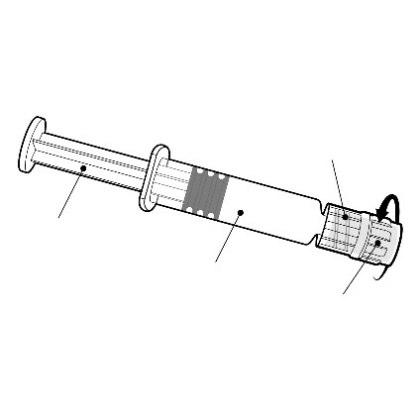
Luer Lock adapter
Hold the syringe by the body, not by the
plunger.
Unscrew the syringe cap by rotating it counterclockwise.
Plunger
Cap
Body
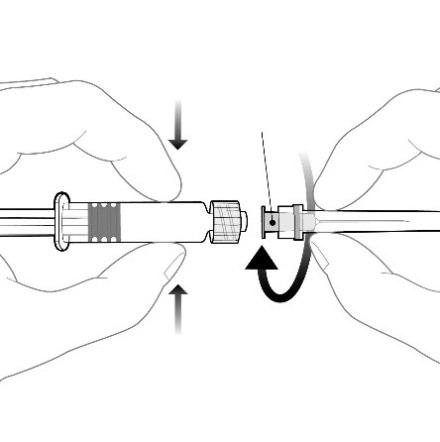
Needle hub
To attach the needle to the syringe, gently connect
the needle hub to the Luer Lock Adapter and rotate a quarter turn clockwise until a click is felt.
Do not withdraw the syringe plunger from the body.
If this happens, do not administer the vaccine.
Disposal
Unused medicinal product and waste materials derived from such medicinal product should be disposed of in accordance with local regulations.

Не впевнені, чи підходить вам цей лікарський засіб?
Обговоріть симптоми та можливі варіанти лікування з лікарем онлайн.

Виникли питання під час прийому ліків?
Обговоріть свої симптоми та лікування з лікарем онлайн.
- Країна реєстрації
- Лікарська формаInjectable suspension
- Код АТХJ07BC01
- Діюча речовина
- Потрібен рецептНі
- Виробник
- Ця інформація надана лише для ознайомлення і не є медичною порадою. Рішення щодо лікування завжди приймає лікар.
- Альтернативи до ENJERIX BЛікарська форма: Injectable suspension, 0.5MLДіюча речовина: hepatitis B, purified antigenВиробник: GLAXOSMITHKLINE BIOLOGICALS S.A.Рецепт не потрібенЛікарська форма: Injectable solution in pre-filled syringe, 0.5 MLДіюча речовина: hepatitis B, purified antigenВиробник: DYNAVAX GMBHПотрібен рецептЛікарська форма: Injectable suspension in pre-filled syringe, 720 U. + 20 MCGДіюча речовина: combinationsВиробник: GLAXOSMITHKLINE BIOLOGICALS S.A.Рецепт не потрібен
Аналоги ENJERIX B в інших країнах
Препарати з тією самою діючою речовиною, доступні в інших країнах.
Аналог ENJERIX B у Іспанія
Аналог ENJERIX B у Польща
Аналог ENJERIX B у Україна
Лікарі онлайн щодо ENJERIX B
Застосування, безпека та можливість призначення рецепта — за результатами медичної оцінки.









Отримайте рецепт на ENJERIX B онлайн
Заповніть форму за 2 хвилини
Розкажіть про симптоми, історію хвороби та потрібний препарат.
Оберіть лікаря або ми призначимо
Оберіть спеціаліста або ми підберемо найближчого доступного лікаря.
Лікар розглядає ваш випадок
Зазвичай протягом 30 хвилин. Може ставити уточнювальні запитання в чаті.
Отримайте в будь-якій аптеці
Електронний рецепт надсилається на вашу пошту — дійсний по всій Польщі.
Часті запитання
ENJERIX B не потребує рецепта в Італія. Ви можете обговорити з лікарем онлайн, чи підходить цей лікарський засіб для вашої ситуації.
Діюча речовина у ENJERIX B — hepatitis B, purified antigen. Це допомагає визначити препарати з тим самим складом, але під іншими торговими назвами.
ENJERIX B виробляється компанією GLAXOSMITHKLINE BIOLOGICALS S.A.. Назва бренду та упаковка можуть відрізнятися залежно від дистрибʼютора.
Лікарі, зокрема Сімейні лікарі, Психіатри, Дерматологи, Кардіологи, Ендокринологи, Гастроентерологи, Пульмонологи, Нефрологи, Ревматологи, Гематологи, Інфекціоністи, Алергологи, Геріатри, Педіатри, Онкологи, можуть оцінити доцільність застосування ENJERIX B з урахуванням вашого стану та місцевих правил. Ви можете записатися на онлайн-консультацію, щоб обговорити симптоми та можливі подальші кроки.
Польща має добре розвинену систему охорони здоров'я у великих містах, таких як Варшава, Краків, Вроцлав і Гданськ. Аптеки широко доступні та працюють відповідно до чинного законодавства, забезпечуючи доступ до рецептурних препаратів.
Ви можете придбати ENJERIX B у Варшаві, Кракові, Вроцлаві або Гданську в будь-якій аптеці за наявності дійсного рецепта.
Щоб отримати рецепт, ви можете скористатися Oladoctor:
Інші препарати з тією самою діючою речовиною (hepatitis B, purified antigen) включають FENDRIX, EPLISAV B, AMBIRIX. Вони можуть відрізнятися торговою назвою або формою випуску, але містять той самий терапевтичний компонент. Перед зміною або початком прийому нового препарату варто проконсультуватися з лікарем.
