



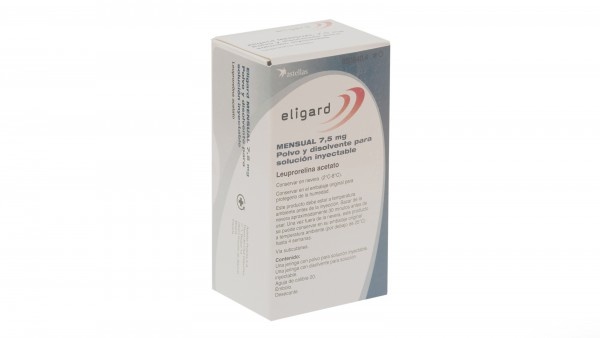
ELIGARD 7.5 MG Powder and solvent for injectable solution

Запит на рецепт онлайн
Лікар розгляне ваш випадок і визначить, чи є рецепт медично доцільним.

Поговоріть з лікарем про ці ліки
Обговоріть симптоми та можливі подальші кроки під час короткої онлайн-консультації.



Інструкція із застосування ELIGARD
Зміст інструкції
ELIGARD 7.5 mg
powder and solvent for injectable solution
Leuprorelin acetate
Read this leaflet carefully before you start using this medicine as it contains important
information for you.
Keep this leaflet. You may need to read it again.
If you have any questions, ask your doctor, pharmacist or nurse.
This medicine has been prescribed for you only. Do not pass it on to others, even if they have the same
symptoms as you because it may be harmful.
If you get any side effects, even those not listed in this leaflet, tell your doctor, pharmacist or nurse. See section 4.
Contents of this leaflet
- 1. What ELIGARD is and what it is used for
- 2. What you need to know before you use ELIGARD
- 3. How to use ELIGARD
- 4. Possible side effects
- 5. How to store ELIGARD
- 6. Contents of the pack and other information
1. WHAT IS ELIGARD AND WHAT IS IT USED FOR
The active ingredient of ELIGARD belongs to the group of so-called gonadotropin-releasing hormones.
These medicines are used to reduce the production of certain sex hormones (testosterone).
ELIGARD is used to treat hormone-dependent prostate cancerin the metastatic stage in
adult men and for the treatment of hormone-dependent, high-risk, non-
metastatic prostate cancer, in combination with radiotherapy.
2. WHAT YOU NEED TO KNOW BEFORE USING ELIGARD
Do not use ELIGARD
- If you are a woman or a child
- If you are hypersensitive (allergic)to the active ingredient leuprorelin acetate, to medicines with comparable activity to that of the natural gonadotropin hormone or to any of the excipients of ELIGARD (listed in section 6).
- Following surgical removal of the testicles,as in this case ELIGARD does not determine a further decrease in serum testosterone levels.
- As a single treatment if you have symptoms related to spinal cord compression or spinal tumors. In these cases, ELIGARD must be used only in association with other medicines for the treatment of prostate cancer.
Warnings and precautions
Talk to your doctor, pharmacist or nurse before using ELIGARD
- If you are in any of the following situations: any heart or circulatory condition, including heart rhythm problems (arrhythmia), or if you are about to be treated with medicines for these conditions. The risk of heart rhythm problems may increase when ELIGARD is used.
- If you have difficulty urinating.You must be carefully monitored during the first few weeks of treatment.
- If spinal cord compressionor difficulty urinating occur.In analogy with other drugs characterized by a mechanism of action similar to that of ELIGARD, it has been reported that severe cases of spinal cord compression and narrowing of the ducts located between the kidneys and the urinary bladder, can contribute to the onset of paralysis as a symptom. If these complications occur, standard therapy should be performed.
- If you experience sudden headache, vomiting, altered mental status and sometimes cardiac collapse, within two weeks of taking ELIGARD, then inform your doctor or medical personnel. Rare cases defined as pituitary apoplexy have been reported WITH OTHER MEDICINES having a mechanism of action similar to ELIGARD.
- If you suffer from diabetes mellitus(high blood sugar levels). You should be monitored regularly during treatment.
- Treatment with ELIGARD may increase the risk of fractures caused by osteoporosis (decreased bone density).
- Reports of depression have been made in patients taking ELIGARD. If you are taking ELIGARD and feel depressed, tell your doctor.
- In patients taking products similar to ELIGARD, reports of cardiovascular events have been made and it is not known whether these are related to the use of these products. If you are taking ELIGARD and develop signs or symptoms of cardiovascular disease, tell your doctor.
- Convulsions have been reported in patients who have taken ELIGARD. If you are taking ELIGARD and have convulsions, tell your doctor.
- If you suffer from severe or recurrent headaches, have vision problems or experience ringing or whistling in your ears, seek immediate medical attention.
- For athletes: the use of the drug without therapeutic need constitutes doping and may still result in a positive doping test.
Complications that occur at the beginning of treatment
During the first week of treatment, there is generally a transient increase in the levels
of the male sex hormone testosterone in the blood. This may determine a temporary
worseningof symptoms related to the disease and also the onset of new symptoms that the patient
had not yet experienced. These symptoms include especially bone pain, urinary disorders,
spinal cord compression or the presence of blood in the urine. Usually these symptoms tend to
regress with continued treatment. If symptoms persist, you should contact your doctor.
If ELIGARD does not bring improvements
A group of patients have tumors that are not sensitive to the reduction of serum testosterone levels. If
you have the impression that the effect of ELIGARD is too weak, talk to your doctor.
Other medicines and ELIGARD
ELIGARD can interfere with some medicines used to treat heart rhythm problems (e.g.
quinidine, procainamide, amiodarone and sotalol) or may increase the risk of heart rhythm problems
when used together with other medicines (e.g. methadone (used to reduce pain and in
detoxification from substance abuse), moxifloxacin (an antibiotic), antipsychotics used for serious
mental illnesses).
Tell your doctor or pharmacist if you are taking, have recently taken or may take
any other medicines, including those without a prescription.
Pregnancy and breastfeeding
ELIGARD is not indicated in women.
Driving and using machines
Fatigue, dizziness or visual disturbances are possible side effects of treatment with
ELIGARD or may be a consequence of the disease. If you experience these side effects,
be careful when driving or using machines.
3. HOW TO USE ELIGARD
Dosage
Use this medicine following exactly the instructions of your doctor or pharmacist. If you have
any doubts, ask your doctor or pharmacist.
ELIGARD 7.5 mg is administered once a month, unless otherwise prescribed by your doctor.
The injected solution forms a drug depot that allows the prolonged release of the active
ingredient leuprorelin acetate for one month.
Additional tests
The response to therapy with ELIGARD must be verified by your doctor following specific
clinical parameters and by measuring blood levels of prostate-specific antigen (PSA).
Method of administration
ELIGARD must be administered only by your doctoror by a nurse.
They will also take care of preparing the medicine.
After preparation, ELIGARD is administered by a subcutaneous injection (injection into the
tissue under the skin). Endo-arterial (into an artery) or
intravenous (into a vein) injection must be strictly avoided.
As with other active ingredients injected subcutaneously, the injection site must be
periodically changed.
If you take more ELIGARD than you should
Since the injection is generally performed by your doctor or by adequately trained personnel,
overdose cases are not expected.
However, if a quantity greater than that prescribed is administered, your doctor will proceed with
specific monitoring and will administer additional treatment as required.
If you forget to take ELIGARD
If you believe you have forgotten your monthly ELIGARD administration, contact your doctor.
If you stop taking ELIGARD
As a general rule, prostate cancer therapy with ELIGARD requires long-term
treatment. Therefore, therapy should not be discontinued, even if symptoms improve or
disappear completely.
If treatment with ELIGARD is discontinued prematurely, a worsening of
symptoms related to the disease may occur.
Do not stop therapy before the expected time without first consulting your doctor.
If you have any doubts about the use of this medicine, ask your doctor, pharmacist or
nurse.
4. POSSIBLE SIDE EFFECTS
Like all medicines, ELIGARD can cause side effects, although not everybody gets them.
The side effects observed during treatment with ELIGARD are mostly due to the specific effect of the active
ingredient leuprorelin acetate, i.e., an increase and a decrease of certain hormones. The most commonly
reported side effects are hot flushes (in 58% of patients), nausea, malaise and fatigue, as well as temporary
local irritation at the injection site.
Initial side effects
During the first few weeks of treatment with ELIGARD, the specific symptoms related to the disease
may worsen, as there is generally a brief increase in the male sex hormone testosterone in the blood in the
early stages. Your doctor may therefore administer an anti-androgen (a substance that inhibits the effects
of testosterone) in the initial phase of treatment to mitigate these possible effects (see also the Section2. Before using ELIGARD, Complications that
arise at the beginning of treatment).
Local side effects
The local side effects reported following injection of ELIGARD are typically those often associated with similar
preparations injected subcutaneously (preparations that are injected into the tissue under the skin). Mild
burning immediately after injection is a very common effect. Acute pain and pain after injection are common
effects, as is the development of bruising at the injection site. Cases of skin redness at the injection site have
been reported as rare effects. Tissue hardening and ulceration are uncommon.
These local side effects resulting from subcutaneous injection are mild and described as short-lived effects.
These side effects do not recur within the time interval between individual injections.
Very common side effects (may affect more than 1 in 10 people)
- Hot flushes
- Spontaneous bleeding from the skin or mucous membranes, skin redness
- Fatigue, injection-related side effects (see also, above, Local side effects)
Common side effects (may affect up to 1 in 10 people)
- Nasopharyngitis (cold symptoms)
- Nausea, malaise, diarrhea, inflammation of the stomach and intestines (gastroenteritis/colitis)
- Itching, night sweats
- Joint pain
- Irregular urges to urinate (also at night), difficulty starting to urinate, pain when urinating, decreased urine output
- Breast tension, breast enlargement, testicular atrophy, testicular pain, infertility, erectile dysfunction, reduced penis size
- Chills (episodes of violent tremors with high fever), weakness
- Prolonged bleeding time, changes in blood parameters, decreased red blood cells/low red blood cell count.
Uncommon side effects (may affect up to 1 in 100 people)
- Urinary tract infections, local skin infections
- Worsening of diabetes mellitus
- Abnormal dreams, depression, decreased libido
- Dizziness, headache, altered skin sensitivity, insomnia, taste disturbances, smell disturbances
- Hypertension (increased blood pressure), hypotension (decreased blood pressure)
- Shortness of breath
- Constipation, dry mouth, dyspepsia (digestive disorders with symptoms such as feeling of fullness, stomach pain, belching, nausea, vomiting, heartburn), vomiting
- Cold sweats, increased sweating
- Back pain, muscle cramps
- Hematuria (blood in the urine)
- Bladder spasms, increased urge to urinate, inability to urinate
- Increased male breast tissue, impotence
- Lethargy (drowsiness), pain, fever
- Weight gain
- Loss of balance, mental confusion
- Muscle wasting/loss of muscle tissue after prolonged use
Rare side effects (may affect up to 1 in 1,000 people)
- Abnormal involuntary movements
- Sudden loss of consciousness, fainting
- Flatulence, belching
- Hair loss, skin rashes (boils on the skin)
- Breast pain
- Ulceration at the injection site
Very rare side effects (may affect up to 1 in 10,000 people)
- Necrosis at the injection site
Not known (frequency cannot be estimated from available data)
- Changes in electrocardiogram (Prolongation of the QT interval)
- Inflammation of the lungs, lung disease
- Idiopathic intracranial hypertension (increased pressure inside the skull around the brain, characterized by headache, double vision and other visual disturbances, and ringing or buzzing in one or both ears)
Other side effects
Other side effects that have been described in the literature in relation to treatment with leuprorelin, the
active ingredient of ELIGARD, are edema (accumulation of fluid in the tissues, which manifests as swelling
of the hands and feet), pulmonary embolism (which manifests with symptoms such as shortness of breath,
difficulty breathing and chest pain), palpitations (awareness of your own heartbeat), muscle weakness,
chills, skin rash, impaired memory and vision. After long-term treatment with ELIGARD, symptoms attributable
to reduced bone tissue (osteoporosis) can be expected. Due to the development of osteoporosis, the risk of
fractures increases.
After the administration of medicines belonging to the same class as ELIGARD, rare cases of severe allergic
reactions causing difficulty breathing or dizziness have been reported.
Seizures have been reported after the administration of medicines belonging to the same class as ELIGARD.
Reporting of side effects
If any side effect gets serious, or if you notice any side effect not listed in this leaflet, please tell your doctor or
pharmacist. You can also report side effects directly through the national reporting system at https://www.aifa.gov.it/content/segnalazioni-reazioni-avverse.
By reporting side effects you can help provide more information on the safety of this medicine.
5. HOW TO STORE ELIGARD
Keep this medicine out of the sight and reach of children.
Do not use this medicine after the expiry date which is stated on the pack after Exp.
The expiry date refers to the last day of that month.
Storage instructions
Store in a refrigerator (2°C-8 C).
Store in the original package to protect the medicine from moisture.
Before the injection, this medicine must be brought to room temperature. Remove from the refrigerator
about 30 minutes before use. Once out of the refrigerator, this medicine can be stored in the
original package, at room temperature (below 25°C), for up to four weeks.
Once the blister is opened, the medicine must be prepared and used immediately. Single-use pack.
Instructions for the disposal of unused or expired ELIGARD packs
Do not dispose of any medicine in wastewater or household waste. Ask your pharmacist how to
dispose of medicines you no longer use. This will help protect the environment.
6. CONTENT OF THE PACK AND OTHER INFORMATION
What ELIGARD contains
The active ingredient is leuprorelin acetate.
A pre-filled syringe (Syringe B) contains 7.5 mg of leuprorelin acetate.
The excipients are a copolymer of DL-lactic and glycolic acids (50:50) and N-methyl-2-pyrrolidone in a
pre-filled syringe with injectable solution (Syringe A).
Description of the appearance of ELIGARD and contents of the pack
ELIGARD contains a powder and a solvent for injectable solution.
ELIGARD 7.5 mg is available in the following packs:
- A thermoformed tray and a sterile 20 gauge needle in a cardboard box. The tray contains a desiccant bag and a pre-connected syringe system consisting of:
- Syringe A pre-filled with the solvent
- Syringe B pre-filled with the powder
- Connector with alignment button for Syringe A and B.
- A multi-pack containing kits of 3 pre-connected syringe systems.
Not all pack sizes may be marketed.
Marketing Authorisation Holder
Recordati Industria Chimica e Farmaceutica S.p.A.
Via Matteo Civitali, 1
20148 Milano
Italy
Manufacturer
Recordati Industria Chimica e Farmaceutica S.p.A.
Via Matteo Civitali, 1
20148 Milano
Italy
This medicinal product is authorised in the Member States of the EEA under the following
denominations:
Austria: Eligard Depot 7.5 mg
Belgium: Depot-Eligard 7.5 mg
Bulgaria: Eligard 7.5 mg
Cyprus: Eligard
Denmark: Eligard
Estonia: Eligard
Finland: Eligard
France: Eligard 7.5 mg
Germany: Eligard 7.5 mg
Ireland: Eligard 7.5 mg
Iceland: Eligard
Italy: Eligard
Latvia: Eligard 7.5 mg
Lithuania: Eligard 7.5 mg
Luxembourg: Depot-Eligard 7.5 mg
Norway: Eligard
Netherlands: Eligard 7.5 mg
Poland: Eligard 7.5 mg
Portugal: Eligard 7.5 mg
Czech Republic: Eligard
Romania: Eligard 7.5 mg
Slovakia: Eligard 7.5 mg
Slovenia: Eligard 7.5 mg
Spain: Eligard Mensual 7.5 mg
Sweden: Eligard
Hungary: Eligard 7.5 mg
The following information is intended for healthcare professionals only:
Bring the medicinal product to room temperature by removing it from the refrigerator approximately 30 minutes before
use.
First prepare the patient for the injection, then prepare the medicinal product following the
instructions below. If the medicinal product is not prepared using the correct technique, it should not be
administered, as clinical efficacy may fail to occur due to incorrect reconstitution of the medicinal product.
Step 1
On a clean work surface, open the tray by tearing the foil starting from the corners to remove the
contents. Discard the desiccant bag.
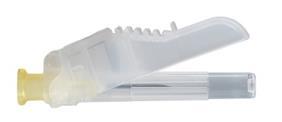
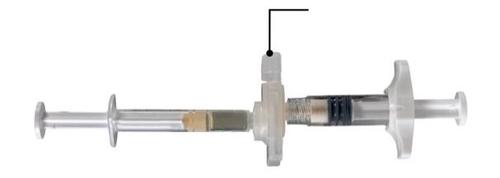
Remove the pre-connected syringe system (Figure 1.1) from the tray. Open the safety needle packaging (Figure 1.2) by tearing off the paper tab. Note: Syringe A and Syringe B should not yet be aligned.
Figure 1.1
Tray contents: pre-connected syringe system
Figure 1.2
Under the tray: safety needle and
cap
Step 2
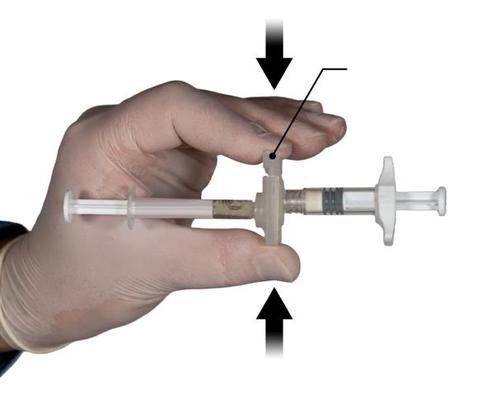
Hold the alignment button on the connector with your index finger and thumb and press (Figure 2) until a click is heard. The two syringes will be aligned. No particular orientation of the pre-connected syringe system is required to activate the connector. Do not bend the syringe system (keep in mind that this could cause leaks as the syringes could become partially unscrewed).
Step 3
Holding the syringes in a horizontal position, transfer the liquid content of Syringe A into the powder of
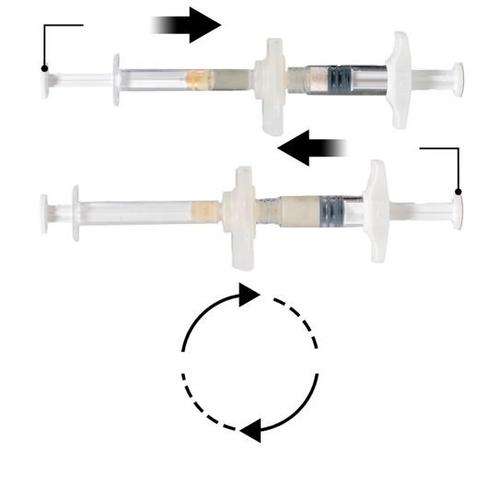
leuprorelin acetate contained in Syringe B. Carefully mix the product for 60 cycles by gently pushing the contents of both syringes back and forth between the two syringes (one cycle is a push of the plunger of Syringe A and a push of the plunger of Syringe B) in a horizontal position to obtain a homogeneous viscous solution (Figure 3). Do not bend the syringe system (keep in mind that this could cause leaks as the syringes could become partially unscrewed).
When well mixed, the viscous solution will appear with a colour described in the range from colourless
to white to light brown (may have shades from white to light yellow).
Important: After mixing, proceed immediately with the next steps as the product
becomes more viscous over time. Do not refrigerate the product after it has been mixed.
Caution: the product must be mixed as described; shaking will NOT lead to adequate
mixing of the product.
Step 4
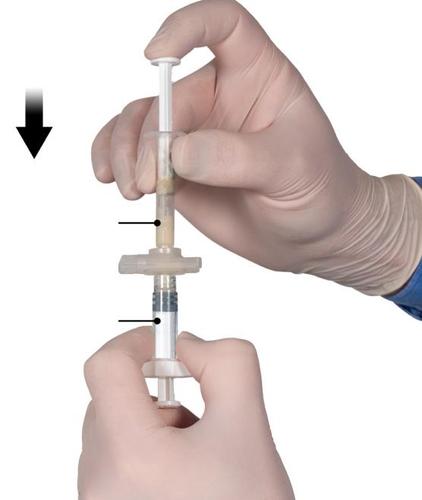
After mixing, hold the syringes in a vertical position, with Syringe B at the bottom. The syringes must
remain firmly connected. Transfer all of the mixed product into Syringe B (short, wide syringe) by pressing the plunger of Syringe A and gently pulling the plunger of Syringe B (Figure 4).
Figure 4
Step 5
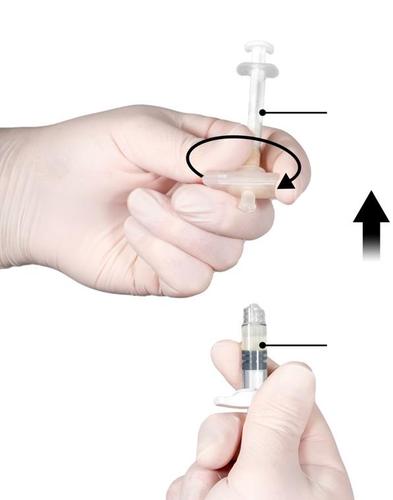
Making sure that the plunger of Syringe A is fully pressed down, hold the connector
and unscrew it from Syringe B. Syringe A will remain attached to the connector (Figure 5). Ensure that the product
does not leak, as the needle will not be able to be inserted firmly in that case.
Caution: small air bubbles or a large bubble may remain in the formulation – this is acceptable.
Avoid removing air bubbles from Syringe B at this stage, as the product may be
lost!
Figure 5
Step 6
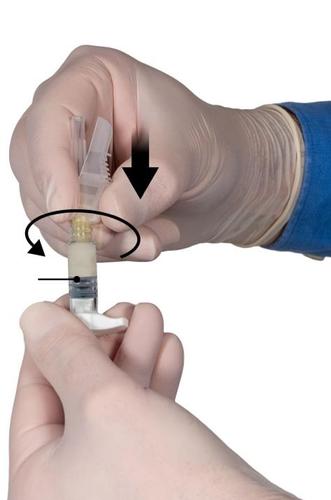
- Hold Syringe B in a vertical position and hold the white plunger, so as not to let the product come out.
- Secure the safety needle on Syringe B while holding the syringe steady and gently rotating the needle clockwise about three-quarters of a turn, until it is locked (Figure 6).
Do not force, as cracks may form in the base of the needle, resulting in
leakage of the product during injection. The safety protection may also be damaged if the needle
is screwed on too tightly. Do not use the product if the base of the needle appears damaged, is leaking or cracked. Do not
replace the damaged needle and do not inject the product. Immediately dispose of the entire product safely.
If the base of the needle is damaged, use a new pack.
Step 7
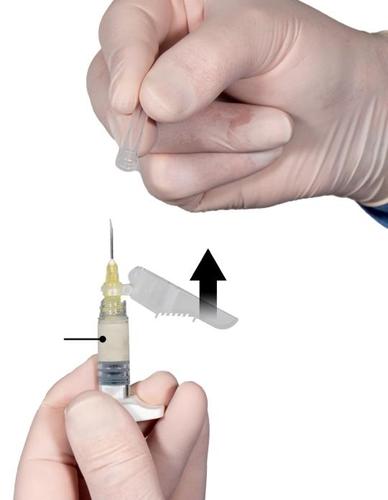
Remove the safety protection from the needle and remove the protective cap before
administration (Figure 7).
Important: do not manipulate the needle safety mechanism before administration. If the
needle hub appears damaged or is leaking, the product MUST not be used. A damaged
needle MUST not be replaced and the product MUST not be injected. If the needle hub is damaged,
use another ELIGARD kit.
Figure 7
Step 8
Before administration, remove any large air bubbles from Syringe B. Administer the product
subcutaneously, keeping the safety protection away from the needle
Administration procedure:
- Select an injection site on the abdomen, on the
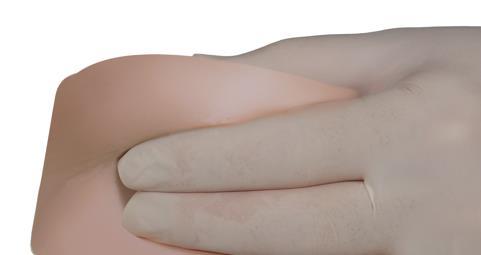
upper buttocks or in another area with
adequate subcutaneous tissue that does not
present excessive pigmentation, nodules, lesions or
hair and has not been used recently.
- Clean the injection site area with an alcohol swab (not included). Using your thumb and index finger, grasp and lift the skin area around the injection site.
- Using your dominant hand, quickly insert
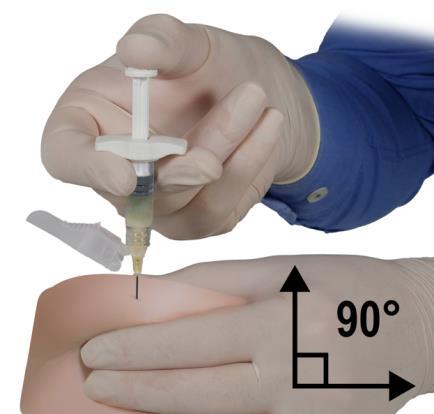
the needle at a 90° angle to the surface
of the skin. The depth of penetration will depend
on the amount and fullness of the subcutaneous
tissue and the length of the needle. After
inserting the needle, release the skin.
- Inject the medicine by applying slow and steady pressure and pressing the plunger until the syringe is emptied. Make sure to inject the entire amount of product from Syringe B before removing the needle. Quickly withdraw the needle at the same 90° angle used for insertion, while maintaining pressure on the plunger.
Step 9
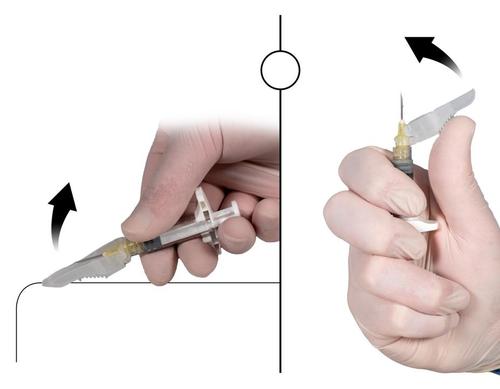
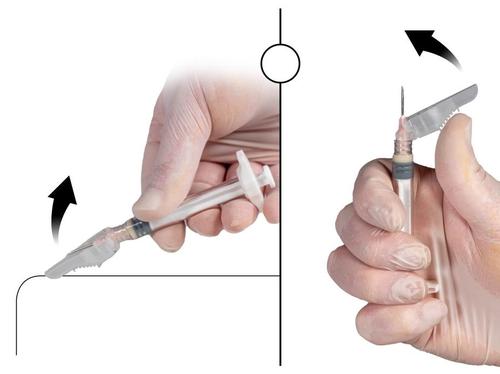
After the injection, lock the safety protection using one of the activation methods described below.
1. Closing on a flat surface
Press the safety guard, levering it downwards, onto a flat surface (Figure 9a) to
cover the needle and lock the guard.
Verify the locking position by paying attention to a signal (“click”) that can be both heard and
felt with your fingers. The guard, when locked, will completely cover the needle tip.
2. Closing with your thumb
Place your thumb on the safety guard (Figure 9b), cover the needle tip and lock the
guard.
Verify that the guard is locked by paying attention to a signal (“click”) that can
be both heard and felt with your fingers. The guard, when locked, will completely cover the needle
tip.
Figure 9a
Closing on a flat surface
Figure 9b
Closing with your thumb
Once the needle guard is locked, immediately dispose of the needle and syringe in the appropriate
sharps container.
ELIGARD 22.5 mg
powder and solvent for injectable solution
Leuprorelin acetate
Read this leaflet carefully before using this medicine as it contains important
information for you.
Keep this leaflet. You may need to read it again.
If you have any questions, ask your doctor, pharmacist or nurse.
This medicine has been prescribed for you only. Do not pass it on to others, even if their
symptoms are the same as yours because it could be harmful.
If any side effects occur, including those not listed in this
leaflet, tell your doctor, pharmacist or nurse. See section 4.
Contents of this leaflet
- 7. What ELIGARD is and what it is used for
- 8. What you need to know before you use ELIGARD
- 9. How to use ELIGARD
- 10. Possible side effects
- 11. How to store ELIGARD
- 12. Contents of the pack and other information
1. WHAT IS ELIGARD AND WHAT IS IT USED FOR
The active ingredient of ELIGARD belongs to the group of so-called gonadotropin-releasing hormones.
These medicines are used to reduce the production of certain sex hormones (testosterone).
ELIGARD is used to treat hormone-dependent prostate cancerin the metastatic stage in
adult men and for the treatment of hormone-dependent, high-risk, non-
metastatic prostate cancer, in combination with radiotherapy.
2. WHAT YOU NEED TO KNOW BEFORE USING ELIGARD
Do not use ELIGARD
- If you are a woman or a child
- If you are hypersensitive (allergic)to the active ingredient leuprorelin acetate, to medicines with comparable activity to that of the natural gonadotropin hormone or to any of the excipients of ELIGARD (listed in section 6).
- Following surgical removal of the testicles,as in this case ELIGARD does not determine a further decrease in serum testosterone levels.
- As a single treatment if you have symptoms related to spinal cord compression or spinal tumors. In these cases, ELIGARD must be used only in association with other medicines for the treatment of prostate cancer.
Warnings and precautions
Talk to your doctor, pharmacist or nurse before using ELIGARD
- If you are in any of the following situations: any heart or circulatory condition, including heart rhythm problems (arrhythmia), or if you are about to be treated with medicines for these conditions. The risk of heart rhythm problems may increase when ELIGARD is used.
- If you have difficulty urinating.You must be carefully monitored during the first few weeks of treatment.
- If spinal cord compressionor difficulty urinating occur.In analogy with other drugs characterized by a mechanism of action similar to that of ELIGARD, it has been reported that serious cases of spinal cord compression and narrowing of the ducts located between the kidneys and the urinary bladder can contribute to the onset of paralysis as a symptom. If these complications occur, standard therapy should be performed.
- If you experience sudden headache, vomiting, altered mental status and sometimes cardiac collapse, within two weeks of taking ELIGARD, then inform your doctor or medical personnel. Rare cases defined as pituitary apoplexy have been reported WITH OTHER MEDICINES having a mechanism of action similar to ELIGARD.
- If you suffer from diabetes mellitus(high blood sugar levels). You should be monitored regularly during treatment.
- Treatment with ELIGARD may increase the risk of fractures caused by osteoporosis (decreased bone density).
- Reports of depression have been made in patients taking ELIGARD. If you are taking ELIGARD and feel depressed, tell your doctor.
- In patients taking products similar to ELIGARD, reports of cardiovascular events have been made and it is not known whether these are related to taking these products. If you are taking ELIGARD and develop signs or symptoms of cardiovascular disease, tell your doctor.
- Convulsions have been reported in patients who have taken ELIGARD. If you are taking ELIGARD and have convulsions, tell your doctor.
- If you suffer from severe or recurrent headaches, have vision problems or experience ringing or whistling in your ears, consult your doctor immediately.
- For athletes: the use of the drug without therapeutic need constitutes doping and may still result in a positive doping test.
Complications that occur at the beginning of treatment
During the first week of treatment, there is generally a transient increase in the levels
of the male sex hormone testosterone in the blood. This may result in a temporary worsening
of symptoms related to the disease and also the onset of new symptoms that the patient had not yet experienced. These symptoms include especially bone pain, urinary disorders,
spinal cord compression or the presence of blood in the urine. Usually these symptoms tend to
regress with continued treatment. If symptoms persist, you should contact your doctor.
If ELIGARD does not bring improvement
A group of patients has tumors that are not sensitive to the reduction of serum testosterone levels. If
you have the impression that the effect of ELIGARD is too weak, talk to your doctor.
Other medicines and ELIGARD
ELIGARD can interfere with some medicines used to treat heart rhythm problems (e.g.
quinidine, procainamide, amiodarone and sotalol) or may increase the risk of heart rhythm problems
when used together with other medicines (e.g. methadone (used to reduce pain and in
substance abuse detoxification), moxifloxacin (an antibiotic), antipsychotics used for serious
mental illnesses).
Tell your doctor or pharmacist if you are taking, have recently taken or may take
any other medicines, including those available without a prescription.
Pregnancy and breastfeeding
ELIGARD is not indicated in women.
Driving and using machines
Fatigue, dizziness or visual disturbances are possible side effects of treatment with
ELIGARD or may be a consequence of the disease. If you experience these side effects,
be careful when driving or using machines.
3. HOW TO USE ELIGARD
Dosage
Use this medicine following exactly the instructions of your doctor or pharmacist. If you have
any doubts, consult your doctor or pharmacist.
ELIGARD 22.5 mg is administered once everythree months, unless otherwise prescribed by your doctor.
The injected solution forms a drug depot that allows the prolonged release of the active
ingredient leuprorelin acetate for three months.
Additional tests
The response to therapy with ELIGARD must be verified by your doctor following specific clinical
parameters and by measuring blood levels of prostate-specific antigen (PSA).
Method of administration
ELIGARD must be administered only by your doctoror by a nurse.
They will also take care of preparing the medicine.
After preparation, ELIGARD is administered by a subcutaneous injection (injection into the
tissue under the skin). Intra-arterial (into an artery) or
intravenous (into a vein) injection must be strictly avoided.
As with other active ingredients injected subcutaneously, the injection site must be
periodically changed.
If you take more ELIGARD than you should
Since the injection is generally performed by your doctor or by adequately trained personnel,
overdosage cases are not expected.
However, if a quantity greater than that prescribed is administered, your doctor will proceed with
specific monitoring and administer additional treatment as required.
If you forget to take ELIGARD
If you believe you have forgotten the quarterly administration of ELIGARD, you should contact your
doctor.
If you stop taking ELIGARD
As a general rule, prostate cancer therapy with ELIGARD requires long-term
treatment. Therefore, therapy should not be discontinued, even if there is an improvement in symptoms or if
they disappear completely.
If ELIGARD treatment is prematurely discontinued, a worsening of
disease-related symptoms may occur.
Do not stop therapy before the expected time without first consulting your doctor.
If you have any doubts about the use of this medicine, ask your doctor, pharmacist or
nurse.
4. POSSIBLE SIDE EFFECTS
Like all medicines, ELIGARD can cause side effects, although not everybody gets them.
The side effects observed during treatment with ELIGARD are mostly due to the specific effect of the active
ingredient leuprorelin acetate, i.e., an increase and a decrease of certain hormones. The most commonly
reported side effects are hot flushes (in 58% of patients), nausea, malaise and fatigue, as well as temporary
local irritation at the injection site.
Initial side effects
During the first few weeks of treatment with ELIGARD, the specific symptoms related to the disease
may worsen, as there is generally a brief increase in the male sex hormone testosterone in the blood in the
early stages. Your doctor may therefore administer an anti-androgen (a substance that inhibits the effects of
testosterone) in the initial phase of treatment in order to mitigate these possible effects (see also Section2. Before using ELIGARD, Complications that
arise at the beginning of treatment).
Local side effects
The local side effects reported following the injection of ELIGARD are typically those that are often
associated with similar preparations injected subcutaneously (preparations that are injected into the tissue under
the skin). Mild burning immediately after the injection is a very common effect. Acute pain and pain after the
injection are common effects, as is the development of bruising at the injection site. Cases of skin redness at
the injection site have been reported as rare effects. Tissue hardening and ulceration are uncommon.
These local side effects resulting from subcutaneous injection are mild and described as short-lived effects. These
side effects do not recur within the time interval between individual injections.
Very common side effects (may affect more than 1 in 10 people)
- Hot flushes
- Spontaneous bleeding from the skin or mucous membranes, skin redness
- Fatigue, injection-related side effects (see also, above, Local side effects)
Common side effects (may affect up to 1 in 10 people)
- Nasopharyngitis (cold symptoms)
- Nausea, malaise, diarrhea, inflammation of the stomach and intestines (gastroenteritis/colitis)
- Pruritus, night sweats
- Joint pain
- Irregular urges to urinate (including at night), difficulty starting to urinate, pain when urinating, reduced urine output
- Breast tension, breast enlargement, testicular atrophy, testicular pain, infertility, erectile dysfunction, reduced penis size
- Chills (episodes of violent shaking with high fever), weakness
- Prolonged bleeding time, changes in blood parameters, decreased red blood cells/low red blood cell count.
Uncommon side effects (may affect up to 1 in 100 people)
- Urinary tract infections, local skin infections
- Worsening of diabetes mellitus
- Abnormal dreams, depression, decreased libido
- Dizziness, headache, altered skin sensitivity, insomnia, taste disturbances, smell disturbances
- Hypertension (increased blood pressure), hypotension (decreased blood pressure)
- Shortness of breath
- Constipation, dry mouth, dyspepsia (digestive disorders with symptoms such as feeling of fullness, stomach pain, belching, nausea, vomiting, heartburn), vomiting
- Cold sweats, increased sweating
- Back pain, muscle cramps
- Hematuria (blood in the urine)
- Bladder spasms, increased urge to urinate, inability to urinate
- Increased male breast tissue, impotence
- Lethargy (drowsiness), pain, fever
- Weight gain
- Loss of balance, mental confusion
- Muscle wasting/loss of muscle tissue after prolonged use
Rare side effects (may affect up to 1 in 1,000 people)
- Abnormal involuntary movements
- Sudden loss of consciousness, fainting
- Flatulence, belching
- Hair loss, skin rashes (boils on the skin)
- Breast pain
- Ulceration at the injection site
Very rare side effects (may affect up to 1 in 10,000 people)
- Necrosis at the injection site
Not known (frequency cannot be estimated from available data)
- Changes in electrocardiogram (Prolongation of the QT interval)
- Lung inflammation, lung disease
- Idiopathic intracranial hypertension (increased pressure inside the skull around the brain, characterized by headache, double vision and other visual disturbances, and ringing or buzzing in one or both ears)
Other side effects
Other side effects that have been described in the literature in relation to treatment with leuprorelin, the
active ingredient of ELIGARD, are edema (fluid accumulation in the tissues, which manifests as swelling
of the hands and feet), pulmonary embolism (which manifests with symptoms such as shortness of breath,
difficulty breathing and chest pain), palpitations (awareness of your own heartbeat), muscle weakness,
chills, skin rash, impaired memory and vision. After long-term treatment with ELIGARD, the onset of symptoms
related to reduced bone tissue (osteoporosis) can be expected. Due to the onset of osteoporosis, the risk of
fractures increases.
After the administration of medicines belonging to the same class as ELIGARD, rare cases of severe allergic
reactions causing difficulty breathing or dizziness have been reported.
After the administration of medicines belonging to the same class as ELIGARD, seizures have been reported.
Reporting of side effects
If any side effect gets serious, or if you notice any side effect not listed in this leaflet, please tell your doctor or
pharmacist. You can also report side effects directly through the national reporting system at https://www.aifa.gov.it/content/segnalazioni-reazioni-avverse
By reporting side effects you can help provide more information on the safety of this medicine.
5. HOW TO STORE ELIGARD
Keep this medicine out of the sight and reach of children.
Do not use this medicine after the expiry date which is stated on the pack after Exp.
The expiry date refers to the last day of that month.
Storage instructions
Store in a refrigerator (2°C-8 C).
Store in the original package to protect the medicine from moisture.
Before the injection, this medicine must be brought to room temperature. Remove from the refrigerator
about 30 minutes before use. Once out of the refrigerator, this medicine can be stored in the
original package, at room temperature (below 25°C), for up to four weeks.
Once the blister pack is opened, the medicine must be prepared and used immediately. Single-use
pack.
Instructions for the disposal of unused or expired ELIGARD packs
Do not dispose of any medicine in the drain or in household waste. Ask your pharmacist how
to dispose of medicines you no longer use. This will help protect the environment.
6. CONTENT OF THE PACK AND OTHER INFORMATION
What ELIGARD contains
The active ingredient is leuprorelin acetate.
A pre-filled syringe (Syringe B) contains 22.5 mg of leuprorelin acetate.
The excipients are a copolymer of DL-lactic and glycolic acids (75:25) and N-methyl-2-pyrrolidone in a
pre-filled syringe with injectable solution (Syringe A).
Description of the appearance of ELIGARD and contents of the pack
ELIGARD contains a powder and a solvent for injectable solution.
ELIGARD 22.5 mg is available in the following packs:
- A thermoformed tray and a sterile 20 gauge needle in a cardboard box. The tray contains a desiccant bag and a pre-connected syringe system consisting of:
- Syringe A pre-filled with the solvent
- Syringe B pre-filled with the powder
- Connector with alignment button for Syringe A and B.
- A multi-pack containing kits of 2 pre-connected syringe systems).
It is possible that not all pack sizes are marketed.
Marketing Authorisation Holder
Recordati Industria Chimica e Farmaceutica S.p.A.
Via Matteo Civitali, 1
20148 Milano
Italy
Manufacturer
Recordati Industria Chimica e Farmaceutica S.p.A.
Via Matteo Civitali, 1
20148 Milano
Italy
This medicinal product is authorised in the Member States of the EEA with the following
denomination:
Austria: Eligard Depot 22.5 mg
Belgium: Depot-Eligard 22.5 mg
Bulgaria: Eligard 22.5 mg
Cyprus: Eligard
Denmark: Eligard
Estonia: Eligard
Finland: Eligard
France: Eligard 22.5 mg
Germany: Eligard 22.5 mg
Ireland: Eligard 22.5 mg
Iceland: Eligard
Italy: Eligard
Latvia: Eligard 22.5 mg
Lithuania: Eligard 22.5 mg
Luxembourg: Depot-Eligard 22.5 mg
Norway: Eligard
Netherlands: Eligard 22.5 mg
Poland: Eligard 22.5 mg
Portugal: Eligard 22.5 mg
Czech Republic: Eligard
Romania: Eligard 22.5 mg
Slovakia: Eligard 22.5 mg
Slovenia: Eligard 22.5 mg
Spain: Eligard Trimestral 22.5 mg
Sweden: Eligard
Hungary: Eligard 22.5 mg
The following information is intended for healthcare professionals only:
Bring the medicine to room temperature by removing it from the refrigerator about 30 minutes before
use.
First prepare the patient for the injection, then prepare the medicine following the
instructions below. If the medicine is not prepared using the correct technique, it should not be
administered, as, due to incorrect reconstitution of the medicine, clinical ineffectiveness may occur.
Step 1
On a clean work surface, open the tray by tearing the foil starting from the corners to remove the
contents. Discard the desiccant bag.
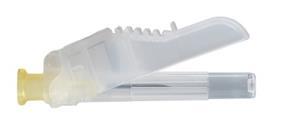
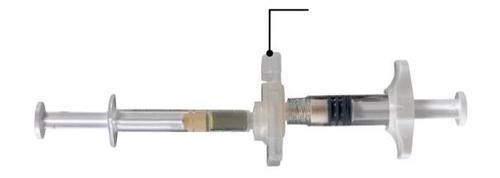
Remove the pre-connected syringe system (Figure 1.1) from the tray. Open the safety needle packaging (Figure 1.2) by tearing off the paper tab. Note: Syringe A and Syringe B should not be
aligned yet.
Figure 1.1
Tray contents: pre-connected syringe
system
Figure 1.2
Under the tray: safety needle and
cap
Step 2
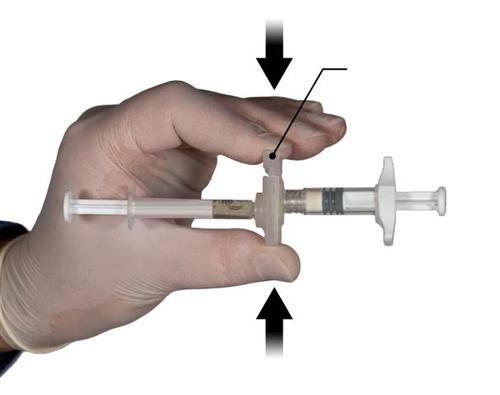
Take the alignment button on the connector with your index and thumb and press (Figure 2) until you hear a click. The two syringes will be aligned. No particular orientation of the
pre-connected syringe system is required to activate the connector. Do not bend the syringe system (keep in
mind that this could cause leaks as the syringes could partially unscrew).
Step 3
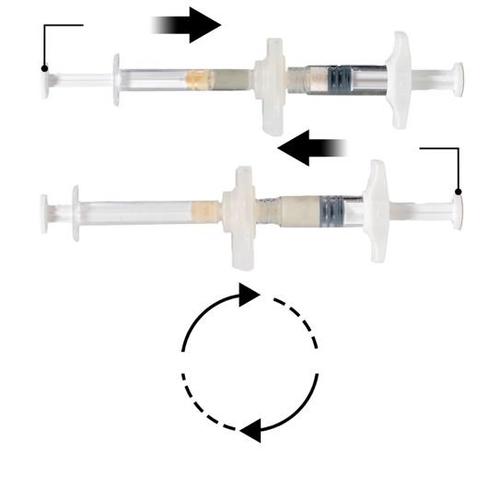
Holding the syringes in a horizontal position, transfer the liquid content of Syringe A into the powder of
leuprorelin acetate contained in Syringe B. Carefully mix the product for 60 cycles by gently pushing the
contents of both syringes back and forth between the two syringes (one cycle is a push of the plunger of Syringe A and a push of the plunger of Syringe B) in a horizontal position to
obtain a homogeneous viscous solution (Figure 3). Do not bend the syringe system (keep in mind that
this could cause leaks as the syringes could partially unscrew).
When well mixed, the viscous solution will appear with a color described in the range from colorless
to white to light brown (may have shades from white to light yellow).
Important: After mixing, proceed immediately with the next steps as the product
becomes more viscous over time. Do not refrigerate the product after it has been mixed.
Caution: the product must be mixed as described; shaking will NOT lead to adequate
mixing of the product.
Step 4
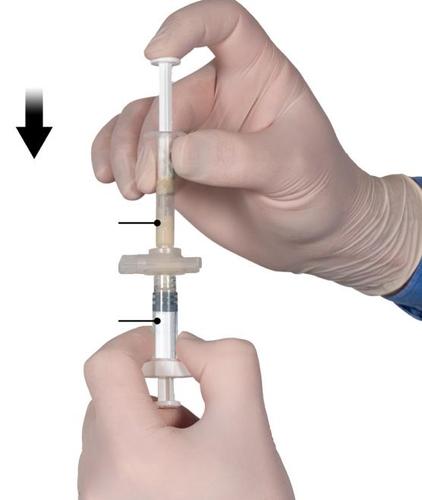
After mixing, hold the syringes in a vertical position, with Syringe B at the bottom. The syringes must
remain firmly connected. Transfer all of the mixed product into Syringe B (short, wide syringe) by
pressing the plunger of Syringe A and gently pulling the plunger of Syringe B (Figure 4).
Figure 4
Step 5
Making sure that the plunger of Syringe A is fully pressed down, hold the connector
and unscrew it from Syringe B. Syringe A will remain attached to the connector (Figure 5). Make sure that the product
does not leak out, as in this case the needle will not be able to be inserted firmly.
Caution: small air bubbles or a large bubble may remain in the formulation – this is acceptable.
Avoid removing air bubbles from Syringe B at this stage, as the product may
be lost!
Figure 5
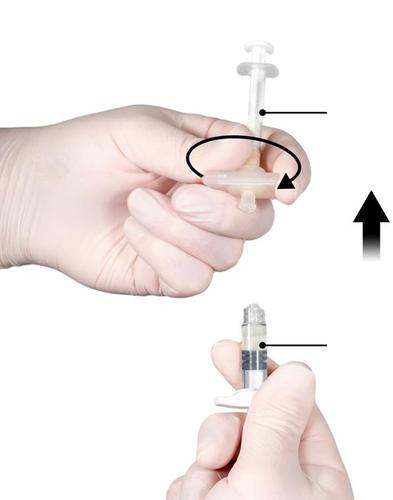
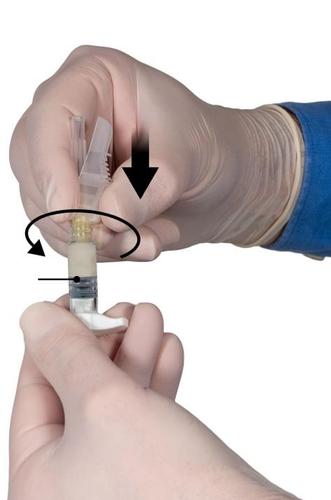
Step 6
- Hold the Siringa B in a vertical position and hold the white plunger, so as not to let the product come out.
- Secure the safety needle on Syringe B while holding the syringe steady and gently rotating the needle clockwise about three-quarters, until it is locked (Figure 6).
Do not force, as this could create cracks in the base of the needle, resulting in
product leakage during injection. The safety protection may also be damaged if the needle
is screwed on too tightly. Do not use the product if the base of the needle appears damaged, is leaking or cracked. Do not
replace the damaged needle and do not inject the product. Immediately dispose of the entire product safely.
If the base of the needle is damaged, use a new pack.
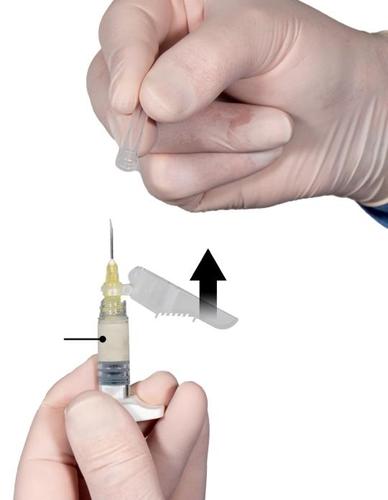
Step 7
Remove the safety protection from the needle and remove the protective cap before
administration (Figure 7).
Important: do not manipulate the needle safety mechanism before administration. If the
needle hub appears damaged or is leaking, the product MUST NOT be used. The damaged
needle MUST NOT be replaced and the product MUST NOT be injected. If the needle hub is damaged,
use another ELIGARD kit.
Figure 7
Step 8:Before administration, remove large air bubbles from Syringe B. Administer the
product subcutaneously, keeping the safety protection away from the needle
Administration procedure:
- Select an injection site on the abdomen, on the
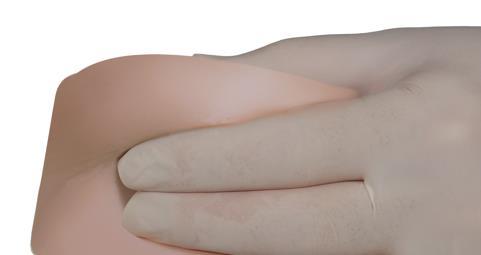
upper buttocks or in another area with
adequate subcutaneous tissue that does not
present excessive pigmentation, nodules, lesions or
hair and has not been used recently.
- Clean the injection site area with an alcohol swab (not included). Using your thumb and index finger, pinch and lift the skin area around the injection site.
- Using your dominant hand, quickly insert
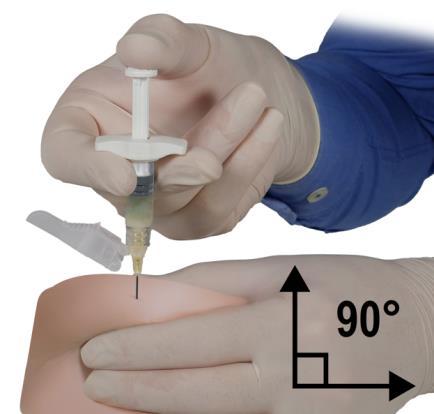
the needle at a 90° angle to the surface
of the skin. The depth of penetration will depend
on the amount and fullness of the subcutaneous
tissue and the length of the needle. After
inserting the needle, release the skin.
- Inject the medicine by applying slow and steady pressure and press the plunger until the syringe is empty. Make sure to inject the entire amount of product in Syringe B before removing the needle. Quickly withdraw the needle at the same 90° angle used for insertion, maintaining pressure on the plunger.
Step 9
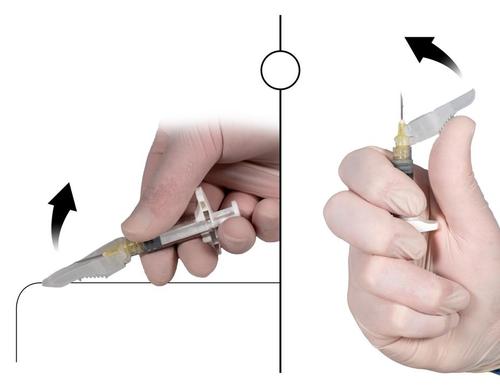
After the injection, lock the safety protection with one of the activation methods described below.
3. Closing on a flat surface
Press the safety shield, levering it downwards, onto a flat surface (Figure 9a) to
cover the needle and lock the shield.
Verify the locking position by paying attention to a (“click”) signal that can be both heard and
felt with your fingers. The shield, when locked, will completely cover the needle tip.
4. Closing with your thumb
Place your thumb on the safety shield (Figure 9b), cover the needle tip and lock the
shield.
Verify that the shield position is locked by paying attention to a (“click”) signal that can
be both heard and felt with your fingers. The shield, when locked, will completely cover the needle
tip.
Figure 9a
Closing on flat surface
Figure 9b
Closing with your thumb
Once the needle shield is locked, immediately dispose of the needle and syringe in the appropriate
sharps container.

Не впевнені, чи підходить вам цей лікарський засіб?
Обговоріть симптоми та можливі варіанти лікування з лікарем онлайн.
ELIGARD 45 mg
powder and solvent for injectable solution
Leuprorelin acetate
Read this leaflet carefully before you use this medicine as it contains important
information for you.
Keep this leaflet. You may need to read it again.
If you have any questions, ask your doctor, pharmacist or nurse.
This medicine has been prescribed for you only. Do not pass it on to others, even if their symptoms
are the same as yours because it could be harmful.
If you get any side effects, even those not listed in this leaflet, tell your doctor, pharmacist or nurse. See section 4.
Contents of this leaflet
- 13. What ELIGARD is and what it is used for
- 14. What you need to know before you use ELIGARD
- 15. How to use ELIGARD
- 16. Possible side effects
- 17. How to store ELIGARD
- 18. Contents of the pack and other information
1. WHAT IS ELIGARD AND WHAT IS IT USED FOR
The active ingredient of ELIGARD belongs to the group of so-called gonadotropin-releasing hormones.
These medicines are used to reduce the production of certain sex hormones (testosterone).
ELIGARD is used to treat hormone-dependent prostate cancerin the metastatic stage in
adult men and for the treatment of hormone-dependent, high-risk, non-
metastatic prostate cancer, in combination with radiotherapy.
2. WHAT YOU NEED TO KNOW BEFORE USING ELIGARD
Do not use ELIGARD
- If you are a woman or a child
- If you are hypersensitive (allergic)to the active ingredient leuprorelin acetate, to medicines with comparable activity to that of the natural gonadotropin hormone or to any of the excipients of ELIGARD (listed in section 6).
- Following surgical removal of the testicles,as in this case ELIGARD does not determine a further decrease in serum testosterone levels.
- As a single treatment if you have symptoms related to spinal cord compression or spinal tumors. In these cases, ELIGARD must be used only in association with other medicines for the treatment of prostate cancer.
Warnings and precautions
Talk to your doctor, pharmacist or nurse before using ELIGARD
- If you are in any of the following situations: any heart or circulatory condition, including heart rhythm problems (arrhythmia), or if you are about to be treated with medicines for these conditions. The risk of heart rhythm problems may increase when ELIGARD is used.
- If you have difficulty urinating.You must be carefully monitored during the first few weeks of treatment.
- If spinal cord compressionor difficulty urinating occur.In analogy with other drugs characterized by a mechanism of action similar to that of ELIGARD, it has been reported that severe cases of spinal cord compression and narrowing of the ducts between the kidneys and the urinary bladder can contribute to the onset of paralysis as a symptom. If these complications occur, standard therapy should be performed.
- If you experience sudden headache, vomiting, altered mental status and sometimes cardiac collapse, within two weeks of taking ELIGARD, then inform your doctor or medical personnel. Rare cases defined as pituitary apoplexy have been reported WITH OTHER MEDICINES having a mechanism of action similar to ELIGARD.
- If you suffer from diabetes mellitus(high blood sugar levels). You should be monitored regularly during treatment.
- Treatment with ELIGARD may increase the risk of fractures caused by osteoporosis (decreased bone density).
- Reports of depression have been made in patients taking ELIGARD. If you are taking ELIGARD and feel depressed, tell your doctor.
- In patients taking products similar to ELIGARD, there have been reports of cardiovascular events and it is not known whether these are related to the use of these products. If you are taking ELIGARD and develop signs or symptoms of cardiovascular disease, tell your doctor.
- Seizures have been reported in patients who have taken ELIGARD. If you are taking ELIGARD and have seizures, tell your doctor.
- If you suffer from severe or recurrent headaches, have vision problems or experience ringing or whistling in your ears, seek immediate medical attention.
- For those who play sports: the use of the drug without therapeutic need constitutes doping and may still result in a positive doping test.
Complications that occur at the beginning of treatment
During the first week of treatment, there is generally a transient increase in the levels of the male sex hormone testosterone in the blood. This may cause a temporary worseningof symptoms related to the disease and also the onset of new symptoms that the patient had not yet experienced. These symptoms include, in particular, bone pain, urinary disorders, spinal cord compression or the presence of blood in the urine. Usually these symptoms tend to improve with continued treatment. If symptoms persist, you should contact your doctor.
If ELIGARD does not provide improvement
A group of patients have tumors that are not sensitive to the reduction of serum testosterone levels. If you have the impression that the effect of ELIGARD is too weak, talk to your doctor.
Other medicines and ELIGARD
ELIGARD can interfere with some medicines used to treat heart rhythm problems (e.g. quinidine, procainamide, amiodarone and sotalol) or may increase the risk of heart rhythm problems when used together with other medicines (e.g. methadone (used to reduce pain and in detoxification from substance abuse), moxifloxacin (an antibiotic), antipsychotics used for serious mental illnesses).
Tell your doctor or pharmacist if you are taking, have recently taken or may take any other medicines, including those available without a prescription.
Pregnancy and breastfeeding
ELIGARD is not indicated in women.
Driving and using machines
Fatigue, dizziness or visual disturbances are possible side effects of treatment with ELIGARD or may be a consequence of the disease. If you experience these side effects, be careful when driving or using machines.
3. HOW TO USE ELIGARD
Dosage
Use this medicine following exactly the instructions of your doctor or pharmacist. If you have
any doubts, consult your doctor or pharmacist.
ELIGARD is administered once everysix months, unless otherwise prescribed by your doctor.
The injected solution forms a medicine deposit that allows the prolonged release of the active
ingredient leuprorelin acetate for six months.
Additional tests
The response to therapy with ELIGARD must be verified by your doctor following specific clinical
parameters and by measuring blood levels of prostate-specific antigen (PSA).
Method of administration
ELIGARD must be administered only by your doctoror by a nurse.
They will also take care of preparing the medicine.
After preparation, ELIGARD is administered by a subcutaneous injection (injection into the
tissue under the skin). Endo-arterial (into an artery) or
intravenous (into a vein) injection must be strictly avoided.
As with other active ingredients injected subcutaneously, the injection site must be
periodically changed.
If you take more ELIGARD than you should
Since the injection is generally performed by your doctor or by adequately trained personnel,
overdose cases are not expected.
However, if a quantity greater than that prescribed is administered, your doctor will proceed with
specific monitoring and administer additional treatment as needed.
If you forget to take ELIGARD
If you believe you have forgotten the semi-annual administration of ELIGARD, contact your
doctor.
If you stop taking ELIGARD
As a general rule, prostate cancer therapy with ELIGARD requires long-term
treatment. Therefore, therapy should not be discontinued, even if there is an improvement in symptoms or if
they disappear completely.
If treatment with ELIGARD is prematurely discontinued, a worsening of
symptoms related to the disease may occur.
Do not stop therapy before the expected time without first consulting your doctor.
If you have any doubts about the use of this medicine, ask your doctor, pharmacist or
nurse.
4. POSSIBLE SIDE EFFECTS
Like all medicines, ELIGARD can cause side effects, although not everybody gets them.
The side effects observed during treatment with ELIGARD are mostly due to the specific effect of the active ingredient leuprorelin acetate, i.e., an increase and a decrease of certain hormones. The most commonly described side effects are hot flushes (in 58% of patients), nausea, malaise and fatigue, as well as temporary local irritation at the injection site.
Initial side effects
During the first weeks of treatment with ELIGARD, the specific symptoms related to the disease may worsen, as there is generally a brief increase in the male sex hormone testosterone in the blood in the initial period. Your doctor may therefore administer an anti-androgen (a substance that inhibits the effects of testosterone) in the initial phase of treatment in order to mitigate these possible effects (see also the Paragraph2. Before using ELIGARD, Complications that
occur at the beginning of treatment).
Local side effects
The local side effects described following the injection of ELIGARD are typically those that are often associated with similar preparations injected subcutaneously (preparations that are injected into the tissue under the skin). Mild burning immediately after the injection is a very common effect. Acute pain and pain after the injection are common effects, as is the onset of bruising at the injection site. Cases of skin redness at the injection site have been reported as rare effects. Tissue hardening and ulceration are uncommon.
These local side effects resulting from subcutaneous injection are mild and described as effects of short duration. These side effects do not recur within the time interval between individual injections.
Very common side effects (may affect more than 1 in 10 people)
- Hot flushes
- Spontaneous bleeding of the skin or mucous membranes, skin redness
- Fatigue, injection-related side effects (see also, above, Local side effects)
Common side effects (may affect up to 1 in 10 people)
- Nasopharyngitis (cold symptoms)
- Nausea, malaise, diarrhea, inflammation of the stomach and intestines (gastroenteritis/colitis)
- Pruritus, night sweats
- Joint pain
- Irregular urges to urinate (also at night), difficulty starting to urinate, pain when urinating, reduced urine output
- Breast tension, breast enlargement, testicular atrophy, testicular pain, infertility, erectile dysfunction, reduced penis size
- Chills (episodes of violent tremors with high fever), weakness
- Prolonged bleeding time, changes in blood parameters, decreased red blood cells/low red blood cell count.
Uncommon side effects (may affect up to 1 in 100 people)
- Urinary tract infections, local skin infections
- Worsening of diabetes mellitus
- Abnormal dreams, depression, decreased libido
- Dizziness, headache, changes in skin sensitivity, insomnia, taste disturbances, smell disturbances
- Hypertension (increased blood pressure), hypotension (decreased blood pressure)
- Shortness of breath
- Constipation, dry mouth, dyspepsia (digestive disorders with symptoms such as feeling of fullness, stomach pain, belching, nausea, vomiting, heartburn), vomiting
- Cold sweats, increased sweating
- Back pain, muscle cramps
- Hematuria (blood in the urine)
- Bladder spasms, increased urge to urinate, inability to urinate
- Increased male breast tissue, impotence
- Lethargy (drowsiness), pain, fever
- Weight gain
- Loss of balance, mental disorientation
- Muscle wasting/loss of muscle tissue after prolonged use
Rare side effects (may affect up to 1 in 1,000 people)
- Abnormal involuntary movements
- Sudden loss of consciousness, fainting
- Flatulence, belching
- Hair loss, skin rashes (boils on the skin)
- Breast pain
- Ulceration at the injection site
Very rare side effects (may affect up to 1 in 10,000 people)
- Necrosis at the injection site
Not known (frequency cannot be estimated from the available data)
- Changes in electrocardiogram (Prolongation of the QT interval)
- Lung inflammation, lung disease
- Idiopathic intracranial hypertension (increased pressure inside the skull around the brain, characterized by headache, double vision and other visual disturbances, and ringing or buzzing in one or both ears)
Other side effects
Other side effects that have been described in the literature in relation to treatment with leuprorelin, the active ingredient of ELIGARD, are edema (fluid accumulation in the tissues, which manifests as swelling of the hands and feet), pulmonary embolism (which manifests with symptoms such as shortness of breath, difficulty breathing and chest pain), palpitations (awareness of one's own heartbeat), muscle weakness, chills, skin rash, impairment of memory and vision.
After long-term treatment with ELIGARD, the onset of symptoms related to reduced bone tissue (osteoporosis) can be expected. Due to the onset of osteoporosis, the risk of fractures increases.
Rarely, serious allergic reactions causing difficulty breathing or dizziness have been reported after the administration of medicines belonging to the same class as ELIGARD.
Convulsions have been reported after the administration of medicines belonging to the same class as ELIGARD.
Reporting of side effects
If any of the side effects gets serious, or if you notice any side effects not listed in this leaflet, please tell your doctor or pharmacist.
You can also report side effects directly through the national reporting system at https://www.aifa.gov.it/content/segnalazioni-reazioni-avverse.
By reporting side effects you can help provide more information on the safety of this medicine.
5. HOW TO STORE ELIGARD
Keep this medicine out of the sight and reach of children.
Do not use this medicine after the expiry date which is stated on the pack after Exp.
The expiry date refers to the last day of that month.
Storage instructions
Store in a refrigerator (2°C- 8 C).
Store in the original package to protect the medicine from moisture.
Before the injection, this medicine must be brought to room temperature. Remove from the refrigerator
about 30 minutes before use. Once out of the refrigerator, this medicine can be stored in the
original package, at room temperature (below 25°C), for up to four weeks.
Once the blister pack is opened, the medicine must be prepared and used immediately. Single-use pack.
Instructions for the disposal of unused or expired ELIGARD packs
Do not dispose of any medicine in wastewater or household waste. Ask your pharmacist how
to dispose of medicines you no longer use. This will help protect the environment.
6. CONTENT OF THE PACK AND OTHER INFORMATION
What ELIGARD contains
The active ingredient is leuprorelin acetate.
A pre-filled syringe (Syringe B) contains 45 mg of leuprorelin acetate.
The excipients are copolymer of DL-lactic and glycolic acids (85:15) and N-methyl-2-pyrrolidone in a
pre-filled syringe with injectable solution (Syringe A).
Description of the appearance of ELIGARD and contents of the pack
ELIGARD contains a powder and a solvent for injectable solution.
ELIGARD 45 mg is available in the following packs:
- A thermoformed tray and an 18 gauge sterile needle in a cardboard box. The tray contains a desiccant bag and a pre-connected syringe system consisting of:
- Syringe A pre-filled with the solvent
- Syringe B pre-filled with the powder
- Connector with alignment button for Syringe A and B.
- A multi-pack containing kits of 2 pre-connected syringes.
Not all pack sizes may be marketed.
Marketing Authorisation Holder
Recordati Industria Chimica e Farmaceutica S.p.A.
Via Matteo Civitali, 1
20148 Milano
Italy
Manufacturer
Recordati Industria Chimica e Farmaceutica S.p.A.
Via Matteo Civitali, 1
20148 Milano
Italy
This medicinal product is authorised in the Member States of the EEA under the following
denominations:
Austria: Eligard Depot 45 mg
Belgium: Depot-Eligard 45 mg
Bulgaria: Eligard 45 mg
Cyprus: Eligard
Denmark: Eligard
Estonia: Eligard
Finland: Eligard
France: Eligard 45 mg
Germany: Eligard 45 mg
Ireland: Eligard 45 mg
Iceland: Eligard
Italy: Eligard
Latvia: Eligard 45 mg
Lithuania: Eligard 45 mg
Luxembourg: Depot-Eligard 45 mg
Norway: Eligard
Netherlands: Eligard 45 mg
Poland: Eligard 45 mg
Portugal: Eligard 45 mg
Czech Republic: Eligard
Romania: Eligard 45 mg
Slovakia: Eligard 45 mg
Slovenia: Eligard 45 mg
Spain: Eligard Semestral 45 mg
Sweden: Eligard
Hungary: Eligard 45 mg
The following information is intended for healthcare professionals only:
Bring the medicinal product to room temperature by removing it from the refrigerator approximately 30 minutes
before use.
First prepare the patient for the injection, then prepare the medicinal product following the
instructions below. If the medicinal product is not prepared using the correct technique, it should not be
administered, as, due to incorrect reconstitution of the medicinal product, clinical ineffectiveness may occur.
Step 1
On a clean work surface, open the tray by tearing the foil starting from the corners to remove the
contents. Discard the desiccant bag.
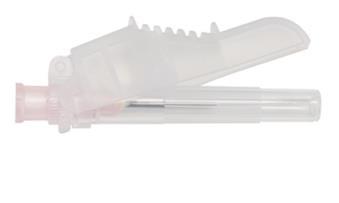
Remove the pre-connected syringe system (Figure 1.1) from the tray. Open the safety needle packaging (Figure 1.2) by tearing off the paper tab. Note: Syringe A and Syringe B should not be connected yet.
Figure 1.1
Tray contents: pre-connected syringe system
Figure 1.2
Under the tray: safety needle and cap
Step 2
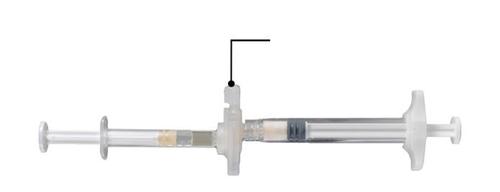
Grasp the alignment button on the connector with your index and thumb and press (Figure 2) until you hear a click. The two syringes will be connected. No particular orientation of the pre-connected syringe system is required to activate the connector. Do not bend the syringe system (keep in mind that this could cause leaks as the syringes could partially unscrew).
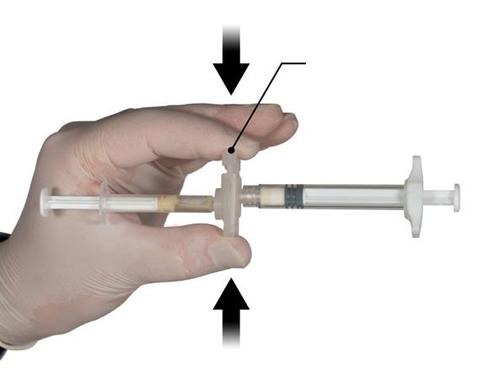
Step 3
Holding the syringes in a horizontal position, transfer the liquid content of Syringe A into the powder of
leuprorelin acetate contained in Syringe B. Carefully mix the product for 60 cycles by gently pushing the contents of both syringes back and forth between the two syringes (one cycle is a push of the plunger of Syringe A and a push of the plunger of Syringe B) in a horizontal position to obtain a homogeneous viscous solution (Figure 3). Do not bend the syringe system (keep in mind that this could cause leaks as the syringes could partially unscrew).
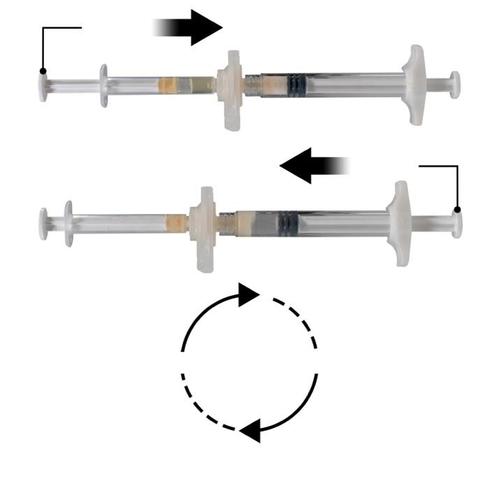
When well mixed, the viscous solution will appear with a colour described in the range from colourless
to white to light brown (may have shades from white to light yellow).
Important: After mixing, proceed immediately with the next steps as the product
becomes more viscous over time. Do not refrigerate the product after it has been mixed.
Caution: the product must be mixed as described; shaking will NOT lead to adequate
mixing of the product.
Step 4
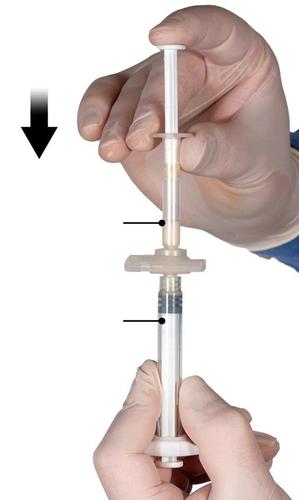
After mixing, hold the syringes in a vertical position, with Syringe B at the bottom. The syringes must
remain firmly connected. Transfer all of the mixed product into Syringe B (large syringe)
by pressing the plunger of Syringe A and gently pulling the plunger of Syringe B (Figure 4).
Figure 4
Step 5
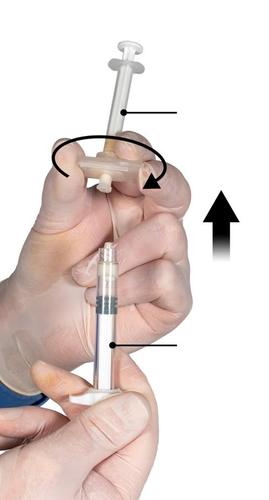
Ensuring that the plunger of Syringe A is fully depressed, hold the connector
and unscrew it from Syringe B. Syringe A will remain attached to the connector (Figure 5). Make sure that the product
does not leak, as in this case the needle cannot be inserted firmly.
Caution: small air bubbles or a large bubble may remain in the formulation – this is acceptable.
Avoid removing air bubbles from Syringe B at this stage, as the product may
be lost!
Figure 5
Step 6
- Keeping Syringe B in a vertical position and holding the white plunger, so as not to let the product out.
- Secure the safety needle on Syringe B while holding the syringe steady and gently rotating the needle clockwise by about three quarters, until it is locked (Figure 6). Do not force, as this could create cracks in the base of the needle, resulting in leakage of the product during injection. The safety protection can also be damaged if the needle is screwed on too tightly.
Do not use the product if the base of the needle appears damaged, is leaking or cracked. Do not
replace the damaged needle and do not inject the product. Immediately dispose of the entire product safely.
If the base of the needle is damaged, use a new pack.
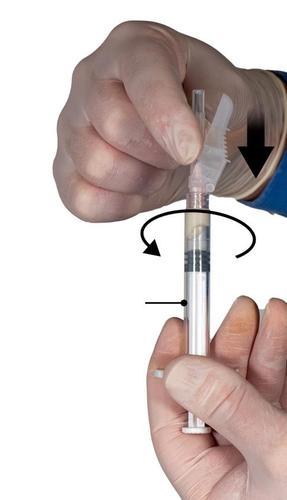
Step 7
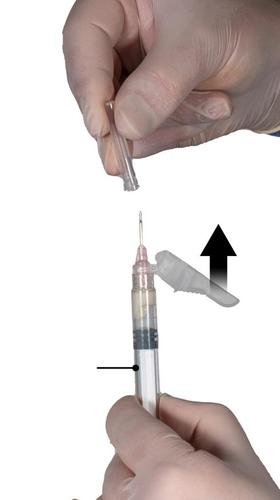
Remove the safety protection from the needle and remove the protective cap before
administration (Figure 7).
Important: do not manipulate the needle safety mechanism before administration. If the
needle hub appears damaged or is leaking, the product MUST not be used. The damaged
needle MUST not be replaced and the product MUST not be injected. If the needle hub is damaged,
use another ELIGARD kit.
Figure 7
Step 8
Before administration, remove large air bubbles from Syringe B. Administer the product
subcutaneously, keeping the safety protection away from the needle
Administration procedure:
- Select an injection site on the abdomen, upper buttocks or in another area with
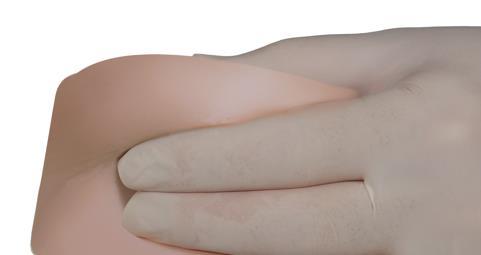
adequate subcutaneous tissue that does not
present excessive pigmentation, nodules, lesions or
hair and has not been used recently.
- Clean the injection site area with an alcohol swab (not included). Using your thumb and index finger, pinch and lift the skin area around the injection site.
- Using your dominant hand, quickly insert
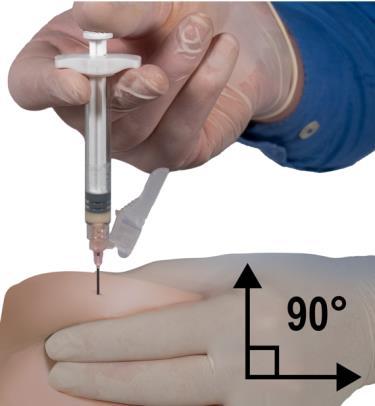
the needle at a 90° angle to the surface
of the skin. The depth of penetration will depend
on the amount and fullness of the subcutaneous
tissue and the length of the needle. After inserting the needle, release the skin.
- Inject the medicine by applying slow and steady pressure and press the plunger until the syringe is empty. Make sure to inject the entire amount of product in Syringe B before removing the needle. Quickly withdraw the needle with the same 90° angle used for insertion, maintaining pressure on the plunger.
Step 9
After the injection, lock the safety protection using one of the activation methods described below.
5. Closing on a flat surface
Press the safety guard, levering downwards, onto a flat surface (Figure 9a) to
cover the needle and lock the guard.
Verify the locking position by paying attention to a signal (“click”) that can be both heard and
felt with your fingers. The guard, when locked, will completely cover the needle tip.
6. Closing with your thumb
Place your thumb on the safety guard (figure 9b), cover the needle tip and lock the
guard.
Verify that the guard position is locked by paying attention to a signal (“click”) that can
be both heard and felt with your fingers. The guard, when locked, will completely cover the needle
tip.
Figure 9a
Closing on flat surface
Figure 9b
Closing with your thumb
Once the needle guard is locked, immediately dispose of the needle and syringe in the appropriate
sharps container.

Виникли питання під час прийому ліків?
Обговоріть свої симптоми та лікування з лікарем онлайн.
- Країна реєстрації
- Лікарська формаPowder and solvent for injectable solution, 7.5 MG
- Код АТХL02AE02
- Діюча речовина
- Потрібен рецептТак
- Виробник
- Ця інформація надана лише для ознайомлення і не є медичною порадою. Рішення щодо лікування завжди приймає лікар.
- Альтернативи до ELIGARDЛікарська форма: Prolonged-release injectable suspension in pre-filled syringe, 42 mgДіюча речовина: leuprorelinВиробник: ACCORD HEALTHCARE, S.L.U.Рецепт не потрібенЛікарська форма: Injectable solution, 3.75 MG/MLДіюча речовина: leuprorelinВиробник: TAKEDA ITALIA S.P.A.Рецепт не потрібенЛікарська форма: Implant, 3.6 MGДіюча речовина: leuprorelinВиробник: SANDOZ S.P.A.Потрібен рецепт
Аналоги ELIGARD в інших країнах
Препарати з тією самою діючою речовиною, доступні в інших країнах.
Аналог ELIGARD у Іспанія
Аналог ELIGARD у Польща
Аналог ELIGARD у Україна
Лікарі онлайн щодо ELIGARD
Застосування, безпека та можливість призначення рецепта — за результатами медичної оцінки.



Отримайте рецепт на ELIGARD онлайн
Заповніть форму за 2 хвилини
Розкажіть про симптоми, історію хвороби та потрібний препарат.
Оберіть лікаря або ми призначимо
Оберіть спеціаліста або ми підберемо найближчого доступного лікаря.
Лікар розглядає ваш випадок
Зазвичай протягом 30 хвилин. Може ставити уточнювальні запитання в чаті.
Отримайте в будь-якій аптеці
Електронний рецепт надсилається на вашу пошту — дійсний по всій Польщі.
Часті запитання
ELIGARD потребує рецепта в Італія. Ви можете обговорити з лікарем онлайн, чи підходить цей лікарський засіб для вашої ситуації.
Діюча речовина у ELIGARD — leuprorelin. Це допомагає визначити препарати з тим самим складом, але під іншими торговими назвами.
ELIGARD виробляється компанією RECORDATI INDUSTRIA CHIMICA E FARMACEUTICA S.P.A.. Назва бренду та упаковка можуть відрізнятися залежно від дистрибʼютора.
Лікарі, зокрема Сімейні лікарі, Психіатри, Дерматологи, Кардіологи, Ендокринологи, Гастроентерологи, Пульмонологи, Нефрологи, Ревматологи, Гематологи, Інфекціоністи, Алергологи, Геріатри, Педіатри, Онкологи, можуть оцінити доцільність застосування ELIGARD з урахуванням вашого стану та місцевих правил. Ви можете записатися на онлайн-консультацію, щоб обговорити симптоми та можливі подальші кроки.
Польща має добре розвинену систему охорони здоров'я у великих містах, таких як Варшава, Краків, Вроцлав і Гданськ. Аптеки широко доступні та працюють відповідно до чинного законодавства, забезпечуючи доступ до рецептурних препаратів.
Ви можете придбати ELIGARD у Варшаві, Кракові, Вроцлаві або Гданську в будь-якій аптеці за наявності дійсного рецепта.
Щоб отримати рецепт, ви можете скористатися Oladoctor:
Інші препарати з тією самою діючою речовиною (leuprorelin) включають KAMKEVI, ENANTONE, LEPTOPROL. Вони можуть відрізнятися торговою назвою або формою випуску, але містять той самий терапевтичний компонент. Перед зміною або початком прийому нового препарату варто проконсультуватися з лікарем.
