



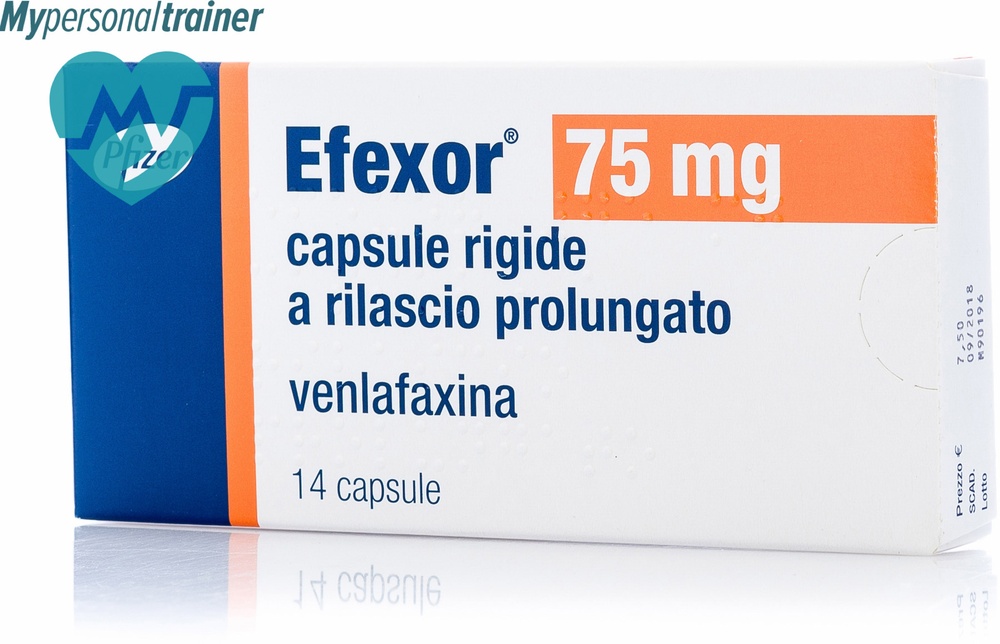
EFEXOR 75 mg Prolonged-Release Hard Capsule

Запит на рецепт онлайн
Лікар розгляне ваш випадок і визначить, чи є рецепт медично доцільним.

Поговоріть з лікарем про ці ліки
Обговоріть симптоми та можливі подальші кроки під час короткої онлайн-консультації.



Інструкція із застосування EFEXOR
Зміст інструкції
Efexor 37,5 mg prolonged-release hard capsules, 75 mg prolonged-release hard capsules, 150 mg prolonged-release hard capsules, 225 mg prolonged-release hard capsules
venlafaxine
Read this leaflet carefully before you start taking this medicine, as it contains important information for you.
- Keep this leaflet. You may need to read it again.
- If you have any questions, ask your doctor or pharmacist.
- This medicine has been prescribed for you only. Do not pass it on to others, even if their symptoms are the same as yours, as it could be harmful.
- If you get any side effects, even those not listed in this leaflet, tell your doctor or pharmacist. See section 4.
Contents of this leaflet:
- 1. What Efexor is and what it is used for
- 2. What you need to know before you take Efexor
- 3. How to take Efexor
- 4. Possible side effects
- 5. How to store Efexor
- 6. Contents of the pack and other information
1. What is Efexor and what is it used for
Efexor contains the active ingredient venlafaxine.
Efexor is an antidepressant belonging to a group of medicines called serotonin and norepinephrine reuptake inhibitors (SNRI). This group of medicines is used
for the treatment of depression and other conditions, such as anxiety disorders. The way antidepressants work is not fully understood, however they can be helpful by raising the
levels of serotonin and norepinephrine in the brain.
Efexor is a treatment for adults suffering from depression. It is also a treatment for adults with the
following anxiety disorders: generalized anxiety disorder, social anxiety disorder (fear of or tendency
to avoid social situations) and panic disorder (panic attacks). Appropriate treatment of
depression or anxiety disorders is important to help you feel better. If left untreated, your
condition may not resolve and may become more severe and more difficult to treat.
2. Cosa deve sapere prima di prendere Efexor
Non prenda Efexor
- se è allergico alla venlafaxina o ad uno qualsiasi degli altri componenti di questo medicinale (elencati al paragrafo 6).
- se sta assumendo o ha assunto nell’arco degli ultimi 14 giorni, uno qualsiasi tra i medicinali conosciuti come inibitori irreversibili delle monoamminossidasi (I-MAO), utilizzati per il trattamento della depressione o del morbo di Parkinson. L’assunzione di un I-MAO irreversibile insieme a Efexor, può comportare effetti indesiderati gravi o anche pericolosi per la vita. Inoltre, deve attendere almeno 7 giorni dopo la sospensione del trattamento con Efexor prima di prendere un qualsiasi I-MAO (vedere anche il paragrafo denominato “Altri medicinali e Efexor” e le informazioni nello stesso paragrafo relativo a “Sindrome serotoninergica”).
Avvertenze e precauzioni
Si rivolga al medico o al farmacista primadi prendere Efexor:
- Se utilizza altri medicinali che, assunti insieme ad Efexor possono far aumentare il rischio di sviluppare una sindrome serotoninergica (vedere il paragrafo “Altri medicinali e Efexor”).
- Se ha problemi agli occhi, come alcuni tipi di glaucoma (aumento della pressione all’interno dell’occhio).
- Se ha precedenti di pressione del sangue elevata.
- Se ha precedenti di problemi cardiaci.
- Se le è stato detto che ha un ritmo cardiaco anormale.
- Se ha precedenti di crisi convulsive.
- Se ha precedenti di livelli bassi di sodio nel sangue (iponatriemia).
- Se ha precedenti di disturbi di sanguinamento, (tendenza a sviluppare lividi o una tendenza a sanguinare facilmente), o se sta usando altri medicinali che possono far aumentare il rischio di sanguinamento, come il warfarin (utilizzato per prevenire coaguli di sangue) o se è in corso una gravidanza (vedere Gravidanza e allattamento).
- Se lei o qualcuno nella sua famiglia ha sofferto precedentemente di mania o disturbo bipolare (sensazione di ipereccitazione o di euforia).
- Se ha precedenti di comportamento aggressivo.
Durante le prime settimane di trattamento Efexor può causare una sensazione di irrequietezza o di
incapacità a rimanere seduti o fermi. Se presenta questi sintomi, deve riferirlo al medico.
Pensieri suicidari e peggioramento della sua depressione o disturbo ansioso
Se è depresso e/o soffre di disturbi d’ansia , talvolta può elaborare pensieri di farsi del male o
uccidersi. Questi pensieri possono aumentare quando inizia per la prima volta ad usare antidepressivi,
poichè questi medicinali hanno bisogno di tempo per agire, di solito circa due settimane ma talvolta
anche di più. Potrebbe avere questi pensieri anche in caso di diminuzione della dose o durante
l’interruzione del trattamento con Efexor.
È più probabile che abbia questi pensieri:
- Se ha avuto in precedenza pensieri di suicidarsi o di farsi del male.
- Se è giovane. Informazioni ottenute da studi clinici hanno mostrato un aumentato rischio di comportamento suicidario nei giovani (con meno di 25 anni) con disturbi psichiatrici, che erano stati trattati con un antidepressivo.
Se ha pensieri di farsi del male o suicidarsi in qualsiasi momento, contatti il medico o si rechi
immediatamente in ospedale.
Può esserle d’aiuto dire ad un parente o ad un amico a lei vicino che è depresso o che soffre di un
pensano che la sua depressione o il suo stato d'ansia sta peggiorando, o se è preoccupato a causa di
cambiamenti del suo comportamento.
Bocca secca
Nel 10% dei pazienti trattati con venlafaxina si riporta bocca secca. Ciò può far aumentare il rischio di
carie dentale. Deve pertanto prestare particolare attenzione alla sua igiene orale.
Diabete
I livelli di glucosio nel sangue possono essere alterati da Efexor. Pertanto può essere necessario
adeguare la dose della sua terapia per il diabete.
Problemi sessuali
Medicinali quali Efexor (i cosiddetti inibitori della ricaptazione della serotonina –norepinefrina SNRI)
possono causare sintomi di disfunzione sessuale (vedere paragrafo 4). In alcuni casi, si è osservata la
persistenza di questi sintomi dopo l’interruzione del trattamento.
Bambini e adolescenti
Normalmente Efexor non deve essere utilizzato per bambini ed adolescenti al di sotto dei 18 anni.
Inoltre, deve sapere che pazienti al di sotto dei 18 anni hanno un rischio maggiore di effetti
indesiderati quando assumono questi medicinali come, tentativo di suicidio, pensieri suicidari ed
ostilità (principalmente aggressività, comportamento oppositivo e rabbia). Nonostante questo, il
medico può prescrivere questo medicinale per pazienti di età inferiore ai 18 anni, perchè ritiene che ciò
sia nel loro miglior interesse. Se il medico ha prescritto questo medicinale per un paziente con meno di
18 anni, e lei vuole discuterne, ne parli con il medico. Deve informare il medico se si manifesta o
peggiora uno qualsiasi dei sintomi elencati quando un paziente con meno di 18 anni sta prendendo
Efexor. Inoltre, non sono stati dimostrati gli effetti di sicurezza a lungo termine di questo medicinale
sulla crescita, la maturazione e lo sviluppo cognitivo e comportamentale in questa fascia d’età.
Altri medicinali e Efexor
Informi il medico o il farmacista se sta assumendo, ha recentemente assunto o potrebbe assumere
qualsiasi altro medicinale.
Il medico deciderà se può usare Efexor con altri medicinali.
Non inizi o interrompa un trattamento con altri medicinali, inclusi i medicinali senza prescrizione
medica, i preparati a base di piante medicinali, prima di aver chiesto al proprio medico o farmacista.
- Inibitori delle monoamminossidasi che sono utilizzati per trattare la depressione o il morbo di Parkinson non devono esser assunti con Efexor. Informi il medico se ha assunto questi medicinali nell’arco degli ultimi 14 giorni (I-MAO: vedere il paragrafo “Cosa deve sapere prima di prendere Efexor”)
- Sindrome serotoninergica: Una condizione potenzialmente rischiosa per la vita o reazioni tipo la Sindrome Neurolettica Maligna (SNM) (vedere il paragrafo “Possibili effetti indesiderati”) possono verificarsi con un trattamento con venlafaxina, soprattutto quando assunta con altri medicinali. Esempi di questi medicinali includono: o Triptani (utilizzati per l’emicrania) o Altri medicinali per il trattamento della depressione, per esempio SNRIs, SSRIs, i triciclici, o i medicinali contenenti litio o Medicinali contenenti anfetamine (utilizzati per trattare la sindrome da deficit di attenzione e iperattività (ADHD), la narcolessia e l’obesità) o Medicinali contenenti linezolid, un antibiotico (utilizzato per il trattamento di infezioni) o Medicinali contenenti moclobemide, un I-MAO (utilizzato per il trattamento della depressione) o Medicinali contenenti sibutramina (utilizzato per la perdita di peso) o Medicinali contenenti oppioidi (per es. buprenorfina, tramadolo, fentanil, tapentadolo, petidina, o pentazocina) utilizzati per il trattamento del dolore forte o Medicinali contenenti destrometorfano (usato per il trattamento della tosse) o Medicinali contenenti metadone (usato per il trattamento della dipendenza da sostanze oppioidi o del dolore forte) o Medicinali contenenti blu di metilene (usato per trattare alti livelli di metaemoglobina nel sangue)
o Preparati a base di erba di San Giovanni (chiamata anche Hypericum Perforatum, un rimedio
naturale a base di una pianta medicinale usato per trattare la depressione lieve)
o Prodotti contenenti triptofano (utilizzato per disturbi come quelli del sonno e la depressione)
o Antipsicotici (usati per trattare una malattia con sintomi quali sentire, vedere o percepire cose
che non sono reali, opinioni sbagliate, strani sospetti, ragionamento confuso ed estraniamento)
Segni e sintomi della sindrome serotoninergica possono includere una combinazione di: irrequietezza,
allucinazioni, perdita di coordinazione, battito cardiaco accellerato, aumento della temperatura
corporea, sbalzi rapidi della pressione del sangue, riflessi iperattivi, diarrea, coma, nausea, vomito.
Nella sua forma più grave la sindrome serotoninergica può somigliare alla Sindrome Neurolettica
Maligna (SNM). Segni e sintomi della SNM possono comprendere una combinazione di febbre, battito
cardiaco accelerato, sudorazione, grave rigidità muscolare, confusione, aumento degli enzimi
muscolari (determinati mediante un’analisi del sangue).
Se ritiene di avere la sindrome serotoninergica, informi immediatamente il medico o si rechi al
pronto soccorso dell’ospedale più vicino.
E’ necessario informare il medico se sta assumendo medicinali che possono influenzare il ritmo
cardiaco.
Esempi di questi medicinali includono:
- Antiaritmici come chinidina, amiodarone, sotalolo o dofetilide (usati per trattare il ritmo cardiaco anomalo)
- Antipsicotici come la tioridazina (Vedi anche sopra: Sindrome Serotoninergica)
- Antibiotici come eritromicina o moxifloxacina (usati per trattare infezioni batteriche)
- Antistaminici (usati per il trattamento di allergie)
Anche i medicinali riportati di seguito possono interferire con Efexor e devono essere utilizzati con
cautela. È particolarmente importante che lei riferisca al proprio medico o farmacista se sta utilizzando
medicinali che contengono:
- Ketoconazolo (un medicinale antifungino)
- Aloperidolo o risperidone (per il trattamento di disturbi psichiatrici)
- Metoprololo (un beta-bloccante per il trattamento della pressione del sangue elevata e i problemi cardiaci)
Efexor con cibi, bevande e alcool
Deve assumere Efexor con del cibo (vedere il paragrafo 3 “Come prendere Efexor”).
Non deve assumere alcool mentre sta assumendo Efexor.
Gravidanza e allattamento
Se è in corso una gravidanza, se sospetta o sta pianificando una gravidanza, o se sta allattando con il
latte materno, chieda consiglio al medico o al farmacista prima di prendere questo medicinale. Deve
utilizzare Efexor solo dopo aver discusso con il medico i potenziali benefici e i rischi potenziali per il
feto.
Si assicuri che l’ostetrica e/o il medico sappiano che lei assume Efexor. Quando assunti durante la
gravidanza, farmaci analoghi (detti SSRIs) possono aumentare il rischio di una condizione grave nei
neonati, denominata ipertensione polmonare persistente del neonato (PPHN). Tale condizione causa
una respirazione veloce del neonato e un colore bluastro. Questi sintomi cominciano di solito durante
le prime 24 ore di vita del bambino. Se ciò si verifica deve contattare immediatamente la sua ostetrica
e/o il suo medico.
Se assume Efexor in prossimità del termine della gravidanza può esserci un rischio aumentato di
abbondante sanguinamento vaginale poco dopo il parto, specialmente se soffre di disordini emorragici
(facilità al sanguinamento). Informi il medico o l’ostetrica/o del fatto che sta assumendo Efexor, in
modo che possano consigliarle cosa fare.
Se sta usando questo medicinale durante la gravidanza, oltre ad avere difficoltà di respirazione , un
altro sintomo che il suo bambino potrebbe presentare alla nascita è la difficoltà di alimentazione
adeguata. Se è preoccupata perché ritiene che il suo bambino manifesti questi sintomi alla nascita,
contatti il medico e/o l’ostetrica che sapranno assisterla.
Efexor è escreto nel latte materno. Esiste il rischio di un effetto sul bambino. Pertanto, deve discuterne
con il medico, che deciderà se deve interrompere l’allattamento al seno o la terapia con questo
medicinale.
Guida di veicoli e utilizzo di macchinari
Non guidi e non usi strumenti o macchinari finchè non capisce quali effetti questo medicinale ha su di
lei.
Efexor contiene sodio
Efexor 150 mg e 225 mg contengono meno di 1 mmol (23 mg) di sodio per capsula, cioè
essenzialmente “senza sodio”.
3. How to take Efexor
Take this medicine exactly as described in this leaflet or as instructed by your doctor. If you have any doubts, consult your doctor or pharmacist.
The usual starting dose recommended for the treatment of depression, generalized anxiety disorder and social anxiety disorder is 75 mg per day. Your doctor may gradually increase the dose and, if necessary, up to a maximum dose of 375 mg per day for depression.
If you are being treated for panic disorder, your doctor will start with a lower dose (37.5 mg) and then gradually increase the dose. The maximum dose for generalized anxiety disorder, social anxiety disorder and panic disorder is 225 mg per day.
Take Efexor at about the same time each day, in the morning or evening. The capsules must be swallowed whole with liquid and must not be opened, broken, chewed or dissolved.
You must take Efexor with food.
If you have liver or kidney problems, talk to your doctor, as an adjustment of the dose of this medicine may be necessary.
Do not stop treatment with this medicine without consulting your doctor (see the section “If you stop taking Efexor”).
If you take more Efexor than you should
Contact your doctor or pharmacist immediately if you take more medicine than the amount prescribed by your doctor.
Symptoms of a possible overdose may include rapid heartbeat, changes in consciousness (ranging from drowsiness to coma), blurred vision, seizures and vomiting.
If you forget to take Efexor
If you forget to take a dose, take it as soon as you remember. However, if you are due to take the next dose when you remember the forgotten dose, skip the forgotten dose and take only one dose as usual. Do not take a double dose to make up for a missed dose.
Do not take more than your daily prescribed amount of Efexor in one day.
If you stop taking Efexor
Do not stop treatment or reduce the dose without your doctor's advice, even if you feel better. If your doctor believes you no longer need Efexor, they may ask you to reduce the dose gradually before stopping treatment completely. It is known that undesirable effects occur when patients stop treatment with this medicine, especially when it is stopped abruptly or when the dose is reduced too quickly. Some patients may experience symptoms such as suicidal thoughts, aggression, fatigue, dizziness, a feeling of mild confusion, headache, insomnia, nightmares, dry mouth, loss of appetite, nausea, diarrhea, nervousness, agitation, confusion, ringing in the ears, tingling or, rarely, electric shock sensations, weakness, sweating, convulsions or flu-like symptoms, visual problems and increased blood pressure (which can cause headache, dizziness, ringing in the ears, sweating, etc.).
Your doctor will explain how to gradually stop treatment with Efexor. This process may take weeks or months. In some patients, it may be necessary to discontinue treatment very gradually, over months or even longer periods. If you experience any of these or other symptoms that bother you, consult your doctor for further advice.
If you have any further questions about the use of this medicine, ask your doctor or pharmacist.
4. Possible side effects
Like all medicines, this medicine can cause side effects, although not everyone gets them.
If you experience any of the following effects, do not take any more Efexor. Seek
immediate medical attention, or go to the nearest hospital emergency room:
Uncommon (may affect up to 1 in 100 people)
- Swelling of the face, mouth, tongue, throat, hands or feet and/or a raised rash with itching (urticaria), difficulty swallowing or breathing
Rare (may affect up to 1 in 1,000)
- Tightness in the chest, wheezing, difficulty swallowing or breathing.
- Severe rash, feeling of itching or hives (raised, red or pale patches of skin that often itch).
- Signs and symptoms of serotonin syndrome may include agitation, hallucinations, loss of coordination, fast heartbeat, increased body temperature, rapid changes in blood pressure, overactive reflexes, diarrhea, coma, nausea, vomiting. In its most severe form, serotonin syndrome can resemble Neuroleptic Malignant Syndrome (NMS). Signs and symptoms of NMS may include a combination of fever, fast heartbeat, sweating, severe muscle stiffness, confusion, increased muscle enzymes (determined by a blood test).
- Signs of infection, such as high temperature, chills, tremors, headache, sweating, flu-like symptoms. This may be due to a blood disorder that causes an increased risk of infection.
- Severe rash that can cause severe blistering and peeling of the skin.
- Unexplained muscle pain, tenderness or weakness. This may be a sign of rhabdomyolysis.
Frequency not known (frequency cannot be estimated from the available data)
- Signs and symptoms of a condition called “stress cardiomyopathy”, which may include chest pain, shortness of breath, dizziness, fainting, irregular heartbeat. Other side effects that you should report to your doctorare (the frequencies of these side effects are included in the “Other side effects” list):
- Cough, wheezing and shortness of breath that may be accompanied by a high temperature.
- Black stools (tarry) or blood in the stools.
- Itching, yellowing of the eyes or skin, or dark urine, which may be symptoms of liver inflammation (hepatitis).
- Heart problems, such as fast or irregular heartbeat, increased blood pressure.
- Eye problems, such as blurred vision, dilated pupils.
- Nervous system problems, such as dizziness, tingling, movement disorder (muscle spasms or stiffness), seizures.
- Psychiatric problems, such as hyperactivity and feeling overly excited.
- Withdrawal symptoms (see the section “How to take Efexor, If you stop taking Efexor”).
- Prolonged bleeding - it may take longer than usual to stop bleeding in case of cuts or wounds.
Do not be concerned if you notice small granules or white spheres in your stools after taking this
medicine. Inside the Efexor capsules are spheroids (small white spheres
containing the active ingredient venlafaxine). These spheroids are released from the capsule
into the stomach. As the spheroids pass through your gastrointestinal tract, venlafaxine is
released slowly. The spheroid coating does not dissolve and is found in the stool. Therefore,
even if you notice spheroids in your stool, the dose of medicine has been absorbed.
Other side effects
Very common (may affect more than 1 in 10 people)
- Dizziness; headache; drowsiness
- Insomnia
- Nausea; dry mouth; constipation
- Sweating (including night sweats)
Common (may affect up to 1 in 10 people)
- Reduced appetite
- Confusion; feeling detached from oneself; lack of orgasm; decreased libido; agitation; nervousness; abnormal dreams
- Tremor; feeling restless or inability to sit still or remain still; tingling; altered taste sensation; increased muscle tone
- Visual disturbances including blurred vision; dilated pupils; inability of the eye to automatically refocus from distant to near objects
- Ringing in the ears (tinnitus)
- Fast heartbeat; palpitations
- Increased blood pressure; hot flushes
- Shortness of breath; yawning
- Vomiting; diarrhea
- Mild rash; itching
- Increased frequency of urination; inability to urinate; difficulty urinating
- Menstrual irregularities such as increased bleeding or increased irregularity of bleeding; abnormal orgasm/ejaculation (males); erectile dysfunction (impotence)
- Weakness (asthenia); fatigue; chills
- Weight gain; weight loss
- Increased cholesterol
Uncommon (may affect up to 1 in 100 people)
- Hyperactivity, racing thoughts and decreased need for sleep (mania)
- Hallucinations; feeling detached from reality; abnormal orgasm; lack of sensations or emotions; feeling of overexcitement; teeth grinding
- Fainting; involuntary muscle movements; impaired coordination and balance
- Feeling dizzy (especially when getting up too quickly); low blood pressure
- Vomiting blood; black tarry stools or blood in the stools; which may be a sign of internal bleeding
- Sensitivity to sunlight; bruising; abnormal hair loss
- Urinary incontinence
- Stiffness, spasms and involuntary movements of the muscles
- Mild changes in blood levels of liver enzymes
Rare (may affect up to 1 in 1000)
- Seizures
- Cough, wheezing and shortness of breath that may be accompanied by a high temperature.
- Disorientation and confusion often accompanied by hallucinations (delirium)
- Excessive intake of water (known as SIADH)
- Decreased blood levels of sodium
- Intense eye pain and decreased or blurred vision
- Abnormal heartbeat, fast or irregular, which can lead to fainting
- Severe abdominal or back pain (which may indicate a serious problem with the intestine, liver or pancreas)
- Itching, yellowing of the skin or eyes, dark urine, or flu-like symptoms, which are signs of liver inflammation (hepatitis)
Very rare (may affect less than 1 in 10,000)
- Prolonged bleeding, which may indicate a decrease in the number of platelets in the blood, leading to an increased risk of bruising or bleeding
- Abnormal production of breast milk
- Unexpected bleeding, such as bleeding from the gums, blood in the urine or vomit, or the appearance of unexpected bruises or broken veins
Frequency not known (frequency cannot be estimated from the available data)
- Suicidal ideation and suicidal behaviour: cases of suicidal ideation and suicidal behaviour have been reported during treatment with venlafaxine or immediately after discontinuing treatment with venlafaxine (see section 2, What you need to know before taking Efexor)
- Aggression
- Vertigo
- Profuse vaginal bleeding shortly after childbirth (postpartum hemorrhage), see Pregnancy and breastfeeding in section 2 for more information. Sometimes Efexor causes side effects that you may not be aware of, such as increases in blood pressure or abnormal heartbeat; slight changes in blood levels of liver enzymes, sodium or cholesterol. More rarely, Efexor may reduce the function of platelets in your blood, leading to an increased risk of bruising and bleeding. Therefore, your doctor may want to have occasional blood tests, especially if you have been taking Efexor for a long time.
Reporting of side effects
If you get any side effects, even those not listed in this leaflet, tell your
doctor or pharmacist. You can also report side effects directly through
the national reporting system at https://www.aifa.gov.it/content/segnalazioni-reazioni-
avverse . By reporting side effects you can help provide more information on the
safety
of this medicine.
5. How to store Efexor
Keep this medicine out of sight and reach of children.
Do not use this medicine after the expiry date which is stated on the packaging. The expiry date refers to the last day of that month.
Do not store at a temperature above 30 °C.
Do not dispose of any medicine in wastewater or household waste. Ask your pharmacist how to dispose of medicines you no longer use. This will help protect the environment.
6. Contents of the pack and other information
What Efexor contains
The active ingredient is venlafaxine.
Efexor 37.5 mg:
Each prolonged-release capsule contains 42.43 mg of venlafaxine hydrochloride, equivalent to 37.5 mg of
venlafaxine as free base.
The excipients are:
Capsule contents: microcrystalline cellulose, ethylcellulose, hypromellose, talc
Capsule shell: gelatin, black, red and yellow iron oxides (E172), titanium dioxide (E171)
Capsule printing ink: lacquer, red iron oxide (E172), ammonium hydroxide, simethicone,
propylene glycol
Efexor 75 mg:
Each prolonged-release capsule contains 84.85 mg of venlafaxine hydrochloride, equivalent to 75 mg of
venlafaxine as free base.
The excipients are:
Capsule contents: microcrystalline cellulose, ethylcellulose, hypromellose, talc
Capsule shell: gelatin, red and yellow iron oxides (E172), titanium dioxide (E171)
Capsule printing ink: lacquer, red iron oxide (E172), ammonium hydroxide, simethicone,
propylene glycol
Efexor 150 mg:
Each prolonged-release capsule contains 169.7 mg of venlafaxine hydrochloride, equivalent to 150 mg of
venlafaxine as free base.
The excipients are:
Capsule contents: microcrystalline cellulose, ethylcellulose, hypromellose, talc
Capsule shell: gelatin, red and yellow iron oxides (E172), titanium dioxide (E171)
Capsule printing ink: lacquer, sodium hydroxide (see paragraph 2 “Efexor contains sodium”),
povidone, titanium dioxide (E171), propylene glycol.
Efexor 225 mg:
Each prolonged-release capsule contains 254.52 mg of venlafaxine hydrochloride, equivalent to 225 mg of
venlafaxine base.
The excipients are:
Capsule contents: microcrystalline cellulose, ethylcellulose, hypromellose, talc
Capsule shell: gelatin, black, red and yellow iron oxides (E172), titanium dioxide (E171)
Capsule printing ink: lacquer, sodium hydroxide (see paragraph 2 “Efexor contains sodium”),
povidone, titanium dioxide (E171), propylene glycol.
Description of the appearance of Efexor and contents of the pack
Efexor 37.5 mg is an opaque hard (gelatin) prolonged-release capsule of light grey and peach color, measuring 15.9 mm x 5.82 mm, with a “W” and the dosage “37.5” printed in red.
Efexor 37.5 mg is available in:
Blister packs containing 7, 10, 14, 20, 21, 28, 30, 35, 50, 60, 100 capsules and in hospital packs containing 70 capsules (10x7, 1x70)
Unit-dose blister packs containing 14, 28, 84, 100 capsules
Plastic (HDPE) bottles containing 7, 14, 20, 21, 35, 50, 100 capsules and in hospital packs
containing 70 capsules.
Efexor 75 mg is a peach-colored opaque hard (gelatin) prolonged-release capsule, measuring 19.4 mm x 6.91
mm, with a “W” and the dosage “75” printed in red.
Efexor 75 mg is available in:
Blister packs containing 7, 10, 14, 15, 20, 28, 30, 50, 56, 60, 98, 100 capsules and in hospital packs
containing 500 (10x50) and 1000 (10x100) capsules
Unit-dose blister packs containing 14, 28, 84, 100 capsules
Plastic (HDPE) bottles containing 14, 20, 50, 100 capsules and in hospital packs
containing 500 and 1000 capsules.
Efexor 150 mg is a dark orange opaque hard (gelatin) prolonged-release capsule, measuring 23.5
mm x 7.65 mm, with a “W” and the dosage “150” printed in white.
Efexor 150 mg is available in:
Blister packs containing 7, 10, 14, 15, 20, 28, 30, 50, 56, 60, 98, 100 capsules and in hospital packs
containing 500 (10x50) and 1000 (10x100) capsules
Unit-dose blister packs containing 14, 28, 84, 100 capsules
Plastic (HDPE) bottles containing 14, 20, 50, 100 capsules and in hospital packs
containing 500 and 1000 capsules.
Efexor 225 mg are capsules with a light grey cap and an opaque dark orange body,
with “W” and “225” printed in white.
Efexor 225 mg is available in Blister packs containing 7, 10, 14, 15, 20, 28, 30, 50, 56, 60, 98, 100
capsules and in hospital packs containing 500 (10x50) and 1000 (10x100) capsules.
Unit-dose blister packs containing 14, 28, 84, 100 capsules.
Not all pack sizes may be marketed.
Marketing Authorisation Holder and Manufacturer
Marketing Authorisation Holder
Viatris Pharma S.r.l.
Via Vittor Pisani 20
20124 Milan
Manufacturer
Pfizer Ireland Pharmaceuticals
Little Connell – Newbridge,
County Kildare
Ireland
Pfizer Manufacturing Deutschland GmbH
Betriebsstätte Freiburg
Mooswaldallee 1
Freiburg Im Breisgau
Baden-Wuerttemberg, 79090
Germany
This medicinal product is authorised in the Member States of the EEA with the following denominations:
| Austria a | n Efectin ER 37,5 mg Capsules Efectin ER 75 mg Capsules Efectin ER 150 mg Capsules |
| i Belgium, Luxembourg l | Efexor-Exel 37,5 Efexor-Exel 75 Efexor-Exel 150 Efexor-Exel 225 |
| a t Bulgaria | Efectin ER 75 mg Efectin ER 150 mg |
| I Czech Republic a | Efectin ER 37.5 mg Efectin ER 75 mg Efectin ER 150 mg |
| i z Cyprus, Greece, Estonia, Lithuania, Portugal | Efexor XR |
| n Latvia e | Efexor XR Efexor XR 75 Efexor XR 150 |
| g Denmark, Finland, Iceland, Norway, Sweden | Efexor Depot |
| France | Effexor L.P. |
| A Germany | Trevilor retard 37,5 mg Trevilor retard 75 mg Trevilor retard 150 mg |
| Ireland, Malta, United Kingdom | Efexor XL |
*[Not all products and dosages listed may be commercially available]
| Netherlands | Efexor XR 37,5 o Efexor XR 75 Efexor XR 150 |
| Italy | c a Efexor |
| Poland | m Efectin ER 37,5 Efectin ER 75 Efectin ER 150 |
| Romania | r Efectin EP 37.5 mg a Efectin EP 75 mg Efectin EP 150 mg |
| Slovenia | F Efectin ER 37,5 mg hard capsules with prolonged release e Efectin ER 75 mg hard capsules with l prolonged release e Efectin ER 150 mg hard capsules with prolonged release |
| Spain | d Vandral Retard 75 mg prolonged-release capsules a Vandral Retard 150 mg prolonged-release capsules n Vandral Retard 225 mg prolonged-release capsules |

Не впевнені, чи підходить вам цей лікарський засіб?
Обговоріть симптоми та можливі варіанти лікування з лікарем онлайн.

Виникли питання під час прийому ліків?
Обговоріть свої симптоми та лікування з лікарем онлайн.
- Країна реєстрації
- Лікарська формаProlonged-release hard capsule, 75 MG
- Код АТХN06AX16
- Діюча речовина
- Потрібен рецептТак
- Виробник
- Ця інформація надана лише для ознайомлення і не є медичною порадою. Рішення щодо лікування завжди приймає лікар.
- Альтернативи до EFEXORЛікарська форма: Extended-release hard capsule, 75 MGДіюча речовина: венлафаксинВиробник: NEURAXPHARM ITALY S.P.A.Потрібен рецептЛікарська форма: Modified-release hard capsule, 75 MGДіюча речовина: венлафаксинВиробник: LABORATORI ALTER S.R.L.Потрібен рецептЛікарська форма: Prolonged-release hard capsule, 37,5 MGДіюча речовина: венлафаксинВиробник: AUROBINDO PHARMA (ITALIA) S.R.L.Потрібен рецепт
Аналоги EFEXOR в інших країнах
Препарати з тією самою діючою речовиною, доступні в інших країнах.
Аналог EFEXOR у Іспанія
Аналог EFEXOR у Польща
Аналог EFEXOR у Україна
Лікарі онлайн щодо EFEXOR
Застосування, безпека та можливість призначення рецепта — за результатами медичної оцінки.







Отримайте рецепт на EFEXOR онлайн
Заповніть форму за 2 хвилини
Розкажіть про симптоми, історію хвороби та потрібний препарат.
Оберіть лікаря або ми призначимо
Оберіть спеціаліста або ми підберемо найближчого доступного лікаря.
Лікар розглядає ваш випадок
Зазвичай протягом 30 хвилин. Може ставити уточнювальні запитання в чаті.
Отримайте в будь-якій аптеці
Електронний рецепт надсилається на вашу пошту — дійсний по всій Польщі.
Часті запитання
EFEXOR потребує рецепта в Італія. Ви можете обговорити з лікарем онлайн, чи підходить цей лікарський засіб для вашої ситуації.
Діюча речовина у EFEXOR — венлафаксин. Це допомагає визначити препарати з тим самим складом, але під іншими торговими назвами.
EFEXOR виробляється компанією VIATRIS PHARMA S.R.L.. Назва бренду та упаковка можуть відрізнятися залежно від дистрибʼютора.
Лікарі, зокрема Сімейні лікарі, Психіатри, Дерматологи, Кардіологи, Ендокринологи, Гастроентерологи, Пульмонологи, Нефрологи, Ревматологи, Гематологи, Інфекціоністи, Алергологи, Геріатри, Педіатри, Онкологи, можуть оцінити доцільність застосування EFEXOR з урахуванням вашого стану та місцевих правил. Ви можете записатися на онлайн-консультацію, щоб обговорити симптоми та можливі подальші кроки.
Польща має добре розвинену систему охорони здоров'я у великих містах, таких як Варшава, Краків, Вроцлав і Гданськ. Аптеки широко доступні та працюють відповідно до чинного законодавства, забезпечуючи доступ до рецептурних препаратів.
Ви можете придбати EFEXOR у Варшаві, Кракові, Вроцлаві або Гданську в будь-якій аптеці за наявності дійсного рецепта.
Щоб отримати рецепт, ви можете скористатися Oladoctor:
Інші препарати з тією самою діючою речовиною (венлафаксин) включають IXILANIA, VENLAFAXINA ALTER, VENLAFAXINA AUROBINDO. Вони можуть відрізнятися торговою назвою або формою випуску, але містять той самий терапевтичний компонент. Перед зміною або початком прийому нового препарату варто проконсультуватися з лікарем.
