



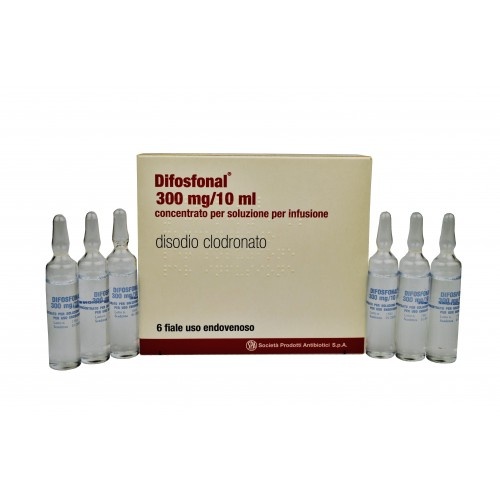
DIFOSFONAL 300 mg /10 Ml Concentrate For Infusion Solution

Запит на рецепт онлайн
Лікар розгляне ваш випадок і визначить, чи є рецепт медично доцільним.

Поговоріть з лікарем про ці ліки
Обговоріть симптоми та можливі подальші кроки під час короткої онлайн-консультації.



Інструкція із застосування DIFOSFONAL
Зміст інструкції
- DIFOSFONAL 400 mg hard capsules
- DIFOSFONAL capsules must be taken 2-3 hours away from food and/or beverages
- DIFOSFONAL 300 mg/10 ml concentrate for solution for infusion
- DIFOSFONAL 100 mg/3.3 ml injectable solution for intramuscular use with 1% lidocaine o
- DIFOSFONAL 100 mg/3.3 ml injectable solution for intramuscular use with 1% lidocaine, 200 mg/4 ml injectable solution for intramuscular use with 1% lidocaine
DIFOSFONAL 400 mg hard capsules
Clodronic acid
Read this leaflet carefully before taking this medicine as it contains
important information for you.
- Keep this leaflet. You may need to read it again.
- If you have any questions, ask your doctor or pharmacist.
- This medicine has been prescribed for you only. Do not pass it on to others, even if their symptoms are the same as yours, as it could be harmful.
- If you get any side effects, even those not listed in this leaflet, tell your doctor or pharmacist. See section 4.
Contents of this leaflet:
- 1. What DIFOSFONAL is and what it is used for
- 2. What you need to know before you take DIFOSFONAL
- 3. How to take DIFOSFONAL
- 4. Possible side effects
- 5. How to store DIFOSFONAL
- 6. Contents of the pack and other information
1. What DIFOSFONAL is and what it is used for
DIFOSFONAL capsules contain clodronic acid.
It belongs to a group of medicines called bisphosphonates, used for the treatment of
bone diseases.
DIFOSFONAL capsules is indicated in adults (men and women)as maintenance therapy
in the treatment of:
- bone loss following cancer (tumour osteolysis);
- bone marrow cancer, the organ that produces blood cells (multiple myeloma);
- excessive functionality of the parathyroid glands, glands located in the neck (primary hyperparathyroidism). It is also indicated in adult womenfor the prevention and treatment of bone loss (osteoporosis) after menopause (period of permanent cessation of menstruation).
See your doctor if you do not feel better or if you feel worse.
2. What you need to know before taking DIFOSFONAL
Do not take DIFOSFONAL
- If you are allergic to clodronic acid or any of the other ingredients of this medicine (listed in section 6).
- If you are taking other bisphosphonates, medicines similar to DIFOSFONAL.
Warnings and precautions
Talk to your doctor or pharmacist before taking DIFOSFONAL.
During treatment with DIFOSFONAL you must take an adequate amount of
fluids, especially if you suffer from high levels of calcium in the blood or kidney disease
(renal insufficiency).
Before and during treatment, your doctor will ask you to undergo blood tests to
check the function of your kidneys and liver (see section 4. Possible side
effects) and the levels of calcium and phosphate.
Tell your doctor:
- If you suffer from altered levels of calcium in the blood.
- If you suffer from a kidney disease (renal insufficiency).
- If you are undergoing dental treatment or need to undergo dental surgery. Your dentist should be informed that you are being treated with DIFOSFONAL (see section 4. Possible side effects).
- If you experience weakness or discomfort in the thigh, hip or groin during treatment as this could be an early indication of a possible femur fracture (see section 4. Possible side effects). In this case, you may be asked to undergo further investigations.
- If you have suffered in the past from disorders of the esophagus (the tube that carries food to the stomach), such as narrowing of the esophagus or reduced ability of the esophagus to push food towards the stomach (achalasia), which cause a delay in the passage of food through the esophagus and emptying of the stomach.
- If you are unable to maintain an upright posture for at least 30 minutes after taking the capsule.
- If you suffer from or have recently suffered from disorders of the esophagus, stomach or duodenum (the upper part of the intestine). In these cases it is important that you carefully follow your doctor's instructions on how to take this medicine and that you immediately informyour doctor if you experience any symptoms of esophageal irritation such as dysphagia (difficulty swallowing food), pain when swallowing, back pain or appearance/worsening of heartburn.
Laboratory tests Difosfonal can cause reversible increases in liver enzymes. Your
doctor will subject you to frequent liver function tests.
Children and adolescents
The safety and efficacy of the drug in children and adolescents have not been established.
Other medicines and DIFOSFONAL
Tell your doctor or pharmacist: if you are taking, have recently taken or might
take any other medicines.
This is particularly important for the following medicines, as they may interact with
DIFOSFONAL:
- other bisphosphonates, medicines used to treat bone diseases (see section 2. Do not take DIFOSFONAL)
- non-steroidal anti-inflammatory drugs (NSAIDs), medicines used to treat inflammation
- aminoglycosides, medicines used to treat infections
- estramustine, medicine used to treat prostate cancer (a gland in men that produces seminal fluid)
- medicines containing divalent cations such as calcium, iron for example: or antacids (medicines containing one or more salts, used to treat stomach acidity) or iron-based preparations. If you have taken these medicines, you should take DIFOSFONAL 2-3 hours apart.
DIFOSFONAL with food and drink
DIFOSFONAL capsules must be taken 2-3 hours away from food and/or beverages
containing divalent cations such as iron, calcium (e.g.: milk, cheeses, mineral waters or other
beverages that contain high amounts of calcium) (see paragraph 3. How to take
DIFOSFONAL).
Pregnancy and breastfeeding
If you are pregnant, suspect you are pregnant, or are planning a pregnancy, or if you are
breastfeeding, ask your doctor or pharmacist for advice before taking
this medicine.
Pregnancy
Do not take DIFOSFONAL during pregnancy and if you are of childbearing potential and are not using an
effective contraceptive therapy (medicines used to prevent pregnancy).
Breastfeeding
It is not known whether clodronic acid passes into breast milk. Therefore, during treatment with
DIFOSFONAL, discontinue breastfeeding.
Driving and using machines
DIFOSFONAL has no effects on the ability to drive vehicles and use machines.
DIFOSFONAL contains sodium
DIFOSFONAL hard capsulescontain 68 mg of sodium per capsule.
This should be taken into consideration in people with reduced kidney function or who are following a
low-sodium diet.
3. How to take DIFOSFONAL
Take this medicine following exactly the instructions of your doctor or pharmacist.
If you have any doubts, consult your doctor or pharmacist.
The dose will be established by your doctor based on your state of health.
Treatment cycles will be established by your doctor depending on the evolution of the disease.
It is important that you take calcium and vitamin D supplements, if indicated by your doctor.
Adults (men and women)
Maintenance therapy for tumor osteolysis, multiple myeloma, hyperparathyroidism
primary
Generally, the recommended dose is 1-6 capsules per day, divided into 2-3
administrations away from meals, for 3-4 weeks.
Adult women
Postmenopausal osteoporosis
Generally, the recommended dose is 1 capsule per day for 30 days, followed by 60 days
of suspension (for multiple cycles), up to 1 capsule per day continuously for 1 year or
more depending on the evolution of the disease.
If you suffer from kidney disease (renal insufficiency)
If you suffer from renal insufficiency, dosage reductions are foreseen.
Method of administration
- Swallow the capsules whole.
- Depending on the dose prescribed by your doctor, take the single daily dose or the first dose of the day preferably in the morning on an empty stomach with a glass of water.
- Do not eat or drink (if not natural water) or take other medicines orally for one hour after taking the capsule. Once you have swallowed the medicine, you must not lie down for 30 minutes.
- If your doctor has prescribed more doses to be taken during the day, take the other doses between meals, at least two hours after and one hour before eating, drinking (if not natural water) or taking other medicines orally.
If you use more DIFOSFONAL than you should
In case of accidental ingestion/intake of an excessive dose of DIFOSFONAL, contact
your doctor or the nearest hospital immediately.
Overdosage may manifest with:
- acute damage to the kidneys (uremia) and liver
- lowering of calcium levels in the blood (hypocalcemia).
Treatment
The doctor will monitor the symptoms with specific therapies and particular attention to
renal function.
If you forget to take DIFOSFONAL
Do not take a double dose to make up for the forgotten capsule.
If you stop taking DIFOSFONAL
If you have any doubts about the use of this medicine, consult your doctor or pharmacist.
4. Possible side effects
Like all medicines, this medicine can cause side effects, although not everyone will experience them.
If you experience vision or eye disturbances during treatment,
STOPtherapy and consult an ophthalmologist.
Possible side effects are listed below according to the following frequency:
common (may affect up to 1 in 10 people)
- lowering of calcium levels in the blood, without symptoms (asymptomatic hypocalcemia)
- diarrhea, nausea, vomiting (usually mild)
- increased levels of transaminases (test to evaluate liver function) in the blood, usually within normal limits. rare (may affect up to 1 in 1,000)
- lowering of calcium levels in the blood, with symptoms such as tingling, muscle contractions/cramps (symptomatic hypocalcemia)
- increased level of parathyroid hormone (hormone that regulates calcium levels in the blood) associated with reduced calcium in the blood
- increased levels of alkaline phosphatase in the blood (test to evaluate the condition of bones and liver)
- increased levels of transaminases (test to evaluate liver function) more than twice the normal values, without other abnormalities of liver function
- allergic reactions that manifest as skin reactions.
very rare (may affect less than 1 in 10,000)
Consult your doctor in case of ear pain, ear discharge and/or ear infection.
These episodes may be symptoms of bone damage in the ear.
The following side effects may also occur, for which it is not possible
to estimate the frequency:
- effects concerning the eyes
- inflammation of the conjunctiva, the membrane that covers the eye and the inside of the eyelids (conjunctivitis), inflammation of the eye (episcleritis, scleritis and uveitis).
- effects concerning the lungs
- breathing difficulties in patients with asthma sensitive to aspirin (a medicine used to treat fever, pain and inflammation)
- allergic reactions that manifest as breathing difficulties.
- effects concerning the kidneys and urinary tract
- kidney problems, which may include reduced kidney function, kidney failure and severe kidney damage, especially with the concomitant use of certain non-steroidal anti-inflammatory drugs (NSAIDs), medicines used to treat inflammation, in particular diclofenac.
- effects concerning bones and muscles
- pain or sore in the mouth or jaw and/or jaw (facial bones). This may be the first signs of a serious problem (necrosis, i.e. death of bone tissue, of the jaw and/or jaw), generally associated with tooth extraction and/or local infection, in the presence of risk factors such as cancer, specific therapies, poor oral hygiene (see also section 2. Warnings and precautions)
- severe pain in the bones, joints and muscles. The onset of symptoms varies from days to several months after starting therapy with DIFOSFONAL
- rarely, with the group of drugs to which DIFOSFONAL belongs (bisphosphonates), unusual femur (leg bone) fractures have been reported, particularly in patients treated for a long time for osteoporosis (see also section 2. Warnings and precautions).
- effects concerning the gastrointestinal tract
- reactions of the stomach and intestines.
Reporting of side effects
If you experience any side effects, including those not listed in this leaflet,
consult your doctor or pharmacist. You can also report side effects
directly through the national reporting system at
www.agenziafarmaco.gov.it/it/responsabili .
By reporting side effects you can help provide more information on
the safety of this medicine.
5. How to store DIFOSFONAL
Store at a temperature below 30 C.
Keep this medicine out of sight and reach of children.
Do not take this medicine after the expiry date which is stated on the pack after
Expiry.
The expiry date refers to the last day of that month.
Do not dispose of any medicine in waste water or household waste. Ask your pharmacist
how to dispose of medicines you no longer use. This will help protect the environment.
6. Contents of the pack and other information
What DIFOSFONAL contains
- The active ingredient is Disodium clodronate (disodiumsalt of clodronic acid) 400 mg
- The other ingredients are sodiumcarboxymethylamide (see section 2. DIFOSFONAL contains sodium), corn starch, talc, magnesium stearate - Capsule shell: gelatin, titanium dioxide (E171), indigotine (E132).
Description of the appearance of DIFOSFONAL and contents of the pack
Hard capsules of white and blue color, for oral use. Pack of 10 capsules.
MARKETING AUTHORISATION HOLDER
SPA - Società Prodotti Antibiotici S.p.A.
Via Biella, 8
20143 Milan
MANUFACTURER
ABIOGEN PHARMA S.p.A. - Officina di Via Meucci, 36 – Ospedaletto –Pisa

Не впевнені, чи підходить вам цей лікарський засіб?
Обговоріть симптоми та можливі варіанти лікування з лікарем онлайн.
DIFOSFONAL 300 mg/10 ml concentrate for solution for infusion
Clodronic acid
Read this leaflet carefully before you are given this medicine
because it contains important information for you.
- Keep this leaflet. You may need to read it again.
- If you have any questions, ask your doctor, pharmacist or nurse.
- This medicine has been prescribed for you only. Do not pass it on to others, even if they have the same symptoms as you, as it could be harmful.
- If any side effects occur, including any not listed in this leaflet, tell your doctor, pharmacist or nurse. See section 4.
Contents of this leaflet:
- 1. What DIFOSFONAL is and what it is used for
- 2. What you need to know before you are given DIFOSFONAL
- 3. How DIFOSFONAL will be given to you
- 4. Possible side effects
- 5. How to store DIFOSFONAL
- 6. Contents of the pack and other information
1. What DIFOSFONAL is and what it is used for
DIFOSFONAL concentrate for infusion solution contains clodronic acid.
It belongs to a group of medicines called bisphosphonates, used for the treatment of
bone diseases.
DIFOSFONAL concentrate for infusion solution is indicated in adults (men and
women)for the treatment:
- of loss of bone consistency following cancer (tumour osteolysis);
- of bone marrow cancer, the organ that produces blood cells (multiple myeloma);
- of excessive functionality of the parathyroid glands, glands located in the neck (primary hyperparathyroidism). It is also indicated in adult womenfor the prevention and treatment of loss of bone consistency (osteoporosis) after menopause (period of permanent cessation of menstruation).
See your doctor if you do not feel better or if you feel worse.
2. What you need to know before you are given DIFOSFONAL
You will not be given DIFOSFONAL
- If you are allergic to clodronic acid or any of the other ingredients of this medicine (listed in section 6).
- If you are taking other bisphosphonates, medicines similar to DIFOSFONAL.
Warnings and precautions
Talk to your doctor or pharmacist before you are given DIFOSFONAL.
During treatment with DIFOSFONAL, you must drink an adequate amount of
fluids, especially if you suffer from high levels of calcium in the blood or kidney disease
(renal insufficiency).
Before and during treatment, your doctor will ask you to undergo blood tests to
check the function of your kidneys and liver (see section 4. Possible side
effects) and the levels of calcium and phosphate.
Tell your doctor:
- If you suffer from altered levels of calcium in the blood.
- If you suffer from kidney disease (renal insufficiency).
- If you are undergoing dental treatment or need to undergo dental surgery. Your dentist should be informed that you are being treated with DIFOSFONAL (see section 4. Possible side effects).
- If you experience weakness or discomfort in the thigh, hip or groin during treatment, as this could be an early indication of a possible femur fracture (see section 4. Possible side effects). In this case, you may be asked to undergo further tests.
Laboratory tests
Difosfonal can cause reversible increases in liver enzymes. Your doctor will subject you to
frequent liver function tests.
Children and adolescents
The safety and efficacy of the medicine in children and adolescents have not been established.
Other medicines and DIFOSFONAL
Tell your doctor or pharmacist if you are taking, have recently taken or might
take any other medicines.
This is particularly important for the following medicines, as they may interact with
DIFOSFONAL:
- other bisphosphonates, medicines used to treat bone diseases (see section 2. Do not use DIFOSFONAL);
- non-steroidal anti-inflammatory drugs (NSAIDs), medicines used to treat inflammation;
- aminoglycosides, medicines used to treat infections;
- estramustine, a medicine used to treat prostate cancer (a gland in men that produces seminal fluid);
- injectable solutions containing divalent cations (e.g. Ringer's solution).
Pregnancy and breastfeeding
If you are pregnant, suspect you may be pregnant or are planning to become pregnant, or if you
are breastfeeding, ask your doctor or pharmacist for advice before using
this medicine.
Pregnancy
Do not take DIFOSFONAL during pregnancy and if you are of childbearing potential and are not using
effective contraception (medicines used to prevent pregnancy).
Breastfeeding
It is not known whether clodronate passes into breast milk. Therefore, during treatment with
DIFOSFONAL, stop breastfeeding.
Driving and using machines
DIFOSFONAL has no effects on the ability to drive and use machines.
DIFOSFONAL contains sodium
DIFOSFONAL concentrate for solution for infusioncontains 54 mg of sodium per dose.
This should be taken into consideration in people with reduced kidney function or who are following a
low-sodium diet.
3. How DIFOSFONAL will be administered to you
This medicine will be administered to you only under strict supervision of qualified personnel
(doctor or nurse). If you have any doubts, consult your doctor, pharmacist or
nurse.
The dose will be established by the doctor based on your state of health.
Dose reductions are foreseen in patients with kidney disease (renal insufficiency).
Treatment cycles will be established by your doctor depending on the evolution of the disease.
DIFOSFONAL concentrate for infusion solutionis only for intravenous use(i.e. to be
administered slowly, 2-3 hours, into a vein after appropriate dilution).
If you are given more DIFOSFONAL than you should
If you are accidentally given an excessive dose of DIFOSFONAL, the
overdose may manifest with:
- increased levels of creatinine in the blood (a substance produced at the muscular level that is used to evaluate kidney function), and renal dysfunction (kidney disease), with high doses of clodronate administered intravenously
- acute damage to the kidneys (uremia) and the liver
- lowering of calcium levels in the blood (hypocalcemia).
Treatment
The doctor will monitor the symptoms with specific therapies and particular attention to
renal function.
4. Possible side effects
Like all medicines, this medicine can cause side effects, although not everyone will experience them.
If you experience vision or eye disturbances during treatment,
STOPtherapy and consult an ophthalmologist.
Possible side effects are listed below according to the following frequency:
common (may affect up to 1 in 10 people)
- lowering of calcium levels in the blood, without symptoms (asymptomatic hypocalcemia)
- diarrhea, nausea, vomiting (usually mild)
- increased levels of transaminases (test to evaluate liver function) in the blood, usually within normal limits. rare (may affect up to 1 in 1,000)
- lowering of calcium levels in the blood, with symptoms such as tingling, muscle contractions/cramps (symptomatic hypocalcemia)
- increased level of parathyroid hormone (hormone that regulates calcium levels in the blood) associated with reduced calcium in the blood
- increased levels of alkaline phosphatase in the blood (test to evaluate the condition of bones and liver)
- increased levels of transaminases (test to evaluate liver function) more than twice the normal values, without other abnormalities of liver function
- allergic reactions that manifest as skin reactions. very rare (may affect less than 1 in 10,000)consult a doctor in case of ear pain, ear discharge and/or ear infection. These episodes may be symptoms of bone damage in the ear.
The following side effects may also occur, for which it is not possible to
estimate the frequency:
- effects that affect the eyes
- inflammation of the conjunctiva, the membrane that covers the eye and the inside of the eyelids (conjunctivitis), inflammation of the eye (episcleritis, scleritis and uveitis).
- effects that affect the lungs
- breathing difficulties in patients with asthma sensitive to aspirin (a medicine used to treat fever, pain and inflammation)
- allergic reactions that manifest as breathing difficulties.
- effects that affect the kidneys and urinary tract
- kidney problems, which may include reduced kidney function, kidney failure and severe kidney damage, especially with the concomitant use of certain non-steroidal anti-inflammatory drugs (NSAIDs), medicines used to treat inflammation, in particular diclofenac.
- effects that affect bones and muscles
- pain or sore in the mouth or jaw and/or jaw (facial bones). This may be the first signs of a serious problem (necrosis, i.e. death of bone tissue, of the jaw and/or jaw), generally associated with tooth extraction and/or local infection, in the presence of risk factors such as cancer, particular therapies, poor oral hygiene (see also section 2. Warnings and precautions)
- severe pain in bones, joints and muscles. The onset of symptoms varies from days to several months after starting therapy with DIFOSFONAL
- rarely, with the group of drugs to which DIFOSFONAL belongs (bisphosphonates), unusual femur (leg bone) fracture has been reported, particularly in patients treated for a long time for osteoporosis (see also section 2. Warnings and precautions).
Reporting of side effects
If you experience any side effect, including those not listed in this leaflet,
consult your doctor, pharmacist or nurse. You can also report side effects directly through the national reporting system at
www.agenziafarmaco.gov.it/it/responsabili .
By reporting side effects you can help provide more information on the
safety of this medicine.
5. How to store DIFOSFONAL
This medicine does not require any special storage conditions.
Keep this medicine out of the sight and reach of children.
Do not use this medicine after the expiry date which is stated on the pack after
Expiry.
The expiry date refers to the last day of that month.
Do not dispose of any medicine in waste water or household waste. Ask your pharmacist
how to dispose of medicines you no longer use. This will help protect the environment.
6. Package Contents and Other Information
What DIFOSFONAL contains
- The active ingredient is Disodium clodronate (disodium salt of clodronic acid) 300 mg
- The other ingredients are sodiumbicarbonate (see section 2. DIFOSFONAL contains sodium), water for injections.
Description of the appearance of DIFOSFONAL and package contents
Concentrate for infusion solution for intravenous use. Pack of 6 or 12 vials.
Not all pack sizes may be marketed.
MARKETING AUTHORISATION HOLDER
SPA - Società Prodotti Antibiotici S.p.A.
Via Biella, 8
20143 Milan
MANUFACTURER
ABIOGEN PHARMA S.p.A. - Officina di Via Meucci, 36 – Ospedaletto –Pisa
---------------------------------------------------------------------------------------------------------------------------
-------------
THE FOLLOWING INFORMATION IS INTENDED EXCLUSIVELY FOR DOCTORS OR HEALTHCARE PROFESSIONALS
Dosage, Administration and Duration of Treatment
Clodronate is predominantly eliminated via the kidneys. Therefore, during treatment
with Clodronate, adequate fluid intake must be ensured.
- ElderlyThere are no specific dosage recommendations for the elderly. Clinical studies have included patients over 65 years of age and no specific adverse events have been reported for this age group.
- Patients with renal impairmentParenteral administrationIt is recommended to reduce the dosage of clodronate as follows:
It is recommended to administer clodronate before hemodialysis, to reduce the dose by 50%
on non-dialysis days, and to limit the treatment schedule to 5 days. It should be noted that
peritoneal dialysis poorly removes clodronate from circulation.
Dilute before administration.
Intravenous administration must be carried out by slow infusion (2-
3 hours) in 0.9% sodium chloride solution or 5% glucose solution.
Clodronate forms complexes with divalent cations that are poorly soluble in water. Therefore,
clodronate must not be administered intravenously with solutions containing divalent
cations (e.g.: Ringer's solution).
The solution is incompatible with alkaline or oxidizing solutions.
Intravenous administration of doses significantly higher than those recommended may
cause severe kidney damage, especially if the infusion rate is too high.
Tumoral osteolysis. Multiple myeloma. Primary hyperparathyroidism.
The following dosage scheme should be considered as a guideline and may therefore
be adapted to the needs of the individual patient.
a) Attack phase
DIFOSFONAL 300 mg/10 ml concentrate for solution for infusion.
300 mg/day in a single administration by slow intravenous route for 3-8 days depending
on the trend of clinical and laboratory parameters (calcaemia, hydroxyprolinuria, etc.).
Clodronate is administered as an intravenous infusion of 300 mg (one 10
ml vial)/day diluted in 500 ml of 0.9% sodium chloride solution (9 mg/ml sodium chloride) or in a
5% glucose solution (50 mg/ml). This solution must be administered by
slow intravenous infusion over a period of at least two hours.
b) Maintenance phase
| Degree of renal insufficiency: Creatinine clearance, ml/min | F Reduction % of dosage |
| 50-80 | l 25 |
| 12-50 | e 25-50 |
| <12 | 50 |
DIFOSFONAL 100 mg/3.3 ml injectable solution for intramuscular use with 1% lidocaine o
DIFOSFONAL 400 mg hard capsulesaccording to the methods described in the corresponding ones

Виникли питання під час прийому ліків?
Обговоріть свої симптоми та лікування з лікарем онлайн.
DIFOSFONAL 100 mg/3.3 ml injectable solution for intramuscular use with 1% lidocaine, 200 mg/4 ml injectable solution for intramuscular use with 1% lidocaine
Clodronic acid
Read this leaflet carefully before using this medicine as it contains
important information for you.
- Keep this leaflet. You may need to read it again.
- If you have any questions, ask your doctor, pharmacist or nurse.
- This medicine has been prescribed for you only. Do not give it to other people, even if their symptoms are the same as yours, as it could be dangerous.
- If any side effects occur, including those not listed in this leaflet, ask your doctor, pharmacist or nurse. See section 4.
Contents of this leaflet:
- 1. What DIFOSFONAL is and what it is used for
- 2. What you need to know before you use DIFOSFONAL
- 3. How to use DIFOSFONAL
- 4. Possible side effects
- 5. How to store DIFOSFONAL
- 6. Contents of the pack and other information
1. What DIFOSFONAL is and what it is used for
DIFOSFONAL injectable solution for intramuscular use (i.e. to be injected into a muscle)
contains clodronic acid.
It belongs to a group of medicines called bisphosphonates, used for the treatment of
bone diseases.
DIFOSFONAL is indicated in adults (men and women)for the treatment:
- of loss of bone consistency following a tumor (tumor osteolysis);
- of bone marrow cancer, the organ that produces blood cells (multiple myeloma);
- of excessive functionality of the parathyroid glands, glands located in the neck (primary hyperparathyroidism). It is also indicated in adult womenfor the prevention and treatment of loss of bone consistency (osteoporosis) after menopause (period of permanent cessation of menstruation).
DIFOSFONAL injectable solution for intramuscular use also contains lidocaine
hydrochloride, a local anesthetic used to reduce pain in the area where the
injection is made.
Talk to your doctor if you do not feel better or if you feel worse.
2. What you need to know before using DIFOSFONAL
Do not use DIFOSFONAL
- If you are allergic to clodronic acid or any of the other ingredients of this medicine (listed in section 6).
- If you are taking other bisphosphonates, medicines similar to DIFOSFONAL.
- If you are allergic to lidocaine or other local anesthetics (medicines to eliminate pain in the treated area, for example: bupivacaine, mepivacaine, ropivacaine, levobupivacaine).
- If you suffer from a heart condition that causes loss of consciousness (Adam-Stokes syndrome).
- If you suffer from a heart rhythm disorder (Wolff-Parkinson-White syndrome, atrial fibrillation or severe degrees of sinoatrial, atrioventricular or intraventricular block).
- If your heart is not functioning properly (acute heart failure).
Warnings and precautions
Talk to your doctor or pharmacist before using DIFOSFONAL.
During treatment with DIFOSFONAL, you must drink an adequate amount of
fluids, especially if you suffer from high levels of calcium in the blood or kidney disease
(renal insufficiency).
Before and during treatment, your doctor will ask you to undergo blood tests to
check the function of your kidneys and liver (see section 4. Possible side
effects) and the levels of calcium and phosphate.
Tell your doctor:
- If you suffer from altered levels of calcium in the blood.
- If you suffer from kidney disease (renal insufficiency).
- If you are undergoing dental treatment or need to undergo dental surgery. The dentist should be informed that you are being treated with DIFOSFONAL (see section 4. Possible side effects).
- If you experience weakness or discomfort in the thigh, hip or groin during treatment, as this could be an early indication of a possible femur fracture (see section 4. Possible side effects). In this case, you may be asked to undergo further investigations.
- If you suffer from heart disease, particularly rhythm disturbances (bradyarrhythmias) and heart failure.
- If you suffer from severe liver disease.
- If you or a family member suffers from a serious illness that causes a reaction following the use of local anesthetics such as lidocaine (malignant hyperthermia family).
Laboratory tests
Difosfonal can cause reversible increases in liver enzymes. Your doctor will subject you to
frequent liver function tests.
Children and adolescents
The safety and efficacy of the drug in children and adolescents have not been established.
Other medicines and DIFOSFONAL
Tell your doctor or pharmacist if you are taking, have recently taken or might
take any other medicines.
This is particularly important for the following medicines, as they may interact with
DIFOSFONAL:
- other bisphosphonates, medicines used to treat bone diseases (see section 2. Do not use DIFOSFONAL).
- non-steroidal anti-inflammatory drugs (NSAIDs), medicines used to treat inflammation.
- aminoglycosides, medicines used to treat infections.
- estramustine, a medicine used to treat prostate cancer (a gland in men that produces seminal fluid).
- propranolol, a medicine used to treat high blood pressure.
- cimetidine, a medicine used to treat ulcers (lesions of the stomach).
- digitalis, medicines used to treat heart rhythm disorders.
Pregnancy and breastfeeding
If you are pregnant, suspect you are pregnant, are planning a pregnancy, or are
breastfeeding, ask your doctor or pharmacist for advice before using
this medicine.
Pregnancy
Do not take DIFOSFONAL during pregnancy and if you are of childbearing potential and are not using an
effective contraceptive method (medicines used to exclude pregnancy).
Breastfeeding
It is not known whether clodronate passes into breast milk. Therefore, during treatment with
DIFOSFONAL, stop breastfeeding.
Driving and using machines
DIFOSFONAL has no effects on the ability to drive vehicles and use machines.
DIFOSFONAL contains sodium
DIFOSFONAL 100 mg/3.3 ml injectable solution for intramuscular use with 1% lidocaine
contains 21.5 mg of sodium per dose.
DIFOSFONAL 200 mg/4 ml injectable solution for intramuscular use with 1% lidocaine
contains 37 mg of sodium per dose.
To be taken into consideration in people with reduced kidney function or who are following a
low-sodium diet.
3. How to use DIFOSFONAL
Use this medicine following exactly the instructions of your doctor, pharmacist, or nurse. If you have any doubts, consult your doctor, pharmacist, or nurse.
The dose will be established by the doctor based on your state of health.
Dose reductions are foreseen in patients with kidney disease (renal insufficiency).
Treatment cycles will be established by your doctor depending on the evolution of the disease.
It is important that you take calcium and vitamin D supplements, if indicated by your doctor.
DIFOSFONAL100 mg/3.3 ml injectable solution for intramuscular use with 1% lidocaine
andDIFOSFONAL200 mg/4 ml injectable solution for intramuscular use with 1% lidocaine
are only for intramuscular use (i.e., to be injected into a muscle).
To avoid accidental injection into a blood vessel, it is recommended to aspirate before
injecting the medicine.
Avoid massaging the injection site.
If you use more DIFOSFONAL than you should
In case of ingestion/accidental intake of an excessive dose of DIFOSFONAL, contact
your doctor or the nearest hospital immediately.
Overdosage may manifest with:
- increased levels of creatinine in the blood (a substance produced at the muscular level that is used to assess kidney function), and renal dysfunction (kidney disease), with high doses of clodronate administered intravenously
- acute damage to the kidneys (uremia) and liver
- lowering of calcium levels in the blood (hypocalcemia). In case of accidental injection into a blood vessel, the following lidocaine overdose symptoms may occur:
- drowsiness
- intoxication (state of excessive joy)
- sedation (physical and mental relaxation)
- numbness
- muscle spasms (sudden and involuntary contraction of a muscle)
- convulsions (uncontrolled body movements)
- cardiovascular collapse (acute reduction of blood flow to the body).
Treatment
The doctor will monitor the symptoms with specific therapies and particular attention to
renal function.
If you forget to use DIFOSFONAL
Do not use a double dose to make up for a missed dose.
If you stop using DIFOSFONAL
If you have any doubts about the use of this medicine, consult your doctor, pharmacist, or
nurse.
4. Possible side effects
Like all medicines, this medicine can cause side effects, although not everyone will experience them.
If you experience vision or eye disturbances during treatment,
STOPtherapy and consult an ophthalmologist.
Possible side effects are listed below according to the following frequency:
common (may affect up to 1 in 10 people)
- lowering of calcium levels in the blood, without symptoms (asymptomatic hypocalcemia)
- diarrhea, nausea, vomiting (usually mild)
- increased levels of transaminases (test to evaluate liver function) in the blood, usually within normal limits. rare (may affect up to 1 in 1,000)
- lowering of calcium levels in the blood, with symptoms such as tingling, muscle contractions/cramps (symptomatic hypocalcemia)
- increased level of parathyroid hormone (hormone that regulates calcium levels in the blood) associated with reduced calcium in the blood
- increased levels of alkaline phosphatase in the blood (test to evaluate the condition of the bones and liver)
- increased levels of transaminases (test to evaluate liver function) more than twice the normal values, without other abnormalities of liver function
- allergic reactions that manifest as skin reactions. very rare (may affect less than 1 in 10,000)consult a doctor in case of ear pain, ear discharge and/or ear infection. These episodes may be symptoms of bone damage to the ear.
The following side effects may also occur, for which it is not possible to
estimate the frequency:
- effects that affect the eyes
- inflammation of the conjunctiva, the membrane that covers the eye and the inside of the eyelids (conjunctivitis), inflammation of the eye (episcleritis, scleritis and uveitis).
- effects that affect the lungs
- breathing difficulties in patients with asthma sensitive to aspirin (a medicine used to treat fever, pain and inflammation)
- allergic reactions that manifest as breathing difficulties.
- effects that affect the kidneys and urinary tract
- kidney problems, which may include reduced kidney function, kidney failure and severe kidney damage, especially with the concomitant use of certain non-steroidal anti-inflammatory drugs (NSAIDs), medicines used to treat inflammation, in particular diclofenac.
- effects that affect the bones and muscles
- pain or sore in the mouth or jaw and/or jaw (bones of the face). This may be the first signs of a serious problem (necrosis, i.e. death of bone tissue, of the jaw and/or jaw), generally associated with tooth extraction and/or local infection, in the presence of risk factors such as cancer, particular therapies, poor oral hygiene (see also paragraph 2. Warnings and precautions)
- severe pain in the bones, joints and muscles. The onset of symptoms varies from days to several months after the start of therapy with DIFOSFONAL
- rarely, unusual fracture of the femur (leg bone) has been reported with the group of drugs to which DIFOSFONAL belongs (bisphosphonates), particularly in patients treated for a long time for osteoporosis (see also paragraph 2. Warnings and precautions).
- effects that affect the injection site
- painfulness at the injection site, also considering the duration of therapy.
Possible side effects specific to lidocaine
The side effects that occur with lidocaine are generally due to
allergic reactions or to excessively high concentrations in the blood due to accidental injection
into a blood vessel and/or overdose (see also paragraph 3. If you use
more DIFOSFONAL than you should).
Reporting of side effects
If you experience any side effect, including those not listed in this leaflet,
consult your doctor or pharmacist or nurse. You can also report side effects directly through the national reporting system at the address
www.agenziafarmaco.gov.it/it/responsabili .
Reporting side effects can help provide more information about
the safety of this medicine.
5. How to store DIFOSFONAL
This medicine does not require any particular storage conditions.
Keep this medicine out of the sight and reach of children.
Do not use this medicine after the expiry date which is stated on the pack after
Expiry.
The expiry date refers to the last day of that month.
Do not use this medicine if you notice that the solution is not clear, is not colourless or if there are
particles present.
Do not dispose of any medicine in wastewater or household waste. Ask your pharmacist
how to dispose of medicines you no longer use. This will help protect the environment.
6. Contents of the pack and other information
What contains DIFOSFONAL
DIFOSFONAL 100 mg/3.3 ml injectable solution for intramuscular use with 1% lidocaine
- The active ingredients are Disodium clodronate (disodiumsalt of clodronic acid) 100 mg and Lidocaine hydrochloride 33 mg
- The other ingredients are sodiumbicarbonate (see section 2. DIFOSFONAL contains sodium), water for injections.
DIFOSFONAL 200 mg/4 ml injectable solution for intramuscular use with 1% lidocaine
- The active ingredients are Disodium clodronate (disodiumsalt of clodronic acid) 200 mg and Lidocaine hydrochloride 40 mg
- The other ingredients are sodiumhydroxide (see section 2. DIFOSFONAL contains sodium), water for injections
Description of the appearance of DIFOSFONAL and contents of the pack
DIFOSFONAL 100 mg/3.3 ml injectable solution for intramuscular use with 1% lidocaine
Clear and colourless injectable solution for intramuscular use. Pack of 6 or 12 vials.
DIFOSFONAL 200 mg/4 ml injectable solution for intramuscular use with 1% lidocaine
Clear and colourless injectable solution for intramuscular use. Pack of 3 or 6 vials.
Not all pack sizes may be marketed.
MARKETING AUTHORISATION HOLDER
SPA - Società Prodotti Antibiotici S.p.A.
Via Biella, 8
20143 Milan
MANUFACTURER
Injectable solution for intramuscular use 100 mg/3.3 ml
ABIOGEN PHARMA S.p.A. - Manufacturing facility in Via Meucci, 36 – Ospedaletto – Pisa
or
DOPPEL Farmaceutici S.r.l. - Manufacturing facility in Via Volturno, 48 - 20089 Quinto De' Stampi –
Rozzano (MI)
Injectable solution for intramuscular use 200 mg/4 ml
DOPPEL Farmaceutici S.r.l. - Manufacturing facility in Via Volturno, 48 - 20089 Quinto De' Stampi –
Rozzano (MI)
---------------------------------------------------------------------------------------------------------------------------
----------------------
THE FOLLOWING INFORMATION IS INTENDED EXCLUSIVELY FOR DOCTORS OR HEALTHCARE PROFESSIONALS
Dosage, method and duration of administration
Clodronate is predominantly eliminated by the renal route. Therefore, during treatment
with Clodronate, adequate fluid intake must be ensured.
- ElderlyThere are no specific dosage recommendations for the elderly. Clinical studies have included patients over 65 years of age and no specific adverse events have been reported for this age group.
- Patients with renal impairmentParenteral administrationIt is recommended to reduce the dosage of clodronate as follows:
| Degree of renal impairment: Creatinine clearance, ml/min | l Reduction % and of dosage |
| 50-80 | d 25 |
| 12-50 | 25-50 |
| <12 | 50 |
It is recommended to administer clodronate before hemodialysis, to reduce the dose by 50%
on non-dialysis days, and to limit the treatment regimen to 5 days. It should be noted that
peritoneal dialysis removes clodronate poorly from the circulation.
The solution is incompatible with alkaline solutions or oxidizing solutions and solutions
containing divalent cations (e.g. Ringer's solutions).
Tumour osteolysis. Multiple myeloma. Primary hyperparathyroidism.
The following dosage regimen should be considered as a guideline and may therefore be
adapted to the needs of the individual patient.
a) Attack phase
Involves the use of the DIFOSFONAL 300 mg/10 ml concentrate for solution
for infusion.
For more information regarding DIFOSFONAL 300 mg/10 ml concentrate for solution
for infusion see the corresponding Summary of Product Characteristics and Package
Leaflet.
b) Maintenance phase
DIFOSFONAL 100 mg/3.3 ml injectable solution for intramuscular use with 1% lidocaine
100 mg/day by intramuscular route for 2-3 weeks.
Alternatively, also for the maintenance phase, it is possible to use DIFOSFONAL 400
mg hard capsulesaccording to the methods described in the corresponding Summary of
Cycles can be repeated at variable intervals depending on the evolution of the disease.
Periodic evaluation of bone resorption parameters can usefully guide
therapeutic cycles.
Prevention and treatment of postmenopausal osteoporosis.
The dosage depending on the clinical picture and mineralometric values, may vary as
shown below:
Parenteral therapy
DIFOSFONAL 100 mg/3.3 ml injectable solution for intramuscular use with 1% lidocaine
by intramuscular route 100 mg every 7-14 days, for 1 year or more depending on the conditions
of the patient.
DIFOSFONAL 200 mg/4 ml injectable solution for intramuscular use with 1% lidocaine
by intramuscular route 200 mg every 14-28 days, for 1 year or more depending on the conditions
of the patient.
DIFOSFONAL 200 mg/4 ml injectable solution for intramuscular use with 1% lidocaine may
be used in patients who have never started treatment with clodronate.
In case of switching from the administration of DIFOSFONAL 100 mg/3.3 ml to DIFOSFONAL
200 mg/4 ml, the administration of one vial of DIFOSFONAL 200 mg/4 ml every 14 days
can be used as an alternative dosage regimen in patients already treated
with one vial of 100 mg per week.
The administration of one vial of DIFOSFONAL 200 mg/4 ml every 28 days can be
used as an alternative dosage regimen in patients already treated with one vial
of 100 mg every two weeks.
Alternatively, DIFOSFONAL 400 mg hard capsulescan be used, according to the methods
- Країна реєстрації
- Лікарська формаConcentrate for infusion solution, 300 MG/10 ML
- Код АТХM05BA02
- Діюча речовина
- Потрібен рецептТак
- Виробник
- Ця інформація надана лише для ознайомлення і не є медичною порадою. Рішення щодо лікування завжди приймає лікар.
- Альтернативи до DIFOSFONALЛікарська форма: Injectable solution, 100 MG + 33 MGДіюча речовина: clodronic acidВиробник: DOC GENERICI SRLПотрібен рецептЛікарська форма: Concentrate for infusion solution, 300 MG/10MLДіюча речовина: clodronic acidВиробник: ABIOGEN PHARMA S.P.A.Потрібен рецептЛікарська форма: Injectable solution, 100 MG + 33 MGДіюча речовина: clodronic acidВиробник: ESSETI FARMACEUTICI S.R.L.Потрібен рецепт
Аналоги DIFOSFONAL в інших країнах
Препарати з тією самою діючою речовиною, доступні в інших країнах.
Аналог DIFOSFONAL у Іспанія
Лікарі онлайн щодо DIFOSFONAL
Застосування, безпека та можливість призначення рецепта — за результатами медичної оцінки.



Отримайте рецепт на DIFOSFONAL онлайн
Заповніть форму за 2 хвилини
Розкажіть про симптоми, історію хвороби та потрібний препарат.
Оберіть лікаря або ми призначимо
Оберіть спеціаліста або ми підберемо найближчого доступного лікаря.
Лікар розглядає ваш випадок
Зазвичай протягом 30 хвилин. Може ставити уточнювальні запитання в чаті.
Отримайте в будь-якій аптеці
Електронний рецепт надсилається на вашу пошту — дійсний по всій Польщі.
Часті запитання
DIFOSFONAL потребує рецепта в Італія. Ви можете обговорити з лікарем онлайн, чи підходить цей лікарський засіб для вашої ситуації.
Діюча речовина у DIFOSFONAL — clodronic acid. Це допомагає визначити препарати з тим самим складом, але під іншими торговими назвами.
DIFOSFONAL виробляється компанією SPA SOCIETA' PRODOTTI ANTIBIOTICI S.P.A.. Назва бренду та упаковка можуть відрізнятися залежно від дистрибʼютора.
Лікарі, зокрема Сімейні лікарі, Психіатри, Дерматологи, Кардіологи, Ендокринологи, Гастроентерологи, Пульмонологи, Нефрологи, Ревматологи, Гематологи, Інфекціоністи, Алергологи, Геріатри, Педіатри, Онкологи, можуть оцінити доцільність застосування DIFOSFONAL з урахуванням вашого стану та місцевих правил. Ви можете записатися на онлайн-консультацію, щоб обговорити симптоми та можливі подальші кроки.
Польща має добре розвинену систему охорони здоров'я у великих містах, таких як Варшава, Краків, Вроцлав і Гданськ. Аптеки широко доступні та працюють відповідно до чинного законодавства, забезпечуючи доступ до рецептурних препаратів.
Ви можете придбати DIFOSFONAL у Варшаві, Кракові, Вроцлаві або Гданську в будь-якій аптеці за наявності дійсного рецепта.
Щоб отримати рецепт, ви можете скористатися Oladoctor:
Інші препарати з тією самою діючою речовиною (clodronic acid) включають AKIDO KLODRONIKO DOK JENERIKI, KLASTEON, KLOBIOX. Вони можуть відрізнятися торговою назвою або формою випуску, але містять той самий терапевтичний компонент. Перед зміною або початком прийому нового препарату варто проконсультуватися з лікарем.
