



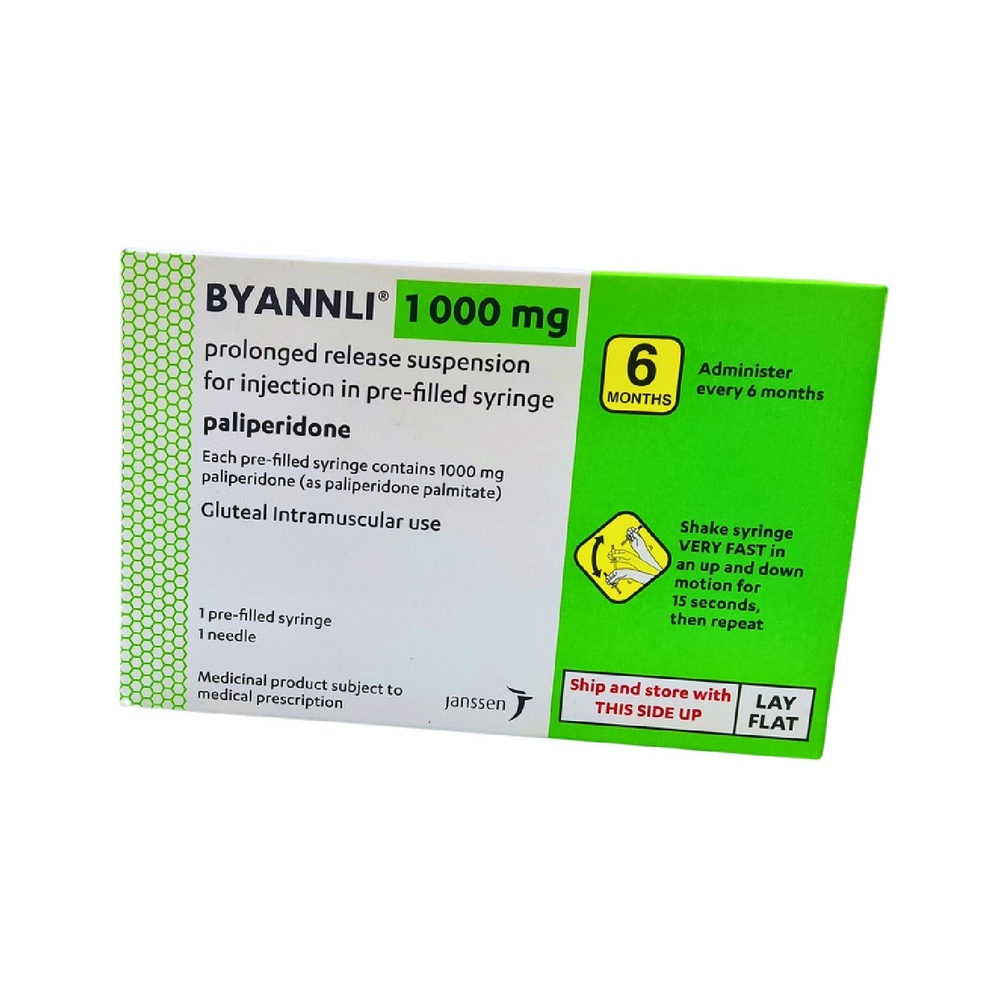
BYANNLI 700 mg Long-Acting Injectable Suspension

Запит на рецепт онлайн
Лікар розгляне ваш випадок і визначить, чи є рецепт медично доцільним.

Поговоріть з лікарем про ці ліки
Обговоріть симптоми та можливі подальші кроки під час короткої онлайн-консультації.



Інструкція із застосування BYANNLI
Зміст інструкції
BYANNLI 700 mg prolonged-release injectable suspension in pre-filled syringe, 1 000 mg prolonged-release injectable suspension in pre-filled syringe
paliperidone
Read this leaflet carefully before you start to use this medicine as it contains important
information for you.
- Keep this leaflet. You may need to read it again.
- If you have any questions, ask your doctor, pharmacist or nurse.
- If you get any side effects, see section 4, talk to your doctor, pharmacist or nurse.
Contents of this leaflet
- 1. What BYANNLI is and what it is used for
- 2. What you need to know before you use BYANNLI
- 3. How to use BYANNLI
- 4. Possible side effects
- 5. How to store BYANNLI
- 6. Contents of the pack and other information
1. What is BYANNLI and what it is used for
BYANNLI contains the active substance paliperidone which belongs to the class of medicines
antipsychotics.
BYANNLI is used as maintenance treatment for the symptoms of schizophrenia in adult
patients.
If you have responded well to treatment with paliperidone palmitate injections given once a
month or once every three months, your doctor may start treatment with BYANNLI.
Schizophrenia is an illness with “positive” and “negative” symptoms. Positive symptoms refer to an excess
of symptoms that are not normally present. For example, a person with schizophrenia may hear
voices or see things that are not there (called hallucinations), believe things that are not true
(called delusions) or feel unusually suspicious of others. Negative symptoms refer to a lack of
behaviours or sensations that are normally present. For example, a person with schizophrenia may appear
withdrawn and may not respond at all emotionally or may have problems speaking clearly and
logically. People affected by this illness may also feel depressed, anxious, guilty or tense.
BYANNLI can help to relieve the symptoms of the illness and reduce the risk that the symptoms will
return.
2. What you need to know before using BYANNLI
Do not use BYANNLI
- if you are allergic to paliperidone or any of the other ingredients of this medicine (listed in section 6);
- if you are allergic to risperidone.
Warnings and precautions
Talk to your doctor, pharmacist or nurse before using BYANNLI.
This medicine has not been studied in elderly patients with dementia. However, elderly patients
with dementia, treated with other types of similar medicines, may have an increased risk of
stroke or death (see section 4).
All medicines have side effects and some of the side effects of this medicine
may worsen the symptoms of other medical conditions. For this reason, it is
important to tell your doctor about any of the following conditions that may potentially
worsen during treatment with this medicine:
- if you have Parkinson's disease
- if you have a type of dementia called “Lewy body dementia”
- if you have ever been diagnosed with a condition whose symptoms include high temperature and muscle rigidity (also known as Neuroleptic Malignant Syndrome)
- if you have ever experienced involuntary contractions or jerky movements of the face, tongue or other parts of the body (Tardive Dyskinesia) that you cannot control
- if you know you have had low levels of white blood cells in the past (whether or not they were caused by other medicines)
- if you are diabetic or prone to diabetes
- if you have had breast cancer or a pituitary tumor in the brain
- if you have heart disease or are being treated for heart conditions that make you prone to low blood pressure
- if you have low blood pressure when you stand up or sit up suddenly
- if you have a history of seizures
- if you have kidney problems
- if you have liver problems
- if you have a prolonged and/or painful erection
- if you have problems controlling your body temperature or conditions of hyperthermia
- if you have an abnormally high level of the hormone prolactin in your blood or if you have a possible prolactin-dependent tumor
- if you or someone in your family has a history of blood clot formation, as antipsychotics have been associated with blood clot formation.
If you have any of these conditions, tell your doctor as they may want to adjust the
dose or monitor you for a certain period.
Because a dangerously low number of a certain type of white blood cells needed to fight infections in the
blood has been observed in patients taking this medicine, your doctor may check your white blood cell count.
Even if you have previously tolerated risperidone or paliperidone by mouth, allergic reactions rarely occur
after receiving injections of BYANNLI. Consult your doctor immediately if
you experience a rash, swelling of the throat, itching or difficulty breathing, as these
may be signs of a serious allergic reaction.
This medicine can cause weight gain or weight loss. Significant weight changes
may be harmful to your health. Your doctor should check your body weight regularly.
Because diabetes mellitus or worsening of pre-existing diabetes mellitus has been observed in
patients taking this medicine, your doctor should check for signs of high blood sugar levels. In patients with pre-existing diabetes mellitus, blood glucose levels
should be monitored regularly.
Since this medicine can reduce the urge to vomit, there is a possibility that it may
mask the body's normal response to the ingestion of toxic substances or other medical conditions.
Cataract surgery
If you are planning eye surgery, be sure to tell your ophthalmologist that you are taking
this medicine, as during cataract surgery on the eyes for clouding of the
lens:
- the pupil (the black circle in the center of the eye) may not enlarge as needed
- the iris (the colored part of the eye) may become floppy during surgery and this could cause eye damage.
Children and adolescents
Do not give this medicine to children and adolescents under 18 years of age. It is not known if
it is safe and effective in these patients.
Other medicines and BYANNLI
Tell your doctor if you are taking, have recently taken or might take any other
medicines.
Taking this medicine with carbamazepine (an antiepileptic and mood stabilizer)
may require an adjustment of the dose of this medicine.
Because this medicine works mainly on the brain, the use of other medicines that work on the
brain may exacerbate side effects, such as drowsiness or other effects on the
brain as those caused by other psychiatric medicines, opioids, antihistamines and sleeping pills.
Tell your doctor if you are taking this medicine while also taking risperidone or
paliperidone orally for long periods of time. You may need to adjust the dose of
BYANNLI.
Because this medicine can lower blood pressure, caution should be exercised when
this medicine is used with other medicines that lower blood pressure.
This medicine can reduce the effect of medicines for Parkinson's disease and restless legs syndrome (e.g. levodopa).
This medicine can cause an abnormality in the electrocardiogram (ECG) showing a long time before an electrical impulse travels through a certain part of the heart (known as
“QT prolongation”). Other drugs that have this effect include some medicines used for
treating heart rhythm or for treating infections, and other antipsychotics.
If you have a history of seizures, this medicine may increase the risk of having them. Other
drugs that have this effect include some medicines used to treat depression or
infections, and other antipsychotics.
BYANNLI should be used with caution with medicines that increase the activity of the central nervous
system (psychostimulants such as methylphenidate).
BYANNLI with alcohol
Alcohol should be avoided.
Pregnancy and breastfeeding
Ask your doctor or pharmacist for advice before taking this medicine if you are pregnant, suspect you might be pregnant or are planning to become pregnant, or if you are breastfeeding.
Women of childbearing potential
A single dose of this medicine is expected to remain in the body for up to 4 years, which
may pose a risk to the child. BYANNLI should, therefore, only be used in
women who intend to become pregnant if strictly necessary.
Pregnancy
You should not use this medicine during pregnancy unless this has been discussed with your
doctor. Newborn babies of mothers who have used paliperidone in the last trimester (last three months of
pregnancy) may experience the following symptoms: tremors, muscle rigidity and/or weakness,
drowsiness, agitation, breathing problems and difficulty feeding. Newborns should be
closely monitored and, if the baby presents any of these symptoms, seek medical attention.
Breastfeeding
This medicine can pass from the mother to the baby through breast milk. It can harm the
baby, even long after the last dose. Therefore, you should not breastfeed if you are using or
have used this medicine in the last 4 years.
Driving and using machines
Dizziness, extreme fatigue and
vision problems (see section 4) may occur during treatment with this medicine. This should be taken into account in cases where complete
vigilance is required, e.g. when driving a car or using machinery.
BYANNLI contains sodium
This medicine contains less than 1 mmol of sodium (23 mg) per dose, that is to say essentially “sodium-free”.
3. How to use BYANNLI
This medicine is administered by a doctor or another healthcare professional. The doctor will decide when you need the next injection. It is important not to miss the scheduled dose. If you believe you will not be able to attend the appointment, call immediately to reschedule as soon as possible.
You will receive an injection of BYANNLI in the buttocks once every 6 months.
Based on your symptoms, the doctor may increase or decrease the amount of medicine you receive at the next scheduled injection.
Patients with kidney problems
If you have mild kidney problems, the doctor will decide whether BYANNLI is appropriate based on the dose of paliperidone palmitate injectable given monthly or quarterly that you have received. The 1000 mg dose of BYANNLI is not recommended.
If you have moderate to severe kidney problems, this medicine should not be used.
Elderly
The doctor may adjust the dose of this medicine if kidney function is reduced.
If you take more BYANNLI than you should
This medicine will be administered under medical supervision; therefore, it is unlikely that you will be given an overdose.
Patients who have received an overdose of paliperidone may experience the following symptoms: drowsiness or sedation, rapid heartbeat, low blood pressure, abnormal electrocardiogram (tracing of the heart's electrical activity), or slowed or abnormal movements of the face, body, arms, or legs.
If you stop taking BYANNLI
If you stop receiving injections, the symptoms of schizophrenia may worsen. You should not stop treatment with this medicine unless this has been decided by your doctor.
If you have any questions about the use of this medicine, ask your doctor or pharmacist.
4. Possible side effects
Like all medicines, this medicine can cause side effects, although not everyone will experience them.
Serious side effects.
If you experience any of the following serious side effects, you may need immediate medical treatment; immediately inform your doctor or go to the nearest
hospital:
- Formation of blood clots in the veins, especially in the legs. This happens rarely (may affect up to 1 in 1,000 people). Symptoms include: o swelling, pain and redness of the leg (deep vein thrombosis) o chest pain and difficulty breathing caused by blood clots moving through blood vessels to the lungs (pulmonary embolism)
- Symptoms of a stroke; the frequency is unknown (cannot be estimated based on available data). Symptoms include: o sudden change in mental state, o sudden weakness or numbness of the face, arms or legs, especially on one side, or unintelligible speech, even if only for a short time.
- Neuroleptic malignant syndrome. This happens rarely (may affect up to 1 in 1,000 people). Symptoms include: o fever, muscle rigidity, sweating or decreased level of consciousness.
- Prolonged erection that may be painful (priapism). This happens rarely (may affect up to 1 in 1,000 people).
- Involuntary jerking or twitching movements, which you cannot control, of the tongue, mouth and face, or other parts of the body (Tardive dyskinesia). This happens uncommonly (may affect up to 1 in 100 people).
- Severe allergic reaction (anaphylactic reaction), the frequency of which is unknown (cannot be estimated from available data). Symptoms include: o fever, o swelling of the mouth, face, lips or tongue, o shortness of breath, o itching, rash and, sometimes, a drop in blood pressure. Even if you have previously tolerated risperidone or paliperidone by mouth, allergic reactions rarely occur after receiving paliperidone injections.
- Iris flag syndrome, when the iris (the colored part of the eye) becomes floppy during cataract eye surgery. This can cause eye damage (see also “ Cataract surgery” in paragraph 2). This happens with unknown frequency (cannot be defined based on available data).
- Stevens-Johnson syndrome or toxic epidermal necrolysis. A severe or potentially life-threatening skin rash with blistering and peeling of the skin, which can start inside and around the mouth, nose, eyes and genitals and can spread to other areas of the body. This happens with unknown frequency (cannot be estimated based on available data).
Immediately inform your doctor or go to the nearest hospital if you notice one
of the serious side effects described above.
- Agranulocytosis, a dangerously low count of a certain type of white blood cells in the blood needed to fight infections. This happens with unknown frequency (cannot be estimated based on available data).
Other side effects
Very common side effects: may affect more than 1 in 10 people
- difficulty falling asleep or staying asleep.
Common side effects: may affect up to 1 in 10 people
- common cold symptoms, urinary tract infection, flu-like symptoms.
- BYANNLI may increase the levels of a hormone called “prolactin” found in a blood test (which may or may not cause symptoms). When symptoms due to high prolactin levels occur, these may include: (in men) breast enlargement, difficulty getting or maintaining an erection or other sexual dysfunction; (in women) breast discomfort, missed periods or other problems with your cycle.
- high blood sugar levels, weight gain, weight loss, decreased appetite.
- irritability, depression, anxiety.
- parkinsonism: this condition may include slow or abnormal movements, a feeling of stiffness or tension in the muscles (making movements jerky) and sometimes also a feeling of freezing up that stops and then restarts. Other signs of parkinsonism include slow walking with shuffling feet, tremor at rest, increased saliva and/or loss of saliva, and loss of facial expression.
- restlessness, drowsiness or decreased alertness.
- dystonia: this is a condition involving slow or prolonged involuntary muscle contractions. Although it can involve any part of the body (which can result in an abnormal posture), dystonia often involves the muscles of the face, including abnormal movements of the eyes, mouth, tongue or jaw.
- dizziness.
- dyskinesia: this is a condition involving involuntary muscle movements and may include repetitive, jerky or writhing movements or spasms.
- tremor (shaking).
- headache.
- fast heartbeat.
- high blood pressure.
- cough, stuffy nose.
- abdominal pain, vomiting, nausea, constipation, diarrhea, indigestion, toothache.
- increased liver transaminases in the blood.
- bone or muscle pain, back pain, joint pain.
- missed periods.
- fever, weakness, fatigue (tiredness).
- injection site reaction, including itching, pain or swelling.
Uncommon side effects: may affect up to 1 in 100 people
- pneumonia, chest infection (bronchitis), respiratory tract infection, sinusitis, bladder infection, ear infection, tonsillitis, fungal nail infection, skin infection.
- decreased white blood cell count.
- anemia.
- allergic reaction.
- diabetes or worsening of diabetes, increased insulin levels in the blood (a hormone that controls blood sugar levels).
- increased appetite.
- loss of appetite, leading to malnutrition and low body weight.
- high levels of triglycerides (a fat), increased cholesterol in the blood.
- sleep disorders, elevated mood (mania), decreased sexual drive, nervousness, nightmares.
- fainting, an urgent need to move some parts of the body, dizziness when getting up, attention problems, speech problems, loss or altered sense of taste
abnormal reduced sensitivity of the skin to pain and touch, sensation of tingling, prickling or
numbness of the skin.
- blurred vision, eye infection or “conjunctivitis”, dry eyes.
- sensation of spinning (vertigo), ringing in the ears, ear pain.
- interruption in the conduction between the upper and lower parts of the heart, abnormal electrical conduction of the heart, prolongation of the QT interval of the heart, acceleration of the heartbeat when getting up, slow heart rate, abnormal tracing of the heart's electrical activity (electrocardiogram or ECG), feeling of a fast or pounding heartbeat (palpitations).
- low blood pressure, low blood pressure when getting up (as a result, some people taking this medicine may feel faint, dizzy or may faint when getting up quickly or sitting up).
- shortness of breath, sore throat, nosebleed.
- abdominal discomfort, stomach or intestinal infection, difficulty swallowing, dry mouth, excessive passing of air or gas.
- increased levels of GGT (a liver enzyme called gamma-glutamyltransferase) in the blood, increased liver enzymes in the blood.
- rash (or “urticaria”), itching, skin rash, hair loss, dry skin, red skin, acne, abscess under the skin, peeling skin, itchy scalp or skin.
- increased levels of CPK (creatine phosphokinase), an enzyme in the blood
- muscle spasms, stiff joints, muscle weakness.
- urinary incontinence (loss of control) of urine, frequent urination, pain when urinating.
- erectile dysfunction, ejaculation disorders, absence of menstrual periods or other problems with the menstrual cycle (female subjects), development of breasts in male subjects, sexual dysfunction, breast pain, leakage of milk from the breasts.
- swelling of the face, mouth, eyes or lips, swelling of the body, arms or legs.
- increased body temperature.
- change in the way of walking.
- chest pain, chest discomfort, feeling unwell.
- hardening of the skin.
- falls.
Rare side effects: may affect up to 1 in 1,000 people
- eye infection.
- skin inflammation caused by mites.
- increased eosinophils (a type of white blood cells) in the blood.
- reduced platelets (blood cells that help stop bleeding).
- inappropriate secretion of a hormone that controls urine volume.
- sugar in the urine.
- potentially life-threatening complications from uncontrolled diabetes.
- low blood sugar levels.
- excessive intake of water.
- confusion.
- absence of movements or responses when awake (catatonia).
- sleepwalking.
- lack of emotions.
- inability to reach orgasm.
- lack of response to stimuli, loss of consciousness, seizures (convulsions), balance disorders.
- abnormal coordination.
- glaucoma (increased pressure in the eyeball).
- problems with eye movements, eye rotation, hypersensitivity of the eyes to light, increased tearing, redness of the eyes.
- shaking of the head that you cannot control.
- atrial fibrillation (an abnormal heart rhythm), irregular heartbeat.
- hot flashes.
- difficulty breathing during sleep (sleep apnea).
- pulmonary congestion, congestion of the airways.
- crackling in the lungs.
- wheezing.
- inflammation of the pancreas.
- swelling of the tongue.
- fecal incontinence, very hard stools, intestinal blockage
- chapped lips.
- drug-related skin redness, thickening of the skin, dandruff.
- swollen joints.
- muscle tissue breakdown (“rhabdomyolysis”)
- inability to urinate.
- breast discomfort, breast enlargement, enlarged breasts.
- vaginal discharge.
- very low body temperature, chills, thirst.
- withdrawal symptoms from the drug.
- pus accumulation caused by infection at the injection site, deep skin infection, cyst at the injection site, bruising at the injection site.
Not known: frequency cannot be estimated based on available data
- dangerously excessive intake of water.
- sleep-related eating disorder.
- coma due to uncontrolled diabetes.
- fast and shallow breathing, pneumonia caused by inhaling food, speech disorder.
- decreased oxygen levels in parts of the body (due to reduced blood flow).
- lack of bowel movement causing blockage.
- yellowing of the skin or eyes (jaundice).
- altered skin color.
- abnormal posture.
- newborns born to mothers who took BYANNLI during pregnancy may experience side effects due to the medicine and/or withdrawal symptoms, such as irritability, slow or prolonged muscle contraction, tremor, drowsiness, breathing or feeding problems.
- decreased body temperature.
- dead skin cells at the injection site, an ulcer at the injection site.
Reporting of side effects
If you get any side effects, even those not listed in this leaflet, tell your
doctor, pharmacist or nurse. You can also report side effects
directly through the national reporting system listed in Annex V. By reporting
side effects you can help provide more information on the safety of this
medicine.
5. How to store BYANNLI
Keep this medicine out of the sight and reach of children.
Do not use this medicine after the expiry date which is stated on the pack. The expiry date refers to the last day of that month.
Ship and store in a horizontal position. See the arrows on the product packaging for correct
orientation.
Do not dispose of any medicine in wastewater or household waste. Ask your pharmacist how to
dispose of medicines you no longer use. This will help protect the environment.
6. Package Contents and Other Information
What BYANNLI contains
The active ingredient is paliperidone.
Each 700 mg pre-filled BYANNLI syringe contains 1092 mg of paliperidone palmitate
equivalent to 700 mg of paliperidone in 3.5 mL.
Each 1000 mg pre-filled BYANNLI syringe contains 1560 mg of paliperidone palmitate
equivalent to 1000 mg of paliperidone in 5 mL.
The other ingredients are:
Polysorbate 20
Polyethylene glycol 4000
Citric acid monohydrate
Disodium hydrogen phosphate monohydrate
Sodium hydroxide (for pH adjustment)
Water for injections
Description of BYANNLI and package contents
BYANNLI is a prolonged-release injectable suspension, from white to whitish in color, in a
pre-filled syringe. The pH is approximately 7.0. The doctor or nurse will shake the syringe very quickly
to resuspend the suspension before it is administered as an injection.
Each pack contains 1 pre-filled syringe and 1 needle.
Marketing Authorisation Holder
Janssen-Cilag International NV
Turnhoutseweg 30
B-2340 Beerse
Belgium
Manufacturer
Janssen Pharmaceutica NV
Turnhoutseweg 30
B-2340 Beerse
Belgium
For further information on this medicinal product, contact the local representative of the marketing
authorisation holder.
België/Belgique/Belgien
Janssen-Cilag NV
Tel/Tél: +32 14 64 94 11
[email protected]
Lietuva
UAB "JOHNSON & JOHNSON"
Tel: +370 5 278 68 88
[email protected]
България
„Джонсън & Джонсън България” ЕООД
Тел.: +359 2 489 94 00
[email protected]
Luxembourg/Luxemburg
Janssen-Cilag NV
Tél/Tel: +32 14 64 94 11
[email protected]
Česká republika
Janssen-Cilag s.r.o.
Tel: +420 227 012 227
Magyarország
Janssen-Cilag Kft.
Tel.: +36 1 884 2858
[email protected]
Danmark
Janssen-Cilag A/S
Tlf.: +45 4594 8282
[email protected]
Malta
AM MANGION LTD
Tel: +356 2397 6000
Deutschland
Janssen-Cilag GmbH
Tel: 0800 086 9247 / +49 2137 955 6955
[email protected]
Nederland
Janssen-Cilag B.V.
Tel: +31 76 711 1111
[email protected]
Eesti
UAB "JOHNSON & JOHNSON" Eesti filiaal
Tel: +372 617 7410
[email protected]
Norge
Janssen-Cilag AS
Tlf: +47 24 12 65 00
[email protected]
Ελλάδα
Janssen-Cilag Φαρμακευτική Μονοπρόσωπη
Α.Ε.Β.Ε.
Tηλ: +30 210 80 90 000
Österreich
Janssen-Cilag Pharma GmbH
Tel: +43 1 610 300
España
Janssen-Cilag, S.A.
Tel: +34 91 722 81 00
[email protected]
Polska
Janssen-Cilag Polska Sp. z o.o.
Tel.: +48 22 237 60 00
France
Janssen-Cilag
Tél: 0 800 25 50 75 / +33 1 55 00 40 03
[email protected]
Portugal
Janssen-Cilag Farmacêutica, Lda.
Tel: +351 214 368 600
Hrvatska
Johnson & Johnson S.E. d.o.o.
Tel: +385 1 6610 700
[email protected]
România
Johnson & Johnson România SRL
Tel: +40 21 207 1800
Ireland
Janssen Sciences Ireland UC
Tel: 1 800 709 122
[email protected]
Slovenija
Johnson & Johnson d.o.o.
Tel: +386 1 401 18 00
[email protected]
Ísland
Janssen-Cilag AB
c/o Vistor hf.
Sími: +354 535 7000
[email protected]
Slovenská republika
Johnson & Johnson, s.r.o.
Tel: +421 232 408 400
Italia
Janssen-Cilag SpA
Tel: 800.688.777 / +39 02 2510 1
[email protected]
Suomi/Finland
Janssen-Cilag Oy
Puh/Tel: +358 207 531 300
[email protected]
Κύπρος
Βαρνάβας Χατζηπαναγής Λτδ
Tηλ: +357 22 207 700
Sverige
Janssen-Cilag AB
Tfn: +46 8 626 50 00
[email protected]
Latvija
UAB "JOHNSON & JOHNSON" filiāle Latvijā
Tel: +371 678 93561
[email protected]
United Kingdom (Northern Ireland)
Janssen Sciences Ireland UC
Tel: +44 1 494 567 444
[email protected]
More detailed information on this medicinal product is available on the website of the European
Medicines Agency: https://www.ema.europa.eu.
Information for healthcare professionals
The following information is intended exclusively for healthcare professionals and must be read
by the healthcare professional together with the complete prescribing information (Summary of
Product Characteristics).
Important safety summary
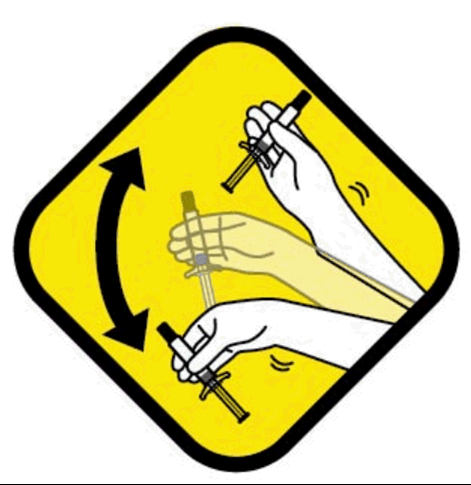
Shake the syringe with the
syringe closure cap facing upwards
VERY QUICKLY for at least
15 seconds, let it rest briefly,
then shake again for 15 seconds.
Shipping and storage
Shipping and storing the
box in a horizontal position improves
the resuspendability of this highly concentrated product

BYANNLI (paliperidone
palmitate prolonged-release injectable suspension with a semi-annual cadence) requires
longer and faster shaking
than the monthly cadence paliperidone
palmitate prolonged-release injectable suspension.
BYANNLI must be administered by
a healthcare professional as a single
injection.
Preparation
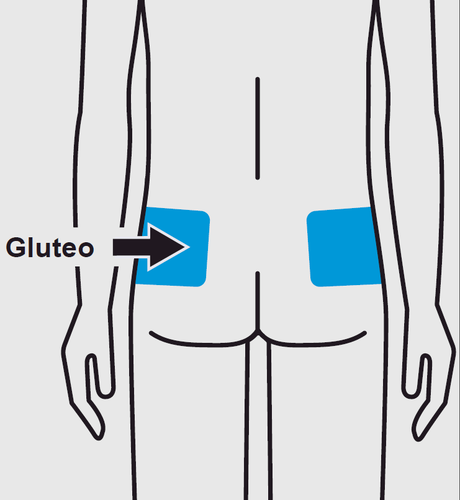
- Do not divide the dose into multiple injections. BYANNLI is intended for intramuscular use in the gluteal site only.
- Inject slowly and deeply into the muscle, taking care to avoid injecting into a blood vessel. DosageAdminister BYANNLI once every 6 months. It is important to use only the 0.9 mm x 38 mm (20 gauge, 1.5 inch) thin-wall safety needle supplied in the kit. It is designed for use with BYANNLI only. Thin-wall safety needle
Contents of the
pack
containing the dose
Pre-filled syringe
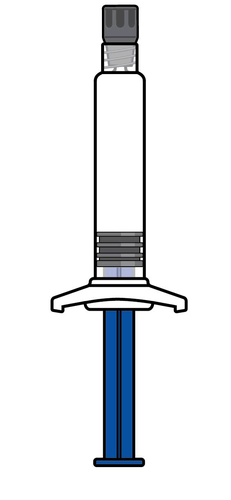
Syringe closure
cap
Luer connection


Flange
Plunger
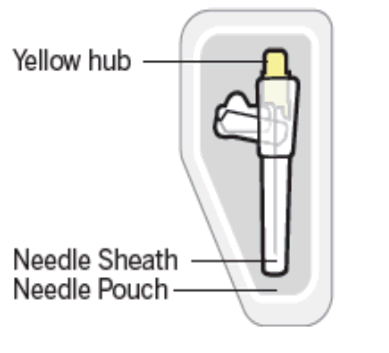
Thin-wall safety needle
1. Preparation of the injection.
This highly concentrated product requires specific steps for resuspension.
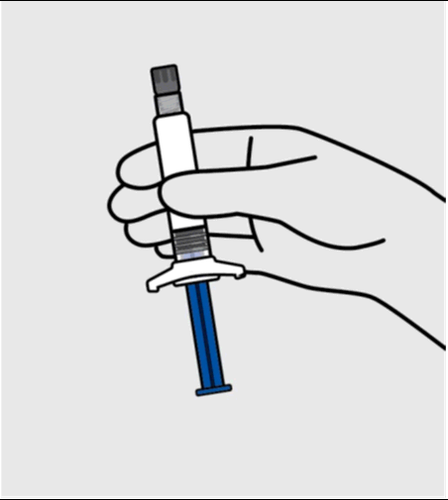
Always hold the syringe with the closure cap facing upwards.
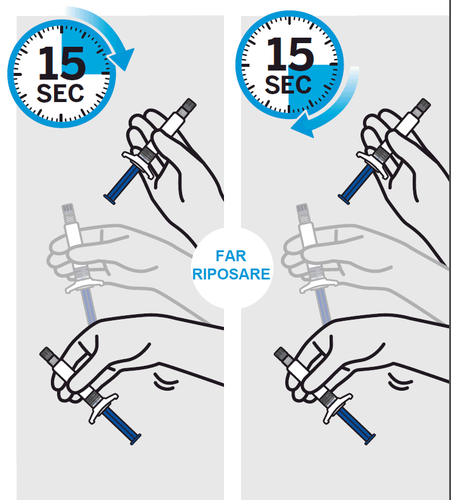
To ensure complete resuspension, shake the syringe with:
- Short, VERY FAST up and down movements
- Loose wrist Shake the syringe VERY FAST for at least 15 seconds, let it rest briefly, then shake again for 15 seconds. If more than 5 minutes passIf more than 5 minutes passbefore injection, shake thesyringe VERY FAST with the tipcap pointing upagain for at least 30 seconds to resuspend the medication.
Not well mixed

Check the
suspension for the
presence of solid
particles Well mixed

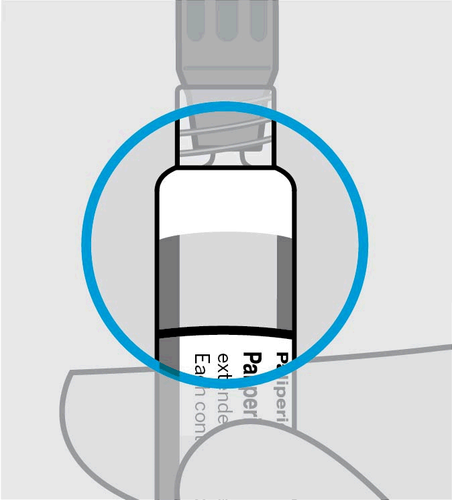
STOP
- Presence of solid product on the sides and top of the syringe
- Uniform white, thick and milky
- The presence of air bubbles is normal • Uneven mixing
- Fluid liquid The product may thicken.If this happens, shake the syringe with the syringe closure cap facing upwards VERY FAST for at least 15 seconds, let it rest briefly, then shake again for 15 seconds.
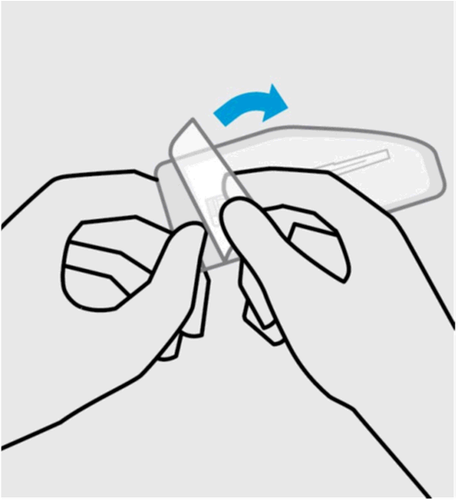
Open the needle container
Detach the cover from the container.
Place the container with the needle inside on a
clean surface.
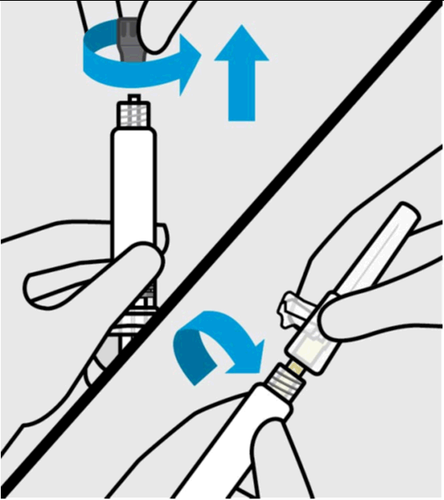
Remove the syringe closure cap and insert
the needle
- 1. Hold the syringe with the closure cap facing upwards.
- 2. Rotate and pull off the cap.
- 3. Connect the safety needle to the syringe using a slight rotating movement to avoid breakage or damage to the needle connection. Always check for any signs of damage or leakage before administration.
Use only the needle included in this kit.
- 1. Pull back the plunger
- 2. Hold the syringe in a vertical position.
- 3. Gently pull back the plunger to free the tip of the syringe from any solid product. This will make it easier to press the plunger during injection.
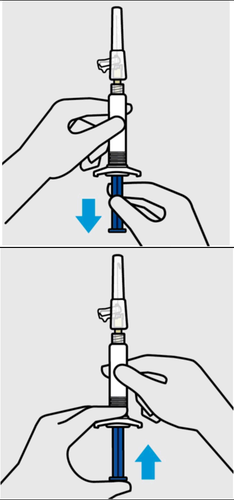
Remove air bubbles
Press the plunger carefully until a drop of liquid
comes out of the tip of the needle.
2. Inject the entire contents slowly and check
Select and clean an injection site in the upper outer quadrant of the gluteus
Do not administerthrough other routes.
Clean the injection site with a swab soaked in alcohol and
allow to dry.
Do not touch, ventilate or blow on the injection site after
cleaning it.
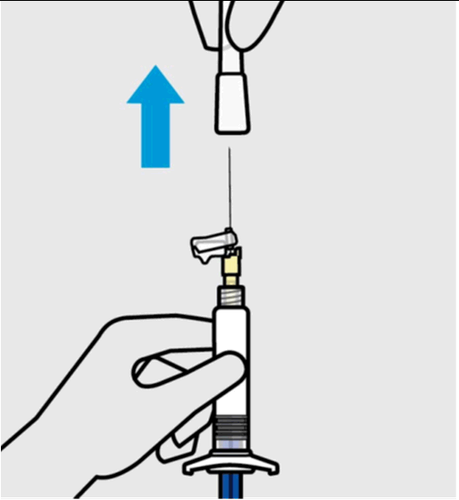
Remove the needle protection
Remove the protection from the needle with a straight motion.
Do not rotatethe protection, as this could loosen
the needle from the syringe.
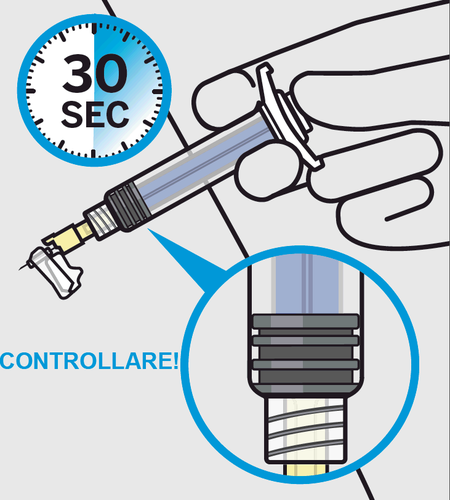
Inject slowly and check
Apply slow, steady pressure to press
completelythe plunger. This should take
approximately 30-60 seconds.
Continue to press the plunger if you feel
resistance. This is normal.
While the needle is in the
muscle, confirm that the entire
content of the syringe has been
injected.
While the needle is in the muscle,
check that the entire content
of the syringe has been injected.
Remove the needle from the muscle.
3. After the injection
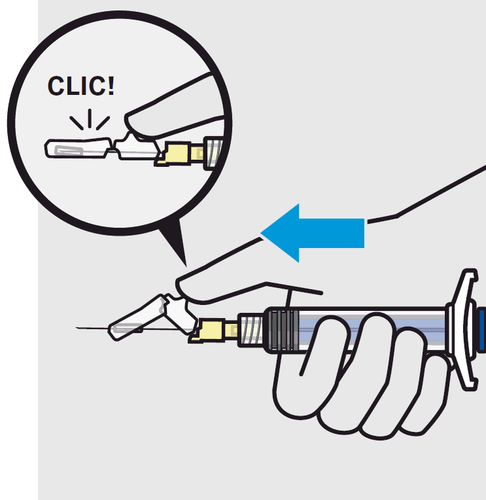
Secure the needle
Once the injection is complete, use your thumb or a
flat surface to secure the needle in the safety device.
The needle is secured when you hear a “click” sound.
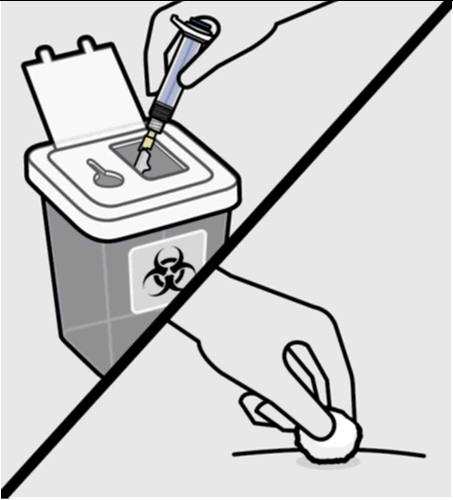
Dispose of properly and check the injection site
Dispose of the syringe in an approved sharps container.
There may be a small amount of blood or fluid at the
injection site. Apply pressure to the skin
with a cotton ball or gauze until the
bleeding stops.
Do not rub the injection site.
If necessary, cover the injection site with a bandage.

Не впевнені, чи підходить вам цей лікарський засіб?
Обговоріть симптоми та можливі варіанти лікування з лікарем онлайн.

Виникли питання під час прийому ліків?
Обговоріть свої симптоми та лікування з лікарем онлайн.
- Країна реєстрації
- Лікарська формаLong-acting injectable suspension, 700 mg
- Код АТХN05AX13
- Діюча речовина
- Потрібен рецептНі
- Виробник
- Ця інформація надана лише для ознайомлення і не є медичною порадою. Рішення щодо лікування завжди приймає лікар.
- Альтернативи до BYANNLIЛікарська форма: Extended-release tablet, 3 MGДіюча речовина: paliperidoneВиробник: JANSSEN-CILAG INTERNATIONAL N.V.Потрібен рецептЛікарська форма: Prolonged-release injectable suspension in pre-filled syringe, 25 mgДіюча речовина: paliperidoneВиробник: NEURAXPHARM PHARMACEUTICALS, S.LРецепт не потрібенЛікарська форма: Prolonged-release injectable suspension in pre-filled syringe, 25 MGДіюча речовина: paliperidoneВиробник: EG S.P.A.Рецепт не потрібен
Аналоги BYANNLI в інших країнах
Препарати з тією самою діючою речовиною, доступні в інших країнах.
Аналог BYANNLI у Іспанія
Аналог BYANNLI у Польща
Аналог BYANNLI у Україна
Лікарі онлайн щодо BYANNLI
Застосування, безпека та можливість призначення рецепта — за результатами медичної оцінки.







Отримайте рецепт на BYANNLI онлайн
Заповніть форму за 2 хвилини
Розкажіть про симптоми, історію хвороби та потрібний препарат.
Оберіть лікаря або ми призначимо
Оберіть спеціаліста або ми підберемо найближчого доступного лікаря.
Лікар розглядає ваш випадок
Зазвичай протягом 30 хвилин. Може ставити уточнювальні запитання в чаті.
Отримайте в будь-якій аптеці
Електронний рецепт надсилається на вашу пошту — дійсний по всій Польщі.
Часті запитання
BYANNLI не потребує рецепта в Італія. Ви можете обговорити з лікарем онлайн, чи підходить цей лікарський засіб для вашої ситуації.
Діюча речовина у BYANNLI — paliperidone. Це допомагає визначити препарати з тим самим складом, але під іншими торговими назвами.
BYANNLI виробляється компанією JANSSEN-CILAG INTERNATIONAL N.V.. Назва бренду та упаковка можуть відрізнятися залежно від дистрибʼютора.
Лікарі, зокрема Сімейні лікарі, Психіатри, Дерматологи, Кардіологи, Ендокринологи, Гастроентерологи, Пульмонологи, Нефрологи, Ревматологи, Гематологи, Інфекціоністи, Алергологи, Геріатри, Педіатри, Онкологи, можуть оцінити доцільність застосування BYANNLI з урахуванням вашого стану та місцевих правил. Ви можете записатися на онлайн-консультацію, щоб обговорити симптоми та можливі подальші кроки.
Польща має добре розвинену систему охорони здоров'я у великих містах, таких як Варшава, Краків, Вроцлав і Гданськ. Аптеки широко доступні та працюють відповідно до чинного законодавства, забезпечуючи доступ до рецептурних препаратів.
Ви можете придбати BYANNLI у Варшаві, Кракові, Вроцлаві або Гданську в будь-якій аптеці за наявності дійсного рецепта.
Щоб отримати рецепт, ви можете скористатися Oladoctor:
Інші препарати з тією самою діючою речовиною (paliperidone) включають INVEGA, NIAPELF, PALIPERIDONE EG. Вони можуть відрізнятися торговою назвою або формою випуску, але містять той самий терапевтичний компонент. Перед зміною або початком прийому нового препарату варто проконсультуватися з лікарем.
