



BRONCHENOLO 2,5 MG/ML Mouthwash

Запит на рецепт онлайн
Лікар розгляне ваш випадок і визначить, чи є рецепт медично доцільним.

Поговоріть з лікарем про ці ліки
Обговоріть симптоми та можливі подальші кроки під час короткої онлайн-консультації.



Інструкція із застосування BRONKENOLO GOLA
Зміст інструкції
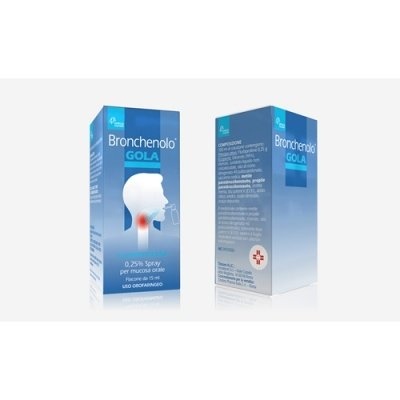
BRONCHENOLO GOLA 2,5 mg/ml mouthwash, oral mucosa spray
Flurbiprofen
Read this leaflet carefully before using this medicine as it contains important information for you.
Always use/give this medicine to the child exactly as described in this leaflet or as your doctor or pharmacist has told you to do.
- Keep this leaflet. You may need to read it again.
- If you want more information or advice, ask your pharmacist.
- If any side effects occur, including those not listed in this leaflet, contact your doctor or pharmacist. See section 4.
- Contact your doctor if you do not feel better or if your symptoms worsen.
Contents of this leaflet:
- 1. What BRONCHENOLO GOLA is and what it is used for
- 2. What you need to know before using BRONCHENOLO GOLA
- 3. How to use BRONCHENOLO GOLA
- 4. Possible side effects
- 5. How to store BRONCHENOLO GOLA
- 6. Contents of the pack and other information
1. What is BRONCHENOLO GOLA and what is it used for
Bronchenolo Gola contains flurbiprofen, a medicine that acts against pain (analgesic) and against
inflammation (non-steroidal anti-inflammatory drug, NSAID).
BRONCHENOLO GOLA is used in adults and adolescents over the age of 12 in case of burning,
redness and/or pain in the mouth and throat, due to mild and transient inflammation (gingivitis,
stomatitis, pharyngitis) or dental procedures (dental therapies such as cavity treatment or extraction
of a tooth).
2. What you need to know before using BRONCHENOLO GOLA
Do not use BRONCHENOLO GOLA
- if you and/or the child are allergic to flurbiprofen or any of the other ingredients of this medicine (listed in section 6);
- if you and/or the child are allergic to acetylsalicylic acid (a medicine against inflammation, pain, fever and heart problems) or other non-steroidal anti-inflammatory drugs (NSAIDs) (see section “Other medicines and BRONCHENOLO GOLA”);
- if you and/or the child have previously suffered from bleeding or perforation of the stomach or intestines related to previous treatments with non-steroidal anti-inflammatory drugs (NSAIDs);
- if you and/or the child suffer from chronic inflammatory diseases of the intestine (ulcerative colitis and Crohn's disease);
- if you and/or the child frequently suffer from peptic ulcer (stomach lesion) or bleeding from the stomach or intestines (two or more distinct episodes of ulcer or bleeding);
- if you and/or the child suffer from severe heart failure (reduced heart function), severe liver failure (reduced liver function) and severe kidney failure (reduced kidney function).
Do nottake/give BRONCHENOLO GOLA if you are in the last 3 months of pregnancy (see section
“Pregnancy and breastfeeding”).
Do notgive BRONCHENOLO GOLA to children under 12 years of age.
Warnings and precautions
Consult your doctor or pharmacist before taking/giving BRONCHENOLO GOLA to the child.
In particular, inform your doctor if you and/or the child:
- have previously suffered from bronchial asthma (a respiratory disease), as this increases the risk that you/the child may experience bronchospasm (narrowing of the bronchi causing severe breathing difficulties due to reduced air passage);
- have previously suffered from allergies;
- are taking other Non-Steroidal Anti-Inflammatory Drugs (NSAIDs);
- suffer from systemic lupus erythematosus or mixed connective tissue disease;
- suffer from reduced kidney, heart or liver function (renal, cardiac or hepatic insufficiency);
- suffer from hypertension (high blood pressure);
- are taking other pain relievers for a long time or without respecting the dosage, as headache (headache) may occur;
- have previously suffered from a peptic ulcer (stomach lesion) and other diseases of the stomach and intestines as this increases the risk that these diseases may recur. This risk increases especially with high doses of flurbiprofen, if you are elderly or if the peptic ulcer has been complicated by bleeding or perforation of the stomach and intestines (see section 4 “Possible side effects”);
- if you are elderly (because you are more likely to experience side effects);
- have problems with the heart or blood vessels, as medicines like BRONCHENOLO GOLA may be associated with a modest increase in the risk of heart attack (myocardial infarction) or stroke. The risk of adverse effects increases with high doses and prolonged treatments; do not exceed the dose of BRONCHENOLO GOLA and do not take it for long periods. Inform your doctor if you have heart problems, a history of stroke or think you may be at risk for these conditions (for example if you have high blood pressure, diabetes or high cholesterol or smoke).
- have an infection - refer to the “Infections” section below.
Report any unusual abdominal symptoms to your doctor.
The use of this medicine, especially if prolonged, may give rise to allergic or local irritation phenomena
(see section 4 “Possible side effects”); in such cases, discontinue treatment and consult your doctor
who, if necessary, will carry out suitable therapy.
If you or the child experience irritation of the mouth, discontinue treatment.
After short periods of treatment (3 days) without appreciable results, consult your doctor.
Children and adolescents
Do notgive BRONCHENOLO GOLA to children under 12 years of age.
Other medicines and BRONCHENOLO GOLA
Tell your doctor or pharmacist if you/the child is taking, has recently taken or might take
any other medicine.
Inform your doctor if you/the child are taking any of the following medicines:
- aspirin andmedicines containing acetylsalicylic acid(a medicine against inflammation, pain, fever and heart problems), as they may increase the side effects;
- antiplatelet agents(medicines that make the blood more fluid, such as low-dose daily aspirin), as it increases the risk of bleeding from the stomach and intestines;
- anticoagulants(medicines that slow down or inhibit the blood clotting process, such as warfarin), as their effect may be potentiated by NSAIDs;
- selective serotonin reuptake inhibitors(medicines used against depression), as it increases the risk of bleeding from the stomach and intestines;
- antihypertensive medicines(ACE inhibitors, angiotensin II antagonists and diuretics), as NSAIDs may reduce the effect of diuretics or some antihypertensive medicines may increase renal toxicity;
- alcohol, as it may increase the risk of side effects, especially the risk of bleeding in the stomach and intestines;
- cardiac glycosides(medicines that affect heart function), as NSAIDs may worsen heart failure and increase the level of glycosides in the blood;
- cyclosporine(a medicine that prevents organ rejection after transplantation), as it increases the risk of renal toxicity;
- corticosteroids(medicines used against inflammation/allergies), as it increases the risk of having bleeding lesions in the stomach and intestines;
- lithium(a medicine used for behavioral disorders), as the level of lithium in the blood may increase;
- methotrexate(a medicine used for psoriasis, arthritis and tumors), as the level of methotrexate in the blood may increase;
- mifepristone(a medicine used to terminate a pregnancy): NSAIDs should not be used for
- 8 – 12 days after taking mifepristone, as they reduce its effect;
- quinolone antibiotics(medicines used for bacterial infections), as NSAIDs may increase the risk of developing seizures;
- tacrolimus(immunosuppressant medicine used after organ transplantation), as NSAIDs may
- increase the risk of renal toxicity;
- zidovudine(a medicine used for AIDS), as NSAIDs increase the risk of toxicity to the blood;
- Cox-2 inhibitors and other NSAIDs(medicines used against inflammation and pain), as it may increase the effect of these medicines and the risk of side effects.
Pregnancy and breastfeeding
If you are pregnant, suspect you are pregnant or are planning a pregnancy, or if you are breastfeeding,
ask your doctor or pharmacist for advice before using this medicine.
Pregnancy
Do not use flurbiprofen in the last 3 months of pregnancyas it may harm the fetus or cause
problems with delivery. It can cause problems with the kidneys and heart of the unborn child. It may affect your tendency and that of
your baby to bleed and cause a late or longer than expected labor. Do not use/give BRONCHENOLO GOLA in the first 6 months of pregnancy, unless in case of absolute necessity and
as directed by your doctor. If treatment is necessary during this period, you must take the
minimum dose for the shortest possible time. If taken for more than a few days from the twentieth week of
pregnancy onwards, flurbiprofen may cause kidney problems in the fetus that may lead to low levels of
amniotic fluid surrounding the baby (oligohydramnios) or may cause narrowing of a blood
vessel (ductus arteriosus) in the baby's heart. If treatment is required for more than a few days, the
doctor may recommend additional monitoring.
Breastfeeding
The use of flurbiprofen during breastfeeding is not recommended unless strictly necessary and advised
by your doctor.
Fertility
Flurbiprofen belongs to a group of medicines that may affect female fertility. This
effect is reversible when taking the medicine is stopped. Occasional use of
this medicine is unlikely to have an effect on the chances of getting pregnant. However, ask your doctor if you
have fertility problems before taking the medicine.
Infections
Non-steroidal anti-inflammatory drugs (NSAIDs) can mask signs of infections such as fever and pain.
This may delay appropriate treatment of the infection, which in turn may lead to an increase in
the risk of complications. If you take this medicine during an infection and the symptoms of the infection
persist or worsen, contact your doctor or pharmacist immediately.
Driving and using machines
This medicine may interfere with the ability to drive vehicles and operate machinery
BRONCHENOLO GOLA contains:
- propyl and methyl parabens: may cause allergic reactions (even delayed);
- hydrogenated castor oil-40 polyoxyethylene: may cause skin reactions localized;
- mint aroma in turn containing linalool. Linalool may cause allergic reactions.
3. How to use BRONCHENOLO GOLA
Take this medicine following exactly as stated in this leaflet or as instructed by your doctor or pharmacist. If you have any doubts, consult your doctor or pharmacist. The minimum effective dose should be used for the shortest time necessary to relieve symptoms. If you have an infection, consult your doctor or pharmacist immediately if symptoms (such as fever and pain) persist or worsen (refer to paragraph 2).
Mouthwash
Perform 2-3 rinses or gargles a day with 10 ml of undiluted mouthwash or diluted in a little water, without swallowing
the medicine.
Spray
The recommended dose is 2 sprays 3 times a day, directed directly onto the affected area.
If you are elderly or you and/or the child have suffered in the past from an ulcer (stomach lesion)
If you are elderly or you and/or the child have suffered in the past from a peptic ulcer (stomach lesion), it is recommended to use the lowest recommended dose, as there is a greater risk of serious consequences in the event of adverse effects and the risk of developing an ulcer, bleeding or perforation of the stomach and
intestine is greater (see paragraph 4 “Possible side effects”).
Use in children and adolescents
Donot give BRONCHENOLO GOLA to children under 12 years of age.
If you/the child takes/gives more BRONCHENOLO GOLA than you should
If you/the child accidentally ingest/take an excessive dose of BRONCHENOLO GOLA,
notify
your doctor immediately or go to the nearest hospital.
In the event of accidental ingestion of significant amounts of flurbiprofen, you may experience
symptoms such as: nausea, vomiting, irritation of the stomach or intestines, stomach pain or rarely
diarrhea. Ringing in the ears, headache and bleeding of the stomach or intestines may also occur. In such cases
the doctor will adopt appropriate treatments.
If you forget to take/give BRONCHENOLO GOLA
Do not take/give a double dose to make up for a missed dose.
If you stop the treatment with BRONCHENOLO GOLA
If you have any doubts about the use of this medicine, consult your doctor or pharmacist.
4. Possible side effects
Like all medicines, this medicine can cause side effects, although not everybody gets them.
If you experience the following side effects during treatment with BRONCHENOLO GOLA, STOPthe
treatment and contact your doctor immediately:
- allergic reactions (hypersensitivity reactions):
- allergic reaction
- anaphylactic reactions (severe allergic reactions)
- angioedema (sudden swelling of the mouth/throat and mucous membranes)
- local irritation
- sensations of heat or tingling in the mouth and throat
- respiratory phenomena: asthma, bronchospasm, shortness of breath or difficulty breathing
- various skin disorders: skin rashes of various types, itching, redness, swelling, skin loss, blisters, scaling or ulceration of the skin and mucous membranes.
If you experience the following side effects at the beginning of treatment with BRONCHENOLO GOLA, contact your doctor
immediately:
- abdominal pain
- peptic ulcer (stomach lesion)
- perforation and bleeding of the stomach or intestine. These side effects can be fatal and you and/or the child may experience them with or without warning symptoms. These side effects occur especially if you are elderly or if you and/or the child have suffered from stomach and intestinal diseases in the past.
In addition, you may experience the following side effects:
Effects affecting the blood
- anemia (reduction in the number of red blood cells in the blood)
- thrombocytopenia (reduction in the number of platelets in the blood)
- aplastic anemia (reduction in the number of all types of blood cells, red blood cells, white blood cells, platelets)
- agranulocytosis (reduction in the number of granulocytes, a type of white blood cells, in the blood).
Effects affecting the nervous system
- dizziness
- headache
- paresthesia (numbness of the limbs or other parts of the body)
- drowsiness
- cerebrovascular accidents (diseases caused by insufficient blood flow to an area of the brain)
- visual disturbances
- optic neuritis (severe inflammation of the optic nerve, which can lead to vision loss or blindness)
- migraine (chronic disease characterized by recurrent headaches)
- confusion
- vertigo.
Effects affecting the immune system
- anaphylactic reactions (severe allergic reaction)
- angioedema (inflammatory reaction of the skin)
- hypersensitivity.
Effects affecting the eye
- visual disturbances.
Effects affecting the ear and labyrinth
- tinnitus (ringing in the ears).
Effects affecting the cardiovascular system
- heart failure
- swelling
- hypertension (high blood pressure)
Effects affecting the bronchi and lungs
- throat irritation
- asthma
- bronchospasm (narrowing of the bronchi that causes severe difficulty breathing due to reduced airflow)
- dyspnea (shortness of breath)
- blisters in the mouth or throat
- numbness of the mouth or throat.
Effects affecting the mouth, stomach and intestines
- diarrhea
- lesions inside the mouth
- nausea
- pain in the mouth and throat
- feeling of warmth or burning, tingling in the mouth
- abdominal distension
- abdominal pain
- constipation
- dry mouth
- difficulty digesting
- flatulence (passage of gas from the intestine)
- inflammation of the tongue
- altered taste
- vomiting
- blood in the stool
- blood in the vomit
- bleeding from the stomach and intestines
- colitis
- worsening of inflammatory diseases of the colon and intestines (Crohn's disease)
- inflammation of the stomach (gastritis)
- gastritis
- peptic ulcer
- gastric perforation
- inflammation of the pancreas (pancreatitis).
Effects affecting the skin and subcutaneous tissue
- skin rash
- itching
- urticaria (redness of the skin accompanied by itching)
- purpura (appearance of skin patches of various sizes, purple in color)
- bullous dermatoses (severe skin lesions characterized by erythema, blistering lesions with areas of skin detachment), including Stevens-Johnson syndrome, Toxic Epidermal Necrolysis and Erythema multiforme.
Effects affecting the kidneys and urinary tract
- renal toxicity
- tubulo-interstitial nephritis (inflammation of the kidneys)
- nephrotic syndrome (alteration of the renal glomeruli that causes a loss of proteins with the urine)
- renal failure (reduction of kidney function).
General effects and at the site of administration
- fever
- pain
- discomfort
- fatigue
- malaise
Effects affecting the liver
- hepatitis
General effects and at the site of administration
- fever
Effects affecting the psychiatric sphere
- insomnia
- depression
- hallucination.
Reporting of side effects
If you/the child experience any side effects, including those not listed in this leaflet, please
tell your doctor or pharmacist. You can also report side effects directly through the national reporting system at: https://www.aifa.gov.it/content/segnalazioni-reazioni-avverse.
By reporting side effects you can help provide more information on the safety of this
medicine.
5. How to store BRONCHENOLO GOLA
Keep this medicine out of the sight and reach of children.
Do not use this medicine after the expiry date which is stated on the label. The expiry date refers
to the last day of that month.
No special storage precautions are required.
BRONCHENOLO GOLA mouthwash must be used within 9 weeks from the first opening of the bottle.
BRONCHENOLO GOLA spray must be used within 21 weeks from first use.
Do not dispose of any medicine in waste water or household waste. Ask your pharmacist how to dispose of the
medicines you no longer use. This will help protect the environment.
6. Contents of the pack and other information
What BRONCHENOLO GOLA contains
The active ingredient is flurbiprofen.
100 ml of the medicine contains: 250 mg of flurbiprofen.
The other ingredients are: glycerol (98%), ethanol, non-crystallizing liquid sorbitol, hydrogenated castor oil-40 polyoxyethylene, sodium saccharin, methyl parahydroxybenzoate, propyl parahydroxybenzoate,
mint aroma, Patent Blue V (E131), anhydrous citric acid, sodium hydroxide, purified water.
Description of the appearance of BRONCHENOLO GOLA and contents of the pack
Mouthwash
160 ml bottle with child-resistant closure and dosing measuring cup.
Spray
15 ml bottle with micro-dosing pump and applicator.
Marketing Authorisation Holder
Perrigo Italia S.r.l., Viale dell’Arte, 25 00144 Roma
Manufacturer
Doppel Farmaceutici S.r.l. – Via Martiri delle Foibe, 1 – 29016 Cortemaggiore (PC)

Не впевнені, чи підходить вам цей лікарський засіб?
Обговоріть симптоми та можливі варіанти лікування з лікарем онлайн.

Виникли питання під час прийому ліків?
Обговоріть свої симптоми та лікування з лікарем онлайн.
- Країна реєстрації
- Лікарська формаMouthwash, 2,5 MG/ML
- Код АТХA01AD11
- Діюча речовина
- Потрібен рецептНі
- Виробник
- Ця інформація надана лише для ознайомлення і не є медичною порадою. Рішення щодо лікування завжди приймає лікар.
- Альтернативи до BRONKENOLO GOLAЛікарська форма: Mouthwash, 0.25 %Діюча речовина: variousВиробник: BAYER S.P.A.Рецепт не потрібенЛікарська форма: Lozenge, 8.75 mgДіюча речовина: variousВиробник: BAYER S.P.A.Рецепт не потрібенЛікарська форма: Mouthwash, 2,5 MG/MLДіюча речовина: variousРецепт не потрібен
Аналоги BRONKENOLO GOLA в інших країнах
Препарати з тією самою діючою речовиною, доступні в інших країнах.
Аналог BRONKENOLO GOLA у Польща
Аналог BRONKENOLO GOLA у Україна
Аналог BRONKENOLO GOLA у Іспанія
Лікарі онлайн щодо BRONKENOLO GOLA
Застосування, безпека та можливість призначення рецепта — за результатами медичної оцінки.









Отримайте рецепт на BRONKENOLO GOLA онлайн
Заповніть форму за 2 хвилини
Розкажіть про симптоми, історію хвороби та потрібний препарат.
Оберіть лікаря або ми призначимо
Оберіть спеціаліста або ми підберемо найближчого доступного лікаря.
Лікар розглядає ваш випадок
Зазвичай протягом 30 хвилин. Може ставити уточнювальні запитання в чаті.
Отримайте в будь-якій аптеці
Електронний рецепт надсилається на вашу пошту — дійсний по всій Польщі.
Часті запитання
BRONKENOLO GOLA не потребує рецепта в Італія. Ви можете обговорити з лікарем онлайн, чи підходить цей лікарський засіб для вашої ситуації.
Діюча речовина у BRONKENOLO GOLA — various. Це допомагає визначити препарати з тим самим складом, але під іншими торговими назвами.
BRONKENOLO GOLA виробляється компанією PERRIGO ITALIA S.R.L.. Назва бренду та упаковка можуть відрізнятися залежно від дистрибʼютора.
Лікарі, зокрема Сімейні лікарі, Психіатри, Дерматологи, Кардіологи, Ендокринологи, Гастроентерологи, Пульмонологи, Нефрологи, Ревматологи, Гематологи, Інфекціоністи, Алергологи, Геріатри, Педіатри, Онкологи, можуть оцінити доцільність застосування BRONKENOLO GOLA з урахуванням вашого стану та місцевих правил. Ви можете записатися на онлайн-консультацію, щоб обговорити симптоми та можливі подальші кроки.
Польща має добре розвинену систему охорони здоров'я у великих містах, таких як Варшава, Краків, Вроцлав і Гданськ. Аптеки широко доступні та працюють відповідно до чинного законодавства, забезпечуючи доступ до рецептурних препаратів.
Ви можете придбати BRONKENOLO GOLA у Варшаві, Кракові, Вроцлаві або Гданську в будь-якій аптеці за наявності дійсного рецепта.
Щоб отримати рецепт, ви можете скористатися Oladoctor:
Інші препарати з тією самою діючою речовиною (various) включають ASPI GOLA, ASPIGOLADOL, BENAKTIV GOLA. Вони можуть відрізнятися торговою назвою або формою випуску, але містять той самий терапевтичний компонент. Перед зміною або початком прийому нового препарату варто проконсультуватися з лікарем.
