



BEOVU 120 mg /Ml Injectable Solution In Pre-Filled Syringe

Запит на рецепт онлайн
Лікар розгляне ваш випадок і визначить, чи є рецепт медично доцільним.

Поговоріть з лікарем про ці ліки
Обговоріть симптоми та можливі подальші кроки під час короткої онлайн-консультації.



Інструкція із застосування BEOVU
Зміст інструкції
Beovu 120 mg/ml injectable solution in pre-filled syringe
brolucizumab
Read this leaflet carefully before you are given this medicine as it contains important information for you.
- Keep this leaflet. You may need to read it again.
- If you have any questions, ask your doctor.
- If you get any side effects, even those not listed in this leaflet, tell your doctor. See section 4.
Contents of this leaflet
- 1. What Beovu is and what it is used for
- 2. What you need to know before you are given Beovu
- 3. How Beovu will be given to you
- 4. Possible side effects
- 5. How to store Beovu
- 6. Contents of the pack and other information
1. What is Beovu and what is it used for
What is Beovu
Beovu contains the active substance brolucizumab, which belongs to a group of medicines called
anti-vascular endothelial growth factor agents. Beovu is injected into the eye by a doctor to treat eye
disorders that can affect vision.
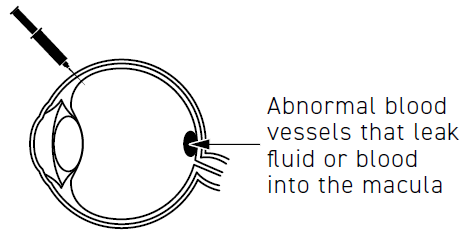
Abnormal blood vessels
that leak
fluid or blood into the
macula
What is Beovu used for
Beovu is used in adults to treat eye disorders that occur when abnormal blood
vessels form and grow under the macula. The macula, located in the back
of the eye, is responsible for clear vision. Abnormal blood vessels can leak fluids or
blood into the eye and interfere with the function of the macula, leading to diseases that can
cause vision loss such as:
- age-related neovascular (wet) macular degeneration (AMD)
- diabetic macular edema (DME).
How Beovu works
Beovu may slow the progression of the disease and therefore maintain, or even improve, vision.
2. What you need to know before you are given Beovu
You must not receive Beovu:
- if you are allergic to brolucizumab or any of the other ingredients of this medicine (listed in section 6);
- if you have an active or suspected infection in your eye or the surrounding area;
- if you have pain or redness in your eye (eye inflammation). If any of these apply to you, tell your doctor. You must not receive Beovu.
Warnings and precautions
Talk to your doctor before you are given Beovu if any of the following apply:
- if you have glaucoma (an eye condition generally caused by high pressure in the eye);
- if you have previously noticed flashes of light or floaters (small dark spots floating) and if you experience a sudden increase in the number and size of floaters;
- if you have had eye surgery in the last 4 weeks or if eye surgery is planned in the next four weeks;
- if you have ever had eye diseases or treatments for your eyes;
- if you have had a sudden loss of vision in the last year due to blockage of blood vessels in the back of your eye (retinal vascular occlusion) or inflammation of blood vessels in the back of your eye (retinal vasculitis).
Tell your doctor immediatelyif:
- you experience eye redness, eye pain, increased discomfort, worsening of eye redness, blurred or reduced vision, an increase in the number of small particles in your vision, or increased sensitivity to light;
- you develop a sudden loss of vision, which may be a sign of retinal vascular occlusion. Any of these symptoms may lead your doctor to stop treatment with Beovu.
In addition, it is important to know that:
- the safety and effectiveness of Beovu when given in both eyes at the same time have not been studied and use in this way may lead to a higher risk of experiencing undesirable effects;
- Beovu injections may cause an increase in eye pressure (intraocular pressure) in some patients within 30 minutes of the injection. Your doctor will monitor you after each injection;
- your doctor will check for other risk factors that may increase the possibility of tearing or detachment of one of the layers in the back of your eye (retinal detachment or tear, and pigment epithelial detachment or tear), in which case Beovu must be given with caution.
The systemic use of VEGF inhibitors, substances similar to those contained in Beovu, is potentially
associated with the risk of blood clots blocking blood vessels (arterial thromboembolic events)
that can cause heart attack or stroke. There is a theoretical risk that such events may occur
after Beovu injection into the eye.
Children and adolescents
Beovu is not used in children and adolescents under 18 years of age.
Other medicines and Beovu
Tell your doctor if you are taking, have recently taken or might take any other
medicines.
Pregnancy and breastfeeding
If you are pregnant, suspect you may be pregnant, are planning to become pregnant or are
breastfeeding, ask your doctor for advice before you are given this medicine.
Breastfeeding is not recommended during treatment with Beovu and for at least one month after
stopping treatment with the medicine, as it is not known whether Beovu is excreted in human
milk.
Women of childbearing potential must use effective contraception during treatment and for
at least one month after stopping treatment with Beovu. If you are pregnant or
suspect you are pregnant during treatment, tell your doctor immediately. Beovu should not
be used during pregnancy unless the potential benefit outweighs the potential risk to the
foetus.
Driving and operating machinery
After treatment with Beovu, you may experience some temporary vision problems (for example
blurred vision). Do not drive or operate machinery until this condition has resolved.
Beovu contains sodium
This medicine contains less than 1 mmol (23 mg) of sodium per dose, which is essentially
“sodium-free”.
Beovu contains polysorbates
This medicine contains 0.01 mg of polysorbate 80 per dose (0.05 ml). Polysorbates can
cause allergic reactions. Tell your doctor if you have known allergies.
3. How Beovu will be administered to you
How much Beovu is administered and for how long
The recommended dose is 6 mg of brolucizumab.
Wet AMD
Initial treatment (also called loading treatment)
- You will be given an injection every month for the first 3 months.
- Alternatively, you may be treated with an injection every 6 weeks for the first two doses. The doctor will decide if a third injection is needed 12 weeks after the start of treatment based on the condition of your eye(s). Maintenance treatment
- Subsequently, you may receive an injection every 3 months. The doctor will determine the treatment interval based on the condition of the eye; some patients may need treatment every 2 months. Based on the condition of the eye, the doctor may extend or shorten the treatment interval by no more than 1 month at a time. Data on treatment intervals greater than 5 months are limited. The treatment interval between two doses of Beovu must not be less than 2 months.
INITIAL TREATMENT
(ALSO CALLED TREATMENT
TREATMENT OF
MAINTENANCE
LOADING)
3 DOSES,
2 DOSES,
ONE EVERYONE EVERYONE EVERY
OR
6
WEEKSWEEKSWEEKS
DME
- You will be given an injection every six weeks for the first five injections.
- Subsequently, you may receive an injection every 3 months. The doctor will determine the treatment interval based on the condition of the eye. Some patients may need treatment every 2 months. Some patients may receive treatment every 4 months. First 5 doses,
Subsequently,
one every
one every

weeksweeks
For the first 5 doses,Subsequently, 1 injection every
1 injection every12 weeks (3 months) or as
6 weeksrecommended by the doctor
Method of administration
Beovu is administered by an ophthalmologist by injection into the eye (intravitreal use).
Before the injection, the doctor will carefully clean the eye to prevent infection. The doctor will also
give you an eye drop (local anesthetic) to numb the eye and reduce or prevent pain from
injection.
How long does treatment with Beovu last
Beovu is used to treat chronic eye diseases that require long-term treatment,
which can last for months or years. The doctor will check that the treatment is working during
regular scheduled visits. The doctor may also check the eyes in the time between
injections. If you have any questions about how long the treatment with Beovu will last, ask your doctor.
Before stopping treatment with Beovu
Talk to your doctor before stopping treatment. Stopping treatment may increase
the risk of vision loss and vision may worsen.
If you have any doubts about the use of this medicine, ask your doctor.
4. Possible side effects
Like all medicines, this medicine can cause side effects, although not everyone will experience them.
Side effects following injection of Beovu are due to both the medicine itself and the injection procedure and mostly affect the eye.
Some side effects may be serious
Consult a doctor immediately if any of the following occur, which are signs of allergic reactions, inflammation or infections:
- a sudden decrease or change in vision
- pain, increased discomfort, worsening redness of the eye
If any side effect occurs, contact your doctor immediately.
Other possible side effects
Other side effects that may occur after treatment with Beovu include those listed below.
Most side effects are mild or moderate and generally disappear within a week after each injection.
If these side effects become severe, inform your doctor.
Common:may affect up to 1 in 10 people
- inflammation of the middle layer of the eye wall (uveitis)
- detachment of the gel-like substance inside the eye (vitreous detachment)
- tear of the retina (the part at the back of the eye that detects light) or one of its layers (retinal pigment epithelium tear)
- reduced visual acuity (decrease in visual sharpness)
- bleeding in the retina (retinal hemorrhage)
- inflammation of the iris, the colored part of the eye (iritis)
- inflammation of the iris and adjacent tissue of the eye (iridocyclitis)
- sudden loss of vision due to blockage of blood vessels in the back of the eye (retinal vascular occlusion)
- bleeding into the eye (vitreous hemorrhage)
- clouding of the eye's lens (cataract)
- bleeding from small blood vessels in the outer layer of the eye (conjunctival hemorrhage)
- floaters in vision (vitreous floaters)
- eye pain
- increased eye pressure (increased intraocular pressure)
- redness in the white part of the eye (conjunctivitis)
- blurry or unclear vision
- scratched cornea, damage to the clear layer of the eyeball that covers the iris (corneal abrasion)
- damage to the clear layer of the eyeball that covers the iris (punctate keratitis)
- allergic reactions (hypersensitivity)
Uncommon:may affect up to 1 in 100 people
- severe inflammation inside the eye (endophthalmitis)
- blindness
- sudden loss of vision due to blockage of an artery in the eye (retinal artery occlusion)
- retinal detachment
- redness of the eye (conjunctival hyperemia)
- increased tear production (increased lacrimation)
- abnormal sensation in the eye
- detachment of one of the layers of the retina (retinal pigment epithelium detachment)
- inflammation of the gel-like substance inside the eye (vitreitis)
- inflammation of the front part of the eye (anterior chamber inflammation or flare)
- swelling of the cornea, the clear layer of the eyeball (corneal edema)
- inflammation of the blood vessels in the back of the eye (retinal vasculitis)
- inflammation of the outer white coating of the eye (scleritis)
Reporting of side effects
If you get any side effects, even those not listed in this leaflet, tell your doctor. You can also report side effects directly through the national reporting system listed in Annex V. By reporting side effects you can help provide more information on the safety of this medicine.
5. How to store Beovu
Keep this medicine out of the sight and reach of children.
Do not use this medicine after the expiry date which is stated on the box and label after
Expiry/EXP. The expiry date refers to the last day of that month.
Store in a refrigerator (2°C - 8°C).
Do not freeze.
Keep the pre-filled syringe in its sealed blister and in the outer packaging to protect the
medicine from light.
Before use, the unopened blister with the pre-filled syringe can be kept at room temperature (below 25°C) for a maximum of 24 hours.
6. Contents of the pack and other information
What Beovu contains
- The active substance is brolucizumab. One ml of injectable solution contains 120 mg of brolucizumab. Each pre-filled syringe contains 19.8 mg of brolucizumab in 0.165 ml of solution. This provides a sufficient amount for administering a single dose of 0.05 ml of solution containing 6 mg of brolucizumab.
- The other ingredients are: sodium citrate, sucrose, polysorbate 80, water for injections (see section 2).
Description of the appearance of Beovu and contents of the pack
Beovu 120 mg/ml solution for injection in a pre-filled syringe (injectable preparation) is a clear to slightly opalescent, colourless to slightly yellowish-brown aqueous solution.
Pack containing 1 pre-filled syringe for single use only.
Marketing Authorisation Holder
Novartis Europharm Limited
Vista Building
Elm Park, Merrion Road
Dublin 4
Ireland
Manufacturer
S.A. ALCON-COUVREUR N.V.
Rijksweg 14
2870 Puurs
Belgium
Novartis Pharma GmbH
Roonstraße 25
90429 Nuremberg
Germany
For further information on this medicinal product, contact the local representative of the Marketing Authorisation Holder:
België/Belgique/Belgien
Novartis Pharma N.V.
Tél/Tel: +32 2 246 16 11
Lietuva
SIA Novartis Baltics Lietuvos filialas
Tel: +370 5 269 16 50
България
Novartis Bulgaria EOOD
Тел.: +359 2 489 98 28
Luxembourg/Luxemburg
Novartis Pharma N.V.
Tél/Tel: +32 2 246 16 11
Česká republika
Novartis s.r.o.
Tel: +420 225 775 111
Magyarország
Novartis Hungária Kft.
Tel.: +36 1 457 65 00
Danmark
Novartis Healthcare A/S
Tlf.: +45 39 16 84 00
Malta
Novartis Pharma Services Inc.
Tel: +356 2122 2872
Deutschland
Novartis Pharma GmbH
Tel: +49 911 273 0
Nederland
Novartis Pharma B.V.
Tel: +31 88 04 52 111
Eesti
SIA Novartis Baltics Eesti filiaal
Tel: +372 66 30 810
Norge
Novartis Norge AS
Tlf: +47 23 05 20 00
Ελλάδα
Novartis (Hellas) A.E.B.E.
Τηλ: +30 210 281 17 12
Österreich
Novartis Pharma GmbH
Tel: +43 1 86 6570
España
Novartis Farmacéutica, S.A.
Tel: +34 93 306 42 00
Polska
Novartis Poland Sp. z o.o.
Tel.: +48 22 375 4888
France
Novartis Pharma S.A.S.
Tél: +33 1 55 47 66 00
Portugal
Novartis Farma - Produtos Farmacêuticos, S.A.
Tel: +351 21 000 8600
Hrvatska
Novartis Hrvatska d.o.o.
Tel. +385 1 6274 220
România
Novartis Pharma Services Romania SRL
Tel: +40 21 31299 01
Ireland
Novartis Ireland Limited
Tel: +353 1 260 12 55
Slovenija
Novartis Pharma Services Inc.
Tel: +386 1 300 75 50
Ísland
Vistor hf.
Sími: +354 535 7000
Slovenská republika
Novartis Slovakia s.r.o.
Tel: +421 2 5542 5439
Italia
Novartis Farma S.p.A.
Tel: +39 02 96 54 1
Suomi/Finland
Novartis Finland Oy
Puh/Tel: +358 (0)10 6133 200
Κύπρος
Novartis Pharma Services Inc.
Τηλ: +357 22 690 690
Sverige
Novartis Sverige AB
Tel: +46 8 732 32 00
Latvija
SIA Novartis Baltics
Tel: +371 67 887 070
United Kingdom (Northern Ireland)
Novartis Ireland Limited
Tel: +44 1276 698370
Other sources of information
More detailed information on this medicinal product is available on the website of the European Medicines Agency, https://www.ema.europa.eu.
The following information is intended exclusively for healthcare professionals:
Instructions for use of the pre-filled syringe
Storage and visual inspection
Store Beovu in a refrigerator (2°C - 8°C). Do not freeze. Keep
the pre-filled syringe in its sealed blister and in the outer
packaging to protect the medicinal product from light.
Before use, the unopened blister with the pre-filled syringe of
Beovu should be kept at room temperature (below 25°C)
for a maximum of 24 hours. Ensure that the packaging
contains a pre-filled syringe in its sealed blister. After
opening the blister, proceed under aseptic conditions.
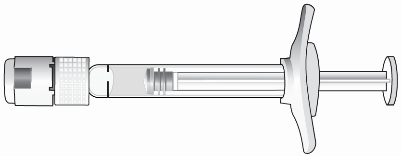
Beovu is a clear to slightly
opalescent, colourless to slightly yellowish-brown aqueous solution.
The solution should be visually inspected after being
removed from the refrigerator and before administration. If
particles or turbidity are visible, the pre-filled syringe should not
be used and an appropriate replacement procedure should be
followed.
The pre-filled syringe is sterile and for single use only. Do not use if the
packaging or the pre-filled syringe is damaged or expired.
How to prepare and administer Beovu
The pre-filled syringe contains more than the recommended dose of 6 mg. The extractable volume of the pre-filled syringe (0.165 ml) must not be used completely. The excess volume must be
discarded before proceeding with the injection. Injecting the entire volume of the pre-filled syringe may
cause an overdose.
The intravitreal injection procedure must be performed under aseptic conditions, including
surgical scrubbing of the hands, use of sterile gloves, a sterile drape (or
equivalent), and having sterile paracentesis equipment available (if necessary).
Appropriate anesthesia and a broad-spectrum antimicrobial should be administered before the injection to
disinfect the periocular, ocular, and eyelid surface.
Note: The dose must be set to 0.05 ml.
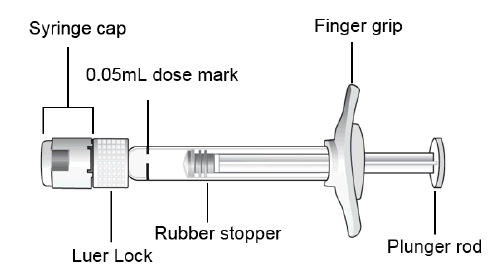
Injection procedure
| e Lift the cover of the syringe blister and, under aseptic conditions, remove the syringe. |
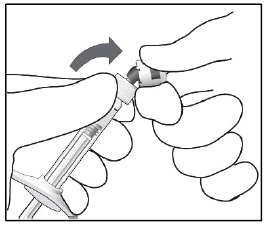 | d Detach (do not twist or rotate) the syringe cap. a n a i l |
| a Under aseptic conditions and with force, insert a 30G x ½″ injection needle onto the syringe. |
t
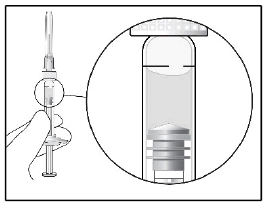 | Check for air bubbles, holding the syringe with the needle pointing upwards. If there are some air bubbles, gently tap the syringe with your finger until they rise to the surface. Carefully remove the needle cap by pulling it off. |
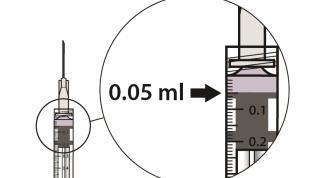
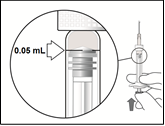 | Hold the syringe at eye level and gently push the plunger until the lower edge of the rubber stopper is aligned with the 0.05 ml measurement line. This will expel the air and excess solution and adjust the dose to 0.05 ml. The syringe is ready for injection. a |
| m Slowly inject until the rubber stopper reaches the bottom of the syringe to deliver the injected volume of 0.05 ml. Ensure that the entire dose is injected by checking that r the rubber stopper has reached the end of the syringe body. |
Note: Unused or waste material must be disposed of in accordance with local regulations.
Questions and common answers
Q: What should I do if I cannot remove the air bubbles from the liquid?
A: It is important that the liquid is air-free. However, tiny air bubbles that are attached to the
stopper normally do not detach from the stopper during injection and therefore do not affect the dose volume.
Beovu 120 mg/ml injectable solution
brolucizumab
Read this leaflet carefully before you are given this medicine because
it contains important information for you.
- Keep this leaflet. You may need to read it again.
- If you have any questions, ask your doctor.
- If you get any side effects, even those not listed in this leaflet, tell your doctor. See section 4.
Contents of this leaflet
- 1. What Beovu is and what it is used for
- 2. What you need to know before you are given Beovu
- 3. How Beovu will be given to you
- 4. Possible side effects
- 5. How to store Beovu
- 6. Contents of the pack and other information
1. What is Beovu and what is it used for
What is Beovu
Beovu contains the active substance brolucizumab, which belongs to a group of medicines called
anti-neovascular agents. Beovu is injected into the eye by a doctor to treat eye disorders
that can affect vision.
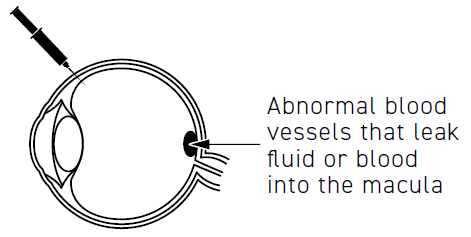
Abnormal blood vessels
that leak
fluid or blood into the
macula
What is Beovu used for
Beovu is used in adults to treat eye disorders that occur when abnormal blood
vessels form and grow under the macula. The macula, located in the back
of the eye, is responsible for clear vision. Abnormal blood vessels can leak fluids or
blood into the eye and interfere with the function of the macula, leading to diseases that can
cause vision loss such as:
- age-related neovascular (wet) macular degeneration (AMD)
- diabetic macular edema (DME).
How Beovu works
Beovu may slow the progression of the disease and therefore maintain, or even improve, vision.
2. What you need to know before you are given Beovu
You must not receive Beovu:
- if you are allergic to brolucizumab or any of the other ingredients of this medicine (listed in section 6).
- if you have an active or suspected infection in your eye or the surrounding area.
- if you have pain or redness in your eye (eye inflammation). If any of these conditions apply to you, tell your doctor. You must not receive Beovu.
Warnings and precautions
Talk to your doctor before you are given Beovu if any of the following apply:
- if you have glaucoma (an eye condition generally caused by high pressure in the eye);
- if you have previously experienced flashes of light or floaters (small dark spots floating) and if you have a sudden increase in the number and size of floaters;
- if you have had eye surgery in the last 4 weeks or if eye surgery is planned in the next four weeks;
- if you have ever had eye diseases or treatments for your eyes;
- if you have had a sudden loss of vision in the last year due to blockage of blood vessels in the back of the eye (retinal vascular occlusion) or inflammation of blood vessels in the back of the eye (retinal vasculitis).
Tell your doctor immediatelyif:
- you experience eye redness, eye pain, increased discomfort, worsening eye redness, blurred or reduced vision, an increase in the number of small particles in your vision, increased sensitivity to light;
- you develop a sudden loss of vision, which may be a sign of retinal vascular occlusion. Any of the above symptoms may lead your doctor to stop treatment with Beovu.
In addition, it is important to know that:
- the safety and efficacy of Beovu when given in both eyes at the same time have not been studied and use in this way may lead to a higher risk of experiencing unwanted effects;
- Beovu injections may cause an increase in eye pressure (intraocular pressure) in some patients within 30 minutes of the injection. Your doctor will monitor you after each injection;
- the doctor will check if there are other risk factors that may increase the possibility of tearing or detachment of one of the layers in the back of the eye (retinal detachment or tear, and pigment epithelial detachment or tear), in which case Beovu should be given with caution.
The systemic use of VEGF inhibitors, substances similar to those contained in Beovu, is potentially
associated with the risk of blood clots blocking blood vessels (arterial thromboembolic events)
that can cause heart attack or stroke. There is a theoretical risk that such events may occur
after injection of Beovu into the eye.
Children and adolescents
Beovu is not used in children and adolescents under 18 years of age.
Other medicines and Beovu
Tell your doctor if you are taking, have recently taken or might take any other
medicines.
Pregnancy and breastfeeding
If you are pregnant, suspect you may be pregnant or are planning to become pregnant, or if you are
breastfeeding, ask your doctor for advice before you are given this medicine.
Breastfeeding is not recommended during treatment with Beovu and for at least one month after
stopping treatment with the medicine because it is not known whether Beovu is excreted in human
milk.
Women of childbearing potential must use effective contraception during treatment and for
at least one month after stopping treatment with Beovu. If you are pregnant or
suspect you are pregnant during treatment, tell your doctor immediately. Beovu should not
be used during pregnancy unless the potential benefit outweighs the potential risk to the
fetus.
Driving and using machines
After treatment with Beovu, you may experience some temporary vision problems (for example
blurred vision). Do not drive or use machines until this condition has resolved.
Beovu contains sodium
This medicine contains less than 1 mmol (23 mg) of sodium per dose, which is essentially
“sodium-free”.
Beovu contains polysorbates
This medicine contains 0.01 mg of polysorbate 80 per dose (0.05 ml). Polysorbates can
cause allergic reactions. Tell your doctor if you have known allergies.
3. How Beovu will be administered
How much Beovu is administered and for how long
The recommended dose is 6 mg of brolucizumab.
Wet AMD
Initial treatment (also called loading treatment)
- You will be given an injection every month for the first 3 months.
- Alternatively, you may be treated with an injection every 6 weeks for the first two doses. The doctor will decide if a third injection is needed 12 weeks after the start of treatment based on the condition of your eye(s). Maintenance treatment
- Subsequently, you may receive an injection every 3 months. The doctor will determine the treatment interval based on the condition of the eye; some patients may need treatment every 2 months. Based on the condition of the eye, the doctor may extend or shorten the treatment interval by no more than 1 month at a time. Data on treatment intervals longer than 5 months are limited. The treatment interval between two doses of Beovu must not be less than 2 months.
INITIAL TREATMENT
(ALSO CALLED TREATMENT
TREATMENT OF
MAINTENANCE
LOADING)
3 DOSES,
2 DOSES,
ONE EVERYONE EVERYONE EVERY
OR
6
WEEKSWEEKSWEEKS
DME
- You will be given an injection every six weeks for the first five injections.
- Subsequently, you may receive an injection every 3 months. The doctor will determine the treatment interval based on the condition of the eye. Some patients may need treatment every 2 months. Some patients may receive treatment every 4 months. First 5 doses,
Subsequently,
one every
one every

weeksweeks
For the first 5 doses,Subsequently, 1 injection every
1 injection every12 weeks (3 months) or as
6 weeksrecommended by the doctor
Method of administration
Beovu is administered by an ophthalmologist by injection into the eye (intravitreal use).
Before the injection, the doctor will carefully clean the eye to prevent infection. The doctor will also
give you an eye drop (local anesthetic) to numb the eye and reduce or prevent pain from
injection.
How long does treatment with Beovu last
Beovu is used to treat chronic eye diseases that require long-term treatment,
which can last for months or years. The doctor will check that the treatment is working during
regular scheduled visits. The doctor may also check the eyes during the time that elapses between
injections. If you have any questions about how long treatment with Beovu will last, ask your doctor.
Before stopping treatment with Beovu
Talk to your doctor before stopping treatment. Stopping treatment may increase
the risk of vision loss and vision may worsen.
If you have any doubts about the use of this medicine, ask your doctor.
4. Possible side effects
Like all medicines, this medicine can cause side effects, although not everybody gets them.
Side effects following injection of Beovu are due to both the medicine itself and the injection
procedure and mostly affect the eye.
Some side effects can be serious
Seek immediate medical attention if any of the following occur, which are signs of
allergic reactions, inflammation or infections:
- a sudden decrease or change in vision
- eye pain, increased discomfort, worsening of eye redness
If you experience any side effect, seek medical advice immediately.
Other possible side effects
Other side effects that may occur after treatment with Beovu include those
listed below.
Most side effects are mild or moderate and usually disappear within a
week after each injection.
If these side effects become severe, tell your doctor.
Common:may affect up to 1 in 10 people
- inflammation of the middle layer of the eye wall (uveitis)
- detachment of the gel-like substance inside the eye (vitreous detachment)
- tear in the retina (the part at the back of the eye that detects light) or one of its layers (retinal pigment epithelium tear)
- reduced sharpness of vision (reduced visual acuity)
- bleeding in the retina (retinal hemorrhage)
- inflammation of the iris, the colored part of the eye (iritis)
- inflammation of the iris and adjacent tissue of the eye (iridocyclitis)
- sudden loss of vision due to blockage of blood vessels in the back of the eye (retinal vascular occlusion)
- bleeding in the eye (vitreous hemorrhage)
- clouding of the eye's lens (cataract)
- bleeding from small blood vessels in the outer layer of the eye (conjunctival hemorrhage)
- floaters in vision (vitreous floaters)
- eye pain
- increased eye pressure (increased intraocular pressure)
- redness in the white part of the eye (conjunctivitis)
- blurred or unclear vision
- scratched cornea, damage to the transparent layer of the eyeball that covers the iris (corneal abrasion)
- damage to the transparent layer of the eyeball that covers the iris (punctate keratitis)
- allergic reactions (hypersensitivity)
Uncommon:may affect up to 1 in 100 people
- severe inflammation inside the eye (endophthalmitis)
- blindness
- sudden loss of vision due to blockage of an artery in the eye (retinal artery occlusion)
- retinal detachment
- redness of the eye (conjunctival hyperemia)
- increased tear production (increased lacrimation)
- abnormal sensation in the eye
- detachment of one of the layers of the retina (retinal pigment epithelium detachment)
- inflammation of the gel-like substance inside the eye (vitreitis)
- inflammation of the front part of the eye (anterior chamber inflammation or flare)
- swelling of the cornea, the transparent layer of the eyeball (corneal edema)
- inflammation of the blood vessels in the back of the eye (retinal vasculitis)
- inflammation of the outer white coating of the eye (scleritis)
Reporting of side effects
If you get any side effects, talk to your doctor or pharmacist. This includes any side effects not
listed in this leaflet. You can also report side effects directly through the national reporting system
listed in Annex V. By reporting side effects you can help provide more information on the safety of
this medicine.
5. How to store Beovu
Keep this medicine out of the sight and reach of children.
Do not use this medicine after the expiry date which is stated on the package and label after
Expiry./EXP. The expiry date refers to the last day of that month.
Store in a refrigerator (2°C - 8°C).
Do not freeze.
Keep the vial in the outer packaging to protect the medicine from light.
Before use, the unopened vial can be kept at room temperature (below
25°C) for a maximum of 24 hours.
6. Contents of the pack and other information
What Beovu contains
- The active substance is brolucizumab. One ml of solution for injection contains 120 mg of brolucizumab. Each vial contains 27.6 mg of brolucizumab in 0.23 ml of solution. This provides an amount sufficient for the administration of a single dose of 0.05 ml of solution containing 6 mg of brolucizumab.
- The other ingredients are: sodium citrate, sucrose, polysorbate 80, water for injections (see section 2).
Description of Beovu and contents of the pack
Beovu 120 mg/ml solution for injection (injectable preparation) is an aqueous solution from clear to
slightly opalescent, from colourless to slightly yellowish-brown.
Pack with 1 vial and 1 bevelled filter needle (18G x 1½″, 1.2 mm x 40 mm, 5 μm)
for single use only.
Marketing Authorisation Holder
Novartis Europharm Limited
Vista Building
Elm Park, Merrion Road
Dublin 4
Ireland
Manufacturer
S.A. ALCON-COUVREUR N.V.
Rijksweg 14
2870 Puurs
Belgium
Novartis Pharma GmbH
Roonstraße 25
90429 Nuremberg
Germany
Novartis Farmacéutica, S.A.
Gran Via de les Corts Catalanes, 764
08013 Barcelona
Spain
Lek Pharmaceuticals d.d.
Verovškova ulica 57
Ljubljana, 1526
Slovenia
For further information on this medicinal product, contact the local representative of the marketing
authorisation holder:
België/Belgique/Belgien
Novartis Pharma N.V.
Tél/Tel: +32 2 246 16 11
Lietuva
SIA Novartis Baltics Lietuvos filialas
Tel: +370 5 269 16 50
България
Novartis Bulgaria EOOD
Тел.: +359 2 489 98 28
Luxembourg/Luxemburg
Novartis Pharma N.V.
Tél/Tel: +32 2 246 16 11
Česká republika
Novartis s.r.o.
Tel: +420 225 775 111
Magyarország
Novartis Hungária Kft.
Tel.: +36 1 457 65 00
Danmark
Novartis Healthcare A/S
Tlf,: +45 39 16 84 00
Malta
Novartis Pharma Services Inc.
Tel: +356 2122 2872
Deutschland
Novartis Pharma GmbH
Tel: +49 911 273 0
Nederland
Novartis Pharma B.V.
Tel: +31 88 04 52 111
Eesti
SIA Novartis Baltics Eesti filiaal
Tel: +372 66 30 810
Norge
Novartis Norge AS
Tlf: +47 23 05 20 00
Ελλάδα
Novartis (Hellas) A.E.B.E.
Τηλ: +30 210 281 17 12
Österreich
Novartis Pharma GmbH
Tel: +43 1 86 6570
España
Novartis Farmacéutica, S.A.
Tel: +34 93 306 42 00
Polska
Novartis Poland Sp. z o.o.
Tel.: +48 22 375 4888
France
Novartis Pharma S.A.S.
Tél: +33 1 55 47 66 00
Portugal
Novartis Farma - Produtos Farmacêuticos, S.A.
Tel: +351 21 000 8600
Hrvatska
Novartis Hrvatska d.o.o.
Tel. +385 1 6274 220
România
Novartis Pharma Services Romania SRL
Tel: +40 21 31299 01
Ireland
Novartis Ireland Limited
Tel: +353 1 260 12 55
Slovenija
Novartis Pharma Services Inc.
Tel: +386 1 300 75 50
Ísland
Vistor hf.
Sími: +354 535 7000
Slovenská republika
Novartis Slovakia s.r.o.
Tel: +421 2 5542 5439
Italia
Novartis Farma S.p.A.
Tel: +39 02 96 54 1
Suomi/Finland
Novartis Finland Oy
Puh/Tel: +358 (0)10 6133 200
Κύπρος
Novartis Pharma Services Inc.
Τηλ: +357 22 690 690
Sverige
Novartis Sverige AB
Tel: +46 8 732 32 00
Latvija
SIA Novartis Baltics
Tel: +371 67 887 070
United Kingdom (Northern Ireland)
Novartis Ireland Limited
Tel: +44 1276 698370
Other sources of information
More detailed information on this medicinal product is available on the website of the European Medicines
Agency, https://www.ema.europa.eu.
The following information is intended exclusively for healthcare professionals:
Instructions for use of the vial
Storage and visual inspection
Store Beovu in a refrigerator (2°C - 8°C). Do not freeze. Store
the vial in the outer packaging to protect the medicinal product from
light.
Before use, the closed vial of Beovu must be kept at
room temperature (below 25°C) for a maximum of 24 hours. After
opening the vial, proceed under aseptic conditions.
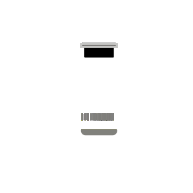
Beovu is an aqueous solution from clear to slightly opalescent, from
colourless to slightly yellowish-brown.
The solution must be visually inspected after being removed
from the refrigerator and before administration. If particles
or turbidity are visible, the vial must not be used and an
appropriate replacement procedure must be followed.
The contents of the vial and filter needle are sterile and for single use. Do
not use if the packaging, vial and/or filter needle are
damaged or expired.
How to prepare and administer Beovu
The vial contains a volume greater than the recommended dose of 6 mg. The drawable volume of the
vial (0.23 ml) must not be used completely. The excess volume must be discarded
before proceeding with the injection. Injecting the entire volume of the vial may cause
overdosage.
The intravitreal injection procedure must be performed under aseptic conditions, including
surgical scrubbing of the hands, the use of sterile gloves, a sterile drape (or equivalent), and having
the equipment available to perform a sterile paracentesis (if necessary).
Appropriate anesthesia and a broad-spectrum antimicrobial agent must be administered before the
injection to disinfect the periocular, ocular and eyelid surface.
The following single-use medical devices are required for preparation and intravitreal injection:
- a sterile 30G x ½” injection needle.
- a sterile 1 ml syringe with a 0.05 ml dose marking.
- a sterile 5 μm bevelled filter needle (18G x 1½”, 1.2 mm x 40 mm).
The injection needle and syringe are not included in the Beovu pack.
Ensure that the injection is administered immediately after preparing the dose (step 8).
Note: The dose must be set to 0.05 ml.
Injection procedure
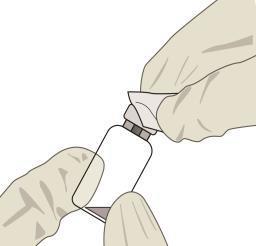
| c Remove the vial cap and clean the vial stopper (e.g. with a m 70% alcohol swab). r a |
 | F Assemble the filter needle onto the 1 ml syringe under aseptic conditions. |
| l Push the filter needle into the centre of the vial stopper until e it touches the bottom of the vial. |
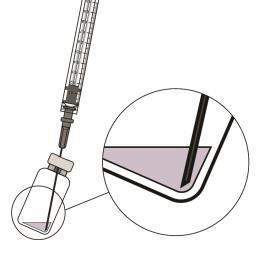 | d To withdraw the liquid, hold the vial slightly inclined and slowly withdraw all the liquid from the a vial and the filter needle. n Make sure the syringe plunger is pulled back sufficiently when emptying the vial to completely empty the filter needle. a i l |
t
| a Detach the filter needle from the syringe under aseptic conditions and discard it. The filter needle must not be used for the intravitreal injection. |
I
| In aseptic conditions and with force insert the 30G x ½” injection needle onto the syringe. |
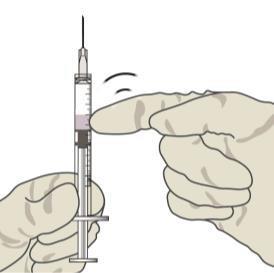 | Check for air bubbles, holding the syringe with the needle pointing upwards. If there are some air bubbles, gently tap o the syringe with your finger until they rise to the surface. c a m |
| r a Hold the syringe at eye level and carefully push the plunger to expel the air together with the F excess solution from the syringe and adjust the dose to 0.05 ml marked on the syringe. The syringe is ready for injection. l |
 | e Inject slowly until the rubber stopper reaches the bottom of the syringe to achieve the injected volume of 0.05 ml. Make sure to inject the entire dose by checking that the rubber stopper has reached the end of the syringe body. |
Note: unused or waste material must be disposed of in accordance with local regulations.
Frequently asked questions
Q: What should I do if I have difficulty withdrawing enough liquid from the vial?
A: Do not shake the vial before withdrawing, but allow the liquid to settle at the bottom of the
vial. Make sure the vial is vertical, in a slightly inclined position. Pull
back slowlyon the plunger and wait for the liquid to appear in the syringe body. Continue to
withdraw slowly until the vial and filter needle are completely emptied.
Q: What should I do if I cannot remove air bubbles from the liquid?
A: It is important that the liquid is free of air. However, tiny air bubbles that are attached to the
stopper normally do not detach from the stopper during the injection and therefore do not affect the
dose volume.

Не впевнені, чи підходить вам цей лікарський засіб?
Обговоріть симптоми та можливі варіанти лікування з лікарем онлайн.

Виникли питання під час прийому ліків?
Обговоріть свої симптоми та лікування з лікарем онлайн.
- Країна реєстрації
- Лікарська формаInjectable solution in pre-filled syringe, 120 MG/ML
- Код АТХS01LA06
- Діюча речовина
- Потрібен рецептТак
- Виробник
- Ця інформація надана лише для ознайомлення і не є медичною порадою. Рішення щодо лікування завжди приймає лікар.
- Альтернативи до BEOVUЛікарська форма: Injectable solution, 40 mg/mLДіюча речовина: АфлиберцептВиробник: SANDOZ GMBHПотрібен рецептЛікарська форма: Injectable solution, 10 mg/mlДіюча речовина: РанибизумабВиробник: SAMSUNG BIOEPIS NL B.V.Потрібен рецептЛікарська форма: Injectable solution, 40MG/MLДіюча речовина: АфлиберцептВиробник: BAYER AGПотрібен рецепт
Аналоги BEOVU в інших країнах
Препарати з тією самою діючою речовиною, доступні в інших країнах.
Аналог BEOVU у Україна
Аналог BEOVU у Іспанія
Лікарі онлайн щодо BEOVU
Застосування, безпека та можливість призначення рецепта — за результатами медичної оцінки.









Отримайте рецепт на BEOVU онлайн
Заповніть форму за 2 хвилини
Розкажіть про симптоми, історію хвороби та потрібний препарат.
Оберіть лікаря або ми призначимо
Оберіть спеціаліста або ми підберемо найближчого доступного лікаря.
Лікар розглядає ваш випадок
Зазвичай протягом 30 хвилин. Може ставити уточнювальні запитання в чаті.
Отримайте в будь-якій аптеці
Електронний рецепт надсилається на вашу пошту — дійсний по всій Польщі.
Часті запитання
BEOVU потребує рецепта в Італія. Ви можете обговорити з лікарем онлайн, чи підходить цей лікарський засіб для вашої ситуації.
Діюча речовина у BEOVU — Бролуцизумаб. Це допомагає визначити препарати з тим самим складом, але під іншими торговими назвами.
BEOVU виробляється компанією NOVARTIS EUROPHARM LIMITED. Назва бренду та упаковка можуть відрізнятися залежно від дистрибʼютора.
Лікарі, зокрема Сімейні лікарі, Психіатри, Дерматологи, Кардіологи, Ендокринологи, Гастроентерологи, Пульмонологи, Нефрологи, Ревматологи, Гематологи, Інфекціоністи, Алергологи, Геріатри, Педіатри, Онкологи, можуть оцінити доцільність застосування BEOVU з урахуванням вашого стану та місцевих правил. Ви можете записатися на онлайн-консультацію, щоб обговорити симптоми та можливі подальші кроки.
Польща має добре розвинену систему охорони здоров'я у великих містах, таких як Варшава, Краків, Вроцлав і Гданськ. Аптеки широко доступні та працюють відповідно до чинного законодавства, забезпечуючи доступ до рецептурних препаратів.
Ви можете придбати BEOVU у Варшаві, Кракові, Вроцлаві або Гданську в будь-якій аптеці за наявності дійсного рецепта.
Щоб отримати рецепт, ви можете скористатися Oladoctor:
Інші препарати з тією самою діючою речовиною (Бролуцизумаб) включають AFQLIR, BYOOVITS, EYLEA. Вони можуть відрізнятися торговою назвою або формою випуску, але містять той самий терапевтичний компонент. Перед зміною або початком прийому нового препарату варто проконсультуватися з лікарем.
